

币圈小贝贝
196 Posts

币圈小贝贝
Report
Block User
11 Following
1.7K+ Followers
1.0K+ Liked
Posts
All
Live
·
--
#美国9月非农仅增2.9万人失业率升至4.2%
Most people look at stablecoins and focus on how much the market cap has risen, or whether a new gimmick has emerged.. But researchers at the San Francisco Fed are looking at a different number—the list of buyers of U.S. Treasuries, and the people on it are changing..
[📢 进群蹲一手消息](https://app.binance.com/uni-qr/F6dwNqgx)
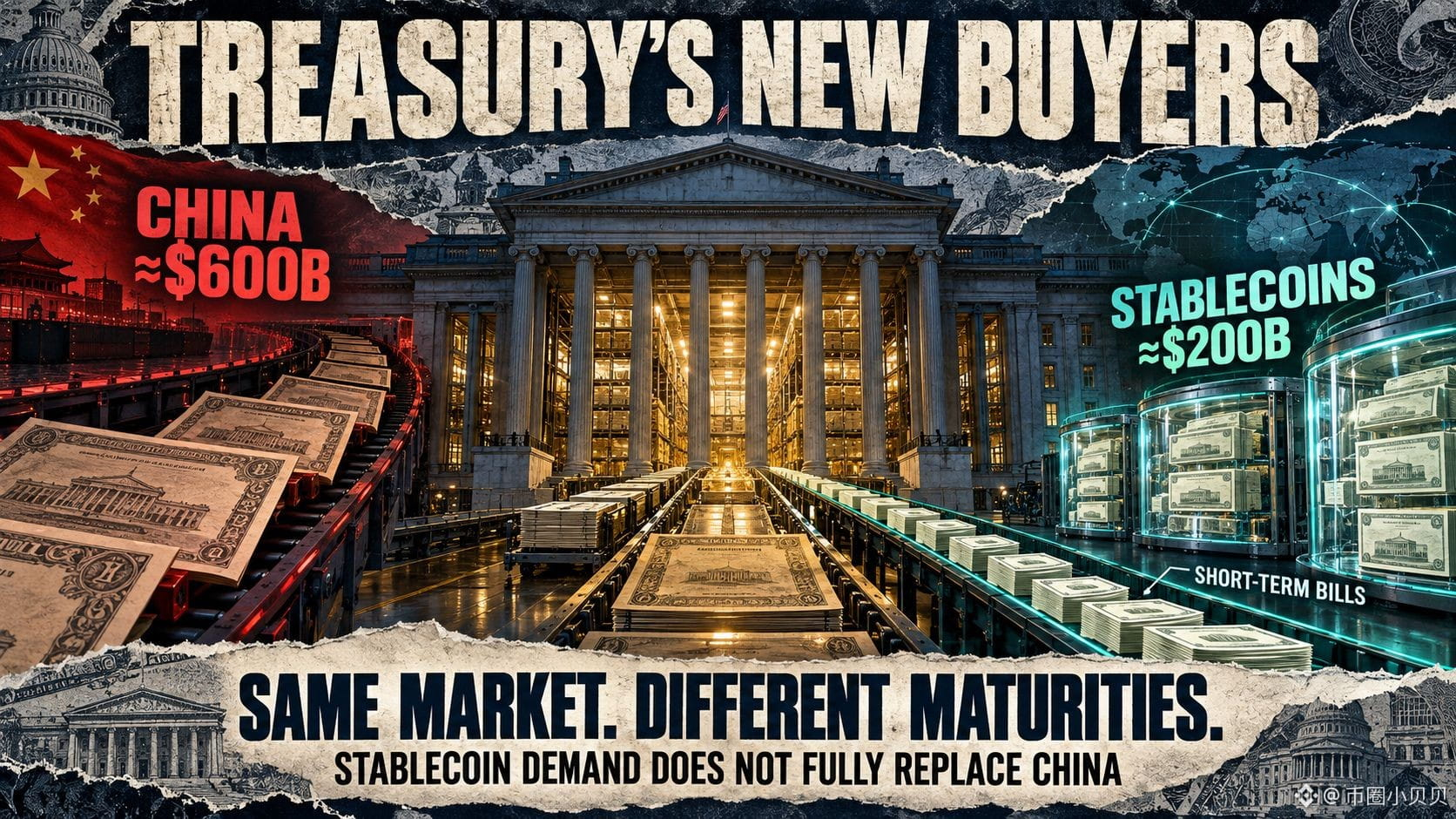
This week, the Federal Reserve Bank of San Francisco issued a research report that brings together something that usually isn’t put in the same box: stablecoin issuers are becoming an increasingly important buyer of U.S. Treasuries.. Over the past five years, Tether and Circle, combined, increased their holdings of U.S. Treasuries plus repurchase agreements by a total of roughly $200 billion—equivalent to more than 40% of the scale of China’s reduction in its holdings of U.S. debt over the same period..
The real change is structural. The share of U.S. Treasuries held by foreign official institutions has fallen—from more than half around 2008 to about 30% at the start of 2026; China’s holdings peaked at the end of 2013 and by mid-2026 have been cut by more than half. As these central bank buyers exit, the main replacement comes from private capital—one that is far more sensitive to interest rates and to fiscal risk than central banks..
Stablecoin business models determine that they can only operate this way. Users can redeem at any time, so issuers must keep large amounts of dollar-denominated assets on hand that can be converted immediately; short-dated Treasuries and repo arrangements fit perfectly.. So starting in 2023, stablecoin issuers have been increasing their holdings of short-term U.S. Treasuries—more than Japan, the largest overseas holder. The San Francisco Fed also cites research from the Bank for International Settlements, saying that this scale is already enough to have a noticeable impact on yields at the short end of the curve..
The significance of this isn’t confined to the crypto world. Who the U.S. relies on to buy its debt, and at what cost it issues that debt, is a real, concrete issue. If the buyer base shifts from central banks that “don’t care too much about the price” to private institutions that “will demand higher yields at any moment,” the elasticity of financing costs changes..
But the reversal is right here as well. Stablecoins can’t fill the gap left by China—most of what China sells is long-dated debt, while what stablecoins mostly buy is short-term Treasury bills. They aren’t in the same market. Someone is taking the short end, but the long end is still hanging in the air. What’s truly worth watching is this: if stablecoins continue to expand, will they be implicitly allowed to absorb even more long-dated U.S. Treasuries.. That’s the next step in how this narrative plays out..
#美国9月非农仅增2.9万人失业率升至4.2%
Most people look at stablecoins and focus on how much the market cap has risen, or whether a new gimmick has emerged.. But researchers at the San Francisco Fed are looking at a different number—the list of buyers of U.S. Treasuries, and the people on it are changing..
📢 进群蹲一手消息
This week, the Federal Reserve Bank of San Francisco issued a research report that brings together something that usually isn’t put in the same box: stablecoin issuers are becoming an increasingly important buyer of U.S. Treasuries.. Over the past five years, Tether and Circle, combined, increased their holdings of U.S. Treasuries plus repurchase agreements by a total of roughly $200 billion—equivalent to more than 40% of the scale of China’s reduction in its holdings of U.S. debt over the same period..
The real change is structural. The share of U.S. Treasuries held by foreign official institutions has fallen—from more than half around 2008 to about 30% at the start of 2026; China’s holdings peaked at the end of 2013 and by mid-2026 have been cut by more than half. As these central bank buyers exit, the main replacement comes from private capital—one that is far more sensitive to interest rates and to fiscal risk than central banks..
Stablecoin business models determine that they can only operate this way. Users can redeem at any time, so issuers must keep large amounts of dollar-denominated assets on hand that can be converted immediately; short-dated Treasuries and repo arrangements fit perfectly.. So starting in 2023, stablecoin issuers have been increasing their holdings of short-term U.S. Treasuries—more than Japan, the largest overseas holder. The San Francisco Fed also cites research from the Bank for International Settlements, saying that this scale is already enough to have a noticeable impact on yields at the short end of the curve..
The significance of this isn’t confined to the crypto world. Who the U.S. relies on to buy its debt, and at what cost it issues that debt, is a real, concrete issue. If the buyer base shifts from central banks that “don’t care too much about the price” to private institutions that “will demand higher yields at any moment,” the elasticity of financing costs changes..
But the reversal is right here as well. Stablecoins can’t fill the gap left by China—most of what China sells is long-dated debt, while what stablecoins mostly buy is short-term Treasury bills. They aren’t in the same market. Someone is taking the short end, but the long end is still hanging in the air. What’s truly worth watching is this: if stablecoins continue to expand, will they be implicitly allowed to absorb even more long-dated U.S. Treasuries.. That’s the next step in how this narrative plays out..
Most people look at stablecoins and focus on how much the market cap has risen, or whether a new gimmick has emerged.. But researchers at the San Francisco Fed are looking at a different number—the list of buyers of U.S. Treasuries, and the people on it are changing..
📢 进群蹲一手消息
This week, the Federal Reserve Bank of San Francisco issued a research report that brings together something that usually isn’t put in the same box: stablecoin issuers are becoming an increasingly important buyer of U.S. Treasuries.. Over the past five years, Tether and Circle, combined, increased their holdings of U.S. Treasuries plus repurchase agreements by a total of roughly $200 billion—equivalent to more than 40% of the scale of China’s reduction in its holdings of U.S. debt over the same period..
The real change is structural. The share of U.S. Treasuries held by foreign official institutions has fallen—from more than half around 2008 to about 30% at the start of 2026; China’s holdings peaked at the end of 2013 and by mid-2026 have been cut by more than half. As these central bank buyers exit, the main replacement comes from private capital—one that is far more sensitive to interest rates and to fiscal risk than central banks..
Stablecoin business models determine that they can only operate this way. Users can redeem at any time, so issuers must keep large amounts of dollar-denominated assets on hand that can be converted immediately; short-dated Treasuries and repo arrangements fit perfectly.. So starting in 2023, stablecoin issuers have been increasing their holdings of short-term U.S. Treasuries—more than Japan, the largest overseas holder. The San Francisco Fed also cites research from the Bank for International Settlements, saying that this scale is already enough to have a noticeable impact on yields at the short end of the curve..
The significance of this isn’t confined to the crypto world. Who the U.S. relies on to buy its debt, and at what cost it issues that debt, is a real, concrete issue. If the buyer base shifts from central banks that “don’t care too much about the price” to private institutions that “will demand higher yields at any moment,” the elasticity of financing costs changes..
But the reversal is right here as well. Stablecoins can’t fill the gap left by China—most of what China sells is long-dated debt, while what stablecoins mostly buy is short-term Treasury bills. They aren’t in the same market. Someone is taking the short end, but the long end is still hanging in the air. What’s truly worth watching is this: if stablecoins continue to expand, will they be implicitly allowed to absorb even more long-dated U.S. Treasuries.. That’s the next step in how this narrative plays out..
162
·
--
First, the conclusion: European users trust “licensed exchanges” more. The focus may not be on “regulation making the market cleaner,” but rather that funds have started to choose where to stand..
[⚖️ 消息第一时间](https://app.binance.com/uni-qr/F6dwNqgx)
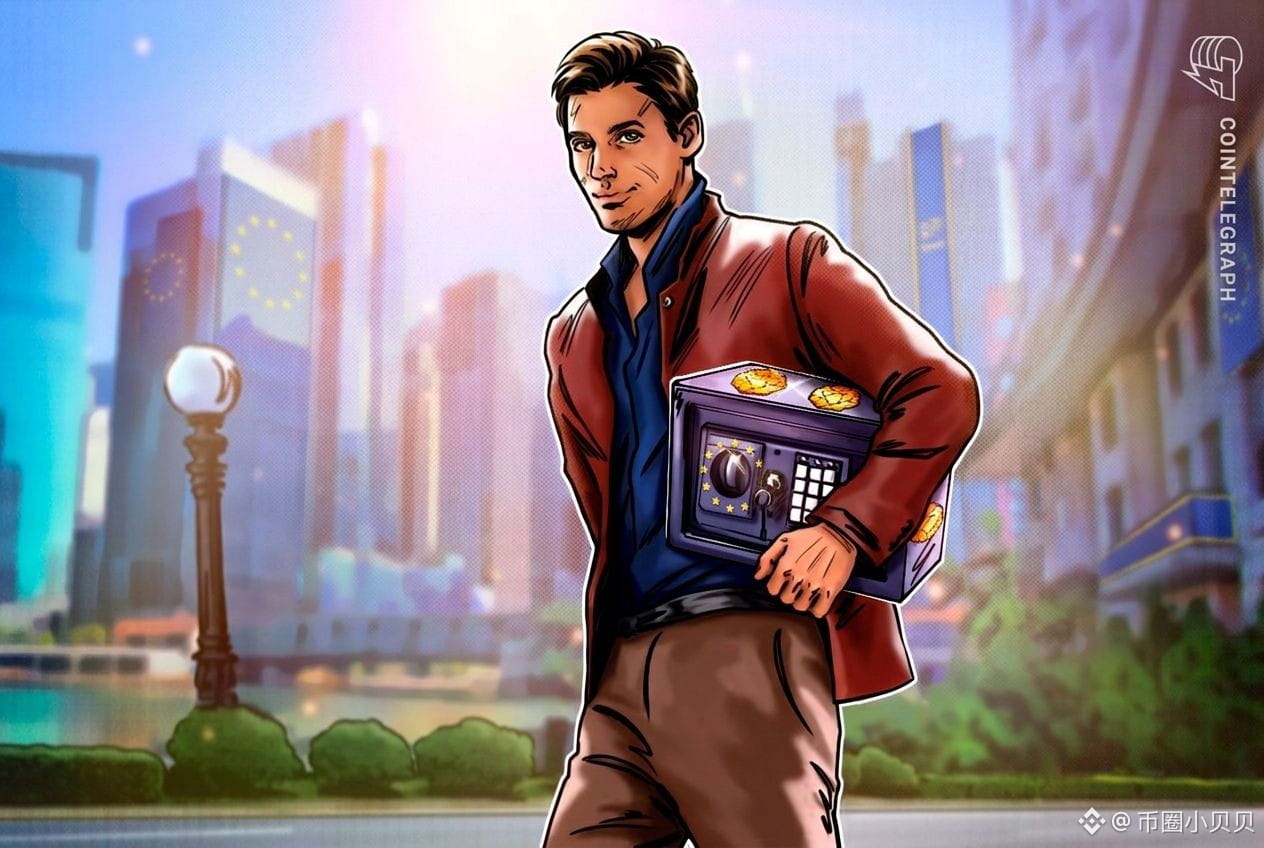
In an observation from a joint CEO of a European licensed exchange on Cointelegraph’s Chain Reaction, he said something quite straightforward—after MiCA took effect, most users had even more confidence in regulated platforms. It’s completely different from the Crypto Twitter crowd that only talks about “self-custody of private keys.” The same person also mentioned that after the MiCA transition period expires on July 1, ESMA has already instructed regulators in each country to go after companies that keep serving without a license..
Most people reading this will think it’s the old tune of “regulation is getting stricter.” But if you break down what he’s actually complaining about, the direction changes: he’s not complaining that regulators are too harsh—he’s complaining that they’re not harsh enough.. There are still a number of companies in the market that haven’t obtained MiCA licenses, yet continue providing services to European users. Regulated platforms are effectively competing while carrying extra costs..
Once you see this layer, it’s no longer just about “European regulation.” The real battleground has never been “regulation vs. freedom,” but rather who has the licenses in hand. Once capital starts distinguishing between “licensed” and “unlicensed,” liquidity will be squeezed into a small number of compliant channels, rather than being spread evenly across the whole market.. Europe is essentially the first place with real users and real funds to test whether “compliant crypto” can truly withstand institutional money..
That means that going forward, what determines the valuation of a trading platform may be less about how flashy the product is, and more about how long its license list is.. Conversely, platforms that survive by regulatory arbitrage will have their space squeezed away little by little..
What’s really worth watching is ESMA’s next round of enforcement—if it really has the nerve to push out platforms that lack licenses but still serve European users, then this “compliance premium” won’t just be talk. If enforcement stays lax, then this will only be another call sitting on the shelf, with nobody acting on it..
First, the conclusion: European users trust “licensed exchanges” more. The focus may not be on “regulation making the market cleaner,” but rather that funds have started to choose where to stand..
⚖️ 消息第一时间
In an observation from a joint CEO of a European licensed exchange on Cointelegraph’s Chain Reaction, he said something quite straightforward—after MiCA took effect, most users had even more confidence in regulated platforms. It’s completely different from the Crypto Twitter crowd that only talks about “self-custody of private keys.” The same person also mentioned that after the MiCA transition period expires on July 1, ESMA has already instructed regulators in each country to go after companies that keep serving without a license..
Most people reading this will think it’s the old tune of “regulation is getting stricter.” But if you break down what he’s actually complaining about, the direction changes: he’s not complaining that regulators are too harsh—he’s complaining that they’re not harsh enough.. There are still a number of companies in the market that haven’t obtained MiCA licenses, yet continue providing services to European users. Regulated platforms are effectively competing while carrying extra costs..
Once you see this layer, it’s no longer just about “European regulation.” The real battleground has never been “regulation vs. freedom,” but rather who has the licenses in hand. Once capital starts distinguishing between “licensed” and “unlicensed,” liquidity will be squeezed into a small number of compliant channels, rather than being spread evenly across the whole market.. Europe is essentially the first place with real users and real funds to test whether “compliant crypto” can truly withstand institutional money..
That means that going forward, what determines the valuation of a trading platform may be less about how flashy the product is, and more about how long its license list is.. Conversely, platforms that survive by regulatory arbitrage will have their space squeezed away little by little..
What’s really worth watching is ESMA’s next round of enforcement—if it really has the nerve to push out platforms that lack licenses but still serve European users, then this “compliance premium” won’t just be talk. If enforcement stays lax, then this will only be another call sitting on the shelf, with nobody acting on it..
⚖️ 消息第一时间
In an observation from a joint CEO of a European licensed exchange on Cointelegraph’s Chain Reaction, he said something quite straightforward—after MiCA took effect, most users had even more confidence in regulated platforms. It’s completely different from the Crypto Twitter crowd that only talks about “self-custody of private keys.” The same person also mentioned that after the MiCA transition period expires on July 1, ESMA has already instructed regulators in each country to go after companies that keep serving without a license..
Most people reading this will think it’s the old tune of “regulation is getting stricter.” But if you break down what he’s actually complaining about, the direction changes: he’s not complaining that regulators are too harsh—he’s complaining that they’re not harsh enough.. There are still a number of companies in the market that haven’t obtained MiCA licenses, yet continue providing services to European users. Regulated platforms are effectively competing while carrying extra costs..
Once you see this layer, it’s no longer just about “European regulation.” The real battleground has never been “regulation vs. freedom,” but rather who has the licenses in hand. Once capital starts distinguishing between “licensed” and “unlicensed,” liquidity will be squeezed into a small number of compliant channels, rather than being spread evenly across the whole market.. Europe is essentially the first place with real users and real funds to test whether “compliant crypto” can truly withstand institutional money..
That means that going forward, what determines the valuation of a trading platform may be less about how flashy the product is, and more about how long its license list is.. Conversely, platforms that survive by regulatory arbitrage will have their space squeezed away little by little..
What’s really worth watching is ESMA’s next round of enforcement—if it really has the nerve to push out platforms that lack licenses but still serve European users, then this “compliance premium” won’t just be talk. If enforcement stays lax, then this will only be another call sitting on the shelf, with nobody acting on it..
111
·
--
#bnb链代币化股票规模破10亿美元占市场30%
Everyone is talking about this round of Bitcoin surging to 87,000, but this lawsuit—barely anyone is paying attention to it—may affect how far it can go next..
[🔥 进群聊仓位](https://app.binance.com/uni-qr/F6dwNqgx)
On Friday, the Independent Community Bankers Association (ICBA) of the United States sued the Office of the Comptroller of the Currency (OCC) in federal court, arguing that the latter overstepped its authority—using powers that weren’t granted to it by the National Bank Act—and issuing, batch after batch, national trust bank charters to crypto companies..
At face value, this looks like another turf battle between small banks and big institutions. But when you break it down, what the ICBA truly cares about isn’t the charters themselves—it’s the “gateway.” A crypto company that obtains a trust charter effectively receives a federal-level endorsement of credit, making it easier to connect to America’s banking and payments system, while also not having to bear the capital, liquidity, supervision, and the whole set of obligations that community banks must meet, including FDIC deposit insurance..
This is the key—where the money flows is changing. Stablecoins and tokenized Treasuries are gradually eating away at bank deposits, and deposits are the cheapest source of funding for banks.. The ICBA blocked a version of the “Digital Assets Market Clarity Act” last month for the same reason: stablecoins would directly compete with their deposit accounts for business. This time, the battleground is just being moved from Congress to the courts..
So what’s really worth watching isn’t who wins or loses this lawsuit, but whether the OCC will keep issuing charters.. If it continues, it will open another crack in the wall between crypto and traditional finance, and the channels for stablecoins and RWA will get wider; if the ICBA wins and the charters get tightened, near-term sentiment is likely to be a tailwind in the opposite direction—but it also means cleaning up the “gray area” more thoroughly, which in the long run may make things cleaner..
This won’t make headlines, but what it decides is which route the money comes in through..
If later several crypto companies in a row get stuck after being denied charters, that will show the wind direction really has changed..
#bnb链代币化股票规模破10亿美元占市场30%
Everyone is talking about this round of Bitcoin surging to 87,000, but this lawsuit—barely anyone is paying attention to it—may affect how far it can go next..
🔥 进群聊仓位
On Friday, the Independent Community Bankers Association (ICBA) of the United States sued the Office of the Comptroller of the Currency (OCC) in federal court, arguing that the latter overstepped its authority—using powers that weren’t granted to it by the National Bank Act—and issuing, batch after batch, national trust bank charters to crypto companies..
At face value, this looks like another turf battle between small banks and big institutions. But when you break it down, what the ICBA truly cares about isn’t the charters themselves—it’s the “gateway.” A crypto company that obtains a trust charter effectively receives a federal-level endorsement of credit, making it easier to connect to America’s banking and payments system, while also not having to bear the capital, liquidity, supervision, and the whole set of obligations that community banks must meet, including FDIC deposit insurance..
This is the key—where the money flows is changing. Stablecoins and tokenized Treasuries are gradually eating away at bank deposits, and deposits are the cheapest source of funding for banks.. The ICBA blocked a version of the “Digital Assets Market Clarity Act” last month for the same reason: stablecoins would directly compete with their deposit accounts for business. This time, the battleground is just being moved from Congress to the courts..
So what’s really worth watching isn’t who wins or loses this lawsuit, but whether the OCC will keep issuing charters.. If it continues, it will open another crack in the wall between crypto and traditional finance, and the channels for stablecoins and RWA will get wider; if the ICBA wins and the charters get tightened, near-term sentiment is likely to be a tailwind in the opposite direction—but it also means cleaning up the “gray area” more thoroughly, which in the long run may make things cleaner..
This won’t make headlines, but what it decides is which route the money comes in through..
If later several crypto companies in a row get stuck after being denied charters, that will show the wind direction really has changed..
Everyone is talking about this round of Bitcoin surging to 87,000, but this lawsuit—barely anyone is paying attention to it—may affect how far it can go next..
🔥 进群聊仓位
On Friday, the Independent Community Bankers Association (ICBA) of the United States sued the Office of the Comptroller of the Currency (OCC) in federal court, arguing that the latter overstepped its authority—using powers that weren’t granted to it by the National Bank Act—and issuing, batch after batch, national trust bank charters to crypto companies..
At face value, this looks like another turf battle between small banks and big institutions. But when you break it down, what the ICBA truly cares about isn’t the charters themselves—it’s the “gateway.” A crypto company that obtains a trust charter effectively receives a federal-level endorsement of credit, making it easier to connect to America’s banking and payments system, while also not having to bear the capital, liquidity, supervision, and the whole set of obligations that community banks must meet, including FDIC deposit insurance..
This is the key—where the money flows is changing. Stablecoins and tokenized Treasuries are gradually eating away at bank deposits, and deposits are the cheapest source of funding for banks.. The ICBA blocked a version of the “Digital Assets Market Clarity Act” last month for the same reason: stablecoins would directly compete with their deposit accounts for business. This time, the battleground is just being moved from Congress to the courts..
So what’s really worth watching isn’t who wins or loses this lawsuit, but whether the OCC will keep issuing charters.. If it continues, it will open another crack in the wall between crypto and traditional finance, and the channels for stablecoins and RWA will get wider; if the ICBA wins and the charters get tightened, near-term sentiment is likely to be a tailwind in the opposite direction—but it also means cleaning up the “gray area” more thoroughly, which in the long run may make things cleaner..
This won’t make headlines, but what it decides is which route the money comes in through..
If later several crypto companies in a row get stuck after being denied charters, that will show the wind direction really has changed..

45
·
--
Verified
#以太坊基金会主网推出zkapi
Many people see this and think, "Ethereum is back to riding the AI trend," but what may actually be worth noticing is a configuration inside that almost nobody pays attention to—starting now, when you ask an AI something, the party that pays and the party that makes the inquiry might not match up the first time..
[📢 今日盘面群里聊](https://app.binance.com/uni-qr/F6dwNqgx)
On October 1st, the Ethereum Foundation teamed up with the Open Anonymity Project to push zkAPI to Ethereum mainnet.. The gameplay is straightforward: you first deposit USDC or ETH into a vault contract, topped up in a single transaction. After that, the balance becomes a private ticket that only you can spend—no one can trace where it originally came from.. Every time you need to use AI, your device locally generates a zero-knowledge proof, proving only that, "I have the funds and they haven’t been spent yet." Once the server verifies it, it issues you a temporary API key..
The key point isn’t what the key can open, but what’s written on the key—or rather, nothing at all.. No name. No payment history.. When the request goes to the AI service provider, they can only see what you asked. And at the billing layer, they can only see how much you spent.. Each side holds half the cards, and no one can piece together the identity of the person completely..
The real trigger actually traces back to this February.. The Ethereum Foundation’s Davide Crapis and Vitalik sent a research proposal. Crapis leads the dAI team at the foundation, and the objective can be summarized in one sentence: make Ethereum the settlement and coordination layer for AI.. He also offered an assessment: within three to five years, most of the traffic on Ethereum will come from machines, not people..
Following this line, the recent capital movements become much easier to understand.. Everyone is still arguing about how much room there is left after ETH’s 70% run this round. But if Ethereum truly embeds itself into a pipeline where "machines pay machines," its valuation anchor quietly shifts from "just another public chain" to "an AI economy’s clearing and settlement channel".. What you’re buying isn’t a coin, it’s the right-of-way through that channel..
Of course, for now it’s still in experimental mode—the official repository labels it experimental, and the AI service providers connected under it use OpenRouter.. But once this setup runs smoothly, the first ones to feel uncomfortable may not be other blockchains, but rather the big players who do business based on "knowing who you are"—you ask AI to check your medical records or plan your finances. Would you be willing to hand over the records, or would you rather pay a little extra in gas in exchange for anonymity..
The question remains: if even asking an AI can be anonymous, then the next batch of things being re-priced—will it be cryptocurrencies, or privacy itself?
#以太坊基金会主网推出zkapi
Many people see this and think, "Ethereum is back to riding the AI trend," but what may actually be worth noticing is a configuration inside that almost nobody pays attention to—starting now, when you ask an AI something, the party that pays and the party that makes the inquiry might not match up the first time..
📢 今日盘面群里聊
On October 1st, the Ethereum Foundation teamed up with the Open Anonymity Project to push zkAPI to Ethereum mainnet.. The gameplay is straightforward: you first deposit USDC or ETH into a vault contract, topped up in a single transaction. After that, the balance becomes a private ticket that only you can spend—no one can trace where it originally came from.. Every time you need to use AI, your device locally generates a zero-knowledge proof, proving only that, "I have the funds and they haven’t been spent yet." Once the server verifies it, it issues you a temporary API key..
The key point isn’t what the key can open, but what’s written on the key—or rather, nothing at all.. No name. No payment history.. When the request goes to the AI service provider, they can only see what you asked. And at the billing layer, they can only see how much you spent.. Each side holds half the cards, and no one can piece together the identity of the person completely..
The real trigger actually traces back to this February.. The Ethereum Foundation’s Davide Crapis and Vitalik sent a research proposal. Crapis leads the dAI team at the foundation, and the objective can be summarized in one sentence: make Ethereum the settlement and coordination layer for AI.. He also offered an assessment: within three to five years, most of the traffic on Ethereum will come from machines, not people..
Following this line, the recent capital movements become much easier to understand.. Everyone is still arguing about how much room there is left after ETH’s 70% run this round. But if Ethereum truly embeds itself into a pipeline where "machines pay machines," its valuation anchor quietly shifts from "just another public chain" to "an AI economy’s clearing and settlement channel".. What you’re buying isn’t a coin, it’s the right-of-way through that channel..
Of course, for now it’s still in experimental mode—the official repository labels it experimental, and the AI service providers connected under it use OpenRouter.. But once this setup runs smoothly, the first ones to feel uncomfortable may not be other blockchains, but rather the big players who do business based on "knowing who you are"—you ask AI to check your medical records or plan your finances. Would you be willing to hand over the records, or would you rather pay a little extra in gas in exchange for anonymity..
The question remains: if even asking an AI can be anonymous, then the next batch of things being re-priced—will it be cryptocurrencies, or privacy itself?
Many people see this and think, "Ethereum is back to riding the AI trend," but what may actually be worth noticing is a configuration inside that almost nobody pays attention to—starting now, when you ask an AI something, the party that pays and the party that makes the inquiry might not match up the first time..
📢 今日盘面群里聊
On October 1st, the Ethereum Foundation teamed up with the Open Anonymity Project to push zkAPI to Ethereum mainnet.. The gameplay is straightforward: you first deposit USDC or ETH into a vault contract, topped up in a single transaction. After that, the balance becomes a private ticket that only you can spend—no one can trace where it originally came from.. Every time you need to use AI, your device locally generates a zero-knowledge proof, proving only that, "I have the funds and they haven’t been spent yet." Once the server verifies it, it issues you a temporary API key..
The key point isn’t what the key can open, but what’s written on the key—or rather, nothing at all.. No name. No payment history.. When the request goes to the AI service provider, they can only see what you asked. And at the billing layer, they can only see how much you spent.. Each side holds half the cards, and no one can piece together the identity of the person completely..
The real trigger actually traces back to this February.. The Ethereum Foundation’s Davide Crapis and Vitalik sent a research proposal. Crapis leads the dAI team at the foundation, and the objective can be summarized in one sentence: make Ethereum the settlement and coordination layer for AI.. He also offered an assessment: within three to five years, most of the traffic on Ethereum will come from machines, not people..
Following this line, the recent capital movements become much easier to understand.. Everyone is still arguing about how much room there is left after ETH’s 70% run this round. But if Ethereum truly embeds itself into a pipeline where "machines pay machines," its valuation anchor quietly shifts from "just another public chain" to "an AI economy’s clearing and settlement channel".. What you’re buying isn’t a coin, it’s the right-of-way through that channel..
Of course, for now it’s still in experimental mode—the official repository labels it experimental, and the AI service providers connected under it use OpenRouter.. But once this setup runs smoothly, the first ones to feel uncomfortable may not be other blockchains, but rather the big players who do business based on "knowing who you are"—you ask AI to check your medical records or plan your finances. Would you be willing to hand over the records, or would you rather pay a little extra in gas in exchange for anonymity..
The question remains: if even asking an AI can be anonymous, then the next batch of things being re-priced—will it be cryptocurrencies, or privacy itself?

1
4.9k
·
--
#bnb链代币化股票规模破10亿美元占市场30%
This time, it’s not investment banks that want to do business with crypto just to chase the headlines. It’s the kind of institution that keeps an eye on assets for Wall Street..
[⚖️ 盘面异动群里说](https://app.binance.com/uni-qr/F6dwNqgx)
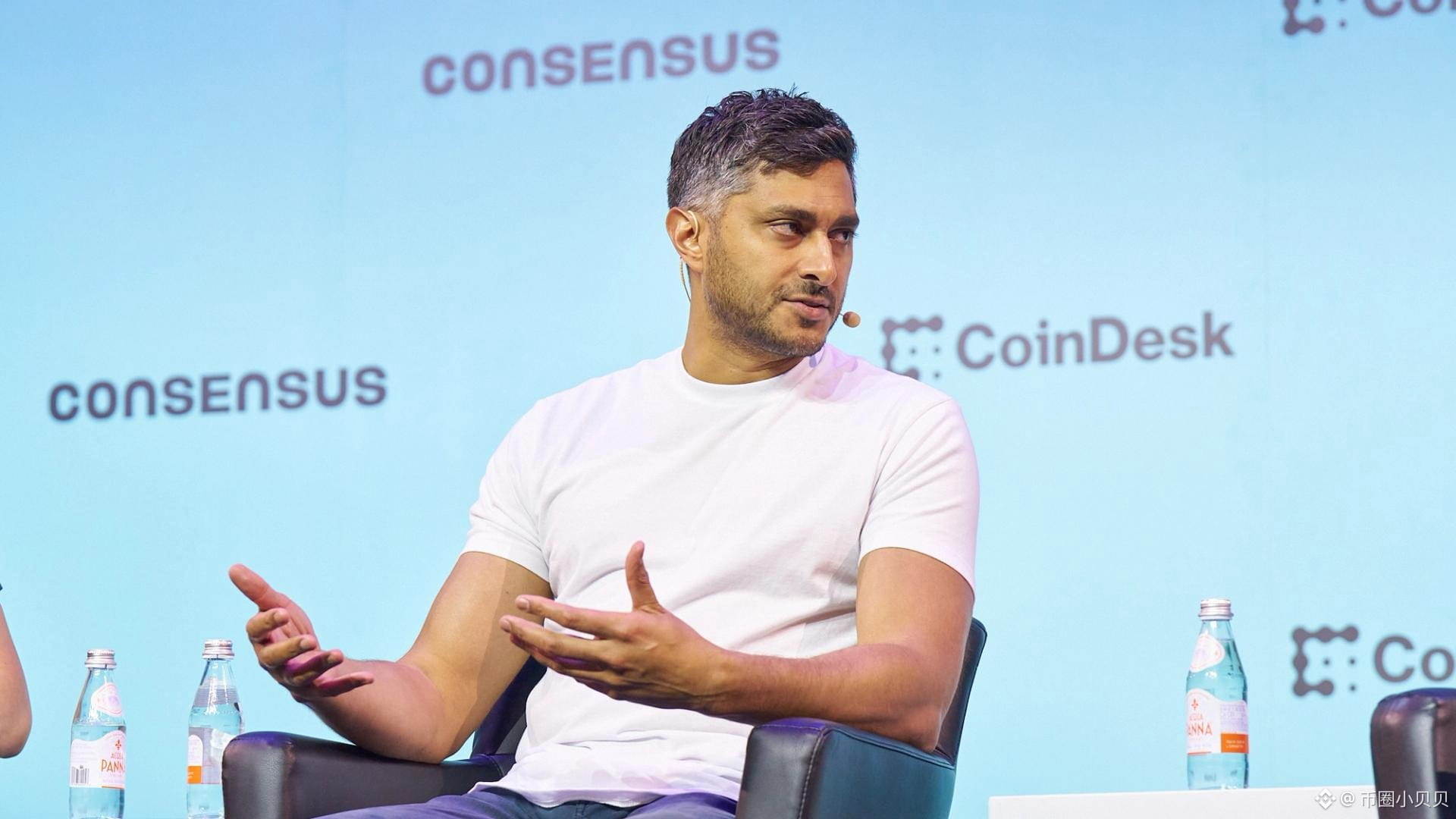
What most people see is “BNY Mellon Bank (The Bank of New York Mellon) partnering with the parent company of a certain exchange, Payward.” The first reaction is: here comes another traditional bank trying to ride the crypto hype.. But if you break down the collaboration—digital assets, custody, trading, payments, and financial market infrastructure—the heaviest weight is really in those two words: “custody.”..
BNY isn’t a regular bank. It’s one of the largest custodians in the world, safeguarding tens of trillions of dollars in assets for institutions.. The way these organizations operate is completely different from investment banks. They don’t chase price swings. They only integrate a business into their core systems after it’s proven that “money put in won’t be lost.”..
So what’s truly happening this time isn’t that BNY wants to buy coins. It’s that it’s starting to treat crypto as a large-organization asset channel that can be custodied.. The final step of institutional capital entering—who will safeguard it, who will settle it—is gradually shifting from the exchanges themselves toward custodians backed by a century of trust..
In the past few years, the crypto narrative has always been “exchanges are the entry point.” But if custody and settlement increasingly end up in the hands of traditional institutions, the exchange’s role will退 from an entry point to a mere channel.. Whoever controls custody, controls the gate to the next wave of institutional capital..
Zoom out one more level, and this is actually the same line as RWA, stablecoins, and tokenized treasuries.. Traditional finance isn’t “entering” crypto—it’s taking crypto apart into components, then assembling it back into its own system. Anything it can take over, it takes over; anything it can’t, it leaves to spin around inside the circle..
In the short term, this news won’t directly move coin prices. It determines whether that slower, heavier pool of money will come in.. Once institutions like BNY have custody fully connected, the follow-on players will most likely not be retail investors, but capital on the scale of pension funds and sovereign wealth funds..
Of course, the negotiations haven’t been finalized yet—terms, regulation, and timelines are all still question marks.. But the direction is no longer blurry: crypto is moving from “a type of asset” toward “a set of infrastructure.”.. What’s truly worth watching isn’t just this news, but which other long-established custodians will take similar actions next..
#bnb链代币化股票规模破10亿美元占市场30%
This time, it’s not investment banks that want to do business with crypto just to chase the headlines. It’s the kind of institution that keeps an eye on assets for Wall Street..
⚖️ 盘面异动群里说
What most people see is “BNY Mellon Bank (The Bank of New York Mellon) partnering with the parent company of a certain exchange, Payward.” The first reaction is: here comes another traditional bank trying to ride the crypto hype.. But if you break down the collaboration—digital assets, custody, trading, payments, and financial market infrastructure—the heaviest weight is really in those two words: “custody.”..
BNY isn’t a regular bank. It’s one of the largest custodians in the world, safeguarding tens of trillions of dollars in assets for institutions.. The way these organizations operate is completely different from investment banks. They don’t chase price swings. They only integrate a business into their core systems after it’s proven that “money put in won’t be lost.”..
So what’s truly happening this time isn’t that BNY wants to buy coins. It’s that it’s starting to treat crypto as a large-organization asset channel that can be custodied.. The final step of institutional capital entering—who will safeguard it, who will settle it—is gradually shifting from the exchanges themselves toward custodians backed by a century of trust..
In the past few years, the crypto narrative has always been “exchanges are the entry point.” But if custody and settlement increasingly end up in the hands of traditional institutions, the exchange’s role will退 from an entry point to a mere channel.. Whoever controls custody, controls the gate to the next wave of institutional capital..
Zoom out one more level, and this is actually the same line as RWA, stablecoins, and tokenized treasuries.. Traditional finance isn’t “entering” crypto—it’s taking crypto apart into components, then assembling it back into its own system. Anything it can take over, it takes over; anything it can’t, it leaves to spin around inside the circle..
In the short term, this news won’t directly move coin prices. It determines whether that slower, heavier pool of money will come in.. Once institutions like BNY have custody fully connected, the follow-on players will most likely not be retail investors, but capital on the scale of pension funds and sovereign wealth funds..
Of course, the negotiations haven’t been finalized yet—terms, regulation, and timelines are all still question marks.. But the direction is no longer blurry: crypto is moving from “a type of asset” toward “a set of infrastructure.”.. What’s truly worth watching isn’t just this news, but which other long-established custodians will take similar actions next..
This time, it’s not investment banks that want to do business with crypto just to chase the headlines. It’s the kind of institution that keeps an eye on assets for Wall Street..
⚖️ 盘面异动群里说
What most people see is “BNY Mellon Bank (The Bank of New York Mellon) partnering with the parent company of a certain exchange, Payward.” The first reaction is: here comes another traditional bank trying to ride the crypto hype.. But if you break down the collaboration—digital assets, custody, trading, payments, and financial market infrastructure—the heaviest weight is really in those two words: “custody.”..
BNY isn’t a regular bank. It’s one of the largest custodians in the world, safeguarding tens of trillions of dollars in assets for institutions.. The way these organizations operate is completely different from investment banks. They don’t chase price swings. They only integrate a business into their core systems after it’s proven that “money put in won’t be lost.”..
So what’s truly happening this time isn’t that BNY wants to buy coins. It’s that it’s starting to treat crypto as a large-organization asset channel that can be custodied.. The final step of institutional capital entering—who will safeguard it, who will settle it—is gradually shifting from the exchanges themselves toward custodians backed by a century of trust..
In the past few years, the crypto narrative has always been “exchanges are the entry point.” But if custody and settlement increasingly end up in the hands of traditional institutions, the exchange’s role will退 from an entry point to a mere channel.. Whoever controls custody, controls the gate to the next wave of institutional capital..
Zoom out one more level, and this is actually the same line as RWA, stablecoins, and tokenized treasuries.. Traditional finance isn’t “entering” crypto—it’s taking crypto apart into components, then assembling it back into its own system. Anything it can take over, it takes over; anything it can’t, it leaves to spin around inside the circle..
In the short term, this news won’t directly move coin prices. It determines whether that slower, heavier pool of money will come in.. Once institutions like BNY have custody fully connected, the follow-on players will most likely not be retail investors, but capital on the scale of pension funds and sovereign wealth funds..
Of course, the negotiations haven’t been finalized yet—terms, regulation, and timelines are all still question marks.. But the direction is no longer blurry: crypto is moving from “a type of asset” toward “a set of infrastructure.”.. What’s truly worth watching isn’t just this news, but which other long-established custodians will take similar actions next..
2.3k
·
--
#美国9月非农仅增2.9万人失业率升至4.2%
A batch of employment data that's only expected to be one-third of what people hoped for actually pushed Bitcoin to around 86,000..
[💰 热点新闻](https://app.binance.com/uni-qr/F6dwNqgx)
Most people see that crypto is up, but the leverage that truly moves prices isn’t actually in crypto.. In the U.S., September added only 29,000 jobs, below the market’s original expectation of 84,000. The numbers for the prior two months were revised down by a total of 60,000, and the unemployment rate rose to 4.2%..
According to the old script, when data like this comes out, risk assets should panic.. But this time it’s the other way around: interest-rate futures show that the market’s probability pricing for a 25-basis-point hike in October fell from 70% earlier this week to 14%.. The door to rate cuts cracks open, and once it does, money runs first to the highest-beta areas..
So Bitcoin rose more than 1.5% that day, topping out above 87,000. It’s only a little short of the year-to-date ceiling of 87,350 set back in September.. The total crypto market cap across the whole network has again climbed above $3 trillion, with the Fear & Greed Index at 71, already back in the “Greed” zone.. Spot ETFs saw net inflows of $102 million yesterday—funds are genuinely coming back, not just talk..
The key is how the money moves.. It’s not that some sector suddenly got a new story—rather, the bond side moved first: yields are being pushed down, reducing the appeal of cash and short-term Treasuries. Money gets squeezed toward stocks and gold, and then spills over into crypto.. Bitcoin has risen 66% relative to gold during this stretch, suggesting it’s being used as “high-volatility gold” this time, not as an independent crypto narrative..
The meaning of this step is bigger than the price itself.. Over the past two years, the market has depended on its own catalysts to some extent: ETF approvals, halvings, a chain revival.. But what’s driving prices in this round is employment data, the Fed’s messaging, and global liquidity.. The pricing power is shifting from inside the crypto bubble to the large pool of global capital..
There are two sides to a coin.. The market’s sensitivity to liquidity means that if the next CPI or employment data comes in stronger than expected, and the rate-hike expectations swing back, the same batch of money could leave just as quickly. RSI is already at 68, nearing overbought levels. And above, 87,350 is again a clear resistance..
What’s really worth watching isn’t how much it’s up today, but the FOMC decision on October 28—whether it will confirm this round of “looser expectations”.. If it’s confirmed, 87,000 might only be the first half; if it isn’t, the money that flooded in over the past couple of days could run away faster than anyone else.
#美国9月非农仅增2.9万人失业率升至4.2%
A batch of employment data that's only expected to be one-third of what people hoped for actually pushed Bitcoin to around 86,000..
💰 热点新闻
Most people see that crypto is up, but the leverage that truly moves prices isn’t actually in crypto.. In the U.S., September added only 29,000 jobs, below the market’s original expectation of 84,000. The numbers for the prior two months were revised down by a total of 60,000, and the unemployment rate rose to 4.2%..
According to the old script, when data like this comes out, risk assets should panic.. But this time it’s the other way around: interest-rate futures show that the market’s probability pricing for a 25-basis-point hike in October fell from 70% earlier this week to 14%.. The door to rate cuts cracks open, and once it does, money runs first to the highest-beta areas..
So Bitcoin rose more than 1.5% that day, topping out above 87,000. It’s only a little short of the year-to-date ceiling of 87,350 set back in September.. The total crypto market cap across the whole network has again climbed above $3 trillion, with the Fear & Greed Index at 71, already back in the “Greed” zone.. Spot ETFs saw net inflows of $102 million yesterday—funds are genuinely coming back, not just talk..
The key is how the money moves.. It’s not that some sector suddenly got a new story—rather, the bond side moved first: yields are being pushed down, reducing the appeal of cash and short-term Treasuries. Money gets squeezed toward stocks and gold, and then spills over into crypto.. Bitcoin has risen 66% relative to gold during this stretch, suggesting it’s being used as “high-volatility gold” this time, not as an independent crypto narrative..
The meaning of this step is bigger than the price itself.. Over the past two years, the market has depended on its own catalysts to some extent: ETF approvals, halvings, a chain revival.. But what’s driving prices in this round is employment data, the Fed’s messaging, and global liquidity.. The pricing power is shifting from inside the crypto bubble to the large pool of global capital..
There are two sides to a coin.. The market’s sensitivity to liquidity means that if the next CPI or employment data comes in stronger than expected, and the rate-hike expectations swing back, the same batch of money could leave just as quickly. RSI is already at 68, nearing overbought levels. And above, 87,350 is again a clear resistance..
What’s really worth watching isn’t how much it’s up today, but the FOMC decision on October 28—whether it will confirm this round of “looser expectations”.. If it’s confirmed, 87,000 might only be the first half; if it isn’t, the money that flooded in over the past couple of days could run away faster than anyone else.
A batch of employment data that's only expected to be one-third of what people hoped for actually pushed Bitcoin to around 86,000..
💰 热点新闻
Most people see that crypto is up, but the leverage that truly moves prices isn’t actually in crypto.. In the U.S., September added only 29,000 jobs, below the market’s original expectation of 84,000. The numbers for the prior two months were revised down by a total of 60,000, and the unemployment rate rose to 4.2%..
According to the old script, when data like this comes out, risk assets should panic.. But this time it’s the other way around: interest-rate futures show that the market’s probability pricing for a 25-basis-point hike in October fell from 70% earlier this week to 14%.. The door to rate cuts cracks open, and once it does, money runs first to the highest-beta areas..
So Bitcoin rose more than 1.5% that day, topping out above 87,000. It’s only a little short of the year-to-date ceiling of 87,350 set back in September.. The total crypto market cap across the whole network has again climbed above $3 trillion, with the Fear & Greed Index at 71, already back in the “Greed” zone.. Spot ETFs saw net inflows of $102 million yesterday—funds are genuinely coming back, not just talk..
The key is how the money moves.. It’s not that some sector suddenly got a new story—rather, the bond side moved first: yields are being pushed down, reducing the appeal of cash and short-term Treasuries. Money gets squeezed toward stocks and gold, and then spills over into crypto.. Bitcoin has risen 66% relative to gold during this stretch, suggesting it’s being used as “high-volatility gold” this time, not as an independent crypto narrative..
The meaning of this step is bigger than the price itself.. Over the past two years, the market has depended on its own catalysts to some extent: ETF approvals, halvings, a chain revival.. But what’s driving prices in this round is employment data, the Fed’s messaging, and global liquidity.. The pricing power is shifting from inside the crypto bubble to the large pool of global capital..
There are two sides to a coin.. The market’s sensitivity to liquidity means that if the next CPI or employment data comes in stronger than expected, and the rate-hike expectations swing back, the same batch of money could leave just as quickly. RSI is already at 68, nearing overbought levels. And above, 87,350 is again a clear resistance..
What’s really worth watching isn’t how much it’s up today, but the FOMC decision on October 28—whether it will confirm this round of “looser expectations”.. If it’s confirmed, 87,000 might only be the first half; if it isn’t, the money that flooded in over the past couple of days could run away faster than anyone else.

3
6k
·
--
#比特币站上8.6万美元涨2.99%
A chain that once held $2 billion decided to shut its lights off..
[📢 进群蹲一手消息](https://app.binance.com/uni-qr/F6dwNqgx)
Many people see this as yet another project dying, but what’s really worth watching is how it died.. Blast is a Layer 2 network on Ethereum backed by Paradigm.. In 2024, before it even went live, users had already deposited more than $1.1 billion into it, betting on an airdrop; after launch, on-chain assets at one point surged to over $2 billion..
Two years later, the official posted a very calm announcement: continuing to operate this chain is no longer economically viable.. Maintenance costs exceed the revenue generated by the L2, and there’s no sustainable path forward..
The numbers are even more direct.. On-chain assets fell from more than $2 billion in June 2024 to just $32 million today.. Last month, the chain’s revenue was $1,793.. Yes, one thousand seven hundred ninety-three.. At its peak, it could bring in $3.5 million per month.. After the announcement, the token BLAST dropped 19%, down about 98% from its launch price..
Most people read this as “another L2 has gone cold”.. But the real question is: where did the money go..
Because it’s not just them who got caught up in the race.. A leading exchange took its own existing users and developers and poured them directly into Base, the Layer 2 it built; and this year, a brokerage also launched its own chain, and on launch the on-chain activity exploded.. They don’t need to steal users from zero, because the users were already in their hands.. Independent L2s find it increasingly difficult to attract developers and trading fees in the face of such competitors..
Meanwhile, costs keep rising.. Repeated hack incidents have pushed security spending to the forefront, and AI tools make it easier for attackers to scan for code weaknesses.. Operating a chain means you have to keep paying for development, infrastructure, and security— even after users have long left..
So behind this is a reshuffling of capital and attention.. After the tide of incremental narratives recedes, money no longer spreads evenly across all chains, but instead concentrates toward the top—toward places with real distribution power.. Users who still hold assets, note this: you can withdraw your assets back to Ethereum via the official interface before October 26; after that, you’ll only be able to interact directly with cross-chain contracts..
If this trend continues, the next thing worth watching is a slightly counterintuitive signal: whenever an L2 shuts down, it might not be bad news— it could mean the remaining chains have captured more concentrated liquidity.. The real issue isn’t how many chains will die, but ultimately which few chains the money ends up on..
#比特币站上8.6万美元涨2.99%
A chain that once held $2 billion decided to shut its lights off..
📢 进群蹲一手消息
Many people see this as yet another project dying, but what’s really worth watching is how it died.. Blast is a Layer 2 network on Ethereum backed by Paradigm.. In 2024, before it even went live, users had already deposited more than $1.1 billion into it, betting on an airdrop; after launch, on-chain assets at one point surged to over $2 billion..
Two years later, the official posted a very calm announcement: continuing to operate this chain is no longer economically viable.. Maintenance costs exceed the revenue generated by the L2, and there’s no sustainable path forward..
The numbers are even more direct.. On-chain assets fell from more than $2 billion in June 2024 to just $32 million today.. Last month, the chain’s revenue was $1,793.. Yes, one thousand seven hundred ninety-three.. At its peak, it could bring in $3.5 million per month.. After the announcement, the token BLAST dropped 19%, down about 98% from its launch price..
Most people read this as “another L2 has gone cold”.. But the real question is: where did the money go..
Because it’s not just them who got caught up in the race.. A leading exchange took its own existing users and developers and poured them directly into Base, the Layer 2 it built; and this year, a brokerage also launched its own chain, and on launch the on-chain activity exploded.. They don’t need to steal users from zero, because the users were already in their hands.. Independent L2s find it increasingly difficult to attract developers and trading fees in the face of such competitors..
Meanwhile, costs keep rising.. Repeated hack incidents have pushed security spending to the forefront, and AI tools make it easier for attackers to scan for code weaknesses.. Operating a chain means you have to keep paying for development, infrastructure, and security— even after users have long left..
So behind this is a reshuffling of capital and attention.. After the tide of incremental narratives recedes, money no longer spreads evenly across all chains, but instead concentrates toward the top—toward places with real distribution power.. Users who still hold assets, note this: you can withdraw your assets back to Ethereum via the official interface before October 26; after that, you’ll only be able to interact directly with cross-chain contracts..
If this trend continues, the next thing worth watching is a slightly counterintuitive signal: whenever an L2 shuts down, it might not be bad news— it could mean the remaining chains have captured more concentrated liquidity.. The real issue isn’t how many chains will die, but ultimately which few chains the money ends up on..
A chain that once held $2 billion decided to shut its lights off..
📢 进群蹲一手消息
Many people see this as yet another project dying, but what’s really worth watching is how it died.. Blast is a Layer 2 network on Ethereum backed by Paradigm.. In 2024, before it even went live, users had already deposited more than $1.1 billion into it, betting on an airdrop; after launch, on-chain assets at one point surged to over $2 billion..
Two years later, the official posted a very calm announcement: continuing to operate this chain is no longer economically viable.. Maintenance costs exceed the revenue generated by the L2, and there’s no sustainable path forward..
The numbers are even more direct.. On-chain assets fell from more than $2 billion in June 2024 to just $32 million today.. Last month, the chain’s revenue was $1,793.. Yes, one thousand seven hundred ninety-three.. At its peak, it could bring in $3.5 million per month.. After the announcement, the token BLAST dropped 19%, down about 98% from its launch price..
Most people read this as “another L2 has gone cold”.. But the real question is: where did the money go..
Because it’s not just them who got caught up in the race.. A leading exchange took its own existing users and developers and poured them directly into Base, the Layer 2 it built; and this year, a brokerage also launched its own chain, and on launch the on-chain activity exploded.. They don’t need to steal users from zero, because the users were already in their hands.. Independent L2s find it increasingly difficult to attract developers and trading fees in the face of such competitors..
Meanwhile, costs keep rising.. Repeated hack incidents have pushed security spending to the forefront, and AI tools make it easier for attackers to scan for code weaknesses.. Operating a chain means you have to keep paying for development, infrastructure, and security— even after users have long left..
So behind this is a reshuffling of capital and attention.. After the tide of incremental narratives recedes, money no longer spreads evenly across all chains, but instead concentrates toward the top—toward places with real distribution power.. Users who still hold assets, note this: you can withdraw your assets back to Ethereum via the official interface before October 26; after that, you’ll only be able to interact directly with cross-chain contracts..
If this trend continues, the next thing worth watching is a slightly counterintuitive signal: whenever an L2 shuts down, it might not be bad news— it could mean the remaining chains have captured more concentrated liquidity.. The real issue isn’t how many chains will die, but ultimately which few chains the money ends up on..

655
·
--
#比特币站上8.6万美元涨2.99%
Yes, the money is back—but something didn’t come back with it..
[💥 最新消息群里说](https://app.binance.com/uni-qr/F6dwNqgx)
Most people are seeing Kalshi needing to raise another $1 billion, its valuation jumping to $40 billion, and Blockchain.com getting ready to relist. They think the crypto primary market has finally recovered.. Put these things together, though, and the picture isn’t so optimistic..
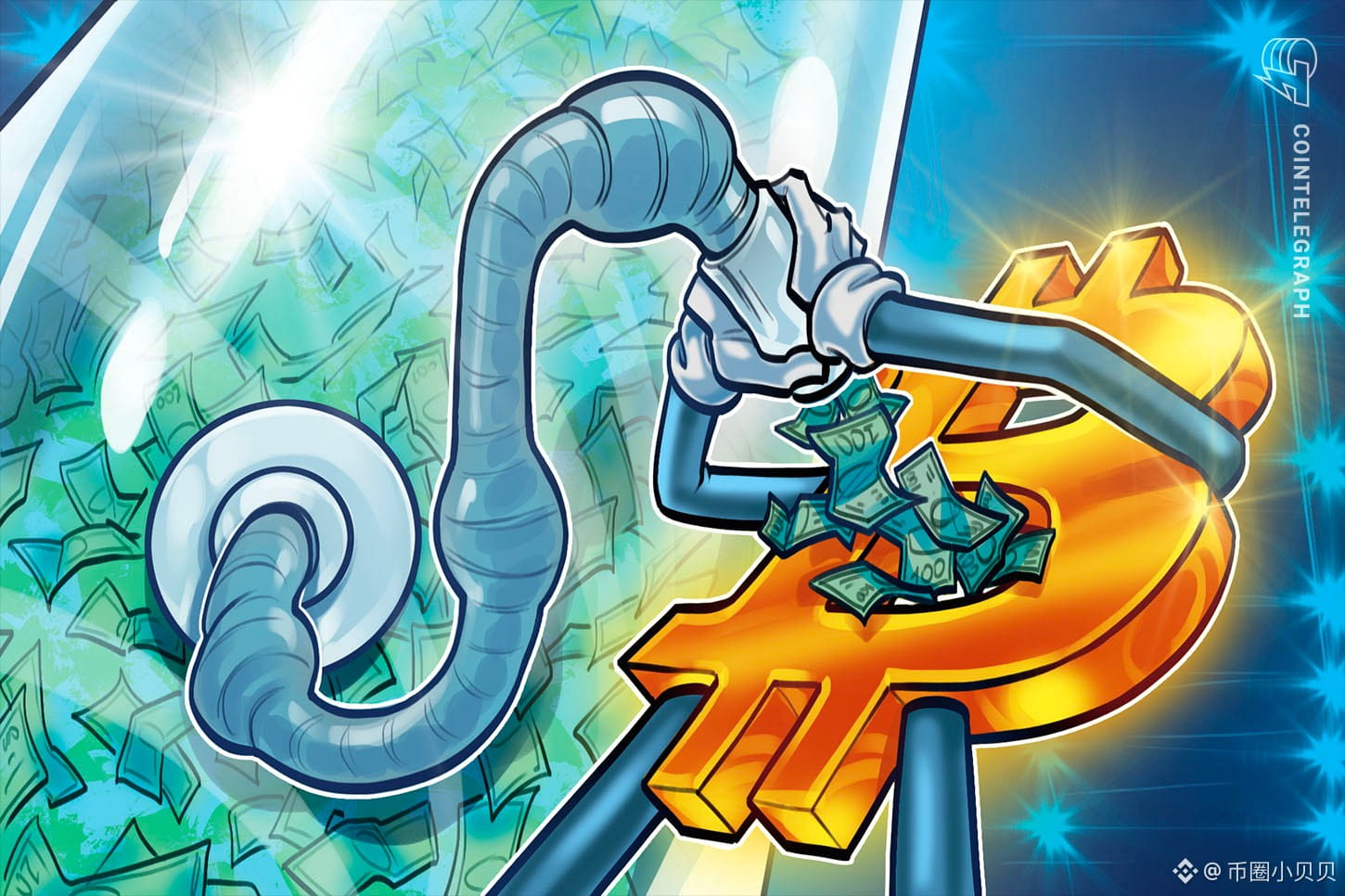
What’s truly worth watching is a not-so-pleasant number: among the 20 largest digital-asset custody firms, only 4 have their share prices still above the net asset value of their own holdings..
You have to understand how these types of companies operate to grasp the weight of this.. Their earliest play was that the stock price stayed higher than the value of what they held. That way, they could keep issuing new shares to exchange for coins, and as the coin supply grew and the stock price rose again, existing shareholders weren’t diluted.. The premium is the fuel for this whole cycle..
Now the fuel is gone.. Most companies have fallen below net asset value, and issuing more stock would just dilute themselves—so the financing engine essentially stalls.. The same signal shows up elsewhere too: a few platforms that have only recently listed are trading 50% to 80% below their post-IPO highs..
So this isn’t a lack-of-money problem. It’s that money has become picky.. Investors no longer want to pay a premium for “a crypto wrapper.” They only recognize liquidation value..
What’s interesting is that at the same time, Kalshi can double its valuation.. The difference is that it sells event contracts—something with real demand—rather than packaging the holding of “some asset.” The market is willing to pay for demand, but not really for stories..
If this trend continues, what may truly get repriced isn’t the coin price—it may be the value of the act of “holding crypto through public markets” itself.. For custody firms to survive, they’ll likely need to transform the wrapper into an income instrument—shifting toward staking, yield-bearing strategies, and even infrastructure..
Here’s the twist.. The day a premium for this kind of company reappears, it might not be because the market is getting hot again. More likely, they’re no longer telling the story by hoarding coins..
#比特币站上8.6万美元涨2.99%
Yes, the money is back—but something didn’t come back with it..
💥 最新消息群里说
Most people are seeing Kalshi needing to raise another $1 billion, its valuation jumping to $40 billion, and Blockchain.com getting ready to relist. They think the crypto primary market has finally recovered.. Put these things together, though, and the picture isn’t so optimistic..
What’s truly worth watching is a not-so-pleasant number: among the 20 largest digital-asset custody firms, only 4 have their share prices still above the net asset value of their own holdings..
You have to understand how these types of companies operate to grasp the weight of this.. Their earliest play was that the stock price stayed higher than the value of what they held. That way, they could keep issuing new shares to exchange for coins, and as the coin supply grew and the stock price rose again, existing shareholders weren’t diluted.. The premium is the fuel for this whole cycle..
Now the fuel is gone.. Most companies have fallen below net asset value, and issuing more stock would just dilute themselves—so the financing engine essentially stalls.. The same signal shows up elsewhere too: a few platforms that have only recently listed are trading 50% to 80% below their post-IPO highs..
So this isn’t a lack-of-money problem. It’s that money has become picky.. Investors no longer want to pay a premium for “a crypto wrapper.” They only recognize liquidation value..
What’s interesting is that at the same time, Kalshi can double its valuation.. The difference is that it sells event contracts—something with real demand—rather than packaging the holding of “some asset.” The market is willing to pay for demand, but not really for stories..
If this trend continues, what may truly get repriced isn’t the coin price—it may be the value of the act of “holding crypto through public markets” itself.. For custody firms to survive, they’ll likely need to transform the wrapper into an income instrument—shifting toward staking, yield-bearing strategies, and even infrastructure..
Here’s the twist.. The day a premium for this kind of company reappears, it might not be because the market is getting hot again. More likely, they’re no longer telling the story by hoarding coins..
Yes, the money is back—but something didn’t come back with it..
💥 最新消息群里说
Most people are seeing Kalshi needing to raise another $1 billion, its valuation jumping to $40 billion, and Blockchain.com getting ready to relist. They think the crypto primary market has finally recovered.. Put these things together, though, and the picture isn’t so optimistic..
What’s truly worth watching is a not-so-pleasant number: among the 20 largest digital-asset custody firms, only 4 have their share prices still above the net asset value of their own holdings..
You have to understand how these types of companies operate to grasp the weight of this.. Their earliest play was that the stock price stayed higher than the value of what they held. That way, they could keep issuing new shares to exchange for coins, and as the coin supply grew and the stock price rose again, existing shareholders weren’t diluted.. The premium is the fuel for this whole cycle..
Now the fuel is gone.. Most companies have fallen below net asset value, and issuing more stock would just dilute themselves—so the financing engine essentially stalls.. The same signal shows up elsewhere too: a few platforms that have only recently listed are trading 50% to 80% below their post-IPO highs..
So this isn’t a lack-of-money problem. It’s that money has become picky.. Investors no longer want to pay a premium for “a crypto wrapper.” They only recognize liquidation value..
What’s interesting is that at the same time, Kalshi can double its valuation.. The difference is that it sells event contracts—something with real demand—rather than packaging the holding of “some asset.” The market is willing to pay for demand, but not really for stories..
If this trend continues, what may truly get repriced isn’t the coin price—it may be the value of the act of “holding crypto through public markets” itself.. For custody firms to survive, they’ll likely need to transform the wrapper into an income instrument—shifting toward staking, yield-bearing strategies, and even infrastructure..
Here’s the twist.. The day a premium for this kind of company reappears, it might not be because the market is getting hot again. More likely, they’re no longer telling the story by hoarding coins..
300
·
--
#比特币站上8.6万美元涨2.99%
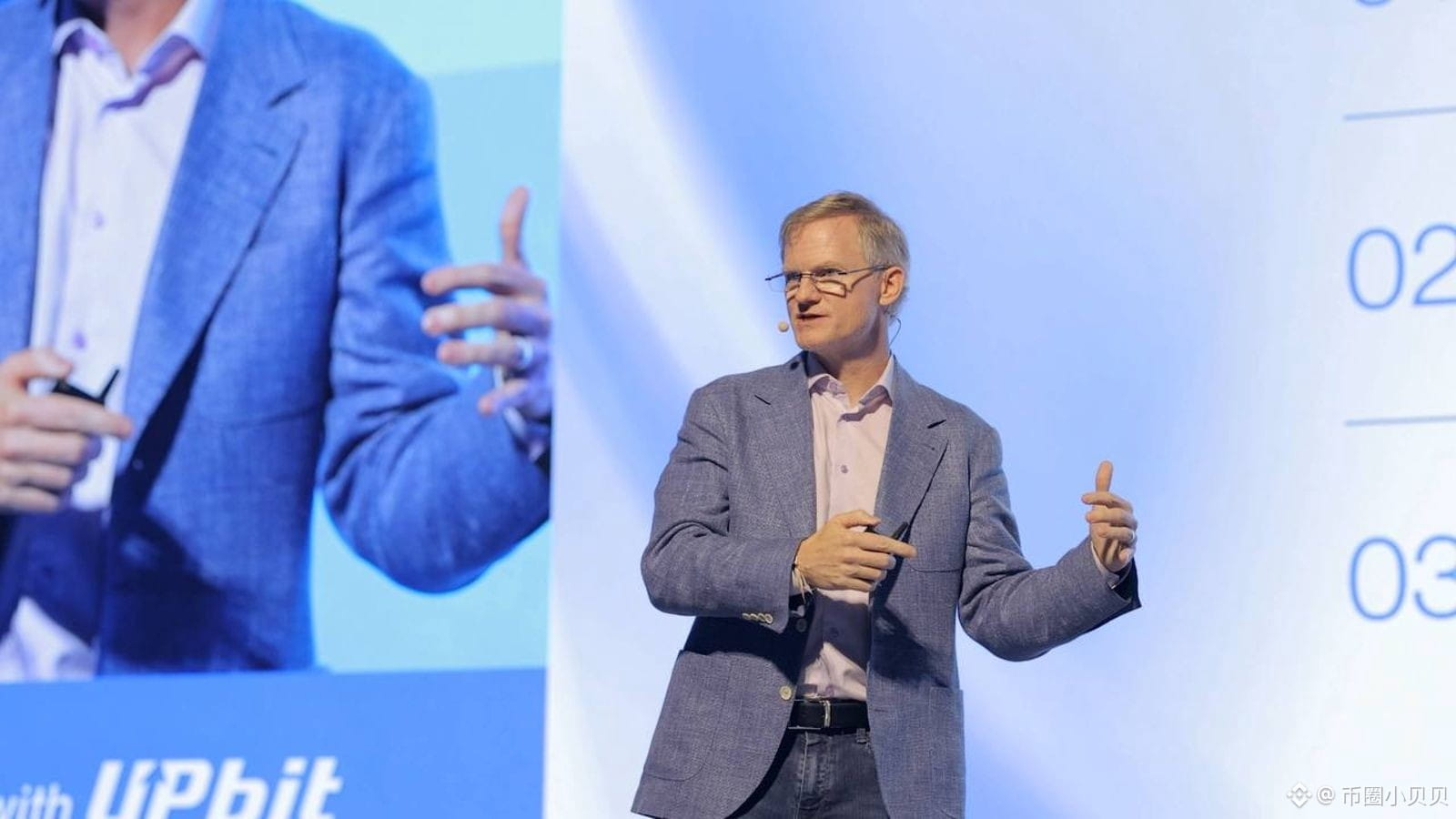
First, the conclusion: when Bitcoin surges to 87,000, it might not be the signal most worth remembering today. What’s truly worth pausing for is what a person who has managed private keys for 13 years said..
[💰 交易计划](https://app.binance.com/uni-qr/F6dwNqgx)
Most people see only a sea of green on the screen—the ETF inflows are back again, and Uptober is off to a great start.. But BitGo CEO Belshe put it bluntly: the CLARITY Act failed, which effectively puts the U.S. capital markets in a position with no guardrails..
The concerns he raises are very specific.. Exchanges are turning into “one-stop shops”—trading, brokerage, custody—all under one roof.. That may sound convenient in crypto, but it’s a big deal in traditional finance, because exchanges historically have never handled custody—let alone custody of the “most portable asset in the world.” If you lose the private keys, the money is gone..
So risk becomes two layers.. One is custody risk, the other is counterparty credit risk.. Belshe compares them to Lehman, and even says it could be worse.. His analogy is pretty harsh: in 2008, what collapsed was a brokerage, and the system held up; but if it had been the NYSE itself back then—could the market have survived? Nobody dares to guarantee it..
What’s really worth looking at is this layer.. When stocks, bonds, and funds start moving onto the chain, money doesn’t get distributed across dozens of institutions—it concentrates into a few “do-everything” venues. The more concentrated the venues are, the heavier that single point becomes. Everyone is watching the coin price, but leverage is quietly being added to the market structure..
The reason it failed is actually pretty simple.. According to Belshe, legislators chose to leave the U.S. capital markets exposed first, for the sake of relatively petty political disagreements. The problem isn’t that someone is trying to sabotage things—it’s that nobody is willing to take the first step.
The twist is this: in the short term, the bill getting stuck looks like crypto is the one at a disadvantage. But the first group that isn’t afraid to move are native players like BitGo, who can operate for more than a decade even without a license. What’s truly stuck are the banks and traditional institutions that insist on waiting until the rules are in place before entering..
So what’s worth watching next isn’t whether Bitcoin can hold above 87,000—it’s how fast capital is moving onto the chain, and whether the market structure can keep up. Once one major venue truly has a problem, what falls won’t be just the coin price—it will be the entire “tokenization” story..
#比特币站上8.6万美元涨2.99%
First, the conclusion: when Bitcoin surges to 87,000, it might not be the signal most worth remembering today. What’s truly worth pausing for is what a person who has managed private keys for 13 years said..
💰 交易计划
Most people see only a sea of green on the screen—the ETF inflows are back again, and Uptober is off to a great start.. But BitGo CEO Belshe put it bluntly: the CLARITY Act failed, which effectively puts the U.S. capital markets in a position with no guardrails..
The concerns he raises are very specific.. Exchanges are turning into “one-stop shops”—trading, brokerage, custody—all under one roof.. That may sound convenient in crypto, but it’s a big deal in traditional finance, because exchanges historically have never handled custody—let alone custody of the “most portable asset in the world.” If you lose the private keys, the money is gone..
So risk becomes two layers.. One is custody risk, the other is counterparty credit risk.. Belshe compares them to Lehman, and even says it could be worse.. His analogy is pretty harsh: in 2008, what collapsed was a brokerage, and the system held up; but if it had been the NYSE itself back then—could the market have survived? Nobody dares to guarantee it..
What’s really worth looking at is this layer.. When stocks, bonds, and funds start moving onto the chain, money doesn’t get distributed across dozens of institutions—it concentrates into a few “do-everything” venues. The more concentrated the venues are, the heavier that single point becomes. Everyone is watching the coin price, but leverage is quietly being added to the market structure..
The reason it failed is actually pretty simple.. According to Belshe, legislators chose to leave the U.S. capital markets exposed first, for the sake of relatively petty political disagreements. The problem isn’t that someone is trying to sabotage things—it’s that nobody is willing to take the first step.
The twist is this: in the short term, the bill getting stuck looks like crypto is the one at a disadvantage. But the first group that isn’t afraid to move are native players like BitGo, who can operate for more than a decade even without a license. What’s truly stuck are the banks and traditional institutions that insist on waiting until the rules are in place before entering..
So what’s worth watching next isn’t whether Bitcoin can hold above 87,000—it’s how fast capital is moving onto the chain, and whether the market structure can keep up. Once one major venue truly has a problem, what falls won’t be just the coin price—it will be the entire “tokenization” story..
First, the conclusion: when Bitcoin surges to 87,000, it might not be the signal most worth remembering today. What’s truly worth pausing for is what a person who has managed private keys for 13 years said..
💰 交易计划
Most people see only a sea of green on the screen—the ETF inflows are back again, and Uptober is off to a great start.. But BitGo CEO Belshe put it bluntly: the CLARITY Act failed, which effectively puts the U.S. capital markets in a position with no guardrails..
The concerns he raises are very specific.. Exchanges are turning into “one-stop shops”—trading, brokerage, custody—all under one roof.. That may sound convenient in crypto, but it’s a big deal in traditional finance, because exchanges historically have never handled custody—let alone custody of the “most portable asset in the world.” If you lose the private keys, the money is gone..
So risk becomes two layers.. One is custody risk, the other is counterparty credit risk.. Belshe compares them to Lehman, and even says it could be worse.. His analogy is pretty harsh: in 2008, what collapsed was a brokerage, and the system held up; but if it had been the NYSE itself back then—could the market have survived? Nobody dares to guarantee it..
What’s really worth looking at is this layer.. When stocks, bonds, and funds start moving onto the chain, money doesn’t get distributed across dozens of institutions—it concentrates into a few “do-everything” venues. The more concentrated the venues are, the heavier that single point becomes. Everyone is watching the coin price, but leverage is quietly being added to the market structure..
The reason it failed is actually pretty simple.. According to Belshe, legislators chose to leave the U.S. capital markets exposed first, for the sake of relatively petty political disagreements. The problem isn’t that someone is trying to sabotage things—it’s that nobody is willing to take the first step.
The twist is this: in the short term, the bill getting stuck looks like crypto is the one at a disadvantage. But the first group that isn’t afraid to move are native players like BitGo, who can operate for more than a decade even without a license. What’s truly stuck are the banks and traditional institutions that insist on waiting until the rules are in place before entering..
So what’s worth watching next isn’t whether Bitcoin can hold above 87,000—it’s how fast capital is moving onto the chain, and whether the market structure can keep up. Once one major venue truly has a problem, what falls won’t be just the coin price—it will be the entire “tokenization” story..
1
2.7k
·
--
#near跌至约4.70美元较日高跌逾14%
Two cross-chain protocols, facing the same stolen funds, made entirely opposite choices.. Most people rush to argue about who is right and who is wrong, but the real focus isn’t on morality—it’s on the costs of these two approaches..
[⚖️ 消息第一时间](https://app.binance.com/uni-qr/F6dwNqgx)
It all began on September 24.. An exchange was hacked, and $387.5 million in stolen funds started moving cross-chain. Some of that flowed into the cross-chain swap protocol THORChain.. The exchange CEO publicly urged it to refuse service to the attacker’s addresses, and added, “The whole industry is watching.”..
THORChain declined.. The developers’ explanation was straightforward: a truly permissionless protocol, when it encounters known stolen funds, can do nothing—it is “blind” to the source of funds; once it can target and block a specific piece of stolen money, it is no longer truly permissionless.. This isn’t that it can’t—rather, it would rather give up that capability than protect the label..
But there’s a contradiction that keeps getting brought up.. Back in May this year, THORChain’s validators voted to pause the entire chain. The reason was that a vulnerability was exploited and a certain vault was drained of more than $10 million.. In other words, it isn’t completely incapable of intervention—it just reserves intervention for “when the protocol itself goes wrong,” not for “when someone else’s money gets stolen.”..
On the other side is NEAR Intents.. It takes a middle path: the automated risk-control layer SHIELD identifies inflows of more than $50 million related to this hack attempt, blocks 503,000 in the execution, lets through 166,000, and even voluntarily gave up the bounty it could have claimed to recover the funds..
The real point of interest lies in this division of labor.. One side is pure “doesn’t manage anything,” and the other is pragmatic “blocks when it should.” Sandwiched in between is a set of rules that this industry hasn’t written down yet.. As to who is right and who is wrong, the market is effectively voting in another way: whoever makes exchanges and institutions feel more comfortable gets more money and liquidity..
What to watch is the next step.. If the United States or the EU writes into formal law whether a protocol has fulfilled a duty to intercept, the credibility of THORChain’s line of “I was born to be blind” will have to be questioned.. Conversely, if regulators determine that “automated interception does not count as centralization,” then more protocols will copy the NEAR approach..
The twist is this.. The most heated debate, on the surface, is about demanding justice for the victimized exchange. At a deeper level, it’s about re-pricing the four words “permissionless.” What is the ideal value worth? On the day the first set of official rules truly takes effect, the market will give a number..
#near跌至约4.70美元较日高跌逾14%
Two cross-chain protocols, facing the same stolen funds, made entirely opposite choices.. Most people rush to argue about who is right and who is wrong, but the real focus isn’t on morality—it’s on the costs of these two approaches..
⚖️ 消息第一时间
It all began on September 24.. An exchange was hacked, and $387.5 million in stolen funds started moving cross-chain. Some of that flowed into the cross-chain swap protocol THORChain.. The exchange CEO publicly urged it to refuse service to the attacker’s addresses, and added, “The whole industry is watching.”..
THORChain declined.. The developers’ explanation was straightforward: a truly permissionless protocol, when it encounters known stolen funds, can do nothing—it is “blind” to the source of funds; once it can target and block a specific piece of stolen money, it is no longer truly permissionless.. This isn’t that it can’t—rather, it would rather give up that capability than protect the label..
But there’s a contradiction that keeps getting brought up.. Back in May this year, THORChain’s validators voted to pause the entire chain. The reason was that a vulnerability was exploited and a certain vault was drained of more than $10 million.. In other words, it isn’t completely incapable of intervention—it just reserves intervention for “when the protocol itself goes wrong,” not for “when someone else’s money gets stolen.”..
On the other side is NEAR Intents.. It takes a middle path: the automated risk-control layer SHIELD identifies inflows of more than $50 million related to this hack attempt, blocks 503,000 in the execution, lets through 166,000, and even voluntarily gave up the bounty it could have claimed to recover the funds..
The real point of interest lies in this division of labor.. One side is pure “doesn’t manage anything,” and the other is pragmatic “blocks when it should.” Sandwiched in between is a set of rules that this industry hasn’t written down yet.. As to who is right and who is wrong, the market is effectively voting in another way: whoever makes exchanges and institutions feel more comfortable gets more money and liquidity..
What to watch is the next step.. If the United States or the EU writes into formal law whether a protocol has fulfilled a duty to intercept, the credibility of THORChain’s line of “I was born to be blind” will have to be questioned.. Conversely, if regulators determine that “automated interception does not count as centralization,” then more protocols will copy the NEAR approach..
The twist is this.. The most heated debate, on the surface, is about demanding justice for the victimized exchange. At a deeper level, it’s about re-pricing the four words “permissionless.” What is the ideal value worth? On the day the first set of official rules truly takes effect, the market will give a number..
Two cross-chain protocols, facing the same stolen funds, made entirely opposite choices.. Most people rush to argue about who is right and who is wrong, but the real focus isn’t on morality—it’s on the costs of these two approaches..
⚖️ 消息第一时间
It all began on September 24.. An exchange was hacked, and $387.5 million in stolen funds started moving cross-chain. Some of that flowed into the cross-chain swap protocol THORChain.. The exchange CEO publicly urged it to refuse service to the attacker’s addresses, and added, “The whole industry is watching.”..
THORChain declined.. The developers’ explanation was straightforward: a truly permissionless protocol, when it encounters known stolen funds, can do nothing—it is “blind” to the source of funds; once it can target and block a specific piece of stolen money, it is no longer truly permissionless.. This isn’t that it can’t—rather, it would rather give up that capability than protect the label..
But there’s a contradiction that keeps getting brought up.. Back in May this year, THORChain’s validators voted to pause the entire chain. The reason was that a vulnerability was exploited and a certain vault was drained of more than $10 million.. In other words, it isn’t completely incapable of intervention—it just reserves intervention for “when the protocol itself goes wrong,” not for “when someone else’s money gets stolen.”..
On the other side is NEAR Intents.. It takes a middle path: the automated risk-control layer SHIELD identifies inflows of more than $50 million related to this hack attempt, blocks 503,000 in the execution, lets through 166,000, and even voluntarily gave up the bounty it could have claimed to recover the funds..
The real point of interest lies in this division of labor.. One side is pure “doesn’t manage anything,” and the other is pragmatic “blocks when it should.” Sandwiched in between is a set of rules that this industry hasn’t written down yet.. As to who is right and who is wrong, the market is effectively voting in another way: whoever makes exchanges and institutions feel more comfortable gets more money and liquidity..
What to watch is the next step.. If the United States or the EU writes into formal law whether a protocol has fulfilled a duty to intercept, the credibility of THORChain’s line of “I was born to be blind” will have to be questioned.. Conversely, if regulators determine that “automated interception does not count as centralization,” then more protocols will copy the NEAR approach..
The twist is this.. The most heated debate, on the surface, is about demanding justice for the victimized exchange. At a deeper level, it’s about re-pricing the four words “permissionless.” What is the ideal value worth? On the day the first set of official rules truly takes effect, the market will give a number..
355
·
--
#比特币升至8.5万美元附近
The same Bitcoin, put into different “shells.” The price the market is willing to pay has started to diverge..
[🔄 进群看风向](https://app.binance.com/uni-qr/F6dwNqgx)
Most people read this message as a single line: “Big shots endorsing a certain company”.. Economist Ammous, the author of *The Bitcoin Standard*, says there’s no clear reason to invest in a Bitcoin reserves company other than Saylor.. On the surface, it’s an endorsement of a company, but in reality it’s saying: this sector has started to become segmented..
The gap is there in plain sight.. The top player’s Strategy holds 847,666 Bitcoins, with a cumulative cost of $63.95 billion. It also has another $5.02 billion in USD cash, specifically to pay preferred stock dividends and debt interest.. With a large enough scale, the interest rate for borrowing is lower.. This summer, Bitcoin briefly fell below $60,000. Its STRC preferred shares were far below the $100 target price, so the company could only raise the dividend rate to 12%, repurchase shares, build up large cash reserves, and even sell some Bitcoin to cover the interest—before resuming buying afterward..
In other words, with the same balance sheet that says “holding Bitcoin,” what truly determines fate is whether you can take a punch.. When the market retraces, smaller companies with thinner cash buffers can only sell coins to survive—pushing their cost basis even higher.. Conversely, companies with cash on hand and access to cheap financing only widen the distance between themselves and the chasers when the drawdown comes.
That’s the part that’s really worth watching.. The market is moving from “who bought how much Bitcoin” to “who can withstand the next drawdown”.. The next stop in capital rotation may not be a particular coin, but the differentiation among these “coin-containing shells”—the same beta, but the market starts pricing them differently based on management and financing capability..
After Ammous, there was another blunt truth: he himself also holds Strategy, but he’s more inclined to hold Bitcoin directly.. What he likes is the model—maybe not this particular stock.
Pushing outward one more layer, he says a company’s positive operating cash flow can be used for long-term reserves, even “almost every company should do this”.. If that line truly becomes a trend, what comes in next won’t just be retail investors and funds, but corporate balance sheets—one after another..
One more twist to leave you with.. If Bitcoin dips into deeper waters again, the clearest sign may not be how far the coin price falls, but how many reserve companies can’t hold on before that.. By then, this “shell vs. shell” segmentation will count as truly beginning..
#比特币升至8.5万美元附近
The same Bitcoin, put into different “shells.” The price the market is willing to pay has started to diverge..
🔄 进群看风向
Most people read this message as a single line: “Big shots endorsing a certain company”.. Economist Ammous, the author of *The Bitcoin Standard*, says there’s no clear reason to invest in a Bitcoin reserves company other than Saylor.. On the surface, it’s an endorsement of a company, but in reality it’s saying: this sector has started to become segmented..
The gap is there in plain sight.. The top player’s Strategy holds 847,666 Bitcoins, with a cumulative cost of $63.95 billion. It also has another $5.02 billion in USD cash, specifically to pay preferred stock dividends and debt interest.. With a large enough scale, the interest rate for borrowing is lower.. This summer, Bitcoin briefly fell below $60,000. Its STRC preferred shares were far below the $100 target price, so the company could only raise the dividend rate to 12%, repurchase shares, build up large cash reserves, and even sell some Bitcoin to cover the interest—before resuming buying afterward..
In other words, with the same balance sheet that says “holding Bitcoin,” what truly determines fate is whether you can take a punch.. When the market retraces, smaller companies with thinner cash buffers can only sell coins to survive—pushing their cost basis even higher.. Conversely, companies with cash on hand and access to cheap financing only widen the distance between themselves and the chasers when the drawdown comes.
That’s the part that’s really worth watching.. The market is moving from “who bought how much Bitcoin” to “who can withstand the next drawdown”.. The next stop in capital rotation may not be a particular coin, but the differentiation among these “coin-containing shells”—the same beta, but the market starts pricing them differently based on management and financing capability..
After Ammous, there was another blunt truth: he himself also holds Strategy, but he’s more inclined to hold Bitcoin directly.. What he likes is the model—maybe not this particular stock.
Pushing outward one more layer, he says a company’s positive operating cash flow can be used for long-term reserves, even “almost every company should do this”.. If that line truly becomes a trend, what comes in next won’t just be retail investors and funds, but corporate balance sheets—one after another..
One more twist to leave you with.. If Bitcoin dips into deeper waters again, the clearest sign may not be how far the coin price falls, but how many reserve companies can’t hold on before that.. By then, this “shell vs. shell” segmentation will count as truly beginning..
The same Bitcoin, put into different “shells.” The price the market is willing to pay has started to diverge..
🔄 进群看风向
Most people read this message as a single line: “Big shots endorsing a certain company”.. Economist Ammous, the author of *The Bitcoin Standard*, says there’s no clear reason to invest in a Bitcoin reserves company other than Saylor.. On the surface, it’s an endorsement of a company, but in reality it’s saying: this sector has started to become segmented..
The gap is there in plain sight.. The top player’s Strategy holds 847,666 Bitcoins, with a cumulative cost of $63.95 billion. It also has another $5.02 billion in USD cash, specifically to pay preferred stock dividends and debt interest.. With a large enough scale, the interest rate for borrowing is lower.. This summer, Bitcoin briefly fell below $60,000. Its STRC preferred shares were far below the $100 target price, so the company could only raise the dividend rate to 12%, repurchase shares, build up large cash reserves, and even sell some Bitcoin to cover the interest—before resuming buying afterward..
In other words, with the same balance sheet that says “holding Bitcoin,” what truly determines fate is whether you can take a punch.. When the market retraces, smaller companies with thinner cash buffers can only sell coins to survive—pushing their cost basis even higher.. Conversely, companies with cash on hand and access to cheap financing only widen the distance between themselves and the chasers when the drawdown comes.
That’s the part that’s really worth watching.. The market is moving from “who bought how much Bitcoin” to “who can withstand the next drawdown”.. The next stop in capital rotation may not be a particular coin, but the differentiation among these “coin-containing shells”—the same beta, but the market starts pricing them differently based on management and financing capability..
After Ammous, there was another blunt truth: he himself also holds Strategy, but he’s more inclined to hold Bitcoin directly.. What he likes is the model—maybe not this particular stock.
Pushing outward one more layer, he says a company’s positive operating cash flow can be used for long-term reserves, even “almost every company should do this”.. If that line truly becomes a trend, what comes in next won’t just be retail investors and funds, but corporate balance sheets—one after another..
One more twist to leave you with.. If Bitcoin dips into deeper waters again, the clearest sign may not be how far the coin price falls, but how many reserve companies can’t hold on before that.. By then, this “shell vs. shell” segmentation will count as truly beginning..

219
·
--
An academic concept that was written as early as 1993 has quietly been running for years in the crypto world—and now Wall Street has picked it up and fitted it onto its most core benchmark index.. What’s truly worth watching isn’t the product itself, but the direction..
[💬 想聊行情的进群](https://app.binance.com/uni-qr/F6dwNqgx)
Cboe is studying perpetual contracts on VIX—meaning making that “fear index” thing people have been talking about for decades into a contract with no expiration.. The news is still very early; there are no contract details yet, and no filings, but the direction has already been made clear..
Most people take it as “the exchange is adding another new product”.. But this time, what’s really worth watching is the product’s structure—how it flows in reverse from the crypto world into traditional markets..
The mechanism of perpetual futures was first proposed by economist Shiller back in 1993. What actually turned it into a business was the crypto exchanges.. It uses a funding rate to anchor the contract price to the spot price. With no expiration date, there’s no rolling/rollover cost.. And one of the main criticisms of traditional VIX futures is precisely that they have to roll their positions every month, with costs gradually eating away at returns..
In other words, what Wall Street wants to copy isn’t “volatility” as an underlying asset—it’s the contract wrapper that the crypto industry has been refining over these past few years.. That’s what’s really happening in this wave..
Why now? Because the market structures on both sides are quickly converging.. First, there were perpetual contracts linked to Bitcoin volatility running on-chain. Then traditional exchanges began researching and put the same mechanism back onto their own most familiar index.. If this trend continues, the next thing to become “perpetualized” won’t be just VIX—there could be more indices, more assets, and more indicators..
But there’s also a real-world issue that still has to be addressed: VIX itself is merely a calculated number. Unlike Bitcoin, it doesn’t have a spot market that can actually be traded.. Market makers can’t buy “spot” to hedge. Whether the funding rate can truly anchor the contract remains an open question even now.. As some analysts put it directly: removing the expiration date doesn’t mean removing hedging costs and basis risk..
So the key question has never been “whether Cboe will launch it,” but rather: when crypto’s structure starts exporting in reverse, who is holding the most seasoned toolkit?
An academic concept that was written as early as 1993 has quietly been running for years in the crypto world—and now Wall Street has picked it up and fitted it onto its most core benchmark index.. What’s truly worth watching isn’t the product itself, but the direction..
💬 想聊行情的进群
Cboe is studying perpetual contracts on VIX—meaning making that “fear index” thing people have been talking about for decades into a contract with no expiration.. The news is still very early; there are no contract details yet, and no filings, but the direction has already been made clear..
Most people take it as “the exchange is adding another new product”.. But this time, what’s really worth watching is the product’s structure—how it flows in reverse from the crypto world into traditional markets..
The mechanism of perpetual futures was first proposed by economist Shiller back in 1993. What actually turned it into a business was the crypto exchanges.. It uses a funding rate to anchor the contract price to the spot price. With no expiration date, there’s no rolling/rollover cost.. And one of the main criticisms of traditional VIX futures is precisely that they have to roll their positions every month, with costs gradually eating away at returns..
In other words, what Wall Street wants to copy isn’t “volatility” as an underlying asset—it’s the contract wrapper that the crypto industry has been refining over these past few years.. That’s what’s really happening in this wave..
Why now? Because the market structures on both sides are quickly converging.. First, there were perpetual contracts linked to Bitcoin volatility running on-chain. Then traditional exchanges began researching and put the same mechanism back onto their own most familiar index.. If this trend continues, the next thing to become “perpetualized” won’t be just VIX—there could be more indices, more assets, and more indicators..
But there’s also a real-world issue that still has to be addressed: VIX itself is merely a calculated number. Unlike Bitcoin, it doesn’t have a spot market that can actually be traded.. Market makers can’t buy “spot” to hedge. Whether the funding rate can truly anchor the contract remains an open question even now.. As some analysts put it directly: removing the expiration date doesn’t mean removing hedging costs and basis risk..
So the key question has never been “whether Cboe will launch it,” but rather: when crypto’s structure starts exporting in reverse, who is holding the most seasoned toolkit?
💬 想聊行情的进群
Cboe is studying perpetual contracts on VIX—meaning making that “fear index” thing people have been talking about for decades into a contract with no expiration.. The news is still very early; there are no contract details yet, and no filings, but the direction has already been made clear..
Most people take it as “the exchange is adding another new product”.. But this time, what’s really worth watching is the product’s structure—how it flows in reverse from the crypto world into traditional markets..
The mechanism of perpetual futures was first proposed by economist Shiller back in 1993. What actually turned it into a business was the crypto exchanges.. It uses a funding rate to anchor the contract price to the spot price. With no expiration date, there’s no rolling/rollover cost.. And one of the main criticisms of traditional VIX futures is precisely that they have to roll their positions every month, with costs gradually eating away at returns..
In other words, what Wall Street wants to copy isn’t “volatility” as an underlying asset—it’s the contract wrapper that the crypto industry has been refining over these past few years.. That’s what’s really happening in this wave..
Why now? Because the market structures on both sides are quickly converging.. First, there were perpetual contracts linked to Bitcoin volatility running on-chain. Then traditional exchanges began researching and put the same mechanism back onto their own most familiar index.. If this trend continues, the next thing to become “perpetualized” won’t be just VIX—there could be more indices, more assets, and more indicators..
But there’s also a real-world issue that still has to be addressed: VIX itself is merely a calculated number. Unlike Bitcoin, it doesn’t have a spot market that can actually be traded.. Market makers can’t buy “spot” to hedge. Whether the funding rate can truly anchor the contract remains an open question even now.. As some analysts put it directly: removing the expiration date doesn’t mean removing hedging costs and basis risk..
So the key question has never been “whether Cboe will launch it,” but rather: when crypto’s structure starts exporting in reverse, who is holding the most seasoned toolkit?

28
·
--
#比特币升至8.5万美元附近
The market is awash in green—everyone is talking about risk appetite returning. But there’s a number inside the story, telling a more tightly focused tale..
[🔄 进群看机构动作](https://app.binance.com/uni-qr/F6dwNqgx)
Bitcoin has reclaimed the $86,000 level, up 3.4% in 24 hours. BTC is leading the charge—ETH, XRP, SOL, and BNB are all moving up too—but nobody has outperformed Bitcoin.. Dig a little deeper: SKY, AAVE, and APT are up 7% to 10%, making them among the most eye-catching names in the top 100 coins..
Most people reading this would conclude that an altseason is coming.. But within the same data set, another number is mentioned almost in passing: Bitcoin’s market share is edging back toward 60%..
This doesn’t point to broad-based rallies; it points to concentration.. Even in a rebound that looks like everyone gets a share, capital still goes first to the most certain spot. This doesn’t look like altseason behavior—it looks more like a form of risk aversion within crypto: money is willing to take risk, but only the kind it understands best..
Another layer shows up in stablecoins.. USDT’s market share has fallen to around 6.3%.. That figure suggests that cash on the exchange is being converted into positions, not that fresh money is pouring in from outside.. The “fuel” burning in this rally is, in fact, dry powder from the market’s own pockets..
So in the short term, what may truly drive direction isn’t how much any single coin rises, but two farther-reaching nodes: Friday’s Non-Farm Payrolls, and the CPI on October 14. They determine real yields on the long end—and it’s real yields that are the master switch for this wave of risk appetite..
Derivatives markets have already been leaning into leverage: Bitcoin open interest has risen from $20.9B to $22.4B, and funding rates annualized on several platforms are running at 9% to 10%.. In the last 24 hours, $344M in liquidations were triggered; the long/short ratio is 28:72, and the heatmap is watching the $87,400 area..
One twist to remember: if the 10-year real yield rises above 3%, the probability of a move back to $80,000–$82,000 is actually higher than a push toward $90,000.. With market share hovering near 60%, instead of confirming a bull market, it looks more like the market is waiting for an answer..
#比特币升至8.5万美元附近
The market is awash in green—everyone is talking about risk appetite returning. But there’s a number inside the story, telling a more tightly focused tale..
🔄 进群看机构动作
Bitcoin has reclaimed the $86,000 level, up 3.4% in 24 hours. BTC is leading the charge—ETH, XRP, SOL, and BNB are all moving up too—but nobody has outperformed Bitcoin.. Dig a little deeper: SKY, AAVE, and APT are up 7% to 10%, making them among the most eye-catching names in the top 100 coins..
Most people reading this would conclude that an altseason is coming.. But within the same data set, another number is mentioned almost in passing: Bitcoin’s market share is edging back toward 60%..
This doesn’t point to broad-based rallies; it points to concentration.. Even in a rebound that looks like everyone gets a share, capital still goes first to the most certain spot. This doesn’t look like altseason behavior—it looks more like a form of risk aversion within crypto: money is willing to take risk, but only the kind it understands best..
Another layer shows up in stablecoins.. USDT’s market share has fallen to around 6.3%.. That figure suggests that cash on the exchange is being converted into positions, not that fresh money is pouring in from outside.. The “fuel” burning in this rally is, in fact, dry powder from the market’s own pockets..
So in the short term, what may truly drive direction isn’t how much any single coin rises, but two farther-reaching nodes: Friday’s Non-Farm Payrolls, and the CPI on October 14. They determine real yields on the long end—and it’s real yields that are the master switch for this wave of risk appetite..
Derivatives markets have already been leaning into leverage: Bitcoin open interest has risen from $20.9B to $22.4B, and funding rates annualized on several platforms are running at 9% to 10%.. In the last 24 hours, $344M in liquidations were triggered; the long/short ratio is 28:72, and the heatmap is watching the $87,400 area..
One twist to remember: if the 10-year real yield rises above 3%, the probability of a move back to $80,000–$82,000 is actually higher than a push toward $90,000.. With market share hovering near 60%, instead of confirming a bull market, it looks more like the market is waiting for an answer..
The market is awash in green—everyone is talking about risk appetite returning. But there’s a number inside the story, telling a more tightly focused tale..
🔄 进群看机构动作
Bitcoin has reclaimed the $86,000 level, up 3.4% in 24 hours. BTC is leading the charge—ETH, XRP, SOL, and BNB are all moving up too—but nobody has outperformed Bitcoin.. Dig a little deeper: SKY, AAVE, and APT are up 7% to 10%, making them among the most eye-catching names in the top 100 coins..
Most people reading this would conclude that an altseason is coming.. But within the same data set, another number is mentioned almost in passing: Bitcoin’s market share is edging back toward 60%..
This doesn’t point to broad-based rallies; it points to concentration.. Even in a rebound that looks like everyone gets a share, capital still goes first to the most certain spot. This doesn’t look like altseason behavior—it looks more like a form of risk aversion within crypto: money is willing to take risk, but only the kind it understands best..
Another layer shows up in stablecoins.. USDT’s market share has fallen to around 6.3%.. That figure suggests that cash on the exchange is being converted into positions, not that fresh money is pouring in from outside.. The “fuel” burning in this rally is, in fact, dry powder from the market’s own pockets..
So in the short term, what may truly drive direction isn’t how much any single coin rises, but two farther-reaching nodes: Friday’s Non-Farm Payrolls, and the CPI on October 14. They determine real yields on the long end—and it’s real yields that are the master switch for this wave of risk appetite..
Derivatives markets have already been leaning into leverage: Bitcoin open interest has risen from $20.9B to $22.4B, and funding rates annualized on several platforms are running at 9% to 10%.. In the last 24 hours, $344M in liquidations were triggered; the long/short ratio is 28:72, and the heatmap is watching the $87,400 area..
One twist to remember: if the 10-year real yield rises above 3%, the probability of a move back to $80,000–$82,000 is actually higher than a push toward $90,000.. With market share hovering near 60%, instead of confirming a bull market, it looks more like the market is waiting for an answer..
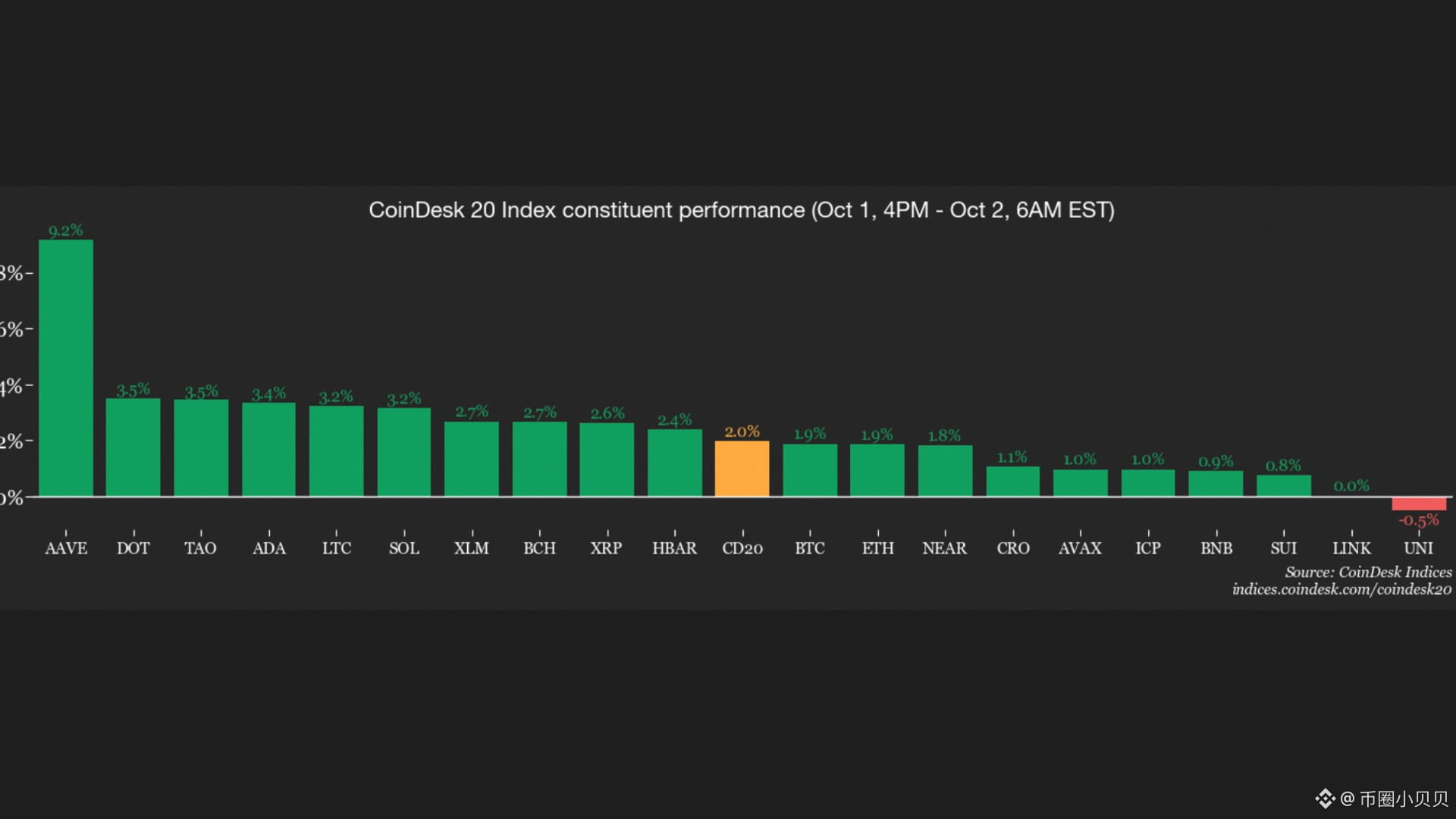
5
11.5k
·
--
At first glance, it’s just another small DeFi theft case: $300,000 sitting in today’s crypto market doesn’t even qualify as news. But what’s truly worth looking at is where that knife went in..
[🏛️ 今日盘面群里聊](https://app.binance.com/uni-qr/F6dwNqgx)
Most people see it as “Aave was attacked again.” But the founder came out with a very straightforward statement: it wasn’t the Aave v3 contract that had the problem—it was a third-party adapter layer built on top of it, with zero impact on the main protocol.
Specifically, the module named is called FlashLoopAdapter. Its job is to help users open and close leveraged positions on Aave via a Safe multi-signature wallet. The vulnerability lies in the permission-checking step: the attacker constructed a fake Safe contract that bypassed the adapter’s authorization checks. Even more troubling, it also lets the caller specify the swap router and transaction data themselves.
So the attacker used the victim’s Safe to execute the transactions, pulling out the weETH and the collateral. During the process, they also repaid roughly 1,300 WETH debts on the victims’ behalf to unlock the collateral. Finally, they took about 114 ETH—worth approximately $305,000—from two Safe wallets.
Zoom out: the key point isn’t really the $300,000. It’s that the risk is shifting outward. The more mature the protocol core is and the thicker the audits are, the more attackers move their focus toward the “periphery”—those adapters, wrappers, and aggregators that grew out of the system to make it more usable. They extend the protocol’s reach further and widen the attack surface.
In the funding layer, reactions to this kind of event are more honest than the price. When large capital evaluates a lending protocol, it’s not just about TVL and interest rates—it also looks at the worst-case loss limit: when things go wrong, can the losses be confined to a small module and avoid contaminating the main liquidity pool? In this case, Aave v3 held up, giving the main pool’s money even more reason to stay. Conversely, if one day the leak is the main pool itself, the story would go in an entirely different direction..
A twist to end on: what really should be watched isn’t the $300,000 stolen this time—it’s when these kinds of external adapters can have a unified set of permission and audit standards. As long as they continue to grow in an untamed way, a single oversight in permission validation is enough to turn into a trust discount for the entire ecosystem from large capital.
At first glance, it’s just another small DeFi theft case: $300,000 sitting in today’s crypto market doesn’t even qualify as news. But what’s truly worth looking at is where that knife went in..
🏛️ 今日盘面群里聊
Most people see it as “Aave was attacked again.” But the founder came out with a very straightforward statement: it wasn’t the Aave v3 contract that had the problem—it was a third-party adapter layer built on top of it, with zero impact on the main protocol.
Specifically, the module named is called FlashLoopAdapter. Its job is to help users open and close leveraged positions on Aave via a Safe multi-signature wallet. The vulnerability lies in the permission-checking step: the attacker constructed a fake Safe contract that bypassed the adapter’s authorization checks. Even more troubling, it also lets the caller specify the swap router and transaction data themselves.
So the attacker used the victim’s Safe to execute the transactions, pulling out the weETH and the collateral. During the process, they also repaid roughly 1,300 WETH debts on the victims’ behalf to unlock the collateral. Finally, they took about 114 ETH—worth approximately $305,000—from two Safe wallets.
Zoom out: the key point isn’t really the $300,000. It’s that the risk is shifting outward. The more mature the protocol core is and the thicker the audits are, the more attackers move their focus toward the “periphery”—those adapters, wrappers, and aggregators that grew out of the system to make it more usable. They extend the protocol’s reach further and widen the attack surface.
In the funding layer, reactions to this kind of event are more honest than the price. When large capital evaluates a lending protocol, it’s not just about TVL and interest rates—it also looks at the worst-case loss limit: when things go wrong, can the losses be confined to a small module and avoid contaminating the main liquidity pool? In this case, Aave v3 held up, giving the main pool’s money even more reason to stay. Conversely, if one day the leak is the main pool itself, the story would go in an entirely different direction..
A twist to end on: what really should be watched isn’t the $300,000 stolen this time—it’s when these kinds of external adapters can have a unified set of permission and audit standards. As long as they continue to grow in an untamed way, a single oversight in permission validation is enough to turn into a trust discount for the entire ecosystem from large capital.
🏛️ 今日盘面群里聊
Most people see it as “Aave was attacked again.” But the founder came out with a very straightforward statement: it wasn’t the Aave v3 contract that had the problem—it was a third-party adapter layer built on top of it, with zero impact on the main protocol.
Specifically, the module named is called FlashLoopAdapter. Its job is to help users open and close leveraged positions on Aave via a Safe multi-signature wallet. The vulnerability lies in the permission-checking step: the attacker constructed a fake Safe contract that bypassed the adapter’s authorization checks. Even more troubling, it also lets the caller specify the swap router and transaction data themselves.
So the attacker used the victim’s Safe to execute the transactions, pulling out the weETH and the collateral. During the process, they also repaid roughly 1,300 WETH debts on the victims’ behalf to unlock the collateral. Finally, they took about 114 ETH—worth approximately $305,000—from two Safe wallets.
Zoom out: the key point isn’t really the $300,000. It’s that the risk is shifting outward. The more mature the protocol core is and the thicker the audits are, the more attackers move their focus toward the “periphery”—those adapters, wrappers, and aggregators that grew out of the system to make it more usable. They extend the protocol’s reach further and widen the attack surface.
In the funding layer, reactions to this kind of event are more honest than the price. When large capital evaluates a lending protocol, it’s not just about TVL and interest rates—it also looks at the worst-case loss limit: when things go wrong, can the losses be confined to a small module and avoid contaminating the main liquidity pool? In this case, Aave v3 held up, giving the main pool’s money even more reason to stay. Conversely, if one day the leak is the main pool itself, the story would go in an entirely different direction..
A twist to end on: what really should be watched isn’t the $300,000 stolen this time—it’s when these kinds of external adapters can have a unified set of permission and audit standards. As long as they continue to grow in an untamed way, a single oversight in permission validation is enough to turn into a trust discount for the entire ecosystem from large capital.
291
·
--
A project that once said it would be “long-term”—yet it wrapped up in less than four years. What’s worth talking about isn’t its ending..
[📢 盘面异动群里说](https://app.binance.com/uni-qr/F6dwNqgx)
Porsche announced the end of its Web3 project and the Pioneers Circle community.. In an official statement on X, it said the 911 NFTs from that batch will remain with their holders and continue to exist on-chain, but the community Discord will become a read-only archive, and the project account will no longer be updated..
Let’s roll the clock back to 2022, when it made a big entrance.. Back then, executives said it was “a long-term investment,” and they also mentioned concepts like the metaverse, the car-buying experience, and supply chains.. In January 2023, the 911 NFTs were officially released with a plan for 7,500 units. But they were questioned for pricing and practicality, and minting was halted mid-way; in the end, only 2,363 remained..
So this was never a story of “the market got worse and it couldn’t hold on.”.. A set of numbers says more: the series generated total trading volume of about $20 million, but in the past year it was only around $38,000, and in the past month just about $2,900.. Demand never really grew from the beginning—over the next four years, they simply let the initial excitement dry out gradually..
Building on-chain projects for brands follows the same playbook: the budget goes to the marketing department, and the goal is exposure, not revenue.. The money has a defining trait—it has no retention motive. Once the marketing cycle ends, the project stops, regardless of whether the on-chain assets themselves are still there..
What’s really worth watching is where the money goes.. The last time it pulled a brand into Web3 was through marketing budgets and attention. But with the same budgets and attention now, the direction is shifting toward areas that can better “account for” themselves—like AI, computing power, and data centers, where spending can be mapped to real costs.. Same storytelling, but one aligns with cash flow and the other doesn’t—so the patience for funding is different..
One twist: Porsche kept the NFTs on-chain and turned the community into an archive—this approach itself may well be copied by later players.. What’s next to watch isn’t which traditional brand will exit, but what kinds of scenarios can organically generate demand—ticketing, membership benefits, identity, and so on—rather than relying on a profile picture propped up by hype.. If something can still live after the marketing tide recedes, it shows it never truly depended on marketing in the first place..
A project that once said it would be “long-term”—yet it wrapped up in less than four years. What’s worth talking about isn’t its ending..
📢 盘面异动群里说
Porsche announced the end of its Web3 project and the Pioneers Circle community.. In an official statement on X, it said the 911 NFTs from that batch will remain with their holders and continue to exist on-chain, but the community Discord will become a read-only archive, and the project account will no longer be updated..
Let’s roll the clock back to 2022, when it made a big entrance.. Back then, executives said it was “a long-term investment,” and they also mentioned concepts like the metaverse, the car-buying experience, and supply chains.. In January 2023, the 911 NFTs were officially released with a plan for 7,500 units. But they were questioned for pricing and practicality, and minting was halted mid-way; in the end, only 2,363 remained..
So this was never a story of “the market got worse and it couldn’t hold on.”.. A set of numbers says more: the series generated total trading volume of about $20 million, but in the past year it was only around $38,000, and in the past month just about $2,900.. Demand never really grew from the beginning—over the next four years, they simply let the initial excitement dry out gradually..
Building on-chain projects for brands follows the same playbook: the budget goes to the marketing department, and the goal is exposure, not revenue.. The money has a defining trait—it has no retention motive. Once the marketing cycle ends, the project stops, regardless of whether the on-chain assets themselves are still there..
What’s really worth watching is where the money goes.. The last time it pulled a brand into Web3 was through marketing budgets and attention. But with the same budgets and attention now, the direction is shifting toward areas that can better “account for” themselves—like AI, computing power, and data centers, where spending can be mapped to real costs.. Same storytelling, but one aligns with cash flow and the other doesn’t—so the patience for funding is different..
One twist: Porsche kept the NFTs on-chain and turned the community into an archive—this approach itself may well be copied by later players.. What’s next to watch isn’t which traditional brand will exit, but what kinds of scenarios can organically generate demand—ticketing, membership benefits, identity, and so on—rather than relying on a profile picture propped up by hype.. If something can still live after the marketing tide recedes, it shows it never truly depended on marketing in the first place..
📢 盘面异动群里说
Porsche announced the end of its Web3 project and the Pioneers Circle community.. In an official statement on X, it said the 911 NFTs from that batch will remain with their holders and continue to exist on-chain, but the community Discord will become a read-only archive, and the project account will no longer be updated..
Let’s roll the clock back to 2022, when it made a big entrance.. Back then, executives said it was “a long-term investment,” and they also mentioned concepts like the metaverse, the car-buying experience, and supply chains.. In January 2023, the 911 NFTs were officially released with a plan for 7,500 units. But they were questioned for pricing and practicality, and minting was halted mid-way; in the end, only 2,363 remained..
So this was never a story of “the market got worse and it couldn’t hold on.”.. A set of numbers says more: the series generated total trading volume of about $20 million, but in the past year it was only around $38,000, and in the past month just about $2,900.. Demand never really grew from the beginning—over the next four years, they simply let the initial excitement dry out gradually..
Building on-chain projects for brands follows the same playbook: the budget goes to the marketing department, and the goal is exposure, not revenue.. The money has a defining trait—it has no retention motive. Once the marketing cycle ends, the project stops, regardless of whether the on-chain assets themselves are still there..
What’s really worth watching is where the money goes.. The last time it pulled a brand into Web3 was through marketing budgets and attention. But with the same budgets and attention now, the direction is shifting toward areas that can better “account for” themselves—like AI, computing power, and data centers, where spending can be mapped to real costs.. Same storytelling, but one aligns with cash flow and the other doesn’t—so the patience for funding is different..
One twist: Porsche kept the NFTs on-chain and turned the community into an archive—this approach itself may well be copied by later players.. What’s next to watch isn’t which traditional brand will exit, but what kinds of scenarios can organically generate demand—ticketing, membership benefits, identity, and so on—rather than relying on a profile picture propped up by hype.. If something can still live after the marketing tide recedes, it shows it never truly depended on marketing in the first place..

28
·
--
#xrp金库公司evernorth拟10月8日登陆纳斯达克
Bitcoin ETFs saw a fresh net inflow again, but if all you see is “funds returning,” you might miss the more crucial moves happening that same day..
[🔄 进群看叙事](https://app.binance.com/uni-qr/F6dwNqgx)
On the first trading day of October, U.S. spot Bitcoin ETFs recorded net inflows of $102.7 million, wiping out the previous day’s net outflow of $148.7 million directly.. Combined net assets returned to $109.3 billion, with total net inflows of $5.76 billion.. Just looking at these figures, it really does look lively..
But the books for the same day are split: Ethereum spot ETFs had net outflows of $55.4 million—already the third consecutive day of bleeding, totaling about $118 million out over three days.. The Solana ETF also pulled out about $6 million, falling for two straight days.. The only one that kept moving money in alongside Bitcoin was the XRP ETF, with inflows of about $4 million..
So this is not a neat story of “institutions re-adding to crypto” across the board..
If it were simply money flowing back, ETH should also rise at the same time; in reality, the money is being rotated within crypto—withdrawn from ETH and SOL and moved into BTC and XRP.. Bitcoin rose 42.71% in Q3, while Bitcoin ETFs over the same period only recorded net inflows of $6.34 billion, suggesting the main driver of this rally wasn’t ETF buying—ETFs look more like they’re confirming after the spark, not igniting it first..
What’s really worth watching is the structure: incremental capital is concentrating toward the top, not being spread out..
In plain terms, institutions aren’t buying “a basket of crypto” right now—they’re buying “the few they believe in.”.. Once this kind of selection becomes fixed, broad-based rallies in altcoins that grow just from sentiment become much harder to replicate..
One more detail not to ignore: the Fear and Greed Index fell from 74 to 72, but it’s still in the “greed” zone.. That means sentiment hasn’t cooled, but the direction of money has already changed first..
So what to watch next is whether Bitcoin’s net inflows can keep coming in consecutively.. If inflows break off, while ETH on the other side is still bleeding, this so-called “October rally” may end up being just a one-act show by the leading assets..
#xrp金库公司evernorth拟10月8日登陆纳斯达克
Bitcoin ETFs saw a fresh net inflow again, but if all you see is “funds returning,” you might miss the more crucial moves happening that same day..
🔄 进群看叙事
On the first trading day of October, U.S. spot Bitcoin ETFs recorded net inflows of $102.7 million, wiping out the previous day’s net outflow of $148.7 million directly.. Combined net assets returned to $109.3 billion, with total net inflows of $5.76 billion.. Just looking at these figures, it really does look lively..
But the books for the same day are split: Ethereum spot ETFs had net outflows of $55.4 million—already the third consecutive day of bleeding, totaling about $118 million out over three days.. The Solana ETF also pulled out about $6 million, falling for two straight days.. The only one that kept moving money in alongside Bitcoin was the XRP ETF, with inflows of about $4 million..
So this is not a neat story of “institutions re-adding to crypto” across the board..
If it were simply money flowing back, ETH should also rise at the same time; in reality, the money is being rotated within crypto—withdrawn from ETH and SOL and moved into BTC and XRP.. Bitcoin rose 42.71% in Q3, while Bitcoin ETFs over the same period only recorded net inflows of $6.34 billion, suggesting the main driver of this rally wasn’t ETF buying—ETFs look more like they’re confirming after the spark, not igniting it first..
What’s really worth watching is the structure: incremental capital is concentrating toward the top, not being spread out..
In plain terms, institutions aren’t buying “a basket of crypto” right now—they’re buying “the few they believe in.”.. Once this kind of selection becomes fixed, broad-based rallies in altcoins that grow just from sentiment become much harder to replicate..
One more detail not to ignore: the Fear and Greed Index fell from 74 to 72, but it’s still in the “greed” zone.. That means sentiment hasn’t cooled, but the direction of money has already changed first..
So what to watch next is whether Bitcoin’s net inflows can keep coming in consecutively.. If inflows break off, while ETH on the other side is still bleeding, this so-called “October rally” may end up being just a one-act show by the leading assets..
Bitcoin ETFs saw a fresh net inflow again, but if all you see is “funds returning,” you might miss the more crucial moves happening that same day..
🔄 进群看叙事
On the first trading day of October, U.S. spot Bitcoin ETFs recorded net inflows of $102.7 million, wiping out the previous day’s net outflow of $148.7 million directly.. Combined net assets returned to $109.3 billion, with total net inflows of $5.76 billion.. Just looking at these figures, it really does look lively..
But the books for the same day are split: Ethereum spot ETFs had net outflows of $55.4 million—already the third consecutive day of bleeding, totaling about $118 million out over three days.. The Solana ETF also pulled out about $6 million, falling for two straight days.. The only one that kept moving money in alongside Bitcoin was the XRP ETF, with inflows of about $4 million..
So this is not a neat story of “institutions re-adding to crypto” across the board..
If it were simply money flowing back, ETH should also rise at the same time; in reality, the money is being rotated within crypto—withdrawn from ETH and SOL and moved into BTC and XRP.. Bitcoin rose 42.71% in Q3, while Bitcoin ETFs over the same period only recorded net inflows of $6.34 billion, suggesting the main driver of this rally wasn’t ETF buying—ETFs look more like they’re confirming after the spark, not igniting it first..
What’s really worth watching is the structure: incremental capital is concentrating toward the top, not being spread out..
In plain terms, institutions aren’t buying “a basket of crypto” right now—they’re buying “the few they believe in.”.. Once this kind of selection becomes fixed, broad-based rallies in altcoins that grow just from sentiment become much harder to replicate..
One more detail not to ignore: the Fear and Greed Index fell from 74 to 72, but it’s still in the “greed” zone.. That means sentiment hasn’t cooled, but the direction of money has already changed first..
So what to watch next is whether Bitcoin’s net inflows can keep coming in consecutively.. If inflows break off, while ETH on the other side is still bleeding, this so-called “October rally” may end up being just a one-act show by the leading assets..
830
·
--
#全网爆仓6.74亿美元
SEC granted a five-year exemption period. It sounds like they’ve fully pushed the door open, but what has actually been blocking the product has never been the door—it’s the dimensions of the door frame..
[🔄 进群看资金动向](https://app.binance.com/uni-qr/F6dwNqgx)
The news itself is rather small: a crypto executive at a leading U.S. online brokerage says that to this day, they’re still working through the SEC’s rules for this innovative exemption. For tokenized stocks to be truly opened up to U.S. users, progress is stuck here..
Most people see "regulatory clearance" and immediately read it as a major positive. But what’s worth looking at is the other side: an exemption does not mean approval. It’s a temporary channel with conditions, a limited duration, and a whole set of disclosure obligations. What the broker has to calculate is—when moving the stocks on-chain under these rules, is it cost-effective? Who will bear the responsibility? And if something goes wrong, who will stand behind it..
This has nothing to do with technology. On-chain trading of stocks has been possible for a long time. Over the past month alone, reports show that tokenized stock trading on decentralized platforms exceeded two billion dollars. What’s always been blocking it is the invisible layer: who acts as the compliance party, and who assumes settlement risk..
Look at it another way: this is actually the next stop in capital rotation. After the institutional channels for BTC and ETH are opened up, the part that still hasn’t been pried open is "stocks"—which are connected to the largest pool of capital in traditional finance. Once the compliance path is fully smoothed out, what enters won’t be money from the crypto crowd, but the part of capital sitting inside brokerage back offices..
So at this stage, it’s not a matter of who can talk the loudest. It’s a race to who can set up that compliance structure first. Whoever gets the first track running will get the entry point for the next round of traditional capital to come in..
Two things worth watching next: first, whether the exemption rules will be loosened or written more clearly; second, on which platform the first batch of tokenized stocks that truly open up to U.S. users will appear..
One last twist: if the final bottleneck isn’t regulation, but the broker’s own unwillingness to take on this risk, then the pace of "stocks on-chain" could be slower than everyone expects..
#全网爆仓6.74亿美元
SEC granted a five-year exemption period. It sounds like they’ve fully pushed the door open, but what has actually been blocking the product has never been the door—it’s the dimensions of the door frame..
🔄 进群看资金动向
The news itself is rather small: a crypto executive at a leading U.S. online brokerage says that to this day, they’re still working through the SEC’s rules for this innovative exemption. For tokenized stocks to be truly opened up to U.S. users, progress is stuck here..
Most people see "regulatory clearance" and immediately read it as a major positive. But what’s worth looking at is the other side: an exemption does not mean approval. It’s a temporary channel with conditions, a limited duration, and a whole set of disclosure obligations. What the broker has to calculate is—when moving the stocks on-chain under these rules, is it cost-effective? Who will bear the responsibility? And if something goes wrong, who will stand behind it..
This has nothing to do with technology. On-chain trading of stocks has been possible for a long time. Over the past month alone, reports show that tokenized stock trading on decentralized platforms exceeded two billion dollars. What’s always been blocking it is the invisible layer: who acts as the compliance party, and who assumes settlement risk..
Look at it another way: this is actually the next stop in capital rotation. After the institutional channels for BTC and ETH are opened up, the part that still hasn’t been pried open is "stocks"—which are connected to the largest pool of capital in traditional finance. Once the compliance path is fully smoothed out, what enters won’t be money from the crypto crowd, but the part of capital sitting inside brokerage back offices..
So at this stage, it’s not a matter of who can talk the loudest. It’s a race to who can set up that compliance structure first. Whoever gets the first track running will get the entry point for the next round of traditional capital to come in..
Two things worth watching next: first, whether the exemption rules will be loosened or written more clearly; second, on which platform the first batch of tokenized stocks that truly open up to U.S. users will appear..
One last twist: if the final bottleneck isn’t regulation, but the broker’s own unwillingness to take on this risk, then the pace of "stocks on-chain" could be slower than everyone expects..
SEC granted a five-year exemption period. It sounds like they’ve fully pushed the door open, but what has actually been blocking the product has never been the door—it’s the dimensions of the door frame..
🔄 进群看资金动向
The news itself is rather small: a crypto executive at a leading U.S. online brokerage says that to this day, they’re still working through the SEC’s rules for this innovative exemption. For tokenized stocks to be truly opened up to U.S. users, progress is stuck here..
Most people see "regulatory clearance" and immediately read it as a major positive. But what’s worth looking at is the other side: an exemption does not mean approval. It’s a temporary channel with conditions, a limited duration, and a whole set of disclosure obligations. What the broker has to calculate is—when moving the stocks on-chain under these rules, is it cost-effective? Who will bear the responsibility? And if something goes wrong, who will stand behind it..
This has nothing to do with technology. On-chain trading of stocks has been possible for a long time. Over the past month alone, reports show that tokenized stock trading on decentralized platforms exceeded two billion dollars. What’s always been blocking it is the invisible layer: who acts as the compliance party, and who assumes settlement risk..
Look at it another way: this is actually the next stop in capital rotation. After the institutional channels for BTC and ETH are opened up, the part that still hasn’t been pried open is "stocks"—which are connected to the largest pool of capital in traditional finance. Once the compliance path is fully smoothed out, what enters won’t be money from the crypto crowd, but the part of capital sitting inside brokerage back offices..
So at this stage, it’s not a matter of who can talk the loudest. It’s a race to who can set up that compliance structure first. Whoever gets the first track running will get the entry point for the next round of traditional capital to come in..
Two things worth watching next: first, whether the exemption rules will be loosened or written more clearly; second, on which platform the first batch of tokenized stocks that truly open up to U.S. users will appear..
One last twist: if the final bottleneck isn’t regulation, but the broker’s own unwillingness to take on this risk, then the pace of "stocks on-chain" could be slower than everyone expects..

31
·
--
#near跌至约4.70美元较日高跌逾14%
Profits at Korean exchanges fell by 78%, but what this number may truly be telling us isn’t necessarily “bad news” for crypto—it may be about where the money went..
[📈 了解最新交易计划](https://app.binance.com/uni-qr/F6dwNqgx)
The Korea Financial Intelligence Unit has just released its H1 figures: 26 licensed virtual asset service providers saw operating profit down 78% year-on-year.. Average daily trading volume fell 44% compared with the prior six months, market cap shrank 33%, KRW deposits were down 35%, and exchange revenue dropped 41%.. The only thing rising was the number of tradable accounts, up just 0.4%..
Most people see this as yet another round of bear-market evidence—the industry isn’t doing well.. But if you put another set of figures from the same period alongside it, the picture changes.. Over the past year, crypto assets held by Korean investors shrank 50.2%, leaving 60.6 trillion KRW (about $41.4 billion); while the KOSPI index doubled over the twelve months leading up to July 22.. The daily average trading volume across the top five exchanges fell by roughly 89% year-on-year..
In other words, the money hasn’t “evaporated”—it’s moved from one venue to another.. What exchanges earn is the “itchy” money—once trading frequency drops, the revenue model immediately bottoms out.. And what stocks are eating is a different kind of money: priced in the local currency, more regulator-friendly, and still able to tell a growth story..
The signal behind this is worth watching more than the price: a market that once contributed globally top-tier retail trading volume is actively shifting marginal capital to traditional equity assets.. If this trend continues, Korea won’t just be a retail sentiment gauge—it could become a case study in capital reallocation—when local risk appetite recovers, the first thing to be refilled may not be these smaller exchanges, but rather the global large-cap boards with better liquidity..
One twist: this dataset covers the first half—months 1 to 6—so it’s lagging by a full quarter.. If crypto already started to rebound by Q3, then the 78% is just what the rear-view mirror shows.. What really matters is whether deposits and trading volume have come back in the next report—that will be the evidence the money has turned around..
#near跌至约4.70美元较日高跌逾14%
Profits at Korean exchanges fell by 78%, but what this number may truly be telling us isn’t necessarily “bad news” for crypto—it may be about where the money went..
📈 了解最新交易计划
The Korea Financial Intelligence Unit has just released its H1 figures: 26 licensed virtual asset service providers saw operating profit down 78% year-on-year.. Average daily trading volume fell 44% compared with the prior six months, market cap shrank 33%, KRW deposits were down 35%, and exchange revenue dropped 41%.. The only thing rising was the number of tradable accounts, up just 0.4%..
Most people see this as yet another round of bear-market evidence—the industry isn’t doing well.. But if you put another set of figures from the same period alongside it, the picture changes.. Over the past year, crypto assets held by Korean investors shrank 50.2%, leaving 60.6 trillion KRW (about $41.4 billion); while the KOSPI index doubled over the twelve months leading up to July 22.. The daily average trading volume across the top five exchanges fell by roughly 89% year-on-year..
In other words, the money hasn’t “evaporated”—it’s moved from one venue to another.. What exchanges earn is the “itchy” money—once trading frequency drops, the revenue model immediately bottoms out.. And what stocks are eating is a different kind of money: priced in the local currency, more regulator-friendly, and still able to tell a growth story..
The signal behind this is worth watching more than the price: a market that once contributed globally top-tier retail trading volume is actively shifting marginal capital to traditional equity assets.. If this trend continues, Korea won’t just be a retail sentiment gauge—it could become a case study in capital reallocation—when local risk appetite recovers, the first thing to be refilled may not be these smaller exchanges, but rather the global large-cap boards with better liquidity..
One twist: this dataset covers the first half—months 1 to 6—so it’s lagging by a full quarter.. If crypto already started to rebound by Q3, then the 78% is just what the rear-view mirror shows.. What really matters is whether deposits and trading volume have come back in the next report—that will be the evidence the money has turned around..
Profits at Korean exchanges fell by 78%, but what this number may truly be telling us isn’t necessarily “bad news” for crypto—it may be about where the money went..
📈 了解最新交易计划
The Korea Financial Intelligence Unit has just released its H1 figures: 26 licensed virtual asset service providers saw operating profit down 78% year-on-year.. Average daily trading volume fell 44% compared with the prior six months, market cap shrank 33%, KRW deposits were down 35%, and exchange revenue dropped 41%.. The only thing rising was the number of tradable accounts, up just 0.4%..
Most people see this as yet another round of bear-market evidence—the industry isn’t doing well.. But if you put another set of figures from the same period alongside it, the picture changes.. Over the past year, crypto assets held by Korean investors shrank 50.2%, leaving 60.6 trillion KRW (about $41.4 billion); while the KOSPI index doubled over the twelve months leading up to July 22.. The daily average trading volume across the top five exchanges fell by roughly 89% year-on-year..
In other words, the money hasn’t “evaporated”—it’s moved from one venue to another.. What exchanges earn is the “itchy” money—once trading frequency drops, the revenue model immediately bottoms out.. And what stocks are eating is a different kind of money: priced in the local currency, more regulator-friendly, and still able to tell a growth story..
The signal behind this is worth watching more than the price: a market that once contributed globally top-tier retail trading volume is actively shifting marginal capital to traditional equity assets.. If this trend continues, Korea won’t just be a retail sentiment gauge—it could become a case study in capital reallocation—when local risk appetite recovers, the first thing to be refilled may not be these smaller exchanges, but rather the global large-cap boards with better liquidity..
One twist: this dataset covers the first half—months 1 to 6—so it’s lagging by a full quarter.. If crypto already started to rebound by Q3, then the 78% is just what the rear-view mirror shows.. What really matters is whether deposits and trading volume have come back in the next report—that will be the evidence the money has turned around..
148
·
--
Everyone’s attention is on Washington’s crypto legislation, but the first real move this round may come from Seoul..
[🔄 进群聊市场](https://app.binance.com/uni-qr/F6dwNqgx)
The Korean Financial Services Commission has just released a draft set of rules for tokenized securities: stocks, bonds, funds, and certain fractional investment products can all be issued and traded in the form of tokens.. The accompanying thresholds were also announced—if the issuer issues tokens while directly holding customers’ accounts in custody, its own capital must not be less than 4 billion KRW, about 2.8 million USD, and it must also staff all required compliance and technology teams.. For OTC trading, a new category of specialized license has been added: the annual net buy limit for retail investors on a single OTC platform is set at 100 million KRW, about 70,000 USD..
Most people see this as another round of tighter regulation—when numbers get bigger, it’s just a matter of cracking down.. But if you pull out the timeline, the flavor is different.. This rule package, after going through public notice and approval, is aimed to take effect on February 4, 2027, while also formally recognizing “distributed ledger” as the underlying infrastructure for the issuance and trading of securities.. It’s not a “try it out” permission—it’s about counting the foundation into the law..
What’s really worth watching is the layer involving capital.. Over the past two years, liquidity for on-chain securities has been stuck on two issues: first, the compliance identity of issuers; second, whether retail investors can participate and how much they can access.. This time, both doors are opened a crack—identity determines the eligibility threshold, and retail investors are given a quota.. The quota itself is a signal: when regulators are willing to grant limits, it implies they already assume this kind of asset will attract demand.
Go one layer higher, and this is also a “who starts running first” problem.. In the U.S., stock tokens are still wrestling with exemption provisions; in Europe, MiCA is still working through stablecoin rules; in Asia, meanwhile, the phrase “tokenized securities” has been written first into the capital markets regulatory framework.. Whoever gets the rules operational first will have its exchange, custody, and market-making chain secure orders first.. The sequence of capital rotation often doesn’t start with token prices—it starts with licenses..
One twist to note: the rules truly take effect in 2027, with a whole cycle of a bull and bear market in between. The public notice period runs until November 11, and every item in the rules could be revised.. More importantly, will Korea’s retail-investor quota limit, in turn, squeeze this demand onto overseas platforms.. What really needs attention isn’t just the rules themselves, but which broker or exchange will apply for that OTC license first..
Everyone’s attention is on Washington’s crypto legislation, but the first real move this round may come from Seoul..
🔄 进群聊市场
The Korean Financial Services Commission has just released a draft set of rules for tokenized securities: stocks, bonds, funds, and certain fractional investment products can all be issued and traded in the form of tokens.. The accompanying thresholds were also announced—if the issuer issues tokens while directly holding customers’ accounts in custody, its own capital must not be less than 4 billion KRW, about 2.8 million USD, and it must also staff all required compliance and technology teams.. For OTC trading, a new category of specialized license has been added: the annual net buy limit for retail investors on a single OTC platform is set at 100 million KRW, about 70,000 USD..
Most people see this as another round of tighter regulation—when numbers get bigger, it’s just a matter of cracking down.. But if you pull out the timeline, the flavor is different.. This rule package, after going through public notice and approval, is aimed to take effect on February 4, 2027, while also formally recognizing “distributed ledger” as the underlying infrastructure for the issuance and trading of securities.. It’s not a “try it out” permission—it’s about counting the foundation into the law..
What’s really worth watching is the layer involving capital.. Over the past two years, liquidity for on-chain securities has been stuck on two issues: first, the compliance identity of issuers; second, whether retail investors can participate and how much they can access.. This time, both doors are opened a crack—identity determines the eligibility threshold, and retail investors are given a quota.. The quota itself is a signal: when regulators are willing to grant limits, it implies they already assume this kind of asset will attract demand.
Go one layer higher, and this is also a “who starts running first” problem.. In the U.S., stock tokens are still wrestling with exemption provisions; in Europe, MiCA is still working through stablecoin rules; in Asia, meanwhile, the phrase “tokenized securities” has been written first into the capital markets regulatory framework.. Whoever gets the rules operational first will have its exchange, custody, and market-making chain secure orders first.. The sequence of capital rotation often doesn’t start with token prices—it starts with licenses..
One twist to note: the rules truly take effect in 2027, with a whole cycle of a bull and bear market in between. The public notice period runs until November 11, and every item in the rules could be revised.. More importantly, will Korea’s retail-investor quota limit, in turn, squeeze this demand onto overseas platforms.. What really needs attention isn’t just the rules themselves, but which broker or exchange will apply for that OTC license first..
🔄 进群聊市场
The Korean Financial Services Commission has just released a draft set of rules for tokenized securities: stocks, bonds, funds, and certain fractional investment products can all be issued and traded in the form of tokens.. The accompanying thresholds were also announced—if the issuer issues tokens while directly holding customers’ accounts in custody, its own capital must not be less than 4 billion KRW, about 2.8 million USD, and it must also staff all required compliance and technology teams.. For OTC trading, a new category of specialized license has been added: the annual net buy limit for retail investors on a single OTC platform is set at 100 million KRW, about 70,000 USD..
Most people see this as another round of tighter regulation—when numbers get bigger, it’s just a matter of cracking down.. But if you pull out the timeline, the flavor is different.. This rule package, after going through public notice and approval, is aimed to take effect on February 4, 2027, while also formally recognizing “distributed ledger” as the underlying infrastructure for the issuance and trading of securities.. It’s not a “try it out” permission—it’s about counting the foundation into the law..
What’s really worth watching is the layer involving capital.. Over the past two years, liquidity for on-chain securities has been stuck on two issues: first, the compliance identity of issuers; second, whether retail investors can participate and how much they can access.. This time, both doors are opened a crack—identity determines the eligibility threshold, and retail investors are given a quota.. The quota itself is a signal: when regulators are willing to grant limits, it implies they already assume this kind of asset will attract demand.
Go one layer higher, and this is also a “who starts running first” problem.. In the U.S., stock tokens are still wrestling with exemption provisions; in Europe, MiCA is still working through stablecoin rules; in Asia, meanwhile, the phrase “tokenized securities” has been written first into the capital markets regulatory framework.. Whoever gets the rules operational first will have its exchange, custody, and market-making chain secure orders first.. The sequence of capital rotation often doesn’t start with token prices—it starts with licenses..
One twist to note: the rules truly take effect in 2027, with a whole cycle of a bull and bear market in between. The public notice period runs until November 11, and every item in the rules could be revised.. More importantly, will Korea’s retail-investor quota limit, in turn, squeeze this demand onto overseas platforms.. What really needs attention isn’t just the rules themselves, but which broker or exchange will apply for that OTC license first..

1.1k
·
--
Verified
#以太坊基金会主网推出zkapi
First, the conclusion: on the zkAPI mainnet matter, the key may not be the two words “privacy,” but rather the most expensive bill in AI is being connected to a new encrypted settlement track..
[🤖 进群聊仓位](https://app.binance.com/uni-qr/F6dwNqgx)
What most people see is: the Ethereum Foundation has issued another privacy tool—anonymous, zero-knowledge, and it sounds far from ordinary users.. It’s easy to gloss over..
But if you break down the details, you’ll find it solves a very specific problem.. Users deposit funds into an Ethereum vault, then use a zero-knowledge proof to demonstrate to the service provider that “I have enough balance on my account,” without needing to tell the other party exactly whose money it is.. The system then issues a short-term API key, with a preset spending limit.. The request is sent directly to the AI provider, while billing goes through a separate independent channel.. That means the act of payment and the act of calling are split into two layers..
What’s worth pondering is this direction: what AI lacks most right now isn’t compute power—it’s “how to charge per use.”.. After the free trial ends, the real business loop is entirely locked in settlement—there’s account verification, risk control, and anti-fraud, and every verification asks the user for identity.. What zkAPI wants to do is to replace “you have to prove who you are” with “you only need to prove you can afford to pay.”.. These two lines sound similar, but the cost difference is enormous..
Now look at the layer of funds.. If AI’s paid traffic can truly go through on-chain settlement, what accumulates on Ethereum won’t be just speculative money, but the compute bills being consumed every day.. The stickiness of these needs isn’t very dependent on price movements.. That’s also why this message is placed in the “infrastructure” box, not the “concept” box.
One twist: it doesn’t hide the prompt contents, nor does it hide network-layer metadata.. IP, time, request characteristics—those can still connect you.. So it’s more like the first brick of privacy, not the destination.. What’s truly worth watching is the next step—when the model side and the compute side start integrating into this settlement system, only then will the payment pipeline between AI and crypto be truly connected..
#以太坊基金会主网推出zkapi
First, the conclusion: on the zkAPI mainnet matter, the key may not be the two words “privacy,” but rather the most expensive bill in AI is being connected to a new encrypted settlement track..
🤖 进群聊仓位
What most people see is: the Ethereum Foundation has issued another privacy tool—anonymous, zero-knowledge, and it sounds far from ordinary users.. It’s easy to gloss over..
But if you break down the details, you’ll find it solves a very specific problem.. Users deposit funds into an Ethereum vault, then use a zero-knowledge proof to demonstrate to the service provider that “I have enough balance on my account,” without needing to tell the other party exactly whose money it is.. The system then issues a short-term API key, with a preset spending limit.. The request is sent directly to the AI provider, while billing goes through a separate independent channel.. That means the act of payment and the act of calling are split into two layers..
What’s worth pondering is this direction: what AI lacks most right now isn’t compute power—it’s “how to charge per use.”.. After the free trial ends, the real business loop is entirely locked in settlement—there’s account verification, risk control, and anti-fraud, and every verification asks the user for identity.. What zkAPI wants to do is to replace “you have to prove who you are” with “you only need to prove you can afford to pay.”.. These two lines sound similar, but the cost difference is enormous..
Now look at the layer of funds.. If AI’s paid traffic can truly go through on-chain settlement, what accumulates on Ethereum won’t be just speculative money, but the compute bills being consumed every day.. The stickiness of these needs isn’t very dependent on price movements.. That’s also why this message is placed in the “infrastructure” box, not the “concept” box.
One twist: it doesn’t hide the prompt contents, nor does it hide network-layer metadata.. IP, time, request characteristics—those can still connect you.. So it’s more like the first brick of privacy, not the destination.. What’s truly worth watching is the next step—when the model side and the compute side start integrating into this settlement system, only then will the payment pipeline between AI and crypto be truly connected..
First, the conclusion: on the zkAPI mainnet matter, the key may not be the two words “privacy,” but rather the most expensive bill in AI is being connected to a new encrypted settlement track..
🤖 进群聊仓位
What most people see is: the Ethereum Foundation has issued another privacy tool—anonymous, zero-knowledge, and it sounds far from ordinary users.. It’s easy to gloss over..
But if you break down the details, you’ll find it solves a very specific problem.. Users deposit funds into an Ethereum vault, then use a zero-knowledge proof to demonstrate to the service provider that “I have enough balance on my account,” without needing to tell the other party exactly whose money it is.. The system then issues a short-term API key, with a preset spending limit.. The request is sent directly to the AI provider, while billing goes through a separate independent channel.. That means the act of payment and the act of calling are split into two layers..
What’s worth pondering is this direction: what AI lacks most right now isn’t compute power—it’s “how to charge per use.”.. After the free trial ends, the real business loop is entirely locked in settlement—there’s account verification, risk control, and anti-fraud, and every verification asks the user for identity.. What zkAPI wants to do is to replace “you have to prove who you are” with “you only need to prove you can afford to pay.”.. These two lines sound similar, but the cost difference is enormous..
Now look at the layer of funds.. If AI’s paid traffic can truly go through on-chain settlement, what accumulates on Ethereum won’t be just speculative money, but the compute bills being consumed every day.. The stickiness of these needs isn’t very dependent on price movements.. That’s also why this message is placed in the “infrastructure” box, not the “concept” box.
One twist: it doesn’t hide the prompt contents, nor does it hide network-layer metadata.. IP, time, request characteristics—those can still connect you.. So it’s more like the first brick of privacy, not the destination.. What’s truly worth watching is the next step—when the model side and the compute side start integrating into this settlement system, only then will the payment pipeline between AI and crypto be truly connected..

2
2.4k
Log in to explore more content
Join global crypto users on Binance Square
⚡️ Get latest and useful information about crypto.
💬 Trusted by the world’s largest crypto exchange.
👍 Discover real insights from verified creators.
Email / Phone number