

小恐龙说趋势
411 Posts
 LIVE
LIVE小恐龙说趋势
Report
Block User
6 Following
2.0K+ Followers
2.3K+ Liked
Posts
All
Live
·
--
#美联储10月维持利率概率升至82.3%
Bitcoin rose 43% in three months, but hit a 5% wall 🦖
[⚡ 有大动静群里说](https://app.binance.com/uni-qr/JpwCPfBj)
This was Bitcoin’s best third quarter since 2017, but research firm Delphi Digital poured cold water on the rally in its latest weekly report: the real obstacle isn’t the crypto market itself—it’s U.S. Treasury yields, which have climbed above 5%, their highest level in decades.
Here’s what they said, translated: “When a government bond can offer a risk-free return of more than 5%, every risk asset has to work twice as hard to justify the investment.” 💥
Here are the numbers: Bitcoin briefly surged to $87,000 last week, gaining more than 35% since mid-August and 43% over the third quarter as a whole. Meanwhile, the U.S. Treasury repeatedly increased the scale of its long-term bond buybacks, taking them all the way up to $6 billion just to support liquidity in the bond market. The money hasn’t disappeared—it’s just found a more comfortable place to go.
The real turning point came last Friday. The U.S. added just 29,000 jobs in September, far below the market’s expectation of 80,000, according to the Bureau of Labor Statistics. That sent the market’s odds of a rate hike in October tumbling from above 75% a week earlier to around 24% (CME FedWatch). New York Fed President Williams also said: “Given what we’ve already done in September, there’s no need to rush.”
My take: In the short term, this gives Bitcoin some breathing room. Cooling rate expectations give risk assets a chance to catch their breath. But in the medium term, its real rival isn’t the Fed—it’s that 5% Treasury yield. As long as “5% risk-free” remains on offer, every Bitcoin rally has to prove it’s “worth more than Treasuries.” The “debasement trade”—the idea that government debt and money printing will dilute the dollar—makes sense in theory, but it takes time, not a sudden breakout.
Two things are worth watching: whether the Fed really holds rates steady at its October meeting, and whether long-term Treasury yields can fall back below 5%. A change in either could shift Bitcoin’s direction. 📉
Let’s talk in the comments: If risk-free returns really are 5%, how much of your portfolio would you still allocate to Bitcoin?
Tap the profile picture to watch the livestream.
Every day, we bring you the latest in crypto—not just what’s happening, but the logic and opportunities behind it 👀🚀
#美联储10月维持利率概率升至82.3%
Bitcoin rose 43% in three months, but hit a 5% wall 🦖
⚡ 有大动静群里说
This was Bitcoin’s best third quarter since 2017, but research firm Delphi Digital poured cold water on the rally in its latest weekly report: the real obstacle isn’t the crypto market itself—it’s U.S. Treasury yields, which have climbed above 5%, their highest level in decades.
Here’s what they said, translated: “When a government bond can offer a risk-free return of more than 5%, every risk asset has to work twice as hard to justify the investment.” 💥
Here are the numbers: Bitcoin briefly surged to $87,000 last week, gaining more than 35% since mid-August and 43% over the third quarter as a whole. Meanwhile, the U.S. Treasury repeatedly increased the scale of its long-term bond buybacks, taking them all the way up to $6 billion just to support liquidity in the bond market. The money hasn’t disappeared—it’s just found a more comfortable place to go.
The real turning point came last Friday. The U.S. added just 29,000 jobs in September, far below the market’s expectation of 80,000, according to the Bureau of Labor Statistics. That sent the market’s odds of a rate hike in October tumbling from above 75% a week earlier to around 24% (CME FedWatch). New York Fed President Williams also said: “Given what we’ve already done in September, there’s no need to rush.”
My take: In the short term, this gives Bitcoin some breathing room. Cooling rate expectations give risk assets a chance to catch their breath. But in the medium term, its real rival isn’t the Fed—it’s that 5% Treasury yield. As long as “5% risk-free” remains on offer, every Bitcoin rally has to prove it’s “worth more than Treasuries.” The “debasement trade”—the idea that government debt and money printing will dilute the dollar—makes sense in theory, but it takes time, not a sudden breakout.
Two things are worth watching: whether the Fed really holds rates steady at its October meeting, and whether long-term Treasury yields can fall back below 5%. A change in either could shift Bitcoin’s direction. 📉
Let’s talk in the comments: If risk-free returns really are 5%, how much of your portfolio would you still allocate to Bitcoin?
Tap the profile picture to watch the livestream.
Every day, we bring you the latest in crypto—not just what’s happening, but the logic and opportunities behind it 👀🚀
Bitcoin rose 43% in three months, but hit a 5% wall 🦖
⚡ 有大动静群里说
This was Bitcoin’s best third quarter since 2017, but research firm Delphi Digital poured cold water on the rally in its latest weekly report: the real obstacle isn’t the crypto market itself—it’s U.S. Treasury yields, which have climbed above 5%, their highest level in decades.
Here’s what they said, translated: “When a government bond can offer a risk-free return of more than 5%, every risk asset has to work twice as hard to justify the investment.” 💥
Here are the numbers: Bitcoin briefly surged to $87,000 last week, gaining more than 35% since mid-August and 43% over the third quarter as a whole. Meanwhile, the U.S. Treasury repeatedly increased the scale of its long-term bond buybacks, taking them all the way up to $6 billion just to support liquidity in the bond market. The money hasn’t disappeared—it’s just found a more comfortable place to go.
The real turning point came last Friday. The U.S. added just 29,000 jobs in September, far below the market’s expectation of 80,000, according to the Bureau of Labor Statistics. That sent the market’s odds of a rate hike in October tumbling from above 75% a week earlier to around 24% (CME FedWatch). New York Fed President Williams also said: “Given what we’ve already done in September, there’s no need to rush.”
My take: In the short term, this gives Bitcoin some breathing room. Cooling rate expectations give risk assets a chance to catch their breath. But in the medium term, its real rival isn’t the Fed—it’s that 5% Treasury yield. As long as “5% risk-free” remains on offer, every Bitcoin rally has to prove it’s “worth more than Treasuries.” The “debasement trade”—the idea that government debt and money printing will dilute the dollar—makes sense in theory, but it takes time, not a sudden breakout.
Two things are worth watching: whether the Fed really holds rates steady at its October meeting, and whether long-term Treasury yields can fall back below 5%. A change in either could shift Bitcoin’s direction. 📉
Let’s talk in the comments: If risk-free returns really are 5%, how much of your portfolio would you still allocate to Bitcoin?
Tap the profile picture to watch the livestream.
Every day, we bring you the latest in crypto—not just what’s happening, but the logic and opportunities behind it 👀🚀

115
·
--
The crypto bill stalled in Congress, 11 votes short, has been sidestepped by regulators with two draft rules 📜
[🕐 最新解读群里更新](https://app.binance.com/uni-qr/JpwCPfBj)
On October 5, CFTC Chair Mike Selig unveiled two proposed rules at once—Regulation CTX (regulating crypto-asset trading) and Regulation CAM (regulating crypto-asset markets)—and opened them to public comment for 60 days. The goal is straightforward: with Congress unable to pass a market structure bill, the CFTC will regulate what it can on its own 🦖
The key word this time is “leverage.” The new rules bring crypto trades involving leverage, margin, and financing under the CFTC’s jurisdiction, and create a new license category called “crypto-asset markets” (CAM). It is narrower than the existing designated contract market (DCM) category, but carries just as many responsibilities: no listing products that are easily manipulated, and customer assets must be backed by proof of reserves. To offer futures, swaps, or options as well, platforms will still need to meet DCM requirements ⚖️
But the real gap remains. Spot trading—buying Bitcoin or Ethereum directly with one’s own funds—still falls outside the CFTC’s jurisdiction and remains subject to state money transmission laws. Regulators themselves acknowledge that they won’t know how much of the spot market will ultimately remain until they’ve heard industry feedback during the 60-day comment period. For now, they’re only emphasizing that “consumers may prefer to trade in a federally regulated space.”
The numbers make it clearer: Bitcoin is currently around $85,233, and Ethereum around $2,697. The largest spot market is precisely the part the new rules can’t reach. The timeline began last month, when the CLARITY Act failed in the Senate—49 to 50, and 11 votes short of the 60-vote threshold. Since then, the SEC has moved first: last week (October 1), it proposed crypto custody rules for investment advisers and funds, and also finalized an exemption paving the way for tokenized securities. The CFTC is now catching up.
My take: don’t read this as “comprehensive regulation is here.” It’s more like precise rulemaking within the agency’s jurisdiction—setting rules for what it can oversee (derivatives and leverage), leaving what it can’t (spot trading) to the states, and further cementing the token classification framework it issued this March. In the short term, there’s more certainty; in the long term, two standards will run in parallel: “federal licenses” and “state licenses.” What’s really being repriced is the cost of compliance for platforms looking to sell complex products to U.S. users.
Let’s talk in the comments: do you think Congress will close the spot-market gap first, or will an agency gradually fill it with exemptions? 👀
Tap the profile picture to watch the livestream
Every day, we help you follow the latest in crypto—not just what’s happening, but the logic and opportunities behind it 👀🚀
The crypto bill stalled in Congress, 11 votes short, has been sidestepped by regulators with two draft rules 📜
🕐 最新解读群里更新
On October 5, CFTC Chair Mike Selig unveiled two proposed rules at once—Regulation CTX (regulating crypto-asset trading) and Regulation CAM (regulating crypto-asset markets)—and opened them to public comment for 60 days. The goal is straightforward: with Congress unable to pass a market structure bill, the CFTC will regulate what it can on its own 🦖
The key word this time is “leverage.” The new rules bring crypto trades involving leverage, margin, and financing under the CFTC’s jurisdiction, and create a new license category called “crypto-asset markets” (CAM). It is narrower than the existing designated contract market (DCM) category, but carries just as many responsibilities: no listing products that are easily manipulated, and customer assets must be backed by proof of reserves. To offer futures, swaps, or options as well, platforms will still need to meet DCM requirements ⚖️
But the real gap remains. Spot trading—buying Bitcoin or Ethereum directly with one’s own funds—still falls outside the CFTC’s jurisdiction and remains subject to state money transmission laws. Regulators themselves acknowledge that they won’t know how much of the spot market will ultimately remain until they’ve heard industry feedback during the 60-day comment period. For now, they’re only emphasizing that “consumers may prefer to trade in a federally regulated space.”
The numbers make it clearer: Bitcoin is currently around $85,233, and Ethereum around $2,697. The largest spot market is precisely the part the new rules can’t reach. The timeline began last month, when the CLARITY Act failed in the Senate—49 to 50, and 11 votes short of the 60-vote threshold. Since then, the SEC has moved first: last week (October 1), it proposed crypto custody rules for investment advisers and funds, and also finalized an exemption paving the way for tokenized securities. The CFTC is now catching up.
My take: don’t read this as “comprehensive regulation is here.” It’s more like precise rulemaking within the agency’s jurisdiction—setting rules for what it can oversee (derivatives and leverage), leaving what it can’t (spot trading) to the states, and further cementing the token classification framework it issued this March. In the short term, there’s more certainty; in the long term, two standards will run in parallel: “federal licenses” and “state licenses.” What’s really being repriced is the cost of compliance for platforms looking to sell complex products to U.S. users.
Let’s talk in the comments: do you think Congress will close the spot-market gap first, or will an agency gradually fill it with exemptions? 👀
Tap the profile picture to watch the livestream
Every day, we help you follow the latest in crypto—not just what’s happening, but the logic and opportunities behind it 👀🚀
🕐 最新解读群里更新
On October 5, CFTC Chair Mike Selig unveiled two proposed rules at once—Regulation CTX (regulating crypto-asset trading) and Regulation CAM (regulating crypto-asset markets)—and opened them to public comment for 60 days. The goal is straightforward: with Congress unable to pass a market structure bill, the CFTC will regulate what it can on its own 🦖
The key word this time is “leverage.” The new rules bring crypto trades involving leverage, margin, and financing under the CFTC’s jurisdiction, and create a new license category called “crypto-asset markets” (CAM). It is narrower than the existing designated contract market (DCM) category, but carries just as many responsibilities: no listing products that are easily manipulated, and customer assets must be backed by proof of reserves. To offer futures, swaps, or options as well, platforms will still need to meet DCM requirements ⚖️
But the real gap remains. Spot trading—buying Bitcoin or Ethereum directly with one’s own funds—still falls outside the CFTC’s jurisdiction and remains subject to state money transmission laws. Regulators themselves acknowledge that they won’t know how much of the spot market will ultimately remain until they’ve heard industry feedback during the 60-day comment period. For now, they’re only emphasizing that “consumers may prefer to trade in a federally regulated space.”
The numbers make it clearer: Bitcoin is currently around $85,233, and Ethereum around $2,697. The largest spot market is precisely the part the new rules can’t reach. The timeline began last month, when the CLARITY Act failed in the Senate—49 to 50, and 11 votes short of the 60-vote threshold. Since then, the SEC has moved first: last week (October 1), it proposed crypto custody rules for investment advisers and funds, and also finalized an exemption paving the way for tokenized securities. The CFTC is now catching up.
My take: don’t read this as “comprehensive regulation is here.” It’s more like precise rulemaking within the agency’s jurisdiction—setting rules for what it can oversee (derivatives and leverage), leaving what it can’t (spot trading) to the states, and further cementing the token classification framework it issued this March. In the short term, there’s more certainty; in the long term, two standards will run in parallel: “federal licenses” and “state licenses.” What’s really being repriced is the cost of compliance for platforms looking to sell complex products to U.S. users.
Let’s talk in the comments: do you think Congress will close the spot-market gap first, or will an agency gradually fill it with exemptions? 👀
Tap the profile picture to watch the livestream
Every day, we help you follow the latest in crypto—not just what’s happening, but the logic and opportunities behind it 👀🚀

5
·
--
The wallet-monitoring rule that had been hanging over us for 5 years and the mixer-reporting rule that had been hanging over us for 3 years were both withdrawn on the same day 🦖
[📣 盘面异动群里喊](https://app.binance.com/uni-qr/JpwCPfBj)
On October 5, FinCEN, the U.S. Treasury Department’s Financial Crimes Enforcement Network, withdrew two proposals at once: one introduced in 2020 targeting transfers to and from self-hosted wallets, and another introduced in 2023 targeting mixing activity. The withdrawal notices have been posted for public inspection and will be officially published and take effect on October 6.
First, let’s look at the proposal that had been on hold the longest. The 2020 wallet rule would have required banks, exchanges, and other regulated institutions to collect and retain information about the counterparties to transfers between a customer’s self-hosted wallet and a regulated institution whenever a single transfer exceeded $3,000. Transfers over $10,000 would also have required additional reporting. It may sound like just another form to fill out, but in practice it was nearly impossible to implement: an exchange can verify who its own customer is, but it can’t verify who controls the address on the other end of an on-chain transaction. The proposal drew widespread opposition and never took effect.
The other proposal was the 2023 mixer rule, which would have required regulated institutions to file special reports and keep records for transactions they knew, suspected, or had reason to suspect involved foreign mixing. It did not make mixing itself a crime; it simply imposed a new reporting obligation on the institutions handling these transactions. ⚖️
Both proposals have now followed the same path: the withdrawal notices were posted for public inspection on October 5, published in the Federal Register on October 6, and took effect that same day.
But there’s an important nuance that headlines can easily obscure: withdrawal doesn’t mean deregulation. The Bank Secrecy Act, sanctions lists, and each platform’s own risk controls remain unchanged. Exchanges can still ask you to explain an external transfer, suspend activity they consider suspicious, or impose limits. Self-hosted wallets remain a perfectly normal way to hold crypto, but that doesn’t put transfers between private wallets and regulated platforms beyond the reach of financial crime controls.
My take is that what’s really been removed is the requirement for platforms to “guess who that person on-chain is.” In practice, that requirement mostly generated massive numbers of false positives and excessive blocking, while delivering little in the way of security benefits. ⚠️
Viewed on a longer timeline, this fits the broader direction of the year: securities regulators are gradually approving innovation exemptions, tokenized stock pilots are moving ahead, and stablecoin legislation is progressing. Cut back where rules should be pared down, and build frameworks where they’re needed.
Still, let’s be clear: what was withdrawn was only a “proposal that had not yet taken effect.” Customer identification checks, sanctions compliance, and on-chain fund monitoring that are already in force remain fully intact. Any attempt to introduce new rules will have to go through the entire rulemaking process from the beginning. 📜
Do you think this is a genuine easing of regulation, or just a different way of regulating? Let’s talk in the comments.
Tap the profile picture to watch the livestream.
Every day, we bring you the latest in crypto regulation—not just what’s happening, but the logic and opportunities behind it. 👀🚀
The wallet-monitoring rule that had been hanging over us for 5 years and the mixer-reporting rule that had been hanging over us for 3 years were both withdrawn on the same day 🦖
📣 盘面异动群里喊
On October 5, FinCEN, the U.S. Treasury Department’s Financial Crimes Enforcement Network, withdrew two proposals at once: one introduced in 2020 targeting transfers to and from self-hosted wallets, and another introduced in 2023 targeting mixing activity. The withdrawal notices have been posted for public inspection and will be officially published and take effect on October 6.
First, let’s look at the proposal that had been on hold the longest. The 2020 wallet rule would have required banks, exchanges, and other regulated institutions to collect and retain information about the counterparties to transfers between a customer’s self-hosted wallet and a regulated institution whenever a single transfer exceeded $3,000. Transfers over $10,000 would also have required additional reporting. It may sound like just another form to fill out, but in practice it was nearly impossible to implement: an exchange can verify who its own customer is, but it can’t verify who controls the address on the other end of an on-chain transaction. The proposal drew widespread opposition and never took effect.
The other proposal was the 2023 mixer rule, which would have required regulated institutions to file special reports and keep records for transactions they knew, suspected, or had reason to suspect involved foreign mixing. It did not make mixing itself a crime; it simply imposed a new reporting obligation on the institutions handling these transactions. ⚖️
Both proposals have now followed the same path: the withdrawal notices were posted for public inspection on October 5, published in the Federal Register on October 6, and took effect that same day.
But there’s an important nuance that headlines can easily obscure: withdrawal doesn’t mean deregulation. The Bank Secrecy Act, sanctions lists, and each platform’s own risk controls remain unchanged. Exchanges can still ask you to explain an external transfer, suspend activity they consider suspicious, or impose limits. Self-hosted wallets remain a perfectly normal way to hold crypto, but that doesn’t put transfers between private wallets and regulated platforms beyond the reach of financial crime controls.
My take is that what’s really been removed is the requirement for platforms to “guess who that person on-chain is.” In practice, that requirement mostly generated massive numbers of false positives and excessive blocking, while delivering little in the way of security benefits. ⚠️
Viewed on a longer timeline, this fits the broader direction of the year: securities regulators are gradually approving innovation exemptions, tokenized stock pilots are moving ahead, and stablecoin legislation is progressing. Cut back where rules should be pared down, and build frameworks where they’re needed.
Still, let’s be clear: what was withdrawn was only a “proposal that had not yet taken effect.” Customer identification checks, sanctions compliance, and on-chain fund monitoring that are already in force remain fully intact. Any attempt to introduce new rules will have to go through the entire rulemaking process from the beginning. 📜
Do you think this is a genuine easing of regulation, or just a different way of regulating? Let’s talk in the comments.
Tap the profile picture to watch the livestream.
Every day, we bring you the latest in crypto regulation—not just what’s happening, but the logic and opportunities behind it. 👀🚀
📣 盘面异动群里喊
On October 5, FinCEN, the U.S. Treasury Department’s Financial Crimes Enforcement Network, withdrew two proposals at once: one introduced in 2020 targeting transfers to and from self-hosted wallets, and another introduced in 2023 targeting mixing activity. The withdrawal notices have been posted for public inspection and will be officially published and take effect on October 6.
First, let’s look at the proposal that had been on hold the longest. The 2020 wallet rule would have required banks, exchanges, and other regulated institutions to collect and retain information about the counterparties to transfers between a customer’s self-hosted wallet and a regulated institution whenever a single transfer exceeded $3,000. Transfers over $10,000 would also have required additional reporting. It may sound like just another form to fill out, but in practice it was nearly impossible to implement: an exchange can verify who its own customer is, but it can’t verify who controls the address on the other end of an on-chain transaction. The proposal drew widespread opposition and never took effect.
The other proposal was the 2023 mixer rule, which would have required regulated institutions to file special reports and keep records for transactions they knew, suspected, or had reason to suspect involved foreign mixing. It did not make mixing itself a crime; it simply imposed a new reporting obligation on the institutions handling these transactions. ⚖️
Both proposals have now followed the same path: the withdrawal notices were posted for public inspection on October 5, published in the Federal Register on October 6, and took effect that same day.
But there’s an important nuance that headlines can easily obscure: withdrawal doesn’t mean deregulation. The Bank Secrecy Act, sanctions lists, and each platform’s own risk controls remain unchanged. Exchanges can still ask you to explain an external transfer, suspend activity they consider suspicious, or impose limits. Self-hosted wallets remain a perfectly normal way to hold crypto, but that doesn’t put transfers between private wallets and regulated platforms beyond the reach of financial crime controls.
My take is that what’s really been removed is the requirement for platforms to “guess who that person on-chain is.” In practice, that requirement mostly generated massive numbers of false positives and excessive blocking, while delivering little in the way of security benefits. ⚠️
Viewed on a longer timeline, this fits the broader direction of the year: securities regulators are gradually approving innovation exemptions, tokenized stock pilots are moving ahead, and stablecoin legislation is progressing. Cut back where rules should be pared down, and build frameworks where they’re needed.
Still, let’s be clear: what was withdrawn was only a “proposal that had not yet taken effect.” Customer identification checks, sanctions compliance, and on-chain fund monitoring that are already in force remain fully intact. Any attempt to introduce new rules will have to go through the entire rulemaking process from the beginning. 📜
Do you think this is a genuine easing of regulation, or just a different way of regulating? Let’s talk in the comments.
Tap the profile picture to watch the livestream.
Every day, we bring you the latest in crypto regulation—not just what’s happening, but the logic and opportunities behind it. 👀🚀

13
·
--
#美联储10月维持利率概率升至82.3%
The dollar surges to an 18-month high, while Bitcoin stubbornly holds at $86,000 🦖
[🏛️ ⏰ 消息群里第一时间说](https://app.binance.com/uni-qr/JpwCPfBj)
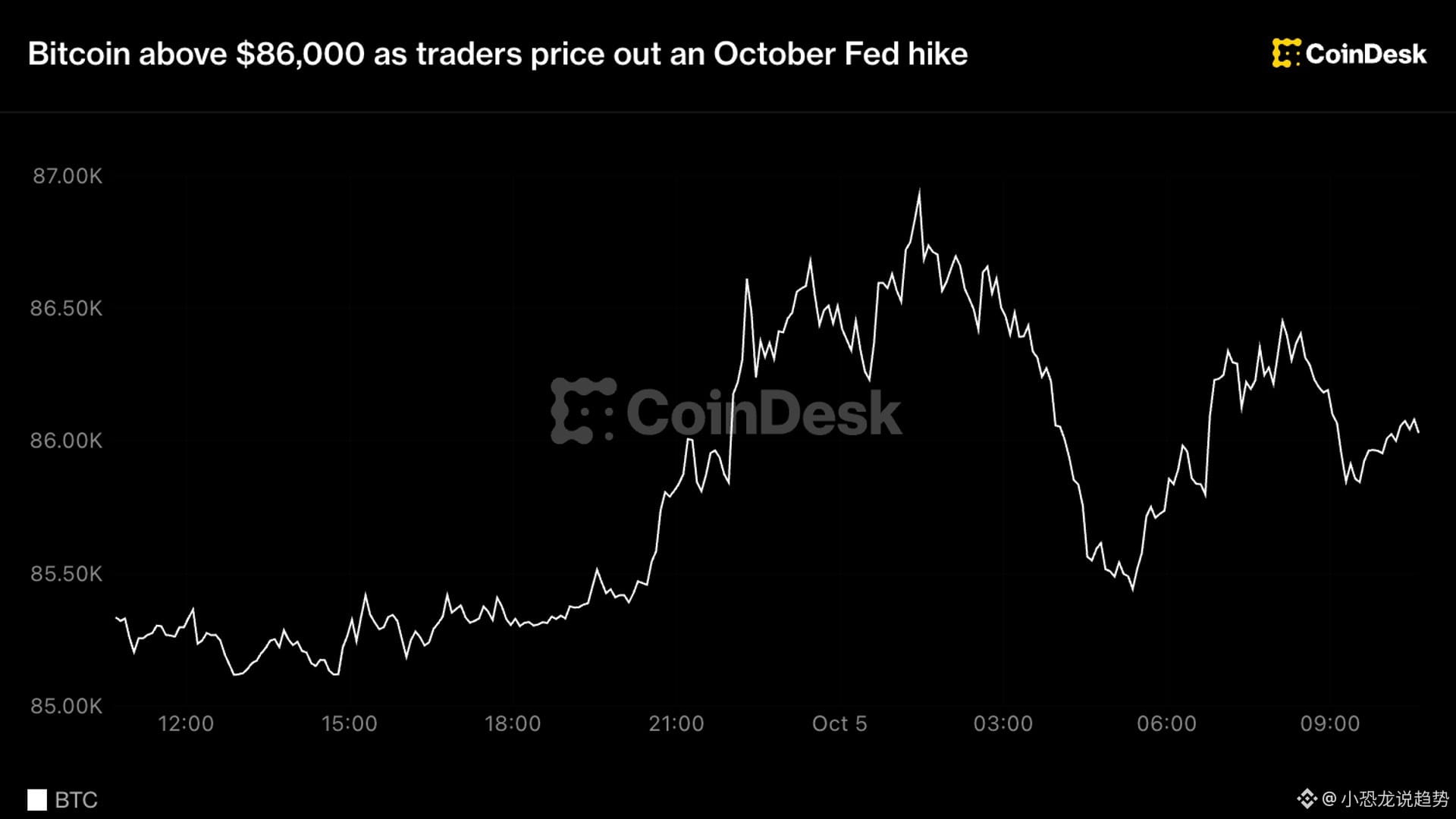
On October 5, the U.S. Dollar Index (DXY), which measures the dollar against a basket of currencies, touched around 102.5—its highest level in nearly 18 months. On the same day, Bitcoin traded sideways near $86,000, stuck below $87,000 but refusing to drop.
The interest-rate outlook makes things even more intriguing: the market now puts the odds of the Fed holding rates steady in October at 82.3%. A month ago, markets were still leaning toward “more rate hikes,” but that scenario is being rewritten by a weak September jobs report.
First, let’s lay out the background. In September, the Fed raised interest rates by 25 basis points to 3.75%–4.00%—its first rate hike since July 2023. At the time, many saw it as the start of a new tightening cycle. But after September’s employment data weakened, the urgency of raising rates in the near term declined considerably, and an October hike has effectively been taken off the table.
But let’s be clear: this isn’t a pivot. Markets are still pricing in a target range of 4.5%–4.75% by June 2027. In other words, a short-term pause doesn’t mean a turnaround; the medium-term tightening trajectory remains unchanged.
The dollar’s strength is also being reinforced by developments in Europe. The euro has fallen to around 1.12, its lowest level in 17 months, and accounts for 57.6% of the DXY basket. Pressure from France’s deficit and borrowing costs, along with Spain’s announcement of an early election on November 29, is all adding support to the dollar. The DXY has climbed from around 99 in early September and is now above its 200-day moving average, also near 99. Its momentum is real. Long-term U.S. Treasury yields have also returned to levels last seen more than two decades ago 💵
In my view, the real thing to watch here isn’t “how strong the dollar is,” but the fact that Bitcoin hasn’t followed the usual script this time. An 18-month high for the dollar and rising real interest rates should be headwinds for risk assets. Yet after a strong start to October, Bitcoin is still holding at $86,000.
Put another way: either marginal buyers in this cycle aren’t very sensitive to interest rates, or the market is simply treating this round of rate hikes as short-term noise. Those two explanations point to completely different paths from here ⚠️
Wednesday’s Fed meeting minutes will be a test. If the wording is hawkish and reinforces the path to 4.5%–4.75%, $87,000 will be a tougher hurdle to clear. On the other hand, if the Fed continues to emphasize weakening employment, near-term pressure could ease first.
Do you think the dollar can’t hold Bitcoin down, or that Bitcoin just hasn’t reacted yet? Let’s talk in the comments 🤔
Tap the profile picture to watch the livestream
Every day, we bring you the latest crypto headlines—not just what’s happening, but the logic and opportunities behind it 👀🚀
#美联储10月维持利率概率升至82.3%
The dollar surges to an 18-month high, while Bitcoin stubbornly holds at $86,000 🦖
🏛️ ⏰ 消息群里第一时间说
On October 5, the U.S. Dollar Index (DXY), which measures the dollar against a basket of currencies, touched around 102.5—its highest level in nearly 18 months. On the same day, Bitcoin traded sideways near $86,000, stuck below $87,000 but refusing to drop.
The interest-rate outlook makes things even more intriguing: the market now puts the odds of the Fed holding rates steady in October at 82.3%. A month ago, markets were still leaning toward “more rate hikes,” but that scenario is being rewritten by a weak September jobs report.
First, let’s lay out the background. In September, the Fed raised interest rates by 25 basis points to 3.75%–4.00%—its first rate hike since July 2023. At the time, many saw it as the start of a new tightening cycle. But after September’s employment data weakened, the urgency of raising rates in the near term declined considerably, and an October hike has effectively been taken off the table.
But let’s be clear: this isn’t a pivot. Markets are still pricing in a target range of 4.5%–4.75% by June 2027. In other words, a short-term pause doesn’t mean a turnaround; the medium-term tightening trajectory remains unchanged.
The dollar’s strength is also being reinforced by developments in Europe. The euro has fallen to around 1.12, its lowest level in 17 months, and accounts for 57.6% of the DXY basket. Pressure from France’s deficit and borrowing costs, along with Spain’s announcement of an early election on November 29, is all adding support to the dollar. The DXY has climbed from around 99 in early September and is now above its 200-day moving average, also near 99. Its momentum is real. Long-term U.S. Treasury yields have also returned to levels last seen more than two decades ago 💵
In my view, the real thing to watch here isn’t “how strong the dollar is,” but the fact that Bitcoin hasn’t followed the usual script this time. An 18-month high for the dollar and rising real interest rates should be headwinds for risk assets. Yet after a strong start to October, Bitcoin is still holding at $86,000.
Put another way: either marginal buyers in this cycle aren’t very sensitive to interest rates, or the market is simply treating this round of rate hikes as short-term noise. Those two explanations point to completely different paths from here ⚠️
Wednesday’s Fed meeting minutes will be a test. If the wording is hawkish and reinforces the path to 4.5%–4.75%, $87,000 will be a tougher hurdle to clear. On the other hand, if the Fed continues to emphasize weakening employment, near-term pressure could ease first.
Do you think the dollar can’t hold Bitcoin down, or that Bitcoin just hasn’t reacted yet? Let’s talk in the comments 🤔
Tap the profile picture to watch the livestream
Every day, we bring you the latest crypto headlines—not just what’s happening, but the logic and opportunities behind it 👀🚀
The dollar surges to an 18-month high, while Bitcoin stubbornly holds at $86,000 🦖
🏛️ ⏰ 消息群里第一时间说
On October 5, the U.S. Dollar Index (DXY), which measures the dollar against a basket of currencies, touched around 102.5—its highest level in nearly 18 months. On the same day, Bitcoin traded sideways near $86,000, stuck below $87,000 but refusing to drop.
The interest-rate outlook makes things even more intriguing: the market now puts the odds of the Fed holding rates steady in October at 82.3%. A month ago, markets were still leaning toward “more rate hikes,” but that scenario is being rewritten by a weak September jobs report.
First, let’s lay out the background. In September, the Fed raised interest rates by 25 basis points to 3.75%–4.00%—its first rate hike since July 2023. At the time, many saw it as the start of a new tightening cycle. But after September’s employment data weakened, the urgency of raising rates in the near term declined considerably, and an October hike has effectively been taken off the table.
But let’s be clear: this isn’t a pivot. Markets are still pricing in a target range of 4.5%–4.75% by June 2027. In other words, a short-term pause doesn’t mean a turnaround; the medium-term tightening trajectory remains unchanged.
The dollar’s strength is also being reinforced by developments in Europe. The euro has fallen to around 1.12, its lowest level in 17 months, and accounts for 57.6% of the DXY basket. Pressure from France’s deficit and borrowing costs, along with Spain’s announcement of an early election on November 29, is all adding support to the dollar. The DXY has climbed from around 99 in early September and is now above its 200-day moving average, also near 99. Its momentum is real. Long-term U.S. Treasury yields have also returned to levels last seen more than two decades ago 💵
In my view, the real thing to watch here isn’t “how strong the dollar is,” but the fact that Bitcoin hasn’t followed the usual script this time. An 18-month high for the dollar and rising real interest rates should be headwinds for risk assets. Yet after a strong start to October, Bitcoin is still holding at $86,000.
Put another way: either marginal buyers in this cycle aren’t very sensitive to interest rates, or the market is simply treating this round of rate hikes as short-term noise. Those two explanations point to completely different paths from here ⚠️
Wednesday’s Fed meeting minutes will be a test. If the wording is hawkish and reinforces the path to 4.5%–4.75%, $87,000 will be a tougher hurdle to clear. On the other hand, if the Fed continues to emphasize weakening employment, near-term pressure could ease first.
Do you think the dollar can’t hold Bitcoin down, or that Bitcoin just hasn’t reacted yet? Let’s talk in the comments 🤔
Tap the profile picture to watch the livestream
Every day, we bring you the latest crypto headlines—not just what’s happening, but the logic and opportunities behind it 👀🚀
287
·
--
A company sitting on $17.4 billion just scooped up another 15,112 Ether in a week 🦖
[🚨 行情变了群里说](https://app.binance.com/uni-qr/JpwCPfBj)
BitMine (Nasdaq: BMNR), the world’s largest Ethereum treasury company, just updated its holdings: as of October 4, it held 6,016,414 ETH. At $2,726 per coin, that alone is worth nearly $16.4 billion. Add cash, marketable securities, and two early-stage investments, and the company’s total assets come to $17.4 billion. Over the past week, it added another 15,112 ETH.
Let’s put those numbers into perspective: Ethereum’s total supply is about 122.1 million ETH, and BitMine alone holds 4.9% of it. Its goal is called “Alchemy of 5%”: to acquire 5% of all ETH. According to the company, it’s 99% of the way there, and the whole process has taken just 15 months. Even more remarkable is the pace: since launching its Ethereum treasury strategy on June 30, 2025, the company has bought ETH every single week without missing a beat.
Its holdings also include 214 Bitcoin and $643 million in cash and marketable securities. It has staked 5,067,309 ETH, worth about $13.8 billion, with annualized staking income estimated at $363 million. At a seven-day yield of 2.63%, that figure could reach $431 million once all its ETH is moved onto its in-house staking platform. Its institutional shareholders include Cathie Wood’s ARK, Founders Fund, Bill Miller III, Pantera, DCG, and Galaxy Digital. Tom Lee is also a shareholder. On June 26, it was added to the Russell 1000 large-cap index. Its average daily trading volume is $827 million, ranking 125th among roughly 5,700 U.S. stocks.
My take is that the real story isn’t “how much more did it buy?” but that it offers the market a leveraged proxy for Ethereum. In the first nine months of this year, ETH itself fell 10%, while BMNR fell just 3%. In the third quarter, ETH outperformed the S&P 500 by about 6832 basis points. In other words, while Ethereum’s price continues to languish below its all-time high and spot inflows slow, the company has used “weekly dollar-cost averaging + staking income + an equity premium” to make its stock a sturdier asset than ETH ⚖️
But look at it the other way, and that’s where the risk lies: a 4.9% stake in ETH, along with 5.06 million staked coins, ties its valuation ever more closely to the Ethereum network’s staking yield. If staking yields fall, or its stock starts trading at a discount to net asset value, this “proxy” could amplify volatility in the opposite direction 📉
What do you think these crypto treasury companies really are: the establishment of digital assets, or the most expensive leverage play of this cycle? Let’s talk in the comments 👀
Tap the profile picture to watch the livestream
Every day, we bring you the latest Ethereum developments—not just what’s happening, but the logic and opportunities behind it 👀🚀
A company sitting on $17.4 billion just scooped up another 15,112 Ether in a week 🦖
🚨 行情变了群里说
BitMine (Nasdaq: BMNR), the world’s largest Ethereum treasury company, just updated its holdings: as of October 4, it held 6,016,414 ETH. At $2,726 per coin, that alone is worth nearly $16.4 billion. Add cash, marketable securities, and two early-stage investments, and the company’s total assets come to $17.4 billion. Over the past week, it added another 15,112 ETH.
Let’s put those numbers into perspective: Ethereum’s total supply is about 122.1 million ETH, and BitMine alone holds 4.9% of it. Its goal is called “Alchemy of 5%”: to acquire 5% of all ETH. According to the company, it’s 99% of the way there, and the whole process has taken just 15 months. Even more remarkable is the pace: since launching its Ethereum treasury strategy on June 30, 2025, the company has bought ETH every single week without missing a beat.
Its holdings also include 214 Bitcoin and $643 million in cash and marketable securities. It has staked 5,067,309 ETH, worth about $13.8 billion, with annualized staking income estimated at $363 million. At a seven-day yield of 2.63%, that figure could reach $431 million once all its ETH is moved onto its in-house staking platform. Its institutional shareholders include Cathie Wood’s ARK, Founders Fund, Bill Miller III, Pantera, DCG, and Galaxy Digital. Tom Lee is also a shareholder. On June 26, it was added to the Russell 1000 large-cap index. Its average daily trading volume is $827 million, ranking 125th among roughly 5,700 U.S. stocks.
My take is that the real story isn’t “how much more did it buy?” but that it offers the market a leveraged proxy for Ethereum. In the first nine months of this year, ETH itself fell 10%, while BMNR fell just 3%. In the third quarter, ETH outperformed the S&P 500 by about 6832 basis points. In other words, while Ethereum’s price continues to languish below its all-time high and spot inflows slow, the company has used “weekly dollar-cost averaging + staking income + an equity premium” to make its stock a sturdier asset than ETH ⚖️
But look at it the other way, and that’s where the risk lies: a 4.9% stake in ETH, along with 5.06 million staked coins, ties its valuation ever more closely to the Ethereum network’s staking yield. If staking yields fall, or its stock starts trading at a discount to net asset value, this “proxy” could amplify volatility in the opposite direction 📉
What do you think these crypto treasury companies really are: the establishment of digital assets, or the most expensive leverage play of this cycle? Let’s talk in the comments 👀
Tap the profile picture to watch the livestream
Every day, we bring you the latest Ethereum developments—not just what’s happening, but the logic and opportunities behind it 👀🚀
🚨 行情变了群里说
BitMine (Nasdaq: BMNR), the world’s largest Ethereum treasury company, just updated its holdings: as of October 4, it held 6,016,414 ETH. At $2,726 per coin, that alone is worth nearly $16.4 billion. Add cash, marketable securities, and two early-stage investments, and the company’s total assets come to $17.4 billion. Over the past week, it added another 15,112 ETH.
Let’s put those numbers into perspective: Ethereum’s total supply is about 122.1 million ETH, and BitMine alone holds 4.9% of it. Its goal is called “Alchemy of 5%”: to acquire 5% of all ETH. According to the company, it’s 99% of the way there, and the whole process has taken just 15 months. Even more remarkable is the pace: since launching its Ethereum treasury strategy on June 30, 2025, the company has bought ETH every single week without missing a beat.
Its holdings also include 214 Bitcoin and $643 million in cash and marketable securities. It has staked 5,067,309 ETH, worth about $13.8 billion, with annualized staking income estimated at $363 million. At a seven-day yield of 2.63%, that figure could reach $431 million once all its ETH is moved onto its in-house staking platform. Its institutional shareholders include Cathie Wood’s ARK, Founders Fund, Bill Miller III, Pantera, DCG, and Galaxy Digital. Tom Lee is also a shareholder. On June 26, it was added to the Russell 1000 large-cap index. Its average daily trading volume is $827 million, ranking 125th among roughly 5,700 U.S. stocks.
My take is that the real story isn’t “how much more did it buy?” but that it offers the market a leveraged proxy for Ethereum. In the first nine months of this year, ETH itself fell 10%, while BMNR fell just 3%. In the third quarter, ETH outperformed the S&P 500 by about 6832 basis points. In other words, while Ethereum’s price continues to languish below its all-time high and spot inflows slow, the company has used “weekly dollar-cost averaging + staking income + an equity premium” to make its stock a sturdier asset than ETH ⚖️
But look at it the other way, and that’s where the risk lies: a 4.9% stake in ETH, along with 5.06 million staked coins, ties its valuation ever more closely to the Ethereum network’s staking yield. If staking yields fall, or its stock starts trading at a discount to net asset value, this “proxy” could amplify volatility in the opposite direction 📉
What do you think these crypto treasury companies really are: the establishment of digital assets, or the most expensive leverage play of this cycle? Let’s talk in the comments 👀
Tap the profile picture to watch the livestream
Every day, we bring you the latest Ethereum developments—not just what’s happening, but the logic and opportunities behind it 👀🚀

104
·
--
#drift黑客受害者启动索赔
$295 million stolen, compensation window opens six months later: for every $1 lost, get 1 cent back first 🦖
[⚡ 有大动静群里说](https://app.binance.com/uni-qr/JpwCPfBj)
Drift, a perpetual futures exchange on Solana, was drained of about $295 million on April 1. On October 1, it (now renamed Velocity) finally opened claims and redemptions for its compensation token, DFX. For every $1 of verified losses, users receive 1 DFX, with the total supply fixed at 299,500,810.998 and no more tokens ever to be minted.
Sounds like full compensation? The key is the redemption price. The redemption value of DFX equals the balance of the recovery pool divided by the number of unredeemed DFX. At launch, the pool held only about 3.1 million USDT, against nearly 300 million DFX. That works out to about 0.0104 USDT per token—or roughly 1.04% of the losses. ⚠️
The first day's figures make the point even more clearly. On October 2, users redeemed a total of 216,480 DFX, receiving only about 2,250 USDT in return. Meanwhile, just about 31 USDT flowed into the pool from protocol revenue that day. In other words, almost all of the first day's compensation came from the pool's existing funds, not newly earned money. 💥
Where will the money come from? The official sources include contributions from Velocity's daily net protocol revenue, up to 127.5 million USDT in support from Tether, up to 20 million USDT from strategic partners, and any stolen funds recovered in the future. Note that these are amounts that “may come in,” not funds that have “already arrived.”
There's another detail that's easy to miss. DFX is a standard SPL token on Solana and can be freely traded on Raydium. DFX used for redemption will be permanently burned and will no longer be entitled to a share of the pool going forward. The claim window is open until midnight on January 1, 2028; any unclaimed tokens will be burned after the deadline.
Put simply: this isn't quite “compensation.” It's more like packaging the losses into a tradable claim. Victims who don't want to wait can sell their DFX now and cut some of their losses early. Buyers, meanwhile, are betting on how much Velocity can earn in the future and whether Tether's money will actually arrive. What's really being repriced is the previously unquantified “compensation credibility” of on-chain protocols. 📉
The 1.04% figure looks grim, but it's just the starting point, not the end of the story. Still, judging by the 31 USDT in protocol revenue on day one, it may be a long road before this pool reaches a meaningful recovery rate.
Let's talk in the comments: if you received this kind of tradable compensation token, would you sell it immediately or hold on and wait for the pool to grow? 💬
Tap the profile picture to watch the livestream
Every day, we bring you the latest in DeFi and hacker compensation—not just what happened, but the logic and opportunities behind it 👀🚀
#drift黑客受害者启动索赔
$295 million stolen, compensation window opens six months later: for every $1 lost, get 1 cent back first 🦖
⚡ 有大动静群里说
Drift, a perpetual futures exchange on Solana, was drained of about $295 million on April 1. On October 1, it (now renamed Velocity) finally opened claims and redemptions for its compensation token, DFX. For every $1 of verified losses, users receive 1 DFX, with the total supply fixed at 299,500,810.998 and no more tokens ever to be minted.
Sounds like full compensation? The key is the redemption price. The redemption value of DFX equals the balance of the recovery pool divided by the number of unredeemed DFX. At launch, the pool held only about 3.1 million USDT, against nearly 300 million DFX. That works out to about 0.0104 USDT per token—or roughly 1.04% of the losses. ⚠️
The first day's figures make the point even more clearly. On October 2, users redeemed a total of 216,480 DFX, receiving only about 2,250 USDT in return. Meanwhile, just about 31 USDT flowed into the pool from protocol revenue that day. In other words, almost all of the first day's compensation came from the pool's existing funds, not newly earned money. 💥
Where will the money come from? The official sources include contributions from Velocity's daily net protocol revenue, up to 127.5 million USDT in support from Tether, up to 20 million USDT from strategic partners, and any stolen funds recovered in the future. Note that these are amounts that “may come in,” not funds that have “already arrived.”
There's another detail that's easy to miss. DFX is a standard SPL token on Solana and can be freely traded on Raydium. DFX used for redemption will be permanently burned and will no longer be entitled to a share of the pool going forward. The claim window is open until midnight on January 1, 2028; any unclaimed tokens will be burned after the deadline.
Put simply: this isn't quite “compensation.” It's more like packaging the losses into a tradable claim. Victims who don't want to wait can sell their DFX now and cut some of their losses early. Buyers, meanwhile, are betting on how much Velocity can earn in the future and whether Tether's money will actually arrive. What's really being repriced is the previously unquantified “compensation credibility” of on-chain protocols. 📉
The 1.04% figure looks grim, but it's just the starting point, not the end of the story. Still, judging by the 31 USDT in protocol revenue on day one, it may be a long road before this pool reaches a meaningful recovery rate.
Let's talk in the comments: if you received this kind of tradable compensation token, would you sell it immediately or hold on and wait for the pool to grow? 💬
Tap the profile picture to watch the livestream
Every day, we bring you the latest in DeFi and hacker compensation—not just what happened, but the logic and opportunities behind it 👀🚀
$295 million stolen, compensation window opens six months later: for every $1 lost, get 1 cent back first 🦖
⚡ 有大动静群里说
Drift, a perpetual futures exchange on Solana, was drained of about $295 million on April 1. On October 1, it (now renamed Velocity) finally opened claims and redemptions for its compensation token, DFX. For every $1 of verified losses, users receive 1 DFX, with the total supply fixed at 299,500,810.998 and no more tokens ever to be minted.
Sounds like full compensation? The key is the redemption price. The redemption value of DFX equals the balance of the recovery pool divided by the number of unredeemed DFX. At launch, the pool held only about 3.1 million USDT, against nearly 300 million DFX. That works out to about 0.0104 USDT per token—or roughly 1.04% of the losses. ⚠️
The first day's figures make the point even more clearly. On October 2, users redeemed a total of 216,480 DFX, receiving only about 2,250 USDT in return. Meanwhile, just about 31 USDT flowed into the pool from protocol revenue that day. In other words, almost all of the first day's compensation came from the pool's existing funds, not newly earned money. 💥
Where will the money come from? The official sources include contributions from Velocity's daily net protocol revenue, up to 127.5 million USDT in support from Tether, up to 20 million USDT from strategic partners, and any stolen funds recovered in the future. Note that these are amounts that “may come in,” not funds that have “already arrived.”
There's another detail that's easy to miss. DFX is a standard SPL token on Solana and can be freely traded on Raydium. DFX used for redemption will be permanently burned and will no longer be entitled to a share of the pool going forward. The claim window is open until midnight on January 1, 2028; any unclaimed tokens will be burned after the deadline.
Put simply: this isn't quite “compensation.” It's more like packaging the losses into a tradable claim. Victims who don't want to wait can sell their DFX now and cut some of their losses early. Buyers, meanwhile, are betting on how much Velocity can earn in the future and whether Tether's money will actually arrive. What's really being repriced is the previously unquantified “compensation credibility” of on-chain protocols. 📉
The 1.04% figure looks grim, but it's just the starting point, not the end of the story. Still, judging by the 31 USDT in protocol revenue on day one, it may be a long road before this pool reaches a meaningful recovery rate.
Let's talk in the comments: if you received this kind of tradable compensation token, would you sell it immediately or hold on and wait for the pool to grow? 💬
Tap the profile picture to watch the livestream
Every day, we bring you the latest in DeFi and hacker compensation—not just what happened, but the logic and opportunities behind it 👀🚀

211
·
--
Verified
#比特币冲击8.7万美元遇阻回落 #美联储10月加息概率降至17%
A week ago, 70% of traders were betting on a Fed rate hike in October. Now it’s just 18%—but Bitcoin still can’t get past the $87,000 barrier 🦖
[🕐 最新解读群里更新](https://app.binance.com/uni-qr/JpwCPfBj)
Let’s start with the hardest numbers. Bitcoin just closed its strongest weekly candle since late January, at $86,532, then briefly popped above $87,000. That was its fourth attempt to break higher since September 21, and each time it stalled at the same level: the 2026 annual open of $87,570. Price is now squeezed between support at $82,500 and resistance at $86,700. On-chain data provider CoinGlass also shows a dense cluster of liquidations around $83,700.
The shift in the macro picture is even more worth watching. Last week, the 10-year Treasury yield briefly hit 5.34% and the 30-year reached 5.69%—levels not seen since 2002. By Monday, the 10-year yield had eased back to 5.25%. According to CME FedWatch, a week ago the market put the odds of another 25-basis-point hike in October as high as 70%. Now they’ve fallen to 18%. ⏳
So here’s the question: if rate-hike expectations have been all but wiped out, why is Bitcoin still grinding in place? My take is that money is waiting on three things: Wednesday’s release of the Fed’s September meeting minutes, to see where officials really stand on whether to keep tightening; the October 14 CPI report, the next data point that could directly shift the odds; and the Treasury market, the master switch—if yields don’t come down, risk assets will remain under pressure. Analyst Rekt Capital puts it plainly: a sustained move above $86,700 would open the way to $93,700; if $82,500 doesn’t hold, Bitcoin will have to face that old $60,000–$80,000 range again.
The seasonality is interesting, too. CoinGlass data shows that Bitcoin has gained an average of 18.7% in October since 2013. Applying that average would put this October’s target near $100,000. In the past 13 years, October has closed lower only three times, with the worst drop being 13% in 2014. And Bitcoin hasn’t fallen during the first three days of this month—it’s up 1.4%, with month-to-date gains of 2.7%. Historically, those first three days have seen an average decline of 0.66%. 📈
So things are pretty finely balanced right now: seasonality is on the bulls’ side, rate-hike expectations are fading, but price still hasn’t cleared its key technical hurdle. Is this a case of the fourth attempt failing before the fifth finally holds above $87,000—or another false breakout? Share your thoughts in the comments: do you think this is a reversal or just another bounce? 👀
Tap the profile picture to watch the livestream
Every day, we bring you the latest on Bitcoin and the Fed—not just what’s happening, but the logic and opportunities behind the headlines 👀🚀
#比特币冲击8.7万美元遇阻回落 #美联储10月加息概率降至17%
A week ago, 70% of traders were betting on a Fed rate hike in October. Now it’s just 18%—but Bitcoin still can’t get past the $87,000 barrier 🦖
🕐 最新解读群里更新
Let’s start with the hardest numbers. Bitcoin just closed its strongest weekly candle since late January, at $86,532, then briefly popped above $87,000. That was its fourth attempt to break higher since September 21, and each time it stalled at the same level: the 2026 annual open of $87,570. Price is now squeezed between support at $82,500 and resistance at $86,700. On-chain data provider CoinGlass also shows a dense cluster of liquidations around $83,700.
The shift in the macro picture is even more worth watching. Last week, the 10-year Treasury yield briefly hit 5.34% and the 30-year reached 5.69%—levels not seen since 2002. By Monday, the 10-year yield had eased back to 5.25%. According to CME FedWatch, a week ago the market put the odds of another 25-basis-point hike in October as high as 70%. Now they’ve fallen to 18%. ⏳
So here’s the question: if rate-hike expectations have been all but wiped out, why is Bitcoin still grinding in place? My take is that money is waiting on three things: Wednesday’s release of the Fed’s September meeting minutes, to see where officials really stand on whether to keep tightening; the October 14 CPI report, the next data point that could directly shift the odds; and the Treasury market, the master switch—if yields don’t come down, risk assets will remain under pressure. Analyst Rekt Capital puts it plainly: a sustained move above $86,700 would open the way to $93,700; if $82,500 doesn’t hold, Bitcoin will have to face that old $60,000–$80,000 range again.
The seasonality is interesting, too. CoinGlass data shows that Bitcoin has gained an average of 18.7% in October since 2013. Applying that average would put this October’s target near $100,000. In the past 13 years, October has closed lower only three times, with the worst drop being 13% in 2014. And Bitcoin hasn’t fallen during the first three days of this month—it’s up 1.4%, with month-to-date gains of 2.7%. Historically, those first three days have seen an average decline of 0.66%. 📈
So things are pretty finely balanced right now: seasonality is on the bulls’ side, rate-hike expectations are fading, but price still hasn’t cleared its key technical hurdle. Is this a case of the fourth attempt failing before the fifth finally holds above $87,000—or another false breakout? Share your thoughts in the comments: do you think this is a reversal or just another bounce? 👀
Tap the profile picture to watch the livestream
Every day, we bring you the latest on Bitcoin and the Fed—not just what’s happening, but the logic and opportunities behind the headlines 👀🚀
A week ago, 70% of traders were betting on a Fed rate hike in October. Now it’s just 18%—but Bitcoin still can’t get past the $87,000 barrier 🦖
🕐 最新解读群里更新
Let’s start with the hardest numbers. Bitcoin just closed its strongest weekly candle since late January, at $86,532, then briefly popped above $87,000. That was its fourth attempt to break higher since September 21, and each time it stalled at the same level: the 2026 annual open of $87,570. Price is now squeezed between support at $82,500 and resistance at $86,700. On-chain data provider CoinGlass also shows a dense cluster of liquidations around $83,700.
The shift in the macro picture is even more worth watching. Last week, the 10-year Treasury yield briefly hit 5.34% and the 30-year reached 5.69%—levels not seen since 2002. By Monday, the 10-year yield had eased back to 5.25%. According to CME FedWatch, a week ago the market put the odds of another 25-basis-point hike in October as high as 70%. Now they’ve fallen to 18%. ⏳
So here’s the question: if rate-hike expectations have been all but wiped out, why is Bitcoin still grinding in place? My take is that money is waiting on three things: Wednesday’s release of the Fed’s September meeting minutes, to see where officials really stand on whether to keep tightening; the October 14 CPI report, the next data point that could directly shift the odds; and the Treasury market, the master switch—if yields don’t come down, risk assets will remain under pressure. Analyst Rekt Capital puts it plainly: a sustained move above $86,700 would open the way to $93,700; if $82,500 doesn’t hold, Bitcoin will have to face that old $60,000–$80,000 range again.
The seasonality is interesting, too. CoinGlass data shows that Bitcoin has gained an average of 18.7% in October since 2013. Applying that average would put this October’s target near $100,000. In the past 13 years, October has closed lower only three times, with the worst drop being 13% in 2014. And Bitcoin hasn’t fallen during the first three days of this month—it’s up 1.4%, with month-to-date gains of 2.7%. Historically, those first three days have seen an average decline of 0.66%. 📈
So things are pretty finely balanced right now: seasonality is on the bulls’ side, rate-hike expectations are fading, but price still hasn’t cleared its key technical hurdle. Is this a case of the fourth attempt failing before the fifth finally holds above $87,000—or another false breakout? Share your thoughts in the comments: do you think this is a reversal or just another bounce? 👀
Tap the profile picture to watch the livestream
Every day, we bring you the latest on Bitcoin and the Fed—not just what’s happening, but the logic and opportunities behind the headlines 👀🚀
247
·
--
#zcash现货etf首现周度净流出9360万美元
The block time has been cut from 75 seconds to 25 seconds. Yet the Zcash-tracking ETF has just reported its first weekly net outflow ⚠️
[📣 盘面异动群里喊](https://app.binance.com/uni-qr/JpwCPfBj)
Zcash’s core upgrade, NU7, was activated early on the public testnet on October 5. The target block time has been reduced from 75 seconds to 25 seconds, with the activation height at 4,465,026. Almost at the same time, the ETF product tracking it recorded its first weekly net outflow since listing, with a scale of about $93.6 million. Technology is moving forward, but the money is withdrawing—this picture is worth pausing to look at.
First, let’s talk about the upgrade itself. A Zcash block records a batch of payments; reducing block time from 75 seconds to 25 seconds means the confirmation waiting time for merchants’ receipt of payments and exchange deposits is compressed to one-third of what it used to be: in the past, waiting for 3 confirmations took about 225 seconds; now the goal is just 75 seconds. For privacy transfers—which were previously a bit slow—this is the most direct impact. 🦖
But this cut doesn’t only hit speed; it also hits how fees are allocated. After NU7, miners receive only 40% of transaction fees, while the remaining 60% will be removed from circulation and placed into a dedicated reserve pool to subsidize future mining. Meanwhile, the block reward is reduced to one-third of the original, used to maintain the issuance schedule of 20.1 million ZEC. Tripling the block rate doesn’t mean minting three times as many coins—this rule cleanly separates faster blocks from increased issuance.
There’s another point that’s easy to overlook: the oldest privacy system, Sprout, is being retired. Funds sitting there must be moved by users on their own before the new rules go live on the mainnet; otherwise, they won’t be spendable via the old system later.
I think what’s truly interesting about this upgrade isn’t that it’s faster, but that it’s the first time it ties speed-up to deflation. It’s rare in the crypto space to find a chain willing to proactively cut 60% of fee revenue to build long-term reserves. The trade-off is that miners’ short-term income will thin out, and older addresses will need to migrate. Whether the market will foot the bill for this long-term plan is, honestly, still not priced in. 🦕
But let’s pour a bucket of cold water: this is only the testnet, using valueless test coins. The development team needs to review the test results, and only on October 20 will they decide whether to activate on the mainnet. The current target is set for November 5. So right now, it’s not correct to say Zcash is simply “getting faster”—we can only say it has rehearsed the script early. The real test will be on the day it goes live on the mainnet: whether the network’s hash rate will fluctuate due to the redistribution of 60% of fees.
By the way, one more thing: the Zakura client released the implementation as early as October 1. The Zcash Foundation followed with the testnet version on October 2. The two main node software programs are now running this new chain. Infrastructure actions are often more honest than price.
On one side, technology is delivered early; on the other, funds withdraw in the short term. Which one would you rather believe? Drop a comment and tell us whether you’ve held any privacy coin that hasn’t moved in a long time. 👀
Click the profile photo to watch the live stream
Every day, I’ll help you follow Zcash hotspots—not just what’s happening in the news, but also the logic and opportunities behind it 👀🚀
#zcash现货etf首现周度净流出9360万美元
The block time has been cut from 75 seconds to 25 seconds. Yet the Zcash-tracking ETF has just reported its first weekly net outflow ⚠️
📣 盘面异动群里喊
Zcash’s core upgrade, NU7, was activated early on the public testnet on October 5. The target block time has been reduced from 75 seconds to 25 seconds, with the activation height at 4,465,026. Almost at the same time, the ETF product tracking it recorded its first weekly net outflow since listing, with a scale of about $93.6 million. Technology is moving forward, but the money is withdrawing—this picture is worth pausing to look at.
First, let’s talk about the upgrade itself. A Zcash block records a batch of payments; reducing block time from 75 seconds to 25 seconds means the confirmation waiting time for merchants’ receipt of payments and exchange deposits is compressed to one-third of what it used to be: in the past, waiting for 3 confirmations took about 225 seconds; now the goal is just 75 seconds. For privacy transfers—which were previously a bit slow—this is the most direct impact. 🦖
But this cut doesn’t only hit speed; it also hits how fees are allocated. After NU7, miners receive only 40% of transaction fees, while the remaining 60% will be removed from circulation and placed into a dedicated reserve pool to subsidize future mining. Meanwhile, the block reward is reduced to one-third of the original, used to maintain the issuance schedule of 20.1 million ZEC. Tripling the block rate doesn’t mean minting three times as many coins—this rule cleanly separates faster blocks from increased issuance.
There’s another point that’s easy to overlook: the oldest privacy system, Sprout, is being retired. Funds sitting there must be moved by users on their own before the new rules go live on the mainnet; otherwise, they won’t be spendable via the old system later.
I think what’s truly interesting about this upgrade isn’t that it’s faster, but that it’s the first time it ties speed-up to deflation. It’s rare in the crypto space to find a chain willing to proactively cut 60% of fee revenue to build long-term reserves. The trade-off is that miners’ short-term income will thin out, and older addresses will need to migrate. Whether the market will foot the bill for this long-term plan is, honestly, still not priced in. 🦕
But let’s pour a bucket of cold water: this is only the testnet, using valueless test coins. The development team needs to review the test results, and only on October 20 will they decide whether to activate on the mainnet. The current target is set for November 5. So right now, it’s not correct to say Zcash is simply “getting faster”—we can only say it has rehearsed the script early. The real test will be on the day it goes live on the mainnet: whether the network’s hash rate will fluctuate due to the redistribution of 60% of fees.
By the way, one more thing: the Zakura client released the implementation as early as October 1. The Zcash Foundation followed with the testnet version on October 2. The two main node software programs are now running this new chain. Infrastructure actions are often more honest than price.
On one side, technology is delivered early; on the other, funds withdraw in the short term. Which one would you rather believe? Drop a comment and tell us whether you’ve held any privacy coin that hasn’t moved in a long time. 👀
Click the profile photo to watch the live stream
Every day, I’ll help you follow Zcash hotspots—not just what’s happening in the news, but also the logic and opportunities behind it 👀🚀
The block time has been cut from 75 seconds to 25 seconds. Yet the Zcash-tracking ETF has just reported its first weekly net outflow ⚠️
📣 盘面异动群里喊
Zcash’s core upgrade, NU7, was activated early on the public testnet on October 5. The target block time has been reduced from 75 seconds to 25 seconds, with the activation height at 4,465,026. Almost at the same time, the ETF product tracking it recorded its first weekly net outflow since listing, with a scale of about $93.6 million. Technology is moving forward, but the money is withdrawing—this picture is worth pausing to look at.
First, let’s talk about the upgrade itself. A Zcash block records a batch of payments; reducing block time from 75 seconds to 25 seconds means the confirmation waiting time for merchants’ receipt of payments and exchange deposits is compressed to one-third of what it used to be: in the past, waiting for 3 confirmations took about 225 seconds; now the goal is just 75 seconds. For privacy transfers—which were previously a bit slow—this is the most direct impact. 🦖
But this cut doesn’t only hit speed; it also hits how fees are allocated. After NU7, miners receive only 40% of transaction fees, while the remaining 60% will be removed from circulation and placed into a dedicated reserve pool to subsidize future mining. Meanwhile, the block reward is reduced to one-third of the original, used to maintain the issuance schedule of 20.1 million ZEC. Tripling the block rate doesn’t mean minting three times as many coins—this rule cleanly separates faster blocks from increased issuance.
There’s another point that’s easy to overlook: the oldest privacy system, Sprout, is being retired. Funds sitting there must be moved by users on their own before the new rules go live on the mainnet; otherwise, they won’t be spendable via the old system later.
I think what’s truly interesting about this upgrade isn’t that it’s faster, but that it’s the first time it ties speed-up to deflation. It’s rare in the crypto space to find a chain willing to proactively cut 60% of fee revenue to build long-term reserves. The trade-off is that miners’ short-term income will thin out, and older addresses will need to migrate. Whether the market will foot the bill for this long-term plan is, honestly, still not priced in. 🦕
But let’s pour a bucket of cold water: this is only the testnet, using valueless test coins. The development team needs to review the test results, and only on October 20 will they decide whether to activate on the mainnet. The current target is set for November 5. So right now, it’s not correct to say Zcash is simply “getting faster”—we can only say it has rehearsed the script early. The real test will be on the day it goes live on the mainnet: whether the network’s hash rate will fluctuate due to the redistribution of 60% of fees.
By the way, one more thing: the Zakura client released the implementation as early as October 1. The Zcash Foundation followed with the testnet version on October 2. The two main node software programs are now running this new chain. Infrastructure actions are often more honest than price.
On one side, technology is delivered early; on the other, funds withdraw in the short term. Which one would you rather believe? Drop a comment and tell us whether you’ve held any privacy coin that hasn’t moved in a long time. 👀
Click the profile photo to watch the live stream
Every day, I’ll help you follow Zcash hotspots—not just what’s happening in the news, but also the logic and opportunities behind it 👀🚀
1
341
·
--
#solana代币化股票9月交易量破44亿美元
Tokenized stocks: a month of trading volume reaches $4.4 billion. The NYSE parent company now wants to personally move 60+ U.S. stocks onto the blockchain 🦖
[💬 群里一起聊行情](https://app.binance.com/uni-qr/JpwCPfBj)
First, let’s talk about the new move. A leading crypto exchange has formed a 50-50 joint venture with the New York Stock Exchange’s parent company, Intercontinental Exchange (ICE). This month, the JV has already filed an application with the U.S. SEC, planning to operate a “Tokenized Securities Trading Venue” (TSV). The first batch will cover stocks from more than 60 companies listed in the U.S. The basis is the SEC’s “Innovation Exemption” issued in September—allowing certain on-chain venues to conduct limited trading of tokenized U.S. stocks. Trades would go through automated market makers and liquidity-pool matching, without needing to route through traditional matching venues.
Why is this timing worth watching? Because this track has already started heating up. Tokenized stocks on Solana saw trading volume exceed $4.4 billion in September, setting a monthly record. The main drivers are the on-chain trading venues Raydium and Orca. But here’s the cold shower: $4.4 billion is the cumulative trading amount between both buyers and sellers—it is not market cap, and it’s not new capital flowing in. In fact, the value of tokenized stocks truly circulating on Solana in September was only about $684 million.
Put the two together, and the context becomes clear: first, the SEC exemption cracks open the gate; then major institutions with licenses rush to get in. A player of this level from the NYSE parent company matters more than short-term trading volume—it signals that “stocks on-chain” is moving from a crypto-native niche into legitimate business that traditional exchanges also want to compete for.
For ordinary users, the most direct change could be this: in the future, you really may be able to trade U.S. stocks 24/7 using stablecoins, without waiting for traditional brokerages to open. But on the flip side, the pricing, clearing, and which country’s securities laws govern tokenized stocks—these gaps still haven’t been filled. ⚖️
There’s another more realistic problem: the current “pool” is only on the order of a few hundred million dollars. If a large institution truly moves in funds at the tens-of-millions or even millions scale, insufficient depth would immediately amplify the issue. You might think you’re buying “U.S. stocks,” but you may actually just be buying a thinly liquid instrument—or a voucher with regulatory questions still hanging over it. 📉
If one day Apple or Nvidia can truly buy U.S. stocks on-chain 24/7 with stablecoins, would you move part of your U.S. stock positions onto the chain? Let’s discuss in the comments.
Click the avatar to watch the livestream
Every day, I’ll take you through crypto hot topics—not just what happens in the news, but also the logic and opportunities behind it 👀🚀
#solana代币化股票9月交易量破44亿美元
Tokenized stocks: a month of trading volume reaches $4.4 billion. The NYSE parent company now wants to personally move 60+ U.S. stocks onto the blockchain 🦖
💬 群里一起聊行情
First, let’s talk about the new move. A leading crypto exchange has formed a 50-50 joint venture with the New York Stock Exchange’s parent company, Intercontinental Exchange (ICE). This month, the JV has already filed an application with the U.S. SEC, planning to operate a “Tokenized Securities Trading Venue” (TSV). The first batch will cover stocks from more than 60 companies listed in the U.S. The basis is the SEC’s “Innovation Exemption” issued in September—allowing certain on-chain venues to conduct limited trading of tokenized U.S. stocks. Trades would go through automated market makers and liquidity-pool matching, without needing to route through traditional matching venues.
Why is this timing worth watching? Because this track has already started heating up. Tokenized stocks on Solana saw trading volume exceed $4.4 billion in September, setting a monthly record. The main drivers are the on-chain trading venues Raydium and Orca. But here’s the cold shower: $4.4 billion is the cumulative trading amount between both buyers and sellers—it is not market cap, and it’s not new capital flowing in. In fact, the value of tokenized stocks truly circulating on Solana in September was only about $684 million.
Put the two together, and the context becomes clear: first, the SEC exemption cracks open the gate; then major institutions with licenses rush to get in. A player of this level from the NYSE parent company matters more than short-term trading volume—it signals that “stocks on-chain” is moving from a crypto-native niche into legitimate business that traditional exchanges also want to compete for.
For ordinary users, the most direct change could be this: in the future, you really may be able to trade U.S. stocks 24/7 using stablecoins, without waiting for traditional brokerages to open. But on the flip side, the pricing, clearing, and which country’s securities laws govern tokenized stocks—these gaps still haven’t been filled. ⚖️
There’s another more realistic problem: the current “pool” is only on the order of a few hundred million dollars. If a large institution truly moves in funds at the tens-of-millions or even millions scale, insufficient depth would immediately amplify the issue. You might think you’re buying “U.S. stocks,” but you may actually just be buying a thinly liquid instrument—or a voucher with regulatory questions still hanging over it. 📉
If one day Apple or Nvidia can truly buy U.S. stocks on-chain 24/7 with stablecoins, would you move part of your U.S. stock positions onto the chain? Let’s discuss in the comments.
Click the avatar to watch the livestream
Every day, I’ll take you through crypto hot topics—not just what happens in the news, but also the logic and opportunities behind it 👀🚀
Tokenized stocks: a month of trading volume reaches $4.4 billion. The NYSE parent company now wants to personally move 60+ U.S. stocks onto the blockchain 🦖
💬 群里一起聊行情
First, let’s talk about the new move. A leading crypto exchange has formed a 50-50 joint venture with the New York Stock Exchange’s parent company, Intercontinental Exchange (ICE). This month, the JV has already filed an application with the U.S. SEC, planning to operate a “Tokenized Securities Trading Venue” (TSV). The first batch will cover stocks from more than 60 companies listed in the U.S. The basis is the SEC’s “Innovation Exemption” issued in September—allowing certain on-chain venues to conduct limited trading of tokenized U.S. stocks. Trades would go through automated market makers and liquidity-pool matching, without needing to route through traditional matching venues.
Why is this timing worth watching? Because this track has already started heating up. Tokenized stocks on Solana saw trading volume exceed $4.4 billion in September, setting a monthly record. The main drivers are the on-chain trading venues Raydium and Orca. But here’s the cold shower: $4.4 billion is the cumulative trading amount between both buyers and sellers—it is not market cap, and it’s not new capital flowing in. In fact, the value of tokenized stocks truly circulating on Solana in September was only about $684 million.
Put the two together, and the context becomes clear: first, the SEC exemption cracks open the gate; then major institutions with licenses rush to get in. A player of this level from the NYSE parent company matters more than short-term trading volume—it signals that “stocks on-chain” is moving from a crypto-native niche into legitimate business that traditional exchanges also want to compete for.
For ordinary users, the most direct change could be this: in the future, you really may be able to trade U.S. stocks 24/7 using stablecoins, without waiting for traditional brokerages to open. But on the flip side, the pricing, clearing, and which country’s securities laws govern tokenized stocks—these gaps still haven’t been filled. ⚖️
There’s another more realistic problem: the current “pool” is only on the order of a few hundred million dollars. If a large institution truly moves in funds at the tens-of-millions or even millions scale, insufficient depth would immediately amplify the issue. You might think you’re buying “U.S. stocks,” but you may actually just be buying a thinly liquid instrument—or a voucher with regulatory questions still hanging over it. 📉
If one day Apple or Nvidia can truly buy U.S. stocks on-chain 24/7 with stablecoins, would you move part of your U.S. stock positions onto the chain? Let’s discuss in the comments.
Click the avatar to watch the livestream
Every day, I’ll take you through crypto hot topics—not just what happens in the news, but also the logic and opportunities behind it 👀🚀

733
·
--
Bought a few months ago, the big whales holding XRP are suddenly frozen at the number 3.9 billion 🐋
[📢 ⏰ 消息群里第一时间说](https://app.binance.com/uni-qr/JpwCPfBj)
The XRP price has been stuck between $1.48 and $1.51 for an entire stretch. On-chain tracking shows that its largest batch of holders has a total balance of 3.9 billion XRP, and they haven’t moved—at all. And while the big players remain on standby, an exchange-listed transaction worth more than $1 billion is counting down. On October 8, a company expected to hold about 473 million XRP will list on Nasdaq. On one side, buy orders pause; on the other, huge lots of chips are lining up to enter—this picture feels a bit subtle 🦖
First, let’s lay out the numbers clearly. These 3.9 billion XRP are the combined holdings of the tracked top addresses. And in the previous months, this group collectively moved hundreds of millions of XRP into wallets—one of the main forces behind XRP’s rise. Now that they stop, the price slips into the resistance zone of $1.52 to $1.54. On the 4-hour chart, it’s forming a continuously tightening symmetrical triangle, with volatility shrinking in sync. Based on technical projections: as long as one 4-hour candlestick closes above $1.53, upside space could open up—first target $1.62, then potentially $1.70. On the flip side, if it’s rejected at this doorway, $1.46 is a clear support level.
Even more worth pondering is that listing timeline. Evernorth’s shareholder vote for the shell merger of Armada Acquisition Corp II has already passed. The deal is expected to close on October 7, and on October 8 it will begin trading on Nasdaq under the code XRPN. At that time, it’s expected to hold about 473 million XRP. The entire transaction, along with the accompanying private placement financing, is expected to exceed $1 billion.
My take: big whales pausing doesn’t mean big whales are selling. Looking longer-term, their costs have already been averaged down to lower levels over these past few months. While they move sideways and do nothing, it feels more like they’re waiting for a clearer signal—not turning around to exit. The real change is where the chips belong: from big players in the secondary market, slowly flowing toward a listed company with public financials and obligations to shareholders.
Translated plainly: if Evernorth lists successfully, XRP gains another institutional “buy-and-hold” template. Companies like this often buy more the further prices drop and get more reluctant to sell the further prices rise. In other words, it adds a layer of stickiness to the order book. But there’s also risk: the listed company’s buying is driven by announcements—on a schedule. It won’t rush in for you at the $1.53 doorway. So what you really need to watch next is these two days: October 7 to 8—when the deal closes, the code goes live, and that 4-hour candlestick: who gives the direction first ⚠️
Do you think XRP can break above $1.53 this time, or will it get pushed back at the doorway again? Chat in the comments
Click the profile picture to watch the live stream
Every day, I’ll help you track XRP and on-chain “chip” hotspots—not just what happens in the news, but how to understand the logic and the opportunities behind it 👀🚀
Bought a few months ago, the big whales holding XRP are suddenly frozen at the number 3.9 billion 🐋
📢 ⏰ 消息群里第一时间说
The XRP price has been stuck between $1.48 and $1.51 for an entire stretch. On-chain tracking shows that its largest batch of holders has a total balance of 3.9 billion XRP, and they haven’t moved—at all. And while the big players remain on standby, an exchange-listed transaction worth more than $1 billion is counting down. On October 8, a company expected to hold about 473 million XRP will list on Nasdaq. On one side, buy orders pause; on the other, huge lots of chips are lining up to enter—this picture feels a bit subtle 🦖
First, let’s lay out the numbers clearly. These 3.9 billion XRP are the combined holdings of the tracked top addresses. And in the previous months, this group collectively moved hundreds of millions of XRP into wallets—one of the main forces behind XRP’s rise. Now that they stop, the price slips into the resistance zone of $1.52 to $1.54. On the 4-hour chart, it’s forming a continuously tightening symmetrical triangle, with volatility shrinking in sync. Based on technical projections: as long as one 4-hour candlestick closes above $1.53, upside space could open up—first target $1.62, then potentially $1.70. On the flip side, if it’s rejected at this doorway, $1.46 is a clear support level.
Even more worth pondering is that listing timeline. Evernorth’s shareholder vote for the shell merger of Armada Acquisition Corp II has already passed. The deal is expected to close on October 7, and on October 8 it will begin trading on Nasdaq under the code XRPN. At that time, it’s expected to hold about 473 million XRP. The entire transaction, along with the accompanying private placement financing, is expected to exceed $1 billion.
My take: big whales pausing doesn’t mean big whales are selling. Looking longer-term, their costs have already been averaged down to lower levels over these past few months. While they move sideways and do nothing, it feels more like they’re waiting for a clearer signal—not turning around to exit. The real change is where the chips belong: from big players in the secondary market, slowly flowing toward a listed company with public financials and obligations to shareholders.
Translated plainly: if Evernorth lists successfully, XRP gains another institutional “buy-and-hold” template. Companies like this often buy more the further prices drop and get more reluctant to sell the further prices rise. In other words, it adds a layer of stickiness to the order book. But there’s also risk: the listed company’s buying is driven by announcements—on a schedule. It won’t rush in for you at the $1.53 doorway. So what you really need to watch next is these two days: October 7 to 8—when the deal closes, the code goes live, and that 4-hour candlestick: who gives the direction first ⚠️
Do you think XRP can break above $1.53 this time, or will it get pushed back at the doorway again? Chat in the comments
Click the profile picture to watch the live stream
Every day, I’ll help you track XRP and on-chain “chip” hotspots—not just what happens in the news, but how to understand the logic and the opportunities behind it 👀🚀
📢 ⏰ 消息群里第一时间说
The XRP price has been stuck between $1.48 and $1.51 for an entire stretch. On-chain tracking shows that its largest batch of holders has a total balance of 3.9 billion XRP, and they haven’t moved—at all. And while the big players remain on standby, an exchange-listed transaction worth more than $1 billion is counting down. On October 8, a company expected to hold about 473 million XRP will list on Nasdaq. On one side, buy orders pause; on the other, huge lots of chips are lining up to enter—this picture feels a bit subtle 🦖
First, let’s lay out the numbers clearly. These 3.9 billion XRP are the combined holdings of the tracked top addresses. And in the previous months, this group collectively moved hundreds of millions of XRP into wallets—one of the main forces behind XRP’s rise. Now that they stop, the price slips into the resistance zone of $1.52 to $1.54. On the 4-hour chart, it’s forming a continuously tightening symmetrical triangle, with volatility shrinking in sync. Based on technical projections: as long as one 4-hour candlestick closes above $1.53, upside space could open up—first target $1.62, then potentially $1.70. On the flip side, if it’s rejected at this doorway, $1.46 is a clear support level.
Even more worth pondering is that listing timeline. Evernorth’s shareholder vote for the shell merger of Armada Acquisition Corp II has already passed. The deal is expected to close on October 7, and on October 8 it will begin trading on Nasdaq under the code XRPN. At that time, it’s expected to hold about 473 million XRP. The entire transaction, along with the accompanying private placement financing, is expected to exceed $1 billion.
My take: big whales pausing doesn’t mean big whales are selling. Looking longer-term, their costs have already been averaged down to lower levels over these past few months. While they move sideways and do nothing, it feels more like they’re waiting for a clearer signal—not turning around to exit. The real change is where the chips belong: from big players in the secondary market, slowly flowing toward a listed company with public financials and obligations to shareholders.
Translated plainly: if Evernorth lists successfully, XRP gains another institutional “buy-and-hold” template. Companies like this often buy more the further prices drop and get more reluctant to sell the further prices rise. In other words, it adds a layer of stickiness to the order book. But there’s also risk: the listed company’s buying is driven by announcements—on a schedule. It won’t rush in for you at the $1.53 doorway. So what you really need to watch next is these two days: October 7 to 8—when the deal closes, the code goes live, and that 4-hour candlestick: who gives the direction first ⚠️
Do you think XRP can break above $1.53 this time, or will it get pushed back at the doorway again? Chat in the comments
Click the profile picture to watch the live stream
Every day, I’ll help you track XRP and on-chain “chip” hotspots—not just what happens in the news, but how to understand the logic and the opportunities behind it 👀🚀

2
306
·
--
#比特币冲击8.7万美元遇阻回落
After toiling for a full 9 months, the first time buyers of a Bitcoin ETF all break even together 🦖
[📊 进群看每日策略](https://app.binance.com/uni-qr/JpwCPfBj)
Bitcoin hits a wall again at $87,000, yet the price remains steady above $85,000. The real change is below: the average cost basis estimated from ETF flows is about $81,722. The price has risen back above this cost line for the first time since January this year.
First, let’s lay out the numbers from this round 📈. Over the past 24 hours, Bitcoin briefly pushed above $86,000, rising about 1.49% intraday. The total market cap across the crypto market has returned to $2.92 trillion, with Bitcoin accounting for 59%—funds are clearly rotating toward “big BTC.” The ETF pipeline is still flowing: in September alone, net inflows were about $2.65 billion, making it the main force behind the $6.34 billion of net inflows in the third quarter. Macro is also helping—U.S. nonfarm payrolls added only 29,000 in September, the unemployment rate rose to 4.2%, and the market has pushed the probability of a Fed rate hike in October down to 17%.
But that $87,000 wall is real. It isn’t just a randomly drawn line—it’s a dense prior trading zone, where sell orders have repeatedly absorbed the upward attempts. So the current picture is a bit delicate: the price is being pressed by the wall above, while a new “floor” has emerged underneath—the cost basis line for ETF holders 🧱
My take: what has truly changed this time isn’t the price, it’s the holder structure. For the past half year, ETFs have continued to see net inflows, gradually averaging down the average cost from elevated levels. As long as it doesn’t fall below $81,722, these holders still have patience to keep holding; they won’t rush for the exit on a dip. The market is now only focused on the resistance at $87,000, but it’s ignoring the cost-floor beneath it—this is both support and a sentiment switch.
Translation: once the price breaks above $87,000 on volume, break-even turns into floating profit, which can easily trigger a self-reinforcing chase for new capital. Conversely, if it breaks below $81,722, ETF holders move collectively into losses, and redemptions will amplify the downside—that’s the risk that really needs close attention ⚠️
Do you think this $87,000 wall can be cleared this time? Let’s discuss in the comments
Click the avatar to watch the live stream
Every day, I’ll bring you the Bitcoin and ETF capital-flow highlights—more than just covering what happens in the news, I’ll help you understand the underlying logic and opportunities 👀🚀
#比特币冲击8.7万美元遇阻回落
After toiling for a full 9 months, the first time buyers of a Bitcoin ETF all break even together 🦖
📊 进群看每日策略
Bitcoin hits a wall again at $87,000, yet the price remains steady above $85,000. The real change is below: the average cost basis estimated from ETF flows is about $81,722. The price has risen back above this cost line for the first time since January this year.
First, let’s lay out the numbers from this round 📈. Over the past 24 hours, Bitcoin briefly pushed above $86,000, rising about 1.49% intraday. The total market cap across the crypto market has returned to $2.92 trillion, with Bitcoin accounting for 59%—funds are clearly rotating toward “big BTC.” The ETF pipeline is still flowing: in September alone, net inflows were about $2.65 billion, making it the main force behind the $6.34 billion of net inflows in the third quarter. Macro is also helping—U.S. nonfarm payrolls added only 29,000 in September, the unemployment rate rose to 4.2%, and the market has pushed the probability of a Fed rate hike in October down to 17%.
But that $87,000 wall is real. It isn’t just a randomly drawn line—it’s a dense prior trading zone, where sell orders have repeatedly absorbed the upward attempts. So the current picture is a bit delicate: the price is being pressed by the wall above, while a new “floor” has emerged underneath—the cost basis line for ETF holders 🧱
My take: what has truly changed this time isn’t the price, it’s the holder structure. For the past half year, ETFs have continued to see net inflows, gradually averaging down the average cost from elevated levels. As long as it doesn’t fall below $81,722, these holders still have patience to keep holding; they won’t rush for the exit on a dip. The market is now only focused on the resistance at $87,000, but it’s ignoring the cost-floor beneath it—this is both support and a sentiment switch.
Translation: once the price breaks above $87,000 on volume, break-even turns into floating profit, which can easily trigger a self-reinforcing chase for new capital. Conversely, if it breaks below $81,722, ETF holders move collectively into losses, and redemptions will amplify the downside—that’s the risk that really needs close attention ⚠️
Do you think this $87,000 wall can be cleared this time? Let’s discuss in the comments
Click the avatar to watch the live stream
Every day, I’ll bring you the Bitcoin and ETF capital-flow highlights—more than just covering what happens in the news, I’ll help you understand the underlying logic and opportunities 👀🚀
After toiling for a full 9 months, the first time buyers of a Bitcoin ETF all break even together 🦖
📊 进群看每日策略
Bitcoin hits a wall again at $87,000, yet the price remains steady above $85,000. The real change is below: the average cost basis estimated from ETF flows is about $81,722. The price has risen back above this cost line for the first time since January this year.
First, let’s lay out the numbers from this round 📈. Over the past 24 hours, Bitcoin briefly pushed above $86,000, rising about 1.49% intraday. The total market cap across the crypto market has returned to $2.92 trillion, with Bitcoin accounting for 59%—funds are clearly rotating toward “big BTC.” The ETF pipeline is still flowing: in September alone, net inflows were about $2.65 billion, making it the main force behind the $6.34 billion of net inflows in the third quarter. Macro is also helping—U.S. nonfarm payrolls added only 29,000 in September, the unemployment rate rose to 4.2%, and the market has pushed the probability of a Fed rate hike in October down to 17%.
But that $87,000 wall is real. It isn’t just a randomly drawn line—it’s a dense prior trading zone, where sell orders have repeatedly absorbed the upward attempts. So the current picture is a bit delicate: the price is being pressed by the wall above, while a new “floor” has emerged underneath—the cost basis line for ETF holders 🧱
My take: what has truly changed this time isn’t the price, it’s the holder structure. For the past half year, ETFs have continued to see net inflows, gradually averaging down the average cost from elevated levels. As long as it doesn’t fall below $81,722, these holders still have patience to keep holding; they won’t rush for the exit on a dip. The market is now only focused on the resistance at $87,000, but it’s ignoring the cost-floor beneath it—this is both support and a sentiment switch.
Translation: once the price breaks above $87,000 on volume, break-even turns into floating profit, which can easily trigger a self-reinforcing chase for new capital. Conversely, if it breaks below $81,722, ETF holders move collectively into losses, and redemptions will amplify the downside—that’s the risk that really needs close attention ⚠️
Do you think this $87,000 wall can be cleared this time? Let’s discuss in the comments
Click the avatar to watch the live stream
Every day, I’ll bring you the Bitcoin and ETF capital-flow highlights—more than just covering what happens in the news, I’ll help you understand the underlying logic and opportunities 👀🚀
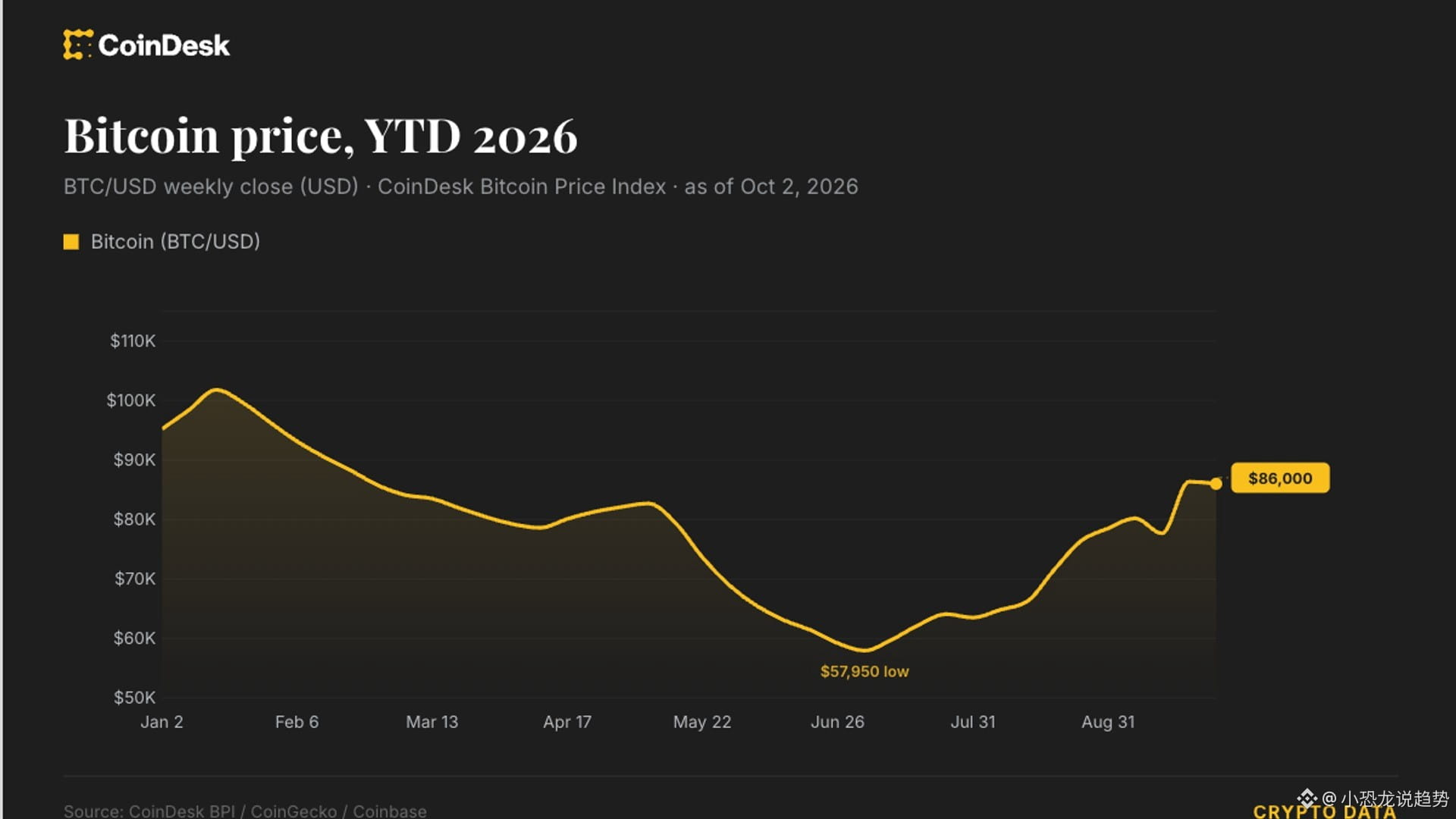
66
·
--
#zcash现货etf首现周度净流出9360万美元
Privacy coin starts spending money to buy “legal identity”: Zcash’s lobbying organization completed its U.S. congressional registration on October 1, and the entire group only has one lobbyist; meanwhile, its spot ETF saw net outflows of $93.6 million last week—its first weekly outflow since launch.🦖
[🚨 行情变了群里说](https://app.binance.com/uni-qr/JpwCPfBj)
First, who is this lobbyist?
There is only one person registered on the roster—Executive Director Divij Pandya. The issues they plan to lobby for are stated very clearly: the “Clarity Act” for digital asset markets, plus two proposed digital-asset tax measures. In other words, during the most critical window for U.S. crypto legislation, Zcash wants a seat to answer the question: can privacy coins legally exist?
This organization isn’t new. It’s called PGPZ. It was spun up by Electric Coin Co. in 2022 as Pretty Good Policy for Crypto. In 2023, it held a congressional crypto technical briefing, and only this year—in June—did it officially become independent. In August, the Zcash community funded it with $750,000 to support its first year of operations.
But the money signals the opposite. Grayscale’s Zcash spot ETF (ticker ZCSH) had net outflows of $93.56 million last week, the first time this product has had a weekly “bleed” since it was launched; ZEC has also pulled back about 23% from its earlier highs, slipping into a technical bear market.📉
Put both sides together, and the contrast is striking: a $750,000 lobbyist budget versus $93.6 million in net outflows—over a hundredfold difference. PGPZ founder Paul Brigner (also ZODL’s Chief Policy Officer) puts it plainly: policymakers are making decisions, and those decisions determine whether “privacy digital cash can still exist and whether it can be used legally.” Translate that—this isn’t PR; it’s survival.⚖️
My take: privacy coins are stuck in an awkward spot right now. Technically, the story is still there (Zcash plans to launch the NU7 upgrade in November, cutting block time to 25 seconds), but on the compliance front they’re getting hit on all sides, and institutional money is withdrawing first. Spending $750,000 to hire lobbyists buys “legitimacy insurance,” but the money inside the ETF won’t listen to the story—it steps out first. Political patience and financial impatience are fighting on the same coin.
Do you think privacy coins are being wrongly targeted by regulation, or that they simply shouldn’t have been made into ETFs in the first place? Let’s discuss in the comments.
Click the avatar to watch the live stream
Every day, I’ll take you through privacy-coin and crypto-regulation hotspots—not just what’s happening in the news, but also the logic and opportunities behind it 👀🚀
#zcash现货etf首现周度净流出9360万美元
Privacy coin starts spending money to buy “legal identity”: Zcash’s lobbying organization completed its U.S. congressional registration on October 1, and the entire group only has one lobbyist; meanwhile, its spot ETF saw net outflows of $93.6 million last week—its first weekly outflow since launch.🦖
🚨 行情变了群里说
First, who is this lobbyist?
There is only one person registered on the roster—Executive Director Divij Pandya. The issues they plan to lobby for are stated very clearly: the “Clarity Act” for digital asset markets, plus two proposed digital-asset tax measures. In other words, during the most critical window for U.S. crypto legislation, Zcash wants a seat to answer the question: can privacy coins legally exist?
This organization isn’t new. It’s called PGPZ. It was spun up by Electric Coin Co. in 2022 as Pretty Good Policy for Crypto. In 2023, it held a congressional crypto technical briefing, and only this year—in June—did it officially become independent. In August, the Zcash community funded it with $750,000 to support its first year of operations.
But the money signals the opposite. Grayscale’s Zcash spot ETF (ticker ZCSH) had net outflows of $93.56 million last week, the first time this product has had a weekly “bleed” since it was launched; ZEC has also pulled back about 23% from its earlier highs, slipping into a technical bear market.📉
Put both sides together, and the contrast is striking: a $750,000 lobbyist budget versus $93.6 million in net outflows—over a hundredfold difference. PGPZ founder Paul Brigner (also ZODL’s Chief Policy Officer) puts it plainly: policymakers are making decisions, and those decisions determine whether “privacy digital cash can still exist and whether it can be used legally.” Translate that—this isn’t PR; it’s survival.⚖️
My take: privacy coins are stuck in an awkward spot right now. Technically, the story is still there (Zcash plans to launch the NU7 upgrade in November, cutting block time to 25 seconds), but on the compliance front they’re getting hit on all sides, and institutional money is withdrawing first. Spending $750,000 to hire lobbyists buys “legitimacy insurance,” but the money inside the ETF won’t listen to the story—it steps out first. Political patience and financial impatience are fighting on the same coin.
Do you think privacy coins are being wrongly targeted by regulation, or that they simply shouldn’t have been made into ETFs in the first place? Let’s discuss in the comments.
Click the avatar to watch the live stream
Every day, I’ll take you through privacy-coin and crypto-regulation hotspots—not just what’s happening in the news, but also the logic and opportunities behind it 👀🚀
Privacy coin starts spending money to buy “legal identity”: Zcash’s lobbying organization completed its U.S. congressional registration on October 1, and the entire group only has one lobbyist; meanwhile, its spot ETF saw net outflows of $93.6 million last week—its first weekly outflow since launch.🦖
🚨 行情变了群里说
First, who is this lobbyist?
There is only one person registered on the roster—Executive Director Divij Pandya. The issues they plan to lobby for are stated very clearly: the “Clarity Act” for digital asset markets, plus two proposed digital-asset tax measures. In other words, during the most critical window for U.S. crypto legislation, Zcash wants a seat to answer the question: can privacy coins legally exist?
This organization isn’t new. It’s called PGPZ. It was spun up by Electric Coin Co. in 2022 as Pretty Good Policy for Crypto. In 2023, it held a congressional crypto technical briefing, and only this year—in June—did it officially become independent. In August, the Zcash community funded it with $750,000 to support its first year of operations.
But the money signals the opposite. Grayscale’s Zcash spot ETF (ticker ZCSH) had net outflows of $93.56 million last week, the first time this product has had a weekly “bleed” since it was launched; ZEC has also pulled back about 23% from its earlier highs, slipping into a technical bear market.📉
Put both sides together, and the contrast is striking: a $750,000 lobbyist budget versus $93.6 million in net outflows—over a hundredfold difference. PGPZ founder Paul Brigner (also ZODL’s Chief Policy Officer) puts it plainly: policymakers are making decisions, and those decisions determine whether “privacy digital cash can still exist and whether it can be used legally.” Translate that—this isn’t PR; it’s survival.⚖️
My take: privacy coins are stuck in an awkward spot right now. Technically, the story is still there (Zcash plans to launch the NU7 upgrade in November, cutting block time to 25 seconds), but on the compliance front they’re getting hit on all sides, and institutional money is withdrawing first. Spending $750,000 to hire lobbyists buys “legitimacy insurance,” but the money inside the ETF won’t listen to the story—it steps out first. Political patience and financial impatience are fighting on the same coin.
Do you think privacy coins are being wrongly targeted by regulation, or that they simply shouldn’t have been made into ETFs in the first place? Let’s discuss in the comments.
Click the avatar to watch the live stream
Every day, I’ll take you through privacy-coin and crypto-regulation hotspots—not just what’s happening in the news, but also the logic and opportunities behind it 👀🚀

460
·
--
Verified
#以太坊验证者退出队列增392%
850,000 ETH wait in line to “get off” : Verifiers exiting the queue—up 392% since early October, directly setting a 2026 high.🦖
[⚡ 有大动静群里说](https://app.binance.com/uni-qr/JpwCPfBj)
According to beaconcha.in’s data on validator exits, there are currently 850,736 ETH stuck in the queue waiting to withdraw. Estimated at about $2,700 per ETH, that’s worth roughly $2.3 billion. The wait time has been extended to about 14 days and 18 hours, with only 256 validators allowed through per epoch.
The trigger wasn’t a market crash—it was a wallet’s risk-control action. On September 30, MetaMask disclosed a security incident affecting its staking infrastructure. It then proactively and preventively exited around 17,000 validators, totaling about 523,000 ETH (around $1.4 billion). ⚠️ The official position is that users’ wallets weren’t directly threatened, but this batch of “preventive evacuations” was enough by itself to push the queue to the top.
Breaking down the numbers 📊: Total staked ETH across the network is about 43.6 million, with 878,089 active validators. This queue volume is about 2% of that. The proportion isn’t huge, but the direction is telling—it proves something: the large-scale migration of validators is driven not just by price, but by operational and security decisions.
My take: the exit queue is a “buffer valve,” not a sell-pressure switch. For ETH to go out, it has to wait for more than two weeks. The pace at which it truly hits spot is being deliberately slowed. So don’t read “850,000 ETH queued” as “850,000 ETH about to dump immediately.” What’s more worth watching is the metric “queue time” itself—once it keeps stretching, it indicates that exit demand exceeds the network’s processing capacity. That pressure then propagates into discounting on liquid staking derivatives, staking yields, and the redemption timing of related protocols.
What’s really being repriced this time is, in effect, “who is holding your staking.” A wallet’s risk-control decision can instantly change the flow of funds across the chain. The knock-on effects caused by this concentration are more worth worrying about than any price chart.
Do you think this wave of exits is just for risk avoidance, or a convenient profit-taking move? Let’s discuss in the comments.
Click the avatar to watch the live stream
Every day, I’ll keep you updated on Ethereum and the on-chain data hot spots—not only what happens in the news, but also how to understand the underlying logic and opportunities behind it 👀🚀
#以太坊验证者退出队列增392%
850,000 ETH wait in line to “get off” : Verifiers exiting the queue—up 392% since early October, directly setting a 2026 high.🦖
⚡ 有大动静群里说
According to beaconcha.in’s data on validator exits, there are currently 850,736 ETH stuck in the queue waiting to withdraw. Estimated at about $2,700 per ETH, that’s worth roughly $2.3 billion. The wait time has been extended to about 14 days and 18 hours, with only 256 validators allowed through per epoch.
The trigger wasn’t a market crash—it was a wallet’s risk-control action. On September 30, MetaMask disclosed a security incident affecting its staking infrastructure. It then proactively and preventively exited around 17,000 validators, totaling about 523,000 ETH (around $1.4 billion). ⚠️ The official position is that users’ wallets weren’t directly threatened, but this batch of “preventive evacuations” was enough by itself to push the queue to the top.
Breaking down the numbers 📊: Total staked ETH across the network is about 43.6 million, with 878,089 active validators. This queue volume is about 2% of that. The proportion isn’t huge, but the direction is telling—it proves something: the large-scale migration of validators is driven not just by price, but by operational and security decisions.
My take: the exit queue is a “buffer valve,” not a sell-pressure switch. For ETH to go out, it has to wait for more than two weeks. The pace at which it truly hits spot is being deliberately slowed. So don’t read “850,000 ETH queued” as “850,000 ETH about to dump immediately.” What’s more worth watching is the metric “queue time” itself—once it keeps stretching, it indicates that exit demand exceeds the network’s processing capacity. That pressure then propagates into discounting on liquid staking derivatives, staking yields, and the redemption timing of related protocols.
What’s really being repriced this time is, in effect, “who is holding your staking.” A wallet’s risk-control decision can instantly change the flow of funds across the chain. The knock-on effects caused by this concentration are more worth worrying about than any price chart.
Do you think this wave of exits is just for risk avoidance, or a convenient profit-taking move? Let’s discuss in the comments.
Click the avatar to watch the live stream
Every day, I’ll keep you updated on Ethereum and the on-chain data hot spots—not only what happens in the news, but also how to understand the underlying logic and opportunities behind it 👀🚀
850,000 ETH wait in line to “get off” : Verifiers exiting the queue—up 392% since early October, directly setting a 2026 high.🦖
⚡ 有大动静群里说
According to beaconcha.in’s data on validator exits, there are currently 850,736 ETH stuck in the queue waiting to withdraw. Estimated at about $2,700 per ETH, that’s worth roughly $2.3 billion. The wait time has been extended to about 14 days and 18 hours, with only 256 validators allowed through per epoch.
The trigger wasn’t a market crash—it was a wallet’s risk-control action. On September 30, MetaMask disclosed a security incident affecting its staking infrastructure. It then proactively and preventively exited around 17,000 validators, totaling about 523,000 ETH (around $1.4 billion). ⚠️ The official position is that users’ wallets weren’t directly threatened, but this batch of “preventive evacuations” was enough by itself to push the queue to the top.
Breaking down the numbers 📊: Total staked ETH across the network is about 43.6 million, with 878,089 active validators. This queue volume is about 2% of that. The proportion isn’t huge, but the direction is telling—it proves something: the large-scale migration of validators is driven not just by price, but by operational and security decisions.
My take: the exit queue is a “buffer valve,” not a sell-pressure switch. For ETH to go out, it has to wait for more than two weeks. The pace at which it truly hits spot is being deliberately slowed. So don’t read “850,000 ETH queued” as “850,000 ETH about to dump immediately.” What’s more worth watching is the metric “queue time” itself—once it keeps stretching, it indicates that exit demand exceeds the network’s processing capacity. That pressure then propagates into discounting on liquid staking derivatives, staking yields, and the redemption timing of related protocols.
What’s really being repriced this time is, in effect, “who is holding your staking.” A wallet’s risk-control decision can instantly change the flow of funds across the chain. The knock-on effects caused by this concentration are more worth worrying about than any price chart.
Do you think this wave of exits is just for risk avoidance, or a convenient profit-taking move? Let’s discuss in the comments.
Click the avatar to watch the live stream
Every day, I’ll keep you updated on Ethereum and the on-chain data hot spots—not only what happens in the news, but also how to understand the underlying logic and opportunities behind it 👀🚀
2
547
·
--
Three months, $10.2 billion in inflows: Bitcoin took $6.3 billion, yet its growth rate ranks last; the fastest mover only added $480 million 🦖
[🔎 进群看完整分析](https://app.binance.com/uni-qr/JpwCPfBj)
In the U.S. spot crypto ETFs, total net inflows in Q3 2026 came to $10.2 billion (SoSoValue data). Among them, the Bitcoin funds took $6.3 billion to secure the #1 spot; Ethereum funds received $3.1 billion, ranking second; Solana funds brought in $480 million, and XRP funds $308 million. In terms of sheer amount, Bitcoin is the biggest winner.
But when we switch the lens to “growth rate,” the story flips instantly 📈.
Looking at cumulative net inflows since listing, the Solana fund grew 42% in a quarter (from $1.1 billion to $1.6 billion), Ethereum +28%, XRP +21%, while Bitcoin was only +12%. Then consider an even more intuitive metric: net inflows this quarter as a percentage of the fund’s own net assets. Solana is 25.1%—the money that entered in just three months equals a full quarter of its total size. Ethereum is 17.3%, XRP 18.3%, and Bitcoin only 5.9%.
Where does the contrast come from? The answer is the base effect. By quarter-end, the Bitcoin ETF’s net assets are already $108 billion, while Solana has just $1.9 billion—over 50x difference. The bigger the “plate,” the smaller the percentage a same-sized amount can move. Because Solana’s “plate” is smaller, a single large inflow can push its growth rate up ⚠️.
To put it plainly: large money is still defaulting to Bitcoin—BlackRock’s IBIT is the industry’s “standard allocation.” But the incremental capital that truly changes direction at the margin is moving toward small-cap ETFs, with Solana getting the most of this round. Still, stay clear-eyed: part of what looks like #1 in growth rate is arithmetic from a low base, not necessarily that Solana’s absolute demand has already caught up with Ethereum. For the Solana fund to replicate another 42% next quarter, it would need additional net inflows of about $680 million—more than this quarter’s $480 million. That’s not easy.
For ordinary investors, ETF inflows are a slow variable, but they are also an “evidence of deposits” for institutional sentiment. If in Q4 Solana can still pull in more than $480 million, that would suggest this isn’t just a one-off momentum trade, but that the capital structure is quietly shifting tracks.
Do you think next quarter’s money will keep rotating toward small-cap ETFs like Solana, or will it flow back to Bitcoin? Let’s discuss in the comments.
Click the avatar to watch the live stream
Every day, I’ll help you track crypto ETF hotspots—not just what’s happening in the news, but also the logic and opportunities behind it 👀🚀
Three months, $10.2 billion in inflows: Bitcoin took $6.3 billion, yet its growth rate ranks last; the fastest mover only added $480 million 🦖
🔎 进群看完整分析
In the U.S. spot crypto ETFs, total net inflows in Q3 2026 came to $10.2 billion (SoSoValue data). Among them, the Bitcoin funds took $6.3 billion to secure the #1 spot; Ethereum funds received $3.1 billion, ranking second; Solana funds brought in $480 million, and XRP funds $308 million. In terms of sheer amount, Bitcoin is the biggest winner.
But when we switch the lens to “growth rate,” the story flips instantly 📈.
Looking at cumulative net inflows since listing, the Solana fund grew 42% in a quarter (from $1.1 billion to $1.6 billion), Ethereum +28%, XRP +21%, while Bitcoin was only +12%. Then consider an even more intuitive metric: net inflows this quarter as a percentage of the fund’s own net assets. Solana is 25.1%—the money that entered in just three months equals a full quarter of its total size. Ethereum is 17.3%, XRP 18.3%, and Bitcoin only 5.9%.
Where does the contrast come from? The answer is the base effect. By quarter-end, the Bitcoin ETF’s net assets are already $108 billion, while Solana has just $1.9 billion—over 50x difference. The bigger the “plate,” the smaller the percentage a same-sized amount can move. Because Solana’s “plate” is smaller, a single large inflow can push its growth rate up ⚠️.
To put it plainly: large money is still defaulting to Bitcoin—BlackRock’s IBIT is the industry’s “standard allocation.” But the incremental capital that truly changes direction at the margin is moving toward small-cap ETFs, with Solana getting the most of this round. Still, stay clear-eyed: part of what looks like #1 in growth rate is arithmetic from a low base, not necessarily that Solana’s absolute demand has already caught up with Ethereum. For the Solana fund to replicate another 42% next quarter, it would need additional net inflows of about $680 million—more than this quarter’s $480 million. That’s not easy.
For ordinary investors, ETF inflows are a slow variable, but they are also an “evidence of deposits” for institutional sentiment. If in Q4 Solana can still pull in more than $480 million, that would suggest this isn’t just a one-off momentum trade, but that the capital structure is quietly shifting tracks.
Do you think next quarter’s money will keep rotating toward small-cap ETFs like Solana, or will it flow back to Bitcoin? Let’s discuss in the comments.
Click the avatar to watch the live stream
Every day, I’ll help you track crypto ETF hotspots—not just what’s happening in the news, but also the logic and opportunities behind it 👀🚀
🔎 进群看完整分析
In the U.S. spot crypto ETFs, total net inflows in Q3 2026 came to $10.2 billion (SoSoValue data). Among them, the Bitcoin funds took $6.3 billion to secure the #1 spot; Ethereum funds received $3.1 billion, ranking second; Solana funds brought in $480 million, and XRP funds $308 million. In terms of sheer amount, Bitcoin is the biggest winner.
But when we switch the lens to “growth rate,” the story flips instantly 📈.
Looking at cumulative net inflows since listing, the Solana fund grew 42% in a quarter (from $1.1 billion to $1.6 billion), Ethereum +28%, XRP +21%, while Bitcoin was only +12%. Then consider an even more intuitive metric: net inflows this quarter as a percentage of the fund’s own net assets. Solana is 25.1%—the money that entered in just three months equals a full quarter of its total size. Ethereum is 17.3%, XRP 18.3%, and Bitcoin only 5.9%.
Where does the contrast come from? The answer is the base effect. By quarter-end, the Bitcoin ETF’s net assets are already $108 billion, while Solana has just $1.9 billion—over 50x difference. The bigger the “plate,” the smaller the percentage a same-sized amount can move. Because Solana’s “plate” is smaller, a single large inflow can push its growth rate up ⚠️.
To put it plainly: large money is still defaulting to Bitcoin—BlackRock’s IBIT is the industry’s “standard allocation.” But the incremental capital that truly changes direction at the margin is moving toward small-cap ETFs, with Solana getting the most of this round. Still, stay clear-eyed: part of what looks like #1 in growth rate is arithmetic from a low base, not necessarily that Solana’s absolute demand has already caught up with Ethereum. For the Solana fund to replicate another 42% next quarter, it would need additional net inflows of about $680 million—more than this quarter’s $480 million. That’s not easy.
For ordinary investors, ETF inflows are a slow variable, but they are also an “evidence of deposits” for institutional sentiment. If in Q4 Solana can still pull in more than $480 million, that would suggest this isn’t just a one-off momentum trade, but that the capital structure is quietly shifting tracks.
Do you think next quarter’s money will keep rotating toward small-cap ETFs like Solana, or will it flow back to Bitcoin? Let’s discuss in the comments.
Click the avatar to watch the live stream
Every day, I’ll help you track crypto ETF hotspots—not just what’s happening in the news, but also the logic and opportunities behind it 👀🚀
2
660
·
--
Verified
#zcash现货etf首现周度净流出9360万美元
Two weeks ago, it pulled in $98.2 million—ranked No. 1 across the entire crypto ETF market. This week, however, it saw a net outflow of $93.6 million—the Zcash ETF’s first-ever pattern of “only out, never in” 🦖
[💡 群里更新数据解读](https://app.binance.com/uni-qr/JpwCPfBj)
Grayscale’s Zcash spot ETF (ticker: ZCSH) has, since its launch in August, recorded its first weekly net outflow. This week, $93.6 million was redeemed. Meanwhile, over the same period, ZEC’s price slid from about $1,585 at the start of the week to around $1,300. Money flows and price—first time pointing in the same direction.
The details are even more straightforward: as of October 3, ZEC was trading around $1,308, down about 17.5% over the week, and retreating roughly 23% from its recent high of $1,690. According to SoSoValue data, this ETF hasn’t posted any single-day net inflow since September 22. The redemptions have been consecutive, not a one-off transaction 💰.
The contrast is stark: two weeks ago, ZCSH attracted $98.2 million in a single week—the largest inflow among all crypto ETFs that week. Going from inflow champion to the main outflow driver, the fund’s flow direction flipped by nearly $190 million. And remember, Zcash has gained over 20x this year—ETF inflows are one of the key fuels behind this leg of the rally. With the fuel being withdrawn in the opposite direction, the price naturally loses a pillar ⚠️.
But don’t put all the blame on the ETF. The report is clear: redemptions can explain some of the pressure, but they can’t explain the entire drop. What you really need to watch is the price itself: the $1,270 to $1,300 area below is where recent buyers have been stepping in. On the four-hour chart, the longer-term moving averages are also hovering around this level. As long as it holds, there’s reason to expect a rebound; if it breaks, the next reference point is $1,155—about 12% lower than the current price 📉.
Upward, short-term selling pressure is starting to ease. There may be a chance to bounce first toward $1,320 to $1,360. If it can reclaim and hold above $1,380 to $1,425, then the logic of challenging $1,500 in the latter part of October would be back on track. In one sentence: this round is “a two-legged story”—the privacy-coin narrative and ETF funds are walking on two legs, and now the funds’ leg is the first to feel weak.
Do you think this move in ZEC is a deep overextension correction, or that the market has truly topped? Let’s discuss in the comments.
Click your avatar to watch the livestream
Every day, I’ll take you through Zcash highlights—more than just reporting what happened, I’ll help you understand the underlying logic and opportunities 👀🚀
#zcash现货etf首现周度净流出9360万美元
Two weeks ago, it pulled in $98.2 million—ranked No. 1 across the entire crypto ETF market. This week, however, it saw a net outflow of $93.6 million—the Zcash ETF’s first-ever pattern of “only out, never in” 🦖
💡 群里更新数据解读
Grayscale’s Zcash spot ETF (ticker: ZCSH) has, since its launch in August, recorded its first weekly net outflow. This week, $93.6 million was redeemed. Meanwhile, over the same period, ZEC’s price slid from about $1,585 at the start of the week to around $1,300. Money flows and price—first time pointing in the same direction.
The details are even more straightforward: as of October 3, ZEC was trading around $1,308, down about 17.5% over the week, and retreating roughly 23% from its recent high of $1,690. According to SoSoValue data, this ETF hasn’t posted any single-day net inflow since September 22. The redemptions have been consecutive, not a one-off transaction 💰.
The contrast is stark: two weeks ago, ZCSH attracted $98.2 million in a single week—the largest inflow among all crypto ETFs that week. Going from inflow champion to the main outflow driver, the fund’s flow direction flipped by nearly $190 million. And remember, Zcash has gained over 20x this year—ETF inflows are one of the key fuels behind this leg of the rally. With the fuel being withdrawn in the opposite direction, the price naturally loses a pillar ⚠️.
But don’t put all the blame on the ETF. The report is clear: redemptions can explain some of the pressure, but they can’t explain the entire drop. What you really need to watch is the price itself: the $1,270 to $1,300 area below is where recent buyers have been stepping in. On the four-hour chart, the longer-term moving averages are also hovering around this level. As long as it holds, there’s reason to expect a rebound; if it breaks, the next reference point is $1,155—about 12% lower than the current price 📉.
Upward, short-term selling pressure is starting to ease. There may be a chance to bounce first toward $1,320 to $1,360. If it can reclaim and hold above $1,380 to $1,425, then the logic of challenging $1,500 in the latter part of October would be back on track. In one sentence: this round is “a two-legged story”—the privacy-coin narrative and ETF funds are walking on two legs, and now the funds’ leg is the first to feel weak.
Do you think this move in ZEC is a deep overextension correction, or that the market has truly topped? Let’s discuss in the comments.
Click your avatar to watch the livestream
Every day, I’ll take you through Zcash highlights—more than just reporting what happened, I’ll help you understand the underlying logic and opportunities 👀🚀
Two weeks ago, it pulled in $98.2 million—ranked No. 1 across the entire crypto ETF market. This week, however, it saw a net outflow of $93.6 million—the Zcash ETF’s first-ever pattern of “only out, never in” 🦖
💡 群里更新数据解读
Grayscale’s Zcash spot ETF (ticker: ZCSH) has, since its launch in August, recorded its first weekly net outflow. This week, $93.6 million was redeemed. Meanwhile, over the same period, ZEC’s price slid from about $1,585 at the start of the week to around $1,300. Money flows and price—first time pointing in the same direction.
The details are even more straightforward: as of October 3, ZEC was trading around $1,308, down about 17.5% over the week, and retreating roughly 23% from its recent high of $1,690. According to SoSoValue data, this ETF hasn’t posted any single-day net inflow since September 22. The redemptions have been consecutive, not a one-off transaction 💰.
The contrast is stark: two weeks ago, ZCSH attracted $98.2 million in a single week—the largest inflow among all crypto ETFs that week. Going from inflow champion to the main outflow driver, the fund’s flow direction flipped by nearly $190 million. And remember, Zcash has gained over 20x this year—ETF inflows are one of the key fuels behind this leg of the rally. With the fuel being withdrawn in the opposite direction, the price naturally loses a pillar ⚠️.
But don’t put all the blame on the ETF. The report is clear: redemptions can explain some of the pressure, but they can’t explain the entire drop. What you really need to watch is the price itself: the $1,270 to $1,300 area below is where recent buyers have been stepping in. On the four-hour chart, the longer-term moving averages are also hovering around this level. As long as it holds, there’s reason to expect a rebound; if it breaks, the next reference point is $1,155—about 12% lower than the current price 📉.
Upward, short-term selling pressure is starting to ease. There may be a chance to bounce first toward $1,320 to $1,360. If it can reclaim and hold above $1,380 to $1,425, then the logic of challenging $1,500 in the latter part of October would be back on track. In one sentence: this round is “a two-legged story”—the privacy-coin narrative and ETF funds are walking on two legs, and now the funds’ leg is the first to feel weak.
Do you think this move in ZEC is a deep overextension correction, or that the market has truly topped? Let’s discuss in the comments.
Click your avatar to watch the livestream
Every day, I’ll take you through Zcash highlights—more than just reporting what happened, I’ll help you understand the underlying logic and opportunities 👀🚀
1.6k
·
--
The U.S. Senate stalled the crypto bill—and the market went absolutely wild: one token surged 104% in 15 days 📈
[⚡ 有大动静群里说](https://app.binance.com/uni-qr/JpwCPfBj)
Let’s get the facts straight. On September 15, the U.S. Senate failed to advance the CLARITY Act (a bill on crypto market structure). At the time, nearly everyone treated it as a major bearish signal. But in a memo dated September 30, Matt Hougan, Chief Investment Officer at Bitwise Asset Management, reached the exact opposite conclusion: the bill died—and instead it loosened restrictions for four categories of businesses, sending token prices and stock prices soaring together.
The four categories he singled out are: stablecoin platforms, legacy exchanges, tokenization businesses, and projects that use revenue to repurchase their own tokens. For stablecoins, Hougan directly called out one leading U.S. compliant exchange as the biggest winner—because the “balance rewards” that the bill intended to tighten were preserved. Legacy exchanges also kept the competitive advantages they might have had trimmed.
What makes the point most clearly is the numbers. From the September 15 vote to September 30, among the projects that repurchase tokens: NEAR rose 104%, Uniswap rose 49%, Pump rose 19%, Hyperliquid rose 15%, and Lighter rose 10%. Over the same window, Bitcoin rose only 8% and Ethereum rose 7% 🌊
Hougan’s takeaway was blunt: “Crypto traded long-term certainty for faster, better rules.” The logic is that in the legislative negotiations, the industry had already accepted the proposed limits; when the bill failed to pass, those limits never took effect. But the SEC moved faster instead—opening a five-year trial pathway for trading venues for tokenized U.S. stocks.
My view: this is a classic case of a “regulatory vacuum windfall”—don’t get too excited too soon. Hougan himself also warned that decisions made by regulators are far less stable than legislation. When the government changes hands in January 2029 and the SEC and CFTC get a new batch of tougher leaders, the direction could change overnight ⚠️
So I want to ask you: would you rather have rules that are faster now—but could change anytime—or rules that take longer, but can provide certainty for a decade?🦖
Let’s chat in the comments.
Click the avatar to watch the livestream
Every day, I’ll take you through crypto regulatory hot spots—not just what’s happening, but the logic and the opportunities behind it 👀🚀
The U.S. Senate stalled the crypto bill—and the market went absolutely wild: one token surged 104% in 15 days 📈
⚡ 有大动静群里说
Let’s get the facts straight. On September 15, the U.S. Senate failed to advance the CLARITY Act (a bill on crypto market structure). At the time, nearly everyone treated it as a major bearish signal. But in a memo dated September 30, Matt Hougan, Chief Investment Officer at Bitwise Asset Management, reached the exact opposite conclusion: the bill died—and instead it loosened restrictions for four categories of businesses, sending token prices and stock prices soaring together.
The four categories he singled out are: stablecoin platforms, legacy exchanges, tokenization businesses, and projects that use revenue to repurchase their own tokens. For stablecoins, Hougan directly called out one leading U.S. compliant exchange as the biggest winner—because the “balance rewards” that the bill intended to tighten were preserved. Legacy exchanges also kept the competitive advantages they might have had trimmed.
What makes the point most clearly is the numbers. From the September 15 vote to September 30, among the projects that repurchase tokens: NEAR rose 104%, Uniswap rose 49%, Pump rose 19%, Hyperliquid rose 15%, and Lighter rose 10%. Over the same window, Bitcoin rose only 8% and Ethereum rose 7% 🌊
Hougan’s takeaway was blunt: “Crypto traded long-term certainty for faster, better rules.” The logic is that in the legislative negotiations, the industry had already accepted the proposed limits; when the bill failed to pass, those limits never took effect. But the SEC moved faster instead—opening a five-year trial pathway for trading venues for tokenized U.S. stocks.
My view: this is a classic case of a “regulatory vacuum windfall”—don’t get too excited too soon. Hougan himself also warned that decisions made by regulators are far less stable than legislation. When the government changes hands in January 2029 and the SEC and CFTC get a new batch of tougher leaders, the direction could change overnight ⚠️
So I want to ask you: would you rather have rules that are faster now—but could change anytime—or rules that take longer, but can provide certainty for a decade?🦖
Let’s chat in the comments.
Click the avatar to watch the livestream
Every day, I’ll take you through crypto regulatory hot spots—not just what’s happening, but the logic and the opportunities behind it 👀🚀
⚡ 有大动静群里说
Let’s get the facts straight. On September 15, the U.S. Senate failed to advance the CLARITY Act (a bill on crypto market structure). At the time, nearly everyone treated it as a major bearish signal. But in a memo dated September 30, Matt Hougan, Chief Investment Officer at Bitwise Asset Management, reached the exact opposite conclusion: the bill died—and instead it loosened restrictions for four categories of businesses, sending token prices and stock prices soaring together.
The four categories he singled out are: stablecoin platforms, legacy exchanges, tokenization businesses, and projects that use revenue to repurchase their own tokens. For stablecoins, Hougan directly called out one leading U.S. compliant exchange as the biggest winner—because the “balance rewards” that the bill intended to tighten were preserved. Legacy exchanges also kept the competitive advantages they might have had trimmed.
What makes the point most clearly is the numbers. From the September 15 vote to September 30, among the projects that repurchase tokens: NEAR rose 104%, Uniswap rose 49%, Pump rose 19%, Hyperliquid rose 15%, and Lighter rose 10%. Over the same window, Bitcoin rose only 8% and Ethereum rose 7% 🌊
Hougan’s takeaway was blunt: “Crypto traded long-term certainty for faster, better rules.” The logic is that in the legislative negotiations, the industry had already accepted the proposed limits; when the bill failed to pass, those limits never took effect. But the SEC moved faster instead—opening a five-year trial pathway for trading venues for tokenized U.S. stocks.
My view: this is a classic case of a “regulatory vacuum windfall”—don’t get too excited too soon. Hougan himself also warned that decisions made by regulators are far less stable than legislation. When the government changes hands in January 2029 and the SEC and CFTC get a new batch of tougher leaders, the direction could change overnight ⚠️
So I want to ask you: would you rather have rules that are faster now—but could change anytime—or rules that take longer, but can provide certainty for a decade?🦖
Let’s chat in the comments.
Click the avatar to watch the livestream
Every day, I’ll take you through crypto regulatory hot spots—not just what’s happening, but the logic and the opportunities behind it 👀🚀

880
·
--
#比特币升至8.5万美元附近
The odds of a rate hike in October dropped from 70% to 30% over one week. Bitcoin has risen for four straight days, climbing to $86,000 🦖
[⚡ 有大动静群里说](https://app.binance.com/uni-qr/JpwCPfBj)
Federal Reserve Vice Chair Jefferson’s remarks on Thursday caused the market’s rate-hike expectations to suddenly hit the brakes: the probability of another rate hike at the October 28 meeting fell from 70% to 30% within a week. The probability that there will be at least one more rate hike before year-end also slipped from 95% to 80%. Bitcoin rose for the fourth consecutive trading day, trading at about $86,200, up roughly 3% over 24 hours.📈
This rebound is also supported by the bond market. The 2-year U.S. Treasury yield fell 12.3 basis points in a day to 4.764%, and the 10-year yield dropped 9.4 basis points to 5.217%, briefly touching 5.36% intraday. Jefferson’s exact words were that since the September meeting, yields across various maturities have continued to rise, indicating investors are re-evaluating the macro environment. “My colleagues and I need to form our own judgment—this may require more time”—translated, it means: wait for more data, don’t rush.
But two signals can’t be ignored. First, the September ISM Manufacturing PMI came in at 54.5 and is still expanding, while the Prices Paid subcomponent jumped from 71.1 to 77.9—so inflation pressures are actually getting heavier. Second, August PCE year-over-year at 3.4% was below the 3.7% forecast, but this time the data methodology was adjusted. Some institutions estimate that the change in the definition alone could make core PCE look up to 20 basis points lower; plus, July was also revised down by 30 basis points. So the market is discounting those four words—“inflation cooling.” ⚠️
On-chain, there’s a bit of comfort. Glassnode pointed out that the coin-denominated open interest has shrunk by nearly 20% since the August low, while the price has risen 35%. Open interest is already at the lowest level since March—less leverage means this rally is less likely to be wiped back to square one by a single liquidation cascade. Bitcoin rose 42.7% in Q3, the strongest Q3 since 2017; Citi also raised its 12-month target price from $82,000 to $113,000. Ahead of Thursday’s U.S. stock market open, Strategy was up more than 3%, and one exchange/ Circle was up more than 2%.
My take: the core driver of this move isn’t something happening in the crypto sector itself—it’s that “rate hikes may be paused.” But tonight, if the U.S. September nonfarm payrolls report comes out and employment is still strong, the 30% rate-hike probability can bounce right back, and the key support at $82,500 could be tested again. Before you take action, look at the data.📉
After tonight’s jobs report, do you think Bitcoin will first surge to $90,000, or first pull back to $82,000? Let’s discuss in the comments.
Click the profile picture to watch the live stream
Every day, I’ll help you track Bitcoin hot topics—not just what’s happening in the news, but also the logic and opportunities behind it 👀🚀
#比特币升至8.5万美元附近
The odds of a rate hike in October dropped from 70% to 30% over one week. Bitcoin has risen for four straight days, climbing to $86,000 🦖
⚡ 有大动静群里说
Federal Reserve Vice Chair Jefferson’s remarks on Thursday caused the market’s rate-hike expectations to suddenly hit the brakes: the probability of another rate hike at the October 28 meeting fell from 70% to 30% within a week. The probability that there will be at least one more rate hike before year-end also slipped from 95% to 80%. Bitcoin rose for the fourth consecutive trading day, trading at about $86,200, up roughly 3% over 24 hours.📈
This rebound is also supported by the bond market. The 2-year U.S. Treasury yield fell 12.3 basis points in a day to 4.764%, and the 10-year yield dropped 9.4 basis points to 5.217%, briefly touching 5.36% intraday. Jefferson’s exact words were that since the September meeting, yields across various maturities have continued to rise, indicating investors are re-evaluating the macro environment. “My colleagues and I need to form our own judgment—this may require more time”—translated, it means: wait for more data, don’t rush.
But two signals can’t be ignored. First, the September ISM Manufacturing PMI came in at 54.5 and is still expanding, while the Prices Paid subcomponent jumped from 71.1 to 77.9—so inflation pressures are actually getting heavier. Second, August PCE year-over-year at 3.4% was below the 3.7% forecast, but this time the data methodology was adjusted. Some institutions estimate that the change in the definition alone could make core PCE look up to 20 basis points lower; plus, July was also revised down by 30 basis points. So the market is discounting those four words—“inflation cooling.” ⚠️
On-chain, there’s a bit of comfort. Glassnode pointed out that the coin-denominated open interest has shrunk by nearly 20% since the August low, while the price has risen 35%. Open interest is already at the lowest level since March—less leverage means this rally is less likely to be wiped back to square one by a single liquidation cascade. Bitcoin rose 42.7% in Q3, the strongest Q3 since 2017; Citi also raised its 12-month target price from $82,000 to $113,000. Ahead of Thursday’s U.S. stock market open, Strategy was up more than 3%, and one exchange/ Circle was up more than 2%.
My take: the core driver of this move isn’t something happening in the crypto sector itself—it’s that “rate hikes may be paused.” But tonight, if the U.S. September nonfarm payrolls report comes out and employment is still strong, the 30% rate-hike probability can bounce right back, and the key support at $82,500 could be tested again. Before you take action, look at the data.📉
After tonight’s jobs report, do you think Bitcoin will first surge to $90,000, or first pull back to $82,000? Let’s discuss in the comments.
Click the profile picture to watch the live stream
Every day, I’ll help you track Bitcoin hot topics—not just what’s happening in the news, but also the logic and opportunities behind it 👀🚀
The odds of a rate hike in October dropped from 70% to 30% over one week. Bitcoin has risen for four straight days, climbing to $86,000 🦖
⚡ 有大动静群里说
Federal Reserve Vice Chair Jefferson’s remarks on Thursday caused the market’s rate-hike expectations to suddenly hit the brakes: the probability of another rate hike at the October 28 meeting fell from 70% to 30% within a week. The probability that there will be at least one more rate hike before year-end also slipped from 95% to 80%. Bitcoin rose for the fourth consecutive trading day, trading at about $86,200, up roughly 3% over 24 hours.📈
This rebound is also supported by the bond market. The 2-year U.S. Treasury yield fell 12.3 basis points in a day to 4.764%, and the 10-year yield dropped 9.4 basis points to 5.217%, briefly touching 5.36% intraday. Jefferson’s exact words were that since the September meeting, yields across various maturities have continued to rise, indicating investors are re-evaluating the macro environment. “My colleagues and I need to form our own judgment—this may require more time”—translated, it means: wait for more data, don’t rush.
But two signals can’t be ignored. First, the September ISM Manufacturing PMI came in at 54.5 and is still expanding, while the Prices Paid subcomponent jumped from 71.1 to 77.9—so inflation pressures are actually getting heavier. Second, August PCE year-over-year at 3.4% was below the 3.7% forecast, but this time the data methodology was adjusted. Some institutions estimate that the change in the definition alone could make core PCE look up to 20 basis points lower; plus, July was also revised down by 30 basis points. So the market is discounting those four words—“inflation cooling.” ⚠️
On-chain, there’s a bit of comfort. Glassnode pointed out that the coin-denominated open interest has shrunk by nearly 20% since the August low, while the price has risen 35%. Open interest is already at the lowest level since March—less leverage means this rally is less likely to be wiped back to square one by a single liquidation cascade. Bitcoin rose 42.7% in Q3, the strongest Q3 since 2017; Citi also raised its 12-month target price from $82,000 to $113,000. Ahead of Thursday’s U.S. stock market open, Strategy was up more than 3%, and one exchange/ Circle was up more than 2%.
My take: the core driver of this move isn’t something happening in the crypto sector itself—it’s that “rate hikes may be paused.” But tonight, if the U.S. September nonfarm payrolls report comes out and employment is still strong, the 30% rate-hike probability can bounce right back, and the key support at $82,500 could be tested again. Before you take action, look at the data.📉
After tonight’s jobs report, do you think Bitcoin will first surge to $90,000, or first pull back to $82,000? Let’s discuss in the comments.
Click the profile picture to watch the live stream
Every day, I’ll help you track Bitcoin hot topics—not just what’s happening in the news, but also the logic and opportunities behind it 👀🚀
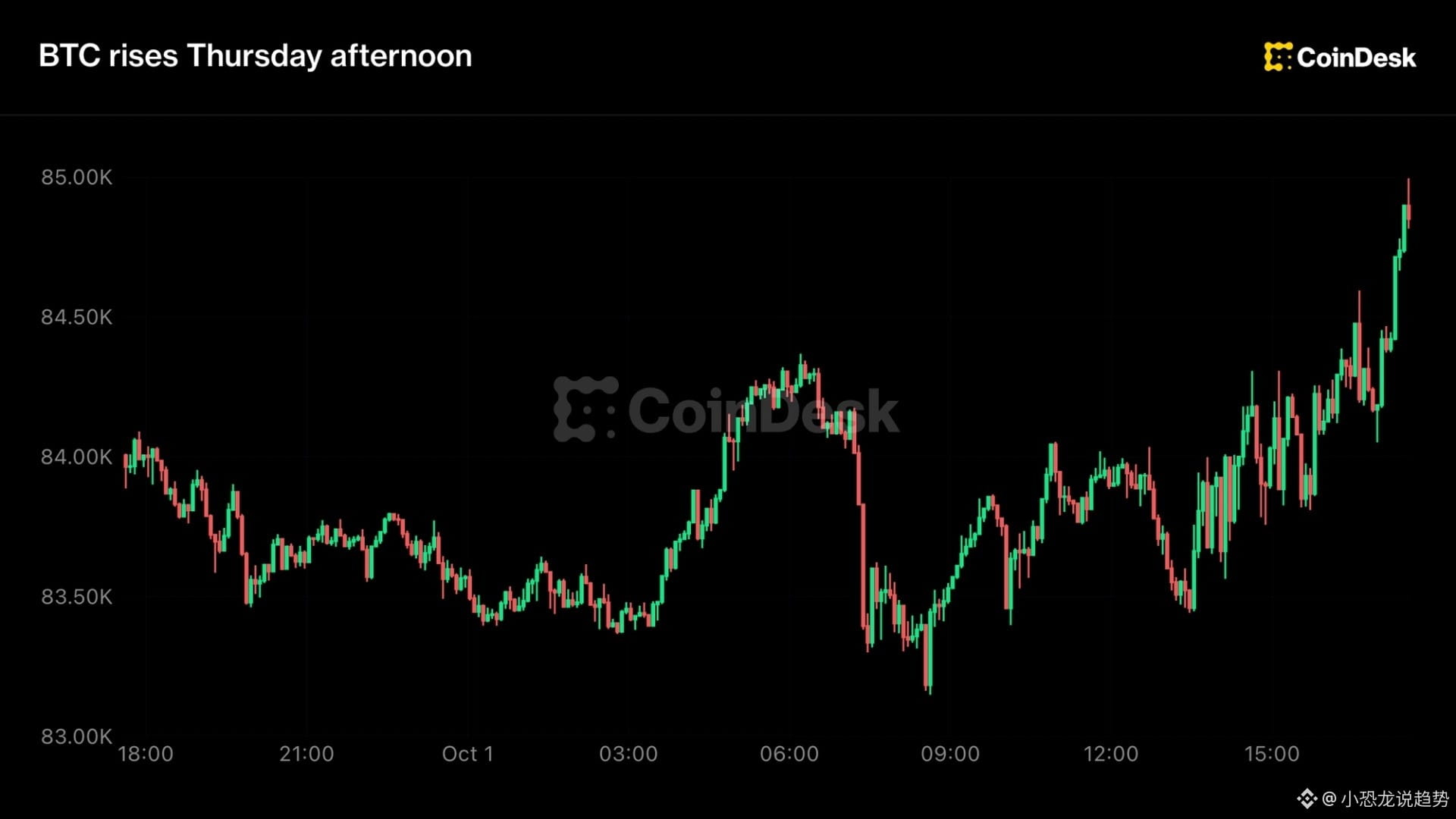
2
1.5k
·
--
#以太坊三季度涨70.9% #比特币etf三季度净流入63.4亿美元
A quarter saw $1.26 billion stolen—while Bitcoin in the same period rose by 40% 🦖
[📈 进群一起分析行情](https://app.binance.com/uni-qr/JpwCPfBj)
The third quarter has just wrapped up: CertiK’s latest data shows that in Q3 2026, the crypto industry suffered $1.26 billion in losses from security incidents, up 53.9% from the $819.4 million in Q2; the number of incidents rose from 219 to 247. The single largest theft was $387.5 million from a major exchange on September 24—accounting for 31% of the quarter’s total losses in one incident 💥
But in the very same quarter, Bitcoin rose by about 40% and Ethereum surged 70.9%. Bitcoin ETFs saw net inflows of $6.34 billion. On one side, a hackers’ harvest season; on the other, a bulls’ celebration season—this is the most unflattering side of a bull market ⚠️
First, let’s lay out the hackers’ scoreboard. September was the worst-hit month: $769 million lost in a single month, with 99 incidents—96% of which came from exploits. Besides that exchange’s $387.5 million, Liquid Network was hit for $319 million, Tectonic lost $120 million, and Coldcard was stolen for $112.7 million. Fortunately, about $273 million was frozen or recovered, bringing September’s net loss down to $495.3 million. The bigger trouble is money laundering pathways: the stolen funds are being transferred through privacy pools, making on-chain tracking increasingly difficult.
Now, let’s look at the bulls’ performance report. Bitcoin is back above $84,000, with $82,500 as the key support level. Citigroup has just raised its 12-month target price from $82,000 to $113,000, bullish on ETF fund returning; Ethereum’s quarterly gain is 70.9%, and the target price is set at $3,028 📈
My take: this cold and hot swing is actually two sides of the same thing. Institutional money is pouring in at scale through ETFs, inflating the total size of crypto assets—and pushing the amount stolen per incident into the hundreds-of-millions. Paper gains in a bull market can be very tempting, but the risk that “the assets are in someone else’s hands” is also being amplified at the same time. For everyday people, the biggest lesson of this quarter isn’t chasing pumps—it’s figuring out whose pocket your coins are really in.
Do you think this wave of hacks will slow down institutions’ pace of entry? Or do you think ETF buyers simply don’t care about these events? Let’s discuss in the comments.
Click the profile picture to watch the live stream
Every day, I’ll help you track crypto hotspots—not just what happened in the news, but also the logic and opportunities behind it 👀🚀
#以太坊三季度涨70.9% #比特币etf三季度净流入63.4亿美元
A quarter saw $1.26 billion stolen—while Bitcoin in the same period rose by 40% 🦖
📈 进群一起分析行情
The third quarter has just wrapped up: CertiK’s latest data shows that in Q3 2026, the crypto industry suffered $1.26 billion in losses from security incidents, up 53.9% from the $819.4 million in Q2; the number of incidents rose from 219 to 247. The single largest theft was $387.5 million from a major exchange on September 24—accounting for 31% of the quarter’s total losses in one incident 💥
But in the very same quarter, Bitcoin rose by about 40% and Ethereum surged 70.9%. Bitcoin ETFs saw net inflows of $6.34 billion. On one side, a hackers’ harvest season; on the other, a bulls’ celebration season—this is the most unflattering side of a bull market ⚠️
First, let’s lay out the hackers’ scoreboard. September was the worst-hit month: $769 million lost in a single month, with 99 incidents—96% of which came from exploits. Besides that exchange’s $387.5 million, Liquid Network was hit for $319 million, Tectonic lost $120 million, and Coldcard was stolen for $112.7 million. Fortunately, about $273 million was frozen or recovered, bringing September’s net loss down to $495.3 million. The bigger trouble is money laundering pathways: the stolen funds are being transferred through privacy pools, making on-chain tracking increasingly difficult.
Now, let’s look at the bulls’ performance report. Bitcoin is back above $84,000, with $82,500 as the key support level. Citigroup has just raised its 12-month target price from $82,000 to $113,000, bullish on ETF fund returning; Ethereum’s quarterly gain is 70.9%, and the target price is set at $3,028 📈
My take: this cold and hot swing is actually two sides of the same thing. Institutional money is pouring in at scale through ETFs, inflating the total size of crypto assets—and pushing the amount stolen per incident into the hundreds-of-millions. Paper gains in a bull market can be very tempting, but the risk that “the assets are in someone else’s hands” is also being amplified at the same time. For everyday people, the biggest lesson of this quarter isn’t chasing pumps—it’s figuring out whose pocket your coins are really in.
Do you think this wave of hacks will slow down institutions’ pace of entry? Or do you think ETF buyers simply don’t care about these events? Let’s discuss in the comments.
Click the profile picture to watch the live stream
Every day, I’ll help you track crypto hotspots—not just what happened in the news, but also the logic and opportunities behind it 👀🚀
A quarter saw $1.26 billion stolen—while Bitcoin in the same period rose by 40% 🦖
📈 进群一起分析行情
The third quarter has just wrapped up: CertiK’s latest data shows that in Q3 2026, the crypto industry suffered $1.26 billion in losses from security incidents, up 53.9% from the $819.4 million in Q2; the number of incidents rose from 219 to 247. The single largest theft was $387.5 million from a major exchange on September 24—accounting for 31% of the quarter’s total losses in one incident 💥
But in the very same quarter, Bitcoin rose by about 40% and Ethereum surged 70.9%. Bitcoin ETFs saw net inflows of $6.34 billion. On one side, a hackers’ harvest season; on the other, a bulls’ celebration season—this is the most unflattering side of a bull market ⚠️
First, let’s lay out the hackers’ scoreboard. September was the worst-hit month: $769 million lost in a single month, with 99 incidents—96% of which came from exploits. Besides that exchange’s $387.5 million, Liquid Network was hit for $319 million, Tectonic lost $120 million, and Coldcard was stolen for $112.7 million. Fortunately, about $273 million was frozen or recovered, bringing September’s net loss down to $495.3 million. The bigger trouble is money laundering pathways: the stolen funds are being transferred through privacy pools, making on-chain tracking increasingly difficult.
Now, let’s look at the bulls’ performance report. Bitcoin is back above $84,000, with $82,500 as the key support level. Citigroup has just raised its 12-month target price from $82,000 to $113,000, bullish on ETF fund returning; Ethereum’s quarterly gain is 70.9%, and the target price is set at $3,028 📈
My take: this cold and hot swing is actually two sides of the same thing. Institutional money is pouring in at scale through ETFs, inflating the total size of crypto assets—and pushing the amount stolen per incident into the hundreds-of-millions. Paper gains in a bull market can be very tempting, but the risk that “the assets are in someone else’s hands” is also being amplified at the same time. For everyday people, the biggest lesson of this quarter isn’t chasing pumps—it’s figuring out whose pocket your coins are really in.
Do you think this wave of hacks will slow down institutions’ pace of entry? Or do you think ETF buyers simply don’t care about these events? Let’s discuss in the comments.
Click the profile picture to watch the live stream
Every day, I’ll help you track crypto hotspots—not just what happened in the news, but also the logic and opportunities behind it 👀🚀

512
·
--
Verified
#美国10年期美债收益率逼近5.3%
US Treasury yields surge to 5.342%, the highest since 2002; yet Bitcoin stays above $84,000 and refuses to back down 🦖
[🕐 最新解读群里更新](https://app.binance.com/uni-qr/JpwCPfBj)
On Thursday, US stocks opened; at one point, the yield on the US 10-year Treasury touched 5.342%, the last time this level appeared was in April 2002. The 30-year yield also refreshed multi-year highs. At the same time, Bitcoin climbed above $84,000, up slightly on the day. Faced with the world’s most expensive cost of borrowing, it has stubbornly held its ground.
First, translate the numbers into plain language: 5.342% means the US government’s cost of borrowing has returned to levels from 24 years ago. As market concerns about government debt grow, Mahmood Pradhan, former Deputy Director of the IMF’s Europe department, told the media that global investors are now “very tense.” As yields keep rising, interest payments that countries have to make rise along with them.
Bitcoin’s reaction, in fact, has been more restrained than many people might expect. In August, the year-over-year PCE price index came in at 3.4%, below expectations, and the market barely got excited—analysts generally believe that a large part of this decline is due to changes in statistical measurement. Crypto analyst Benjamin Cowen put it more bluntly: “The bond market has revolted. Until the Fed truly gets inflation under control, this situation will likely keep going.”
On the technical side, the key levels indicated by liquidation data are $84,500 and $82,900. Over the past 24 hours, total net liquidations across the entire market were only about $25 million. Both bulls and bears are holding back, and price is being ground back and forth within a range. Rekt Capital reminds that Bitcoin will likely retest support around $82,500. “This pullback could get messy”—but he also says that as long as it’s defended, there’s still a chance to continue moving higher.
Let’s translate the key signal ⚖️: When the yield on the US 10-year Treasury gets close to 5.3%, pricing power is no longer in the crypto market—it’s in the bond market. With each step up in yields, the valuation pressure on risk assets increases. This week’s relatively soft PCE gives the bulls a chance to catch their breath, so what we’re seeing isn’t a crash, but “high-level consolidation—nobody dares to make the first move.” What truly matters now are two things: whether the 10-year yield can hold near 5.3% without surging higher again, and whether the $82,500 line can be defended. ⚠️
Do you think this move is rates weighing on Bitcoin, or Bitcoin waiting for rates to turn? Let us know your take in the comments.📈
Click the profile picture to watch the live stream
Every day, I’ll keep you on top of crypto macro hotspots—more than just reporting what happens in the news, I’ll help you understand the logic and opportunities behind it 👀🚀
#美国10年期美债收益率逼近5.3%
US Treasury yields surge to 5.342%, the highest since 2002; yet Bitcoin stays above $84,000 and refuses to back down 🦖
🕐 最新解读群里更新
On Thursday, US stocks opened; at one point, the yield on the US 10-year Treasury touched 5.342%, the last time this level appeared was in April 2002. The 30-year yield also refreshed multi-year highs. At the same time, Bitcoin climbed above $84,000, up slightly on the day. Faced with the world’s most expensive cost of borrowing, it has stubbornly held its ground.
First, translate the numbers into plain language: 5.342% means the US government’s cost of borrowing has returned to levels from 24 years ago. As market concerns about government debt grow, Mahmood Pradhan, former Deputy Director of the IMF’s Europe department, told the media that global investors are now “very tense.” As yields keep rising, interest payments that countries have to make rise along with them.
Bitcoin’s reaction, in fact, has been more restrained than many people might expect. In August, the year-over-year PCE price index came in at 3.4%, below expectations, and the market barely got excited—analysts generally believe that a large part of this decline is due to changes in statistical measurement. Crypto analyst Benjamin Cowen put it more bluntly: “The bond market has revolted. Until the Fed truly gets inflation under control, this situation will likely keep going.”
On the technical side, the key levels indicated by liquidation data are $84,500 and $82,900. Over the past 24 hours, total net liquidations across the entire market were only about $25 million. Both bulls and bears are holding back, and price is being ground back and forth within a range. Rekt Capital reminds that Bitcoin will likely retest support around $82,500. “This pullback could get messy”—but he also says that as long as it’s defended, there’s still a chance to continue moving higher.
Let’s translate the key signal ⚖️: When the yield on the US 10-year Treasury gets close to 5.3%, pricing power is no longer in the crypto market—it’s in the bond market. With each step up in yields, the valuation pressure on risk assets increases. This week’s relatively soft PCE gives the bulls a chance to catch their breath, so what we’re seeing isn’t a crash, but “high-level consolidation—nobody dares to make the first move.” What truly matters now are two things: whether the 10-year yield can hold near 5.3% without surging higher again, and whether the $82,500 line can be defended. ⚠️
Do you think this move is rates weighing on Bitcoin, or Bitcoin waiting for rates to turn? Let us know your take in the comments.📈
Click the profile picture to watch the live stream
Every day, I’ll keep you on top of crypto macro hotspots—more than just reporting what happens in the news, I’ll help you understand the logic and opportunities behind it 👀🚀
US Treasury yields surge to 5.342%, the highest since 2002; yet Bitcoin stays above $84,000 and refuses to back down 🦖
🕐 最新解读群里更新
On Thursday, US stocks opened; at one point, the yield on the US 10-year Treasury touched 5.342%, the last time this level appeared was in April 2002. The 30-year yield also refreshed multi-year highs. At the same time, Bitcoin climbed above $84,000, up slightly on the day. Faced with the world’s most expensive cost of borrowing, it has stubbornly held its ground.
First, translate the numbers into plain language: 5.342% means the US government’s cost of borrowing has returned to levels from 24 years ago. As market concerns about government debt grow, Mahmood Pradhan, former Deputy Director of the IMF’s Europe department, told the media that global investors are now “very tense.” As yields keep rising, interest payments that countries have to make rise along with them.
Bitcoin’s reaction, in fact, has been more restrained than many people might expect. In August, the year-over-year PCE price index came in at 3.4%, below expectations, and the market barely got excited—analysts generally believe that a large part of this decline is due to changes in statistical measurement. Crypto analyst Benjamin Cowen put it more bluntly: “The bond market has revolted. Until the Fed truly gets inflation under control, this situation will likely keep going.”
On the technical side, the key levels indicated by liquidation data are $84,500 and $82,900. Over the past 24 hours, total net liquidations across the entire market were only about $25 million. Both bulls and bears are holding back, and price is being ground back and forth within a range. Rekt Capital reminds that Bitcoin will likely retest support around $82,500. “This pullback could get messy”—but he also says that as long as it’s defended, there’s still a chance to continue moving higher.
Let’s translate the key signal ⚖️: When the yield on the US 10-year Treasury gets close to 5.3%, pricing power is no longer in the crypto market—it’s in the bond market. With each step up in yields, the valuation pressure on risk assets increases. This week’s relatively soft PCE gives the bulls a chance to catch their breath, so what we’re seeing isn’t a crash, but “high-level consolidation—nobody dares to make the first move.” What truly matters now are two things: whether the 10-year yield can hold near 5.3% without surging higher again, and whether the $82,500 line can be defended. ⚠️
Do you think this move is rates weighing on Bitcoin, or Bitcoin waiting for rates to turn? Let us know your take in the comments.📈
Click the profile picture to watch the live stream
Every day, I’ll keep you on top of crypto macro hotspots—more than just reporting what happens in the news, I’ll help you understand the logic and opportunities behind it 👀🚀

674
Log in to explore more content
Join global crypto users on Binance Square
⚡️ Get latest and useful information about crypto.
💬 Trusted by the world’s largest crypto exchange.
👍 Discover real insights from verified creators.
Email / Phone number
Trending Topics
ADAGains10%Above$0.27
2,956 views
98 Discussing
#ADAGains10%Above$0.27
$ADA IS FINALLY WAKING UP 👀
Cardano's $ADA just jumped 10% in 24 hours, pushing above $0.27 for the first time since May.
The move comes as attention builds around Cardano's RealFi ecosystem and the upcoming Dijkstra scalability upgrade.
After months of slow price action, $ADA is suddenly back on traders' radar.
#ADA #Cardano #crypto #altcoins
Albertc07
·2 Likes
·240 views
ETHUp70%InQ3ButLiquidityFalls
36,829 views
514 Discussing
EthStakingExitQueueHits2026High
14,164 views
443 Discussing