

币圈小贝贝
173 Posts
币圈小贝贝
Report
Block User
11 Following
1.7K+ Followers
1.0K+ Liked
Posts
All
Live
·
--
Quantum computing has been used to scare Bitcoin again—but what actually gets stuck isn’t computing power..
[🤖 进群看机构动作](https://app.binance.com/uni-qr/F6dwNqgx)
These days, some analysis has come out saying the claim, “Quantum computers will break Bitcoin within 10 years,” doesn’t have enough evidence. Plainly translated, it means: there’s no shortage of conclusions used to scare people, but there’s no actionable roadmap to make it real..
When most people see this kind of news, their first reaction is whether Bitcoin is going to be worth zero.. But the real issue has never been how fast quantum computers run—it’s whether this community is willing to switch to a new signature algorithm..
Bitcoin currently uses ECDSA.. Quantum computers use Shor’s algorithm, which theoretically can recover a private key from signatures, as long as that public key has already been exposed on-chain. Note: it’s the address where the “public key has already been exposed”—reused addresses or spent outputs are the targets; coins in cold wallets that haven’t moved for a long time have far less exposure, so even if one day quantum compute really does catch up, the risk is layered rather than “everyone to zero.”
The harder part comes next.. Post-quantum migration isn’t a technical problem—it’s a governance problem. Switching to a new signature scheme effectively requires everyone to move their coins to new addresses.. When SegWit to Taproot was rolled out, it took years of wrangling; a signature-algorithm migration would only be slower, because you have to persuade the people with the largest holdings and the ones least willing to move.
From this perspective, the quantum threat isn’t an event that suddenly happens one morning—it’s a very long window of time.. The real risk window is those years when “everyone knows we need to migrate, but nobody can settle on a plan.”
As for the money side, it has already moved first.. Every time quantum panic flares up, coins with “anti-quantum” narratives tend to see a round of short-term speculation, because capital needs something it can buy right away.. But at the institutional level, what they’re truly waiting for isn’t that kind of hype—it’s the day when miners and custodians put the migration roadmap into publicly available documents. That’s the pricing signal, not an article..
Quick twist: if quantum really isn’t that fast, why does this topic get resurfaced every so often? Because it can conveniently explain something that’s otherwise hard to explain—why large funds keep saying they’re bullish in public, but never actually dare to go all-in. Fear is more useful than facts, especially when it can’t be easily disproven..
Quantum computing has been used to scare Bitcoin again—but what actually gets stuck isn’t computing power..
🤖 进群看机构动作
These days, some analysis has come out saying the claim, “Quantum computers will break Bitcoin within 10 years,” doesn’t have enough evidence. Plainly translated, it means: there’s no shortage of conclusions used to scare people, but there’s no actionable roadmap to make it real..
When most people see this kind of news, their first reaction is whether Bitcoin is going to be worth zero.. But the real issue has never been how fast quantum computers run—it’s whether this community is willing to switch to a new signature algorithm..
Bitcoin currently uses ECDSA.. Quantum computers use Shor’s algorithm, which theoretically can recover a private key from signatures, as long as that public key has already been exposed on-chain. Note: it’s the address where the “public key has already been exposed”—reused addresses or spent outputs are the targets; coins in cold wallets that haven’t moved for a long time have far less exposure, so even if one day quantum compute really does catch up, the risk is layered rather than “everyone to zero.”
The harder part comes next.. Post-quantum migration isn’t a technical problem—it’s a governance problem. Switching to a new signature scheme effectively requires everyone to move their coins to new addresses.. When SegWit to Taproot was rolled out, it took years of wrangling; a signature-algorithm migration would only be slower, because you have to persuade the people with the largest holdings and the ones least willing to move.
From this perspective, the quantum threat isn’t an event that suddenly happens one morning—it’s a very long window of time.. The real risk window is those years when “everyone knows we need to migrate, but nobody can settle on a plan.”
As for the money side, it has already moved first.. Every time quantum panic flares up, coins with “anti-quantum” narratives tend to see a round of short-term speculation, because capital needs something it can buy right away.. But at the institutional level, what they’re truly waiting for isn’t that kind of hype—it’s the day when miners and custodians put the migration roadmap into publicly available documents. That’s the pricing signal, not an article..
Quick twist: if quantum really isn’t that fast, why does this topic get resurfaced every so often? Because it can conveniently explain something that’s otherwise hard to explain—why large funds keep saying they’re bullish in public, but never actually dare to go all-in. Fear is more useful than facts, especially when it can’t be easily disproven..
🤖 进群看机构动作
These days, some analysis has come out saying the claim, “Quantum computers will break Bitcoin within 10 years,” doesn’t have enough evidence. Plainly translated, it means: there’s no shortage of conclusions used to scare people, but there’s no actionable roadmap to make it real..
When most people see this kind of news, their first reaction is whether Bitcoin is going to be worth zero.. But the real issue has never been how fast quantum computers run—it’s whether this community is willing to switch to a new signature algorithm..
Bitcoin currently uses ECDSA.. Quantum computers use Shor’s algorithm, which theoretically can recover a private key from signatures, as long as that public key has already been exposed on-chain. Note: it’s the address where the “public key has already been exposed”—reused addresses or spent outputs are the targets; coins in cold wallets that haven’t moved for a long time have far less exposure, so even if one day quantum compute really does catch up, the risk is layered rather than “everyone to zero.”
The harder part comes next.. Post-quantum migration isn’t a technical problem—it’s a governance problem. Switching to a new signature scheme effectively requires everyone to move their coins to new addresses.. When SegWit to Taproot was rolled out, it took years of wrangling; a signature-algorithm migration would only be slower, because you have to persuade the people with the largest holdings and the ones least willing to move.
From this perspective, the quantum threat isn’t an event that suddenly happens one morning—it’s a very long window of time.. The real risk window is those years when “everyone knows we need to migrate, but nobody can settle on a plan.”
As for the money side, it has already moved first.. Every time quantum panic flares up, coins with “anti-quantum” narratives tend to see a round of short-term speculation, because capital needs something it can buy right away.. But at the institutional level, what they’re truly waiting for isn’t that kind of hype—it’s the day when miners and custodians put the migration roadmap into publicly available documents. That’s the pricing signal, not an article..
Quick twist: if quantum really isn’t that fast, why does this topic get resurfaced every so often? Because it can conveniently explain something that’s otherwise hard to explain—why large funds keep saying they’re bullish in public, but never actually dare to go all-in. Fear is more useful than facts, especially when it can’t be easily disproven..
71
·
--
Verified
#以太坊三季度涨70.9%
From the surface, it looks like Ethereum has launched yet another privacy tool. But what really needs to change might be how AI gets paid..
[📢 最新消息群里说](https://app.binance.com/uni-qr/F6dwNqgx)
On Thursday, the Ethereum Foundation released a system called zkAPI, developed together with the Open Anonymity Project, and it’s already running on the Ethereum mainnet. The usage is not complicated: you deposit ETH or USDC into a vault contract, and the balance is recorded as a private ticket. Then, each time you call an AI interface, your device locally computes a zero-knowledge proof to show that the funds are sufficient—without telling the service provider which specific ticket it is. As a result, the service provider and the payment server can’t link the request to the payer. Every payment also includes a sequence number called a nullifier. If someone tries to spend the same balance twice, it will collide and fail. What gets exposed is only this..
Most people see it as another privacy project. But the real goal here isn’t privacy—it’s machine-to-machine payments. Right now, every AI API call is tied to an identity: your key points to an account, and the account is linked to a payment method. Every prompt you’ve ever sent is attached to that same record, and the service provider can stitch together years of usage into a person’s profile. If in the future AI agents handle everything for you—calling models, buying compute, and paying for bandwidth—payments between machines shouldn’t be attached to any person’s ID. zkAPI fills exactly this gap: payments can be proven, but identity doesn’t have to be disclosed..
The timeline is worth taking a closer look.. The Ethereum Foundation’s dAI team was established in September 2025, aiming to make Ethereum the settlement and coordination layer for AI. Earlier this year, in January, they put their AI agent identity standard, ERC-8004, on the mainnet. The zkAPI whitepaper was jointly released this February by Vitalik and dAI lead Davide Crapis. In other words, the thread—identity, payments, settlement—has been drawn out for a year, not something they rushed in just to ride the AI wave..
It’s also interesting on the money side.. This privacy segment has been gaining momentum throughout the year, but the market mostly treats it as speculation. What Ethereum wants to do is different: it aims to turn privacy from a tool for hiding funds into AI infrastructure. If that direction takes hold, the pricing logic for privacy assets would shift from pure hype to real usage. And once usage rises, ETH—serving as that settlement layer—would gain yet another push..
Of course, don’t rush to hoist the banner yet.. The official documentation is very clear: zkAPI does not provide anonymity at the network layer. The gateway may still associate requests via a stable IP, and sessions may also be re-linked based on the contents of the prompt—personal information, writing style, chat history. It’s more like “payments without a trace,” not “no one knows when you use it.” The repository itself also labels it experimental..
So what’s really worth watching isn’t its launch, but two questions.. First, will there be real AI usage flowing through this channel, or will it just be a small group of geeks entertaining themselves? Second, will regulators treat an unidentifiable payer as a direct compliance issue and investigate it? The first determines whether this becomes infrastructure or a toy. The second determines how long it can survive. As long as either one doesn’t pan out, the narrative of AI plus privacy is still just a narrative..
#以太坊三季度涨70.9%
From the surface, it looks like Ethereum has launched yet another privacy tool. But what really needs to change might be how AI gets paid..
📢 最新消息群里说
On Thursday, the Ethereum Foundation released a system called zkAPI, developed together with the Open Anonymity Project, and it’s already running on the Ethereum mainnet. The usage is not complicated: you deposit ETH or USDC into a vault contract, and the balance is recorded as a private ticket. Then, each time you call an AI interface, your device locally computes a zero-knowledge proof to show that the funds are sufficient—without telling the service provider which specific ticket it is. As a result, the service provider and the payment server can’t link the request to the payer. Every payment also includes a sequence number called a nullifier. If someone tries to spend the same balance twice, it will collide and fail. What gets exposed is only this..
Most people see it as another privacy project. But the real goal here isn’t privacy—it’s machine-to-machine payments. Right now, every AI API call is tied to an identity: your key points to an account, and the account is linked to a payment method. Every prompt you’ve ever sent is attached to that same record, and the service provider can stitch together years of usage into a person’s profile. If in the future AI agents handle everything for you—calling models, buying compute, and paying for bandwidth—payments between machines shouldn’t be attached to any person’s ID. zkAPI fills exactly this gap: payments can be proven, but identity doesn’t have to be disclosed..
The timeline is worth taking a closer look.. The Ethereum Foundation’s dAI team was established in September 2025, aiming to make Ethereum the settlement and coordination layer for AI. Earlier this year, in January, they put their AI agent identity standard, ERC-8004, on the mainnet. The zkAPI whitepaper was jointly released this February by Vitalik and dAI lead Davide Crapis. In other words, the thread—identity, payments, settlement—has been drawn out for a year, not something they rushed in just to ride the AI wave..
It’s also interesting on the money side.. This privacy segment has been gaining momentum throughout the year, but the market mostly treats it as speculation. What Ethereum wants to do is different: it aims to turn privacy from a tool for hiding funds into AI infrastructure. If that direction takes hold, the pricing logic for privacy assets would shift from pure hype to real usage. And once usage rises, ETH—serving as that settlement layer—would gain yet another push..
Of course, don’t rush to hoist the banner yet.. The official documentation is very clear: zkAPI does not provide anonymity at the network layer. The gateway may still associate requests via a stable IP, and sessions may also be re-linked based on the contents of the prompt—personal information, writing style, chat history. It’s more like “payments without a trace,” not “no one knows when you use it.” The repository itself also labels it experimental..
So what’s really worth watching isn’t its launch, but two questions.. First, will there be real AI usage flowing through this channel, or will it just be a small group of geeks entertaining themselves? Second, will regulators treat an unidentifiable payer as a direct compliance issue and investigate it? The first determines whether this becomes infrastructure or a toy. The second determines how long it can survive. As long as either one doesn’t pan out, the narrative of AI plus privacy is still just a narrative..
From the surface, it looks like Ethereum has launched yet another privacy tool. But what really needs to change might be how AI gets paid..
📢 最新消息群里说
On Thursday, the Ethereum Foundation released a system called zkAPI, developed together with the Open Anonymity Project, and it’s already running on the Ethereum mainnet. The usage is not complicated: you deposit ETH or USDC into a vault contract, and the balance is recorded as a private ticket. Then, each time you call an AI interface, your device locally computes a zero-knowledge proof to show that the funds are sufficient—without telling the service provider which specific ticket it is. As a result, the service provider and the payment server can’t link the request to the payer. Every payment also includes a sequence number called a nullifier. If someone tries to spend the same balance twice, it will collide and fail. What gets exposed is only this..
Most people see it as another privacy project. But the real goal here isn’t privacy—it’s machine-to-machine payments. Right now, every AI API call is tied to an identity: your key points to an account, and the account is linked to a payment method. Every prompt you’ve ever sent is attached to that same record, and the service provider can stitch together years of usage into a person’s profile. If in the future AI agents handle everything for you—calling models, buying compute, and paying for bandwidth—payments between machines shouldn’t be attached to any person’s ID. zkAPI fills exactly this gap: payments can be proven, but identity doesn’t have to be disclosed..
The timeline is worth taking a closer look.. The Ethereum Foundation’s dAI team was established in September 2025, aiming to make Ethereum the settlement and coordination layer for AI. Earlier this year, in January, they put their AI agent identity standard, ERC-8004, on the mainnet. The zkAPI whitepaper was jointly released this February by Vitalik and dAI lead Davide Crapis. In other words, the thread—identity, payments, settlement—has been drawn out for a year, not something they rushed in just to ride the AI wave..
It’s also interesting on the money side.. This privacy segment has been gaining momentum throughout the year, but the market mostly treats it as speculation. What Ethereum wants to do is different: it aims to turn privacy from a tool for hiding funds into AI infrastructure. If that direction takes hold, the pricing logic for privacy assets would shift from pure hype to real usage. And once usage rises, ETH—serving as that settlement layer—would gain yet another push..
Of course, don’t rush to hoist the banner yet.. The official documentation is very clear: zkAPI does not provide anonymity at the network layer. The gateway may still associate requests via a stable IP, and sessions may also be re-linked based on the contents of the prompt—personal information, writing style, chat history. It’s more like “payments without a trace,” not “no one knows when you use it.” The repository itself also labels it experimental..
So what’s really worth watching isn’t its launch, but two questions.. First, will there be real AI usage flowing through this channel, or will it just be a small group of geeks entertaining themselves? Second, will regulators treat an unidentifiable payer as a direct compliance issue and investigate it? The first determines whether this becomes infrastructure or a toy. The second determines how long it can survive. As long as either one doesn’t pan out, the narrative of AI plus privacy is still just a narrative..

167
·
--
#韩国拟将股票债券纳入代币化证券
First the conclusion: Singapore’s crypto economy has grown 55% in one year. The key point may not be the growth rate itself, but why the money can only concentrate there..
[📢 消息第一时间](https://app.binance.com/uni-qr/F6dwNqgx)
According to Chainalysis data, as of June this year, in the past year Singapore’s on-chain activity rose 55.4%, reaching $284 billion, reclaiming the top spot in the crypto economy across the Middle East, Southeast Asia, and Oceania.. Meanwhile, the entire region was actually shrinking during the same period, down 6.8%.. A rise here and a fall there suggests this isn’t “the tide lifting all boats,” but rather “the water is being poured into different basins.”.
What’s really worth watching is where that 55% came from.. Within the incremental growth, trading volume by institutional platforms surged 94%, reaching $60 billion, and it is highly concentrated among a small group of market makers, over-the-counter desks, and institutional brokers.. Chainalysis puts it plainly: a few long-standing platforms expanded the volume, not new players flooding in..
Read that sentence closely—it changes the meaning.. When a market grows this concentratedly, it’s usually not because it suddenly became more prosperous, but because it turned into a financial transit hub—money doesn’t originate here; it just passes through, because the rules are clear, custody can pass compliance, and institutions dare to place positions there.. It can rise fast, and it may retreat just as quickly..
In the same region, Korea is the opposite story.. Korea’s Financial Services Commission is starting to consider introducing a market maker regime for digital assets. In early month, a yen stablecoin opened at 12 won on a certain exchange in South Korea, and within an hour it jumped to 37.6 won—more than four times the anchored value.. Liquidity was too thin, so the price flew.. But in Korea’s investor protection laws, market-making behavior is treated as market manipulation, with no exemption—market makers simply can’t enter.. Now the rules are being forced to change by liquidity gaps..
Put both sides together and the logic becomes clear.. These Asian markets are doing the same thing: pushing crypto in directions where institutions can enter and where rules are clearly defined.. Singapore attracts institutional volume through custody and licensing, Korea is forced to change the market-making framework after losing the peg, and Hong Kong is also tightening audit interpretations for licensed institutions.. The next layer of fund rotation may not be between different coins, but between different markets—where the rules are clear, liquidity moves there..
If this direction continues, the next thing to watch probably isn’t how much more Singapore can grow, but two details: once Korea’s market maker regime is implemented, will that kind of four-times de-pegging disappear; and will the next batch of institutions moving to Singapore choose to go voluntarily, or will they be pushed over by the regulatory pace coming from the U.S..? The former determines whether the liquidity shortage is truly the problem, and the latter determines how long this round of “hub-ification” can last..
Once the answers to these two questions tilt, that 55% halo is likely to fade faster than it rose..
#韩国拟将股票债券纳入代币化证券
First the conclusion: Singapore’s crypto economy has grown 55% in one year. The key point may not be the growth rate itself, but why the money can only concentrate there..
📢 消息第一时间
According to Chainalysis data, as of June this year, in the past year Singapore’s on-chain activity rose 55.4%, reaching $284 billion, reclaiming the top spot in the crypto economy across the Middle East, Southeast Asia, and Oceania.. Meanwhile, the entire region was actually shrinking during the same period, down 6.8%.. A rise here and a fall there suggests this isn’t “the tide lifting all boats,” but rather “the water is being poured into different basins.”.
What’s really worth watching is where that 55% came from.. Within the incremental growth, trading volume by institutional platforms surged 94%, reaching $60 billion, and it is highly concentrated among a small group of market makers, over-the-counter desks, and institutional brokers.. Chainalysis puts it plainly: a few long-standing platforms expanded the volume, not new players flooding in..
Read that sentence closely—it changes the meaning.. When a market grows this concentratedly, it’s usually not because it suddenly became more prosperous, but because it turned into a financial transit hub—money doesn’t originate here; it just passes through, because the rules are clear, custody can pass compliance, and institutions dare to place positions there.. It can rise fast, and it may retreat just as quickly..
In the same region, Korea is the opposite story.. Korea’s Financial Services Commission is starting to consider introducing a market maker regime for digital assets. In early month, a yen stablecoin opened at 12 won on a certain exchange in South Korea, and within an hour it jumped to 37.6 won—more than four times the anchored value.. Liquidity was too thin, so the price flew.. But in Korea’s investor protection laws, market-making behavior is treated as market manipulation, with no exemption—market makers simply can’t enter.. Now the rules are being forced to change by liquidity gaps..
Put both sides together and the logic becomes clear.. These Asian markets are doing the same thing: pushing crypto in directions where institutions can enter and where rules are clearly defined.. Singapore attracts institutional volume through custody and licensing, Korea is forced to change the market-making framework after losing the peg, and Hong Kong is also tightening audit interpretations for licensed institutions.. The next layer of fund rotation may not be between different coins, but between different markets—where the rules are clear, liquidity moves there..
If this direction continues, the next thing to watch probably isn’t how much more Singapore can grow, but two details: once Korea’s market maker regime is implemented, will that kind of four-times de-pegging disappear; and will the next batch of institutions moving to Singapore choose to go voluntarily, or will they be pushed over by the regulatory pace coming from the U.S..? The former determines whether the liquidity shortage is truly the problem, and the latter determines how long this round of “hub-ification” can last..
Once the answers to these two questions tilt, that 55% halo is likely to fade faster than it rose..
First the conclusion: Singapore’s crypto economy has grown 55% in one year. The key point may not be the growth rate itself, but why the money can only concentrate there..
📢 消息第一时间
According to Chainalysis data, as of June this year, in the past year Singapore’s on-chain activity rose 55.4%, reaching $284 billion, reclaiming the top spot in the crypto economy across the Middle East, Southeast Asia, and Oceania.. Meanwhile, the entire region was actually shrinking during the same period, down 6.8%.. A rise here and a fall there suggests this isn’t “the tide lifting all boats,” but rather “the water is being poured into different basins.”.
What’s really worth watching is where that 55% came from.. Within the incremental growth, trading volume by institutional platforms surged 94%, reaching $60 billion, and it is highly concentrated among a small group of market makers, over-the-counter desks, and institutional brokers.. Chainalysis puts it plainly: a few long-standing platforms expanded the volume, not new players flooding in..
Read that sentence closely—it changes the meaning.. When a market grows this concentratedly, it’s usually not because it suddenly became more prosperous, but because it turned into a financial transit hub—money doesn’t originate here; it just passes through, because the rules are clear, custody can pass compliance, and institutions dare to place positions there.. It can rise fast, and it may retreat just as quickly..
In the same region, Korea is the opposite story.. Korea’s Financial Services Commission is starting to consider introducing a market maker regime for digital assets. In early month, a yen stablecoin opened at 12 won on a certain exchange in South Korea, and within an hour it jumped to 37.6 won—more than four times the anchored value.. Liquidity was too thin, so the price flew.. But in Korea’s investor protection laws, market-making behavior is treated as market manipulation, with no exemption—market makers simply can’t enter.. Now the rules are being forced to change by liquidity gaps..
Put both sides together and the logic becomes clear.. These Asian markets are doing the same thing: pushing crypto in directions where institutions can enter and where rules are clearly defined.. Singapore attracts institutional volume through custody and licensing, Korea is forced to change the market-making framework after losing the peg, and Hong Kong is also tightening audit interpretations for licensed institutions.. The next layer of fund rotation may not be between different coins, but between different markets—where the rules are clear, liquidity moves there..
If this direction continues, the next thing to watch probably isn’t how much more Singapore can grow, but two details: once Korea’s market maker regime is implemented, will that kind of four-times de-pegging disappear; and will the next batch of institutions moving to Singapore choose to go voluntarily, or will they be pushed over by the regulatory pace coming from the U.S..? The former determines whether the liquidity shortage is truly the problem, and the latter determines how long this round of “hub-ification” can last..
Once the answers to these two questions tilt, that 55% halo is likely to fade faster than it rose..

46
·
--
#美国10年期美债收益率逼近5.3%
Everyone is waiting for Uptober, but what’s happening above this month is actually another thing..
[💰 进群看我盯的点](https://app.binance.com/uni-qr/F6dwNqgx)
Bitcoin is now at $83,823.. September ended up 6.33%. There was once a real chance it could have put in the best September on record, but it was trimmed at the very last moment by a pullback.. October’s historical data looks promising: CoinGlass statistics show that over the past 13 years, the average gain has been 19.92%, with a median of 14.71%.. But last October finished down 3.69%—the third red October in those 13 years..
The key is interest rates, not the month.. On September 16, the Fed raised rates by 25 bps to 3.75%-4%, the first rate hike since July 2023, and it was approved unanimously.. In the dot plot, the median still points to another rate hike sometime later this year. The next decision is scheduled for October 28..
The bond market has already priced it in: the 10-year U.S. Treasury yield closed September at 5.289%, and the 30-year at 5.632%—both hitting 52-week highs.. Bitcoin doesn’t pay interest; when yields rise, Treasuries become its most direct competitor product, which is also one of the reasons U.S. stocks slipped along with it in September..
The money didn’t really leave—it hesitated at the door.. ETF net inflows for nine straight days through September 29 totaled about $3.08 billion, with one day nearing $1 billion.. Then on September 30 it flipped to net outflows of $148.69 million, breaking the streak of consecutive inflows.. The market-implied probability for October to surge to $90,000 is 48%, while the probability of setting a new all-time high before 2027 is only 7%..
The market treats “an October rally” as a given, yet only offers 7% odds for a new high.. That suggests most people aren’t betting on direction—they’re betting on timing..
So what to watch next isn’t whether October turns red, but whether inflation can continue to ease before October 28.. Once rate peaks are confirmed, the force weighing on risk assets may very well reverse and become fuel.. But if there’s still one more rate hike to land, Uptober might just be a calendar pun again..
#美国10年期美债收益率逼近5.3%
Everyone is waiting for Uptober, but what’s happening above this month is actually another thing..
💰 进群看我盯的点
Bitcoin is now at $83,823.. September ended up 6.33%. There was once a real chance it could have put in the best September on record, but it was trimmed at the very last moment by a pullback.. October’s historical data looks promising: CoinGlass statistics show that over the past 13 years, the average gain has been 19.92%, with a median of 14.71%.. But last October finished down 3.69%—the third red October in those 13 years..
The key is interest rates, not the month.. On September 16, the Fed raised rates by 25 bps to 3.75%-4%, the first rate hike since July 2023, and it was approved unanimously.. In the dot plot, the median still points to another rate hike sometime later this year. The next decision is scheduled for October 28..
The bond market has already priced it in: the 10-year U.S. Treasury yield closed September at 5.289%, and the 30-year at 5.632%—both hitting 52-week highs.. Bitcoin doesn’t pay interest; when yields rise, Treasuries become its most direct competitor product, which is also one of the reasons U.S. stocks slipped along with it in September..
The money didn’t really leave—it hesitated at the door.. ETF net inflows for nine straight days through September 29 totaled about $3.08 billion, with one day nearing $1 billion.. Then on September 30 it flipped to net outflows of $148.69 million, breaking the streak of consecutive inflows.. The market-implied probability for October to surge to $90,000 is 48%, while the probability of setting a new all-time high before 2027 is only 7%..
The market treats “an October rally” as a given, yet only offers 7% odds for a new high.. That suggests most people aren’t betting on direction—they’re betting on timing..
So what to watch next isn’t whether October turns red, but whether inflation can continue to ease before October 28.. Once rate peaks are confirmed, the force weighing on risk assets may very well reverse and become fuel.. But if there’s still one more rate hike to land, Uptober might just be a calendar pun again..
Everyone is waiting for Uptober, but what’s happening above this month is actually another thing..
💰 进群看我盯的点
Bitcoin is now at $83,823.. September ended up 6.33%. There was once a real chance it could have put in the best September on record, but it was trimmed at the very last moment by a pullback.. October’s historical data looks promising: CoinGlass statistics show that over the past 13 years, the average gain has been 19.92%, with a median of 14.71%.. But last October finished down 3.69%—the third red October in those 13 years..
The key is interest rates, not the month.. On September 16, the Fed raised rates by 25 bps to 3.75%-4%, the first rate hike since July 2023, and it was approved unanimously.. In the dot plot, the median still points to another rate hike sometime later this year. The next decision is scheduled for October 28..
The bond market has already priced it in: the 10-year U.S. Treasury yield closed September at 5.289%, and the 30-year at 5.632%—both hitting 52-week highs.. Bitcoin doesn’t pay interest; when yields rise, Treasuries become its most direct competitor product, which is also one of the reasons U.S. stocks slipped along with it in September..
The money didn’t really leave—it hesitated at the door.. ETF net inflows for nine straight days through September 29 totaled about $3.08 billion, with one day nearing $1 billion.. Then on September 30 it flipped to net outflows of $148.69 million, breaking the streak of consecutive inflows.. The market-implied probability for October to surge to $90,000 is 48%, while the probability of setting a new all-time high before 2027 is only 7%..
The market treats “an October rally” as a given, yet only offers 7% odds for a new high.. That suggests most people aren’t betting on direction—they’re betting on timing..
So what to watch next isn’t whether October turns red, but whether inflation can continue to ease before October 28.. Once rate peaks are confirmed, the force weighing on risk assets may very well reverse and become fuel.. But if there’s still one more rate hike to land, Uptober might just be a calendar pun again..
1
2
19.7k
·
--
One quarter: 247 security incidents. More than one billion dollars was stolen. But what’s truly worth looking at isn’t just how big the number is—it’s how the composition has changed..
[💰 进群看下一步](https://app.binance.com/uni-qr/F6dwNqgx)
CertiK’s data lays it out clearly: in the third quarter, the crypto industry lost $1.26 billion due to security incidents—up 53.9% from $819 million in the second quarter. The number of incidents rose only from 219 to 247—about 10%—yet the money more than doubled. Among them, a single exchange theft of $387.5 million accounted for 30% of the quarter’s total loss..
When most people see this, their first reaction is: “Exchanges aren’t secure again.” But if you break it down, this time the problem isn’t in the exchange’s own code. Attackers are exploiting vulnerabilities in third-party security products, obtaining internal credentials, then forging withdrawal instructions. You might think that putting funds on a top platform adds a layer of protection—but that protection itself is outsourced..
What’s truly worth watching is September. In September alone, losses totaled $769 million across 99 incidents. Of that, about $273 million was frozen or recovered, leaving a net loss of $495 million. And in September’s losses, 96% came from exploitation of vulnerabilities—not from running away with funds, and not from private key theft. It was code being directly broken through. Once this kind of attack path gets “run smoothly,” the cost-benefit balance for the attackers becomes obvious..
So why could so much money be lost and yet the market still hold its ground? Because what was stolen was on-chain liquidity and platform reserves—not the market’s pricing power. Big money still moved in this quarter: Bitcoin spot ETF net inflows were $6.34 billion, and the quarterly line rose 43%. Security incidents are becoming an operating cost that the market absorbs..
But there’s a twist here: when losses shift from occasional to a quarterly norm, the next step for institutions won’t be to add leverage—it will be to reprice the custody, audit, and insurance components. Whoever can turn security into a priced, calculable product won’t just get fees—they’ll capture a trust premium..
If this trend continues, the real gap won’t necessarily be between whose returns are higher. It may be between who can still stand after things go wrong.
One quarter: 247 security incidents. More than one billion dollars was stolen. But what’s truly worth looking at isn’t just how big the number is—it’s how the composition has changed..
💰 进群看下一步
CertiK’s data lays it out clearly: in the third quarter, the crypto industry lost $1.26 billion due to security incidents—up 53.9% from $819 million in the second quarter. The number of incidents rose only from 219 to 247—about 10%—yet the money more than doubled. Among them, a single exchange theft of $387.5 million accounted for 30% of the quarter’s total loss..
When most people see this, their first reaction is: “Exchanges aren’t secure again.” But if you break it down, this time the problem isn’t in the exchange’s own code. Attackers are exploiting vulnerabilities in third-party security products, obtaining internal credentials, then forging withdrawal instructions. You might think that putting funds on a top platform adds a layer of protection—but that protection itself is outsourced..
What’s truly worth watching is September. In September alone, losses totaled $769 million across 99 incidents. Of that, about $273 million was frozen or recovered, leaving a net loss of $495 million. And in September’s losses, 96% came from exploitation of vulnerabilities—not from running away with funds, and not from private key theft. It was code being directly broken through. Once this kind of attack path gets “run smoothly,” the cost-benefit balance for the attackers becomes obvious..
So why could so much money be lost and yet the market still hold its ground? Because what was stolen was on-chain liquidity and platform reserves—not the market’s pricing power. Big money still moved in this quarter: Bitcoin spot ETF net inflows were $6.34 billion, and the quarterly line rose 43%. Security incidents are becoming an operating cost that the market absorbs..
But there’s a twist here: when losses shift from occasional to a quarterly norm, the next step for institutions won’t be to add leverage—it will be to reprice the custody, audit, and insurance components. Whoever can turn security into a priced, calculable product won’t just get fees—they’ll capture a trust premium..
If this trend continues, the real gap won’t necessarily be between whose returns are higher. It may be between who can still stand after things go wrong.
💰 进群看下一步
CertiK’s data lays it out clearly: in the third quarter, the crypto industry lost $1.26 billion due to security incidents—up 53.9% from $819 million in the second quarter. The number of incidents rose only from 219 to 247—about 10%—yet the money more than doubled. Among them, a single exchange theft of $387.5 million accounted for 30% of the quarter’s total loss..
When most people see this, their first reaction is: “Exchanges aren’t secure again.” But if you break it down, this time the problem isn’t in the exchange’s own code. Attackers are exploiting vulnerabilities in third-party security products, obtaining internal credentials, then forging withdrawal instructions. You might think that putting funds on a top platform adds a layer of protection—but that protection itself is outsourced..
What’s truly worth watching is September. In September alone, losses totaled $769 million across 99 incidents. Of that, about $273 million was frozen or recovered, leaving a net loss of $495 million. And in September’s losses, 96% came from exploitation of vulnerabilities—not from running away with funds, and not from private key theft. It was code being directly broken through. Once this kind of attack path gets “run smoothly,” the cost-benefit balance for the attackers becomes obvious..
So why could so much money be lost and yet the market still hold its ground? Because what was stolen was on-chain liquidity and platform reserves—not the market’s pricing power. Big money still moved in this quarter: Bitcoin spot ETF net inflows were $6.34 billion, and the quarterly line rose 43%. Security incidents are becoming an operating cost that the market absorbs..
But there’s a twist here: when losses shift from occasional to a quarterly norm, the next step for institutions won’t be to add leverage—it will be to reprice the custody, audit, and insurance components. Whoever can turn security into a priced, calculable product won’t just get fees—they’ll capture a trust premium..
If this trend continues, the real gap won’t necessarily be between whose returns are higher. It may be between who can still stand after things go wrong.

1.2k
·
--
#美国8月核心pce降至3%
First, the conclusion: if Bitcoin breaks below 84,000, it may not be an issue with crypto itself—it's because that external yield has pushed back up..
[🏛️ 消息第一时间](https://app.binance.com/uni-qr/F6dwNqgx)
Most people see three isolated scenes: Bitcoin drops, oil prices suddenly surge, and gold, silver, and major U.S. stock index futures all tumble at the same time. It looks like unrelated events, but they’re different facets of the same thing..
What’s truly worth watching is that anchor—the U.S. Treasury yield has returned to around the highs seen over the past 20 years.. The prior day’s PCE data actually cooled, and Bitcoin was once pushed above 85,000. But the yields didn’t come down with it. That intraday gain was吐了 back the same day; now it’s even holding below 84,000..
The funding logic behind this isn’t complicated.. When risk-free money can earn returns that are rarely seen for years, large capital doesn’t need to keep taking volatility. So the most liquidity-sensitive assets get drained first: high-beta tech stock futures, silver, and crypto.. Money doesn’t disappear out of nowhere—it just moves from “betting on direction” to “collecting interest.”..
What’s more troublesome is that the source of this drain isn’t just one place.. If Brent crude reclaims 100 dollars and inflation expectations rise too, yields become even harder to push lower. If yields can’t drop, risk assets stay under pressure.. This is a self-reinforcing loop, not a one-off burst of sentiment..
So during this period, crypto, the Nasdaq, and silver are more like riding the same ship, being lumped together by the market as the same kind of “high-beta risk exposure.” If you want independent price action, you have to wait for that ship to dock..
What’s really worth tracking isn’t which day Bitcoin bounces—it’s when yields top out.. Once yields turn, or if oil prices drop first, the drained assets will loosen together.. But if Brent holds above 100 and yields keep climbing, 84,000 may not yet be the bottom of this leg.
#美国8月核心pce降至3%
First, the conclusion: if Bitcoin breaks below 84,000, it may not be an issue with crypto itself—it's because that external yield has pushed back up..
🏛️ 消息第一时间
Most people see three isolated scenes: Bitcoin drops, oil prices suddenly surge, and gold, silver, and major U.S. stock index futures all tumble at the same time. It looks like unrelated events, but they’re different facets of the same thing..
What’s truly worth watching is that anchor—the U.S. Treasury yield has returned to around the highs seen over the past 20 years.. The prior day’s PCE data actually cooled, and Bitcoin was once pushed above 85,000. But the yields didn’t come down with it. That intraday gain was吐了 back the same day; now it’s even holding below 84,000..
The funding logic behind this isn’t complicated.. When risk-free money can earn returns that are rarely seen for years, large capital doesn’t need to keep taking volatility. So the most liquidity-sensitive assets get drained first: high-beta tech stock futures, silver, and crypto.. Money doesn’t disappear out of nowhere—it just moves from “betting on direction” to “collecting interest.”..
What’s more troublesome is that the source of this drain isn’t just one place.. If Brent crude reclaims 100 dollars and inflation expectations rise too, yields become even harder to push lower. If yields can’t drop, risk assets stay under pressure.. This is a self-reinforcing loop, not a one-off burst of sentiment..
So during this period, crypto, the Nasdaq, and silver are more like riding the same ship, being lumped together by the market as the same kind of “high-beta risk exposure.” If you want independent price action, you have to wait for that ship to dock..
What’s really worth tracking isn’t which day Bitcoin bounces—it’s when yields top out.. Once yields turn, or if oil prices drop first, the drained assets will loosen together.. But if Brent holds above 100 and yields keep climbing, 84,000 may not yet be the bottom of this leg.
First, the conclusion: if Bitcoin breaks below 84,000, it may not be an issue with crypto itself—it's because that external yield has pushed back up..
🏛️ 消息第一时间
Most people see three isolated scenes: Bitcoin drops, oil prices suddenly surge, and gold, silver, and major U.S. stock index futures all tumble at the same time. It looks like unrelated events, but they’re different facets of the same thing..
What’s truly worth watching is that anchor—the U.S. Treasury yield has returned to around the highs seen over the past 20 years.. The prior day’s PCE data actually cooled, and Bitcoin was once pushed above 85,000. But the yields didn’t come down with it. That intraday gain was吐了 back the same day; now it’s even holding below 84,000..
The funding logic behind this isn’t complicated.. When risk-free money can earn returns that are rarely seen for years, large capital doesn’t need to keep taking volatility. So the most liquidity-sensitive assets get drained first: high-beta tech stock futures, silver, and crypto.. Money doesn’t disappear out of nowhere—it just moves from “betting on direction” to “collecting interest.”..
What’s more troublesome is that the source of this drain isn’t just one place.. If Brent crude reclaims 100 dollars and inflation expectations rise too, yields become even harder to push lower. If yields can’t drop, risk assets stay under pressure.. This is a self-reinforcing loop, not a one-off burst of sentiment..
So during this period, crypto, the Nasdaq, and silver are more like riding the same ship, being lumped together by the market as the same kind of “high-beta risk exposure.” If you want independent price action, you have to wait for that ship to dock..
What’s really worth tracking isn’t which day Bitcoin bounces—it’s when yields top out.. Once yields turn, or if oil prices drop first, the drained assets will loosen together.. But if Brent holds above 100 and yields keep climbing, 84,000 may not yet be the bottom of this leg.
548
·
--
#metamask安全事件后撤出lido验证节点
Many people see it as “the wallet has gone wrong,” but what may truly be worth looking at isn’t the wallet—it’s the staking chain behind it..
[📢 盘面异动群里说](https://app.binance.com/uni-qr/F6dwNqgx)
MetaMask is responding to a “ongoing infrastructure security incident.” As a precaution, it is withdrawing batches of the Ethereum validators it operates in Lido.. The official line is that no direct threat to wallets was found; staking is non-custodial, and the withdrawal keys are not in MetaMask’s hands.. Lido says stETH holders don’t need to do anything, but if you want to truly get the ETH back, you have to complete the entire process—exiting, withdrawing, and then going through it again. The maximum time could be up to 45 days..
The numbers are more durable than the conclusion.. On-chain analysis (neither side has confirmed) estimates that this preventative exit involved about 17,000 validators, or roughly 523,000 ETH—about $1.4 billion at current prices.. Meanwhile, researcher Kaden calculated the actual loss: 19 validators received block rewards, of which 18 entries were sent to an address funded by Tornado Cash, totaling about 0.36 ETH—less than $1,000..
In other words: using liquidity in the tens of billions of dollars to plug a hole worth under $1,000.. This isn’t overreaction—it’s treating “the operations layer being touched” as the highest-level signal. If they could change the fee-receiving address, it means someone has already gotten into the signing or configuration layer; what will be changed next, no one can guarantee..
Put into a bigger chain of events: stETH is one of the most widely used collateral assets on Aave. Aave’s founder says the market hasn’t been affected for now, and Ethena is also watching.. But what these kinds of incidents genuinely shake isn’t the price—it’s the accounting of how much of the staking yield is compensation for operational risk. If funds start re-pricing, the stETH premium, the leverage for re-staking, and the discount rates of DeFi collateral all have to be re-questioned..
Next, two points are worth watching: whether those “possibly affected” validators will be proactively slashed, and whether stETH liquidity will get tight during the 45-day exit window.. The reversal may be here: if it ultimately turns out to be just an operational mishap with no real losses, the market will probably forget in about three days—but the value of those three words, “non-custodial,” has already been re-priced.
#metamask安全事件后撤出lido验证节点
Many people see it as “the wallet has gone wrong,” but what may truly be worth looking at isn’t the wallet—it’s the staking chain behind it..
📢 盘面异动群里说
MetaMask is responding to a “ongoing infrastructure security incident.” As a precaution, it is withdrawing batches of the Ethereum validators it operates in Lido.. The official line is that no direct threat to wallets was found; staking is non-custodial, and the withdrawal keys are not in MetaMask’s hands.. Lido says stETH holders don’t need to do anything, but if you want to truly get the ETH back, you have to complete the entire process—exiting, withdrawing, and then going through it again. The maximum time could be up to 45 days..
The numbers are more durable than the conclusion.. On-chain analysis (neither side has confirmed) estimates that this preventative exit involved about 17,000 validators, or roughly 523,000 ETH—about $1.4 billion at current prices.. Meanwhile, researcher Kaden calculated the actual loss: 19 validators received block rewards, of which 18 entries were sent to an address funded by Tornado Cash, totaling about 0.36 ETH—less than $1,000..
In other words: using liquidity in the tens of billions of dollars to plug a hole worth under $1,000.. This isn’t overreaction—it’s treating “the operations layer being touched” as the highest-level signal. If they could change the fee-receiving address, it means someone has already gotten into the signing or configuration layer; what will be changed next, no one can guarantee..
Put into a bigger chain of events: stETH is one of the most widely used collateral assets on Aave. Aave’s founder says the market hasn’t been affected for now, and Ethena is also watching.. But what these kinds of incidents genuinely shake isn’t the price—it’s the accounting of how much of the staking yield is compensation for operational risk. If funds start re-pricing, the stETH premium, the leverage for re-staking, and the discount rates of DeFi collateral all have to be re-questioned..
Next, two points are worth watching: whether those “possibly affected” validators will be proactively slashed, and whether stETH liquidity will get tight during the 45-day exit window.. The reversal may be here: if it ultimately turns out to be just an operational mishap with no real losses, the market will probably forget in about three days—but the value of those three words, “non-custodial,” has already been re-priced.
Many people see it as “the wallet has gone wrong,” but what may truly be worth looking at isn’t the wallet—it’s the staking chain behind it..
📢 盘面异动群里说
MetaMask is responding to a “ongoing infrastructure security incident.” As a precaution, it is withdrawing batches of the Ethereum validators it operates in Lido.. The official line is that no direct threat to wallets was found; staking is non-custodial, and the withdrawal keys are not in MetaMask’s hands.. Lido says stETH holders don’t need to do anything, but if you want to truly get the ETH back, you have to complete the entire process—exiting, withdrawing, and then going through it again. The maximum time could be up to 45 days..
The numbers are more durable than the conclusion.. On-chain analysis (neither side has confirmed) estimates that this preventative exit involved about 17,000 validators, or roughly 523,000 ETH—about $1.4 billion at current prices.. Meanwhile, researcher Kaden calculated the actual loss: 19 validators received block rewards, of which 18 entries were sent to an address funded by Tornado Cash, totaling about 0.36 ETH—less than $1,000..
In other words: using liquidity in the tens of billions of dollars to plug a hole worth under $1,000.. This isn’t overreaction—it’s treating “the operations layer being touched” as the highest-level signal. If they could change the fee-receiving address, it means someone has already gotten into the signing or configuration layer; what will be changed next, no one can guarantee..
Put into a bigger chain of events: stETH is one of the most widely used collateral assets on Aave. Aave’s founder says the market hasn’t been affected for now, and Ethena is also watching.. But what these kinds of incidents genuinely shake isn’t the price—it’s the accounting of how much of the staking yield is compensation for operational risk. If funds start re-pricing, the stETH premium, the leverage for re-staking, and the discount rates of DeFi collateral all have to be re-questioned..
Next, two points are worth watching: whether those “possibly affected” validators will be proactively slashed, and whether stETH liquidity will get tight during the 45-day exit window.. The reversal may be here: if it ultimately turns out to be just an operational mishap with no real losses, the market will probably forget in about three days—but the value of those three words, “non-custodial,” has already been re-priced.

3
14.4k
·
--
#美国8月核心pce降至3%
The market has already priced rate cuts as a matter of timing. What investment banks are changing these past couple of days is the schedule for rate hikes..
[🏛️ 消息第一时间](https://app.binance.com/uni-qr/F6dwNqgx)
In August, core PCE rose 0.25% month over month and 3.01% year over year—both figures came in below expectations. Goldman Sachs quickly shifted the timing of the second rate hike from October to December, adding: “There’s a very good chance the FOMC will decide there’s no need to move again..” At the same time, J.P. Morgan’s version is: hike again in December for the final time, and then stop.. On the surface, this looks like a confirmation that inflation is cooling..
But what’s really worth watching isn’t where inflation lands—it’s how far out the expectation for “how many rate hikes are left” gets pushed.. Soft inflation news should have lifted risk assets directly, and Bitcoin that day did indeed touch 85,500, but then it was pushed back down.. What held it down wasn’t inflation data—it was the long-end U.S. Treasury yields still stuck near the highs seen since 2002..
The disagreement is out in the open too.. New York Fed President Williams says they need patience, while Governor Barr is still arguing for further tightening.. And earlier this month, Goldman Sachs itself supported a rate hike in September, when interest-rate futures priced a 87% probability for that September move.. Within two weeks, the same bank went from “we should hike” to “it’s unlikely we need to hike”..
That’s the logic of capital: it doesn’t care whether today’s data is good or bad—it cares where the endpoint is.. As long as the point for the “last rate hike” hasn’t been priced in, higher interest rates will continue to weigh on valuations of high-beta assets. Once the December move is recognized by the market as the endpoint, money will shift from the short end toward the most sensitive areas..
The next trigger is very close: the September employment report on October 2 will come before the next FOMC meeting.. If jobs are strong, the logic that “we don’t need to hike anymore” will have to be flipped. If jobs weaken, then the December hike is likely to be the end of the story, not a comma..
So Bitcoin’s current position is clear: what’s holding it down isn’t inflation—it’s the rate-hike cycle that hasn’t run its course yet.. You can’t change the decimal point of PCE. The only thing that can change the direction is one thing—the four words “the last (hike)” and when they get spoken..
#美国8月核心pce降至3%
The market has already priced rate cuts as a matter of timing. What investment banks are changing these past couple of days is the schedule for rate hikes..
🏛️ 消息第一时间
In August, core PCE rose 0.25% month over month and 3.01% year over year—both figures came in below expectations. Goldman Sachs quickly shifted the timing of the second rate hike from October to December, adding: “There’s a very good chance the FOMC will decide there’s no need to move again..” At the same time, J.P. Morgan’s version is: hike again in December for the final time, and then stop.. On the surface, this looks like a confirmation that inflation is cooling..
But what’s really worth watching isn’t where inflation lands—it’s how far out the expectation for “how many rate hikes are left” gets pushed.. Soft inflation news should have lifted risk assets directly, and Bitcoin that day did indeed touch 85,500, but then it was pushed back down.. What held it down wasn’t inflation data—it was the long-end U.S. Treasury yields still stuck near the highs seen since 2002..
The disagreement is out in the open too.. New York Fed President Williams says they need patience, while Governor Barr is still arguing for further tightening.. And earlier this month, Goldman Sachs itself supported a rate hike in September, when interest-rate futures priced a 87% probability for that September move.. Within two weeks, the same bank went from “we should hike” to “it’s unlikely we need to hike”..
That’s the logic of capital: it doesn’t care whether today’s data is good or bad—it cares where the endpoint is.. As long as the point for the “last rate hike” hasn’t been priced in, higher interest rates will continue to weigh on valuations of high-beta assets. Once the December move is recognized by the market as the endpoint, money will shift from the short end toward the most sensitive areas..
The next trigger is very close: the September employment report on October 2 will come before the next FOMC meeting.. If jobs are strong, the logic that “we don’t need to hike anymore” will have to be flipped. If jobs weaken, then the December hike is likely to be the end of the story, not a comma..
So Bitcoin’s current position is clear: what’s holding it down isn’t inflation—it’s the rate-hike cycle that hasn’t run its course yet.. You can’t change the decimal point of PCE. The only thing that can change the direction is one thing—the four words “the last (hike)” and when they get spoken..
The market has already priced rate cuts as a matter of timing. What investment banks are changing these past couple of days is the schedule for rate hikes..
🏛️ 消息第一时间
In August, core PCE rose 0.25% month over month and 3.01% year over year—both figures came in below expectations. Goldman Sachs quickly shifted the timing of the second rate hike from October to December, adding: “There’s a very good chance the FOMC will decide there’s no need to move again..” At the same time, J.P. Morgan’s version is: hike again in December for the final time, and then stop.. On the surface, this looks like a confirmation that inflation is cooling..
But what’s really worth watching isn’t where inflation lands—it’s how far out the expectation for “how many rate hikes are left” gets pushed.. Soft inflation news should have lifted risk assets directly, and Bitcoin that day did indeed touch 85,500, but then it was pushed back down.. What held it down wasn’t inflation data—it was the long-end U.S. Treasury yields still stuck near the highs seen since 2002..
The disagreement is out in the open too.. New York Fed President Williams says they need patience, while Governor Barr is still arguing for further tightening.. And earlier this month, Goldman Sachs itself supported a rate hike in September, when interest-rate futures priced a 87% probability for that September move.. Within two weeks, the same bank went from “we should hike” to “it’s unlikely we need to hike”..
That’s the logic of capital: it doesn’t care whether today’s data is good or bad—it cares where the endpoint is.. As long as the point for the “last rate hike” hasn’t been priced in, higher interest rates will continue to weigh on valuations of high-beta assets. Once the December move is recognized by the market as the endpoint, money will shift from the short end toward the most sensitive areas..
The next trigger is very close: the September employment report on October 2 will come before the next FOMC meeting.. If jobs are strong, the logic that “we don’t need to hike anymore” will have to be flipped. If jobs weaken, then the December hike is likely to be the end of the story, not a comma..
So Bitcoin’s current position is clear: what’s holding it down isn’t inflation—it’s the rate-hike cycle that hasn’t run its course yet.. You can’t change the decimal point of PCE. The only thing that can change the direction is one thing—the four words “the last (hike)” and when they get spoken..
8
7.8k
·
--
It’s not unusual that a research report is bullish on a coin. What’s unusual is that this time it didn’t use the U.S. dollar as the measuring stick—it rewrote Bitcoin instead..
[🤖 进群聊市场](https://app.binance.com/uni-qr/F6dwNqgx)
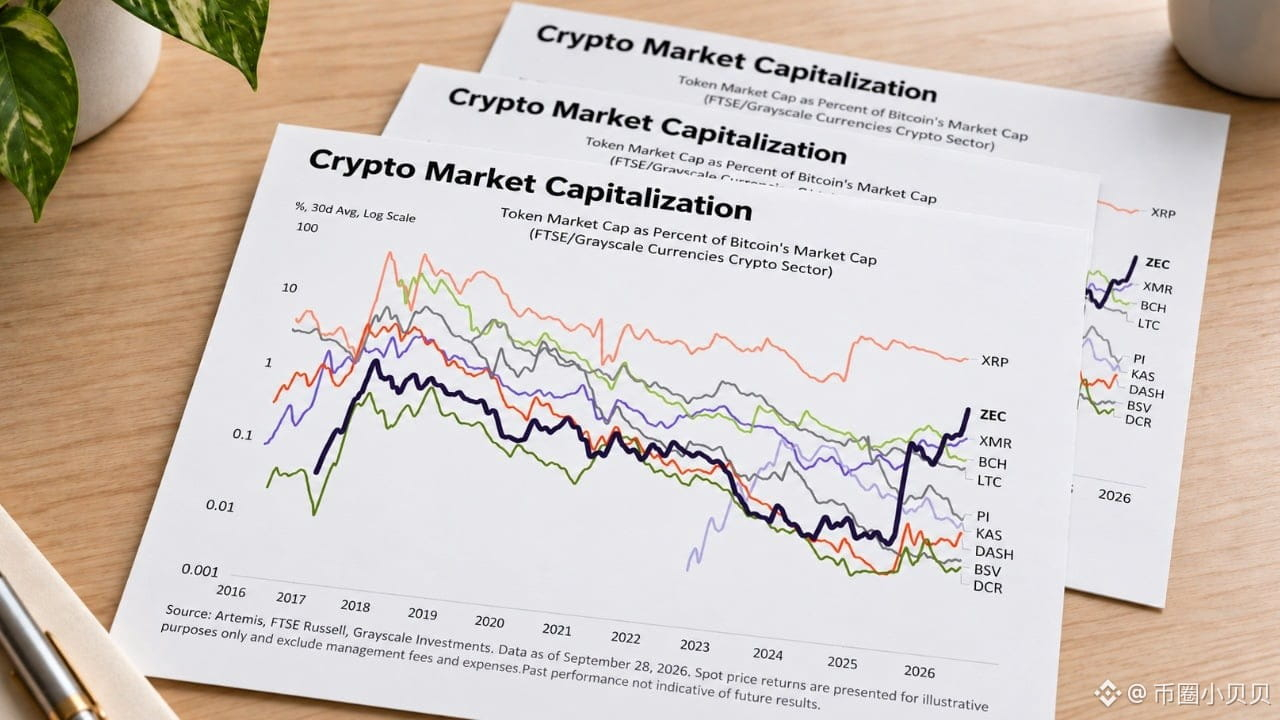
In its Sept. 29 analysis, Grayscale grouped BTC together with 10 other coins into the same “currency sector,” with constituents reviewed quarterly by FTSE Russell. The most eye-catching part is two figures: XRP’s market cap is already approaching 6% of Bitcoin’s, while Zcash a year ago was still under 0.1%—now it’s about 1.5%.. The words from research head Zach Pandl were blunt: ZEC hasn’t hit any valuation ceiling yet..
Most people see this as “institutions are bullish on privacy coins.” But the more important thing is the change in the yardstick, not the conclusion. Once the denominator shifts from the U.S. dollar to Bitcoin, the question isn’t “how much more can it rise in dollars,” but “how much of the Bitcoin market-cap pie can other coins cut out for themselves.” Using that lens, ZEC’s current 1.5% can only be considered just getting started—because in the 2017–2018 cycle, XRP, BCH, LTC, and DASH all reached more than 3% of Bitcoin’s market cap..
What really matters is where the money behind this trend is moving.. This year, privacy-sector assets have been repriced: ZEC rose from roughly $60 a year ago to about $1,500 as of Sept. 29. In Glassnode’s data from Sept. 7, ZEC alone accounted for about 62% of the entire privacy sector’s market cap. This level of concentration suggests the money isn’t being spread evenly—it’s first picking a target and buying it as the sector’s representative..
There’s an even more granular layer.. In Grayscale’s estimate from Sept. 11, the same mining machine earning ZEC would generate about twice as much reward as mining Bitcoin. Note: this is mining revenue, not profit—electricity costs and equipment haven’t been deducted yet. But the research institution is willing to compute this number, which suggests it’s treating ZEC as an asset that needs to be re-priced by computing power, not as a pure narrative story..
The person who produced this research note manages products. The way it groups which coins into the “currency sector” is itself close to a product map. And using Bitcoin as the denominator means that as long as BTC itself goes sideways, the relative upside of these coins will look especially impressive..
So what to watch next isn’t whether Zcash can climb to some specific price, but two things: whether the money behind the privacy theme can keep flowing, and once that money arrives, whether there will be supporting products that get listed as well..
It’s not unusual that a research report is bullish on a coin. What’s unusual is that this time it didn’t use the U.S. dollar as the measuring stick—it rewrote Bitcoin instead..
🤖 进群聊市场
In its Sept. 29 analysis, Grayscale grouped BTC together with 10 other coins into the same “currency sector,” with constituents reviewed quarterly by FTSE Russell. The most eye-catching part is two figures: XRP’s market cap is already approaching 6% of Bitcoin’s, while Zcash a year ago was still under 0.1%—now it’s about 1.5%.. The words from research head Zach Pandl were blunt: ZEC hasn’t hit any valuation ceiling yet..
Most people see this as “institutions are bullish on privacy coins.” But the more important thing is the change in the yardstick, not the conclusion. Once the denominator shifts from the U.S. dollar to Bitcoin, the question isn’t “how much more can it rise in dollars,” but “how much of the Bitcoin market-cap pie can other coins cut out for themselves.” Using that lens, ZEC’s current 1.5% can only be considered just getting started—because in the 2017–2018 cycle, XRP, BCH, LTC, and DASH all reached more than 3% of Bitcoin’s market cap..
What really matters is where the money behind this trend is moving.. This year, privacy-sector assets have been repriced: ZEC rose from roughly $60 a year ago to about $1,500 as of Sept. 29. In Glassnode’s data from Sept. 7, ZEC alone accounted for about 62% of the entire privacy sector’s market cap. This level of concentration suggests the money isn’t being spread evenly—it’s first picking a target and buying it as the sector’s representative..
There’s an even more granular layer.. In Grayscale’s estimate from Sept. 11, the same mining machine earning ZEC would generate about twice as much reward as mining Bitcoin. Note: this is mining revenue, not profit—electricity costs and equipment haven’t been deducted yet. But the research institution is willing to compute this number, which suggests it’s treating ZEC as an asset that needs to be re-priced by computing power, not as a pure narrative story..
The person who produced this research note manages products. The way it groups which coins into the “currency sector” is itself close to a product map. And using Bitcoin as the denominator means that as long as BTC itself goes sideways, the relative upside of these coins will look especially impressive..
So what to watch next isn’t whether Zcash can climb to some specific price, but two things: whether the money behind the privacy theme can keep flowing, and once that money arrives, whether there will be supporting products that get listed as well..
🤖 进群聊市场
In its Sept. 29 analysis, Grayscale grouped BTC together with 10 other coins into the same “currency sector,” with constituents reviewed quarterly by FTSE Russell. The most eye-catching part is two figures: XRP’s market cap is already approaching 6% of Bitcoin’s, while Zcash a year ago was still under 0.1%—now it’s about 1.5%.. The words from research head Zach Pandl were blunt: ZEC hasn’t hit any valuation ceiling yet..
Most people see this as “institutions are bullish on privacy coins.” But the more important thing is the change in the yardstick, not the conclusion. Once the denominator shifts from the U.S. dollar to Bitcoin, the question isn’t “how much more can it rise in dollars,” but “how much of the Bitcoin market-cap pie can other coins cut out for themselves.” Using that lens, ZEC’s current 1.5% can only be considered just getting started—because in the 2017–2018 cycle, XRP, BCH, LTC, and DASH all reached more than 3% of Bitcoin’s market cap..
What really matters is where the money behind this trend is moving.. This year, privacy-sector assets have been repriced: ZEC rose from roughly $60 a year ago to about $1,500 as of Sept. 29. In Glassnode’s data from Sept. 7, ZEC alone accounted for about 62% of the entire privacy sector’s market cap. This level of concentration suggests the money isn’t being spread evenly—it’s first picking a target and buying it as the sector’s representative..
There’s an even more granular layer.. In Grayscale’s estimate from Sept. 11, the same mining machine earning ZEC would generate about twice as much reward as mining Bitcoin. Note: this is mining revenue, not profit—electricity costs and equipment haven’t been deducted yet. But the research institution is willing to compute this number, which suggests it’s treating ZEC as an asset that needs to be re-priced by computing power, not as a pure narrative story..
The person who produced this research note manages products. The way it groups which coins into the “currency sector” is itself close to a product map. And using Bitcoin as the denominator means that as long as BTC itself goes sideways, the relative upside of these coins will look especially impressive..
So what to watch next isn’t whether Zcash can climb to some specific price, but two things: whether the money behind the privacy theme can keep flowing, and once that money arrives, whether there will be supporting products that get listed as well..
655
·
--
#cftc向白宫提交两项事件合约规则提案
This round of regulation is not targeting a specific product, but a single definition.. Once that term is set, it effectively grants an entire category of businesses territorial rights..
[⚖️ 进群蹲一手消息](https://app.binance.com/uni-qr/F6dwNqgx)
The U.S. CFTC has already submitted to the White House Office of Information and Regulatory Affairs a proposed rule to expand the definition of “swap” to include event contracts; it has also submitted an interim final rule that excludes products that are purely offline entertainment.. Both are still under review..
On the surface, the wording is dry, but what’s really being fought over is jurisdiction.. The CFTC has long argued that federal law gives it exclusive authority over swaps traded on U.S. regulated exchanges; the contracts of prediction markets such as Polymarket and Kalshi fall within this scope.. Meanwhile, the states—especially when it comes to sports event contracts—insist that these should be governed by each state’s own rules..
So the question of whether “event contracts count as swaps” is essentially what sets the direction of this entire lawsuit.. If they’re classified as swaps, the states’ enforcement room that previously existed is largely neutralized; the interim rule that excludes purely offline entertainment products is a way of leaving an exit for traditional offline venues, avoiding a direct collision with state-level oversight..
If you zoom out over time, much of the compliance space crypto has gained in recent years wasn’t granted by new legislation—it came from “definitions”.. Fitting a category of products into a particular regulatory box is far faster than passing a major bill, and the CLARITY Act being blocked provides a ready-made comparison..
What does this mean for the market.. Capital and attention in prediction markets are moving upward; once the classification is clarified, compliance platforms will have the confidence to scale up, and institutions will dare to get involved.. But Kalshi’s appeal failed—potentially all the way to the Supreme Court—showing that the standoff isn’t over yet, and in the short term, no one should expect a single ruling to settle everything..
What’s truly worth watching is which of these two rules takes effect first.. The interim final rule will land first, and in the short term it will narrow the scope; the proposed rule, by explicitly writing event contracts into the definition of swaps, expands capacity in the long run.. With the same kind of maneuver, the short-term and long-term directions could be exactly opposite..
#cftc向白宫提交两项事件合约规则提案
This round of regulation is not targeting a specific product, but a single definition.. Once that term is set, it effectively grants an entire category of businesses territorial rights..
⚖️ 进群蹲一手消息
The U.S. CFTC has already submitted to the White House Office of Information and Regulatory Affairs a proposed rule to expand the definition of “swap” to include event contracts; it has also submitted an interim final rule that excludes products that are purely offline entertainment.. Both are still under review..
On the surface, the wording is dry, but what’s really being fought over is jurisdiction.. The CFTC has long argued that federal law gives it exclusive authority over swaps traded on U.S. regulated exchanges; the contracts of prediction markets such as Polymarket and Kalshi fall within this scope.. Meanwhile, the states—especially when it comes to sports event contracts—insist that these should be governed by each state’s own rules..
So the question of whether “event contracts count as swaps” is essentially what sets the direction of this entire lawsuit.. If they’re classified as swaps, the states’ enforcement room that previously existed is largely neutralized; the interim rule that excludes purely offline entertainment products is a way of leaving an exit for traditional offline venues, avoiding a direct collision with state-level oversight..
If you zoom out over time, much of the compliance space crypto has gained in recent years wasn’t granted by new legislation—it came from “definitions”.. Fitting a category of products into a particular regulatory box is far faster than passing a major bill, and the CLARITY Act being blocked provides a ready-made comparison..
What does this mean for the market.. Capital and attention in prediction markets are moving upward; once the classification is clarified, compliance platforms will have the confidence to scale up, and institutions will dare to get involved.. But Kalshi’s appeal failed—potentially all the way to the Supreme Court—showing that the standoff isn’t over yet, and in the short term, no one should expect a single ruling to settle everything..
What’s truly worth watching is which of these two rules takes effect first.. The interim final rule will land first, and in the short term it will narrow the scope; the proposed rule, by explicitly writing event contracts into the definition of swaps, expands capacity in the long run.. With the same kind of maneuver, the short-term and long-term directions could be exactly opposite..
This round of regulation is not targeting a specific product, but a single definition.. Once that term is set, it effectively grants an entire category of businesses territorial rights..
⚖️ 进群蹲一手消息
The U.S. CFTC has already submitted to the White House Office of Information and Regulatory Affairs a proposed rule to expand the definition of “swap” to include event contracts; it has also submitted an interim final rule that excludes products that are purely offline entertainment.. Both are still under review..
On the surface, the wording is dry, but what’s really being fought over is jurisdiction.. The CFTC has long argued that federal law gives it exclusive authority over swaps traded on U.S. regulated exchanges; the contracts of prediction markets such as Polymarket and Kalshi fall within this scope.. Meanwhile, the states—especially when it comes to sports event contracts—insist that these should be governed by each state’s own rules..
So the question of whether “event contracts count as swaps” is essentially what sets the direction of this entire lawsuit.. If they’re classified as swaps, the states’ enforcement room that previously existed is largely neutralized; the interim rule that excludes purely offline entertainment products is a way of leaving an exit for traditional offline venues, avoiding a direct collision with state-level oversight..
If you zoom out over time, much of the compliance space crypto has gained in recent years wasn’t granted by new legislation—it came from “definitions”.. Fitting a category of products into a particular regulatory box is far faster than passing a major bill, and the CLARITY Act being blocked provides a ready-made comparison..
What does this mean for the market.. Capital and attention in prediction markets are moving upward; once the classification is clarified, compliance platforms will have the confidence to scale up, and institutions will dare to get involved.. But Kalshi’s appeal failed—potentially all the way to the Supreme Court—showing that the standoff isn’t over yet, and in the short term, no one should expect a single ruling to settle everything..
What’s truly worth watching is which of these two rules takes effect first.. The interim final rule will land first, and in the short term it will narrow the scope; the proposed rule, by explicitly writing event contracts into the definition of swaps, expands capacity in the long run.. With the same kind of maneuver, the short-term and long-term directions could be exactly opposite..

2
1.6k
·
--
Verified
The old chain that looks least like it’s for technical people—now it’s starting to grow real applications.. But what’s truly worth watching isn’t what it’s trying to boast; it’s that it’s willing to start a whole new layer rather than touching its own main chain..
[📢 消息第一时间](https://app.binance.com/uni-qr/F6dwNqgx)
On Wednesday, DogeOS opened a public testnet, and the people behind it are the same crew as MyDoge Wallet.. Their positioning is "an application-layer rollup running on Dogecoin." The underlying layer uses zkVM to generate proofs, while also being compatible with EVM—so Ethereum’s stack of smart contracts and tooling can be moved over and used directly.. The testnet gas is paid in DOGE, and the faucet sends 42.069 test coins every day—down to the numbers, it’s all a meme..
Right now, there are five types of projects deployed on it: Superposition Finance for lending, Derps for perpetual contracts, USDoge as a collateralized stablecoin, Snag for event contract aggregation, and PlaysOut for mini-games.. Lending, leverage, stablecoins, event contracts—a decent DeFi scaffolding all in one, first built on a chain that was originally popular for memes.. But the official hasn’t given a mainnet date..
The key is really in the path it chose.. According to people from the Dogecoin Foundation, the "purity" of the L1 ledger must be kept intact, and any new functionality should go on the layer above it.. That means the simplicity of the main chain here isn’t a drawback—it’s something to be protected.. This is also understandable: Dogecoin has no formal on-chain governance. The proposal from July 2025 to add zk proofs to the main chain would need to go through contributor reviews, community discussion, and security audits, and finally get miners’ approval—every step can’t move fast.. Rather than waiting for slow upgrades to the main chain, it’s better to open a separate table on top.
Looking at it from the perspective of capital, it’s clearer.. Compared with its historical highs, DOGE is down by about 75%, and among large-cap coins it’s one of the few still in an unmistakable downtrend—despite several DOGE ETFs launching, it hasn’t lifted the price.. So this news isn’t really a price story. Its real weight is this: an asset that holds the largest pool of retail holders across the whole network, yet has barely had any serious applications, now has a first real possibility of producing real usage. Once the narrative shifts from "emotion-driven pricing" to "there’s actually something running on-chain," it opens up more than one avenue for finding new buyers.
But the risk of a reversal is also plain to see.. The testnet is free, there’s no mainnet date, and the main-chain zk path is still stuck.. So the real test isn’t whether the door is open; it’s whether those applications can move from demos to real people using them with genuine money. If they can’t, then it’ll just be a second layer with a big-sounding brand but no inventory on the shelf.
The old chain that looks least like it’s for technical people—now it’s starting to grow real applications.. But what’s truly worth watching isn’t what it’s trying to boast; it’s that it’s willing to start a whole new layer rather than touching its own main chain..
📢 消息第一时间
On Wednesday, DogeOS opened a public testnet, and the people behind it are the same crew as MyDoge Wallet.. Their positioning is "an application-layer rollup running on Dogecoin." The underlying layer uses zkVM to generate proofs, while also being compatible with EVM—so Ethereum’s stack of smart contracts and tooling can be moved over and used directly.. The testnet gas is paid in DOGE, and the faucet sends 42.069 test coins every day—down to the numbers, it’s all a meme..
Right now, there are five types of projects deployed on it: Superposition Finance for lending, Derps for perpetual contracts, USDoge as a collateralized stablecoin, Snag for event contract aggregation, and PlaysOut for mini-games.. Lending, leverage, stablecoins, event contracts—a decent DeFi scaffolding all in one, first built on a chain that was originally popular for memes.. But the official hasn’t given a mainnet date..
The key is really in the path it chose.. According to people from the Dogecoin Foundation, the "purity" of the L1 ledger must be kept intact, and any new functionality should go on the layer above it.. That means the simplicity of the main chain here isn’t a drawback—it’s something to be protected.. This is also understandable: Dogecoin has no formal on-chain governance. The proposal from July 2025 to add zk proofs to the main chain would need to go through contributor reviews, community discussion, and security audits, and finally get miners’ approval—every step can’t move fast.. Rather than waiting for slow upgrades to the main chain, it’s better to open a separate table on top.
Looking at it from the perspective of capital, it’s clearer.. Compared with its historical highs, DOGE is down by about 75%, and among large-cap coins it’s one of the few still in an unmistakable downtrend—despite several DOGE ETFs launching, it hasn’t lifted the price.. So this news isn’t really a price story. Its real weight is this: an asset that holds the largest pool of retail holders across the whole network, yet has barely had any serious applications, now has a first real possibility of producing real usage. Once the narrative shifts from "emotion-driven pricing" to "there’s actually something running on-chain," it opens up more than one avenue for finding new buyers.
But the risk of a reversal is also plain to see.. The testnet is free, there’s no mainnet date, and the main-chain zk path is still stuck.. So the real test isn’t whether the door is open; it’s whether those applications can move from demos to real people using them with genuine money. If they can’t, then it’ll just be a second layer with a big-sounding brand but no inventory on the shelf.
📢 消息第一时间
On Wednesday, DogeOS opened a public testnet, and the people behind it are the same crew as MyDoge Wallet.. Their positioning is "an application-layer rollup running on Dogecoin." The underlying layer uses zkVM to generate proofs, while also being compatible with EVM—so Ethereum’s stack of smart contracts and tooling can be moved over and used directly.. The testnet gas is paid in DOGE, and the faucet sends 42.069 test coins every day—down to the numbers, it’s all a meme..
Right now, there are five types of projects deployed on it: Superposition Finance for lending, Derps for perpetual contracts, USDoge as a collateralized stablecoin, Snag for event contract aggregation, and PlaysOut for mini-games.. Lending, leverage, stablecoins, event contracts—a decent DeFi scaffolding all in one, first built on a chain that was originally popular for memes.. But the official hasn’t given a mainnet date..
The key is really in the path it chose.. According to people from the Dogecoin Foundation, the "purity" of the L1 ledger must be kept intact, and any new functionality should go on the layer above it.. That means the simplicity of the main chain here isn’t a drawback—it’s something to be protected.. This is also understandable: Dogecoin has no formal on-chain governance. The proposal from July 2025 to add zk proofs to the main chain would need to go through contributor reviews, community discussion, and security audits, and finally get miners’ approval—every step can’t move fast.. Rather than waiting for slow upgrades to the main chain, it’s better to open a separate table on top.
Looking at it from the perspective of capital, it’s clearer.. Compared with its historical highs, DOGE is down by about 75%, and among large-cap coins it’s one of the few still in an unmistakable downtrend—despite several DOGE ETFs launching, it hasn’t lifted the price.. So this news isn’t really a price story. Its real weight is this: an asset that holds the largest pool of retail holders across the whole network, yet has barely had any serious applications, now has a first real possibility of producing real usage. Once the narrative shifts from "emotion-driven pricing" to "there’s actually something running on-chain," it opens up more than one avenue for finding new buyers.
But the risk of a reversal is also plain to see.. The testnet is free, there’s no mainnet date, and the main-chain zk path is still stuck.. So the real test isn’t whether the door is open; it’s whether those applications can move from demos to real people using them with genuine money. If they can’t, then it’ll just be a second layer with a big-sounding brand but no inventory on the shelf.
3.3k
·
--
#美国8月核心pce降至3%
Everyone is celebrating an inflation print that’s softer than expected—one that could truly pin Bitcoin in place. Not inflation..
[🏛️ 最新消息群里说](https://app.binance.com/uni-qr/F6dwNqgx)
In the U.S., core PCE for August rose by only 0.2%, milder than market expectations. This is the inflation gauge the Fed cares about most. Once the number came out, market bets for a rate hike in October cooled immediately. Bitcoin surged above 85,000, but couldn’t hold—quickly slipping back below 84,000, at one point hovering near 83,700 during the session..
Most people see it as a simple story: cooling inflation means less pressure for rate hikes, which is bullish for risk assets. After looking at the price action, the news is basically turned the page on..
But what really deserves attention is the other side of the equation: U.S. Treasury yields are still sitting near two-decade highs. On one front, expectations of rate hikes are moving down; on the other, long-end yields are pressing higher. These two forces offset each other—that’s why this rally can’t really get going..
Put simply, Bitcoin’s most sensitive factor right now isn’t inflation itself, but liquidity expectations. Softer data, the idea that future money will be cheaper, and capital willing to buy up—this is the fuel for its rise. But if long-end yields don’t cooperate, it’s like the market getting an immediate reminder not to get too excited too soon. High-beta assets can run up fast, and they can drop just as quickly..
So this move looks more like an early emotional overextension rather than the restart of a new trend. What determines the direction next is whether the coming batches of data can finally wipe the words “rate hikes” off the table for good..
If inflation keeps cooling and yields give some ground, 84,000 won’t be the top—it will be a step up. But if yields keep pushing higher, the small rally that emerged today will have already consumed some of the potential upside ahead of time..
#美国8月核心pce降至3%
Everyone is celebrating an inflation print that’s softer than expected—one that could truly pin Bitcoin in place. Not inflation..
🏛️ 最新消息群里说
In the U.S., core PCE for August rose by only 0.2%, milder than market expectations. This is the inflation gauge the Fed cares about most. Once the number came out, market bets for a rate hike in October cooled immediately. Bitcoin surged above 85,000, but couldn’t hold—quickly slipping back below 84,000, at one point hovering near 83,700 during the session..
Most people see it as a simple story: cooling inflation means less pressure for rate hikes, which is bullish for risk assets. After looking at the price action, the news is basically turned the page on..
But what really deserves attention is the other side of the equation: U.S. Treasury yields are still sitting near two-decade highs. On one front, expectations of rate hikes are moving down; on the other, long-end yields are pressing higher. These two forces offset each other—that’s why this rally can’t really get going..
Put simply, Bitcoin’s most sensitive factor right now isn’t inflation itself, but liquidity expectations. Softer data, the idea that future money will be cheaper, and capital willing to buy up—this is the fuel for its rise. But if long-end yields don’t cooperate, it’s like the market getting an immediate reminder not to get too excited too soon. High-beta assets can run up fast, and they can drop just as quickly..
So this move looks more like an early emotional overextension rather than the restart of a new trend. What determines the direction next is whether the coming batches of data can finally wipe the words “rate hikes” off the table for good..
If inflation keeps cooling and yields give some ground, 84,000 won’t be the top—it will be a step up. But if yields keep pushing higher, the small rally that emerged today will have already consumed some of the potential upside ahead of time..
Everyone is celebrating an inflation print that’s softer than expected—one that could truly pin Bitcoin in place. Not inflation..
🏛️ 最新消息群里说
In the U.S., core PCE for August rose by only 0.2%, milder than market expectations. This is the inflation gauge the Fed cares about most. Once the number came out, market bets for a rate hike in October cooled immediately. Bitcoin surged above 85,000, but couldn’t hold—quickly slipping back below 84,000, at one point hovering near 83,700 during the session..
Most people see it as a simple story: cooling inflation means less pressure for rate hikes, which is bullish for risk assets. After looking at the price action, the news is basically turned the page on..
But what really deserves attention is the other side of the equation: U.S. Treasury yields are still sitting near two-decade highs. On one front, expectations of rate hikes are moving down; on the other, long-end yields are pressing higher. These two forces offset each other—that’s why this rally can’t really get going..
Put simply, Bitcoin’s most sensitive factor right now isn’t inflation itself, but liquidity expectations. Softer data, the idea that future money will be cheaper, and capital willing to buy up—this is the fuel for its rise. But if long-end yields don’t cooperate, it’s like the market getting an immediate reminder not to get too excited too soon. High-beta assets can run up fast, and they can drop just as quickly..
So this move looks more like an early emotional overextension rather than the restart of a new trend. What determines the direction next is whether the coming batches of data can finally wipe the words “rate hikes” off the table for good..
If inflation keeps cooling and yields give some ground, 84,000 won’t be the top—it will be a step up. But if yields keep pushing higher, the small rally that emerged today will have already consumed some of the potential upside ahead of time..

BTC+1.70%
TLTETF-0.25%
1
6
12.1k
·
--
#英国fca开放加密公司牌照申请
The thing that had been late by three years finally opened its doors. But the line behind it probably isn’t made up of new players..
[⚖️ 消息第一时间](https://app.binance.com/uni-qr/F6dwNqgx)
On Wednesday, the UK Financial Conduct Authority (FCA) opened the application channel for crypto firms’ authorization, giving them five months, until the end of February 2027.. The real new rules won’t take effect until October 2027, though—so this gap is time reserved for companies to submit materials, undergo review, and provide supplementary documents..
On the surface, it looks like a “welcome to the party” moment. In reality, it’s a filtering process based on timing.. The UK’s legislative framework for this can be traced back to 2022, while the EU’s MiCA was implemented in June 2023—the UK has been lagging behind. Now, it opens the window all at once, effectively telling every company that wants to stay in the UK market: either submit your materials by the end of next February, or wait for the next round.. Five months isn’t long..
What’s really interesting is that batch of “already in the game” players.. There are now 60-plus companies holding the FCA’s earlier registrations—focused mainly on reviewing the source of funds under the old regime. These registrations won’t automatically become new authorizations, but companies that have already gone through compliance checkups have effectively run ahead. Zumo in Edinburgh is one such example: it received its registration in 2021, and this time it produced its own “UK crypto regulatory tracking table,” breaking each obligation down into the corresponding regulated business activities.. Its explanation is that the tables written by others out there are produced by law firms and consultancies—it’s written from the operating company’s perspective..
Go one layer deeper, and licenses themselves are becoming a scarce entry point.. Whoever gets authorization first will be first in line to qualify to receive the money flowing in from those institutions.. Over the years, the UK has often been described as “arriving early and making everyone wait, or showing up late to catch up at the market gathering.” This time, it’s essentially turned the page of its rulebook to the part that can be enforced..
So what you really should watch isn’t whether the window is open—it’s how many companies actually submit materials by next February. If only a few submit, it suggests everyone is still watching and waiting; if many submit, it means the admission ticket to this market has started to be priced in..
#英国fca开放加密公司牌照申请
The thing that had been late by three years finally opened its doors. But the line behind it probably isn’t made up of new players..
⚖️ 消息第一时间
On Wednesday, the UK Financial Conduct Authority (FCA) opened the application channel for crypto firms’ authorization, giving them five months, until the end of February 2027.. The real new rules won’t take effect until October 2027, though—so this gap is time reserved for companies to submit materials, undergo review, and provide supplementary documents..
On the surface, it looks like a “welcome to the party” moment. In reality, it’s a filtering process based on timing.. The UK’s legislative framework for this can be traced back to 2022, while the EU’s MiCA was implemented in June 2023—the UK has been lagging behind. Now, it opens the window all at once, effectively telling every company that wants to stay in the UK market: either submit your materials by the end of next February, or wait for the next round.. Five months isn’t long..
What’s really interesting is that batch of “already in the game” players.. There are now 60-plus companies holding the FCA’s earlier registrations—focused mainly on reviewing the source of funds under the old regime. These registrations won’t automatically become new authorizations, but companies that have already gone through compliance checkups have effectively run ahead. Zumo in Edinburgh is one such example: it received its registration in 2021, and this time it produced its own “UK crypto regulatory tracking table,” breaking each obligation down into the corresponding regulated business activities.. Its explanation is that the tables written by others out there are produced by law firms and consultancies—it’s written from the operating company’s perspective..
Go one layer deeper, and licenses themselves are becoming a scarce entry point.. Whoever gets authorization first will be first in line to qualify to receive the money flowing in from those institutions.. Over the years, the UK has often been described as “arriving early and making everyone wait, or showing up late to catch up at the market gathering.” This time, it’s essentially turned the page of its rulebook to the part that can be enforced..
So what you really should watch isn’t whether the window is open—it’s how many companies actually submit materials by next February. If only a few submit, it suggests everyone is still watching and waiting; if many submit, it means the admission ticket to this market has started to be priced in..
The thing that had been late by three years finally opened its doors. But the line behind it probably isn’t made up of new players..
⚖️ 消息第一时间
On Wednesday, the UK Financial Conduct Authority (FCA) opened the application channel for crypto firms’ authorization, giving them five months, until the end of February 2027.. The real new rules won’t take effect until October 2027, though—so this gap is time reserved for companies to submit materials, undergo review, and provide supplementary documents..
On the surface, it looks like a “welcome to the party” moment. In reality, it’s a filtering process based on timing.. The UK’s legislative framework for this can be traced back to 2022, while the EU’s MiCA was implemented in June 2023—the UK has been lagging behind. Now, it opens the window all at once, effectively telling every company that wants to stay in the UK market: either submit your materials by the end of next February, or wait for the next round.. Five months isn’t long..
What’s really interesting is that batch of “already in the game” players.. There are now 60-plus companies holding the FCA’s earlier registrations—focused mainly on reviewing the source of funds under the old regime. These registrations won’t automatically become new authorizations, but companies that have already gone through compliance checkups have effectively run ahead. Zumo in Edinburgh is one such example: it received its registration in 2021, and this time it produced its own “UK crypto regulatory tracking table,” breaking each obligation down into the corresponding regulated business activities.. Its explanation is that the tables written by others out there are produced by law firms and consultancies—it’s written from the operating company’s perspective..
Go one layer deeper, and licenses themselves are becoming a scarce entry point.. Whoever gets authorization first will be first in line to qualify to receive the money flowing in from those institutions.. Over the years, the UK has often been described as “arriving early and making everyone wait, or showing up late to catch up at the market gathering.” This time, it’s essentially turned the page of its rulebook to the part that can be enforced..
So what you really should watch isn’t whether the window is open—it’s how many companies actually submit materials by next February. If only a few submit, it suggests everyone is still watching and waiting; if many submit, it means the admission ticket to this market has started to be priced in..

3
3.3k
·
--
Crypto activity across Southeast Asia is ebbing—yet one place is bucking the trend and is up 55%... The thing propping up this surge isn’t retail investors.
[📢 今日盘面群里聊](https://app.binance.com/uni-qr/F6dwNqgx)
In a report just released by on-chain data platform Chainalysis, as of this past June over the one-year period, Singapore’s crypto activity scale grew 55.4% to reach $284 billion, reclaiming its position as the largest crypto economy in the Middle East, Southeast Asia, and Oceania combined. In that same report, activity across the entire region shrank by 6.8%...
Most people seeing this would first think of “Singapore’s lax regulation.” The data, however, points to the opposite: the sharpest growth came from institutional platforms, rising from $3.1 billion to $60 billion—up 94%. And it’s highly concentrated among a few market makers, OTC desks, and institutional brokerage firms; it’s not a wave of new platforms moving in...
Last year, the Monetary Authority of Singapore (MAS) required that local institutions serving overseas clients either obtain licenses or exit. A number of platforms that relied on retail investors and high-frequency speculation were asked to leave. In theory, clearing the board should also take the trading volume with it—but what fell was the retail portion, while what grew was the institutional and real settlement portion. Tighter regulation here isn’t a brake—it’s a sieve.
In the same region, a different money-transfer logic is playing out in other countries. In the Philippines, Thailand, and Vietnam combined, 5.4 million small transfers under $10,000 account for 14.4% of the global total. Yet those three countries make up only 2.5% of global crypto economic volume. More than 80% of local transfers are under $1,000, with an average of $618 per transaction; the global average is $1,210. This doesn’t look like speculation—it looks like moving money across borders. Remittances from overseas to the Philippines account for 8.5% of GDP, and on-chain stablecoins are picking up that segment.
What’s really worth watching isn’t how impressive Singapore’s number looks, but which of these two models can actually run. One side is clearing out retail and concentrating on large institutional settlement. The other side is a retail-driven need for small-value remittances—bypassing regulation to find the cheapest routes. Cross-border stablecoin activity across the whole region is 3.2 times local activity. Stablecoins are no longer just in the category of “trading”—they’re being used as settlement rails.
If MAS’s “clear-the-market” style of regulation keeps working, other financial hubs will likely copy it. The on-chain money from institutions will first concentrate in licensed jurisdictions. Conversely, if that $60 billion is just a tiny cohort of market makers’ high-frequency turnover without real settlement demand, then this 55% is only a bookkeeping number—and next year, in the same report, it will likely unwind and return on its own.
Crypto activity across Southeast Asia is ebbing—yet one place is bucking the trend and is up 55%... The thing propping up this surge isn’t retail investors.
📢 今日盘面群里聊
In a report just released by on-chain data platform Chainalysis, as of this past June over the one-year period, Singapore’s crypto activity scale grew 55.4% to reach $284 billion, reclaiming its position as the largest crypto economy in the Middle East, Southeast Asia, and Oceania combined. In that same report, activity across the entire region shrank by 6.8%...
Most people seeing this would first think of “Singapore’s lax regulation.” The data, however, points to the opposite: the sharpest growth came from institutional platforms, rising from $3.1 billion to $60 billion—up 94%. And it’s highly concentrated among a few market makers, OTC desks, and institutional brokerage firms; it’s not a wave of new platforms moving in...
Last year, the Monetary Authority of Singapore (MAS) required that local institutions serving overseas clients either obtain licenses or exit. A number of platforms that relied on retail investors and high-frequency speculation were asked to leave. In theory, clearing the board should also take the trading volume with it—but what fell was the retail portion, while what grew was the institutional and real settlement portion. Tighter regulation here isn’t a brake—it’s a sieve.
In the same region, a different money-transfer logic is playing out in other countries. In the Philippines, Thailand, and Vietnam combined, 5.4 million small transfers under $10,000 account for 14.4% of the global total. Yet those three countries make up only 2.5% of global crypto economic volume. More than 80% of local transfers are under $1,000, with an average of $618 per transaction; the global average is $1,210. This doesn’t look like speculation—it looks like moving money across borders. Remittances from overseas to the Philippines account for 8.5% of GDP, and on-chain stablecoins are picking up that segment.
What’s really worth watching isn’t how impressive Singapore’s number looks, but which of these two models can actually run. One side is clearing out retail and concentrating on large institutional settlement. The other side is a retail-driven need for small-value remittances—bypassing regulation to find the cheapest routes. Cross-border stablecoin activity across the whole region is 3.2 times local activity. Stablecoins are no longer just in the category of “trading”—they’re being used as settlement rails.
If MAS’s “clear-the-market” style of regulation keeps working, other financial hubs will likely copy it. The on-chain money from institutions will first concentrate in licensed jurisdictions. Conversely, if that $60 billion is just a tiny cohort of market makers’ high-frequency turnover without real settlement demand, then this 55% is only a bookkeeping number—and next year, in the same report, it will likely unwind and return on its own.
📢 今日盘面群里聊
In a report just released by on-chain data platform Chainalysis, as of this past June over the one-year period, Singapore’s crypto activity scale grew 55.4% to reach $284 billion, reclaiming its position as the largest crypto economy in the Middle East, Southeast Asia, and Oceania combined. In that same report, activity across the entire region shrank by 6.8%...
Most people seeing this would first think of “Singapore’s lax regulation.” The data, however, points to the opposite: the sharpest growth came from institutional platforms, rising from $3.1 billion to $60 billion—up 94%. And it’s highly concentrated among a few market makers, OTC desks, and institutional brokerage firms; it’s not a wave of new platforms moving in...
Last year, the Monetary Authority of Singapore (MAS) required that local institutions serving overseas clients either obtain licenses or exit. A number of platforms that relied on retail investors and high-frequency speculation were asked to leave. In theory, clearing the board should also take the trading volume with it—but what fell was the retail portion, while what grew was the institutional and real settlement portion. Tighter regulation here isn’t a brake—it’s a sieve.
In the same region, a different money-transfer logic is playing out in other countries. In the Philippines, Thailand, and Vietnam combined, 5.4 million small transfers under $10,000 account for 14.4% of the global total. Yet those three countries make up only 2.5% of global crypto economic volume. More than 80% of local transfers are under $1,000, with an average of $618 per transaction; the global average is $1,210. This doesn’t look like speculation—it looks like moving money across borders. Remittances from overseas to the Philippines account for 8.5% of GDP, and on-chain stablecoins are picking up that segment.
What’s really worth watching isn’t how impressive Singapore’s number looks, but which of these two models can actually run. One side is clearing out retail and concentrating on large institutional settlement. The other side is a retail-driven need for small-value remittances—bypassing regulation to find the cheapest routes. Cross-border stablecoin activity across the whole region is 3.2 times local activity. Stablecoins are no longer just in the category of “trading”—they’re being used as settlement rails.
If MAS’s “clear-the-market” style of regulation keeps working, other financial hubs will likely copy it. The on-chain money from institutions will first concentrate in licensed jurisdictions. Conversely, if that $60 billion is just a tiny cohort of market makers’ high-frequency turnover without real settlement demand, then this 55% is only a bookkeeping number—and next year, in the same report, it will likely unwind and return on its own.

2.9k
·
--
Separate the two words “green fuel” into parts—what’s truly valuable isn’t actually in the fuel itself..
[📢 盘面异动群里说](https://app.binance.com/uni-qr/F6dwNqgx)
On Wednesday, Brazil’s state-controlled energy company Petrobras announced two research projects using the Cardano blockchain to track environmental claims made by low-carbon fuels. One project targets sustainable aviation fuel, and the other targets Diesel R, some of which is made using renewable feedstocks such as plant oils and animal fats.
This kind of news isn’t new anymore this year.. Big companies have been onboarding everything to the chain, rolling out pilots, and the announcements all read pretty much the same.. But this time the issue isn’t how fuel is transported—it’s how “emissions-reduction amounts” are accounted for.
For aviation, they use a book-and-claim model: an airline can pay to purchase environmental benefits generated by sustainable fuel, even if the fuel itself is burned elsewhere. The challenge comes down to this—if the same ton of emissions reductions is claimed by two different companies, how do you ensure it isn’t counted twice? What Cardano is doing this time is recording the source of the benefit, who is entitled to it, and the redemption time. Passengers input their departure and arrival airports, and they can also receive a certificate, with the full chain leading back to the earliest fuel certificate.
The fuel goes in one direction, and the green credits go in another. These two lines were originally separate. What the blockchain needs to do is basically issue an “untillable” ticket of the “rights,” one that can’t be reused.
This is where the real difficulty of the RWA business lies.. It’s never just about moving assets onto the chain—it’s about moving rights onto the chain, and proving that those rights are used only once. Whoever makes that non-duplicated accounting first gains the interface to this business.
Zoom out a bit: the institutional onboarding-to-chain track has been accelerating lately.. Japan’s Ministry of Finance has just set up a research group for tokenizing government bonds; the UK’s FCA has opened licensing applications for crypto companies; and the SEC is also working on fundraising rules for activity on-chain. The Cardano Foundation also brought up a practical point: this month, x402 payment standards went live on Cardano, and Fireblocks has started supporting its native tokens too. For enterprise traceability to take off, there must first be a payment layer that can actually settle.
But both sides are still in the research stage for now.. The official announcements haven’t said how much fuel volume is covered, nor provided a rollout timetable, and in the short term it won’t show up in ADA’s price either. What’s truly worth watching is the commercial step for x402—if on-chain payments can get running first, institutional traceability can form a closed loop; conversely, if these projects keep staying stuck in “research,” then the governments and enterprises Cardano has compiled so far will remain just a list..
Separate the two words “green fuel” into parts—what’s truly valuable isn’t actually in the fuel itself..
📢 盘面异动群里说
On Wednesday, Brazil’s state-controlled energy company Petrobras announced two research projects using the Cardano blockchain to track environmental claims made by low-carbon fuels. One project targets sustainable aviation fuel, and the other targets Diesel R, some of which is made using renewable feedstocks such as plant oils and animal fats.
This kind of news isn’t new anymore this year.. Big companies have been onboarding everything to the chain, rolling out pilots, and the announcements all read pretty much the same.. But this time the issue isn’t how fuel is transported—it’s how “emissions-reduction amounts” are accounted for.
For aviation, they use a book-and-claim model: an airline can pay to purchase environmental benefits generated by sustainable fuel, even if the fuel itself is burned elsewhere. The challenge comes down to this—if the same ton of emissions reductions is claimed by two different companies, how do you ensure it isn’t counted twice? What Cardano is doing this time is recording the source of the benefit, who is entitled to it, and the redemption time. Passengers input their departure and arrival airports, and they can also receive a certificate, with the full chain leading back to the earliest fuel certificate.
The fuel goes in one direction, and the green credits go in another. These two lines were originally separate. What the blockchain needs to do is basically issue an “untillable” ticket of the “rights,” one that can’t be reused.
This is where the real difficulty of the RWA business lies.. It’s never just about moving assets onto the chain—it’s about moving rights onto the chain, and proving that those rights are used only once. Whoever makes that non-duplicated accounting first gains the interface to this business.
Zoom out a bit: the institutional onboarding-to-chain track has been accelerating lately.. Japan’s Ministry of Finance has just set up a research group for tokenizing government bonds; the UK’s FCA has opened licensing applications for crypto companies; and the SEC is also working on fundraising rules for activity on-chain. The Cardano Foundation also brought up a practical point: this month, x402 payment standards went live on Cardano, and Fireblocks has started supporting its native tokens too. For enterprise traceability to take off, there must first be a payment layer that can actually settle.
But both sides are still in the research stage for now.. The official announcements haven’t said how much fuel volume is covered, nor provided a rollout timetable, and in the short term it won’t show up in ADA’s price either. What’s truly worth watching is the commercial step for x402—if on-chain payments can get running first, institutional traceability can form a closed loop; conversely, if these projects keep staying stuck in “research,” then the governments and enterprises Cardano has compiled so far will remain just a list..
📢 盘面异动群里说
On Wednesday, Brazil’s state-controlled energy company Petrobras announced two research projects using the Cardano blockchain to track environmental claims made by low-carbon fuels. One project targets sustainable aviation fuel, and the other targets Diesel R, some of which is made using renewable feedstocks such as plant oils and animal fats.
This kind of news isn’t new anymore this year.. Big companies have been onboarding everything to the chain, rolling out pilots, and the announcements all read pretty much the same.. But this time the issue isn’t how fuel is transported—it’s how “emissions-reduction amounts” are accounted for.
For aviation, they use a book-and-claim model: an airline can pay to purchase environmental benefits generated by sustainable fuel, even if the fuel itself is burned elsewhere. The challenge comes down to this—if the same ton of emissions reductions is claimed by two different companies, how do you ensure it isn’t counted twice? What Cardano is doing this time is recording the source of the benefit, who is entitled to it, and the redemption time. Passengers input their departure and arrival airports, and they can also receive a certificate, with the full chain leading back to the earliest fuel certificate.
The fuel goes in one direction, and the green credits go in another. These two lines were originally separate. What the blockchain needs to do is basically issue an “untillable” ticket of the “rights,” one that can’t be reused.
This is where the real difficulty of the RWA business lies.. It’s never just about moving assets onto the chain—it’s about moving rights onto the chain, and proving that those rights are used only once. Whoever makes that non-duplicated accounting first gains the interface to this business.
Zoom out a bit: the institutional onboarding-to-chain track has been accelerating lately.. Japan’s Ministry of Finance has just set up a research group for tokenizing government bonds; the UK’s FCA has opened licensing applications for crypto companies; and the SEC is also working on fundraising rules for activity on-chain. The Cardano Foundation also brought up a practical point: this month, x402 payment standards went live on Cardano, and Fireblocks has started supporting its native tokens too. For enterprise traceability to take off, there must first be a payment layer that can actually settle.
But both sides are still in the research stage for now.. The official announcements haven’t said how much fuel volume is covered, nor provided a rollout timetable, and in the short term it won’t show up in ADA’s price either. What’s truly worth watching is the commercial step for x402—if on-chain payments can get running first, institutional traceability can form a closed loop; conversely, if these projects keep staying stuck in “research,” then the governments and enterprises Cardano has compiled so far will remain just a list..
1
3.3k
·
--
Everyone is watching to see whether Bitcoin can get back above 87,000—but what’s really moving is actually the other side..
[🔄 进群看叙事](https://app.binance.com/uni-qr/F6dwNqgx)
In CryptoQuant’s weekly report for this week, a set of numbers was singled out.. The number of transactions for altcoins being deposited into exchanges: the seven-day total hit 78,000 on September 28, the highest since October 2025.. Compared with September 14’s 29,800 transactions, that’s up by about 160% over two weeks.. Meanwhile, the number of addresses doing this rose from more than 17,000 to more than 51,000—nearly three times..
Most people’s first reaction is: selling pressure is here.. When coins are moved into exchanges, it’s usually so they can be sold—and that statement is basically true..
But if you zoom the timeline out a bit, it’s not that simple.. Bitcoin’s market-cap share has been stuck in the 58% to 60.4% range for several months. Meanwhile, assets with smaller market caps (ranked outside the top 10) accounted for 9% of the entire market on September 27, the highest since February this year.. Money already moved into the small caps once. Now, these deposits are the second step after that rotation—not the first step..
The difference between these two steps is crucial.. First it rises, then the chips are moved to places where they can be traded—this is a typical flow in the middle-to-late stages of a rotation.. The real trouble is that the order books for small-cap assets are usually thin. With the same amount of money entering, they rise more dramatically than the broader market; when it comes out, they drop just as decisively.. The “extra” upside amplified during the rally will come back in full when the coins are distributed..
So what’s worth watching now isn’t “are they really going to sell”… It’s where the money from the sales is going: back to Bitcoin, converted into stablecoins and parked there, or turned around and poured into the next altcoin.. If over the next week the number of deposit transactions keeps climbing, while Bitcoin’s market-cap share still doesn’t rise, that would indicate the money is truly staying in the small caps—not just passing through..
On the other hand, as long as Bitcoin’s share starts to move back up, this round of excitement is basically nearing its end..
Everyone is watching to see whether Bitcoin can get back above 87,000—but what’s really moving is actually the other side..
🔄 进群看叙事
In CryptoQuant’s weekly report for this week, a set of numbers was singled out.. The number of transactions for altcoins being deposited into exchanges: the seven-day total hit 78,000 on September 28, the highest since October 2025.. Compared with September 14’s 29,800 transactions, that’s up by about 160% over two weeks.. Meanwhile, the number of addresses doing this rose from more than 17,000 to more than 51,000—nearly three times..
Most people’s first reaction is: selling pressure is here.. When coins are moved into exchanges, it’s usually so they can be sold—and that statement is basically true..
But if you zoom the timeline out a bit, it’s not that simple.. Bitcoin’s market-cap share has been stuck in the 58% to 60.4% range for several months. Meanwhile, assets with smaller market caps (ranked outside the top 10) accounted for 9% of the entire market on September 27, the highest since February this year.. Money already moved into the small caps once. Now, these deposits are the second step after that rotation—not the first step..
The difference between these two steps is crucial.. First it rises, then the chips are moved to places where they can be traded—this is a typical flow in the middle-to-late stages of a rotation.. The real trouble is that the order books for small-cap assets are usually thin. With the same amount of money entering, they rise more dramatically than the broader market; when it comes out, they drop just as decisively.. The “extra” upside amplified during the rally will come back in full when the coins are distributed..
So what’s worth watching now isn’t “are they really going to sell”… It’s where the money from the sales is going: back to Bitcoin, converted into stablecoins and parked there, or turned around and poured into the next altcoin.. If over the next week the number of deposit transactions keeps climbing, while Bitcoin’s market-cap share still doesn’t rise, that would indicate the money is truly staying in the small caps—not just passing through..
On the other hand, as long as Bitcoin’s share starts to move back up, this round of excitement is basically nearing its end..
🔄 进群看叙事
In CryptoQuant’s weekly report for this week, a set of numbers was singled out.. The number of transactions for altcoins being deposited into exchanges: the seven-day total hit 78,000 on September 28, the highest since October 2025.. Compared with September 14’s 29,800 transactions, that’s up by about 160% over two weeks.. Meanwhile, the number of addresses doing this rose from more than 17,000 to more than 51,000—nearly three times..
Most people’s first reaction is: selling pressure is here.. When coins are moved into exchanges, it’s usually so they can be sold—and that statement is basically true..
But if you zoom the timeline out a bit, it’s not that simple.. Bitcoin’s market-cap share has been stuck in the 58% to 60.4% range for several months. Meanwhile, assets with smaller market caps (ranked outside the top 10) accounted for 9% of the entire market on September 27, the highest since February this year.. Money already moved into the small caps once. Now, these deposits are the second step after that rotation—not the first step..
The difference between these two steps is crucial.. First it rises, then the chips are moved to places where they can be traded—this is a typical flow in the middle-to-late stages of a rotation.. The real trouble is that the order books for small-cap assets are usually thin. With the same amount of money entering, they rise more dramatically than the broader market; when it comes out, they drop just as decisively.. The “extra” upside amplified during the rally will come back in full when the coins are distributed..
So what’s worth watching now isn’t “are they really going to sell”… It’s where the money from the sales is going: back to Bitcoin, converted into stablecoins and parked there, or turned around and poured into the next altcoin.. If over the next week the number of deposit transactions keeps climbing, while Bitcoin’s market-cap share still doesn’t rise, that would indicate the money is truly staying in the small caps—not just passing through..
On the other hand, as long as Bitcoin’s share starts to move back up, this round of excitement is basically nearing its end..
1.2k
·
--
Tonight, the whole market is waiting for the U.S. inflation data. The “first signal” that could truly loosen is already showing up on-chain..
[🔄 进群聊仓位](https://app.binance.com/uni-qr/F6dwNqgx)
Bitcoin, after a run to an eight-month high near $87,400, has pulled back to around $83,300.. At the same time, CryptoQuant’s bull market score has climbed to 90, out of 100.. This score jumped after Bitcoin broke above the 365-day moving average last week. By that firm’s definition, it’s basically a stamp of “bull market.”..
Most people see it as: “It’s confirmed—go ahead and chase.”..
But within the same report, several sets of numbers are moving in the opposite direction.. Spot demand over the past 30 days shrank by about 170,000 BTC.. The incremental demand for speculative derivatives fell from roughly 164,000 BTC on September 14 to just 16,000 BTC on September 29—down 90% in 15 days..
Buyers are also letting go.. The cohort that entered recently has an average unrealized profit of 33%, the widest spread since December 2024.. On September 22, there were 25,700 BTC net taken as daily profit—the biggest day of the year.. The thicker the floating gains, the less reason people need to sell..
The real divergence is on altcoins.. Over the past 7 days, there have been 76,000 altcoin deposits into exchanges, coming from 51,000 different addresses— the busiest week since October 2025.. Once a coin lands on an exchange, it can be sold within seconds, and any bounce above gets weighed down by that inventory..
So is this rotation, or retreat.. Both readings can be defended.. The optimistic side would say SOL and ZEC are up nearly 2% each—money is rotating from BTC into higher-beta targets, and the rotation is only just beginning.. The cautious side would say: when deposit addresses suddenly spread out, it’s chips looking for an exit, not a new destination..
What I care about more is the nature of this kind of scoring: it’s inherently backward-looking.. It’s confirming “this was a bull market,” not “this can still rise further.” The higher the score, the easier it’s read as a buy signal—yet in practice it suggests this rally has already burned through much of the fuel it needed.
So it’s that inflation print tonight that’s the switch.. If it’s higher, the U.S. dollar strengthens and risk assets come under pressure; if it’s lower, then it’s basically a refill for people chasing at the top..
If spot demand keeps shrinking and the derivatives increment keeps stalling, then what really matters won’t be whether BTC can tap 87,000 again, but whether those traders who just went into 33% floating profit are still willing to hold another week.
Tonight, the whole market is waiting for the U.S. inflation data. The “first signal” that could truly loosen is already showing up on-chain..
🔄 进群聊仓位
Bitcoin, after a run to an eight-month high near $87,400, has pulled back to around $83,300.. At the same time, CryptoQuant’s bull market score has climbed to 90, out of 100.. This score jumped after Bitcoin broke above the 365-day moving average last week. By that firm’s definition, it’s basically a stamp of “bull market.”..
Most people see it as: “It’s confirmed—go ahead and chase.”..
But within the same report, several sets of numbers are moving in the opposite direction.. Spot demand over the past 30 days shrank by about 170,000 BTC.. The incremental demand for speculative derivatives fell from roughly 164,000 BTC on September 14 to just 16,000 BTC on September 29—down 90% in 15 days..
Buyers are also letting go.. The cohort that entered recently has an average unrealized profit of 33%, the widest spread since December 2024.. On September 22, there were 25,700 BTC net taken as daily profit—the biggest day of the year.. The thicker the floating gains, the less reason people need to sell..
The real divergence is on altcoins.. Over the past 7 days, there have been 76,000 altcoin deposits into exchanges, coming from 51,000 different addresses— the busiest week since October 2025.. Once a coin lands on an exchange, it can be sold within seconds, and any bounce above gets weighed down by that inventory..
So is this rotation, or retreat.. Both readings can be defended.. The optimistic side would say SOL and ZEC are up nearly 2% each—money is rotating from BTC into higher-beta targets, and the rotation is only just beginning.. The cautious side would say: when deposit addresses suddenly spread out, it’s chips looking for an exit, not a new destination..
What I care about more is the nature of this kind of scoring: it’s inherently backward-looking.. It’s confirming “this was a bull market,” not “this can still rise further.” The higher the score, the easier it’s read as a buy signal—yet in practice it suggests this rally has already burned through much of the fuel it needed.
So it’s that inflation print tonight that’s the switch.. If it’s higher, the U.S. dollar strengthens and risk assets come under pressure; if it’s lower, then it’s basically a refill for people chasing at the top..
If spot demand keeps shrinking and the derivatives increment keeps stalling, then what really matters won’t be whether BTC can tap 87,000 again, but whether those traders who just went into 33% floating profit are still willing to hold another week.
🔄 进群聊仓位
Bitcoin, after a run to an eight-month high near $87,400, has pulled back to around $83,300.. At the same time, CryptoQuant’s bull market score has climbed to 90, out of 100.. This score jumped after Bitcoin broke above the 365-day moving average last week. By that firm’s definition, it’s basically a stamp of “bull market.”..
Most people see it as: “It’s confirmed—go ahead and chase.”..
But within the same report, several sets of numbers are moving in the opposite direction.. Spot demand over the past 30 days shrank by about 170,000 BTC.. The incremental demand for speculative derivatives fell from roughly 164,000 BTC on September 14 to just 16,000 BTC on September 29—down 90% in 15 days..
Buyers are also letting go.. The cohort that entered recently has an average unrealized profit of 33%, the widest spread since December 2024.. On September 22, there were 25,700 BTC net taken as daily profit—the biggest day of the year.. The thicker the floating gains, the less reason people need to sell..
The real divergence is on altcoins.. Over the past 7 days, there have been 76,000 altcoin deposits into exchanges, coming from 51,000 different addresses— the busiest week since October 2025.. Once a coin lands on an exchange, it can be sold within seconds, and any bounce above gets weighed down by that inventory..
So is this rotation, or retreat.. Both readings can be defended.. The optimistic side would say SOL and ZEC are up nearly 2% each—money is rotating from BTC into higher-beta targets, and the rotation is only just beginning.. The cautious side would say: when deposit addresses suddenly spread out, it’s chips looking for an exit, not a new destination..
What I care about more is the nature of this kind of scoring: it’s inherently backward-looking.. It’s confirming “this was a bull market,” not “this can still rise further.” The higher the score, the easier it’s read as a buy signal—yet in practice it suggests this rally has already burned through much of the fuel it needed.
So it’s that inflation print tonight that’s the switch.. If it’s higher, the U.S. dollar strengthens and risk assets come under pressure; if it’s lower, then it’s basically a refill for people chasing at the top..
If spot demand keeps shrinking and the derivatives increment keeps stalling, then what really matters won’t be whether BTC can tap 87,000 again, but whether those traders who just went into 33% floating profit are still willing to hold another week.
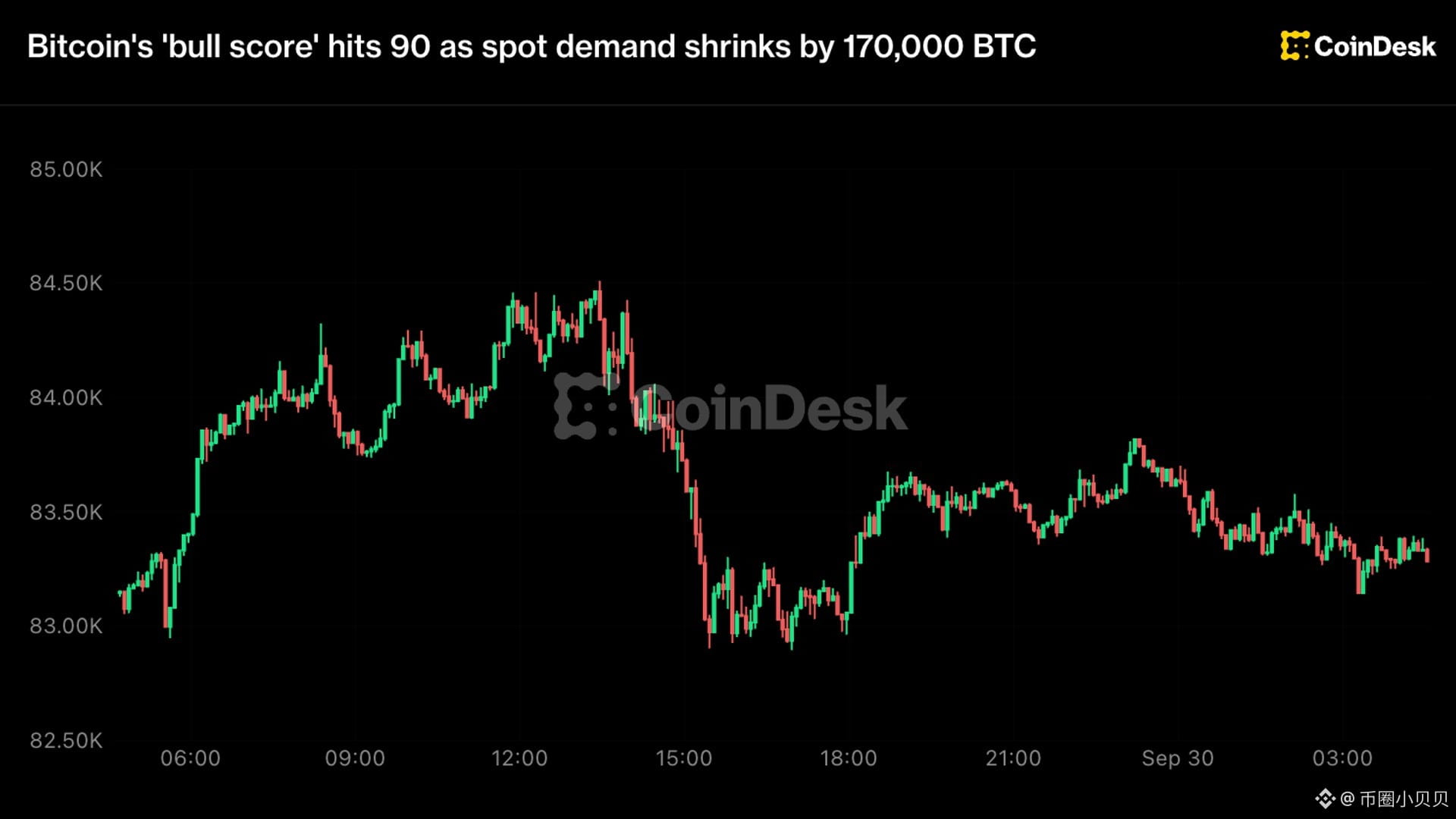
1
3
11
4.1k
·
--
Verified
First the conclusion: the point here is not where XRP may go, and not who Ripple has signed again.. What’s truly worth noting is a country’s securities registration system, for the first time putting its own ownership records onto a public blockchain..
[📢 消息第一时间](https://app.binance.com/uni-qr/F6dwNqgx)
Brazil’s central securities depository, CSD BR, and Ripple have signed a partnership to mirror investment fund share records to the XRP Ledger.. CSD BR is responsible for registering assets worth over 2.2 trillion reais.. The first batch to go on-chain is a fund managed by BTG Pactual, a subsidiary of the investment bank, with participation limited to Brazilian companies and banks that have completed identity verification and compliance reviews.. The official term for this step is “mirroring”: the on-chain entry is just a copy, while legal ownership remains in the original ledger..
What’s really worth watching is the roadmap afterward: first mirroring, then native issuance, and only later authorized trading.. These three steps are not just technical upgrades—they’re layers of permissions being extended outward.. In the mirroring stage, the on-chain part is only an “eye”; registration, settlement, and transfer all remain in the traditional system.. Only at native issuance does the on-chain record start to have legal effect.. If it truly reaches authorized trading, it effectively means opening a regulated secondary market on the public blockchain..
There’s also a detail covered up by the headline.. This batch of tokens uses the XRP Ledger’s multi-purpose token standard, which natively includes three features: whitelist access, the ability to freeze a single asset, and the ability to return assets to the original route based on regulatory or court instructions.. Issuance and management powers still remain with CSD BR.. From day one, these on-chain assets come with built-in switches..
So don’t just fixate on XRP’s price.. The business logic behind this kind of cooperation has never been “the coin will go up”—it’s “whoever controls the registration rights controls issuance.”.. The depository institution is the gate you can’t get around on this path; custody, settlement, and transfer all pass through it.. If it is willing to externalize records to the public blockchain, it’s essentially admitting that this rail can handle sovereign-level assets.. For other emerging-market depository institutions that follow later, this document is what they’ll reference..
One twist: this is both the biggest endorsement the public chain has ever received, and the least “public-chain-like” way it’s been used.. Whitelists, the ability to freeze, and the ability to claw back essentially mean packing the traditional regulatory framework into a public chain’s outer shell.. If native issuance and authorized trading really get loosened, then the issue shifts from technology to interpretation.. A regulated secondary market growing on a public blockchain—when things go wrong, who will stand behind it.. If these three steps don’t get completed, then the significance of this news for coin prices would amount to no more than a big company’s PR splash..
First the conclusion: the point here is not where XRP may go, and not who Ripple has signed again.. What’s truly worth noting is a country’s securities registration system, for the first time putting its own ownership records onto a public blockchain..
📢 消息第一时间
Brazil’s central securities depository, CSD BR, and Ripple have signed a partnership to mirror investment fund share records to the XRP Ledger.. CSD BR is responsible for registering assets worth over 2.2 trillion reais.. The first batch to go on-chain is a fund managed by BTG Pactual, a subsidiary of the investment bank, with participation limited to Brazilian companies and banks that have completed identity verification and compliance reviews.. The official term for this step is “mirroring”: the on-chain entry is just a copy, while legal ownership remains in the original ledger..
What’s really worth watching is the roadmap afterward: first mirroring, then native issuance, and only later authorized trading.. These three steps are not just technical upgrades—they’re layers of permissions being extended outward.. In the mirroring stage, the on-chain part is only an “eye”; registration, settlement, and transfer all remain in the traditional system.. Only at native issuance does the on-chain record start to have legal effect.. If it truly reaches authorized trading, it effectively means opening a regulated secondary market on the public blockchain..
There’s also a detail covered up by the headline.. This batch of tokens uses the XRP Ledger’s multi-purpose token standard, which natively includes three features: whitelist access, the ability to freeze a single asset, and the ability to return assets to the original route based on regulatory or court instructions.. Issuance and management powers still remain with CSD BR.. From day one, these on-chain assets come with built-in switches..
So don’t just fixate on XRP’s price.. The business logic behind this kind of cooperation has never been “the coin will go up”—it’s “whoever controls the registration rights controls issuance.”.. The depository institution is the gate you can’t get around on this path; custody, settlement, and transfer all pass through it.. If it is willing to externalize records to the public blockchain, it’s essentially admitting that this rail can handle sovereign-level assets.. For other emerging-market depository institutions that follow later, this document is what they’ll reference..
One twist: this is both the biggest endorsement the public chain has ever received, and the least “public-chain-like” way it’s been used.. Whitelists, the ability to freeze, and the ability to claw back essentially mean packing the traditional regulatory framework into a public chain’s outer shell.. If native issuance and authorized trading really get loosened, then the issue shifts from technology to interpretation.. A regulated secondary market growing on a public blockchain—when things go wrong, who will stand behind it.. If these three steps don’t get completed, then the significance of this news for coin prices would amount to no more than a big company’s PR splash..
📢 消息第一时间
Brazil’s central securities depository, CSD BR, and Ripple have signed a partnership to mirror investment fund share records to the XRP Ledger.. CSD BR is responsible for registering assets worth over 2.2 trillion reais.. The first batch to go on-chain is a fund managed by BTG Pactual, a subsidiary of the investment bank, with participation limited to Brazilian companies and banks that have completed identity verification and compliance reviews.. The official term for this step is “mirroring”: the on-chain entry is just a copy, while legal ownership remains in the original ledger..
What’s really worth watching is the roadmap afterward: first mirroring, then native issuance, and only later authorized trading.. These three steps are not just technical upgrades—they’re layers of permissions being extended outward.. In the mirroring stage, the on-chain part is only an “eye”; registration, settlement, and transfer all remain in the traditional system.. Only at native issuance does the on-chain record start to have legal effect.. If it truly reaches authorized trading, it effectively means opening a regulated secondary market on the public blockchain..
There’s also a detail covered up by the headline.. This batch of tokens uses the XRP Ledger’s multi-purpose token standard, which natively includes three features: whitelist access, the ability to freeze a single asset, and the ability to return assets to the original route based on regulatory or court instructions.. Issuance and management powers still remain with CSD BR.. From day one, these on-chain assets come with built-in switches..
So don’t just fixate on XRP’s price.. The business logic behind this kind of cooperation has never been “the coin will go up”—it’s “whoever controls the registration rights controls issuance.”.. The depository institution is the gate you can’t get around on this path; custody, settlement, and transfer all pass through it.. If it is willing to externalize records to the public blockchain, it’s essentially admitting that this rail can handle sovereign-level assets.. For other emerging-market depository institutions that follow later, this document is what they’ll reference..
One twist: this is both the biggest endorsement the public chain has ever received, and the least “public-chain-like” way it’s been used.. Whitelists, the ability to freeze, and the ability to claw back essentially mean packing the traditional regulatory framework into a public chain’s outer shell.. If native issuance and authorized trading really get loosened, then the issue shifts from technology to interpretation.. A regulated secondary market growing on a public blockchain—when things go wrong, who will stand behind it.. If these three steps don’t get completed, then the significance of this news for coin prices would amount to no more than a big company’s PR splash..
2
1.6k
·
--
#美国8月职位空缺降至五个月低点
Two U.S. agencies that govern crypto encryption can’t even find enough people to fill one conference room.. But what really matters isn’t who left—it’s who will be writing the rules next..
[⚖️ 最新消息群里说](https://app.binance.com/uni-qr/F6dwNqgx)
This Friday, Hester Peirce of the U.S. SEC will depart after eight years in office. In the industry, she’s been nicknamed “Crypto Mom”.. With her exit, the SEC has only two commissioners left: Chairman Paul Atkins and Mark Uyeda. On a bipartisan committee that should have five members, three seats are now empty.. Earlier, the CFTC has been supported by only its chair, Michael Selig, since December 2025..
Most people will treat this as ordinary personnel news and move on.. But when you put the two agencies side by side, you realize that the two main financial departments responsible for crypto regulation in the U.S. are left with only three commissioners in total..
What’s truly worth watching is the rules in the hands of these people—rules that are increasingly not coming from Congress.. This month, the industry has been pushing the “Clarity Act,” aiming to shift regulatory authority over certain digital assets from the SEC to the CFTC. The bill failed to pass in the Senate.. With the legislative path blocked, the two agencies can only push the process forward through rulemaking: the SEC issues staff guidance for investment contracts, while the CFTC sets its own rules for how companies should use blockchain for recordkeeping. The real weight of the text lies in the interpretation..
Go one layer deeper, and there’s a spread hidden here.. For the past two years, the market has been pricing crypto assets with a “policy uncertainty” discount. As the number of people in enforcement roles declines—those who can investigate, bring cases, and push actions forward—the ability to do so shrinks as well.. On one side, perceived regulatory risk remains high; on the other, the real, on-the-ground enforcement risk is being pulled back. The gap in between is where the question becomes whether money is willing to place bets in advance..
Whether they hire more people—and the timing—is in the hands of the president, who is the only one who can nominate. The White House says it will fill roles soon. A CNBC report on September 4 mentioned that four potential CFTC candidates have already been screened, but their names have not been released yet.. The longer the nomination is delayed, the longer this vacancy will last..
Leave the twist for later.. An empty chair doesn’t mean looser policy—it just moves predictability from the law to individuals.. What’s worth watching isn’t who gets added, but whether the first person brought in is from the crypto camp or from the enforcement camp. And when the next staff guidance comes out, whether the market treats it as law—or as a temporary notice..
#美国8月职位空缺降至五个月低点
Two U.S. agencies that govern crypto encryption can’t even find enough people to fill one conference room.. But what really matters isn’t who left—it’s who will be writing the rules next..
⚖️ 最新消息群里说
This Friday, Hester Peirce of the U.S. SEC will depart after eight years in office. In the industry, she’s been nicknamed “Crypto Mom”.. With her exit, the SEC has only two commissioners left: Chairman Paul Atkins and Mark Uyeda. On a bipartisan committee that should have five members, three seats are now empty.. Earlier, the CFTC has been supported by only its chair, Michael Selig, since December 2025..
Most people will treat this as ordinary personnel news and move on.. But when you put the two agencies side by side, you realize that the two main financial departments responsible for crypto regulation in the U.S. are left with only three commissioners in total..
What’s truly worth watching is the rules in the hands of these people—rules that are increasingly not coming from Congress.. This month, the industry has been pushing the “Clarity Act,” aiming to shift regulatory authority over certain digital assets from the SEC to the CFTC. The bill failed to pass in the Senate.. With the legislative path blocked, the two agencies can only push the process forward through rulemaking: the SEC issues staff guidance for investment contracts, while the CFTC sets its own rules for how companies should use blockchain for recordkeeping. The real weight of the text lies in the interpretation..
Go one layer deeper, and there’s a spread hidden here.. For the past two years, the market has been pricing crypto assets with a “policy uncertainty” discount. As the number of people in enforcement roles declines—those who can investigate, bring cases, and push actions forward—the ability to do so shrinks as well.. On one side, perceived regulatory risk remains high; on the other, the real, on-the-ground enforcement risk is being pulled back. The gap in between is where the question becomes whether money is willing to place bets in advance..
Whether they hire more people—and the timing—is in the hands of the president, who is the only one who can nominate. The White House says it will fill roles soon. A CNBC report on September 4 mentioned that four potential CFTC candidates have already been screened, but their names have not been released yet.. The longer the nomination is delayed, the longer this vacancy will last..
Leave the twist for later.. An empty chair doesn’t mean looser policy—it just moves predictability from the law to individuals.. What’s worth watching isn’t who gets added, but whether the first person brought in is from the crypto camp or from the enforcement camp. And when the next staff guidance comes out, whether the market treats it as law—or as a temporary notice..
Two U.S. agencies that govern crypto encryption can’t even find enough people to fill one conference room.. But what really matters isn’t who left—it’s who will be writing the rules next..
⚖️ 最新消息群里说
This Friday, Hester Peirce of the U.S. SEC will depart after eight years in office. In the industry, she’s been nicknamed “Crypto Mom”.. With her exit, the SEC has only two commissioners left: Chairman Paul Atkins and Mark Uyeda. On a bipartisan committee that should have five members, three seats are now empty.. Earlier, the CFTC has been supported by only its chair, Michael Selig, since December 2025..
Most people will treat this as ordinary personnel news and move on.. But when you put the two agencies side by side, you realize that the two main financial departments responsible for crypto regulation in the U.S. are left with only three commissioners in total..
What’s truly worth watching is the rules in the hands of these people—rules that are increasingly not coming from Congress.. This month, the industry has been pushing the “Clarity Act,” aiming to shift regulatory authority over certain digital assets from the SEC to the CFTC. The bill failed to pass in the Senate.. With the legislative path blocked, the two agencies can only push the process forward through rulemaking: the SEC issues staff guidance for investment contracts, while the CFTC sets its own rules for how companies should use blockchain for recordkeeping. The real weight of the text lies in the interpretation..
Go one layer deeper, and there’s a spread hidden here.. For the past two years, the market has been pricing crypto assets with a “policy uncertainty” discount. As the number of people in enforcement roles declines—those who can investigate, bring cases, and push actions forward—the ability to do so shrinks as well.. On one side, perceived regulatory risk remains high; on the other, the real, on-the-ground enforcement risk is being pulled back. The gap in between is where the question becomes whether money is willing to place bets in advance..
Whether they hire more people—and the timing—is in the hands of the president, who is the only one who can nominate. The White House says it will fill roles soon. A CNBC report on September 4 mentioned that four potential CFTC candidates have already been screened, but their names have not been released yet.. The longer the nomination is delayed, the longer this vacancy will last..
Leave the twist for later.. An empty chair doesn’t mean looser policy—it just moves predictability from the law to individuals.. What’s worth watching isn’t who gets added, but whether the first person brought in is from the crypto camp or from the enforcement camp. And when the next staff guidance comes out, whether the market treats it as law—or as a temporary notice..
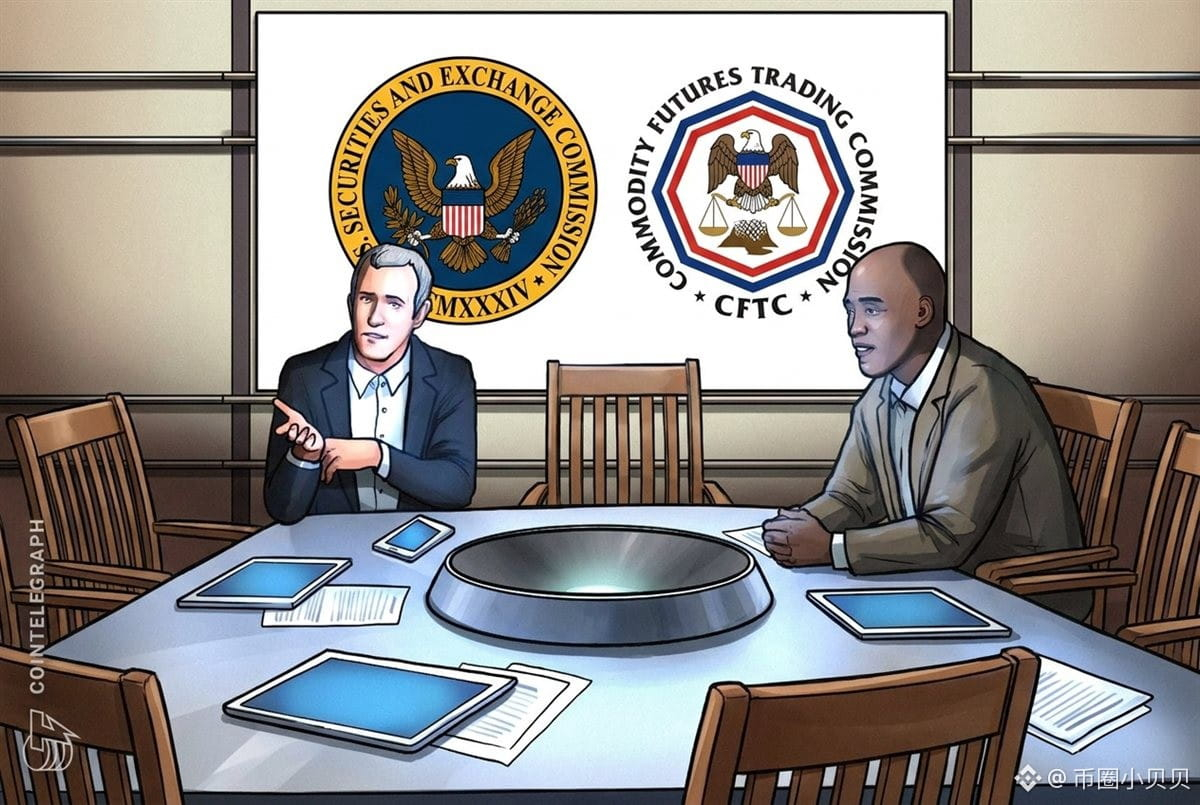
1.9k
·
--
Verified
When it comes to putting stocks on-chain, many people think the main character would be Wall Street—but this time, the first thing signed is a Korean payment company’s signature..
[🤖 进群看风向](https://app.binance.com/uni-qr/F6dwNqgx)
Kakaopay’s securities business has, over the past two days, signed cooperation deals with Dinari and Ondo Finance—one handles the sourcing and custody of underlying stocks, and the other handles the underlying infrastructure for tokenization.
First, what’s happened so far.. It’s not an issuance yet; it’s a memo on “exploration” for now.. Dinari is first running a proof of concept. Within the framework, shareholder rights such as dividends and voting are retained. The underlying layer uses actually held Korean stocks—not just shadow tokens that follow prices.. Ondo is first setting up the framework for “how to find stocks” and “how to custody them.” Kakaopay will open a foreign comprehensive account to hold the underlying stocks.. Which specific Korean companies will be selected hasn’t been decided, and no commercialization timeline has been provided.
What’s really worth watching is the sequence.. This tokenized stocks market is on track to reach about $3.2 billion this year, but almost all of it is concentrated in the U.S. bucket—names like Strategy, Circle, Nvidia, and Tesla keep coming up.. On the shelf, it’s all U.S. stocks. Stocks from other countries basically aren’t being touched. Now, what someone is trying to do is to fill the “non-U.S. assets” bucket.
Capital rotation has never been on the layer of “which coin is rising,” but on the layer of “who controls the distribution spigot.”.. Dinari already has 724 tokenized U.S. stocks and ETFs running—what it lacks isn’t technology, but new sources of supply and new customers.. Ondo’s line is tokenized U.S. treasuries—it wants to move the custody and redemption framework onto stocks.. And what Kakaopay holds is the entry point of Korean users.. Put the three together: fundamentally, using a payment company’s channel to trade for the underlying infrastructure of two tokenization platforms.
The bigger backdrop is happening in Korea itself.. In January this year, the National Assembly passed amendments to recognize distributed ledger technology as a securities registry, enabling the issuance and circulation of tokenized securities.. This framework is set to take effect in February 2027, and Korea’s securities depository institutions are also working to connect existing account systems with on-chain data.. The traffic lights on this road aren’t controlled by exchanges—they’re controlled by the regulatory calendar.
Save the twist for last.. The words “exploration” mean it’s still unclear whether to do it and when to do it. If it truly lands, the bottleneck is whether “Korean stocks being sold in other countries” is compliant—not whether the chain can run it.. Three things are worth keeping an eye on: whether the proof of concept will produce concrete target assets, whether there are any “early green lights” before the Korean framework takes effect, and whether the first platform to put other countries’ stocks on the shelf will still be those same U.S. players.
When it comes to putting stocks on-chain, many people think the main character would be Wall Street—but this time, the first thing signed is a Korean payment company’s signature..
🤖 进群看风向
Kakaopay’s securities business has, over the past two days, signed cooperation deals with Dinari and Ondo Finance—one handles the sourcing and custody of underlying stocks, and the other handles the underlying infrastructure for tokenization.
First, what’s happened so far.. It’s not an issuance yet; it’s a memo on “exploration” for now.. Dinari is first running a proof of concept. Within the framework, shareholder rights such as dividends and voting are retained. The underlying layer uses actually held Korean stocks—not just shadow tokens that follow prices.. Ondo is first setting up the framework for “how to find stocks” and “how to custody them.” Kakaopay will open a foreign comprehensive account to hold the underlying stocks.. Which specific Korean companies will be selected hasn’t been decided, and no commercialization timeline has been provided.
What’s really worth watching is the sequence.. This tokenized stocks market is on track to reach about $3.2 billion this year, but almost all of it is concentrated in the U.S. bucket—names like Strategy, Circle, Nvidia, and Tesla keep coming up.. On the shelf, it’s all U.S. stocks. Stocks from other countries basically aren’t being touched. Now, what someone is trying to do is to fill the “non-U.S. assets” bucket.
Capital rotation has never been on the layer of “which coin is rising,” but on the layer of “who controls the distribution spigot.”.. Dinari already has 724 tokenized U.S. stocks and ETFs running—what it lacks isn’t technology, but new sources of supply and new customers.. Ondo’s line is tokenized U.S. treasuries—it wants to move the custody and redemption framework onto stocks.. And what Kakaopay holds is the entry point of Korean users.. Put the three together: fundamentally, using a payment company’s channel to trade for the underlying infrastructure of two tokenization platforms.
The bigger backdrop is happening in Korea itself.. In January this year, the National Assembly passed amendments to recognize distributed ledger technology as a securities registry, enabling the issuance and circulation of tokenized securities.. This framework is set to take effect in February 2027, and Korea’s securities depository institutions are also working to connect existing account systems with on-chain data.. The traffic lights on this road aren’t controlled by exchanges—they’re controlled by the regulatory calendar.
Save the twist for last.. The words “exploration” mean it’s still unclear whether to do it and when to do it. If it truly lands, the bottleneck is whether “Korean stocks being sold in other countries” is compliant—not whether the chain can run it.. Three things are worth keeping an eye on: whether the proof of concept will produce concrete target assets, whether there are any “early green lights” before the Korean framework takes effect, and whether the first platform to put other countries’ stocks on the shelf will still be those same U.S. players.
🤖 进群看风向
Kakaopay’s securities business has, over the past two days, signed cooperation deals with Dinari and Ondo Finance—one handles the sourcing and custody of underlying stocks, and the other handles the underlying infrastructure for tokenization.
First, what’s happened so far.. It’s not an issuance yet; it’s a memo on “exploration” for now.. Dinari is first running a proof of concept. Within the framework, shareholder rights such as dividends and voting are retained. The underlying layer uses actually held Korean stocks—not just shadow tokens that follow prices.. Ondo is first setting up the framework for “how to find stocks” and “how to custody them.” Kakaopay will open a foreign comprehensive account to hold the underlying stocks.. Which specific Korean companies will be selected hasn’t been decided, and no commercialization timeline has been provided.
What’s really worth watching is the sequence.. This tokenized stocks market is on track to reach about $3.2 billion this year, but almost all of it is concentrated in the U.S. bucket—names like Strategy, Circle, Nvidia, and Tesla keep coming up.. On the shelf, it’s all U.S. stocks. Stocks from other countries basically aren’t being touched. Now, what someone is trying to do is to fill the “non-U.S. assets” bucket.
Capital rotation has never been on the layer of “which coin is rising,” but on the layer of “who controls the distribution spigot.”.. Dinari already has 724 tokenized U.S. stocks and ETFs running—what it lacks isn’t technology, but new sources of supply and new customers.. Ondo’s line is tokenized U.S. treasuries—it wants to move the custody and redemption framework onto stocks.. And what Kakaopay holds is the entry point of Korean users.. Put the three together: fundamentally, using a payment company’s channel to trade for the underlying infrastructure of two tokenization platforms.
The bigger backdrop is happening in Korea itself.. In January this year, the National Assembly passed amendments to recognize distributed ledger technology as a securities registry, enabling the issuance and circulation of tokenized securities.. This framework is set to take effect in February 2027, and Korea’s securities depository institutions are also working to connect existing account systems with on-chain data.. The traffic lights on this road aren’t controlled by exchanges—they’re controlled by the regulatory calendar.
Save the twist for last.. The words “exploration” mean it’s still unclear whether to do it and when to do it. If it truly lands, the bottleneck is whether “Korean stocks being sold in other countries” is compliant—not whether the chain can run it.. Three things are worth keeping an eye on: whether the proof of concept will produce concrete target assets, whether there are any “early green lights” before the Korean framework takes effect, and whether the first platform to put other countries’ stocks on the shelf will still be those same U.S. players.

2
2.2k
Log in to explore more content
Join global crypto users on Binance Square
⚡️ Get latest and useful information about crypto.
💬 Trusted by the world’s largest crypto exchange.
👍 Discover real insights from verified creators.
Email / Phone number