

Gold is traded globally in U.S. dollars. For that reason, currency movements in the U.S. can change its price dynamics, but this relationship does not work as an absolute rule.
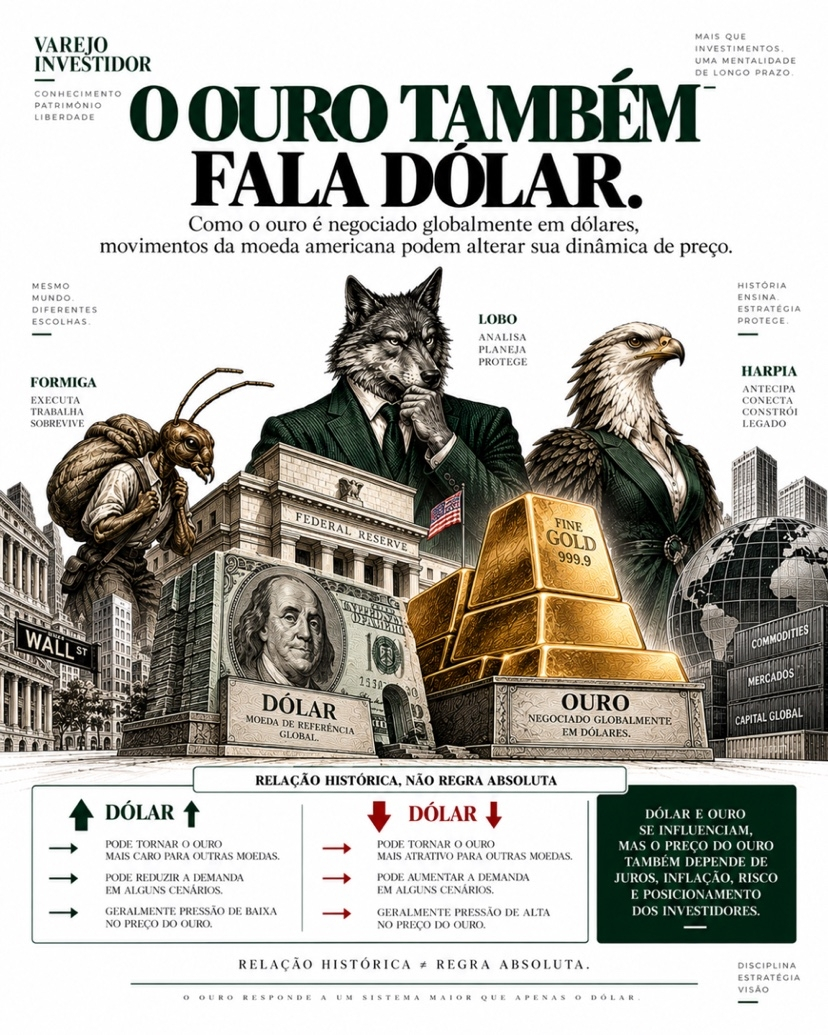
When the dollar strengthens, gold can become more expensive for investors who use other currencies, which may reduce demand in certain scenarios. Historically, this can create pressure on the metal’s price.
When the dollar loses strength, the opposite movement may occur, making gold relatively more accessible in other currencies and potentially supporting demand.
But there’s an important variable: gold does not respond only to the dollar.
Interest rates, inflation, risk perception, liquidity, and investor positioning also play a role in shaping the price. A simultaneous change in these forces can make the relationship between the dollar and gold different from what was observed in earlier periods.
That’s why analyzing only the DXY or only the gold price can provide an incomplete view.
The central point is to understand the system: the dollar and gold interact, but the price of the metal is the result of a much larger combination of economic and financial forces.
Want to follow this topic through the markets? Check the related assets below and note different ways of gaining exposure to gold, the dollar, and the precious metals sector.