

Varejo Investidor
49 Posts

Varejo Investidor
Report
Block User
ex trader institucional 8 anos de mercado
1 Following
4 Followers
65 Liked
Posts
All
Videos
PINNED
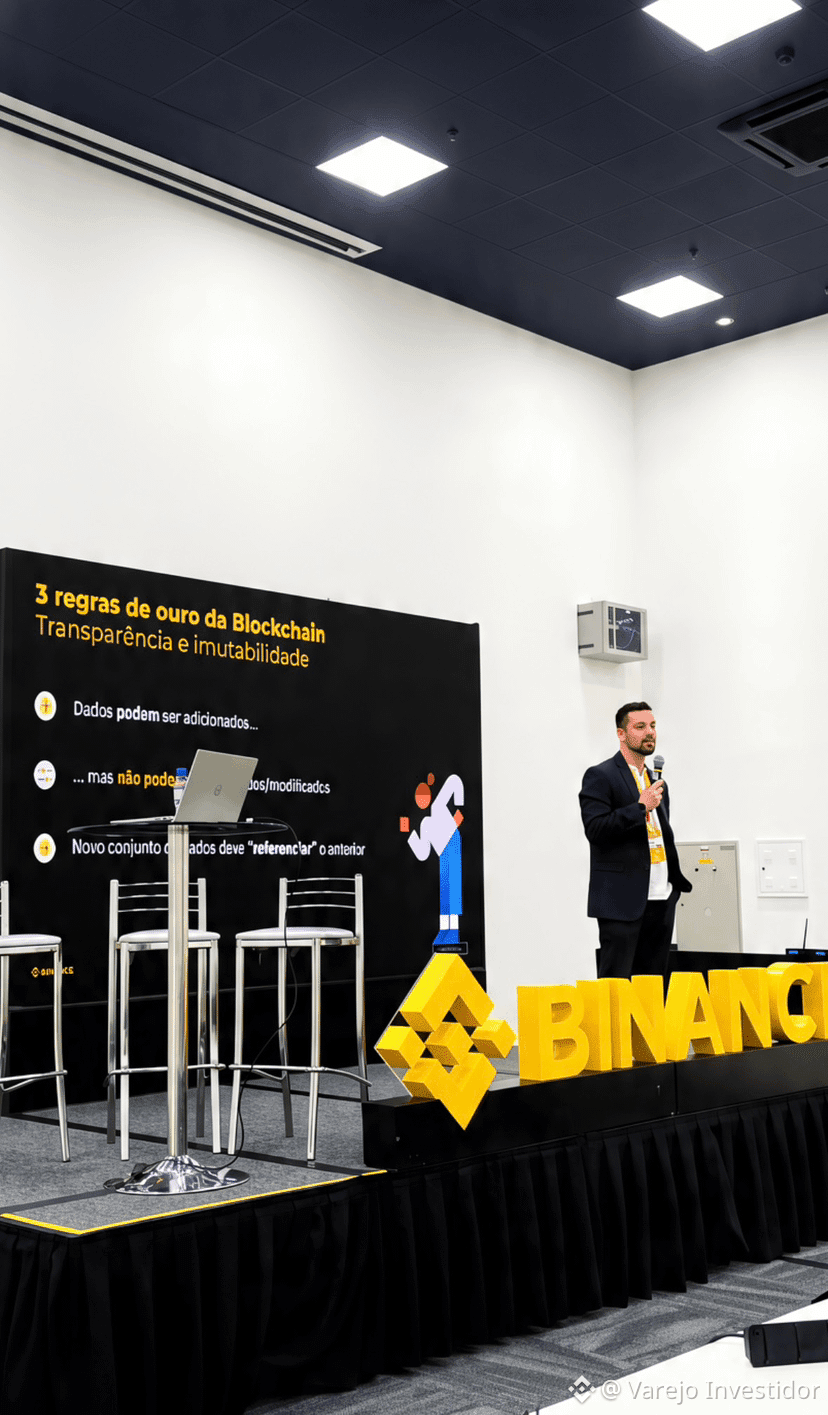
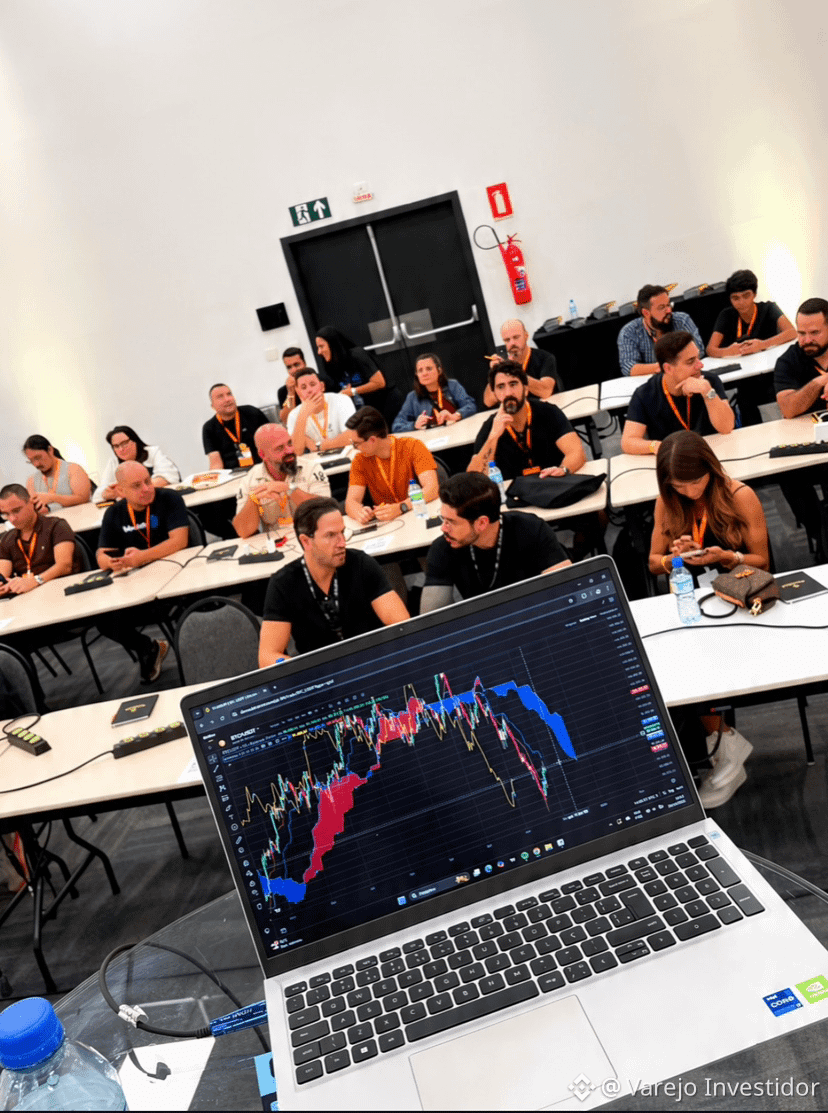
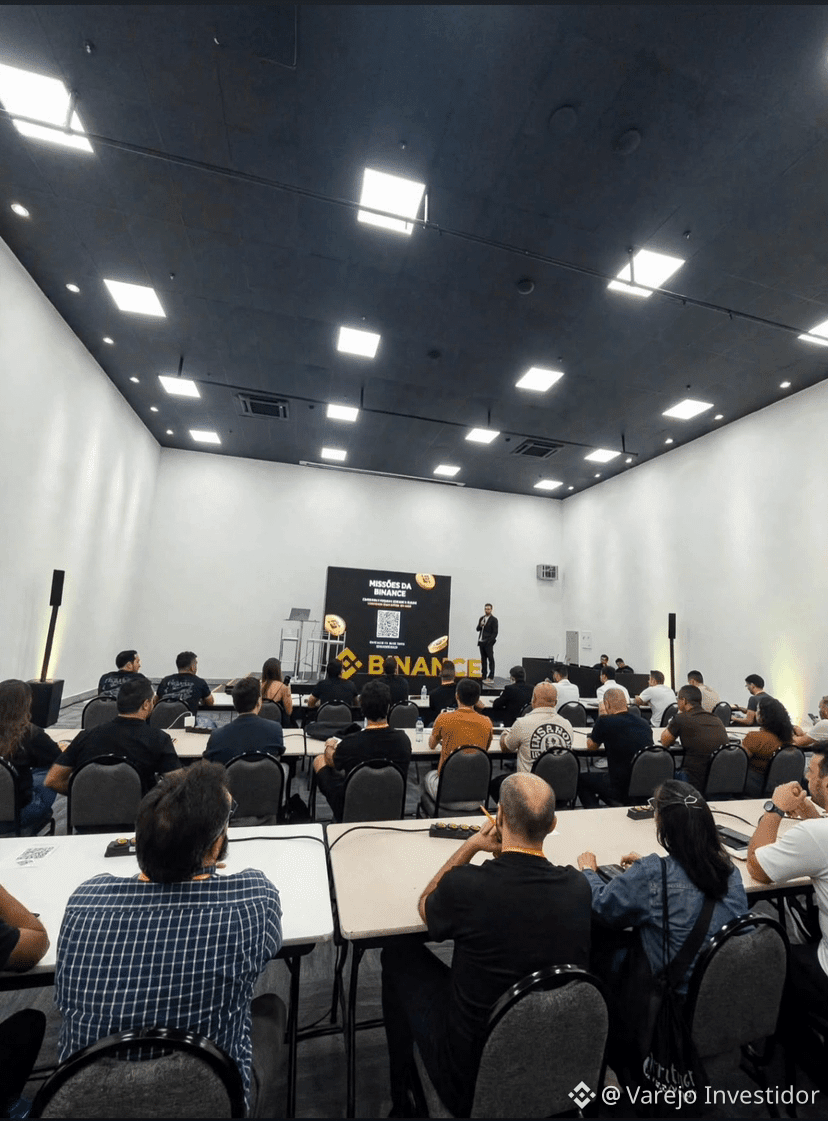
Thank you, Binance, for inviting me to hold classes all afternoon on your stage at the blockchain conference.
Thank you, Binance, for inviting me to hold classes all afternoon on your stage at the blockchain conference.
2
409

Article
WHY THE U.S. DOLLAR HAS A CENTRAL ROLE?The dollar occupies a central position in the international financial system because its use extends far beyond the U.S. economy.
Over decades, the U.S. dollar has come to be widely used in international trade, in financial markets, and in central banks’ foreign exchange reserves.
The image highlights four pillars of this structure: institutional security, international trade, the financial system, and global demand for the currency.
Much of the international trade in commodities and energy is denominated in U.S. dollars. This creates a steady demand for liquidity in American currency among businesses, financial institutions, and governments.
WHY THE U.S. DOLLAR HAS A CENTRAL ROLE?
The dollar occupies a central position in the international financial system because its use extends far beyond the U.S. economy.
Over decades, the U.S. dollar has come to be widely used in international trade, in financial markets, and in central banks’ foreign exchange reserves.
The image highlights four pillars of this structure: institutional security, international trade, the financial system, and global demand for the currency.
Much of the international trade in commodities and energy is denominated in U.S. dollars. This creates a steady demand for liquidity in American currency among businesses, financial institutions, and governments.
Over decades, the U.S. dollar has come to be widely used in international trade, in financial markets, and in central banks’ foreign exchange reserves.
The image highlights four pillars of this structure: institutional security, international trade, the financial system, and global demand for the currency.
Much of the international trade in commodities and energy is denominated in U.S. dollars. This creates a steady demand for liquidity in American currency among businesses, financial institutions, and governments.
1
20

Article
THE GLOBAL ECONOMY WORKS LIKE A NETWORKThe world economy is not made up of isolated countries. It works like a large network of production, trade, transportation, and consumption, in which different regions depend on one another.
When an important link in this network is disrupted, the impact can quickly go beyond the borders of the place where the problem started.
The image shows a simple sequence:
Lower production → lower exports → lower supply → higher prices.
This mechanism can appear in different sectors. An interruption in the production of a raw material can reduce its international availability. Logistics problems can delay shipments. Bottlenecks in ports, sea routes, or industrial supply chains can also increase costs.
THE GLOBAL ECONOMY WORKS LIKE A NETWORK
The world economy is not made up of isolated countries. It works like a large network of production, trade, transportation, and consumption, in which different regions depend on one another.
When an important link in this network is disrupted, the impact can quickly go beyond the borders of the place where the problem started.
The image shows a simple sequence:
Lower production → lower exports → lower supply → higher prices.
This mechanism can appear in different sectors. An interruption in the production of a raw material can reduce its international availability. Logistics problems can delay shipments. Bottlenecks in ports, sea routes, or industrial supply chains can also increase costs.
When an important link in this network is disrupted, the impact can quickly go beyond the borders of the place where the problem started.
The image shows a simple sequence:
Lower production → lower exports → lower supply → higher prices.
This mechanism can appear in different sectors. An interruption in the production of a raw material can reduce its international availability. Logistics problems can delay shipments. Bottlenecks in ports, sea routes, or industrial supply chains can also increase costs.
1
2
Article
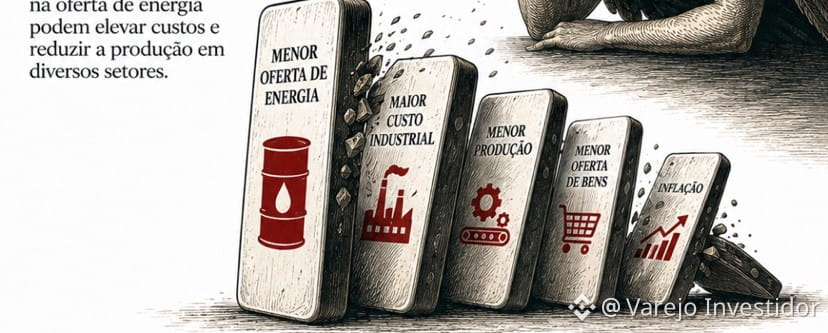
IF THE FLOW OF OIL DIMINISHES, THE EFFECT SPREADSEnergy is one of the main inputs in the modern economy. When the supply of oil and other energy resources decreases significantly, the impact can quickly go beyond the energy sector.
The chain shown in the image shows how this process can happen:
Lower energy supply → higher industrial cost → lower production → lower supply of goods → pressure on inflation.
Industries depend on energy to run machinery, transport goods, and produce goods. Higher energy costs can reduce profit margins, make products more expensive, and change production decisions.
IF THE FLOW OF OIL DIMINISHES, THE EFFECT SPREADS
Energy is one of the main inputs in the modern economy. When the supply of oil and other energy resources decreases significantly, the impact can quickly go beyond the energy sector.
The chain shown in the image shows how this process can happen:
Lower energy supply → higher industrial cost → lower production → lower supply of goods → pressure on inflation.
Industries depend on energy to run machinery, transport goods, and produce goods. Higher energy costs can reduce profit margins, make products more expensive, and change production decisions.
The chain shown in the image shows how this process can happen:
Lower energy supply → higher industrial cost → lower production → lower supply of goods → pressure on inflation.
Industries depend on energy to run machinery, transport goods, and produce goods. Higher energy costs can reduce profit margins, make products more expensive, and change production decisions.
1
14
Article
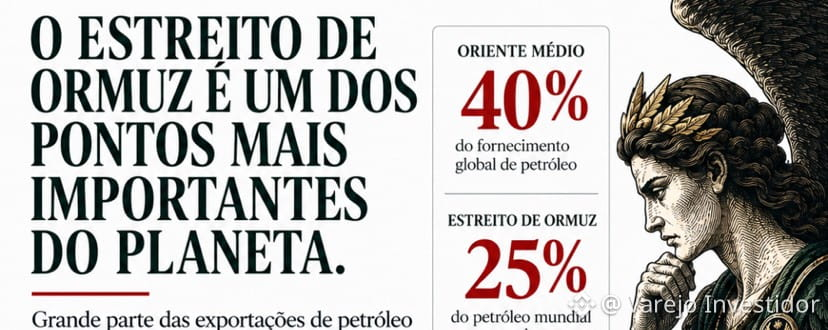
THE STRAIT OF HORMUZ IS ONE OF THE MOST IMPORTANT PLACES ON THE PLANETThe Strait of Hormuz connects the Persian Gulf to the Gulf of Oman and serves as one of the main maritime routes for transporting energy.
The image highlights the importance of this passage for the global oil market, with large volumes exported by countries such as Saudi Arabia, Iraq, and the United Arab Emirates.
Its relevance is not only geographic. The strait connects energy producers to the international market through a strategic maritime route. Any significant disruption to this flow could increase the perception of risk regarding oil supply and transportation.
THE STRAIT OF HORMUZ IS ONE OF THE MOST IMPORTANT PLACES ON THE PLANET
The Strait of Hormuz connects the Persian Gulf to the Gulf of Oman and serves as one of the main maritime routes for transporting energy.
The image highlights the importance of this passage for the global oil market, with large volumes exported by countries such as Saudi Arabia, Iraq, and the United Arab Emirates.
Its relevance is not only geographic. The strait connects energy producers to the international market through a strategic maritime route. Any significant disruption to this flow could increase the perception of risk regarding oil supply and transportation.
The image highlights the importance of this passage for the global oil market, with large volumes exported by countries such as Saudi Arabia, Iraq, and the United Arab Emirates.
Its relevance is not only geographic. The strait connects energy producers to the international market through a strategic maritime route. Any significant disruption to this flow could increase the perception of risk regarding oil supply and transportation.
1
11

Article
DO YOU THINK THE WAR IS ABOUT MISSILES?A conflict in the Middle East can produce effects far beyond the battlefield. When it involves a strategic region for the production and transportation of oil, energy, food, inflation, and financial markets can all end up in the same equation.
The image highlights the Strait of Hormuz, a maritime passage located between Iran and Oman and near major energy producers such as Saudi Arabia, the United Arab Emirates, and Iraq.
The central point is the connection between conflict and energy.
DO YOU THINK THE WAR IS ABOUT MISSILES?
A conflict in the Middle East can produce effects far beyond the battlefield. When it involves a strategic region for the production and transportation of oil, energy, food, inflation, and financial markets can all end up in the same equation.
The image highlights the Strait of Hormuz, a maritime passage located between Iran and Oman and near major energy producers such as Saudi Arabia, the United Arab Emirates, and Iraq.
The central point is the connection between conflict and energy.
The image highlights the Strait of Hormuz, a maritime passage located between Iran and Oman and near major energy producers such as Saudi Arabia, the United Arab Emirates, and Iraq.
The central point is the connection between conflict and energy.
1
44

Article
OIL IS THE FOUNDATION OF MODERN CIVILIZATIONOil is present in far more than just fuels. Its chain of derivatives directly or indirectly participates in sectors such as transportation, industry, agriculture, energy, and the production of countless consumer goods.
The image presents this chain in a simple way: oil → energy → industry → agriculture → consumption.
Fuels move trucks, ships, airplanes, and agricultural machinery. Petroleum derivatives are also used as raw materials for petrochemical products, including plastics, packaging, industrial components, and various materials used in everyday life.
OIL IS THE FOUNDATION OF MODERN CIVILIZATION
Oil is present in far more than just fuels. Its chain of derivatives directly or indirectly participates in sectors such as transportation, industry, agriculture, energy, and the production of countless consumer goods.
The image presents this chain in a simple way: oil → energy → industry → agriculture → consumption.
Fuels move trucks, ships, airplanes, and agricultural machinery. Petroleum derivatives are also used as raw materials for petrochemical products, including plastics, packaging, industrial components, and various materials used in everyday life.
The image presents this chain in a simple way: oil → energy → industry → agriculture → consumption.
Fuels move trucks, ships, airplanes, and agricultural machinery. Petroleum derivatives are also used as raw materials for petrochemical products, including plastics, packaging, industrial components, and various materials used in everyday life.
1
31
Article
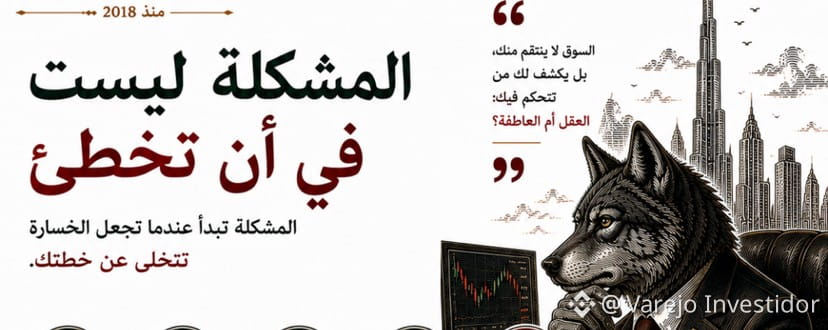
THE TRADER'S ERROR STARTS WHEN HE ABANDONS HIS PLANIn trading, loss itself is not the problem. The problem begins when the loss pushes the trader to abandon their plan.
After a losing deal, emotions such as fear or anger or the desire for quick compensation may appear. And when these emotions turn into decisions, the trader may start to increase risk, ignore exit or entry rules, or enter trades that were not part of their original plan.
THE TRADER'S ERROR STARTS WHEN HE ABANDONS HIS PLAN
In trading, loss itself is not the problem. The problem begins when the loss pushes the trader to abandon their plan.
After a losing deal, emotions such as fear or anger or the desire for quick compensation may appear. And when these emotions turn into decisions, the trader may start to increase risk, ignore exit or entry rules, or enter trades that were not part of their original plan.
After a losing deal, emotions such as fear or anger or the desire for quick compensation may appear. And when these emotions turn into decisions, the trader may start to increase risk, ignore exit or entry rules, or enter trades that were not part of their original plan.
1
1

Article
AS PERCAS FAZEM PARTE DO JOGO.Even the best trading strategies go through losing trades. A loss in one trade does not necessarily mean the approach has failed, because markets are uncertain and no strategy guarantees positive results in every operation.
The core idea is that a trader cannot control the outcome of each trade, but can control how it is managed.
AS PERCAS FAZEM PARTE DO JOGO.
Even the best trading strategies go through losing trades. A loss in one trade does not necessarily mean the approach has failed, because markets are uncertain and no strategy guarantees positive results in every operation.
The core idea is that a trader cannot control the outcome of each trade, but can control how it is managed.
The core idea is that a trader cannot control the outcome of each trade, but can control how it is managed.
1
68

Article
NO TRADER SUCCEEDS 100% OF THE TIMEIn trading, loss itself is not the problem. The problem begins when the loss pushes the trader to abandon their plan.
After a losing trade, emotions like fear or anger or the desire to make up quickly can appear. And when these emotions turn into decisions, the trader may start taking more risk, ignoring exit or entry rules, or entering trades that were not part of their original plan.
NO TRADER SUCCEEDS 100% OF THE TIME
In trading, loss itself is not the problem. The problem begins when the loss pushes the trader to abandon their plan.
After a losing trade, emotions like fear or anger or the desire to make up quickly can appear. And when these emotions turn into decisions, the trader may start taking more risk, ignoring exit or entry rules, or entering trades that were not part of their original plan.
After a losing trade, emotions like fear or anger or the desire to make up quickly can appear. And when these emotions turn into decisions, the trader may start taking more risk, ignoring exit or entry rules, or entering trades that were not part of their original plan.
1
103
Article
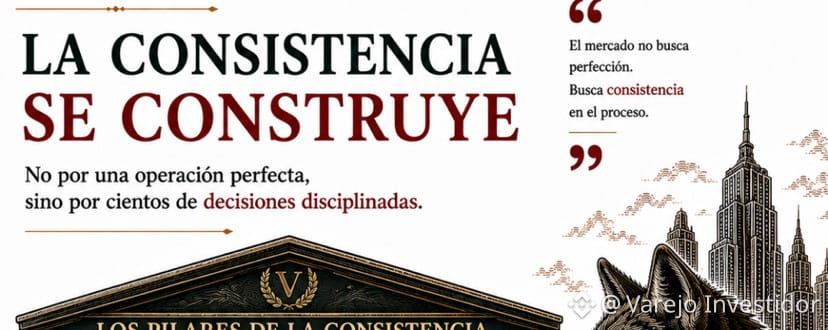
CONSISTENCY IS BUILTConsistency in trading does not come from a perfect trade. It is built through hundreds of decisions carried out with discipline and within a defined process.
The image shows four fundamental pillars: method, discipline, risk management, and repetition.
The method establishes a direction. Without a clear plan, decisions can turn into improvised responses to market movement.
Discipline allows you to carry out that plan even when the immediate results are not favorable. Having a strategy and abandoning it after a loss are two completely different things.
CONSISTENCY IS BUILT
Consistency in trading does not come from a perfect trade. It is built through hundreds of decisions carried out with discipline and within a defined process.
The image shows four fundamental pillars: method, discipline, risk management, and repetition.
The method establishes a direction. Without a clear plan, decisions can turn into improvised responses to market movement.
Discipline allows you to carry out that plan even when the immediate results are not favorable. Having a strategy and abandoning it after a loss are two completely different things.
The image shows four fundamental pillars: method, discipline, risk management, and repetition.
The method establishes a direction. Without a clear plan, decisions can turn into improvised responses to market movement.
Discipline allows you to carry out that plan even when the immediate results are not favorable. Having a strategy and abandoning it after a loss are two completely different things.
NDAQUS-1.05%
IBKRUS-0.64%
1
17

Article
YOU DON’T NEED TO WIN MOREIn trading, a high win rate is not the only factor that determines the outcome of a strategy. It also matters how much you lose when a trade goes wrong and how much room winning trades have to develop.
The image compares two scenarios of 10 trades.
Without proper risk management, several small gains can be wiped out by a single large loss. The cumulative result can deteriorate quickly even though most trades have ended positively.
YOU DON’T NEED TO WIN MORE
In trading, a high win rate is not the only factor that determines the outcome of a strategy. It also matters how much you lose when a trade goes wrong and how much room winning trades have to develop.
The image compares two scenarios of 10 trades.
Without proper risk management, several small gains can be wiped out by a single large loss. The cumulative result can deteriorate quickly even though most trades have ended positively.
The image compares two scenarios of 10 trades.
Without proper risk management, several small gains can be wiped out by a single large loss. The cumulative result can deteriorate quickly even though most trades have ended positively.
1
61

Article
RISK COMES BEFORE PROFITIn trading, thinking first about how much you can win can make you ignore a fundamental question: how much are you willing to lose?
Risk management starts before you open a trade. The goal is to define in advance how much capital can be exposed and under what conditions the position must be closed.
The image highlights five elements: a defined stop, a position size proportional to it, a small and consistent risk per trade, control of total risk, and protection of capital.
RISK COMES BEFORE PROFIT
In trading, thinking first about how much you can win can make you ignore a fundamental question: how much are you willing to lose?
Risk management starts before you open a trade. The goal is to define in advance how much capital can be exposed and under what conditions the position must be closed.
The image highlights five elements: a defined stop, a position size proportional to it, a small and consistent risk per trade, control of total risk, and protection of capital.
Risk management starts before you open a trade. The goal is to define in advance how much capital can be exposed and under what conditions the position must be closed.
The image highlights five elements: a defined stop, a position size proportional to it, a small and consistent risk per trade, control of total risk, and protection of capital.
1
95

Article
THE METHOD NEEDS DISCIPLINEA trading strategy only has value when it can be executed consistently, even after a loss.
The image shows two possible paths in front of the market.
The disciplined trader starts with a defined method, executes the entry according to the plan, respects the stop, maintains a previously established risk management, and continues looking for the next opportunity.
The emotional trader follows a different process. After a loss, the desire to immediately recover capital may appear. This can lead to increasing positions without a justification based on the method, taking on more risk, and making impulsive decisions.
THE METHOD NEEDS DISCIPLINE
A trading strategy only has value when it can be executed consistently, even after a loss.
The image shows two possible paths in front of the market.
The disciplined trader starts with a defined method, executes the entry according to the plan, respects the stop, maintains a previously established risk management, and continues looking for the next opportunity.
The emotional trader follows a different process. After a loss, the desire to immediately recover capital may appear. This can lead to increasing positions without a justification based on the method, taking on more risk, and making impulsive decisions.
The image shows two possible paths in front of the market.
The disciplined trader starts with a defined method, executes the entry according to the plan, respects the stop, maintains a previously established risk management, and continues looking for the next opportunity.
The emotional trader follows a different process. After a loss, the desire to immediately recover capital may appear. This can lead to increasing positions without a justification based on the method, taking on more risk, and making impulsive decisions.
1
136
Article
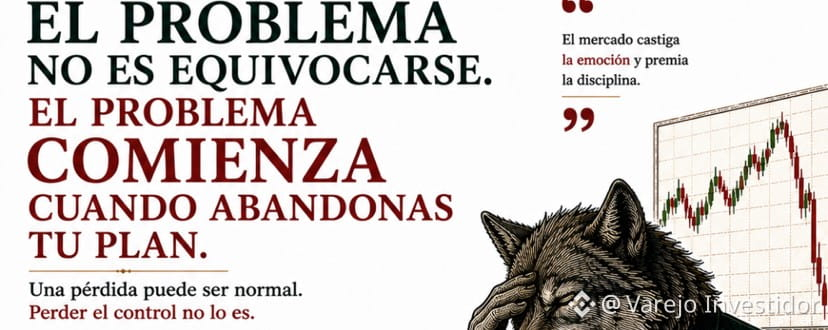
THE PROBLEM IS NOT GETTING IT WRONG, IT'S ABANDONING YOUR PLANA losing operation does not necessarily represent a failure. In financial markets, even well-structured strategies go through periods of losses.
The real challenge arises when the trader allows their emotions to replace the rules of their strategy.
The image shows two different behaviors in the face of a loss.
The disciplined trader accepts the outcome, analyzes the trade, follows their rules, and maintains consistent risk management. Their goal is to preserve capital and continue executing their methodology.
THE PROBLEM IS NOT GETTING IT WRONG, IT'S ABANDONING YOUR PLAN
A losing operation does not necessarily represent a failure. In financial markets, even well-structured strategies go through periods of losses.
The real challenge arises when the trader allows their emotions to replace the rules of their strategy.
The image shows two different behaviors in the face of a loss.
The disciplined trader accepts the outcome, analyzes the trade, follows their rules, and maintains consistent risk management. Their goal is to preserve capital and continue executing their methodology.
The real challenge arises when the trader allows their emotions to replace the rules of their strategy.
The image shows two different behaviors in the face of a loss.
The disciplined trader accepts the outcome, analyzes the trade, follows their rules, and maintains consistent risk management. Their goal is to preserve capital and continue executing their methodology.
4
371

Article
LOSSES ARE PART OF THE GAMEIn trading, a losing operation does not necessarily mean that a strategy has stopped working. Even a robust system can go through a streak of losses.
The difference lies in how each result is handled.
The image shows an alternating sequence of gains and losses while the cumulative result maintains an upward trajectory. This represents a fundamental concept: a strategy should not be evaluated by a single trade, but by its behavior over a series of trades.
LOSSES ARE PART OF THE GAME
In trading, a losing operation does not necessarily mean that a strategy has stopped working. Even a robust system can go through a streak of losses.
The difference lies in how each result is handled.
The image shows an alternating sequence of gains and losses while the cumulative result maintains an upward trajectory. This represents a fundamental concept: a strategy should not be evaluated by a single trade, but by its behavior over a series of trades.
The difference lies in how each result is handled.
The image shows an alternating sequence of gains and losses while the cumulative result maintains an upward trajectory. This represents a fundamental concept: a strategy should not be evaluated by a single trade, but by its behavior over a series of trades.
1
141

Article
NO TRADER GETS 100% RIGHTIn trading, being wrong is not an exception. It is part of the process. The difference between a sustainable strategy and an impulsive trade is not necessarily in always being right, but in knowing how much capital to risk when a decision turns out to be incorrect.
The image shows an example with 237 operations: 132 winners, equivalent to 55.70%, and 105 losers, equivalent to 44.30%. The most important data is not only the win rate, but the relationship between gains, losses, and risk management.
NO TRADER GETS 100% RIGHT
In trading, being wrong is not an exception. It is part of the process. The difference between a sustainable strategy and an impulsive trade is not necessarily in always being right, but in knowing how much capital to risk when a decision turns out to be incorrect.
The image shows an example with 237 operations: 132 winners, equivalent to 55.70%, and 105 losers, equivalent to 44.30%. The most important data is not only the win rate, but the relationship between gains, losses, and risk management.
The image shows an example with 237 operations: 132 winners, equivalent to 55.70%, and 105 losers, equivalent to 44.30%. The most important data is not only the win rate, but the relationship between gains, losses, and risk management.
IBKRUS-0.64%
CMEUS-1.64%
CBOEUS-3.64%
1
13
Article
WHAT DO THESE COUNTRIES GAIN FROM INVESTING IN U.S. TREASURIES?Foreign investors hold a massive amount of U.S. Treasury securities. According to the data shown in the image, foreign investors held approximately US$9.37 trillion in U.S. Treasury securities as of May 2026.
But what do countries gain by holding these assets?
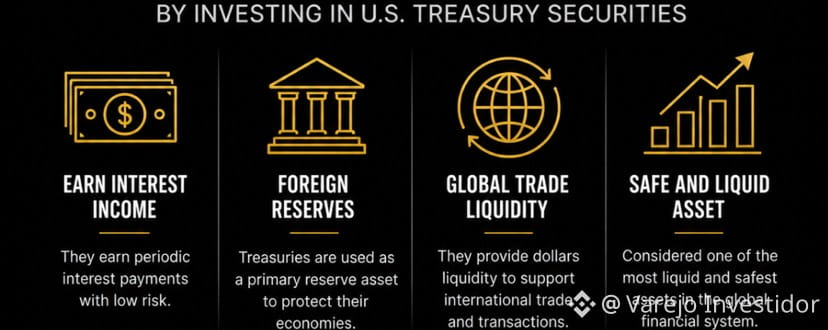
First, Treasuries can generate interest income through periodic payments. They are also widely used as reserve assets by governments and institutions managing foreign currency reserves.
Another important function is liquidity. Because U.S. dollars play a major role in international trade and financial transactions, Treasury securities can form part of the liquidity infrastructure used by global investors and central banks.
The image also highlights Brazil, which ranks 16th among the world’s largest foreign holders, with approximately US$168.9 billion in long-term U.S. Treasury securities.
For financial markets, Treasury demand matters because it connects government borrowing, interest rates, the U.S. dollar and international capital flows.
When investors evaluate the Treasury market, the key variables include yields, duration, inflation expectations, monetary policy and changes in foreign demand.
The US$9.37 trillion figure illustrates how deeply U.S. government securities are integrated into the global financial system.
##treasure #unitedstatesofamerica
$TLT.ETF
{etf_us}(TLT.ETF)
$GOVT.ETF
{etf_us}(GOVT.ETF)
$VGIT.ETF
{etf_us}(VGIT.ETF)
WHAT DO THESE COUNTRIES GAIN FROM INVESTING IN U.S. TREASURIES?
Foreign investors hold a massive amount of U.S. Treasury securities. According to the data shown in the image, foreign investors held approximately US$9.37 trillion in U.S. Treasury securities as of May 2026.
But what do countries gain by holding these assets?
First, Treasuries can generate interest income through periodic payments. They are also widely used as reserve assets by governments and institutions managing foreign currency reserves.
Another important function is liquidity. Because U.S. dollars play a major role in international trade and financial transactions, Treasury securities can form part of the liquidity infrastructure used by global investors and central banks.
The image also highlights Brazil, which ranks 16th among the world’s largest foreign holders, with approximately US$168.9 billion in long-term U.S. Treasury securities.
For financial markets, Treasury demand matters because it connects government borrowing, interest rates, the U.S. dollar and international capital flows.
When investors evaluate the Treasury market, the key variables include yields, duration, inflation expectations, monetary policy and changes in foreign demand.
The US$9.37 trillion figure illustrates how deeply U.S. government securities are integrated into the global financial system.
##treasure #unitedstatesofamerica
$TLT.ETF
$GOVT.ETF
$VGIT.ETF
But what do countries gain by holding these assets?
First, Treasuries can generate interest income through periodic payments. They are also widely used as reserve assets by governments and institutions managing foreign currency reserves.
Another important function is liquidity. Because U.S. dollars play a major role in international trade and financial transactions, Treasury securities can form part of the liquidity infrastructure used by global investors and central banks.
The image also highlights Brazil, which ranks 16th among the world’s largest foreign holders, with approximately US$168.9 billion in long-term U.S. Treasury securities.
For financial markets, Treasury demand matters because it connects government borrowing, interest rates, the U.S. dollar and international capital flows.
When investors evaluate the Treasury market, the key variables include yields, duration, inflation expectations, monetary policy and changes in foreign demand.
The US$9.37 trillion figure illustrates how deeply U.S. government securities are integrated into the global financial system.
##treasure #unitedstatesofamerica
$TLT.ETF
$GOVT.ETF
$VGIT.ETF
TLTETF-0.01%
GOVTETF+0.20%
VGITETF+0.33%
1
25
Article
WHAT DO THESE COUNTRIES GAIN BY INVESTING IN U.S. TREASURY SECURITIES?U.S. Treasury securities occupy a central position in the global financial system. In May 2026, foreign investors held approximately $9.37 trillion in U.S. securities, according to the data shown in the image.
But why do governments, central banks, and international investors keep so many resources in Treasuries?
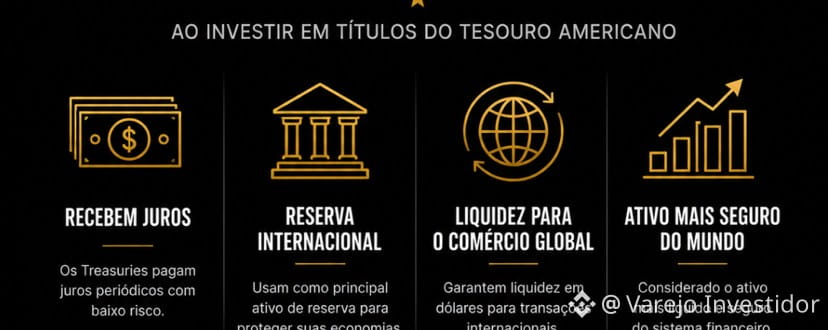
One of the main reasons is the role of these securities as a reserve and liquidity instrument. In addition to paying interest, Treasuries can be used to manage international reserves and to facilitate financial operations denominated in dollars.
WHAT DO THESE COUNTRIES GAIN BY INVESTING IN U.S. TREASURY SECURITIES?
U.S. Treasury securities occupy a central position in the global financial system. In May 2026, foreign investors held approximately $9.37 trillion in U.S. securities, according to the data shown in the image.
But why do governments, central banks, and international investors keep so many resources in Treasuries?
One of the main reasons is the role of these securities as a reserve and liquidity instrument. In addition to paying interest, Treasuries can be used to manage international reserves and to facilitate financial operations denominated in dollars.
But why do governments, central banks, and international investors keep so many resources in Treasuries?
One of the main reasons is the role of these securities as a reserve and liquidity instrument. In addition to paying interest, Treasuries can be used to manage international reserves and to facilitate financial operations denominated in dollars.
SHYETF+0.13%
IEFETF+0.29%
AGGETF+0.20%
1
56

Article
WHO FINANCES THE U.S. DEBT?The United States debt has an important characteristic: a significant portion of U.S. Treasury bonds is held by foreign investors.
According to the data shown in the image, referring to May 2026, Japan appears as the largest foreign holder of U.S. Treasury securities, with US$ 1,143.1 billion. The United Kingdom comes next, with US$ 948.6 billion, while China has US$ 659.3 billion.
The list also includes Belgium, the Cayman Islands, Luxembourg, Canada, France, Ireland, Taiwan, Switzerland, Singapore, Hong Kong, Norway, and India.
WHO FINANCES THE U.S. DEBT?
The United States debt has an important characteristic: a significant portion of U.S. Treasury bonds is held by foreign investors.
According to the data shown in the image, referring to May 2026, Japan appears as the largest foreign holder of U.S. Treasury securities, with US$ 1,143.1 billion. The United Kingdom comes next, with US$ 948.6 billion, while China has US$ 659.3 billion.
The list also includes Belgium, the Cayman Islands, Luxembourg, Canada, France, Ireland, Taiwan, Switzerland, Singapore, Hong Kong, Norway, and India.
According to the data shown in the image, referring to May 2026, Japan appears as the largest foreign holder of U.S. Treasury securities, with US$ 1,143.1 billion. The United Kingdom comes next, with US$ 948.6 billion, while China has US$ 659.3 billion.
The list also includes Belgium, the Cayman Islands, Luxembourg, Canada, France, Ireland, Taiwan, Switzerland, Singapore, Hong Kong, Norway, and India.
1
4
Log in to explore more content
Join global crypto users on Binance Square
⚡️ Get latest and useful information about crypto.
💬 Trusted by the world’s largest crypto exchange.
👍 Discover real insights from verified creators.
Email / Phone number
Trending Topics
CircleMints500MUSDCOnSolana
1,008 views
102 Discussing
💰 MASSIVE: Circle Mints $500M $USDC on Solana!
Circle just minted 500 Million $USDC on Solana in 2 transactions ($250M + $250M) on Sept 25, in just 5.5 hours! 🚀
Solana now holds $7.48B+ $USDC dominance - over 50% of its $14.7B stablecoin supply.
Why Solana?
⚡️ Speed: 65k TPS
💸 Low Fees: $0.00025
🔥 DeFi Hub: Jupiter, Raydium pumping
This is one of the largest single-day mints & signals HUGE institutional demand for Solana ecosystem.
Bullish for $SOL? 👇
#Circle #USDC #Solana #Stablecoin #DeFi#circlemints500musdconsolana
True News
·5 Likes
·1.3k views
PolymarketBankFailureBetsDrawFDICConcern
11,433 views
377 Discussing
BlackRockBuildsTokenizedPortfoliosForOndo
8,916 views
263 Discussing