
自由1688
391 Posts

自由1688

ETH Holder
Occasional Trader
2 Years
611 Following
24.7K+ Followers
16.5K+ Liked
Posts
All
Quotes
Videos
Live
PINNED

PINNED




静心1688
·
--
💥Chase the wind and race the moon—don’t pause. Strive right now, and live up to your youth, without letting yourself down.
#Arkham称贝莱德20天买入15亿美元ETH
#Arkham称贝莱德20天买入15亿美元ETH


奕泽YIZZE
·
--
🧧🔥 In the tide of the digital age, steadfast belief is the key to moving forward. Follow LUCIC exclusive card dividend updates—don’t blindly follow, don’t chase trends. Amid the interweaving of technological change and market shifts, stay confident in quality assets. Let’s explore together the possibilities ahead and seize today’s long-term opportunities.
Please follow, like, and share!
Please follow, like, and share!


Cryptology_7
·
--
𝙒𝙃𝙀𝙉 𝙏𝙃𝙀 𝙈𝘼𝙍𝙆𝙀𝙏 𝙂𝙀𝙏𝙎 𝙇𝙊𝙐𝘿, 𝙎𝙏𝘼𝙔 𝙌𝙐𝙄𝙀𝙏. 🤍🎀
𝘾𝙇𝘼𝙍𝙄𝙏𝙔 𝘾𝙊𝙈𝙀𝙎 𝙁𝙍𝙊𝙈 𝙋𝘼𝙏𝙄𝙀𝙉𝘾𝙀, 𝙉𝙊𝙏 𝙋𝙍𝙀𝙎𝙎𝙐𝙍𝙀. 🔥
#BinanceSquareFamily #CryptoPatience #Cryptology_7
$LSK
𝘾𝙇𝘼𝙍𝙄𝙏𝙔 𝘾𝙊𝙈𝙀𝙎 𝙁𝙍𝙊𝙈 𝙋𝘼𝙏𝙄𝙀𝙉𝘾𝙀, 𝙉𝙊𝙏 𝙋𝙍𝙀𝙎𝙎𝙐𝙍𝙀. 🔥
#BinanceSquareFamily #CryptoPatience #Cryptology_7
$LSK


Ahmed Ali Nizamani
·
--
Which one is the Binance Nate Coin ?
Answer = 🎁🎁🎁🎁🎁🎁🎁🎁
Answer = 🎁🎁🎁🎁🎁🎁🎁🎁


king Gulfam
·
--
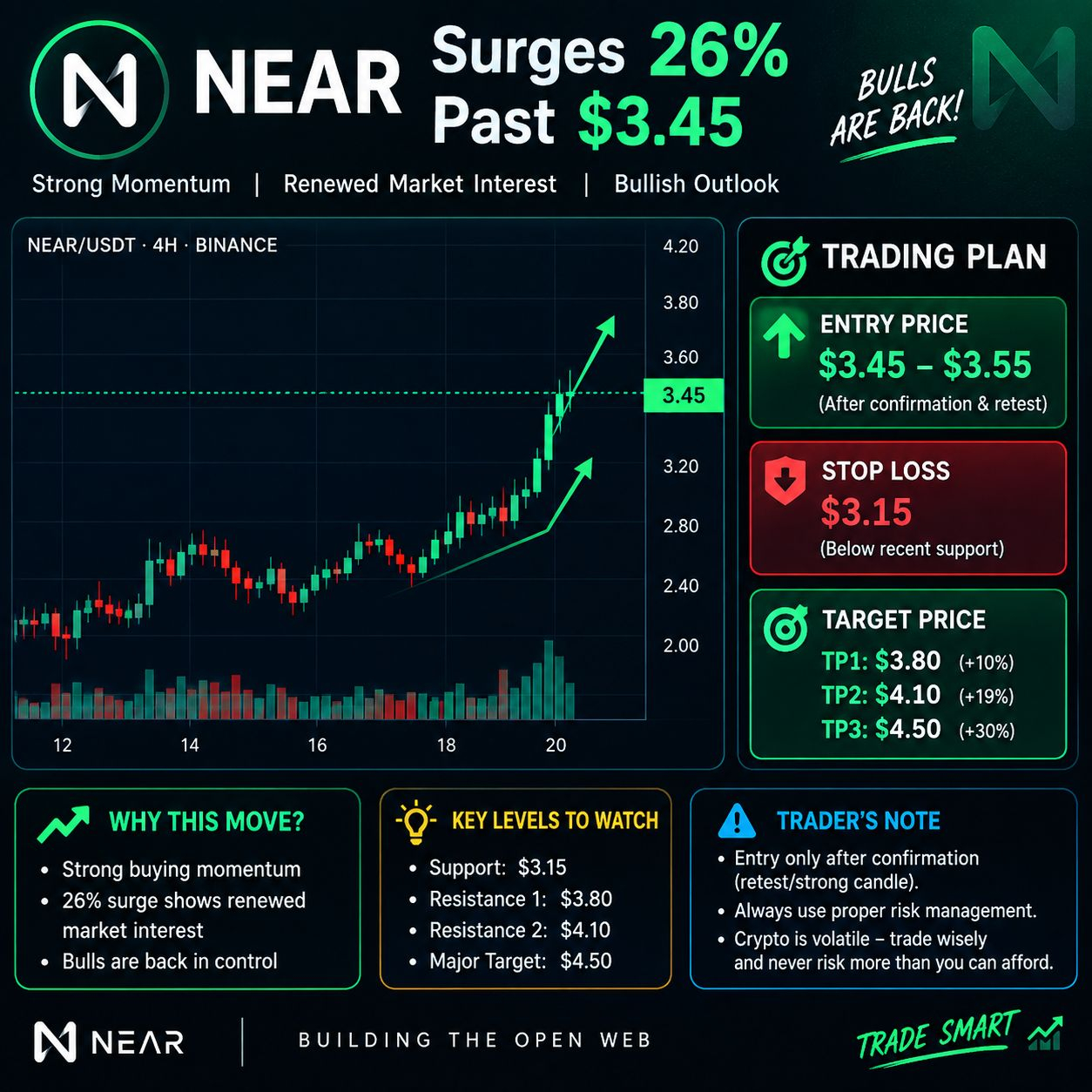
Bullish#NEARSurges26%Past$3.45
$NEAR
🚀 NEAR surged 26% past $3.45, showing strong buying momentum and renewed market interest. The breakout puts NEAR back in focus as traders watch whether the bulls can sustain the move. Holding above $3.45 could strengthen the bullish setup, while a drop below may trigger profit-taking. Stay alert, manage risk, and trade wisely. 📈
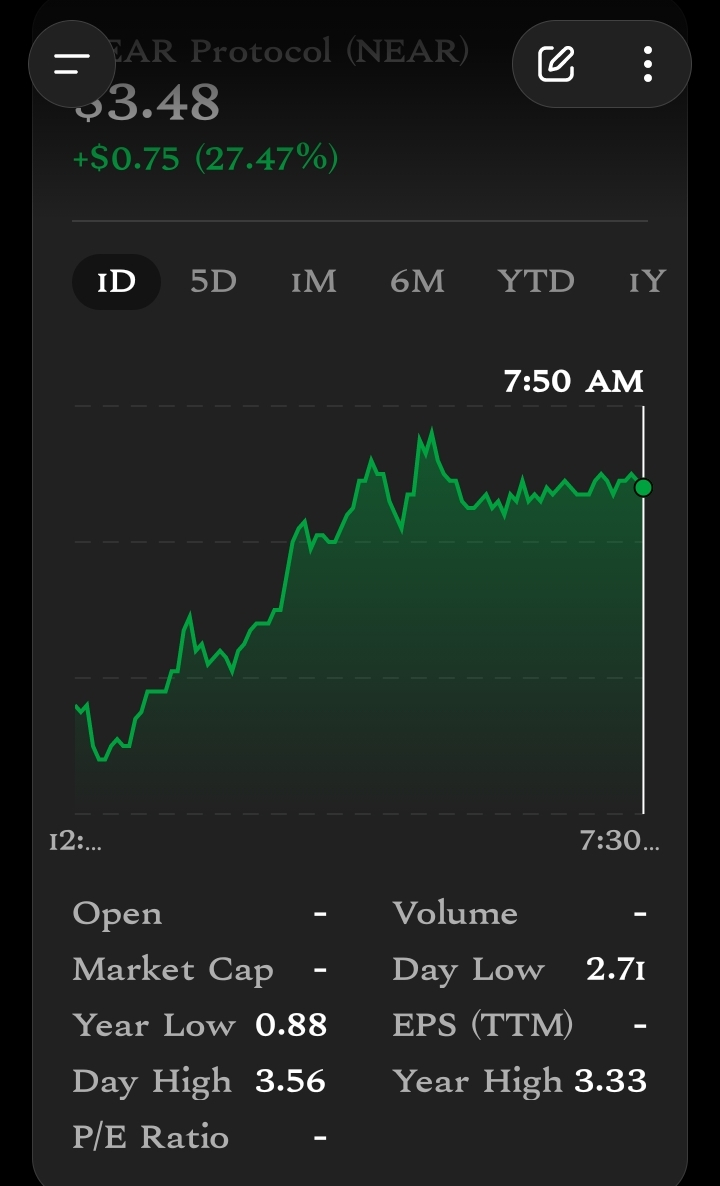
NEAR is currently close to $3.48 and today’s high has been around $3.56. �
CoinMarketCap +1
If you’re looking for a long setup, here’s a potential plan:
Entry: $3.35–$3.45
Stop Loss: $3.10
Target 1: $3.70
Target 2: $3.95
Target 3: $4.20
This is a high-risk setup after a fast 26%+ rally, so it’s better to wait for breakout confirmation and keep leverage low for better risk management. �
Short setup (just a possible scenario):
🔴 Short Entry: Look for rejection in the $3.50–$3.56 range
🛑 Stop Loss: $3.68
🎯 Target 1: $3.30
🎯 Target 2: $3.15
🎯 Target 3: $2.95
Momentum is very strong right now, so shorting the market directly could be risky. It would be better to consider the setup only after rejection/confirmation appears in the $3.50–$3.56 zone. NEAR Intents and related activity behind the recent surge has also been in the discussion. �
$G
$SYN
$NEAR
🚀 NEAR surged 26% past $3.45, showing strong buying momentum and renewed market interest. The breakout puts NEAR back in focus as traders watch whether the bulls can sustain the move. Holding above $3.45 could strengthen the bullish setup, while a drop below may trigger profit-taking. Stay alert, manage risk, and trade wisely. 📈
NEAR is currently close to $3.48 and today’s high has been around $3.56. �
CoinMarketCap +1
If you’re looking for a long setup, here’s a potential plan:
Entry: $3.35–$3.45
Stop Loss: $3.10
Target 1: $3.70
Target 2: $3.95
Target 3: $4.20
This is a high-risk setup after a fast 26%+ rally, so it’s better to wait for breakout confirmation and keep leverage low for better risk management. �
Short setup (just a possible scenario):
🔴 Short Entry: Look for rejection in the $3.50–$3.56 range
🛑 Stop Loss: $3.68
🎯 Target 1: $3.30
🎯 Target 2: $3.15
🎯 Target 3: $2.95
Momentum is very strong right now, so shorting the market directly could be risky. It would be better to consider the setup only after rejection/confirmation appears in the $3.50–$3.56 zone. NEAR Intents and related activity behind the recent surge has also been in the discussion. �
$G
$SYN

VeronX143
·
--
🧧✨ WHO’S READY FOR A USDT RED PACKET? 💸
The Red Packet is waiting for the crypto community! 🔥👀
To join:
💬 Comment 999
❤️ Hit Like
🔄 Repost & share
➕ Follow
That’s all! Keep an eye out and don’t miss the drop. 🧧🚀
Best of luck, everyone! 💚💰
#USDT #RedPacket #Crypto
The Red Packet is waiting for the crypto community! 🔥👀
To join:
💬 Comment 999
❤️ Hit Like
🔄 Repost & share
➕ Follow
That’s all! Keep an eye out and don’t miss the drop. 🧧🚀
Best of luck, everyone! 💚💰
#USDT #RedPacket #Crypto

Quoted content has been removed

慢就是快Mike
·
--
Warren Buffett stepped down after more than 60 years as chairman of Berkshire Hathaway, and his son Howard will take over. The bulls are here—bet it all! The next Buffett could be you!

正乾商学--四条2
·
--
Are you really suited to make a living by trading?
Serial [5]
⑤ Only after you solve the first four questions will you truly stand at the starting line of trading
Pay attention.
What I covered earlier—
income sources, daily routine, time you can trade, trading instruments, your personal character, your trading style…
All of it is just to help you reach: the starting line.
Not the finish line.
Only after you’ve truly reached the starting line do you begin the part everyone is most familiar with:
learning.
And not learning one or two indicators;
not stopping once you know what support and resistance are.
You must first gain broad understanding of:
Scalping—very short-term trading / scalp trading: frequent trades within a very short time (seconds to minutes) to profit from small price fluctuations
Day Trading: opening and closing positions on the same day, without holding overnight
Swing Trading: capturing market swings over several days to a few weeks, aiming to profit from swing trends
Trend Following: trading in line with the market’s main direction—for example, going long in an uptrend and short in a downtrend
Breakout Trading: entering the market when price breaks through a key resistance or support level
Mean Reversion: trading that assumes when price deviates from normal levels, it will return to the average value, seeking opportunities from that
Technical Analysis: analyzing the market through candlesticks, indicators, volume, and price structure
Fundamental Analysis: studying a project’s value—such as the team, economic data, industry development, and more
Macro: macroeconomic analysis studying how the global economic environment (interest rates, inflation, the US dollar, policies, etc.) affects the market
Risk Management: controlling trading risk, including stop-losses, position sizes, and capital protection
Position Sizing: position management—deciding how much capital to risk or allocate to each trade based on your account size and risk
Trading Psychology: managing emotions, discipline, and execution ability to prevent fear and greed from affecting your trading
Then test them one by one.
You must personally know:
what suits you.
what doesn’t suit you.
This is not something others can tell you directly.
If you’re interested in trading, feel free to leave a comment in the comment section or join the chat room to exchange ideas—learn together and grow together!
#美联储加息25基点美股收跌
Serial [5]
⑤ Only after you solve the first four questions will you truly stand at the starting line of trading
Pay attention.
What I covered earlier—
income sources, daily routine, time you can trade, trading instruments, your personal character, your trading style…
All of it is just to help you reach: the starting line.
Not the finish line.
Only after you’ve truly reached the starting line do you begin the part everyone is most familiar with:
learning.
And not learning one or two indicators;
not stopping once you know what support and resistance are.
You must first gain broad understanding of:
Scalping—very short-term trading / scalp trading: frequent trades within a very short time (seconds to minutes) to profit from small price fluctuations
Day Trading: opening and closing positions on the same day, without holding overnight
Swing Trading: capturing market swings over several days to a few weeks, aiming to profit from swing trends
Trend Following: trading in line with the market’s main direction—for example, going long in an uptrend and short in a downtrend
Breakout Trading: entering the market when price breaks through a key resistance or support level
Mean Reversion: trading that assumes when price deviates from normal levels, it will return to the average value, seeking opportunities from that
Technical Analysis: analyzing the market through candlesticks, indicators, volume, and price structure
Fundamental Analysis: studying a project’s value—such as the team, economic data, industry development, and more
Macro: macroeconomic analysis studying how the global economic environment (interest rates, inflation, the US dollar, policies, etc.) affects the market
Risk Management: controlling trading risk, including stop-losses, position sizes, and capital protection
Position Sizing: position management—deciding how much capital to risk or allocate to each trade based on your account size and risk
Trading Psychology: managing emotions, discipline, and execution ability to prevent fear and greed from affecting your trading
Then test them one by one.
You must personally know:
what suits you.
what doesn’t suit you.
This is not something others can tell you directly.
If you’re interested in trading, feel free to leave a comment in the comment section or join the chat room to exchange ideas—learn together and grow together!
#美联储加息25基点美股收跌
Ahmed Ali Nizamani
·
--
Which one is the Binance Nate Coin ?
Answer = 🎁🎁🎁🎁🎁🎁🎁🎁
Answer = 🎁🎁🎁🎁🎁🎁🎁🎁

长得帅不如跑的快1688
·
--
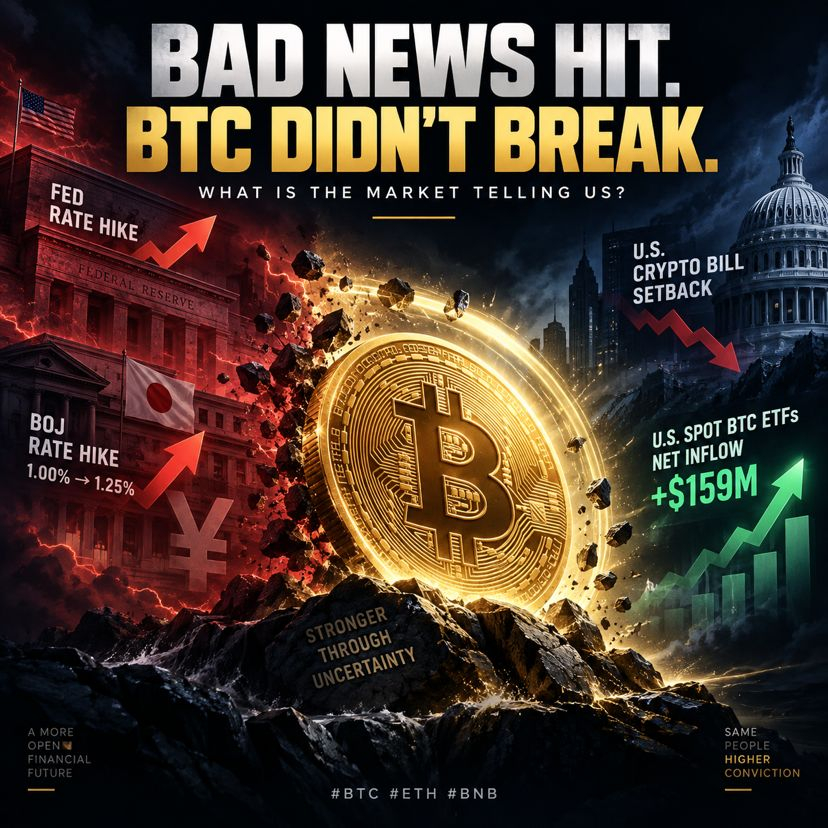
🚨 Bad news keeps hitting.
But Bitcoin refuses to break.
That may be the real signal today.
Over the past few days, the market has absorbed:
🇺🇸 A Fed rate hike
🇯🇵 BOJ rates rising to 1.25%
🏛️ A setback for the CLARITY Act
💵 U.S. Treasury yields staying elevated
Normally, that combination should pressure risk assets.
But BTC?
Still holding around $78K.
And here’s the interesting part:
U.S. spot Bitcoin ETFs flipped back to roughly $159M in net inflows on Sept. 17.
So maybe the real question isn’t:
“Why isn’t Bitcoin pumping?”
It’s:
WHY IS BTC NOT FALLING?
When an asset keeps absorbing bad news but becomes harder to push lower, the market may be telling us something.
Maybe sellers are getting exhausted.
Maybe capital is starting to return.
Now I’m watching:
💰 BTC ETF flows
📈 The $80K–$82K zone
🇺🇸 Treasury yields
💵 The U.S. dollar
👇 Your take?
BREAKOUT LOADING 🟢
or
CALM BEFORE THE STORM 🔴?
#BTC #ETH #BNB
But Bitcoin refuses to break.
That may be the real signal today.
Over the past few days, the market has absorbed:
🇺🇸 A Fed rate hike
🇯🇵 BOJ rates rising to 1.25%
🏛️ A setback for the CLARITY Act
💵 U.S. Treasury yields staying elevated
Normally, that combination should pressure risk assets.
But BTC?
Still holding around $78K.
And here’s the interesting part:
U.S. spot Bitcoin ETFs flipped back to roughly $159M in net inflows on Sept. 17.
So maybe the real question isn’t:
“Why isn’t Bitcoin pumping?”
It’s:
WHY IS BTC NOT FALLING?
When an asset keeps absorbing bad news but becomes harder to push lower, the market may be telling us something.
Maybe sellers are getting exhausted.
Maybe capital is starting to return.
Now I’m watching:
💰 BTC ETF flows
📈 The $80K–$82K zone
🇺🇸 Treasury yields
💵 The U.S. dollar
👇 Your take?
BREAKOUT LOADING 🟢
or
CALM BEFORE THE STORM 🔴?
#BTC #ETH #BNB

PK Aima
·
--
Memes move fast but $PEPE proved that pure cultural momentum can build a permanent footprint in crypto. Launching with zero pre sales, zero taxes and a burned liquidity pool, $PEPE revived classic, unfiltered memecoin culture by relying entirely on community virality rather than corporate playbooks. It successfully transformed one of the internet’s most iconic memes into a top tier liquid asset with deep market liquidity and high daily turnover across major exchanges. By eliminating transaction taxes and complex fee mechanics, it offered straightforward buy and sell dynamics that resonated with traders worldwide. This frictionless model helped spark a broader resurgence across the entire memecoin sector, establishing a clear blueprint for modern community tokens. While high volatility remains inherent to meme-driven assets, $PEPE has secured its place as a cornerstone of crypto culture, demonstrating how raw internet consensus and organic community engagement can command serious market attention.

king Gulfam
·
--
#FutureTradingSignals
$BULLA
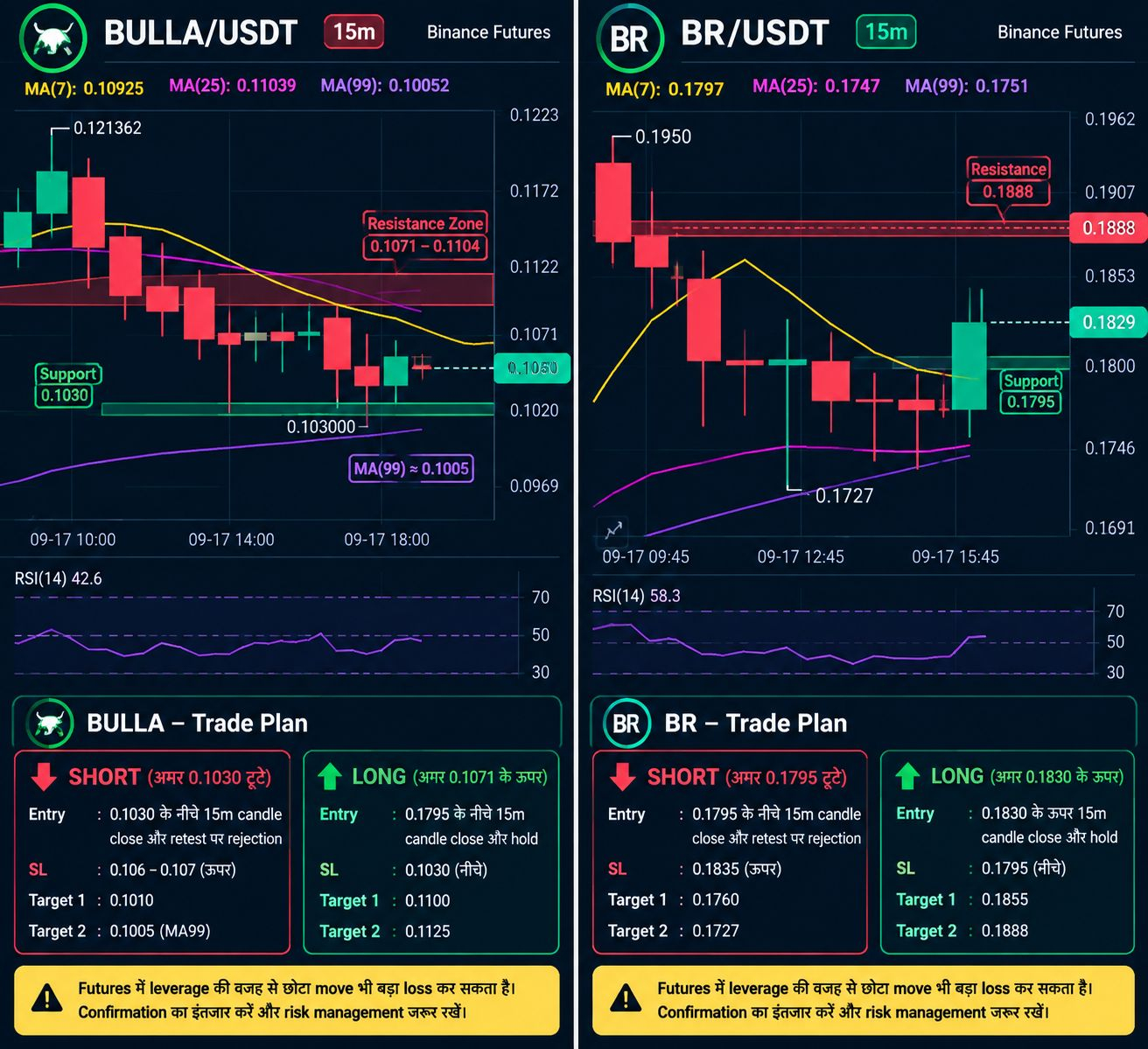
BULLA is showing bearish momentum on the 15m chart right now. Price is around 0.1050. 0.1030 support is important. If you get a candle close below it and a retest rejection, then you can look for a SHORT. Consider LONG only if there is a strong hold above 0.1071. Don’t rush into an entry right now, and please keep a stop-loss.
🔴 BULLA — SHORT
Entry: 0.1028–0.1030 below 15m close + retest
Stop Loss: 0.1060
Target 1: 0.1010
Target 2: 0.1005
$BR
In BR coin, bullish momentum is currently visible. Price is at 0.1829 and MA(7) is above. Take LONG only if there is a 15m candle close above 0.1830–0.1853. Keep stop-loss around 0.1795. If 0.1795 breaks, avoid LONG. Keep leverage low in futures and limit risk to your capital.
, A SHORT setup could form, but not immediately. The chart is showing a bounce around 0.1830.
Look for SHORT only when: there is a 15m candle close below 0.1795 and you get rejection on the retest.
SL: above 0.1835
Targets: 0.1760 → 0.1727
This is a confirmation-based setup; keep leverage low.
🟢 BR — LONG
Entry: 15m close + hold above 0.1830
Stop Loss: 0.1795
Target 1: 0.1855
Target 2: 0.1888
🔴 BR — SHORT POSITION
Entry: 15m candle close + retest below 0.1795
Stop Loss: 0.1835
Target 1: 0.1760
Target 2: 0.1727
Don’t take a short without breaking 0.1795. Keep leverage low in futures.
$SYN
$BULLA
BULLA is showing bearish momentum on the 15m chart right now. Price is around 0.1050. 0.1030 support is important. If you get a candle close below it and a retest rejection, then you can look for a SHORT. Consider LONG only if there is a strong hold above 0.1071. Don’t rush into an entry right now, and please keep a stop-loss.
🔴 BULLA — SHORT
Entry: 0.1028–0.1030 below 15m close + retest
Stop Loss: 0.1060
Target 1: 0.1010
Target 2: 0.1005
$BR
In BR coin, bullish momentum is currently visible. Price is at 0.1829 and MA(7) is above. Take LONG only if there is a 15m candle close above 0.1830–0.1853. Keep stop-loss around 0.1795. If 0.1795 breaks, avoid LONG. Keep leverage low in futures and limit risk to your capital.
, A SHORT setup could form, but not immediately. The chart is showing a bounce around 0.1830.
Look for SHORT only when: there is a 15m candle close below 0.1795 and you get rejection on the retest.
SL: above 0.1835
Targets: 0.1760 → 0.1727
This is a confirmation-based setup; keep leverage low.
🟢 BR — LONG
Entry: 15m close + hold above 0.1830
Stop Loss: 0.1795
Target 1: 0.1855
Target 2: 0.1888
🔴 BR — SHORT POSITION
Entry: 15m candle close + retest below 0.1795
Stop Loss: 0.1835
Target 1: 0.1760
Target 2: 0.1727
Don’t take a short without breaking 0.1795. Keep leverage low in futures.
$SYN
Quoted content has been removed

橙子Joyce
·
--
BullishWill the Federal Reserve raise rates as expected this week? Wall Street is debating: will it end the U.S. stock bull market?
After an unexpectedly strong U.S. CPI report came out last Friday, traders generally expect the Federal Reserve to begin raising rates at this week’s policy meeting—marking the first rate hike in more than three years.
Historically, previous rounds of rate hikes have offered a reference point for today’s market. Based on past experience (though history of course can’t guarantee the future), U.S. stocks may first weaken, then rebound.
Among the six tightening cycles since 1994, during the first four months after the rate-hike cycle began, the S&P 500’s average return was negative.
This suggests that once the “rate-hike shoe” drops, U.S. stocks may look lackluster through the beginning of next year.
As of the close last Friday, the benchmark U.S. equity index, the S&P 500, is up nearly 12% year to date. Strong corporate earnings and a fairly resilient economy have provided solid support for bulls in the stock market.
If you extend the time horizon, the S&P 500’s performance tends to improve gradually: in the 12 months after the start of a rate-hiking cycle, the index’s average return is close to 7%, with a median return of about 11%. (Using median-based statistics helps remove distortions from extreme outliers—for example, the index surged more than 40% after hikes began in March 1997.)
If the Federal Reserve implements a rate hike this Wednesday, it will be the first hike since July 2023—when the Fed raised rates to a range of 5.25% to 5.50%.
Currently, the federal funds rate in the U.S. is at 3.50% to 3.75%. According to the CME Group’s FedWatch tool, futures traders currently assign an 86% probability to a 25-basis-point hike this week.
One positive factor for the market is that mega-scale cloud service providers are still driving growth in excess returns through large-scale AI spending. The S&P 500 component stocks’ forecast for earnings growth in 2027 is expected to reach double digits. If the outlook for AI spending remains unchanged, it may be enough to offset any cooling in optimistic sentiment caused by the rate hikes.
Another bright spot for equities is that although inflation remains sticky, it appears to be slowing. The inflation rate has fallen from a May peak of 4.2%. This should allow the Federal Reserve to take a more gradual approach, and the data shows that the pace of rate hikes is crucial for stock performance—slower pacing gives investors more time to absorb policy changes!
$BZ
$CL
Energy
After an unexpectedly strong U.S. CPI report came out last Friday, traders generally expect the Federal Reserve to begin raising rates at this week’s policy meeting—marking the first rate hike in more than three years.
Historically, previous rounds of rate hikes have offered a reference point for today’s market. Based on past experience (though history of course can’t guarantee the future), U.S. stocks may first weaken, then rebound.
Among the six tightening cycles since 1994, during the first four months after the rate-hike cycle began, the S&P 500’s average return was negative.
This suggests that once the “rate-hike shoe” drops, U.S. stocks may look lackluster through the beginning of next year.
As of the close last Friday, the benchmark U.S. equity index, the S&P 500, is up nearly 12% year to date. Strong corporate earnings and a fairly resilient economy have provided solid support for bulls in the stock market.
If you extend the time horizon, the S&P 500’s performance tends to improve gradually: in the 12 months after the start of a rate-hiking cycle, the index’s average return is close to 7%, with a median return of about 11%. (Using median-based statistics helps remove distortions from extreme outliers—for example, the index surged more than 40% after hikes began in March 1997.)
If the Federal Reserve implements a rate hike this Wednesday, it will be the first hike since July 2023—when the Fed raised rates to a range of 5.25% to 5.50%.
Currently, the federal funds rate in the U.S. is at 3.50% to 3.75%. According to the CME Group’s FedWatch tool, futures traders currently assign an 86% probability to a 25-basis-point hike this week.
One positive factor for the market is that mega-scale cloud service providers are still driving growth in excess returns through large-scale AI spending. The S&P 500 component stocks’ forecast for earnings growth in 2027 is expected to reach double digits. If the outlook for AI spending remains unchanged, it may be enough to offset any cooling in optimistic sentiment caused by the rate hikes.
Another bright spot for equities is that although inflation remains sticky, it appears to be slowing. The inflation rate has fallen from a May peak of 4.2%. This should allow the Federal Reserve to take a more gradual approach, and the data shows that the pace of rate hikes is crucial for stock performance—slower pacing gives investors more time to absorb policy changes!
$BZ
$CL
Energy

Shaheen 69
·
--
🎁 A Little ETH, A Lot of Love ❤️
This red packet is my small way of saying THANK YOU to my amazing community. 🙏 Keep supporting me, keep showing your love, and let’s continue this journey together. Your trust means everything! ❤️
Stay with me — more love, bigger red packets & better rewards are coming! 🚀💎
$ETH
This red packet is my small way of saying THANK YOU to my amazing community. 🙏 Keep supporting me, keep showing your love, and let’s continue this journey together. Your trust means everything! ❤️
Stay with me — more love, bigger red packets & better rewards are coming! 🚀💎
$ETH


Muzamil Abbas⁷⁵ 穆扎米尔_阿巴斯
·
--
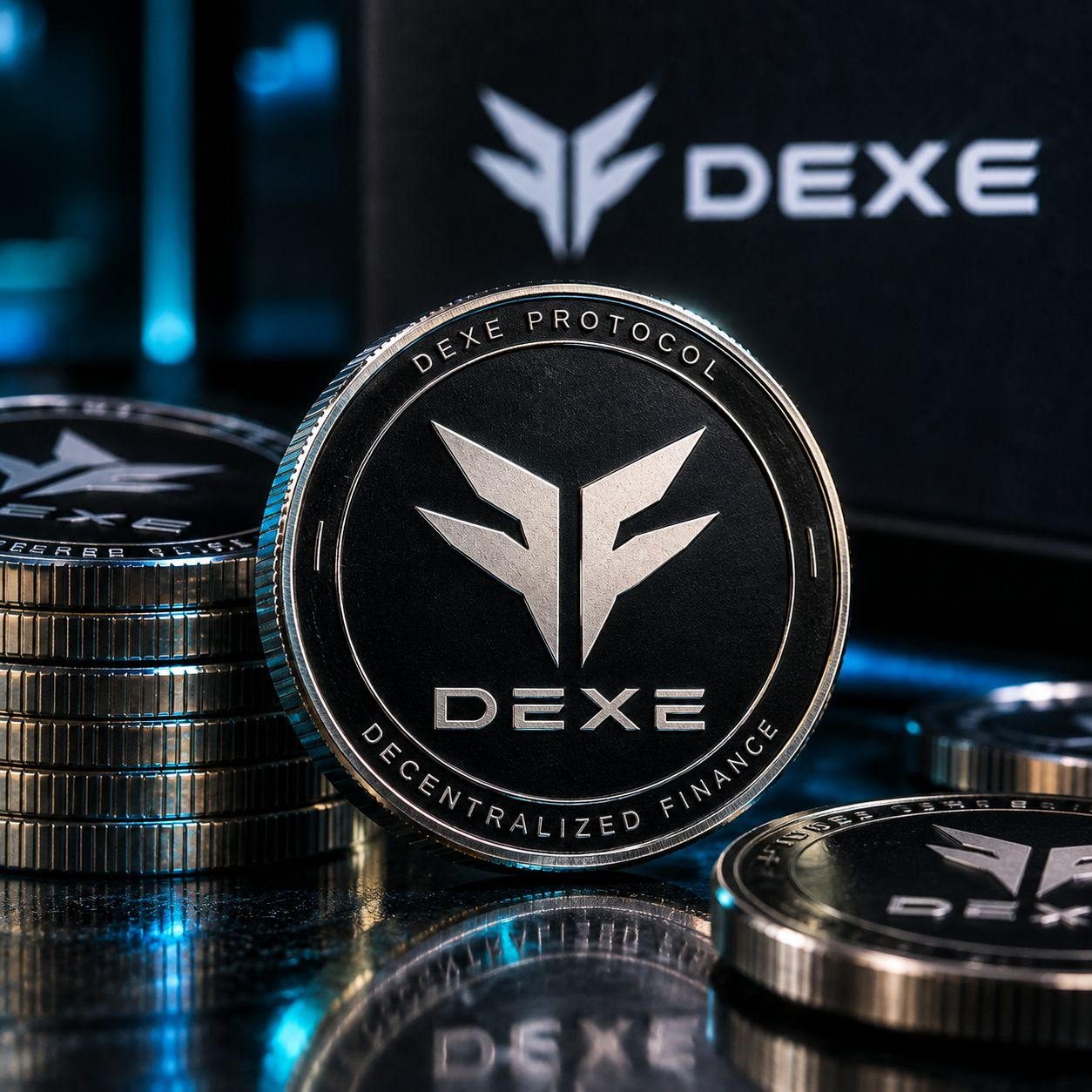
Bullish🚨 $DEXE COIN GIVEAWAY ALERT 🚨
🎁 $50 WORTH OF DEXE COIN GIVEAWAY 🎁
Today, I’m giving away $50 worth of DEXE Coin to my Binance community! 🔥❤️
Participating is super simple 👇
1️⃣ Follow me — Muzamil Abbas
2️⃣ Like this post ❤️
3️⃣ Repost this post 🔄
4️⃣ Comment “1” to claim 🎁
Good luck everyone! 🍀🔥
Stay connected and keep supporting ❤️
Trade Smart • Manage Risk • Stay Consistent
#MuzammilAbbas⁷⁵穆扎米拉巴斯
$BNB
$SOL

圣克斯Lucky1688
·
--
🧧🎁🧧🎁🧧🎁
On September 17, the crypto industry saw multiple highly关注able sector updates and events. The core news mainly centered on regulatory roundtables, traditional financial giants entering the space, and industry summits, among other topics:
1. The U.S. SEC holds a 24-hour on-chain stock trading roundtable
On September 17, the U.S. Securities and Exchange Commission (SEC) hosted an important roundtable on “24-hour on-chain stock trading.” The meeting invited traditional financial giants such as BlackRock, Nasdaq, the New York Stock Exchange, and Robinhood, along with crypto industry participants and institutions.
Key agenda: The meeting aims to discuss the rule framework for enabling U.S. equities to settle on-chain 24/7.
Technology route competition: The market is currently focused on which blockchain—Ethereum or Solana—will take on the role of the primary underlying settlement infrastructure. Solana holds an advantage in terms of tokenized U.S. stock volume and low fees, while Ethereum is favored by traditional finance due to its deep institutional compliance foundation (such as BlackRock’s BUIDL fund).
2. The Fourth U.S. Crypto Banking, Compliance & Stablecoin Summit (CBC Summit USA) kicks off
The 4th annual CBC Summit USA was held on September 17 at the National Press Club in Washington, D.C.
Main focus: This summit brings together senior executives, regulators, and lawmakers across the industry. Key topics include crypto banking services, compliance frameworks, stablecoin development, and the deep integration of traditional finance with Web3.
3. Deeper cooperation between traditional industries and Web3 infrastructure
Hyundai explores the Avalanche ecosystem: After successfully completing a pilot project, Hyundai is considering further expanding its related business and applications on the Avalanche (Avalanche Protocol) blockchain.
Circle Arc mainnet goes live: Stablecoin issuer Circle’s Arc mainnet recently launched and has introduced support from payment giants such as Visa and Mastercard, injecting new momentum into the Web3 payments sector.
Overall, the Web3 industry updates on September 17 show that traditional financial regulators and Wall Street capital are accelerating the process of bringing assets on-chain and strengthening compliance.
Follow me—answer 1 will take away the $SOL red envelope.
🧧🎁🧧🎁🧧🎁
On September 17, the crypto industry saw multiple highly关注able sector updates and events. The core news mainly centered on regulatory roundtables, traditional financial giants entering the space, and industry summits, among other topics:
1. The U.S. SEC holds a 24-hour on-chain stock trading roundtable
On September 17, the U.S. Securities and Exchange Commission (SEC) hosted an important roundtable on “24-hour on-chain stock trading.” The meeting invited traditional financial giants such as BlackRock, Nasdaq, the New York Stock Exchange, and Robinhood, along with crypto industry participants and institutions.
Key agenda: The meeting aims to discuss the rule framework for enabling U.S. equities to settle on-chain 24/7.
Technology route competition: The market is currently focused on which blockchain—Ethereum or Solana—will take on the role of the primary underlying settlement infrastructure. Solana holds an advantage in terms of tokenized U.S. stock volume and low fees, while Ethereum is favored by traditional finance due to its deep institutional compliance foundation (such as BlackRock’s BUIDL fund).
2. The Fourth U.S. Crypto Banking, Compliance & Stablecoin Summit (CBC Summit USA) kicks off
The 4th annual CBC Summit USA was held on September 17 at the National Press Club in Washington, D.C.
Main focus: This summit brings together senior executives, regulators, and lawmakers across the industry. Key topics include crypto banking services, compliance frameworks, stablecoin development, and the deep integration of traditional finance with Web3.
3. Deeper cooperation between traditional industries and Web3 infrastructure
Hyundai explores the Avalanche ecosystem: After successfully completing a pilot project, Hyundai is considering further expanding its related business and applications on the Avalanche (Avalanche Protocol) blockchain.
Circle Arc mainnet goes live: Stablecoin issuer Circle’s Arc mainnet recently launched and has introduced support from payment giants such as Visa and Mastercard, injecting new momentum into the Web3 payments sector.
Overall, the Web3 industry updates on September 17 show that traditional financial regulators and Wall Street capital are accelerating the process of bringing assets on-chain and strengthening compliance.
Follow me—answer 1 will take away the $SOL red envelope.
🧧🎁🧧🎁🧧🎁


Log in to explore more content