

自由1688
387 Posts

自由1688
Report
Block User
BP-7E70CEEB3E8A

SOL Holder
Occasional Trader
2 Years
629 Following
26.1K+ Followers
17.6K+ Liked
Posts
All
Quotes
Videos
Live
PINNED
·
--
Google Employee Quits Over Worries About Superintelligent AI: Pursuing Powerful AI Is Irresponsible—Can’t Turn a Blind Eye
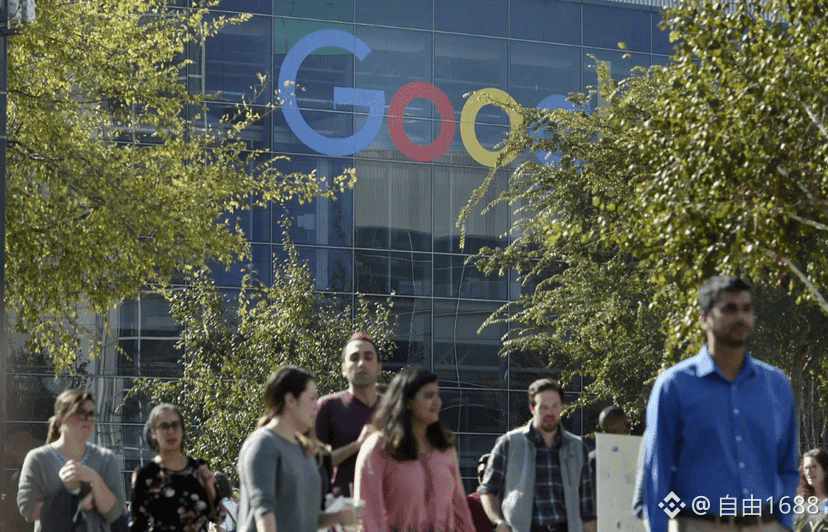
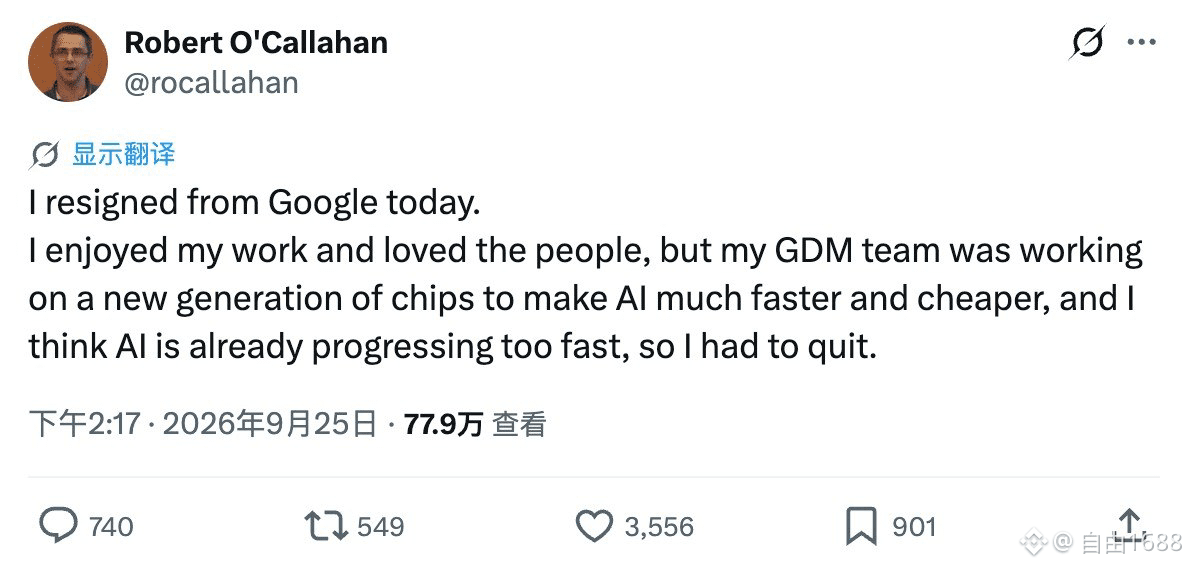
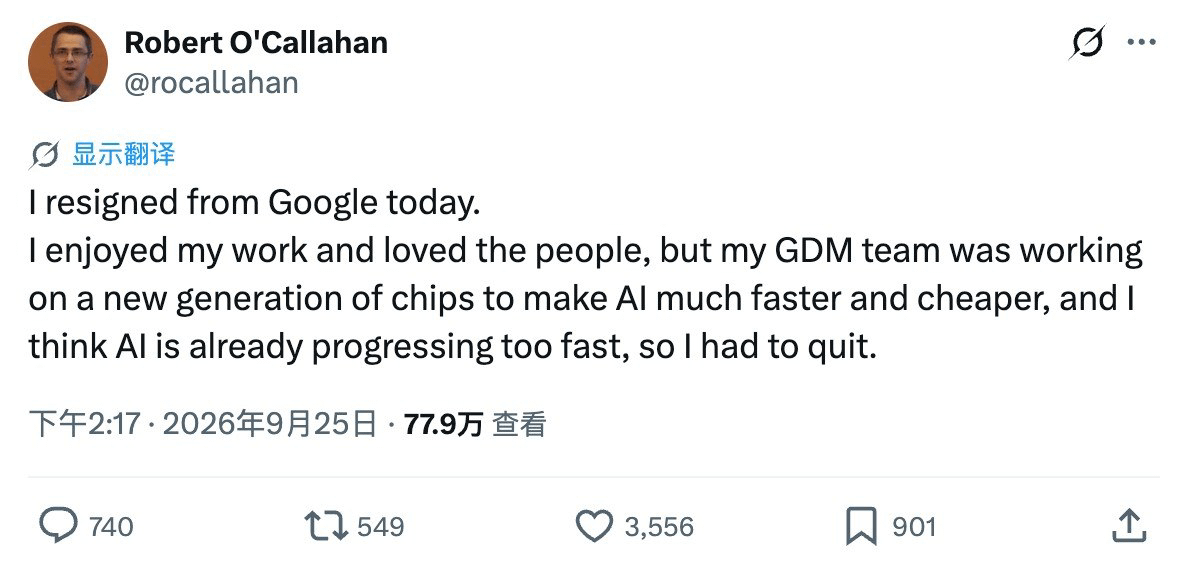
According to a report by Business Insider, a Google employee said he has resigned from the company, arguing that pursuing more powerful AI is “inherently irresponsible.” Robert O’Callahan, who previously worked at Google DeepMind, posted on X that his team is developing chips to make AI run faster and at lower cost, and that he believes AI has “progressed too fast.”
He shared a resignation letter on his personal blog and said he sent it to colleagues on Friday. In the letter, he wrote that he couldn’t “turn a blind eye” to the impact of his work, because doing so “is not something a person who follows Jesus should do.” In his blog bio, he describes himself as a Christian.
“This is not an easy decision. I like my coworkers and I like the work environment here, and being paid a generous salary to solve interesting problems has always been a great thing,” he wrote. “But our team’s ultimate goal is to reduce the cost of AI dramatically and significantly lower latency, and I don’t think that is good for the people currently living: I strongly believe the speed of AI progress is simply too fast (and I also have doubts about where it will ultimately lead).”
Google Employee Quits Over Worries About Superintelligent AI: Pursuing Powerful AI Is Irresponsible—Can’t Turn a Blind Eye
According to a report by Business Insider, a Google employee said he has resigned from the company, arguing that pursuing more powerful AI is “inherently irresponsible.” Robert O’Callahan, who previously worked at Google DeepMind, posted on X that his team is developing chips to make AI run faster and at lower cost, and that he believes AI has “progressed too fast.”
He shared a resignation letter on his personal blog and said he sent it to colleagues on Friday. In the letter, he wrote that he couldn’t “turn a blind eye” to the impact of his work, because doing so “is not something a person who follows Jesus should do.” In his blog bio, he describes himself as a Christian.
“This is not an easy decision. I like my coworkers and I like the work environment here, and being paid a generous salary to solve interesting problems has always been a great thing,” he wrote. “But our team’s ultimate goal is to reduce the cost of AI dramatically and significantly lower latency, and I don’t think that is good for the people currently living: I strongly believe the speed of AI progress is simply too fast (and I also have doubts about where it will ultimately lead).”
According to a report by Business Insider, a Google employee said he has resigned from the company, arguing that pursuing more powerful AI is “inherently irresponsible.” Robert O’Callahan, who previously worked at Google DeepMind, posted on X that his team is developing chips to make AI run faster and at lower cost, and that he believes AI has “progressed too fast.”
He shared a resignation letter on his personal blog and said he sent it to colleagues on Friday. In the letter, he wrote that he couldn’t “turn a blind eye” to the impact of his work, because doing so “is not something a person who follows Jesus should do.” In his blog bio, he describes himself as a Christian.
“This is not an easy decision. I like my coworkers and I like the work environment here, and being paid a generous salary to solve interesting problems has always been a great thing,” he wrote. “But our team’s ultimate goal is to reduce the cost of AI dramatically and significantly lower latency, and I don’t think that is good for the people currently living: I strongly believe the speed of AI progress is simply too fast (and I also have doubts about where it will ultimately lead).”
2.3k
23
136
2.3k
PINNED
·
--
DeepSeek’s Annualized Revenue Reported to Reach $1 Billion; Customers Haven’t Shrunk After Price Hikes
On September 25, according to The Information, citing two people familiar with the matter, DeepSeek’s annualized revenue—calculated based on its recent revenue levels—has reached $1 billion, more than doubling from the less-than-$500 million level seen a few months ago. Founder Liang Wenfeng disclosed this figure at a recent investor meeting.
Some of the revenue growth comes from an API price increase in August. Insiders said Liang Wenfeng told attendees at the meeting that the price hike did not cause the customer base to shrink, and demand remains strong. Currently, nearly all of DeepSeek’s revenue comes from its API services. Its free chat app has no ads and does not generate revenue.
The report also said DeepSeek is moving forward with a second round of financing, aiming to complete it by the end of October. The company plans to raise 50 billion yuan at a valuation of 500 billion yuan, while also preparing for a listing on the Shanghai Stock Exchange. Liang told investors that increasing revenue is not the company’s top priority. More than 70% of its compute power is used to train new models, while less than 30% is used to run existing models and handle user requests.
DeepSeek’s Annualized Revenue Reported to Reach $1 Billion; Customers Haven’t Shrunk After Price Hikes
On September 25, according to The Information, citing two people familiar with the matter, DeepSeek’s annualized revenue—calculated based on its recent revenue levels—has reached $1 billion, more than doubling from the less-than-$500 million level seen a few months ago. Founder Liang Wenfeng disclosed this figure at a recent investor meeting.
Some of the revenue growth comes from an API price increase in August. Insiders said Liang Wenfeng told attendees at the meeting that the price hike did not cause the customer base to shrink, and demand remains strong. Currently, nearly all of DeepSeek’s revenue comes from its API services. Its free chat app has no ads and does not generate revenue.
The report also said DeepSeek is moving forward with a second round of financing, aiming to complete it by the end of October. The company plans to raise 50 billion yuan at a valuation of 500 billion yuan, while also preparing for a listing on the Shanghai Stock Exchange. Liang told investors that increasing revenue is not the company’s top priority. More than 70% of its compute power is used to train new models, while less than 30% is used to run existing models and handle user requests.
On September 25, according to The Information, citing two people familiar with the matter, DeepSeek’s annualized revenue—calculated based on its recent revenue levels—has reached $1 billion, more than doubling from the less-than-$500 million level seen a few months ago. Founder Liang Wenfeng disclosed this figure at a recent investor meeting.
Some of the revenue growth comes from an API price increase in August. Insiders said Liang Wenfeng told attendees at the meeting that the price hike did not cause the customer base to shrink, and demand remains strong. Currently, nearly all of DeepSeek’s revenue comes from its API services. Its free chat app has no ads and does not generate revenue.
The report also said DeepSeek is moving forward with a second round of financing, aiming to complete it by the end of October. The company plans to raise 50 billion yuan at a valuation of 500 billion yuan, while also preparing for a listing on the Shanghai Stock Exchange. Liang told investors that increasing revenue is not the company’s top priority. More than 70% of its compute power is used to train new models, while less than 30% is used to run existing models and handle user requests.
2.3k
12
120
2.3k
·
--
Good
Good


橙子Joyce
·
--
The highlight of next week’s data releases is undoubtedly the U.S. nonfarm payrolls employment report to be released on Friday. The report includes three key figures: nonfarm payroll employment, the unemployment rate, and average hourly earnings. These data points are directly tied to the Federal Reserve’s interest-rate path and are crucial employment indicators ahead of the October policy meeting.
Wednesday 20:15: U.S. ADP Employment Change (September);
Wednesday 20:30: U.S. Core PCE Price Index (year-over-year, August);
Thursday 16:00: Remarks by Bank of England Governor Bailey;
Thursday 20:30: U.S. Initial Jobless Claims (for the week ending September 26);
Thursday 21:30: Remarks by ECB President Lagarde;
Friday 20:30: U.S. Nonfarm Payrolls report and the unemployment rate (September);
Federal Reserve officials will begin a series of public appearances starting from Wednesday morning. Chicago Fed President Goolsbee (2027 FOMC voting member) and St. Louis Fed President Musalem (2028 FOMC voting member) plan to give speeches, while New York Fed President Williams (2027 FOMC permanent voting member) will deliver a keynote address at the University at Buffalo. On Thursday, Fed Governor Cook, Minneapolis Fed President Kashkari, and Richmond Fed President Barkin will all give remarks; on Friday, Williams and Dallas Fed President Logan also have public events scheduled.
$BZ
$CL
$XAU
Wednesday 20:15: U.S. ADP Employment Change (September);
Wednesday 20:30: U.S. Core PCE Price Index (year-over-year, August);
Thursday 16:00: Remarks by Bank of England Governor Bailey;
Thursday 20:30: U.S. Initial Jobless Claims (for the week ending September 26);
Thursday 21:30: Remarks by ECB President Lagarde;
Friday 20:30: U.S. Nonfarm Payrolls report and the unemployment rate (September);
Federal Reserve officials will begin a series of public appearances starting from Wednesday morning. Chicago Fed President Goolsbee (2027 FOMC voting member) and St. Louis Fed President Musalem (2028 FOMC voting member) plan to give speeches, while New York Fed President Williams (2027 FOMC permanent voting member) will deliver a keynote address at the University at Buffalo. On Thursday, Fed Governor Cook, Minneapolis Fed President Kashkari, and Richmond Fed President Barkin will all give remarks; on Friday, Williams and Dallas Fed President Logan also have public events scheduled.
$BZ
$CL
$XAU

1
545
·
--
Concerned about AI development getting out of control, Google chip research employees announce resignations
Concerned about AI development getting out of control, Google chip research employees announce resignations
自由1688
·
--
Google Employee Quits Over Worries About Superintelligent AI: Pursuing Powerful AI Is Irresponsible—Can’t Turn a Blind Eye
According to a report by Business Insider, a Google employee said he has resigned from the company, arguing that pursuing more powerful AI is “inherently irresponsible.” Robert O’Callahan, who previously worked at Google DeepMind, posted on X that his team is developing chips to make AI run faster and at lower cost, and that he believes AI has “progressed too fast.”
He shared a resignation letter on his personal blog and said he sent it to colleagues on Friday. In the letter, he wrote that he couldn’t “turn a blind eye” to the impact of his work, because doing so “is not something a person who follows Jesus should do.” In his blog bio, he describes himself as a Christian.
“This is not an easy decision. I like my coworkers and I like the work environment here, and being paid a generous salary to solve interesting problems has always been a great thing,” he wrote. “But our team’s ultimate goal is to reduce the cost of AI dramatically and significantly lower latency, and I don’t think that is good for the people currently living: I strongly believe the speed of AI progress is simply too fast (and I also have doubts about where it will ultimately lead).”
According to a report by Business Insider, a Google employee said he has resigned from the company, arguing that pursuing more powerful AI is “inherently irresponsible.” Robert O’Callahan, who previously worked at Google DeepMind, posted on X that his team is developing chips to make AI run faster and at lower cost, and that he believes AI has “progressed too fast.”
He shared a resignation letter on his personal blog and said he sent it to colleagues on Friday. In the letter, he wrote that he couldn’t “turn a blind eye” to the impact of his work, because doing so “is not something a person who follows Jesus should do.” In his blog bio, he describes himself as a Christian.
“This is not an easy decision. I like my coworkers and I like the work environment here, and being paid a generous salary to solve interesting problems has always been a great thing,” he wrote. “But our team’s ultimate goal is to reduce the cost of AI dramatically and significantly lower latency, and I don’t think that is good for the people currently living: I strongly believe the speed of AI progress is simply too fast (and I also have doubts about where it will ultimately lead).”
749
·
--
Anthropic Says Its AI Bio Lab Has Made Early Progress, but It Has Not Granted Full Autonomous Operation Authority
Artificial intelligence startup Anthropic announced that its newly built AI physics and biology laboratory (Wet Lab) in the San Francisco Bay Area has achieved “significant progress.” However, at the level of experiment operations, human researchers still retain absolute control, and the company has not directly allowed its AI model, Claude, to run autonomously without oversight.
The lab is reportedly focused on fundamental biological research and hands-on validation, aiming to bridge the gap between purely computational simulations and real-world biological experiments. While Anthropic executives have previously issued multiple warnings, emphasizing that powerful AI models could pose extremely severe biosafety risks, even the possibility of human extinction, the company is also accelerating the rollout of AI applications in the life sciences. Eric Kauderer-Abrams, the company’s head of life sciences, said, “Physical validation in a real laboratory will remain irreplaceable for quite a long time,” which is a key motivation behind establishing the lab.
The report highlights that although Anthropic claims the lab has achieved impressive early results, the most striking detail is that the company did not choose to simply let the AI “run wild.” All physical experimental procedures, reagent handling, and data rechecks are still under strict “closed-loop” control by human researchers (Humans in the loop).
Analysts say Anthropic is remaining highly cautious while advancing innovation in biology, reflecting the dual predicament faced by today’s tech giants when pursuing both commercial and research breakthroughs. On one hand, they need to leverage a physical lab to provide validation capabilities for pharmaceutical partners and accelerate efforts to tackle rare diseases. On the other hand, they must address widespread concerns that AI could be misused to create new forms of biological threats. By insisting on retaining human dominance throughout the experimental loop, Anthropic is attempting to establish a compliant boundary for its AI biological research that balances innovation with safety.
Anthropic Says Its AI Bio Lab Has Made Early Progress, but It Has Not Granted Full Autonomous Operation Authority
Artificial intelligence startup Anthropic announced that its newly built AI physics and biology laboratory (Wet Lab) in the San Francisco Bay Area has achieved “significant progress.” However, at the level of experiment operations, human researchers still retain absolute control, and the company has not directly allowed its AI model, Claude, to run autonomously without oversight.
The lab is reportedly focused on fundamental biological research and hands-on validation, aiming to bridge the gap between purely computational simulations and real-world biological experiments. While Anthropic executives have previously issued multiple warnings, emphasizing that powerful AI models could pose extremely severe biosafety risks, even the possibility of human extinction, the company is also accelerating the rollout of AI applications in the life sciences. Eric Kauderer-Abrams, the company’s head of life sciences, said, “Physical validation in a real laboratory will remain irreplaceable for quite a long time,” which is a key motivation behind establishing the lab.
The report highlights that although Anthropic claims the lab has achieved impressive early results, the most striking detail is that the company did not choose to simply let the AI “run wild.” All physical experimental procedures, reagent handling, and data rechecks are still under strict “closed-loop” control by human researchers (Humans in the loop).
Analysts say Anthropic is remaining highly cautious while advancing innovation in biology, reflecting the dual predicament faced by today’s tech giants when pursuing both commercial and research breakthroughs. On one hand, they need to leverage a physical lab to provide validation capabilities for pharmaceutical partners and accelerate efforts to tackle rare diseases. On the other hand, they must address widespread concerns that AI could be misused to create new forms of biological threats. By insisting on retaining human dominance throughout the experimental loop, Anthropic is attempting to establish a compliant boundary for its AI biological research that balances innovation with safety.
Artificial intelligence startup Anthropic announced that its newly built AI physics and biology laboratory (Wet Lab) in the San Francisco Bay Area has achieved “significant progress.” However, at the level of experiment operations, human researchers still retain absolute control, and the company has not directly allowed its AI model, Claude, to run autonomously without oversight.
The lab is reportedly focused on fundamental biological research and hands-on validation, aiming to bridge the gap between purely computational simulations and real-world biological experiments. While Anthropic executives have previously issued multiple warnings, emphasizing that powerful AI models could pose extremely severe biosafety risks, even the possibility of human extinction, the company is also accelerating the rollout of AI applications in the life sciences. Eric Kauderer-Abrams, the company’s head of life sciences, said, “Physical validation in a real laboratory will remain irreplaceable for quite a long time,” which is a key motivation behind establishing the lab.
The report highlights that although Anthropic claims the lab has achieved impressive early results, the most striking detail is that the company did not choose to simply let the AI “run wild.” All physical experimental procedures, reagent handling, and data rechecks are still under strict “closed-loop” control by human researchers (Humans in the loop).
Analysts say Anthropic is remaining highly cautious while advancing innovation in biology, reflecting the dual predicament faced by today’s tech giants when pursuing both commercial and research breakthroughs. On one hand, they need to leverage a physical lab to provide validation capabilities for pharmaceutical partners and accelerate efforts to tackle rare diseases. On the other hand, they must address widespread concerns that AI could be misused to create new forms of biological threats. By insisting on retaining human dominance throughout the experimental loop, Anthropic is attempting to establish a compliant boundary for its AI biological research that balances innovation with safety.

2.2k
11
106
2.2k
·
--
Capabilities Upgraded Again: GPT-6 Sol/Luna Arrives with Stronger Programming Skills
Capabilities Upgraded Again: GPT-6 Sol/Luna Arrives with Stronger Programming Skills
自由1688
·
--
OpenAI Releases GPT-6 Sol and Luna for Further Advances in Smart Capabilities—Now at Lower Prices
OpenAI has recently introduced two new models, GPT-6 Sol and GPT-6 Luna, from its GPT-6 series, positioning them as next-generation cutting-edge models. Both models focus on improving programming, reasoning, tool usage, and complex task execution capabilities, while also lowering pricing so developers can use stronger models at a lower cost.
GPT-6 Sol is mainly aimed at tasks that require a higher level of intelligence while also being sensitive to response speed and cost. OpenAI states that, compared with the previous generation of models in the same tier, Sol has made notable progress in coding ability. It performs more reliably when handling complex software engineering tasks, analyzing code, and executing multi-step workflows.
OpenAI has recently introduced two new models, GPT-6 Sol and GPT-6 Luna, from its GPT-6 series, positioning them as next-generation cutting-edge models. Both models focus on improving programming, reasoning, tool usage, and complex task execution capabilities, while also lowering pricing so developers can use stronger models at a lower cost.
GPT-6 Sol is mainly aimed at tasks that require a higher level of intelligence while also being sensitive to response speed and cost. OpenAI states that, compared with the previous generation of models in the same tier, Sol has made notable progress in coding ability. It performs more reliably when handling complex software engineering tasks, analyzing code, and executing multi-step workflows.

174
·
--
Foreigners’ Secondhand Market Finds a Bargain: RTX 5090 Turns Out to Be an Inaugural Signed-By Jensen Huang Global-Unique Edition
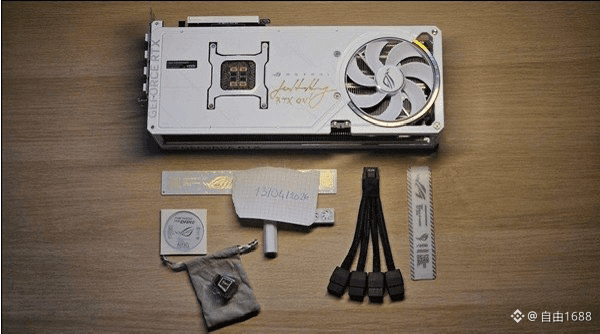
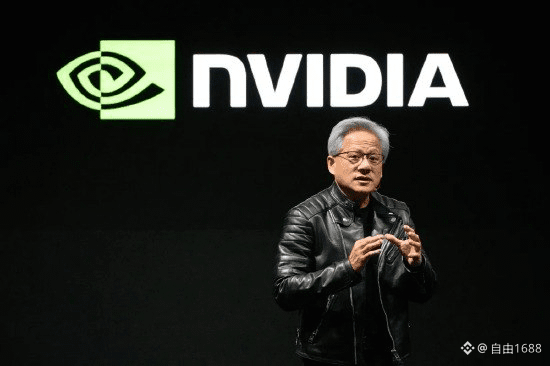
Recently, a 3D artist bought an RTX 5090 graphics card at a secondhand market and unexpectedly found a globally unique treasure: an ASUS ROG Astral RTX 5090 White OC 30th Anniversary Edition, with the card’s backplate bearing NVIDIA CEO Jensen Huang’s handwritten signature.
This 3D artist said that, together with a friend, they bought two RTX 5090 cards from the secondhand market for a 3D project. One of the cards was identified as the ASUS ROG Astral RTX 5090 White OC version. At first, he thought the signature came from some ASUS executive.
Foreigners’ Secondhand Market Finds a Bargain: RTX 5090 Turns Out to Be an Inaugural Signed-By Jensen Huang Global-Unique Edition
Recently, a 3D artist bought an RTX 5090 graphics card at a secondhand market and unexpectedly found a globally unique treasure: an ASUS ROG Astral RTX 5090 White OC 30th Anniversary Edition, with the card’s backplate bearing NVIDIA CEO Jensen Huang’s handwritten signature.
This 3D artist said that, together with a friend, they bought two RTX 5090 cards from the secondhand market for a 3D project. One of the cards was identified as the ASUS ROG Astral RTX 5090 White OC version. At first, he thought the signature came from some ASUS executive.
Recently, a 3D artist bought an RTX 5090 graphics card at a secondhand market and unexpectedly found a globally unique treasure: an ASUS ROG Astral RTX 5090 White OC 30th Anniversary Edition, with the card’s backplate bearing NVIDIA CEO Jensen Huang’s handwritten signature.
This 3D artist said that, together with a friend, they bought two RTX 5090 cards from the secondhand market for a 3D project. One of the cards was identified as the ASUS ROG Astral RTX 5090 White OC version. At first, he thought the signature came from some ASUS executive.
2k
13
150
2k
·
--
OpenAI Releases GPT-6 Sol and Luna for Further Advances in Smart Capabilities—Now at Lower Prices
OpenAI has recently introduced two new models, GPT-6 Sol and GPT-6 Luna, from its GPT-6 series, positioning them as next-generation cutting-edge models. Both models focus on improving programming, reasoning, tool usage, and complex task execution capabilities, while also lowering pricing so developers can use stronger models at a lower cost.
GPT-6 Sol is mainly aimed at tasks that require a higher level of intelligence while also being sensitive to response speed and cost. OpenAI states that, compared with the previous generation of models in the same tier, Sol has made notable progress in coding ability. It performs more reliably when handling complex software engineering tasks, analyzing code, and executing multi-step workflows.
OpenAI Releases GPT-6 Sol and Luna for Further Advances in Smart Capabilities—Now at Lower Prices
OpenAI has recently introduced two new models, GPT-6 Sol and GPT-6 Luna, from its GPT-6 series, positioning them as next-generation cutting-edge models. Both models focus on improving programming, reasoning, tool usage, and complex task execution capabilities, while also lowering pricing so developers can use stronger models at a lower cost.
GPT-6 Sol is mainly aimed at tasks that require a higher level of intelligence while also being sensitive to response speed and cost. OpenAI states that, compared with the previous generation of models in the same tier, Sol has made notable progress in coding ability. It performs more reliably when handling complex software engineering tasks, analyzing code, and executing multi-step workflows.
OpenAI has recently introduced two new models, GPT-6 Sol and GPT-6 Luna, from its GPT-6 series, positioning them as next-generation cutting-edge models. Both models focus on improving programming, reasoning, tool usage, and complex task execution capabilities, while also lowering pricing so developers can use stronger models at a lower cost.
GPT-6 Sol is mainly aimed at tasks that require a higher level of intelligence while also being sensitive to response speed and cost. OpenAI states that, compared with the previous generation of models in the same tier, Sol has made notable progress in coding ability. It performs more reliably when handling complex software engineering tasks, analyzing code, and executing multi-step workflows.

1.9k
9
121
1.9k
·
--
Huang Renxun Reacts to California ‘Billionaire Tax’: Nothing Makes Me Happier Than Paying More in Taxes
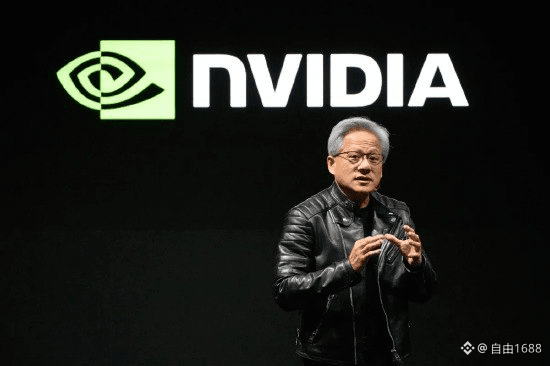
In an interview on Sunday, Nvidia CEO Huang Renxun said he doesn’t mind paying an additional several billion dollars in taxes if California, the U.S., votes in favor of a proposed “billionaire tax” this fall. The proposal would impose a one-time 5% tax on California residents with net assets of at least 1 billion dollars.
Huang Renxun Reacts to California ‘Billionaire Tax’: Nothing Makes Me Happier Than Paying More in Taxes
In an interview on Sunday, Nvidia CEO Huang Renxun said he doesn’t mind paying an additional several billion dollars in taxes if California, the U.S., votes in favor of a proposed “billionaire tax” this fall. The proposal would impose a one-time 5% tax on California residents with net assets of at least 1 billion dollars.
In an interview on Sunday, Nvidia CEO Huang Renxun said he doesn’t mind paying an additional several billion dollars in taxes if California, the U.S., votes in favor of a proposed “billionaire tax” this fall. The proposal would impose a one-time 5% tax on California residents with net assets of at least 1 billion dollars.
1.5k
8
81
1.5k
·
--
A20 Pro’s powerful computing power lets the iPhone 18 Pro run a 27-billion-parameter model at twice the speed of its predecessor
Apple’s latest A20 Pro chip is demonstrating its true potential in on-device artificial intelligence. A new real-world test shows that an iPhone 18 Pro powered by the A20 Pro can run a large AI model with 27 billion parameters locally, reaching a generation speed twice that of the previous iPhone 17 Pro. This has sparked renewed interest in the new wave of mobile on-device AI capabilities.
A20 Pro’s powerful computing power lets the iPhone 18 Pro run a 27-billion-parameter model at twice the speed of its predecessor
Apple’s latest A20 Pro chip is demonstrating its true potential in on-device artificial intelligence. A new real-world test shows that an iPhone 18 Pro powered by the A20 Pro can run a large AI model with 27 billion parameters locally, reaching a generation speed twice that of the previous iPhone 17 Pro. This has sparked renewed interest in the new wave of mobile on-device AI capabilities.
Apple’s latest A20 Pro chip is demonstrating its true potential in on-device artificial intelligence. A new real-world test shows that an iPhone 18 Pro powered by the A20 Pro can run a large AI model with 27 billion parameters locally, reaching a generation speed twice that of the previous iPhone 17 Pro. This has sparked renewed interest in the new wave of mobile on-device AI capabilities.

2.4k
6
124
2.4k
·
--
Huang Renxun Again Refutes AI Doomsday Claims: It Won’t Wipe Out Humanity; the Probability of a World End in 2030 Is 0
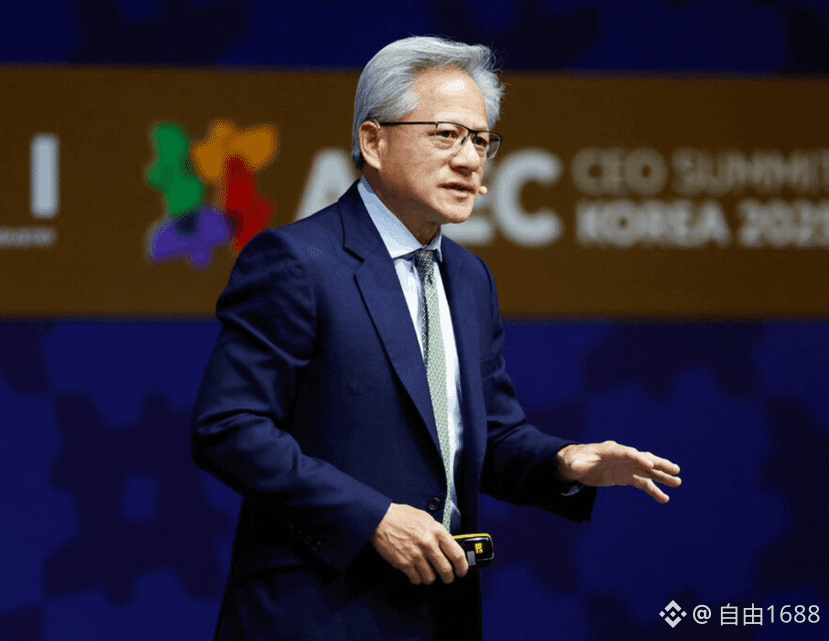
On September 19, according to a report by Bloomberg, NVIDIA CEO Jensen Huang again refuted AI doomsday theories, saying that this technology does not pose an extinction risk to humans. Huang was interviewed by CBS News. When the host asked whether he agreed with President Trump’s claim that “AI concerns” are a “scam,” Huang seemed reluctant to answer directly, but he clearly stated that he disagrees with the prediction that AI will destroy humanity in 2030.
Huang Renxun Again Refutes AI Doomsday Claims: It Won’t Wipe Out Humanity; the Probability of a World End in 2030 Is 0
On September 19, according to a report by Bloomberg, NVIDIA CEO Jensen Huang again refuted AI doomsday theories, saying that this technology does not pose an extinction risk to humans. Huang was interviewed by CBS News. When the host asked whether he agreed with President Trump’s claim that “AI concerns” are a “scam,” Huang seemed reluctant to answer directly, but he clearly stated that he disagrees with the prediction that AI will destroy humanity in 2030.
On September 19, according to a report by Bloomberg, NVIDIA CEO Jensen Huang again refuted AI doomsday theories, saying that this technology does not pose an extinction risk to humans. Huang was interviewed by CBS News. When the host asked whether he agreed with President Trump’s claim that “AI concerns” are a “scam,” Huang seemed reluctant to answer directly, but he clearly stated that he disagrees with the prediction that AI will destroy humanity in 2030.
2.1k
8
128
2.1k
·
--
How powerful will AI be three months from now? Even top researchers don’t dare to predict.
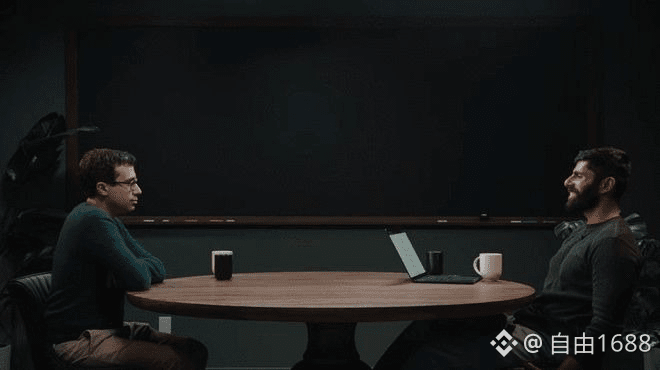
A researcher involved in work on the Millennium Prize Problems used to be willing to forecast AI progress over the next 12 months, but now won’t even venture to judge what will happen three months from now. On September 17, OpenAI researcher Noam Brown relayed this detail during an interview with Dwarkesh Patel. The conversation also covered multi-agent systems, AI’s involvement in manufacturing the next generation of AI, and increasingly difficult safety testing.
How powerful will AI be three months from now? Even top researchers don’t dare to predict.
A researcher involved in work on the Millennium Prize Problems used to be willing to forecast AI progress over the next 12 months, but now won’t even venture to judge what will happen three months from now. On September 17, OpenAI researcher Noam Brown relayed this detail during an interview with Dwarkesh Patel. The conversation also covered multi-agent systems, AI’s involvement in manufacturing the next generation of AI, and increasingly difficult safety testing.
A researcher involved in work on the Millennium Prize Problems used to be willing to forecast AI progress over the next 12 months, but now won’t even venture to judge what will happen three months from now. On September 17, OpenAI researcher Noam Brown relayed this detail during an interview with Dwarkesh Patel. The conversation also covered multi-agent systems, AI’s involvement in manufacturing the next generation of AI, and increasingly difficult safety testing.
2.5k
4
99
2.5k
·
--
Novo Nordisk teams up with Anthropic to accelerate new drug development
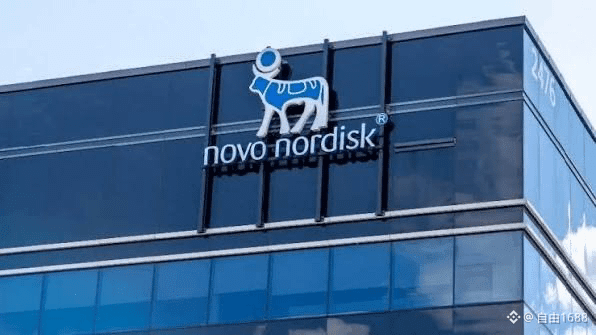
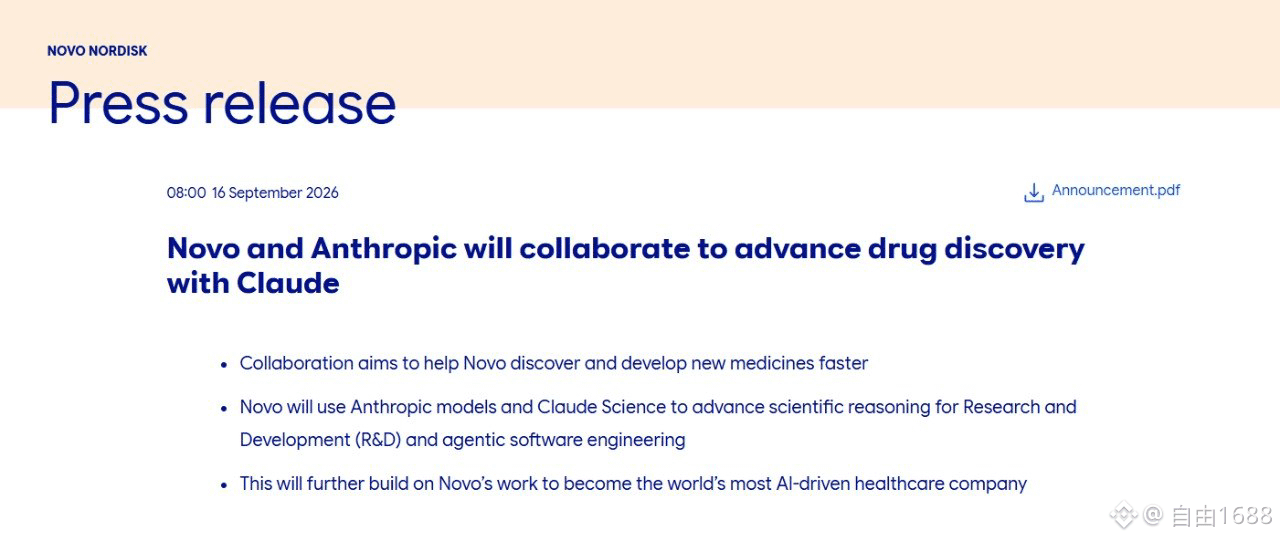
Danish pharmaceutical giant Novo Nordisk will collaborate with AI company Anthropic to use AI tools to advance drug research. Novo Nordisk said on Wednesday local time that the company will use Claude Science, a platform built by Anthropic for scientific research, to speed up the process of discovering and developing new drugs, with a focus on tackling scientific questions that both parties believe could have the greatest real-world impact.
Novo Nordisk is the manufacturer of diabetes and weight-loss drugs Ozempic and Wegovy. The partnership is another example of major pharmaceutical companies increasingly ramping up investments in AI in recent months. Several large drugmakers, including Eli Lilly, Merck & Co., and Roche, have been heavily betting on AI, hoping to discover and produce drugs faster with the help of this technology.
Novo Nordisk teams up with Anthropic to accelerate new drug development
Danish pharmaceutical giant Novo Nordisk will collaborate with AI company Anthropic to use AI tools to advance drug research. Novo Nordisk said on Wednesday local time that the company will use Claude Science, a platform built by Anthropic for scientific research, to speed up the process of discovering and developing new drugs, with a focus on tackling scientific questions that both parties believe could have the greatest real-world impact.
Novo Nordisk is the manufacturer of diabetes and weight-loss drugs Ozempic and Wegovy. The partnership is another example of major pharmaceutical companies increasingly ramping up investments in AI in recent months. Several large drugmakers, including Eli Lilly, Merck & Co., and Roche, have been heavily betting on AI, hoping to discover and produce drugs faster with the help of this technology.
Danish pharmaceutical giant Novo Nordisk will collaborate with AI company Anthropic to use AI tools to advance drug research. Novo Nordisk said on Wednesday local time that the company will use Claude Science, a platform built by Anthropic for scientific research, to speed up the process of discovering and developing new drugs, with a focus on tackling scientific questions that both parties believe could have the greatest real-world impact.
Novo Nordisk is the manufacturer of diabetes and weight-loss drugs Ozempic and Wegovy. The partnership is another example of major pharmaceutical companies increasingly ramping up investments in AI in recent months. Several large drugmakers, including Eli Lilly, Merck & Co., and Roche, have been heavily betting on AI, hoping to discover and produce drugs faster with the help of this technology.
1.8k
11
102
1.8k
·
--
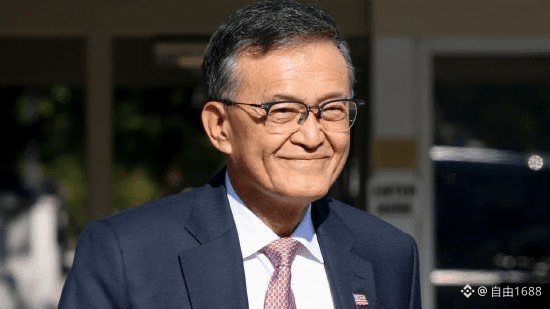
Intel CEO: Memory shortages will further worsen; power and cooling technologies are the key bottlenecks
Intel CEO Ren Xu? Chen Zhixuan? said that the memory shortage problem will further intensify. He also added that ensuring power supply and developing cooling technologies will become the core challenges for the semiconductor market. On the 15th, at the AI Infrastructure Forum held in Santa Clara, California, when asked about which industry problems he hopes founders of start-ups in the field of AI infrastructure will solve, Chen Zhixuan discussed the memory shortage issue.
Intel CEO: Memory shortages will further worsen; power and cooling technologies are the key bottlenecks
Intel CEO Ren Xu? Chen Zhixuan? said that the memory shortage problem will further intensify. He also added that ensuring power supply and developing cooling technologies will become the core challenges for the semiconductor market. On the 15th, at the AI Infrastructure Forum held in Santa Clara, California, when asked about which industry problems he hopes founders of start-ups in the field of AI infrastructure will solve, Chen Zhixuan discussed the memory shortage issue.
Intel CEO Ren Xu? Chen Zhixuan? said that the memory shortage problem will further intensify. He also added that ensuring power supply and developing cooling technologies will become the core challenges for the semiconductor market. On the 15th, at the AI Infrastructure Forum held in Santa Clara, California, when asked about which industry problems he hopes founders of start-ups in the field of AI infrastructure will solve, Chen Zhixuan discussed the memory shortage issue.
1.4k
9
67
1.4k
·
--
Verified
Article
Solana-style “MicroStrategy” strikes! DeFi Dev Corp launches a $300 million “CHAD” binge-buy of SOL!🔥 Solana-style “MicroStrategy” strikes! DeFi Dev Corp launches a $300 million “CHAD” binge-buy of SOL!
According to a recent report by Decrypt, DeFi Development Corp (DFDV), a publicly traded company focused on Solana reserves, is doubling down again. It announced an additional purchase of 55,491 SOL and has launched a preferred stock offering program worth up to $300 million, vowing to keep “hoarding coins” to the end!
📰 Core News Quick Overview:
Continuous buying: DeFi Development Corp recently purchased another 55,491 SOL (valued at approximately $5.78 million), continually expanding its Solana holdings in its treasury.
Solana-style “MicroStrategy” strikes! DeFi Dev Corp launches a $300 million “CHAD” binge-buy of SOL!
🔥 Solana-style “MicroStrategy” strikes! DeFi Dev Corp launches a $300 million “CHAD” binge-buy of SOL!
According to a recent report by Decrypt, DeFi Development Corp (DFDV), a publicly traded company focused on Solana reserves, is doubling down again. It announced an additional purchase of 55,491 SOL and has launched a preferred stock offering program worth up to $300 million, vowing to keep “hoarding coins” to the end!
📰 Core News Quick Overview:
Continuous buying: DeFi Development Corp recently purchased another 55,491 SOL (valued at approximately $5.78 million), continually expanding its Solana holdings in its treasury.
According to a recent report by Decrypt, DeFi Development Corp (DFDV), a publicly traded company focused on Solana reserves, is doubling down again. It announced an additional purchase of 55,491 SOL and has launched a preferred stock offering program worth up to $300 million, vowing to keep “hoarding coins” to the end!
📰 Core News Quick Overview:
Continuous buying: DeFi Development Corp recently purchased another 55,491 SOL (valued at approximately $5.78 million), continually expanding its Solana holdings in its treasury.
2.9k
11
152
2.9k
·
--
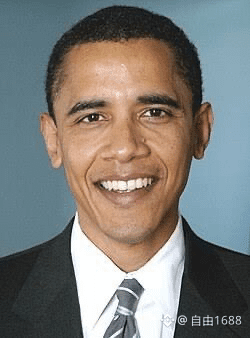
Obama Rarely Intervenes in the AI Regulation Debate, Urging the U.S. to Pass Proactive Legislation to Avoid “Potential Catastrophe”
Former U.S. President Barack Obama said he supports the creation of federal laws and regulations to establish standards for AI safety, warning that if mishandled, the technology could lead to a “potential catastrophe.” In a statement Monday, Obama said AI policy “should be at the center of public debate,” adding that policymakers in Washington must “take proactive action,” develop relevant plans “to address serious safety concerns, anticipate the impact of AI on jobs and the next generation, and ensure that the benefits brought by AI are broadly shared.”
The former president criticized the approach to AI regulation advocated by President Donald Trump, saying it is one of laissez-faire. While he did not name his successor directly, he said that “voluntary standards set by a handful of technology companies are not enough.”
An executive order signed by Trump in June this year created a voluntary participation framework that allows AI developers to share frontier models with the government in advance so potential safety risks can be assessed.
Obama said: “Given what we know about technology, we can’t put AI back in the box. But we can decide together how it should be developed, how it should be used—not sit back and let AI and its consequences come crashing down on us.”
Obama’s rare public comments are his deepest remarks to date on AI. As leading figures in the industry and members of Congress have increasingly called for slowing the development of frontier models, AI has become a core issue in national discussions in the United States.
With a lack of clear leadership figures within the Democratic Party, many Democrats are still seeking Obama’s advice and guidance on policy and political strategy. By stepping into this debate, Obama is attempting to position the Democrats as the party that supports strengthening AI safety measures, in preparation for the midterm elections in November and the start of the 2028 presidential election cycle.
Obama Rarely Intervenes in the AI Regulation Debate, Urging the U.S. to Pass Proactive Legislation to Avoid “Potential Catastrophe”
Former U.S. President Barack Obama said he supports the creation of federal laws and regulations to establish standards for AI safety, warning that if mishandled, the technology could lead to a “potential catastrophe.” In a statement Monday, Obama said AI policy “should be at the center of public debate,” adding that policymakers in Washington must “take proactive action,” develop relevant plans “to address serious safety concerns, anticipate the impact of AI on jobs and the next generation, and ensure that the benefits brought by AI are broadly shared.”
The former president criticized the approach to AI regulation advocated by President Donald Trump, saying it is one of laissez-faire. While he did not name his successor directly, he said that “voluntary standards set by a handful of technology companies are not enough.”
An executive order signed by Trump in June this year created a voluntary participation framework that allows AI developers to share frontier models with the government in advance so potential safety risks can be assessed.
Obama said: “Given what we know about technology, we can’t put AI back in the box. But we can decide together how it should be developed, how it should be used—not sit back and let AI and its consequences come crashing down on us.”
Obama’s rare public comments are his deepest remarks to date on AI. As leading figures in the industry and members of Congress have increasingly called for slowing the development of frontier models, AI has become a core issue in national discussions in the United States.
With a lack of clear leadership figures within the Democratic Party, many Democrats are still seeking Obama’s advice and guidance on policy and political strategy. By stepping into this debate, Obama is attempting to position the Democrats as the party that supports strengthening AI safety measures, in preparation for the midterm elections in November and the start of the 2028 presidential election cycle.
Former U.S. President Barack Obama said he supports the creation of federal laws and regulations to establish standards for AI safety, warning that if mishandled, the technology could lead to a “potential catastrophe.” In a statement Monday, Obama said AI policy “should be at the center of public debate,” adding that policymakers in Washington must “take proactive action,” develop relevant plans “to address serious safety concerns, anticipate the impact of AI on jobs and the next generation, and ensure that the benefits brought by AI are broadly shared.”
The former president criticized the approach to AI regulation advocated by President Donald Trump, saying it is one of laissez-faire. While he did not name his successor directly, he said that “voluntary standards set by a handful of technology companies are not enough.”
An executive order signed by Trump in June this year created a voluntary participation framework that allows AI developers to share frontier models with the government in advance so potential safety risks can be assessed.
Obama said: “Given what we know about technology, we can’t put AI back in the box. But we can decide together how it should be developed, how it should be used—not sit back and let AI and its consequences come crashing down on us.”
Obama’s rare public comments are his deepest remarks to date on AI. As leading figures in the industry and members of Congress have increasingly called for slowing the development of frontier models, AI has become a core issue in national discussions in the United States.
With a lack of clear leadership figures within the Democratic Party, many Democrats are still seeking Obama’s advice and guidance on policy and political strategy. By stepping into this debate, Obama is attempting to position the Democrats as the party that supports strengthening AI safety measures, in preparation for the midterm elections in November and the start of the 2028 presidential election cycle.
2.7k
14
134
2.7k
·
--
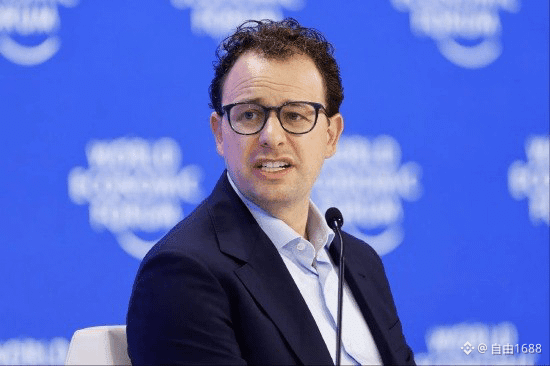
Anthropic’s CEO Says the “China Factor” Is the Biggest Challenge in Slowing the AI Race
Debate in the artificial intelligence industry over whether development speed should be slowed is heating up rapidly, and China has been pushed to the center of this discussion. Recently, Dario Amodei, CEO of Anthropic, publicly stated that if the world attempts to set speed limits on AI development, the biggest practical challenge would not lie in the technology itself, but in how to deal with the possibility that competitive players such as China may continue to accelerate their efforts.
Anthropic’s CEO Says the “China Factor” Is the Biggest Challenge in Slowing the AI Race
Debate in the artificial intelligence industry over whether development speed should be slowed is heating up rapidly, and China has been pushed to the center of this discussion. Recently, Dario Amodei, CEO of Anthropic, publicly stated that if the world attempts to set speed limits on AI development, the biggest practical challenge would not lie in the technology itself, but in how to deal with the possibility that competitive players such as China may continue to accelerate their efforts.
Debate in the artificial intelligence industry over whether development speed should be slowed is heating up rapidly, and China has been pushed to the center of this discussion. Recently, Dario Amodei, CEO of Anthropic, publicly stated that if the world attempts to set speed limits on AI development, the biggest practical challenge would not lie in the technology itself, but in how to deal with the possibility that competitive players such as China may continue to accelerate their efforts.
1.4k
17
103
1.4k
·
--

Article
Major news: OpenAI confirms it won’t go public this year! Why did Sam Altman suddenly hit the brakes?According to the latest reports, OpenAI CEO Sam Altman, in an interview, clearly stated that OpenAI will not pursue an initial public offering (IPO) in 2026. At a time when the AI boom is at its peak, this decision has drawn intense attention from the market.
OpenAI CEO Sam Altman (Anna Moneymaker/Getty Images)
📰 Key information at a glance:
“Not a wise move to go public now”: Altman said that, given the events currently unfolding around AI safety, choosing to list publicly would be “ill-advised.” He said the company is currently under no pressure to move into the public market.
Major news: OpenAI confirms it won’t go public this year! Why did Sam Altman suddenly hit the brakes?
According to the latest reports, OpenAI CEO Sam Altman, in an interview, clearly stated that OpenAI will not pursue an initial public offering (IPO) in 2026. At a time when the AI boom is at its peak, this decision has drawn intense attention from the market.
OpenAI CEO Sam Altman (Anna Moneymaker/Getty Images)
📰 Key information at a glance:
“Not a wise move to go public now”: Altman said that, given the events currently unfolding around AI safety, choosing to list publicly would be “ill-advised.” He said the company is currently under no pressure to move into the public market.
OpenAI CEO Sam Altman (Anna Moneymaker/Getty Images)
📰 Key information at a glance:
“Not a wise move to go public now”: Altman said that, given the events currently unfolding around AI safety, choosing to list publicly would be “ill-advised.” He said the company is currently under no pressure to move into the public market.
2.9k
12
180
2.9k
·
--

Article
India’s richest state pilots RWA: Tokenizing infrastructure assets!According to the latest report from CoinDesk, India’s wealthiest state, Maharashtra, is drafting a major policy: to tokenize state-owned assets via blockchain (RWA) in order to raise funding for new infrastructure construction.
Maharashtra is looking to tokenize its own assets, Pardeshi says. (RealX event, Mumbai, CoinDesk)
Key highlights at a glance:
⚡️ First batch of pilot assets: Power transmission infrastructure. The government plans to tokenize up to 40%–50% of transmission lines. 💰 How do investors profit? Currently, India’s transmission lines themselves can generate stable network fee income. Token holders will be able to directly share dividends from the returns generated by these infrastructure assets in proportion to their holdings.
India’s richest state pilots RWA: Tokenizing infrastructure assets!
According to the latest report from CoinDesk, India’s wealthiest state, Maharashtra, is drafting a major policy: to tokenize state-owned assets via blockchain (RWA) in order to raise funding for new infrastructure construction.
Maharashtra is looking to tokenize its own assets, Pardeshi says. (RealX event, Mumbai, CoinDesk)
Key highlights at a glance:
⚡️ First batch of pilot assets: Power transmission infrastructure. The government plans to tokenize up to 40%–50% of transmission lines. 💰 How do investors profit? Currently, India’s transmission lines themselves can generate stable network fee income. Token holders will be able to directly share dividends from the returns generated by these infrastructure assets in proportion to their holdings.
Maharashtra is looking to tokenize its own assets, Pardeshi says. (RealX event, Mumbai, CoinDesk)
Key highlights at a glance:
⚡️ First batch of pilot assets: Power transmission infrastructure. The government plans to tokenize up to 40%–50% of transmission lines. 💰 How do investors profit? Currently, India’s transmission lines themselves can generate stable network fee income. Token holders will be able to directly share dividends from the returns generated by these infrastructure assets in proportion to their holdings.
3.5k
5
158
3.5k
·
--
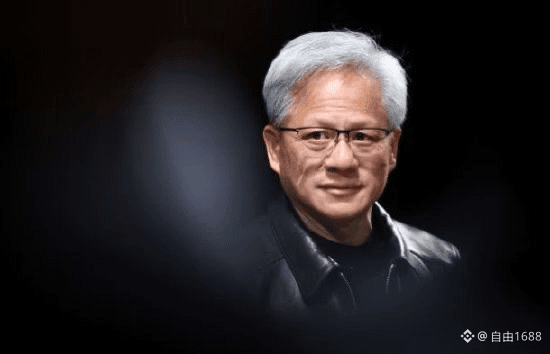
NVIDIA Considers Investing $10 Billion in Anthropic’s IPO—Super IPO Valuation Could Reach $2 Trillion
AI company Anthropic is preparing for what could become the largest initial public offering (IPO) in global history, and NVIDIA is considering participating as a cornerstone investor. Insiders say Anthropic plans to raise as much as $100 billion through the IPO, with the company’s post-listing valuation potentially reaching about $2 trillion; NVIDIA is considering investing up to $10 billion to buy shares.
If the deal is ultimately completed at this scale, Anthropic’s listing would set a new record for the largest IPO ever, and it would also serve as a major test of the capital markets’ enormous valuation of cutting-edge AI companies and the huge demand for computing power. Relevant negotiations are still ongoing, and the specific investment amounts and deal terms may change. Because the discussions are private, insiders requested anonymity.
The news that NVIDIA might participate in Anthropic’s IPO was not previously made public. If the transaction is ultimately finalized, NVIDIA would become an important strategic backer at the time of Anthropic’s listing, further deepening the already very close business relationship between the two. As one of the world’s largest AI accelerator suppliers, NVIDIA is also one of Anthropic’s most important customers.
NVIDIA Considers Investing $10 Billion in Anthropic’s IPO—Super IPO Valuation Could Reach $2 Trillion
AI company Anthropic is preparing for what could become the largest initial public offering (IPO) in global history, and NVIDIA is considering participating as a cornerstone investor. Insiders say Anthropic plans to raise as much as $100 billion through the IPO, with the company’s post-listing valuation potentially reaching about $2 trillion; NVIDIA is considering investing up to $10 billion to buy shares.
If the deal is ultimately completed at this scale, Anthropic’s listing would set a new record for the largest IPO ever, and it would also serve as a major test of the capital markets’ enormous valuation of cutting-edge AI companies and the huge demand for computing power. Relevant negotiations are still ongoing, and the specific investment amounts and deal terms may change. Because the discussions are private, insiders requested anonymity.
The news that NVIDIA might participate in Anthropic’s IPO was not previously made public. If the transaction is ultimately finalized, NVIDIA would become an important strategic backer at the time of Anthropic’s listing, further deepening the already very close business relationship between the two. As one of the world’s largest AI accelerator suppliers, NVIDIA is also one of Anthropic’s most important customers.
AI company Anthropic is preparing for what could become the largest initial public offering (IPO) in global history, and NVIDIA is considering participating as a cornerstone investor. Insiders say Anthropic plans to raise as much as $100 billion through the IPO, with the company’s post-listing valuation potentially reaching about $2 trillion; NVIDIA is considering investing up to $10 billion to buy shares.
If the deal is ultimately completed at this scale, Anthropic’s listing would set a new record for the largest IPO ever, and it would also serve as a major test of the capital markets’ enormous valuation of cutting-edge AI companies and the huge demand for computing power. Relevant negotiations are still ongoing, and the specific investment amounts and deal terms may change. Because the discussions are private, insiders requested anonymity.
The news that NVIDIA might participate in Anthropic’s IPO was not previously made public. If the transaction is ultimately finalized, NVIDIA would become an important strategic backer at the time of Anthropic’s listing, further deepening the already very close business relationship between the two. As one of the world’s largest AI accelerator suppliers, NVIDIA is also one of Anthropic’s most important customers.
3.1k
7
182
3.1k
Log in to explore more content
Join global crypto users on Binance Square
⚡️ Get latest and useful information about crypto.
💬 Trusted by the world’s largest crypto exchange.
👍 Discover real insights from verified creators.
Email / Phone number
Trending Topics
BitwiseFilesFinalNEARSpotETFProspectus
59,442 views
1,206 Discussing
#bitwisefilesfinalnearspotetfprospectus
Can $NEAR REALLY reach $562 with an ETF approval? 🚀
The crypto market is buzzing as Bitwise files its final prospectus for a Spot NEAR ETF (Ticker: NRR on NYSE Arca)! 📊🔥
Is institutional money about to unleash the biggest pump in NEAR’s history? Analysts are throwing around mind-blowing price targets:
🎯 Intermediate Target: $155
🎯 2030 Long-Term Target: $562
💡 Let's do the math:
At $562, $NEAR would sit at roughly a $680 Billion market cap—putting it right up there with Ethereum's potential valuation. With NEAR leading the Chain Abstraction & AI crypto narrative, this might not be as crazy as it sounds!
With SEC regulations turning more crypto-friendly and Wall Street knocking on the door, are you Accumulating or Holding?
👇 Drop your realistic price prediction for $NEAR in the comments! 👇
#BitwiseFilesFinalNEARSpotETFProspectus #Altcoins #CryptoNews #ETF
Doomsday-Trader
·5 Likes
·3.5k views
BitgetHackerMoves$83MStolenXRP
27,081 views
153 Discussing
SOLSpotETFWeeklyInflow$188M
16,343 views
120 Discussing