
Aria Daisy 阿莉娅_黛西
586 Posts

Aria Daisy 阿莉娅_黛西
Aria Daisy 🌸 | Crypto Trader & Binance Expert Sharing market insights, trading ideas & Web3 opportunities Trade smart • Stay updated • Keep growing | DYOR
Open Trade
High-Frequency Trader
1.6 Years
379 Following
13.4K+ Followers
7.2K+ Liked
Posts
Portfolio
All
Quotes
Live
PINNED

PINNED


Elena神话MUA
·
--
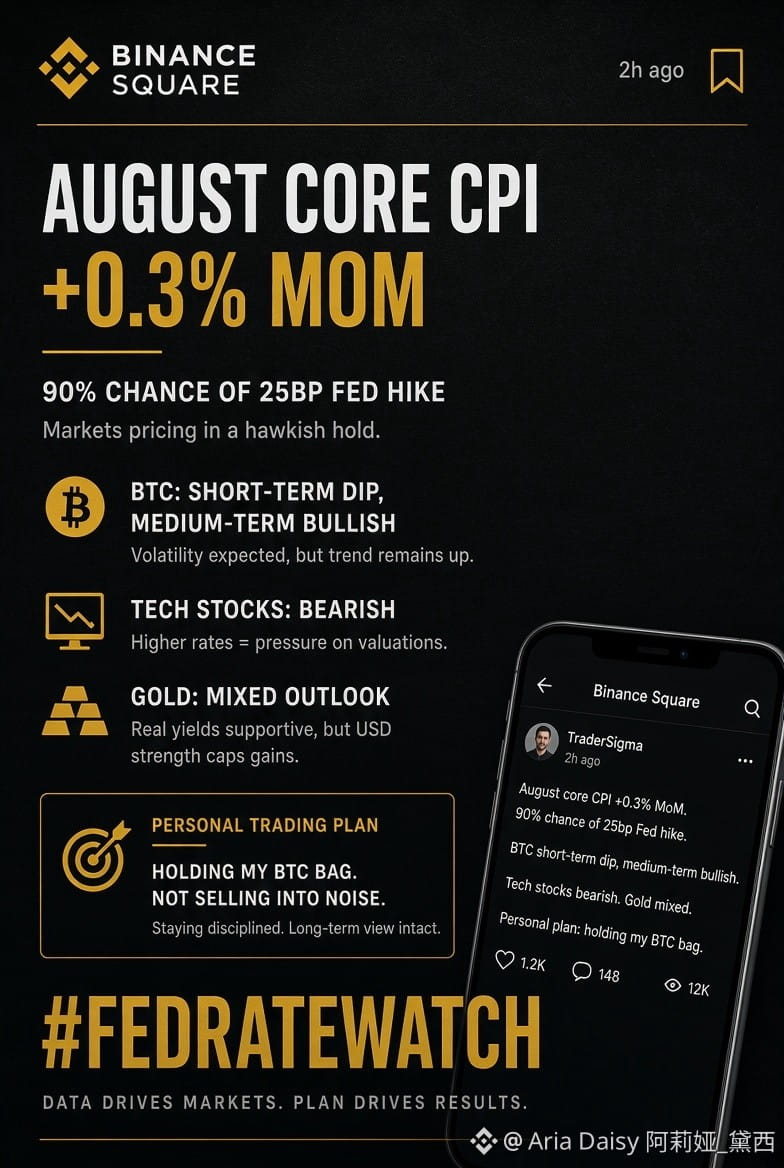
#MUA $BNB (BNB) market (2026-09-15)
- Current price: about $719 (equivalent to about RMB 4,836)
- 24 hours: slight increase of about +0.51%; 24H range $717~$733.6
- 7 days: -2.80%; 30 days: +18.40%
- Circulating market cap: about RMB 967.2 billion
Key points in the recent period
1. BNB is a platform token. Its price is heavily influenced by the Binance platform’s operations, regulatory news, and movements in the broader market, resulting in sharp volatility
2. Market news and regulatory policies can cause significant rises and falls at any time; the risks of futures trading are amplified by $BTC times
- Current price: about $719 (equivalent to about RMB 4,836)
- 24 hours: slight increase of about +0.51%; 24H range $717~$733.6
- 7 days: -2.80%; 30 days: +18.40%
- Circulating market cap: about RMB 967.2 billion
Key points in the recent period
1. BNB is a platform token. Its price is heavily influenced by the Binance platform’s operations, regulatory news, and movements in the broader market, resulting in sharp volatility
2. Market news and regulatory policies can cause significant rises and falls at any time; the risks of futures trading are amplified by $BTC times

Mariaaa27
·
--
$DOT
$NVDAB
$NVDL
#BitcoinFalls4%
#ArgentinaCommitsToOECDCryptoReportingBy2029
$NVDAB
$NVDL
#BitcoinFalls4%
#ArgentinaCommitsToOECDCryptoReportingBy2029


AYESHA ABID 阿伊莎 阿比德
·
--
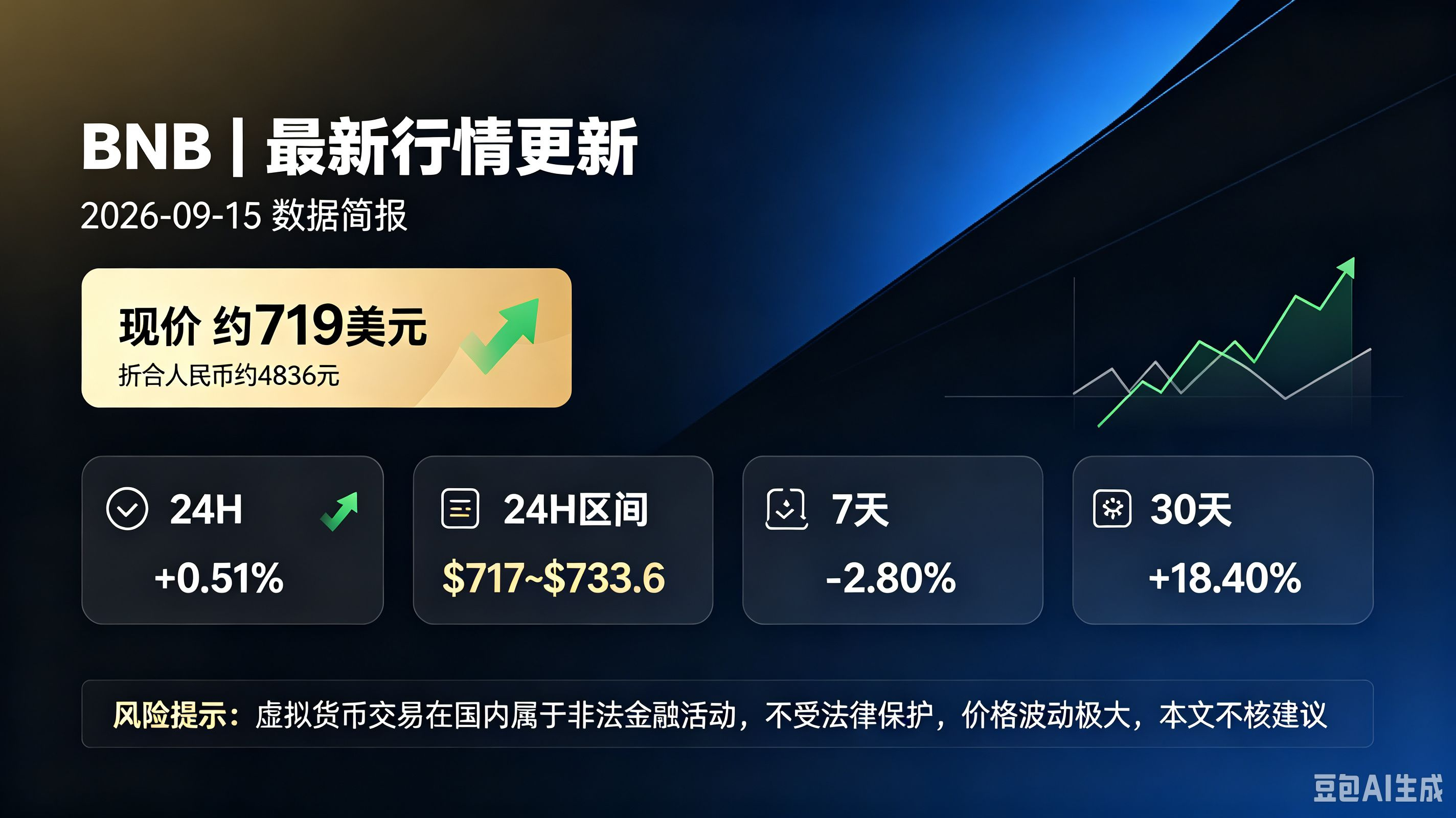
😂 Trying to gain followers on Binance like:
Follow → Post → Wait → Refresh… 😭
Followers: “We’ll think about it.” 🤔
Me: “Guys, I’m still here!” 😂
At this point, even SOL is moving faster than my follower count. 📈🤣
$SOL #SOL
Follow → Post → Wait → Refresh… 😭
Followers: “We’ll think about it.” 🤔
Me: “Guys, I’m still here!” 😂
At this point, even SOL is moving faster than my follower count. 📈🤣
$SOL #SOL

Luke_龙
·
--
Today's Reminder🧧:
Good Things Take Time🌹✨
🚨News Reminder
Twenty-one of the world's biggest banks just did something wild. Goldman Sachs, Bank of America, Citi and others are teaming up to launch their own dollar-pegged stablecoin, targeting a first-half 2027 rollout. That's not a startup move, that's Wall Street admitting the rails have already changed.
Meanwhile the market itself is stuck around $300B after pulling back over the summer, even as Treasury Secretary Bessent keeps talking up stablecoin issuers as future buyers of US government debt. Growth stalling right when that support would matter most is an odd look.
Not every coin is riding the same wave either. RLUSD quietly became the third-fastest-growing stablecoin of 2026, adding over $1B in market cap this year and crossing $2.38B total. USDT still dominates growth in raw dollar terms, up $6.7B. On the flip side, USDe, Falcon's USDf and PayPal's PYUSD have all bled hundreds of millions.
And on the regulated-in-Europe side, Quantoz's USDQ keeps expanding its exchange footprint under full MiCA compliance, fully backed 1:1 with reserves parked in Tier 1 banks. Boring by design, which in this market is kind of the point.
Stablecoins aren't the sideshow anymore. They're becoming the actual plumbing.
Good Things Take Time🌹✨
🚨News Reminder
Twenty-one of the world's biggest banks just did something wild. Goldman Sachs, Bank of America, Citi and others are teaming up to launch their own dollar-pegged stablecoin, targeting a first-half 2027 rollout. That's not a startup move, that's Wall Street admitting the rails have already changed.
Meanwhile the market itself is stuck around $300B after pulling back over the summer, even as Treasury Secretary Bessent keeps talking up stablecoin issuers as future buyers of US government debt. Growth stalling right when that support would matter most is an odd look.
Not every coin is riding the same wave either. RLUSD quietly became the third-fastest-growing stablecoin of 2026, adding over $1B in market cap this year and crossing $2.38B total. USDT still dominates growth in raw dollar terms, up $6.7B. On the flip side, USDe, Falcon's USDf and PayPal's PYUSD have all bled hundreds of millions.
And on the regulated-in-Europe side, Quantoz's USDQ keeps expanding its exchange footprint under full MiCA compliance, fully backed 1:1 with reserves parked in Tier 1 banks. Boring by design, which in this market is kind of the point.
Stablecoins aren't the sideshow anymore. They're becoming the actual plumbing.


Humaira HN
·
--
$SOL Gifts for my followers 💕💕💕💕🎁 💝 💝 🎁 💐 💝 🎁 💐 💝 🎁
click here 👉Join my Chatroom 💞💞
Please Join me 💖💖 on
X 👉 @HumairaHN22800
Join to my Discard 👉 humairahn
click here 👉Join my Chatroom 💞💞
Please Join me 💖💖 on
X 👉 @HumairaHN22800
Join to my Discard 👉 humairahn


Shaheen 69
·
--
🎁 A Little ETH, A Lot of Love ❤️
This red packet is my small way of saying THANK YOU to my amazing community. 🙏 Keep supporting me, keep showing your love, and let’s continue this journey together. Your trust means everything! ❤️
Stay with me — more love, bigger red packets & better rewards are coming! 🚀💎
$ETH
This red packet is my small way of saying THANK YOU to my amazing community. 🙏 Keep supporting me, keep showing your love, and let’s continue this journey together. Your trust means everything! ❤️
Stay with me — more love, bigger red packets & better rewards are coming! 🚀💎
$ETH

白鲨观点
·
--
Today the market is down, and the group chats are once again full of wailing and despair.
I want to say something that may not sound very pleasant: the people who keep shouting “It’s over,” “It’s a bear market,” every time there’s a big drop are destined to never make big money.
Why? Because all they see is short-term price fluctuations, not long-term logic. In the crypto world over the past ten-plus years—from BTC costing just a few dollars to now costing tens of thousands of dollars—how many times have there been major crashes in between? Over 90% drawdowns have happened multiple times, and every time someone says, “Bitcoin is dead.” What actually happens? People die off, not Bitcoin.
Of course, I’m not saying you can mindlessly buy the bottom right now. There really is uncertainty around regulation, and in the short term it could still fall, and worse news could still come out. No one knows where the bottom is, and I don’t either.
But I know one thing: every major crisis is a good opportunity to pick up cheap chips. When the FTX collapse happened in 2022, when we hit 312 in 2020, and during the bleakest part of the 2018 bear market—looking back now, it’s all golden pits. Back then, most people who were right in the middle of it were panic-selling and cutting losses; not many had the nerve to buy.
So at a time like this, don’t just be afraid.
If you have cash, start building your position in batches;
If you have coins, don’t cut blindly. As long as what you hold is major coins like BTC and ETH, you won’t “die.”
The market always hits the bottom in fear, rises in hesitation, and ends in frenzy.
In this stage, is it more like “panic” or “hesitation”?
Think about it yourself.
At 9 p.m. I’ll chat in the live room about how to position yourself during a falling market. No order-chasing—just sharing my thoughts. If you want to join, go to my profile page.
$BTC $ETH #BinanceSquare #行情分析📈 #投资思路
I want to say something that may not sound very pleasant: the people who keep shouting “It’s over,” “It’s a bear market,” every time there’s a big drop are destined to never make big money.
Why? Because all they see is short-term price fluctuations, not long-term logic. In the crypto world over the past ten-plus years—from BTC costing just a few dollars to now costing tens of thousands of dollars—how many times have there been major crashes in between? Over 90% drawdowns have happened multiple times, and every time someone says, “Bitcoin is dead.” What actually happens? People die off, not Bitcoin.
Of course, I’m not saying you can mindlessly buy the bottom right now. There really is uncertainty around regulation, and in the short term it could still fall, and worse news could still come out. No one knows where the bottom is, and I don’t either.
But I know one thing: every major crisis is a good opportunity to pick up cheap chips. When the FTX collapse happened in 2022, when we hit 312 in 2020, and during the bleakest part of the 2018 bear market—looking back now, it’s all golden pits. Back then, most people who were right in the middle of it were panic-selling and cutting losses; not many had the nerve to buy.
So at a time like this, don’t just be afraid.
If you have cash, start building your position in batches;
If you have coins, don’t cut blindly. As long as what you hold is major coins like BTC and ETH, you won’t “die.”
The market always hits the bottom in fear, rises in hesitation, and ends in frenzy.
In this stage, is it more like “panic” or “hesitation”?
Think about it yourself.
At 9 p.m. I’ll chat in the live room about how to position yourself during a falling market. No order-chasing—just sharing my thoughts. If you want to join, go to my profile page.
$BTC $ETH #BinanceSquare #行情分析📈 #投资思路


圣克斯Lucky1688
·
--
🧧🎁🧧🎁🧧🎁
On September 17, the crypto industry saw multiple highly关注able sector updates and events. The core news mainly centered on regulatory roundtables, traditional financial giants entering the space, and industry summits, among other topics:
1. The U.S. SEC holds a 24-hour on-chain stock trading roundtable
On September 17, the U.S. Securities and Exchange Commission (SEC) hosted an important roundtable on “24-hour on-chain stock trading.” The meeting invited traditional financial giants such as BlackRock, Nasdaq, the New York Stock Exchange, and Robinhood, along with crypto industry participants and institutions.
Key agenda: The meeting aims to discuss the rule framework for enabling U.S. equities to settle on-chain 24/7.
Technology route competition: The market is currently focused on which blockchain—Ethereum or Solana—will take on the role of the primary underlying settlement infrastructure. Solana holds an advantage in terms of tokenized U.S. stock volume and low fees, while Ethereum is favored by traditional finance due to its deep institutional compliance foundation (such as BlackRock’s BUIDL fund).
2. The Fourth U.S. Crypto Banking, Compliance & Stablecoin Summit (CBC Summit USA) kicks off
The 4th annual CBC Summit USA was held on September 17 at the National Press Club in Washington, D.C.
Main focus: This summit brings together senior executives, regulators, and lawmakers across the industry. Key topics include crypto banking services, compliance frameworks, stablecoin development, and the deep integration of traditional finance with Web3.
3. Deeper cooperation between traditional industries and Web3 infrastructure
Hyundai explores the Avalanche ecosystem: After successfully completing a pilot project, Hyundai is considering further expanding its related business and applications on the Avalanche (Avalanche Protocol) blockchain.
Circle Arc mainnet goes live: Stablecoin issuer Circle’s Arc mainnet recently launched and has introduced support from payment giants such as Visa and Mastercard, injecting new momentum into the Web3 payments sector.
Overall, the Web3 industry updates on September 17 show that traditional financial regulators and Wall Street capital are accelerating the process of bringing assets on-chain and strengthening compliance.
Follow me—answer 1 will take away the $SOL red envelope.
🧧🎁🧧🎁🧧🎁
On September 17, the crypto industry saw multiple highly关注able sector updates and events. The core news mainly centered on regulatory roundtables, traditional financial giants entering the space, and industry summits, among other topics:
1. The U.S. SEC holds a 24-hour on-chain stock trading roundtable
On September 17, the U.S. Securities and Exchange Commission (SEC) hosted an important roundtable on “24-hour on-chain stock trading.” The meeting invited traditional financial giants such as BlackRock, Nasdaq, the New York Stock Exchange, and Robinhood, along with crypto industry participants and institutions.
Key agenda: The meeting aims to discuss the rule framework for enabling U.S. equities to settle on-chain 24/7.
Technology route competition: The market is currently focused on which blockchain—Ethereum or Solana—will take on the role of the primary underlying settlement infrastructure. Solana holds an advantage in terms of tokenized U.S. stock volume and low fees, while Ethereum is favored by traditional finance due to its deep institutional compliance foundation (such as BlackRock’s BUIDL fund).
2. The Fourth U.S. Crypto Banking, Compliance & Stablecoin Summit (CBC Summit USA) kicks off
The 4th annual CBC Summit USA was held on September 17 at the National Press Club in Washington, D.C.
Main focus: This summit brings together senior executives, regulators, and lawmakers across the industry. Key topics include crypto banking services, compliance frameworks, stablecoin development, and the deep integration of traditional finance with Web3.
3. Deeper cooperation between traditional industries and Web3 infrastructure
Hyundai explores the Avalanche ecosystem: After successfully completing a pilot project, Hyundai is considering further expanding its related business and applications on the Avalanche (Avalanche Protocol) blockchain.
Circle Arc mainnet goes live: Stablecoin issuer Circle’s Arc mainnet recently launched and has introduced support from payment giants such as Visa and Mastercard, injecting new momentum into the Web3 payments sector.
Overall, the Web3 industry updates on September 17 show that traditional financial regulators and Wall Street capital are accelerating the process of bringing assets on-chain and strengthening compliance.
Follow me—answer 1 will take away the $SOL red envelope.
🧧🎁🧧🎁🧧🎁



生蚝哥Oyster
·
--
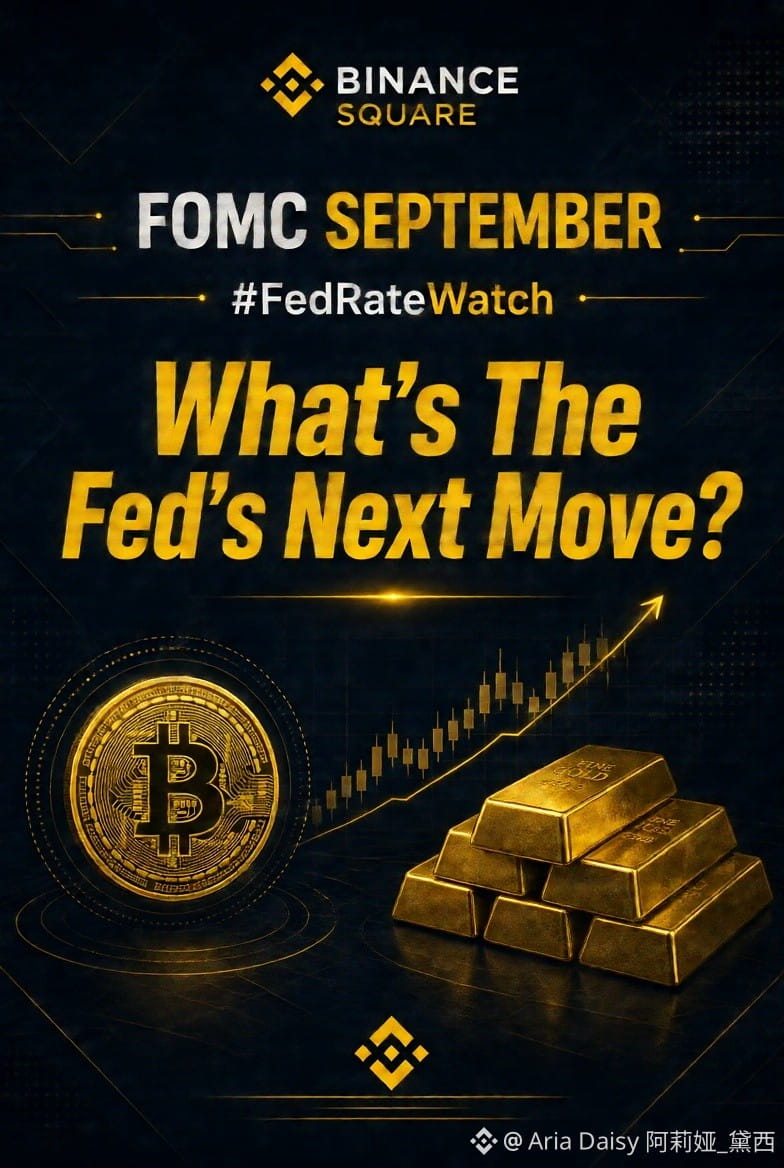
September 17|The Fed hikes rates again after three years, sparking a hawkish shock in the market
At the Fed FOMC meeting, all members voted in favor of a 25-basis-point rate hike. The target range for the federal funds rate has been raised to 3.75%‑4.00%, marking the first rate hike since July 2023.
The latest dot plot sends a clear signal: 16 officials believe there is a high probability of another rate hike within 2026. The median rate expectations for 2026 and 2027 remain at 4.1%.
After the meeting, Fed Chair Waller said the current U.S. economy and employment market are still very resilient, but the stubborn inflation problem has yet to be resolved. He noted that the committee has not yet seen convincing evidence that inflation is steadily moving back down toward the 2% target. He also said plainly that the key contradiction now is not economic growth, but persistently high inflation.
Regarding the rise in U.S. Treasury yields, Waller attributed it to three main factors: the strength of the U.S. economy, intensifying competition for capital, and geopolitical risk. While he did not directly comment on the U.S.-Iran conflict, he acknowledged that the geopolitical situation is reshaping economic assessments.
During the decision and press-conference phase, the market reaction was quite intense: spot gold briefly plunged by nearly $100; the U.S. dollar index surged by 40 points and climbed above the 100 level; the 2-year Treasury yield rose by 10 bps, and the 10-year yield increased by 5 bps, with equities across the board turning lower.
Rate-futures are being repriced: the market now expects a total of about 33 bps more rate hikes within 2026, up by 6 bps compared with before the decision. By next June, market pricing implies additional room for rate hikes totaling 75 bps, equivalent to three more 25-bp hikes.
At the Fed FOMC meeting, all members voted in favor of a 25-basis-point rate hike. The target range for the federal funds rate has been raised to 3.75%‑4.00%, marking the first rate hike since July 2023.
The latest dot plot sends a clear signal: 16 officials believe there is a high probability of another rate hike within 2026. The median rate expectations for 2026 and 2027 remain at 4.1%.
After the meeting, Fed Chair Waller said the current U.S. economy and employment market are still very resilient, but the stubborn inflation problem has yet to be resolved. He noted that the committee has not yet seen convincing evidence that inflation is steadily moving back down toward the 2% target. He also said plainly that the key contradiction now is not economic growth, but persistently high inflation.
Regarding the rise in U.S. Treasury yields, Waller attributed it to three main factors: the strength of the U.S. economy, intensifying competition for capital, and geopolitical risk. While he did not directly comment on the U.S.-Iran conflict, he acknowledged that the geopolitical situation is reshaping economic assessments.
During the decision and press-conference phase, the market reaction was quite intense: spot gold briefly plunged by nearly $100; the U.S. dollar index surged by 40 points and climbed above the 100 level; the 2-year Treasury yield rose by 10 bps, and the 10-year yield increased by 5 bps, with equities across the board turning lower.
Rate-futures are being repriced: the market now expects a total of about 33 bps more rate hikes within 2026, up by 6 bps compared with before the decision. By next June, market pricing implies additional room for rate hikes totaling 75 bps, equivalent to three more 25-bp hikes.




Log in to explore more content