
wiki002
4.2k Posts

wiki002
Allah is greatest
High-Frequency Trader
1.9 Years
1.0K+ Following
5.8K+ Followers
16.1K+ Liked
Posts
All
Quotes
Live
PINNED
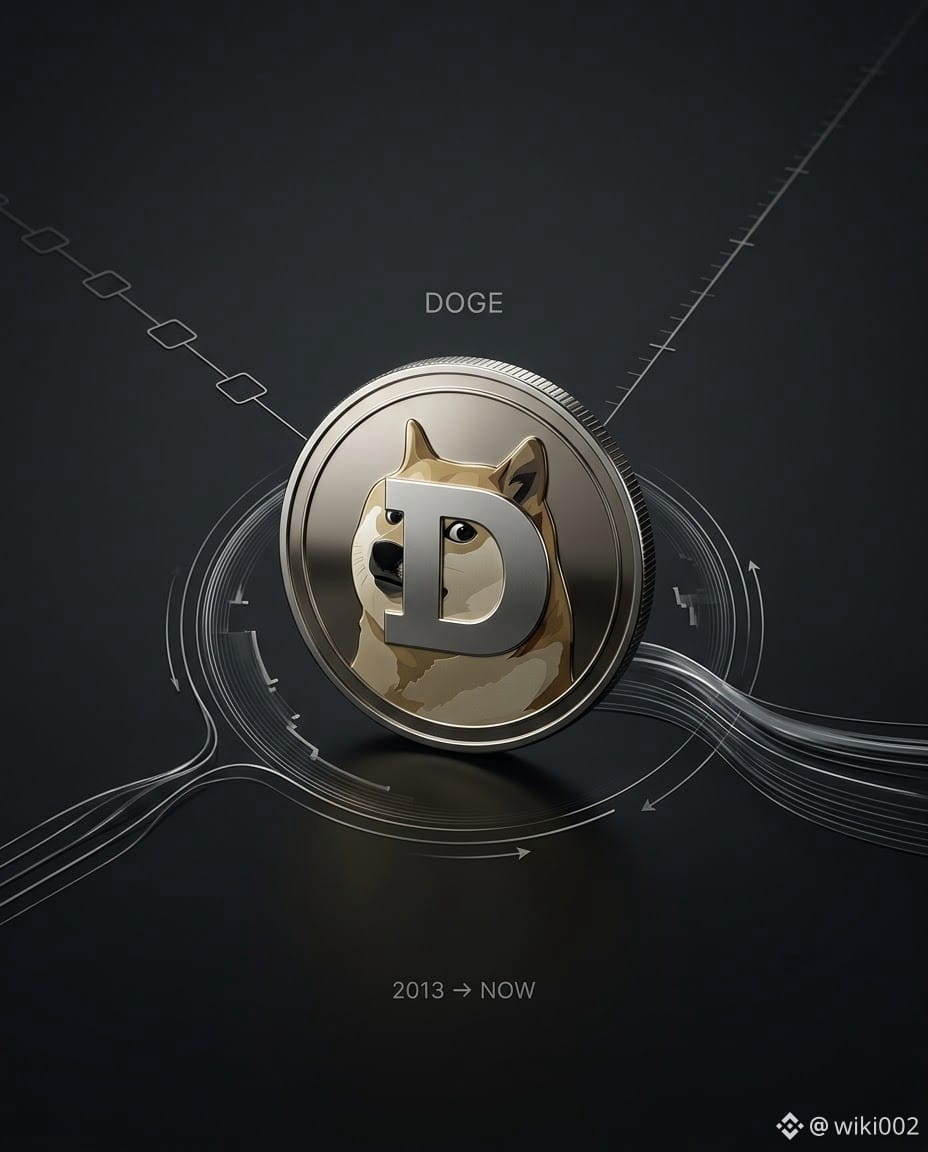
I’m considering holding DOGE, but not because I expect another meme rally.
I’m looking at a different question. Can DOGE still justify a place in a portfolio after surviving more than a decade of crypto cycles? 🤔
What makes DOGE interesting to me is the combination of simplicity, liquidity and longevity.
DOGE has operated since 2013 as a Scrypt-based Proof-of-Work network focused on value transfer. It sacrifices smart-contract programmability and application composability, but that trade-off may suit an asset whose primary role is moving value rather than running complex applications.
The liquidity side matters too. DOGE remains a large-cap crypto asset with substantial daily trading activity. That gives holders broad conversion markets and makes its monetary role more practical than the market cap alone suggests.
But I don’t want to confuse durability with undervaluation.
DOGE has ongoing issuance, limited native programmability and sentiment-sensitive price discovery. So I’m not assuming today’s valuation automatically offers attractive risk/reward.
What I find compelling is the combination: a simple protocol, persistent liquidity and a network that has remained operational since 2013.
That doesn’t make DOGE the next Ethereum.
It gives DOGE a different potential role: a recognizable, liquid and durable digital asset for transferring value. 🧭
That’s why I’m considering holding it cautiously, and as a calculated allocation rather than a blind meme bet.
$DOGE $BONK $1000CAT
#Dogecoin #DOGE #Crypto #Web3
I’m looking at a different question. Can DOGE still justify a place in a portfolio after surviving more than a decade of crypto cycles? 🤔
What makes DOGE interesting to me is the combination of simplicity, liquidity and longevity.
DOGE has operated since 2013 as a Scrypt-based Proof-of-Work network focused on value transfer. It sacrifices smart-contract programmability and application composability, but that trade-off may suit an asset whose primary role is moving value rather than running complex applications.
The liquidity side matters too. DOGE remains a large-cap crypto asset with substantial daily trading activity. That gives holders broad conversion markets and makes its monetary role more practical than the market cap alone suggests.
But I don’t want to confuse durability with undervaluation.
DOGE has ongoing issuance, limited native programmability and sentiment-sensitive price discovery. So I’m not assuming today’s valuation automatically offers attractive risk/reward.
What I find compelling is the combination: a simple protocol, persistent liquidity and a network that has remained operational since 2013.
That doesn’t make DOGE the next Ethereum.
It gives DOGE a different potential role: a recognizable, liquid and durable digital asset for transferring value. 🧭
That’s why I’m considering holding it cautiously, and as a calculated allocation rather than a blind meme bet.
$DOGE $BONK $1000CAT
#Dogecoin #DOGE #Crypto #Web3
🎁🎁


周周1688
·
--
When the heart is broad enough, life has no low points
$BNB 🧧
Time is never wasted,
every experience is a gift
With a smile on your face
embrace every day
#1688家族family
$BNB 🧧
Time is never wasted,
every experience is a gift
With a smile on your face
embrace every day
#1688家族family

🎁🎁

Ahmed Ali Nizamani
·
--
555 + 710 = 🎁🎁🎁🎁✨

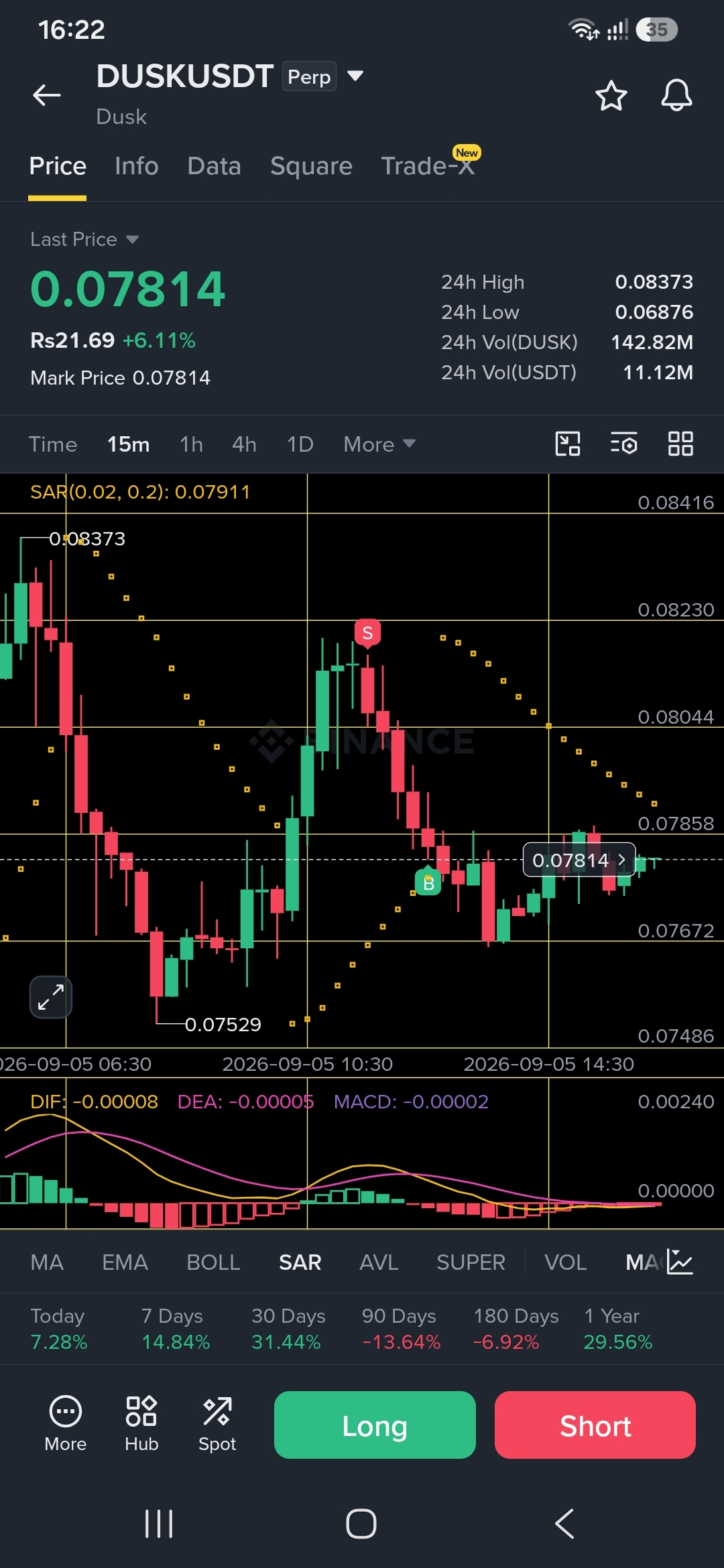
DUSK/USDT 📊
Bias: LONG on confirmation
DUSK is holding above the 0.0767 support zone after a sharp recovery. Momentum is stabilizing, but price is still below the 0.0791 SAR level, so confirmation matters.
Entry: 0.0776 – 0.0782
TP1: 0.0791
TP2: 0.0804
TP3: 0.0823
Stop Loss: 0.0765
A clean reclaim of 0.0791 would strengthen the bullish setup. Losing 0.0767 invalidates the idea.
Risk management first. Don’t chase the candle.
$DUSK $MARSCOIN $USDT #DUSK #CryptoTrading #Binance
Bias: LONG on confirmation
DUSK is holding above the 0.0767 support zone after a sharp recovery. Momentum is stabilizing, but price is still below the 0.0791 SAR level, so confirmation matters.
Entry: 0.0776 – 0.0782
TP1: 0.0791
TP2: 0.0804
TP3: 0.0823
Stop Loss: 0.0765
A clean reclaim of 0.0791 would strengthen the bullish setup. Losing 0.0767 invalidates the idea.
Risk management first. Don’t chase the candle.
$DUSK $MARSCOIN $USDT #DUSK #CryptoTrading #Binance
Verified
AI agents are moving from copilots toward economic actors.
The difficult problem isn’t giving an agent more autonomy. It’s controlling what that autonomy can reach.
An agent that only generates an answer needs to be accurate.
An agent that can access private data, use credentials, call external systems or execute transactions needs something harder: verifiable boundaries around its authority.
That is the part of the agent economy I think is still underestimated.
The key question becomes. Can I verify what the agent was permitted to do, where sensitive computation occurred, and what it actually executed?
This is where @NEAR Protocol gets interesting to me.
NEAR AI uses hardware-enforced Trusted Execution Environments to isolate sensitive inference and agent workloads, while remote attestation provides evidence that computation is running inside the expected environment.
Then there is Chain Signatures. NEAR enables an account on its network to control accounts on external chains through threshold cryptography, giving agents a native way to execute cross-chain transactions without maintaining a separate private key for every network.
To me, that creates a useful security split.
TEE protects sensitive computation. Attestation makes the execution environment verifiable. Chain Signatures extend execution authority across chains.
The second-order effect is bigger than AI + blockchain.
Once an agent can act across multiple systems, its permissions stop being merely an application feature. They become part of the infrastructure defining the agent’s economic boundaries.
My view is that the winning agent stack won’t simply make agents more autonomous.
It will make their autonomy private, verifiable and bounded.
That is the infrastructure problem @NEAR Protocol is actually interesting for.
$NEAR $DASH $S #NEAR
The difficult problem isn’t giving an agent more autonomy. It’s controlling what that autonomy can reach.
An agent that only generates an answer needs to be accurate.
An agent that can access private data, use credentials, call external systems or execute transactions needs something harder: verifiable boundaries around its authority.
That is the part of the agent economy I think is still underestimated.
The key question becomes. Can I verify what the agent was permitted to do, where sensitive computation occurred, and what it actually executed?
This is where @NEAR Protocol gets interesting to me.
NEAR AI uses hardware-enforced Trusted Execution Environments to isolate sensitive inference and agent workloads, while remote attestation provides evidence that computation is running inside the expected environment.
Then there is Chain Signatures. NEAR enables an account on its network to control accounts on external chains through threshold cryptography, giving agents a native way to execute cross-chain transactions without maintaining a separate private key for every network.
To me, that creates a useful security split.
TEE protects sensitive computation. Attestation makes the execution environment verifiable. Chain Signatures extend execution authority across chains.
The second-order effect is bigger than AI + blockchain.
Once an agent can act across multiple systems, its permissions stop being merely an application feature. They become part of the infrastructure defining the agent’s economic boundaries.
My view is that the winning agent stack won’t simply make agents more autonomous.
It will make their autonomy private, verifiable and bounded.
That is the infrastructure problem @NEAR Protocol is actually interesting for.
$NEAR $DASH $S #NEAR

🎁🎁

E L E X A
·
--
🚨 LIVE NOW 🚨
Watching is easy… winning takes action 👀
Want free $USDT?
💬 Comment 666
❤️ Like
🔁 Share
➕ Follow
⏳ Spots are filling fast
Comment 666 now 🚀
#Crypto #USDT
Watching is easy… winning takes action 👀
Want free $USDT?
💬 Comment 666
❤️ Like
🔁 Share
➕ Follow
⏳ Spots are filling fast
Comment 666 now 🚀
#Crypto #USDT

🎁🎁
Quoted content has been removed
🎁🎁

Z O N E P R I M E
·
--
Bullish🎁 ZONE PRIME BNB SURPRISE DROP! 🎁
✨ The Red Packet is full and ready to open! ✨
👇 Simple Steps to Participate 👇
❤️ Follow ZONE PRIME
🔁 Like & Share
💬 Comment “BNB”
🔔 Stay connected and active for upcoming surprise drops!
#BNB #Crypto #ZONEPRIME #redpacket #Binance
✨ The Red Packet is full and ready to open! ✨
👇 Simple Steps to Participate 👇
❤️ Follow ZONE PRIME
🔁 Like & Share
💬 Comment “BNB”
🔔 Stay connected and active for upcoming surprise drops!
#BNB #Crypto #ZONEPRIME #redpacket #Binance

🎁🎁

Aria Daisy 阿莉娅_黛西
·
--
Bullish🔥 JASMY COIN GIVEAWAY 🔥
I’m excited to share this giveaway with the Binance community! 🚀
🎁 1,000 JASMY for 10 lucky winners!
✅ Follow me
🔄 Repost this post
💬 Comment “JASMY”
Good luck everyone! 🍀❤️
Thank you for your amazing support and love! 🙏
#JASMAY #BinanceSquareFamily
$JASMY $BTC
I’m excited to share this giveaway with the Binance community! 🚀
🎁 1,000 JASMY for 10 lucky winners!
✅ Follow me
🔄 Repost this post
💬 Comment “JASMY”
Good luck everyone! 🍀❤️
Thank you for your amazing support and love! 🙏
#JASMAY #BinanceSquareFamily
$JASMY $BTC
🎁🎁

YASH DHALIWAL 31_加密 143
·
--
🌹👻🌹👻🌹👻🌹👻🌹👻🌹👻🌹👻🌹👻🌹👻🌹👻🌹👻🌹👻🌹👻🌹👻🌹👻🌹👻🌹👻🌹👻🌹👻🌹👻🌹👻🌹👻🌹
🔥🔥🔥🔥🔥🔥🔥🔥🔥🔥🔥🔥🔥🔥🔥🎊🎊🎊🎊🎊🎊🎊🎊🎊🎊🎊🎊🎊🎊🎊✨✨✨✨✨✨✨✨✨✨✨✨✨✨✨🔥🔥🔥🔥🔥🔥🔥🔥🔥🔥🔥🔥🔥🔥🔥
$NVDAB $GOOGL.US $BTC
🔥🔥🔥🔥🔥🔥🔥🔥🔥🔥🔥🔥🔥🔥🔥🎊🎊🎊🎊🎊🎊🎊🎊🎊🎊🎊🎊🎊🎊🎊✨✨✨✨✨✨✨✨✨✨✨✨✨✨✨🔥🔥🔥🔥🔥🔥🔥🔥🔥🔥🔥🔥🔥🔥🔥
$NVDAB $GOOGL.US $BTC
🎁🎁
Quoted content has been removed
🎁🎁

x_Rex
·
--
Stablecoin market cap just hit $289.9 billion ☘️🧧
That's almost $290 billion sitting on the sidelines in stablecoins.
Still Waiting.
Every dollar in stablecoins is a dollar that COULD move into crypto but hasn't yet. It's dry powder. Parked capital. People who are in the ecosystem but not fully committed yet.
When stablecoin dominance is high and market sentiment shifts — that capital moves FAST.
USD1 from World Liberty Financial earning 5.2% APR on Binance right now. USDT. USDC. reUSD earning 6.17%. People are parking money AND earning yield while they wait.
$290 billion waiting on the sidelines is either the biggest opportunity or the biggest warning sign depending on how you look at it .
Are you sitting in stablecoins right now or fully deployed? 👇
#StablecoinSafety #BinanceSquare #BinanceSquareTalks #crypto
🐎😍
That's almost $290 billion sitting on the sidelines in stablecoins.
Still Waiting.
Every dollar in stablecoins is a dollar that COULD move into crypto but hasn't yet. It's dry powder. Parked capital. People who are in the ecosystem but not fully committed yet.
When stablecoin dominance is high and market sentiment shifts — that capital moves FAST.
USD1 from World Liberty Financial earning 5.2% APR on Binance right now. USDT. USDC. reUSD earning 6.17%. People are parking money AND earning yield while they wait.
$290 billion waiting on the sidelines is either the biggest opportunity or the biggest warning sign depending on how you look at it .
Are you sitting in stablecoins right now or fully deployed? 👇
#StablecoinSafety #BinanceSquare #BinanceSquareTalks #crypto
🐎😍

🎁🎁
CZ_ANUU
·
--
❤🤍❤🤍❤🤍❤🤍❤🤍❤🤍❤🤍❤
❤❤❤❤❤follow me please❤❤❤❤
❤🤍❤🤍❤🤍❤🤍❤🤍❤🤍❤🤍❤
❤❤❤❤❤follow me please❤❤❤❤
❤🤍❤🤍❤🤍❤🤍❤🤍❤🤍❤🤍❤

🎁🎁

Muzamil Abbas⁷⁵ 穆扎米尔_阿巴斯
·
--
Bullish🎉 $USTC GIVEAWAY ALERT 🎉
To celebrate and give back to this amazing community, I'm giving away $USTC on Binance
💛 How to Participate: ✅ Like this post
✅ Repost this post
✅ Comment "1" below
✅ Claim 🎁
Every like, comment, and repost means a lot to me. Your support motivates me to keep sharing crypto content and opportunities with the community.
⏳ Don't miss your chance. Join now and invite your friends too
Good luck to everyone 🎁 #Bitcoin #BinanceSquare #CryptoCommunity #USTC.智能策略库 #MuzamilAbbasCryptoTrading
To celebrate and give back to this amazing community, I'm giving away $USTC on Binance
💛 How to Participate: ✅ Like this post
✅ Repost this post
✅ Comment "1" below
✅ Claim 🎁
Every like, comment, and repost means a lot to me. Your support motivates me to keep sharing crypto content and opportunities with the community.
⏳ Don't miss your chance. Join now and invite your friends too
Good luck to everyone 🎁 #Bitcoin #BinanceSquare #CryptoCommunity #USTC.智能策略库 #MuzamilAbbasCryptoTrading

CHIP/USDT 📊
Price: 0.06001$
Bias: Bullish above 0.0593
Entry Zone: 0.0593 – 0.0600
Targets: 0.0615 → 0.0624 → 0.0640
Stop Loss: Below 0.0562
Price is holding above the Bollinger mid-band while the recent pullback is showing signs of stabilization. The key test remains 0.0624–0.0625 resistance; a clean breakout can open the next upside leg.
⚠️ Manage risk. No setup is guaranteed.
#CHIP #USD_AI #TradingSignal #Crypto $CHIP
Price: 0.06001$
Bias: Bullish above 0.0593
Entry Zone: 0.0593 – 0.0600
Targets: 0.0615 → 0.0624 → 0.0640
Stop Loss: Below 0.0562
Price is holding above the Bollinger mid-band while the recent pullback is showing signs of stabilization. The key test remains 0.0624–0.0625 resistance; a clean breakout can open the next upside leg.
⚠️ Manage risk. No setup is guaranteed.
#CHIP #USD_AI #TradingSignal #Crypto $CHIP
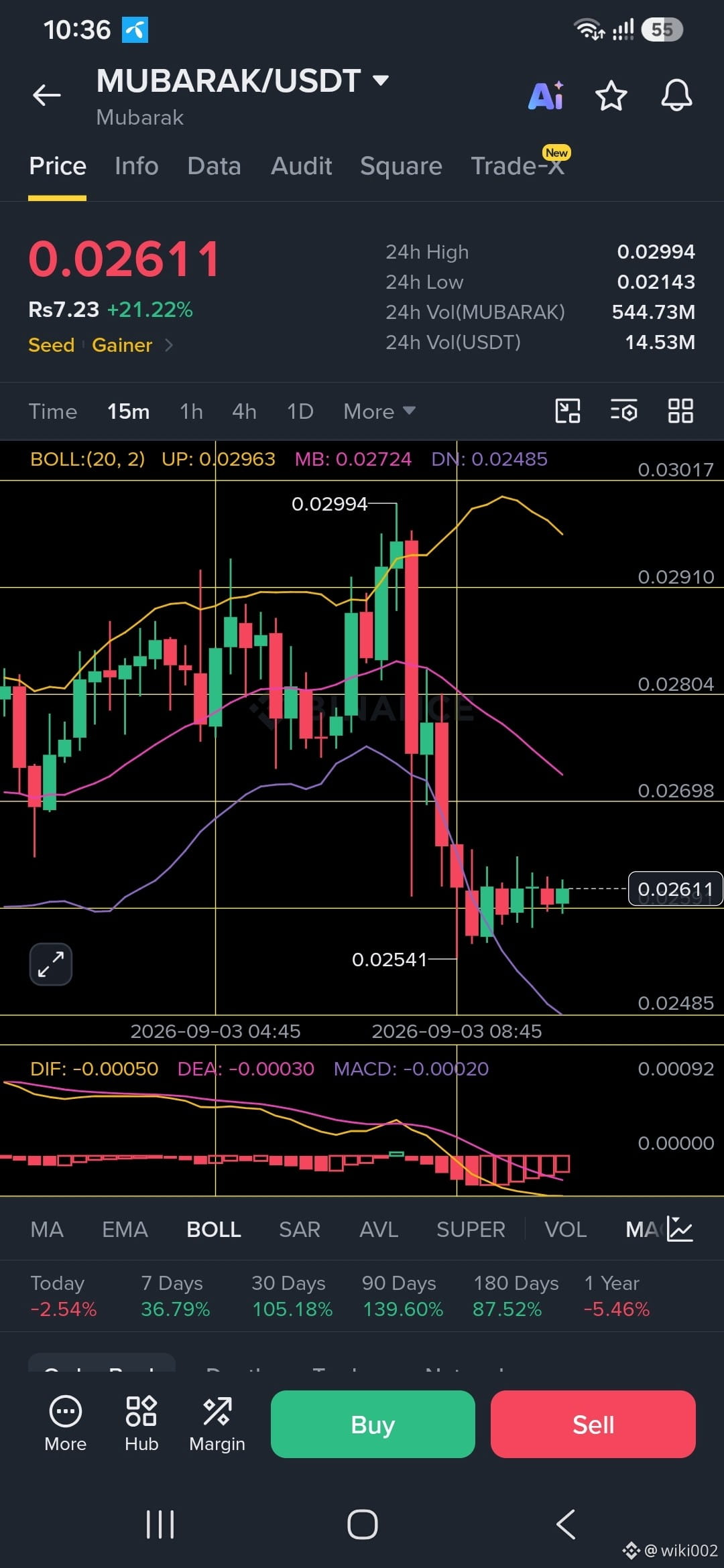
MUBARAK/USDT 📊
Bias: Cautious LONG
Entry Zone: 0.0256 – 0.0262
TP1: 0.0272
TP2: 0.0280
TP3: 0.0291 – 0.0296
Stop Loss: 0.0248
Price is consolidating above the 0.0254 support after a sharp rejection from 0.02994. Momentum remains weak, so the setup depends on holding the 0.0254–0.0256 area and reclaiming 0.0272.
⚠️ If 0.0248 breaks decisively, the long setup is invalidated.
$MUBARAK $HEMI $EGLD
#MUBARAK #Crypto #Trading #Binance
Bias: Cautious LONG
Entry Zone: 0.0256 – 0.0262
TP1: 0.0272
TP2: 0.0280
TP3: 0.0291 – 0.0296
Stop Loss: 0.0248
Price is consolidating above the 0.0254 support after a sharp rejection from 0.02994. Momentum remains weak, so the setup depends on holding the 0.0254–0.0256 area and reclaiming 0.0272.
⚠️ If 0.0248 breaks decisively, the long setup is invalidated.
$MUBARAK $HEMI $EGLD
#MUBARAK #Crypto #Trading #Binance
The bigger RWA shift isn’t tokenization. It’s where the liquidity is forming.
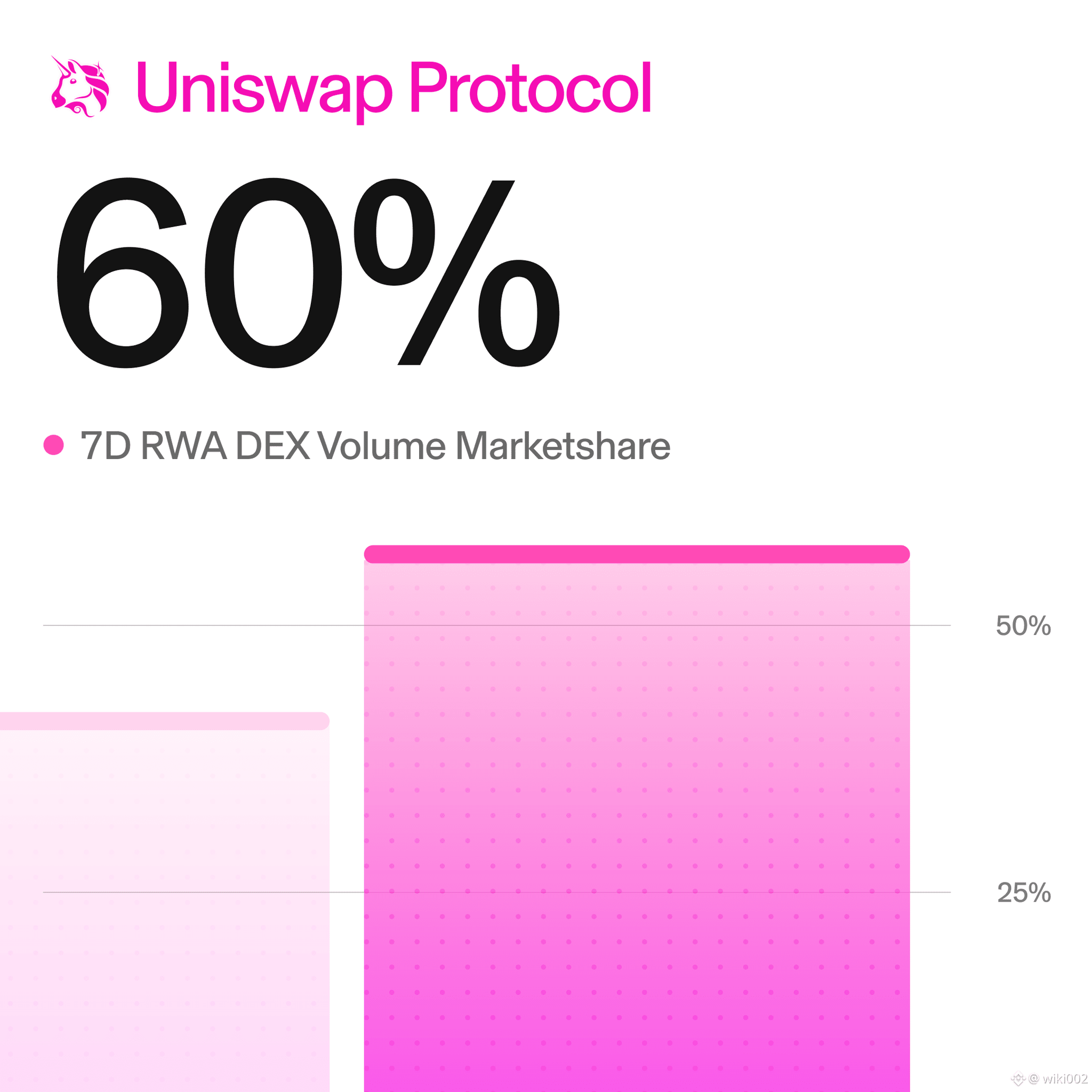
Last week, 60%+ of all RWA DEX volume ran through Uniswap, up from 40% the week before.
To me, that signals something more important than a single weekly volume jump.
RWA markets don’t necessarily need to build isolated liquidity venues from scratch. They can increasingly plug into infrastructure that already handles swaps, routing, liquidity and onchain settlement.
That creates a powerful second-order effect. The DeFi liquidity layer can become the distribution layer for Real-world assets.
Instead of creating separate markets for every tokenized asset, issuers can potentially tap into existing liquidity infrastructure and its established trading paths.
But there’s a trade-off.
If RWA activity concentrates heavily around a small number of venues, execution may improve while market participants become more dependent on those liquidity layers.
That’s why I’m watching liquidity structure more closely than tokenization headlines.
The important question is no longer just how much Real-world value comes onchain.
It’s whether that value can develop deep, composable markets once it gets there. 🔗
#RWA #DeFi #Uniswap #Tokenization
$UNI $LINK $AAVE
Last week, 60%+ of all RWA DEX volume ran through Uniswap, up from 40% the week before.
To me, that signals something more important than a single weekly volume jump.
RWA markets don’t necessarily need to build isolated liquidity venues from scratch. They can increasingly plug into infrastructure that already handles swaps, routing, liquidity and onchain settlement.
That creates a powerful second-order effect. The DeFi liquidity layer can become the distribution layer for Real-world assets.
Instead of creating separate markets for every tokenized asset, issuers can potentially tap into existing liquidity infrastructure and its established trading paths.
But there’s a trade-off.
If RWA activity concentrates heavily around a small number of venues, execution may improve while market participants become more dependent on those liquidity layers.
That’s why I’m watching liquidity structure more closely than tokenization headlines.
The important question is no longer just how much Real-world value comes onchain.
It’s whether that value can develop deep, composable markets once it gets there. 🔗
#RWA #DeFi #Uniswap #Tokenization
$UNI $LINK $AAVE
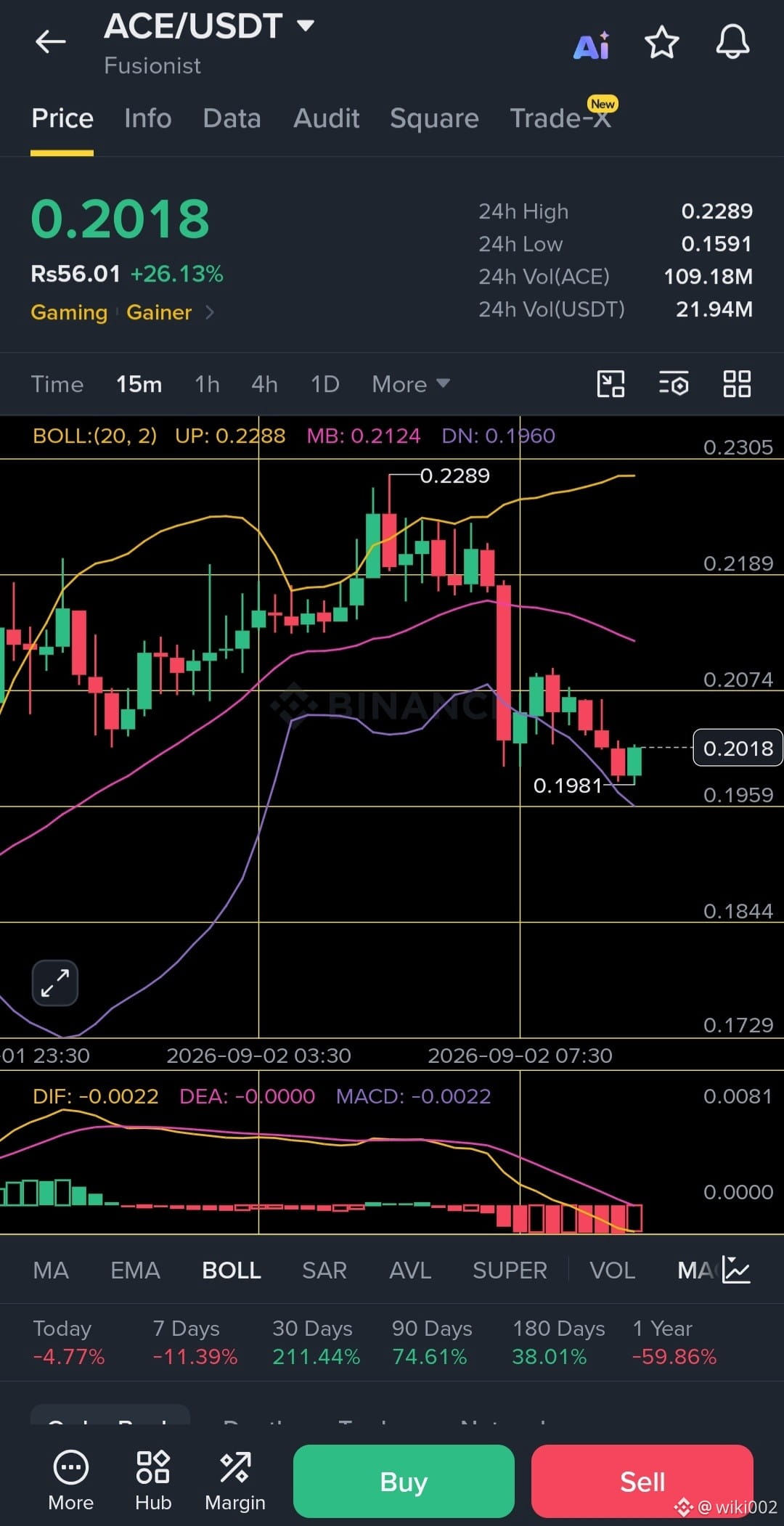
ACE/USDT 📊
Bias: SHORT / Sell
Entry: 0.2018–0.2040
TP1: 0.1981
TP2: 0.1960
TP3: 0.1844
Stop Loss: 0.2078
Technical view: Price remains below the Bollinger mid-band at 0.2124, while MACD is still bearish. The recent bounce looks weak unless ACE reclaims 0.2078 with strength.
Risk management matters don’t overleverage.
#ACE #USDT #CryptoTrading #Binance
$ACE $FF $FIL
Bias: SHORT / Sell
Entry: 0.2018–0.2040
TP1: 0.1981
TP2: 0.1960
TP3: 0.1844
Stop Loss: 0.2078
Technical view: Price remains below the Bollinger mid-band at 0.2124, while MACD is still bearish. The recent bounce looks weak unless ACE reclaims 0.2078 with strength.
Risk management matters don’t overleverage.
#ACE #USDT #CryptoTrading #Binance
$ACE $FF $FIL
XRP’s rally gets more interesting when price and futures OI start moving in opposite directions.
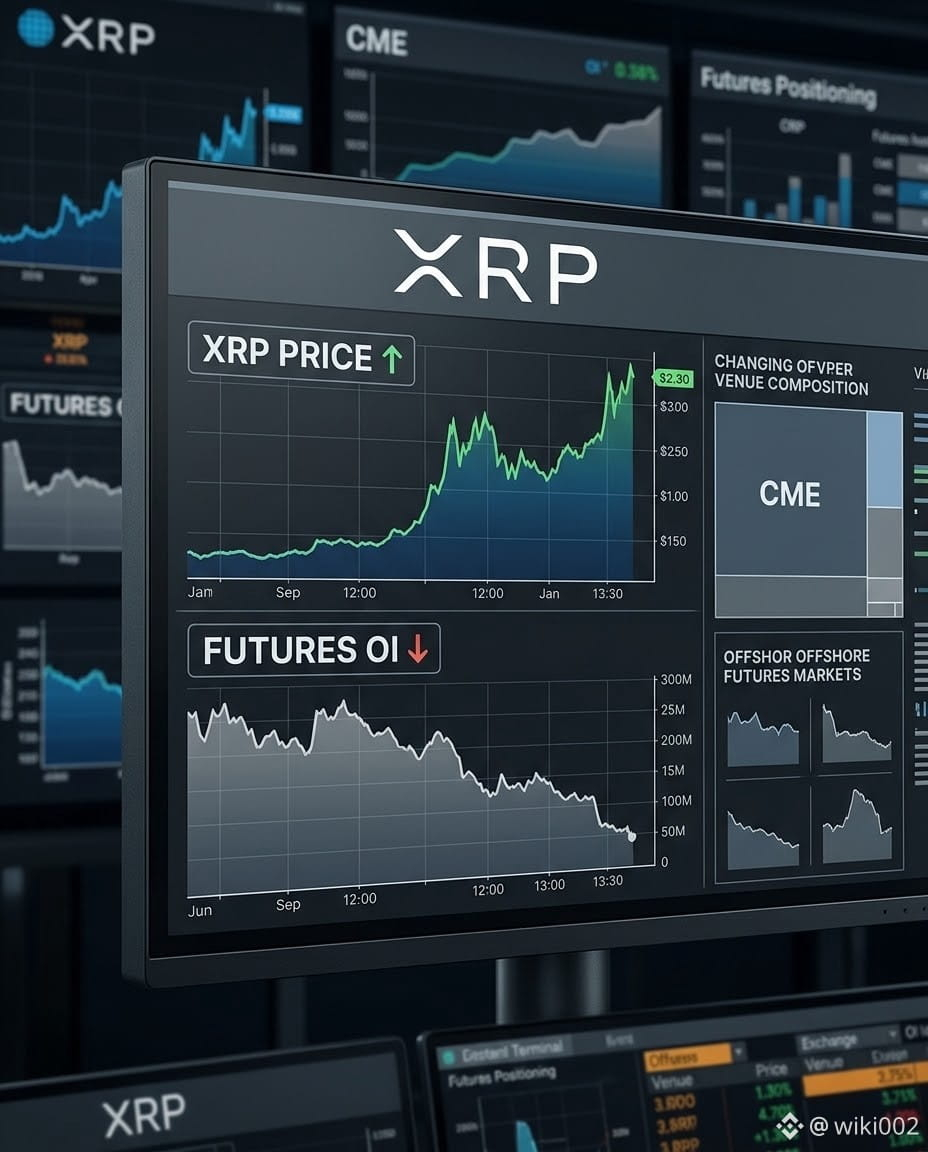
From Aug. 17 to Aug. 31, XRP moved from roughly $0.99 to $1.38, while total futures OI fell from 2.77B to 2.34B XRP. That’s nearly a 40% price gain with about 16% less aggregate futures OI.
My first reaction was simple. If traders are taking on less futures exposure, what is
actually pushing the price higher?
The venue breakdown gives a better clue.
CME XRP futures OI increased from about 284M to 387M XRP, taking CME’s share of total futures OI from roughly 10% to 17%. Meanwhile, XRP futures OI outside CME fell by about 533M XRP, or 21%.
So looking only at total OI misses an important part of the picture. The amount of OI changed, but so did where that OI was held.
That doesn’t prove institutions are bullish, and it doesn’t tell us why traders shifted exposure. It simply shows that the futures market became more concentrated toward CME during the rally.
CFTC positioning adds another layer. Leveraged funds were net short roughly 116M XRP-equivalent, while dealers and asset managers were net long. Those positions can include hedges, so I wouldn’t treat the short figure as a straightforward bearish bet.
This is why I’m less interested in asking whether OI is rising or falling.
I want to see whether XRP can keep its gains without needing another big expansion in futures leverage.
If spot demand continues to support price while aggregate leverage stays controlled, that would be a much stronger signal than simply seeing OI climb alongside price.
That’s the part of this rally I’m watching now. 🔎
$XRP $SUI $NEAR #XRP
#XRPRises40%InTwoWeeksAsOpenInterestFalls
From Aug. 17 to Aug. 31, XRP moved from roughly $0.99 to $1.38, while total futures OI fell from 2.77B to 2.34B XRP. That’s nearly a 40% price gain with about 16% less aggregate futures OI.
My first reaction was simple. If traders are taking on less futures exposure, what is
actually pushing the price higher?
The venue breakdown gives a better clue.
CME XRP futures OI increased from about 284M to 387M XRP, taking CME’s share of total futures OI from roughly 10% to 17%. Meanwhile, XRP futures OI outside CME fell by about 533M XRP, or 21%.
So looking only at total OI misses an important part of the picture. The amount of OI changed, but so did where that OI was held.
That doesn’t prove institutions are bullish, and it doesn’t tell us why traders shifted exposure. It simply shows that the futures market became more concentrated toward CME during the rally.
CFTC positioning adds another layer. Leveraged funds were net short roughly 116M XRP-equivalent, while dealers and asset managers were net long. Those positions can include hedges, so I wouldn’t treat the short figure as a straightforward bearish bet.
This is why I’m less interested in asking whether OI is rising or falling.
I want to see whether XRP can keep its gains without needing another big expansion in futures leverage.
If spot demand continues to support price while aggregate leverage stays controlled, that would be a much stronger signal than simply seeing OI climb alongside price.
That’s the part of this rally I’m watching now. 🔎
$XRP $SUI $NEAR #XRP
#XRPRises40%InTwoWeeksAsOpenInterestFalls
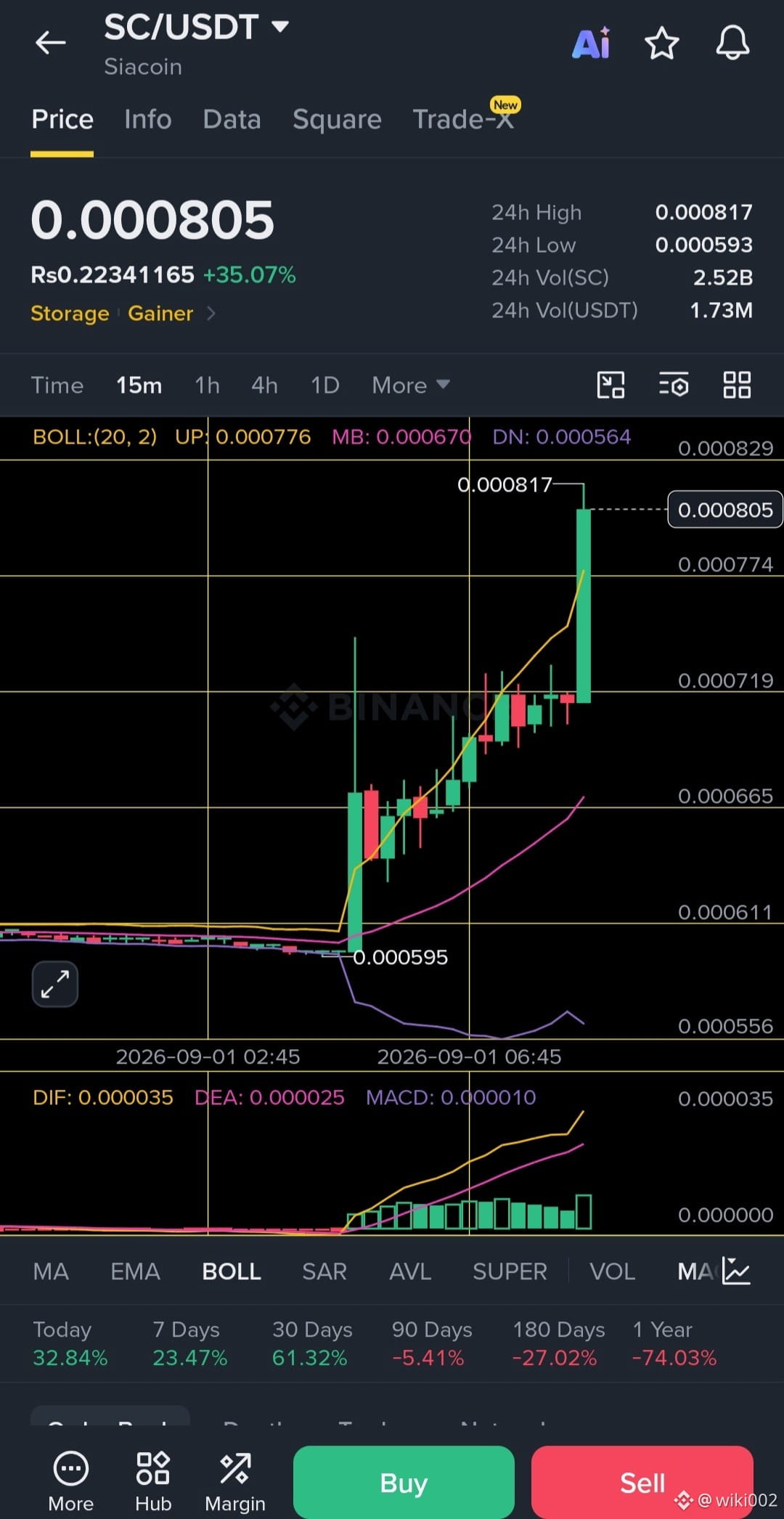
📈 SC/USDT — Bullish Breakout Signal
Entry: 0.000775 – 0.000795
Targets: 0.000817 → 0.000850 → 0.000900
Invalidation: Below 0.000755
SC has broken above the key 0.000774 resistance with strong momentum and rising MACD. A controlled retest of the breakout zone would offer a cleaner entry than chasing the current spike.
Trade smart. Manage risk.
$SC $ARB $OG #SC #Siacoin #CryptoTrading #Altcoins
Entry: 0.000775 – 0.000795
Targets: 0.000817 → 0.000850 → 0.000900
Invalidation: Below 0.000755
SC has broken above the key 0.000774 resistance with strong momentum and rising MACD. A controlled retest of the breakout zone would offer a cleaner entry than chasing the current spike.
Trade smart. Manage risk.
$SC $ARB $OG #SC #Siacoin #CryptoTrading #Altcoins
Log in to explore more content