
wiki002
4.2k Posts

wiki002
Allah is greatest
High-Frequency Trader
1.9 Years
1.1K+ Following
5.5K+ Followers
16.0K+ Liked
Posts
All
Quotes
Live
PINNED
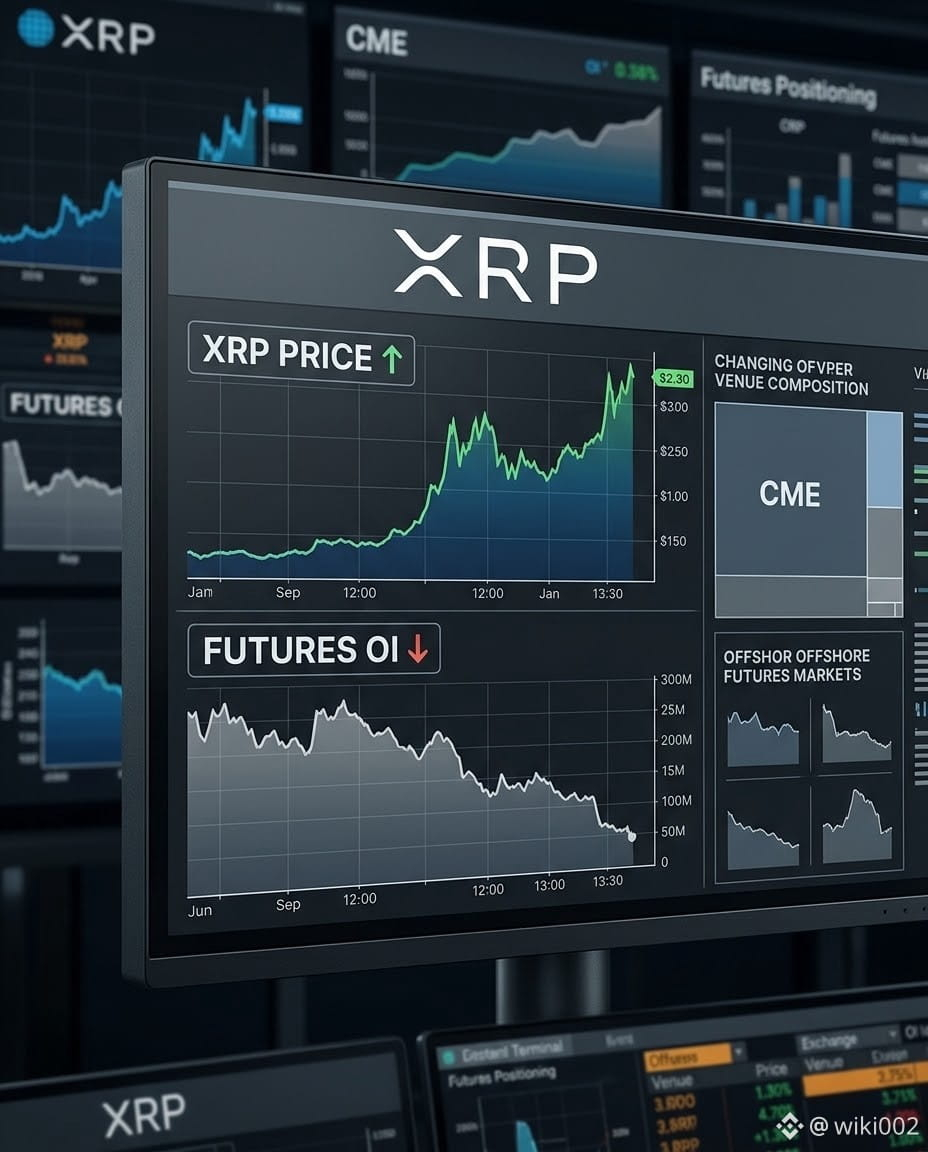
XRP’s rally gets more interesting when price and futures OI start moving in opposite directions.
From Aug. 17 to Aug. 31, XRP moved from roughly $0.99 to $1.38, while total futures OI fell from 2.77B to 2.34B XRP. That’s nearly a 40% price gain with about 16% less aggregate futures OI.
My first reaction was simple. If traders are taking on less futures exposure, what is
actually pushing the price higher?
The venue breakdown gives a better clue.
CME XRP futures OI increased from about 284M to 387M XRP, taking CME’s share of total futures OI from roughly 10% to 17%. Meanwhile, XRP futures OI outside CME fell by about 533M XRP, or 21%.
So looking only at total OI misses an important part of the picture. The amount of OI changed, but so did where that OI was held.
That doesn’t prove institutions are bullish, and it doesn’t tell us why traders shifted exposure. It simply shows that the futures market became more concentrated toward CME during the rally.
CFTC positioning adds another layer. Leveraged funds were net short roughly 116M XRP-equivalent, while dealers and asset managers were net long. Those positions can include hedges, so I wouldn’t treat the short figure as a straightforward bearish bet.
This is why I’m less interested in asking whether OI is rising or falling.
I want to see whether XRP can keep its gains without needing another big expansion in futures leverage.
If spot demand continues to support price while aggregate leverage stays controlled, that would be a much stronger signal than simply seeing OI climb alongside price.
That’s the part of this rally I’m watching now. 🔎
$XRP $SUI $NEAR #XRP
#XRPRises40%InTwoWeeksAsOpenInterestFalls
From Aug. 17 to Aug. 31, XRP moved from roughly $0.99 to $1.38, while total futures OI fell from 2.77B to 2.34B XRP. That’s nearly a 40% price gain with about 16% less aggregate futures OI.
My first reaction was simple. If traders are taking on less futures exposure, what is
actually pushing the price higher?
The venue breakdown gives a better clue.
CME XRP futures OI increased from about 284M to 387M XRP, taking CME’s share of total futures OI from roughly 10% to 17%. Meanwhile, XRP futures OI outside CME fell by about 533M XRP, or 21%.
So looking only at total OI misses an important part of the picture. The amount of OI changed, but so did where that OI was held.
That doesn’t prove institutions are bullish, and it doesn’t tell us why traders shifted exposure. It simply shows that the futures market became more concentrated toward CME during the rally.
CFTC positioning adds another layer. Leveraged funds were net short roughly 116M XRP-equivalent, while dealers and asset managers were net long. Those positions can include hedges, so I wouldn’t treat the short figure as a straightforward bearish bet.
This is why I’m less interested in asking whether OI is rising or falling.
I want to see whether XRP can keep its gains without needing another big expansion in futures leverage.
If spot demand continues to support price while aggregate leverage stays controlled, that would be a much stronger signal than simply seeing OI climb alongside price.
That’s the part of this rally I’m watching now. 🔎
$XRP $SUI $NEAR #XRP
#XRPRises40%InTwoWeeksAsOpenInterestFalls
🎁🎁

Leo - F0
·
--
Bullish🧧🧧🔥GOOD MORNING FROM DUBAİ, FAMİLY. I'VE PREPARED A SPECIAL GİFT FOR YOU.🔥🧧🧧
"Keep your entry quiet while the numbers soar. Chasing the freedom on a private shore." #Dubái 🏝️🍹
$BTC 🔥🔥🧧🧧
$BNB $ETH #xrp #TRUMP
#1688家族family 💚 @周周1688
@Hawk自由哥 #doge
"Keep your entry quiet while the numbers soar. Chasing the freedom on a private shore." #Dubái 🏝️🍹
$BTC 🔥🔥🧧🧧
$BNB $ETH #xrp #TRUMP
#1688家族family 💚 @周周1688
@Hawk自由哥 #doge

🎁🎁


周周1688
·
--
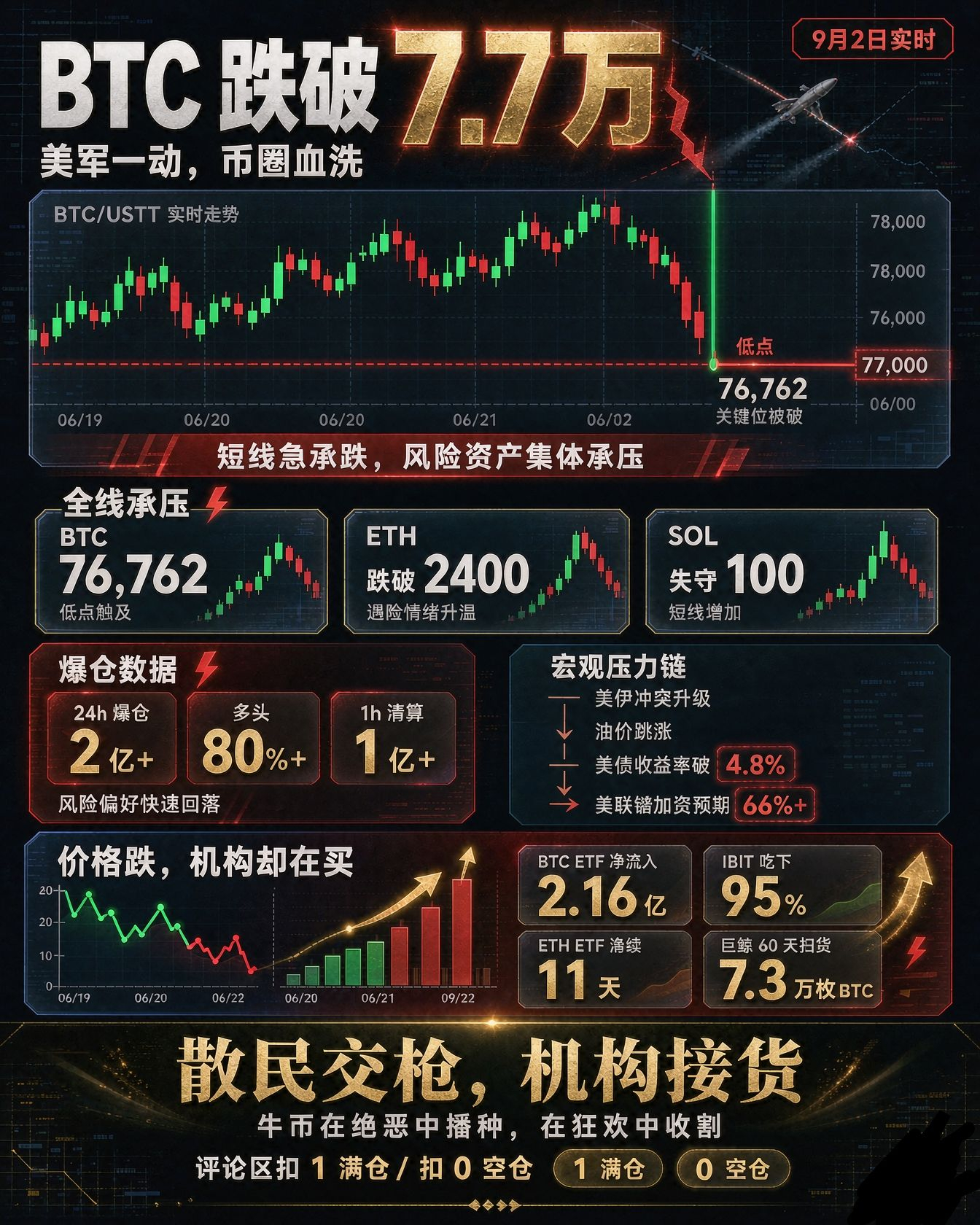
US military missile lands, BTC directly smashes through 77,000!
$BNB 🧧🧧
Do you think a 25% surge in August means the bull market is back? On September 1st, the first blade is cutting precisely full-position long holders.
As of September 2nd (live):
BTC hit a low of 76,762, ETH broke below 2,400, and SOL fell below 100;
In the past 24 hours, total liquidations across the entire network exceeded $200 million. Longs account for 80%+, and in one hour alone, more than $100 million was liquidated.
Escalation in the US-Iran conflict → oil prices jump → US Treasury yields break 4.8% → rate-hike expectations at the Fed spike to 66%+ — risk assets get hammered across the board.
But the most bizarre part isn’t the drop—it’s that while the price falls, institutions are buying:
Spot BTC ETF net inflows of $216 million in a single day; IBIT alone takes 95% of it;
ETH ETF has been drawing in funds for 11 straight days;
giant whales have scooped up 73,000 BTC over 60 days.
Retail hands in their guns—institutions take the deliveries. This isn’t a collapse; it’s turnover.
#1688家族family
#科威特美军基地发生爆炸
$BTC $SOL
$BNB 🧧🧧
Do you think a 25% surge in August means the bull market is back? On September 1st, the first blade is cutting precisely full-position long holders.
As of September 2nd (live):
BTC hit a low of 76,762, ETH broke below 2,400, and SOL fell below 100;
In the past 24 hours, total liquidations across the entire network exceeded $200 million. Longs account for 80%+, and in one hour alone, more than $100 million was liquidated.
Escalation in the US-Iran conflict → oil prices jump → US Treasury yields break 4.8% → rate-hike expectations at the Fed spike to 66%+ — risk assets get hammered across the board.
But the most bizarre part isn’t the drop—it’s that while the price falls, institutions are buying:
Spot BTC ETF net inflows of $216 million in a single day; IBIT alone takes 95% of it;
ETH ETF has been drawing in funds for 11 straight days;
giant whales have scooped up 73,000 BTC over 60 days.
Retail hands in their guns—institutions take the deliveries. This isn’t a collapse; it’s turnover.
#1688家族family
#科威特美军基地发生爆炸
$BTC $SOL
The bigger RWA shift isn’t tokenization. It’s where the liquidity is forming.
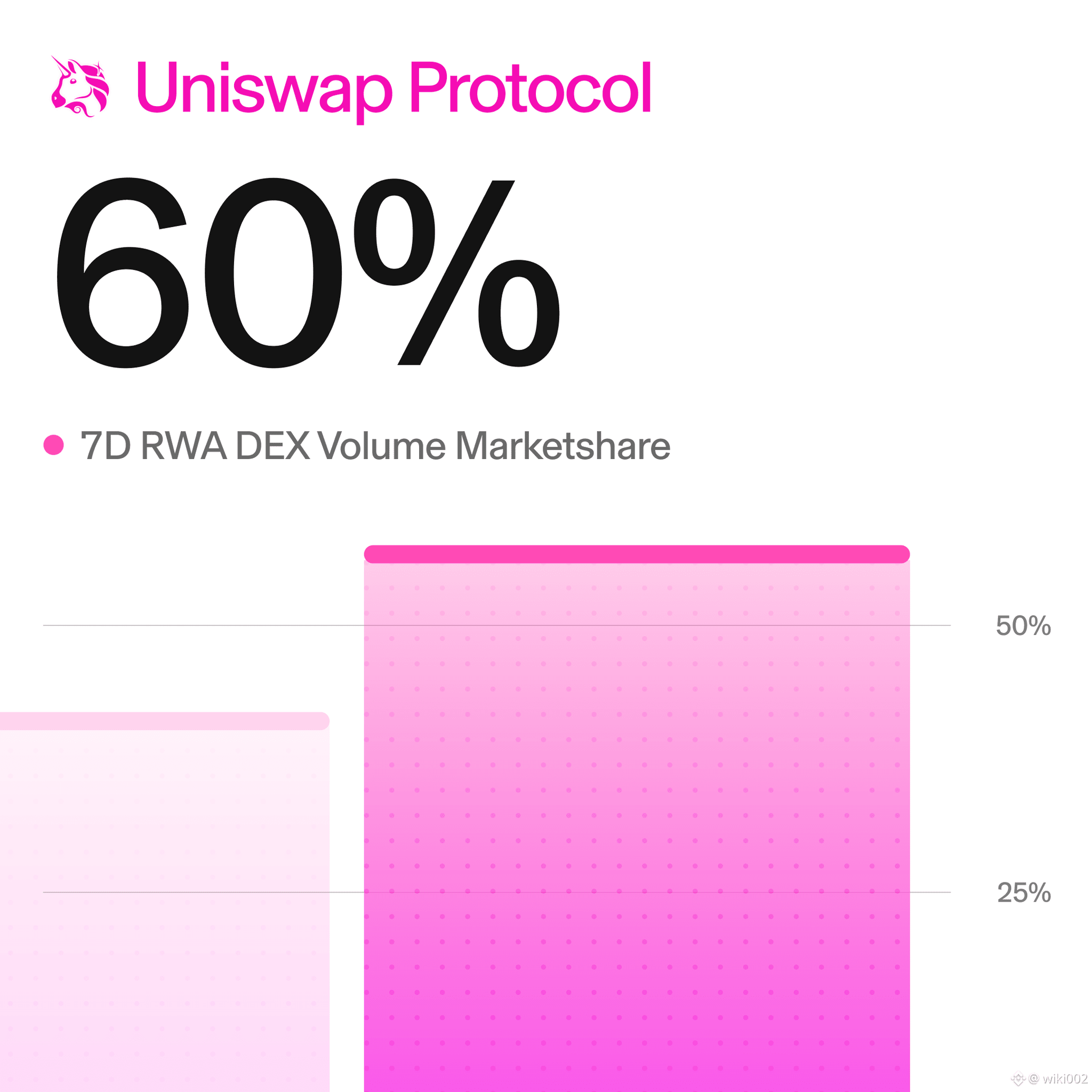
Last week, 60%+ of all RWA DEX volume ran through Uniswap, up from 40% the week before.
To me, that signals something more important than a single weekly volume jump.
RWA markets don’t necessarily need to build isolated liquidity venues from scratch. They can increasingly plug into infrastructure that already handles swaps, routing, liquidity and onchain settlement.
That creates a powerful second-order effect. The DeFi liquidity layer can become the distribution layer for Real-world assets.
Instead of creating separate markets for every tokenized asset, issuers can potentially tap into existing liquidity infrastructure and its established trading paths.
But there’s a trade-off.
If RWA activity concentrates heavily around a small number of venues, execution may improve while market participants become more dependent on those liquidity layers.
That’s why I’m watching liquidity structure more closely than tokenization headlines.
The important question is no longer just how much Real-world value comes onchain.
It’s whether that value can develop deep, composable markets once it gets there. 🔗
#RWA #DeFi #Uniswap #Tokenization
$UNI $LINK $AAVE
Last week, 60%+ of all RWA DEX volume ran through Uniswap, up from 40% the week before.
To me, that signals something more important than a single weekly volume jump.
RWA markets don’t necessarily need to build isolated liquidity venues from scratch. They can increasingly plug into infrastructure that already handles swaps, routing, liquidity and onchain settlement.
That creates a powerful second-order effect. The DeFi liquidity layer can become the distribution layer for Real-world assets.
Instead of creating separate markets for every tokenized asset, issuers can potentially tap into existing liquidity infrastructure and its established trading paths.
But there’s a trade-off.
If RWA activity concentrates heavily around a small number of venues, execution may improve while market participants become more dependent on those liquidity layers.
That’s why I’m watching liquidity structure more closely than tokenization headlines.
The important question is no longer just how much Real-world value comes onchain.
It’s whether that value can develop deep, composable markets once it gets there. 🔗
#RWA #DeFi #Uniswap #Tokenization
$UNI $LINK $AAVE
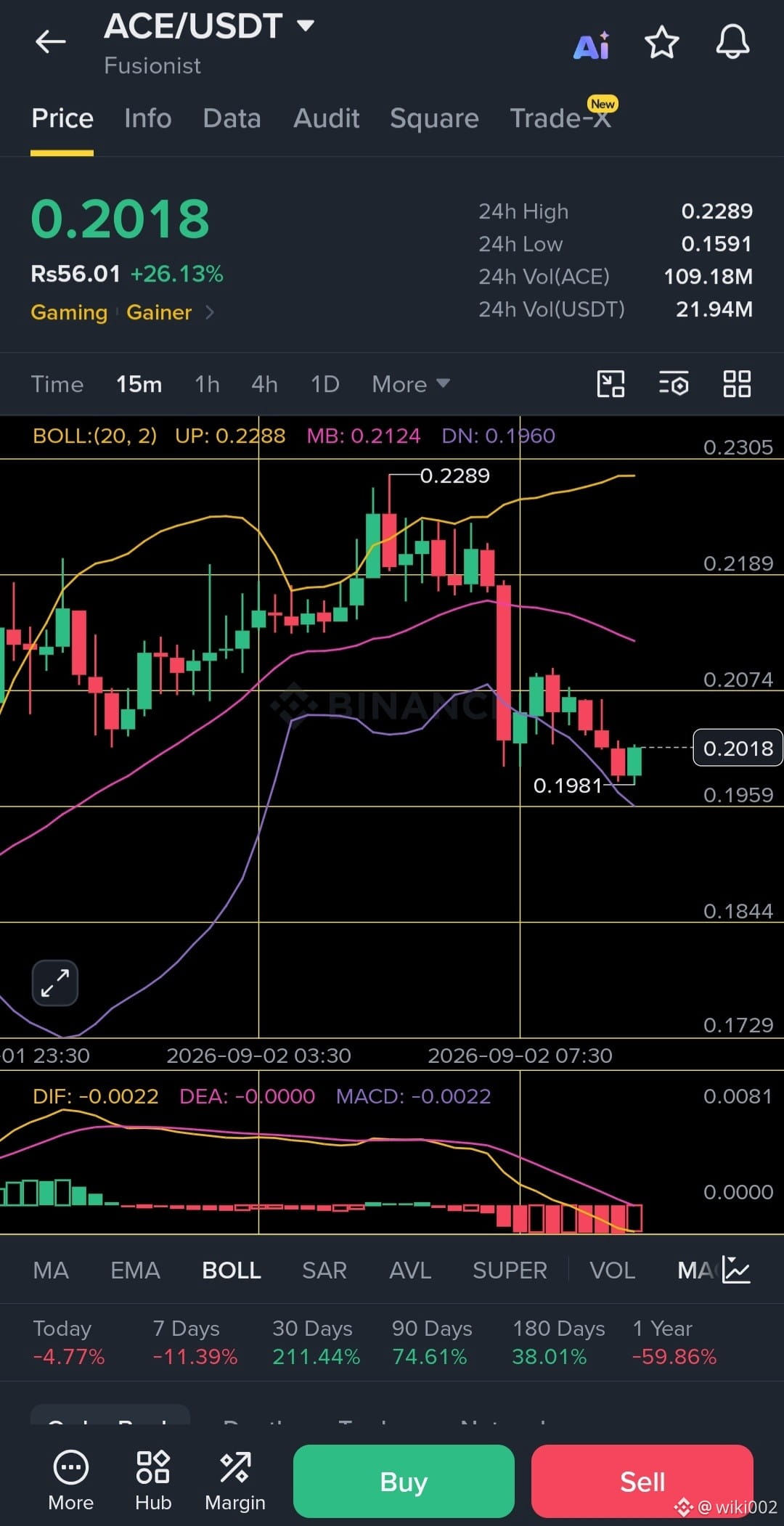
ACE/USDT 📊
Bias: SHORT / Sell
Entry: 0.2018–0.2040
TP1: 0.1981
TP2: 0.1960
TP3: 0.1844
Stop Loss: 0.2078
Technical view: Price remains below the Bollinger mid-band at 0.2124, while MACD is still bearish. The recent bounce looks weak unless ACE reclaims 0.2078 with strength.
Risk management matters don’t overleverage.
#ACE #USDT #CryptoTrading #Binance
$ACE $FF $FIL
Bias: SHORT / Sell
Entry: 0.2018–0.2040
TP1: 0.1981
TP2: 0.1960
TP3: 0.1844
Stop Loss: 0.2078
Technical view: Price remains below the Bollinger mid-band at 0.2124, while MACD is still bearish. The recent bounce looks weak unless ACE reclaims 0.2078 with strength.
Risk management matters don’t overleverage.
#ACE #USDT #CryptoTrading #Binance
$ACE $FF $FIL
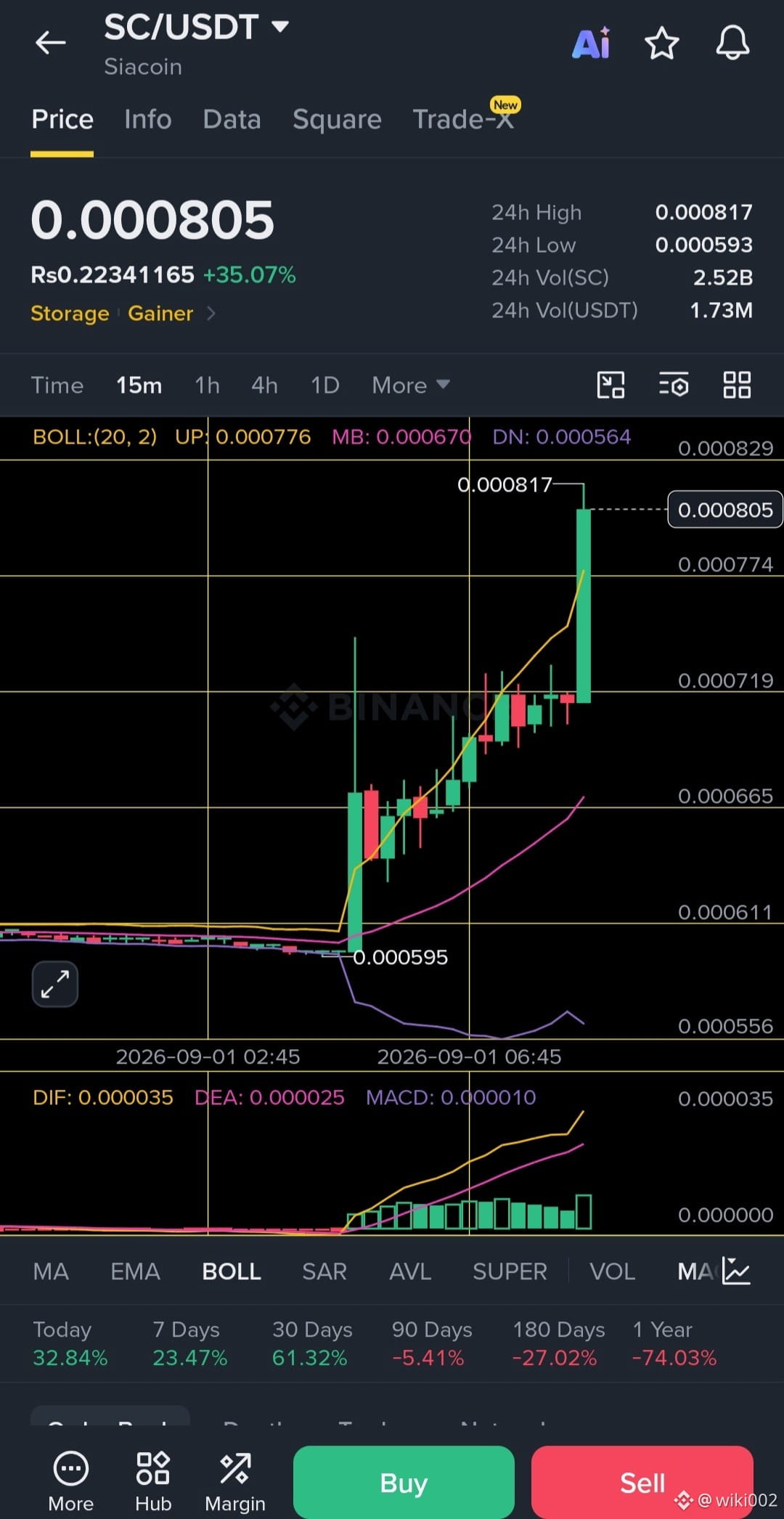
📈 SC/USDT — Bullish Breakout Signal
Entry: 0.000775 – 0.000795
Targets: 0.000817 → 0.000850 → 0.000900
Invalidation: Below 0.000755
SC has broken above the key 0.000774 resistance with strong momentum and rising MACD. A controlled retest of the breakout zone would offer a cleaner entry than chasing the current spike.
Trade smart. Manage risk.
$SC $ARB $OG #SC #Siacoin #CryptoTrading #Altcoins
Entry: 0.000775 – 0.000795
Targets: 0.000817 → 0.000850 → 0.000900
Invalidation: Below 0.000755
SC has broken above the key 0.000774 resistance with strong momentum and rising MACD. A controlled retest of the breakout zone would offer a cleaner entry than chasing the current spike.
Trade smart. Manage risk.
$SC $ARB $OG #SC #Siacoin #CryptoTrading #Altcoins
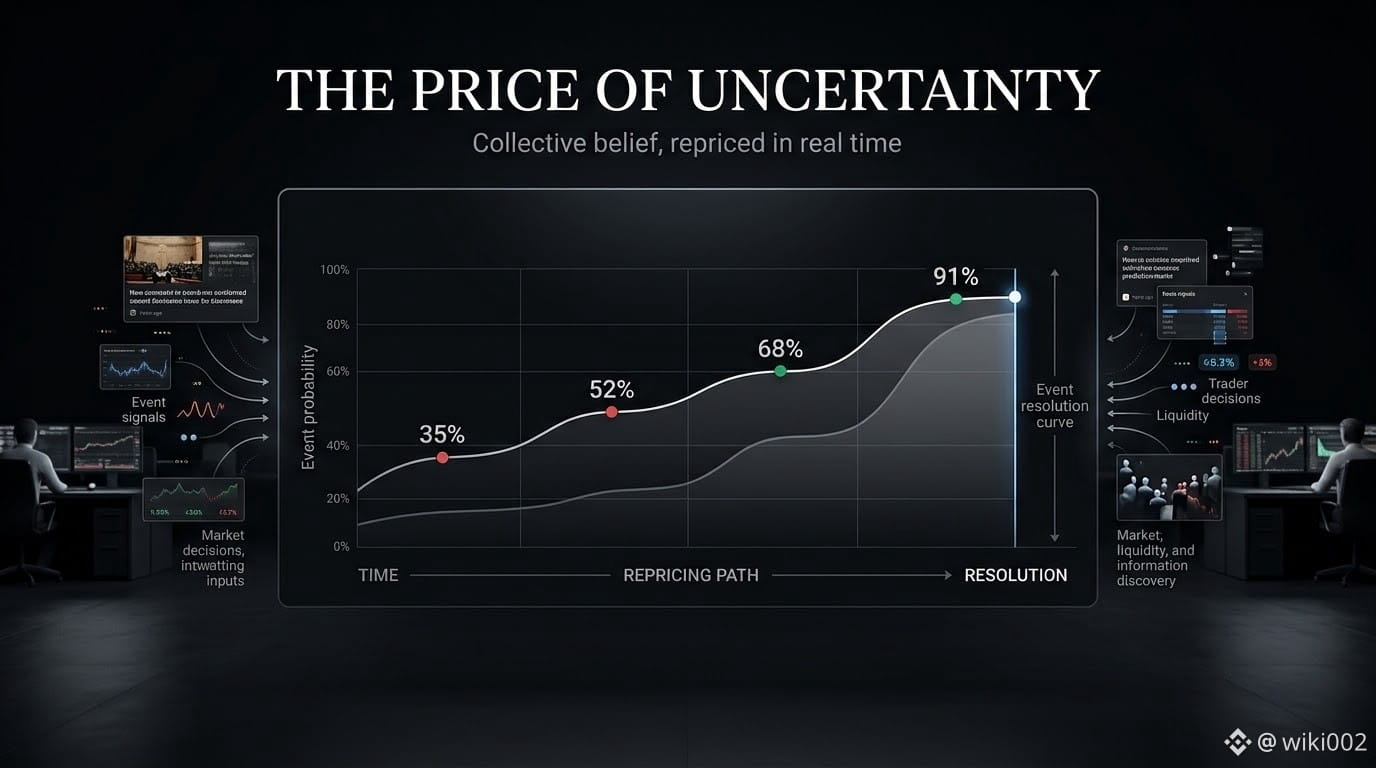
I think Polymarket’s bigger opportunity isn’t predicting events. It’s turning uncertainty into a piece of market infrastructure.
What I find genuinely interesting is the information that exists before the final outcome.
Imagine a market sitting at 35%, then moving to 52%, 68% and eventually 91%. The final result gives you one data point, right or wrong.
The repricing path gives you much more.
It shows when collective expectations changed, how quickly they changed, and how strongly the market reacted as new evidence arrived.
That creates a Second-order use case I rarely see discussed: prediction markets can potentially become datasets for studying how information propagates through markets.
Not just what happened, but how belief changed before it happened.
Of course, I wouldn’t assume every move represents genuine information. Liquidity shocks, concentrated positions, temporary order flow and market design can all distort the signal. Resolution quality matters too.
But that’s precisely why the market history becomes interesting.
If Polymarket can maintain sufficiently liquid, Well-defined markets, its archive could become more than a collection of resolved predictions. It could capture the evolution of market expectations across elections, crypto events, technology, sports and breaking news.
That changes how I think about @Polymarket
The obvious product is the probability.
The less obvious product may be the time series of collective belief behind that probability.
And that dataset could eventually be useful even after the original question has been resolved. 📊
#Polymarket #PredictionMarkets #Crypto #Web3 $POLYX $ETH $BTC
What I find genuinely interesting is the information that exists before the final outcome.
Imagine a market sitting at 35%, then moving to 52%, 68% and eventually 91%. The final result gives you one data point, right or wrong.
The repricing path gives you much more.
It shows when collective expectations changed, how quickly they changed, and how strongly the market reacted as new evidence arrived.
That creates a Second-order use case I rarely see discussed: prediction markets can potentially become datasets for studying how information propagates through markets.
Not just what happened, but how belief changed before it happened.
Of course, I wouldn’t assume every move represents genuine information. Liquidity shocks, concentrated positions, temporary order flow and market design can all distort the signal. Resolution quality matters too.
But that’s precisely why the market history becomes interesting.
If Polymarket can maintain sufficiently liquid, Well-defined markets, its archive could become more than a collection of resolved predictions. It could capture the evolution of market expectations across elections, crypto events, technology, sports and breaking news.
That changes how I think about @Polymarket
The obvious product is the probability.
The less obvious product may be the time series of collective belief behind that probability.
And that dataset could eventually be useful even after the original question has been resolved. 📊
#Polymarket #PredictionMarkets #Crypto #Web3 $POLYX $ETH $BTC
Verified
Chainlink Adoption Update 🔗
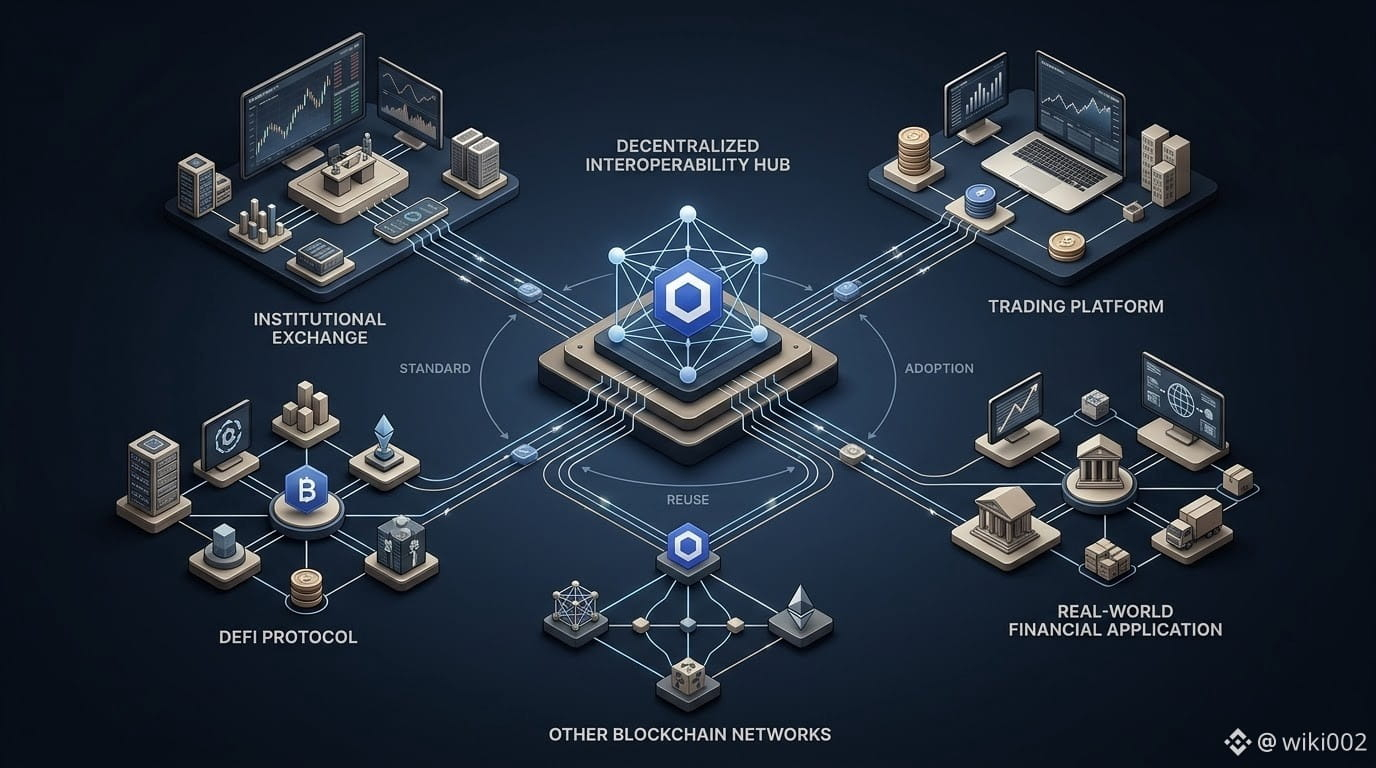
To be honest, I keep coming back to one detail in Chainlink’s latest update. It’s not just the number of integrations, but the variety of places where the same standard is being used.
There were 9 integrations across 5 services and 5 different chains, including @Coinbase, @generaltensor, @Herd_Finance, @kpk_io, @Lighter_xyz, @metricxyz, @NUVAFinance, and @RobinhoodCrypto.
What I find interesting is what happens when a standard gets reused repeatedly.
A developer doesn’t necessarily need to approach every new integration as a completely separate infrastructure problem. Familiar interfaces, established tooling and existing implementation patterns can make a standard easier to work with over time.
I mean, that doesn’t mean nine integrations have created a network effect already. The announcement alone can’t prove that.
But it does create something worth watching. A growing base of implementations that could make the standard increasingly familiar to developers across different ecosystems.
Basically, I’d pay more attention to that compounding effect than to partnership counts.
If developers start choosing Chainlink’s standard partly because other applications already use it, could adoption itself become one of the strongest reasons for the next integration? 🧠
#Chainlink #LINK #DeFi #Web3
$LINK $HEMI $ZK
To be honest, I keep coming back to one detail in Chainlink’s latest update. It’s not just the number of integrations, but the variety of places where the same standard is being used.
There were 9 integrations across 5 services and 5 different chains, including @Coinbase, @generaltensor, @Herd_Finance, @kpk_io, @Lighter_xyz, @metricxyz, @NUVAFinance, and @RobinhoodCrypto.
What I find interesting is what happens when a standard gets reused repeatedly.
A developer doesn’t necessarily need to approach every new integration as a completely separate infrastructure problem. Familiar interfaces, established tooling and existing implementation patterns can make a standard easier to work with over time.
I mean, that doesn’t mean nine integrations have created a network effect already. The announcement alone can’t prove that.
But it does create something worth watching. A growing base of implementations that could make the standard increasingly familiar to developers across different ecosystems.
Basically, I’d pay more attention to that compounding effect than to partnership counts.
If developers start choosing Chainlink’s standard partly because other applications already use it, could adoption itself become one of the strongest reasons for the next integration? 🧠
#Chainlink #LINK #DeFi #Web3
$LINK $HEMI $ZK
Look, BNB Chain leading in tokenized equity supply is interesting, but the supply number itself isn’t the part I care about most.
BNB Chain’s tokenized equities grew from about $34M at the start of 2026 to $652M in July, putting it ahead of Ethereum and close to a third of the On-chain total. Tokenized stock trading volume also passed $4.5B in July.
What I’m watching now is what happens after the stocks are issued.
If more equity supply brings in more liquidity, those assets become easier to trade. If that liquidity becomes deep enough, the tokens can become useful as collateral. Then capital can move into lending, liquidity provision and other financial applications.
That’s the flywheel I find more interesting.
equity supply → liquidity → collateral utility → capital efficiency → more financial activity.
And this is where BNB Chain’s lead could become meaningful. It isn’t just about having more tokenized stocks, it’s about whether those assets can actually plug into the financial infrastructure already being built around them.
But I wouldn’t confuse issuance with adoption.
The real test is secondary-market liquidity, collateral mobility and whether people actually use these assets instead of simply holding them. Binance Research makes essentially the same distinction. The next phase depends on whether secondary liquidity and collateral mobility grow as quickly as primary issuance.
For me, that’s the bigger lesson, the winning tokenization chain won’t necessarily be the one that issues the most assets. It will be the one that makes those assets useful after issuance. 🧩
#BNBChain #BNB #ASTER #CAKE
$BNB $ASTER $CAKE
BNB Chain’s tokenized equities grew from about $34M at the start of 2026 to $652M in July, putting it ahead of Ethereum and close to a third of the On-chain total. Tokenized stock trading volume also passed $4.5B in July.
What I’m watching now is what happens after the stocks are issued.
If more equity supply brings in more liquidity, those assets become easier to trade. If that liquidity becomes deep enough, the tokens can become useful as collateral. Then capital can move into lending, liquidity provision and other financial applications.
That’s the flywheel I find more interesting.
equity supply → liquidity → collateral utility → capital efficiency → more financial activity.
And this is where BNB Chain’s lead could become meaningful. It isn’t just about having more tokenized stocks, it’s about whether those assets can actually plug into the financial infrastructure already being built around them.
But I wouldn’t confuse issuance with adoption.
The real test is secondary-market liquidity, collateral mobility and whether people actually use these assets instead of simply holding them. Binance Research makes essentially the same distinction. The next phase depends on whether secondary liquidity and collateral mobility grow as quickly as primary issuance.
For me, that’s the bigger lesson, the winning tokenization chain won’t necessarily be the one that issues the most assets. It will be the one that makes those assets useful after issuance. 🧩
#BNBChain #BNB #ASTER #CAKE
$BNB $ASTER $CAKE

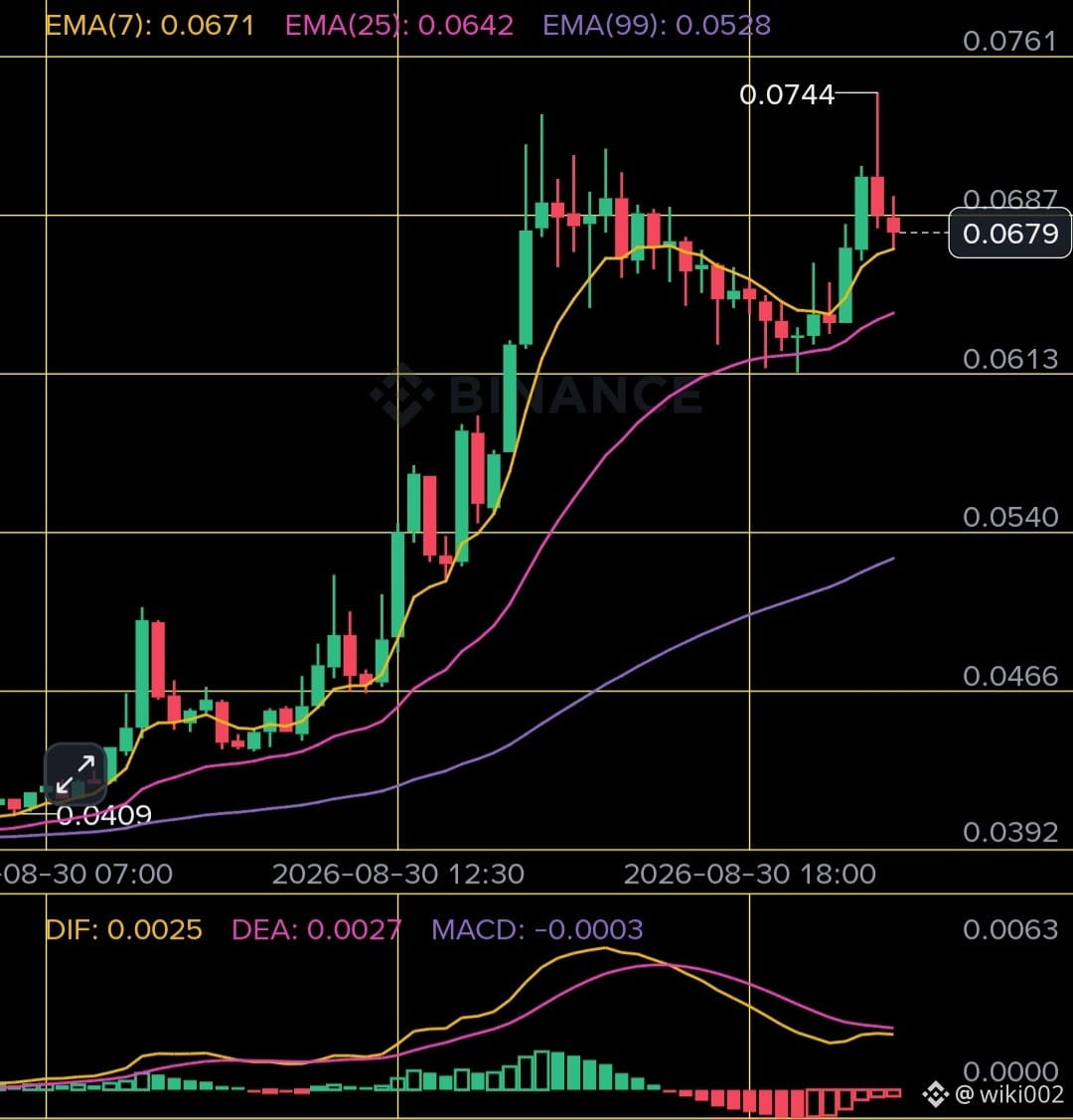
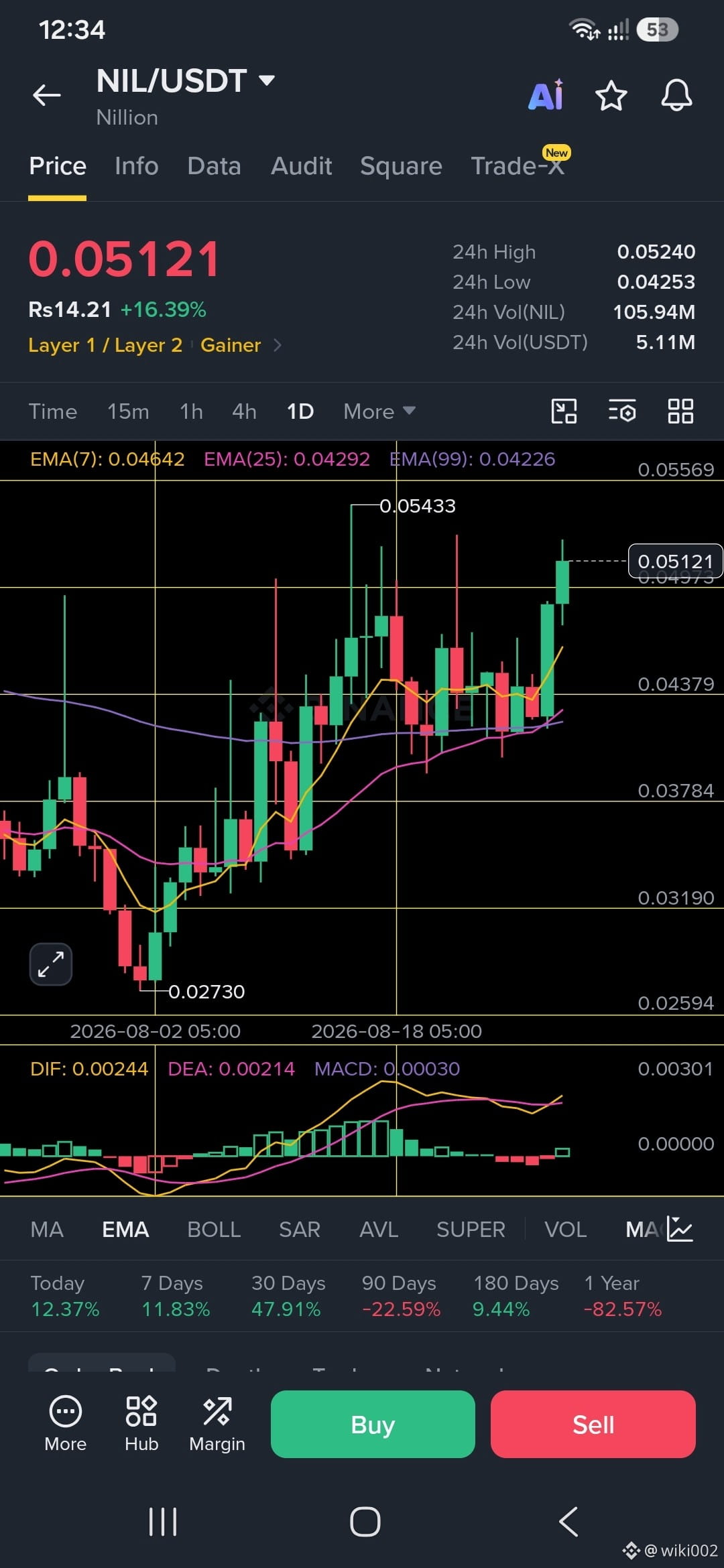
NIL/USDT 📈
Price is holding above the key EMA cluster with momentum turning positive. A sustained move above 0.05240 could open the path toward 0.05433 and potentially 0.05570.
Entry: 0.04980–0.05120
Targets: 0.05240 / 0.05433 / 0.05570
Stop Loss: 0.04780
Invalidation below the support zone weakens the setup. Manage risk and avoid chasing extended candles.
#NIL #Nillion $NIL $ROBO $LSK
Price is holding above the key EMA cluster with momentum turning positive. A sustained move above 0.05240 could open the path toward 0.05433 and potentially 0.05570.
Entry: 0.04980–0.05120
Targets: 0.05240 / 0.05433 / 0.05570
Stop Loss: 0.04780
Invalidation below the support zone weakens the setup. Manage risk and avoid chasing extended candles.
#NIL #Nillion $NIL $ROBO $LSK
Crypto’s latest selloff is revealing something beyond Bitcoin. liquidity is being repriced unevenly across the market.
The seven-day numbers make that divergence hard to ignore. The Digital Assets 100 Mid Cap Index fell 10.15%, while the Small Cap Index dropped 7.12%. Bitcoin was roughly flat on the weekly view, despite moving from around $81.4K to $77.4K.
I’m less interested in calling this a simple market-wide decline than in what the dispersion tells us about risk transmission.
When risk appetite contracts, selling pressure does not distribute evenly. BTC’s deeper liquidity may help absorb large flows with less price impact, while thinner markets can experience sharper repricing as marginal buyers disappear.
That creates a useful distinction: Bitcoin stability can coexist with deteriorating market breadth.
If BTC stabilizes while mid- and small-caps continue weakening, I would read that as defensive positioning not necessarily a recovery.
But if BTC stabilizes and breadth starts improving afterward, the signal changes. Recovery across mid- and small-caps would suggest liquidity is moving back down the risk curve rather than remaining concentrated in BTC.
That is the relationship I would watch.
A Bitcoin floor matters, but it becomes much more meaningful when stability stops being isolated and starts propagating through the rest of the market. 📉
#Bitcoin #Crypto #BTC
$BTC $BNB $ETH
The seven-day numbers make that divergence hard to ignore. The Digital Assets 100 Mid Cap Index fell 10.15%, while the Small Cap Index dropped 7.12%. Bitcoin was roughly flat on the weekly view, despite moving from around $81.4K to $77.4K.
I’m less interested in calling this a simple market-wide decline than in what the dispersion tells us about risk transmission.
When risk appetite contracts, selling pressure does not distribute evenly. BTC’s deeper liquidity may help absorb large flows with less price impact, while thinner markets can experience sharper repricing as marginal buyers disappear.
That creates a useful distinction: Bitcoin stability can coexist with deteriorating market breadth.
If BTC stabilizes while mid- and small-caps continue weakening, I would read that as defensive positioning not necessarily a recovery.
But if BTC stabilizes and breadth starts improving afterward, the signal changes. Recovery across mid- and small-caps would suggest liquidity is moving back down the risk curve rather than remaining concentrated in BTC.
That is the relationship I would watch.
A Bitcoin floor matters, but it becomes much more meaningful when stability stops being isolated and starts propagating through the rest of the market. 📉
#Bitcoin #Crypto #BTC
$BTC $BNB $ETH

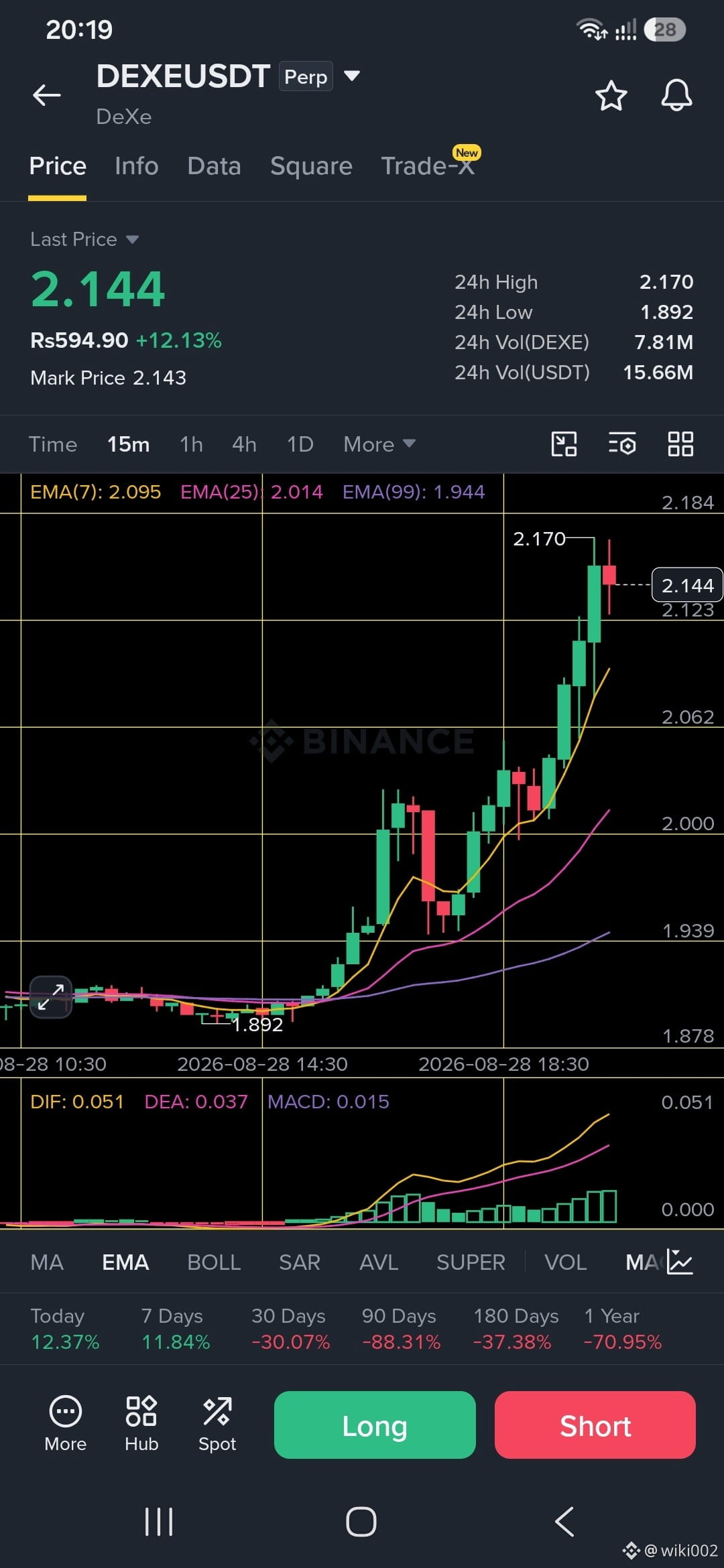
🚨 DEXEUSDT
$DEXE is showing strong bullish momentum with price holding above key EMAs and MACD continuing to expand upward.
Entry: 2.120 – 2.150
Take Profit: 2.170 → 2.250 → 2.350
Stop Loss: 2.050
A clean hold above the breakout zone could keep the upside structure intact. Manage risk and avoid chasing an extended candle.
$DEXE $TST #DEXE #Binance #CryptoTrading #TradingSignal
$DEXE is showing strong bullish momentum with price holding above key EMAs and MACD continuing to expand upward.
Entry: 2.120 – 2.150
Take Profit: 2.170 → 2.250 → 2.350
Stop Loss: 2.050
A clean hold above the breakout zone could keep the upside structure intact. Manage risk and avoid chasing an extended candle.
$DEXE $TST #DEXE #Binance #CryptoTrading #TradingSignal
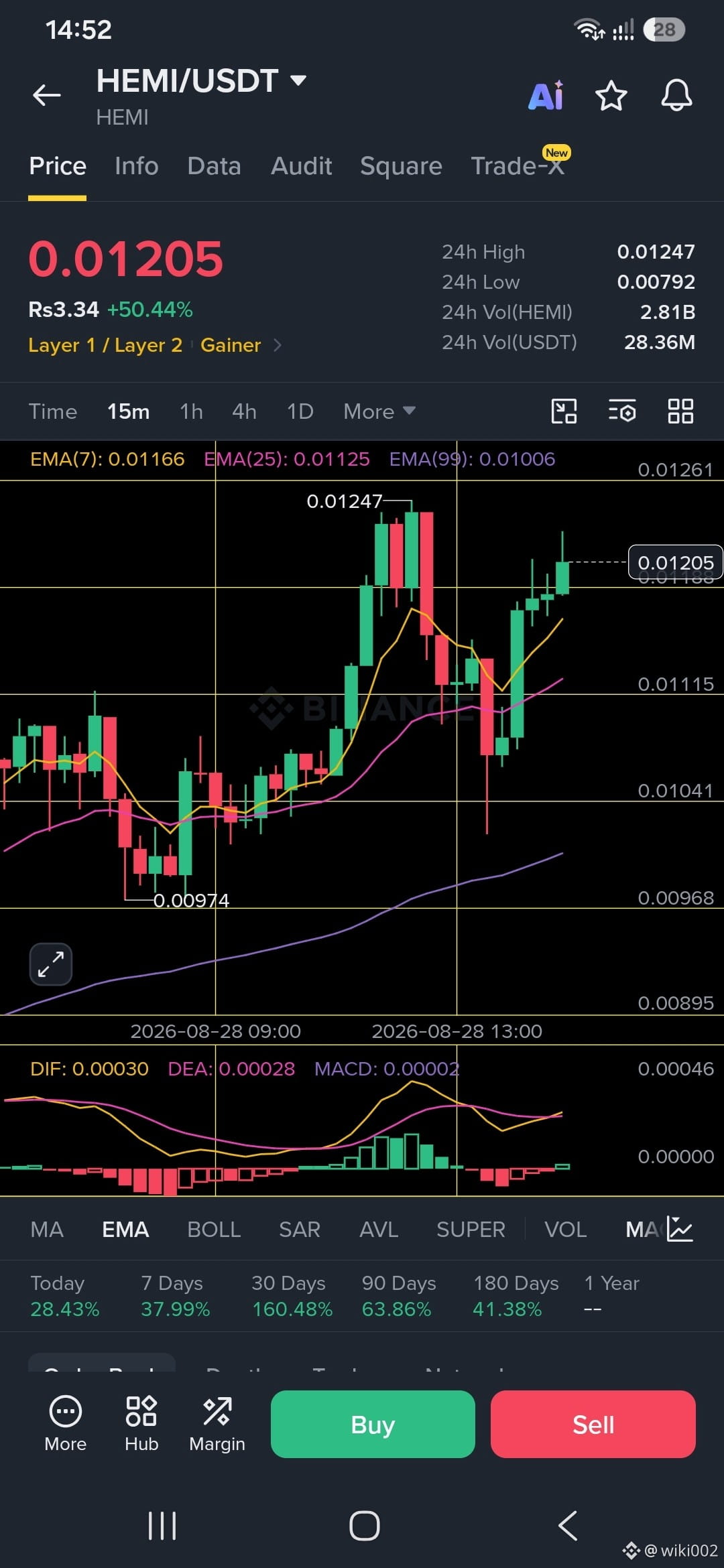
📈 $HEMI / USDT
Hemi is showing bullish structure after reclaiming the key EMA levels. Price is holding above EMA(7), EMA(25) and EMA(99), while MACD momentum is starting to recover.
Signal: LONG 🟢
Entry: 0.01190–0.01210
TP1: 0.01247
TP2: 0.01280
TP3: 0.01320
SL: 0.01145
A clean break above 0.01247 could trigger the next momentum leg. As long as the Short-term EMA structure remains intact, buyers still have control.
#HEMI #Crypto #Trading $EDEN $TRUMP
Hemi is showing bullish structure after reclaiming the key EMA levels. Price is holding above EMA(7), EMA(25) and EMA(99), while MACD momentum is starting to recover.
Signal: LONG 🟢
Entry: 0.01190–0.01210
TP1: 0.01247
TP2: 0.01280
TP3: 0.01320
SL: 0.01145
A clean break above 0.01247 could trigger the next momentum leg. As long as the Short-term EMA structure remains intact, buyers still have control.
#HEMI #Crypto #Trading $EDEN $TRUMP
Verified
Look, a reported $33.5B traded through Nvidia in the first 140 minutes points to something bigger than volume. Nvidia is becoming an information compression layer for Ai infrastructure.
I checked the figure carefully, the $33.5B / 2h20m figure is attributed to MSX.COM market data, so I’d treat it as a reported estimate rather than an official exchange wide statistic. What matters to me is how aggressively the market was processing Nvidia’s earnings and future compute demand.
Honestly, Nvidia’s fiscal Q2 2027 revenue was $96.22B, with $89.0B from Data Center, up 117% year over year. Nvidia also guided Q3 revenue to $108B +2%. The roughly 70% fiscal-2028 growth figure is a derived market expectation based on Nvidia’s guidance and reported estimates.
Here’s what I mean by
information compression.
AI capex produces a lot of fragmented signals: GPU demand, HBM supply, advanced packaging, networking, data center capacity and power. Nvidia sits at the center of many of those relationships, so one highly liquid equity can turn those scattered signals into a price the market can react to almost immediately.
That’s the part I find most interesting.
Nvidia doesn’t just reflect the ecosystem. Its earnings can become a major price discovery point for companies it does not report on. When Nvidia changes expectations around compute demand, investors can reprice suppliers and infrastructure providers before their own fundamentals change.
That’s how I interpret the reported $33.5B, not as $33.5B flowing into Nvidia, but as intense liquidity negotiating the scale, duration and constraints of AI capex.
As the supply chain diversifies, I’m watching whether Nvidia can remain a sufficient single proxy for aggregate compute demand. 😉
$NVDA #NVIDIA #AI #Markets #Tech #NvidiaTrades
I checked the figure carefully, the $33.5B / 2h20m figure is attributed to MSX.COM market data, so I’d treat it as a reported estimate rather than an official exchange wide statistic. What matters to me is how aggressively the market was processing Nvidia’s earnings and future compute demand.
Honestly, Nvidia’s fiscal Q2 2027 revenue was $96.22B, with $89.0B from Data Center, up 117% year over year. Nvidia also guided Q3 revenue to $108B +2%. The roughly 70% fiscal-2028 growth figure is a derived market expectation based on Nvidia’s guidance and reported estimates.
Here’s what I mean by
information compression.
AI capex produces a lot of fragmented signals: GPU demand, HBM supply, advanced packaging, networking, data center capacity and power. Nvidia sits at the center of many of those relationships, so one highly liquid equity can turn those scattered signals into a price the market can react to almost immediately.
That’s the part I find most interesting.
Nvidia doesn’t just reflect the ecosystem. Its earnings can become a major price discovery point for companies it does not report on. When Nvidia changes expectations around compute demand, investors can reprice suppliers and infrastructure providers before their own fundamentals change.
That’s how I interpret the reported $33.5B, not as $33.5B flowing into Nvidia, but as intense liquidity negotiating the scale, duration and constraints of AI capex.
As the supply chain diversifies, I’m watching whether Nvidia can remain a sufficient single proxy for aggregate compute demand. 😉
$NVDA #NVIDIA #AI #Markets #Tech #NvidiaTrades

Verified
I wasn’t really focused on the partnership headline today. The part I kept thinking about was what this could change for BNB Chain.
Crypto has spent years competing on speed, fees, liquidity and users.
Payments are a different game.
A payment product doesn’t need customers to become crypto users. It needs a reliable way to move value while keeping the blockchain complexity away from the end user.
That’s why @BNB Chain joining Mastercard’s Crypto Partner Program is interesting to me.
The obvious story is access to an established payments ecosystem.
The less obvious one is who gets to decide where the transaction actually settles.
If payment applications eventually gain more choice over blockchain infrastructure, simply being compatible with a payment network won’t be enough.
The real differentiator becomes the settlement environment underneath it.
For BNB Chain, that makes things like execution cost, confirmation reliability, liquidity depth, stablecoin availability and developer tooling important factors in that competition.
And there’s a deeper consequence here.
When the payment interface becomes separated from the underlying blockchain, the chain can compete on infrastructure rather than forcing users to choose a chain first.
That changes the demand model.
Instead of
user → wallet → blockchain → application
the direction I find interesting is
financial product → payment interface → settlement infrastructure
The user may never care which chain handled the transaction.
The developer and payment provider will.
That’s why I don’t see this as proof of mainstream adoption yet.
I see it as a more interesting test
Can BNB Chain become a technically attractive settlement environment when blockchain choice moves behind the payment experience?
If it can, Mastercard’s distribution isn’t the whole story.
The bigger opportunity is competing for the financial activity underneath it. 👍
$BNB #BNB $BB $HEI @Binance Square Official
Crypto has spent years competing on speed, fees, liquidity and users.
Payments are a different game.
A payment product doesn’t need customers to become crypto users. It needs a reliable way to move value while keeping the blockchain complexity away from the end user.
That’s why @BNB Chain joining Mastercard’s Crypto Partner Program is interesting to me.
The obvious story is access to an established payments ecosystem.
The less obvious one is who gets to decide where the transaction actually settles.
If payment applications eventually gain more choice over blockchain infrastructure, simply being compatible with a payment network won’t be enough.
The real differentiator becomes the settlement environment underneath it.
For BNB Chain, that makes things like execution cost, confirmation reliability, liquidity depth, stablecoin availability and developer tooling important factors in that competition.
And there’s a deeper consequence here.
When the payment interface becomes separated from the underlying blockchain, the chain can compete on infrastructure rather than forcing users to choose a chain first.
That changes the demand model.
Instead of
user → wallet → blockchain → application
the direction I find interesting is
financial product → payment interface → settlement infrastructure
The user may never care which chain handled the transaction.
The developer and payment provider will.
That’s why I don’t see this as proof of mainstream adoption yet.
I see it as a more interesting test
Can BNB Chain become a technically attractive settlement environment when blockchain choice moves behind the payment experience?
If it can, Mastercard’s distribution isn’t the whole story.
The bigger opportunity is competing for the financial activity underneath it. 👍
$BNB #BNB $BB $HEI @Binance Square Official

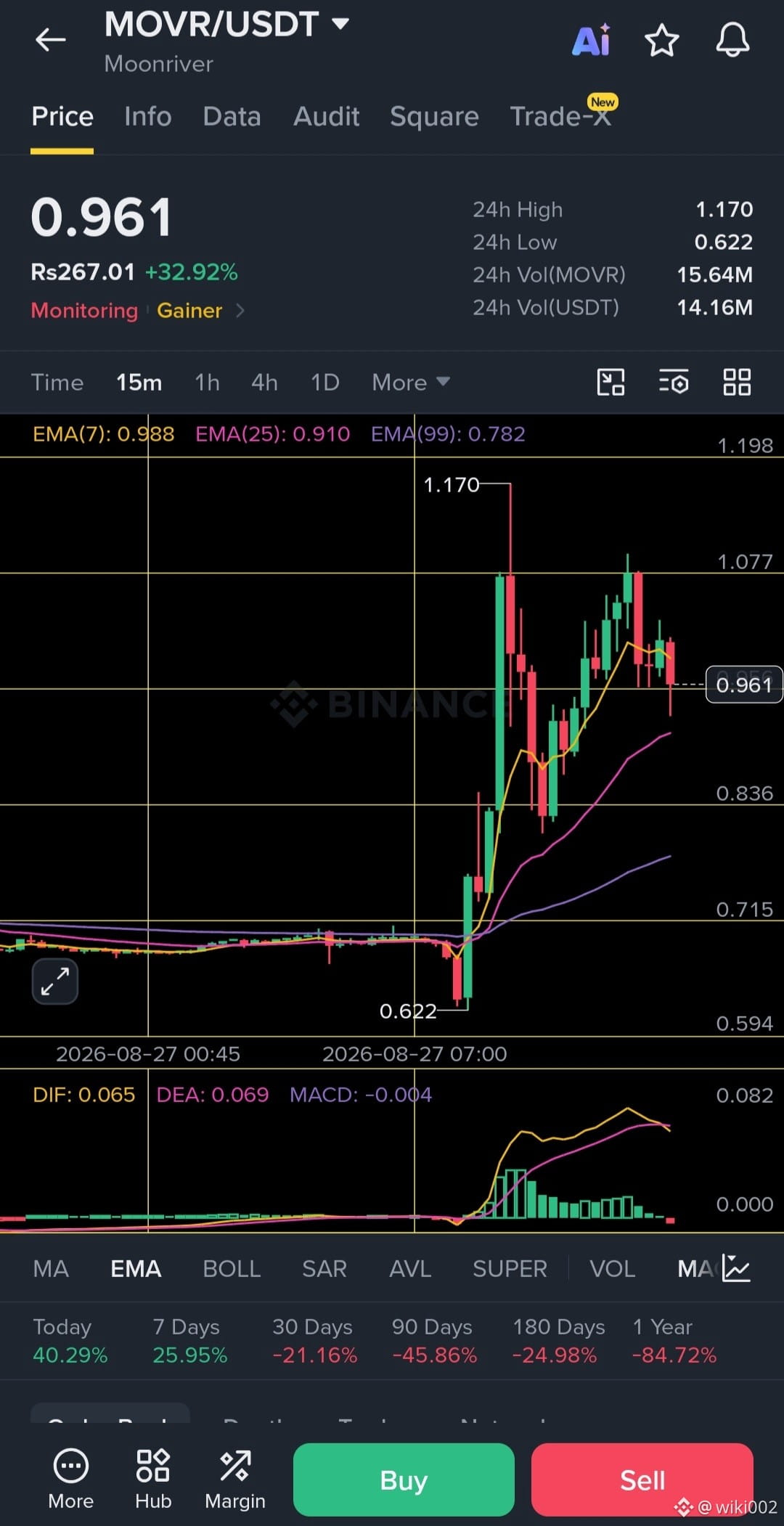
$MOVR /USDT 📊
Entry: $0.94–$0.97
Stop Loss: $0.89
TP1: $1.07
TP2: $1.17
TP3: $1.28
Price is consolidating after a strong impulse, with the $0.90–$0.91 zone acting as the key support area. The setup remains constructive while that level holds, but momentum has cooled, so chasing extended candles is not ideal.
Risk management first invalidation below support.
$BICO $P
#MOVR #CryptoTrading #BinanceSquare
Entry: $0.94–$0.97
Stop Loss: $0.89
TP1: $1.07
TP2: $1.17
TP3: $1.28
Price is consolidating after a strong impulse, with the $0.90–$0.91 zone acting as the key support area. The setup remains constructive while that level holds, but momentum has cooled, so chasing extended candles is not ideal.
Risk management first invalidation below support.
$BICO $P
#MOVR #CryptoTrading #BinanceSquare
Mert’s Solana argument made me look past the usual it’s fast explanation.
What makes the network interesting to me is the concentration of activity around it. Solana already has builders, applications, users and substantial onchain activity in the same ecosystem. For a new team, that means building on existing infrastructure and an established market rather than having to create everything around the product from scratch.
The slot-time work is worth watching too. Mainnet has moved from 400ms to 350ms, while further reductions are being tested on Testnet and Devnet. The important part isn’t just the number. Shorter slots can reduce how long applications wait for the network to advance, which can matter for products where latency affects how quickly users or protocols react.
There’s still a trade-off here. Lower latency is useful only if the network can maintain that performance reliably as activity grows. Faster blocks alone don’t automatically make an application better.
From a builder’s perspective, the startup culture matters as well. Failed experiments can still leave behind developers, code, capital and lessons that become useful elsewhere. That isn’t unique to Solana, but a place where developers keep experimenting can accumulate those benefits over time.
The part I find most interesting is the possible feedback loop: better infrastructure can attract builders, successful applications can bring more activity, and that activity can make the ecosystem more useful for whoever builds next.
So I wouldn’t reduce Solana’s case to speed alone. The real thing to watch is whether performance, developer infrastructure and economic activity keep reinforcing each other as the network grows.
And yes, the memes probably help a little. 🙂
@Solana Official $SOL $BICO $MOVR #Solana
What makes the network interesting to me is the concentration of activity around it. Solana already has builders, applications, users and substantial onchain activity in the same ecosystem. For a new team, that means building on existing infrastructure and an established market rather than having to create everything around the product from scratch.
The slot-time work is worth watching too. Mainnet has moved from 400ms to 350ms, while further reductions are being tested on Testnet and Devnet. The important part isn’t just the number. Shorter slots can reduce how long applications wait for the network to advance, which can matter for products where latency affects how quickly users or protocols react.
There’s still a trade-off here. Lower latency is useful only if the network can maintain that performance reliably as activity grows. Faster blocks alone don’t automatically make an application better.
From a builder’s perspective, the startup culture matters as well. Failed experiments can still leave behind developers, code, capital and lessons that become useful elsewhere. That isn’t unique to Solana, but a place where developers keep experimenting can accumulate those benefits over time.
The part I find most interesting is the possible feedback loop: better infrastructure can attract builders, successful applications can bring more activity, and that activity can make the ecosystem more useful for whoever builds next.
So I wouldn’t reduce Solana’s case to speed alone. The real thing to watch is whether performance, developer infrastructure and economic activity keep reinforcing each other as the network grows.
And yes, the memes probably help a little. 🙂
@Solana Official $SOL $BICO $MOVR #Solana

Bitcoin briefly pushed above $81K before cooling back toward $79K.
Meanwhile, U.S. spot Bitcoin ETFs added another $314.3M on Aug. 25, marking seven straight sessions of net inflows. BlackRock’s IBIT alone took in $284.4M.
Price is cooling, but ETF demand is still there.
#Bitcoin #Crypto #BTC
$BTC $ETH $BNB
Meanwhile, U.S. spot Bitcoin ETFs added another $314.3M on Aug. 25, marking seven straight sessions of net inflows. BlackRock’s IBIT alone took in $284.4M.
Price is cooling, but ETF demand is still there.
#Bitcoin #Crypto #BTC
$BTC $ETH $BNB

Best Wishes!
From wiki002
Partly True
#dusk $DUSK @Dusk I was halfway through my first coffee this morning when a thought about blockchain immutability started bothering me. The history stays On-chain, but the rules used to process new blocks keep evolving.
That made me look at Dusk’s upgrades differently. I usually associate a protocol upgrade with new capabilities. Boreas made me notice the less visible requirement. New transaction rules have to evolve without changing how older blocks are interpreted under the rules that produced them.
Boreas introduced separate handling for client transactions, canonical transaction data and the ledger format committed to blocks. Rusk also retains the historical decoders needed to replay Pre-Aegis and Pre-Boreas blocks. Aegis does something similar with proof verification. Rusk chooses the verifier from the block height, keeping PLONK V1/V2 rules for historical blocks while using V3 for newer proofs.
That detail is what made the idea click for me. Keeping an old transaction On-chain preserves the record, but it does not automatically preserve the ability to reproduce why that transaction was valid.
So I see historical semantics as a real part of immutability. The chain needs to preserve not just what happened, but enough protocol context to reproduce how that historical state was validated.
There is a trade-off, though. Keeping old decoders and verification paths means carrying more protocol complexity forward. But removing them pushes a different risk onto future software: deciding for itself how historical records should be interpreted.
That is where this becomes more than a software-maintenance problem for me.
In regulated markets, auditability should answer more than show me the transaction. It should also answer. Which rules made this transaction valid at that point in the chain?
The more I dig into protocol evolution, the more I think immutability has a second requirement beyond preserving history.
If the record survives but the rules needed to reproduce its meaning do not, how immutable is that history really? 🧩
$FF $P
That made me look at Dusk’s upgrades differently. I usually associate a protocol upgrade with new capabilities. Boreas made me notice the less visible requirement. New transaction rules have to evolve without changing how older blocks are interpreted under the rules that produced them.
Boreas introduced separate handling for client transactions, canonical transaction data and the ledger format committed to blocks. Rusk also retains the historical decoders needed to replay Pre-Aegis and Pre-Boreas blocks. Aegis does something similar with proof verification. Rusk chooses the verifier from the block height, keeping PLONK V1/V2 rules for historical blocks while using V3 for newer proofs.
That detail is what made the idea click for me. Keeping an old transaction On-chain preserves the record, but it does not automatically preserve the ability to reproduce why that transaction was valid.
So I see historical semantics as a real part of immutability. The chain needs to preserve not just what happened, but enough protocol context to reproduce how that historical state was validated.
There is a trade-off, though. Keeping old decoders and verification paths means carrying more protocol complexity forward. But removing them pushes a different risk onto future software: deciding for itself how historical records should be interpreted.
That is where this becomes more than a software-maintenance problem for me.
In regulated markets, auditability should answer more than show me the transaction. It should also answer. Which rules made this transaction valid at that point in the chain?
The more I dig into protocol evolution, the more I think immutability has a second requirement beyond preserving history.
If the record survives but the rules needed to reproduce its meaning do not, how immutable is that history really? 🧩
$FF $P

Log in to explore more content