
冷静的链上数据
327 Posts

冷静的链上数据
公众号:比特西瓜;策略,执行复盘
8 Following
65 Followers
121 Liked
Posts
#三星sk海力士杠杆etf首现月度净流出
👉 Tom Lee预测ETH冲到6000美元,机构在加速入场?进群看
Wall Street veteran Tom Lee makes a call: Ethereum could hit $6,000—because institutional money is accelerating into the market.
According to disclosures, Tom Lee, in his latest market outlook, predicts that ETH may rise to $6,000. The core logic is that spot ETF inflows continue + on-chain activity is recovering. He believes the market is underestimating Ethereum’s hub position in the stablecoin and RWA settlement layers.
In essence, it’s a race between narrative and fundamentals: ETH’s long-term value is anchored to on-chain economic activity, while in the short term it depends on how ETF funds are behaving. When traditional capital starts treating ETH as a "digital yield asset" for allocation, $6,000 is hardly out of the question.
Take the forecast with a grain of salt—the key is where the money flows. This round for ETH—have you gotten on board? What do you think?
👉 Tom Lee预测ETH冲到6000美元,机构在加速入场?进群看
Wall Street veteran Tom Lee makes a call: Ethereum could hit $6,000—because institutional money is accelerating into the market.
According to disclosures, Tom Lee, in his latest market outlook, predicts that ETH may rise to $6,000. The core logic is that spot ETF inflows continue + on-chain activity is recovering. He believes the market is underestimating Ethereum’s hub position in the stablecoin and RWA settlement layers.
In essence, it’s a race between narrative and fundamentals: ETH’s long-term value is anchored to on-chain economic activity, while in the short term it depends on how ETF funds are behaving. When traditional capital starts treating ETH as a "digital yield asset" for allocation, $6,000 is hardly out of the question.
Take the forecast with a grain of salt—the key is where the money flows. This round for ETH—have you gotten on board? What do you think?
Your phone suddenly shows “iPhone unavailable,” and many people’s first reaction is to panic—but actually there’s a simpler solution than reflashing.
According to reports, Apple’s official troubleshooting flow includes: first, confirm whether it’s a mistaken lock; then try remotely unlocking it via the iCloud account that’s already signed in; only if that doesn’t work should you consider using recovery mode. The core principle is: don’t rush to erase your data.
At its core, it’s a reminder about digital asset protection: your lock screen passcode, Apple ID two-factor authentication, and cloud backups—three layers, none can be missing. This is especially important for users who encrypt their data—because things like wallet apps, private key screenshots, and mnemonic phrase notes are all on this device.
How much is in your phone? When it comes to data security, thinking about it after something goes wrong is too late. What do you think?
👉 iPhone不可用别慌,数据保护有妙招?进群看
According to reports, Apple’s official troubleshooting flow includes: first, confirm whether it’s a mistaken lock; then try remotely unlocking it via the iCloud account that’s already signed in; only if that doesn’t work should you consider using recovery mode. The core principle is: don’t rush to erase your data.
At its core, it’s a reminder about digital asset protection: your lock screen passcode, Apple ID two-factor authentication, and cloud backups—three layers, none can be missing. This is especially important for users who encrypt their data—because things like wallet apps, private key screenshots, and mnemonic phrase notes are all on this device.
How much is in your phone? When it comes to data security, thinking about it after something goes wrong is too late. What do you think?
👉 iPhone不可用别慌,数据保护有妙招?进群看

#比特币受阻于81000美元50周均线
👉 中国制造业PMI连续两月收缩,经济温度几何?进群看
China’s manufacturing activity has contracted for the second consecutive month. The latest PMI data falls below the 50-point boom-bust line—soft demand and external pressures are becoming visible at the same time.
According to disclosures, China’s manufacturing PMI for August fell below the 50 boom-bust line for the second consecutive month. New orders and export orders both weakened. The policy support the market had been hoping would step in has not yet fully transmitted to the real-economy side.
At heart, this is a true thermometer of the economic cycle: a streak of shrinking PMI readings signals reduced willingness among firms to expand and delays in the inventory replenishment cycle. For global investors, China’s demand is a marginal pricing variable for commodities such as copper and crude oil—weak data often triggers a chain reaction.
How long will the winter in manufacturing last depends on the pace at which policy is mobilized. Beyond the data, what signals do you see? What’s your take?
👉 中国制造业PMI连续两月收缩,经济温度几何?进群看
China’s manufacturing activity has contracted for the second consecutive month. The latest PMI data falls below the 50-point boom-bust line—soft demand and external pressures are becoming visible at the same time.
According to disclosures, China’s manufacturing PMI for August fell below the 50 boom-bust line for the second consecutive month. New orders and export orders both weakened. The policy support the market had been hoping would step in has not yet fully transmitted to the real-economy side.
At heart, this is a true thermometer of the economic cycle: a streak of shrinking PMI readings signals reduced willingness among firms to expand and delays in the inventory replenishment cycle. For global investors, China’s demand is a marginal pricing variable for commodities such as copper and crude oil—weak data often triggers a chain reaction.
How long will the winter in manufacturing last depends on the pace at which policy is mobilized. Beyond the data, what signals do you see? What’s your take?
Trump publicly urges the FCC to punish NBC, arguing that the broadcaster “showed favoritism” in its debate coverage—the regulator has been drawn into a media-opinion battle, and tensions in the media industry are growing hotter.
According to disclosures, Trump publicly called on the U.S. Federal Communications Commission to take punitive action against NBC, accusing it of having systematic bias in its reporting. The move has once again reignited the debate over whether “regulators should intervene in media content.”
At heart, it’s the classic power struggle over regulatory boundaries: the FCC holds the cards of licensing and the power to impose penalties, but stepping into content-related controversy risks crossing the First Amendment line. It’s not new in the U.S. for politicians to use regulators as a tool to pressure the media—but every time, it sparks a backlash from the industry.
When regulators start choosing sides, how much independence is left for the media? What do you think?
👉 特朗普喊话FCC惩罚NBC,监管开始选边站?进群聊
According to disclosures, Trump publicly called on the U.S. Federal Communications Commission to take punitive action against NBC, accusing it of having systematic bias in its reporting. The move has once again reignited the debate over whether “regulators should intervene in media content.”
At heart, it’s the classic power struggle over regulatory boundaries: the FCC holds the cards of licensing and the power to impose penalties, but stepping into content-related controversy risks crossing the First Amendment line. It’s not new in the U.S. for politicians to use regulators as a tool to pressure the media—but every time, it sparks a backlash from the industry.
When regulators start choosing sides, how much independence is left for the media? What do you think?
👉 特朗普喊话FCC惩罚NBC,监管开始选边站?进群聊

#美联储9月加息概率升至57%
👉 欧元逼近1.16关口,德国CPI前市场已定价?进群看
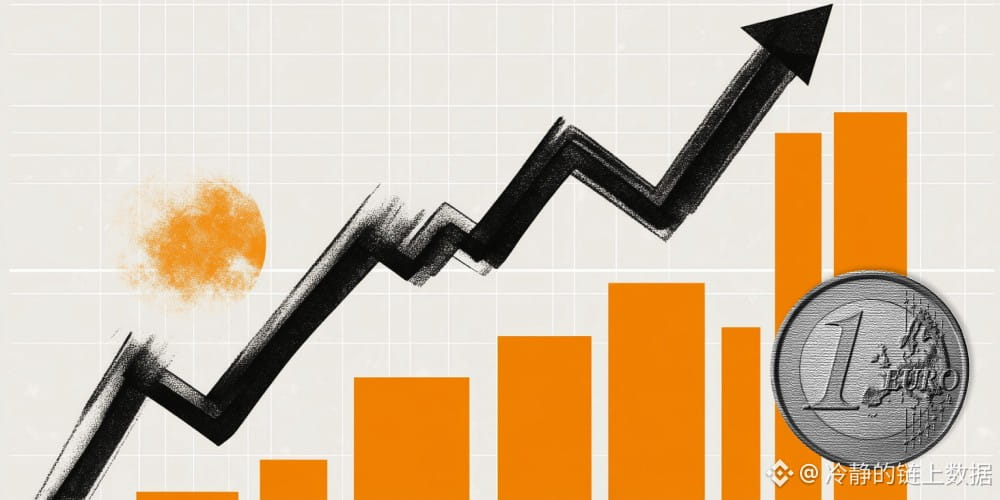
The euro rises against the US dollar, nearing the 1.16 level—ahead of the release of Germany’s CPI data, the market has already priced it in.
This week, attention in the FX market has shifted to Europe’s inflation data, and the euro has found support around 1.16. If Germany’s CPI comes in above expectations, it will strengthen the market’s view that the European Central Bank will maintain high interest rates, thereby supporting the euro; otherwise, it could trigger a pullback.
At its core, this is a yield-differential logic: divergence in the policy paths of the US and European central banks directly determines where capital flows. Expectations that the Fed will turn more dovish have already been partly priced in, and the euro’s relative strength comes from the pricing that “Europe will cut rates more slowly.”
The FX market is never short on volatility—what it lacks is direction. This time, the euro pushing toward 1.16: is it the start of a trend, or just a short-term rebound? What do you think?
👉 欧元逼近1.16关口,德国CPI前市场已定价?进群看
The euro rises against the US dollar, nearing the 1.16 level—ahead of the release of Germany’s CPI data, the market has already priced it in.
This week, attention in the FX market has shifted to Europe’s inflation data, and the euro has found support around 1.16. If Germany’s CPI comes in above expectations, it will strengthen the market’s view that the European Central Bank will maintain high interest rates, thereby supporting the euro; otherwise, it could trigger a pullback.
At its core, this is a yield-differential logic: divergence in the policy paths of the US and European central banks directly determines where capital flows. Expectations that the Fed will turn more dovish have already been partly priced in, and the euro’s relative strength comes from the pricing that “Europe will cut rates more slowly.”
The FX market is never short on volatility—what it lacks is direction. This time, the euro pushing toward 1.16: is it the start of a trend, or just a short-term rebound? What do you think?
#香港7月对内地黄金净出口56.193吨
👉 Shein港股IPO估值缩水上市,独角兽也打折了?进群看
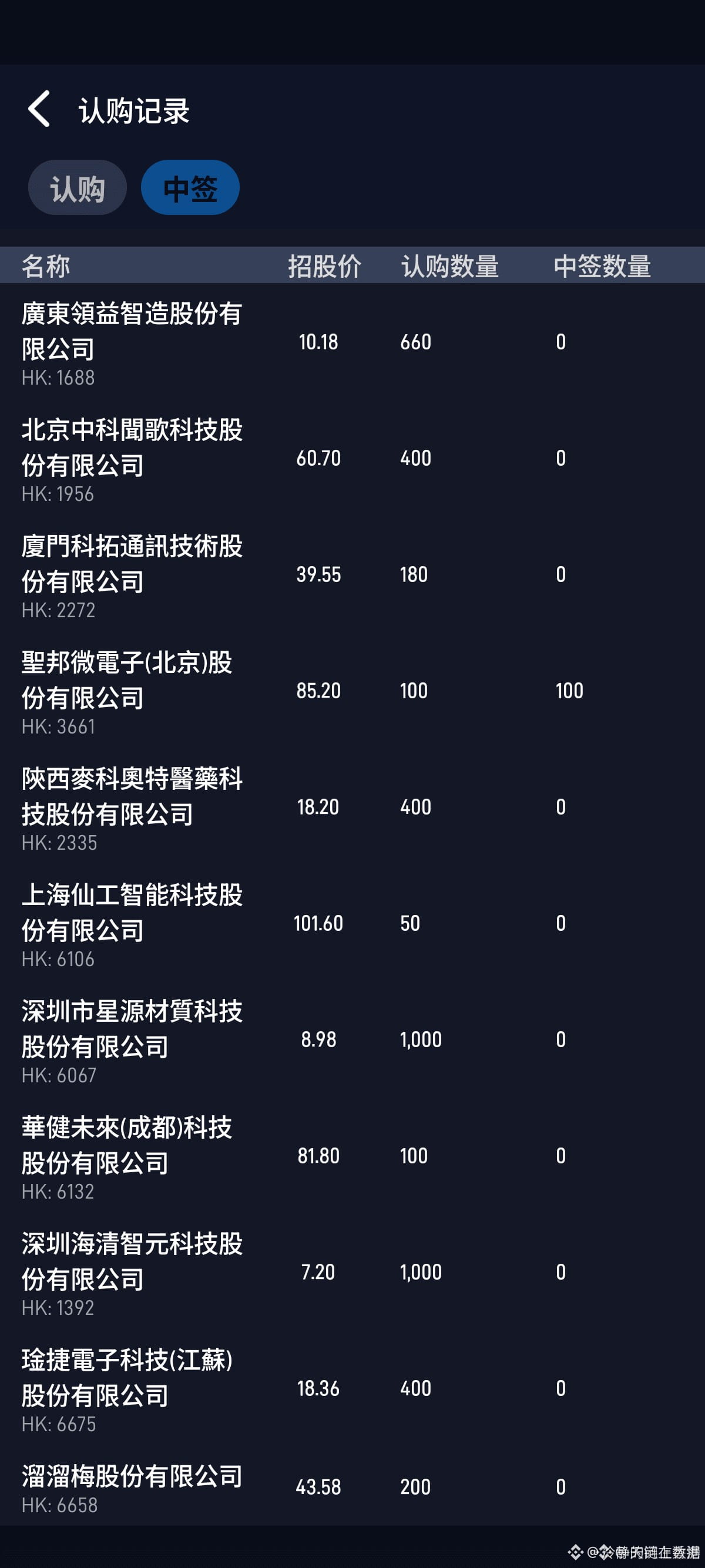
Shein completes its HK stock IPO, valued at $26.5 billion—down significantly from its earlier peak. The listing of a super unicorn turned into a half-off feast.
According to disclosures, fast-fashion giant Shein has completed its IPO in Hong Kong, with a final valuation of $26.5 billion, which is a clear drop from earlier reports of a higher valuation. Concerns that it would break below the offering price right after listing have hung over the market, but the $26.5 billion scale still makes it one of the largest IPOs in Hong Kong this year.
At its core, this is a rational return to valuation: the exuberant pricing in the primary market is being re-examined in the secondary market. Shein’s discounted listing is both a snapshot of the consumer-stock winter, and a sign that investors’ patience for high-growth stories is running out.
When even unicorns start selling at discounts upon listing, how much bubble is left in the primary market? What do you think?
👉 Shein港股IPO估值缩水上市,独角兽也打折了?进群看
Shein completes its HK stock IPO, valued at $26.5 billion—down significantly from its earlier peak. The listing of a super unicorn turned into a half-off feast.
According to disclosures, fast-fashion giant Shein has completed its IPO in Hong Kong, with a final valuation of $26.5 billion, which is a clear drop from earlier reports of a higher valuation. Concerns that it would break below the offering price right after listing have hung over the market, but the $26.5 billion scale still makes it one of the largest IPOs in Hong Kong this year.
At its core, this is a rational return to valuation: the exuberant pricing in the primary market is being re-examined in the secondary market. Shein’s discounted listing is both a snapshot of the consumer-stock winter, and a sign that investors’ patience for high-growth stories is running out.
When even unicorns start selling at discounts upon listing, how much bubble is left in the primary market? What do you think?
Polygon proactively disclosed previously unreleased security vulnerabilities and has completed the fix through a hard fork. Owning up to it proactively, rather than hiding it, became a plus for industry confidence.
According to the disclosure, the Polygon team found potential security flaws in the protocol, then completed the fix via a hard fork and公开ed all the details to the community. Compared with many projects that “cover things up” and only expose them when forced, this kind of transparent handling is rare in the crypto industry.
At its core, it signals maturity in security governance: the larger the codebase of a public chain, the higher the risk of vulnerabilities. The key is the speed and transparency of the response after issues are discovered. Polygon swapped a proactive disclosure for the community’s trust vote.
On-chain security has no once-and-for-all solution—only ongoing patching. Transparent disclosure is the project team’s best form of public relations. What do you think?
👉 Polygon主动披露漏洞已修复,透明才是最好的公关?进群看
According to the disclosure, the Polygon team found potential security flaws in the protocol, then completed the fix via a hard fork and公开ed all the details to the community. Compared with many projects that “cover things up” and only expose them when forced, this kind of transparent handling is rare in the crypto industry.
At its core, it signals maturity in security governance: the larger the codebase of a public chain, the higher the risk of vulnerabilities. The key is the speed and transparency of the response after issues are discovered. Polygon swapped a proactive disclosure for the community’s trust vote.
On-chain security has no once-and-for-all solution—only ongoing patching. Transparent disclosure is the project team’s best form of public relations. What do you think?
👉 Polygon主动披露漏洞已修复,透明才是最好的公关?进群看

The moment beach day arrives, celebrities collectively post their vacation photos, but what truly sparks heated discussion online is the “wealth password” behind these images.
From celebrities to influencers, beach photo spreads are no longer just simple vacation records—yachts, mansions, private beaches; every frame is lifestyle marketing. And in the photo lists of the new generation of rich people, hints of crypto wallets and digital assets are beginning to appear.
At its core, this is a generational shift in wealth storytelling: the previous generation flaunted cars, while this one flaunts assets on-chain. When celebrities start placing NFT profile pictures and crypto holdings on their social media profiles, public awareness of digital assets quietly rises.
Celebrity influence has always been a traffic multiplier. When your idol starts talking about crypto, will you jump in too? What do you think?
👉 明星海滩照里的财富密码,你发现了吗?进群聊
From celebrities to influencers, beach photo spreads are no longer just simple vacation records—yachts, mansions, private beaches; every frame is lifestyle marketing. And in the photo lists of the new generation of rich people, hints of crypto wallets and digital assets are beginning to appear.
At its core, this is a generational shift in wealth storytelling: the previous generation flaunted cars, while this one flaunts assets on-chain. When celebrities start placing NFT profile pictures and crypto holdings on their social media profiles, public awareness of digital assets quietly rises.
Celebrity influence has always been a traffic multiplier. When your idol starts talking about crypto, will you jump in too? What do you think?
👉 明星海滩照里的财富密码,你发现了吗?进群聊

To get gas turbines faster, Musk chose a more expensive shortcut—and this shortcut may worsen the pollution problem.
According to disclosures, projects under Musk’s companies are purchasing gas turbines through expedited channels to shorten delivery times. But speed comes at a cost: skipping routine environmental assessments and equipment upgrades means higher emission intensity and a longer pollution period.
At its core, it’s a trade-off between speed and compliance. The AI computing arms race’s demand for electricity has reached the point of taking whatever it can get—gas turbines have become an effective, quick fix for filling the needs of data centers. But the environmental bill will be due sooner or later, and regulators have already raised their measuring stick.
AI needs electricity, electricity requires burning, and burning must be environmentally responsible. So whose responsibility is the energy bill behind AI’s frenzy? What do you think?
👉 马斯克为电力走捷径,环保代价谁来付?进群看
According to disclosures, projects under Musk’s companies are purchasing gas turbines through expedited channels to shorten delivery times. But speed comes at a cost: skipping routine environmental assessments and equipment upgrades means higher emission intensity and a longer pollution period.
At its core, it’s a trade-off between speed and compliance. The AI computing arms race’s demand for electricity has reached the point of taking whatever it can get—gas turbines have become an effective, quick fix for filling the needs of data centers. But the environmental bill will be due sooner or later, and regulators have already raised their measuring stick.
AI needs electricity, electricity requires burning, and burning must be environmentally responsible. So whose responsibility is the energy bill behind AI’s frenzy? What do you think?
👉 马斯克为电力走捷径,环保代价谁来付?进群看
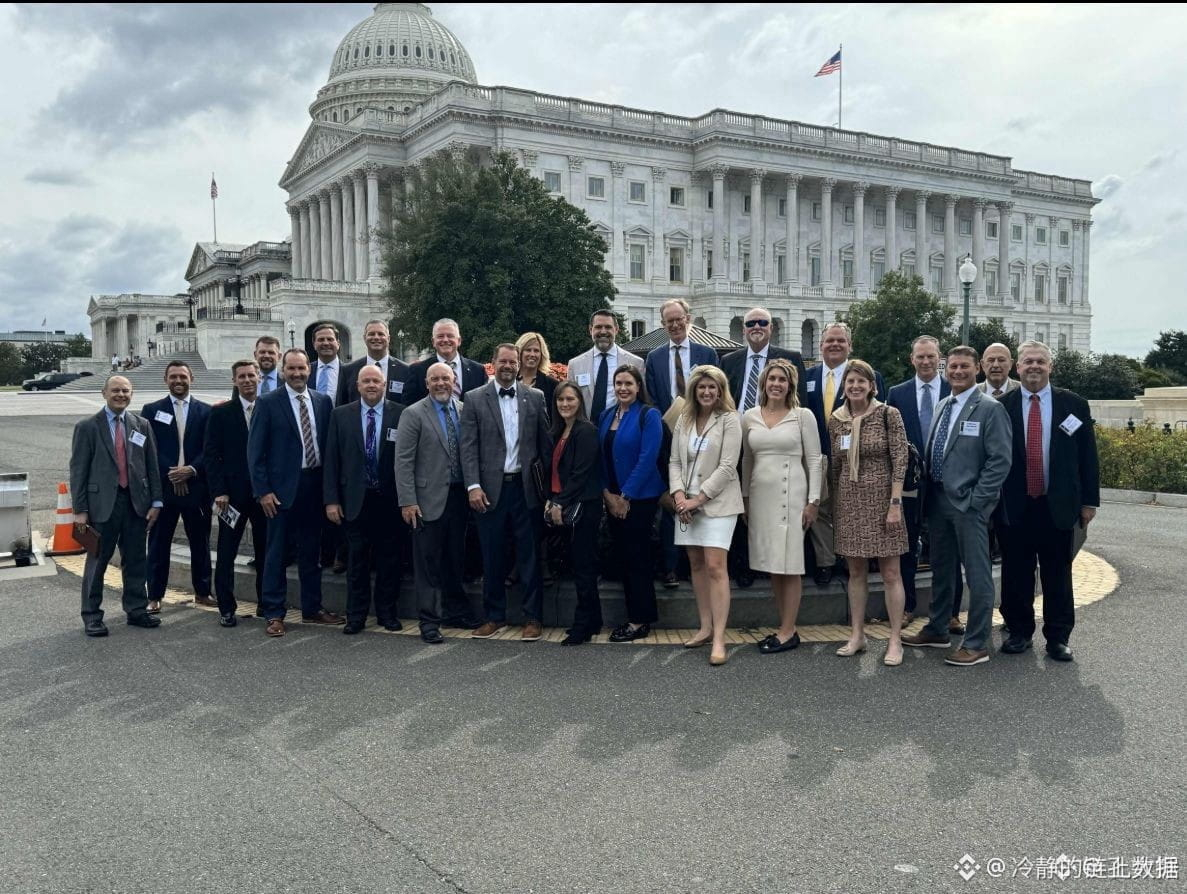
#icba反对clarity法案稳定币奖励漏洞
👉 ICBA反对CLARITY法案,稳定币奖励要凉?进群聊
The Independent Community Bankers Association (ICBA) in the United States publicly opposes the CLARITY Act, arguing that it could leave regulatory loopholes for stablecoin incentive and rewards mechanisms. The battle between banks and crypto has added yet another front.
ICBA points out that the bill draft contains ambiguous provisions regarding stablecoin interest and rewards, which may allow issuers to bypass deposit insurance and interest-rate regulation. Community banks worry that if large technology companies or crypto platforms route deposits through stablecoins, the traditional banking industry’s funding base could be undermined.
At its core, this is a game of regulatory arbitrage—offense and defense: stablecoin rewards are essentially disguised interest. If they are not brought under deposit regulation, they can attract deposits at lower cost. Banks aren’t opposed to stablecoins themselves, but to a competition playing field with unequal rules.
For stablecoins to pass the regulatory gate, they first need to pass the banks’ gate. The outcome of this battle may determine whether crypto payments can truly enter the mainstream. What do you think?
👉 ICBA反对CLARITY法案,稳定币奖励要凉?进群聊
The Independent Community Bankers Association (ICBA) in the United States publicly opposes the CLARITY Act, arguing that it could leave regulatory loopholes for stablecoin incentive and rewards mechanisms. The battle between banks and crypto has added yet another front.
ICBA points out that the bill draft contains ambiguous provisions regarding stablecoin interest and rewards, which may allow issuers to bypass deposit insurance and interest-rate regulation. Community banks worry that if large technology companies or crypto platforms route deposits through stablecoins, the traditional banking industry’s funding base could be undermined.
At its core, this is a game of regulatory arbitrage—offense and defense: stablecoin rewards are essentially disguised interest. If they are not brought under deposit regulation, they can attract deposits at lower cost. Banks aren’t opposed to stablecoins themselves, but to a competition playing field with unequal rules.
For stablecoins to pass the regulatory gate, they first need to pass the banks’ gate. The outcome of this battle may determine whether crypto payments can truly enter the mainstream. What do you think?
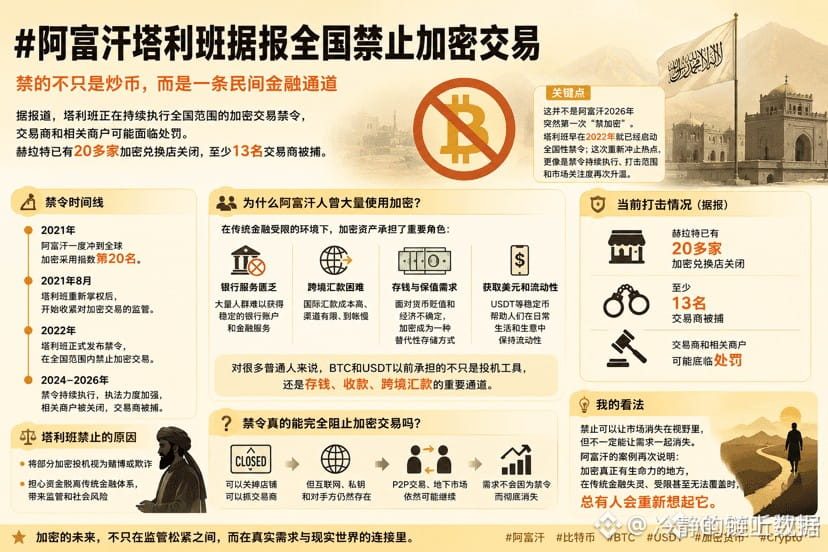
#阿富汗塔利班据报全国禁止加密交易
👉 阿富汗全面禁加密,地下市场要抬头?进群看
Afghanistan is reportedly starting to ban cryptocurrency trading nationwide, with digital assets getting another market pause button pressed. Signals of tighter regulation have spread from developed countries to emerging markets.
According to local reports, relevant authorities have ordered a halt to cryptocurrency trading activities across the country, but the specific implementation details remain unclear. Previously, crypto use in Afghanistan relied mainly on informal peer-to-peer trading; with legitimate channels already limited, this ban effectively cuts off the last compliant route.
At its core, it follows a universal logic of financial regulation: when digital assets lack a clear legal status, the simplest approach is a one-size-fits-all ban. But for a country with weak financial infrastructure and strict foreign exchange controls, crypto could have served as a tool to bypass inflation and regulation—now that path has been blocked as well.
While the ban shuts one door, underground markets may open a window. Global regulatory divergence for crypto has only just begun. What do you think?
👉 阿富汗全面禁加密,地下市场要抬头?进群看
Afghanistan is reportedly starting to ban cryptocurrency trading nationwide, with digital assets getting another market pause button pressed. Signals of tighter regulation have spread from developed countries to emerging markets.
According to local reports, relevant authorities have ordered a halt to cryptocurrency trading activities across the country, but the specific implementation details remain unclear. Previously, crypto use in Afghanistan relied mainly on informal peer-to-peer trading; with legitimate channels already limited, this ban effectively cuts off the last compliant route.
At its core, it follows a universal logic of financial regulation: when digital assets lack a clear legal status, the simplest approach is a one-size-fits-all ban. But for a country with weak financial infrastructure and strict foreign exchange controls, crypto could have served as a tool to bypass inflation and regulation—now that path has been blocked as well.
While the ban shuts one door, underground markets may open a window. Global regulatory divergence for crypto has only just begun. What do you think?
#btc触及80000美元
👉 俄罗斯最大银行接受比特币抵押贷款,你怎么看?进群聊
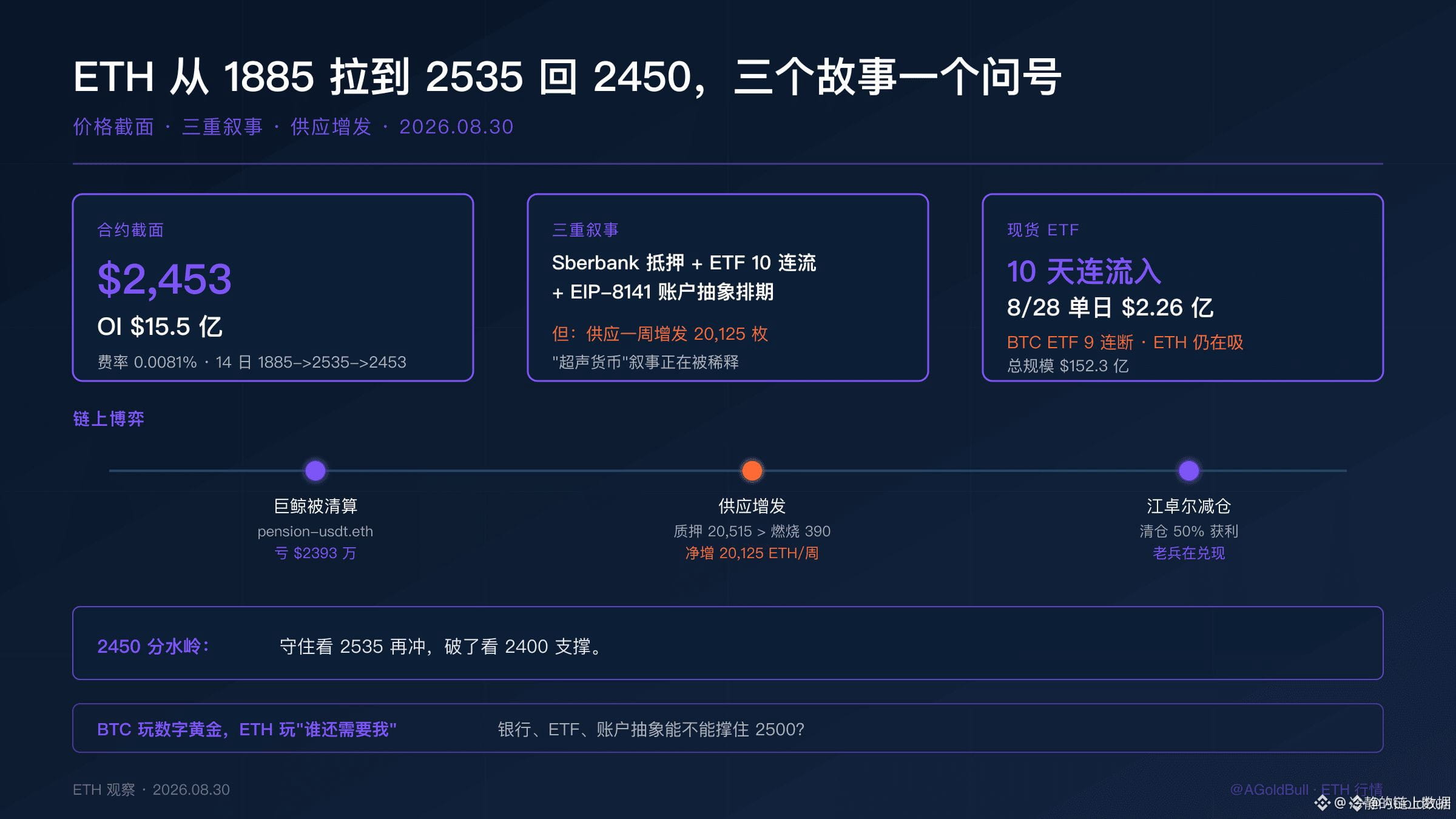
Russia’s largest bank Sberbank has announced plans to offer bitcoin, ether, and USDT-backed loans, as traditional financial giants begin actively embracing crypto assets.
According to disclosures, Sberbank is preparing loan products backed by mainstream crypto assets. Customers can pledge BTC, ETH, or USDT to obtain fiat loans. This is yet another signal of a shift in the Russian banking industry’s stance toward crypto assets—previously, the bank had already moved into digital asset custody and trading services.
At its core, it’s a shift in asset-allocation logic: banks no longer treat crypto as a counterparty risk, but as collateral that can generate returns. The pathways for staking, custody, lending, and institutional entry are becoming clearer.
When banks start accepting bitcoin as collateral, how far is crypto from mainstream finance? What do you think?
👉 俄罗斯最大银行接受比特币抵押贷款,你怎么看?进群聊
Russia’s largest bank Sberbank has announced plans to offer bitcoin, ether, and USDT-backed loans, as traditional financial giants begin actively embracing crypto assets.
According to disclosures, Sberbank is preparing loan products backed by mainstream crypto assets. Customers can pledge BTC, ETH, or USDT to obtain fiat loans. This is yet another signal of a shift in the Russian banking industry’s stance toward crypto assets—previously, the bank had already moved into digital asset custody and trading services.
At its core, it’s a shift in asset-allocation logic: banks no longer treat crypto as a counterparty risk, but as collateral that can generate returns. The pathways for staking, custody, lending, and institutional entry are becoming clearer.
When banks start accepting bitcoin as collateral, how far is crypto from mainstream finance? What do you think?

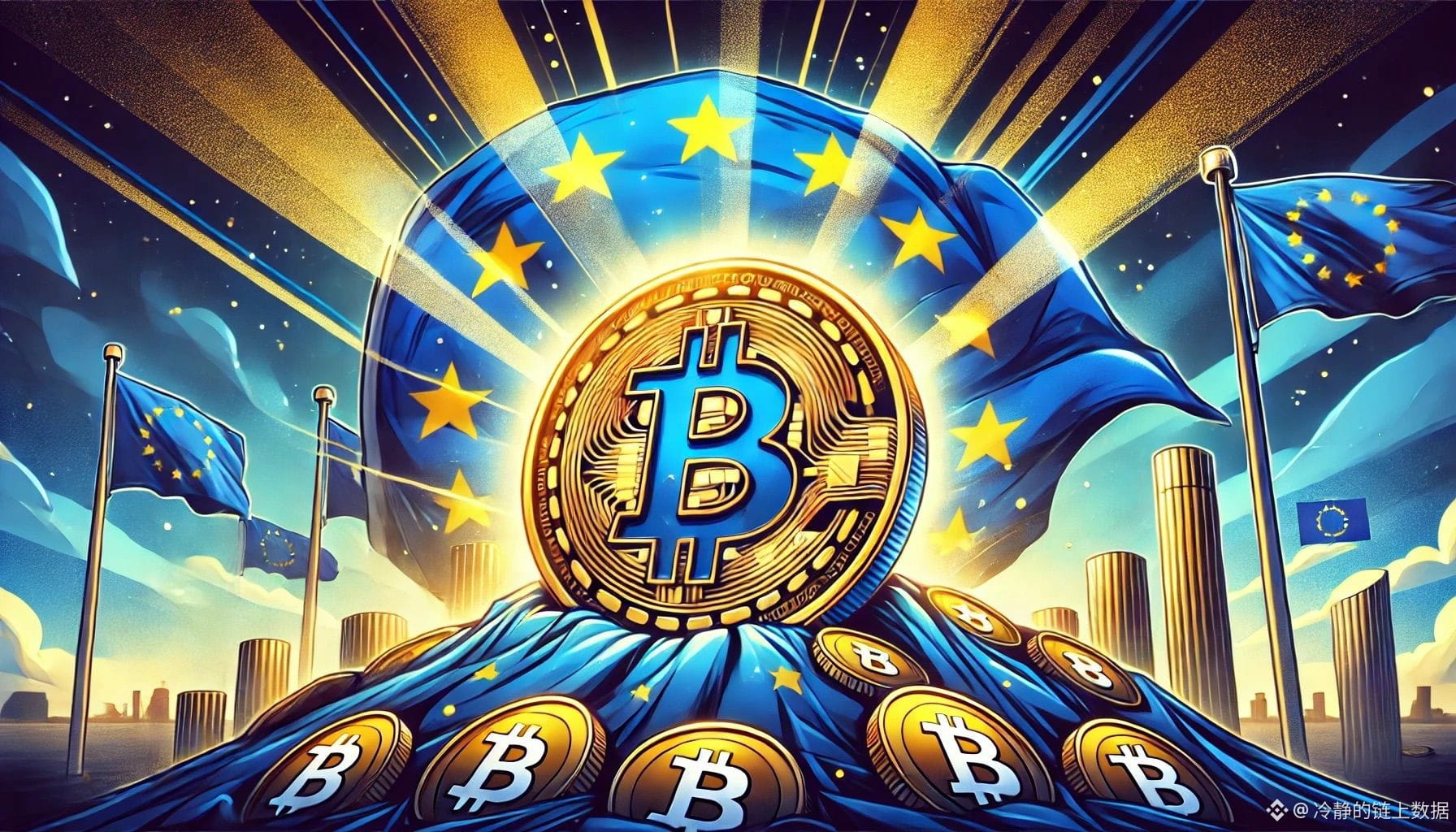
The ECB has started pushing for on-chain euro settlement, and the expansion of stablecoins has finally forced an official response. This narrative about "money" is spreading from exchanges to central banks.
According to the latest reports, the European Central Bank is testing a blockchain-based euro settlement solution to address the challenges brought by the continued growth in the scale of stablecoin usage. Previously, the circulation of stablecoins such as USDT and USDC in Europe can no longer be ignored. Regulators have realized: rather than avoiding on-chain settlement, they should step in themselves.
At its core, it’s a contest over monetary sovereignty. Stablecoins have allowed private institutions to control part of the payment infrastructure, so the central bank must reclaim the power of speech with a more efficient settlement network. On-chain euros are not a disruption—they’re a defense.
When central banks move into on-chain settlement, are stablecoins’ good days coming to an end? Or is this the start of a new track? What do you think?
👉 央行下场做链上结算,稳定币格局要变?进群看
According to the latest reports, the European Central Bank is testing a blockchain-based euro settlement solution to address the challenges brought by the continued growth in the scale of stablecoin usage. Previously, the circulation of stablecoins such as USDT and USDC in Europe can no longer be ignored. Regulators have realized: rather than avoiding on-chain settlement, they should step in themselves.
At its core, it’s a contest over monetary sovereignty. Stablecoins have allowed private institutions to control part of the payment infrastructure, so the central bank must reclaim the power of speech with a more efficient settlement network. On-chain euros are not a disruption—they’re a defense.
When central banks move into on-chain settlement, are stablecoins’ good days coming to an end? Or is this the start of a new track? What do you think?
👉 央行下场做链上结算,稳定币格局要变?进群看
Verified
#委内瑞拉美国签25年石油合作协议
👉 委美25年石油长约,能源格局要变天?进群看
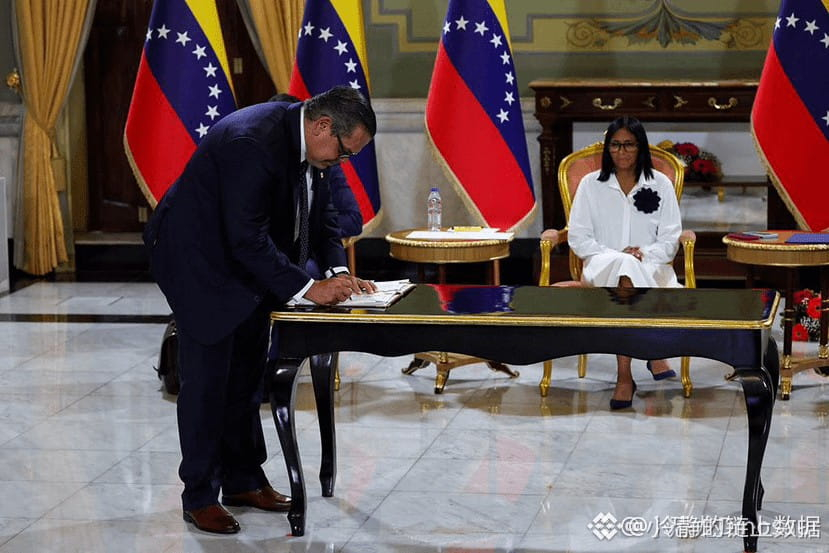
Venezuela and the United States signed a 25-year oil cooperation agreement, bringing a deep level of binding to the global energy landscape. The weight of this long-term deal goes far beyond an ordinary commercial contract.
The agreement covers the entire chain of oil extraction, transportation, and sales, with a term lasting up to a quarter of a century. For Venezuela, it is a crucial step to re-enter the international market after years of sanctions; for the United States, it is an important bargaining chip to secure long-term energy supplies and hedge geopolitical risks.
At its core, this is a strategic compromise in which both sides get what they need: one side wants market access and capital, while the other wants stable supply. Energy has never been just a business—it is an extension of geopolitics. This 25-year long-term contract effectively ties the interests of the two countries to the same oil well.
A contract is signed for oil, but the future is what gets secured. In this energy chess match, how many variables still remain? What do you think?
👉 委美25年石油长约,能源格局要变天?进群看
Venezuela and the United States signed a 25-year oil cooperation agreement, bringing a deep level of binding to the global energy landscape. The weight of this long-term deal goes far beyond an ordinary commercial contract.
The agreement covers the entire chain of oil extraction, transportation, and sales, with a term lasting up to a quarter of a century. For Venezuela, it is a crucial step to re-enter the international market after years of sanctions; for the United States, it is an important bargaining chip to secure long-term energy supplies and hedge geopolitical risks.
At its core, this is a strategic compromise in which both sides get what they need: one side wants market access and capital, while the other wants stable supply. Energy has never been just a business—it is an extension of geopolitics. This 25-year long-term contract effectively ties the interests of the two countries to the same oil well.
A contract is signed for oil, but the future is what gets secured. In this energy chess match, how many variables still remain? What do you think?

#黄金本周下跌3.24%
👉 黄金一周跌3.24%,避险资产失灵了?进群聊
Gold fell 3.24% this week, registering its largest weekly decline in the recent period. Safe-haven assets suddenly stopped being “safe”—what is the market repricing?
Data show that gold prices have retreated steadily from their highs this week, with losses exceeding 3%. At the same time, the U.S. dollar strengthened and expectations for further rate hikes warmed up, reversing the flow of funds between risk assets and safe-haven assets. The Federal Reserve officials’ hawkish remarks became the final straw that pushed down gold prices.
At its core, it’s the interest-rate logic at work: rising rate-hike expectations lift real yields, increasing the opportunity cost of holding gold, so capital naturally flows into assets with higher returns. Gold’s safe-haven attribute has not disappeared—it has simply temporarily lost out to rates.
Gold always walks the tightrope between risk aversion and interest rates. Is this pullback a chance to get in, or a signal of trend reversal—what do you think?
👉 黄金一周跌3.24%,避险资产失灵了?进群聊
Gold fell 3.24% this week, registering its largest weekly decline in the recent period. Safe-haven assets suddenly stopped being “safe”—what is the market repricing?
Data show that gold prices have retreated steadily from their highs this week, with losses exceeding 3%. At the same time, the U.S. dollar strengthened and expectations for further rate hikes warmed up, reversing the flow of funds between risk assets and safe-haven assets. The Federal Reserve officials’ hawkish remarks became the final straw that pushed down gold prices.
At its core, it’s the interest-rate logic at work: rising rate-hike expectations lift real yields, increasing the opportunity cost of holding gold, so capital naturally flows into assets with higher returns. Gold’s safe-haven attribute has not disappeared—it has simply temporarily lost out to rates.
Gold always walks the tightrope between risk aversion and interest rates. Is this pullback a chance to get in, or a signal of trend reversal—what do you think?

#越南试点加密资产市场
👉 越南试点加密市场,东南亚合规潮要来了?进群看
Vietnam officially launches a pilot program for the crypto-asset market, becoming another Southeast Asian country that openly embraces digital assets. The signal from regulators is very direct: try first, then set the rules.
According to a local regulator announcement, the pilot will cover crypto trading platforms and payment scenarios. In the initial stage, the scale and participating entities will be limited. After the process runs smoothly, it will be assessed whether to fully open it up. Previously, Vietnam’s rate of crypto holdings has long ranked among the highest in the world, but regulators have remained vague. This pilot is effectively providing the industry with a clear compliance path.
At its core, it reflects a shift in regulatory thinking: from “blocking” to “channeling.” Rather than letting trading move offshore, it’s better to bring it within a regulatory framework to observe and manage risks. Many countries across Southeast Asia are competing to seize this window—whoever sets the rules first will gain pricing power.
The phrase “pilot program” is the biggest act of tenderness regulators can offer the industry. After Vietnam’s step is implemented, will it drive neighboring countries to follow suit? What do you think?
👉 越南试点加密市场,东南亚合规潮要来了?进群看
Vietnam officially launches a pilot program for the crypto-asset market, becoming another Southeast Asian country that openly embraces digital assets. The signal from regulators is very direct: try first, then set the rules.
According to a local regulator announcement, the pilot will cover crypto trading platforms and payment scenarios. In the initial stage, the scale and participating entities will be limited. After the process runs smoothly, it will be assessed whether to fully open it up. Previously, Vietnam’s rate of crypto holdings has long ranked among the highest in the world, but regulators have remained vague. This pilot is effectively providing the industry with a clear compliance path.
At its core, it reflects a shift in regulatory thinking: from “blocking” to “channeling.” Rather than letting trading move offshore, it’s better to bring it within a regulatory framework to observe and manage risks. Many countries across Southeast Asia are competing to seize this window—whoever sets the rules first will gain pricing power.
The phrase “pilot program” is the biggest act of tenderness regulators can offer the industry. After Vietnam’s step is implemented, will it drive neighboring countries to follow suit? What do you think?
Tokenized stock supply on the BNB Chain surpasses $1.2 billion, with bStocks’ cumulative trading volume reaching 1.47 billion. The tokenized-asset market is quietly changing hands.
According to the latest data, tokenized stock supply on BNB Chain has climbed to $1.2 billion, doubling from the previous figure, and now accounts for about half of the tokenized stock market. On the Ethereum side, the comparable supply volume has been overtaken during the same period, signaling a clear shift in the market landscape.
At its core, it’s a battle over infrastructure and costs: lower trading fees and faster settlement on BNB Chain lead issuers to “vote with their feet.” Institutional demand for on-chain stocks isn’t just hype—it's a real, cash-and-liquidity migration. Whoever is cheaper gets the business.
On this tokenized-stock track, on-chain efficiency determines market share. How long can BNB Chain keep leading the pack? It’s worth watching closely. What do you think?
👉 BNB链代币化股票破12亿,链上效率之争才刚开始?进群看
According to the latest data, tokenized stock supply on BNB Chain has climbed to $1.2 billion, doubling from the previous figure, and now accounts for about half of the tokenized stock market. On the Ethereum side, the comparable supply volume has been overtaken during the same period, signaling a clear shift in the market landscape.
At its core, it’s a battle over infrastructure and costs: lower trading fees and faster settlement on BNB Chain lead issuers to “vote with their feet.” Institutional demand for on-chain stocks isn’t just hype—it's a real, cash-and-liquidity migration. Whoever is cheaper gets the business.
On this tokenized-stock track, on-chain efficiency determines market share. How long can BNB Chain keep leading the pack? It’s worth watching closely. What do you think?
👉 BNB链代币化股票破12亿,链上效率之争才刚开始?进群看

#日元贬值日本已投入970亿美元护盘
👉 日元970亿护盘,汇率拉锯战你怎么看?进群聊节奏
The Japanese yen has fallen below a key threshold. Over the past two months, the Bank of Japan has poured in $97 billion in real, hard cash. The scale of this round of intervention is the largest in recent years, yet the exchange rate continues to lurch back and forth around the key level.
According to publicly available data, in two rounds of operations from late July to August, Japanese authorities reportedly injected a combined total of about $97 billion, directly stepping into the foreign exchange market to buy and sell currencies. This is the largest set of actions since the interventions in 2024. The market at one point thought the central bank might call it quits, but the second wave came sooner—and hit harder.
At bottom, it’s a dilemma: inflation pressures call for the yen not to be too weak, while pressure from exports and the interest-rate differential continues to weigh on the yen’s depreciation. Intervention can only buy time—it can’t purchase a trend reversal. Global capital flows haven’t changed, and one-way support eventually reaches its limit at the margin.
What’s being propped up is confidence, not the exchange rate itself. Only when the Federal Reserve there signals a shift and eases will the yen’s pressure truly start to ease. What do you think about the effectiveness of this round of market shielding?
👉 日元970亿护盘,汇率拉锯战你怎么看?进群聊节奏
The Japanese yen has fallen below a key threshold. Over the past two months, the Bank of Japan has poured in $97 billion in real, hard cash. The scale of this round of intervention is the largest in recent years, yet the exchange rate continues to lurch back and forth around the key level.
According to publicly available data, in two rounds of operations from late July to August, Japanese authorities reportedly injected a combined total of about $97 billion, directly stepping into the foreign exchange market to buy and sell currencies. This is the largest set of actions since the interventions in 2024. The market at one point thought the central bank might call it quits, but the second wave came sooner—and hit harder.
At bottom, it’s a dilemma: inflation pressures call for the yen not to be too weak, while pressure from exports and the interest-rate differential continues to weigh on the yen’s depreciation. Intervention can only buy time—it can’t purchase a trend reversal. Global capital flows haven’t changed, and one-way support eventually reaches its limit at the margin.
What’s being propped up is confidence, not the exchange rate itself. Only when the Federal Reserve there signals a shift and eases will the yen’s pressure truly start to ease. What do you think about the effectiveness of this round of market shielding?
The U.S. Securities and Exchange Commission is rewriting rules for crypto asset custody, and the new framework has entered White House review, signaling a subtle shift in regulatory stance.
Previously, crypto custody had long existed in a gray area: banks were reluctant to touch it, exchanges managed it themselves, and there was no unified standard for the safety of customer assets. This rewrite is widely interpreted by the market as a move from “containment” to “standardization” — giving compliant custodians a clear operating space.
For the industry, this is a milestone step. Custody is a prerequisite for institutional capital to enter the market. Once the rules are clearer, pensions, banks, and large asset managers will have the confidence to allocate to crypto assets. After White House review is completed, there may still be a public consultation process.
Every small step in regulation is a giant leap for the industry. Once custody rules are in place, the logic behind an institutional bull market will truly be complete. What do you think?
👉 SEC 重写加密托管规则进白宫审查,机构牛要来了?进群看
Previously, crypto custody had long existed in a gray area: banks were reluctant to touch it, exchanges managed it themselves, and there was no unified standard for the safety of customer assets. This rewrite is widely interpreted by the market as a move from “containment” to “standardization” — giving compliant custodians a clear operating space.
For the industry, this is a milestone step. Custody is a prerequisite for institutional capital to enter the market. Once the rules are clearer, pensions, banks, and large asset managers will have the confidence to allocate to crypto assets. After White House review is completed, there may still be a public consultation process.
Every small step in regulation is a giant leap for the industry. Once custody rules are in place, the logic behind an institutional bull market will truly be complete. What do you think?
👉 SEC 重写加密托管规则进白宫审查,机构牛要来了?进群看

#美联储9月加息概率升至57%
👉 CFTC 数据显示黄金买盘激增,避险资金进场了?进群聊
CFTC latest position data shows: the Canadian dollar shorts are leading the cover, gold buying interest is surging at the same time, and hedging capital is quietly moving in.
According to the data, the short positions in Canadian dollar futures have been sharply reduced, and short-covering has driven the Canadian dollar higher in the short term. Meanwhile, long positions in gold have increased notably, and the market’s demand for safe-haven assets is heating up. The two commodities have moved in tandem, pointing to the same underlying logic: capital is lowering risk appetite.
Behind this may be a re-pricing of the Federal Reserve’s policy path, or a hedging demand amid geopolitical uncertainty. Either way, it suggests the market is no longer making a one-way bet on risk assets and is beginning to prepare for volatility.
Where capital flows is always the leading indicator of market moves. When smart money starts buying gold, will you also set aside a portion for hedging—what do you think?
👉 CFTC 数据显示黄金买盘激增,避险资金进场了?进群聊
CFTC latest position data shows: the Canadian dollar shorts are leading the cover, gold buying interest is surging at the same time, and hedging capital is quietly moving in.
According to the data, the short positions in Canadian dollar futures have been sharply reduced, and short-covering has driven the Canadian dollar higher in the short term. Meanwhile, long positions in gold have increased notably, and the market’s demand for safe-haven assets is heating up. The two commodities have moved in tandem, pointing to the same underlying logic: capital is lowering risk appetite.
Behind this may be a re-pricing of the Federal Reserve’s policy path, or a hedging demand amid geopolitical uncertainty. Either way, it suggests the market is no longer making a one-way bet on risk assets and is beginning to prepare for volatility.
Where capital flows is always the leading indicator of market moves. When smart money starts buying gold, will you also set aside a portion for hedging—what do you think?

Log in to explore more content