

#solana
solana
159.1M views
256,704 Discussing
Hot
Latest


·
--
Bullish
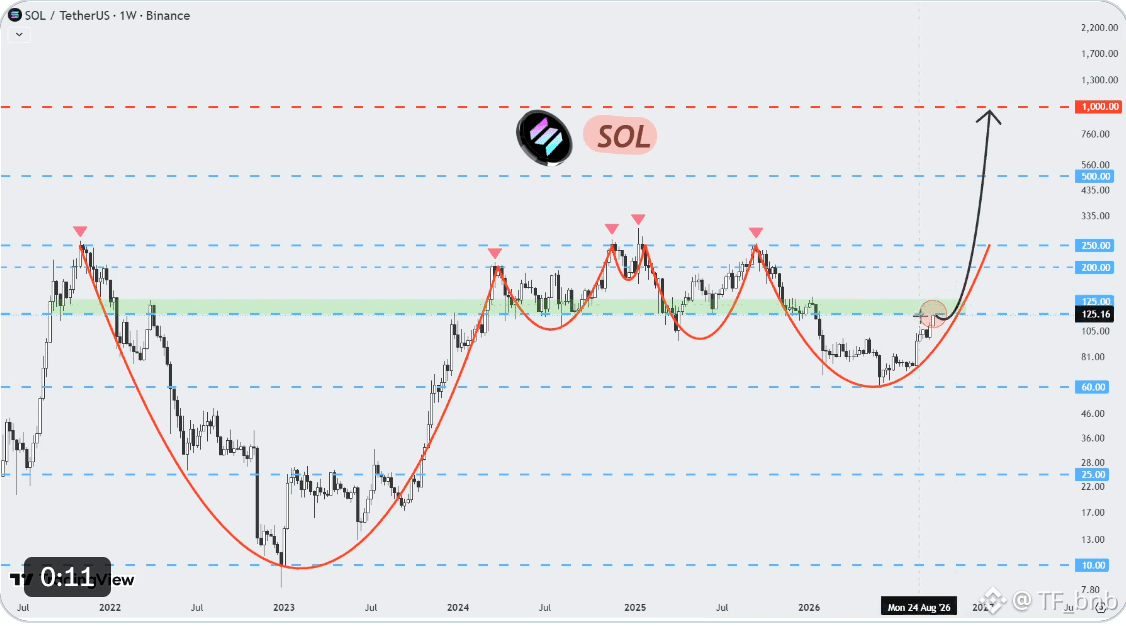
🚨 $SOL IS QUIETLY BUILDING SOMETHING BIG
The chart is curving higher, while capital continues to flow into the Solana ecosystem. 👀💸
$SOL appears to be forming a rounding-bottom structure on the daily timeframe, potentially setting the stage for a larger breakout.
A few things are worth watching:
• 🏦 Stablecoin supply on Solana has reached a new ATH of $17.3B
• 💰 ETFs have recorded 13 consecutive weeks of inflows
• ⚡ Fast, low-cost transactions continue to support growing network activity
• 📈 The daily chart is showing signs of accumulation and a potential trend reversal
The setup is getting increasingly interesting.
If momentum accelerates and the breakout confirms, these are the levels I'm watching:
🎯 $200
🎯 $250
🎯 $500
🎯 $1,000
The real question is whether this is the beginning of Solana's next major expansion.
#SOL #Solana #Crypto
{future}(SOLUSDT)
🚨 $SOL IS QUIETLY BUILDING SOMETHING BIG
The chart is curving higher, while capital continues to flow into the Solana ecosystem. 👀💸
$SOL appears to be forming a rounding-bottom structure on the daily timeframe, potentially setting the stage for a larger breakout.
A few things are worth watching:
• 🏦 Stablecoin supply on Solana has reached a new ATH of $17.3B
• 💰 ETFs have recorded 13 consecutive weeks of inflows
• ⚡ Fast, low-cost transactions continue to support growing network activity
• 📈 The daily chart is showing signs of accumulation and a potential trend reversal
The setup is getting increasingly interesting.
If momentum accelerates and the breakout confirms, these are the levels I'm watching:
🎯 $200
🎯 $250
🎯 $500
🎯 $1,000
The real question is whether this is the beginning of Solana's next major expansion.
#SOL #Solana #Crypto
The chart is curving higher, while capital continues to flow into the Solana ecosystem. 👀💸
$SOL appears to be forming a rounding-bottom structure on the daily timeframe, potentially setting the stage for a larger breakout.
A few things are worth watching:
• 🏦 Stablecoin supply on Solana has reached a new ATH of $17.3B
• 💰 ETFs have recorded 13 consecutive weeks of inflows
• ⚡ Fast, low-cost transactions continue to support growing network activity
• 📈 The daily chart is showing signs of accumulation and a potential trend reversal
The setup is getting increasingly interesting.
If momentum accelerates and the breakout confirms, these are the levels I'm watching:
🎯 $200
🎯 $250
🎯 $500
🎯 $1,000
The real question is whether this is the beginning of Solana's next major expansion.
#SOL #Solana #Crypto
Sid_iqb:
what is DCA
5
11
2.2k

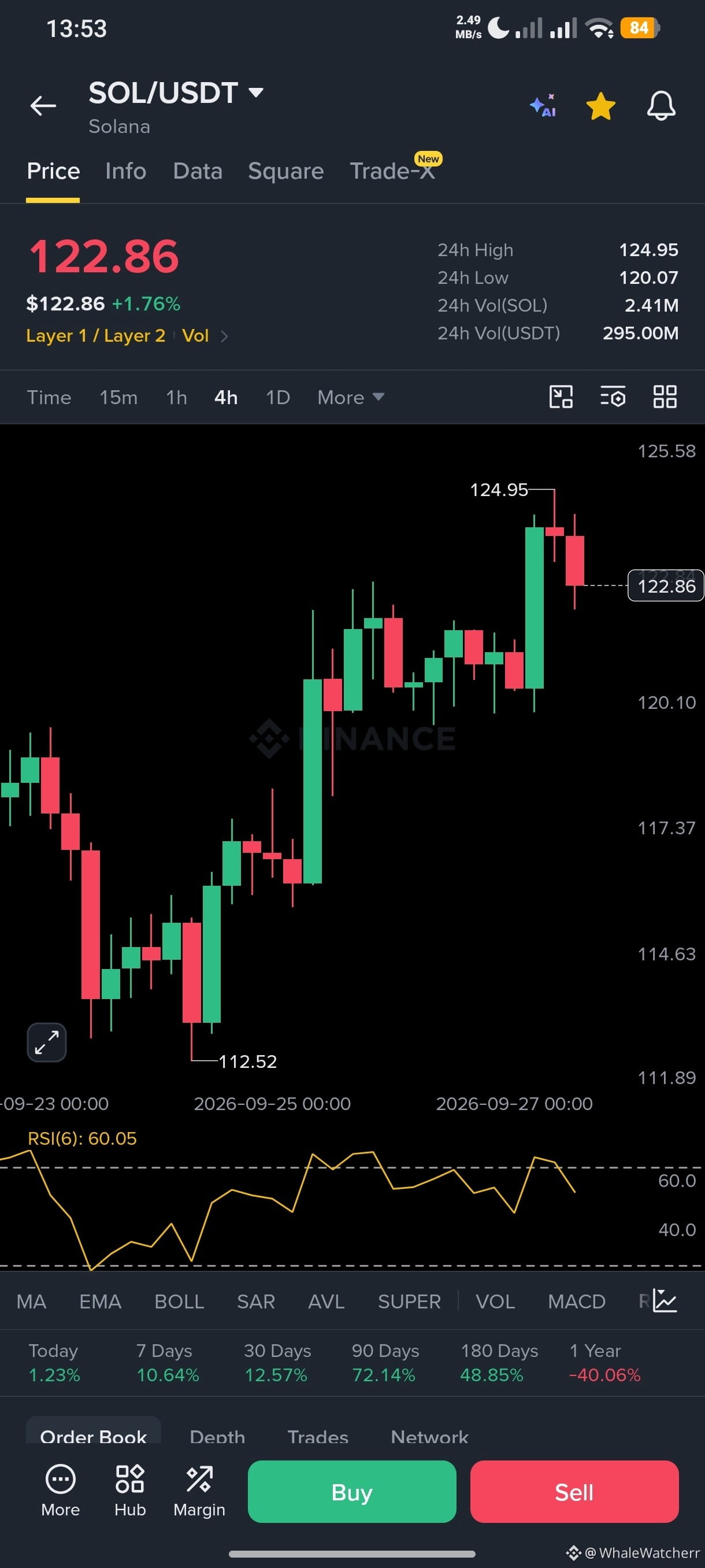
$SOL fam… ripped from 112.52 to 124.95 and the second it breathes back to 122.86, people start typing "top is in" 😂
Nah, that's just a shakeout after a vertical move, not a reversal. They needed weak hands out before the next leg.
While some are already calling it done, the ones who actually read structure are treating this pullback as a reload zone, not an exit.
$SOL
📉 "It's topping out," they say… while the chart just cooled off for round two.
🛒 "Locking in gains and leaving," they said… as the patient ones held their SPOT bags steady.
😴 "RSI's fading," they claim… ignoring that 60 on a fresh breakout is still firmly bullish territory.
Feels like the impatient crowd is already halfway out the door… while the ones who caught the move from 112 are just sitting back.
$SOL
Sell the pullback if you want. We're holding SOL spot, letting the structure play out, zero rush. Because if this reclaims 124.95 and keeps stacking green candles, guess who's back in the comments asking "is it too late to buy?"
{spot}(SOLUSDT)
#solana
$SOL fam… ripped from 112.52 to 124.95 and the second it breathes back to 122.86, people start typing "top is in" 😂
Nah, that's just a shakeout after a vertical move, not a reversal. They needed weak hands out before the next leg.
While some are already calling it done, the ones who actually read structure are treating this pullback as a reload zone, not an exit.
$SOL
📉 "It's topping out," they say… while the chart just cooled off for round two.
🛒 "Locking in gains and leaving," they said… as the patient ones held their SPOT bags steady.
😴 "RSI's fading," they claim… ignoring that 60 on a fresh breakout is still firmly bullish territory.
Feels like the impatient crowd is already halfway out the door… while the ones who caught the move from 112 are just sitting back.
$SOL
Sell the pullback if you want. We're holding SOL spot, letting the structure play out, zero rush. Because if this reclaims 124.95 and keeps stacking green candles, guess who's back in the comments asking "is it too late to buy?"
#solana
Nah, that's just a shakeout after a vertical move, not a reversal. They needed weak hands out before the next leg.
While some are already calling it done, the ones who actually read structure are treating this pullback as a reload zone, not an exit.
$SOL
📉 "It's topping out," they say… while the chart just cooled off for round two.
🛒 "Locking in gains and leaving," they said… as the patient ones held their SPOT bags steady.
😴 "RSI's fading," they claim… ignoring that 60 on a fresh breakout is still firmly bullish territory.
Feels like the impatient crowd is already halfway out the door… while the ones who caught the move from 112 are just sitting back.
$SOL
Sell the pullback if you want. We're holding SOL spot, letting the structure play out, zero rush. Because if this reclaims 124.95 and keeps stacking green candles, guess who's back in the comments asking "is it too late to buy?"
#solana
1
270

·
--
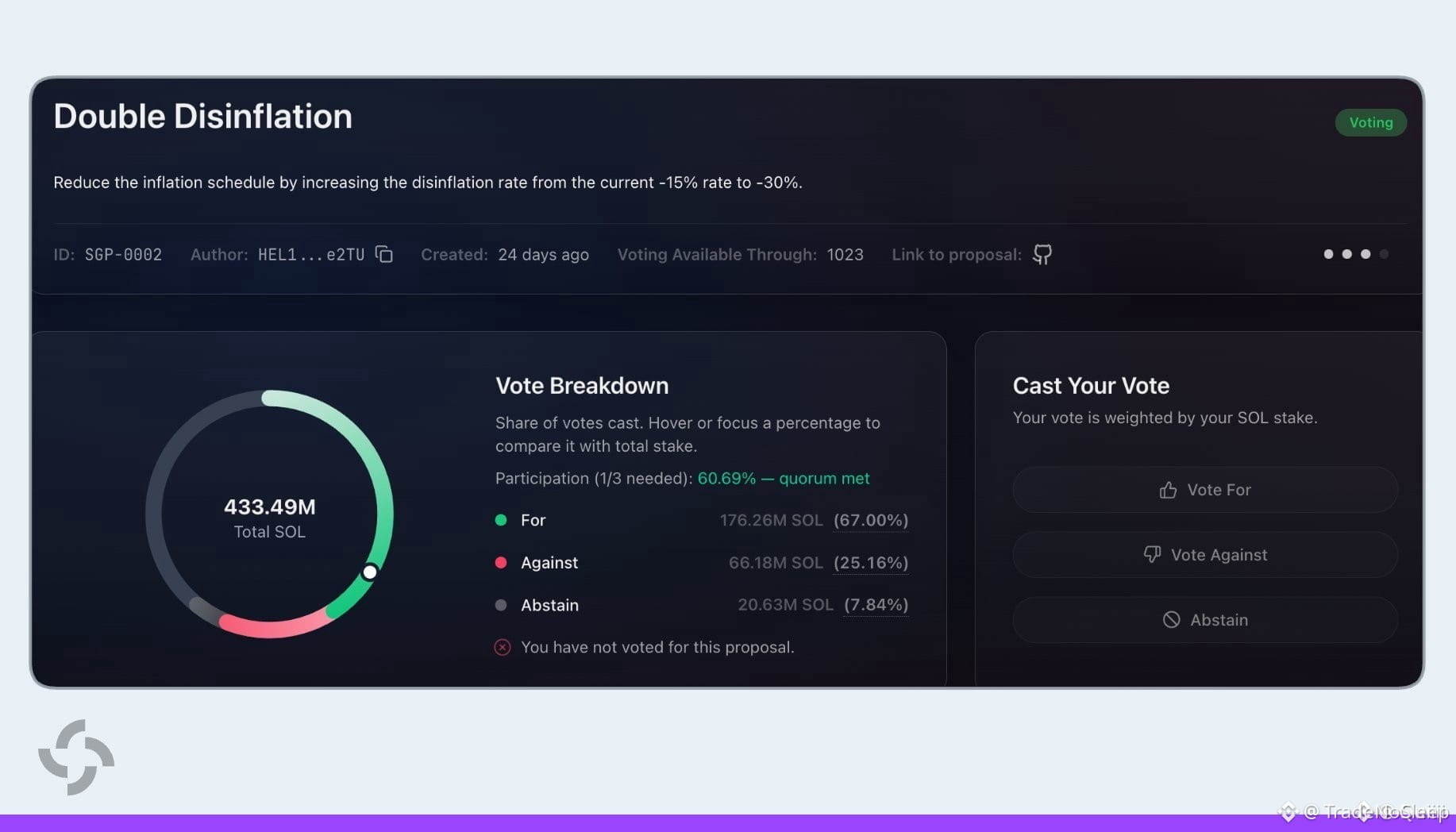
🚨 $SOL GOVERNANCE PASSES PROPOSAL TO CUT ISSUANCE BY 18.9M TOKENS! ⚡
Solana validators have officially approved the double disinflation proposal, driving the disinflation rate to 30%. 📊 This structural shift strips roughly 18.9M $SOL ($1.47B) from projected supply over the next six years, fundamentally altering the macro supply curve.
From an institutional lens, curbing token issuance during structural consolidation zones significantly reduces ongoing sell-side pressure. 💡 Smart money tracks these long-term supply recalibrations closely as baseline market liquidity tightens over extended timeframes.
💬 Will this systematic reduction in sell-side issuance trigger a long-term re-pricing for $SOL ? 👇
⚠️ Not financial advice. Always manage your risk. 🛡️
🏷️ #SOL #Solana #Tokenomics #Crypto
🦈 ⚡
🚨 $SOL GOVERNANCE PASSES PROPOSAL TO CUT ISSUANCE BY 18.9M TOKENS! ⚡
Solana validators have officially approved the double disinflation proposal, driving the disinflation rate to 30%. 📊 This structural shift strips roughly 18.9M $SOL ($1.47B) from projected supply over the next six years, fundamentally altering the macro supply curve.
From an institutional lens, curbing token issuance during structural consolidation zones significantly reduces ongoing sell-side pressure. 💡 Smart money tracks these long-term supply recalibrations closely as baseline market liquidity tightens over extended timeframes.
💬 Will this systematic reduction in sell-side issuance trigger a long-term re-pricing for $SOL ? 👇
⚠️ Not financial advice. Always manage your risk. 🛡️
🏷️ #SOL #Solana #Tokenomics #Crypto
🦈 ⚡
Solana validators have officially approved the double disinflation proposal, driving the disinflation rate to 30%. 📊 This structural shift strips roughly 18.9M $SOL ($1.47B) from projected supply over the next six years, fundamentally altering the macro supply curve.
From an institutional lens, curbing token issuance during structural consolidation zones significantly reduces ongoing sell-side pressure. 💡 Smart money tracks these long-term supply recalibrations closely as baseline market liquidity tightens over extended timeframes.
💬 Will this systematic reduction in sell-side issuance trigger a long-term re-pricing for $SOL ? 👇
⚠️ Not financial advice. Always manage your risk. 🛡️
🏷️ #SOL #Solana #Tokenomics #Crypto
🦈 ⚡
60

·
--
Bullish
🚨 U.S. Spot Solana ETFs Surge with $188M Inflow!
Institutional demand for $SOL is soaring as U.S. Spot Solana ETFs recorded $188M in weekly net inflows. The rally was highlighted by a record single-day inflow of $86.67M on Sept 25, led by BSOL ($55.7M). Cumulative net inflows have now crossed $1.605B, pushing total net assets to $1.964B. This massive capital influx reflects growing Wall Street confidence in Solana's ecosystem growth.
🔴 What’s Your Take? Will this institutional wave push $SOL to new all-time highs soon? #solana #etf #cryptouniverseofficial
{spot}(SOLUSDT)
🚨 U.S. Spot Solana ETFs Surge with $188M Inflow!
Institutional demand for $SOL is soaring as U.S. Spot Solana ETFs recorded $188M in weekly net inflows. The rally was highlighted by a record single-day inflow of $86.67M on Sept 25, led by BSOL ($55.7M). Cumulative net inflows have now crossed $1.605B, pushing total net assets to $1.964B. This massive capital influx reflects growing Wall Street confidence in Solana's ecosystem growth.
🔴 What’s Your Take? Will this institutional wave push $SOL to new all-time highs soon? #solana #etf #cryptouniverseofficial
Institutional demand for $SOL is soaring as U.S. Spot Solana ETFs recorded $188M in weekly net inflows. The rally was highlighted by a record single-day inflow of $86.67M on Sept 25, led by BSOL ($55.7M). Cumulative net inflows have now crossed $1.605B, pushing total net assets to $1.964B. This massive capital influx reflects growing Wall Street confidence in Solana's ecosystem growth.
🔴 What’s Your Take? Will this institutional wave push $SOL to new all-time highs soon? #solana #etf #cryptouniverseofficial
ابوالعز1123:
Impressive data. A record $86.67M single-day inflow, with cumulative net inflows now over $1.6B, is a clear institutional signal.
If BSOL continues to lead and total net assets hold above $1.9B, SOL has a solid base to retest previous highs. The key now is to watch for sustained inflows rather than a one-off spike.
1
2
97

·
--
Verified
$SOL is giving us some massive long-term developments to think about today! ⚙️
The co-founder of Solana just came out and stated that the broader industry is simply not ready for the Alpenglow Upgrade. It is always interesting to see network leadership directly point out that their upcoming tech is moving faster than the rest of the space can currently handle.
If the team decides to pace this rollout to let the ecosystem catch up, watch for steady, consolidated action as the market digests the long-term potential. However, if they decide to push forward with the Alpenglow Upgrade anyway, watch for some short-term volatility as protocols and developers scramble to adapt to the sudden changes.
#Solana
#Alpenglow
#CryptoTrading
#Web3Revolution
{future}(SOLUSDT)
$SOL is giving us some massive long-term developments to think about today! ⚙️
The co-founder of Solana just came out and stated that the broader industry is simply not ready for the Alpenglow Upgrade. It is always interesting to see network leadership directly point out that their upcoming tech is moving faster than the rest of the space can currently handle.
If the team decides to pace this rollout to let the ecosystem catch up, watch for steady, consolidated action as the market digests the long-term potential. However, if they decide to push forward with the Alpenglow Upgrade anyway, watch for some short-term volatility as protocols and developers scramble to adapt to the sudden changes.
#Solana
#Alpenglow
#CryptoTrading
#Web3Revolution
The co-founder of Solana just came out and stated that the broader industry is simply not ready for the Alpenglow Upgrade. It is always interesting to see network leadership directly point out that their upcoming tech is moving faster than the rest of the space can currently handle.
If the team decides to pace this rollout to let the ecosystem catch up, watch for steady, consolidated action as the market digests the long-term potential. However, if they decide to push forward with the Alpenglow Upgrade anyway, watch for some short-term volatility as protocols and developers scramble to adapt to the sudden changes.
#Solana
#Alpenglow
#CryptoTrading
#Web3Revolution
133

·
--

Article
Why Watching Only the Solana (SOL) Price Will Get You RektIf you only check the price of $SOL on your chart, you are watching the scoreboard instead of the game.
For a long time, people traded Solana for one simple reason: it was fast and cheap. High TPS was the entire marketing pitch. But speed alone does not make a blockchain valuable. A fast road with no cars is still an empty road.
Today, that trade has changed. Solana is no longer just a "fast chain" bet. It has turned into a liquidity engine. If you want to understand where SOL is heading, you have to stop staring at the daily candle and start tracking where the real money flows.
Stablecoins Are the Fuel
Price can pump on low volume simply because sellers step away. But stablecoins do not lie.
When you see fresh USDC and USDT bridging directly onto Solana, that is real capital entering the ecosystem. Stablecoins are dry powder. Nobody moves $100 million in stables onto a chain just to let it sit idle. They move it to buy dips, provide liquidity to pools, or trade pairs.
If SOL is pumping 10% in a week, but the total stablecoin supply on the network is flat or dropping, be careful. That usually means the same group of traders is just passing the same old money around. A true, sustained rally needs new cash flowing into the chain week after week.
Real Users vs. Network Noise
Solana transaction numbers can easily fool you if you do not look under the hood. Millions of transactions happen every day, but a huge portion of them are just validators voting to keep the ledger in sync.
To see real adoption, you must look at true economic activity. Are daily active wallets growing? Are real users paying priority fees to get their trades through?
Memecoins brought millions of retail traders to Solana. That was great for user onboarding. But true network strength is measured by whether those users stay. Watch DEX volume on platforms like Raydium and Orca. When trading volume turns into real protocol revenue and consistent staking yield, SOL gains genuine organic demand that does not depend on hype.
The Leverage Trap
This is where retail traders get wiped out every cycle. They see the price climbing, get greedy, and open high-leverage long positions.
Always check Open Interest and funding rates alongside the price. If the price of SOL is pushing higher, but that move is powered entirely by futures leverage rather than spot buying, you are looking at a house of cards.
When funding rates get heavily positive, long traders are paying heavy fees every eight hours just to keep their positions open. If fresh cash does not show up to support the move, a tiny dip will trigger a cascade of liquidations. Spot money builds floors. Leverage only builds spikes.
Why Deep Liquidity Wins
What does deep liquidity actually mean for Solana? It means order book depth.
Good liquidity means a large fund or whale can sell $20 million worth of SOL without crashing the market by 8%. It means tight spreads on decentralized order books and deep pools in AMMs.
Big institutional capital does not care about TPS records if they cannot enter and exit without massive slippage. When a chain proves its liquidity can absorb large trades without breaking, it stops being a speculative playground and starts behaving like a real financial hub.
Next time you open your charts, zoom out. Check the 30-day stablecoin trend. Compare spot volume against derivatives debt. Price is just the shadow on the wall. Liquidity is the real object making that shadow.
#SOL #Solana #OnChain
Why Watching Only the Solana (SOL) Price Will Get You Rekt
If you only check the price of $SOL on your chart, you are watching the scoreboard instead of the game.
For a long time, people traded Solana for one simple reason: it was fast and cheap. High TPS was the entire marketing pitch. But speed alone does not make a blockchain valuable. A fast road with no cars is still an empty road.
Today, that trade has changed. Solana is no longer just a "fast chain" bet. It has turned into a liquidity engine. If you want to understand where SOL is heading, you have to stop staring at the daily candle and start tracking where the real money flows.
Stablecoins Are the Fuel
Price can pump on low volume simply because sellers step away. But stablecoins do not lie.
When you see fresh USDC and USDT bridging directly onto Solana, that is real capital entering the ecosystem. Stablecoins are dry powder. Nobody moves $100 million in stables onto a chain just to let it sit idle. They move it to buy dips, provide liquidity to pools, or trade pairs.
If SOL is pumping 10% in a week, but the total stablecoin supply on the network is flat or dropping, be careful. That usually means the same group of traders is just passing the same old money around. A true, sustained rally needs new cash flowing into the chain week after week.
Real Users vs. Network Noise
Solana transaction numbers can easily fool you if you do not look under the hood. Millions of transactions happen every day, but a huge portion of them are just validators voting to keep the ledger in sync.
To see real adoption, you must look at true economic activity. Are daily active wallets growing? Are real users paying priority fees to get their trades through?
Memecoins brought millions of retail traders to Solana. That was great for user onboarding. But true network strength is measured by whether those users stay. Watch DEX volume on platforms like Raydium and Orca. When trading volume turns into real protocol revenue and consistent staking yield, SOL gains genuine organic demand that does not depend on hype.
The Leverage Trap
This is where retail traders get wiped out every cycle. They see the price climbing, get greedy, and open high-leverage long positions.
Always check Open Interest and funding rates alongside the price. If the price of SOL is pushing higher, but that move is powered entirely by futures leverage rather than spot buying, you are looking at a house of cards.
When funding rates get heavily positive, long traders are paying heavy fees every eight hours just to keep their positions open. If fresh cash does not show up to support the move, a tiny dip will trigger a cascade of liquidations. Spot money builds floors. Leverage only builds spikes.
Why Deep Liquidity Wins
What does deep liquidity actually mean for Solana? It means order book depth.
Good liquidity means a large fund or whale can sell $20 million worth of SOL without crashing the market by 8%. It means tight spreads on decentralized order books and deep pools in AMMs.
Big institutional capital does not care about TPS records if they cannot enter and exit without massive slippage. When a chain proves its liquidity can absorb large trades without breaking, it stops being a speculative playground and starts behaving like a real financial hub.
Next time you open your charts, zoom out. Check the 30-day stablecoin trend. Compare spot volume against derivatives debt. Price is just the shadow on the wall. Liquidity is the real object making that shadow.
#SOL #Solana #OnChain
For a long time, people traded Solana for one simple reason: it was fast and cheap. High TPS was the entire marketing pitch. But speed alone does not make a blockchain valuable. A fast road with no cars is still an empty road.
Today, that trade has changed. Solana is no longer just a "fast chain" bet. It has turned into a liquidity engine. If you want to understand where SOL is heading, you have to stop staring at the daily candle and start tracking where the real money flows.
Stablecoins Are the Fuel
Price can pump on low volume simply because sellers step away. But stablecoins do not lie.
When you see fresh USDC and USDT bridging directly onto Solana, that is real capital entering the ecosystem. Stablecoins are dry powder. Nobody moves $100 million in stables onto a chain just to let it sit idle. They move it to buy dips, provide liquidity to pools, or trade pairs.
If SOL is pumping 10% in a week, but the total stablecoin supply on the network is flat or dropping, be careful. That usually means the same group of traders is just passing the same old money around. A true, sustained rally needs new cash flowing into the chain week after week.
Real Users vs. Network Noise
Solana transaction numbers can easily fool you if you do not look under the hood. Millions of transactions happen every day, but a huge portion of them are just validators voting to keep the ledger in sync.
To see real adoption, you must look at true economic activity. Are daily active wallets growing? Are real users paying priority fees to get their trades through?
Memecoins brought millions of retail traders to Solana. That was great for user onboarding. But true network strength is measured by whether those users stay. Watch DEX volume on platforms like Raydium and Orca. When trading volume turns into real protocol revenue and consistent staking yield, SOL gains genuine organic demand that does not depend on hype.
The Leverage Trap
This is where retail traders get wiped out every cycle. They see the price climbing, get greedy, and open high-leverage long positions.
Always check Open Interest and funding rates alongside the price. If the price of SOL is pushing higher, but that move is powered entirely by futures leverage rather than spot buying, you are looking at a house of cards.
When funding rates get heavily positive, long traders are paying heavy fees every eight hours just to keep their positions open. If fresh cash does not show up to support the move, a tiny dip will trigger a cascade of liquidations. Spot money builds floors. Leverage only builds spikes.
Why Deep Liquidity Wins
What does deep liquidity actually mean for Solana? It means order book depth.
Good liquidity means a large fund or whale can sell $20 million worth of SOL without crashing the market by 8%. It means tight spreads on decentralized order books and deep pools in AMMs.
Big institutional capital does not care about TPS records if they cannot enter and exit without massive slippage. When a chain proves its liquidity can absorb large trades without breaking, it stops being a speculative playground and starts behaving like a real financial hub.
Next time you open your charts, zoom out. Check the 30-day stablecoin trend. Compare spot volume against derivatives debt. Price is just the shadow on the wall. Liquidity is the real object making that shadow.
#SOL #Solana #OnChain
1
140

$SOL
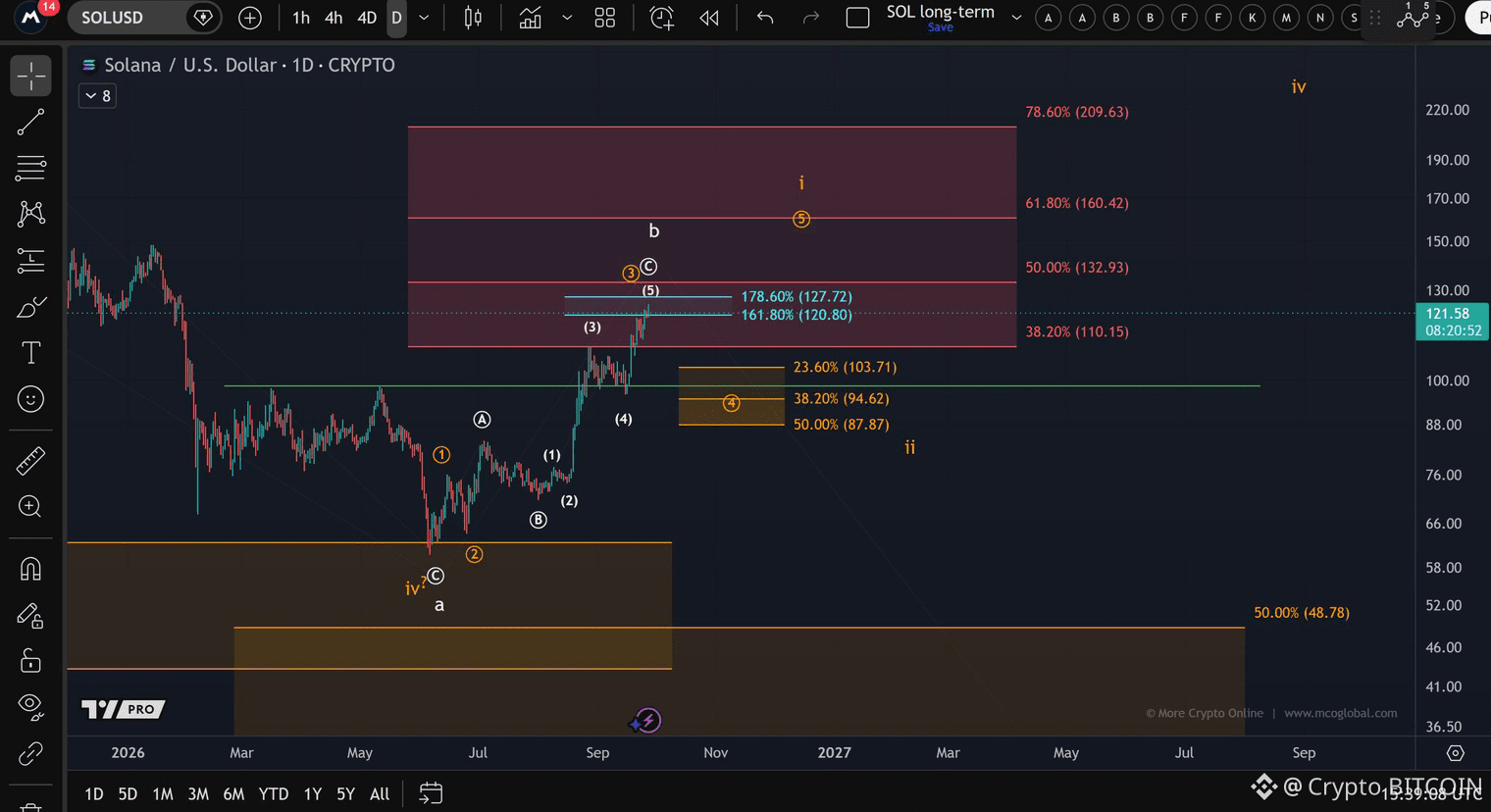
The rally from the June low is still unfolding, with the next larger-degree resistance at $133.
The advance can be classed as a developing 5-wave move in the orange scenario. $121, $128 and $133 remain the next upside levels. If a later pullback unfolds in 3 waves and holds support, another high remains possible.
#Solana
$SOL
The rally from the June low is still unfolding, with the next larger-degree resistance at $133.
The advance can be classed as a developing 5-wave move in the orange scenario. $121, $128 and $133 remain the next upside levels. If a later pullback unfolds in 3 waves and holds support, another high remains possible.
#Solana
The rally from the June low is still unfolding, with the next larger-degree resistance at $133.
The advance can be classed as a developing 5-wave move in the orange scenario. $121, $128 and $133 remain the next upside levels. If a later pullback unfolds in 3 waves and holds support, another high remains possible.
#Solana
1
51
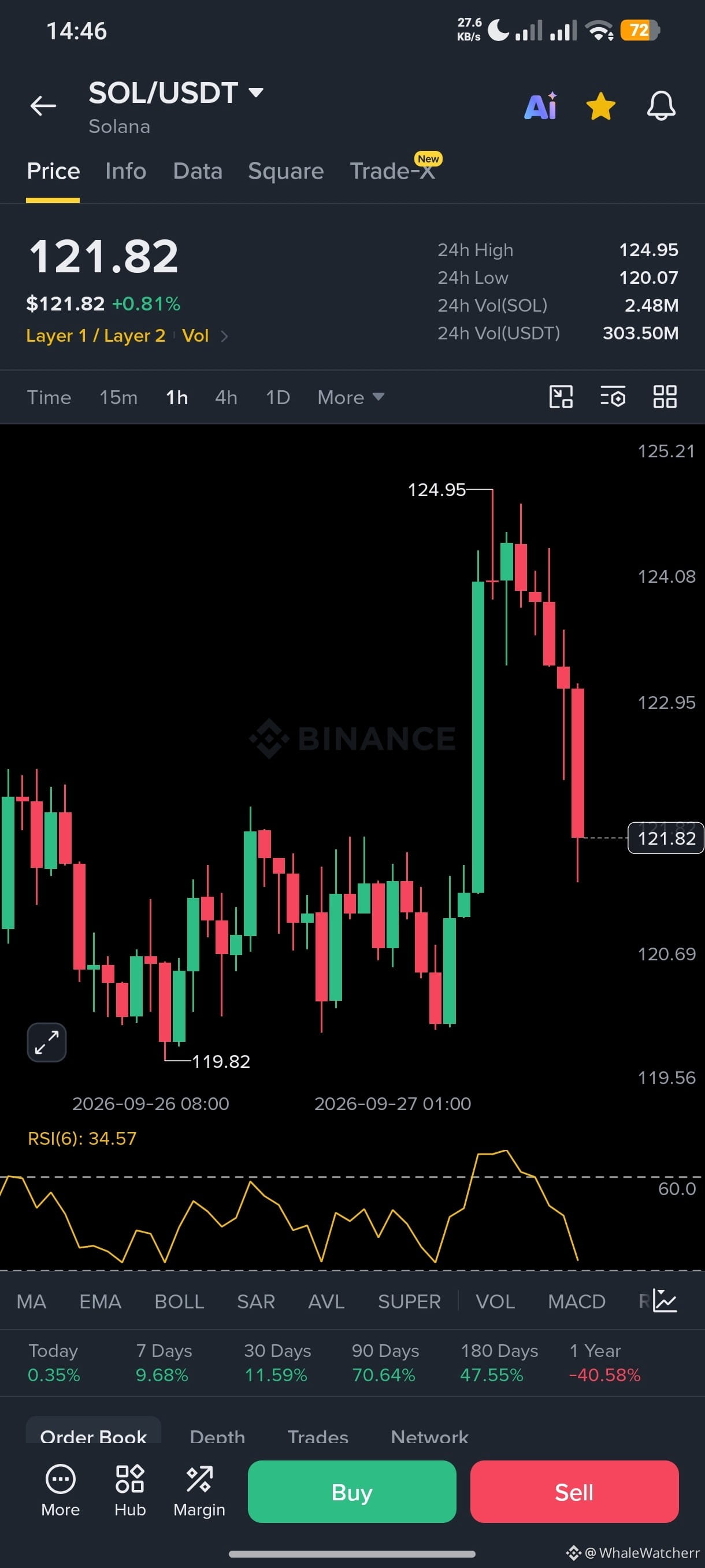
$SOL Watchers… The whales just cashed in. 🐋 A vertical surge to 124.95 flushed liquidity in, and now they're distributing hard while the crowd is still chasing the top.
From 119.82 SOL exploded straight to 124.95 in one clean push — that wasn't organic drift, that was a coordinated leg up. But look closer: since the top, three straight red candles have wiped out most of that move, dropping price back to 121.82.
$SOL
When RSI spiked above 60 and everyone was euphoric, smart money was already unloading. Now price is sitting right on the 121.82 shelf, and this level decides whether the pullback holds or breaks lower.
$SOL
💎 They see "still bullish."
⚡ We see distribution after the spike.
🚀 They'll get caught holding. We're watching for confirmation.
The window is tight. Watch SOL hold above 120.69. Trade the reaction, not the emotion.
{spot}(SOLUSDT)
#sol #solana
$SOL Watchers… The whales just cashed in. 🐋 A vertical surge to 124.95 flushed liquidity in, and now they're distributing hard while the crowd is still chasing the top.
From 119.82 SOL exploded straight to 124.95 in one clean push — that wasn't organic drift, that was a coordinated leg up. But look closer: since the top, three straight red candles have wiped out most of that move, dropping price back to 121.82.
$SOL
When RSI spiked above 60 and everyone was euphoric, smart money was already unloading. Now price is sitting right on the 121.82 shelf, and this level decides whether the pullback holds or breaks lower.
$SOL
💎 They see "still bullish."
⚡ We see distribution after the spike.
🚀 They'll get caught holding. We're watching for confirmation.
The window is tight. Watch SOL hold above 120.69. Trade the reaction, not the emotion.
#sol #solana
From 119.82 SOL exploded straight to 124.95 in one clean push — that wasn't organic drift, that was a coordinated leg up. But look closer: since the top, three straight red candles have wiped out most of that move, dropping price back to 121.82.
$SOL
When RSI spiked above 60 and everyone was euphoric, smart money was already unloading. Now price is sitting right on the 121.82 shelf, and this level decides whether the pullback holds or breaks lower.
$SOL
💎 They see "still bullish."
⚡ We see distribution after the spike.
🚀 They'll get caught holding. We're watching for confirmation.
The window is tight. Watch SOL hold above 120.69. Trade the reaction, not the emotion.
#sol #solana
1
148

·
--
Can $SOL reach $500–$1,000? 👀
At ~$122 today:
$500 SOL → ~$294B market cap
$1,000 SOL → ~$588B market cap
So yes, mathematically these levels are possible, but they would require a massive expansion in Solana’s valuation and sustained ecosystem growth.
Solana is still scaling its infrastructure, with mainnet block capacity recently raised to 100M compute units.
The real question isn’t “Can SOL hit $1,000?”
It’s how much adoption and capital would be needed to get there. 🔥
#solana #SOL #crypto $SOL
{spot}(SOLUSDT)
Can $SOL reach $500–$1,000? 👀
At ~$122 today:
$500 SOL → ~$294B market cap
$1,000 SOL → ~$588B market cap
So yes, mathematically these levels are possible, but they would require a massive expansion in Solana’s valuation and sustained ecosystem growth.
Solana is still scaling its infrastructure, with mainnet block capacity recently raised to 100M compute units.
The real question isn’t “Can SOL hit $1,000?”
It’s how much adoption and capital would be needed to get there. 🔥
#solana #SOL #crypto $SOL
At ~$122 today:
$500 SOL → ~$294B market cap
$1,000 SOL → ~$588B market cap
So yes, mathematically these levels are possible, but they would require a massive expansion in Solana’s valuation and sustained ecosystem growth.
Solana is still scaling its infrastructure, with mainnet block capacity recently raised to 100M compute units.
The real question isn’t “Can SOL hit $1,000?”
It’s how much adoption and capital would be needed to get there. 🔥
#solana #SOL #crypto $SOL

1
172

·
--
Bullish
Verified
#circlemints500musdconsolana
⚡ On-Chain Liquidity Surge: Circle Mints 500 Million USDC Directly on Solana! 💧
DeFi liquidity on Solana just received a massive institutional boost! On-chain tracking data reveals that Circle's USDC Treasury executed two distinct 250 million token issuance transactions within a 6-hour window, injecting $500 Million in fresh USDC straight into the Solana ecosystem.
This substantial liquidity injection highlights rising institutional demand, high throughput execution, and growing stablecoin settlement preference across Solana's decentralized finance (DeFi) protocols and high-frequency trading venues.
$SOL
{future}(SOLUSDT)
💡 Key Highlights:
📦 Dual Tranche Issuance: Circle minted two separate 250M USDC tranches, scaling liquidity to meet immediate market and institutional demand.
⚡ High-Speed Settlement Hub: Solana’s fast finality and sub-cent transaction fees continue to make it the top L1 destination for large-scale stablecoin velocity and ecosystem activity.
📈 Bullish Ecosystem Catalyst: Fresh stablecoin mints act as dry powder—signaling increased trading activity, deeper liquidity pools, and expanding capital inflow across Solana-based DEXs and lending platforms.
Do you think this massive USDC influx will propel $SOL to lead the next major L1 market rally? Drop your thoughts below! 👇
#SOLSpotETFWeeklyInflow$188M #PolymarketBankFailureBetsDrawFDICConcern #solana
#circlemints500musdconsolana
⚡ On-Chain Liquidity Surge: Circle Mints 500 Million USDC Directly on Solana! 💧
DeFi liquidity on Solana just received a massive institutional boost! On-chain tracking data reveals that Circle's USDC Treasury executed two distinct 250 million token issuance transactions within a 6-hour window, injecting $500 Million in fresh USDC straight into the Solana ecosystem.
This substantial liquidity injection highlights rising institutional demand, high throughput execution, and growing stablecoin settlement preference across Solana's decentralized finance (DeFi) protocols and high-frequency trading venues.
$SOL
💡 Key Highlights:
📦 Dual Tranche Issuance: Circle minted two separate 250M USDC tranches, scaling liquidity to meet immediate market and institutional demand.
⚡ High-Speed Settlement Hub: Solana’s fast finality and sub-cent transaction fees continue to make it the top L1 destination for large-scale stablecoin velocity and ecosystem activity.
📈 Bullish Ecosystem Catalyst: Fresh stablecoin mints act as dry powder—signaling increased trading activity, deeper liquidity pools, and expanding capital inflow across Solana-based DEXs and lending platforms.
Do you think this massive USDC influx will propel $SOL to lead the next major L1 market rally? Drop your thoughts below! 👇
#SOLSpotETFWeeklyInflow$188M #PolymarketBankFailureBetsDrawFDICConcern #solana
⚡ On-Chain Liquidity Surge: Circle Mints 500 Million USDC Directly on Solana! 💧
DeFi liquidity on Solana just received a massive institutional boost! On-chain tracking data reveals that Circle's USDC Treasury executed two distinct 250 million token issuance transactions within a 6-hour window, injecting $500 Million in fresh USDC straight into the Solana ecosystem.
This substantial liquidity injection highlights rising institutional demand, high throughput execution, and growing stablecoin settlement preference across Solana's decentralized finance (DeFi) protocols and high-frequency trading venues.
$SOL
💡 Key Highlights:
📦 Dual Tranche Issuance: Circle minted two separate 250M USDC tranches, scaling liquidity to meet immediate market and institutional demand.
⚡ High-Speed Settlement Hub: Solana’s fast finality and sub-cent transaction fees continue to make it the top L1 destination for large-scale stablecoin velocity and ecosystem activity.
📈 Bullish Ecosystem Catalyst: Fresh stablecoin mints act as dry powder—signaling increased trading activity, deeper liquidity pools, and expanding capital inflow across Solana-based DEXs and lending platforms.
Do you think this massive USDC influx will propel $SOL to lead the next major L1 market rally? Drop your thoughts below! 👇
#SOLSpotETFWeeklyInflow$188M #PolymarketBankFailureBetsDrawFDICConcern #solana

1
2.1k

·
--
⚡ $SOL PRESSES $125 RESISTANCE AS ALPENGLOW TESTNET SLASHES FINALITY TO 150MS! 💥
Entry: 123.70 ⚡
Target: 125.00 🚀
$SOL is currently coiling right beneath the critical $125 breakout level as testnet data confirms the Alpenglow upgrade is cutting finality down to 150 milliseconds. 📊 Smart money is closely watching whether buyers can flip this key resistance into structural support for the next expansion leg.
Meanwhile, PayFi momentum is heating up as $RTX prepares to bridge crypto balances directly into bank-bound fiat rails across 30+ currencies. 💡 As infrastructure upgrades clash with real-world payment utility, the market is positioning for major order flow shifts across both ecosystems. 💬 Are you bidding the $SOL breakout above $125 or locking in positions early? 👇
⚠️ Not financial advice. Always manage your risk. 🛡️
🏷️ #SOL #Solana #PayFi #Crypto
⚡ 💎
⚡ $SOL PRESSES $125 RESISTANCE AS ALPENGLOW TESTNET SLASHES FINALITY TO 150MS! 💥
Entry: 123.70 ⚡
Target: 125.00 🚀
$SOL is currently coiling right beneath the critical $125 breakout level as testnet data confirms the Alpenglow upgrade is cutting finality down to 150 milliseconds. 📊 Smart money is closely watching whether buyers can flip this key resistance into structural support for the next expansion leg.
Meanwhile, PayFi momentum is heating up as $RTX prepares to bridge crypto balances directly into bank-bound fiat rails across 30+ currencies. 💡 As infrastructure upgrades clash with real-world payment utility, the market is positioning for major order flow shifts across both ecosystems. 💬 Are you bidding the $SOL breakout above $125 or locking in positions early? 👇
⚠️ Not financial advice. Always manage your risk. 🛡️
🏷️ #SOL #Solana #PayFi #Crypto
⚡ 💎
Entry: 123.70 ⚡
Target: 125.00 🚀
$SOL is currently coiling right beneath the critical $125 breakout level as testnet data confirms the Alpenglow upgrade is cutting finality down to 150 milliseconds. 📊 Smart money is closely watching whether buyers can flip this key resistance into structural support for the next expansion leg.
Meanwhile, PayFi momentum is heating up as $RTX prepares to bridge crypto balances directly into bank-bound fiat rails across 30+ currencies. 💡 As infrastructure upgrades clash with real-world payment utility, the market is positioning for major order flow shifts across both ecosystems. 💬 Are you bidding the $SOL breakout above $125 or locking in positions early? 👇
⚠️ Not financial advice. Always manage your risk. 🛡️
🏷️ #SOL #Solana #PayFi #Crypto
⚡ 💎
34
·
--
🦈 WHALE SITTING ON $23M UNREALIZED PROFIT EYES $200 TARGET ON $SOL ! 🚀
Target: 200 🚀
A high-conviction market participant locked in a 550,087 $SOL long with 20x leverage a month ago, absorbing volatility to build a massive $67.88 million position. 🐋 That quiet accumulation has now snowballed into over $23 million in floating gains as momentum accelerates.
The real fireworks sit at the limit order book, where a hard take-profit is waiting patiently at $200. 📊 If buyers drive order flow up to sweep that level, this single trade will crystallize more than $65 million in total payout.
💡 Heavy smart money conviction like this shows major players are positioning for higher liquidity targets before taking profit off the table. 💬 Will $SOL breach $200 on this expansion leg, or do you expect sellers to defend the level? 👇
⚠️ Not financial advice. Always manage your risk. 🛡️
🏷️ #SOL #WhaleAlert #Solana #Crypto
🔥 🦈
🦈 WHALE SITTING ON $23M UNREALIZED PROFIT EYES $200 TARGET ON $SOL ! 🚀
Target: 200 🚀
A high-conviction market participant locked in a 550,087 $SOL long with 20x leverage a month ago, absorbing volatility to build a massive $67.88 million position. 🐋 That quiet accumulation has now snowballed into over $23 million in floating gains as momentum accelerates.
The real fireworks sit at the limit order book, where a hard take-profit is waiting patiently at $200. 📊 If buyers drive order flow up to sweep that level, this single trade will crystallize more than $65 million in total payout.
💡 Heavy smart money conviction like this shows major players are positioning for higher liquidity targets before taking profit off the table. 💬 Will $SOL breach $200 on this expansion leg, or do you expect sellers to defend the level? 👇
⚠️ Not financial advice. Always manage your risk. 🛡️
🏷️ #SOL #WhaleAlert #Solana #Crypto
🔥 🦈
Target: 200 🚀
A high-conviction market participant locked in a 550,087 $SOL long with 20x leverage a month ago, absorbing volatility to build a massive $67.88 million position. 🐋 That quiet accumulation has now snowballed into over $23 million in floating gains as momentum accelerates.
The real fireworks sit at the limit order book, where a hard take-profit is waiting patiently at $200. 📊 If buyers drive order flow up to sweep that level, this single trade will crystallize more than $65 million in total payout.
💡 Heavy smart money conviction like this shows major players are positioning for higher liquidity targets before taking profit off the table. 💬 Will $SOL breach $200 on this expansion leg, or do you expect sellers to defend the level? 👇
⚠️ Not financial advice. Always manage your risk. 🛡️
🏷️ #SOL #WhaleAlert #Solana #Crypto
🔥 🦈
16

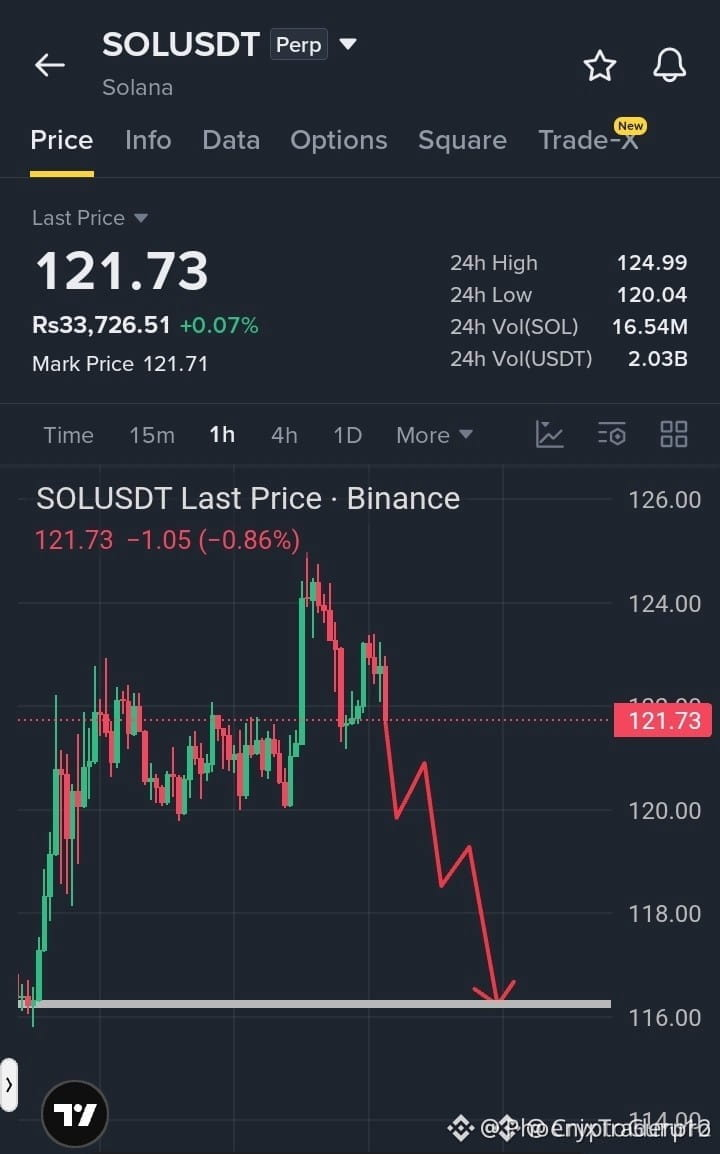
🚨 $SOL HEAVY REJECTION AT RESISTANCE TRIGGERS RUTHLESS BEARISH ROTATION TOWARDS SUPPORT! 📉
Entry: 121.70 - 122.20 ⚡
Target: 116.50 🎯
Stop Loss: 123.80 ⚠️
Buyers exhausted their firepower after failing to crack the $124–125 resistance block, handing full control back to the bears on the hourly chart. 📉 Momentum has flipped downwards, and order flow is accelerating directly toward liquidity sitting down at the $116.3 support area.
📌 This setup offers a tight risk boundary against recent highs, capturing the wave as bids thin out beneath current levels. 💬 Are you catching this downward slide to support, or waiting for a relief bounce first? 👇
⚠️ Not financial advice. Always manage your risk. 🛡️
🏷️ #SOL #ShortSetup #Solana #Crypto
🐻 🩸
🚨 $SOL HEAVY REJECTION AT RESISTANCE TRIGGERS RUTHLESS BEARISH ROTATION TOWARDS SUPPORT! 📉
Entry: 121.70 - 122.20 ⚡
Target: 116.50 🎯
Stop Loss: 123.80 ⚠️
Buyers exhausted their firepower after failing to crack the $124–125 resistance block, handing full control back to the bears on the hourly chart. 📉 Momentum has flipped downwards, and order flow is accelerating directly toward liquidity sitting down at the $116.3 support area.
📌 This setup offers a tight risk boundary against recent highs, capturing the wave as bids thin out beneath current levels. 💬 Are you catching this downward slide to support, or waiting for a relief bounce first? 👇
⚠️ Not financial advice. Always manage your risk. 🛡️
🏷️ #SOL #ShortSetup #Solana #Crypto
🐻 🩸
Entry: 121.70 - 122.20 ⚡
Target: 116.50 🎯
Stop Loss: 123.80 ⚠️
Buyers exhausted their firepower after failing to crack the $124–125 resistance block, handing full control back to the bears on the hourly chart. 📉 Momentum has flipped downwards, and order flow is accelerating directly toward liquidity sitting down at the $116.3 support area.
📌 This setup offers a tight risk boundary against recent highs, capturing the wave as bids thin out beneath current levels. 💬 Are you catching this downward slide to support, or waiting for a relief bounce first? 👇
⚠️ Not financial advice. Always manage your risk. 🛡️
🏷️ #SOL #ShortSetup #Solana #Crypto
🐻 🩸
18

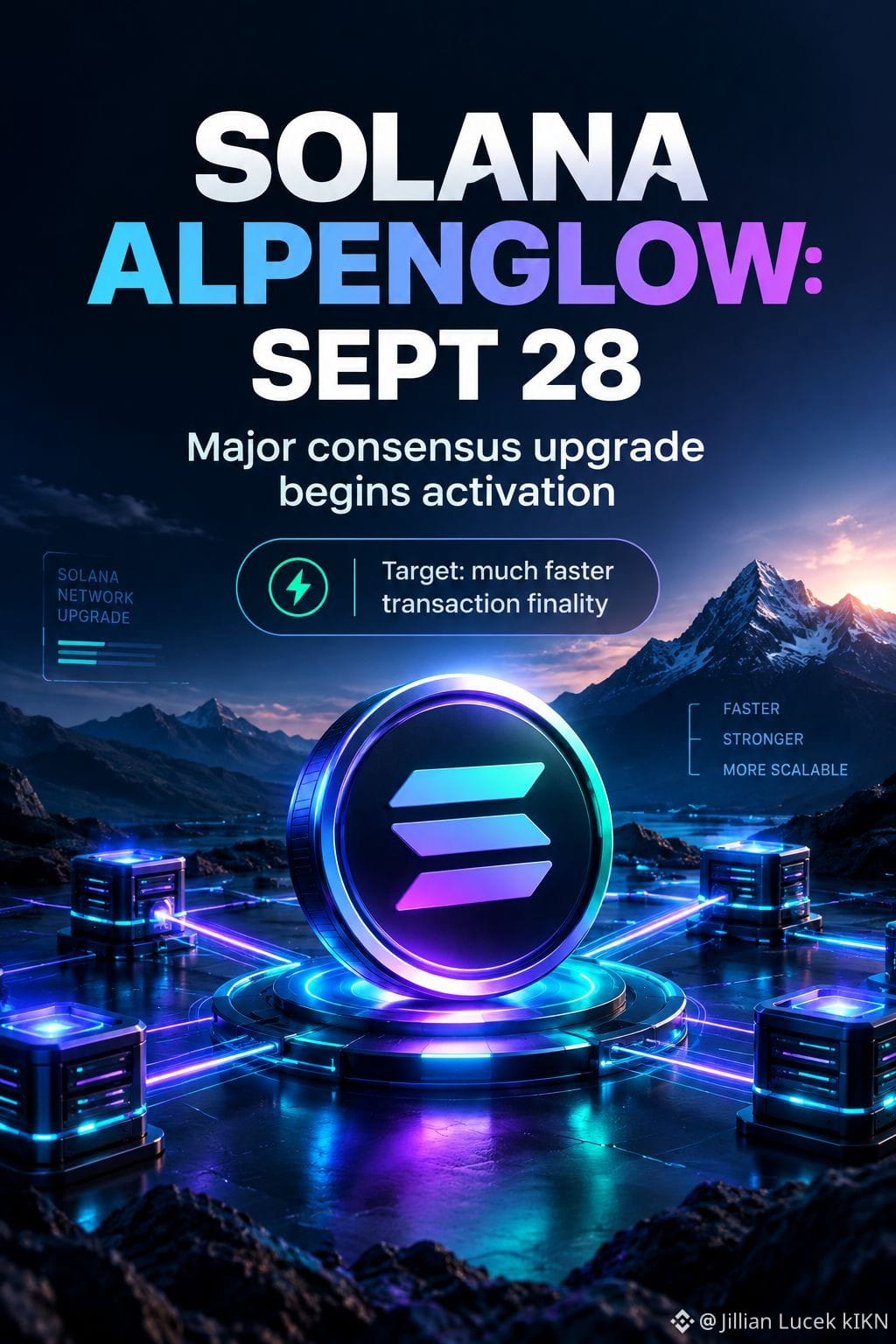
⚡ $SOLANA WATCH: ALPENGLOW ACTIVATION STARTS TODAY
A major network-development milestone is arriving for $SOL today.
Solana’s Alpenglow consensus upgrade is scheduled to begin activation on September 28, 2026, according to the Agave 4.3 release schedule. The upgrade is designed to significantly reduce transaction-finality times, with developers targeting roughly 0.15-second finality compared with the current system’s roughly 13 seconds. �
CryptoTicker.io +1
But activation does not mean every part of the network instantly changes at one moment. The rollout depends on validator adoption and feature activation at the relevant network boundaries.
That makes today an important date to watch for the Solana ecosystem—not simply because of price, but because changes to consensus performance can affect how the network operates over the longer term.
📌 Today’s focus:
• $SOL — Alpenglow activation
• Faster targeted finality
• Validator/network rollout
• Watch for official implementation updates
As always, an upgrade is a technology event, not a guarantee of price performance.
#solana #SOL #CryptoNews #Blockchain #Web3 #Altcoin #CryptoMarketSentiment😬📉📈
{spot}(SOLUSDT)
#BinanceSquare
⚡ $SOLANA WATCH: ALPENGLOW ACTIVATION STARTS TODAY
A major network-development milestone is arriving for $SOL today.
Solana’s Alpenglow consensus upgrade is scheduled to begin activation on September 28, 2026, according to the Agave 4.3 release schedule. The upgrade is designed to significantly reduce transaction-finality times, with developers targeting roughly 0.15-second finality compared with the current system’s roughly 13 seconds. �
CryptoTicker.io +1
But activation does not mean every part of the network instantly changes at one moment. The rollout depends on validator adoption and feature activation at the relevant network boundaries.
That makes today an important date to watch for the Solana ecosystem—not simply because of price, but because changes to consensus performance can affect how the network operates over the longer term.
📌 Today’s focus:
• $SOL — Alpenglow activation
• Faster targeted finality
• Validator/network rollout
• Watch for official implementation updates
As always, an upgrade is a technology event, not a guarantee of price performance.
#solana #SOL #CryptoNews #Blockchain #Web3 #Altcoin #CryptoMarketSentiment😬📉📈
#BinanceSquare
A major network-development milestone is arriving for $SOL today.
Solana’s Alpenglow consensus upgrade is scheduled to begin activation on September 28, 2026, according to the Agave 4.3 release schedule. The upgrade is designed to significantly reduce transaction-finality times, with developers targeting roughly 0.15-second finality compared with the current system’s roughly 13 seconds. �
CryptoTicker.io +1
But activation does not mean every part of the network instantly changes at one moment. The rollout depends on validator adoption and feature activation at the relevant network boundaries.
That makes today an important date to watch for the Solana ecosystem—not simply because of price, but because changes to consensus performance can affect how the network operates over the longer term.
📌 Today’s focus:
• $SOL — Alpenglow activation
• Faster targeted finality
• Validator/network rollout
• Watch for official implementation updates
As always, an upgrade is a technology event, not a guarantee of price performance.
#solana #SOL #CryptoNews #Blockchain #Web3 #Altcoin #CryptoMarketSentiment😬📉📈
#BinanceSquare
78

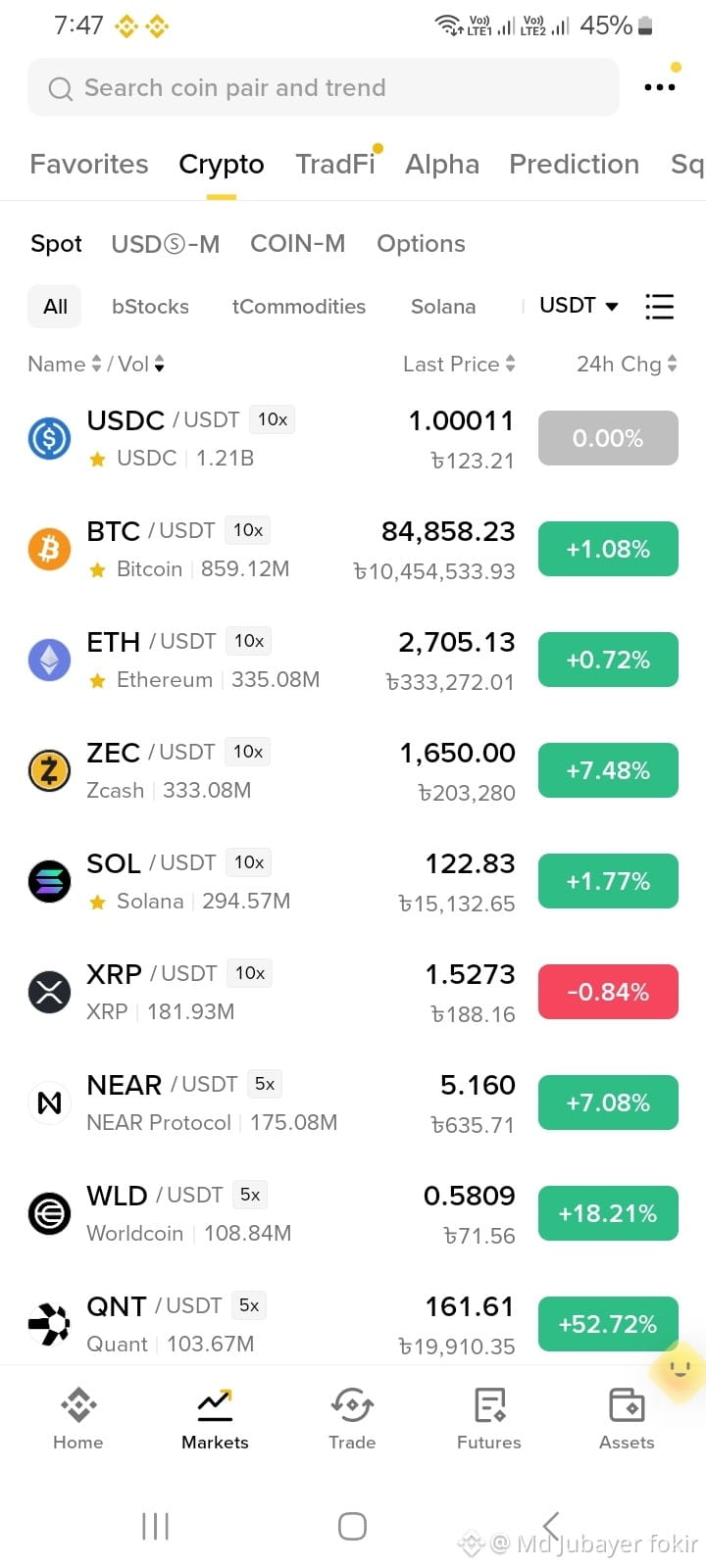
🔥 SOLANA COMMUNITY — WHAT’S NEXT FOR SOL?
Solana is getting renewed attention from traders as ETF flows, network developments, and stablecoin activity remain key topics across the crypto market.
👀 What are you watching most closely?
🟢 SOL ETF flows
⚡ Network upgrades
💵 USDC & stablecoin growth
📊 SOL price action
Drop your view below 👇
Are you watching SOL more closely this week?
#solanAnalysis na #solana #BinanceSquare quare #Crypto #CryptoNews #DeFi #ALTCOİN s #USDC✅
🔥 SOLANA COMMUNITY — WHAT’S NEXT FOR SOL?
Solana is getting renewed attention from traders as ETF flows, network developments, and stablecoin activity remain key topics across the crypto market.
👀 What are you watching most closely?
🟢 SOL ETF flows
⚡ Network upgrades
💵 USDC & stablecoin growth
📊 SOL price action
Drop your view below 👇
Are you watching SOL more closely this week?
#solanAnalysis na #solana #BinanceSquare quare #Crypto #CryptoNews #DeFi #ALTCOİN s #USDC✅
Solana is getting renewed attention from traders as ETF flows, network developments, and stablecoin activity remain key topics across the crypto market.
👀 What are you watching most closely?
🟢 SOL ETF flows
⚡ Network upgrades
💵 USDC & stablecoin growth
📊 SOL price action
Drop your view below 👇
Are you watching SOL more closely this week?
#solanAnalysis na #solana #BinanceSquare quare #Crypto #CryptoNews #DeFi #ALTCOİN s #USDC✅
62

·
--
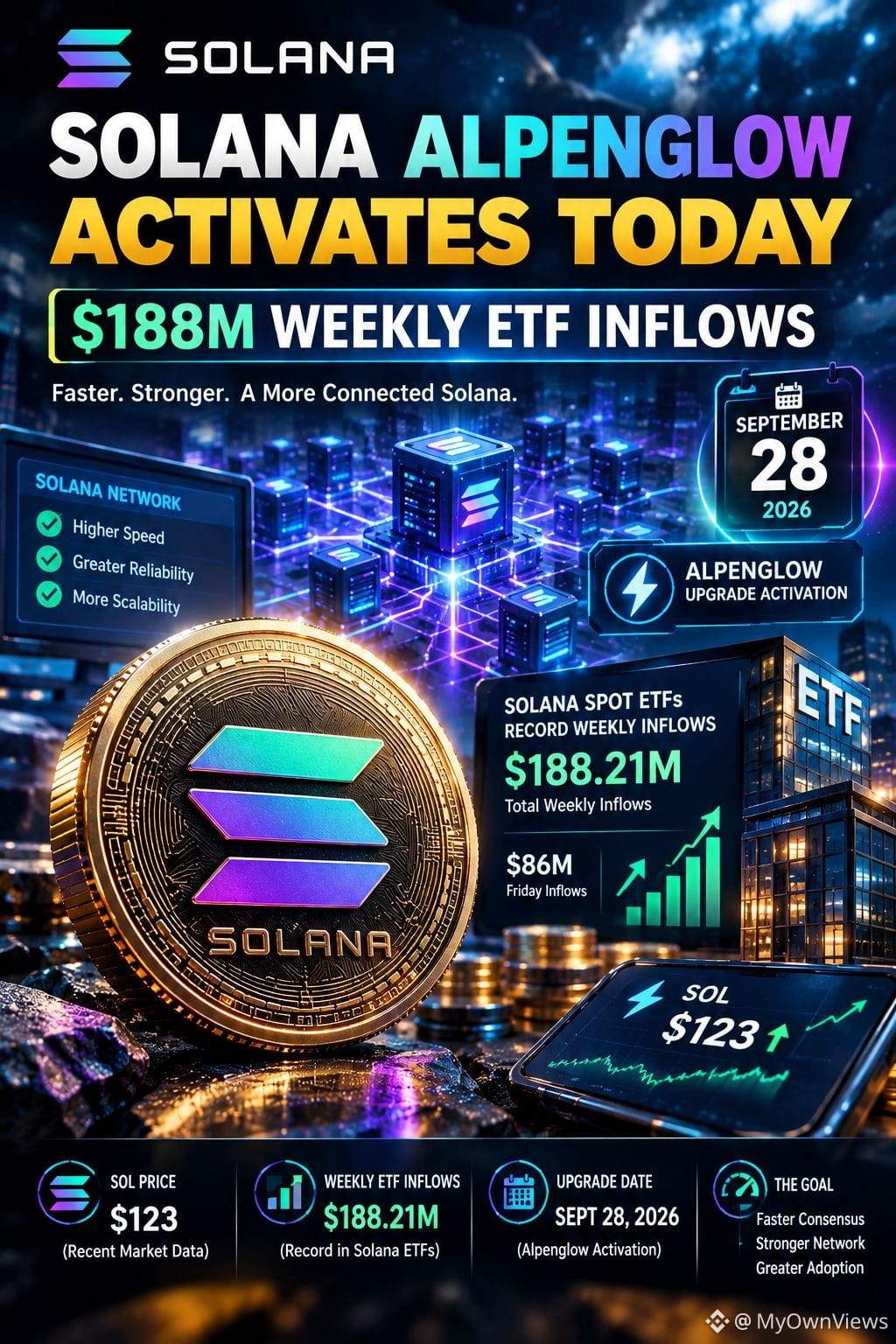
🚨 SOLANA UPDATE: ALPENGLOW ACTIVATES TODAY
Solana is taking the spotlight as its highly anticipated Alpenglow upgrade is scheduled to activate today, September 28.
The upgrade is designed to significantly improve Solana’s consensus system, with the broader goal of delivering faster finality, stronger reliability and better scalability. The development comes at an interesting time for SOL, which has been among the stronger major cryptocurrencies during September.
Institutional interest is also gaining attention. U.S. spot Solana ETFs recorded a record $188.21 million in weekly inflows, according to recent market data, with Friday alone contributing about $86 million. SOL was recently trading around $123.
Meanwhile, Bitcoin remains around the $84K area, keeping the broader crypto market in focus as Q3 comes to an end.
📊 $SOL : ~$123
💰 Weekly Solana ETF inflows: $188.21M
⚡ Alpenglow: Scheduled for Sept. 28
🌐 Focus: Speed, reliability & scalability
Will Alpenglow become a major milestone for Solana, or is the market already pricing in the upgrade? 👇
#solana #Bitcoin❗ #Ethereum
🚨 SOLANA UPDATE: ALPENGLOW ACTIVATES TODAY
Solana is taking the spotlight as its highly anticipated Alpenglow upgrade is scheduled to activate today, September 28.
The upgrade is designed to significantly improve Solana’s consensus system, with the broader goal of delivering faster finality, stronger reliability and better scalability. The development comes at an interesting time for SOL, which has been among the stronger major cryptocurrencies during September.
Institutional interest is also gaining attention. U.S. spot Solana ETFs recorded a record $188.21 million in weekly inflows, according to recent market data, with Friday alone contributing about $86 million. SOL was recently trading around $123.
Meanwhile, Bitcoin remains around the $84K area, keeping the broader crypto market in focus as Q3 comes to an end.
📊 $SOL : ~$123
💰 Weekly Solana ETF inflows: $188.21M
⚡ Alpenglow: Scheduled for Sept. 28
🌐 Focus: Speed, reliability & scalability
Will Alpenglow become a major milestone for Solana, or is the market already pricing in the upgrade? 👇
#solana #Bitcoin❗ #Ethereum
Solana is taking the spotlight as its highly anticipated Alpenglow upgrade is scheduled to activate today, September 28.
The upgrade is designed to significantly improve Solana’s consensus system, with the broader goal of delivering faster finality, stronger reliability and better scalability. The development comes at an interesting time for SOL, which has been among the stronger major cryptocurrencies during September.
Institutional interest is also gaining attention. U.S. spot Solana ETFs recorded a record $188.21 million in weekly inflows, according to recent market data, with Friday alone contributing about $86 million. SOL was recently trading around $123.
Meanwhile, Bitcoin remains around the $84K area, keeping the broader crypto market in focus as Q3 comes to an end.
📊 $SOL : ~$123
💰 Weekly Solana ETF inflows: $188.21M
⚡ Alpenglow: Scheduled for Sept. 28
🌐 Focus: Speed, reliability & scalability
Will Alpenglow become a major milestone for Solana, or is the market already pricing in the upgrade? 👇
#solana #Bitcoin❗ #Ethereum
95

·
--
🚨 FOCUS NOW:
AEW All Out Preview: Nine Matches, Seven Titles, Sold Out Arena
Greetings, comrades
$SOL is coming back into focus as the market reacts to this fresh headline.
This is the kind of headline that can pull fast attention if price starts reacting in the same direction.
Crowd attention can shift fast here, which is why traders will be watching this move closely.
Are you watching $SOL now, or waiting for confirmation?
Watch $SOL here 👇
#SOL #Solana #NewsFlow #MarketMomentum
🚨 FOCUS NOW:
AEW All Out Preview: Nine Matches, Seven Titles, Sold Out Arena
Greetings, comrades
$SOL is coming back into focus as the market reacts to this fresh headline.
This is the kind of headline that can pull fast attention if price starts reacting in the same direction.
Crowd attention can shift fast here, which is why traders will be watching this move closely.
Are you watching $SOL now, or waiting for confirmation?
Watch $SOL here 👇
#SOL #Solana #NewsFlow #MarketMomentum
AEW All Out Preview: Nine Matches, Seven Titles, Sold Out Arena
Greetings, comrades
$SOL is coming back into focus as the market reacts to this fresh headline.
This is the kind of headline that can pull fast attention if price starts reacting in the same direction.
Crowd attention can shift fast here, which is why traders will be watching this move closely.
Are you watching $SOL now, or waiting for confirmation?
Watch $SOL here 👇
#SOL #Solana #NewsFlow #MarketMomentum
11
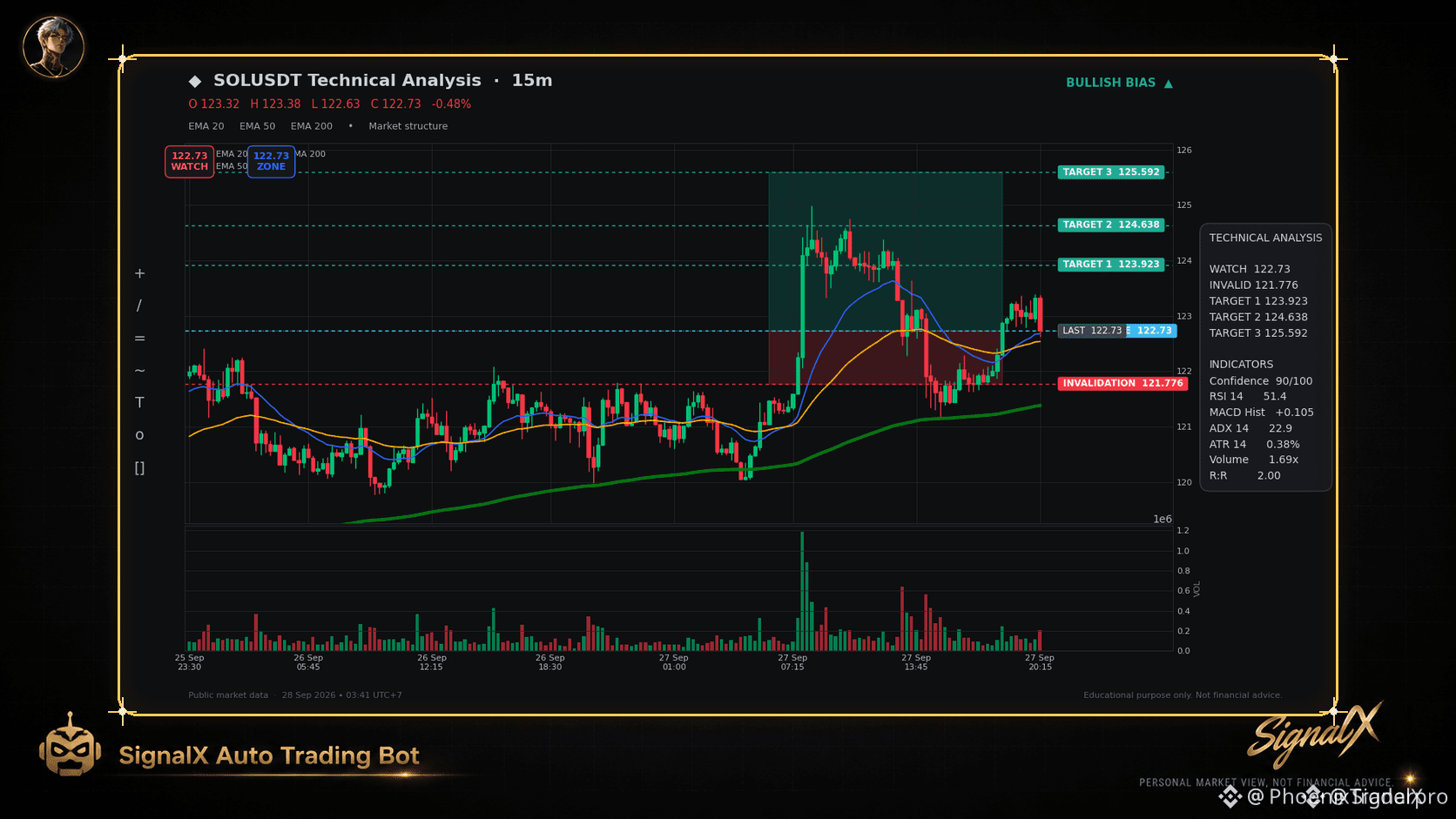
🟢 $SOL 15-MINUTE BULLISH RECLAIM SPARKING MOMENTUM TOWARD HIGHER LIQUIDITY! 🚀
Entry: 122.73 ⚡
Target: 125.592 🚀
Stop Loss: 121.776 ⚠️
📌 The short-term structure on $SOL is carving out a clean low-timeframe demand base around 122.73. Aggressive market sell orders are getting completely absorbed here, setting up a fast momentum flip toward overhead targets. 📊
💡 Precision execution is mandatory for this move—let the price come to the zone without chasing extension candles. Risk parameters are ultra-defined, giving us a sharp risk-to-reward window as we target liquidity up to 125.592. ⚡
💬 Are you catching this low-timeframe bounce or waiting for higher timeframe confirmation? 👇
⚠️ Not financial advice. Always manage your risk. 🛡️
🏷️ #SOL #Solana #LongSetup #CryptoTrading
🔥 ⚡
🟢 $SOL 15-MINUTE BULLISH RECLAIM SPARKING MOMENTUM TOWARD HIGHER LIQUIDITY! 🚀
Entry: 122.73 ⚡
Target: 125.592 🚀
Stop Loss: 121.776 ⚠️
📌 The short-term structure on $SOL is carving out a clean low-timeframe demand base around 122.73. Aggressive market sell orders are getting completely absorbed here, setting up a fast momentum flip toward overhead targets. 📊
💡 Precision execution is mandatory for this move—let the price come to the zone without chasing extension candles. Risk parameters are ultra-defined, giving us a sharp risk-to-reward window as we target liquidity up to 125.592. ⚡
💬 Are you catching this low-timeframe bounce or waiting for higher timeframe confirmation? 👇
⚠️ Not financial advice. Always manage your risk. 🛡️
🏷️ #SOL #Solana #LongSetup #CryptoTrading
🔥 ⚡
Entry: 122.73 ⚡
Target: 125.592 🚀
Stop Loss: 121.776 ⚠️
📌 The short-term structure on $SOL is carving out a clean low-timeframe demand base around 122.73. Aggressive market sell orders are getting completely absorbed here, setting up a fast momentum flip toward overhead targets. 📊
💡 Precision execution is mandatory for this move—let the price come to the zone without chasing extension candles. Risk parameters are ultra-defined, giving us a sharp risk-to-reward window as we target liquidity up to 125.592. ⚡
💬 Are you catching this low-timeframe bounce or waiting for higher timeframe confirmation? 👇
⚠️ Not financial advice. Always manage your risk. 🛡️
🏷️ #SOL #Solana #LongSetup #CryptoTrading
🔥 ⚡
21

Solana's latest attempt to solve MEV and trading fairness has hit a major roadblock. While proposals like SIMD-0649 aim to organize transaction priority within batches, block producers still hold ultimate power over inclusion. This structural bottleneck proves that decentralizing order flow is far harder than just pushing protocol updates. Until validators give up selective control, unfair execution will remain a persistent headache for everyday traders on the network. $SOL #Solana #MEV #CryptoTrading
Solana's latest attempt to solve MEV and trading fairness has hit a major roadblock. While proposals like SIMD-0649 aim to organize transaction priority within batches, block producers still hold ultimate power over inclusion. This structural bottleneck proves that decentralizing order flow is far harder than just pushing protocol updates. Until validators give up selective control, unfair execution will remain a persistent headache for everyday traders on the network. $SOL #Solana #MEV #CryptoTrading
20

·
--
Been tracking $SOL momentum this week and honestly the ecosystem just keeps finding new ways to stay relevant. New launches every day, liquidity moving fast, and the community still shows up no matter what the charts are doing.
What I've noticed after doing this for a while is that most people lose money not because they pick the wrong coin, but because they can't sit still. They exit too early or hold too long out of emotion instead of a plan.
Drop your biggest $SOL trade this month in the comments, win or loss. #Solana
Been tracking $SOL momentum this week and honestly the ecosystem just keeps finding new ways to stay relevant. New launches every day, liquidity moving fast, and the community still shows up no matter what the charts are doing.
What I've noticed after doing this for a while is that most people lose money not because they pick the wrong coin, but because they can't sit still. They exit too early or hold too long out of emotion instead of a plan.
Drop your biggest $SOL trade this month in the comments, win or loss. #Solana
What I've noticed after doing this for a while is that most people lose money not because they pick the wrong coin, but because they can't sit still. They exit too early or hold too long out of emotion instead of a plan.
Drop your biggest $SOL trade this month in the comments, win or loss. #Solana
1
79
Log in to explore more content
Join global crypto users on Binance Square
⚡️ Get latest and useful information about crypto.
💬 Trusted by the world’s largest crypto exchange.
👍 Discover real insights from verified creators.
Email / Phone number
Trending Topics
1
#BitwiseFilesFinalNEARSpotETFProspectus
80,496 views
1,355 Discussing
2
#BitgetHackerMoves$83MStolenXRP
31,469 views
159 Discussing
3
#SOLSpotETFWeeklyInflow$188M
20,633 views
130 Discussing
4
#DogecoinETFsPostBiggestWeekSinceLaunch
50,665 views
940 Discussing
5
#StrategyStriveAdd2305BitcoinThisWeek
137,605 views
2,128 Discussing
6
#TrumpRejectsIranHormuzReopening
119,967 views
1,606 Discussing
7
#TokenizedStockDEXVolumeHits$20.9B
166 views
7 Discussing
8
#CircleTetherFreezeBitgetHackerWallet
105,546 views
1,497 Discussing
9
#SECSaysTokenBuybacksNotAutoSecurities
70,445 views
869 Discussing
10
#ChinaUSAgreeOn$30BTariffCut
5,466 views
47 Discussing