
#perpetuals
perpetuals
423,111 views
3,335 Discussing
Hot
Latest

·
--
🦈 WHALE TRACKING SHOWS MASSIVE PERPETUAL ACCUMULATION ON $NVDA AND $SNDK 💰
Smart money is quietly shifting capital across equity perpetuals on a major exchange, capitalizing on deep liquidity pools while retail chases noise. A heavy hitter just flashed a massive fivefold long footprint on $NVDA alongside concentrated positioning in $SNDK . 🦈
This rotation highlights how sophisticated market participants use leverage to squeeze high-beta equity assets without locking up spot capital. Even $QQQ is seeing steady accumulation as institutional order flow broadens its horizon. 📊
Are you tracking these traditional asset perpetuals yet, or remaining glued exclusively to standard altcoin swings? 🤔
⚠️ Not financial advice. Always manage your risk. 🛡️
🏷️ #NVDA #SmartMoney #Perpetuals #Trading
🔥 💎
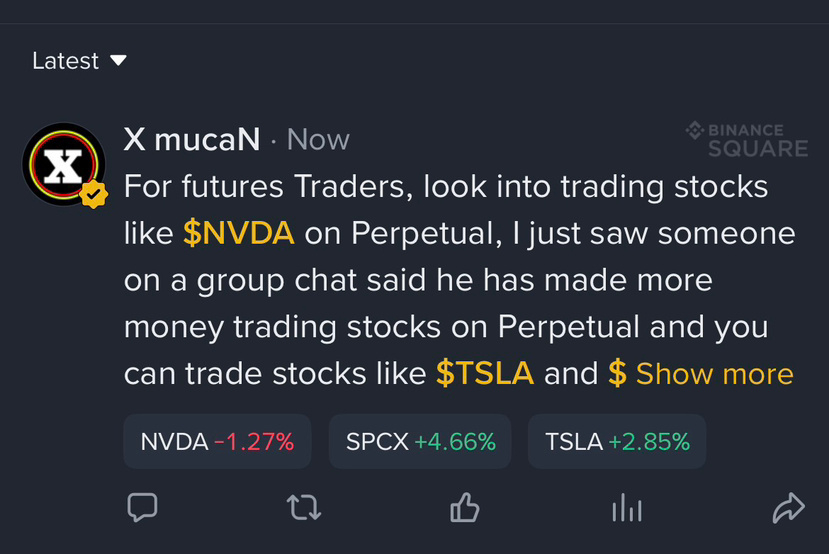

🚨 $NVDA CEO HEADLINES ARE SPARKING MASSIVE VOLATILITY IN EQUITY PERPETUALS! 💥
Capital is rotating fast as macro narrative shifts hit traditional assets hard. The recent $NVDA drama is printing massive volume spikes on perpetual contracts, creating high-octane setups for agile traders willing to pivot away from choppy crypto ranges. ⚡
While digital assets consolidate, indices like $QQQ are offering clean, high-conviction momentum on perpetual desks a major exchange provides. 📊 This is where smart money hunts short-term volatility when crypto goes sideways. 💡
Are you sticking strictly to crypto charts or branching out to trade equity perpetuals during headline-driven market swings? 👇
⚠️ Not financial advice. Always manage your risk. 🛡️
🏷️ #NVDA #QQQ #Perpetuals #Trading #MarketShift
🔥 💎
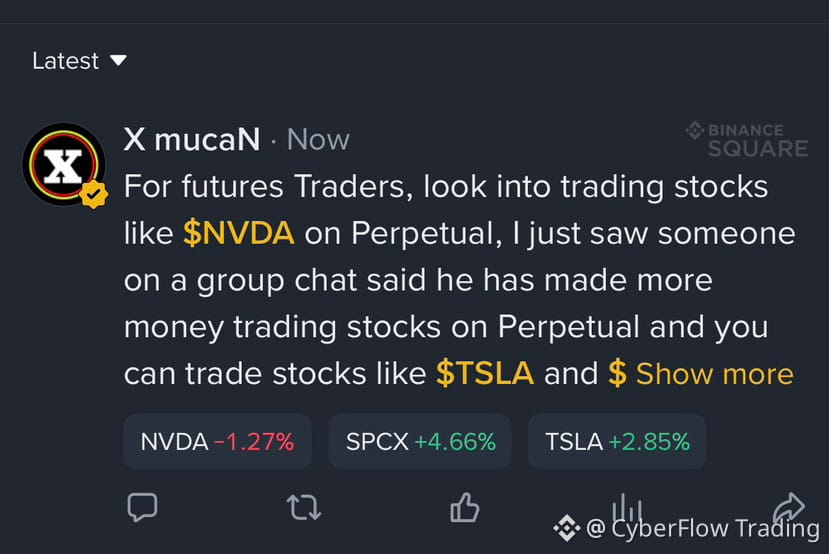
19

·
--
funding rate is what you pay to keep a perp open. simple as that. keeps the contract tethered to spot. long $BTC at 0.01% every eight hours? that's three hits a day. month adds up FAST. positive = longs bleed shorts. negative = shorts bleed longs. extreme either way usually means someone's getting carried out. high positive funding? longs are drunk. deeply negative? shorts are panic-selling. neither lasts. delta-neutral crew plays it different — long spot, short perp, pocket the spread. no direction needed. just math. but don't worship it. funding alone won't save you. pair it with open interest and volume or you're guessing. FundingRate #Perpetuals #RiskManagement #Derivativesfunding rate is what you pay to keep a perp open. simple as that. keeps the contract tethered to spot. long $BTC at 0.01% every eight hours? that's three hits a day. month adds up FAST. positive = longs bleed shorts. negative = shorts bleed longs. extreme either way usually means someone's getting carried out. high positive funding? longs are drunk. deeply negative? shorts are panic-selling. neither lasts. delta-neutral crew plays it different — long spot, short perp, pocket the spread. no direction needed.
funding rate is what you pay to keep a perp open. simple as that. keeps the contract tethered to spot. long $BTC at 0.01% every eight hours? that's three hits a day. month adds up FAST. positive = longs bleed shorts. negative = shorts bleed longs. extreme either way usually means someone's getting carried out. high positive funding? longs are drunk. deeply negative? shorts are panic-selling. neither lasts. delta-neutral crew plays it different — long spot, short perp, pocket the spread. no direction needed. just math. but don't worship it. funding alone won't save you. pair it with open interest and volume or you're guessing. FundingRate #Perpetuals #RiskManagement #Derivativesfunding rate is what you pay to keep a perp open. simple as that. keeps the contract tethered to spot. long $BTC at 0.01% every eight hours? that's three hits a day. month adds up FAST. positive = longs bleed shorts. negative = shorts bleed longs. extreme either way usually means someone's getting carried out. high positive funding? longs are drunk. deeply negative? shorts are panic-selling. neither lasts. delta-neutral crew plays it different — long spot, short perp, pocket the spread. no direction needed.
1
23

·
--
Verified
Article
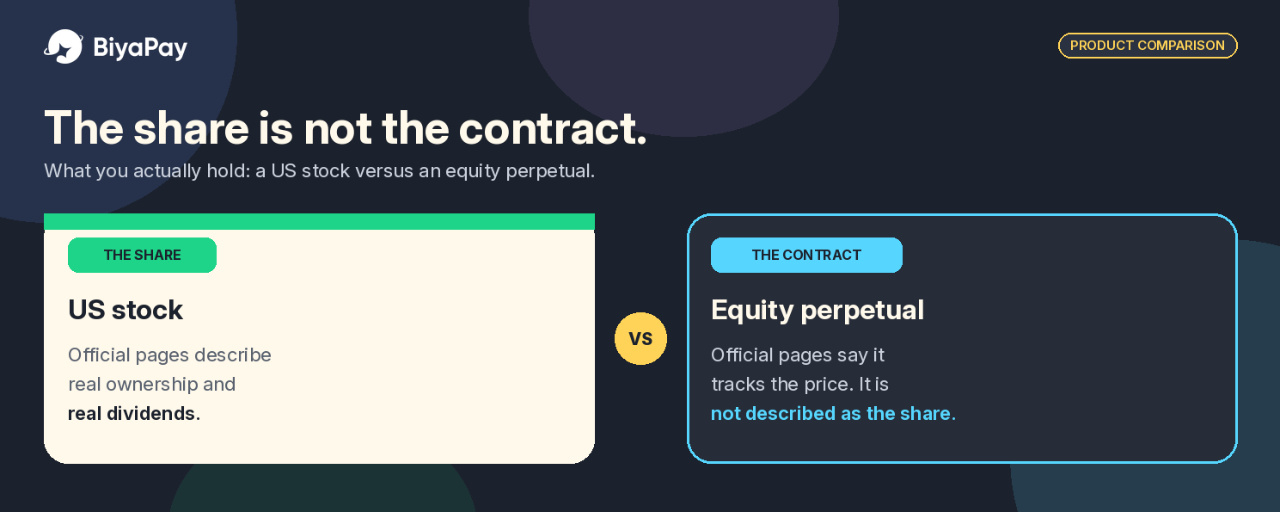
What Do You Actually Hold: the US Stock, or the Equity Perpetual?Disclosure: It is not financial advice
A familiar ticker can appear in more than one product. That does not mean you are holding the same thing.
On BiyaPay, you can buy a US stock, and you can also trade an equity perpetual contract that tracks that stock's price. The screen may look related. The holding is not.
I would separate those products before deciding which one matches the intention. This is not a recommendation to use either one. It is a reading of what official pages actually say you hold, and what they do not say.
What official language says about the share
Official product language on BiyaPay describes US and Hong Kong stock trading as real stocks, with real ownership and real dividends, plus 0 commission, instant settlement, and fast fills.
I read that as a description of the stock product, not of every product that happens to show a similar name. A share is presented as ownership of the equity. A contract that tracks the price is not described in those terms.
On dividends, the Help Center is more specific. Purchased US and Hong Kong stocks may receive dividends. Whether a dividend is paid depends on whether the company pays one and whether you meet that company's conditions.
If you hold the stock on the ex-dividend date, dividends are usually paid within 1 to 30 working days after that date, with the timing and amount set by the company's policy and announcement.
I did not find a separate official page that explains how voting is exercised on BiyaPay. Official language does confirm ownership and dividends for the stock product. I would not invent a voting process that the pages do not describe.
The Help Center also says BiyaPay can currently trade all US stocks, including ETFs. The smallest whole-number unit is 1 share, and some stocks support fractional share trading.
What official language says about the equity perpetual
In official listing announcements, BiyaPay describes these contracts in the same pattern: they track the price of the underlying common stock. NVDAUSDT tracks Nvidia (Nasdaq: NVDA). GOOGLUSDT tracks Alphabet (Nasdaq: GOOGL). METAUSDT tracks Meta Platforms (Nasdaq: META).
Later listings use the same wording for other US-listed names, including Netflix, Costco, and Adobe.
That is price tracking. It is not the same as the "real ownership" and "real dividends" language used for the stock product.
I did not find an official statement that a perpetual holder receives the cash dividend of the underlying share, or that the contract carries shareholder rights. If a page does not say it, I would not assume it.
Official risk language on those announcements is blunt. Prices can be volatile, you may lose the amount you put in, and in contract trading, adverse moves can liquidate all of your margin balance.
The stock has defined sessions. The contract's hours are less clearly stated
US stock trading is not an always-open share market. The Help Center says BiyaPay currently supports night trading, pre-market, intraday, and after-hours sessions, and it publishes those windows in Eastern Time:
Night trading: 20:00 to 04:00Pre-market trading: 04:00 to 09:30Intraday trading: 09:30 to 16:00After-hours trading: 16:00 to 20:00
The same page also maps those sessions to Beijing time for daylight saving and standard time. Periods other than intraday trading are called extended trading hours. I would still verify the session on the order ticket, especially around holidays or early closes.
For equity perpetual contracts, I did not find a dedicated official trading-hours page. A separate Help Center article says cryptocurrency contracts can be traded 24 hours a day, but that article is titled for cryptocurrency contracts, not for TradFi equity pairs.
I would not copy that 24-hour statement onto NVDAUSDT or GOOGLUSDT without a page that says so. The practical step is to check the hours, if any, on the contract page itself.
Perpetual contracts are officially described as having no expiration or delivery date. That is about tenor, not a substitute for a trading-hours schedule.
Fees: zero commission and zero trading fees are not the same thing
For US stocks, official materials say the commission item is US$0. That does not mean every cost is zero.
An official fee explanation that cites the Biya Fee Schedule says the platform fee is US$0.005 per share, with a minimum of US$0.99 per order and a maximum of 1 percent of the transaction value. External institution fees, trading activity fees, CAT fees, settlement-related fees, and sell-order charges may also apply.
Fractional orders of less than 1 whole share follow a separate rule: a 1 percent platform fee on transaction value, capped at US$1, with no commission or third-party fees. I would read the fee schedule and the order preview before sending a stock order, especially on a smaller ticket, where the minimum fee is a larger share of the cost.
For TradFi perpetual contracts, BiyaPay announced a 0 Trading Fee Program. During the campaign, maker and taker trading fees on all TradFi perpetual pairs are 0 percent.
The campaign is described as effective immediately and valid long-term, but it applies only to those trading fees. Funding fees and other applicable charges remain subject to the platform's existing rules, and BiyaPay reserves the right to modify, adjust, suspend, or terminate the campaign.
I would not treat 0 percent trading fees as zero cost. Funding is a separate charge. Official contract help describes a funding rate as a fee periodically exchanged between long and short holders, used to keep a perpetual closer to the underlying price.
The TradFi announcement confirms that funding still follows existing rules, but I did not find a TradFi-specific official interval for pairs such as NVDAUSDT or GOOGLUSDT. I would check the funding rate and settlement time on the contract page rather than assume a number.
Leverage and liquidation belong with the contract
A cash purchase of the share and a leveraged contract are different risk shapes.
On the equity perpetual, official listing language already says that in an adverse move, all of your margin balance may be liquidated. That is the point I would not soften. Leverage can make a price swing larger in both directions.
Official contract help says maximum leverage varies by contract and should be checked on the trading page. I did not find an official maximum leverage figure specifically for TradFi equity pairs, so I will not invent one or apply crypto examples such as 100x to these contracts.
There is also a separate stock-margin product that should not be mixed in by accident. The Help Center says a BiyaPay stock account can support underlying stocks and margin trading, and that financing and short selling support up to 4x leverage.
Forced liquidation on the stock side is described for leveraged trading when remaining liquidity is 0, or 0 percent. A cash holding of the share is not the same as a margin stock position, and neither is the same as an equity perpetual.
How I would match the product to the intention
If the intention is to own the company, I would use the stock product and accept its sessions, settlement language, and the fee lines that still apply after 0 commission. That is the product official pages describe with ownership and dividends.
If the intention is to trade the price, with no claim to the share itself, the equity perpetual is the product official pages describe as tracking that price. I would then treat funding, leverage, and liquidation as part of the design, not as fine print to reread later.
I would not hold the contract as a stand-in for the share just because the ticker looks familiar.
A calmer way to choose
The useful split is simple. Official language about real stocks, ownership, and dividends belongs to the share. Official language about tracking the price, trading fees, funding, and margin liquidation belongs to the equity perpetual.
If those columns are kept apart, the choice gets clearer. If they are collapsed into one ticker, it is easy to expect shareholder treatment from a contract, or contract-style access from a share.
This is not a recommendation to buy, sell, or hold any stock or any perpetual contract, and it is not financial advice. Official product descriptions, fees, hours, and risk rules can change. I would re-read the latest product pages, fee schedule, and risk language before acting.
#BiyaPay #USStocks #Perpetuals #TradFi
What Do You Actually Hold: the US Stock, or the Equity Perpetual?
Disclosure: It is not financial advice
A familiar ticker can appear in more than one product. That does not mean you are holding the same thing.
On BiyaPay, you can buy a US stock, and you can also trade an equity perpetual contract that tracks that stock's price. The screen may look related. The holding is not.
I would separate those products before deciding which one matches the intention. This is not a recommendation to use either one. It is a reading of what official pages actually say you hold, and what they do not say.
What official language says about the share
Official product language on BiyaPay describes US and Hong Kong stock trading as real stocks, with real ownership and real dividends, plus 0 commission, instant settlement, and fast fills.
I read that as a description of the stock product, not of every product that happens to show a similar name. A share is presented as ownership of the equity. A contract that tracks the price is not described in those terms.
On dividends, the Help Center is more specific. Purchased US and Hong Kong stocks may receive dividends. Whether a dividend is paid depends on whether the company pays one and whether you meet that company's conditions.
If you hold the stock on the ex-dividend date, dividends are usually paid within 1 to 30 working days after that date, with the timing and amount set by the company's policy and announcement.
I did not find a separate official page that explains how voting is exercised on BiyaPay. Official language does confirm ownership and dividends for the stock product. I would not invent a voting process that the pages do not describe.
The Help Center also says BiyaPay can currently trade all US stocks, including ETFs. The smallest whole-number unit is 1 share, and some stocks support fractional share trading.
What official language says about the equity perpetual
In official listing announcements, BiyaPay describes these contracts in the same pattern: they track the price of the underlying common stock. NVDAUSDT tracks Nvidia (Nasdaq: NVDA). GOOGLUSDT tracks Alphabet (Nasdaq: GOOGL). METAUSDT tracks Meta Platforms (Nasdaq: META).
Later listings use the same wording for other US-listed names, including Netflix, Costco, and Adobe.
That is price tracking. It is not the same as the "real ownership" and "real dividends" language used for the stock product.
I did not find an official statement that a perpetual holder receives the cash dividend of the underlying share, or that the contract carries shareholder rights. If a page does not say it, I would not assume it.
Official risk language on those announcements is blunt. Prices can be volatile, you may lose the amount you put in, and in contract trading, adverse moves can liquidate all of your margin balance.
The stock has defined sessions. The contract's hours are less clearly stated
US stock trading is not an always-open share market. The Help Center says BiyaPay currently supports night trading, pre-market, intraday, and after-hours sessions, and it publishes those windows in Eastern Time:
Night trading: 20:00 to 04:00Pre-market trading: 04:00 to 09:30Intraday trading: 09:30 to 16:00After-hours trading: 16:00 to 20:00
The same page also maps those sessions to Beijing time for daylight saving and standard time. Periods other than intraday trading are called extended trading hours. I would still verify the session on the order ticket, especially around holidays or early closes.
For equity perpetual contracts, I did not find a dedicated official trading-hours page. A separate Help Center article says cryptocurrency contracts can be traded 24 hours a day, but that article is titled for cryptocurrency contracts, not for TradFi equity pairs.
I would not copy that 24-hour statement onto NVDAUSDT or GOOGLUSDT without a page that says so. The practical step is to check the hours, if any, on the contract page itself.
Perpetual contracts are officially described as having no expiration or delivery date. That is about tenor, not a substitute for a trading-hours schedule.
Fees: zero commission and zero trading fees are not the same thing
For US stocks, official materials say the commission item is US$0. That does not mean every cost is zero.
An official fee explanation that cites the Biya Fee Schedule says the platform fee is US$0.005 per share, with a minimum of US$0.99 per order and a maximum of 1 percent of the transaction value. External institution fees, trading activity fees, CAT fees, settlement-related fees, and sell-order charges may also apply.
Fractional orders of less than 1 whole share follow a separate rule: a 1 percent platform fee on transaction value, capped at US$1, with no commission or third-party fees. I would read the fee schedule and the order preview before sending a stock order, especially on a smaller ticket, where the minimum fee is a larger share of the cost.
For TradFi perpetual contracts, BiyaPay announced a 0 Trading Fee Program. During the campaign, maker and taker trading fees on all TradFi perpetual pairs are 0 percent.
The campaign is described as effective immediately and valid long-term, but it applies only to those trading fees. Funding fees and other applicable charges remain subject to the platform's existing rules, and BiyaPay reserves the right to modify, adjust, suspend, or terminate the campaign.
I would not treat 0 percent trading fees as zero cost. Funding is a separate charge. Official contract help describes a funding rate as a fee periodically exchanged between long and short holders, used to keep a perpetual closer to the underlying price.
The TradFi announcement confirms that funding still follows existing rules, but I did not find a TradFi-specific official interval for pairs such as NVDAUSDT or GOOGLUSDT. I would check the funding rate and settlement time on the contract page rather than assume a number.
Leverage and liquidation belong with the contract
A cash purchase of the share and a leveraged contract are different risk shapes.
On the equity perpetual, official listing language already says that in an adverse move, all of your margin balance may be liquidated. That is the point I would not soften. Leverage can make a price swing larger in both directions.
Official contract help says maximum leverage varies by contract and should be checked on the trading page. I did not find an official maximum leverage figure specifically for TradFi equity pairs, so I will not invent one or apply crypto examples such as 100x to these contracts.
There is also a separate stock-margin product that should not be mixed in by accident. The Help Center says a BiyaPay stock account can support underlying stocks and margin trading, and that financing and short selling support up to 4x leverage.
Forced liquidation on the stock side is described for leveraged trading when remaining liquidity is 0, or 0 percent. A cash holding of the share is not the same as a margin stock position, and neither is the same as an equity perpetual.
How I would match the product to the intention
If the intention is to own the company, I would use the stock product and accept its sessions, settlement language, and the fee lines that still apply after 0 commission. That is the product official pages describe with ownership and dividends.
If the intention is to trade the price, with no claim to the share itself, the equity perpetual is the product official pages describe as tracking that price. I would then treat funding, leverage, and liquidation as part of the design, not as fine print to reread later.
I would not hold the contract as a stand-in for the share just because the ticker looks familiar.
A calmer way to choose
The useful split is simple. Official language about real stocks, ownership, and dividends belongs to the share. Official language about tracking the price, trading fees, funding, and margin liquidation belongs to the equity perpetual.
If those columns are kept apart, the choice gets clearer. If they are collapsed into one ticker, it is easy to expect shareholder treatment from a contract, or contract-style access from a share.
This is not a recommendation to buy, sell, or hold any stock or any perpetual contract, and it is not financial advice. Official product descriptions, fees, hours, and risk rules can change. I would re-read the latest product pages, fee schedule, and risk language before acting.
#BiyaPay #USStocks #Perpetuals #TradFi
1
1.1k

·
--
The SEC has stepped into the lawsuit that could decide whether US exchanges can offer perpetual futures on individual stocks.
• The SEC asked the court on Nov. 9 to file its own amicus brief in the case
• A Cboe and Citadel Securities-backed group sued the CFTC on Nov. 3 to undo approvals for Kalshi, Coinbase Derivatives and Bitnomial
Why it matters: The case decides whether perps on US stocks can keep trading on CFTC-regulated venues like Coinbase Derivatives.
Source: SDNY court filings (CMAA v. CFTC)
Not financial advice.
💬 Should perps on US stocks trade on crypto exchanges? Tell us below.
#SEC #CFTC #Perpetuals
12


·
--
Disputed
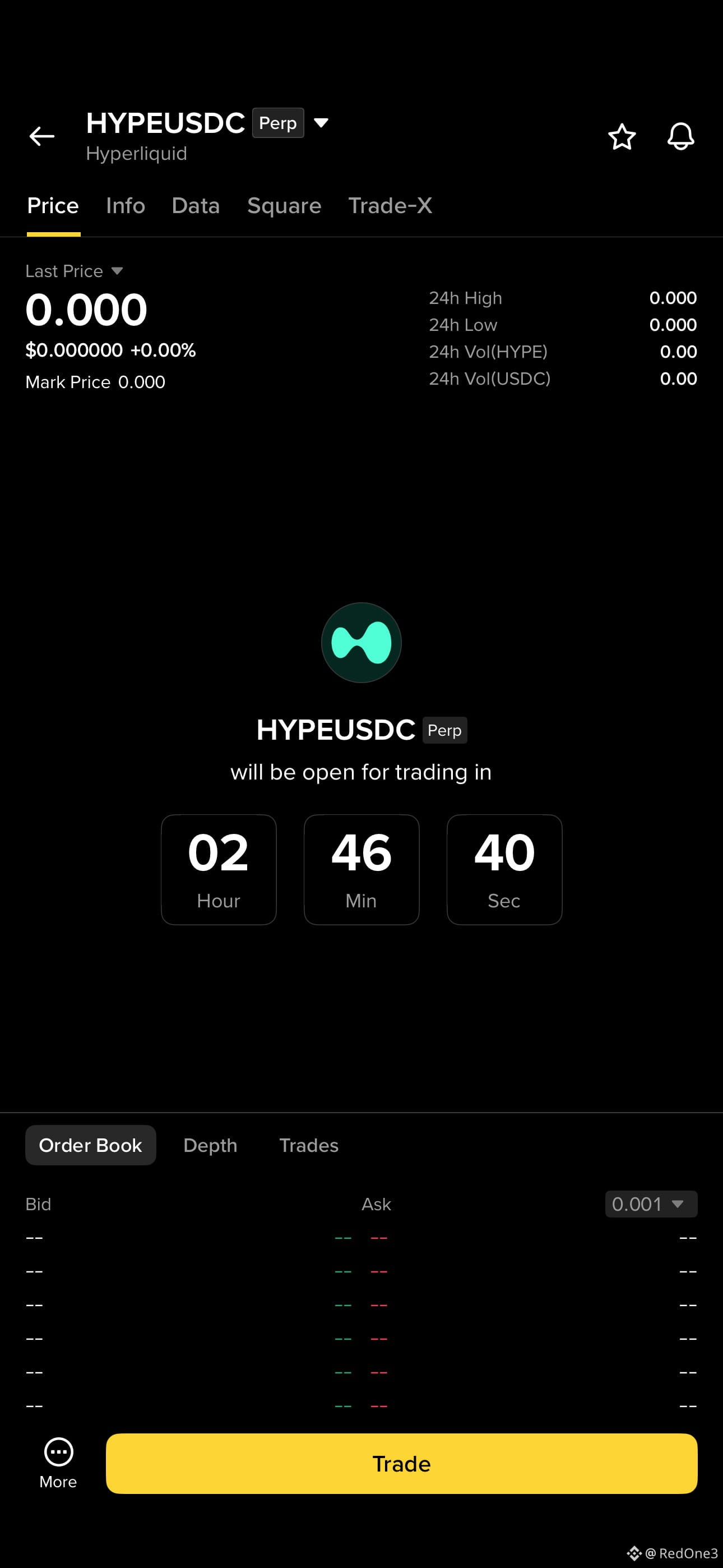
Counting down the minutes until HYPEUSDC Perp goes live on Hyperliquid!
Markets are about to open, and volatility is guaranteed.
Are you ready to trade the launch or waiting for the initial dust to settle? 📉📈
#BinanceFutures #Perpetuals
$HYPE
#Hyperliquid #HYPE #HYPEUSDC .
Counting down the minutes until HYPEUSDC Perp goes live on Hyperliquid!
Markets are about to open, and volatility is guaranteed.
Are you ready to trade the launch or waiting for the initial dust to settle? 📉📈
#BinanceFutures #Perpetuals
$HYPE
#Hyperliquid #HYPE #HYPEUSDC .
Markets are about to open, and volatility is guaranteed.
Are you ready to trade the launch or waiting for the initial dust to settle? 📉📈
#BinanceFutures #Perpetuals
$HYPE
#Hyperliquid #HYPE #HYPEUSDC .
1
509

🚨 DECRYPT INTEGRATES SOLANA PERPETUAL FUTURES TRADING 🧠
📊 | $BTC | $ETH | $BNB |
- Follow, like, and leave a comment to get the latest crypto market updates 📈
- Decrypt becomes the first news platform to integrate perpetual futures trading
- The integration is powered by Solana's Phoenix
- Readers can trade cryptocurrencies, stocks, and commodities directly on the platform
- This move could reshape how crypto media and trading services are integrated 🔥
- The market is expected to remain volatile in the short term
- Whale activity remains neutral, with no clear signs of accumulating or selling
- If user engagement increases, demand for related tokens may strengthen temporarily
- The platform may attract additional capital, but the overall impact remains to be seen
- What do you think about news platforms adding trading features? Share your thoughts in the comments
- Follow us and share your market views in the comments
#Crypto #Perpetuals #Solana #Trading #Blockchain
371
🚨 PERPETUAL DEX OPEN INTEREST TOUCHES $20B AS $TRUMP AND ALTS COIL FOR IMPACT! 💥
Decentralized perp markets just exploded past $20 billion in open interest, nearly doubling from the $11 billion floor we swept earlier this year. 🦈 Institutional capital is aggressively stacking position leverage across top-tier DEX protocols, shifting market dynamics into overdrive.
While smart money views this massive liquidity expansion as fuel for the next leg up, over-leveraged order books mean violent liquidations are waiting at the edges. 📊 Momentum is primed, but order flow demands absolute precision in environments this loaded.
💡 Volatility is preparing to unleash a major direction shift across $SC and $MAGMA plays. 💬 Does this OI surge signal the start of a massive macro expansion, or are we setting up for a leverage flush? 👇
⚠️ Not financial advice. Always manage your risk. 🛡️
🏷️ #TRUMP #SC #Perpetuals #Crypto #DEX
🔥 ⚡
16

·
--
The CFTC just cleared stock perpetual futures for trading on US exchanges.
Perps were the offshore crypto playbook. Now the same product is heading onshore, tied to equities instead of coins.
Meanwhile OKX already listed TradFi perps on MURATA, OXY and SMR on Nov 4 (CoinLab).
My take: the line between crypto venues and stock venues keeps blurring. Perp liquidity is the real prize, and it usually follows leverage-hungry traders back to crypto majors like $BTC and $ETH.
What to watch: which US venue lists first, and whether volume stays onshore.
Will stock perps pull volume away from crypto perps by year-end? Yes or no?
#CFTC #Perpetuals #TradFi #Crypto
The CFTC just cleared stock perpetual futures for trading on US exchanges.
Perps were the offshore crypto playbook. Now the same product is heading onshore, tied to equities instead of coins.
Meanwhile OKX already listed TradFi perps on MURATA, OXY and SMR on Nov 4 (CoinLab).
My take: the line between crypto venues and stock venues keeps blurring. Perp liquidity is the real prize, and it usually follows leverage-hungry traders back to crypto majors like $BTC and $ETH .
What to watch: which US venue lists first, and whether volume stays onshore.
Will stock perps pull volume away from crypto perps by year-end? Yes or no?
#CFTC #Perpetuals #TradFi #Crypto
5

·
--
Price did the work. Leverage did not follow.
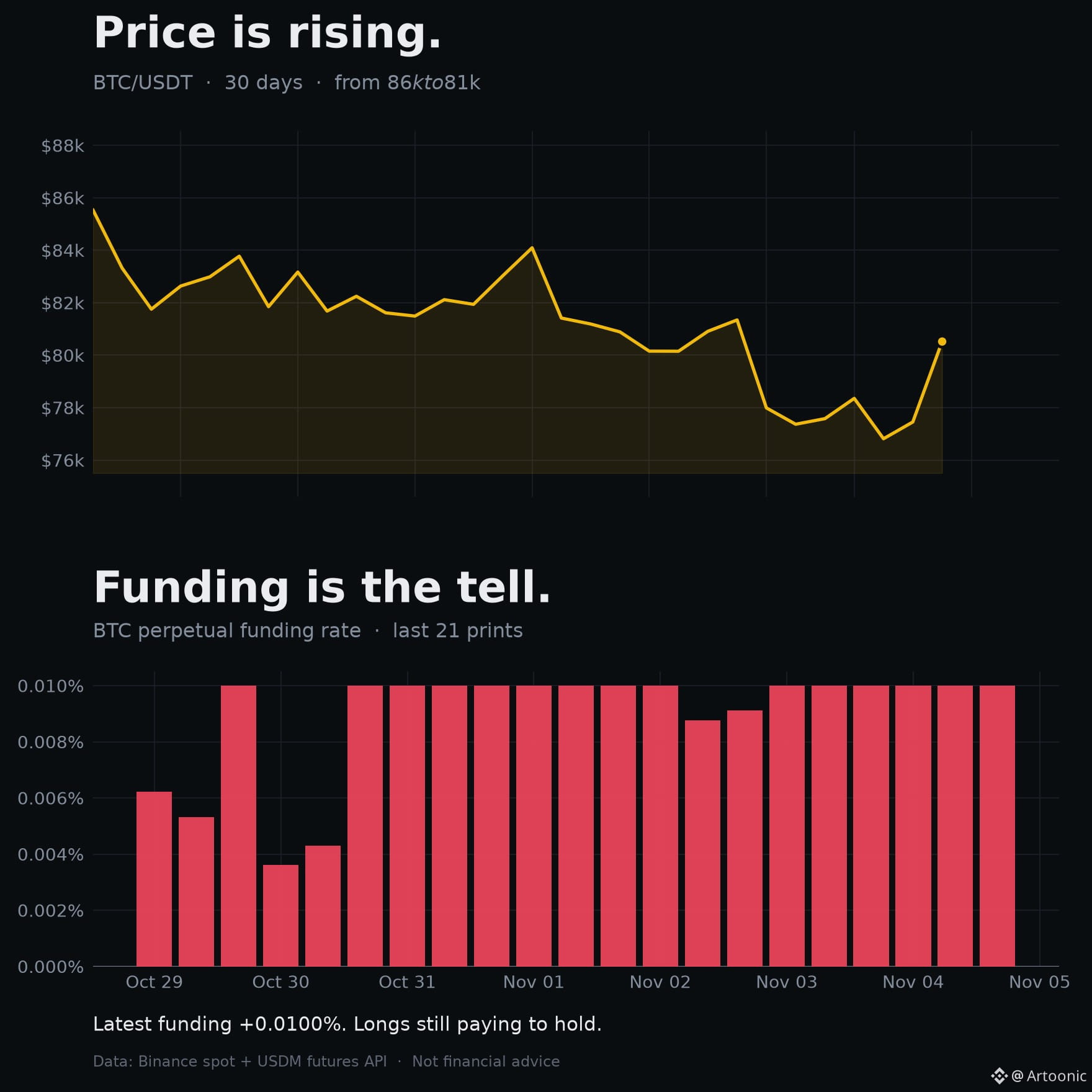
Bitcoin is at $80,520, up 3.79 percent over the last four days. What matters more is what the funding rate did underneath that move: the latest print is 0.0100 percent per 8 hours, against a four-day low of 0.00362 percent. That is a 2.76x increase, which sounds dramatic until you annualize it. At 0.0100 percent per 8 hours, longs are paying roughly 10.95 percent a year to stay long. At the low, that number was under 4 percent.
Why it matters: this rally is being carried by spot demand, not by a pile of leveraged longs paying through the nose to hold. When price climbs while funding stays in single-digit annualized territory, there is less fuel for a liquidation cascade on the way down, but also less squeeze pressure on the way up. Moves built like this tend to grind instead of snap.
Quick takeaway: track funding, not just price. A drift from 0.00362 to 0.0100 percent is a market warming up, not a market overheating. The warning zone starts when funding keeps climbing while price stalls.
$BTC
Do you read a funding print like this as healthy demand, or as the early stage of a crowded long?
#Bitcoin #FundingRates #Perpetuals #CryptoMarkets
81

Regulated SEI perpetual contracts launch with zero fees... will the rest follow?Regulated perpetual contracts on SEI are now available to trade, among just six assets at launch. $BTC
Alongside SEI, the initial lineup included $BTC and$ETH and SOL, HYPE, and ZEC. In other words, the network entered through the same door as the biggest coins—not as a late addition to a long list.
The terms as stated: leverage of up to 5x, 24/7 trading, a 30-day fee waiver, through a CFTC-registered broker.
Regulated SEI perpetual contracts launch with zero fees... will the rest follow?
Regulated perpetual contracts on SEI are now available to trade, among just six assets at launch. $BTC
Alongside SEI, the initial lineup included $BTC and$ETH and SOL, HYPE, and ZEC. In other words, the network entered through the same door as the biggest coins—not as a late addition to a long list.
The terms as stated: leverage of up to 5x, 24/7 trading, a 30-day fee waiver, through a CFTC-registered broker.
127
·
--
US regulators just cleared perpetual futures on individual stocks, and crypto equities jumped.
What happened (CFTC, via Yahoo Finance data):
• Coinbase +6.42% to $146.68
• Circle +5.41% to $75.98
• Strategy +4.36% to $136.46
CFTC Chairman Michael Selig said equity perps can now trade on CFTC-registered exchanges. The perp model crypto traders know is moving into traditional markets.
My take: this blurs the line between crypto and TradFi venues. Watch whether volume migrates toward regulated platforms, and what it means for $COIN and $HYPE-style perp venues.
Which benefits most: regulated US exchanges or on-chain perp DEXs?
#CFTC #Perpetuals #Crypto
US regulators just cleared perpetual futures on individual stocks, and crypto equities jumped.
What happened (CFTC, via Yahoo Finance data):
• Coinbase +6.42% to $146.68
• Circle +5.41% to $75.98
• Strategy +4.36% to $136.46
CFTC Chairman Michael Selig said equity perps can now trade on CFTC-registered exchanges. The perp model crypto traders know is moving into traditional markets.
My take: this blurs the line between crypto and TradFi venues. Watch whether volume migrates toward regulated platforms, and what it means for $COIN and $HYPE -style perp venues.
Which benefits most: regulated US exchanges or on-chain perp DEXs?
#CFTC #Perpetuals #Crypto
60

·
--
The perps we know from the crypto world have taken a new step in the US: the CFTC announced that perpetual contracts on individual stocks can begin trading on platforms registered with both it and the SEC. What’s new is that this expands the path for perps from digital assets to securities, without naming any platforms or stocks. What do you think of this development? 🏛️📈🔎
Most traded on Binance at the time of observation (16:04 Istanbul): $BTC, $ETH, $ZEC by trading volume for Spot/USDT pairs over 24 hours. This is general market monitoring and is not causally related to the news. Source: Binance Spot API.
#CFTC #Perpetuals
The perps we know from the crypto world have taken a new step in the US: the CFTC announced that perpetual contracts on individual stocks can begin trading on platforms registered with both it and the SEC. What’s new is that this expands the path for perps from digital assets to securities, without naming any platforms or stocks. What do you think of this development? 🏛️📈🔎
Most traded on Binance at the time of observation (16:04 Istanbul): $BTC , $ETH , $ZEC by trading volume for Spot/USDT pairs over 24 hours. This is general market monitoring and is not causally related to the news. Source: Binance Spot API.
#CFTC #Perpetuals
Most traded on Binance at the time of observation (16:04 Istanbul): $BTC , $ETH , $ZEC by trading volume for Spot/USDT pairs over 24 hours. This is general market monitoring and is not causally related to the news. Source: Binance Spot API.
#CFTC #Perpetuals

71

·
--
Traders on X are calling this a TradFi crossover moment 👀
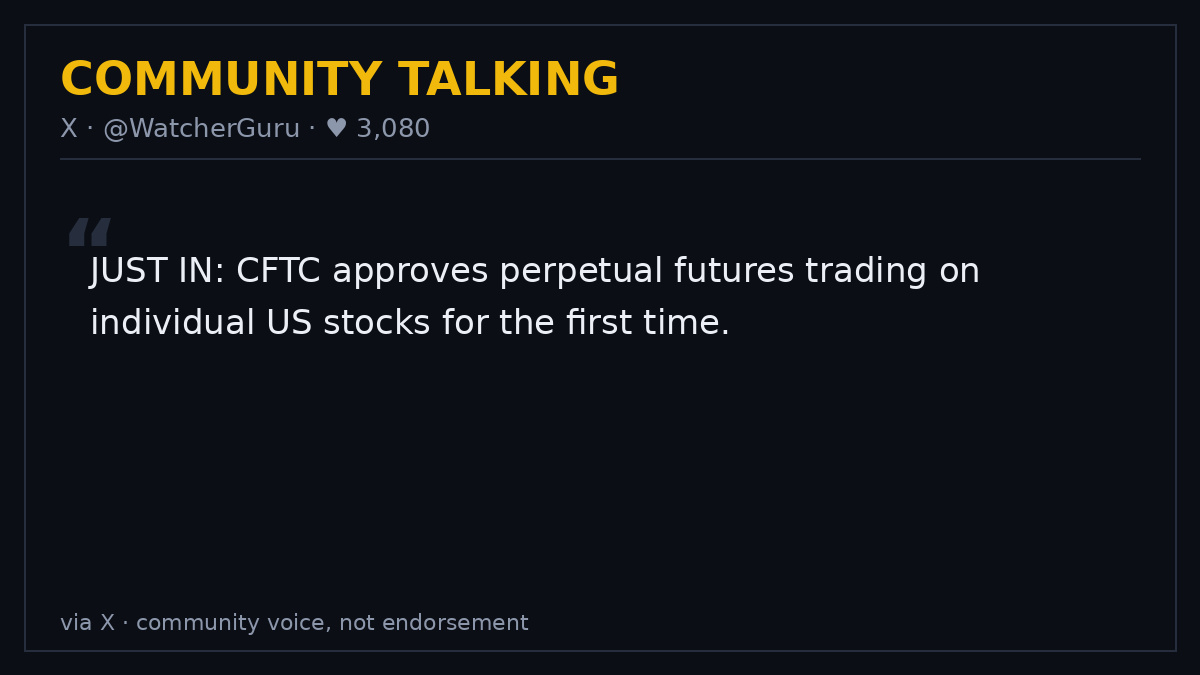
The CFTC just cleared perpetual futures on US stocks for the first time (CoinDesk). Perps, the no-expiry contract born on offshore crypto venues, can now trade on CFTC-registered exchanges under joint CFTC-SEC oversight, after May's first US $BTC perp approval.
Why it matters: the product crypto traders live on is going mainstream.
But deemed approval is not launch day: no exchange, stock list, or date named yet.
Which lists first, a Coinbase stock perp or a Kalshi one? 👇
Not financial advice. DYOR.
#crypto #CFTC #perpetuals
21

·
--
NYSE is entering on-chain perps — is this major legitimization, or the beginning of perps being tamed by regulation?
View A: This is legitimization. Intercontinental Exchange, the owner of the NYSE, agreed with Trade[XYZ] (Oct. 29) to build a regulated US perpetual futures market based on Hyperliquid, along with a minority investment in Trade[XYZ]. US retail traders, who until now could only access offshore venues, will finally have an official route — and HYPE briefly surged around 15–17% on Thursday, to the $91–$95 range (TradingView, CoinMarketCap).
View B: This is still just a promise. There’s no launch date yet, regulatory approvals — including for leveraged trading — are still pending, and distribution through brokers/FCMs, as well as the OKX joint venture, are also awaiting approval. HYPE is now around $88 (MEXC, tonight), down from Thursday’s peak — the market seems to doubt how quickly this will happen.
My leaning: structurally significant, but not a short-term price catalyst. I’d change my view if there’s a launch date or concrete approval — or if HYPE reclaims $95.
Reply in the comments: A or B — and your strongest reason.
This is my analysis, not financial advice — always DYOR.
#Hyperliquid #Perpetuals $HYPE
HYPE-1.00%
ICEUS+0.07%
143

·
--
The perpetuals conversation is getting louder again — talk of regulated 24/7 perps reaching traditional venues has traders rethinking where volume goes next. $HYPE is actually softer today, down about 2.6% near $87.81, which feels like the market not quite buying the narrative yet. $BTC is the steadier backdrop, up around 1.5% near $77,545. I am watching whether that level holds — if it does, the perp story probably gets a second look. #Perpetuals
The perpetuals conversation is getting louder again — talk of regulated 24/7 perps reaching traditional venues has traders rethinking where volume goes next. $HYPE is actually softer today, down about 2.6% near $87.81, which feels like the market not quite buying the narrative yet. $BTC is the steadier backdrop, up around 1.5% near $77,545. I am watching whether that level holds — if it does, the perp story probably gets a second look. #Perpetuals
1
158

·
--
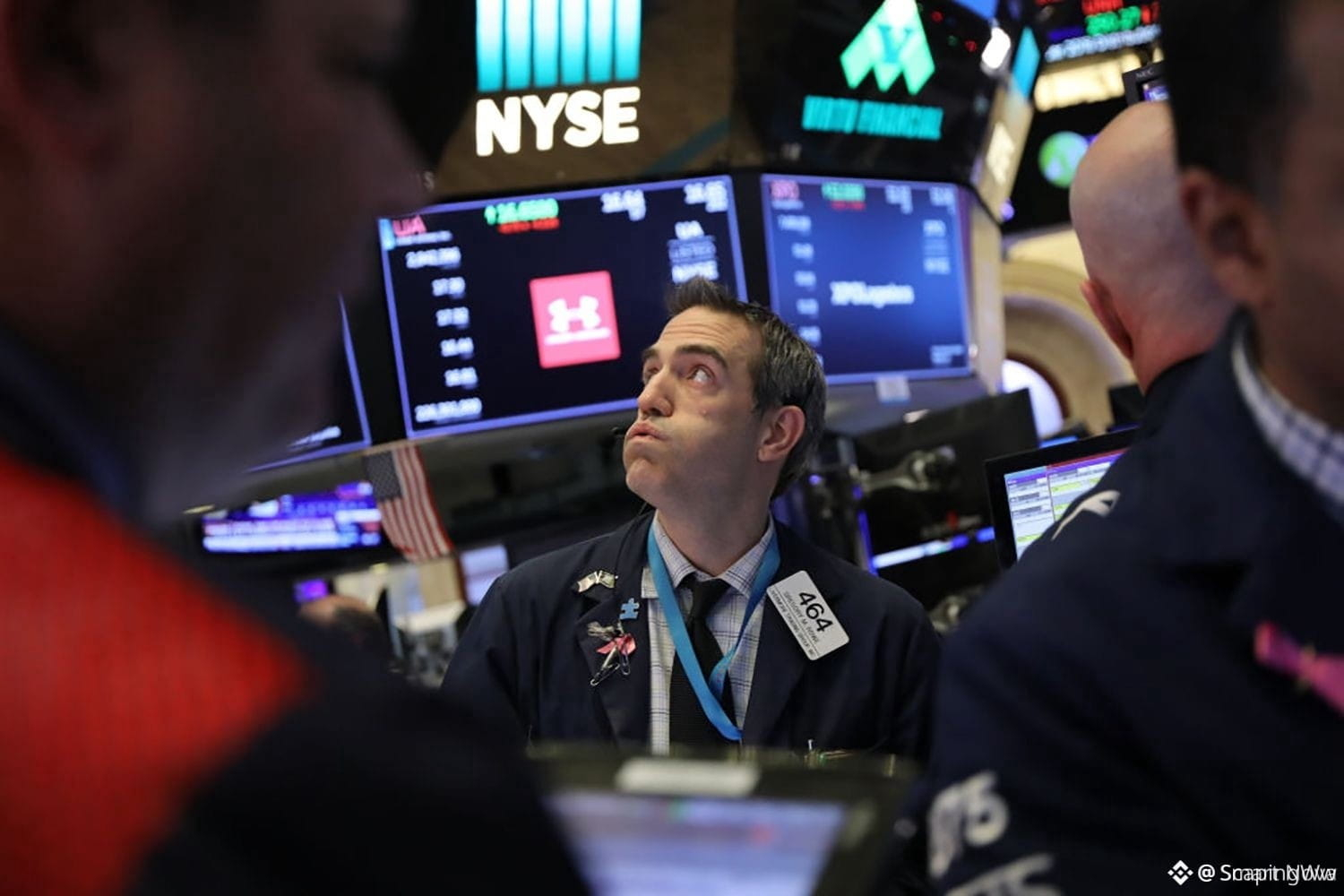
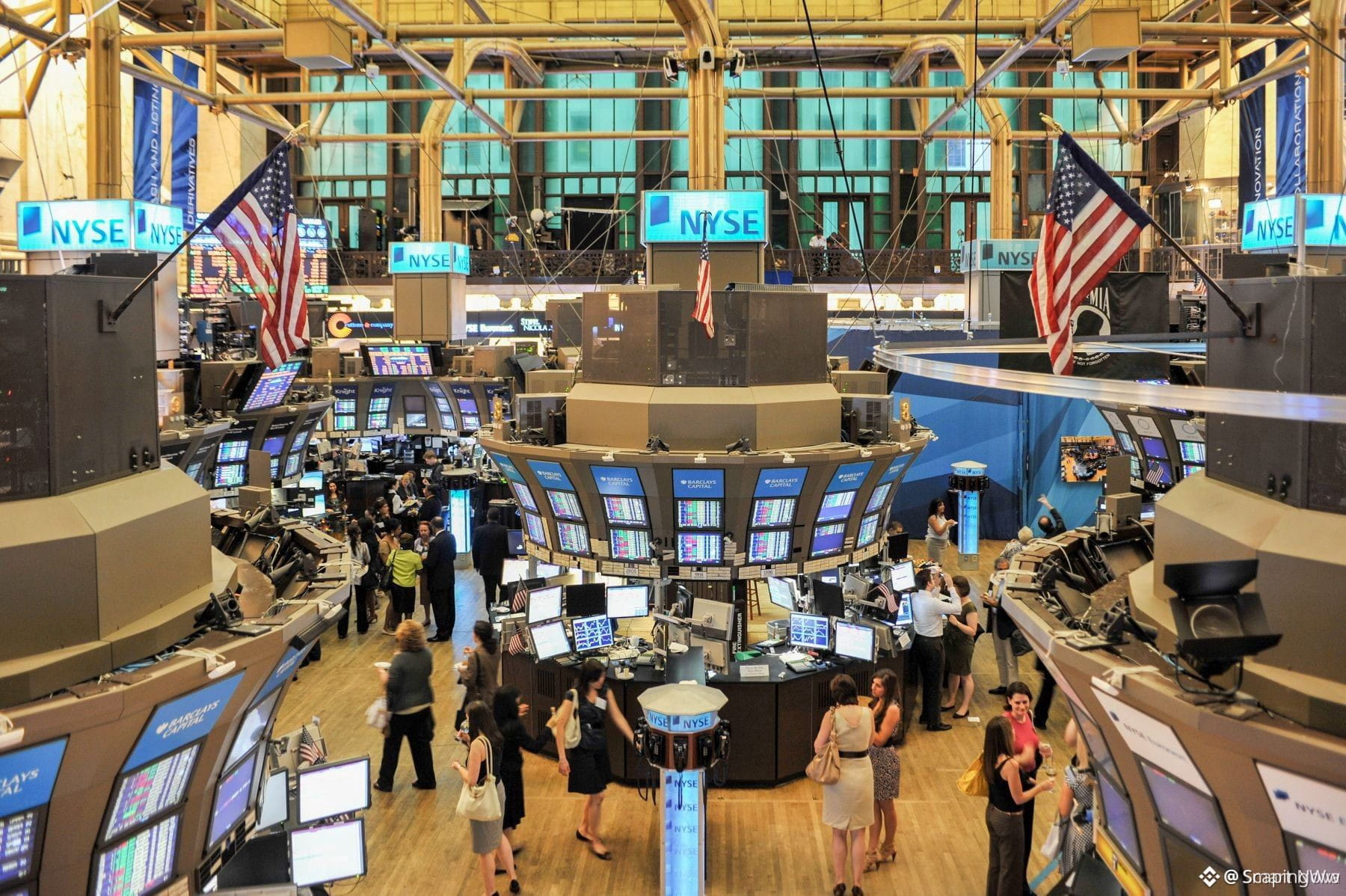
🚨 WALL STREET ENTERS PERPETUALS AS $HYPE SURGES TWENTY PERCENT ON EXPANSION MOVES ⚡
Institutional heavyweights behind traditional equity exchanges just signaled their intent to clear decentralized perpetual architecture for American order flow. That immediate 17-20% reaction across $HYPE reveals how fast smart money front-runs the institutional bid. 🌊
With over $650B in volume already clearing the underlying rails, bringing continuous 24/7 contracts to regulated desks marks a monumental structural shift. 💡 Key approvals still loom as the ultimate hurdle, but the institutional liquidity bridge is actively forming. 📊
🤔 Do you see traditional capital embracing 24/7 on-chain derivatives, or will regulatory pushback stall this expansion?
⚠️ Not financial advice. Always manage your risk. 🛡️
🏷️ #HYPE #Perpetuals #TradFi #CryptoDerivatives
⚡ 🦈
24

Article
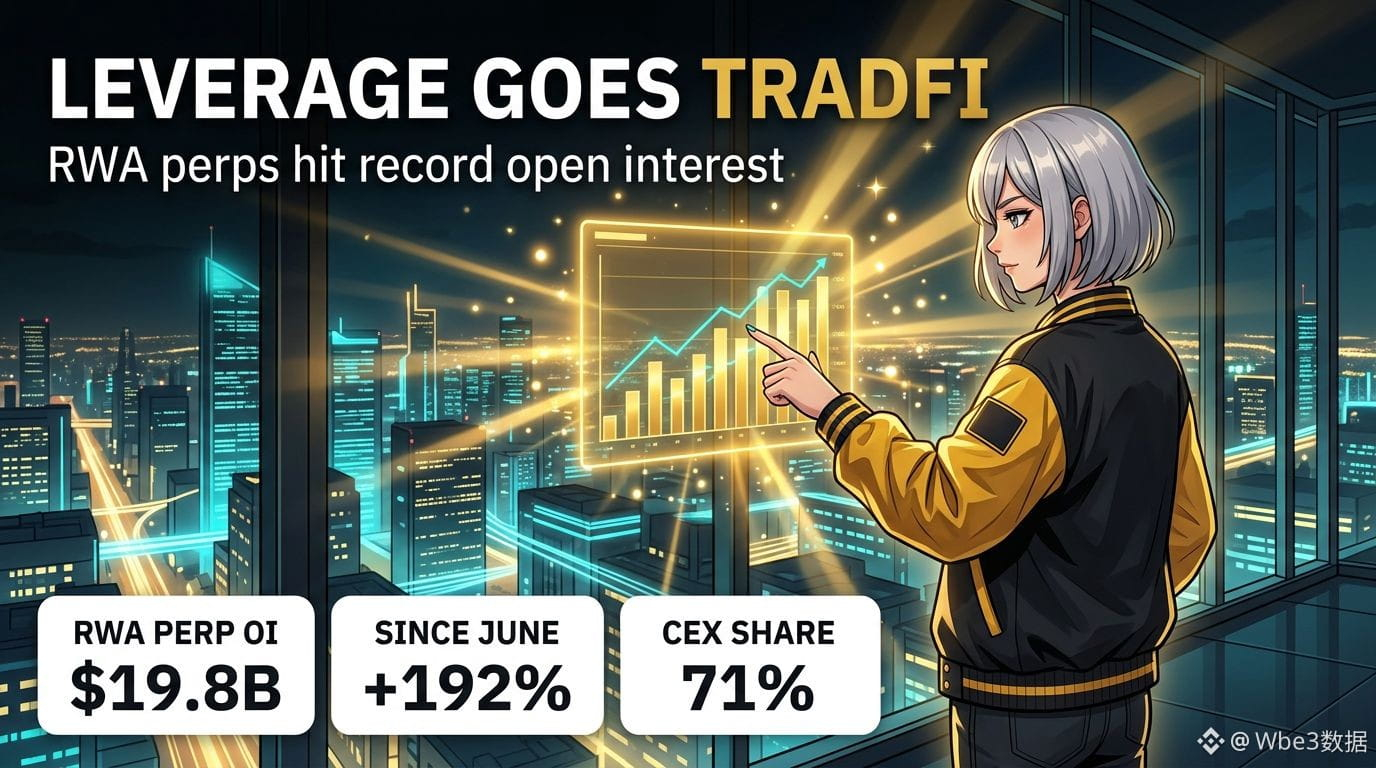
Crypto's Leverage Is Moving to Wall Street PricesCrypto's favorite product is perpetual futures. For years that meant one thing: leveraged bets on Bitcoin, Ether and a long tail of altcoins. This October, the story quietly changed. The fastest-growing corner of the perp market is no longer about crypto prices at all. It's about Wall Street prices.
Open interest in perpetual futures tied to real-world assets (RWA perps), meaning stocks, stock indexes, gold, silver and oil, has climbed to a record of roughly $19.8 billion, according to CryptoRank data dated October 26. That is up about 192% from $6.7 billion in June. Monthly snapshots tracked by the same data set read like a staircase: $4 billion in May, $8.8 billion in July, $9.9 billion in August, $14 billion in September, and now nearly $20 billion.
Why this matters: it shows where traders' appetite for leverage has been moving while crypto-native markets cool.
THE OTHER SIDE OF THE TRADE
Talos, an institutional trading infrastructure firm, put numbers on the mirror image. Total perpetual open interest it tracks fell from about $81 billion to about $67 billion over the past year. Bitcoin lost roughly $8 billion of open interest, Ether about $5 billion, and smaller tokens a combined $10 billion. Over the same stretch, RWA perps went from near zero to about $9 billion in Talos's tracking, around 14% of the total.
Notice that the two data sets measure different universes, so the exact figures don't line up (CryptoRank counts more venues). But they point the same direction: leverage did not disappear, it changed what it references.
A useful backdrop is the October 2025 deleveraging event, when roughly $19 billion in leveraged positions were wiped out in a single day. A year later, many crypto-native traders are still gun-shy, and the numbers on the retail side say the same. Robinhood reported this week that its crypto revenue fell 55% year over year in the third quarter to $120 million, while its event-contract business brought in $173 million. Attention is rotating.
WHO IS BUILDING THIS, AND WHERE
Two different kinds of venues are competing here.
Centralized exchanges hold about 71% of RWA perp open interest, leading in single stocks, precious metals and oil. Public equities are the largest category at around $9 billion, with metals and oil behind them. Binance, for example, now lists more than 200 TradFi instruments, according to Talos.
Decentralized venues hold the other 29%, and they dominate one niche: stock index perps, where DEXs account for about 89% of open interest. Hyperliquid has been the center of gravity for on-chain index exposure.
The market share picture is also moving quickly. A TokenPost analysis showed the largest on-chain venue in this niche, Trade[XYZ], seeing its share of tracked RWA perp open interest fall from 77% to 48% in the week of October 19, as Binance and Gate.io grew. Binance's tracked open interest jumped from about $150 million to about $1.54 billion in a few weeks, and Gate.io's from about $650 million to about $1.5 billion. Meanwhile Ripple Prime started offering RWA perpetual swaps to institutional clients on October 15. Everyone wants a seat.
A QUICK PRIMER FOR NEWER READERS
A perpetual future is a derivative with no expiry date. Traders can hold a leveraged position as long as they keep enough collateral, and a funding payment between longs and shorts keeps the contract price close to the underlying price.
An RWA perp is simply a perp whose underlying is not a crypto token. The contract tracks the price of, say, a stock index or an ounce of gold through an oracle, and it settles in stablecoins. Importantly, it is a price bet, not ownership. You don't hold the shares or the metal, and there is no on-chain custody of the real asset. That is different from tokenized stocks, where a token is meant to represent the actual security.
WHY THE BOOM MAY BE LESS SOLID THAN IT LOOKS
Three reasons to stay measured.
1. Demand may be thinner than the headline. Analysts reviewing Brent crude perp data on Hyperliquid and Binance found that weekend trading was only about 10% to 11% of total volume, even though weekends are about 29% of the week. In other words, the headline selling point, round-the-clock trading, seems to matter mostly in unusual news-heavy moments rather than every day.
2. Institutions are not clearly on board. Reports this year quoted a JPMorgan trading desk describing limited institutional demand for perpetuals, and CME's chief executive said in July that clients had never asked for such products. Whether that changes as Ripple Prime and others court institutions is an open question.
3. Part of this is migration, not new money. If open interest in BTC and ETH is shrinking while RWA perps grow, some of the growth is leverage moving from one product to another. The numbers also disagree on scale: CryptoRank's share estimate for RWA is much higher than Talos's 14%, because the datasets differ. Treat any single figure with caution.
There is also regulatory friction. Robinhood's CEO said on this week's earnings call that uncertainty about how long US tokenization rules will last could keep serious assets away from on-chain markets. That's about tokenized securities rather than perps, but it shows how unsettled the rulebook still is.
WHAT TO WATCH NEXT
• Whether RWA perp open interest keeps climbing if Bitcoin stabilizes. If leverage returns to crypto-native contracts, this share could shrink.
• Venue concentration: do centralized exchanges keep taking share from on-chain platforms?
• Funding rates and liquidation data when equity markets move sharply. A fast gap in a stock index can hit crypto-settled positions hard, especially off-hours.
• Any formal guidance from regulators on derivatives that reference stocks.
Today's market context: Bitcoin is around $80,600 and Ether around $2,335 ahead of the Federal Reserve decision. On-chain, DEX trading volume was about $7.06 billion over the past 24 hours, down roughly 16% on the day and 21% on the week according to DefiLlama, a reminder that spot-style activity is quiet while traders position for macro events.
THE TAKEAWAY
Crypto trading rails are becoming general-purpose leverage rails. That can broaden the user base, but it also means your risk may now depend on the Nasdaq, oil prices or a gold spike rather than on anything about blockchains. If you trade these products, understand the oracle, the funding mechanics, the margin rules and the liquidation price before sizing anything, and never use money you can't afford to lose.
Data sources: CryptoRank, Talos via Crypto Briefing, TokenPost, DefiLlama, Coinbase, Reuters, Cointelegraph.
Are you trading more crypto-native perps or TradFi-linked ones lately? Tell me what's driving your choice.
#RWA #Perpetuals #CryptoMarkets
Not financial advice.
Crypto's Leverage Is Moving to Wall Street Prices
Crypto's favorite product is perpetual futures. For years that meant one thing: leveraged bets on Bitcoin, Ether and a long tail of altcoins. This October, the story quietly changed. The fastest-growing corner of the perp market is no longer about crypto prices at all. It's about Wall Street prices.
Open interest in perpetual futures tied to real-world assets (RWA perps), meaning stocks, stock indexes, gold, silver and oil, has climbed to a record of roughly $19.8 billion, according to CryptoRank data dated October 26. That is up about 192% from $6.7 billion in June. Monthly snapshots tracked by the same data set read like a staircase: $4 billion in May, $8.8 billion in July, $9.9 billion in August, $14 billion in September, and now nearly $20 billion.
Why this matters: it shows where traders' appetite for leverage has been moving while crypto-native markets cool.
THE OTHER SIDE OF THE TRADE
Talos, an institutional trading infrastructure firm, put numbers on the mirror image. Total perpetual open interest it tracks fell from about $81 billion to about $67 billion over the past year. Bitcoin lost roughly $8 billion of open interest, Ether about $5 billion, and smaller tokens a combined $10 billion. Over the same stretch, RWA perps went from near zero to about $9 billion in Talos's tracking, around 14% of the total.
Notice that the two data sets measure different universes, so the exact figures don't line up (CryptoRank counts more venues). But they point the same direction: leverage did not disappear, it changed what it references.
A useful backdrop is the October 2025 deleveraging event, when roughly $19 billion in leveraged positions were wiped out in a single day. A year later, many crypto-native traders are still gun-shy, and the numbers on the retail side say the same. Robinhood reported this week that its crypto revenue fell 55% year over year in the third quarter to $120 million, while its event-contract business brought in $173 million. Attention is rotating.
WHO IS BUILDING THIS, AND WHERE
Two different kinds of venues are competing here.
Centralized exchanges hold about 71% of RWA perp open interest, leading in single stocks, precious metals and oil. Public equities are the largest category at around $9 billion, with metals and oil behind them. Binance, for example, now lists more than 200 TradFi instruments, according to Talos.
Decentralized venues hold the other 29%, and they dominate one niche: stock index perps, where DEXs account for about 89% of open interest. Hyperliquid has been the center of gravity for on-chain index exposure.
The market share picture is also moving quickly. A TokenPost analysis showed the largest on-chain venue in this niche, Trade[XYZ], seeing its share of tracked RWA perp open interest fall from 77% to 48% in the week of October 19, as Binance and Gate.io grew. Binance's tracked open interest jumped from about $150 million to about $1.54 billion in a few weeks, and Gate.io's from about $650 million to about $1.5 billion. Meanwhile Ripple Prime started offering RWA perpetual swaps to institutional clients on October 15. Everyone wants a seat.
A QUICK PRIMER FOR NEWER READERS
A perpetual future is a derivative with no expiry date. Traders can hold a leveraged position as long as they keep enough collateral, and a funding payment between longs and shorts keeps the contract price close to the underlying price.
An RWA perp is simply a perp whose underlying is not a crypto token. The contract tracks the price of, say, a stock index or an ounce of gold through an oracle, and it settles in stablecoins. Importantly, it is a price bet, not ownership. You don't hold the shares or the metal, and there is no on-chain custody of the real asset. That is different from tokenized stocks, where a token is meant to represent the actual security.
WHY THE BOOM MAY BE LESS SOLID THAN IT LOOKS
Three reasons to stay measured.
1. Demand may be thinner than the headline. Analysts reviewing Brent crude perp data on Hyperliquid and Binance found that weekend trading was only about 10% to 11% of total volume, even though weekends are about 29% of the week. In other words, the headline selling point, round-the-clock trading, seems to matter mostly in unusual news-heavy moments rather than every day.
2. Institutions are not clearly on board. Reports this year quoted a JPMorgan trading desk describing limited institutional demand for perpetuals, and CME's chief executive said in July that clients had never asked for such products. Whether that changes as Ripple Prime and others court institutions is an open question.
3. Part of this is migration, not new money. If open interest in BTC and ETH is shrinking while RWA perps grow, some of the growth is leverage moving from one product to another. The numbers also disagree on scale: CryptoRank's share estimate for RWA is much higher than Talos's 14%, because the datasets differ. Treat any single figure with caution.
There is also regulatory friction. Robinhood's CEO said on this week's earnings call that uncertainty about how long US tokenization rules will last could keep serious assets away from on-chain markets. That's about tokenized securities rather than perps, but it shows how unsettled the rulebook still is.
WHAT TO WATCH NEXT
• Whether RWA perp open interest keeps climbing if Bitcoin stabilizes. If leverage returns to crypto-native contracts, this share could shrink.
• Venue concentration: do centralized exchanges keep taking share from on-chain platforms?
• Funding rates and liquidation data when equity markets move sharply. A fast gap in a stock index can hit crypto-settled positions hard, especially off-hours.
• Any formal guidance from regulators on derivatives that reference stocks.
Today's market context: Bitcoin is around $80,600 and Ether around $2,335 ahead of the Federal Reserve decision. On-chain, DEX trading volume was about $7.06 billion over the past 24 hours, down roughly 16% on the day and 21% on the week according to DefiLlama, a reminder that spot-style activity is quiet while traders position for macro events.
THE TAKEAWAY
Crypto trading rails are becoming general-purpose leverage rails. That can broaden the user base, but it also means your risk may now depend on the Nasdaq, oil prices or a gold spike rather than on anything about blockchains. If you trade these products, understand the oracle, the funding mechanics, the margin rules and the liquidation price before sizing anything, and never use money you can't afford to lose.
Data sources: CryptoRank, Talos via Crypto Briefing, TokenPost, DefiLlama, Coinbase, Reuters, Cointelegraph.
Are you trading more crypto-native perps or TradFi-linked ones lately? Tell me what's driving your choice.
#RWA #Perpetuals #CryptoMarkets
Not financial advice.
296

$SHELL | Positive Funding and Market Positioning
The 8-hour perpetual funding rate was reported near +0.0100% early October 28. Positive funding generally means long positions pay short positions.
This may indicate a long-side bias, but funding can change quickly and does not guarantee upward price movement.
#FundingRate #Perpetuals #RiskManagement
39

🚨 Crypto.com Launches Regulated US Crypto Perps!
Crypto.com and OG.com introduce CFTC-regulated perpetuals with up to 5x leverage on $BTC , $ETH , $SOL , HYPE and ZEC, trading 24/7. Fees waived until Nov 26.
⚠️ Regulation doesn’t eliminate liquidation risk. Trade carefully or stick to spot.
🐂 Would you choose perps or spot?
#CryptoCom #perpetuals #crypto #Binance

85
Log in to explore more content
Join global crypto users on Binance Square
⚡️ Get latest and useful information about crypto.
💬 Trusted by the world’s largest crypto exchange.
👍 Discover real insights from verified creators.
Email / Phone number
Trending Topics
1
#HuangExitNvidiaStrategyInFocus
65,205 views
815 Discussing
2
#AnthropicRejectsIPODelayValuationinQuestion
653,856 views
5,085 Discussing
3
#BitMineReports$6.3BNetLossForFiscal2026
7,772 views
98 Discussing
4
#ChipStocksExtendLossesAfterNvidiaCEOChange
23,302 views
351 Discussing
5
#ThailandProposes$148KDailyStablecoinDepositWithdrawalCaps
2,062 views
31 Discussing
6
#CoreWeaveJumps10%On168%RevenueGrowth
168,122 views
1,586 Discussing
7
#ZcashFallsBelow$1000ForFirstTimeSinceSeptember
81,159 views
258 Discussing
8
#MSCIRemovalMayCurbStrategy’sBitcoinBuying
44,651 views
539 Discussing
9
#TradFiForBeginners
522,625 views
3,638 Discussing
10
#USJoblessClaimsRise
19.1M views
7,755 Discussing