
#bitcoinminingdifficultyfalls14%fromyearhigh
bitcoinminingdifficultyfalls14%fromyearhigh
256,755 views
1,337 Discussing
Hot
Latest

·
--
Partly True
#bitcoinminingdifficultyfalls14%fromyearhigh BITCOIN just got 14% easier to mine.
Biggest difficulty drop this year.
Why it matters:
Difficulty adjusts every ~2016 blocks to keep blocks at 10 min.
When price/energy costs rise, less efficient miners shut down. Hash rate drops. Difficulty resets lower.
What this means:
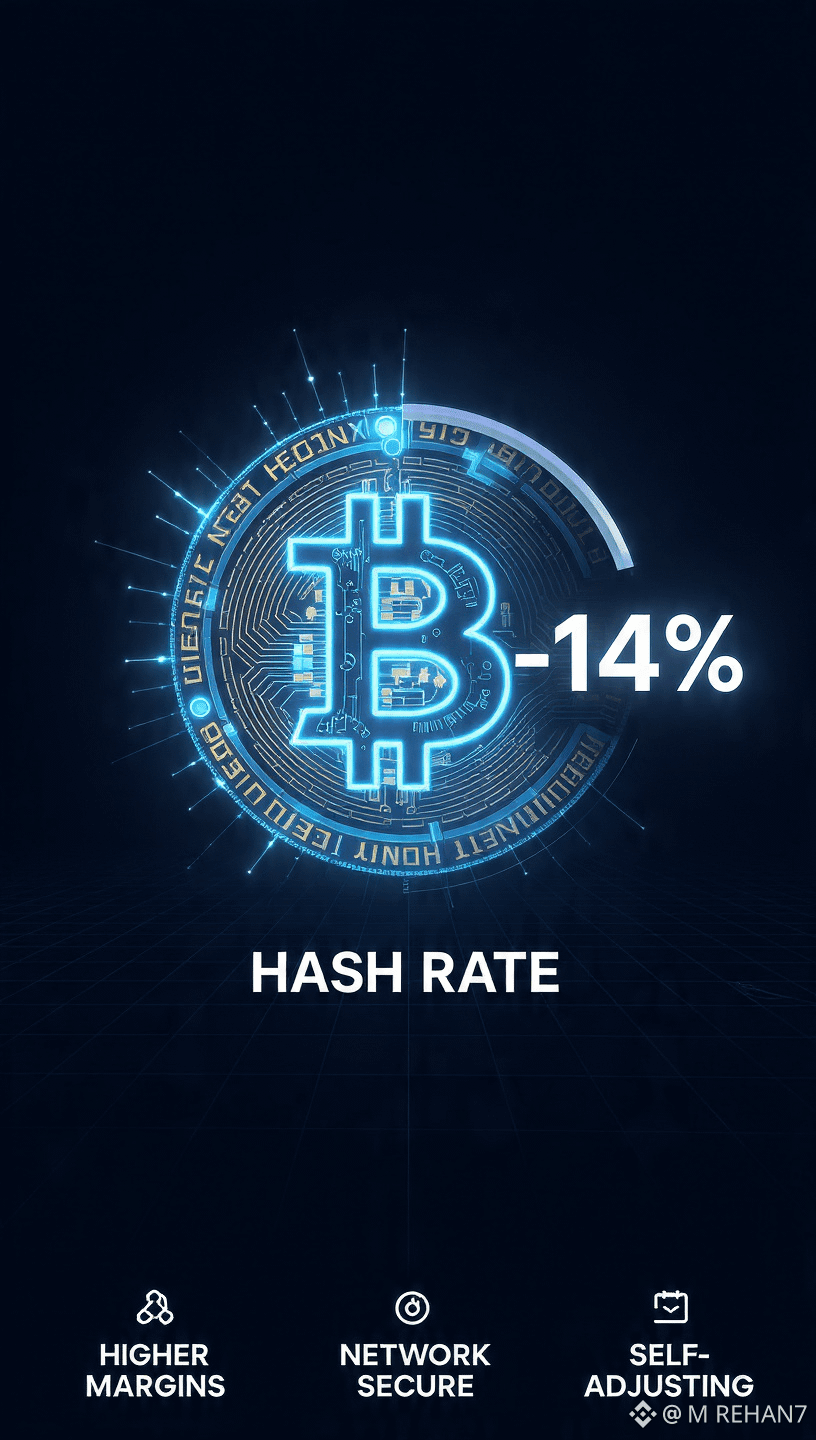
1. Active miners = Higher margins. Same $BTC , less competition.
2. Network = Still secure. Self-adjusting is the feature, not a bug.
3. Market = Watching if this is temporary or a big miner rotation.
This isn’t weakness. It’s Bitcoin adapting.
The next move depends on hash rate, miner profitability, and who scales up now.
#BitcoinMiningDifficultyFalls14%FromYearHigh #Megadrop #memecoin🚀🚀🚀
$LAB $BANK $UAI
Disclaimer: Includes third-party opinions. No advice. Binance AI may be used without guarantee.
#bitcoinminingdifficultyfalls14%fromyearhigh BITCOIN just got 14% easier to mine.
Biggest difficulty drop this year.
Why it matters:
Difficulty adjusts every ~2016 blocks to keep blocks at 10 min.
When price/energy costs rise, less efficient miners shut down. Hash rate drops. Difficulty resets lower.
What this means:
1. Active miners = Higher margins. Same $BTC , less competition.
2. Network = Still secure. Self-adjusting is the feature, not a bug.
3. Market = Watching if this is temporary or a big miner rotation.
This isn’t weakness. It’s Bitcoin adapting.
The next move depends on hash rate, miner profitability, and who scales up now.
#BitcoinMiningDifficultyFalls14%FromYearHigh #Megadrop #memecoin🚀🚀🚀
$LAB $BANK $UAI
Disclaimer: Includes third-party opinions. No advice. Binance AI may be used without guarantee.
Biggest difficulty drop this year.
Why it matters:
Difficulty adjusts every ~2016 blocks to keep blocks at 10 min.
When price/energy costs rise, less efficient miners shut down. Hash rate drops. Difficulty resets lower.
What this means:
1. Active miners = Higher margins. Same $BTC , less competition.
2. Network = Still secure. Self-adjusting is the feature, not a bug.
3. Market = Watching if this is temporary or a big miner rotation.
This isn’t weakness. It’s Bitcoin adapting.
The next move depends on hash rate, miner profitability, and who scales up now.
#BitcoinMiningDifficultyFalls14%FromYearHigh #Megadrop #memecoin🚀🚀🚀
$LAB $BANK $UAI
Disclaimer: Includes third-party opinions. No advice. Binance AI may be used without guarantee.
6
3.8k

#BitcoinMiningDifficultyFalls14%FromYearHigh
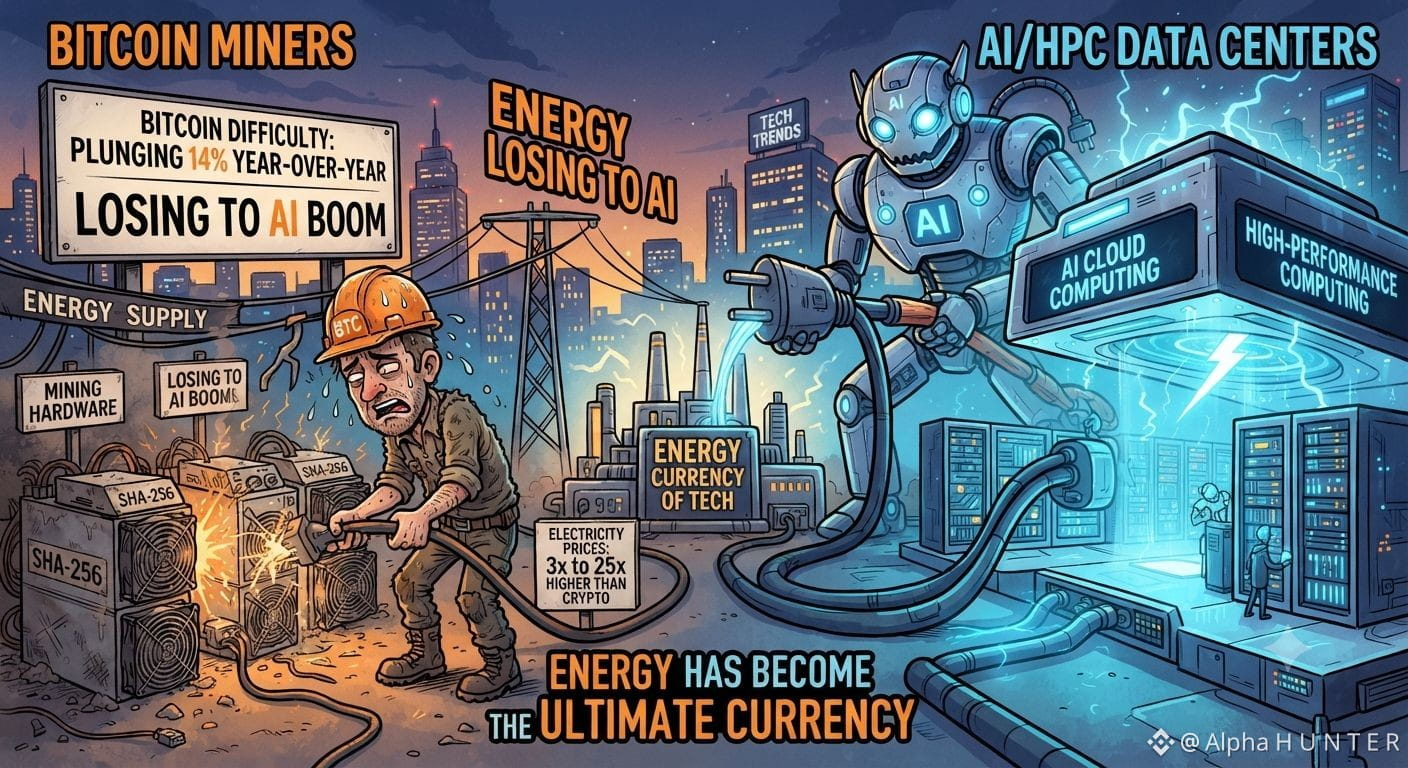
Bitcoin miners aren't losing to Bitcoin—they are losing to AI.
Recent data shows the Bitcoin mining difficulty plunging 14% from its 2026 highs, dropping to 126.23 T before a slight recovery. Remarkably, difficulty is now down year-over-year for only the second time in Bitcoin's 15-year history—with the previous instance being China's 2021 mining ban.
Unlike 2021, this drop isn't driven by regulatory crackouts. Instead, the culprit is the artificial intelligence boom. AI and High-Performance Computing (HPC) data centers are rapidly outbidding crypto miners, paying anywhere from 3 to 25 times more for electricity.
Faced with these economics, major mining companies are quietly pivoting their infrastructure away from SHA-256 operations and toward AI cloud computing. This massive shift proves that energy has become the ultimate currency in tech.
#BinanceSquareFamily #ArtificialIntelligence #BTC #TechTrends
$BTC
{future}(BTCUSDT)
$BLESS
{future}(BLESSUSDT)
$HOME
{future}(HOMEUSDT)
#BitcoinMiningDifficultyFalls14%FromYearHigh
Bitcoin miners aren't losing to Bitcoin—they are losing to AI.
Recent data shows the Bitcoin mining difficulty plunging 14% from its 2026 highs, dropping to 126.23 T before a slight recovery. Remarkably, difficulty is now down year-over-year for only the second time in Bitcoin's 15-year history—with the previous instance being China's 2021 mining ban.
Unlike 2021, this drop isn't driven by regulatory crackouts. Instead, the culprit is the artificial intelligence boom. AI and High-Performance Computing (HPC) data centers are rapidly outbidding crypto miners, paying anywhere from 3 to 25 times more for electricity.
Faced with these economics, major mining companies are quietly pivoting their infrastructure away from SHA-256 operations and toward AI cloud computing. This massive shift proves that energy has become the ultimate currency in tech.
#BinanceSquareFamily #ArtificialIntelligence #BTC #TechTrends
$BTC
$BLESS
$HOME
Bitcoin miners aren't losing to Bitcoin—they are losing to AI.
Recent data shows the Bitcoin mining difficulty plunging 14% from its 2026 highs, dropping to 126.23 T before a slight recovery. Remarkably, difficulty is now down year-over-year for only the second time in Bitcoin's 15-year history—with the previous instance being China's 2021 mining ban.
Unlike 2021, this drop isn't driven by regulatory crackouts. Instead, the culprit is the artificial intelligence boom. AI and High-Performance Computing (HPC) data centers are rapidly outbidding crypto miners, paying anywhere from 3 to 25 times more for electricity.
Faced with these economics, major mining companies are quietly pivoting their infrastructure away from SHA-256 operations and toward AI cloud computing. This massive shift proves that energy has become the ultimate currency in tech.
#BinanceSquareFamily #ArtificialIntelligence #BTC #TechTrends
$BTC
$BLESS
$HOME
1
56

·
--
Bullish
#bitcoinminingdifficultyfalls14%fromyearhigh The recent drop in bitcoinminingdifficultyfalls14%fromyearhigh marks a critical turning point for the network. This downward adjustment isn't just a random fluctuation; it reflects severe margin compression, reduced block subsidies post-halving, and the ongoing strategic shift where major miners redirect power capacity toward AI data centers. While less efficient rigs go offline, this automatic network correction actually eases pressure on surviving low-cost miners. Is this a healthy market purge or a sign of deeper structural shifts? Share your perspective! 👇$BTC
{spot}(BTCUSDT)
#Write2Earn #Bitcoinmining #CryptoMarket #BinanceSquare
#bitcoinminingdifficultyfalls14%fromyearhigh The recent drop in bitcoinminingdifficultyfalls14%fromyearhigh marks a critical turning point for the network. This downward adjustment isn't just a random fluctuation; it reflects severe margin compression, reduced block subsidies post-halving, and the ongoing strategic shift where major miners redirect power capacity toward AI data centers. While less efficient rigs go offline, this automatic network correction actually eases pressure on surviving low-cost miners. Is this a healthy market purge or a sign of deeper structural shifts? Share your perspective! 👇$BTC
#Write2Earn #Bitcoinmining #CryptoMarket #BinanceSquare
#Write2Earn #Bitcoinmining #CryptoMarket #BinanceSquare
92

⚙️🌐 Mining Conditions Shift
A 14% decline in Bitcoin mining difficulty from the yearly peak highlights changing participation and network dynamics. The adjustment is part of Bitcoin's built-in mechanism to keep block times consistent.
$BTC $SOL $BNB
#bitcoinminingdifficultyfalls14%fromyearhigh
⚙️🌐 Mining Conditions Shift
A 14% decline in Bitcoin mining difficulty from the yearly peak highlights changing participation and network dynamics. The adjustment is part of Bitcoin's built-in mechanism to keep block times consistent.
$BTC $SOL $BNB
#bitcoinminingdifficultyfalls14%fromyearhigh
A 14% decline in Bitcoin mining difficulty from the yearly peak highlights changing participation and network dynamics. The adjustment is part of Bitcoin's built-in mechanism to keep block times consistent.
$BTC $SOL $BNB
#bitcoinminingdifficultyfalls14%fromyearhigh
43
🔍⚖️ Bitcoin Network Rebalances
Mining difficulty has eased 14% from its yearly high, showing how the Bitcoin network automatically adapts as computing power fluctuates across the ecosystem.
$BTC $BNB $ETH
#bitcoinminingdifficultyfalls14%fromyearhigh
🔍⚖️ Bitcoin Network Rebalances
Mining difficulty has eased 14% from its yearly high, showing how the Bitcoin network automatically adapts as computing power fluctuates across the ecosystem.
$BTC $BNB $ETH
#bitcoinminingdifficultyfalls14%fromyearhigh
Mining difficulty has eased 14% from its yearly high, showing how the Bitcoin network automatically adapts as computing power fluctuates across the ecosystem.
$BTC $BNB $ETH
#bitcoinminingdifficultyfalls14%fromyearhigh
2
196

·
--
Bullish
Verified
#bitcoinminingdifficultyfalls14%fromyearhigh ⛏️📉
Bitcoin mining difficulty has fallen 14% from its yearly high, marking one of the largest adjustments of the year as the network responds to changes in global hash rate.
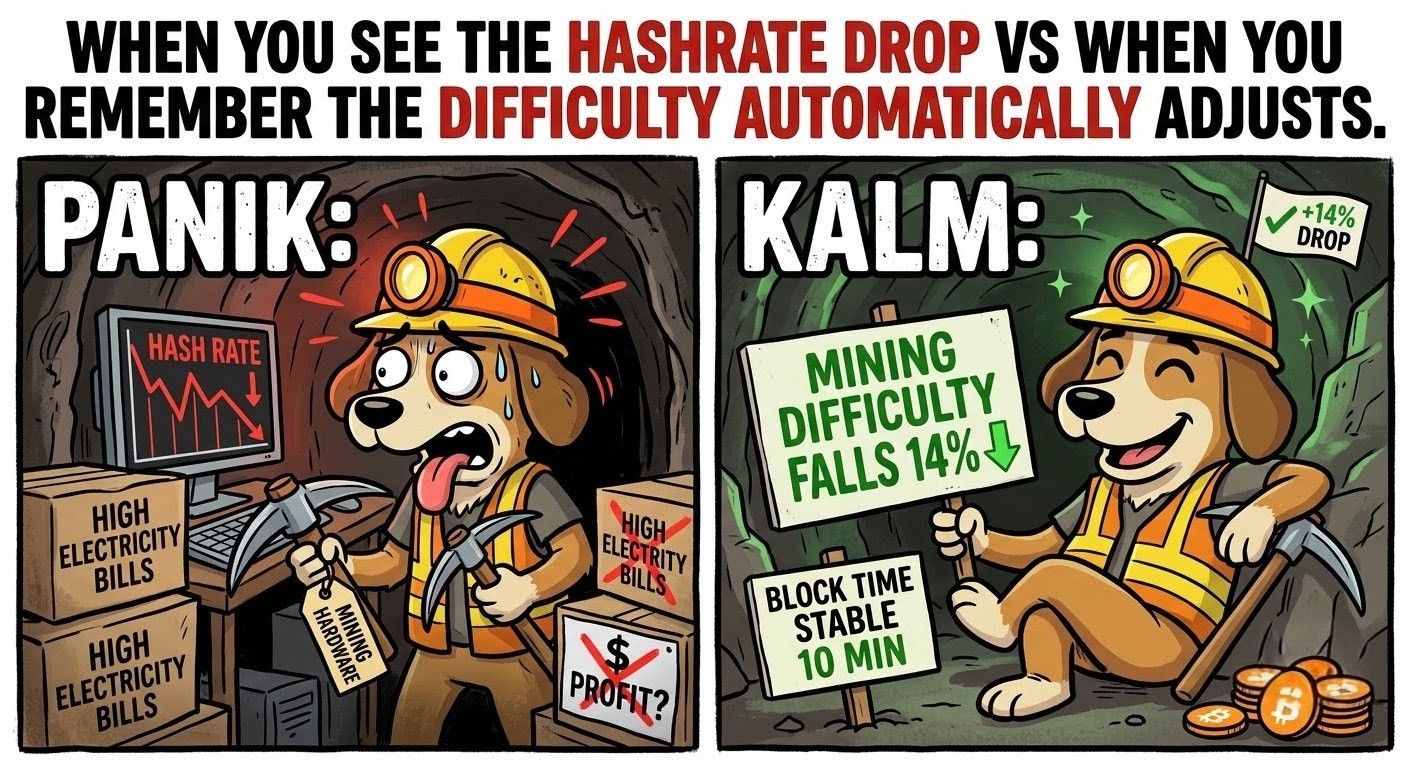
Mining difficulty automatically adjusts to keep Bitcoin producing blocks at an average interval of around 10 minutes. A decline typically reflects reduced mining power, which can occur when less efficient miners shut down operations due to lower profitability, rising energy costs, or hardware upgrades.
While a lower difficulty can improve mining economics for active operators, it does not weaken Bitcoin's security on its own. The network continues to self-adjust, maintaining its resilience through changing market conditions.
Investors will be watching future hash rate trends, miner profitability, and institutional mining activity to assess whether this is a temporary adjustment or the start of a broader shift in the mining landscape.
$LAB
{future}(LABUSDT)
$BANK
{future}(BANKUSDT)
$UAI
{future}(UAIUSDT)
#bitcoinminingdifficultyfalls14%fromyearhigh ⛏️📉
Bitcoin mining difficulty has fallen 14% from its yearly high, marking one of the largest adjustments of the year as the network responds to changes in global hash rate.
Mining difficulty automatically adjusts to keep Bitcoin producing blocks at an average interval of around 10 minutes. A decline typically reflects reduced mining power, which can occur when less efficient miners shut down operations due to lower profitability, rising energy costs, or hardware upgrades.
While a lower difficulty can improve mining economics for active operators, it does not weaken Bitcoin's security on its own. The network continues to self-adjust, maintaining its resilience through changing market conditions.
Investors will be watching future hash rate trends, miner profitability, and institutional mining activity to assess whether this is a temporary adjustment or the start of a broader shift in the mining landscape.
$LAB
$BANK
$UAI
Bitcoin mining difficulty has fallen 14% from its yearly high, marking one of the largest adjustments of the year as the network responds to changes in global hash rate.
Mining difficulty automatically adjusts to keep Bitcoin producing blocks at an average interval of around 10 minutes. A decline typically reflects reduced mining power, which can occur when less efficient miners shut down operations due to lower profitability, rising energy costs, or hardware upgrades.
While a lower difficulty can improve mining economics for active operators, it does not weaken Bitcoin's security on its own. The network continues to self-adjust, maintaining its resilience through changing market conditions.
Investors will be watching future hash rate trends, miner profitability, and institutional mining activity to assess whether this is a temporary adjustment or the start of a broader shift in the mining landscape.
$LAB
$BANK
$UAI
1
4.2k
Verified
📉💻 Bitcoin Difficulty Retreats
The latest network data shows Bitcoin mining difficulty is now 14% below its yearly peak. Difficulty adjustments remain a core feature that helps keep the blockchain operating at a steady pace despite changes in mining activity.
$BTC $ETH $SOL
#bitcoinminingdifficultyfalls14%fromyearhigh
📉💻 Bitcoin Difficulty Retreats
The latest network data shows Bitcoin mining difficulty is now 14% below its yearly peak. Difficulty adjustments remain a core feature that helps keep the blockchain operating at a steady pace despite changes in mining activity.
$BTC $ETH $SOL
#bitcoinminingdifficultyfalls14%fromyearhigh
The latest network data shows Bitcoin mining difficulty is now 14% below its yearly peak. Difficulty adjustments remain a core feature that helps keep the blockchain operating at a steady pace despite changes in mining activity.
$BTC $ETH $SOL
#bitcoinminingdifficultyfalls14%fromyearhigh
1
2
1.2k

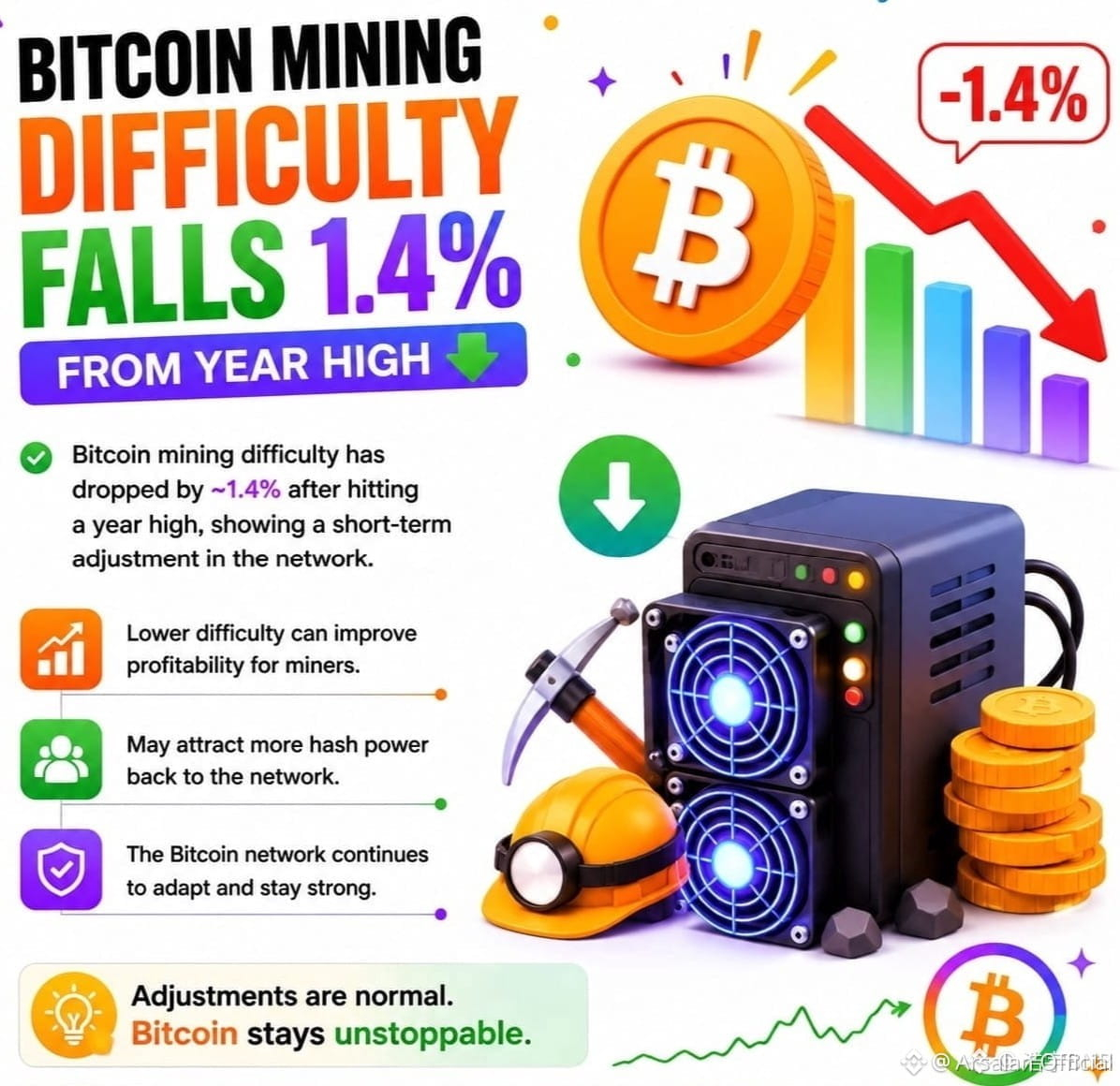
#BitcoinMiningDifficultyFalls14%FromYearHigh Bitcoin mining difficulty falling 14% from its yearly high generally means the network has become a bit easier to mine than at that peak.
What that usually implies:
Less competition from miners: Some mining power may have gone offline.
Lower production cost pressure for active miners: Remaining miners may earn slightly better margins if BTC price and fees hold up.
Network still self-adjusts: Bitcoin automatically changes difficulty to keep block times near 10 minutes, so this is a normal mechanism, not necessarily a problem.
What to watch next:
Hashrate trend: If difficulty fell because hashrate dropped sharply, that can reflect miner stress, energy-cost pressure, or weaker profitability.
BTC price vs miner profitability: If price is stable or rising while difficulty is lower, miner economics can improve.
Miner selling behavior: If stressed miners sell more BTC reserves, that can affect short-term market sentiment.
So in plain English: this is usually more of a mining-economics signal than a direct price signal. It can matter for market sentiment, but by itself it does not mean Bitcoin must go up or down.$BTC
{spot}(BTCUSDT)
@arsalandf4973c0a699
#BitcoinMiningDifficultyFalls14%FromYearHigh Bitcoin mining difficulty falling 14% from its yearly high generally means the network has become a bit easier to mine than at that peak.
What that usually implies:
Less competition from miners: Some mining power may have gone offline.
Lower production cost pressure for active miners: Remaining miners may earn slightly better margins if BTC price and fees hold up.
Network still self-adjusts: Bitcoin automatically changes difficulty to keep block times near 10 minutes, so this is a normal mechanism, not necessarily a problem.
What to watch next:
Hashrate trend: If difficulty fell because hashrate dropped sharply, that can reflect miner stress, energy-cost pressure, or weaker profitability.
BTC price vs miner profitability: If price is stable or rising while difficulty is lower, miner economics can improve.
Miner selling behavior: If stressed miners sell more BTC reserves, that can affect short-term market sentiment.
So in plain English: this is usually more of a mining-economics signal than a direct price signal. It can matter for market sentiment, but by itself it does not mean Bitcoin must go up or down.$BTC
@Arsalan Official
What that usually implies:
Less competition from miners: Some mining power may have gone offline.
Lower production cost pressure for active miners: Remaining miners may earn slightly better margins if BTC price and fees hold up.
Network still self-adjusts: Bitcoin automatically changes difficulty to keep block times near 10 minutes, so this is a normal mechanism, not necessarily a problem.
What to watch next:
Hashrate trend: If difficulty fell because hashrate dropped sharply, that can reflect miner stress, energy-cost pressure, or weaker profitability.
BTC price vs miner profitability: If price is stable or rising while difficulty is lower, miner economics can improve.
Miner selling behavior: If stressed miners sell more BTC reserves, that can affect short-term market sentiment.
So in plain English: this is usually more of a mining-economics signal than a direct price signal. It can matter for market sentiment, but by itself it does not mean Bitcoin must go up or down.$BTC
@Arsalan Official
1
124

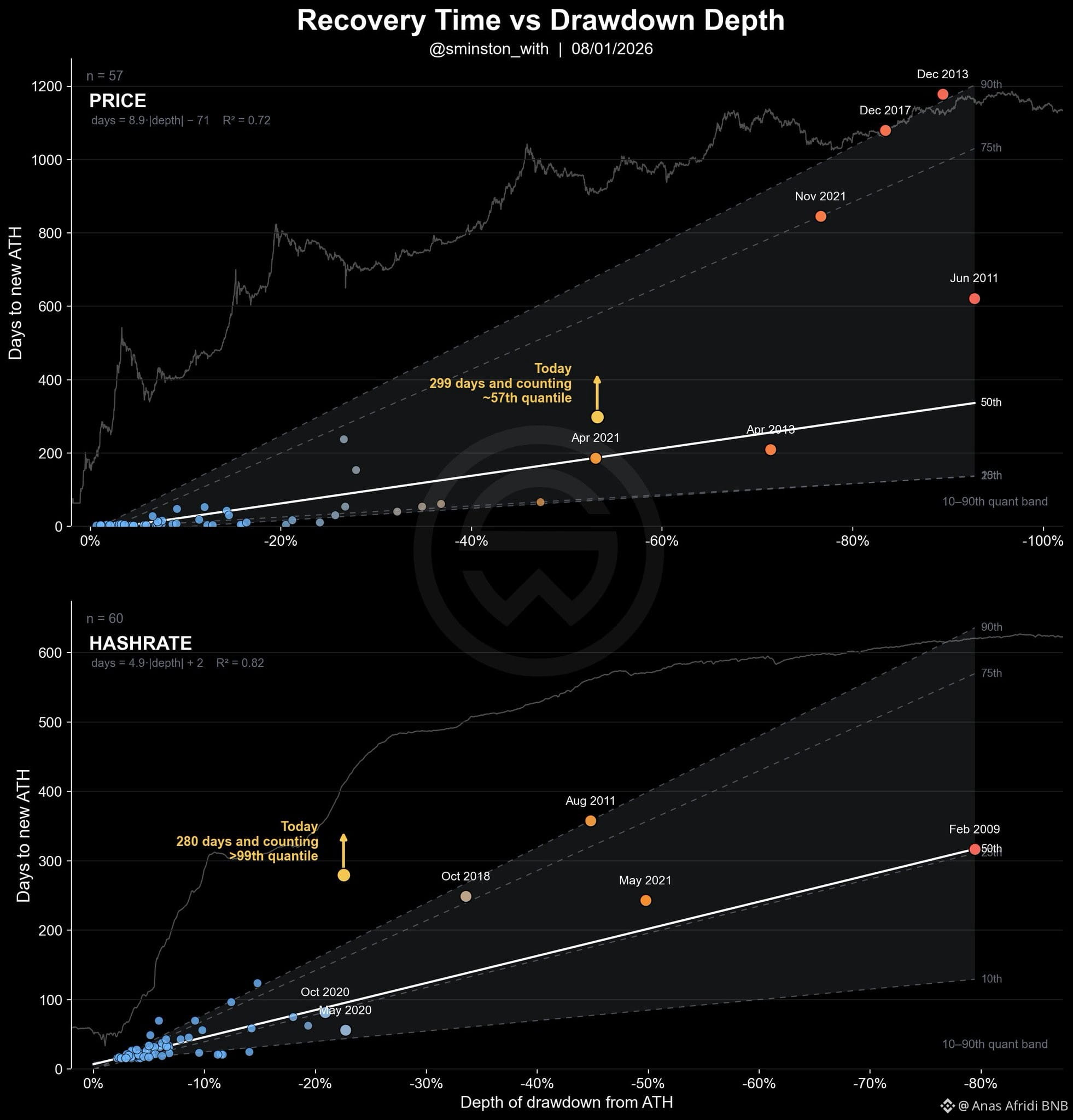
#BitcoinMiningDifficultyFalls14%FromYearHigh Bitcoin's price drawdown is 299 days old and 47% deep. Right on the median for a hole that size. Statistically boring.
Hashrate over the same window: −23%, 280 days, past the 99th percentile.
The rule is: deeper generally means slower. Currently that rule is breaking. We're shallower than Oct 2018 and Aug 2011, but slower than both.
Shallow drawdowns recover fast because the machines are still sitting there. A miner running thin margins pulls the plug, waits out the dip, and switches back on when price improves. The capacity never actually leaves the network, so it returns quickly. Not this time.
It's not the rigs that are gone, it's the power. Difficulty has been adjusting down this whole time, nearly 20% off its peak, and it still hasn't pulled that capacity back, because those megawatts are spoken for. It gets rebuilt elsewhere eventually.
But building out isn't the same as 'switching on,' and therefore the rebound won't likely be as snappy as it used to be$BTC
{future}(BTCUSDT)
$BTR
{future}(BTRUSDT)
#BitcoinMiningDifficultyFalls14%FromYearHigh Bitcoin's price drawdown is 299 days old and 47% deep. Right on the median for a hole that size. Statistically boring.
Hashrate over the same window: −23%, 280 days, past the 99th percentile.
The rule is: deeper generally means slower. Currently that rule is breaking. We're shallower than Oct 2018 and Aug 2011, but slower than both.
Shallow drawdowns recover fast because the machines are still sitting there. A miner running thin margins pulls the plug, waits out the dip, and switches back on when price improves. The capacity never actually leaves the network, so it returns quickly. Not this time.
It's not the rigs that are gone, it's the power. Difficulty has been adjusting down this whole time, nearly 20% off its peak, and it still hasn't pulled that capacity back, because those megawatts are spoken for. It gets rebuilt elsewhere eventually.
But building out isn't the same as 'switching on,' and therefore the rebound won't likely be as snappy as it used to be$BTC
$BTR
Hashrate over the same window: −23%, 280 days, past the 99th percentile.
The rule is: deeper generally means slower. Currently that rule is breaking. We're shallower than Oct 2018 and Aug 2011, but slower than both.
Shallow drawdowns recover fast because the machines are still sitting there. A miner running thin margins pulls the plug, waits out the dip, and switches back on when price improves. The capacity never actually leaves the network, so it returns quickly. Not this time.
It's not the rigs that are gone, it's the power. Difficulty has been adjusting down this whole time, nearly 20% off its peak, and it still hasn't pulled that capacity back, because those megawatts are spoken for. It gets rebuilt elsewhere eventually.
But building out isn't the same as 'switching on,' and therefore the rebound won't likely be as snappy as it used to be$BTC
$BTR
1
1
256

·
--
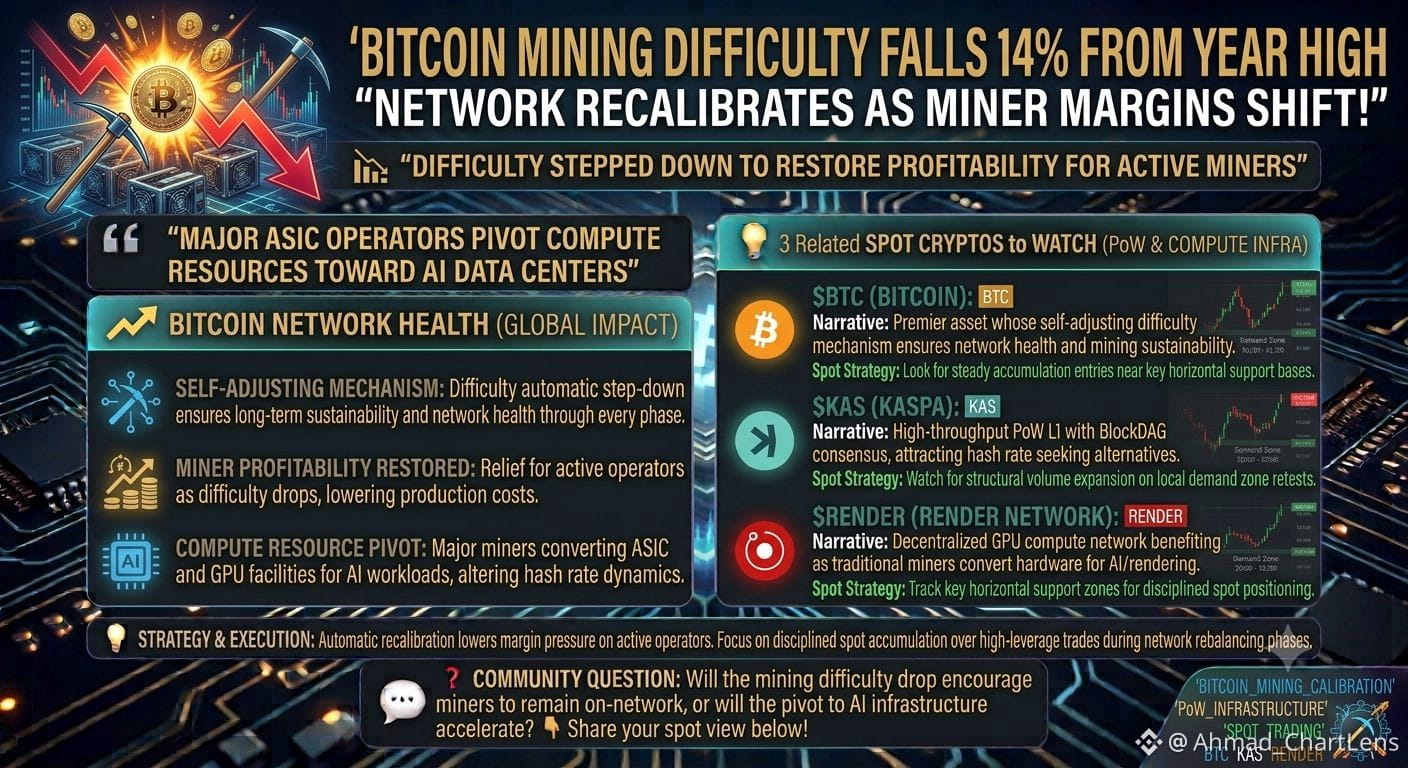
#BitcoinMiningDifficultyFalls14%FromYearHigh Bitcoin's mining difficulty has recorded a 14% drop from its year-to-highs—marking an automatic network recalibration.
As miner profit margins squeeze and major ASIC operators pivot compute resources toward AI data center hosting, the difficulty mechanism stepped down to restore unit profitability for active operators.
🪙3 Related Spot Cryptos to Watch (PoW & Compute Infrastructure)
1.$BTC (Bitcoin)
Narrative: Premier digital asset whose self-adjusting difficulty mechanism ensures network health and mining sustainability through every market phase.
Spot Setup: Look for steady accumulation entries near key horizontal support bases.
2.$KAS (Kaspa)
Narrative: Fast-growing Proof-of-Work Layer-1 utilizing the BlockDAG consensus model, attracting ASIC miner hash rate seeking high-throughput alternatives.
Spot Setup: Watch for structural volume expansion on local demand zone retests.
3.$RENDER (Render Network)
Narrative: Leading decentralized GPU compute network benefiting as traditional mining facilities increasingly convert hardware toward AI and rendering workloads.
Spot Setup: Track key horizontal support zones for disciplined spot positioning.
{spot}(BTCUSDT)
{future}(KASUSDT)
{spot}(RENDERUSDT)
💡 Execution Focus
Difficulty drops automatically relieve margin pressure on remaining network miners. Focus on disciplined spot market accumulation over high-leverage trades during network recalibration phases.
#BTC #SpotTrading #Binance
#BitcoinMiningDifficultyFalls14%FromYearHigh Bitcoin's mining difficulty has recorded a 14% drop from its year-to-highs—marking an automatic network recalibration.
As miner profit margins squeeze and major ASIC operators pivot compute resources toward AI data center hosting, the difficulty mechanism stepped down to restore unit profitability for active operators.
🪙3 Related Spot Cryptos to Watch (PoW & Compute Infrastructure)
1.$BTC (Bitcoin)
Narrative: Premier digital asset whose self-adjusting difficulty mechanism ensures network health and mining sustainability through every market phase.
Spot Setup: Look for steady accumulation entries near key horizontal support bases.
2.$KAS (Kaspa)
Narrative: Fast-growing Proof-of-Work Layer-1 utilizing the BlockDAG consensus model, attracting ASIC miner hash rate seeking high-throughput alternatives.
Spot Setup: Watch for structural volume expansion on local demand zone retests.
3.$RENDER (Render Network)
Narrative: Leading decentralized GPU compute network benefiting as traditional mining facilities increasingly convert hardware toward AI and rendering workloads.
Spot Setup: Track key horizontal support zones for disciplined spot positioning.
💡 Execution Focus
Difficulty drops automatically relieve margin pressure on remaining network miners. Focus on disciplined spot market accumulation over high-leverage trades during network recalibration phases.
#BTC #SpotTrading #Binance
As miner profit margins squeeze and major ASIC operators pivot compute resources toward AI data center hosting, the difficulty mechanism stepped down to restore unit profitability for active operators.
🪙3 Related Spot Cryptos to Watch (PoW & Compute Infrastructure)
1.$BTC (Bitcoin)
Narrative: Premier digital asset whose self-adjusting difficulty mechanism ensures network health and mining sustainability through every market phase.
Spot Setup: Look for steady accumulation entries near key horizontal support bases.
2.$KAS (Kaspa)
Narrative: Fast-growing Proof-of-Work Layer-1 utilizing the BlockDAG consensus model, attracting ASIC miner hash rate seeking high-throughput alternatives.
Spot Setup: Watch for structural volume expansion on local demand zone retests.
3.$RENDER (Render Network)
Narrative: Leading decentralized GPU compute network benefiting as traditional mining facilities increasingly convert hardware toward AI and rendering workloads.
Spot Setup: Track key horizontal support zones for disciplined spot positioning.
💡 Execution Focus
Difficulty drops automatically relieve margin pressure on remaining network miners. Focus on disciplined spot market accumulation over high-leverage trades during network recalibration phases.
#BTC #SpotTrading #Binance
148

·
--
#bitcoinminingdifficultyfalls14%fromyearhigh
Bitcoin mining difficulty falling 14% from the yearly high is more than just a number on a chart.
Difficulty adjusts to keep Bitcoin’s block production consistent, so a meaningful decline can change the economics for miners. For operators dealing with high electricity costs, expensive hardware, and tight margins, lower difficulty can provide some breathing room.
It also shows how dynamic Bitcoin’s mining market is. When network conditions change, miners have to adapt quickly by managing costs, upgrading equipment, or deciding whether certain operations are still profitable.
The important part for me is that Bitcoin continues to adjust without anyone manually controlling the process.
Hashrate changes. Miner participation changes. Difficulty responds.
That self-adjusting mechanism is one of the reasons Bitcoin can keep operating through changing market and mining conditions.
#bitcoin #BTC走势分析 #Bitcoinmining $BTC
{future}(BTCUSDT)
#bitcoinminingdifficultyfalls14%fromyearhigh
Bitcoin mining difficulty falling 14% from the yearly high is more than just a number on a chart.
Difficulty adjusts to keep Bitcoin’s block production consistent, so a meaningful decline can change the economics for miners. For operators dealing with high electricity costs, expensive hardware, and tight margins, lower difficulty can provide some breathing room.
It also shows how dynamic Bitcoin’s mining market is. When network conditions change, miners have to adapt quickly by managing costs, upgrading equipment, or deciding whether certain operations are still profitable.
The important part for me is that Bitcoin continues to adjust without anyone manually controlling the process.
Hashrate changes. Miner participation changes. Difficulty responds.
That self-adjusting mechanism is one of the reasons Bitcoin can keep operating through changing market and mining conditions.
#bitcoin #BTC走势分析 #Bitcoinmining $BTC
Bitcoin mining difficulty falling 14% from the yearly high is more than just a number on a chart.
Difficulty adjusts to keep Bitcoin’s block production consistent, so a meaningful decline can change the economics for miners. For operators dealing with high electricity costs, expensive hardware, and tight margins, lower difficulty can provide some breathing room.
It also shows how dynamic Bitcoin’s mining market is. When network conditions change, miners have to adapt quickly by managing costs, upgrading equipment, or deciding whether certain operations are still profitable.
The important part for me is that Bitcoin continues to adjust without anyone manually controlling the process.
Hashrate changes. Miner participation changes. Difficulty responds.
That self-adjusting mechanism is one of the reasons Bitcoin can keep operating through changing market and mining conditions.
#bitcoin #BTC走势分析 #Bitcoinmining $BTC
2
144
⛏️📉 Bitcoin Mining Difficulty Drops 14%
Bitcoin's mining difficulty has fallen 14% from its yearly high, reflecting changing network conditions as miners adjust operations. Mining difficulty automatically changes to help maintain the network's target block production rate.
$BTC $BNB $ETH
#bitcoinminingdifficultyfalls14%fromyearhigh
⛏️📉 Bitcoin Mining Difficulty Drops 14%
Bitcoin's mining difficulty has fallen 14% from its yearly high, reflecting changing network conditions as miners adjust operations. Mining difficulty automatically changes to help maintain the network's target block production rate.
$BTC $BNB $ETH
#bitcoinminingdifficultyfalls14%fromyearhigh
Bitcoin's mining difficulty has fallen 14% from its yearly high, reflecting changing network conditions as miners adjust operations. Mining difficulty automatically changes to help maintain the network's target block production rate.
$BTC $BNB $ETH
#bitcoinminingdifficultyfalls14%fromyearhigh
41

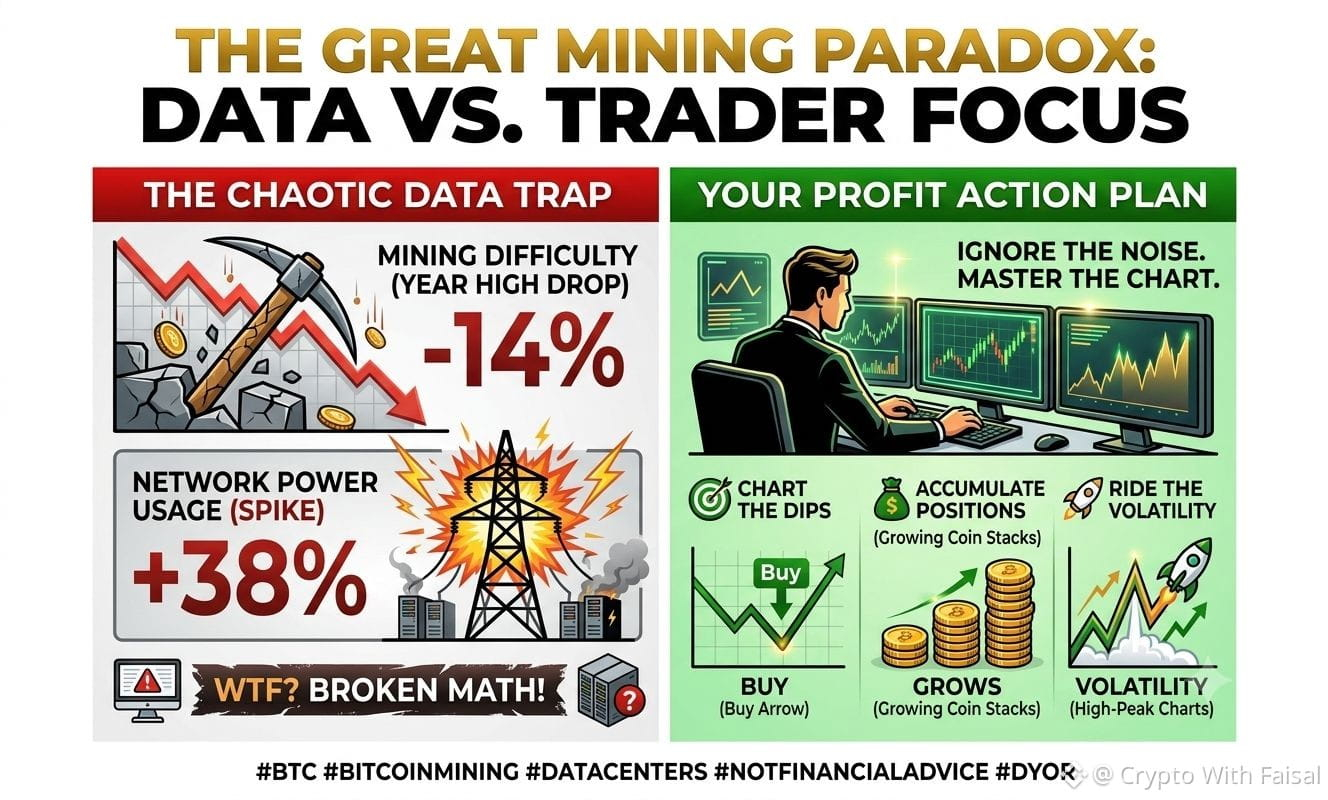
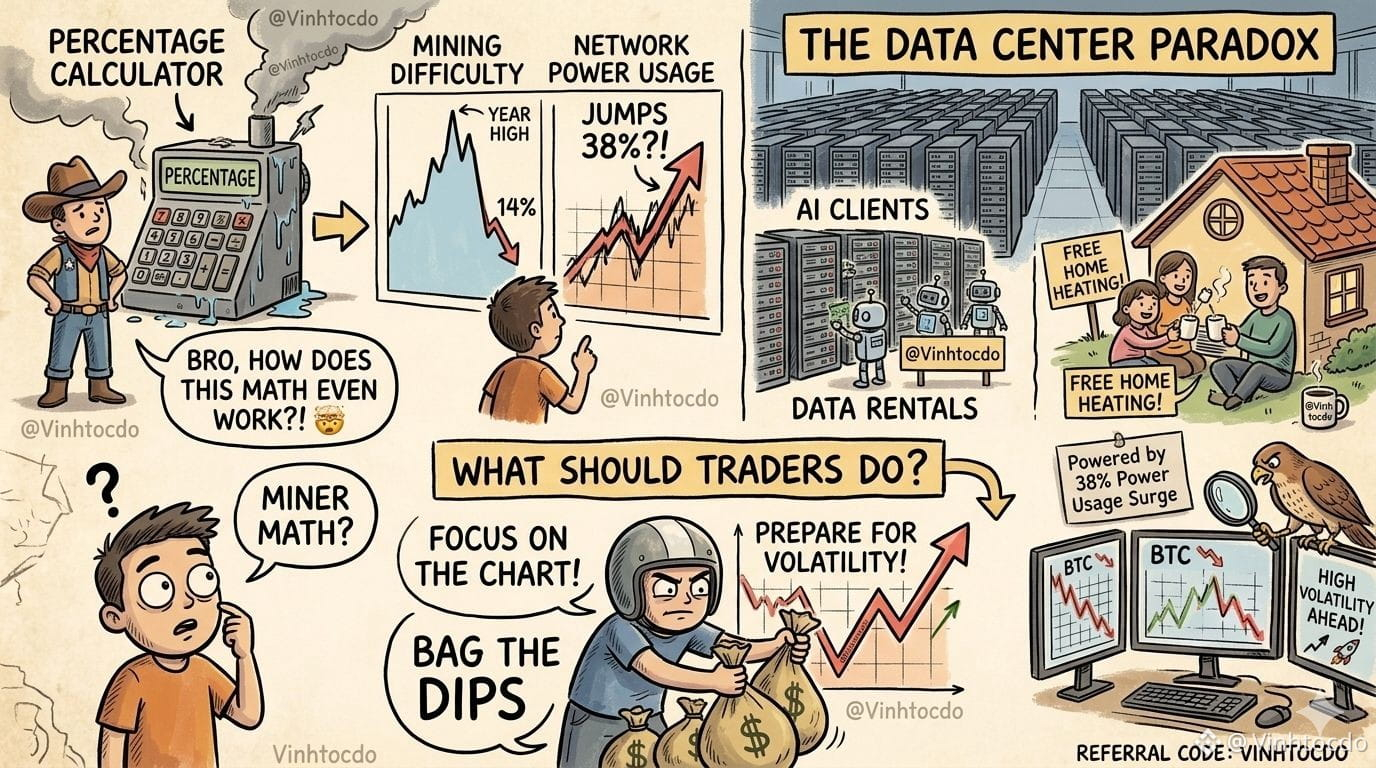
⚡ The Mining Anomaly: Efficiency vs. Energy ⚡#bitcoinminingdifficultyfalls14%fromyearhigh
We are witnessing a bizarre contradiction in the mining ecosystem right now: network mining difficulty has plunged 14% from its yearly peak, yet overall network power consumption has skyrocketed by a staggering 38%! 🤯
The underlying math here is completely warped. If this disjointed trend persists, industrial-scale miners might be better off repurposing their massive hardware farms to fuel the booming AI tech sector—or just using them as oversized space heaters for the upcoming winter. 🏭❄️
What’s the move for traders?
Ignore the Noise: Don't get caught up trying to untangle the miners' operational headaches.
Trade the Tape: Keep your focus locked on technical analysis and price action.
Capitalize on Volatility: Accumulate strategically on major pullbacks and strap in for aggressive market swings. 🌊📈
Disclaimer: This is not financial advice. Always Do Your Own Research (DYOR).
#BTC #BitcoinMining #datacenters
$BTC
{future}(BTCUSDT)
$KOMA
{future}(KOMAUSDT)
$GIGGLE
{future}(GIGGLEUSDT)
⚡ The Mining Anomaly: Efficiency vs. Energy ⚡#bitcoinminingdifficultyfalls14%fromyearhigh
We are witnessing a bizarre contradiction in the mining ecosystem right now: network mining difficulty has plunged 14% from its yearly peak, yet overall network power consumption has skyrocketed by a staggering 38%! 🤯
The underlying math here is completely warped. If this disjointed trend persists, industrial-scale miners might be better off repurposing their massive hardware farms to fuel the booming AI tech sector—or just using them as oversized space heaters for the upcoming winter. 🏭❄️
What’s the move for traders?
Ignore the Noise: Don't get caught up trying to untangle the miners' operational headaches.
Trade the Tape: Keep your focus locked on technical analysis and price action.
Capitalize on Volatility: Accumulate strategically on major pullbacks and strap in for aggressive market swings. 🌊📈
Disclaimer: This is not financial advice. Always Do Your Own Research (DYOR).
#BTC #BitcoinMining #datacenters
$BTC
$KOMA
$GIGGLE
We are witnessing a bizarre contradiction in the mining ecosystem right now: network mining difficulty has plunged 14% from its yearly peak, yet overall network power consumption has skyrocketed by a staggering 38%! 🤯
The underlying math here is completely warped. If this disjointed trend persists, industrial-scale miners might be better off repurposing their massive hardware farms to fuel the booming AI tech sector—or just using them as oversized space heaters for the upcoming winter. 🏭❄️
What’s the move for traders?
Ignore the Noise: Don't get caught up trying to untangle the miners' operational headaches.
Trade the Tape: Keep your focus locked on technical analysis and price action.
Capitalize on Volatility: Accumulate strategically on major pullbacks and strap in for aggressive market swings. 🌊📈
Disclaimer: This is not financial advice. Always Do Your Own Research (DYOR).
#BTC #BitcoinMining #datacenters
$BTC
$KOMA
$GIGGLE
1
1.6k

·
--
Bullish
#bitcoinminingdifficultyfalls14%fromyearhigh : What It Means for $XRP
Bitcoin mining difficulty has dropped 14% from its 2026 high as weaker mining revenues force operators to reduce capacity or pivot infrastructure.
{future}(BTCUSDT)
For $BTC , the adjustment is a necessary reset: less efficient miners are being squeezed out, lowering the network’s cost of competition. But it is not automatically a bullish price catalyst. Difficulty falls because mining economics have deteriorated—and the same report notes that forward markets imply limited relief for miners through year-end.
The $XRP angle is about liquidity and risk appetite .
When miner stress intensifies, markets watch for potential selling pressure from miners raising cash. That can keep BTC volatile and suppress broad altcoin participation. In that environment, XRP is unlikely to decouple for long: it trades as a liquid, high-beta large-cap alt when macro crypto liquidity is unstable.
{future}(XRPUSDT)
The more constructive interpretation comes after the reset: if the lower difficulty reduces forced miner selling and BTC stabilizes, capital can start rotating from Bitcoin into major alts. That is the setup where XRP can become more responsive—especially with XRPL’s 3.2.1 security hotfix now deployed to address validator-manifest flooding. XRPL 3.2.1 coverage
{future}(BZUSDT)
Bottom line: the 14% difficulty decline is a sign of stress, not an instant “buy signal.” For XRP holders, the key confirmation is not the mining metric alone—it is whether BTC absorbs the miner-economics shock, holds its structure, and allows altcoin liquidity to return.
#BitcoinMiningDifficultyFalls14%FromYearHigh #USToCancelIranAttackSubjectToDeal #SECPausesQBTCBitcoinOptionsApproval #US2000PoundBombHitsIranResidentialArea
#bitcoinminingdifficultyfalls14%fromyearhigh : What It Means for $XRP
Bitcoin mining difficulty has dropped 14% from its 2026 high as weaker mining revenues force operators to reduce capacity or pivot infrastructure.
For $BTC , the adjustment is a necessary reset: less efficient miners are being squeezed out, lowering the network’s cost of competition. But it is not automatically a bullish price catalyst. Difficulty falls because mining economics have deteriorated—and the same report notes that forward markets imply limited relief for miners through year-end.
The $XRP angle is about liquidity and risk appetite .
When miner stress intensifies, markets watch for potential selling pressure from miners raising cash. That can keep BTC volatile and suppress broad altcoin participation. In that environment, XRP is unlikely to decouple for long: it trades as a liquid, high-beta large-cap alt when macro crypto liquidity is unstable.
The more constructive interpretation comes after the reset: if the lower difficulty reduces forced miner selling and BTC stabilizes, capital can start rotating from Bitcoin into major alts. That is the setup where XRP can become more responsive—especially with XRPL’s 3.2.1 security hotfix now deployed to address validator-manifest flooding. XRPL 3.2.1 coverage
Bottom line: the 14% difficulty decline is a sign of stress, not an instant “buy signal.” For XRP holders, the key confirmation is not the mining metric alone—it is whether BTC absorbs the miner-economics shock, holds its structure, and allows altcoin liquidity to return.
#BitcoinMiningDifficultyFalls14%FromYearHigh #USToCancelIranAttackSubjectToDeal #SECPausesQBTCBitcoinOptionsApproval #US2000PoundBombHitsIranResidentialArea
Bitcoin mining difficulty has dropped 14% from its 2026 high as weaker mining revenues force operators to reduce capacity or pivot infrastructure.
For $BTC , the adjustment is a necessary reset: less efficient miners are being squeezed out, lowering the network’s cost of competition. But it is not automatically a bullish price catalyst. Difficulty falls because mining economics have deteriorated—and the same report notes that forward markets imply limited relief for miners through year-end.
The $XRP angle is about liquidity and risk appetite .
When miner stress intensifies, markets watch for potential selling pressure from miners raising cash. That can keep BTC volatile and suppress broad altcoin participation. In that environment, XRP is unlikely to decouple for long: it trades as a liquid, high-beta large-cap alt when macro crypto liquidity is unstable.
The more constructive interpretation comes after the reset: if the lower difficulty reduces forced miner selling and BTC stabilizes, capital can start rotating from Bitcoin into major alts. That is the setup where XRP can become more responsive—especially with XRPL’s 3.2.1 security hotfix now deployed to address validator-manifest flooding. XRPL 3.2.1 coverage
Bottom line: the 14% difficulty decline is a sign of stress, not an instant “buy signal.” For XRP holders, the key confirmation is not the mining metric alone—it is whether BTC absorbs the miner-economics shock, holds its structure, and allows altcoin liquidity to return.
#BitcoinMiningDifficultyFalls14%FromYearHigh #USToCancelIranAttackSubjectToDeal #SECPausesQBTCBitcoinOptionsApproval #US2000PoundBombHitsIranResidentialArea

1
2
1k

·
--
Bullish
#bitcoinminingdifficultyfalls14%fromyearhigh
Bitcoin mining difficulty drops 14% from year high, but network power usage jumps 38%?! 🤯
Wait, how does that math even work, bros? If this keeping up, miners might as well rent out their massive data centers to AI companies or use them to heat up their houses this winter! 🏠💻
What should traders do?
Stop scratching your heads over miner math! Focus on the chart, bag the dips, and prepare for high volatility. 📉🚀
Not financial advice. DYOR!
Referral code: VINHTOCDO
#BTC #BitcoinMining #datacenters #VINHTOCDO
$BTC
{future}(BTCUSDT)
$GRASS
{future}(GRASSUSDT)
$SAHARA
{future}(SAHARAUSDT)
#bitcoinminingdifficultyfalls14%fromyearhigh
Bitcoin mining difficulty drops 14% from year high, but network power usage jumps 38%?! 🤯
Wait, how does that math even work, bros? If this keeping up, miners might as well rent out their massive data centers to AI companies or use them to heat up their houses this winter! 🏠💻
What should traders do?
Stop scratching your heads over miner math! Focus on the chart, bag the dips, and prepare for high volatility. 📉🚀
Not financial advice. DYOR!
Referral code: VINHTOCDO
#BTC #BitcoinMining #datacenters #VINHTOCDO
$BTC
$GRASS
$SAHARA
Bitcoin mining difficulty drops 14% from year high, but network power usage jumps 38%?! 🤯
Wait, how does that math even work, bros? If this keeping up, miners might as well rent out their massive data centers to AI companies or use them to heat up their houses this winter! 🏠💻
What should traders do?
Stop scratching your heads over miner math! Focus on the chart, bag the dips, and prepare for high volatility. 📉🚀
Not financial advice. DYOR!
Referral code: VINHTOCDO
#BTC #BitcoinMining #datacenters #VINHTOCDO
$BTC
$GRASS
$SAHARA
3
4
2.5k

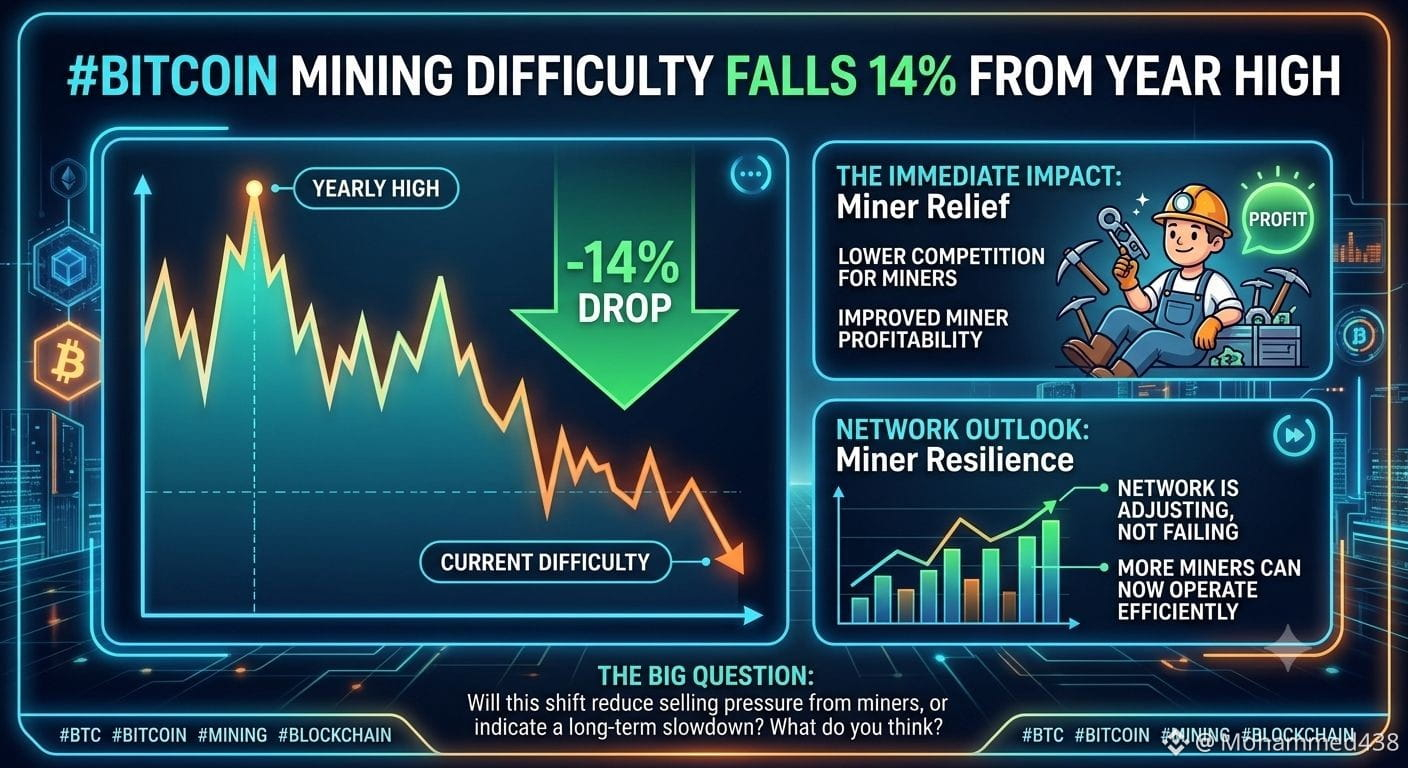
#BitcoinMiningDifficultyFalls14%FromYearHigh 🚨 BITCOIN JUST GOT EASIER TO MINE... AND THE MARKET IS ASKING WHY. 👀⛏️
#BitcoinMiningDifficultyFalls14%FromYearHigh
Bitcoin mining difficulty has now dropped 14% from its yearly high, marking one of the biggest pullbacks in recent months.
📉 Mining difficulty down 14%
⛏️ Lower competition for miners
⚡ Mining profitability could improve
A falling mining difficulty often means fewer miners are competing to validate blocks...
but it can also signal a shift in network conditions.
👀 The real question is:
Will stronger miner profitability reduce selling pressure on $BTC... or is this a warning that mining activity is slowing down?
Every change in mining difficulty tells a story.
The next move in Bitcoin could depend on how miners respond.
💬 Bullish signal... or something to worry about?
#BTC #Bitcoin #Mining #Blockchain
#BitcoinMiningDifficultyFalls14%FromYearHigh 🚨 BITCOIN JUST GOT EASIER TO MINE... AND THE MARKET IS ASKING WHY. 👀⛏️
#BitcoinMiningDifficultyFalls14%FromYearHigh
Bitcoin mining difficulty has now dropped 14% from its yearly high, marking one of the biggest pullbacks in recent months.
📉 Mining difficulty down 14%
⛏️ Lower competition for miners
⚡ Mining profitability could improve
A falling mining difficulty often means fewer miners are competing to validate blocks...
but it can also signal a shift in network conditions.
👀 The real question is:
Will stronger miner profitability reduce selling pressure on $BTC... or is this a warning that mining activity is slowing down?
Every change in mining difficulty tells a story.
The next move in Bitcoin could depend on how miners respond.
💬 Bullish signal... or something to worry about?
#BTC #Bitcoin #Mining #Blockchain
#BitcoinMiningDifficultyFalls14%FromYearHigh
Bitcoin mining difficulty has now dropped 14% from its yearly high, marking one of the biggest pullbacks in recent months.
📉 Mining difficulty down 14%
⛏️ Lower competition for miners
⚡ Mining profitability could improve
A falling mining difficulty often means fewer miners are competing to validate blocks...
but it can also signal a shift in network conditions.
👀 The real question is:
Will stronger miner profitability reduce selling pressure on $BTC... or is this a warning that mining activity is slowing down?
Every change in mining difficulty tells a story.
The next move in Bitcoin could depend on how miners respond.
💬 Bullish signal... or something to worry about?
#BTC #Bitcoin #Mining #Blockchain
1
116

#BitcoinMiningDifficultyFalls14%FromYearHigh 14% drop in mining difficulty is huge news!
This means it's easier and cheaper to mine BTC now.
Good opportunity for small miners 💪
Do you think this will push BTC price up next?
#Bitcoin #Mining #CryptoNews
#BitcoinMiningDifficultyFalls14%FromYearHigh 14% drop in mining difficulty is huge news!
This means it's easier and cheaper to mine BTC now.
Good opportunity for small miners 💪
Do you think this will push BTC price up next?
#Bitcoin #Mining #CryptoNews
This means it's easier and cheaper to mine BTC now.
Good opportunity for small miners 💪
Do you think this will push BTC price up next?
#Bitcoin #Mining #CryptoNews
49
📊🔍 Mining Metrics Continue to Evolve
Bitcoin's mining difficulty naturally adjusts to changes in network hash power. A 14% decline from the year's high highlights how the protocol adapts while participants continue monitoring $BTC and overall network health.
#bitcoinminingdifficultyfalls14%fromyearhigh
📊🔍 Mining Metrics Continue to Evolve
Bitcoin's mining difficulty naturally adjusts to changes in network hash power. A 14% decline from the year's high highlights how the protocol adapts while participants continue monitoring $BTC and overall network health.
#bitcoinminingdifficultyfalls14%fromyearhigh
Bitcoin's mining difficulty naturally adjusts to changes in network hash power. A 14% decline from the year's high highlights how the protocol adapts while participants continue monitoring $BTC and overall network health.
#bitcoinminingdifficultyfalls14%fromyearhigh
60


#BitcoinMiningDifficultyFalls14%FromYearHigh
Bitcoin mining difficulty has reportedly declined significantly from last year's levels, reflecting changes in network hash rate and mining conditions.
Mining difficulty automatically adjusts to help maintain Bitcoin's average block time of around 10 minutes, making it one of the network's key self-balancing mechanisms.
The Bitcoin network continues to adapt exactly as it was designed to.
$BTC
{future}(BTCUSDT)
$XRP
{future}(XRPUSDT)
#AasimmajeedAMC
#BitcoinMiningDifficultyFalls14%FromYearHigh
Bitcoin mining difficulty has reportedly declined significantly from last year's levels, reflecting changes in network hash rate and mining conditions.
Mining difficulty automatically adjusts to help maintain Bitcoin's average block time of around 10 minutes, making it one of the network's key self-balancing mechanisms.
The Bitcoin network continues to adapt exactly as it was designed to.
$BTC
$XRP
#AasimmajeedAMC
Bitcoin mining difficulty has reportedly declined significantly from last year's levels, reflecting changes in network hash rate and mining conditions.
Mining difficulty automatically adjusts to help maintain Bitcoin's average block time of around 10 minutes, making it one of the network's key self-balancing mechanisms.
The Bitcoin network continues to adapt exactly as it was designed to.
$BTC
$XRP
#AasimmajeedAMC
84

·
--
#BitcoinMiningDifficultyFalls14%FromYearHigh
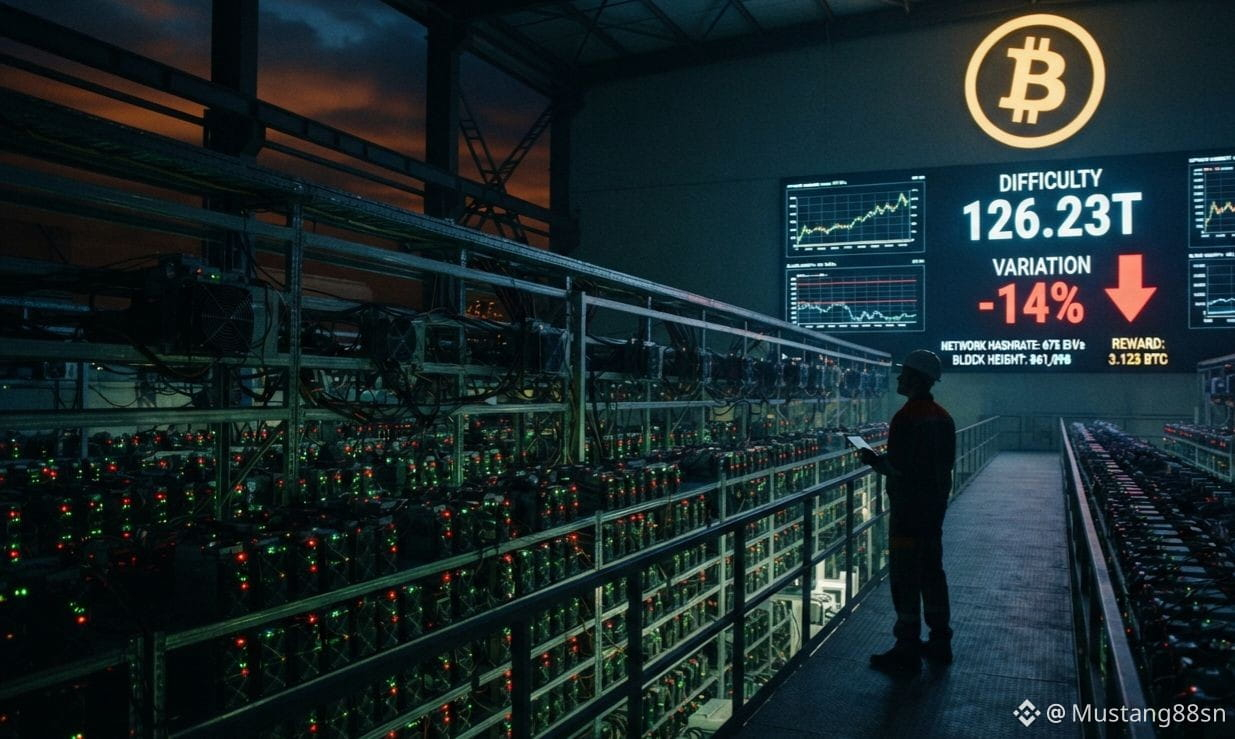
⛏️ The difficulty of mining Bitcoin has fallen by 14% from its yearly peak!
The difficulty dropped to 126.23 T, which is 14% below the January maximum of 2026 and 1.1% below the level of the previous year. This is only the second time in the network’s history when the difficulty shows a year-over-year decline.
Reasons: miners’ revenue decline, capital moving toward AI, and power supply issues in Texas. The hashprice fell to $27.66, which is only slightly above the February low.
· $BTC — the main asset, the mining difficulty of which directly affects miners’ profitability.
· $ETH — the move to PoS made it an alternative for GPU miners leaving Bitcoin.
· $RNDR — a decentralized GPU network that benefits from the shift of computing power from mining to AI.
👉 Subscribe to my analytics!
#Mining #trade 👇
{spot}(BTCUSDT)
{spot}(ETHUSDT)
{spot}(RENDERUSDT)
#BitcoinMiningDifficultyFalls14%FromYearHigh
⛏️ The difficulty of mining Bitcoin has fallen by 14% from its yearly peak!
The difficulty dropped to 126.23 T, which is 14% below the January maximum of 2026 and 1.1% below the level of the previous year. This is only the second time in the network’s history when the difficulty shows a year-over-year decline.
Reasons: miners’ revenue decline, capital moving toward AI, and power supply issues in Texas. The hashprice fell to $27.66, which is only slightly above the February low.
· $BTC — the main asset, the mining difficulty of which directly affects miners’ profitability.
· $ETH — the move to PoS made it an alternative for GPU miners leaving Bitcoin.
· $RNDR — a decentralized GPU network that benefits from the shift of computing power from mining to AI.
👉 Subscribe to my analytics!
#Mining #trade 👇
⛏️ The difficulty of mining Bitcoin has fallen by 14% from its yearly peak!
The difficulty dropped to 126.23 T, which is 14% below the January maximum of 2026 and 1.1% below the level of the previous year. This is only the second time in the network’s history when the difficulty shows a year-over-year decline.
Reasons: miners’ revenue decline, capital moving toward AI, and power supply issues in Texas. The hashprice fell to $27.66, which is only slightly above the February low.
· $BTC — the main asset, the mining difficulty of which directly affects miners’ profitability.
· $ETH — the move to PoS made it an alternative for GPU miners leaving Bitcoin.
· $RNDR — a decentralized GPU network that benefits from the shift of computing power from mining to AI.
👉 Subscribe to my analytics!
#Mining #trade 👇
271
Log in to explore more content
Join global crypto users on Binance Square
⚡️ Get latest and useful information about crypto.
💬 Trusted by the world’s largest crypto exchange.
👍 Discover real insights from verified creators.
Email / Phone number
Trending Topics
1
#FedRateWatch
933,221 views
4,495 Discussing
2
#MSTRTradingVolumeSurpassesMorganStanley
2,961 views
161 Discussing
3
#BitcoinFalls4%
12,124 views
417 Discussing
4
#SKHynixInTalksToMakeMemoryChipsInUS
4,717 views
150 Discussing
5
#OpenAIDiscussesNewFundingAt$1.2TValuation
1,937 views
37 Discussing
6
#ArgentinaCommitsToOECDCryptoReportingBy2029
13,722 views
323 Discussing
7
#EthereumFallsBelow$2400
5,898 views
87 Discussing
8
#USDTLaunchesOnZamaPrivacyProtocol
5,839 views
184 Discussing
9
#USSenateBlocksClarityAct
48,015 views
457 Discussing
10
#BitcoinSlidesTo$76000
39,020 views
177 Discussing