
#tokenizacion
tokenizacion
147,043 views
455 Discussing
Hot
Latest

Article
Tether connects its Hadron tokenization platform with RedStoneTether has announced a collaboration with RedStone, an on-chain finance data provider, for its tokenization platform Hadron by Tether.
What Hadron issuers will get:
🔹 RedStone price and net asset value (NAV) feeds to value their assets on-chain.
🔹 RedStone Settle, which enables T+0 settlements, refunds, and unlocks for eligible assets. It works through an auction among verified liquidity providers: the winner takes the position and redeems it through the asset’s own process.
Tether connects its Hadron tokenization platform with RedStone
Tether has announced a collaboration with RedStone, an on-chain finance data provider, for its tokenization platform Hadron by Tether.
What Hadron issuers will get:
🔹 RedStone price and net asset value (NAV) feeds to value their assets on-chain.
🔹 RedStone Settle, which enables T+0 settlements, refunds, and unlocks for eligible assets. It works through an auction among verified liquidity providers: the winner takes the position and redeems it through the asset’s own process.
115

·
--
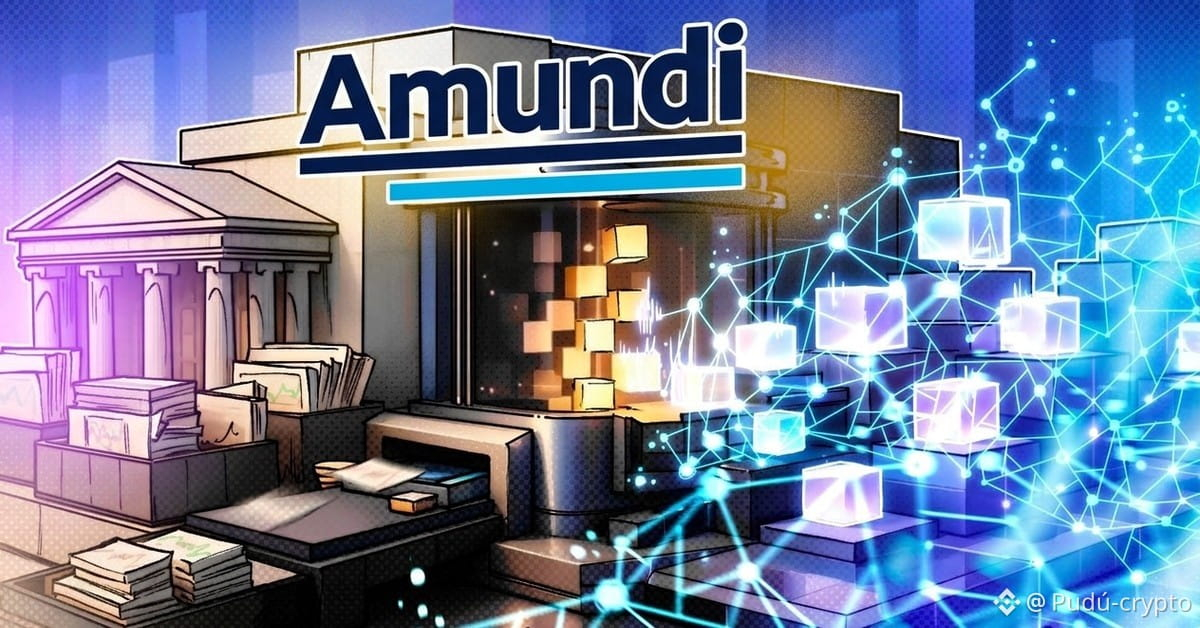
Traditional asset management is moving on-chain.
Amundi, Europe’s largest asset manager, has just tokenized a stock index fund on the $ETH network.
They now offer blockchain-based access to an index tracking 600 European companies.
It’s interesting to see an asset manager of this caliber operating directly on Ethereum.
What do you think of this move by Amundi?
#Ethereum #Tokenizacion #Amundi
33
·
--
Schroders has just made a move in the world of real assets.
The asset manager, which oversees more than a trillion dollars, is bringing an emerging-market bond fund to the $SOL network.
It will use Centrifuge technology to tokenize this investment strategy.
It’s interesting to see how large traditional funds continue looking for a foothold in blockchain.
What do you think of Schroders’ move on the network?
#Solana #Tokenization
61

What is asset tokenization?
It means converting a real-world asset (a building, a work of art, gold) into digital tokens on a blockchain. Each token represents a fraction or the entirety of the asset.
What is it for? To divide up what can’t otherwise be divided. Before, you needed millions to buy a property; now you can buy $100 worth of that property in the form of tokens.
Advantages:
→ Divisibility: you can fractionalize expensive assets
→ Liquidity: sell in minutes, not months
→ Transparency: everything is recorded on the blockchain
→ Global access: no geographical barriers
But keep in mind: the token isn’t the asset; it represents rights to it. You need legal custody and a clear regulatory framework. Without those, it’s all smoke and mirrors.
Tokenization democratizes investments that were once only for major investors. Understanding it opens up new markets to you.
Follow us for more guides to help you understand crypto without the runaround.
#Tokenization
80

·
--
🚨 Wall Street stocks are now trading on the blockchain on Sundays, and that market BROKE a record: $3.8 billion 👀
Wall Street closes on Fridays, but tokenized versions of its stocks don’t sleep anymore.
📈 Tokenized stocks, where each token is backed by a real share, hit an all-time high of $3.8 billion, up 590% since the start of the year and rising for ten straight weeks. For you, that means big money is already testing stock trading outside market hours.
🔗 Chainlink launched 24/7 pricing for stocks and commodities, and Aave is the first to use it to value tokenized stocks as collateral on weekends and holidays. Previously, those markets had to pause. LINK is near $11.10 and still hasn’t reflected this progress.
⚡ Solana completed 1,000 consecutive days without a single outage, and in October it processed $3.9 billion in tokenized stocks. Even so, SOL is around $92, down about 23% in a month: the network is growing faster than the price.
🟦 Ethereum holds about $827 million of that market, and ETH is around $2,255.
₿ Bitcoin closed yesterday, Sunday, near $78,200 and is now falling below $77,000 ahead of the U.S. midterm elections. My take: real-world use is rising while the price is falling, and that gap won’t last forever.
Would you buy a Wall Street stock on the blockchain on a Sunday? 👇
#Tokenizacion #Chainlink #Solana #Bitcoin #Ethereum

156

·
--
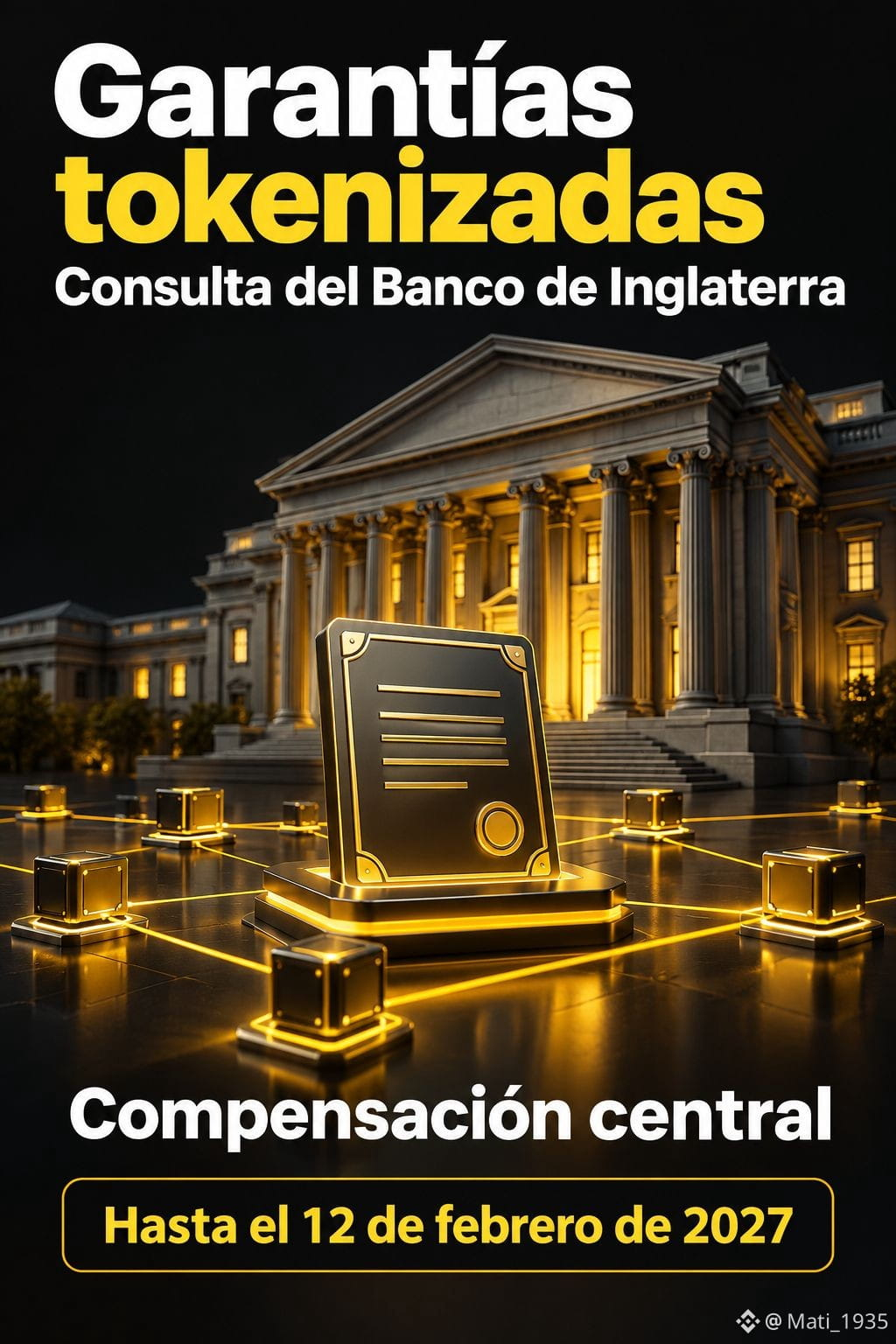
Bank of England: consultation on tokenized collateral
On October 29, 2026, the Bank of England published a consultation on tokenized collateral for central counterparties (CCPs). The response deadline is February 12, 2027.
The proposal clarifies how to assess tokenized versions of collateral that is already eligible for central clearing. It does not, in itself, expand the list of eligible assets.
The aim is to facilitate the mobilization and management of collateral. Collateral must be capable of being valued, transferred, and converted into cash when needed, including during periods of financial stress.
The analysis considers liquidity, custody, operational risks, and legal certainty. Tokenizing a bond does not guarantee that its digital version will retain the same liquidity; accepting new forms of collateral remains subject to the relevant regulatory process.
As crypto market context, Binance Spot at 00:05 UTC on 30/10: BTC was trading at 78,133.57 USDT (-3.885% over 24 hours) and ETH at 2,254.46 USDT (-4.410%).
My take: greater clarity may facilitate institutional projects, but the consultation does not amount to actual adoption. Approved proposals and how they work in practice will matter when measuring progress; BTC and ETH prices do not demonstrate the outcome of that process.
$BTC $ETH $USDT
Educational Content. Not financial advice.
#Tokenizacion #BancoDeInglaterra #RWA #MercadoCripto #FinancialEducation
162
·
--
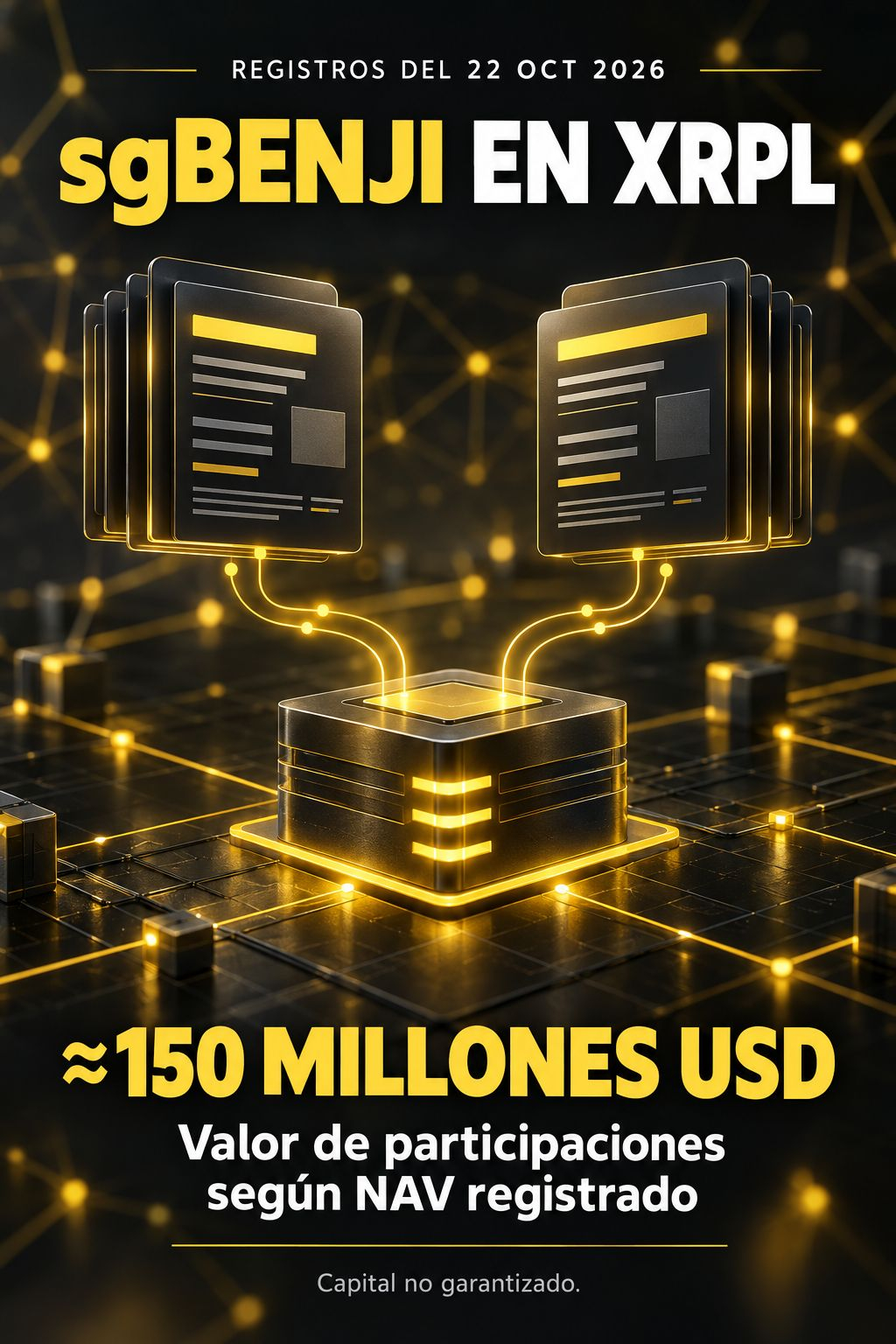
sgBENJI on XRPL: What the $150 Million Shows
CoinDesk attributed these sgBENJI movements to Franklin Templeton’s issuing account in its October 24 article. The two payments reviewed on the XRP Ledger are dated the 22nd, at 02:58 and 04:13 UTC.
Each transaction transferred about 72.18 million shares to the same address. Their notes record a net asset value of $1.039 per share: approximately $75 million per transfer, or $150 million in total. This is a valuation calculated using that figure, not an observed bank transfer.
sgBENJI represents shares in the Franklin OnChain U.S. Dollar Short-Term Money Market Fund, domiciled in Singapore. The fund invests in short-term dollar-denominated debt and money market instruments.
As background, the agreement announced by Franklin, DBS, and Ripple on 09/18/2025 contemplated trading sgBENJI for RLUSD among eligible clients. That date does not correspond to the two payments in question.
A single address does not reveal how many beneficiaries are behind it. In addition, the official fact sheet warns that capital is not guaranteed: there are credit, interest rate, liquidity, and technology risks related to the recordkeeping system.
Market reference: Binance spot showed XRP at 1.2932 USDT, up 0.466% over 24 hours as of 10/24, 22:53 UTC.
My take: recording shares on XRPL expands the network’s financial use, but these payments do not prove XRP purchases or new net inflows of money into the fund. Assessing adoption requires looking at actual users and liquidity, as well as the value recorded.
$XRP $RLUSD $USDT
Educational content. Not financial advice.
#XRP #Tokenizacion #RWA #MoneyMarketFunds
79
·
--
The SEC has its eye on tokenization for 2027.
The regulator flagged it as a high-risk area in its upcoming market examinations.
What’s curious is that cryptocurrencies disappeared as a standalone review category.
It seems the focus suddenly shifted.
What do you think of this change in priorities?
#Tokenizacion #SEC #Regulacion $BTC
The regulator flagged it as a high-risk area in its upcoming market examinations.
What’s curious is that cryptocurrencies disappeared as a standalone review category.
It seems the focus suddenly shifted.
What do you think of this change in priorities?
#Tokenizacion #SEC #Regulacion $BTC
11
·
--
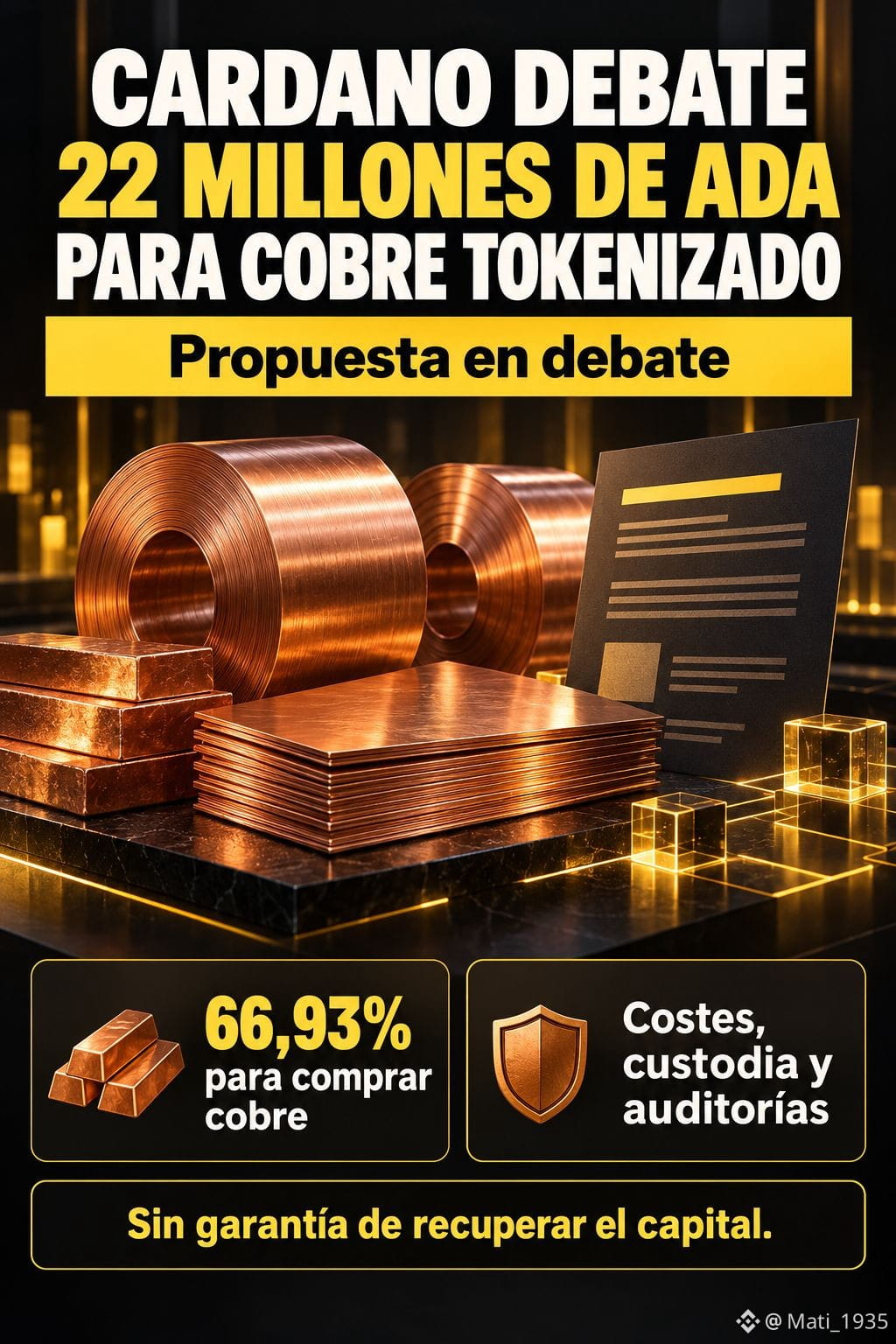
Cardano debates 22 million ADA for tokenized copper
On October 15, Toto Finance published a request for 22 million ADA for a physical copper reserve represented by CuTT. These are requested funds, not a confirmed metal purchase.
On October 22, Cardano Forum announced a public session for October 27 at 16:30 UTC. It will examine the proposal, custody, financial risks, and safeguards between Ethereum and Cardano.
According to the proposer’s budget, 14,724,409 ADA, or 66.93%, would go toward buying copper; the rest would fund technology, storage, insurance, audits, and other tasks. Tokenizing the metal does not eliminate these costs.
The plan calls for returning net sale proceeds and unused funds to the Treasury, with a maximum term of 36 months. This obligation does not guarantee recovery of the 22 million ADA: the outcome depends on the price of copper, the ADA exchange rate, expenses, and execution.
The issuance infrastructure and its security reviews are planned deliverables, not systems certified as already deployed. Physical backing also requires proof of ownership, verifiable inventories, and custody controls.
Market reference for October 23, 14:50 UTC: ADA was trading on Binance at 0.2168 USDT (+0.56% over 24 hours), and ETH at 2,408.82 USDT. These prices do not value the copper or demonstrate project approval.
My take: the appeal of tokenized real-world assets lies in connecting the digital ledger with enforceable rights and verifiable reserves. To assess this proposal, costs and Treasury protection matter as much as the technology. An adoption narrative does not turn commodity risk into guaranteed returns.
Sources: Toto Finance, Cardano Forum, and public Binance data.
$ADA $ETH $USDT
Educational content. Not financial advice.
#Cardano #Tokenizacion #RWA #Governance
113
·
--
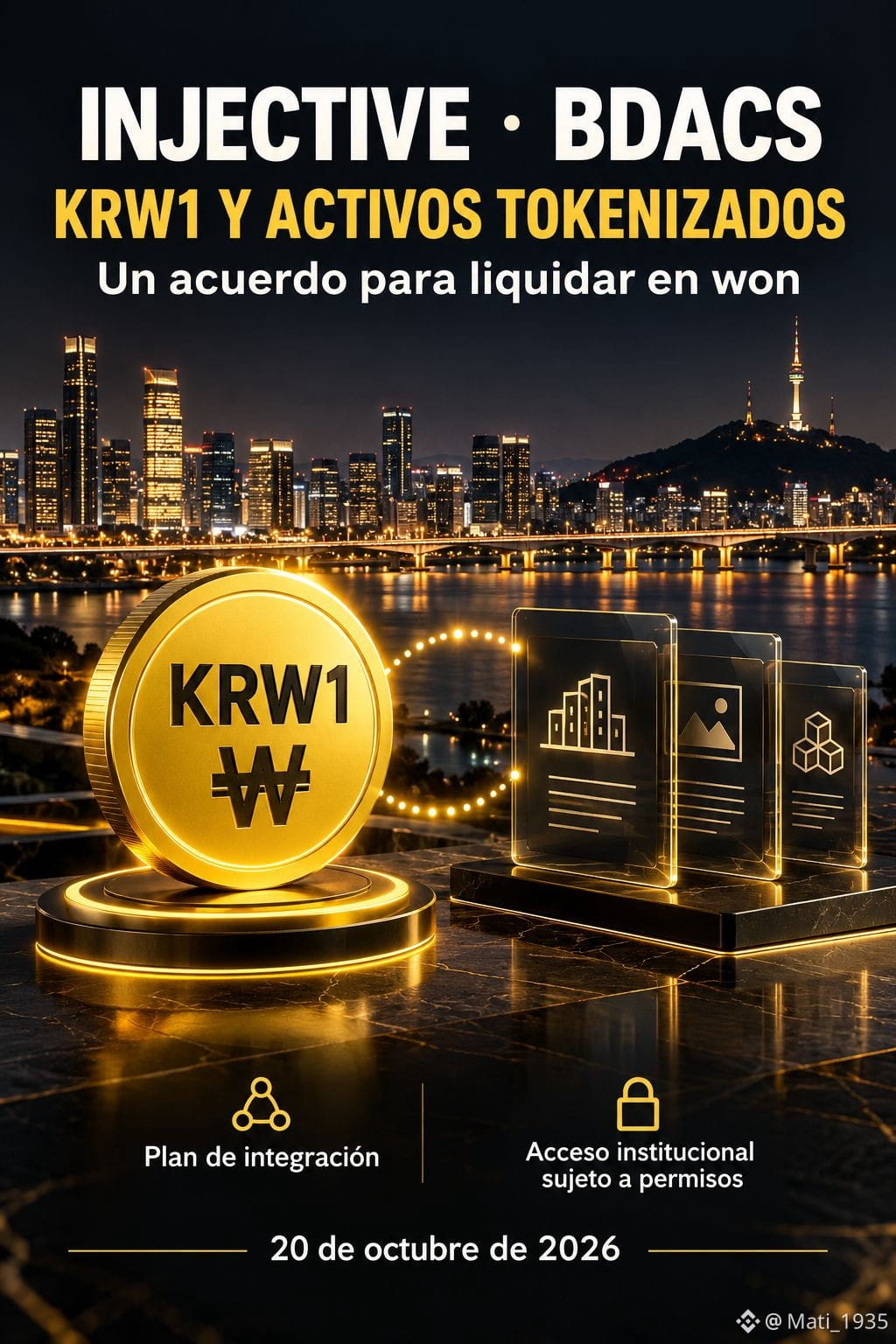
Injective and KRW1: What the Won Settlement Agreement Confirms
On October 20, 2026, Injective announced a memorandum of understanding with BDACS, issuer of KRW1, a stablecoin pegged to the South Korean won.
The goal is to add KRW1 as a settlement asset for tokenized real-world assets and other tokenization use cases on Injective. These markets could then trade and settle in won without going through dollar stablecoins.
The announcement describes joint work and future updates as use cases go live. It does not provide a general launch date or volumes already settled through this integration.
There is a difference from the headline circulating on Square: the primary source refers to the first won-denominated settlement asset in that area, but does not claim exclusivity.
For this initiative, issuance and redemption are planned for approved institutional partners and will be subject to regulatory authorization. Separately, the KRW1 website says commercial issuance is limited to selected institutions, with identity verification and anti-money-laundering controls. This does not establish open retail access on Injective.
According to BDACS, KRW1 is backed 1:1 by won deposited in segregated bank accounts. This is the issuer’s statement, not an audit conducted here. Custody, liquidity, redemption, and exchange-rate risks against the dollar remain.
Market reading: at 22:26 UTC on 10/20, Binance spot showed INJ at 8,997 USDT (+4,410% over 24 hours), with 18.30 million USDT traded in that pair. The move does not prove KRW1 adoption or an exclusive reaction to the announcement. What matters will be verifying permissions, integration, and actual activity.
$INJ $KRW1 $USDT
Educational content. Not financial advice.
#Injective #KRW1 #Stablecoins #Tokenization
78
·
--
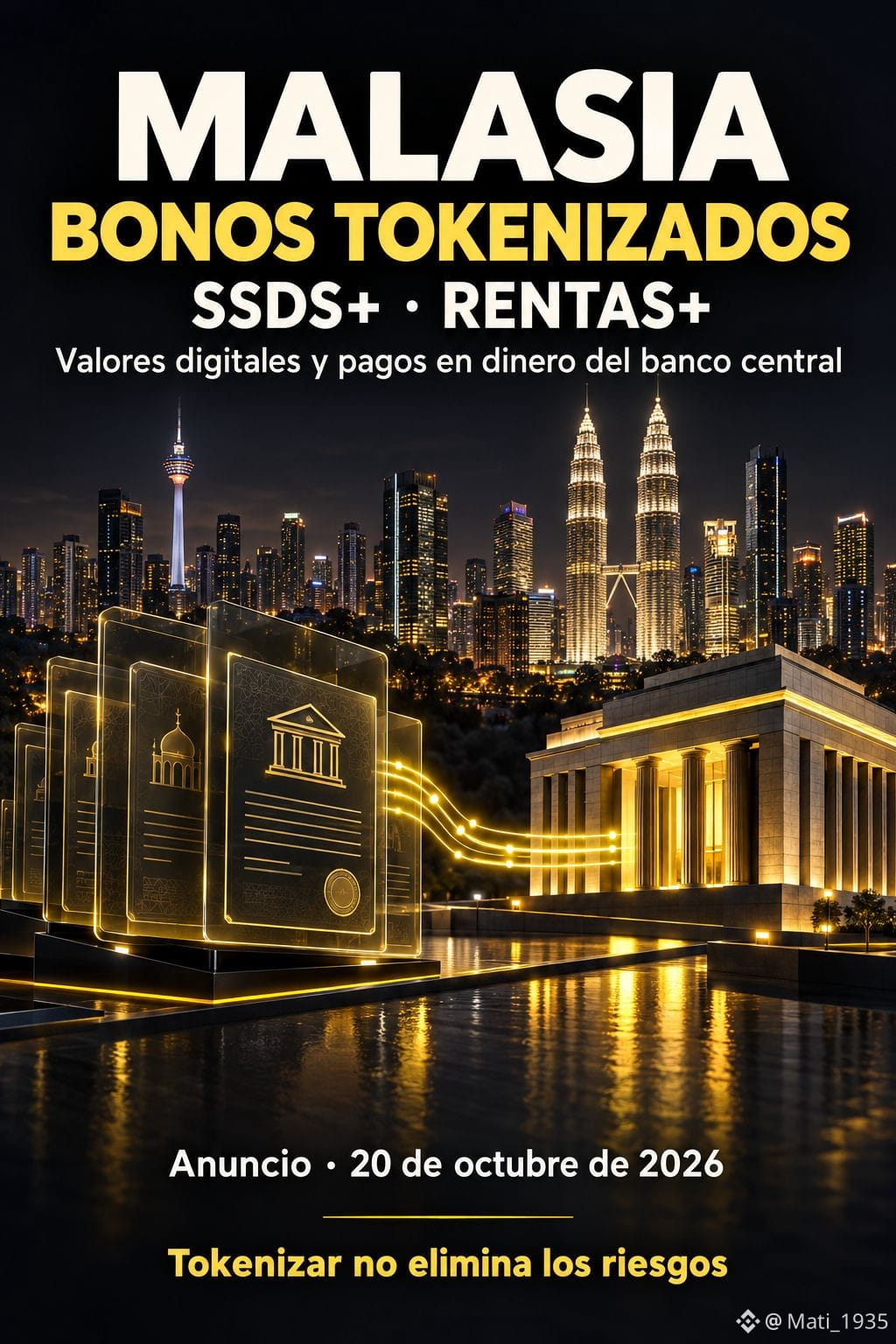
Malaysia connects tokenized bonds to central bank money payments
On October 20, 2026, Bank Negara Malaysia (BNM) announced the launch of SSDS+, a platform for issuing, recording, and safeguarding tokenized bonds and sukuk.
Developed in-house using cloud technology and distributed ledgers, it expands the wholesale market’s securities depository system. It is also ready for tokenized issues of government and corporate bonds for retail investors.
The connection with RENTAS+ separates two functions: SSDS+ records securities ownership and transfers; RENTAS+ moves the corresponding payment in central bank money. The infrastructure enables continuous payments and settlement.
The timeline matters: a speech on September 9 had already projected an initial launch of SSDS+ for September 25. Today’s announcement confirms its launch, without setting a different date for the first transaction. RENTAS+ had been announced on October 7, 2025.
Tokenizing a security means representing it digitally; it does not automatically turn a bond into a cryptocurrency. The announcement does not mention a proprietary crypto token or identify a specific public network, the first issuer, or an issuance volume.
It is also important to distinguish capability from use: the ability to support retail bonds does not prove that a public offering is available. Issuer, liquidity, and operational risks remain; digitizing the records does not guarantee returns.
Market perspective: progress will depend on actual issuances and participants. It does not allow us to infer demand for BTC, ETH, or USDT. As an external reference, Binance spot prices at 18:24 UTC on 10/20 showed BTC at 82.598,01 USDT (+0,882% in 24 h) and ETH at 2.443,56 USDT (+2,097%). These prices do not measure SSDS+ adoption.
$BTC $ETH $USDT
Educational content. Not financial advice.
#Tokenizacion #Malasia #Bonos #DigitalFinance
34

·
--
Crypto exchanges selling U.S. stocks now isn’t innovation: it’s an admission that the crypto wealth effect has cooled. And tokenized stock that only tracks the price doesn’t give you dividends or voting rights. It’s an inferior product with better marketing.
Agree, or is it hype?
#crypto #tokenizacion #RWA
Agree, or is it hype?
#crypto #tokenizacion #RWA

54
·
--
Japan and on-chain finance: programmable payments and outstanding challenges
On October 19, 2026, Japan’s Financial Services Agency (FSA) published the minutes of its first forum on on-chain finance for the AI era. The meeting was held on September 30: it is worth distinguishing between the two dates.
The discussion brought together authorities, the Bank of Japan, the banking association, and experts. It explored how to combine tokenized assets, stablecoins, and tokenized deposits to connect commercial and logistics operations with their payments.
Smart contract programming could allow a commercial event to trigger settlement. The technical study of stablecoins and tokenized deposits for public benefits was also presented. These are areas of ongoing work, with legal and operational issues still to be resolved.
The FSA proposed seeking an appropriate combination of on-chain systems and existing infrastructure. It pointed to capacity limits, fees, and difficulties reversing mistaken transfers or recovering funds from fraudulent transactions. The stability and security of the payment system are part of the analysis.
The stated goal was to prepare an interim assessment and a public-private roadmap in early 2027. Publishing the minutes documents the discussion; it does not confirm widespread implementation or the selection of any particular cryptocurrency.
Market snapshot, 10:13 UTC: as general benchmarks, BTC was trading at 82,700 USDT (+0.645% over 24 hours) and ETH at 2,433.88 USDT (+0.437%). My take: the significance of this agenda will depend on its implementation and actual use. These prices do not prove a reaction to the forum or new demand for these assets.
$BTC $ETH $USDT
Educational Content. Not financial advice.
#Japon #Tokenizacion #Stablecoins #Blockchain

68
·
--
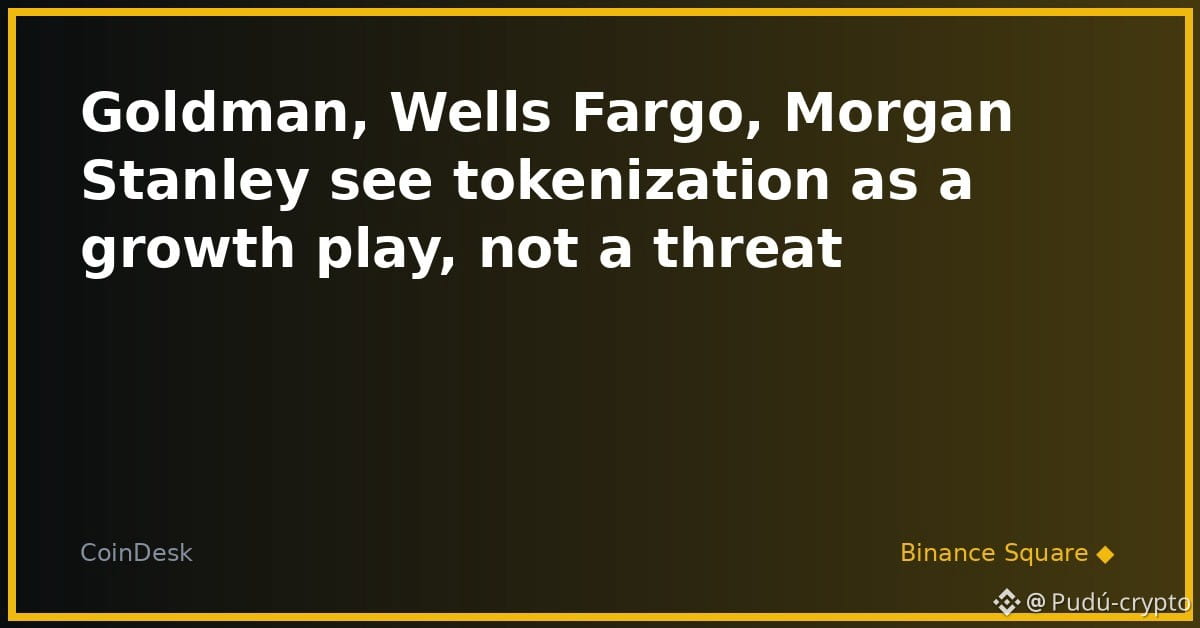
The big Wall Street banks have changed their tune on tokenization.
Firms like Goldman, Wells Fargo, and Morgan Stanley no longer see it as a threat.
Now they consider it a real growth opportunity.
They’re looking to speed up payments and find new opportunities for their financial advisors.
It seems the traditional banking sector has decided to stop fighting the technology.
Are you surprised by this change of heart from the biggest banks?
$BTC #Tokenizacion #WallStreet
66

🚨 BINANCE SURPASSES US$1 BILLION IN TOKENIZED STOCKS: ARE WE SEEING A NEW TREND?
While Bitcoin faces uncertainty over inflation, another part of the crypto ecosystem continues to expand.
📊 WHAT DID BINANCE ANNOUNCE?
According to the company, its bStocks platform surpassed US$1 billion in assets under management, about four months after its launch.
bStocks are digital representations of stocks and other traditional securities that can be used with blockchain technology.
🔎 WHY DOES IT MATTER?
Tokenization makes it possible to represent traditional financial assets with digital tokens.
This opens up possibilities such as:
🔹 Trading outside traditional stock market hours.
🔹 Transfers via blockchain.
🔹 Integration with decentralized finance (DeFi) applications.
But keep in mind: these products also involve liquidity, custody, and regulatory risks, as well as differences from directly owning stocks.
🎯 WHERE MIGHT THE OPPORTUNITY LIE?
The growth of tokenized stocks could benefit companies and infrastructure that facilitate their trading over the long term.
However, the announcement does NOT confirm an immediate buying opportunity in $BNB, $BTC or any other assets.
📌 OUR THESIS
We’ll be tracking three indicators:
✅ Sustained growth in assets under management.
✅ Greater liquidity and real user activity.
✅ Regulatory progress that facilitates adoption.
The real change won’t simply be tokenizing stocks, but demonstrating that this technology offers sustainable advantages.
Source: Binance announcement, 15/10/2026.
💬 Would you invest in tokenized stocks, or do you prefer trading through a traditional broker?
Follow us for analysis of trends and opportunities based on fundamentals, not promises.
#Binance #Tokenization
68
·
--
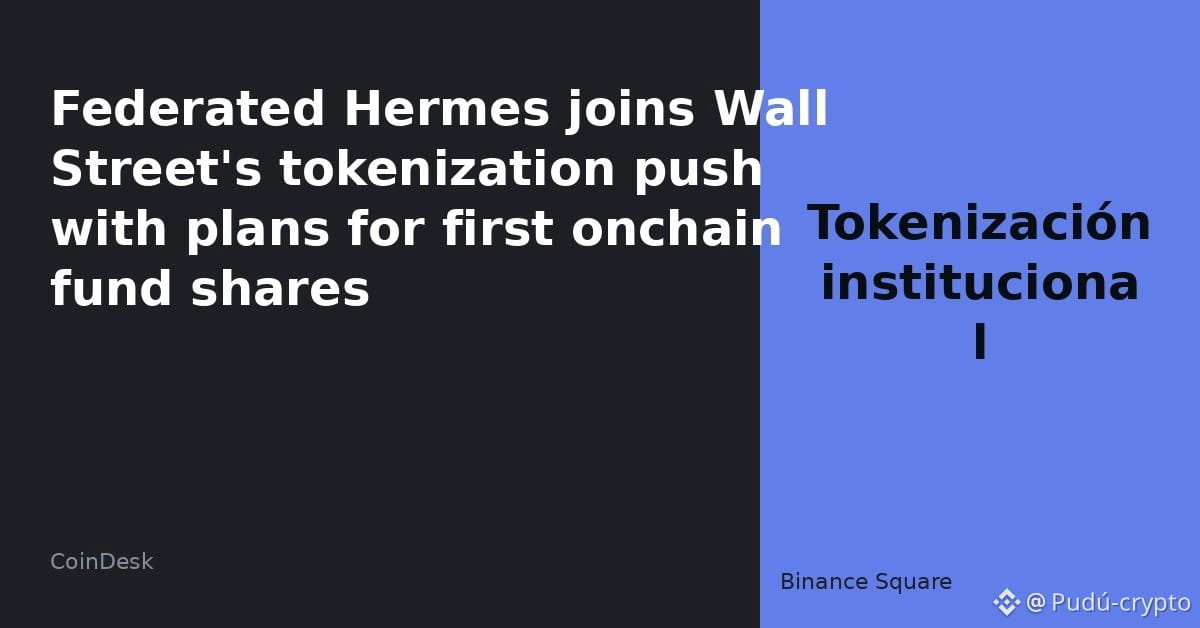
Another major asset manager is joining the asset tokenization movement.
Federated Hermes, which manages $911 billion, wants to bring its funds to the blockchain.
It partnered with Prometheum to offer shares in its funds through traditional brokerage accounts.
It’s interesting to see how financial giants keep looking for ways to integrate the onchain world into their regular services.
What do you think of this move?
#Tokenizacion #Blockchain $BTC

45
·
--
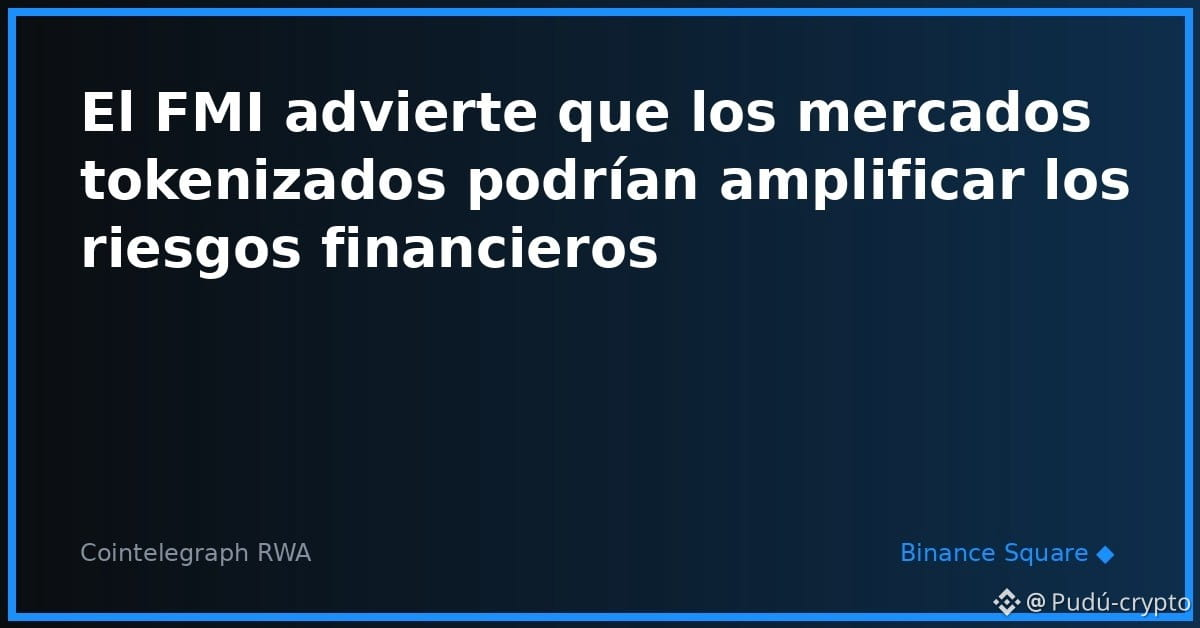
The IMF focused on tokenized markets.
Its latest report indicates that these assets are less liquid and more volatile than traditional markets.
Despite demand for 24/7 trading, the institution warns that this technology could amplify existing financial risks.
It’s interesting to see how the desire for immediacy clashes head-on with these stability issues.
What do you think of this analysis of tokenization?
$BTC #FMI #Tokenization
98
·
--
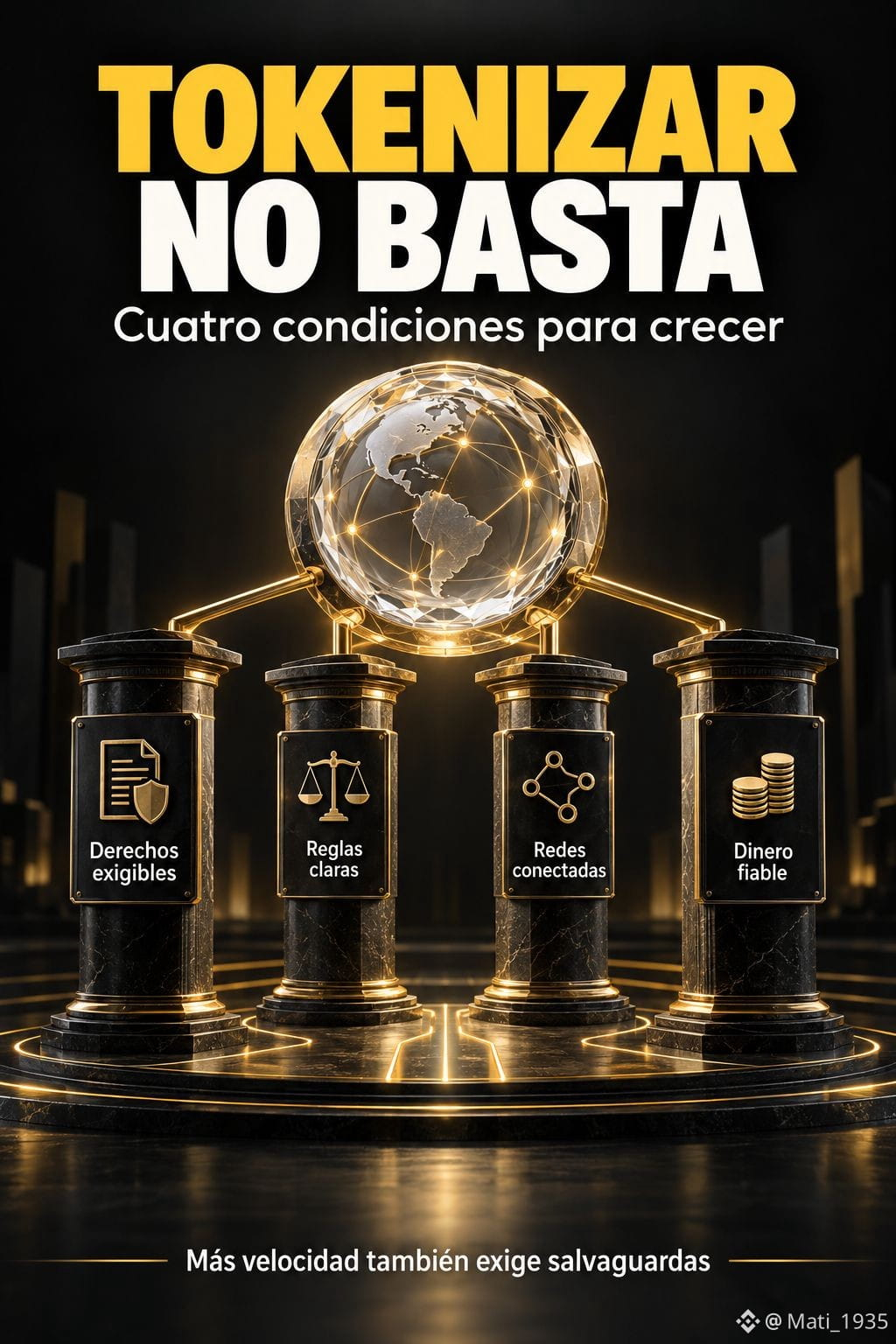
IMF: Tokenization alone is not enough to create liquidity
On October 8, 2026, the IMF published an analysis related to the tokenization chapter of its October Global Financial Stability Report. Its diagnosis: these markets are growing, but remain small and fragmented.
The technology makes it possible to represent assets on programmable ledgers and bring together issuance, trading, and settlement. It can reduce costs and processing times; achieving these benefits at scale requires four conditions:
• Legal certainty: tokens must represent enforceable rights.
• Regulatory clarity: define how rules apply to new functions.
• Interoperability: connect platforms and avoid isolated pools of liquidity.
• Safe, widely accepted money for settling transactions.
The IMF sees demand for access outside traditional trading hours, but warns that tokenized markets remain relatively illiquid and more volatile than their conventional counterparts.
Speed also carries risks: automating and connecting markets can accelerate forced selling, liquidity withdrawals, and contagion. Some existing frictions provide time to manage cash needs; removing them requires safeguards.
Market snapshot: at 02:41 UTC on 9/10, Binance spot showed ETH at 2,483.28 USDT (-3.80% in 24h), SOL at 109.90 (-5.72%), and XLM at 0.1930 (-3.79%). These are reference prices for networks used for tokenized assets. These changes do not prove a reaction to the report; greater tokenization activity also does not guarantee demand or returns for their tokens.
$ETH $SOL $XLM
Educational content. Not financial advice.
#Tokenizacion #FMI #RWA #Liquidez #Blockchain
144
·
--
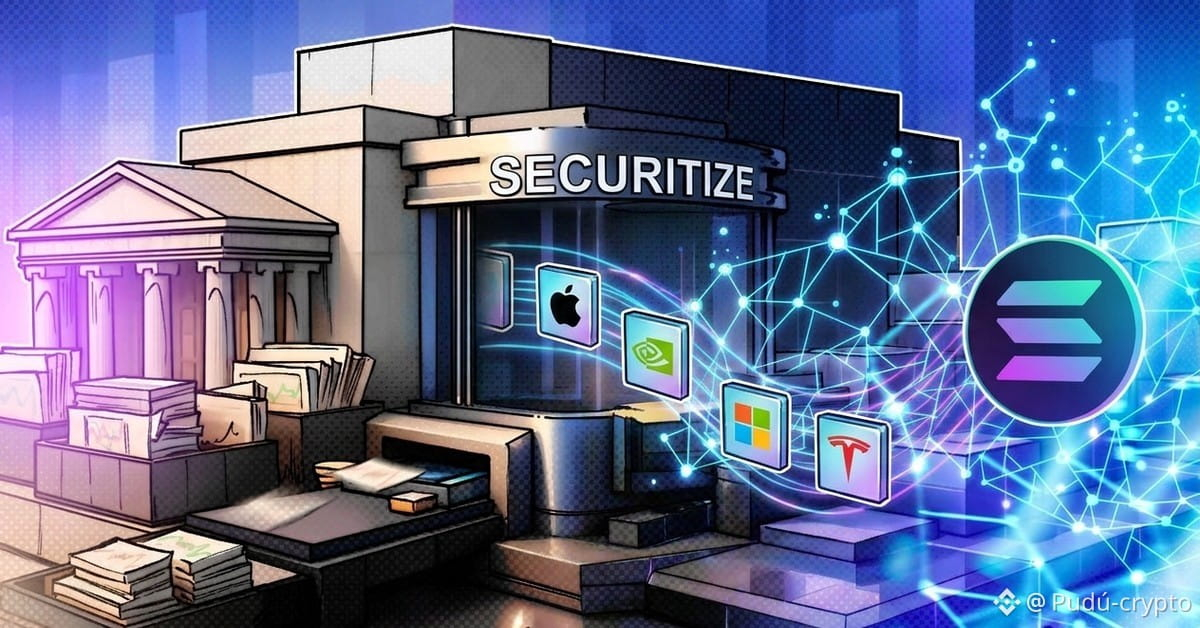
Securitize’s shares rose more than 10 percent today.
The reason is clear—they’ve just launched tokenized shares of U.S. companies on the $SOL network.
Now investors can access securities from 12 different companies.
What’s interesting is that these tokens include rights to dividends as well as voting rights.
It’s a move that brings the traditional market directly closer to the blockchain.
What do you think of this development?
#Solana #Tokenization
48
·
--
Tokenization on Wall Street is moving some interesting pieces.
Beyond traditional crypto, the focus is shifting toward real assets. Stocks, bonds, and loans are moving onto the network.
The key doesn’t seem to be only in the assets themselves. The real business would be in the platforms that generate commissions from these transactions.
Companies that facilitate exchange and lending could take a significant slice of the pie.
It’s a shift in approach that moves away from pure speculation.
What do you think about this turn toward traditional financial assets?
$BTC #Tokenizacion #WallStreet
25
Log in to explore more content
Join global crypto users on Binance Square
⚡️ Get latest and useful information about crypto.
💬 Trusted by the world’s largest crypto exchange.
👍 Discover real insights from verified creators.
Email / Phone number
Trending Topics
1
#BitcoinRebounds$75KAsChipsLead
18 views
19 Discussing
2
#JobsReportRaisesHikeOdds
24,252 views
468 Discussing
3
#US Data Center Rules May Constrain AI Expansion
3,756 views
58 Discussing
4
#$2TWipedOutHedgeFundsFaceLiquidation
8,020 views
68 Discussing
5
#WillAnthropicListOnTime
92 views
13 Discussing
6
#USNovemberMichiganExpectationsIndexPrelimAt50.9
2,617 views
125 Discussing
7
#OilPlungesBelow$100
6,125 views
29 Discussing
8
#TradFiForBeginners
381 views
49 Discussing
9
#USMidtermsCouldShakeUpUS-IranTies
18,383 views
325 Discussing
10
#RussianCentralBankNamesBTCETHUSDTForNonQualifiedInvestors
284 views
3 Discussing