Binance Square
#solanagovernance

solanagovernance

500 views
9 Discussing
Sulaiman 零号猎人
·
--
Verified
Article
One Validator Almost Changed Solana's Entire Supply CurveFor eight hours on August 27–28, 2026, Solana's most consequential governance proposal in its history existed in two contradictory states at once. One outlet reported it dead. Another reported it alive. Both were right — at different moments, separated by a single validator changing its mind. That's not a data error. That's the story. Solana just doubled its disinflation rate through SGP-0002 (built on the technical proposal SIMD-0550), cutting future SOL issuance by an estimated 18.9 million tokens over six years. The obvious question — "is this bullish for SOL?" — is the wrong one to start with. The real question is: **why did the network's stakeholders agree to slow issuance, but refuse, on the same day, to increase token burns?** Two proposals, similar support levels, opposite outcomes. Understanding that gap tells you more about Solana's actual power structure than the headline number does. THE CONSENSUS FACT: Crypto media and social sentiment treated SGP-0002's passage as unambiguously bullish — less new supply, faster path to Solana's 1.5% terminal inflation rate (2029 instead of 2032). The framing across timelines was simple: less dilution → stronger long-term price case. WHAT CHANGED TIMELINE (FACT): 1. Aug 21— Solana activates the first phase of slot-time reduction (400ms → 350ms) under SIMD-0525, unrelated but concurrent network change. 2. Aug 23–24 — Voting opens on three bundled proposals: SGP-0001 (Constitution), SGP-0002 (Double Disinflation), SGP-0003 (Fee Restructuring). 3. Aug 27, end of epoch 1023 — One published account (CryptoBriefing) reports SGP-0002 and SGP-0003 both failing to clear the 66.67% supermajority. 4. Aug 28— Multiple later reports (Decrypt, Forklog, Cointelegraph) confirm SGP-0002 passed at exactly 67.0%, with Kraken switching its vote from "against" to "for" late in the count. SIGNAL: The discrepancy between the Aug 27 and Aug 28 reports isn't sloppy journalism — it's a live record of a vote that was, at one point, genuinely failing. THE HIDDEN STORY INTERPRETATION: The two proposals hit different stakeholders differently. Disinflation reduces issuance growth — a slow-moving, years-long tapering that validators can plan around. The fee-burn proposal would have redirected a *direct, immediate* portion of validator revenue into burns instead of validator pockets. One is a gradual haircut. The other is a pay cut effective next epoch. THESIS: Validators — who hold outsized voting weight because Solana's governance is stake-weighted, not one-token-one-vote in a retail sense — will support tokenomics changes that improve the asset's long-term image *as long as those changes don't directly reduce their own near-term income.* SGP-0002 passed because it costs validators years from now. SGP-0003 failed because it would have cost them immediately. This is a first-principles point: **Solana's governance isn't voting on "what's good for SOL holders." It's voting on what's tolerable for the entities who hold enough stake to vote at all.** Those aren't automatically the same group. THE CONTRADICTION If disinflation is genuinely bullish and validators are rational long-term holders, they should have supported *both* proposals — deeper burns plus slower issuance is a stronger deflationary combination than either alone. They didn't. The market narrative ("Solana just got more bullish tokenomics") is true only for one-third of what was actually proposed. THE COUNTER-THESIS It's possible the rejection of SGP-0003 had nothing to do with validator self-interest and everything to do with legitimate technical concerns — unpredictable fee-burn ranges (7,500–9,000 SOL/day is a wide band) could introduce network-fee volatility that harms user experience, not just validator revenue. Solana Labs itself reportedly opposed both proposals initially, which cuts against a pure "validators protecting their own income" reading. The simpler explanation may be: SGP-0003 was a less mature proposal, not a self-interested veto. I can't fully separate these two explanations with the evidence available. Both are plausible. This is a case where I don't have enough to call it. WHAT WOULD CONFIRM IT - On-chain issuance data over the next several epochs showing the disinflation schedule is actually being implemented (SIGNAL, not yet observed). - A future fee-related proposal, redesigned with a narrower or delayed burn range, gaining validator support — which would suggest the *design*, not the incentive, was the real obstacle. - Validator staking yields declining roughly in line with model projections, without a validator exodus. WHAT WOULD KILL IT - If validator count or total stake participation drops materially after implementation, it would suggest disinflation was tolerated on paper but is destabilizing network security in practice — turning a "less dilution" story into a "weaker security budget" story. - If a near-identical fee-burn proposal resurfaces with *validator-friendly* terms and still fails, that would support the self-interest thesis harder. If it passes, that undermines it. THE INCENTIVES FACT: SIMD-0550 was authored by Helius, an infrastructure firm — not Solana Labs, which reportedly opposed the disinflation change. INTERPRETATION: Helius's business model benefits from a healthier long-term SOL valuation narrative more than from validator fee income, which may explain why an infrastructure company pushed harder on this than the validators who ultimately had to approve it. THE PROBABILITY This is a moderate-confidence thesis, not a strong one. The vote-margin evidence (67.0 vs. 66.67, a literal one-validator swing) and the split outcome between two similarly-supported proposals are solid, verifiable facts. The *interpretation* — that validator self-interest explains the split — is plausible and consistent with the data, but unproven. Treat it as a working hypothesis, not a conclusion. WHAT I'M WATCHING NEXT Not SOL's price. Three specific things: 1. Whether on-chain issuance actually drops on schedule over the coming epochs. 2. Whether validator count/stake participation holds steady through the transition. 3. Whether a redesigned fee-burn proposal returns — and whether its outcome supports or contradicts the incentive-based explanation above. NFA. #ZeroResearch #Solana #SolanaGovernance #Tokenomics $SOL {spot}(SOLUSDT)

One Validator Almost Changed Solana's Entire Supply Curve

For eight hours on August 27–28, 2026, Solana's most consequential governance proposal in its history existed in two contradictory states at once. One outlet reported it dead. Another reported it alive. Both were right — at different moments, separated by a single validator changing its mind.
That's not a data error. That's the story.
Solana just doubled its disinflation rate through SGP-0002 (built on the technical proposal SIMD-0550), cutting future SOL issuance by an estimated 18.9 million tokens over six years. The obvious question — "is this bullish for SOL?" — is the wrong one to start with. The real question is: **why did the network's stakeholders agree to slow issuance, but refuse, on the same day, to increase token burns?** Two proposals, similar support levels, opposite outcomes. Understanding that gap tells you more about Solana's actual power structure than the headline number does.
THE CONSENSUS
FACT: Crypto media and social sentiment treated SGP-0002's passage as unambiguously bullish — less new supply, faster path to Solana's 1.5% terminal inflation rate (2029 instead of 2032). The framing across timelines was simple: less dilution → stronger long-term price case.
WHAT CHANGED
TIMELINE (FACT):
1. Aug 21— Solana activates the first phase of slot-time reduction (400ms → 350ms) under SIMD-0525, unrelated but concurrent network change.
2. Aug 23–24 — Voting opens on three bundled proposals: SGP-0001 (Constitution), SGP-0002 (Double Disinflation), SGP-0003 (Fee Restructuring).
3. Aug 27, end of epoch 1023 — One published account (CryptoBriefing) reports SGP-0002 and SGP-0003 both failing to clear the 66.67% supermajority.
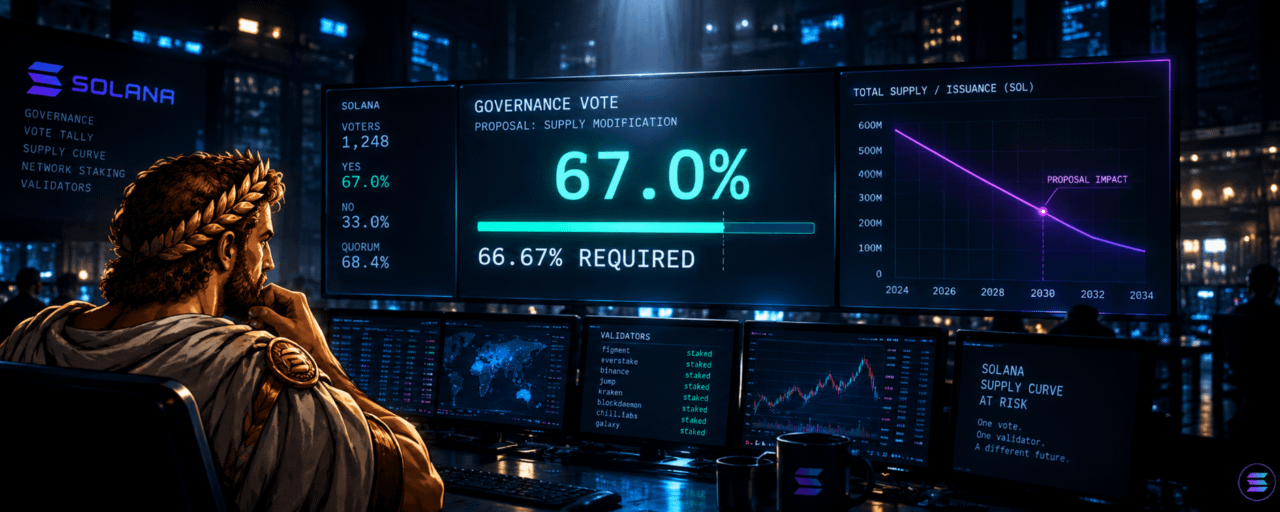
4. Aug 28— Multiple later reports (Decrypt, Forklog, Cointelegraph) confirm SGP-0002 passed at exactly 67.0%, with Kraken switching its vote from "against" to "for" late in the count.
SIGNAL: The discrepancy between the Aug 27 and Aug 28 reports isn't sloppy journalism — it's a live record of a vote that was, at one point, genuinely failing.
THE HIDDEN STORY
INTERPRETATION: The two proposals hit different stakeholders differently. Disinflation reduces issuance growth — a slow-moving, years-long tapering that validators can plan around. The fee-burn proposal would have redirected a *direct, immediate* portion of validator revenue into burns instead of validator pockets. One is a gradual haircut. The other is a pay cut effective next epoch.
THESIS: Validators — who hold outsized voting weight because Solana's governance is stake-weighted, not one-token-one-vote in a retail sense — will support tokenomics changes that improve the asset's long-term image *as long as those changes don't directly reduce their own near-term income.* SGP-0002 passed because it costs validators years from now. SGP-0003 failed because it would have cost them immediately.
This is a first-principles point: **Solana's governance isn't voting on "what's good for SOL holders." It's voting on what's tolerable for the entities who hold enough stake to vote at all.** Those aren't automatically the same group.
THE CONTRADICTION
If disinflation is genuinely bullish and validators are rational long-term holders, they should have supported *both* proposals — deeper burns plus slower issuance is a stronger deflationary combination than either alone. They didn't. The market narrative ("Solana just got more bullish tokenomics") is true only for one-third of what was actually proposed.
THE COUNTER-THESIS
It's possible the rejection of SGP-0003 had nothing to do with validator self-interest and everything to do with legitimate technical concerns — unpredictable fee-burn ranges (7,500–9,000 SOL/day is a wide band) could introduce network-fee volatility that harms user experience, not just validator revenue. Solana Labs itself reportedly opposed both proposals initially, which cuts against a pure "validators protecting their own income" reading. The simpler explanation may be: SGP-0003 was a less mature proposal, not a self-interested veto.
I can't fully separate these two explanations with the evidence available. Both are plausible. This is a case where I don't have enough to call it.
WHAT WOULD CONFIRM IT
- On-chain issuance data over the next several epochs showing the disinflation schedule is actually being implemented (SIGNAL, not yet observed).
- A future fee-related proposal, redesigned with a narrower or delayed burn range, gaining validator support — which would suggest the *design*, not the incentive, was the real obstacle.
- Validator staking yields declining roughly in line with model projections, without a validator exodus.
WHAT WOULD KILL IT
- If validator count or total stake participation drops materially after implementation, it would suggest disinflation was tolerated on paper but is destabilizing network security in practice — turning a "less dilution" story into a "weaker security budget" story.
- If a near-identical fee-burn proposal resurfaces with *validator-friendly* terms and still fails, that would support the self-interest thesis harder. If it passes, that undermines it.
THE INCENTIVES
FACT: SIMD-0550 was authored by Helius, an infrastructure firm — not Solana Labs, which reportedly opposed the disinflation change.
INTERPRETATION: Helius's business model benefits from a healthier long-term SOL valuation narrative more than from validator fee income, which may explain why an infrastructure company pushed harder on this than the validators who ultimately had to approve it.
THE PROBABILITY
This is a moderate-confidence thesis, not a strong one. The vote-margin evidence (67.0 vs. 66.67, a literal one-validator swing) and the split outcome between two similarly-supported proposals are solid, verifiable facts. The *interpretation* — that validator self-interest explains the split — is plausible and consistent with the data, but unproven. Treat it as a working hypothesis, not a conclusion.
WHAT I'M WATCHING NEXT
Not SOL's price. Three specific things:
1. Whether on-chain issuance actually drops on schedule over the coming epochs.
2. Whether validator count/stake participation holds steady through the transition.
3. Whether a redesigned fee-burn proposal returns — and whether its outcome supports or contradicts the incentive-based explanation above.
NFA. #ZeroResearch #Solana #SolanaGovernance #Tokenomics
$SOL
🚨 Solana’s first network-wide vote narrowly passed to double disinflation, after a Kraken-linked validator flipped last-minute. The tight result shows deep community split on tokenomics. Market implication: SOL may face short-term volatility as inflation expectations shift, but long-term supply credibility could strengthen if governance stabilizes. Will this precedent make future SOL votes more contentious—or more decisive? #SolanaGovernance $SOL #TradingSignal #CryptoAnalysis

🚨 Solana’s first network-wide vote narrowly passed to double disinflation, after a Kraken-linked validator flipped last-minute. The tight result shows deep community split on tokenomics.
Market implication: SOL may face short-term volatility as inflation expectations shift, but long-term supply credibility could strengthen if governance stabilizes.
Will this precedent make future SOL votes more contentious—or more decisive?
#SolanaGovernance

$SOL #TradingSignal #CryptoAnalysis

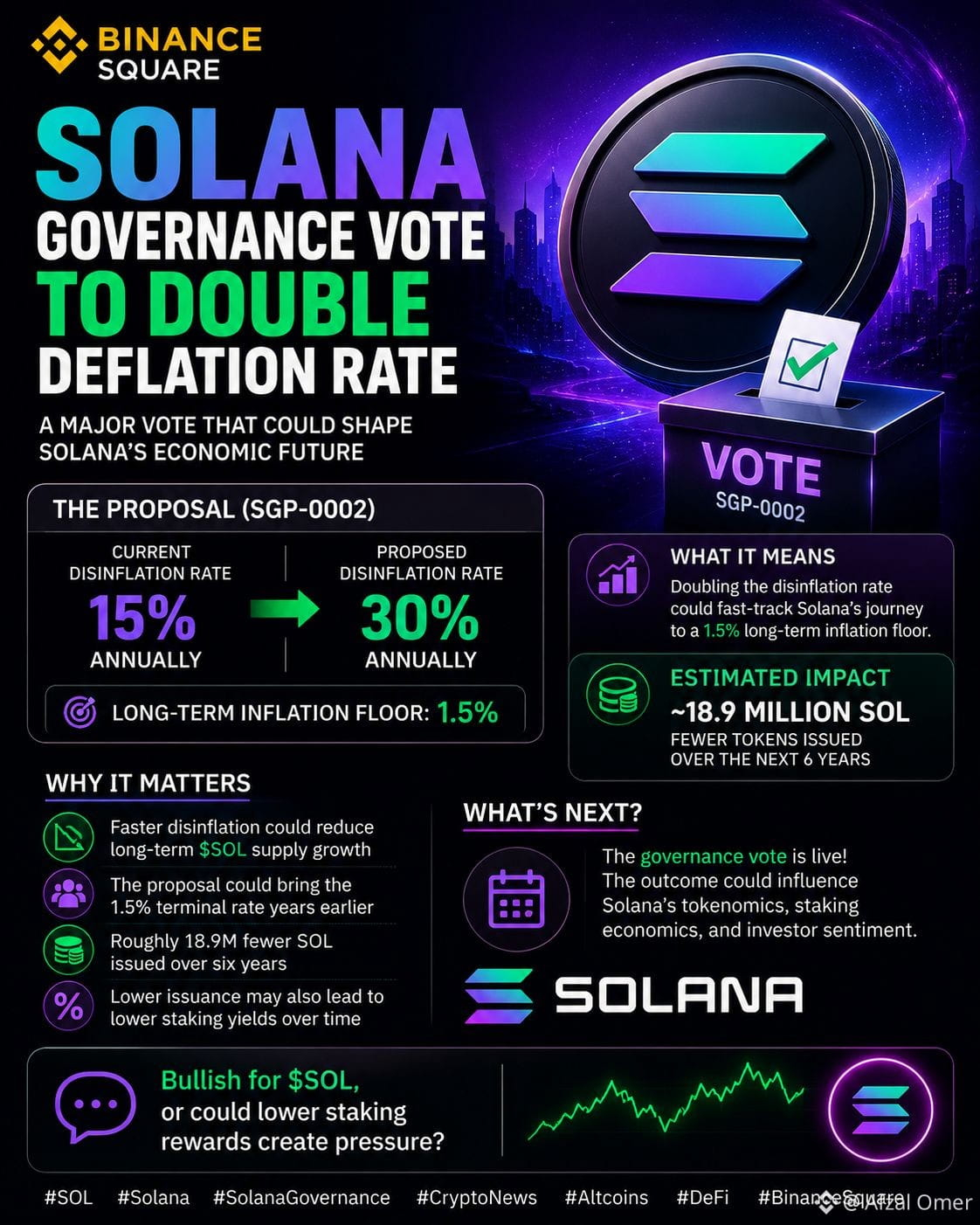
🔥 Solana Governance Vote Could Double Disinflation Rate 📊 $SOL GOVERNANCE 🔻 Current disinflation rate: 15% annually ⚡ Proposed rate: 30% annually 🎯 Long-term inflation floor: 1.5% 📰 What Happened? Solana’s governance vote on SGP-0002 is now underway. The proposal would double the annual disinflation rate from 15% to 30%, accelerating the reduction in new $SOL issuance. 🔍 Why It Matters • 📉 Faster disinflation could reduce long-term $SOL supply growth • 💰 The proposal estimates roughly 18.9M fewer SOL issued over six years • 🎯 The 1.5% terminal inflation target could arrive years earlier • ⚠️ Lower issuance could also reduce staking yields over time 👀 What’s Next? The governance vote is a major catalyst for $SOL. The outcome could influence Solana’s tokenomics, staking economics, and investor sentiment. 💬 Bullish for $SOL, or could lower staking rewards create pressure? {spot}(SOLUSDT) #Solana #SolanaGovernance #Altcoins #TradingSignals #BinanceSquare
🔥 Solana Governance Vote Could Double Disinflation Rate

📊 $SOL GOVERNANCE
🔻 Current disinflation rate: 15% annually
⚡ Proposed rate: 30% annually
🎯 Long-term inflation floor: 1.5%

📰 What Happened?
Solana’s governance vote on SGP-0002 is now underway. The proposal would double the annual disinflation rate from 15% to 30%, accelerating the reduction in new $SOL issuance.

🔍 Why It Matters
• 📉 Faster disinflation could reduce long-term $SOL supply growth
• 💰 The proposal estimates roughly 18.9M fewer SOL issued over six years
• 🎯 The 1.5% terminal inflation target could arrive years earlier
• ⚠️ Lower issuance could also reduce staking yields over time

👀 What’s Next?
The governance vote is a major catalyst for $SOL . The outcome could influence Solana’s tokenomics, staking economics, and investor sentiment.

💬 Bullish for $SOL , or could lower staking rewards create pressure?


#Solana #SolanaGovernance #Altcoins #TradingSignals #BinanceSquare
Partly True
#solanagovernancevotetodoubledeflationrate ​🔥 SOLANA SUPPLY SHOCK IMMINENT? 🔥 ​A massive governance vote is currently live on the Solana network, and the stakes are high: a proposal to DOUBLE the deflation rate from -15% to -30%! ​Here is what is happening behind the scenes: ​The Goal: Aggressively tighten token supply and accelerate the disinflation schedule. ​The Divide: Validators are sweating over potentially slashed staking yields, while retail holders are cheering for extreme token scarcity. 💸 ​Your Trader Game Plan: ​Monitor the Vote: If this passes, the resulting supply shock could fuel a massive bullish narrative for SOL. ​Brace for Volatility: Expect immediate market turbulence as the network reacts to the outcome. ​Protect Your Capital: Manage your risk and size your positions properly. 📊 ​(⚠️ Note: This is NOT financial advice.) ​Ready to capitalize on the incoming SOL volatility? Get into the action on Binance today! 🚀 ​ #Solana #SolanaGovernance #TokenBurn $SOL $SPK $GRASS {future}(GRASSUSDT) {future}(SOLUSDT) {future}(SPKUSDT)
#solanagovernancevotetodoubledeflationrate
​🔥 SOLANA SUPPLY SHOCK IMMINENT? 🔥

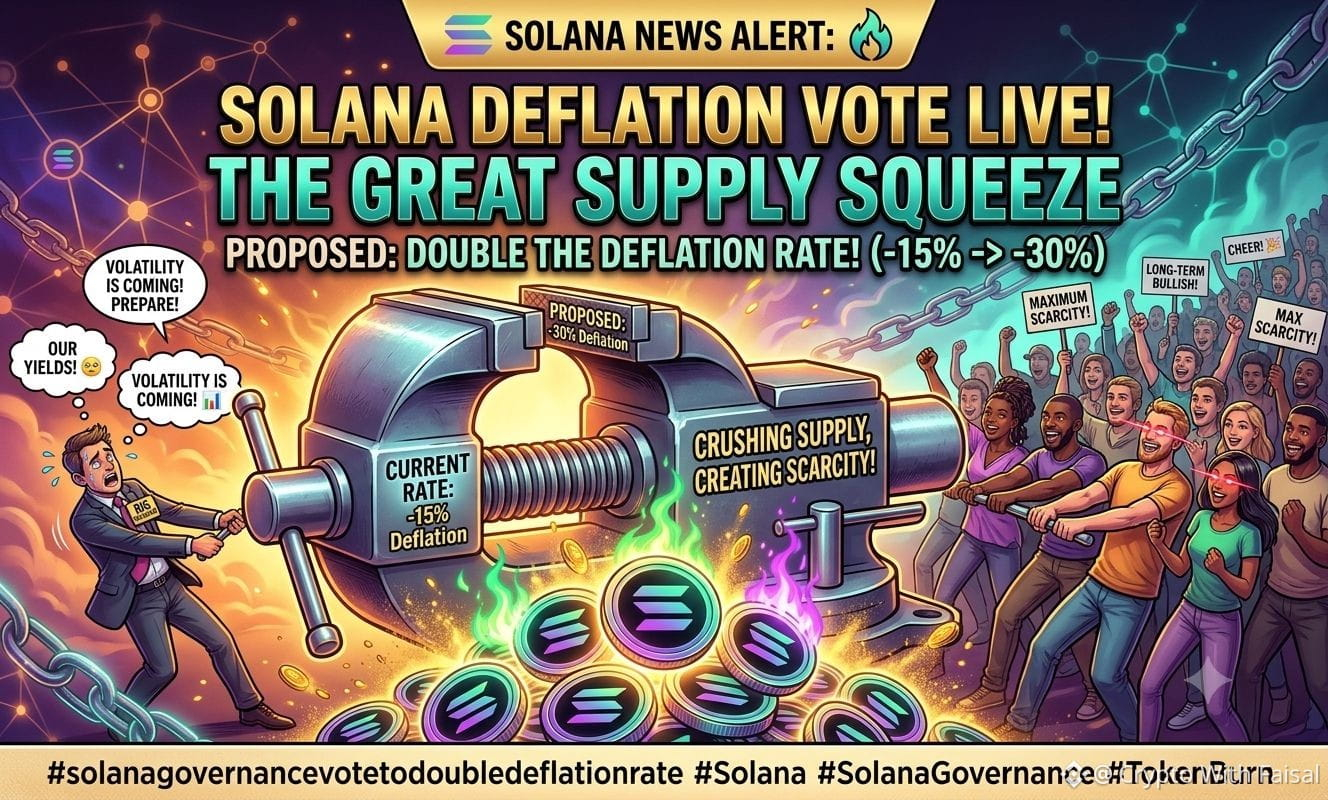
​A massive governance vote is currently live on the Solana network, and the stakes are high: a proposal to DOUBLE the deflation rate from -15% to -30%!

​Here is what is happening behind the scenes:

​The Goal: Aggressively tighten token supply and accelerate the disinflation schedule.

​The Divide: Validators are sweating over potentially slashed staking yields, while retail holders are cheering for extreme token scarcity. 💸

​Your Trader Game Plan:

​Monitor the Vote: If this passes, the resulting supply shock could fuel a massive bullish narrative for SOL.

​Brace for Volatility: Expect immediate market turbulence as the network reacts to the outcome.

​Protect Your Capital: Manage your risk and size your positions properly. 📊

​(⚠️ Note: This is NOT financial advice.)

​Ready to capitalize on the incoming SOL volatility? Get into the action on Binance today! 🚀

#Solana #SolanaGovernance #TokenBurn
$SOL $SPK $GRASS
#solanagovernancevotetodoubledeflationrate 🔥 Oh Solana family, are we voting to burn more SOL tokens?! 🚀 Big news hits the network as governance voting begins to halve/double the deflation rate from -15% to -30%! They want to tighten the supply, speed up the deflation schedule, and put pressure on those rewards! While some major operators/validators are nervous about lower staking yields, token holders are celebrating extreme scarcity. 💸👀 🧐 What should traders do? Keep a close eye on the voting results! If it passes, long-term supply shocks could lead to a bullish narrative/upward momentum for SOL. Watch out for immediate network volatility and don’t forget to manage your risk properly! 📊 ⚠️ This is not financial advice. 🚀 Are you ready to trade SOL’s volatility? Please follow up #Solana #SolanaGovernance #TokenBurn $SOL {future}(SOLUSDT)
#solanagovernancevotetodoubledeflationrate
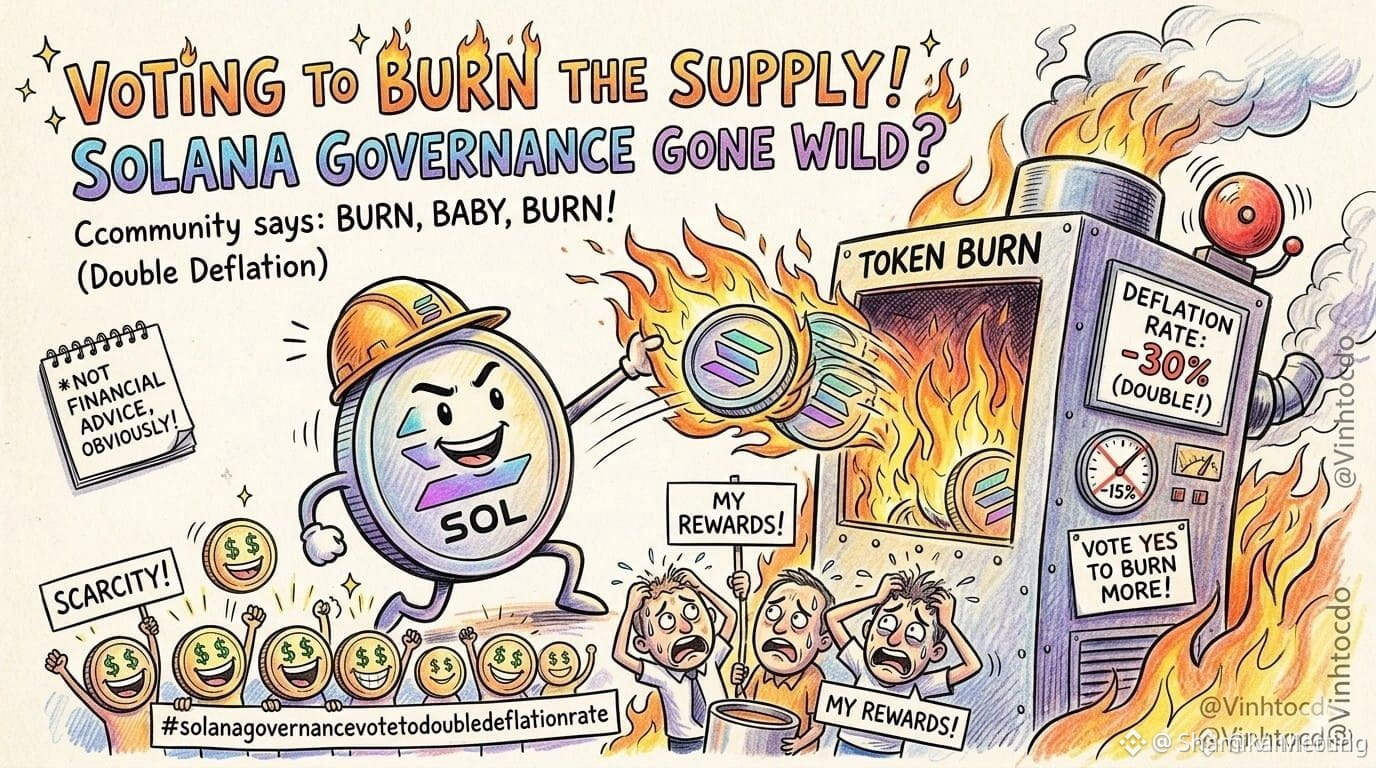
🔥 Oh Solana family, are we voting to burn more SOL tokens?! 🚀 Big news hits the network as governance voting begins to halve/double the deflation rate from -15% to -30%!
They want to tighten the supply, speed up the deflation schedule, and put pressure on those rewards! While some major operators/validators are nervous about lower staking yields, token holders are celebrating extreme scarcity. 💸👀
🧐 What should traders do?
Keep a close eye on the voting results! If it passes, long-term supply shocks could lead to a bullish narrative/upward momentum for SOL. Watch out for immediate network volatility and don’t forget to manage your risk properly! 📊
⚠️ This is not financial advice.
🚀 Are you ready to trade SOL’s volatility?

Please follow up

#Solana #SolanaGovernance #TokenBurn
$SOL
The vote that nearly failed just rewired Solana's supply curve Everyone watched what SOL's price did last week. Almost no one noticed what changed inside the network itself. On August 28, Solana closed its first binding on-chain governance vote. Three proposals. Two very different outcomes — and that gap is the real story. SGP-0002 ("Double Disinflation") passed at 67.0% — the threshold was 66.67%. The margin was so thin that Kraken flipped from opposing to supporting it mid-count, in the final minutes. On the same day, SGP-0003 (a fee restructuring that would have pushed daily SOL burns from ~650 to 7,500–9,000) received similar support — and still failed. So the question is: why would the community agree to shrink supply, but not agree to burn more of it? This isn't random. Disinflation quietly reduces validator staking incentives over years — a slow, predictable path. The fee-burn mechanism would have cut validator revenue abruptly. The community chose the softer route. Roughly 18.9 million fewer SOL will be issued over six years, and the network now reaches its 1.5% terminal inflation rate by 2029 instead of 2032 — three years pulled forward. This isn't automatic proof of a price move. Reduced supply doesn't move price if demand stays flat or falls — the relationship is conditional, not mechanical. But what looks underpriced right now is this: the issuance curve is already changing, while most traders scrolled past it as "governance news" rather than a tokenomics event. The thesis weakens if implementation is delayed, or if staking participation drops enough to shrink the network's security budget — turning a positive supply story into a negative security one. Not price. Whether on-chain issuance actually declines over the coming epochs, and whether validator count and stake participation hold steady through the transition. NFA. #Solana #SOL #SolanaGovernance #Tokenomics #ZeroResearch Follow to catch the next supply shift before the chart does. $SOL
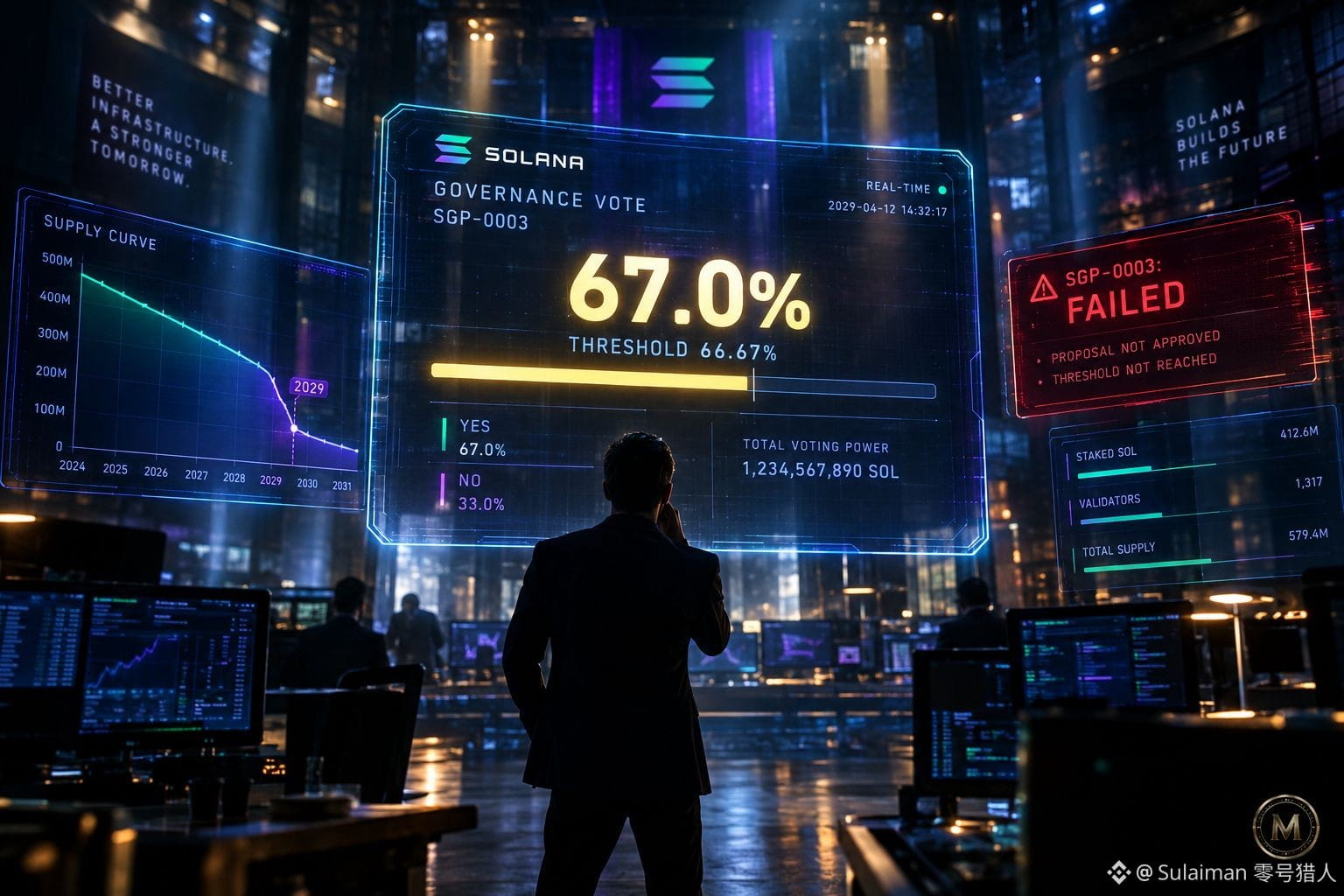
The vote that nearly failed just rewired Solana's supply curve

Everyone watched what SOL's price did last week. Almost no one noticed what changed inside the network itself.

On August 28, Solana closed its first binding on-chain governance vote. Three proposals. Two very different outcomes — and that gap is the real story.

SGP-0002 ("Double Disinflation") passed at 67.0% — the threshold was 66.67%. The margin was so thin that Kraken flipped from opposing to supporting it mid-count, in the final minutes. On the same day, SGP-0003 (a fee restructuring that would have pushed daily SOL burns from ~650 to 7,500–9,000) received similar support — and still failed.

So the question is: why would the community agree to shrink supply, but not agree to burn more of it?

This isn't random. Disinflation quietly reduces validator staking incentives over years — a slow, predictable path. The fee-burn mechanism would have cut validator revenue abruptly. The community chose the softer route.

Roughly 18.9 million fewer SOL will be issued over six years, and the network now reaches its 1.5% terminal inflation rate by 2029 instead of 2032 — three years pulled forward.

This isn't automatic proof of a price move. Reduced supply doesn't move price if demand stays flat or falls — the relationship is conditional, not mechanical. But what looks underpriced right now is this: the issuance curve is already changing, while most traders scrolled past it as "governance news" rather than a tokenomics event.

The thesis weakens if implementation is delayed, or if staking participation drops enough to shrink the network's security budget — turning a positive supply story into a negative security one.

Not price. Whether on-chain issuance actually declines over the coming epochs, and whether validator count and stake participation hold steady through the transition.

NFA.

#Solana #SOL #SolanaGovernance #Tokenomics #ZeroResearch

Follow to catch the next supply shift before the chart does. $SOL

·
--
Bullish
Verified
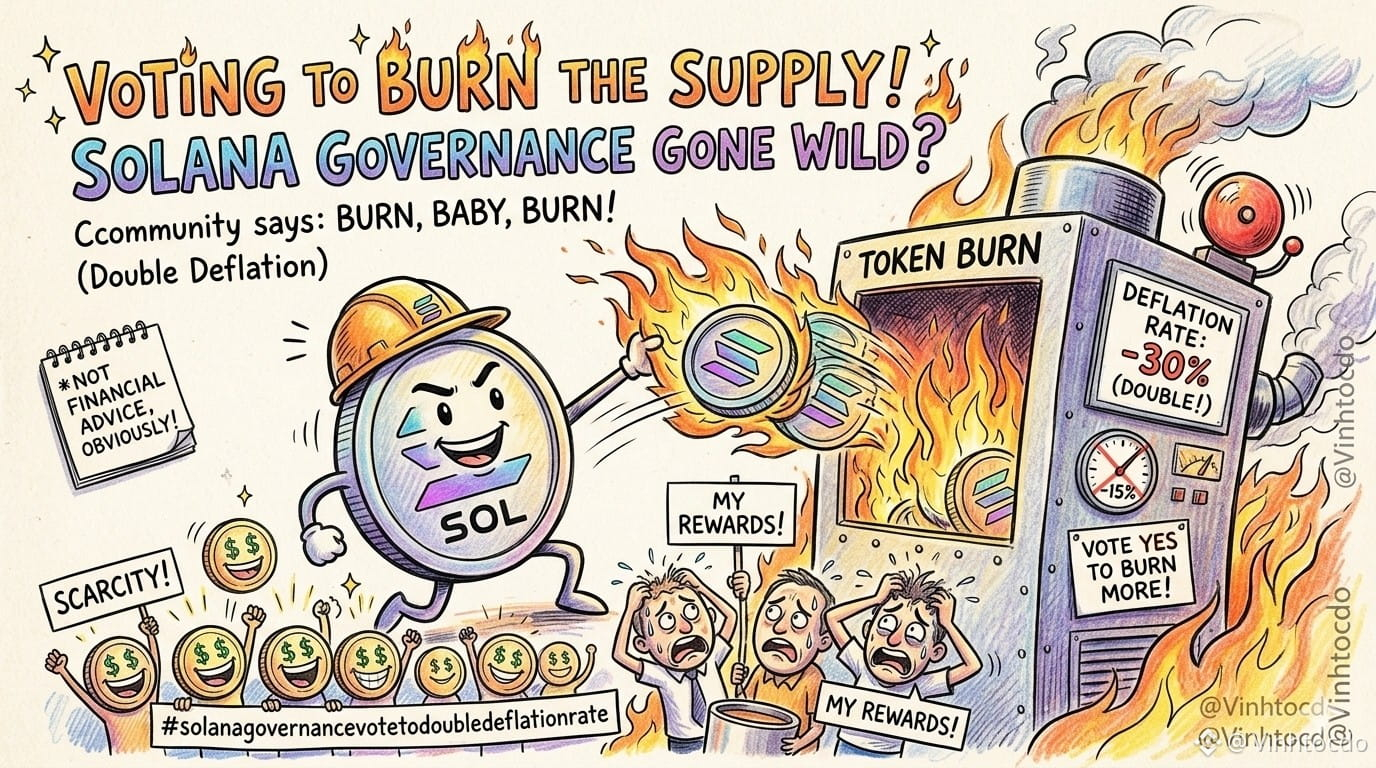
#solanagovernancevotetodoubledeflationrate 🔥 Solana fam, are we voting to burn more SOL tokens?! 🚀 Big news hitting the chain as the governance vote goes live to DOUBLE the deflation rate from -15% to -30%! They want to tighten the supply, speed up the disinflation schedule, and squeeze those rewards! While some big validators are sweating over lower staking yields, token holders are cheering for maximum scarcity. 💸👀 🧐 What should traders do? Watch the vote results closely! If this passes, long-term supply shocks could spark a bullish narrative for SOL. Watch out for immediate network volatility and don't forget to manage your risks properly! 📊 ⚠️ This is NOT financial advice. 🚀 Ready to trade the SOL volatility? Sign up on Binance now! 👉 Link: [https://www.binance.com/register?ref=VINHTOCDO](https://www.binance.com/register?ref=VINHTOCDO) 🔥 Code: VINHTOCDO #Solana #SolanaGovernance #TokenBurn #VINHTOCDO $SOL {future}(SOLUSDT) $BTC {future}(BTCUSDT) $BNB {future}(BNBUSDT)
#solanagovernancevotetodoubledeflationrate
🔥 Solana fam, are we voting to burn more SOL tokens?! 🚀 Big news hitting the chain as the governance vote goes live to DOUBLE the deflation rate from -15% to -30%!
They want to tighten the supply, speed up the disinflation schedule, and squeeze those rewards! While some big validators are sweating over lower staking yields, token holders are cheering for maximum scarcity. 💸👀
🧐 What should traders do?
Watch the vote results closely! If this passes, long-term supply shocks could spark a bullish narrative for SOL. Watch out for immediate network volatility and don't forget to manage your risks properly! 📊
⚠️ This is NOT financial advice.
🚀 Ready to trade the SOL volatility? Sign up on Binance now!
👉 Link: https://www.binance.com/register?ref=VINHTOCDO
🔥 Code: VINHTOCDO
#Solana #SolanaGovernance #TokenBurn #VINHTOCDO
$SOL
$BTC
$BNB
Log in to explore more content
Join global crypto users on Binance Square
⚡️ Get latest and useful information about crypto.
💬 Trusted by the world’s largest crypto exchange.
👍 Discover real insights from verified creators.
Email / Phone number