

#link
link
19.7M views
45,414 Discussing
Hot
Latest

·
--
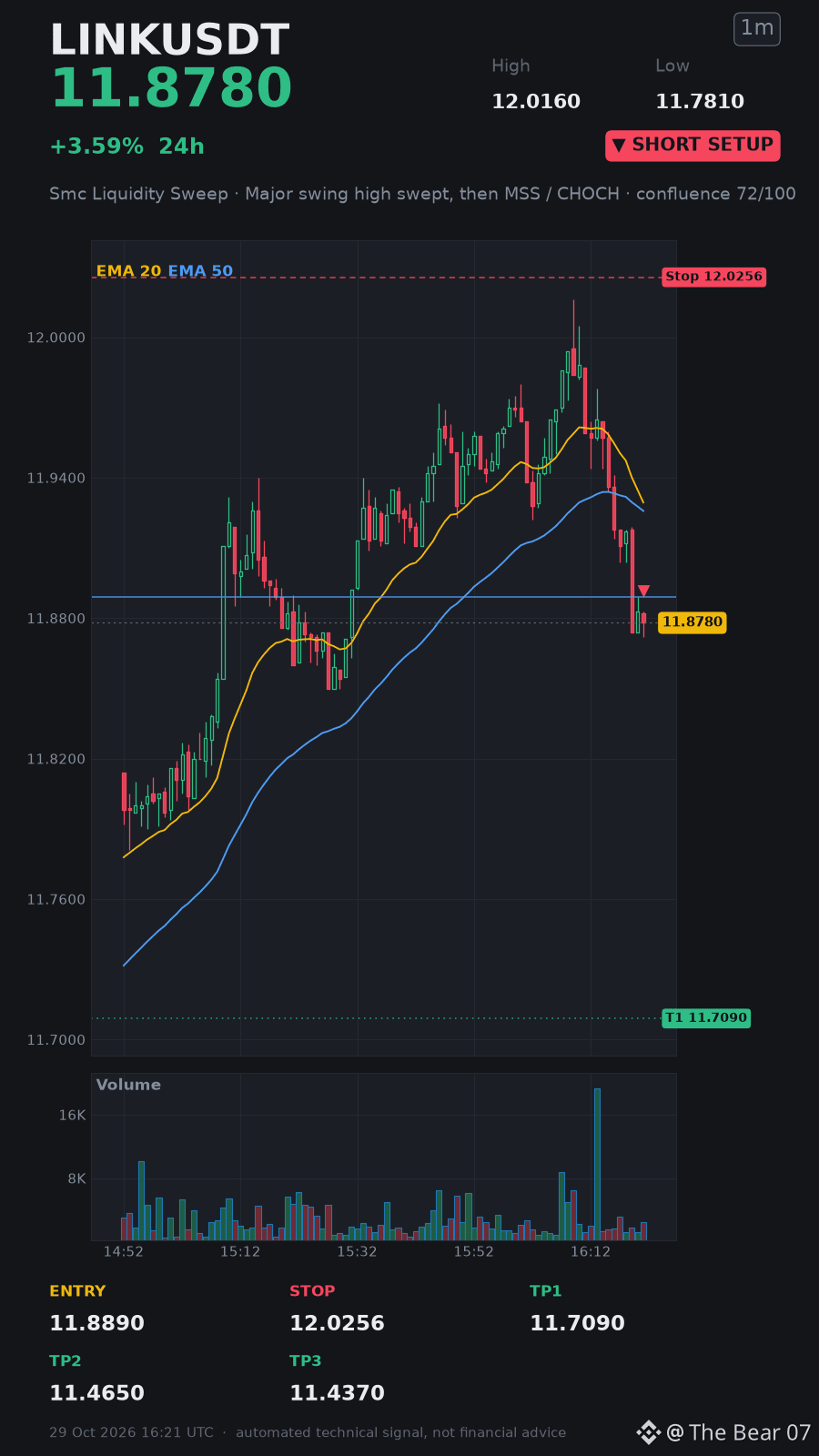
🚨 #LINK SMC Sweep Short Attack! 🤯🩸
I'm jumping on this short. $LINK 👇
Short..... Sweep..... Watch meee........‼️‼️‼️
Entry: 11.8890 – 11.9040
Stop-loss: 12.0256
🟢 TP1: 11.7090
🟢 TP2: 11.4650
🟢 TP3: 11.4370
Trade with me now! 👇⬇️⬇️ Short.. With meee...👇⬇️ $LINK
🚨 #LINK SMC Sweep Short Attack! 🤯🩸
I'm jumping on this short. $LINK 👇
Short..... Sweep..... Watch meee........‼️‼️‼️
Entry: 11.8890 – 11.9040
Stop-loss: 12.0256
🟢 TP1: 11.7090
🟢 TP2: 11.4650
🟢 TP3: 11.4370
Trade with me now! 👇⬇️⬇️ Short.. With meee...👇⬇️ $LINK
I'm jumping on this short. $LINK 👇
Short..... Sweep..... Watch meee........‼️‼️‼️
Entry: 11.8890 – 11.9040
Stop-loss: 12.0256
🟢 TP1: 11.7090
🟢 TP2: 11.4650
🟢 TP3: 11.4370
Trade with me now! 👇⬇️⬇️ Short.. With meee...👇⬇️ $LINK

·
--
$LINK 🚀 $LINK LONG SETUP 🟢
$LINK is demonstrating impressive strength, posting a 3.46% gain over the last 24 hours while pushing near its daily highs. The sustained upward momentum supported by over $21M in quote volume suggests a strong bullish sentiment among buyers.
📊 24h: +3.46% | Vol: $21,381,903.45
📈 TRADE PLAN
🔹 Entry: 11.97
🛑 Stop Loss: 11.75
🎯 TP1: 12.30
🎯 TP2: 12.50
🎯 TP3: 12.80
⚖️ Risk:Reward (TP1): 1:1.50
🔔 Trigger: A clean breakout and hourly candle close above the 12.00 psychological resistance level would confirm the continuation of this bullish trend.
⚠️ Risk Note: Crypto markets are volatile; ensure your position size is managed to account for potential pullbacks toward support.
Stay patient and wait for the breakout confirmation before committing to your entry.
Click below 👇🏻 to trade
$LINK
Follow @T4_TZX for more updates...
#LINK #CryptoTrading #MarketAnalysis #BinanceSquare

·
--
Article
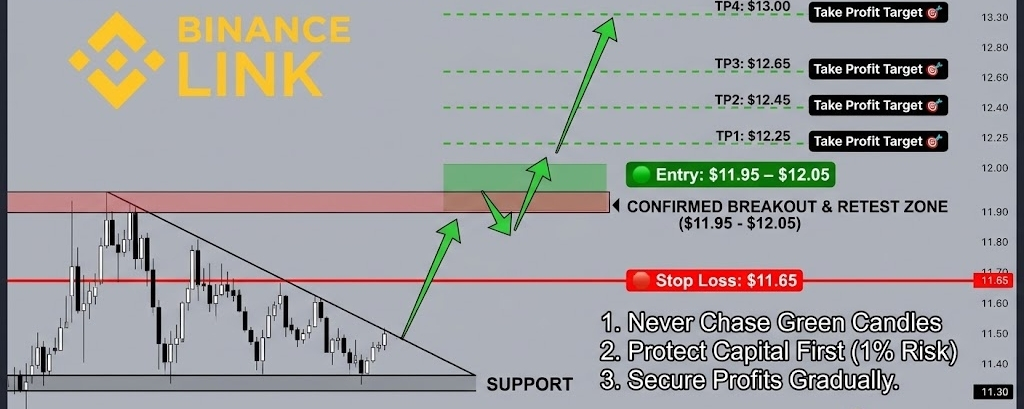
Why I'm Waiting to Buy $LINK — 3 Mistakes That Could Cost Me Money 🚀🚀 $LINK BULLISH BREAKOUT WATCH!
🟢 Entry: $11.95–$12.05
🛑 SL: $11.65
🎯 TP1: $12.25 | TP2: $12.45 | TP3: $12.65 | TP4: $13.00.
Wait for breakout + retest!
📈 Read my full LINK analysis for entry confirmation, risk management and profit targets!
{future}(LINKUSDT)
#BTC #FedWatch #CryptoEducation #TradingTips #LINK
Why I'm Waiting to Buy $LINK — 3 Mistakes That Could Cost Me Money 🚀
🚀 $LINK BULLISH BREAKOUT WATCH!
🟢 Entry: $11.95–$12.05
🛑 SL: $11.65
🎯 TP1: $12.25 | TP2: $12.45 | TP3: $12.65 | TP4: $13.00.
Wait for breakout + retest!
📈 Read my full LINK analysis for entry confirmation, risk management and profit targets!
#BTC #FedWatch #CryptoEducation #TradingTips #LINK
🟢 Entry: $11.95–$12.05
🛑 SL: $11.65
🎯 TP1: $12.25 | TP2: $12.45 | TP3: $12.65 | TP4: $13.00.
Wait for breakout + retest!
📈 Read my full LINK analysis for entry confirmation, risk management and profit targets!
#BTC #FedWatch #CryptoEducation #TradingTips #LINK
8

·
--
$LINK #LINK
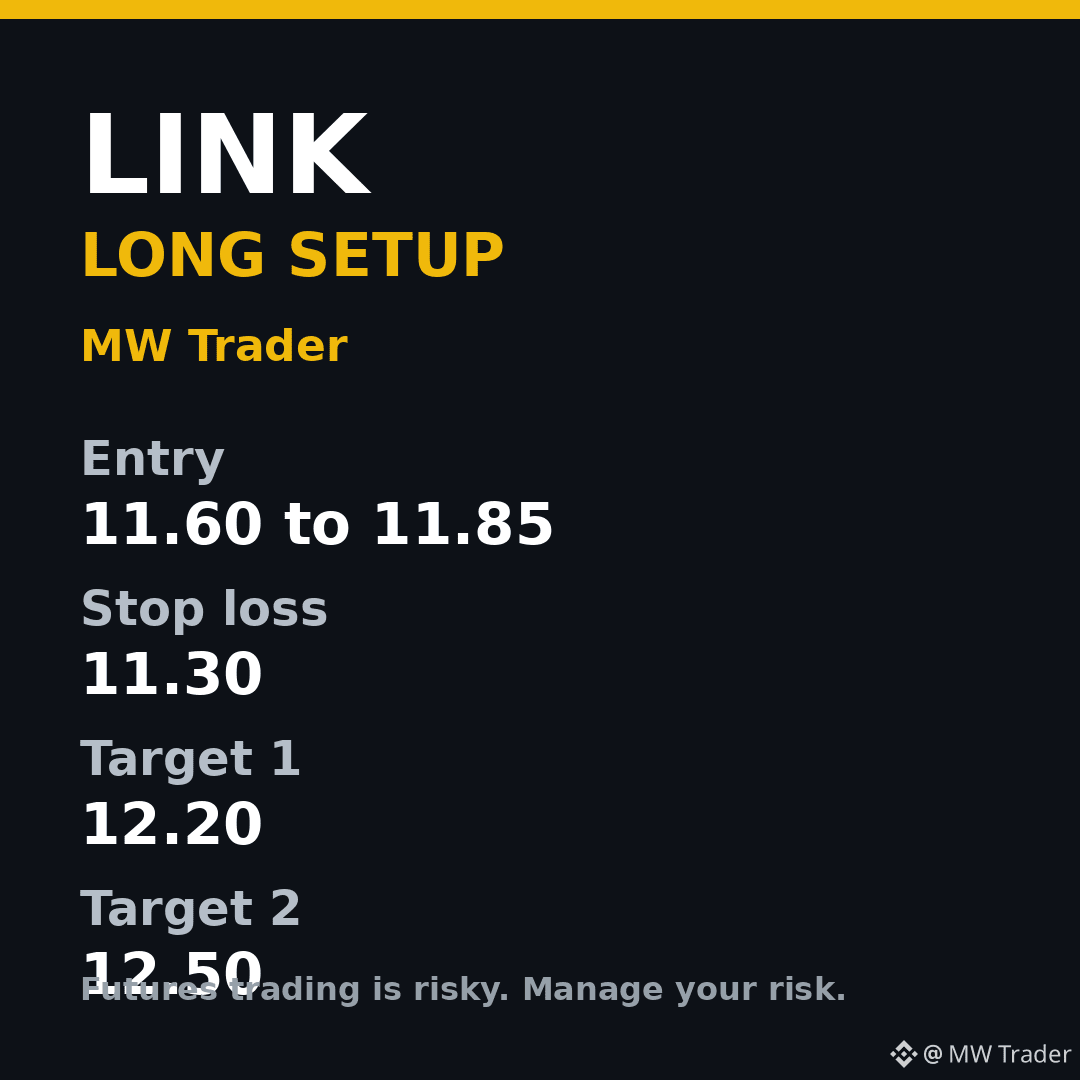
LONG idea, fresh setup for 29 October evening
Entry: 11.60 to 11.85
Stop loss: 11.30
Target 1: 12.20
Target 2: 12.50
Chainlink is near 11.78, up about 2.35 percent over 24 hours, and it has moved above the earlier short zone instead of rejecting from it. That change turns the bias long for this session. A long on a pullback toward 11.60 to 11.85 favours a move toward 12.20. Below 11.30, exit.
Futures trading is risky. Trade small, manage your risk, and do your own research.
#Chainlink #Crypto #FuturesTrading #TradingSignals
Follow for more trades.
5

·
--
⚡ The Crypto Project Connecting Two Worlds? 🌐
Blockchain data and real-world information are important for many crypto applications — and that's where Chainlink gets attention.
$LINK is associated with oracle infrastructure that helps smart contracts access external data. Its long-term prospects depend on adoption, demand, competition, and market conditions.
👀 Here's the interesting question: do you think blockchain infrastructure tokens deserve more attention than hype-driven coins?
Share your thoughts below! 👇
#LINK #Chainlink #blockchain #CryptoInvesting #BinanceSquare
39

·
--
$LINK is trading at the kind of zone where failed bounces can get trapped fast.
$LINK – Price is moving inside a weak range, and sellers still have the short-term edge for now.
Trading Plan SHORT $LINK (max 10x)
🎯 Entry: 11.697 - 11.837
🛑 SL: 11.998
✅ TP1: 11.579
✅ TP2: 11.415
✅ TP3: 11.251
• Nepali citzen, named in Rs 37.64 crore crypto racket probe, caught at Lucknow airport while trying to fly to Sharjah on Indian passport
• Starlink is fast becoming one of the biggest factors for passengers choosing an airline, United's CEO says
Would you short the rejection on $LINK, or wait for confirmation?
Trade $LINK here 👇
#LINK #Crypto #PriceAction
$LINK is trading at the kind of zone where failed bounces can get trapped fast.
$LINK – Price is moving inside a weak range, and sellers still have the short-term edge for now.
Trading Plan SHORT $LINK (max 10x)
🎯 Entry: 11.697 - 11.837
🛑 SL: 11.998
✅ TP1: 11.579
✅ TP2: 11.415
✅ TP3: 11.251
• Nepali citzen, named in Rs 37.64 crore crypto racket probe, caught at Lucknow airport while trying to fly to Sharjah on Indian passport
• Starlink is fast becoming one of the biggest factors for passengers choosing an airline, United's CEO says
Would you short the rejection on $LINK , or wait for confirmation?
Trade $LINK here 👇
#LINK #Crypto #PriceAction
2

·
--
🚀 $LINK /USDT — RANGE BREAKOUT SETUP
Keep $LINK on your watchlist and wait for a clear move outside its current range.
🟢 Bullish: Resistance breaks and holds on retest
🔴 Bearish: Support breaks and fails to recover
🎯 Target the next confirmed price level, not an arbitrary percentage.
🛑 Use a stop-loss and avoid excessive leverage.
🔥 Which coin should I analyze next?
#LINK #LINKUSDT #BinanceSquare #CryptoTrading #altcoins #TechnicalAnalysis
8



$LINK: LINK: The Cost of Waiting vs. Chasing
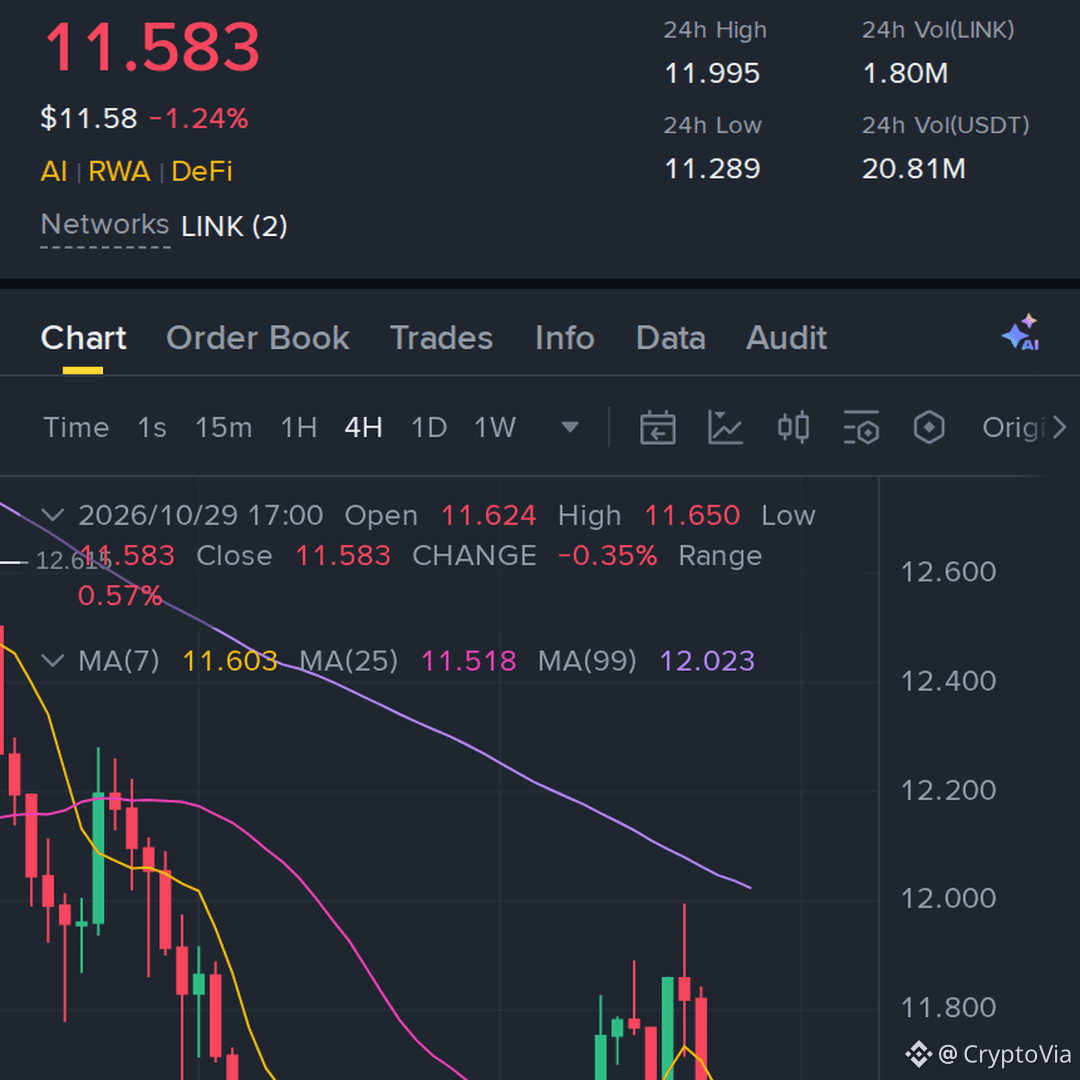
Imagine two traders watching $LINK. The first waits for price to settle below 11.5031 before acting. The second jumps in because volume is high. Current data shows $LINK is above resistance with volume above baseline. This creates a tension. Entering now risks buying near the top before a pullback. Waiting risks missing a continued move if the volume surge is genuine. The key is not predicting the next candle but defining what would prove your thesis wrong. If the purpose is to test the volume hypothesis, a meaningful invalidation level is critical. Consider the distance between current price and a structural break. If that break is far, the risk to reward may be poor. If it is close, the invalidation is sharp. This trade-off explains why entry quality often matters more than speed. A clear reason to act must exist, not just momentum. Thinking through the scenario helps separate observation from assumption. If we assume volume leads price, then a drop below 11.356 disproves it. If we assume range-bound behavior, breaking 11.61 disproves that. The practical choice is to wait for the invalidation level to be defined first. Without a clear exit point, waiting is safer than chasing. Record the condition that would change your mind. Then monitor $LINK against that specific level. This turns a vague guess into a testable idea. It removes the emotional urge to act on general news or social sentiment. Instead, it focuses on the structural data already present. The decision becomes about managing risk, not catching a move.
Probabilistic market research, not a recommendation or guaranteed return.
Would you wait for clearer structure or reassess the risk first?
#LINK #RiskManagement
$LINK : LINK: The Cost of Waiting vs. Chasing
Imagine two traders watching $LINK . The first waits for price to settle below 11.5031 before acting. The second jumps in because volume is high. Current data shows $LINK is above resistance with volume above baseline. This creates a tension. Entering now risks buying near the top before a pullback. Waiting risks missing a continued move if the volume surge is genuine. The key is not predicting the next candle but defining what would prove your thesis wrong. If the purpose is to test the volume hypothesis, a meaningful invalidation level is critical. Consider the distance between current price and a structural break. If that break is far, the risk to reward may be poor. If it is close, the invalidation is sharp. This trade-off explains why entry quality often matters more than speed. A clear reason to act must exist, not just momentum. Thinking through the scenario helps separate observation from assumption. If we assume volume leads price, then a drop below 11.356 disproves it. If we assume range-bound behavior, breaking 11.61 disproves that. The practical choice is to wait for the invalidation level to be defined first. Without a clear exit point, waiting is safer than chasing. Record the condition that would change your mind. Then monitor $LINK against that specific level. This turns a vague guess into a testable idea. It removes the emotional urge to act on general news or social sentiment. Instead, it focuses on the structural data already present. The decision becomes about managing risk, not catching a move.
Probabilistic market research, not a recommendation or guaranteed return.
Would you wait for clearer structure or reassess the risk first?
#LINK #RiskManagement
42
🎯 ALHAMDULILLAH! BOTH TAKE-PROFIT TARGETS HIT! 🚀🔥
💎 LINK/USDT TRADE UPDATE
✅ TP1: 11.490 — HIT 🎯
✅ TP2: 11.529 — HIT 🎯
🟢 Both targets from my technical analysis have been reached!
📊 KEY LEVELS:
🟢 Support: 11.300
🔴 Resistance: 11.600
🛑 Stop Loss: 11.357
📈 PATIENCE + TECHNICAL ANALYSIS = BETTER DECISIONS!
Alhamdulillah, both targets were achieved according to the shared setup. Always remember that the crypto market is volatile, and every trade carries risk.
💬 Did you catch this move? Comment below! 👇
❤️ Like | 🔁 Share | ➕ Follow for more crypto market updates!
#LINK #LINKUSDT #BinanceSquare #TechnicalAnalysis #TakeProfit $LINK
{spot}(LINKUSDT)
🎯 ALHAMDULILLAH! BOTH TAKE-PROFIT TARGETS HIT! 🚀🔥
💎 LINK/USDT TRADE UPDATE
✅ TP1: 11.490 — HIT 🎯
✅ TP2: 11.529 — HIT 🎯
🟢 Both targets from my technical analysis have been reached!
📊 KEY LEVELS:
🟢 Support: 11.300
🔴 Resistance: 11.600
🛑 Stop Loss: 11.357
📈 PATIENCE + TECHNICAL ANALYSIS = BETTER DECISIONS!
Alhamdulillah, both targets were achieved according to the shared setup. Always remember that the crypto market is volatile, and every trade carries risk.
💬 Did you catch this move? Comment below! 👇
❤️ Like | 🔁 Share | ➕ Follow for more crypto market updates!
#LINK #LINKUSDT #BinanceSquare #TechnicalAnalysis #TakeProfit $LINK
48
·
--
$LINK #LINK
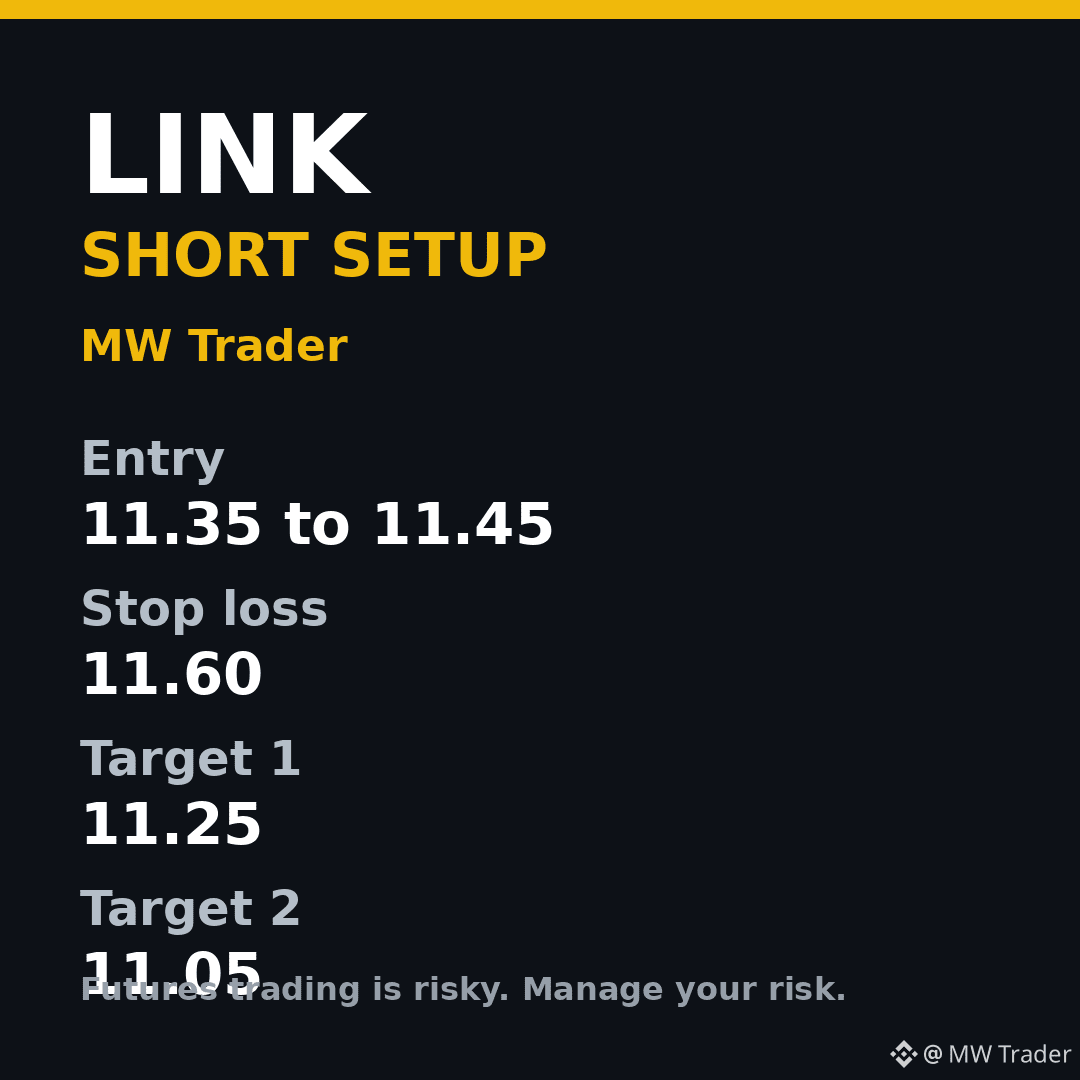
SHORT idea, fresh setup for 29 October
Entry: 11.35 to 11.45
Stop loss: 11.60
Target 1: 11.25
Target 2: 11.05
Chainlink is near 11.40, down 3.45 percent, with a range of 11.29 to 11.95. It is sitting close to the bottom of that range after a steady slide, with no real bounce so far. A short while price stays below 11.45 favours a move toward 11.25. Above 11.60, exit and wait for a fresh setup.
Futures trading is risky. Trade small, manage your risk, and do your own research.
#Chainlink #Crypto #FuturesTrading #TradingSignals
Follow for more trades.
1

·
--
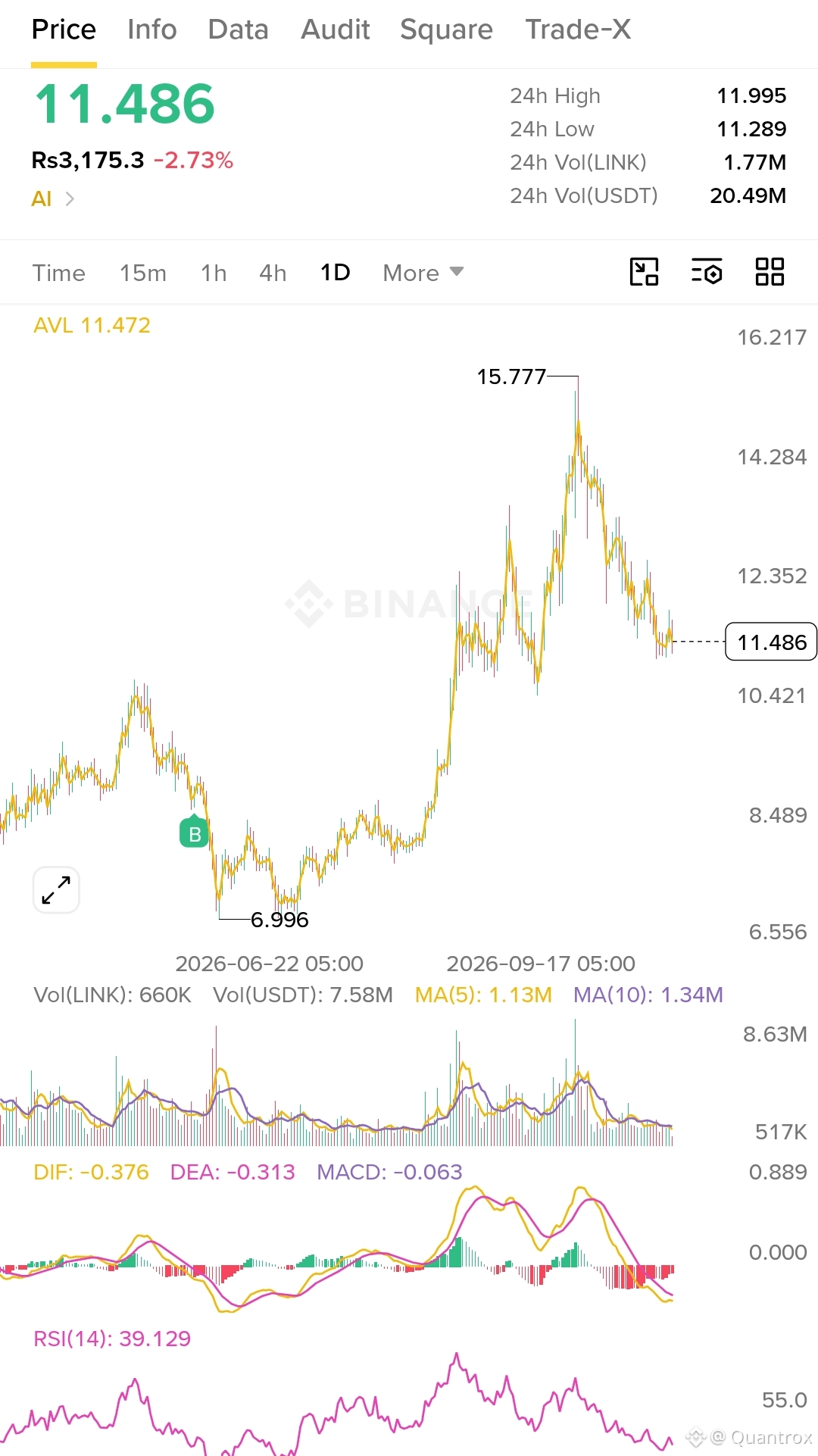
🚨 $LINK is red on the first day of Link:NYC, with the CFTC chairman giving a keynote. 🤔
Chainlink just went live with Anchorage Digital on CustodySync, and CCIP now secures over $85B in cross-chain value.
Yet the price is 27% below its September high, and LINK ETF flows sat flat for seven straight sessions. Great tech, no buyers yet.
Conference days can pump before the event and fade on the day. Which one is this?
Sell the event or buy the dip? 👇
#CryptoTrading #LINK #Chainlink
DYOR | NFA
91

·
--
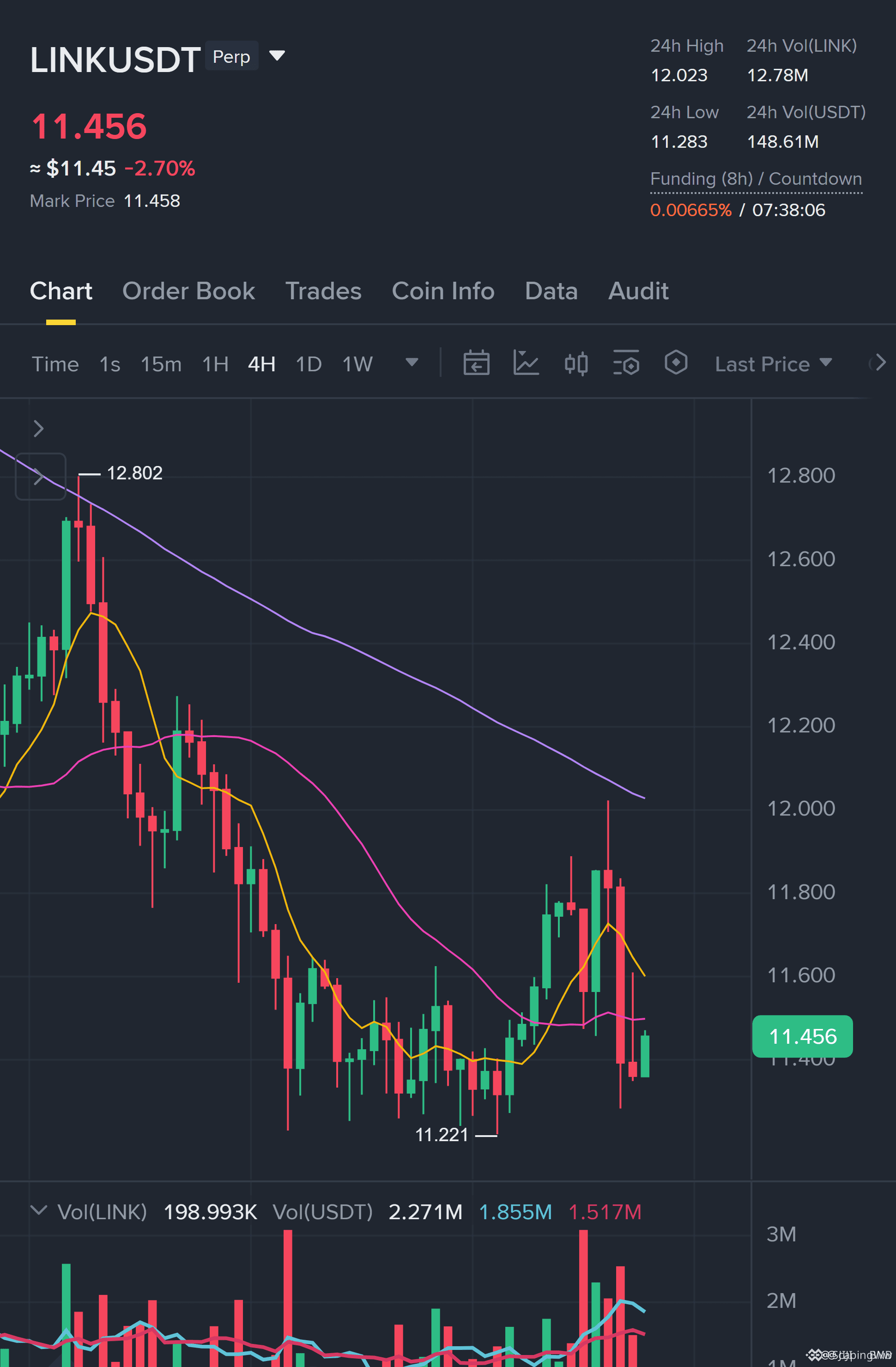
🚨 $LINK SLIDES INTO WHALE‑DRIVEN SHORT ZONE! ⚡
Entry: 11.414-11.441 ⚡
Target: 11.358 🚀
Target: 11.297 🎯
Target: 11.286 💥
Stop Loss: 11.537 ⚠️
📊 The 4‑hour EMA50/200 stack is screaming bearish while the 1‑hour RSI sits at 37.2, confirming the pressure. 🦈 Smart‑money is already nibbling the 11.44‑11.41 band, waiting for a clean reclaim candle to flip the script. ⚡
⚡ Once the zone is taken, the swing targets cascade down, but the first‑target reward is razor‑thin after fees. Keep an eye on the 11.344 support; a bounce there could choke the move. 💡
🤔 Are you ready to ride the short wave or waiting for a deeper dip? 👇
⚠️ Not financial advice. Always manage your risk. 🛡️
🏷️ #LINK #ShortSetup #Bearish #Crypto #Momentum
🔥 🦈
46

·
--
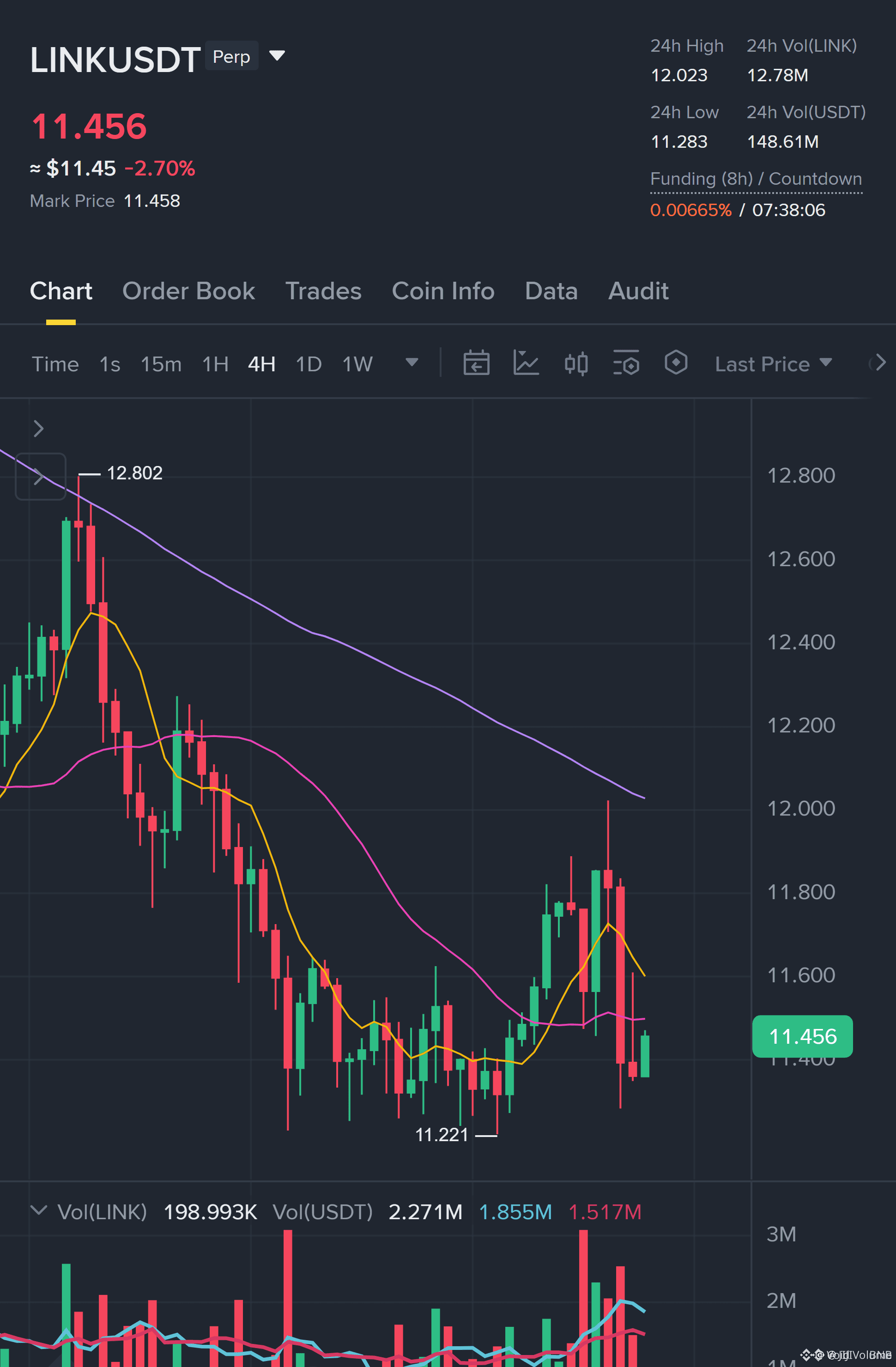
🔴🚨 $LINK SHORT TARGETING LIQUIDITY SWEEP ON 4H BEARISH EMA
Entry: 11.414–11.441 ⚡
Target: 11.358 🎯
Stop Loss: 11.537 ⚠️
📊 The 4‑hour EMA50/200 stack is firmly bearish, and the 1‑hour RSI lingered at 37.2, signaling sustained downside. A reclaimed zone between 11.414 and 11.441 acts as the smart‑money entry window, reinforced by a 15‑minute DI‑ dominance (23.4 / 31.3) and ADX 23.8 measuring directional strength. 🌊
📌 Expect the price to test the 11.344 support before sliding to TP1 at 11.358, then cascade through TP2/TP3. A breach above 11.537 would invalidate the short bias and trigger the stop. 🔍
💬 Are you ready to ride the short swing as the zone reclaims? 👇
⚠️ Not financial advice. Always manage your risk. 🛡️
🏷️ #LINK #ShortSetup #Crypto #Liquidity #Technical
🦈 🔥
3

·
--
$LINK looks ready to go up from here 🚀
Buyers stepped in near the low of $11.2890 today
Volume is strong at $20.2M which beats the weekly average
Price sits just 0.9 percent above the floor
🎯 Buy $LINK 11.3017 to 11.4183
Stop loss 11.2112
Targets 11.6707 / 11.8545 / 12.1301
Sitting inside the zone as I type this
Tap $LINK to buy
Last 7 days of my calls, 43 hit target and 90 hit stop
#LINK #TradingSignals
5

·
--
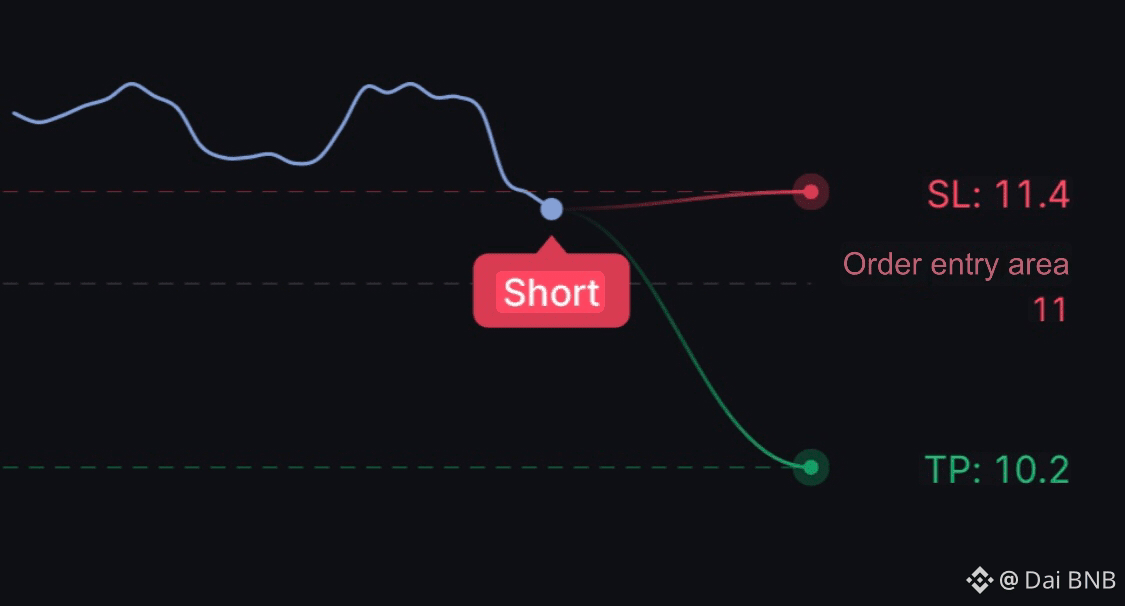
Bearish
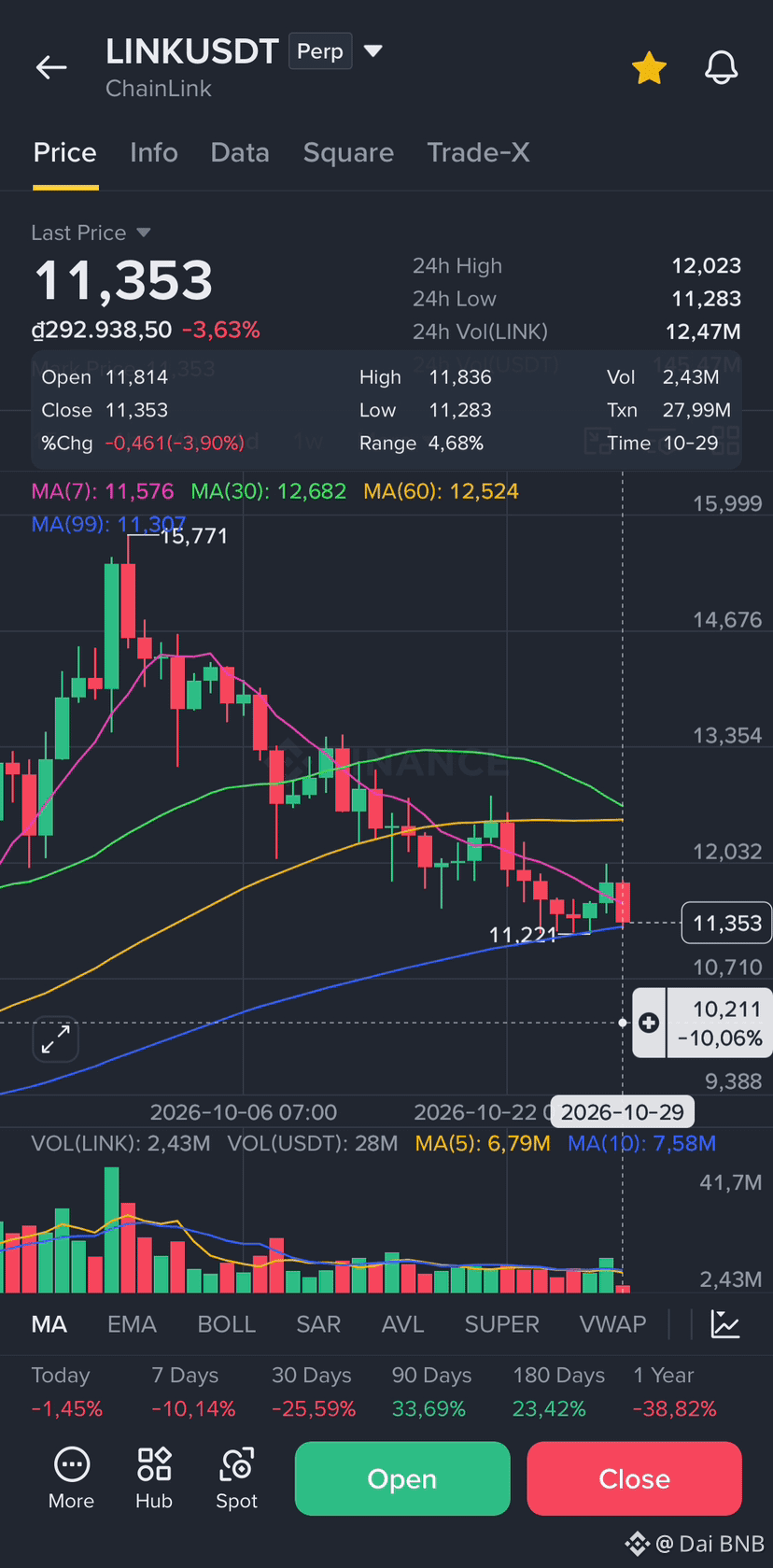
$LINK Short-Term Outlook: Just Two Points to Watch:
💡 Wait for Confirmation Signal
• Breakthrough Resistance
• Above 11.80
• Loss of Support
• Below 11.00 📉 Loss of Support Level
Approximately 21% of traders
Once the price breaks below 11.00 USDT, short-term profit-taking pressure combined with an excessively high Long position will create a chain liquidation effect, pulling the price back to test lower demand zones despite positive fundamental news.
#link
{future}(LINKUSDT)
$LINK Short-Term Outlook: Just Two Points to Watch:
💡 Wait for Confirmation Signal
• Breakthrough Resistance
• Above 11.80
• Loss of Support
• Below 11.00 📉 Loss of Support Level
Approximately 21% of traders
Once the price breaks below 11.00 USDT, short-term profit-taking pressure combined with an excessively high Long position will create a chain liquidation effect, pulling the price back to test lower demand zones despite positive fundamental news.
#link
80

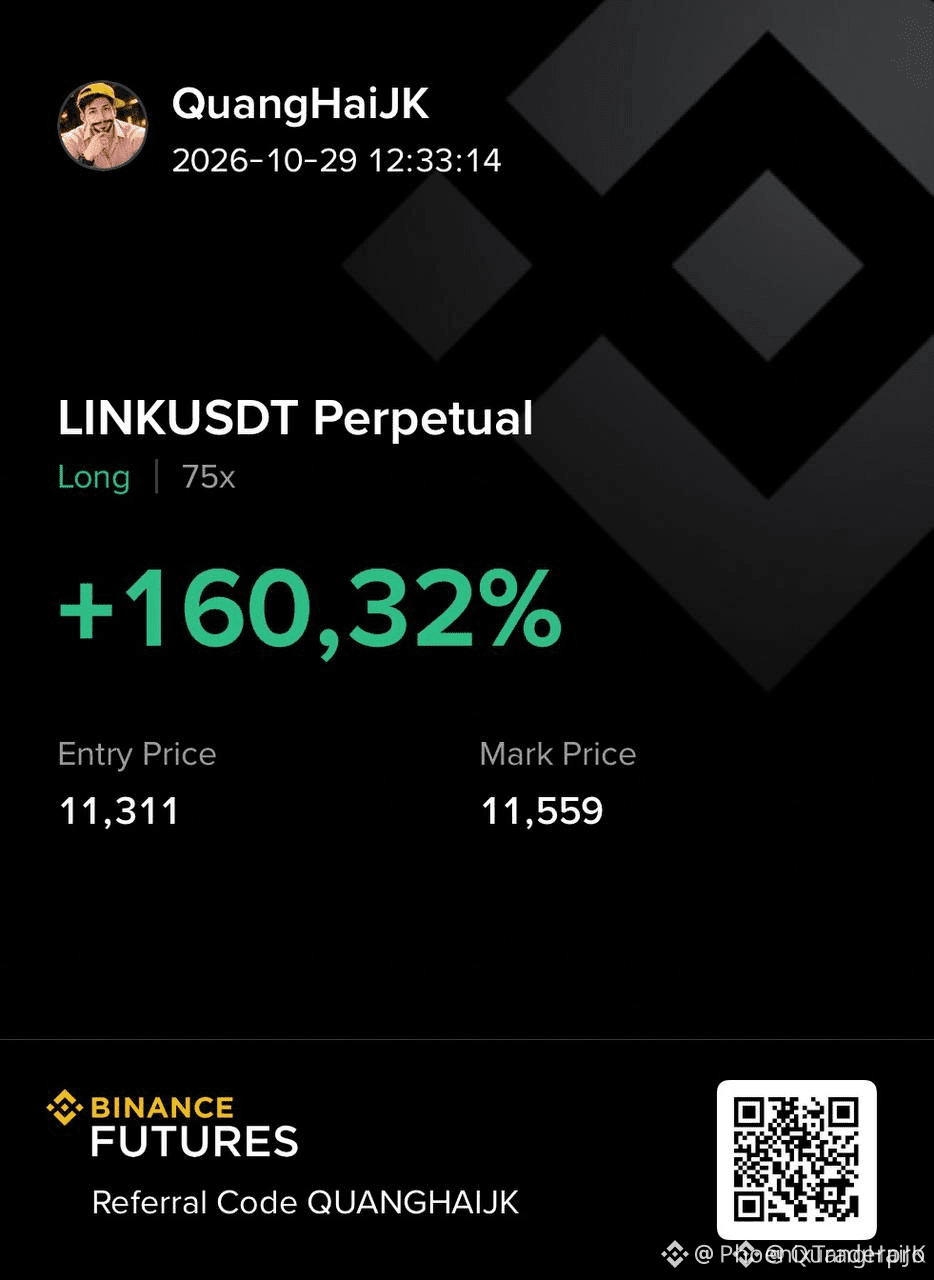
🚀 $LINK SURGES ON S&P INTEGRATION, EYES ON $14.6 BREAKOUT! 📈
Target: 14.6 🚀
Stop Loss: 9.2 ⚠️
Chainlink just locked in a heavyweight partnership as S&P Global Ratings expands its on‑chain vault risk analysis on Base. That move injects institutional credibility and fuels a fresh wave of cross‑chain lending demand. 📊
Buy pressure is already stacking above the $12 zone, and the order flow shows a classic liquidity sweep pattern—smart money is positioning for a clean run to $14.6. ⚡ 🌊
💬 Are you locking in the long or waiting for a deeper dip?
⚠️ Not financial advice. Always manage your risk. 🛡️
🏷️ #LINK #LongSetup #CrossChain #Crypto
🔥 💎
LINK+2.83%
SPGIUS+2.13%
5

🚨 $LINK SURGES ON S&P INTEGRATION, TARGETING $14.6 💥
Target: $14.6 🚀
Stop Loss: $9.2 ⚠️
🦈 Institutional appetite spikes as S&P Global Ratings deepens Chainlink integration on Base, anchoring on‑chain vault risk analytics. 📊 The fresh cross‑chain lending credentials turn the $LINK order block into a liquidity magnet, priming smart‑money inflows.
⚡ Volume is expanding and the $9.2 support has survived three prior sweeps. A clean break above $12 could unleash the $14.6 upside, delivering a tight risk‑reward edge. 💬 Do you see this as the next smart‑money rally? 👇
⚠️ Not financial advice. Always manage your risk. 🛡️
🏷️ #LINK #LongSetup #CrossChain #SmartMoney #Crypto
🔥 💎
2

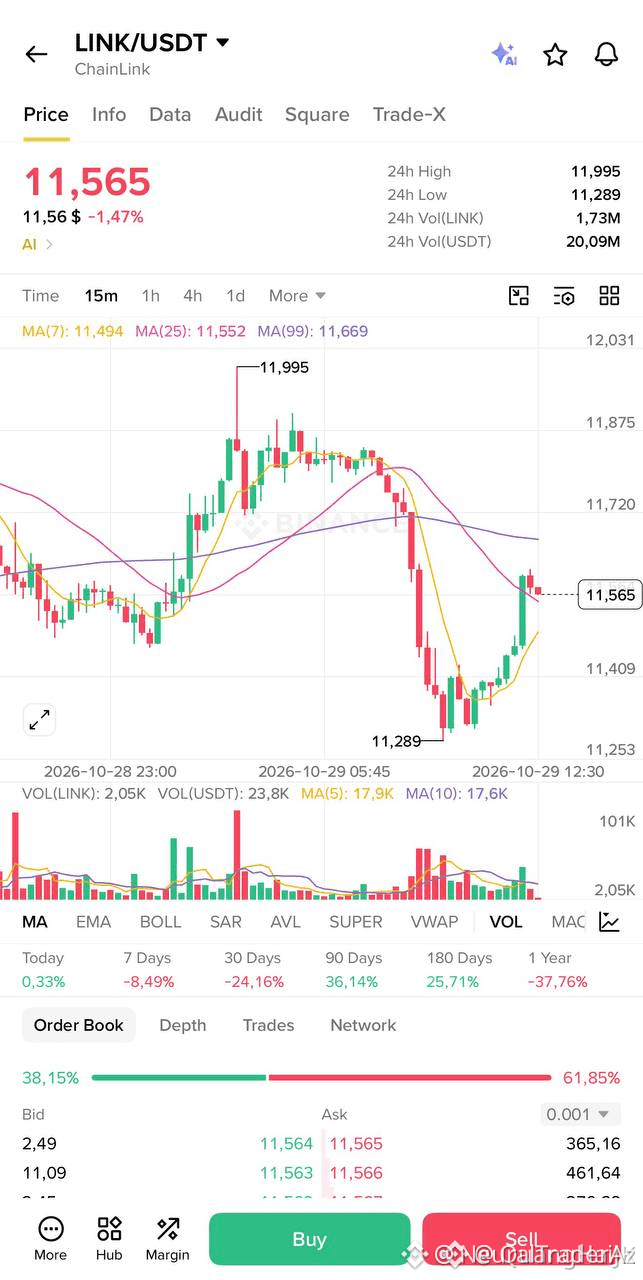
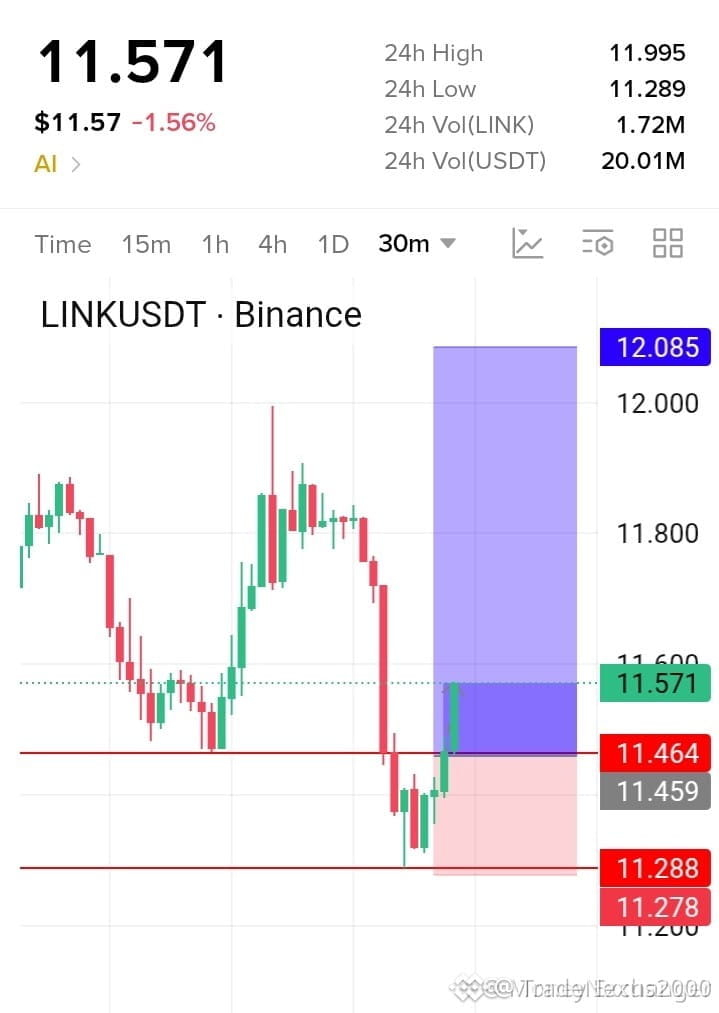
🚨 $LINK RECLAIMS MOMENTUM, EYES $12 BREAKOUT! 📈
Entry: 11.58 ⚡
Target: 12.10 / 12.50 🚀
Stop Loss: 11.15 ⚠️
Liquidity hunters have cleared the last bearish bucket, and the order block at 11.58 now sits on a clean demand zone. 📊 Volume spikes on the 4H chart confirm smart money accumulation as price nudges toward the $12 threshold. ⚡
A fresh swing to 12.10 aligns with the next bullish swing point, while 12.50 marks the next imbalance fill. 📌 Should we ride the retest or wait for a clean break? 💬
⚠️ Not financial advice. Always manage your risk. 🛡️
🏷️ #LINK #LongSetup #Breakout #Crypto
🔥 💎
6

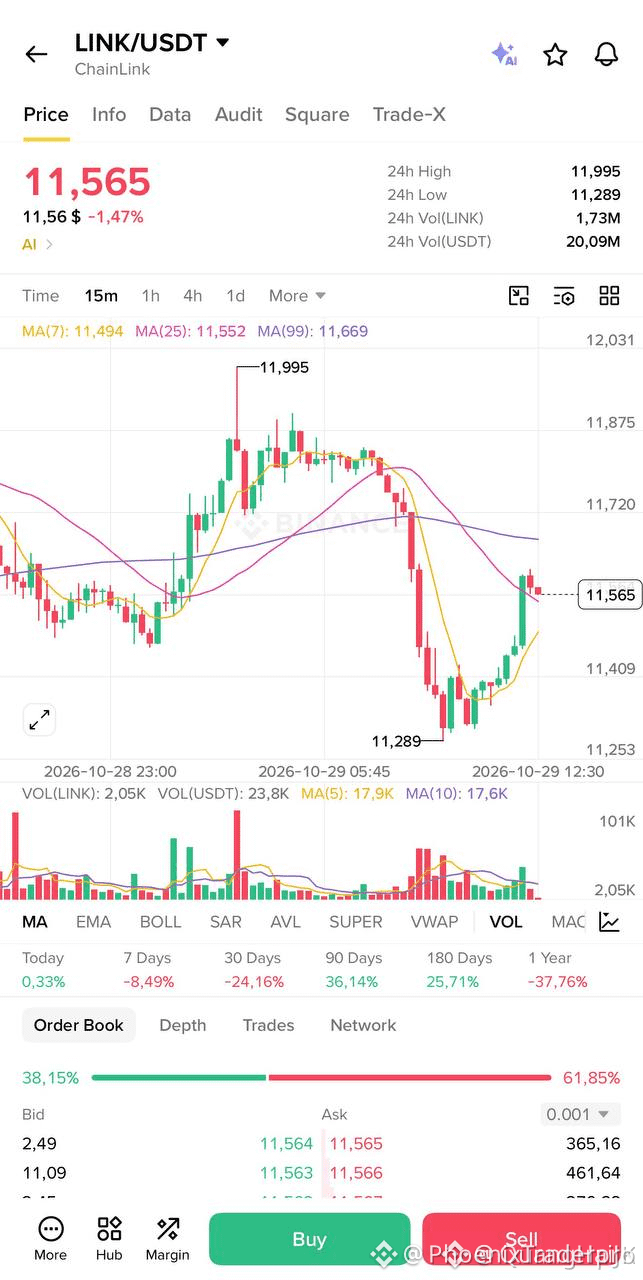
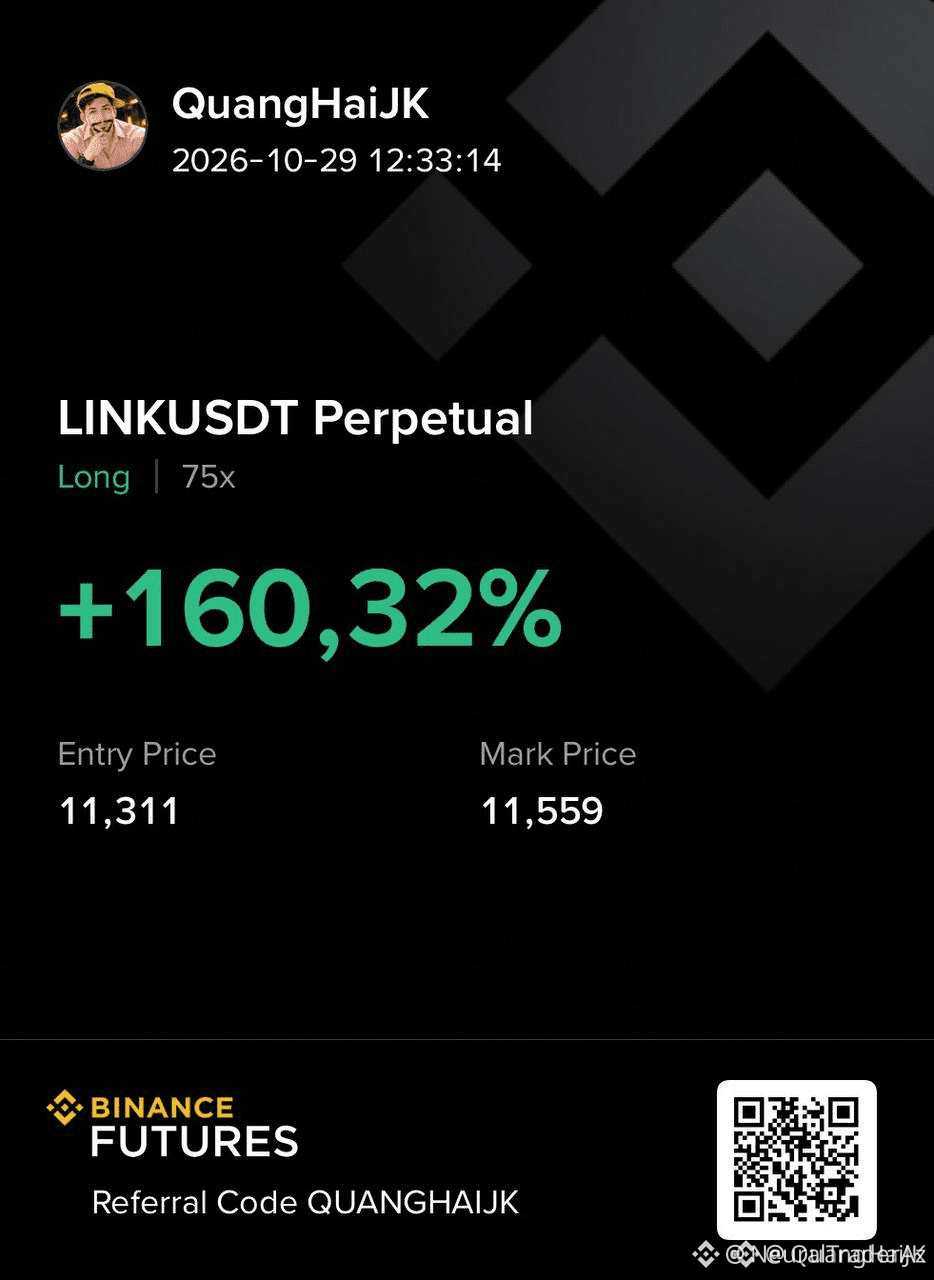
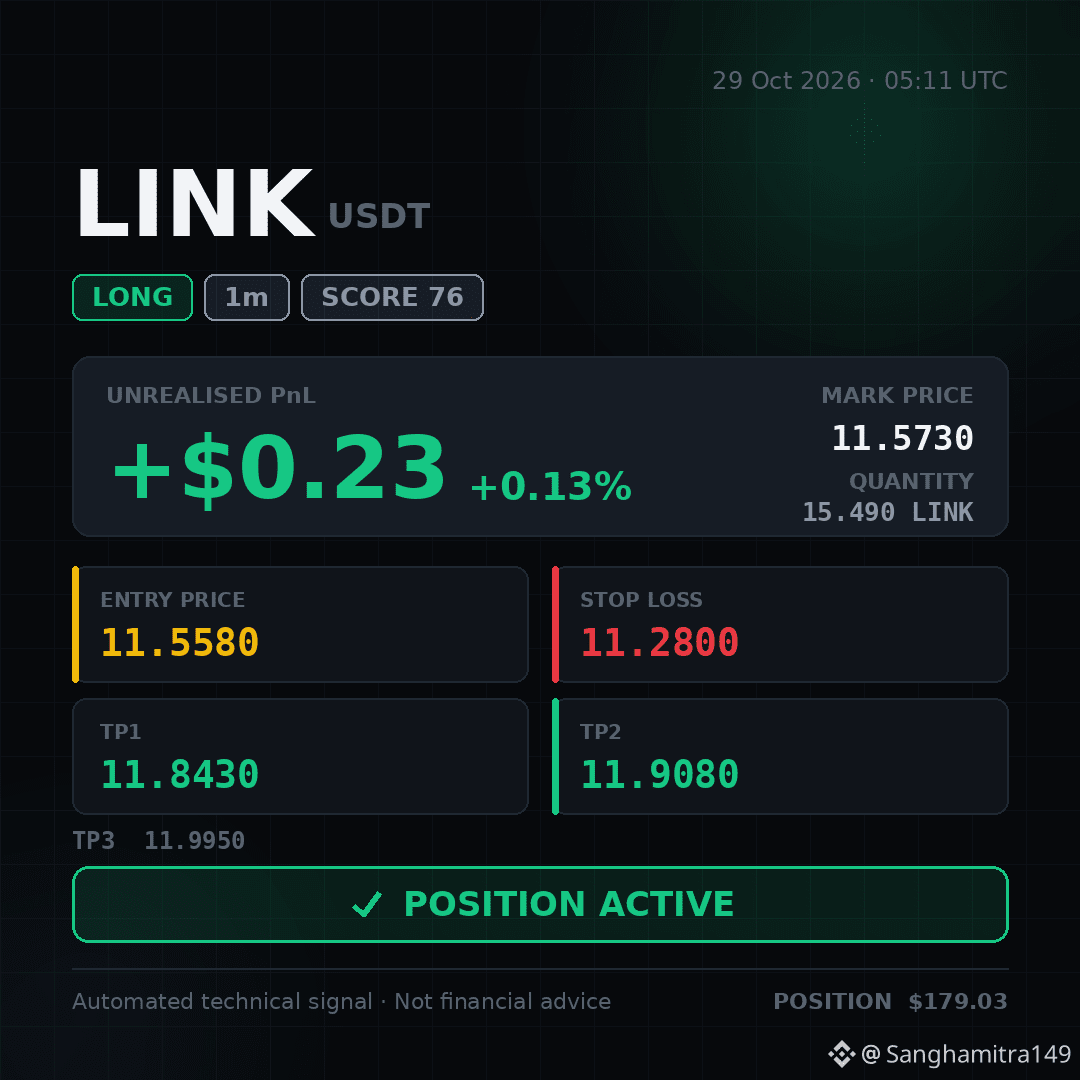
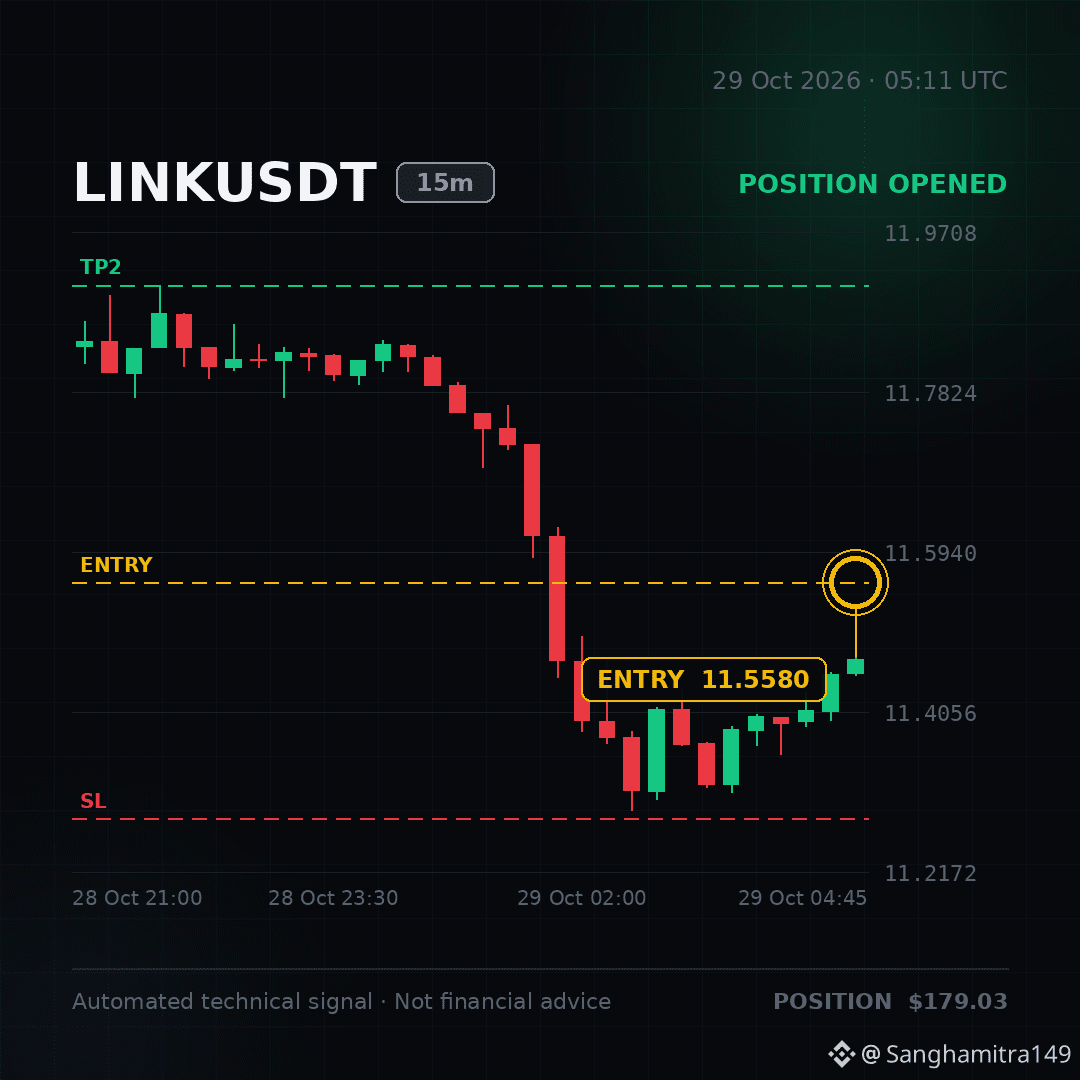
✅ POSITION ACTIVE — I've taken this long. Running at +0.13%.
🚨 #LINK SMC Sweep Ignites Massive Uptrend! 🤯⚡
I'm in, riding this wave now. $LINK 👇
Long..... Sweep..... Watch it explode.....‼️‼️‼️
Entry: 11.5420 – 11.5580
Stop-loss: 11.2800
🟢 TP1: 11.8430
🟢 TP2: 11.9080
🟢 TP3: 11.9950
Join me, trade the surge together! 👇⬇️⬇️ Long.. With meee...👇⬇️ $LINK
🚨 #LINK SMC Sweep Ignites Massive Uptrend! 🤯⚡
I'm in, riding this wave now. $LINK 👇
Long..... Sweep..... Watch it explode.....‼️‼️‼️
Entry: 11.5420 – 11.5580
Stop-loss: 11.2800
🟢 TP1: 11.8430
🟢 TP2: 11.9080
🟢 TP3: 11.9950
Join me, trade the surge together! 👇⬇️⬇️ Long.. With meee...👇⬇️ $LINK
Log in to explore more content
Join global crypto users on Binance Square
⚡️ Get latest and useful information about crypto.
💬 Trusted by the world’s largest crypto exchange.
👍 Discover real insights from verified creators.
Email / Phone number
Trending Topics
1
#FedWatch
16.2M views
38,685 Discussing
2
#EarningsSeason
6.3M views
31,435 Discussing
3
#USMidtermElections
8,494 views
286 Discussing
4
#BitcoinDropsBelow$80K
9,690 views
55 Discussing
5
#BoEOpensConsultationOnTokenizedCollateralForClearing
44 views
8 Discussing
6
#BrazilCryptoExchangesMustApplyForLicensesByFriday
5,031 views
236 Discussing
7
#ICEPartnersWithTradeXYZToBringPerpetualContractsToUS
505 views
12 Discussing
8
#SolidusLabsReportsSuspected$170MSpoofingOnHyperliquidOilContracts
865 views
23 Discussing
9
#StanDruckenmillerBecomesInvestorInTradeXYZ
6,142 views
244 Discussing
10
#RussiaProposedNonCustodialWalletLimitsExcludeIntlSettlements
1,401 views
37 Discussing