
MAKINET
4k Posts

MAKINET
Report
Block User
🚀 Crypto education & market insights | Simple beginner-friendly analysis | Learning step by step on Binance Square.
Open Trade
Frequent Trader
5.6 Years
991 Following
2.6K+ Followers
1.9K+ Liked
Posts
Portfolio
All
Quotes
Videos
Live
·
--
Bullish
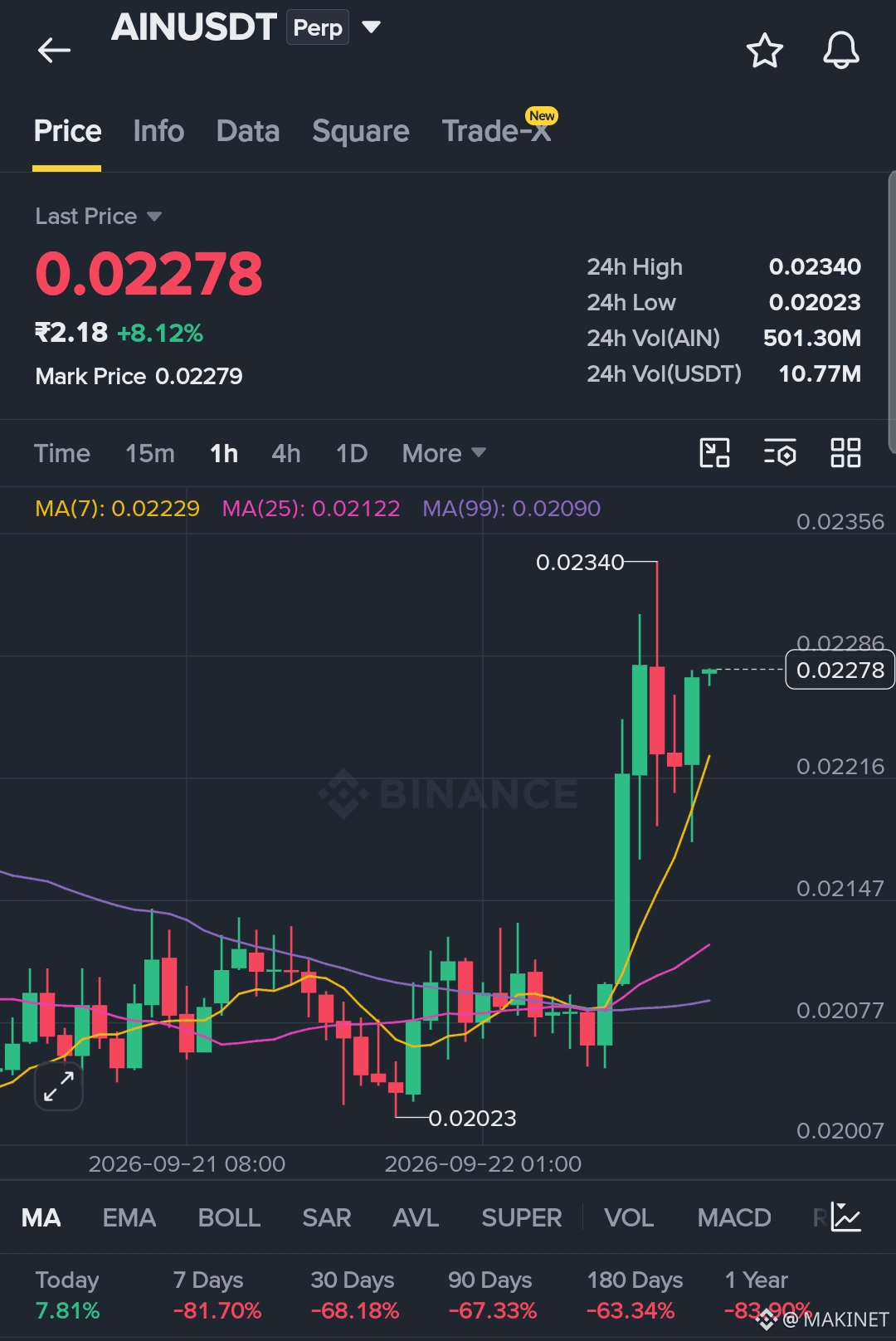
Long $AIN
Entry Zone: 0.021 –0.023
🎯 TP1: 0.026
🎯 TP2: 0.029
🛑 Stop Loss: 0.017
Trade here 👇
{future}(AINUSDT)
#AIStocksWhatNext #TokenizedStockPlatformsCouldLaunchNextQuarter #CardanoAddedToX402KitForADAPayments #XRPRises8% #Write2Earn
Long $AIN
Entry Zone: 0.021 –0.023
🎯 TP1: 0.026
🎯 TP2: 0.029
🛑 Stop Loss: 0.017
Trade here 👇
#AIStocksWhatNext #TokenizedStockPlatformsCouldLaunchNextQuarter #CardanoAddedToX402KitForADAPayments #XRPRises8% #Write2Earn
Entry Zone: 0.021 –0.023
🎯 TP1: 0.026
🎯 TP2: 0.029
🛑 Stop Loss: 0.017
Trade here 👇
#AIStocksWhatNext #TokenizedStockPlatformsCouldLaunchNextQuarter #CardanoAddedToX402KitForADAPayments #XRPRises8% #Write2Earn
351
·
--
Bullish
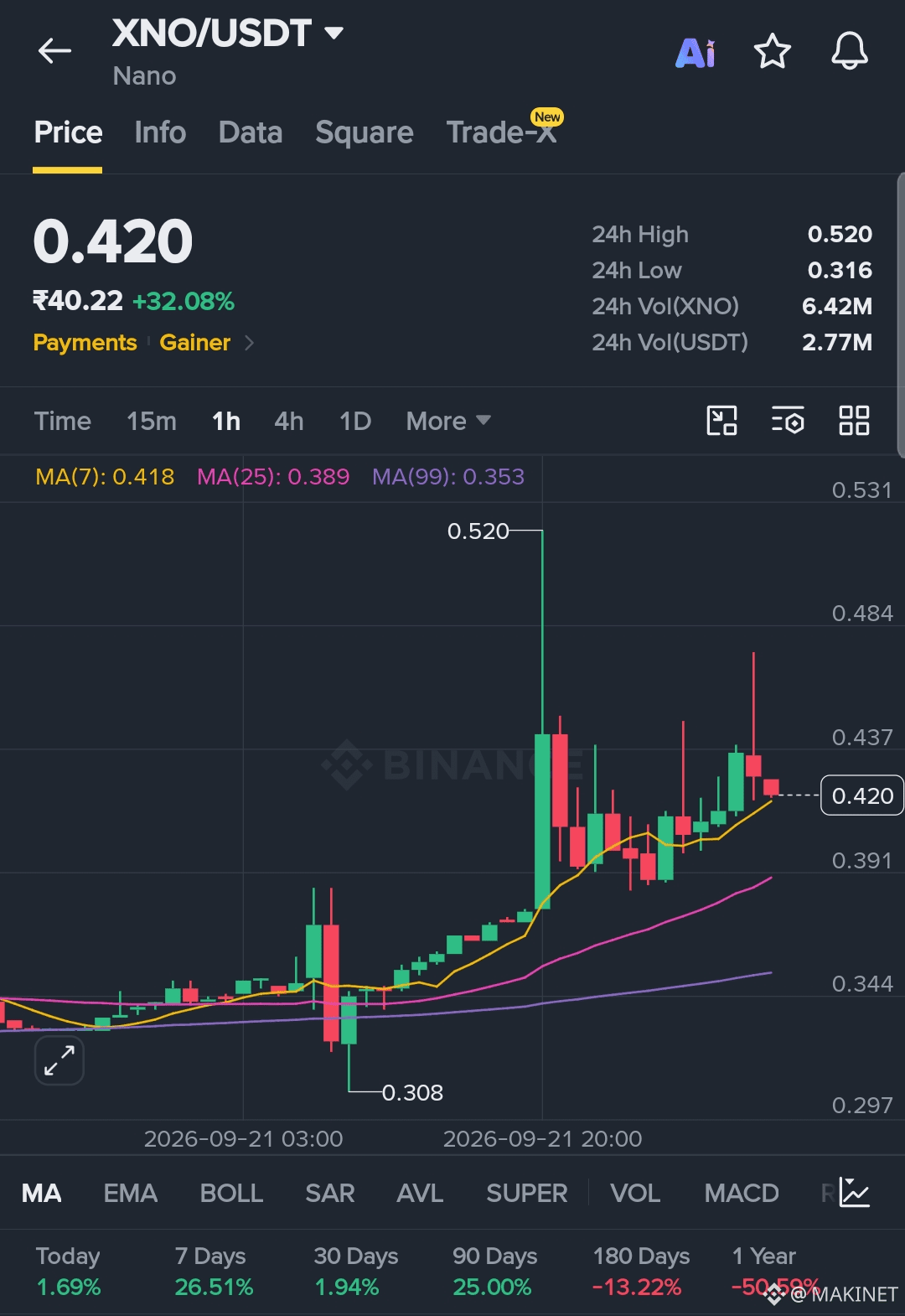
LONG $XNO : $0.436
📍 Entry: $0.425–$0.437
🎯 EP: $0.436
🎯 TP1: $0.465
🎯 TP2: $0.495
🛑 SL: $0.398
Trade here 👇
{spot}(XNOUSDT)
#CardanoAddedToX402KitForADAPayments #XRPRises8% #AgoraGetsPreliminaryOCCApprovalForTrustBank #NEARRisesNearly80%InAWeek #MultiversXPlansHardForkRecovery
LONG $XNO : $0.436
📍 Entry: $0.425–$0.437
🎯 EP: $0.436
🎯 TP1: $0.465
🎯 TP2: $0.495
🛑 SL: $0.398
Trade here 👇
#CardanoAddedToX402KitForADAPayments #XRPRises8% #AgoraGetsPreliminaryOCCApprovalForTrustBank #NEARRisesNearly80%InAWeek #MultiversXPlansHardForkRecovery
📍 Entry: $0.425–$0.437
🎯 EP: $0.436
🎯 TP1: $0.465
🎯 TP2: $0.495
🛑 SL: $0.398
Trade here 👇
#CardanoAddedToX402KitForADAPayments #XRPRises8% #AgoraGetsPreliminaryOCCApprovalForTrustBank #NEARRisesNearly80%InAWeek #MultiversXPlansHardForkRecovery
75
·
--
Bullish
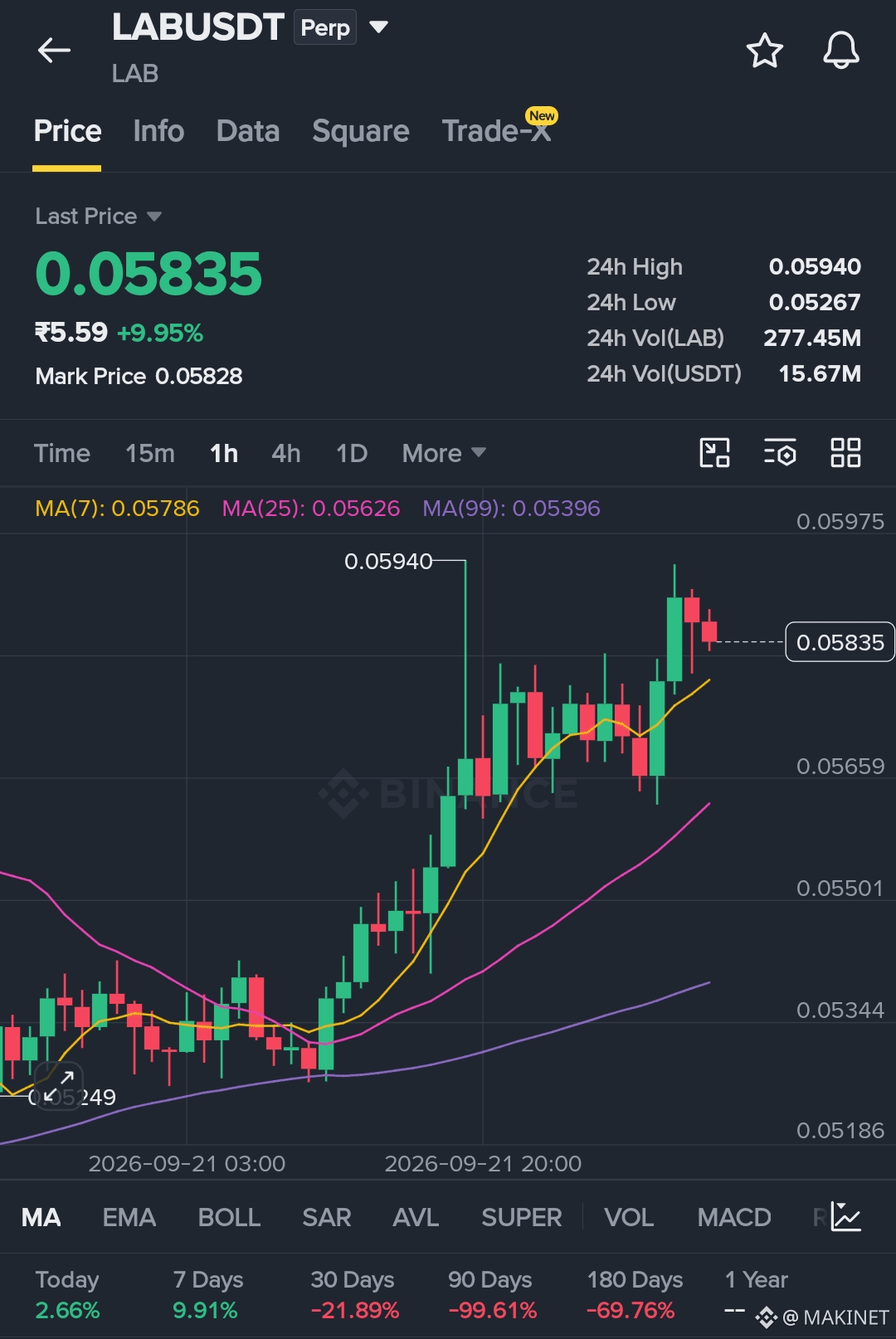
$LAB WATCHING THIS ONE CLOSELY
LAB is in a zone where if strong volume comes, it could become interesting to move. I am not doing a blind long here; I will wait for confirmation first.
Entry: 0.055 – 0.058
TP1: 0.062
TP2: 0.068
TP3: 0.075
Stop Loss: 0.051
Trade here 👇
{future}(LABUSDT)
#XRPRises8% #AppleGoogleSeekStablecoinTokenizedDepositTalent #AgoraGetsPreliminaryOCCApprovalForTrustBank #MultiversXPlansHardForkRecovery #Write2Earn
$LAB WATCHING THIS ONE CLOSELY
LAB is in a zone where if strong volume comes, it could become interesting to move. I am not doing a blind long here; I will wait for confirmation first.
Entry: 0.055 – 0.058
TP1: 0.062
TP2: 0.068
TP3: 0.075
Stop Loss: 0.051
Trade here 👇
#XRPRises8% #AppleGoogleSeekStablecoinTokenizedDepositTalent #AgoraGetsPreliminaryOCCApprovalForTrustBank #MultiversXPlansHardForkRecovery #Write2Earn
LAB is in a zone where if strong volume comes, it could become interesting to move. I am not doing a blind long here; I will wait for confirmation first.
Entry: 0.055 – 0.058
TP1: 0.062
TP2: 0.068
TP3: 0.075
Stop Loss: 0.051
Trade here 👇
#XRPRises8% #AppleGoogleSeekStablecoinTokenizedDepositTalent #AgoraGetsPreliminaryOCCApprovalForTrustBank #MultiversXPlansHardForkRecovery #Write2Earn
47
·
--
Bullish
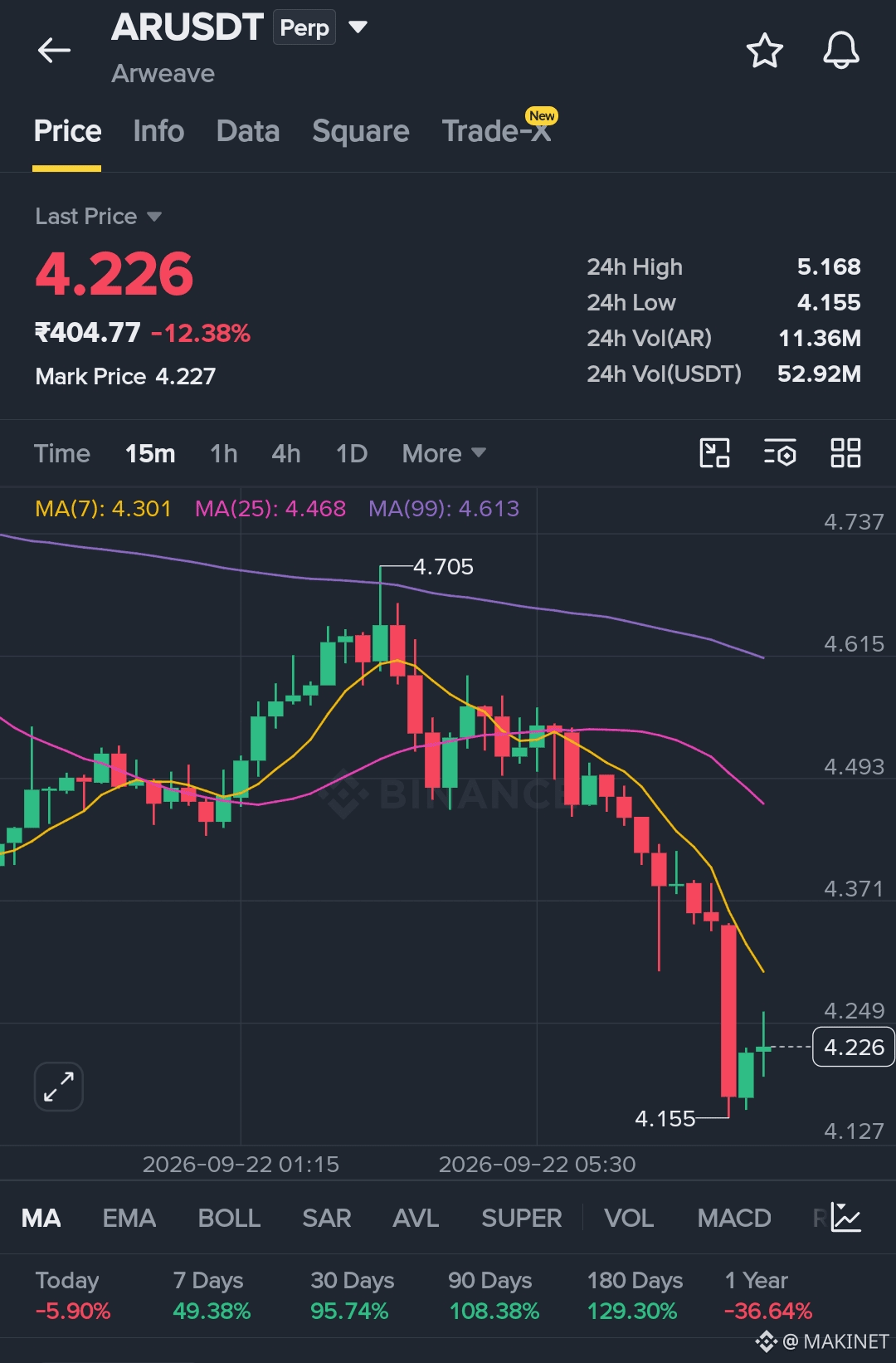
LONG $AR
📈 Trade Plan:
📈 Entry: 4.222 – 4.265
🛑 Stop: 4.094
🎯 TP1: 4.541
🎯 TP2: 4.691
🎯 TP3: 4.764
📊 Confidence: 78%
Trade here 👇
{spot}(ARUSDT)
#XRPRises8% #AgoraGetsPreliminaryOCCApprovalForTrustBank #AgoraGetsPreliminaryOCCApprovalForTrustBank #NEARRisesNearly80%InAWeek #MultiversXPlansHardForkRecovery
LONG $AR
📈 Trade Plan:
📈 Entry: 4.222 – 4.265
🛑 Stop: 4.094
🎯 TP1: 4.541
🎯 TP2: 4.691
🎯 TP3: 4.764
📊 Confidence: 78%
Trade here 👇
#XRPRises8% #AgoraGetsPreliminaryOCCApprovalForTrustBank #AgoraGetsPreliminaryOCCApprovalForTrustBank #NEARRisesNearly80%InAWeek #MultiversXPlansHardForkRecovery
📈 Trade Plan:
📈 Entry: 4.222 – 4.265
🛑 Stop: 4.094
🎯 TP1: 4.541
🎯 TP2: 4.691
🎯 TP3: 4.764
📊 Confidence: 78%
Trade here 👇
#XRPRises8% #AgoraGetsPreliminaryOCCApprovalForTrustBank #AgoraGetsPreliminaryOCCApprovalForTrustBank #NEARRisesNearly80%InAWeek #MultiversXPlansHardForkRecovery
1
372
·
--
Bearish
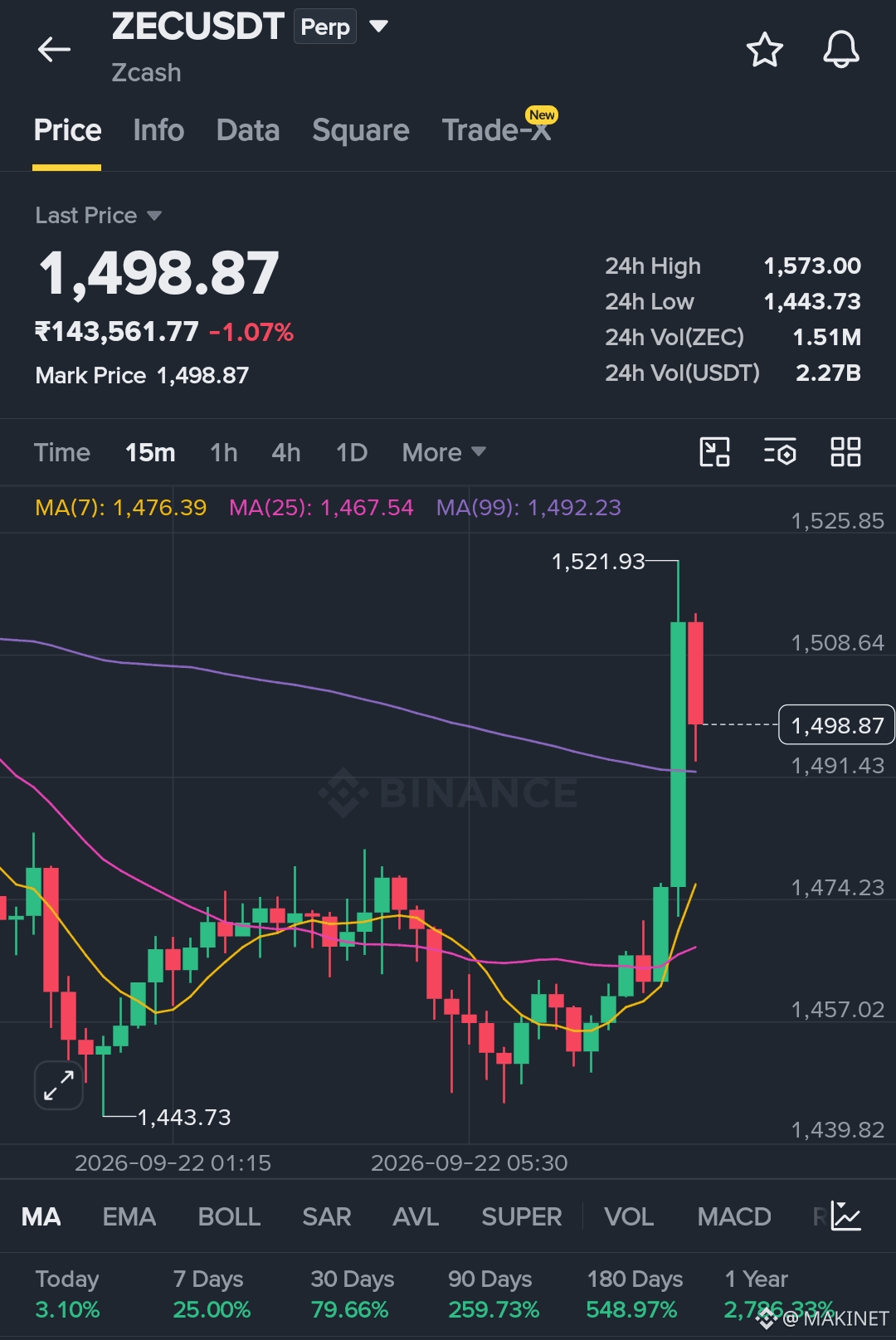
$ZEC Another Round of Shorts on zeecash, although it has a huge number of liquidation at 1600$, but for now we'll be hunting it down
💸
Plan Short
Entry 1525-1540
SL: 1619
Targets:
TP1: 1499
TP2: 1470
TP3: 1420
TP4: 1355
Big Short Now 👇🏻
{future}(ZECUSDT)
$ZEC Another Round of Shorts on zeecash, although it has a huge number of liquidation at 1600$, but for now we'll be hunting it down
💸
Plan Short
Entry 1525-1540
SL: 1619
Targets:
TP1: 1499
TP2: 1470
TP3: 1420
TP4: 1355
Big Short Now 👇🏻
💸
Plan Short
Entry 1525-1540
SL: 1619
Targets:
TP1: 1499
TP2: 1470
TP3: 1420
TP4: 1355
Big Short Now 👇🏻
73
·
--
Bullish
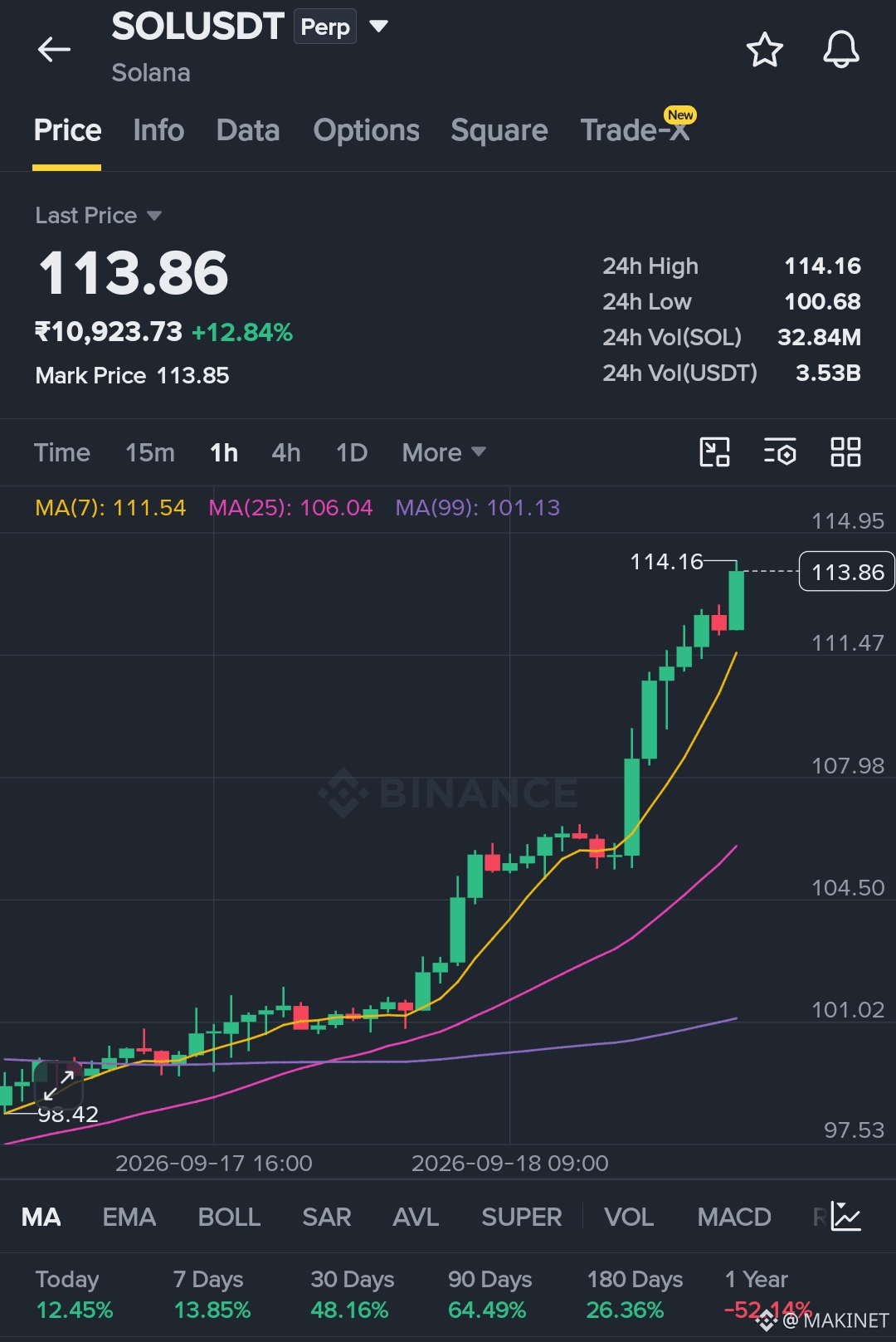
LONG $SOL
Entry: 113.42–113.64
TP1: 116.93
TP2: 119.77
TP3: 122.61
Stop Loss: 111.13
Trade here 👇
{future}(SOLUSDT)
#BTCBreaks80K #BuffettBecomesBerkshireChairmanEmeritus #HYPEJumpsOver11% #ZcashDevelopersTargetNU7MainnetActivationNov5 #BOJHikesRatesTo31YearHigh
LONG $SOL
Entry: 113.42–113.64
TP1: 116.93
TP2: 119.77
TP3: 122.61
Stop Loss: 111.13
Trade here 👇
#BTCBreaks80K #BuffettBecomesBerkshireChairmanEmeritus #HYPEJumpsOver11% #ZcashDevelopersTargetNU7MainnetActivationNov5 #BOJHikesRatesTo31YearHigh
Entry: 113.42–113.64
TP1: 116.93
TP2: 119.77
TP3: 122.61
Stop Loss: 111.13
Trade here 👇
#BTCBreaks80K #BuffettBecomesBerkshireChairmanEmeritus #HYPEJumpsOver11% #ZcashDevelopersTargetNU7MainnetActivationNov5 #BOJHikesRatesTo31YearHigh
169
·
--
Bullish
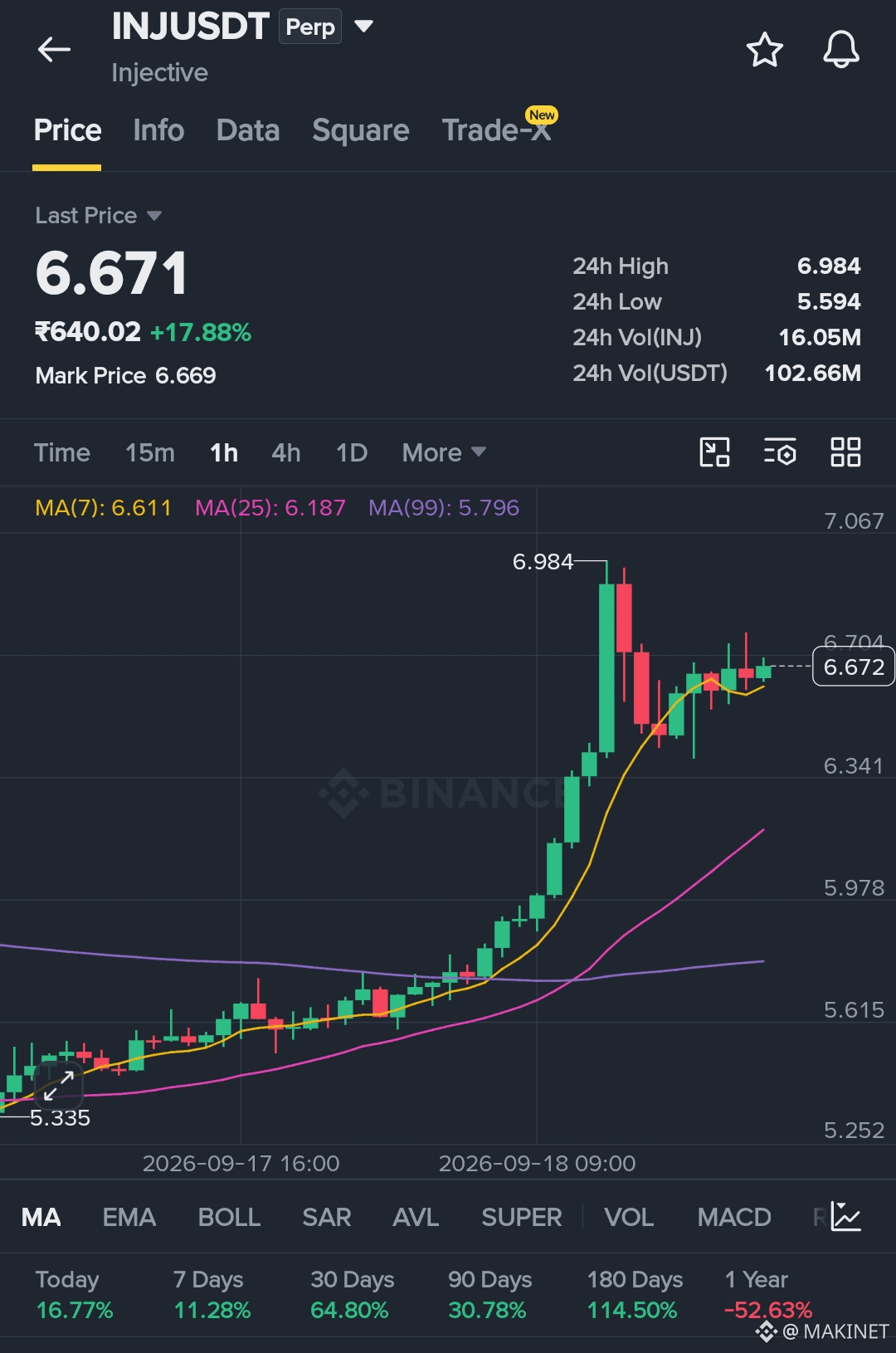
LONG $INJ
Entry: $6.6108 — $6.6573
TP1: $6.8765
TP2: $7.2087
TP3: $7.6406
SL: $6.3517
Trade here 👇
{future}(INJUSDT)
#BTCBreaks80K #BuffettBecomesBerkshireChairmanEmeritus #HYPEJumpsOver11% #Write2Earn #HKMAPlansWholesaleCBDCByYearEnd
LONG $INJ
Entry: $6.6108 — $6.6573
TP1: $6.8765
TP2: $7.2087
TP3: $7.6406
SL: $6.3517
Trade here 👇
#BTCBreaks80K #BuffettBecomesBerkshireChairmanEmeritus #HYPEJumpsOver11% #Write2Earn #HKMAPlansWholesaleCBDCByYearEnd
Entry: $6.6108 — $6.6573
TP1: $6.8765
TP2: $7.2087
TP3: $7.6406
SL: $6.3517
Trade here 👇
#BTCBreaks80K #BuffettBecomesBerkshireChairmanEmeritus #HYPEJumpsOver11% #Write2Earn #HKMAPlansWholesaleCBDCByYearEnd
122
·
--
Bullish
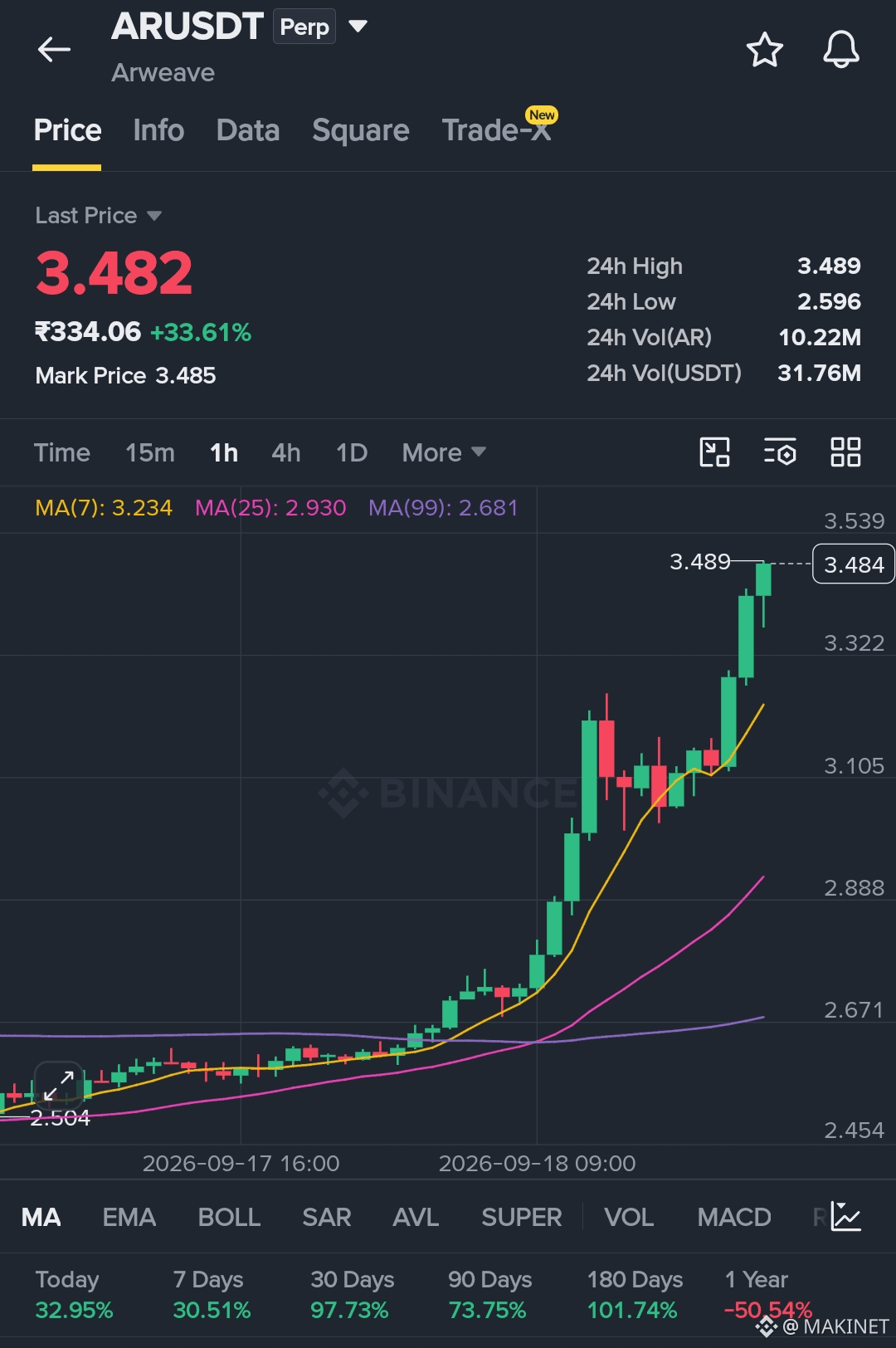
Long $AR
Entry: 3.40$ – 3.48$
SL: 3.25$
TP1: 3.60$
TP2: 3.75$
TP3: 3.90$
Trade here 👇
{future}(ARUSDT)
#BTCBreaks80K #BuffettBecomesBerkshireChairmanEmeritus #HYPEJumpsOver11% #ZcashDevelopersTargetNU7MainnetActivationNov5 #Write2Earn
Long $AR
Entry: 3.40$ – 3.48$
SL: 3.25$
TP1: 3.60$
TP2: 3.75$
TP3: 3.90$
Trade here 👇
#BTCBreaks80K #BuffettBecomesBerkshireChairmanEmeritus #HYPEJumpsOver11% #ZcashDevelopersTargetNU7MainnetActivationNov5 #Write2Earn
Entry: 3.40$ – 3.48$
SL: 3.25$
TP1: 3.60$
TP2: 3.75$
TP3: 3.90$
Trade here 👇
#BTCBreaks80K #BuffettBecomesBerkshireChairmanEmeritus #HYPEJumpsOver11% #ZcashDevelopersTargetNU7MainnetActivationNov5 #Write2Earn
1
229
·
--
🎙️ Crypto market updates exchange; Newcomer Q&A✅ Build Binance Square together 🦅 Spread the idea of freedom! Maintain ecological balance!
End
03 h 12 m 18 s
10.3k
23
58
·
--

Article
Solana's Rally Is Institutional-Led, That Makes It Stronger, Not WeakerHere's my take, and it cuts against a common assumption: when a rally is driven mainly by institutional flows and governance mechanics rather than retail hype, that's a more trustworthy setup, not a more fragile one and $SOL current move is a good test case.
The retail-hype version of a rally usually looks like this: social media buzz spikes, price runs up fast on thin order books, and the move unwinds just as quickly once attention moves elsewhere. Solana's rally looks structurally different. It's built on five consecutive days of spot ETF inflows totaling over $1.2 billion cumulatively, a governance vote with concrete tokenomics implications (a potential 14x increase in daily burn rate), and sustained DEX volume that's been outpacing centralized exchanges for nine straight weeks. Those are slower-moving, harder-to-fake signals than social sentiment.
Compare that to $ETH recent demand, which shows a similar institutional pattern combined ETF inflows plus a disclosed corporate treasury purchase and to $XRP recent 22% rally, which leaned more heavily on a short squeeze than on a comparable institutional inflow story. Not every rally in this market right now has the same foundation, even though headlines often lump them together as "the market is up."
The counter-argument, and it's worth taking seriously: institutional flows aren't permanent commitments ETF inflows can reverse into outflows just as quickly if broader risk sentiment shifts, and a failed governance vote (or one that passes but delivers less burn impact than modeled) could unwind the fundamentals-driven part of this narrative fast. "Institutional-led" doesn't mean "immune to reversal," it just means the initial catalyst is more substantive than pure hype.
There's also a technical caution flag: SOL's RSI hit levels above 84 during the recent rally genuinely overbought territory regardless of how good the underlying fundamentals look. Good fundamentals and stretched technicals can coexist, and the stretched technicals are usually what determine the next 1-2 weeks of price action, while fundamentals matter more over the following months.
Where I land: I'd trust this rally's foundation more than a purely retail-driven one, but I wouldn't ignore the overbought signal just because the fundamental story is strong — those are two different timeframes of analysis, and both deserve weight.
Do you weight institutional flow data more heavily than technical indicators when they disagree, or does an overbought signal override a strong fundamental story for you?
{future}(XRPUSDT)
{future}(ETHUSDT)
{future}(SOLUSDT)
#Write2Earn #solana #Ethereum #xrp #CryptoOpinion
Solana's Rally Is Institutional-Led, That Makes It Stronger, Not Weaker
Here's my take, and it cuts against a common assumption: when a rally is driven mainly by institutional flows and governance mechanics rather than retail hype, that's a more trustworthy setup, not a more fragile one and $SOL current move is a good test case.
The retail-hype version of a rally usually looks like this: social media buzz spikes, price runs up fast on thin order books, and the move unwinds just as quickly once attention moves elsewhere. Solana's rally looks structurally different. It's built on five consecutive days of spot ETF inflows totaling over $1.2 billion cumulatively, a governance vote with concrete tokenomics implications (a potential 14x increase in daily burn rate), and sustained DEX volume that's been outpacing centralized exchanges for nine straight weeks. Those are slower-moving, harder-to-fake signals than social sentiment.
Compare that to $ETH recent demand, which shows a similar institutional pattern combined ETF inflows plus a disclosed corporate treasury purchase and to $XRP recent 22% rally, which leaned more heavily on a short squeeze than on a comparable institutional inflow story. Not every rally in this market right now has the same foundation, even though headlines often lump them together as "the market is up."
The counter-argument, and it's worth taking seriously: institutional flows aren't permanent commitments ETF inflows can reverse into outflows just as quickly if broader risk sentiment shifts, and a failed governance vote (or one that passes but delivers less burn impact than modeled) could unwind the fundamentals-driven part of this narrative fast. "Institutional-led" doesn't mean "immune to reversal," it just means the initial catalyst is more substantive than pure hype.
There's also a technical caution flag: SOL's RSI hit levels above 84 during the recent rally genuinely overbought territory regardless of how good the underlying fundamentals look. Good fundamentals and stretched technicals can coexist, and the stretched technicals are usually what determine the next 1-2 weeks of price action, while fundamentals matter more over the following months.
Where I land: I'd trust this rally's foundation more than a purely retail-driven one, but I wouldn't ignore the overbought signal just because the fundamental story is strong — those are two different timeframes of analysis, and both deserve weight.
Do you weight institutional flow data more heavily than technical indicators when they disagree, or does an overbought signal override a strong fundamental story for you?
#Write2Earn #solana #Ethereum #xrp #CryptoOpinion
The retail-hype version of a rally usually looks like this: social media buzz spikes, price runs up fast on thin order books, and the move unwinds just as quickly once attention moves elsewhere. Solana's rally looks structurally different. It's built on five consecutive days of spot ETF inflows totaling over $1.2 billion cumulatively, a governance vote with concrete tokenomics implications (a potential 14x increase in daily burn rate), and sustained DEX volume that's been outpacing centralized exchanges for nine straight weeks. Those are slower-moving, harder-to-fake signals than social sentiment.
Compare that to $ETH recent demand, which shows a similar institutional pattern combined ETF inflows plus a disclosed corporate treasury purchase and to $XRP recent 22% rally, which leaned more heavily on a short squeeze than on a comparable institutional inflow story. Not every rally in this market right now has the same foundation, even though headlines often lump them together as "the market is up."
The counter-argument, and it's worth taking seriously: institutional flows aren't permanent commitments ETF inflows can reverse into outflows just as quickly if broader risk sentiment shifts, and a failed governance vote (or one that passes but delivers less burn impact than modeled) could unwind the fundamentals-driven part of this narrative fast. "Institutional-led" doesn't mean "immune to reversal," it just means the initial catalyst is more substantive than pure hype.
There's also a technical caution flag: SOL's RSI hit levels above 84 during the recent rally genuinely overbought territory regardless of how good the underlying fundamentals look. Good fundamentals and stretched technicals can coexist, and the stretched technicals are usually what determine the next 1-2 weeks of price action, while fundamentals matter more over the following months.
Where I land: I'd trust this rally's foundation more than a purely retail-driven one, but I wouldn't ignore the overbought signal just because the fundamental story is strong — those are two different timeframes of analysis, and both deserve weight.
Do you weight institutional flow data more heavily than technical indicators when they disagree, or does an overbought signal override a strong fundamental story for you?
#Write2Earn #solana #Ethereum #xrp #CryptoOpinion
134
·
--

Article
How to Position Around a Known Catalyst Event$SOL governance vote, expected to conclude soon, is a textbook example of a "known catalyst" an event with a specific, foreseeable date where the outcome could meaningfully move price in either direction. Trading around known catalysts (governance votes, ETF decision deadlines, legislative votes like the pending Clarity Act procedural vote) requires a different approach than trading on unexpected news, because you actually have time to prepare.
The setup conditions. A known catalyst is tradeable with a framework specifically because uncertainty is concentrated into a defined window before the vote, you don't know the outcome; after, you do. That structure lets you separate "pre-catalyst positioning" from "post-catalyst reaction" as two distinct decisions, rather than treating the whole period as one continuous trade.
The framework three positioning windows.
Pre-catalyst (now, ahead of the Solana vote result): Reduce position size relative to your normal conviction level, regardless of how bullish the setup looks. Even a fundamentally strong case (institutional ETF inflows, growing DEX volume, a validator and co-founder publicly backing the proposal) doesn't guarantee the vote passes as expected position for the uncertainty, not just the narrative.At the catalyst (vote result release): Avoid placing large fresh orders in the first few minutes after the outcome is announced this is when volatility and slippage are highest, and algorithmic and high-frequency positioning often overreacts before settling.Post-catalyst (once the result and initial market reaction are both known): This is when higher-conviction sizing makes sense you're now trading a confirmed outcome rather than a probability, whether that means adding to a position on confirmed good news or stepping aside if the result disappoints.
Applying it right now: with $SOL sitting near its $100 breakout zone ahead of the governance result, and Bitcoin and Ethereum both still working through their own post-squeeze consolidation, this is a moment to keep position sizes moderate across the board rather than making an outsized bet on any single catalyst outcome.
Risk management the part people skip. Set your invalidation level before the catalyst, not after decide in advance what price level would tell you the market disagreed with the outcome you expected, so you're not making that decision emotionally in the middle of a volatile post-announcement swing.
Educational framework, not trading advice catalyst events can move markets unpredictably in either direction. DYOR.
{stock_us}(SOLV.US)
{future}(SOLVUSDT)
{future}(SOLUSDT)
#Write2Earn #tradingStrategy #solana #RiskManagement #CryptoTips
How to Position Around a Known Catalyst Event
$SOL governance vote, expected to conclude soon, is a textbook example of a "known catalyst" an event with a specific, foreseeable date where the outcome could meaningfully move price in either direction. Trading around known catalysts (governance votes, ETF decision deadlines, legislative votes like the pending Clarity Act procedural vote) requires a different approach than trading on unexpected news, because you actually have time to prepare.
The setup conditions. A known catalyst is tradeable with a framework specifically because uncertainty is concentrated into a defined window before the vote, you don't know the outcome; after, you do. That structure lets you separate "pre-catalyst positioning" from "post-catalyst reaction" as two distinct decisions, rather than treating the whole period as one continuous trade.
The framework three positioning windows.
Pre-catalyst (now, ahead of the Solana vote result): Reduce position size relative to your normal conviction level, regardless of how bullish the setup looks. Even a fundamentally strong case (institutional ETF inflows, growing DEX volume, a validator and co-founder publicly backing the proposal) doesn't guarantee the vote passes as expected position for the uncertainty, not just the narrative.At the catalyst (vote result release): Avoid placing large fresh orders in the first few minutes after the outcome is announced this is when volatility and slippage are highest, and algorithmic and high-frequency positioning often overreacts before settling.Post-catalyst (once the result and initial market reaction are both known): This is when higher-conviction sizing makes sense you're now trading a confirmed outcome rather than a probability, whether that means adding to a position on confirmed good news or stepping aside if the result disappoints.
Applying it right now: with $SOL sitting near its $100 breakout zone ahead of the governance result, and Bitcoin and Ethereum both still working through their own post-squeeze consolidation, this is a moment to keep position sizes moderate across the board rather than making an outsized bet on any single catalyst outcome.
Risk management the part people skip. Set your invalidation level before the catalyst, not after decide in advance what price level would tell you the market disagreed with the outcome you expected, so you're not making that decision emotionally in the middle of a volatile post-announcement swing.
Educational framework, not trading advice catalyst events can move markets unpredictably in either direction. DYOR.
#Write2Earn #tradingStrategy #solana #RiskManagement #CryptoTips
The setup conditions. A known catalyst is tradeable with a framework specifically because uncertainty is concentrated into a defined window before the vote, you don't know the outcome; after, you do. That structure lets you separate "pre-catalyst positioning" from "post-catalyst reaction" as two distinct decisions, rather than treating the whole period as one continuous trade.
The framework three positioning windows.
Pre-catalyst (now, ahead of the Solana vote result): Reduce position size relative to your normal conviction level, regardless of how bullish the setup looks. Even a fundamentally strong case (institutional ETF inflows, growing DEX volume, a validator and co-founder publicly backing the proposal) doesn't guarantee the vote passes as expected position for the uncertainty, not just the narrative.At the catalyst (vote result release): Avoid placing large fresh orders in the first few minutes after the outcome is announced this is when volatility and slippage are highest, and algorithmic and high-frequency positioning often overreacts before settling.Post-catalyst (once the result and initial market reaction are both known): This is when higher-conviction sizing makes sense you're now trading a confirmed outcome rather than a probability, whether that means adding to a position on confirmed good news or stepping aside if the result disappoints.
Applying it right now: with $SOL sitting near its $100 breakout zone ahead of the governance result, and Bitcoin and Ethereum both still working through their own post-squeeze consolidation, this is a moment to keep position sizes moderate across the board rather than making an outsized bet on any single catalyst outcome.
Risk management the part people skip. Set your invalidation level before the catalyst, not after decide in advance what price level would tell you the market disagreed with the outcome you expected, so you're not making that decision emotionally in the middle of a volatile post-announcement swing.
Educational framework, not trading advice catalyst events can move markets unpredictably in either direction. DYOR.
#Write2Earn #tradingStrategy #solana #RiskManagement #CryptoTips
88
·
--

Article
Token Burns Explained, Why Supply Cuts Move Price Differently Than You'd ThinkYou've seen "token burn" mentioned across nearly every major coin this week $SOL's governance vote could push daily burns from 650 to as much as 9,000 $SOL , $ETH has burned a portion of transaction fees since its 2021 EIP-1559 upgrade, and $BNB runs a real-time burn mechanism tied to every transaction fee. But "burning reduces supply, therefore price goes up" is an oversimplified read of a more nuanced mechanic — here's the fuller picture.
A token burn permanently removes coins from circulation, typically by sending them to an address no one can access. The basic economic logic is straightforward: if demand stays constant while supply shrinks, price should rise, the same way any scarce asset behaves. But the actual price impact depends heavily on one variable that gets skipped in most explanations: whether network usage not just the burn mechanism itself stays strong enough to make the reduced supply meaningful.
Here's the distinction using this week's examples. Solana's proposed burn increase is explicitly tied to a new resource usage fee meaning the burn rate scales with how much the network is actually being used. If Solana's DEX volumes (recently near $3 billion in 24-hour turnover, more than double Ethereum's) keep growing, that burn increase compounds into genuine scarcity. If usage drops instead, the burn rate drops with it, and the "supply shock" narrative weakens considerably.
Ethereum's burn mechanism works similarly it's tied to transaction fees, so periods of high network activity burn more ETH, and quiet periods burn less. This is why Ethereum's supply has actually been mildly inflationary at times when network activity was low, despite having a burn mechanism in place the burn only offsets new issuance when usage is high enough.
BNB's burn is somewhat different: it's a scheduled, fee-based mechanism tied to Binance ecosystem transaction volume rather than a single network's on-chain usage alone, giving it a steadier, more predictable burn pattern that's less dependent on any single spike in activity.
The practical takeaway: when you see a burn-rate headline, the real question isn't "how much supply gets removed" it's "is the usage driving that burn durable, or was it a temporary spike?" A burn mechanism tied to fading usage is a much weaker bullish signal than the same mechanism tied to genuinely growing usage, even if the headline burn number looks identical.
Educational content only, not a trade signal. DYOR.
{future}(SOLUSDT)
{etf_us}(ETHA.ETF)
{future}(ETHUSDT)
#Write2Earn #cryptoeducation #TokenBurn #solana #Ethereum
Token Burns Explained, Why Supply Cuts Move Price Differently Than You'd Think
You've seen "token burn" mentioned across nearly every major coin this week $SOL 's governance vote could push daily burns from 650 to as much as 9,000 $SOL , $ETH has burned a portion of transaction fees since its 2021 EIP-1559 upgrade, and $BNB runs a real-time burn mechanism tied to every transaction fee. But "burning reduces supply, therefore price goes up" is an oversimplified read of a more nuanced mechanic — here's the fuller picture.
A token burn permanently removes coins from circulation, typically by sending them to an address no one can access. The basic economic logic is straightforward: if demand stays constant while supply shrinks, price should rise, the same way any scarce asset behaves. But the actual price impact depends heavily on one variable that gets skipped in most explanations: whether network usage not just the burn mechanism itself stays strong enough to make the reduced supply meaningful.
Here's the distinction using this week's examples. Solana's proposed burn increase is explicitly tied to a new resource usage fee meaning the burn rate scales with how much the network is actually being used. If Solana's DEX volumes (recently near $3 billion in 24-hour turnover, more than double Ethereum's) keep growing, that burn increase compounds into genuine scarcity. If usage drops instead, the burn rate drops with it, and the "supply shock" narrative weakens considerably.
Ethereum's burn mechanism works similarly it's tied to transaction fees, so periods of high network activity burn more ETH, and quiet periods burn less. This is why Ethereum's supply has actually been mildly inflationary at times when network activity was low, despite having a burn mechanism in place the burn only offsets new issuance when usage is high enough.
BNB's burn is somewhat different: it's a scheduled, fee-based mechanism tied to Binance ecosystem transaction volume rather than a single network's on-chain usage alone, giving it a steadier, more predictable burn pattern that's less dependent on any single spike in activity.
The practical takeaway: when you see a burn-rate headline, the real question isn't "how much supply gets removed" it's "is the usage driving that burn durable, or was it a temporary spike?" A burn mechanism tied to fading usage is a much weaker bullish signal than the same mechanism tied to genuinely growing usage, even if the headline burn number looks identical.
Educational content only, not a trade signal. DYOR.
#Write2Earn #cryptoeducation #TokenBurn #solana #Ethereum
A token burn permanently removes coins from circulation, typically by sending them to an address no one can access. The basic economic logic is straightforward: if demand stays constant while supply shrinks, price should rise, the same way any scarce asset behaves. But the actual price impact depends heavily on one variable that gets skipped in most explanations: whether network usage not just the burn mechanism itself stays strong enough to make the reduced supply meaningful.
Here's the distinction using this week's examples. Solana's proposed burn increase is explicitly tied to a new resource usage fee meaning the burn rate scales with how much the network is actually being used. If Solana's DEX volumes (recently near $3 billion in 24-hour turnover, more than double Ethereum's) keep growing, that burn increase compounds into genuine scarcity. If usage drops instead, the burn rate drops with it, and the "supply shock" narrative weakens considerably.
Ethereum's burn mechanism works similarly it's tied to transaction fees, so periods of high network activity burn more ETH, and quiet periods burn less. This is why Ethereum's supply has actually been mildly inflationary at times when network activity was low, despite having a burn mechanism in place the burn only offsets new issuance when usage is high enough.
BNB's burn is somewhat different: it's a scheduled, fee-based mechanism tied to Binance ecosystem transaction volume rather than a single network's on-chain usage alone, giving it a steadier, more predictable burn pattern that's less dependent on any single spike in activity.
The practical takeaway: when you see a burn-rate headline, the real question isn't "how much supply gets removed" it's "is the usage driving that burn durable, or was it a temporary spike?" A burn mechanism tied to fading usage is a much weaker bullish signal than the same mechanism tied to genuinely growing usage, even if the headline burn number looks identical.
Educational content only, not a trade signal. DYOR.
#Write2Earn #cryptoeducation #TokenBurn #solana #Ethereum
100
·
--

Article
Ethereum's Quiet Institutional WaveWhile headlines chase Bitcoin's short squeeze and Solana's governance drama, $ETH has been building a steadier, less flashy institutional story that deserves its own spotlight. Spot Bitcoin and Ethereum ETFs combined pulled in about $2.6 billion during a single recent week their strongest week since October 2025 and nearly $700 million of that went directly into spot $ETH ETFs.
That's only half the Ethereum demand story. On top of the ETF inflows, a corporate treasury holder disclosed an additional purchase of over 32,000 ETH — a reminder that Ethereum demand right now is coming from at least two distinct, independent channels: regulated fund products and direct corporate balance-sheet accumulation. When both channels are buying at the same time, it's a stronger signal than either one alone.
$BTC benefited from the same broader wave of returning ETF demand, and $SOL has ridden a related but separate institutional current through its own ETF inflows and governance-driven tokenomics story. What ties all three together right now is a simple theme: after a rough stretch, institutional capital is coming back into crypto through regulated channels rather than staying on the sidelines.
There's a nuance worth flagging, though. Some of the market's recent price acceleration came specifically from short liquidations rather than fresh investment demand and it's important not to conflate the two. A short squeeze tells you positioning was one-sided and got forced to unwind; ETF inflows and treasury purchases tell you new capital is actually entering the market. Ethereum's case is stronger than a pure squeeze story because it has both real capital inflows layered underneath whatever short-covering also occurred.
Regulatory context is improving too, even if incrementally: U.S. regulators have continued moving toward clearer crypto rules, even though the primary market-structure legislation the industry has been waiting on remains stalled in the Senate. Clarity arriving in pieces, through regulatory action rather than a single headline bill, is a slower but arguably more durable path than waiting on one legislative event.
The bull case: dual-channel demand (ETFs plus direct treasury buying) for Ethereum specifically suggests conviction from more than one type of institutional buyer, which historically has proven more resilient through short-term volatility than single-source demand.
The risk case: a single strong inflow week doesn't establish a trend on its own ETF flows have swung both directions multiple times this year, and treasury purchases, while a positive signal, represent decisions by a small number of large holders rather than broad-based demand.
What I'm watching: whether the $2.6 billion combined ETF inflow week gets follow-through in the next reporting period, any further disclosed treasury purchases, and how Ethereum holds up technically given its recent overbought readings after the mid-August breakout.
Not financial advice institutional flows can reverse as quickly as they arrive. DYOR.
{future}(ETHUSDT)
{stock_us}(BTU.US)
{future}(BTCUSDT)
#Write2Earn #Ethereum #bitcoin #ETFInflows #CryptoInstitutional
Ethereum's Quiet Institutional Wave
While headlines chase Bitcoin's short squeeze and Solana's governance drama, $ETH has been building a steadier, less flashy institutional story that deserves its own spotlight. Spot Bitcoin and Ethereum ETFs combined pulled in about $2.6 billion during a single recent week their strongest week since October 2025 and nearly $700 million of that went directly into spot $ETH ETFs.
That's only half the Ethereum demand story. On top of the ETF inflows, a corporate treasury holder disclosed an additional purchase of over 32,000 ETH — a reminder that Ethereum demand right now is coming from at least two distinct, independent channels: regulated fund products and direct corporate balance-sheet accumulation. When both channels are buying at the same time, it's a stronger signal than either one alone.
$BTC benefited from the same broader wave of returning ETF demand, and $SOL has ridden a related but separate institutional current through its own ETF inflows and governance-driven tokenomics story. What ties all three together right now is a simple theme: after a rough stretch, institutional capital is coming back into crypto through regulated channels rather than staying on the sidelines.
There's a nuance worth flagging, though. Some of the market's recent price acceleration came specifically from short liquidations rather than fresh investment demand and it's important not to conflate the two. A short squeeze tells you positioning was one-sided and got forced to unwind; ETF inflows and treasury purchases tell you new capital is actually entering the market. Ethereum's case is stronger than a pure squeeze story because it has both real capital inflows layered underneath whatever short-covering also occurred.
Regulatory context is improving too, even if incrementally: U.S. regulators have continued moving toward clearer crypto rules, even though the primary market-structure legislation the industry has been waiting on remains stalled in the Senate. Clarity arriving in pieces, through regulatory action rather than a single headline bill, is a slower but arguably more durable path than waiting on one legislative event.
The bull case: dual-channel demand (ETFs plus direct treasury buying) for Ethereum specifically suggests conviction from more than one type of institutional buyer, which historically has proven more resilient through short-term volatility than single-source demand.
The risk case: a single strong inflow week doesn't establish a trend on its own ETF flows have swung both directions multiple times this year, and treasury purchases, while a positive signal, represent decisions by a small number of large holders rather than broad-based demand.
What I'm watching: whether the $2.6 billion combined ETF inflow week gets follow-through in the next reporting period, any further disclosed treasury purchases, and how Ethereum holds up technically given its recent overbought readings after the mid-August breakout.
Not financial advice institutional flows can reverse as quickly as they arrive. DYOR.
#Write2Earn #Ethereum #bitcoin #ETFInflows #CryptoInstitutional
That's only half the Ethereum demand story. On top of the ETF inflows, a corporate treasury holder disclosed an additional purchase of over 32,000 ETH — a reminder that Ethereum demand right now is coming from at least two distinct, independent channels: regulated fund products and direct corporate balance-sheet accumulation. When both channels are buying at the same time, it's a stronger signal than either one alone.
$BTC benefited from the same broader wave of returning ETF demand, and $SOL has ridden a related but separate institutional current through its own ETF inflows and governance-driven tokenomics story. What ties all three together right now is a simple theme: after a rough stretch, institutional capital is coming back into crypto through regulated channels rather than staying on the sidelines.
There's a nuance worth flagging, though. Some of the market's recent price acceleration came specifically from short liquidations rather than fresh investment demand and it's important not to conflate the two. A short squeeze tells you positioning was one-sided and got forced to unwind; ETF inflows and treasury purchases tell you new capital is actually entering the market. Ethereum's case is stronger than a pure squeeze story because it has both real capital inflows layered underneath whatever short-covering also occurred.
Regulatory context is improving too, even if incrementally: U.S. regulators have continued moving toward clearer crypto rules, even though the primary market-structure legislation the industry has been waiting on remains stalled in the Senate. Clarity arriving in pieces, through regulatory action rather than a single headline bill, is a slower but arguably more durable path than waiting on one legislative event.
The bull case: dual-channel demand (ETFs plus direct treasury buying) for Ethereum specifically suggests conviction from more than one type of institutional buyer, which historically has proven more resilient through short-term volatility than single-source demand.
The risk case: a single strong inflow week doesn't establish a trend on its own ETF flows have swung both directions multiple times this year, and treasury purchases, while a positive signal, represent decisions by a small number of large holders rather than broad-based demand.
What I'm watching: whether the $2.6 billion combined ETF inflow week gets follow-through in the next reporting period, any further disclosed treasury purchases, and how Ethereum holds up technically given its recent overbought readings after the mid-August breakout.
Not financial advice institutional flows can reverse as quickly as they arrive. DYOR.
#Write2Earn #Ethereum #bitcoin #ETFInflows #CryptoInstitutional
44
·
--

Article
Solana's Governance Vote Could Be a Supply Shock in the Making$SOL just put together one of its strongest weeks of the year, climbing back above $100 on a combination of institutional inflows and a governance vote that could meaningfully change its supply dynamics going forward. This is a genuinely fundamentals-driven move, not just a market-wide bounce riding on Bitcoin's coattails.
Start with the numbers. Spot Solana ETFs pulled in roughly $33.5 million in a single day recently their strongest daily inflow since December 2025 capping five consecutive days of inflows and pushing cumulative ETF inflows to a record above $1.2 billion. That's a steady, multi-day institutional buying pattern, not a one-off spike.
The more interesting story is on-chain. A trio of governance proposals covering formalized governance for the maturing network, a faster path to terminal inflation, and a new resource usage fee model are working through a validator vote. The headline number is the potential burn rate increase: current daily SOL burns sit around 650 SOL, and if the resource fee proposal passes, that could jump to somewhere between 7,500 and 9,000 SOL per day close to a 14-fold increase. Solana's own co-founder publicly backed the resource fee proposal as a straightforward "yes" vote. A meaningfully higher burn rate, if network usage holds up, tightens net new supply the kind of structural tailwind that can support price independent of short-term sentiment swings.
On top of that, Solana's decentralized exchanges have posted higher spot trading volumes than centralized exchanges like Bybit, Coinbase, and Kraken for nine straight weeks, trailing only Binance — with recent 24-hour DEX turnover near $3 billion, more than double Ethereum's. That's real, organic usage sitting underneath the ETF and governance narrative, not just speculative positioning.
Technically, $SOL had gotten stretched RSI readings above 84 flagged genuinely overbought conditions after a rally of more than 25% in a single week, and a modest pullback toward the $94 area followed as normal profit-taking. The key level to watch is the $100 breakout zone: holding above it opens a path toward $110, while losing it risks a retest of $94 support.
The bull case: a rare combination of institutional inflows, a real tokenomics catalyst, and genuine usage growth all pointing the same direction is uncommon most rallies only have one or two of those three legs, not all three.
The risk case: governance votes can fail to reach quorum or get watered down in final implementation, and an overbought technical setup means any disappointment on the vote outcome could trigger a sharper pullback than the price action alone would suggest, especially if Bitcoin's own move toward $80,000 stalls out and removes the market-wide tailwind SOL has also been riding.
What I'm watching: the final governance vote outcome and whether burn rates actually increase as proposed, whether $100 holds as support on any pullback, and continued ETF flow data as the clearest read on whether institutional demand is accelerating or cooling.
Fundamental context, not a trade signal. DYOR.
{future}(SOLVUSDT)
{future}(SOLUSDT)
{etf_us}(SOLT.ETF)
#Write2Earn #solana #sol #CryptoTokenomics #altcoins
Solana's Governance Vote Could Be a Supply Shock in the Making
$SOL just put together one of its strongest weeks of the year, climbing back above $100 on a combination of institutional inflows and a governance vote that could meaningfully change its supply dynamics going forward. This is a genuinely fundamentals-driven move, not just a market-wide bounce riding on Bitcoin's coattails.
Start with the numbers. Spot Solana ETFs pulled in roughly $33.5 million in a single day recently their strongest daily inflow since December 2025 capping five consecutive days of inflows and pushing cumulative ETF inflows to a record above $1.2 billion. That's a steady, multi-day institutional buying pattern, not a one-off spike.
The more interesting story is on-chain. A trio of governance proposals covering formalized governance for the maturing network, a faster path to terminal inflation, and a new resource usage fee model are working through a validator vote. The headline number is the potential burn rate increase: current daily SOL burns sit around 650 SOL, and if the resource fee proposal passes, that could jump to somewhere between 7,500 and 9,000 SOL per day close to a 14-fold increase. Solana's own co-founder publicly backed the resource fee proposal as a straightforward "yes" vote. A meaningfully higher burn rate, if network usage holds up, tightens net new supply the kind of structural tailwind that can support price independent of short-term sentiment swings.
On top of that, Solana's decentralized exchanges have posted higher spot trading volumes than centralized exchanges like Bybit, Coinbase, and Kraken for nine straight weeks, trailing only Binance — with recent 24-hour DEX turnover near $3 billion, more than double Ethereum's. That's real, organic usage sitting underneath the ETF and governance narrative, not just speculative positioning.
Technically, $SOL had gotten stretched RSI readings above 84 flagged genuinely overbought conditions after a rally of more than 25% in a single week, and a modest pullback toward the $94 area followed as normal profit-taking. The key level to watch is the $100 breakout zone: holding above it opens a path toward $110, while losing it risks a retest of $94 support.
The bull case: a rare combination of institutional inflows, a real tokenomics catalyst, and genuine usage growth all pointing the same direction is uncommon most rallies only have one or two of those three legs, not all three.
The risk case: governance votes can fail to reach quorum or get watered down in final implementation, and an overbought technical setup means any disappointment on the vote outcome could trigger a sharper pullback than the price action alone would suggest, especially if Bitcoin's own move toward $80,000 stalls out and removes the market-wide tailwind SOL has also been riding.
What I'm watching: the final governance vote outcome and whether burn rates actually increase as proposed, whether $100 holds as support on any pullback, and continued ETF flow data as the clearest read on whether institutional demand is accelerating or cooling.
Fundamental context, not a trade signal. DYOR.
#Write2Earn #solana #sol #CryptoTokenomics #altcoins
Start with the numbers. Spot Solana ETFs pulled in roughly $33.5 million in a single day recently their strongest daily inflow since December 2025 capping five consecutive days of inflows and pushing cumulative ETF inflows to a record above $1.2 billion. That's a steady, multi-day institutional buying pattern, not a one-off spike.
The more interesting story is on-chain. A trio of governance proposals covering formalized governance for the maturing network, a faster path to terminal inflation, and a new resource usage fee model are working through a validator vote. The headline number is the potential burn rate increase: current daily SOL burns sit around 650 SOL, and if the resource fee proposal passes, that could jump to somewhere between 7,500 and 9,000 SOL per day close to a 14-fold increase. Solana's own co-founder publicly backed the resource fee proposal as a straightforward "yes" vote. A meaningfully higher burn rate, if network usage holds up, tightens net new supply the kind of structural tailwind that can support price independent of short-term sentiment swings.
On top of that, Solana's decentralized exchanges have posted higher spot trading volumes than centralized exchanges like Bybit, Coinbase, and Kraken for nine straight weeks, trailing only Binance — with recent 24-hour DEX turnover near $3 billion, more than double Ethereum's. That's real, organic usage sitting underneath the ETF and governance narrative, not just speculative positioning.
Technically, $SOL had gotten stretched RSI readings above 84 flagged genuinely overbought conditions after a rally of more than 25% in a single week, and a modest pullback toward the $94 area followed as normal profit-taking. The key level to watch is the $100 breakout zone: holding above it opens a path toward $110, while losing it risks a retest of $94 support.
The bull case: a rare combination of institutional inflows, a real tokenomics catalyst, and genuine usage growth all pointing the same direction is uncommon most rallies only have one or two of those three legs, not all three.
The risk case: governance votes can fail to reach quorum or get watered down in final implementation, and an overbought technical setup means any disappointment on the vote outcome could trigger a sharper pullback than the price action alone would suggest, especially if Bitcoin's own move toward $80,000 stalls out and removes the market-wide tailwind SOL has also been riding.
What I'm watching: the final governance vote outcome and whether burn rates actually increase as proposed, whether $100 holds as support on any pullback, and continued ETF flow data as the clearest read on whether institutional demand is accelerating or cooling.
Fundamental context, not a trade signal. DYOR.
#Write2Earn #solana #sol #CryptoTokenomics #altcoins
166
·
--
Bullish
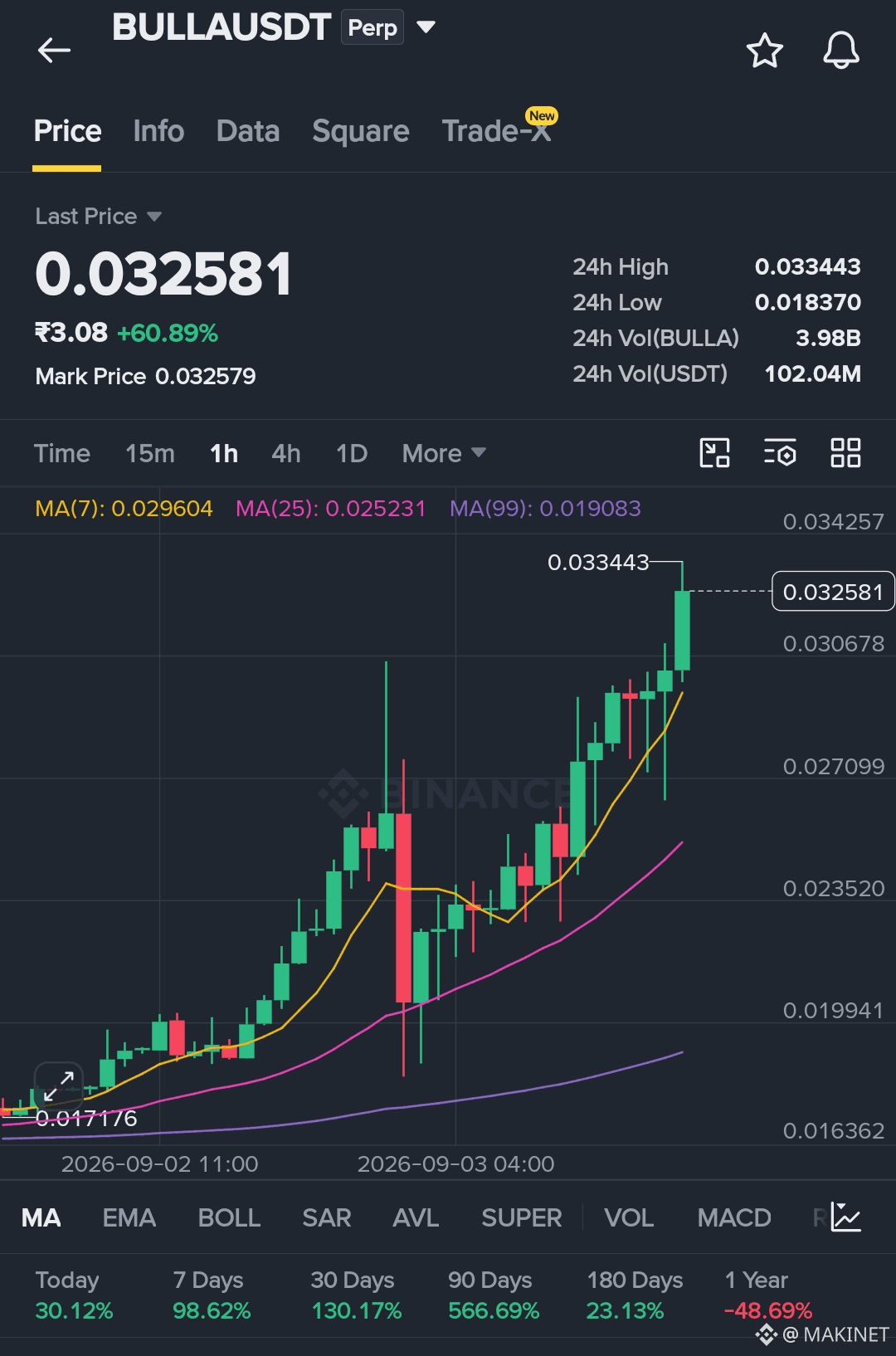
Long $BULLA
Entry Zone: 0.3040 –0.3090
🎯 TP1: 0.3211
🎯 TP2: 0.3500
🛑 Stop Loss: 0.2690
Trade here 👇
{future}(BULLAUSDT)
#USWeeklyInitialJoblessClaimsRiseTo206000 #USGainsControlOfVenezuelanOilFields #PredictionMarketsPutCLARITYAct2026OddsAt15% #Write2Earn #US10YearTreasuryYieldHitsHighestSinceNov2023
Long $BULLA
Entry Zone: 0.3040 –0.3090
🎯 TP1: 0.3211
🎯 TP2: 0.3500
🛑 Stop Loss: 0.2690
Trade here 👇
#USWeeklyInitialJoblessClaimsRiseTo206000 #USGainsControlOfVenezuelanOilFields #PredictionMarketsPutCLARITYAct2026OddsAt15% #Write2Earn #US10YearTreasuryYieldHitsHighestSinceNov2023
Entry Zone: 0.3040 –0.3090
🎯 TP1: 0.3211
🎯 TP2: 0.3500
🛑 Stop Loss: 0.2690
Trade here 👇
#USWeeklyInitialJoblessClaimsRiseTo206000 #USGainsControlOfVenezuelanOilFields #PredictionMarketsPutCLARITYAct2026OddsAt15% #Write2Earn #US10YearTreasuryYieldHitsHighestSinceNov2023
142
·
--
Bullish
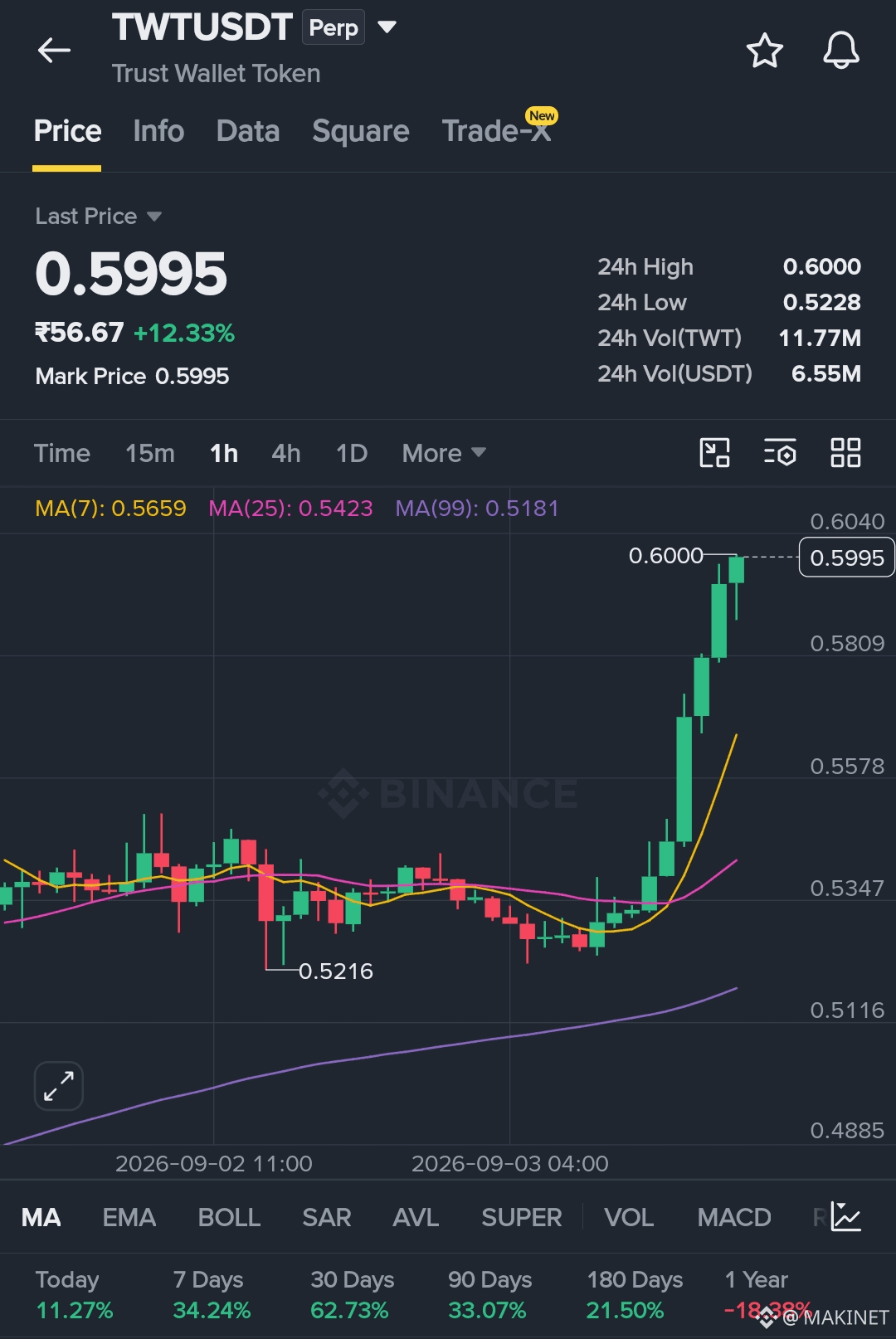
LONG $TWT
Entry: 0.5880 – 0.5980
SL: 0.5700
TP1: 0.6020
TP2: 0.6150
TP3: 0.6300
TP4: 0.6500
Trade here 👇
{future}(TWTUSDT)
#USWeeklyInitialJoblessClaimsRiseTo206000 #USGainsControlOfVenezuelanOilFields #CFTCScrutinizesPredictionMarketAffiliates #US10YearTreasuryYieldHitsHighestSinceNov2023 #Write2Earn
LONG $TWT
Entry: 0.5880 – 0.5980
SL: 0.5700
TP1: 0.6020
TP2: 0.6150
TP3: 0.6300
TP4: 0.6500
Trade here 👇
#USWeeklyInitialJoblessClaimsRiseTo206000 #USGainsControlOfVenezuelanOilFields #CFTCScrutinizesPredictionMarketAffiliates #US10YearTreasuryYieldHitsHighestSinceNov2023 #Write2Earn
Entry: 0.5880 – 0.5980
SL: 0.5700
TP1: 0.6020
TP2: 0.6150
TP3: 0.6300
TP4: 0.6500
Trade here 👇
#USWeeklyInitialJoblessClaimsRiseTo206000 #USGainsControlOfVenezuelanOilFields #CFTCScrutinizesPredictionMarketAffiliates #US10YearTreasuryYieldHitsHighestSinceNov2023 #Write2Earn
82
·
--
Bullish
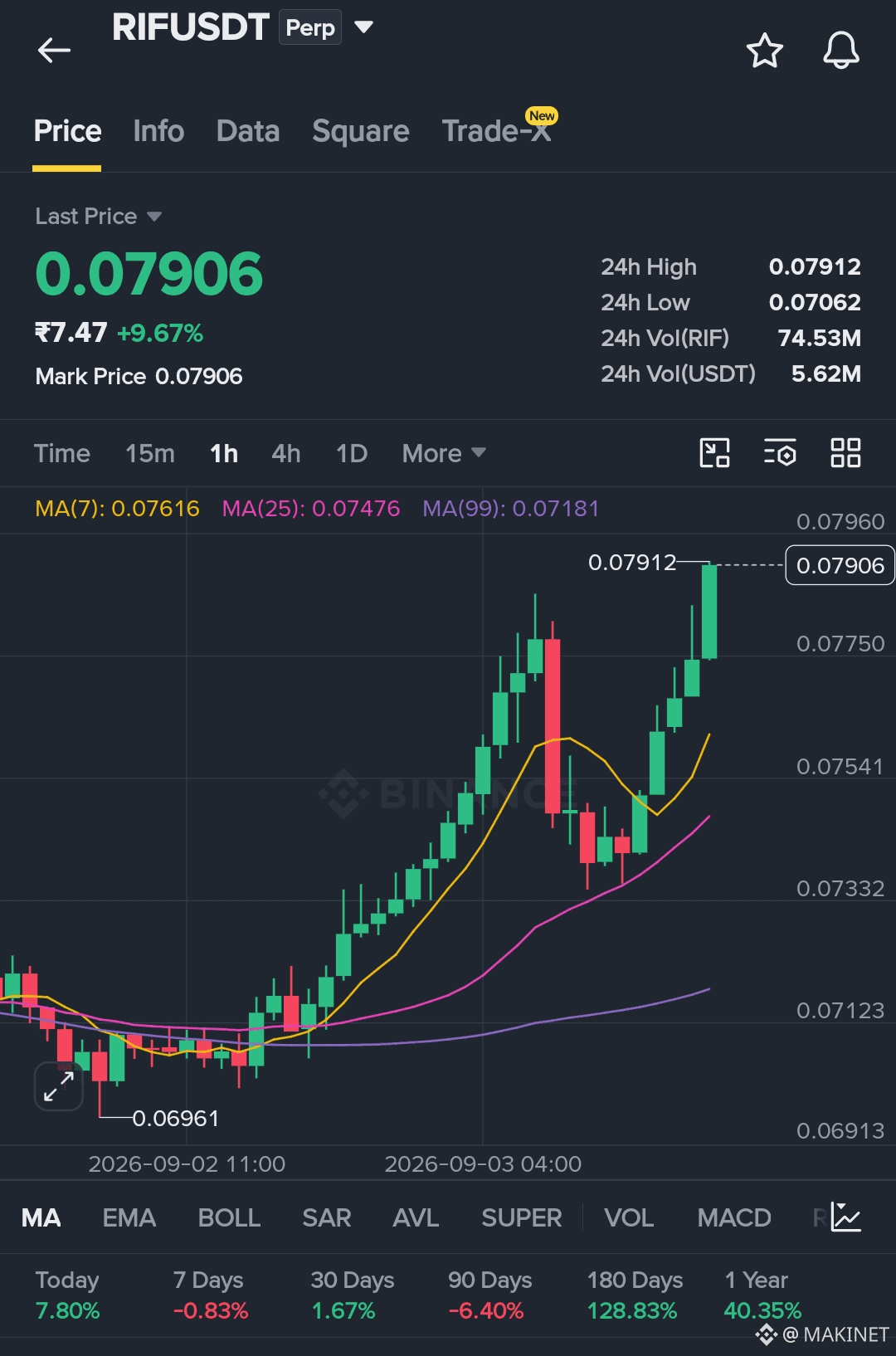
Long $RIF
Entry: 0.07100 – 0.07800
Stop Loss: 0.06800
TP1: 0.08100
TP2: 0.08700
TP3: 0.09000
TP4: 0.09400
Trade here 👇
{future}(RIFUSDT)
#USWeeklyInitialJoblessClaimsRiseTo206000 #USGainsControlOfVenezuelanOilFields #CFTCScrutinizesPredictionMarketAffiliates #Write2Earn #PredictionMarketsPutCLARITYAct2026OddsAt15%
Long $RIF
Entry: 0.07100 – 0.07800
Stop Loss: 0.06800
TP1: 0.08100
TP2: 0.08700
TP3: 0.09000
TP4: 0.09400
Trade here 👇
#USWeeklyInitialJoblessClaimsRiseTo206000 #USGainsControlOfVenezuelanOilFields #CFTCScrutinizesPredictionMarketAffiliates #Write2Earn #PredictionMarketsPutCLARITYAct2026OddsAt15%
Entry: 0.07100 – 0.07800
Stop Loss: 0.06800
TP1: 0.08100
TP2: 0.08700
TP3: 0.09000
TP4: 0.09400
Trade here 👇
#USWeeklyInitialJoblessClaimsRiseTo206000 #USGainsControlOfVenezuelanOilFields #CFTCScrutinizesPredictionMarketAffiliates #Write2Earn #PredictionMarketsPutCLARITYAct2026OddsAt15%
100
·
--

Article
Has Extreme Greed Come Back Too Fast to Trust?Here's my contrarian take: the Fear & Greed Index just broke above 80 into "Extreme Greed" for the first time since late 2024 and the speed of that swing worries me more than the bounce in $BTC , $ETH , and $BNB excites me.
Rewind the tape: less than two weeks ago, the market was still digesting a sharp pullback and a $380 million liquidation event. Now Bitcoin has clawed back toward $78,000–79,000, Ethereum is holding near $2,500, and BNB has ticked back above $690 and sentiment has rocketed from fear straight through neutral and into Extreme Greed, a 45-point swing described as the fastest shift between sentiment extremes on record for this index. That's not a gradual, healthy re-rating of risk appetite. That's a market lurching between emotional poles in a matter of days.
The bull argument is real, and I want to state it fairly: this bounce is backed by genuine institutional flow, not just retail hype roughly $1.9 billion into Bitcoin ETFs and over $1.4 billion into Ethereum ETFs, with reports that BlackRock absorbed essentially the entire recent Ethereum ETF allocation. A short squeeze added extra fuel, but the underlying ETF demand is a fundamentally different, more durable kind of buying than what drove some of crypto's more speculative past rallies.
Here's my concern anyway: Extreme Greed readings have historically been more useful as a caution flag than a green light, precisely because they tend to show up right as a rally is running out of easy converts everyone who wanted to buy on fear has already bought, and the marginal buyer left is increasingly someone chasing the move rather than allocating with conviction. Combine that with Ethereum already flashing overbought signals after its breakout, and you have a setup where a lot of good news (ETF flows, short covering, bond buybacks) may already be reflected in price faster than the market can digest it.
The counter-argument I have to acknowledge: sentiment indices measuring "greed" during a rally driven by real institutional inflows isn't automatically bearish sometimes greed readings simply reflect a genuinely strong, well-supported move, and fading strength purely because a sentiment gauge looks stretched has burned plenty of traders who stepped aside too early in past cycles.
Where I land: I'm not calling for a reversal, but I'd treat this specific moment Extreme Greed plus an overbought Ethereum plus a squeeze-driven bounce as a moment for tighter risk management, not for chasing size. The quality of the underlying demand (ETF flows) makes me more comfortable with this rally than past greed spikes, but the speed of the sentiment swing is the part that keeps me cautious.
Do you think institutional ETF flows make this Extreme Greed reading more trustworthy than past ones, or is fast-moving sentiment a red flag regardless of what's behind it?
{future}(BTCUSDT)
{future}(ETHUSDT)
{future}(BNBUSDT)
#Write2Earn #fearandgreed #bitcoin #Ethereum #bnb
Has Extreme Greed Come Back Too Fast to Trust?
Here's my contrarian take: the Fear & Greed Index just broke above 80 into "Extreme Greed" for the first time since late 2024 and the speed of that swing worries me more than the bounce in $BTC , $ETH , and $BNB excites me.
Rewind the tape: less than two weeks ago, the market was still digesting a sharp pullback and a $380 million liquidation event. Now Bitcoin has clawed back toward $78,000–79,000, Ethereum is holding near $2,500, and BNB has ticked back above $690 and sentiment has rocketed from fear straight through neutral and into Extreme Greed, a 45-point swing described as the fastest shift between sentiment extremes on record for this index. That's not a gradual, healthy re-rating of risk appetite. That's a market lurching between emotional poles in a matter of days.
The bull argument is real, and I want to state it fairly: this bounce is backed by genuine institutional flow, not just retail hype roughly $1.9 billion into Bitcoin ETFs and over $1.4 billion into Ethereum ETFs, with reports that BlackRock absorbed essentially the entire recent Ethereum ETF allocation. A short squeeze added extra fuel, but the underlying ETF demand is a fundamentally different, more durable kind of buying than what drove some of crypto's more speculative past rallies.
Here's my concern anyway: Extreme Greed readings have historically been more useful as a caution flag than a green light, precisely because they tend to show up right as a rally is running out of easy converts everyone who wanted to buy on fear has already bought, and the marginal buyer left is increasingly someone chasing the move rather than allocating with conviction. Combine that with Ethereum already flashing overbought signals after its breakout, and you have a setup where a lot of good news (ETF flows, short covering, bond buybacks) may already be reflected in price faster than the market can digest it.
The counter-argument I have to acknowledge: sentiment indices measuring "greed" during a rally driven by real institutional inflows isn't automatically bearish sometimes greed readings simply reflect a genuinely strong, well-supported move, and fading strength purely because a sentiment gauge looks stretched has burned plenty of traders who stepped aside too early in past cycles.
Where I land: I'm not calling for a reversal, but I'd treat this specific moment Extreme Greed plus an overbought Ethereum plus a squeeze-driven bounce as a moment for tighter risk management, not for chasing size. The quality of the underlying demand (ETF flows) makes me more comfortable with this rally than past greed spikes, but the speed of the sentiment swing is the part that keeps me cautious.
Do you think institutional ETF flows make this Extreme Greed reading more trustworthy than past ones, or is fast-moving sentiment a red flag regardless of what's behind it?
#Write2Earn #fearandgreed #bitcoin #Ethereum #bnb
Rewind the tape: less than two weeks ago, the market was still digesting a sharp pullback and a $380 million liquidation event. Now Bitcoin has clawed back toward $78,000–79,000, Ethereum is holding near $2,500, and BNB has ticked back above $690 and sentiment has rocketed from fear straight through neutral and into Extreme Greed, a 45-point swing described as the fastest shift between sentiment extremes on record for this index. That's not a gradual, healthy re-rating of risk appetite. That's a market lurching between emotional poles in a matter of days.
The bull argument is real, and I want to state it fairly: this bounce is backed by genuine institutional flow, not just retail hype roughly $1.9 billion into Bitcoin ETFs and over $1.4 billion into Ethereum ETFs, with reports that BlackRock absorbed essentially the entire recent Ethereum ETF allocation. A short squeeze added extra fuel, but the underlying ETF demand is a fundamentally different, more durable kind of buying than what drove some of crypto's more speculative past rallies.
Here's my concern anyway: Extreme Greed readings have historically been more useful as a caution flag than a green light, precisely because they tend to show up right as a rally is running out of easy converts everyone who wanted to buy on fear has already bought, and the marginal buyer left is increasingly someone chasing the move rather than allocating with conviction. Combine that with Ethereum already flashing overbought signals after its breakout, and you have a setup where a lot of good news (ETF flows, short covering, bond buybacks) may already be reflected in price faster than the market can digest it.
The counter-argument I have to acknowledge: sentiment indices measuring "greed" during a rally driven by real institutional inflows isn't automatically bearish sometimes greed readings simply reflect a genuinely strong, well-supported move, and fading strength purely because a sentiment gauge looks stretched has burned plenty of traders who stepped aside too early in past cycles.
Where I land: I'm not calling for a reversal, but I'd treat this specific moment Extreme Greed plus an overbought Ethereum plus a squeeze-driven bounce as a moment for tighter risk management, not for chasing size. The quality of the underlying demand (ETF flows) makes me more comfortable with this rally than past greed spikes, but the speed of the sentiment swing is the part that keeps me cautious.
Do you think institutional ETF flows make this Extreme Greed reading more trustworthy than past ones, or is fast-moving sentiment a red flag regardless of what's behind it?
#Write2Earn #fearandgreed #bitcoin #Ethereum #bnb
101
·
--

Article
How to Trade a Bounce When One Asset Is Already OverboughtRight now, $BTC is pushing back toward $80,000 on a mix of short covering and ETF inflows, while $ETH is holding near $2,500 but showing signs of being technically overbought after its sharp mid-August breakout. That's a common and tricky setup: a market-wide bounce where not every asset in it deserves the same treatment. Here's a framework for handling it.
The setup conditions. "Overbought" doesn't mean "about to crash" it means an asset has moved far and fast enough that a pause, consolidation, or partial pullback becomes statistically more likely before the next leg higher, even within a genuine uptrend. Treating overbought as an automatic sell signal is a mistake; treating it as a reason to size positions and time entries more carefully is the more useful approach.
The framework differentiate entries by technical condition, not just by narrative.
For assets showing overbought conditions (currently Ethereum): avoid chasing the bounce with a fresh full-size entry. Instead, either wait for a pullback toward a prior support level (the $2,470–2,500 zone Ethereum has been defending) before adding, or scale in with a smaller starting position and add only on confirmed strength rather than all at once.For assets earlier in their bounce with less overbought pressure (currently Bitcoin, still working to reclaim $80,000 rather than already extended above it): a normal, full-size DCA-style entry is more reasonable, since the asset hasn't yet run as far relative to its recent range.For assets moving on a fresh squeeze with limited price history at the new level (currently XRP, near its make-or-break resistance test around $1.39–1.40): treat as higher-risk regardless of overbought status squeeze-driven moves need time to prove they'll hold before they're treated the same as an organically overbought asset.
Applying it right now: this argues for a staggered approach full or near-full size on Bitcoin as it works to reclaim $80,000, reduced size and patience on Ethereum given its overbought signal, and the smallest, most cautious sizing on XRP until it shows it can hold above resistance on real volume rather than squeeze-driven volume.
Risk management the part people skip. Set your stop-loss levels based on where the technical story would actually be invalidated (e.g., Bitcoin losing $77,000 again, or Ethereum breaking back below $2,470), not based on an arbitrary percentage a stop that doesn't correspond to an actual level in the chart just gets triggered by normal noise.
Educational framework, not a signal to enter any specific position always confirm your own thesis and risk tolerance. DYOR.
{spot}(ETHUSDT)
{future}(SOLUSDT)
{future}(BTCUSDT)
#Write2Earn #tradingStrategy #bitcoin #Ethereum #CryptoTips
How to Trade a Bounce When One Asset Is Already Overbought
Right now, $BTC is pushing back toward $80,000 on a mix of short covering and ETF inflows, while $ETH is holding near $2,500 but showing signs of being technically overbought after its sharp mid-August breakout. That's a common and tricky setup: a market-wide bounce where not every asset in it deserves the same treatment. Here's a framework for handling it.
The setup conditions. "Overbought" doesn't mean "about to crash" it means an asset has moved far and fast enough that a pause, consolidation, or partial pullback becomes statistically more likely before the next leg higher, even within a genuine uptrend. Treating overbought as an automatic sell signal is a mistake; treating it as a reason to size positions and time entries more carefully is the more useful approach.
The framework differentiate entries by technical condition, not just by narrative.
For assets showing overbought conditions (currently Ethereum): avoid chasing the bounce with a fresh full-size entry. Instead, either wait for a pullback toward a prior support level (the $2,470–2,500 zone Ethereum has been defending) before adding, or scale in with a smaller starting position and add only on confirmed strength rather than all at once.For assets earlier in their bounce with less overbought pressure (currently Bitcoin, still working to reclaim $80,000 rather than already extended above it): a normal, full-size DCA-style entry is more reasonable, since the asset hasn't yet run as far relative to its recent range.For assets moving on a fresh squeeze with limited price history at the new level (currently XRP, near its make-or-break resistance test around $1.39–1.40): treat as higher-risk regardless of overbought status squeeze-driven moves need time to prove they'll hold before they're treated the same as an organically overbought asset.
Applying it right now: this argues for a staggered approach full or near-full size on Bitcoin as it works to reclaim $80,000, reduced size and patience on Ethereum given its overbought signal, and the smallest, most cautious sizing on XRP until it shows it can hold above resistance on real volume rather than squeeze-driven volume.
Risk management the part people skip. Set your stop-loss levels based on where the technical story would actually be invalidated (e.g., Bitcoin losing $77,000 again, or Ethereum breaking back below $2,470), not based on an arbitrary percentage a stop that doesn't correspond to an actual level in the chart just gets triggered by normal noise.
Educational framework, not a signal to enter any specific position always confirm your own thesis and risk tolerance. DYOR.
#Write2Earn #tradingStrategy #bitcoin #Ethereum #CryptoTips
The setup conditions. "Overbought" doesn't mean "about to crash" it means an asset has moved far and fast enough that a pause, consolidation, or partial pullback becomes statistically more likely before the next leg higher, even within a genuine uptrend. Treating overbought as an automatic sell signal is a mistake; treating it as a reason to size positions and time entries more carefully is the more useful approach.
The framework differentiate entries by technical condition, not just by narrative.
For assets showing overbought conditions (currently Ethereum): avoid chasing the bounce with a fresh full-size entry. Instead, either wait for a pullback toward a prior support level (the $2,470–2,500 zone Ethereum has been defending) before adding, or scale in with a smaller starting position and add only on confirmed strength rather than all at once.For assets earlier in their bounce with less overbought pressure (currently Bitcoin, still working to reclaim $80,000 rather than already extended above it): a normal, full-size DCA-style entry is more reasonable, since the asset hasn't yet run as far relative to its recent range.For assets moving on a fresh squeeze with limited price history at the new level (currently XRP, near its make-or-break resistance test around $1.39–1.40): treat as higher-risk regardless of overbought status squeeze-driven moves need time to prove they'll hold before they're treated the same as an organically overbought asset.
Applying it right now: this argues for a staggered approach full or near-full size on Bitcoin as it works to reclaim $80,000, reduced size and patience on Ethereum given its overbought signal, and the smallest, most cautious sizing on XRP until it shows it can hold above resistance on real volume rather than squeeze-driven volume.
Risk management the part people skip. Set your stop-loss levels based on where the technical story would actually be invalidated (e.g., Bitcoin losing $77,000 again, or Ethereum breaking back below $2,470), not based on an arbitrary percentage a stop that doesn't correspond to an actual level in the chart just gets triggered by normal noise.
Educational framework, not a signal to enter any specific position always confirm your own thesis and risk tolerance. DYOR.
#Write2Earn #tradingStrategy #bitcoin #Ethereum #CryptoTips
87
·
--

Article
What a Short Squeeze Actually Is (And Why It Just Moved Bitcoin 3%You've probably seen headlines about a "$3 billion short squeeze" driving $BTC 's recent bounce back toward $78,000–79,000. If the term feels like jargon, here's what's actually happening mechanically and why it matters for how you read sudden, sharp price moves.
A "short" position is a bet that an asset's price will fall a trader borrows the asset, sells it, and plans to buy it back later at a lower price to return what they borrowed, pocketing the difference. That trade only works if the price actually goes down. When the price instead moves up against a large number of short positions at once, those traders start losing money, and many of them are forced to buy the asset back immediately to close their position and stop the bleeding often automatically, through liquidation systems, rather than by choice.
Here's the squeeze part: that forced buying from shorts closing their positions adds extra buying pressure on top of whatever normal demand already existed which pushes the price up further, which then forces even more shorts to cover, creating a feedback loop. That's exactly what happened with $BTC this week: an initial bounce, likely helped along by ETF inflows and lower Treasury yields from expanded bond buybacks, ran into a large cluster of short positions that had been placed during the prior pullback below $80,000. As those shorts were forced to cover, the move accelerated into the roughly 3% gain over 35 hours that made headlines.
The same mechanic just played out even more dramatically with $XRP, which saw a 22% rally trigger a market-wide wave of forced short-covering a textbook example of a squeeze amplifying an already-improving trend.
Why this matters practically: squeeze-driven moves tend to be faster and sharper than moves built purely on organic buying, but they're also more prone to giving back gains once the pool of short positions is exhausted, because the "extra" forced buyer disappears from the market. That's different from a move driven by, say, sustained ETF inflows like the roughly $1.9 billion in Bitcoin ETF inflows and $1.4 billion in Ethereum ETF inflows seen recently, which tend to represent longer-term allocation decisions rather than a one-time mechanical unwind.
The practical takeaway: when you see a sharp move described as a "short squeeze," treat the size of the move with some caution even if the direction makes sense ask whether there's also organic demand (like ETF flows) supporting it, because that combination is what turns a temporary squeeze into a durable trend change rather than a sharp move that partially reverses once the squeeze runs its course.
Educational context only, not a trade signal. DYOR.
{future}(XAUUSDT)
{future}(TSLAUSDT)
{future}(AMZNUSDT)
#Write2Earn #ShortSqueeze #cryptoeducation #bitcoin #xrp
What a Short Squeeze Actually Is (And Why It Just Moved Bitcoin 3%
You've probably seen headlines about a "$3 billion short squeeze" driving $BTC 's recent bounce back toward $78,000–79,000. If the term feels like jargon, here's what's actually happening mechanically and why it matters for how you read sudden, sharp price moves.
A "short" position is a bet that an asset's price will fall a trader borrows the asset, sells it, and plans to buy it back later at a lower price to return what they borrowed, pocketing the difference. That trade only works if the price actually goes down. When the price instead moves up against a large number of short positions at once, those traders start losing money, and many of them are forced to buy the asset back immediately to close their position and stop the bleeding often automatically, through liquidation systems, rather than by choice.
Here's the squeeze part: that forced buying from shorts closing their positions adds extra buying pressure on top of whatever normal demand already existed which pushes the price up further, which then forces even more shorts to cover, creating a feedback loop. That's exactly what happened with $BTC this week: an initial bounce, likely helped along by ETF inflows and lower Treasury yields from expanded bond buybacks, ran into a large cluster of short positions that had been placed during the prior pullback below $80,000. As those shorts were forced to cover, the move accelerated into the roughly 3% gain over 35 hours that made headlines.
The same mechanic just played out even more dramatically with $XRP, which saw a 22% rally trigger a market-wide wave of forced short-covering a textbook example of a squeeze amplifying an already-improving trend.
Why this matters practically: squeeze-driven moves tend to be faster and sharper than moves built purely on organic buying, but they're also more prone to giving back gains once the pool of short positions is exhausted, because the "extra" forced buyer disappears from the market. That's different from a move driven by, say, sustained ETF inflows like the roughly $1.9 billion in Bitcoin ETF inflows and $1.4 billion in Ethereum ETF inflows seen recently, which tend to represent longer-term allocation decisions rather than a one-time mechanical unwind.
The practical takeaway: when you see a sharp move described as a "short squeeze," treat the size of the move with some caution even if the direction makes sense ask whether there's also organic demand (like ETF flows) supporting it, because that combination is what turns a temporary squeeze into a durable trend change rather than a sharp move that partially reverses once the squeeze runs its course.
Educational context only, not a trade signal. DYOR.
#Write2Earn #ShortSqueeze #cryptoeducation #bitcoin #xrp
A "short" position is a bet that an asset's price will fall a trader borrows the asset, sells it, and plans to buy it back later at a lower price to return what they borrowed, pocketing the difference. That trade only works if the price actually goes down. When the price instead moves up against a large number of short positions at once, those traders start losing money, and many of them are forced to buy the asset back immediately to close their position and stop the bleeding often automatically, through liquidation systems, rather than by choice.
Here's the squeeze part: that forced buying from shorts closing their positions adds extra buying pressure on top of whatever normal demand already existed which pushes the price up further, which then forces even more shorts to cover, creating a feedback loop. That's exactly what happened with $BTC this week: an initial bounce, likely helped along by ETF inflows and lower Treasury yields from expanded bond buybacks, ran into a large cluster of short positions that had been placed during the prior pullback below $80,000. As those shorts were forced to cover, the move accelerated into the roughly 3% gain over 35 hours that made headlines.
The same mechanic just played out even more dramatically with $XRP, which saw a 22% rally trigger a market-wide wave of forced short-covering a textbook example of a squeeze amplifying an already-improving trend.
Why this matters practically: squeeze-driven moves tend to be faster and sharper than moves built purely on organic buying, but they're also more prone to giving back gains once the pool of short positions is exhausted, because the "extra" forced buyer disappears from the market. That's different from a move driven by, say, sustained ETF inflows like the roughly $1.9 billion in Bitcoin ETF inflows and $1.4 billion in Ethereum ETF inflows seen recently, which tend to represent longer-term allocation decisions rather than a one-time mechanical unwind.
The practical takeaway: when you see a sharp move described as a "short squeeze," treat the size of the move with some caution even if the direction makes sense ask whether there's also organic demand (like ETF flows) supporting it, because that combination is what turns a temporary squeeze into a durable trend change rather than a sharp move that partially reverses once the squeeze runs its course.
Educational context only, not a trade signal. DYOR.
#Write2Earn #ShortSqueeze #cryptoeducation #bitcoin #xrp
162
Log in to explore more content
Join global crypto users on Binance Square
⚡️ Get latest and useful information about crypto.
💬 Trusted by the world’s largest crypto exchange.
👍 Discover real insights from verified creators.
Email / Phone number
Trending Topics
AIStocksWhatNext
160,374 views
1,922 Discussing
Share & Win Traffic Reward in our Trending Hashtag Campaign
✨Topic: What Other Investment Opportunities Remain as AI Stocks Keep Rising?
👉How to Join:
Publish a short post or article with hashtag #AIStocksWhatNext
Share whether you’re bullish or bearish, and post your AI stock holdings or trade — using the trade widget may improve your eligibility.
You can also strengthen your post by sharing data or charts, and avoiding AI-generated images.
✍️Create content based on the below angles:
- Nvidia says chip sales will double next year, and top AI companies keep hitting record revenue, the compute spend behind it is just as staggering. Is AI demand really taking off? And how long can it last? AI stocks are up across the board. Is this a real breakout, or just a short-term bounce?
- Industry leaders are calling to slow down AI development, while Trump plans to build an “AI Force”, claiming AI could account for 25% of U.S. GDP in the future. Whose side are you on? Will state-level backing be a long-term win for AI stocks?
- Are you buying AI stocks? Share your AI-related trade/holdings with our trade sharing widget.
⏰Campaign Period:
- 2026-09-22 7:00 - 2026-09-24 4:00 UTC
🎁Reward:
- Qualified posts that comply with the above guidelines and contain more than 100 words will be reviewed and may receive a random traffic boost of 500 to 3,000 views. You will receive a notification from your feed secretary if your post is selected.
- Get a chance to have your article featured on Binance Square Official
Need ideas for your post? Visit the topic page #AIStocksWhatNext or the Square Guide on How to Post for Better Reach.
Binance Square Official
·262 Likes
·531.6k views
BitcoinBreaksAboveMayHighNears$86K
4,784 views
97 Discussing
DogecoinRises15%
12,007 views
526 Discussing