
#cryptomacro
cryptomacro
386,870 views
1,740 Discussing
Hot
Latest

Oman's Foreign Minister announced today that the regional conference scheduled to take place tomorrow in Salalah has been officially postponed to allow more time to build consensus among participants. Muscat emphasized that efforts will continue to facilitate diplomatic dialogue aimed at achieving long-term regional stability and sustainable cooperation across the Middle East.
This sudden delay highlights the persistent friction and delicate diplomatic maneuvering currently shaping Middle Eastern geopolitics. The inability to reach a baseline consensus ahead of the Salalah summit signals that underlying tensions remain unresolved, keeping regional political risk premiums elevated across international markets.
For traditional financial markets, ongoing uncertainty in the Middle East continues to inject volatility into energy benchmarks like crude oil and bolsters safe-haven demand for gold and the US dollar. Investors remain cautious, closely monitoring whether diplomatic channels can prevent localized disputes from disrupting critical trade routes or energy supply chains.
In the crypto space, lingering geopolitical uncertainty tends to suppress aggressive risk-on behavior, leading to choppy consolidation for $BTC and the broader altcoin market. While digital assets face short-term liquidity caution, persistent global instability reinforces Bitcoin's narrative as an uncorrelated macro hedge.
#Geopolitics #MiddleEast #CryptoMacro
Oman's Foreign Minister announced today that the regional conference scheduled to take place tomorrow in Salalah has been officially postponed to allow more time to build consensus among participants. Muscat emphasized that efforts will continue to facilitate diplomatic dialogue aimed at achieving long-term regional stability and sustainable cooperation across the Middle East.
This sudden delay highlights the persistent friction and delicate diplomatic maneuvering currently shaping Middle Eastern geopolitics. The inability to reach a baseline consensus ahead of the Salalah summit signals that underlying tensions remain unresolved, keeping regional political risk premiums elevated across international markets.
For traditional financial markets, ongoing uncertainty in the Middle East continues to inject volatility into energy benchmarks like crude oil and bolsters safe-haven demand for gold and the US dollar. Investors remain cautious, closely monitoring whether diplomatic channels can prevent localized disputes from disrupting critical trade routes or energy supply chains.
In the crypto space, lingering geopolitical uncertainty tends to suppress aggressive risk-on behavior, leading to choppy consolidation for $BTC and the broader altcoin market. While digital assets face short-term liquidity caution, persistent global instability reinforces Bitcoin's narrative as an uncorrelated macro hedge.
#Geopolitics #MiddleEast #CryptoMacro
This sudden delay highlights the persistent friction and delicate diplomatic maneuvering currently shaping Middle Eastern geopolitics. The inability to reach a baseline consensus ahead of the Salalah summit signals that underlying tensions remain unresolved, keeping regional political risk premiums elevated across international markets.
For traditional financial markets, ongoing uncertainty in the Middle East continues to inject volatility into energy benchmarks like crude oil and bolsters safe-haven demand for gold and the US dollar. Investors remain cautious, closely monitoring whether diplomatic channels can prevent localized disputes from disrupting critical trade routes or energy supply chains.
In the crypto space, lingering geopolitical uncertainty tends to suppress aggressive risk-on behavior, leading to choppy consolidation for $BTC and the broader altcoin market. While digital assets face short-term liquidity caution, persistent global instability reinforces Bitcoin's narrative as an uncorrelated macro hedge.
#Geopolitics #MiddleEast #CryptoMacro
1

50 days of chart momentum were just about to trigger one of the classic bullish signals, but macro markets just pulled the plug. The anticipated $BTC Golden Cross is flickering off as traders rapidly price in firmer rate-hike expectations from central bankers. Is macro once again going to dictate technical chart patterns for the rest of the quarter? Here is what is happening right now: 🔹 The 50-day moving average was closing in on the 200-day line, signaling potential upside momentum. 🔹 Shifting interest rate expectations flipped trader sentiment away from risk assets almost instantly. 🔹 Technical indicators are taking a back seat as macro yields firm up. Honestly, trading charts without watching interest rates right now feels like driving with your eyes closed. Stay sharp out there! #Write2Earn #Bitcoin #CryptoMacro #TechnicalAnalysis
50 days of chart momentum were just about to trigger one of the classic bullish signals, but macro markets just pulled the plug. The anticipated $BTC Golden Cross is flickering off as traders rapidly price in firmer rate-hike expectations from central bankers. Is macro once again going to dictate technical chart patterns for the rest of the quarter? Here is what is happening right now: 🔹 The 50-day moving average was closing in on the 200-day line, signaling potential upside momentum. 🔹 Shifting interest rate expectations flipped trader sentiment away from risk assets almost instantly. 🔹 Technical indicators are taking a back seat as macro yields firm up. Honestly, trading charts without watching interest rates right now feels like driving with your eyes closed. Stay sharp out there! #Write2Earn #Bitcoin #CryptoMacro #TechnicalAnalysis

60

Why is nobody talking about how "as expected" inflation data actually traps retail traders into bad entries?
Most investors see a headline CPI number matching expectations and immediately rush to chase the green candles, only to end up holding the bag on intraday chop. They treat flat macro prints like massive liquidity injections without realizing the market already priced it in days ago.
Take the latest US CPI print coming in at exactly 3.4%, matching forecast to the decimal. The knee-jerk reaction looked constructive with $BTC ticking up +0.30% while $ETH pushed a bit stronger at +2.57%. Yet, when numbers land strictly on target, it offers zero real catalyst for the Federal Reserve to shift their timeline or pivot rates sooner.
Chasing met expectations is usually where traders bleed capital because volatility dries up right after the initial spike. Instead of celebrating an on-target 3.4% reading as an automatic launchpad, we need to recognize it simply maintains the current restrictive regime.
Are you actively positioning around macro releases right now, or waiting for actual policy shifts before making bigger moves?
#CPI #CryptoMacro #Bitcoin
Why is nobody talking about how "as expected" inflation data actually traps retail traders into bad entries?
Most investors see a headline CPI number matching expectations and immediately rush to chase the green candles, only to end up holding the bag on intraday chop. They treat flat macro prints like massive liquidity injections without realizing the market already priced it in days ago.
Take the latest US CPI print coming in at exactly 3.4%, matching forecast to the decimal. The knee-jerk reaction looked constructive with $BTC ticking up +0.30% while $ETH pushed a bit stronger at +2.57%. Yet, when numbers land strictly on target, it offers zero real catalyst for the Federal Reserve to shift their timeline or pivot rates sooner.
Chasing met expectations is usually where traders bleed capital because volatility dries up right after the initial spike. Instead of celebrating an on-target 3.4% reading as an automatic launchpad, we need to recognize it simply maintains the current restrictive regime.
Are you actively positioning around macro releases right now, or waiting for actual policy shifts before making bigger moves?
#CPI #CryptoMacro #Bitcoin
Most investors see a headline CPI number matching expectations and immediately rush to chase the green candles, only to end up holding the bag on intraday chop. They treat flat macro prints like massive liquidity injections without realizing the market already priced it in days ago.
Take the latest US CPI print coming in at exactly 3.4%, matching forecast to the decimal. The knee-jerk reaction looked constructive with $BTC ticking up +0.30% while $ETH pushed a bit stronger at +2.57%. Yet, when numbers land strictly on target, it offers zero real catalyst for the Federal Reserve to shift their timeline or pivot rates sooner.
Chasing met expectations is usually where traders bleed capital because volatility dries up right after the initial spike. Instead of celebrating an on-target 3.4% reading as an automatic launchpad, we need to recognize it simply maintains the current restrictive regime.
Are you actively positioning around macro releases right now, or waiting for actual policy shifts before making bigger moves?
#CPI #CryptoMacro #Bitcoin
10

·
--
Picture this: you are positioned for a clean macro breakout, only to watch energy markets quietly pull the rug on risk assets.
Most crypto traders get chopped up because they watch charts in a vacuum, completely blind to how sticky inflation data delays rate cuts and drains liquidity right at local resistance.
We saw this exact script play out during the mid-2023 inflation scare, where a sudden uptick in commodities halted momentum across the board. Now, history seems to be rhyming as energy prices are projected to rebound roughly 2.5% month-over-month, led by gasoline surging over 4%. That single move is poised to accelerate headline CPI on a monthly basis, forcing central banks to keep liquidity conditions tighter for longer.
When headline prints heat up like this, high-beta assets like $SOL and $ETH usually take the initial liquidity hit before $BTC finds its footing as macro collateral. If energy costs keep grinding higher into next quarter, the aggressive easing cycle the market wants to price in could face a sharp reality check.
Where do you think macro liquidity heads if headline inflation refuses to cool down?
#CryptoMacro #CPI #Bitcoin
Picture this: you are positioned for a clean macro breakout, only to watch energy markets quietly pull the rug on risk assets.
Most crypto traders get chopped up because they watch charts in a vacuum, completely blind to how sticky inflation data delays rate cuts and drains liquidity right at local resistance.
We saw this exact script play out during the mid-2023 inflation scare, where a sudden uptick in commodities halted momentum across the board. Now, history seems to be rhyming as energy prices are projected to rebound roughly 2.5% month-over-month, led by gasoline surging over 4%. That single move is poised to accelerate headline CPI on a monthly basis, forcing central banks to keep liquidity conditions tighter for longer.
When headline prints heat up like this, high-beta assets like $SOL and $ETH usually take the initial liquidity hit before $BTC finds its footing as macro collateral. If energy costs keep grinding higher into next quarter, the aggressive easing cycle the market wants to price in could face a sharp reality check.
Where do you think macro liquidity heads if headline inflation refuses to cool down?
#CryptoMacro #CPI #Bitcoin
Most crypto traders get chopped up because they watch charts in a vacuum, completely blind to how sticky inflation data delays rate cuts and drains liquidity right at local resistance.
We saw this exact script play out during the mid-2023 inflation scare, where a sudden uptick in commodities halted momentum across the board. Now, history seems to be rhyming as energy prices are projected to rebound roughly 2.5% month-over-month, led by gasoline surging over 4%. That single move is poised to accelerate headline CPI on a monthly basis, forcing central banks to keep liquidity conditions tighter for longer.
When headline prints heat up like this, high-beta assets like $SOL and $ETH usually take the initial liquidity hit before $BTC finds its footing as macro collateral. If energy costs keep grinding higher into next quarter, the aggressive easing cycle the market wants to price in could face a sharp reality check.
Where do you think macro liquidity heads if headline inflation refuses to cool down?
#CryptoMacro #CPI #Bitcoin

42

Former U.S. President Donald Trump recently posted on the Truth Social platform, openly criticizing warning remarks about artificial intelligence (AI) and data center construction. Trump directly likened concerns about AI destroying the world and data centers ruining communities to a “climate change scam,” and accused these critical voices of serving demands that do not align with U.S. interests.
This statement highlights the major divide within U.S. political circles over regulation in the technology and energy industries. Trump’s remarks clearly convey an aggressive stance strongly supporting the expansion of AI infrastructure and strongly cutting back on environmental and regulatory obstacles. However, from a macroeconomic and real-world supply-and-demand perspective, uncontrolled progress on data center construction is bound to further strain the power grid’s load and pressure energy infrastructure, and could even trigger a second round of increases in utility costs amid a period when inflation is not yet fully under control.
For traditional financial markets, this deregulation expectation may, in the short term, help sustain trading enthusiasm for large tech stocks and AI-themed assets. But without reasonable energy-consumption and environmental planning, it will increase the risk of supply-demand imbalances in the energy sector and policy volatility in the medium to long term. Investors need to be alert to the large gap between political commitments and the actual timeline for infrastructure rollout.
In the crypto market, AI-themed tokens (such as computing-power and decentralized physical infrastructure DePIN-type assets) may ride policy tailwinds to attract speculation. However, political slogans cannot solve, in the short term, the problems of real-world compute supply and high capital costs. In an environment where macro liquidity remains relatively tight, tokens that chase AI narratives blindly are prone to face liquidity pullbacks, so investors should remain cautious. $BTC
#Trump #ArtificialIntelligence #CryptoMacro
Former U.S. President Donald Trump recently posted on the Truth Social platform, openly criticizing warning remarks about artificial intelligence (AI) and data center construction. Trump directly likened concerns about AI destroying the world and data centers ruining communities to a “climate change scam,” and accused these critical voices of serving demands that do not align with U.S. interests.
This statement highlights the major divide within U.S. political circles over regulation in the technology and energy industries. Trump’s remarks clearly convey an aggressive stance strongly supporting the expansion of AI infrastructure and strongly cutting back on environmental and regulatory obstacles. However, from a macroeconomic and real-world supply-and-demand perspective, uncontrolled progress on data center construction is bound to further strain the power grid’s load and pressure energy infrastructure, and could even trigger a second round of increases in utility costs amid a period when inflation is not yet fully under control.
For traditional financial markets, this deregulation expectation may, in the short term, help sustain trading enthusiasm for large tech stocks and AI-themed assets. But without reasonable energy-consumption and environmental planning, it will increase the risk of supply-demand imbalances in the energy sector and policy volatility in the medium to long term. Investors need to be alert to the large gap between political commitments and the actual timeline for infrastructure rollout.
In the crypto market, AI-themed tokens (such as computing-power and decentralized physical infrastructure DePIN-type assets) may ride policy tailwinds to attract speculation. However, political slogans cannot solve, in the short term, the problems of real-world compute supply and high capital costs. In an environment where macro liquidity remains relatively tight, tokens that chase AI narratives blindly are prone to face liquidity pullbacks, so investors should remain cautious. $BTC
#Trump #ArtificialIntelligence #CryptoMacro
This statement highlights the major divide within U.S. political circles over regulation in the technology and energy industries. Trump’s remarks clearly convey an aggressive stance strongly supporting the expansion of AI infrastructure and strongly cutting back on environmental and regulatory obstacles. However, from a macroeconomic and real-world supply-and-demand perspective, uncontrolled progress on data center construction is bound to further strain the power grid’s load and pressure energy infrastructure, and could even trigger a second round of increases in utility costs amid a period when inflation is not yet fully under control.
For traditional financial markets, this deregulation expectation may, in the short term, help sustain trading enthusiasm for large tech stocks and AI-themed assets. But without reasonable energy-consumption and environmental planning, it will increase the risk of supply-demand imbalances in the energy sector and policy volatility in the medium to long term. Investors need to be alert to the large gap between political commitments and the actual timeline for infrastructure rollout.
In the crypto market, AI-themed tokens (such as computing-power and decentralized physical infrastructure DePIN-type assets) may ride policy tailwinds to attract speculation. However, political slogans cannot solve, in the short term, the problems of real-world compute supply and high capital costs. In an environment where macro liquidity remains relatively tight, tokens that chase AI narratives blindly are prone to face liquidity pullbacks, so investors should remain cautious. $BTC
#Trump #ArtificialIntelligence #CryptoMacro

According to the latest data released by the London Baltic Exchange, due to heightened tensions in Iran, the sharp reduction in the number of tankers willing to transit through the Strait of Hormuz has driven benchmark global shipping route tanker daily freight rates to break through the one-million-USD mark for the first time in history. This extreme freight figure reflects a substantial blockage in the flow of crude oil through a key chokepoint in the Middle East, with the shipping risk premium instantly soaring to unprecedented heights.
From a macro and technical perspective, freight rates exceeding one million imply that the energy supply chain is facing severe tests. Concerns about a renewed rise in secondary inflation have once again intensified in the market. However, this kind of pulse-like surge driven by geopolitical panic often has a strong event-driven nature: after price action spikes on extreme volume, it typically forces all parties to seek diplomatic negotiations or alternative solutions, laying the groundwork for a subsequent mean reversion of volatility.
In commodities and traditional FX markets, crude oil premia and the U.S. Dollar Index appear to be moving with enough momentum in the short term, and gold also remains in a high, range-bound area supported by safe-haven buying. But from the perspective of the liquidity transmission mechanism, as long as the energy shock does not evolve into a prolonged structural stagflation, after short-term panic dissipates, it often becomes an opportunity for capital to seek yield again. The rapid rebalancing of assets driven by safe-haven flows can help build resilience in risk assets.
For crypto assets, although short-term sentiment is affected by safe-haven asset “draining,” $BTC has demonstrated remarkably strong support resilience under high-volatility pressure. As the impact of the geopolitical situation’s pulse-like shock becomes fully priced in, excess censorship-resistant and hedging liquidity is expected to accelerate back into the market. If key support levels stabilize and the asset breaks out of a divergence pattern, the crypto market could be set for a more robust technical rebound.
#CrudeOil #Geopolitics #CryptoMacro
According to the latest data released by the London Baltic Exchange, due to heightened tensions in Iran, the sharp reduction in the number of tankers willing to transit through the Strait of Hormuz has driven benchmark global shipping route tanker daily freight rates to break through the one-million-USD mark for the first time in history. This extreme freight figure reflects a substantial blockage in the flow of crude oil through a key chokepoint in the Middle East, with the shipping risk premium instantly soaring to unprecedented heights.
From a macro and technical perspective, freight rates exceeding one million imply that the energy supply chain is facing severe tests. Concerns about a renewed rise in secondary inflation have once again intensified in the market. However, this kind of pulse-like surge driven by geopolitical panic often has a strong event-driven nature: after price action spikes on extreme volume, it typically forces all parties to seek diplomatic negotiations or alternative solutions, laying the groundwork for a subsequent mean reversion of volatility.
In commodities and traditional FX markets, crude oil premia and the U.S. Dollar Index appear to be moving with enough momentum in the short term, and gold also remains in a high, range-bound area supported by safe-haven buying. But from the perspective of the liquidity transmission mechanism, as long as the energy shock does not evolve into a prolonged structural stagflation, after short-term panic dissipates, it often becomes an opportunity for capital to seek yield again. The rapid rebalancing of assets driven by safe-haven flows can help build resilience in risk assets.
For crypto assets, although short-term sentiment is affected by safe-haven asset “draining,” $BTC has demonstrated remarkably strong support resilience under high-volatility pressure. As the impact of the geopolitical situation’s pulse-like shock becomes fully priced in, excess censorship-resistant and hedging liquidity is expected to accelerate back into the market. If key support levels stabilize and the asset breaks out of a divergence pattern, the crypto market could be set for a more robust technical rebound.
#CrudeOil #Geopolitics #CryptoMacro
From a macro and technical perspective, freight rates exceeding one million imply that the energy supply chain is facing severe tests. Concerns about a renewed rise in secondary inflation have once again intensified in the market. However, this kind of pulse-like surge driven by geopolitical panic often has a strong event-driven nature: after price action spikes on extreme volume, it typically forces all parties to seek diplomatic negotiations or alternative solutions, laying the groundwork for a subsequent mean reversion of volatility.
In commodities and traditional FX markets, crude oil premia and the U.S. Dollar Index appear to be moving with enough momentum in the short term, and gold also remains in a high, range-bound area supported by safe-haven buying. But from the perspective of the liquidity transmission mechanism, as long as the energy shock does not evolve into a prolonged structural stagflation, after short-term panic dissipates, it often becomes an opportunity for capital to seek yield again. The rapid rebalancing of assets driven by safe-haven flows can help build resilience in risk assets.
For crypto assets, although short-term sentiment is affected by safe-haven asset “draining,” $BTC has demonstrated remarkably strong support resilience under high-volatility pressure. As the impact of the geopolitical situation’s pulse-like shock becomes fully priced in, excess censorship-resistant and hedging liquidity is expected to accelerate back into the market. If key support levels stabilize and the asset breaks out of a divergence pattern, the crypto market could be set for a more robust technical rebound.
#CrudeOil #Geopolitics #CryptoMacro
136

·
--
The U.S. financial market saw sharp fluctuations on Monday, the day before the Fed’s policy meeting, when the yield on the 10-year government bond officially surpassed the 5% threshold—an all-time high first seen in nearly three years. At the same time, the Nasdaq 100 technology index came under intense selling pressure, at one point dropping by as much as 1.7% before narrowing its decline to around 1%.
The surge in bond yields reflects growing concerns after August CPI data showed inflation is accelerating again, reinforcing the view that the Fed will maintain a tighter monetary policy. In addition, the expansion of government debt supply alongside a prolonged budget deficit is pushing borrowing costs higher, turning the 5% mark into a test of the resilience of the entire economy.
The jump in bond yields has increased the cost of capital and directly pressured the valuation of high-growth, high-multiple stocks, especially the technology sector listed on U.S. exchanges. When risk-free assets offer returns of up to 5%, large funds in traditional financial markets tend to withdraw from risky investment channels in search of safer havens.
For the crypto market, the exceptionally high risk-free yield continues to draw liquidity away from speculative assets such as $BTC. In the short term, cautious sentiment is likely to dominate as investors wait for signals from the Fed, which may put inflows into digital assets at risk of stagnation if macro pressures have not yet eased.
#Fed #BondYields #Inflation #CryptoMacro
The U.S. financial market saw sharp fluctuations on Monday, the day before the Fed’s policy meeting, when the yield on the 10-year government bond officially surpassed the 5% threshold—an all-time high first seen in nearly three years. At the same time, the Nasdaq 100 technology index came under intense selling pressure, at one point dropping by as much as 1.7% before narrowing its decline to around 1%.
The surge in bond yields reflects growing concerns after August CPI data showed inflation is accelerating again, reinforcing the view that the Fed will maintain a tighter monetary policy. In addition, the expansion of government debt supply alongside a prolonged budget deficit is pushing borrowing costs higher, turning the 5% mark into a test of the resilience of the entire economy.
The jump in bond yields has increased the cost of capital and directly pressured the valuation of high-growth, high-multiple stocks, especially the technology sector listed on U.S. exchanges. When risk-free assets offer returns of up to 5%, large funds in traditional financial markets tend to withdraw from risky investment channels in search of safer havens.
For the crypto market, the exceptionally high risk-free yield continues to draw liquidity away from speculative assets such as $BTC . In the short term, cautious sentiment is likely to dominate as investors wait for signals from the Fed, which may put inflows into digital assets at risk of stagnation if macro pressures have not yet eased.
#Fed #BondYields #Inflation #CryptoMacro
The surge in bond yields reflects growing concerns after August CPI data showed inflation is accelerating again, reinforcing the view that the Fed will maintain a tighter monetary policy. In addition, the expansion of government debt supply alongside a prolonged budget deficit is pushing borrowing costs higher, turning the 5% mark into a test of the resilience of the entire economy.
The jump in bond yields has increased the cost of capital and directly pressured the valuation of high-growth, high-multiple stocks, especially the technology sector listed on U.S. exchanges. When risk-free assets offer returns of up to 5%, large funds in traditional financial markets tend to withdraw from risky investment channels in search of safer havens.
For the crypto market, the exceptionally high risk-free yield continues to draw liquidity away from speculative assets such as $BTC . In the short term, cautious sentiment is likely to dominate as investors wait for signals from the Fed, which may put inflows into digital assets at risk of stagnation if macro pressures have not yet eased.
#Fed #BondYields #Inflation #CryptoMacro
83
During the latest trading session in the U.S. stock market, the Nasdaq 100 index (Nasdaq 100), which is dominated by technology stocks, suffered a sharp selloff. During the session, it fell as much as 1.7%, reaching its lowest level in nearly six weeks.
This pullback in tech stocks is not merely a short-term technical correction, but rather reflects the market’s reassessment of highly valued tech assets under the current macroeconomic backdrop. As concerns about sticky inflation have resurfaced and expectations for Federal Reserve rate cuts have been repeatedly revised, the liquidity premium that had previously supported a strong rebound in tech giants is now facing severe compression.
With the Nasdaq breaking down and moving lower as a barometer of risk appetite, it is likely to trigger a broad spillover of risk-averse sentiment across asset classes. Capital is moving out of overvalued growth sectors, boosting demand for allocations to traditional safe-haven assets and cash. At the same time, the marginal tightening of overall financial conditions is exerting sustained downward pressure on risk assets.
For the crypto market, the high correlation with the U.S. tech sector implies that the valuations of crypto assets are also coming under pressure. In the absence of further easing support from the liquidity environment, major crypto assets such as $BTC may face more intense selloff pressure in the short term. Investors should be alert to the risk of a second downturn driven by deleveraging.
#Nasdaq #StockMarket #CryptoMacro
During the latest trading session in the U.S. stock market, the Nasdaq 100 index (Nasdaq 100), which is dominated by technology stocks, suffered a sharp selloff. During the session, it fell as much as 1.7%, reaching its lowest level in nearly six weeks.
This pullback in tech stocks is not merely a short-term technical correction, but rather reflects the market’s reassessment of highly valued tech assets under the current macroeconomic backdrop. As concerns about sticky inflation have resurfaced and expectations for Federal Reserve rate cuts have been repeatedly revised, the liquidity premium that had previously supported a strong rebound in tech giants is now facing severe compression.
With the Nasdaq breaking down and moving lower as a barometer of risk appetite, it is likely to trigger a broad spillover of risk-averse sentiment across asset classes. Capital is moving out of overvalued growth sectors, boosting demand for allocations to traditional safe-haven assets and cash. At the same time, the marginal tightening of overall financial conditions is exerting sustained downward pressure on risk assets.
For the crypto market, the high correlation with the U.S. tech sector implies that the valuations of crypto assets are also coming under pressure. In the absence of further easing support from the liquidity environment, major crypto assets such as $BTC may face more intense selloff pressure in the short term. Investors should be alert to the risk of a second downturn driven by deleveraging.
#Nasdaq #StockMarket #CryptoMacro
This pullback in tech stocks is not merely a short-term technical correction, but rather reflects the market’s reassessment of highly valued tech assets under the current macroeconomic backdrop. As concerns about sticky inflation have resurfaced and expectations for Federal Reserve rate cuts have been repeatedly revised, the liquidity premium that had previously supported a strong rebound in tech giants is now facing severe compression.
With the Nasdaq breaking down and moving lower as a barometer of risk appetite, it is likely to trigger a broad spillover of risk-averse sentiment across asset classes. Capital is moving out of overvalued growth sectors, boosting demand for allocations to traditional safe-haven assets and cash. At the same time, the marginal tightening of overall financial conditions is exerting sustained downward pressure on risk assets.
For the crypto market, the high correlation with the U.S. tech sector implies that the valuations of crypto assets are also coming under pressure. In the absence of further easing support from the liquidity environment, major crypto assets such as $BTC may face more intense selloff pressure in the short term. Investors should be alert to the risk of a second downturn driven by deleveraging.
#Nasdaq #StockMarket #CryptoMacro
3
British politics has entered a historic period of upheaval. The region’s leaders in Scotland, Wales, and Northern Ireland have formally signed a joint memorandum aimed at pursuing independence and greater autonomy. This move marks an unprecedented united front of decentralizing political forces in the UK, directly challenging the constitutional framework of the United Kingdom and London’s central government dominance.
From a macroeconomic perspective, the signing of this independence memorandum goes far beyond ordinary political maneuvering. It has significantly intensified market concerns about the UK’s long-term sovereign creditworthiness, the sustainability of its fiscal deficits, and the stability of its trade regime, directly driving up the decentralization-related political risk premium within Europe and even major economies worldwide.
In traditional financial markets, such geopolitical fault lines typically lead to short-term repricing pressure on the pound exchange rate and UK government bonds. As political fault lines emerge within fiat currency systems and a single sovereign credit framework, capital will accelerate its flow toward hard assets and risk-hedging reserve systems that are non-sovereign and resistant to censorship, driven by the need to hedge sovereign currency uncertainty.
For crypto assets, this undeniably strengthens the core narrative of decentralized money. From both liquidity conditions and on-chain flow, key assets such as $BTC are increasingly being viewed by institutions and retail investors as crucial tools to hedge risks from sovereign state fragmentation and fiat devaluation. On the technical side, any destabilization of the global sovereign credit system will encourage more macro risk-on capital to migrate to decentralized networks, injecting sustained structural buy-side momentum into the long-term upward cycle of the crypto market.
#UKPolitics #Geopolitics #CryptoMacro
British politics has entered a historic period of upheaval. The region’s leaders in Scotland, Wales, and Northern Ireland have formally signed a joint memorandum aimed at pursuing independence and greater autonomy. This move marks an unprecedented united front of decentralizing political forces in the UK, directly challenging the constitutional framework of the United Kingdom and London’s central government dominance.
From a macroeconomic perspective, the signing of this independence memorandum goes far beyond ordinary political maneuvering. It has significantly intensified market concerns about the UK’s long-term sovereign creditworthiness, the sustainability of its fiscal deficits, and the stability of its trade regime, directly driving up the decentralization-related political risk premium within Europe and even major economies worldwide.
In traditional financial markets, such geopolitical fault lines typically lead to short-term repricing pressure on the pound exchange rate and UK government bonds. As political fault lines emerge within fiat currency systems and a single sovereign credit framework, capital will accelerate its flow toward hard assets and risk-hedging reserve systems that are non-sovereign and resistant to censorship, driven by the need to hedge sovereign currency uncertainty.
For crypto assets, this undeniably strengthens the core narrative of decentralized money. From both liquidity conditions and on-chain flow, key assets such as $BTC are increasingly being viewed by institutions and retail investors as crucial tools to hedge risks from sovereign state fragmentation and fiat devaluation. On the technical side, any destabilization of the global sovereign credit system will encourage more macro risk-on capital to migrate to decentralized networks, injecting sustained structural buy-side momentum into the long-term upward cycle of the crypto market.
#UKPolitics #Geopolitics #CryptoMacro
From a macroeconomic perspective, the signing of this independence memorandum goes far beyond ordinary political maneuvering. It has significantly intensified market concerns about the UK’s long-term sovereign creditworthiness, the sustainability of its fiscal deficits, and the stability of its trade regime, directly driving up the decentralization-related political risk premium within Europe and even major economies worldwide.
In traditional financial markets, such geopolitical fault lines typically lead to short-term repricing pressure on the pound exchange rate and UK government bonds. As political fault lines emerge within fiat currency systems and a single sovereign credit framework, capital will accelerate its flow toward hard assets and risk-hedging reserve systems that are non-sovereign and resistant to censorship, driven by the need to hedge sovereign currency uncertainty.
For crypto assets, this undeniably strengthens the core narrative of decentralized money. From both liquidity conditions and on-chain flow, key assets such as $BTC are increasingly being viewed by institutions and retail investors as crucial tools to hedge risks from sovereign state fragmentation and fiat devaluation. On the technical side, any destabilization of the global sovereign credit system will encourage more macro risk-on capital to migrate to decentralized networks, injecting sustained structural buy-side momentum into the long-term upward cycle of the crypto market.
#UKPolitics #Geopolitics #CryptoMacro
44

·
--
According to the latest official macroeconomic data released by China, China’s broad money supply (M2) year-on-year growth rate fell to 7.5% in August, down further from the previous 7.7% and also slightly below the market’s general expectation of 7.6%.
Against this data backdrop, the slowdown in M2 growth directly reflects that overall liquidity conditions remain relatively cautious, and the momentum for credit expansion is comparatively moderate. Despite the earlier guidance from multiple easing policies, the pace of broad money expansion has not rebounded in any clearly stronger-than-expected way, indicating that demand for funds by the real economy is currently in a relatively steady transition phase.
Looking across traditional financial markets, the cooling in money supply growth has kept investors largely on hold regarding whether further policy support—such as additional reserve requirement ratio cuts (RRR) or interest rate cuts—will be introduced. In the near term, the exchange rate and bond yields remain in a volatile consolidation range. In the capital market, trading sentiment is fairly balanced, with participants more inclined to wait for clearer signs of a recovery in fundamentals.
For the crypto sector, liquidity changes in the world’s second-largest economy have long been one of the reference indicators for observing macro-driven shifts in capital preferences. While the modest slowdown in M2 may not have triggered a sharp one-way push affecting major assets such as $BTC in the short term, the overall tightness/looseness of the capital backdrop continues to influence the direction of offshore liquidity. Going forward, the ongoing bullish-bear debate will still need to be assessed in combination with the policy steps of the world’s major central banks.
#ChinaEconomy #MoneySupply #CryptoMacro
According to the latest official macroeconomic data released by China, China’s broad money supply (M2) year-on-year growth rate fell to 7.5% in August, down further from the previous 7.7% and also slightly below the market’s general expectation of 7.6%.
Against this data backdrop, the slowdown in M2 growth directly reflects that overall liquidity conditions remain relatively cautious, and the momentum for credit expansion is comparatively moderate. Despite the earlier guidance from multiple easing policies, the pace of broad money expansion has not rebounded in any clearly stronger-than-expected way, indicating that demand for funds by the real economy is currently in a relatively steady transition phase.
Looking across traditional financial markets, the cooling in money supply growth has kept investors largely on hold regarding whether further policy support—such as additional reserve requirement ratio cuts (RRR) or interest rate cuts—will be introduced. In the near term, the exchange rate and bond yields remain in a volatile consolidation range. In the capital market, trading sentiment is fairly balanced, with participants more inclined to wait for clearer signs of a recovery in fundamentals.
For the crypto sector, liquidity changes in the world’s second-largest economy have long been one of the reference indicators for observing macro-driven shifts in capital preferences. While the modest slowdown in M2 may not have triggered a sharp one-way push affecting major assets such as $BTC in the short term, the overall tightness/looseness of the capital backdrop continues to influence the direction of offshore liquidity. Going forward, the ongoing bullish-bear debate will still need to be assessed in combination with the policy steps of the world’s major central banks.
#ChinaEconomy #MoneySupply #CryptoMacro
Against this data backdrop, the slowdown in M2 growth directly reflects that overall liquidity conditions remain relatively cautious, and the momentum for credit expansion is comparatively moderate. Despite the earlier guidance from multiple easing policies, the pace of broad money expansion has not rebounded in any clearly stronger-than-expected way, indicating that demand for funds by the real economy is currently in a relatively steady transition phase.
Looking across traditional financial markets, the cooling in money supply growth has kept investors largely on hold regarding whether further policy support—such as additional reserve requirement ratio cuts (RRR) or interest rate cuts—will be introduced. In the near term, the exchange rate and bond yields remain in a volatile consolidation range. In the capital market, trading sentiment is fairly balanced, with participants more inclined to wait for clearer signs of a recovery in fundamentals.
For the crypto sector, liquidity changes in the world’s second-largest economy have long been one of the reference indicators for observing macro-driven shifts in capital preferences. While the modest slowdown in M2 may not have triggered a sharp one-way push affecting major assets such as $BTC in the short term, the overall tightness/looseness of the capital backdrop continues to influence the direction of offshore liquidity. Going forward, the ongoing bullish-bear debate will still need to be assessed in combination with the policy steps of the world’s major central banks.
#ChinaEconomy #MoneySupply #CryptoMacro
34
U.S. Treasury yields adjust across the board on the eve of key decision points. With the Federal Reserve’s latest policy decision approaching, most U.S. Treasury yields fell: the 2-year yield dropped 3.3 basis points to 4.610%, the 10-year benchmark yield inched down 1 basis point to 4.964%, and only the 30-year long end moved against the trend, rising slightly by 0.8 basis points to 5.362%. Meanwhile, analysts at TD Securities issued a warning, expecting the Fed not only to kick off a new tightening cycle with a 25-basis-point hike in September, but also to accumulate 75 basis points of rate hikes by the first quarter of 2027, and to maintain a hawkish stance in subsequent months.
This assessment is sharply at odds with the market’s prevailing expectations of a shift toward easier policy. The stickiness of current macroeconomic data, along with institutions’ expectations of a prolonged tightening cycle, suggests that inflation pressures may prove far more resilient than many investors’ optimistic assumptions. If the Fed chooses to keep a higher-for-longer rate path—or even restart a rate-hike channel—the asset-pricing logic built over the past six months on hopes of rate cuts would be completely overturned.
From the perspective of traditional financial markets, the subtle movements in the yield curve reflect dual concerns among investors: tighter liquidity in the near to mid term and a possible potential economic downturn in the long run. A high-rate environment provides strong support for the U.S. dollar, but it directly squeezes valuation for equity markets and other risk assets trading at elevated valuations, with defensive sentiment increasingly on the rise.
For crypto assets, this long-term expectation of liquidity tightening is an especially severe potential negative. With real rates staying at high levels, incremental inflows of institutional funds will likely be severely constrained, and the liquidity premium of $BTC and mainstream crypto assets may face compression. Investors should remain highly cautious and watch for the risk of deleveraging if tighter expectations fail to materialize.
#Fed #InterestRates #Bonds #CryptoMacro
U.S. Treasury yields adjust across the board on the eve of key decision points. With the Federal Reserve’s latest policy decision approaching, most U.S. Treasury yields fell: the 2-year yield dropped 3.3 basis points to 4.610%, the 10-year benchmark yield inched down 1 basis point to 4.964%, and only the 30-year long end moved against the trend, rising slightly by 0.8 basis points to 5.362%. Meanwhile, analysts at TD Securities issued a warning, expecting the Fed not only to kick off a new tightening cycle with a 25-basis-point hike in September, but also to accumulate 75 basis points of rate hikes by the first quarter of 2027, and to maintain a hawkish stance in subsequent months.
This assessment is sharply at odds with the market’s prevailing expectations of a shift toward easier policy. The stickiness of current macroeconomic data, along with institutions’ expectations of a prolonged tightening cycle, suggests that inflation pressures may prove far more resilient than many investors’ optimistic assumptions. If the Fed chooses to keep a higher-for-longer rate path—or even restart a rate-hike channel—the asset-pricing logic built over the past six months on hopes of rate cuts would be completely overturned.
From the perspective of traditional financial markets, the subtle movements in the yield curve reflect dual concerns among investors: tighter liquidity in the near to mid term and a possible potential economic downturn in the long run. A high-rate environment provides strong support for the U.S. dollar, but it directly squeezes valuation for equity markets and other risk assets trading at elevated valuations, with defensive sentiment increasingly on the rise.
For crypto assets, this long-term expectation of liquidity tightening is an especially severe potential negative. With real rates staying at high levels, incremental inflows of institutional funds will likely be severely constrained, and the liquidity premium of $BTC and mainstream crypto assets may face compression. Investors should remain highly cautious and watch for the risk of deleveraging if tighter expectations fail to materialize.
#Fed #InterestRates #Bonds #CryptoMacro
This assessment is sharply at odds with the market’s prevailing expectations of a shift toward easier policy. The stickiness of current macroeconomic data, along with institutions’ expectations of a prolonged tightening cycle, suggests that inflation pressures may prove far more resilient than many investors’ optimistic assumptions. If the Fed chooses to keep a higher-for-longer rate path—or even restart a rate-hike channel—the asset-pricing logic built over the past six months on hopes of rate cuts would be completely overturned.
From the perspective of traditional financial markets, the subtle movements in the yield curve reflect dual concerns among investors: tighter liquidity in the near to mid term and a possible potential economic downturn in the long run. A high-rate environment provides strong support for the U.S. dollar, but it directly squeezes valuation for equity markets and other risk assets trading at elevated valuations, with defensive sentiment increasingly on the rise.
For crypto assets, this long-term expectation of liquidity tightening is an especially severe potential negative. With real rates staying at high levels, incremental inflows of institutional funds will likely be severely constrained, and the liquidity premium of $BTC and mainstream crypto assets may face compression. Investors should remain highly cautious and watch for the risk of deleveraging if tighter expectations fail to materialize.
#Fed #InterestRates #Bonds #CryptoMacro
30
Oman’s foreign minister has most recently announced that an important regional meeting originally scheduled to be held tomorrow in Salalah has been postponed. The official statement said the move is intended to build broader consensus, and that Oman will continue to promote dialogue to support regional stability and sustainable cooperation. Although the diplomatic messaging was relatively moderate, the postponement has directly exposed major differences among Middle Eastern parties over core interests.
Against the backdrop of continuing heightened tensions in the Middle East’s geopolitical situation, the shelving of this high-level mediation meeting has shattered earlier market expectations that there might be signs of easing in the near term. With the parties unable to sit down at the negotiation table as scheduled, uncertainty surrounding regional security and shipping routes will once again be prolonged, and clearly the diplomatic path to a solution is facing greater obstacles than expected.
The renewed rise in geopolitical risk premia is making the global macro environment more severe. Supply-chain risks for major commodities such as crude oil have not gone away; potential volatility in energy prices may further impede the process of global inflation moving downward, thereby suppressing the pace of rate cuts by major central banks such as the Federal Reserve. Under such news catalysts, the U.S. dollar and safe-haven U.S. Treasury yields are prone to sharp, pulse-like fluctuations, directly weighing on macro liquidity preferences.
For crypto assets, the geopolitical situation remaining stuck in place further heightens the fragility of risk assets. As macro funds shift toward safe havens, major assets such as $BTC are unlikely to receive sustained, large-scale liquidity injections in the near term. The market is more likely to face risks of liquidity withdrawal and increased volatility. Until uncertainty is fully cleared, investors should remain highly cautious about market direction.#Geopolitics #MiddleEast #CryptoMacro
Oman’s foreign minister has most recently announced that an important regional meeting originally scheduled to be held tomorrow in Salalah has been postponed. The official statement said the move is intended to build broader consensus, and that Oman will continue to promote dialogue to support regional stability and sustainable cooperation. Although the diplomatic messaging was relatively moderate, the postponement has directly exposed major differences among Middle Eastern parties over core interests.
Against the backdrop of continuing heightened tensions in the Middle East’s geopolitical situation, the shelving of this high-level mediation meeting has shattered earlier market expectations that there might be signs of easing in the near term. With the parties unable to sit down at the negotiation table as scheduled, uncertainty surrounding regional security and shipping routes will once again be prolonged, and clearly the diplomatic path to a solution is facing greater obstacles than expected.
The renewed rise in geopolitical risk premia is making the global macro environment more severe. Supply-chain risks for major commodities such as crude oil have not gone away; potential volatility in energy prices may further impede the process of global inflation moving downward, thereby suppressing the pace of rate cuts by major central banks such as the Federal Reserve. Under such news catalysts, the U.S. dollar and safe-haven U.S. Treasury yields are prone to sharp, pulse-like fluctuations, directly weighing on macro liquidity preferences.
For crypto assets, the geopolitical situation remaining stuck in place further heightens the fragility of risk assets. As macro funds shift toward safe havens, major assets such as $BTC are unlikely to receive sustained, large-scale liquidity injections in the near term. The market is more likely to face risks of liquidity withdrawal and increased volatility. Until uncertainty is fully cleared, investors should remain highly cautious about market direction.#Geopolitics #MiddleEast #CryptoMacro
Against the backdrop of continuing heightened tensions in the Middle East’s geopolitical situation, the shelving of this high-level mediation meeting has shattered earlier market expectations that there might be signs of easing in the near term. With the parties unable to sit down at the negotiation table as scheduled, uncertainty surrounding regional security and shipping routes will once again be prolonged, and clearly the diplomatic path to a solution is facing greater obstacles than expected.
The renewed rise in geopolitical risk premia is making the global macro environment more severe. Supply-chain risks for major commodities such as crude oil have not gone away; potential volatility in energy prices may further impede the process of global inflation moving downward, thereby suppressing the pace of rate cuts by major central banks such as the Federal Reserve. Under such news catalysts, the U.S. dollar and safe-haven U.S. Treasury yields are prone to sharp, pulse-like fluctuations, directly weighing on macro liquidity preferences.
For crypto assets, the geopolitical situation remaining stuck in place further heightens the fragility of risk assets. As macro funds shift toward safe havens, major assets such as $BTC are unlikely to receive sustained, large-scale liquidity injections in the near term. The market is more likely to face risks of liquidity withdrawal and increased volatility. Until uncertainty is fully cleared, investors should remain highly cautious about market direction.#Geopolitics #MiddleEast #CryptoMacro
U.S. Energy Secretary Chris Wright warned oil traders in an interview on Sunday about the situation in the Strait of Hormuz, emphasizing that they should not expect the region’s geopolitical issues to be resolved quickly. He said that the daily oil supply capacity of alternative transport routes on which the global market currently relies is about 10 million barrels, and although crude supplies are slightly tighter than expected, the market is not in an extreme shortage overall. He also noted that the U.S. still prefers to resolve the Iranian nuclear issue through negotiations, while keeping a final military deterrence option in reserve.
Judging from macro data and geopolitical pricing, the market’s prior premium for Middle East “black swan” risks contained an element of excessive panic. In effect, Secretary Wright’s comments set clear expectations for oil-price volatility: while the Strait of Hormuz is unlikely to be fully calmed in the short term, the 10 million barrels/day of alternative capacity effectively hedges against the risk of supply disruption, and fundamentals have not spun out of control. This means the upward momentum for oil prices is waning, and concerns about geopolitically driven second-round inflation have cooled significantly.
On the dimension of financial assets and price action, if crude oil can form a converging consolidation at high levels, it will directly suppress the upward trend in U.S. Treasury yields and the U.S. dollar index (DXY). Actual containment on the supply side of commodities eliminates tail-end risks of stagflation, giving the Federal Reserve more room to shift policy. As energy-inflation pressure is gradually digested by the market, the overall macro liquidity environment is evolving in a direction favorable to risk assets.
For the crypto market, clearer geopolitical conditions and controllable oil-price risks are extremely positive technical signals. The retreat of panic sentiment is often accompanied by safe-haven capital flowing back into high-beta assets. $BTC is showing solid receiving demand at a key support level, with open interest and long momentum demonstrating a healthy repair. As long as macro liquidity is not distorted by energy-driven inflation, a recovery in risk appetite will support crypto assets in entering a new round of consolidation-to-uptrend structure.
#OilPrices #Geopolitics #CryptoMacro
U.S. Energy Secretary Chris Wright warned oil traders in an interview on Sunday about the situation in the Strait of Hormuz, emphasizing that they should not expect the region’s geopolitical issues to be resolved quickly. He said that the daily oil supply capacity of alternative transport routes on which the global market currently relies is about 10 million barrels, and although crude supplies are slightly tighter than expected, the market is not in an extreme shortage overall. He also noted that the U.S. still prefers to resolve the Iranian nuclear issue through negotiations, while keeping a final military deterrence option in reserve.
Judging from macro data and geopolitical pricing, the market’s prior premium for Middle East “black swan” risks contained an element of excessive panic. In effect, Secretary Wright’s comments set clear expectations for oil-price volatility: while the Strait of Hormuz is unlikely to be fully calmed in the short term, the 10 million barrels/day of alternative capacity effectively hedges against the risk of supply disruption, and fundamentals have not spun out of control. This means the upward momentum for oil prices is waning, and concerns about geopolitically driven second-round inflation have cooled significantly.
On the dimension of financial assets and price action, if crude oil can form a converging consolidation at high levels, it will directly suppress the upward trend in U.S. Treasury yields and the U.S. dollar index (DXY). Actual containment on the supply side of commodities eliminates tail-end risks of stagflation, giving the Federal Reserve more room to shift policy. As energy-inflation pressure is gradually digested by the market, the overall macro liquidity environment is evolving in a direction favorable to risk assets.
For the crypto market, clearer geopolitical conditions and controllable oil-price risks are extremely positive technical signals. The retreat of panic sentiment is often accompanied by safe-haven capital flowing back into high-beta assets. $BTC is showing solid receiving demand at a key support level, with open interest and long momentum demonstrating a healthy repair. As long as macro liquidity is not distorted by energy-driven inflation, a recovery in risk appetite will support crypto assets in entering a new round of consolidation-to-uptrend structure.
#OilPrices #Geopolitics #CryptoMacro
Judging from macro data and geopolitical pricing, the market’s prior premium for Middle East “black swan” risks contained an element of excessive panic. In effect, Secretary Wright’s comments set clear expectations for oil-price volatility: while the Strait of Hormuz is unlikely to be fully calmed in the short term, the 10 million barrels/day of alternative capacity effectively hedges against the risk of supply disruption, and fundamentals have not spun out of control. This means the upward momentum for oil prices is waning, and concerns about geopolitically driven second-round inflation have cooled significantly.
On the dimension of financial assets and price action, if crude oil can form a converging consolidation at high levels, it will directly suppress the upward trend in U.S. Treasury yields and the U.S. dollar index (DXY). Actual containment on the supply side of commodities eliminates tail-end risks of stagflation, giving the Federal Reserve more room to shift policy. As energy-inflation pressure is gradually digested by the market, the overall macro liquidity environment is evolving in a direction favorable to risk assets.
For the crypto market, clearer geopolitical conditions and controllable oil-price risks are extremely positive technical signals. The retreat of panic sentiment is often accompanied by safe-haven capital flowing back into high-beta assets. $BTC is showing solid receiving demand at a key support level, with open interest and long momentum demonstrating a healthy repair. As long as macro liquidity is not distorted by energy-driven inflation, a recovery in risk appetite will support crypto assets in entering a new round of consolidation-to-uptrend structure.
#OilPrices #Geopolitics #CryptoMacro
203
·
--
The UK Maritime Trade Operations Office (UKMTO) has just issued an urgent alert about an attack on a cargo vessel using an unidentified object in the Strait of Hormuz area. Although the extent of the damage and the condition of the crew have not yet been fully disclosed, this development immediately triggered a heightened alert status across Middle East shipping routes.
The Strait of Hormuz is the world’s most critical energy chokepoint, where around 20% of global oil output is transshipped. Any disruption or security risk here could drive maritime insurance costs sharply higher, directly threatening crude oil supplies and reigniting fears of cost-push inflation on a global scale.
For now, traditional financial markets are rapidly shifting into a risk-defense mode. Crude oil prices and gold are often the earliest-reacting assets to regional geopolitical shocks, while the US dollar tends to strengthen as capital flows into safe havens, putting pressure on the stock market.
For the crypto market, short-term “risk-off” sentiment may cause speculative capital to pull back, leading to adjustment pressure on $BTC and the entire altcoin group. However, if tensions push inflation and prolonged monetary instability, the value-preservation narrative for Bitcoin may once again be reconsidered by institutional investors.
#Geopolitics #OilMarket #CryptoMacro
The UK Maritime Trade Operations Office (UKMTO) has just issued an urgent alert about an attack on a cargo vessel using an unidentified object in the Strait of Hormuz area. Although the extent of the damage and the condition of the crew have not yet been fully disclosed, this development immediately triggered a heightened alert status across Middle East shipping routes.
The Strait of Hormuz is the world’s most critical energy chokepoint, where around 20% of global oil output is transshipped. Any disruption or security risk here could drive maritime insurance costs sharply higher, directly threatening crude oil supplies and reigniting fears of cost-push inflation on a global scale.
For now, traditional financial markets are rapidly shifting into a risk-defense mode. Crude oil prices and gold are often the earliest-reacting assets to regional geopolitical shocks, while the US dollar tends to strengthen as capital flows into safe havens, putting pressure on the stock market.
For the crypto market, short-term “risk-off” sentiment may cause speculative capital to pull back, leading to adjustment pressure on $BTC and the entire altcoin group. However, if tensions push inflation and prolonged monetary instability, the value-preservation narrative for Bitcoin may once again be reconsidered by institutional investors.
#Geopolitics #OilMarket #CryptoMacro
The Strait of Hormuz is the world’s most critical energy chokepoint, where around 20% of global oil output is transshipped. Any disruption or security risk here could drive maritime insurance costs sharply higher, directly threatening crude oil supplies and reigniting fears of cost-push inflation on a global scale.
For now, traditional financial markets are rapidly shifting into a risk-defense mode. Crude oil prices and gold are often the earliest-reacting assets to regional geopolitical shocks, while the US dollar tends to strengthen as capital flows into safe havens, putting pressure on the stock market.
For the crypto market, short-term “risk-off” sentiment may cause speculative capital to pull back, leading to adjustment pressure on $BTC and the entire altcoin group. However, if tensions push inflation and prolonged monetary instability, the value-preservation narrative for Bitcoin may once again be reconsidered by institutional investors.
#Geopolitics #OilMarket #CryptoMacro
110

·
--
Bullish
#BTC #Ethereum #CryptoMacro
🏛️ ETH’S CRYSTAL CEILING VS. BTC’S PATH: 📊⚖️
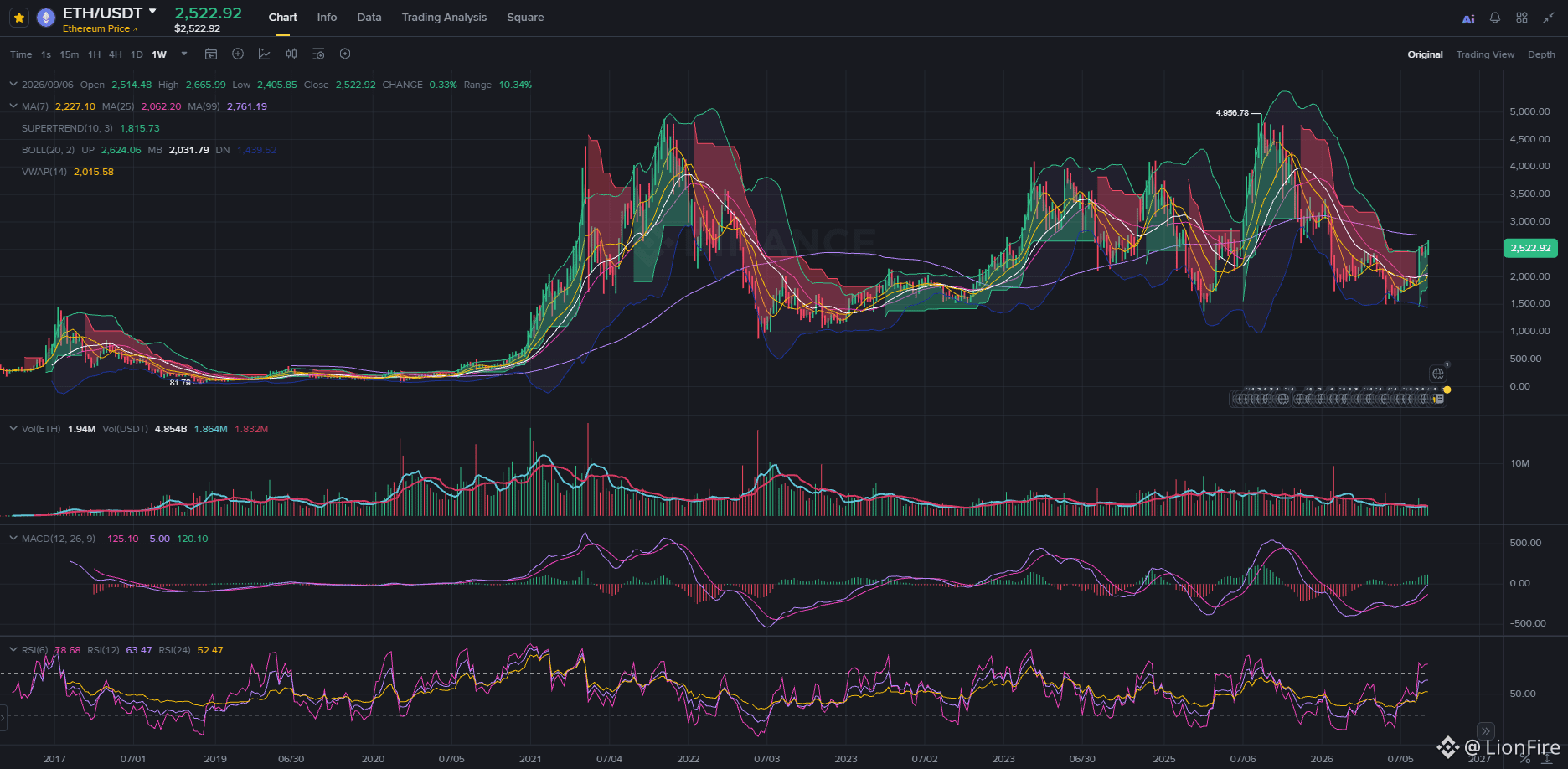
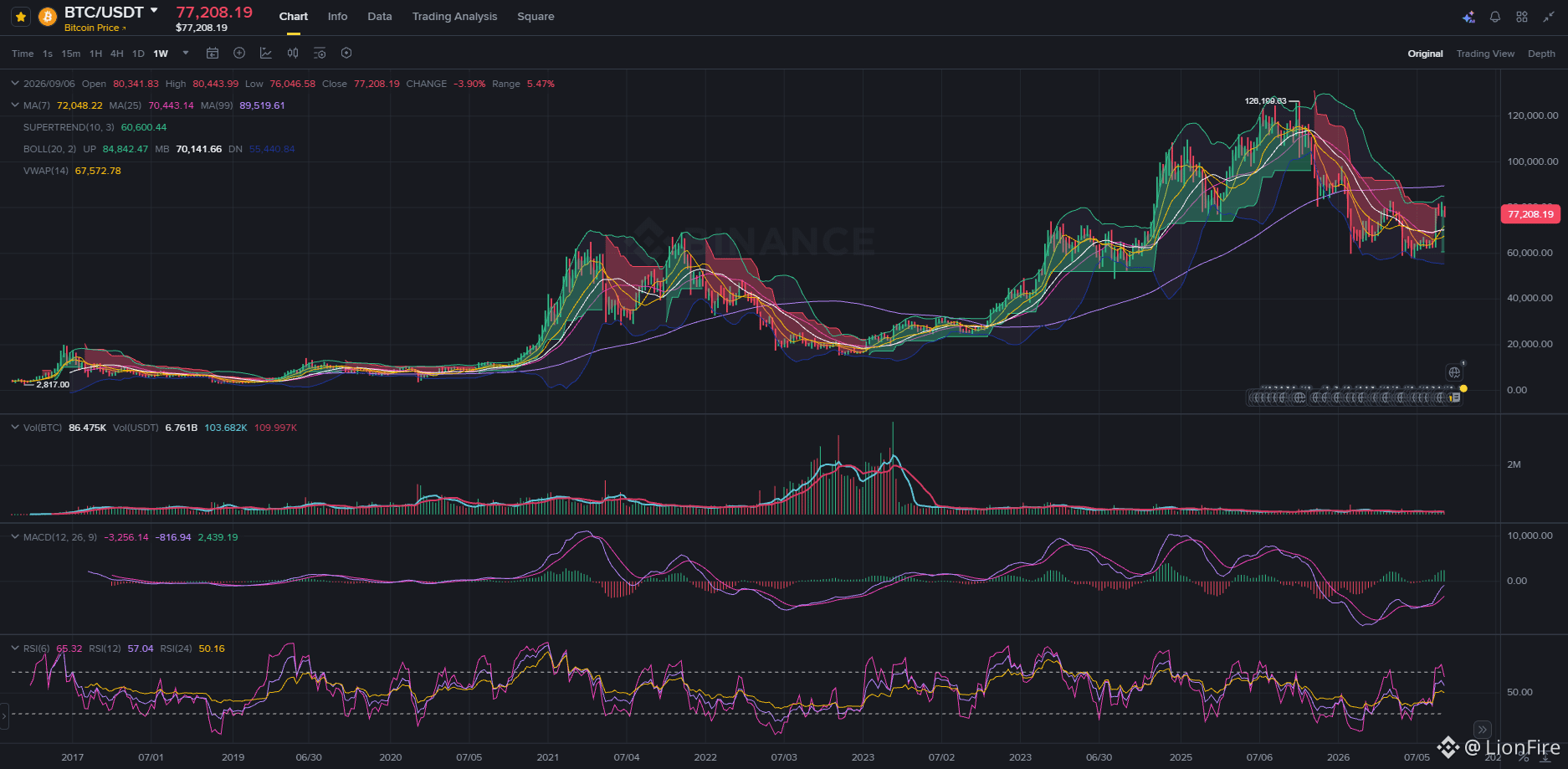
When you zoom out to the Weekly chart, the disconnect between the two dominant assets stops being a matter of sentiment and becomes a mathematical reality of flows and structure.
🧱 1. Why $ETH is facing a structural wall at $5,000:
🩸 Cannibalization by L2s and the end of "Ultrasound Money": The massive migration of activity to secondary layers stripped the base layer of commission income. The burn mechanism collapsed and ETH returned to being inflationary, dismantling its core scarcity thesis.
📉 Trapped under its moving averages: After failing repeatedly to break through its historical ceiling of $4,868.79, ETH trades boxed in below its MA99 ($2,761.19) and its MA25 ($2,862.20). Every attempt to push upward toward $4k hits a gigantic distribution wall of trapped participants.
⚠️ Competitive pressure: In terms of performance and retail adoption, high-throughput chains like Solana erode its market share, while spot ETH ETFs without staking fail to gain institutional traction.
🚀 2. Why $BTC has a clear path to $200,000:
📐 Impeccable bullish macro structure: Unlike ETH, BTC set a new all-time high in this cycle, reaching $126,198.83. Its weekly moving averages maintain a perfect bullish order: MA7 ($72,048) > MA25 ($70,443) > MA99 ($60,519).
🧮 The multiple is feasible: Trading at $200k doesn’t require a miracle—it only needs about a ~2.6x move from current prices (or a +58% from its local high). A ~$4T market cap represents only a conservative fraction versus the gold market.
👑 BTC doesn’t compete as a computing network; it’s the global reserve asset and sovereign settlement layer. The capital it absorbs seeks macro refuge, not interaction with dApps.
💡 ETH competes like a tech company in a sector where software gets cheaper; BTC competes like scarce money in a world where fiat is being devalued.
#BTC #Ethereum #CryptoMacro
🏛️ ETH’S CRYSTAL CEILING VS. BTC’S PATH: 📊⚖️
When you zoom out to the Weekly chart, the disconnect between the two dominant assets stops being a matter of sentiment and becomes a mathematical reality of flows and structure.
🧱 1. Why $ETH is facing a structural wall at $5,000:
🩸 Cannibalization by L2s and the end of "Ultrasound Money": The massive migration of activity to secondary layers stripped the base layer of commission income. The burn mechanism collapsed and ETH returned to being inflationary, dismantling its core scarcity thesis.
📉 Trapped under its moving averages: After failing repeatedly to break through its historical ceiling of $4,868.79, ETH trades boxed in below its MA99 ($2,761.19) and its MA25 ($2,862.20). Every attempt to push upward toward $4k hits a gigantic distribution wall of trapped participants.
⚠️ Competitive pressure: In terms of performance and retail adoption, high-throughput chains like Solana erode its market share, while spot ETH ETFs without staking fail to gain institutional traction.
🚀 2. Why $BTC has a clear path to $200,000:
📐 Impeccable bullish macro structure: Unlike ETH, BTC set a new all-time high in this cycle, reaching $126,198.83. Its weekly moving averages maintain a perfect bullish order: MA7 ($72,048) > MA25 ($70,443) > MA99 ($60,519).
🧮 The multiple is feasible: Trading at $200k doesn’t require a miracle—it only needs about a ~2.6x move from current prices (or a +58% from its local high). A ~$4T market cap represents only a conservative fraction versus the gold market.
👑 BTC doesn’t compete as a computing network; it’s the global reserve asset and sovereign settlement layer. The capital it absorbs seeks macro refuge, not interaction with dApps.
💡 ETH competes like a tech company in a sector where software gets cheaper; BTC competes like scarce money in a world where fiat is being devalued.
🏛️ ETH’S CRYSTAL CEILING VS. BTC’S PATH: 📊⚖️
When you zoom out to the Weekly chart, the disconnect between the two dominant assets stops being a matter of sentiment and becomes a mathematical reality of flows and structure.
🧱 1. Why $ETH is facing a structural wall at $5,000:
🩸 Cannibalization by L2s and the end of "Ultrasound Money": The massive migration of activity to secondary layers stripped the base layer of commission income. The burn mechanism collapsed and ETH returned to being inflationary, dismantling its core scarcity thesis.
📉 Trapped under its moving averages: After failing repeatedly to break through its historical ceiling of $4,868.79, ETH trades boxed in below its MA99 ($2,761.19) and its MA25 ($2,862.20). Every attempt to push upward toward $4k hits a gigantic distribution wall of trapped participants.
⚠️ Competitive pressure: In terms of performance and retail adoption, high-throughput chains like Solana erode its market share, while spot ETH ETFs without staking fail to gain institutional traction.
🚀 2. Why $BTC has a clear path to $200,000:
📐 Impeccable bullish macro structure: Unlike ETH, BTC set a new all-time high in this cycle, reaching $126,198.83. Its weekly moving averages maintain a perfect bullish order: MA7 ($72,048) > MA25 ($70,443) > MA99 ($60,519).
🧮 The multiple is feasible: Trading at $200k doesn’t require a miracle—it only needs about a ~2.6x move from current prices (or a +58% from its local high). A ~$4T market cap represents only a conservative fraction versus the gold market.
👑 BTC doesn’t compete as a computing network; it’s the global reserve asset and sovereign settlement layer. The capital it absorbs seeks macro refuge, not interaction with dApps.
💡 ETH competes like a tech company in a sector where software gets cheaper; BTC competes like scarce money in a world where fiat is being devalued.
54

Crypto Macro : The impact of Bitcoin dominance (BTC.D)
Title : BTC Dominance : The key indicator to anticipate Altseasons 📊🚀
Content :
The Bitcoin dominance index (BTC.D) measures the market share of BTC relative to all cryptocurrencies.
🔄 The classic scenarios :
BTC rises + BTC.D rises : Bitcoin absorbs all the liquidity; Altcoins stagnate or fall.
BTC stabilizes/ranges + BTC.D drops : Liquidity moves toward Altcoins (a favorable period for Altcoins).
BTC falls + BTC.D rises : Overall bearish pressure; Altcoins fall harder than Bitcoin.
Following BTC.D helps you avoid looking for Longs in Altcoins at the wrong time.
#Bitcoin #BTCDominance #Altseason #MarketAnalysis #CryptoMacro @Dusk_Foundation
Crypto Macro : The impact of Bitcoin dominance (BTC.D)
Title : BTC Dominance : The key indicator to anticipate Altseasons 📊🚀
Content :
The Bitcoin dominance index (BTC.D) measures the market share of BTC relative to all cryptocurrencies.
🔄 The classic scenarios :
BTC rises + BTC.D rises : Bitcoin absorbs all the liquidity; Altcoins stagnate or fall.
BTC stabilizes/ranges + BTC.D drops : Liquidity moves toward Altcoins (a favorable period for Altcoins).
BTC falls + BTC.D rises : Overall bearish pressure; Altcoins fall harder than Bitcoin.
Following BTC.D helps you avoid looking for Longs in Altcoins at the wrong time.
#Bitcoin #BTCDominance #Altseason #MarketAnalysis #CryptoMacro @Dusk
Title : BTC Dominance : The key indicator to anticipate Altseasons 📊🚀
Content :
The Bitcoin dominance index (BTC.D) measures the market share of BTC relative to all cryptocurrencies.
🔄 The classic scenarios :
BTC rises + BTC.D rises : Bitcoin absorbs all the liquidity; Altcoins stagnate or fall.
BTC stabilizes/ranges + BTC.D drops : Liquidity moves toward Altcoins (a favorable period for Altcoins).
BTC falls + BTC.D rises : Overall bearish pressure; Altcoins fall harder than Bitcoin.
Following BTC.D helps you avoid looking for Longs in Altcoins at the wrong time.
#Bitcoin #BTCDominance #Altseason #MarketAnalysis #CryptoMacro @Dusk
27

·
--
🦈 $BTC FEELS THE YIELD SURGE – LIQUIDITY SHIFT ON THE HORIZON! 🚀
📊 The latest PPI release pushed the 10‑year Treasury to 4.893%, its highest since 2007, while the 2‑year and 30‑year notes climbed in tandem. Smart‑money corridors are gravitating toward safe‑haven assets, draining risk appetite from the crypto arena. 🌊
⚡ Institutional order blocks on $BTC are now perched at the last swing high, awaiting a decisive test. With Treasury yields tightening, any breakout will need a strong liquidity sweep to validate the move. 🦈
💬 How are you positioning your crypto exposure amid this yield spike? 👇
⚠️ Not financial advice. Always manage your risk. 🛡️
🏷️ #BTC #YieldShift #SmartMoney #CryptoMacro
🚀 ⚡
🦈 $BTC FEELS THE YIELD SURGE – LIQUIDITY SHIFT ON THE HORIZON! 🚀
📊 The latest PPI release pushed the 10‑year Treasury to 4.893%, its highest since 2007, while the 2‑year and 30‑year notes climbed in tandem. Smart‑money corridors are gravitating toward safe‑haven assets, draining risk appetite from the crypto arena. 🌊
⚡ Institutional order blocks on $BTC are now perched at the last swing high, awaiting a decisive test. With Treasury yields tightening, any breakout will need a strong liquidity sweep to validate the move. 🦈
💬 How are you positioning your crypto exposure amid this yield spike? 👇
⚠️ Not financial advice. Always manage your risk. 🛡️
🏷️ #BTC #YieldShift #SmartMoney #CryptoMacro
🚀 ⚡
📊 The latest PPI release pushed the 10‑year Treasury to 4.893%, its highest since 2007, while the 2‑year and 30‑year notes climbed in tandem. Smart‑money corridors are gravitating toward safe‑haven assets, draining risk appetite from the crypto arena. 🌊
⚡ Institutional order blocks on $BTC are now perched at the last swing high, awaiting a decisive test. With Treasury yields tightening, any breakout will need a strong liquidity sweep to validate the move. 🦈
💬 How are you positioning your crypto exposure amid this yield spike? 👇
⚠️ Not financial advice. Always manage your risk. 🛡️
🏷️ #BTC #YieldShift #SmartMoney #CryptoMacro
🚀 ⚡
26

·
--
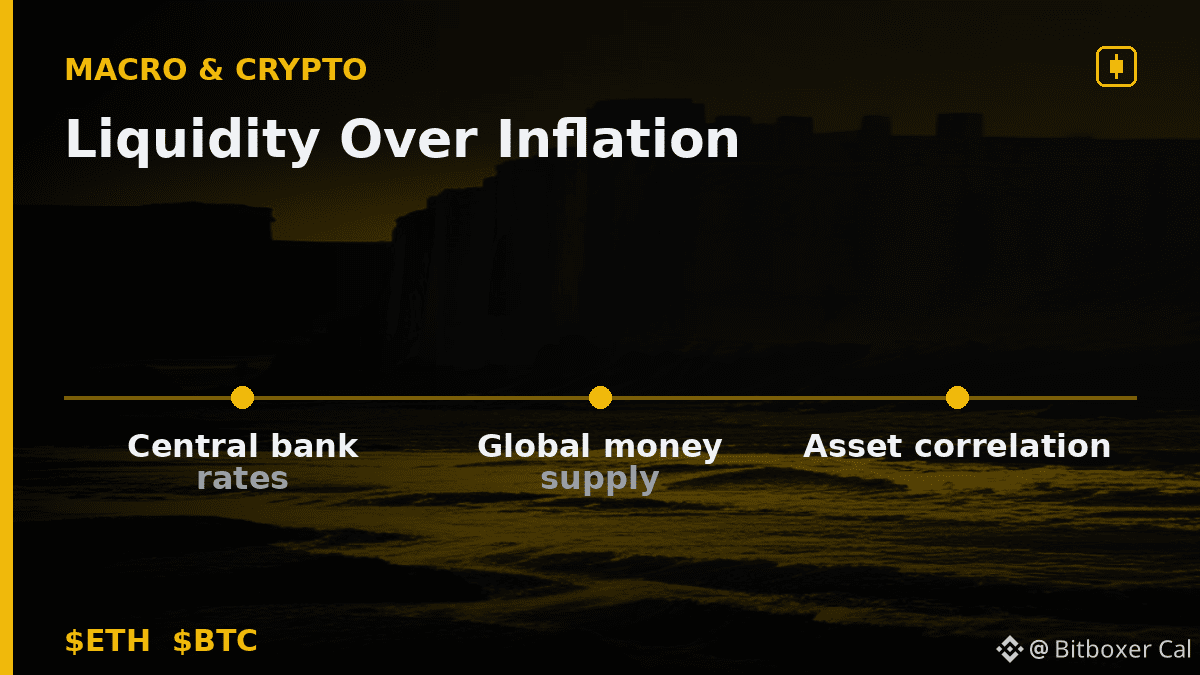
The idea that $BTC is a reliable macro hedge is crumbling under the weight of real central bank policy.
Traders are obsessed with inflation prints, but they’re missing the point: liquidity is the engine, not supply scarcity. Ignore the CPI headlines and watch the correlation between global M2 money supply and risk-on flows. If that liquidity dries up, watch $ETH and the broader market lose their safe-haven shine.
$BTC #CryptoMacro #FedPolicy #FederalReserve
The idea that $BTC is a reliable macro hedge is crumbling under the weight of real central bank policy.
Traders are obsessed with inflation prints, but they’re missing the point: liquidity is the engine, not supply scarcity. Ignore the CPI headlines and watch the correlation between global M2 money supply and risk-on flows. If that liquidity dries up, watch $ETH and the broader market lose their safe-haven shine.
$BTC #CryptoMacro #FedPolicy #FederalReserve
Traders are obsessed with inflation prints, but they’re missing the point: liquidity is the engine, not supply scarcity. Ignore the CPI headlines and watch the correlation between global M2 money supply and risk-on flows. If that liquidity dries up, watch $ETH and the broader market lose their safe-haven shine.
$BTC #CryptoMacro #FedPolicy #FederalReserve
8

·
--

Article
XRP’s Quiet Surge: Fed’s Rate Hold Signals a New RallyMost traders focus on price swings, but the smart money is watching Fed rate signals and whale activity on the XRP ledger.
The Federal Reserve’s recent stance—maintaining current rates rather than hiking—has quietly set the stage for a bullish run in XRP. Since the Fed’s announcement on September 3, on-chain data shows a 12% uptick in XRP wallet activity, with large holders moving an average of 3,500 XRP per day. This aligns with the macro narrative that lower rates keep crypto attractive as an alternative yield asset.
What does this mean for price? Historically, a Fed rate pause precedes a 15–20% rally in assets that offer higher yields than traditional bonds. XRP, with its built‑in liquidity and growing institutional adoption, is primed to capture that flow. If the current trend continues, we could see XRP testing the $0.70 resistance by mid‑October.
Watch the whale list on the XRP ledger for any sudden inflows from top 10 addresses. A spike here often precedes a price move. #XRP #FedRates #CryptoMacro
Are you ready to position yourself before the next wave?
XRP’s Quiet Surge: Fed’s Rate Hold Signals a New Rally
Most traders focus on price swings, but the smart money is watching Fed rate signals and whale activity on the XRP ledger.
The Federal Reserve’s recent stance—maintaining current rates rather than hiking—has quietly set the stage for a bullish run in XRP. Since the Fed’s announcement on September 3, on-chain data shows a 12% uptick in XRP wallet activity, with large holders moving an average of 3,500 XRP per day. This aligns with the macro narrative that lower rates keep crypto attractive as an alternative yield asset.
What does this mean for price? Historically, a Fed rate pause precedes a 15–20% rally in assets that offer higher yields than traditional bonds. XRP, with its built‑in liquidity and growing institutional adoption, is primed to capture that flow. If the current trend continues, we could see XRP testing the $0.70 resistance by mid‑October.
Watch the whale list on the XRP ledger for any sudden inflows from top 10 addresses. A spike here often precedes a price move. #XRP #FedRates #CryptoMacro
Are you ready to position yourself before the next wave?
The Federal Reserve’s recent stance—maintaining current rates rather than hiking—has quietly set the stage for a bullish run in XRP. Since the Fed’s announcement on September 3, on-chain data shows a 12% uptick in XRP wallet activity, with large holders moving an average of 3,500 XRP per day. This aligns with the macro narrative that lower rates keep crypto attractive as an alternative yield asset.
What does this mean for price? Historically, a Fed rate pause precedes a 15–20% rally in assets that offer higher yields than traditional bonds. XRP, with its built‑in liquidity and growing institutional adoption, is primed to capture that flow. If the current trend continues, we could see XRP testing the $0.70 resistance by mid‑October.
Watch the whale list on the XRP ledger for any sudden inflows from top 10 addresses. A spike here often precedes a price move. #XRP #FedRates #CryptoMacro
Are you ready to position yourself before the next wave?
19

·
--
Verified
U.S. wages grew 3.1%. That sounds boring. For crypto, it's actually useful information.
Average hourly earnings increased 3.1% over the past year, down from 3.2% in July.
Here's why I care.
Wage growth is one piece of the inflation puzzle.
But this number isn't screaming “wage inflation is accelerating.”
That's important because the Fed has to balance two things:
A strong labor market
vs.
The need to control inflation
For crypto traders, that means the jobs report isn't as simple as:
“Strong jobs = bearish BTC.”
You need to separate the data.
Strong employment can be hawkish.
But moderate wage growth can be supportive of the argument that inflation isn't being driven by wages.
So the next number I care about is CPI.
The better crypto mindset:
Don't trade one economic number. Build the whole macro picture.
#InflationWatch #CryptoMacro #FedPolicy
$METIS $ARB $DASH
U.S. wages grew 3.1%. That sounds boring. For crypto, it's actually useful information.
Average hourly earnings increased 3.1% over the past year, down from 3.2% in July.
Here's why I care.
Wage growth is one piece of the inflation puzzle.
But this number isn't screaming “wage inflation is accelerating.”
That's important because the Fed has to balance two things:
A strong labor market
vs.
The need to control inflation
For crypto traders, that means the jobs report isn't as simple as:
“Strong jobs = bearish BTC.”
You need to separate the data.
Strong employment can be hawkish.
But moderate wage growth can be supportive of the argument that inflation isn't being driven by wages.
So the next number I care about is CPI.
The better crypto mindset:
Don't trade one economic number. Build the whole macro picture.
#InflationWatch #CryptoMacro #FedPolicy
$METIS $ARB $DASH
Average hourly earnings increased 3.1% over the past year, down from 3.2% in July.
Here's why I care.
Wage growth is one piece of the inflation puzzle.
But this number isn't screaming “wage inflation is accelerating.”
That's important because the Fed has to balance two things:
A strong labor market
vs.
The need to control inflation
For crypto traders, that means the jobs report isn't as simple as:
“Strong jobs = bearish BTC.”
You need to separate the data.
Strong employment can be hawkish.
But moderate wage growth can be supportive of the argument that inflation isn't being driven by wages.
So the next number I care about is CPI.
The better crypto mindset:
Don't trade one economic number. Build the whole macro picture.
#InflationWatch #CryptoMacro #FedPolicy
$METIS $ARB $DASH
1
1
5
2.7k
Log in to explore more content
Join global crypto users on Binance Square
⚡️ Get latest and useful information about crypto.
💬 Trusted by the world’s largest crypto exchange.
👍 Discover real insights from verified creators.
Email / Phone number
Trending Topics
1
#BitcoinHoldsAbove$77000
6,035 views
162 Discussing
2
#FedHikeOddsRiseTo89%
38,122 views
729 Discussing
3
#BitcoinCrosses$78000
8,885 views
192 Discussing
4
#RLUSDSupplyHitsRecord$2.442B
1,585 views
31 Discussing
5
#AvalancheIntegratesIntoUAEPassDigitalVault
45,795 views
800 Discussing
6
#UKSeeksViewsOnTokenizingGold
33,607 views
580 Discussing
7
#AnthropicCEOCallsForAISlowdown
204,855 views
3,094 Discussing
8
#RevolutDataLeakReportedlyPostedAttackersThreatenDailyReleases
3,840 views
80 Discussing
9
#BrazilCentralBankRaisesVASPCapitalRequirements
31,462 views
715 Discussing
10
#BitcoinThirdSingleBlockReorgInFourWeeks
77,908 views
1,511 Discussing