

#btcvseth
btcvseth
22.8M views
55,494 Discussing
Hot
Latest

BTC vs. ETH ETF Flows: Is the "Bitcoin Dominance" Story Cracking?
Bitcoin has dominated crypto's institutional narrative since spot ETFs launched, but the last few weeks tell a different story. In September, Ethereum ETFs pulled in consistent inflows while Bitcoin ETFs bled money — is dominance quietly eroding, or is this just short-term noise?
History and Credibility Anchor
This isn't a one-off. Ethereum ETFs have logged $863 million in net inflows for 2026 to date, while Bitcoin ETFs remain roughly $1 billion net negative for the year — a reversal from Bitcoin's early ETF dominance in 2024. The pattern has repeated across multiple weeks since July, not a single headline day.
What's Driving the Divergence?
Institutional allocators appear to be rotating capital based on relative price momentum and risk appetite, not abandoning Bitcoin outright. Ethereum's stronger recent price performance may be pulling flows toward it, while Bitcoin's larger, more mature ETF base reacts more sharply to short-term outflows.
The Data Points to Watch
Weekly net flow totals for BTC and ETH spot ETFs (Farside, CoinGlass)
Single-day outlier flows tied to specific issuers like BlackRock
Whether price performance and flow direction stay aligned or split
The Honest Caveat
Flow data doesn't reveal why institutions are moving — rebalancing, tax timing, and options expiries can all distort a single week's numbers. Bitcoin's ETF base is roughly seven times larger than Ethereum's, so proportionally similar percentage moves look very different in dollar terms. One reversal week doesn't confirm a structural shift.
Bottom Line
The divergence is real and testable — not a permanent flip in dominance. Watch next Friday's flow release to see if the pattern holds or reverses. DYOR. Not financial advice.
#bitcoin #BTCvsETH #ETFFlows #CryptoMarkets
BTC vs. ETH ETF Flows: Is the "Bitcoin Dominance" Story Cracking?
Bitcoin has dominated crypto's institutional narrative since spot ETFs launched, but the last few weeks tell a different story. In September, Ethereum ETFs pulled in consistent inflows while Bitcoin ETFs bled money — is dominance quietly eroding, or is this just short-term noise?
History and Credibility Anchor
This isn't a one-off. Ethereum ETFs have logged $863 million in net inflows for 2026 to date, while Bitcoin ETFs remain roughly $1 billion net negative for the year — a reversal from Bitcoin's early ETF dominance in 2024. The pattern has repeated across multiple weeks since July, not a single headline day.
What's Driving the Divergence?
Institutional allocators appear to be rotating capital based on relative price momentum and risk appetite, not abandoning Bitcoin outright. Ethereum's stronger recent price performance may be pulling flows toward it, while Bitcoin's larger, more mature ETF base reacts more sharply to short-term outflows.
The Data Points to Watch
Weekly net flow totals for BTC and ETH spot ETFs (Farside, CoinGlass)
Single-day outlier flows tied to specific issuers like BlackRock
Whether price performance and flow direction stay aligned or split
The Honest Caveat
Flow data doesn't reveal why institutions are moving — rebalancing, tax timing, and options expiries can all distort a single week's numbers. Bitcoin's ETF base is roughly seven times larger than Ethereum's, so proportionally similar percentage moves look very different in dollar terms. One reversal week doesn't confirm a structural shift.
Bottom Line
The divergence is real and testable — not a permanent flip in dominance. Watch next Friday's flow release to see if the pattern holds or reverses. DYOR. Not financial advice.
#bitcoin #BTCvsETH #ETFFlows #CryptoMarkets
Bitcoin has dominated crypto's institutional narrative since spot ETFs launched, but the last few weeks tell a different story. In September, Ethereum ETFs pulled in consistent inflows while Bitcoin ETFs bled money — is dominance quietly eroding, or is this just short-term noise?
History and Credibility Anchor
This isn't a one-off. Ethereum ETFs have logged $863 million in net inflows for 2026 to date, while Bitcoin ETFs remain roughly $1 billion net negative for the year — a reversal from Bitcoin's early ETF dominance in 2024. The pattern has repeated across multiple weeks since July, not a single headline day.
What's Driving the Divergence?
Institutional allocators appear to be rotating capital based on relative price momentum and risk appetite, not abandoning Bitcoin outright. Ethereum's stronger recent price performance may be pulling flows toward it, while Bitcoin's larger, more mature ETF base reacts more sharply to short-term outflows.
The Data Points to Watch
Weekly net flow totals for BTC and ETH spot ETFs (Farside, CoinGlass)
Single-day outlier flows tied to specific issuers like BlackRock
Whether price performance and flow direction stay aligned or split
The Honest Caveat
Flow data doesn't reveal why institutions are moving — rebalancing, tax timing, and options expiries can all distort a single week's numbers. Bitcoin's ETF base is roughly seven times larger than Ethereum's, so proportionally similar percentage moves look very different in dollar terms. One reversal week doesn't confirm a structural shift.
Bottom Line
The divergence is real and testable — not a permanent flip in dominance. Watch next Friday's flow release to see if the pattern holds or reverses. DYOR. Not financial advice.
#bitcoin #BTCvsETH #ETFFlows #CryptoMarkets
1
54

·
--
Bitcoin ($BTC ) and Ethereum ($ETH ) are the two largest cryptocurrencies, but they serve different purposes. Bitcoin was created as a decentralized digital currency and is often called "digital gold" due to its limited supply of 21 million coins.
Ethereum, on the other hand, is a programmable blockchain that enables smart contracts, decentralized applications (dApps), and DeFi projects. While Bitcoin focuses on storing value, Ethereum powers an entire ecosystem of blockchain innovation.
Bitcoin is generally viewed as a safer long-term asset because of its simplicity, security, and strong institutional adoption. Ethereum offers greater utility and growth potential through its expanding network and real-world use cases.
For investors seeking stability,$BTC Bitcoin may be the preferred choice. For those interested in blockchain technology and ecosystem growth, Ethereum can be an attractive option.
Ultimately, both assets play important roles in the crypto market, and many investors choose to hold both as part of a diversified portfolio.
#BTCvsETH #blockchain #crypto #btc #eth
Bitcoin ($BTC ) and Ethereum ($ETH ) are the two largest cryptocurrencies, but they serve different purposes. Bitcoin was created as a decentralized digital currency and is often called "digital gold" due to its limited supply of 21 million coins.
Ethereum, on the other hand, is a programmable blockchain that enables smart contracts, decentralized applications (dApps), and DeFi projects. While Bitcoin focuses on storing value, Ethereum powers an entire ecosystem of blockchain innovation.
Bitcoin is generally viewed as a safer long-term asset because of its simplicity, security, and strong institutional adoption. Ethereum offers greater utility and growth potential through its expanding network and real-world use cases.
For investors seeking stability,$BTC Bitcoin may be the preferred choice. For those interested in blockchain technology and ecosystem growth, Ethereum can be an attractive option.
Ultimately, both assets play important roles in the crypto market, and many investors choose to hold both as part of a diversified portfolio.
#BTCvsETH #blockchain #crypto #btc #eth
Ethereum, on the other hand, is a programmable blockchain that enables smart contracts, decentralized applications (dApps), and DeFi projects. While Bitcoin focuses on storing value, Ethereum powers an entire ecosystem of blockchain innovation.
Bitcoin is generally viewed as a safer long-term asset because of its simplicity, security, and strong institutional adoption. Ethereum offers greater utility and growth potential through its expanding network and real-world use cases.
For investors seeking stability,$BTC Bitcoin may be the preferred choice. For those interested in blockchain technology and ecosystem growth, Ethereum can be an attractive option.
Ultimately, both assets play important roles in the crypto market, and many investors choose to hold both as part of a diversified portfolio.
#BTCvsETH #blockchain #crypto #btc #eth
123

·
--
Right now both $BTC and ETH are bleeding, but if you zoom into the ETH/BTC ratio, it's sitting at a 12-month low, and that single number is telling a story most people are reading wrong.
The simple take is "money is rotating into BTC." What's actually happening is a broad institutional de-risking, and ETH, being the higher-beta asset, is just getting hit harder in the wash. $ETH now correlates with the Nasdaq at levels we haven't seen in a year, so when yields spike and rate-cut expectations get repriced out, ETH gets sold first and sold harder.
Meanwhile banks and the largest holder group, investment advisors, barely trimmed at all. That's not capitulation, that's healthy profit-taking by people sitting on gains.
The interesting part is what was quietly building under ETH before this washout even started. Spot ETH ETFs just had their strongest inflow month since launch, and the data suggests allocators aren't swapping BTC for ETH, they're expanding their crypto allocation to include both. That's a very different signal than a simple rotation story.
Here's the part that really got my attention though. ETH's institutional cost basis is roughly sixty percent underwater, compared to BTC's twenty-two percent. That means ETH holders are sitting on much deeper unrealized losses relative to where they bought, which often means more capitulation has already happened, not less.
This says more about market psychology than price itself. Tactical traders are running for BTC because it has a structural backstop ETH doesn't have. But the slower, stickier money seems to be quietly building exposure to ETH precisely because it's so beaten down relative to its institutional entry points.
Two different clocks, two different stories. Short term, BTC wins the relative trade. Longer term, ETH's setup looks like the more asymmetric one, if the underlying activity quality improves enough to justify it.
#BTCvsETH
Right now both $BTC and ETH are bleeding, but if you zoom into the ETH/BTC ratio, it's sitting at a 12-month low, and that single number is telling a story most people are reading wrong.
The simple take is "money is rotating into BTC." What's actually happening is a broad institutional de-risking, and ETH, being the higher-beta asset, is just getting hit harder in the wash. $ETH now correlates with the Nasdaq at levels we haven't seen in a year, so when yields spike and rate-cut expectations get repriced out, ETH gets sold first and sold harder.
Meanwhile banks and the largest holder group, investment advisors, barely trimmed at all. That's not capitulation, that's healthy profit-taking by people sitting on gains.
The interesting part is what was quietly building under ETH before this washout even started. Spot ETH ETFs just had their strongest inflow month since launch, and the data suggests allocators aren't swapping BTC for ETH, they're expanding their crypto allocation to include both. That's a very different signal than a simple rotation story.
Here's the part that really got my attention though. ETH's institutional cost basis is roughly sixty percent underwater, compared to BTC's twenty-two percent. That means ETH holders are sitting on much deeper unrealized losses relative to where they bought, which often means more capitulation has already happened, not less.
This says more about market psychology than price itself. Tactical traders are running for BTC because it has a structural backstop ETH doesn't have. But the slower, stickier money seems to be quietly building exposure to ETH precisely because it's so beaten down relative to its institutional entry points.
Two different clocks, two different stories. Short term, BTC wins the relative trade. Longer term, ETH's setup looks like the more asymmetric one, if the underlying activity quality improves enough to justify it.
#BTCvsETH
The simple take is "money is rotating into BTC." What's actually happening is a broad institutional de-risking, and ETH, being the higher-beta asset, is just getting hit harder in the wash. $ETH now correlates with the Nasdaq at levels we haven't seen in a year, so when yields spike and rate-cut expectations get repriced out, ETH gets sold first and sold harder.
Meanwhile banks and the largest holder group, investment advisors, barely trimmed at all. That's not capitulation, that's healthy profit-taking by people sitting on gains.
The interesting part is what was quietly building under ETH before this washout even started. Spot ETH ETFs just had their strongest inflow month since launch, and the data suggests allocators aren't swapping BTC for ETH, they're expanding their crypto allocation to include both. That's a very different signal than a simple rotation story.
Here's the part that really got my attention though. ETH's institutional cost basis is roughly sixty percent underwater, compared to BTC's twenty-two percent. That means ETH holders are sitting on much deeper unrealized losses relative to where they bought, which often means more capitulation has already happened, not less.
This says more about market psychology than price itself. Tactical traders are running for BTC because it has a structural backstop ETH doesn't have. But the slower, stickier money seems to be quietly building exposure to ETH precisely because it's so beaten down relative to its institutional entry points.
Two different clocks, two different stories. Short term, BTC wins the relative trade. Longer term, ETH's setup looks like the more asymmetric one, if the underlying activity quality improves enough to justify it.
#BTCvsETH
3
5.8k
·
--
🚀 Bitcoin vs Ethereum: Which Is Better?
Bitcoin ($BTC ) is often considered the king of crypto. Its limited supply, strong security, and growing institutional adoption make it a popular choice for long-term investors seeking a store of value.
Ethereum ($ETH ) goes beyond digital money. It powers smart contracts, DeFi platforms, NFTs, and thousands of decentralized applications, making it the backbone of blockchain innovation.
✅ Choose Bitcoin if you prioritize stability, scarcity, and long-term value storage.
✅ Choose Ethereum if you believe in blockchain technology, smart contracts, and ecosystem growth.
Many experienced investors hold both $BTC and ETH because they serve different purposes in the crypto market.
In the end, Bitcoin leads as digital gold, while Ethereum leads as the world's largest smart contract platform. The "best" choice depends on your investment strategy and risk tolerance.
#BTCvsETH #altcoins #bainancesquare #crypto #BTC
🚀 Bitcoin vs Ethereum: Which Is Better?
Bitcoin ($BTC ) is often considered the king of crypto. Its limited supply, strong security, and growing institutional adoption make it a popular choice for long-term investors seeking a store of value.
Ethereum ($ETH ) goes beyond digital money. It powers smart contracts, DeFi platforms, NFTs, and thousands of decentralized applications, making it the backbone of blockchain innovation.
✅ Choose Bitcoin if you prioritize stability, scarcity, and long-term value storage.
✅ Choose Ethereum if you believe in blockchain technology, smart contracts, and ecosystem growth.
Many experienced investors hold both $BTC and ETH because they serve different purposes in the crypto market.
In the end, Bitcoin leads as digital gold, while Ethereum leads as the world's largest smart contract platform. The "best" choice depends on your investment strategy and risk tolerance.
#BTCvsETH #altcoins #bainancesquare #crypto #BTC
Bitcoin ($BTC ) is often considered the king of crypto. Its limited supply, strong security, and growing institutional adoption make it a popular choice for long-term investors seeking a store of value.
Ethereum ($ETH ) goes beyond digital money. It powers smart contracts, DeFi platforms, NFTs, and thousands of decentralized applications, making it the backbone of blockchain innovation.
✅ Choose Bitcoin if you prioritize stability, scarcity, and long-term value storage.
✅ Choose Ethereum if you believe in blockchain technology, smart contracts, and ecosystem growth.
Many experienced investors hold both $BTC and ETH because they serve different purposes in the crypto market.
In the end, Bitcoin leads as digital gold, while Ethereum leads as the world's largest smart contract platform. The "best" choice depends on your investment strategy and risk tolerance.
#BTCvsETH #altcoins #bainancesquare #crypto #BTC
106

·
--
#BTCvsETH
BTC vs ETH Comparison 🔥✅😱
BTC/USDT: $60,614.00
24h change: +1.07%
24h range: $59,390.00 – $60,728.00
ETH/USDT: $1,594.04
24h change: +1.72%
24h range: $1,553.66 – $1,598.88
Quick comparison:
ETH is outperforming BTC over the last 24 hours in percentage terms, while BTC still has the much higher absolute price. If you want, I can also compare them by market trend, volatility, or which looks stronger today.
#BTCvsETH
BTC vs ETH Comparison 🔥✅😱
BTC/USDT: $60,614.00
24h change: +1.07%
24h range: $59,390.00 – $60,728.00
ETH/USDT: $1,594.04
24h change: +1.72%
24h range: $1,553.66 – $1,598.88
Quick comparison:
ETH is outperforming BTC over the last 24 hours in percentage terms, while BTC still has the much higher absolute price. If you want, I can also compare them by market trend, volatility, or which looks stronger today.
BTC vs ETH Comparison 🔥✅😱
BTC/USDT: $60,614.00
24h change: +1.07%
24h range: $59,390.00 – $60,728.00
ETH/USDT: $1,594.04
24h change: +1.72%
24h range: $1,553.66 – $1,598.88
Quick comparison:
ETH is outperforming BTC over the last 24 hours in percentage terms, while BTC still has the much higher absolute price. If you want, I can also compare them by market trend, volatility, or which looks stronger today.
56

🚀 This week, $BTC has shown remarkable resilience, trading at $77,429.88 (+0.17%). Meanwhile, $ETH is holding steady at $2,451.34 (+1.15%). As you can see below, which do you think has more potential for growth? Will Bitcoin's strength continue? 🤔 #BitcoinStrongestWeekSinceMarch2023 #BTCvsETH
❤️ If you liked it, hit like and follow us for the next analysis!
🚀 This week, $BTC has shown remarkable resilience, trading at $77,429.88 (+0.17%). Meanwhile, $ETH is holding steady at $2,451.34 (+1.15%). As you can see below, which do you think has more potential for growth? Will Bitcoin's strength continue? 🤔 #BitcoinStrongestWeekSinceMarch2023 #BTCvsETH
❤️ If you liked it, hit like and follow us for the next analysis!
❤️ If you liked it, hit like and follow us for the next analysis!
23

·
--
🚨 BTC Market Update$BTC $ETH #BTCvsETH
{spot}(BTCUSDT)
#BTC is still holding above a key support zone. 📊
✅ If buyers defend this level, the next target could be higher resistance. ❌ If support breaks, expect a short-term pullback before the next move.
My Plan: 🔹 Buy only after confirmation. 🔹 Avoid FOMO. 🔹 Always use Stop Loss.
What's your prediction? 📈 Bullish or 📉 Bearish?
#Bitcoin #Crypto #BinanceSquare #Trading #BTC #USDT #DYOR
ETH Analysis
🚀 Ethereum Looks Ready for a Big Move!
#ETH is trading near an important zone.
🟢 A breakout above resistance may trigger strong bullish momentum. 🔴 A rejection could lead to a healthy correction before the next rally.
Trading Plan: ✅ Wait for breakout confirmation. ✅ Manage your risk. ✅ Never overtrade.
What do you think? 🐂 Bullish or 🐻 Bearish?
#Ethereum #ETH #Crypto #BinanceSquare #Altcoins #Trading #DYOR
🚨 BTC Market Update$BTC $ETH #BTCvsETH
#BTC is still holding above a key support zone. 📊
✅ If buyers defend this level, the next target could be higher resistance. ❌ If support breaks, expect a short-term pullback before the next move.
My Plan: 🔹 Buy only after confirmation. 🔹 Avoid FOMO. 🔹 Always use Stop Loss.
What's your prediction? 📈 Bullish or 📉 Bearish?
#Bitcoin #Crypto #BinanceSquare #Trading #BTC #USDT #DYOR
ETH Analysis
🚀 Ethereum Looks Ready for a Big Move!
#ETH is trading near an important zone.
🟢 A breakout above resistance may trigger strong bullish momentum. 🔴 A rejection could lead to a healthy correction before the next rally.
Trading Plan: ✅ Wait for breakout confirmation. ✅ Manage your risk. ✅ Never overtrade.
What do you think? 🐂 Bullish or 🐻 Bearish?
#Ethereum #ETH #Crypto #BinanceSquare #Altcoins #Trading #DYOR
#BTC is still holding above a key support zone. 📊
✅ If buyers defend this level, the next target could be higher resistance. ❌ If support breaks, expect a short-term pullback before the next move.
My Plan: 🔹 Buy only after confirmation. 🔹 Avoid FOMO. 🔹 Always use Stop Loss.
What's your prediction? 📈 Bullish or 📉 Bearish?
#Bitcoin #Crypto #BinanceSquare #Trading #BTC #USDT #DYOR
ETH Analysis
🚀 Ethereum Looks Ready for a Big Move!
#ETH is trading near an important zone.
🟢 A breakout above resistance may trigger strong bullish momentum. 🔴 A rejection could lead to a healthy correction before the next rally.
Trading Plan: ✅ Wait for breakout confirmation. ✅ Manage your risk. ✅ Never overtrade.
What do you think? 🐂 Bullish or 🐻 Bearish?
#Ethereum #ETH #Crypto #BinanceSquare #Altcoins #Trading #DYOR
BTC
55%
ETH
36%
CHOICE ONE
9%
11 votes • Voting closed
539

·
--
Bullish
1
92

·
--
Bullish
$PEPE 🚀🚀🚀
MILLIONAIRES❤️❤️❤️❤️
if you invest 10$ you and your family rich
after some time
buy now $PEPE don't be late
#BTCvsETH #memecoin🚀🚀🚀 #PEPE
{spot}(PEPEUSDT)
$PEPE 🚀🚀🚀
MILLIONAIRES❤️❤️❤️❤️
if you invest 10$ you and your family rich
after some time
buy now $PEPE don't be late
#BTCvsETH #memecoin🚀🚀🚀 #PEPE
MILLIONAIRES❤️❤️❤️❤️
if you invest 10$ you and your family rich
after some time
buy now $PEPE don't be late
#BTCvsETH #memecoin🚀🚀🚀 #PEPE
102
60
253
176k


·
--
Bullish
📊 AsBitGQ Portfolio | Profit +3242.34% in 7 days!
🔥 This is not a hype — it's strategy, discipline, and a cool head.
📈 Asset distribution:
– ETH — 86.03%
– BTC — 10.29%
– USDT — 3.39%
– BNB — 0.30%
🔎 Key to growth:
1. Main focus on Ethereum as the primary asset of the growing trend
2. Locking in profits on BTC during pullbacks
3. USDT allocation for flexible rebalancing
4. Entries — after technical signals from MA and volume levels
5. HODL + Speculative entry during impulse
🧠 My conclusion:
> Diversification is not always equal to safety. Sometimes a concentrated bet is the best path to growth. The main thing is to know what you believe in and when to lock in.
💬 How's your portfolio doing? Share your results — let's compare strategies!
#CryptoPortfolio #ETH #BTC #ProfitStrategy #Crypto #TradingSuccess #AsBitGQ #BinanceSmart #growth #profitability #PnL #Web3 $BTC $ETH $SOL #BTCvsETH #ETHBreaks3700 #StablecoinLaw #StrategyBTCPurchase
📊 AsBitGQ Portfolio | Profit +3242.34% in 7 days!
🔥 This is not a hype — it's strategy, discipline, and a cool head.
📈 Asset distribution:
– ETH — 86.03%
– BTC — 10.29%
– USDT — 3.39%
– BNB — 0.30%
🔎 Key to growth:
1. Main focus on Ethereum as the primary asset of the growing trend
2. Locking in profits on BTC during pullbacks
3. USDT allocation for flexible rebalancing
4. Entries — after technical signals from MA and volume levels
5. HODL + Speculative entry during impulse
🧠 My conclusion:
> Diversification is not always equal to safety. Sometimes a concentrated bet is the best path to growth. The main thing is to know what you believe in and when to lock in.
💬 How's your portfolio doing? Share your results — let's compare strategies!
#CryptoPortfolio #ETH #BTC #ProfitStrategy #Crypto #TradingSuccess #AsBitGQ #BinanceSmart #growth #profitability #PnL #Web3 $BTC $ETH $SOL #BTCvsETH #ETHBreaks3700 #StablecoinLaw #StrategyBTCPurchase
🔥 This is not a hype — it's strategy, discipline, and a cool head.
📈 Asset distribution:
– ETH — 86.03%
– BTC — 10.29%
– USDT — 3.39%
– BNB — 0.30%
🔎 Key to growth:
1. Main focus on Ethereum as the primary asset of the growing trend
2. Locking in profits on BTC during pullbacks
3. USDT allocation for flexible rebalancing
4. Entries — after technical signals from MA and volume levels
5. HODL + Speculative entry during impulse
🧠 My conclusion:
> Diversification is not always equal to safety. Sometimes a concentrated bet is the best path to growth. The main thing is to know what you believe in and when to lock in.
💬 How's your portfolio doing? Share your results — let's compare strategies!
#CryptoPortfolio #ETH #BTC #ProfitStrategy #Crypto #TradingSuccess #AsBitGQ #BinanceSmart #growth #profitability #PnL #Web3 $BTC $ETH $SOL #BTCvsETH #ETHBreaks3700 #StablecoinLaw #StrategyBTCPurchase
1
27

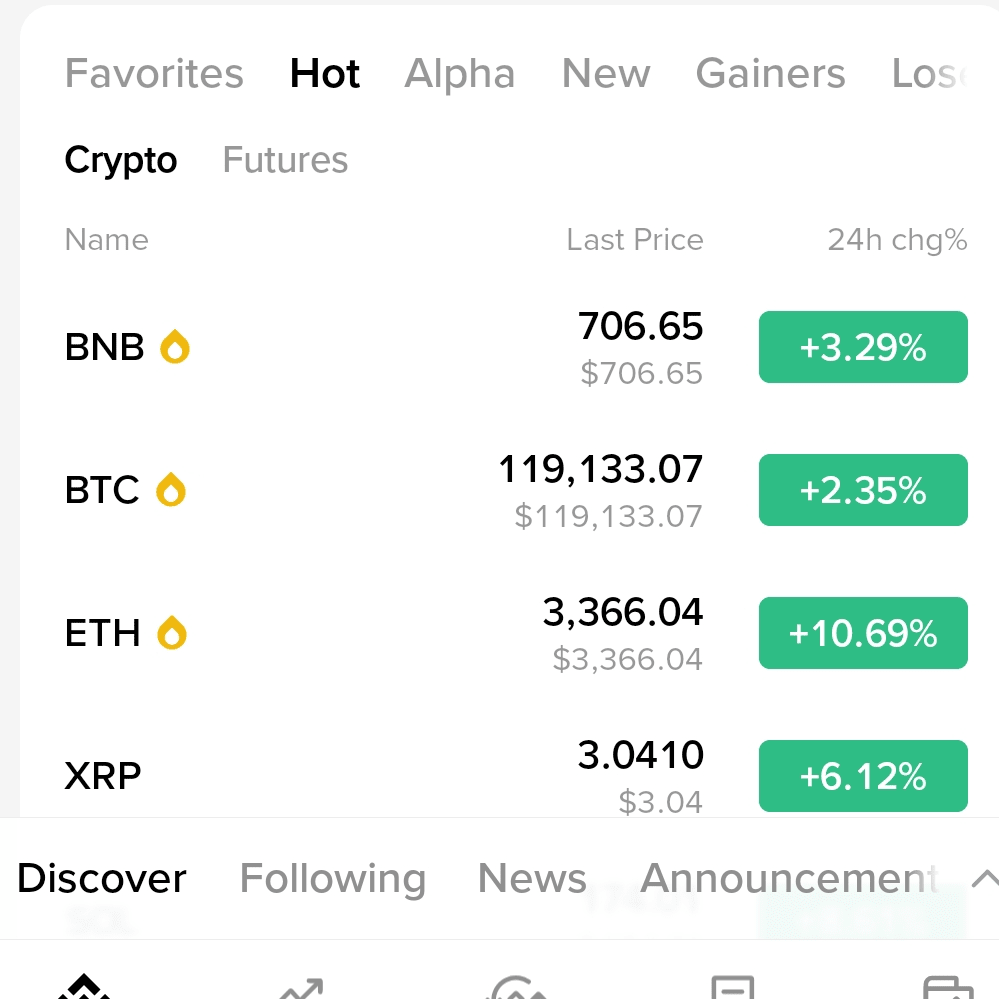
#BTCvsETH just wait for good time
#BTCvsETH just wait for good time
25

yesterday Given Trade is Now in Profit 💲🔥
Tp 1 Hit 🎯
Best Quote :
Always Wait for the best opportunity to capture 🔥🟢
Tp 2 is On The Way. 🟢🔥
Just Wait and Watch. 💲
#CryptoScamSurge
#BTCvsETH
#ETHBreaks3700
#BNBBreaksATH
$ETH
yesterday Given Trade is Now in Profit 💲🔥
Tp 1 Hit 🎯
Best Quote :
Always Wait for the best opportunity to capture 🔥🟢
Tp 2 is On The Way. 🟢🔥
Just Wait and Watch. 💲
#CryptoScamSurge
#BTCvsETH
#ETHBreaks3700
#BNBBreaksATH
$ETH
Tp 1 Hit 🎯
Best Quote :
Always Wait for the best opportunity to capture 🔥🟢
Tp 2 is On The Way. 🟢🔥
Just Wait and Watch. 💲
#CryptoScamSurge
#BTCvsETH
#ETHBreaks3700
#BNBBreaksATH
$ETH
184

·
--
BTC #BinanceHODLerOPEN #BTCvsETH #MarketPullback #ListedCompaniesAltcoinTreasury #BTCvsETH $BTC
{spot}(BTCUSDT)
Current Price ~110,415 USD
Predictions for Tomorrow (Mixed) Slight decline ranging from −2% to −3% depending on the source, or slight sideways/positive movement (+0.5%) according to PriceFore
Technical Analysis Neutral to bearish technical state with a potential short rebound if the price is supported from overbought areas
Long-term Predictions Optimism for a strong year-end with the possibility of achieving
BTC #BinanceHODLerOPEN #BTCvsETH #MarketPullback #ListedCompaniesAltcoinTreasury #BTCvsETH $BTC
Current Price ~110,415 USD
Predictions for Tomorrow (Mixed) Slight decline ranging from −2% to −3% depending on the source, or slight sideways/positive movement (+0.5%) according to PriceFore
Technical Analysis Neutral to bearish technical state with a potential short rebound if the price is supported from overbought areas
Long-term Predictions Optimism for a strong year-end with the possibility of achieving
Current Price ~110,415 USD
Predictions for Tomorrow (Mixed) Slight decline ranging from −2% to −3% depending on the source, or slight sideways/positive movement (+0.5%) according to PriceFore
Technical Analysis Neutral to bearish technical state with a potential short rebound if the price is supported from overbought areas
Long-term Predictions Optimism for a strong year-end with the possibility of achieving
11
284

I dont know what should I do from here why did i always choose wrong trade 😞 its going down down and down. i am so worry about my liquidation.#MarketPullback #BTCvsETH
https://www.binance.com/download?utm_medium=screenshot
I dont know what should I do from here why did i always choose wrong trade 😞 its going down down and down. i am so worry about my liquidation.#MarketPullback #BTCvsETH
https://www.binance.com/download?utm_medium=screenshot
https://www.binance.com/download?utm_medium=screenshot
48
21
24
26.5k



·
--
Bullish
i opened a short position on sui with 1× leverage after it completes the sweep at 2.28 i will close the position
#MarketRebound #BTCvsETH #SUI🔥 #stablecoin #ETH
$SUI $ETH $BNB
i opened a short position on sui with 1× leverage after it completes the sweep at 2.28 i will close the position
#MarketRebound #BTCvsETH #SUI🔥 #stablecoin #ETH
$SUI $ETH $BNB
#MarketRebound #BTCvsETH #SUI🔥 #stablecoin #ETH
$SUI $ETH $BNB
46

Log in to explore more content
Join global crypto users on Binance Square
⚡️ Get latest and useful information about crypto.
💬 Trusted by the world’s largest crypto exchange.
👍 Discover real insights from verified creators.
Email / Phone number
Trending Topics
1
#ArgentinaCentralBankWillNotPushCryptoIntoBankingForTwoYears
6,617 views
185 Discussing
2
#LedgerConfirmsUnauthorizedHardwareImplantInUserDevice
37,576 views
225 Discussing
3
#EtherETFsExtendOutflowsToNineDays
148,908 views
1,920 Discussing
4
#EthereumSurpasses2500USDT
335,608 views
3,009 Discussing
5
#XRPLedgerPatchesXRPCreationBug
370,052 views
3,313 Discussing
6
#STRKRisesAbout20%In24Hours
331,496 views
3,046 Discussing
7
#TetherFreezesUSDTLinkedToLedgerTheft
130,047 views
1,957 Discussing
8
#CFTCMovesToFoldEventContractsIntoSwapsRules
55,447 views
1,173 Discussing
9
#LedgerPausesCryptoBilisSales
98,588 views
1,062 Discussing
10
#EvernorthCompletesSPACMergerWithArmadaII
62,725 views
611 Discussing