Binance has a comprehensive procedure to assist users in recovering funds lost due to incorrect deposits. However, there is no guarantee of successful retrieval of any unlisted token, and some assets are not supported for retrieval.
When depositing assets on Binance, users should verify supported tokens, network status, contract address, and deposit addresses on crypto deposit page to prevent issues.
Binance offers various types of deposit retrieval services, including the BNB Pioneer Burn Program. This article describes each service type in more detail, along with their respective processing times, fees, and expected outcomes.
At Binance, safeguarding user assets is our top priority. We strive to provide an easy-to-use platform, but we understand that mistakes happen – particularly when depositing funds to your Binance account.
We understand the frustration that can arise when deposits go missing, or when users encounter other issues during the deposit process. That is why we have implemented thorough procedures to assist our users in recovering lost assets. Through our skilled technical team, reliable support, and user-friendly interface, we've successfully prioritized addressing users' concerns and delivering solutions promptly. Each month, we process approximately 4,000 retrieval applications, restoring roughly 7 million USDT in value.
This article provides an overview of our recovery process, rules, and helpful tips for retrieving funds if there's an issue during the deposit.
When you deposit assets into your Binance account, your funds are directed to a unique "deposit address" that Binance manages for you.
Your Binance deposit address is distinct from addresses in self-custodial wallets like Trust Wallet, Metamask, etc. In a self-custodial wallet, users hold their wallet's private keys, thus fully controlling their funds. However, when you deposit funds on a centralized platform like Binance, we manage the wallets and the deposited funds on your behalf.
For more information, please check out How and Why Assets Move Between Binance Wallets on deposit addresses.
Therefore, reclaiming assets sent to an incorrect address requires a vastly different approach when dealing with a centralized exchange. For one, a processing fee is required for the retrieval of unlisted tokens – more on that below.
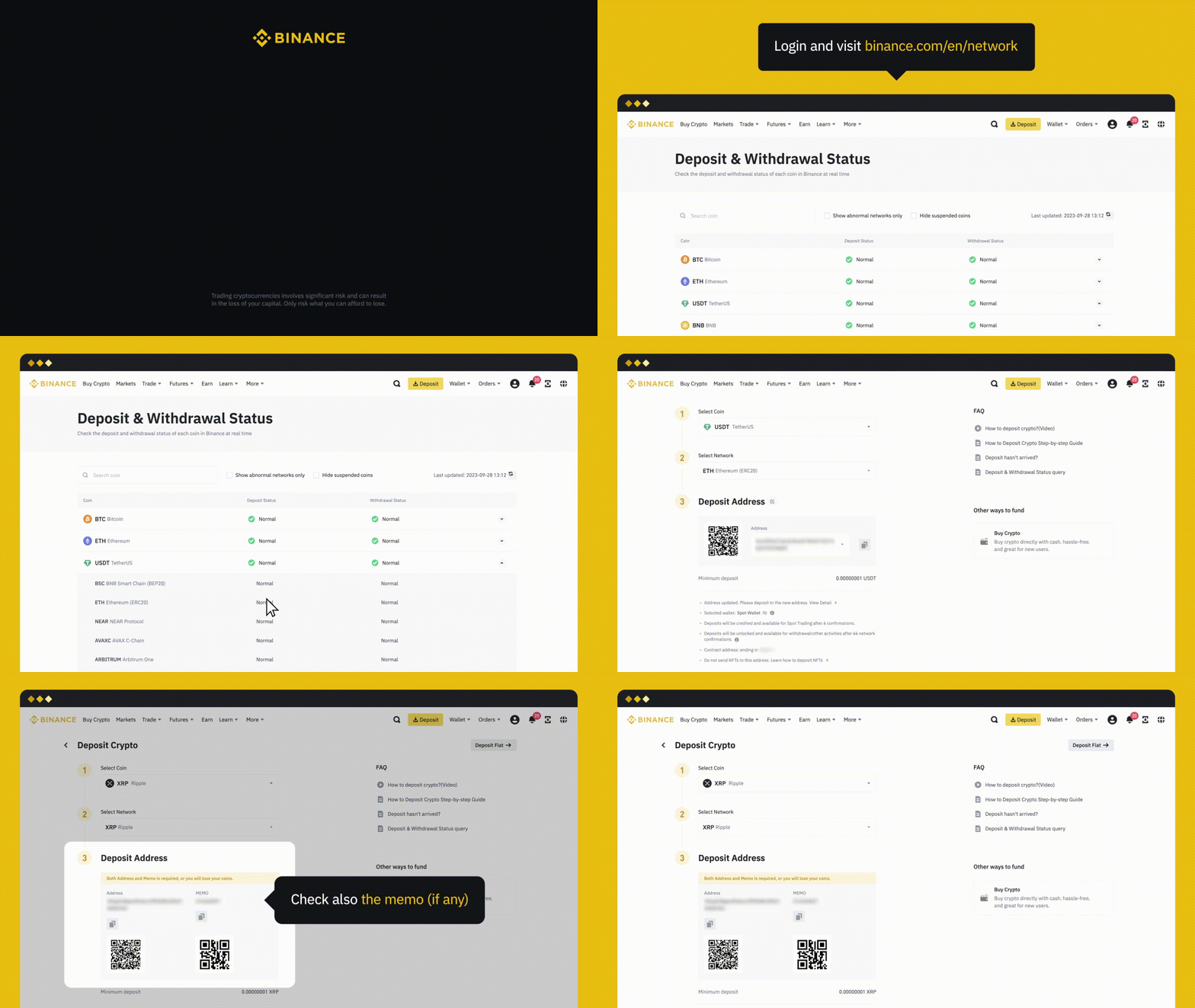
Prevention is always better than cure. Therefore, it is advisable to check the supported tokens and networks before making any deposit of unlisted tokens to prevent any loss of assets.
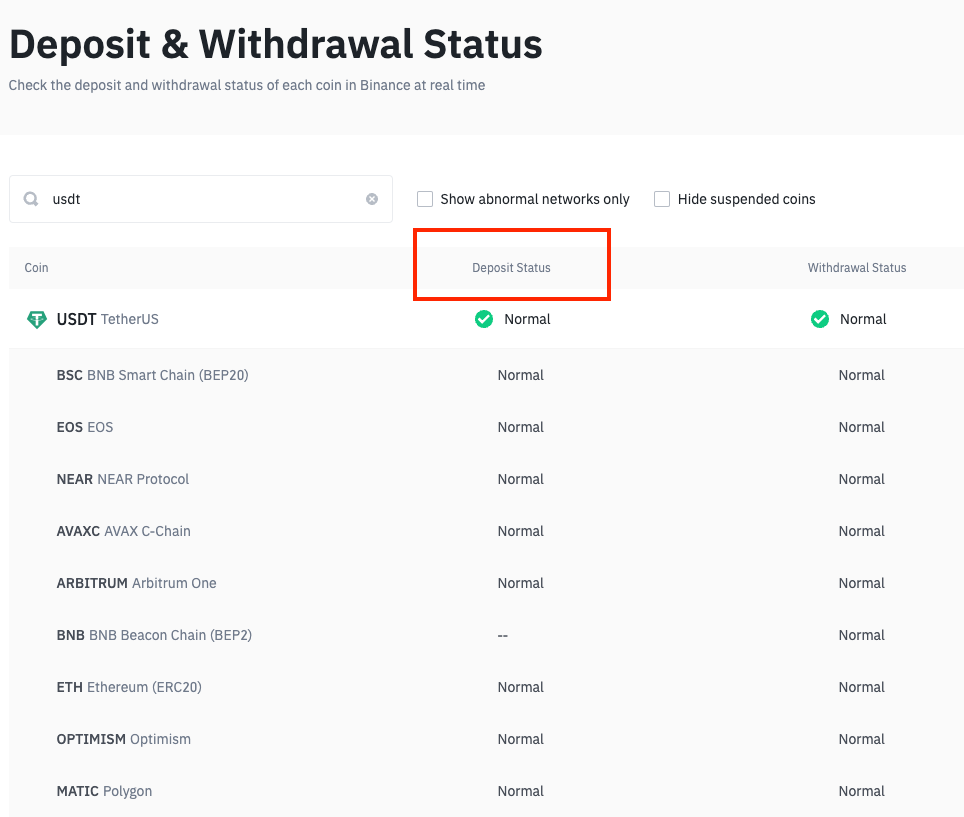
1. You can also go to the Deposit & Withdrawal Status page to check if the deposit network status is normal. If you deposit to a suspended network, your tokens will not be credited immediately. Do note that if you cannot find the tokens on this page, it means that the token is not supported on Binance.
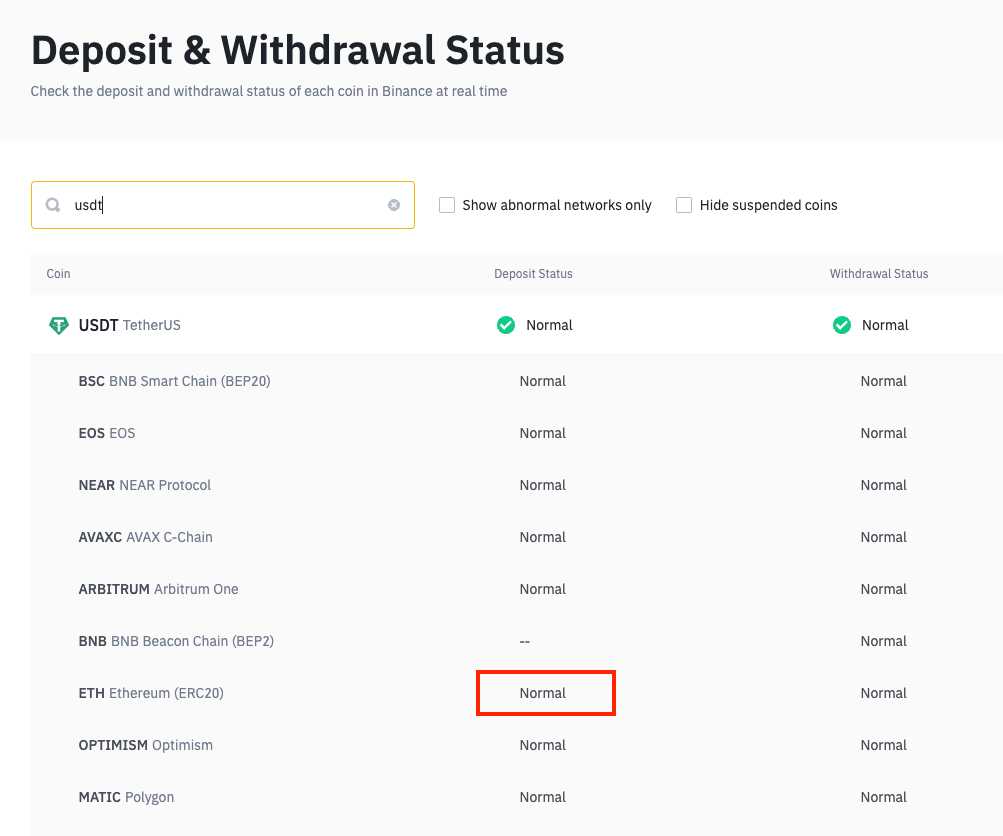
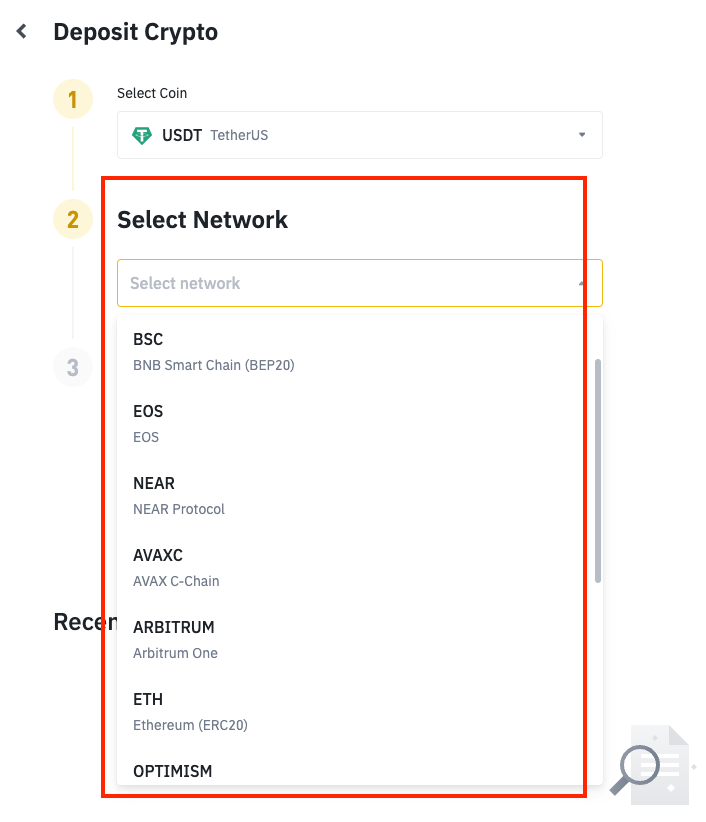
2. Click “Normal,” and you will be redirected to the Deposit Crypto page. Please note that only the networks supported on the Binance platform are shown. If you deposit via another network, your assets might be lost.
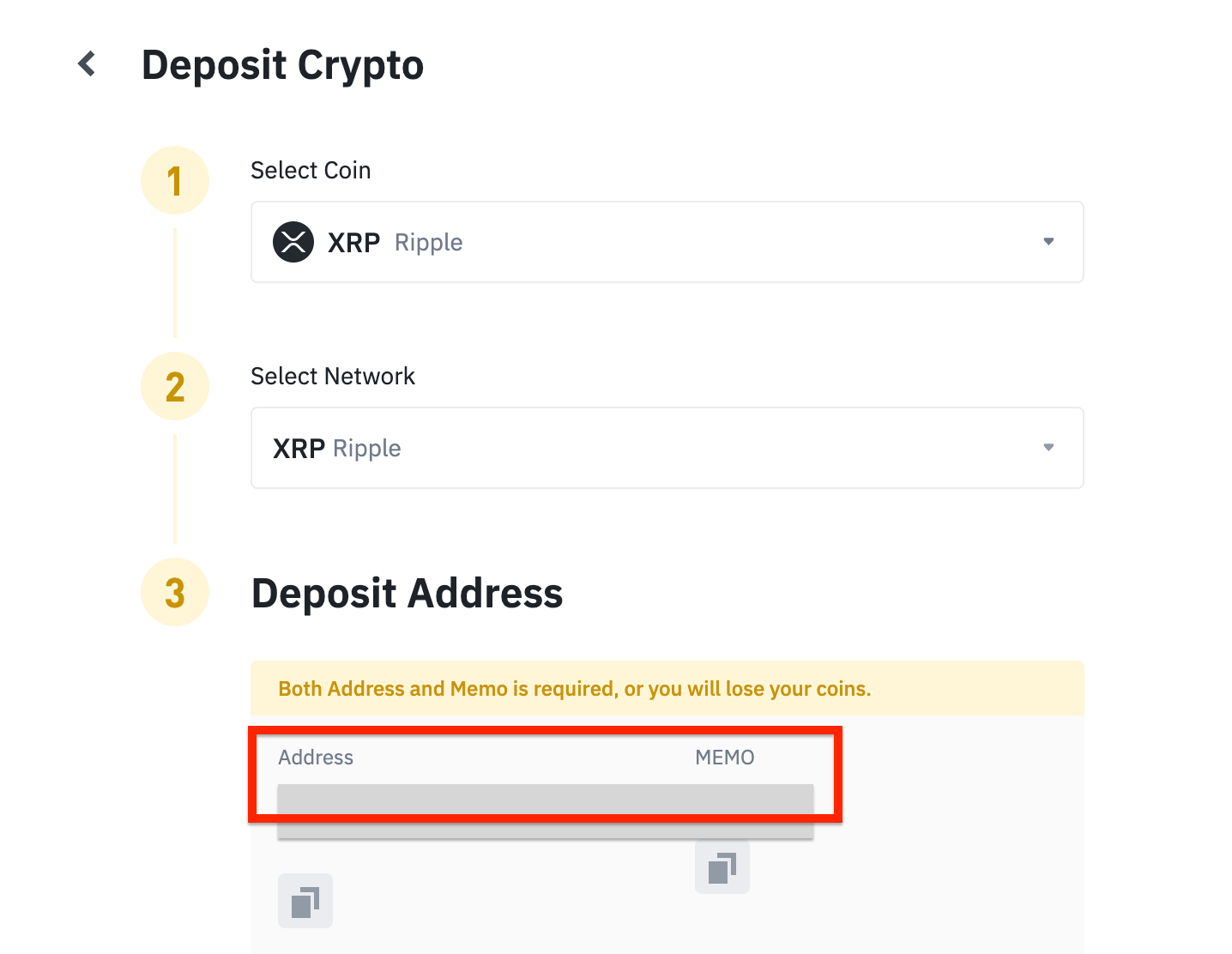
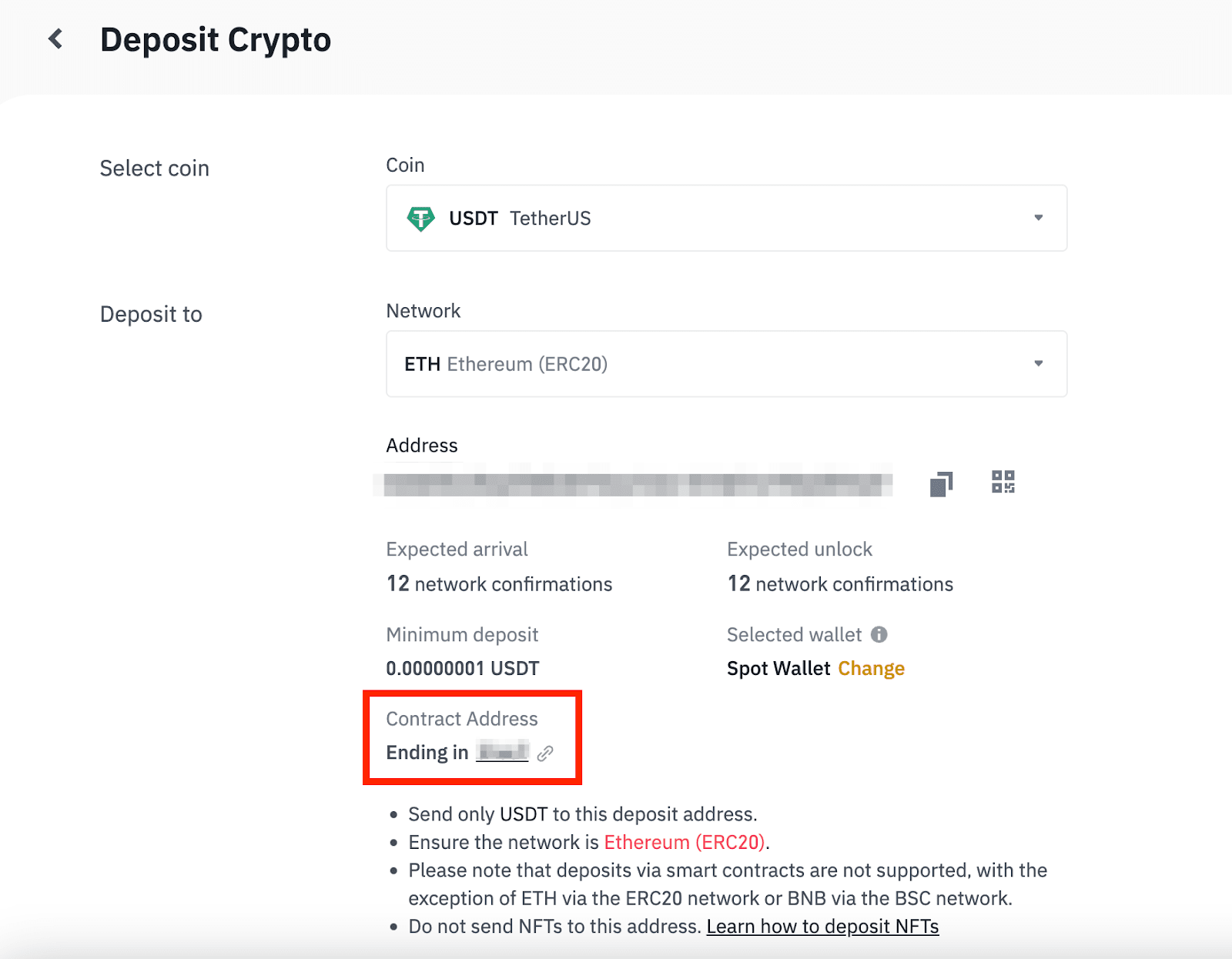
3. Check the deposit address and memo/tag (if required). You can also check the token’s contract address to make sure that the one you are depositing will be credited correctly.
For more details, please check out How to Deposit Crypto to Binance.
If your deposited funds do not reflect in your Binance account, you can request self-service recovery. Please note the recovery process is manual. Our dedicated team meticulously examines each application to assess the feasibility of recovery.
As a leading cryptocurrency exchange, we pride ourselves on providing diverse recovery support. We facilitate retrievals from failed and missing-memo deposits to the BNB Pioneer Burn Program. Leveraging advanced technology and best industry practices, we strive to keep your assets secure and ensure an efficient recovery process.
The table below provides:
An overview of potential scenarios for incorrect deposits.
The projected wait time for our assistance in recovering your funds.
The expected fees associated with the process.
The outcome you can anticipate upon resolution (refund or credit).
Please note that successful recovery of funds is not guaranteed, and not all deposits can be retrieved due to factors such as development resources, manpower, and technical complexity. This table does not represent a binding commitment from Binance to recover your funds in every circumstance. Ultimately, you are responsible for your funds, and it's essential to thoroughly understand our services before using them.
Disclaimer: This table only contains general information, and certain retrieval processes may take longer than stated. Various factors can extend the duration, including the type of unsupported tokens and the complexity of their recovery. Fees are subject to change and not fixed. They may vary in accordance with changing market conditions, operational costs, and technological advancements. Lastly, in certain cases, we may require that the fee is paid in USDC – please reach out to our customer support to learn more.
Your Binance deposit address differs from those in self-custodial wallets such as Trust Wallet and Metamask. In self-custodial wallets, users possess their wallet's private keys, granting them complete control over their funds. However, when you deposit funds on a centralized platform like Binance, we manage the wallets and the deposited funds for you.
As we maintain a vast network of hot, cold, and deposit wallets, the technically complex process of reviewing, consolidating and, if deemed possible, refunding unlisted tokens safely requires significant resources.
Below are examples of situations where incorrect deposits may occur.
A tag or memo is a unique identifier assigned to each account to ensure a deposit is credited into the appropriate account. When depositing specific cryptocurrencies, such as ATOM, BAND, EOS, TON, XEM, XLM, XRP, KAVA, and others, it's essential to input the corresponding tag or memo to ensure a successful transaction.
For more information, refer to How to Retrieve Crypto Deposit with Wrong or Missing Tag/Memo
Periodically, we rigorously evaluate each digital asset listed on our platform to ensure it continues to meet the high standards we have set. Should a coin or token fail to maintain these standards, or if the industry landscape changes, we conduct a thorough reassessment and may opt to delist it. We believe this approach better safeguards all our users. Be careful not to deposit delisted tokens to your Binance account. You can find more information on our delisting announcements page.
Despite correctly entering all details required for deposit (i.e., the token, network, and address), some cryptocurrency deposits may not appear in your account as expected. This delay might result from high traffic on certain blockchain networks, causing congestion and, hence, slower processing times. Moreover, we sometimes employ extra security measures to guarantee the transaction's correctness. Should your deposit still not be reflected in your account after a considerable period, we kindly request you to contact our customer support for further assistance.
When you make a deposit to Binance, you send your tokens to a specific deposit address. These tokens are then moved to one of our hot wallets, as with most exchanges. However, note that when you make withdrawals, the sending address won’t be the same as the deposit address you used before, but rather one of our hot wallets. When making deposits, be careful not to send assets to the hot wallet withdrawal address. Follow the deposit instructions and double-check the deposit address to avoid problems.
If you deposit a token that isn't supported by our platform, it won't appear in your wallet. For a comprehensive list of tokens and networks supported, please visit https://www.binance.com/en/network.
EVM (Ethereum Virtual Machine) is a pivotal component of the crypto ecosystem. Recognizing this, we have extended our expertise and positioned ourselves as a leader in providing EVM retrieval solutions. Current supported EVM-compatible networks are OKC, KCC, CRONOS, GATE, WEMIX, FON, ULTRON, MANTLE, and more (please reach out to customer support for further assistance).
A cross-chain deposit refers to the process of transferring tokens from one blockchain address format to another blockchain address format – for example, sending DOGE tokens to a DGB deposit address. Please be informed that such retrievals are evaluated on a case-by-case basis. There is no guarantee of successful retrieval.
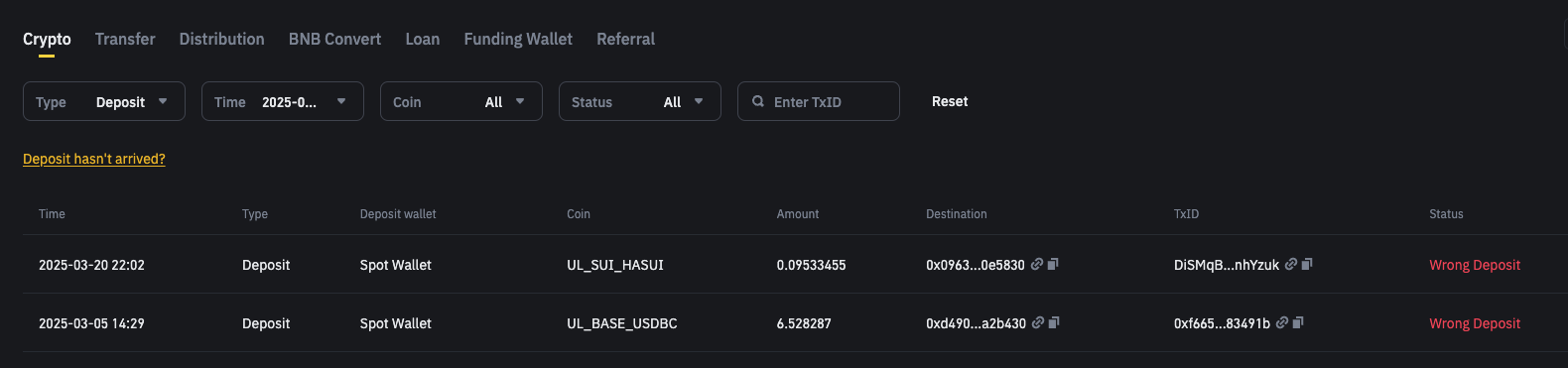
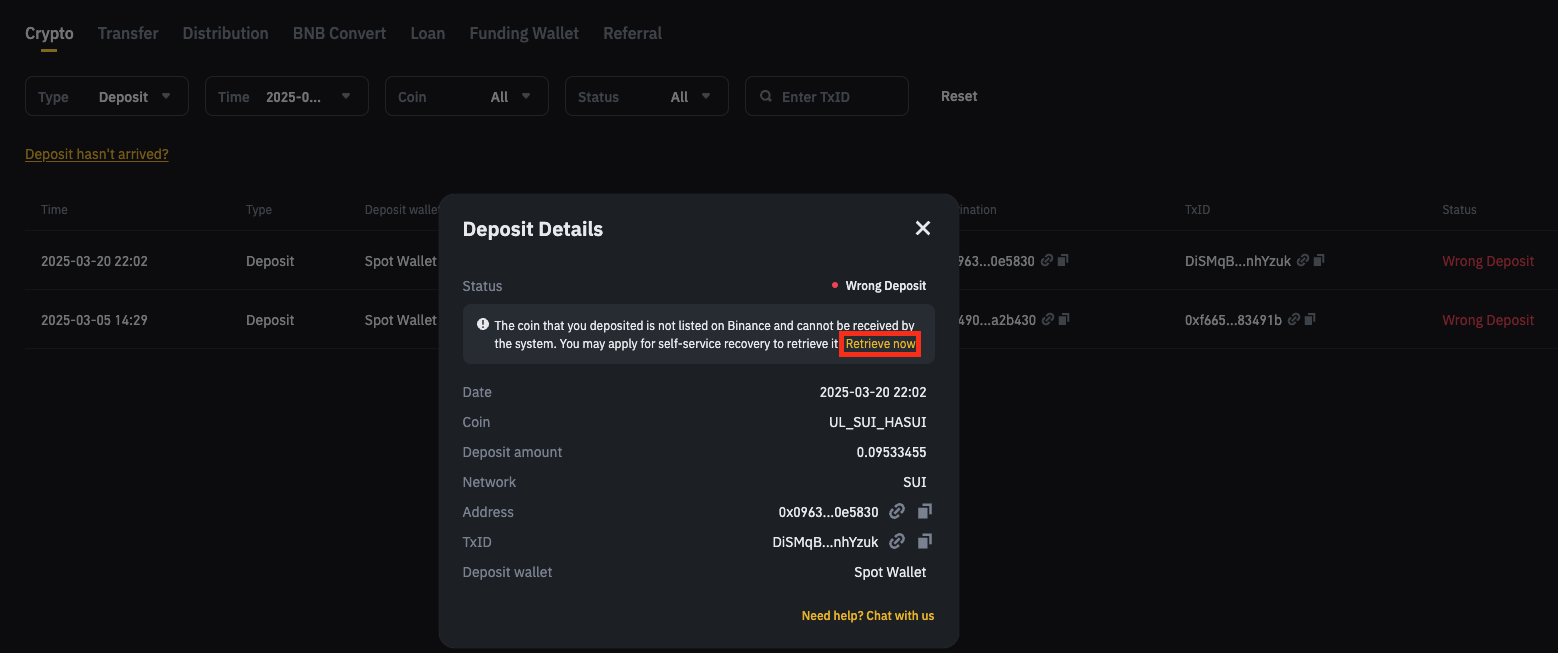
Binance continually works towards improving efficiency and shortening recovery times through innovative measures. With the Smart Retrieval process, we cater to specific tokens via MATIC, TRX, BSC, FTM, ETH, and other networks. With this process, users can enjoy reduced recovery time (up to 14 working days), while paying a flat fee of 1 USDT. In case you deposit an unsupported token to any of these networks and notice a 'retrieve now' button in your recent transaction record, simply click on it to initiate the return of your funds.
Navigating the complexities of cryptocurrency deposits can be challenging, but with the right knowledge and tools, users can minimize risks and maximize their security. Binance is committed to providing robust support and comprehensive solutions for users facing issues with incorrect deposits. While the retrieval of funds is not always guaranteed, we are always committed to doing our best to protect user interests.
By understanding the importance of verifying supported tokens, network statuses, and deposit addresses, users can prevent common mistakes and ensure smoother transactions. As the crypto landscape continues to evolve, Binance remains at the forefront, offering innovative solutions and maintaining a secure environment for all users. Remember, prevention is key, and staying informed is your best defense against potential deposit mishaps.