
wiki002
4.2k Posts

wiki002
Allah is greatest
High-Frequency Trader
1.9 Years
1.1K+ Following
5.1K+ Followers
15.9K+ Liked
Posts
All
Quotes
Live
PINNED
Look, BNB Chain leading in tokenized equity supply is interesting, but the supply number itself isn’t the part I care about most.
BNB Chain’s tokenized equities grew from about $34M at the start of 2026 to $652M in July, putting it ahead of Ethereum and close to a third of the On-chain total. Tokenized stock trading volume also passed $4.5B in July.
What I’m watching now is what happens after the stocks are issued.
If more equity supply brings in more liquidity, those assets become easier to trade. If that liquidity becomes deep enough, the tokens can become useful as collateral. Then capital can move into lending, liquidity provision and other financial applications.
That’s the flywheel I find more interesting.
equity supply → liquidity → collateral utility → capital efficiency → more financial activity.
And this is where BNB Chain’s lead could become meaningful. It isn’t just about having more tokenized stocks, it’s about whether those assets can actually plug into the financial infrastructure already being built around them.
But I wouldn’t confuse issuance with adoption.
The real test is secondary-market liquidity, collateral mobility and whether people actually use these assets instead of simply holding them. Binance Research makes essentially the same distinction. The next phase depends on whether secondary liquidity and collateral mobility grow as quickly as primary issuance.
For me, that’s the bigger lesson, the winning tokenization chain won’t necessarily be the one that issues the most assets. It will be the one that makes those assets useful after issuance. 🧩
#BNBChain #BNB #ASTER #CAKE
$BNB $ASTER $CAKE
BNB Chain’s tokenized equities grew from about $34M at the start of 2026 to $652M in July, putting it ahead of Ethereum and close to a third of the On-chain total. Tokenized stock trading volume also passed $4.5B in July.
What I’m watching now is what happens after the stocks are issued.
If more equity supply brings in more liquidity, those assets become easier to trade. If that liquidity becomes deep enough, the tokens can become useful as collateral. Then capital can move into lending, liquidity provision and other financial applications.
That’s the flywheel I find more interesting.
equity supply → liquidity → collateral utility → capital efficiency → more financial activity.
And this is where BNB Chain’s lead could become meaningful. It isn’t just about having more tokenized stocks, it’s about whether those assets can actually plug into the financial infrastructure already being built around them.
But I wouldn’t confuse issuance with adoption.
The real test is secondary-market liquidity, collateral mobility and whether people actually use these assets instead of simply holding them. Binance Research makes essentially the same distinction. The next phase depends on whether secondary liquidity and collateral mobility grow as quickly as primary issuance.
For me, that’s the bigger lesson, the winning tokenization chain won’t necessarily be the one that issues the most assets. It will be the one that makes those assets useful after issuance. 🧩
#BNBChain #BNB #ASTER #CAKE
$BNB $ASTER $CAKE

🎁

Tahir 塔希尔
·
--
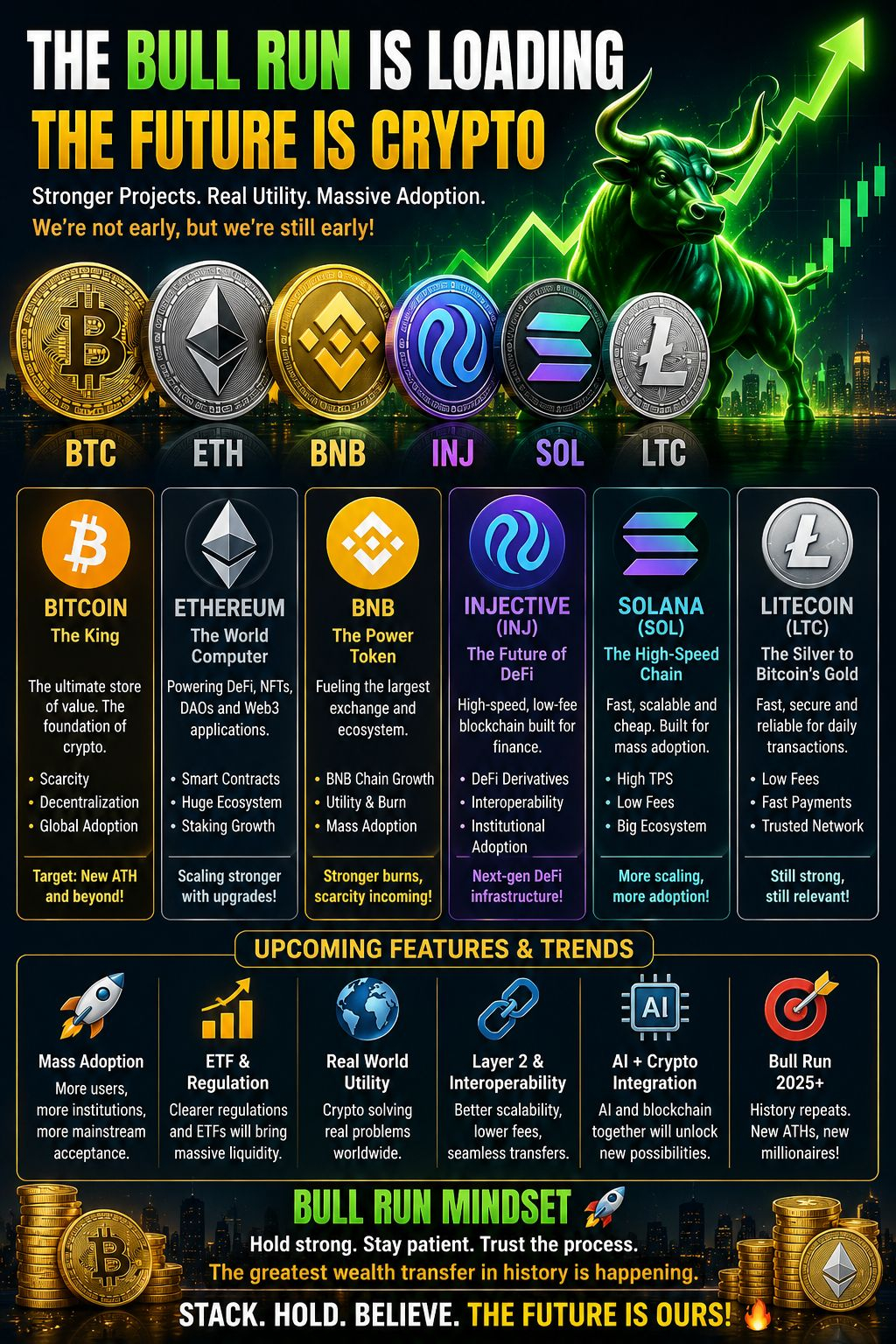
🚀 CRYPTO BULL RUN: THE NEXT BIG MOVE? 🐂🔥
The crypto market is evolving fast — and the next cycle may be driven by utility, adoption, institutions, and real on-chain finance, not just hype.
₿ BTC — The King
Digital scarcity + institutional adoption + ETF demand. Bitcoin remains the foundation of the entire market.
♦️ ETH — The World Computer
Ethereum continues pushing scalability and ecosystem growth, with major upgrades focused on making the network faster and more efficient.
🟡 BNB — The Ecosystem Engine
BNB Chain continues expanding its DeFi, Web3 and application ecosystem while BNB benefits from network utility and token economics.
🔵 INJ — Finance on-chain
Injective is building toward a finance-native blockchain with EVM + WASM, tokenized assets, stablecoin settlement, institutional access and an expanding RWA ecosystem.
🌈 SOL — Speed + Adoption
Solana continues pushing performance, while Alpenglow is one of the major protocol upgrades to watch in 2026, targeting dramatically faster finality.
⚡ LTC — The Veteran
Litecoin remains focused on fast, reliable payments, while upcoming developments include programmable functionality and its next halving cycle.
🔥 WHAT COULD DRIVE THE NEXT BULL RUN?
✅ Institutional capital
✅ ETF adoption
✅ Clearer crypto regulation
✅ Real-world asset tokenization
✅ Stablecoin growth
✅ DeFi expansion
✅ AI + blockchain
✅ Faster & cheaper networks
✅ Mass adoption
✅ New all-time highs
Bitcoin recently moved back above $80K, while ETH and SOL also posted strong gains — but a rally does not automatically guarantee a full bull market.
The real question isn't:
“Will crypto survive?”
It's:
“How big can the next adoption wave become?” 🌎🚀
BTC. ETH. BNB. INJ. SOL. LTC.
Different narratives.
Different technology.
One massive ecosystem.
🐂 The bull may be waking up.
#Bitcoin #Ethereum #BNB #Injective #Solana #Litecoin #Crypto #BullRun #DeFi #RWA #Web3 #Blockchain
The crypto market is evolving fast — and the next cycle may be driven by utility, adoption, institutions, and real on-chain finance, not just hype.
₿ BTC — The King
Digital scarcity + institutional adoption + ETF demand. Bitcoin remains the foundation of the entire market.
♦️ ETH — The World Computer
Ethereum continues pushing scalability and ecosystem growth, with major upgrades focused on making the network faster and more efficient.
🟡 BNB — The Ecosystem Engine
BNB Chain continues expanding its DeFi, Web3 and application ecosystem while BNB benefits from network utility and token economics.
🔵 INJ — Finance on-chain
Injective is building toward a finance-native blockchain with EVM + WASM, tokenized assets, stablecoin settlement, institutional access and an expanding RWA ecosystem.
🌈 SOL — Speed + Adoption
Solana continues pushing performance, while Alpenglow is one of the major protocol upgrades to watch in 2026, targeting dramatically faster finality.
⚡ LTC — The Veteran
Litecoin remains focused on fast, reliable payments, while upcoming developments include programmable functionality and its next halving cycle.
🔥 WHAT COULD DRIVE THE NEXT BULL RUN?
✅ Institutional capital
✅ ETF adoption
✅ Clearer crypto regulation
✅ Real-world asset tokenization
✅ Stablecoin growth
✅ DeFi expansion
✅ AI + blockchain
✅ Faster & cheaper networks
✅ Mass adoption
✅ New all-time highs
Bitcoin recently moved back above $80K, while ETH and SOL also posted strong gains — but a rally does not automatically guarantee a full bull market.
The real question isn't:
“Will crypto survive?”
It's:
“How big can the next adoption wave become?” 🌎🚀
BTC. ETH. BNB. INJ. SOL. LTC.
Different narratives.
Different technology.
One massive ecosystem.
🐂 The bull may be waking up.
#Bitcoin #Ethereum #BNB #Injective #Solana #Litecoin #Crypto #BullRun #DeFi #RWA #Web3 #Blockchain
🎁🎁

Aria Daisy 阿莉娅_黛西
·
--
BullishPeaceful moments, beautiful views and a little furry companion by my side. 🐱🤍 Sometimes, the simplest moments are the ones worth remembering. ✨
Stay calm stay focused, and keep building your journey in the crypto world. 🚀📈
#Binance #cryptouniverseofficial
$BTC $LAB
Stay calm stay focused, and keep building your journey in the crypto world. 🚀📈
#Binance #cryptouniverseofficial
$BTC $LAB

🎁🎁


Ahmed Ali Nizamani
·
--
666 + 666 = 🎁🎁🎁✨✨✨

🎁🎁

Leo木BNB_1688
·
--
8月28日,恐慌贪婪指数72,"贪婪"区间。
30天前,同一个指数是24,"极度恐慌"——那时候 BTC 在64000附近,Coldcard 被黑,ETF 连续流出,CLARITY Act 通过概率跌破30%,所有人都在说"还有最后一跌"。
30天内,市场情绪完成了一次完整的翻转。
这个速度值得认真对待,原因有两个。
第一:从极度恐慌到贪婪的速度,历史上往往对应真实的结构性变化,而不只是情绪波动——这次推动翻转的是财政部把债券回购翻倍、白宫直接推动 CLARITY Act、ETF 单周净流入19.18亿美元,三件事都是真实发生的,不是叙事。
第二:贪婪区间出现之后,通常伴随着两种结局——如果底层结构继续支撑,贪婪会持续并推动进一步上涨;如果是情绪过度扩张,一个小利空就能快速回撤至恐慌。Warsh 的演讲是第一次测试,BTC 在77800附近买盘出现,没有崩——这是结构在支撑,而不是纯粹情绪。
与此同时,SEC 的加密资产托管新规(RIN 3235-AN46)在8月25日进入白宫行政管理和预算局审查——这是正式监管规则落地之前的最后一道流程。这条规则会允许机构在持牌条件下托管加密资产,直接降低合规机构的配置门槛。
情绪翻转+监管框架在悄悄落地——这两件事同时成立,是8月结束时我觉得值得记录的两个长期信号。
9月9日财政部回购扩大执行,9月16日 FOMC,CLARITY Act 9月复会继续谈判——三件事串在一起,才是9月方向真正的答案。
你们觉得这次情绪从极度恐慌翻到贪婪,是真正的结构性改变,还是过度扩张之后又会回撤?说说判断。
$BTC
#BTC
30天前,同一个指数是24,"极度恐慌"——那时候 BTC 在64000附近,Coldcard 被黑,ETF 连续流出,CLARITY Act 通过概率跌破30%,所有人都在说"还有最后一跌"。
30天内,市场情绪完成了一次完整的翻转。
这个速度值得认真对待,原因有两个。
第一:从极度恐慌到贪婪的速度,历史上往往对应真实的结构性变化,而不只是情绪波动——这次推动翻转的是财政部把债券回购翻倍、白宫直接推动 CLARITY Act、ETF 单周净流入19.18亿美元,三件事都是真实发生的,不是叙事。
第二:贪婪区间出现之后,通常伴随着两种结局——如果底层结构继续支撑,贪婪会持续并推动进一步上涨;如果是情绪过度扩张,一个小利空就能快速回撤至恐慌。Warsh 的演讲是第一次测试,BTC 在77800附近买盘出现,没有崩——这是结构在支撑,而不是纯粹情绪。
与此同时,SEC 的加密资产托管新规(RIN 3235-AN46)在8月25日进入白宫行政管理和预算局审查——这是正式监管规则落地之前的最后一道流程。这条规则会允许机构在持牌条件下托管加密资产,直接降低合规机构的配置门槛。
情绪翻转+监管框架在悄悄落地——这两件事同时成立,是8月结束时我觉得值得记录的两个长期信号。
9月9日财政部回购扩大执行,9月16日 FOMC,CLARITY Act 9月复会继续谈判——三件事串在一起,才是9月方向真正的答案。
你们觉得这次情绪从极度恐慌翻到贪婪,是真正的结构性改变,还是过度扩张之后又会回撤?说说判断。
$BTC
#BTC

🎁🎁

RuXo
·
--
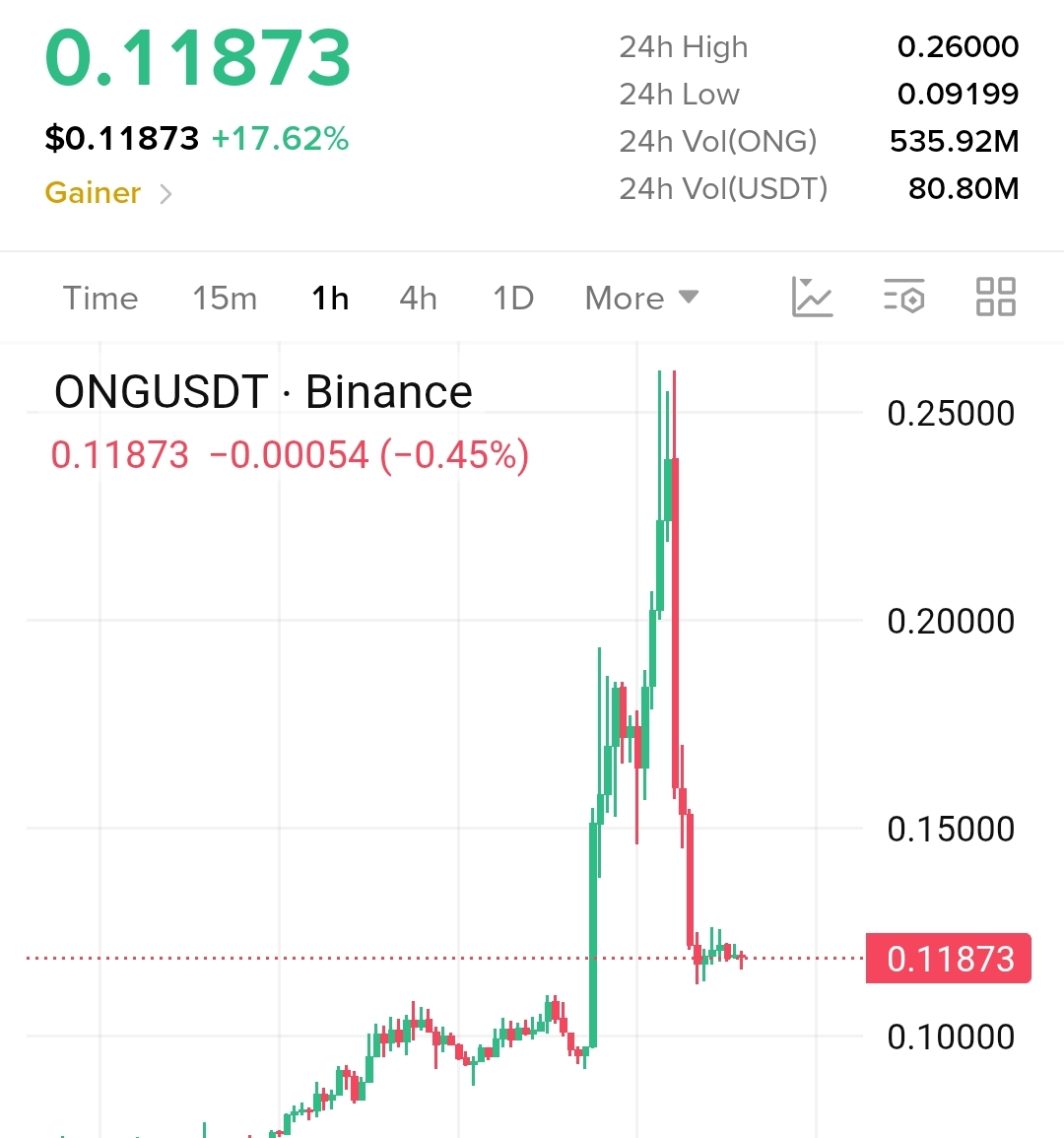
🚨 🧧$ONG Volatility Wave! Price Up +17.62% as Gainer Consolidates After Massive Spike! 🚀📈👇🎁
Ontology Gas ($ONG) is navigating an intense volatility cycle on its spot trading chart, currently trading at $0.11873! After breaking out aggressively from its accumulation base near the 24h Low ($0.09199), massive buyer momentum drove price action to touch session peaks at the 24h High ($0.26000) before facing heavy distribution and returning to retest baseline support. Backed by a massive $80.80M USDT daily trading volume pool (535.92M ONG traded), the market is battling for range equilibrium as a top Gainer. Set your parameters immediately:
🟢 LONG ENTRY (Breakout Continuation):
✅ Trigger: Close ABOVE $0.13500 🎯 Targets: $0.16500 | $0.21000+ 🚀 🛑 SL: $0.10800
🔴 SHORT ENTRY (Range Breakdown Play):
✅ Trigger: Close BELOW $0.10500 🎯 Targets: $0.09200 | $0.07800- 📉 🛑 SL: $0.12500
💡 TRADER'S WISDOM: Take careful note of the timeframe setup—this technical analysis maps directly to the active 1-hour (1h) timeline structure! While the macro 24h performance is running strong in the green (+17.62%), the immediate active 1H candlestick confirms a localized consolidation pause after a steep wick rejection, printing a negative progression tick of -0.45% (-0.00054). Avoid rushing into over-leveraged market orders inside volatile post-spike consolidation zones—let the 1H timeframe secure a clean candle close completely outside these parameters to validate sustainable volume absorption before taking entries. Capital preservation is priority number one! 📊🔒
⚠️ High-velocity Gainer assets experiencing sharp wick spikes and subsequent retracements carry intense localized leverage flushes and wide volatility swings. Tighten your risk parameters and do your own research (DYOR)! ⚠️
➡️ CLICK THE TAGGED $ONG COIN LINK BELOW ⬅️
#BinanceSquare #Ongusdt #OntologyGas #TechnicalAnalysis #CryptoTrading
Ontology Gas ($ONG) is navigating an intense volatility cycle on its spot trading chart, currently trading at $0.11873! After breaking out aggressively from its accumulation base near the 24h Low ($0.09199), massive buyer momentum drove price action to touch session peaks at the 24h High ($0.26000) before facing heavy distribution and returning to retest baseline support. Backed by a massive $80.80M USDT daily trading volume pool (535.92M ONG traded), the market is battling for range equilibrium as a top Gainer. Set your parameters immediately:
🟢 LONG ENTRY (Breakout Continuation):
✅ Trigger: Close ABOVE $0.13500 🎯 Targets: $0.16500 | $0.21000+ 🚀 🛑 SL: $0.10800
🔴 SHORT ENTRY (Range Breakdown Play):
✅ Trigger: Close BELOW $0.10500 🎯 Targets: $0.09200 | $0.07800- 📉 🛑 SL: $0.12500
💡 TRADER'S WISDOM: Take careful note of the timeframe setup—this technical analysis maps directly to the active 1-hour (1h) timeline structure! While the macro 24h performance is running strong in the green (+17.62%), the immediate active 1H candlestick confirms a localized consolidation pause after a steep wick rejection, printing a negative progression tick of -0.45% (-0.00054). Avoid rushing into over-leveraged market orders inside volatile post-spike consolidation zones—let the 1H timeframe secure a clean candle close completely outside these parameters to validate sustainable volume absorption before taking entries. Capital preservation is priority number one! 📊🔒
⚠️ High-velocity Gainer assets experiencing sharp wick spikes and subsequent retracements carry intense localized leverage flushes and wide volatility swings. Tighten your risk parameters and do your own research (DYOR)! ⚠️
➡️ CLICK THE TAGGED $ONG COIN LINK BELOW ⬅️
#BinanceSquare #Ongusdt #OntologyGas #TechnicalAnalysis #CryptoTrading

🎁🎁

YASH DHALIWAL 31_加密 143
·
--
Bearish$PROM 🔥🔥
🎁🎁

ROBINX-Hood
·
--
BullishLIKE 👍
FOLLOW ✅
REPOST 🔁🔁
claim rewards 🎁 🎁
$MOVR
$SOL
FOLLOW ✅
REPOST 🔁🔁
claim rewards 🎁 🎁
$MOVR
$SOL

🎁🎁

Z O N E P R I M E
·
--
Bullish🎁 ZONE PRIME BNB SURPRISE DROP! 🎁
✨ The Red Packet is full and ready to open! ✨
👇 Simple Steps to Participate 👇
❤️ Follow ZONE PRIME
🔁 Like & Share
💬 Comment “BNB”
🚀 Stay active for the next reward round!
#bnb #Crypto #ZONEPRIME #RedPacket #Binance
✨ The Red Packet is full and ready to open! ✨
👇 Simple Steps to Participate 👇
❤️ Follow ZONE PRIME
🔁 Like & Share
💬 Comment “BNB”
🚀 Stay active for the next reward round!
#bnb #Crypto #ZONEPRIME #RedPacket #Binance

🎁🎁

圣克斯Lucky1688
·
--
🧧🔥🧧🔥🧧🔥 据ChainCatcher称,下周市场将关注一系列经济公布和政策事件,包括欧元区8月CPI、美国8月ISM制造业PMI、美国7月JOLTs职位空缺、美国7月建筑支出、美国8月ADP就业、美国7月工厂订单、美联储《褐皮书》、每周初请失业金人数以及美国8月就业数据。请一直关注我,回答答案1带走$SOL 红包。🧧🔥🧧🔥🧧🔥


🎁🎁

x_Rex
·
--
Remember yesterday when I said the SEC was voting on crypto regulation today? 😅🧧
They cancelled it.
One day notice. No explanation. No replacement date.
The vote that would have given crypto projects a legal path to raise up to $75M without securities registration - gone. Just like that.
Senate left for recess without voting on the Clarity Act. SEC cancelled Regulation Crypto. Commissioner Hester Peirce, the most crypto-friendly voice at the SEC, is leaving in November.
And yet BTC is still at $62,969. ETH at $1,872. Market barely moved 😂
This is actually the most important lesson in crypto , Regulation delays are annoying. But the market has stopped waiting for regulators to catch up. $1.82 trillion market cap. $678M in ETF inflows last week. BlackRock buying daily.
The builders kept building. The buyers kept buying.
With or without Washington's permission
Grab the Red Packet — crypto doesn't wait for anyone 🧧
#BinanceSquareFamily #BinanceSquareTalks #redpacket
$BTC $ETH
They cancelled it.
One day notice. No explanation. No replacement date.
The vote that would have given crypto projects a legal path to raise up to $75M without securities registration - gone. Just like that.
Senate left for recess without voting on the Clarity Act. SEC cancelled Regulation Crypto. Commissioner Hester Peirce, the most crypto-friendly voice at the SEC, is leaving in November.
And yet BTC is still at $62,969. ETH at $1,872. Market barely moved 😂
This is actually the most important lesson in crypto , Regulation delays are annoying. But the market has stopped waiting for regulators to catch up. $1.82 trillion market cap. $678M in ETF inflows last week. BlackRock buying daily.
The builders kept building. The buyers kept buying.
With or without Washington's permission
Grab the Red Packet — crypto doesn't wait for anyone 🧧
#BinanceSquareFamily #BinanceSquareTalks #redpacket
$BTC $ETH

🎁🎁

周周1688
·
--
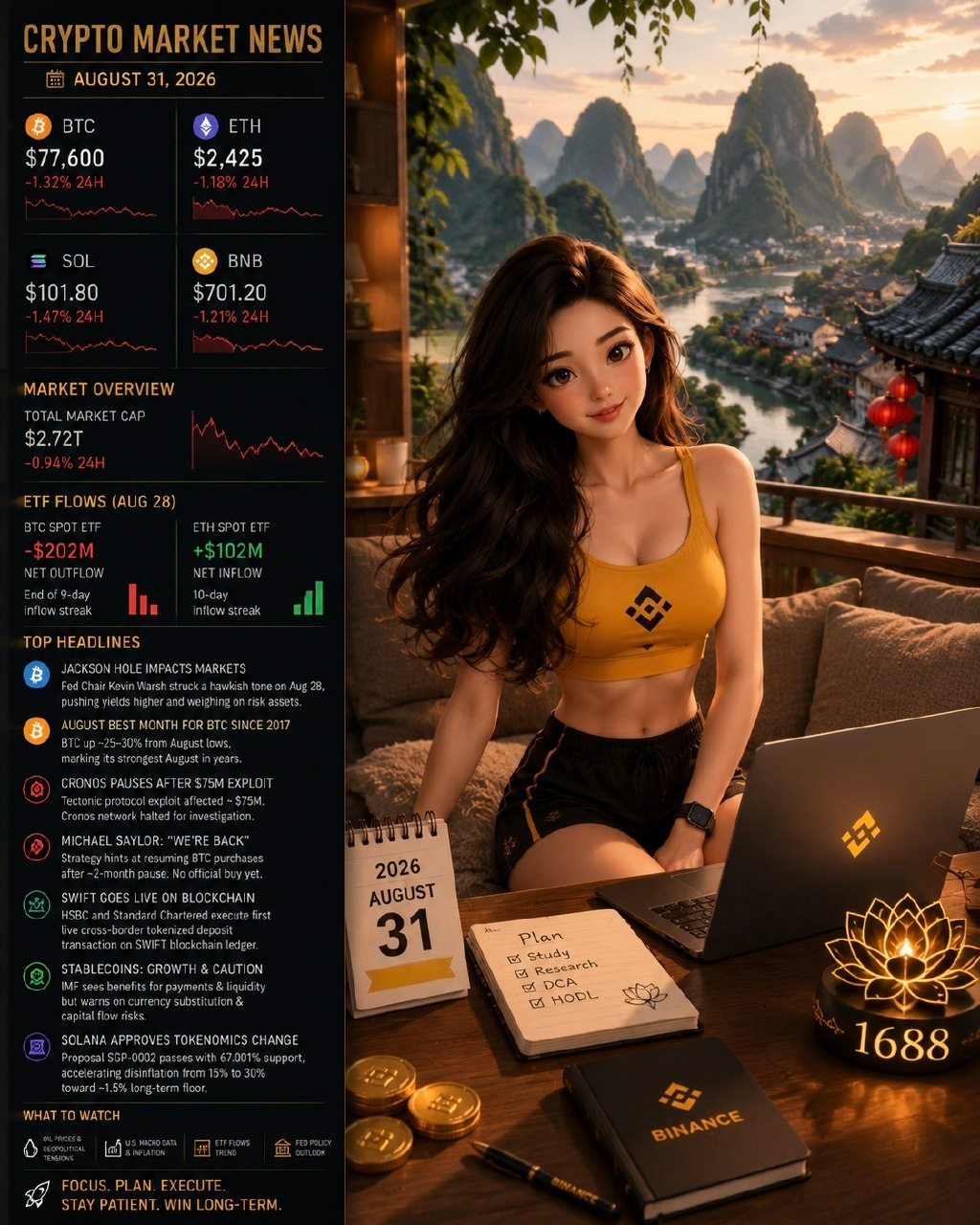
🚀 8月31日|加密市场今日速览
$BNB 🧧🧧
📉 BTC回落,但仍守住关键区域
BTC目前约 $77,600–$78,600。
此前突破$80K后,市场进入获利回吐阶段。ETH约 $2,400–$2,450,SOL约 $101–$103。
尽管回调,BTC 8月仍有望录得约 +24%,成为今年表现最强劲的月份之一。 �
Investing.com UK
🏦 Bitcoin ETF结束9天连续流入
8月28日,美国现货BTC ETF录得约 $201.9M净流出,结束连续9个交易日的资金流入。
不过同一天,ETH ETF仍获得约 $102M净流入,连续流入达到10天。
所以目前更像是资金结构出现短暂分化,而不是机构需求彻底消失。 �
Decrypt +1
🌍 地缘政治重新成为市场变量
美国与伊朗冲突重新升级,霍尔木兹海峡风险上升,Brent原油重新突破$90。
油价上涨意味着通胀压力重新升温,也进一步强化市场对美联储维持高利率甚至加息的担忧。
BTC目前的表现反而相当坚挺——风险资产承压,但Bitcoin仍守在$78K附近。 �
Reuters +1
🏦 SWIFT开始真正进入区块链时代
SWIFT的区块链账本已经从测试走向实际应用。
HSBC与Standard Chartered完成首笔通过SWIFT区块链账本执行的实时跨境代币化存款交易。
这意味着传统银行正在把tokenization真正接入全球支付基础设施。
不是PPT。是真的跑起来了。 �
sc.com +1
🐂 Saylor:“We’re Back”
Michael Saylor周末发布 “We’re Back”,市场普遍解读为Strategy可能重新启动BTC购买计划。
Strategy已经暂停购买约两个月,最近一次确认的BTC购买发生在6月22日。
不过目前还没有新的官方购买公告,所以先把它看成信号,而不是事实。 �
Benzinga +1
🟣 Solana改变代币经济模型
新方案将年度通胀下降速度从15%提高到30%,加快SOL向约 1.5%长期通胀底部靠近。
这是Solana首次具有约束力的链上治理投票之一,也意味着SOL的供应模型正在发生重要变化。 �
#1688家族family
$SOL
$BNB 🧧🧧
📉 BTC回落,但仍守住关键区域
BTC目前约 $77,600–$78,600。
此前突破$80K后,市场进入获利回吐阶段。ETH约 $2,400–$2,450,SOL约 $101–$103。
尽管回调,BTC 8月仍有望录得约 +24%,成为今年表现最强劲的月份之一。 �
Investing.com UK
🏦 Bitcoin ETF结束9天连续流入
8月28日,美国现货BTC ETF录得约 $201.9M净流出,结束连续9个交易日的资金流入。
不过同一天,ETH ETF仍获得约 $102M净流入,连续流入达到10天。
所以目前更像是资金结构出现短暂分化,而不是机构需求彻底消失。 �
Decrypt +1
🌍 地缘政治重新成为市场变量
美国与伊朗冲突重新升级,霍尔木兹海峡风险上升,Brent原油重新突破$90。
油价上涨意味着通胀压力重新升温,也进一步强化市场对美联储维持高利率甚至加息的担忧。
BTC目前的表现反而相当坚挺——风险资产承压,但Bitcoin仍守在$78K附近。 �
Reuters +1
🏦 SWIFT开始真正进入区块链时代
SWIFT的区块链账本已经从测试走向实际应用。
HSBC与Standard Chartered完成首笔通过SWIFT区块链账本执行的实时跨境代币化存款交易。
这意味着传统银行正在把tokenization真正接入全球支付基础设施。
不是PPT。是真的跑起来了。 �
sc.com +1
🐂 Saylor:“We’re Back”
Michael Saylor周末发布 “We’re Back”,市场普遍解读为Strategy可能重新启动BTC购买计划。
Strategy已经暂停购买约两个月,最近一次确认的BTC购买发生在6月22日。
不过目前还没有新的官方购买公告,所以先把它看成信号,而不是事实。 �
Benzinga +1
🟣 Solana改变代币经济模型
新方案将年度通胀下降速度从15%提高到30%,加快SOL向约 1.5%长期通胀底部靠近。
这是Solana首次具有约束力的链上治理投票之一,也意味着SOL的供应模型正在发生重要变化。 �
#1688家族family
$SOL
🎁🎁

亿林
·
--
人跟人之间,是有智慧,心性各方面差距的。
优秀的人,真的是各方面都优秀。
优秀的您都理解不了她有多优秀。
优秀的人,真的是各方面都优秀。
优秀的您都理解不了她有多优秀。

🎁🎁

白鲨观点合约账户
·
--
Follow me and get your red envelope everyday!🧧

🎁🎁

MR-HUZZI
·
--
Bullishhello everyone
claim box
thanks
claim box
thanks

🎁🎁

CZ_ANUU
·
--
🤝🤝🤝🤝🤝🤝🤝🤝🤝🤝🤝🤝🤝🤝🤝
❤❤❤❤❤follow me please ❤❤❤❤
✅✅✅✅✅✅✅✅✅✅✅✅✅✅✅
❤❤❤❤❤follow me please ❤❤❤❤
✅✅✅✅✅✅✅✅✅✅✅✅✅✅✅

🎁🎁

Mr_BNB077
·
--
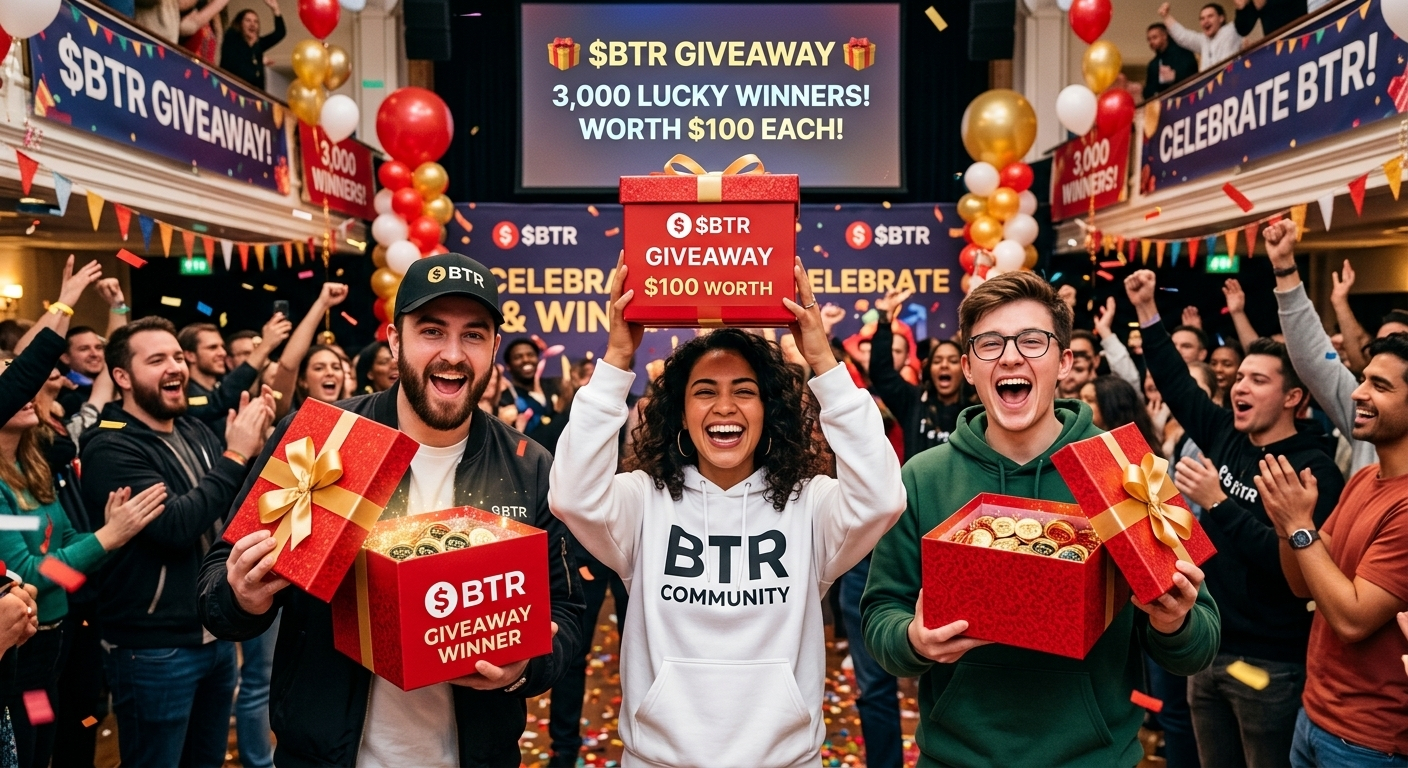
🎁 $BTR GIVEAWAY WORTH $100 🎁
I’m giving away $BTR Gift Boxes to 3,000 lucky people! 🚀🔥
To participate: ❤️ Like this post ✅
🔁 Repost this post ✅
💬 Comment “1” below ✅
🎁 Claim your $BTR Gift Box ✅
Good luck everyone!
I’m giving away $BTR Gift Boxes to 3,000 lucky people! 🚀🔥
To participate: ❤️ Like this post ✅
🔁 Repost this post ✅
💬 Comment “1” below ✅
🎁 Claim your $BTR Gift Box ✅
Good luck everyone!
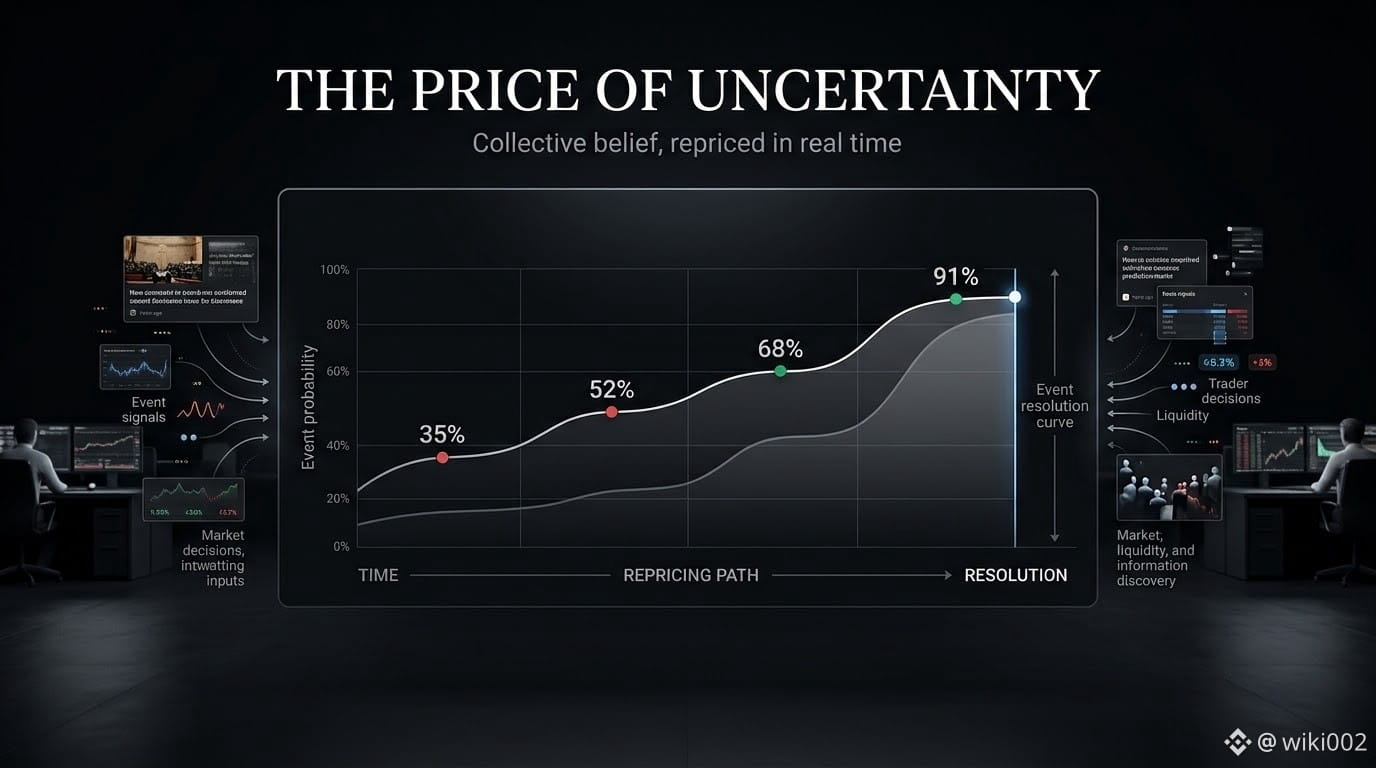
I think Polymarket’s bigger opportunity isn’t predicting events. It’s turning uncertainty into a piece of market infrastructure.
What I find genuinely interesting is the information that exists before the final outcome.
Imagine a market sitting at 35%, then moving to 52%, 68% and eventually 91%. The final result gives you one data point, right or wrong.
The repricing path gives you much more.
It shows when collective expectations changed, how quickly they changed, and how strongly the market reacted as new evidence arrived.
That creates a Second-order use case I rarely see discussed: prediction markets can potentially become datasets for studying how information propagates through markets.
Not just what happened, but how belief changed before it happened.
Of course, I wouldn’t assume every move represents genuine information. Liquidity shocks, concentrated positions, temporary order flow and market design can all distort the signal. Resolution quality matters too.
But that’s precisely why the market history becomes interesting.
If Polymarket can maintain sufficiently liquid, Well-defined markets, its archive could become more than a collection of resolved predictions. It could capture the evolution of market expectations across elections, crypto events, technology, sports and breaking news.
That changes how I think about @Polymarket
The obvious product is the probability.
The less obvious product may be the time series of collective belief behind that probability.
And that dataset could eventually be useful even after the original question has been resolved. 📊
#Polymarket #PredictionMarkets #Crypto #Web3 $POLYX $ETH $BTC
What I find genuinely interesting is the information that exists before the final outcome.
Imagine a market sitting at 35%, then moving to 52%, 68% and eventually 91%. The final result gives you one data point, right or wrong.
The repricing path gives you much more.
It shows when collective expectations changed, how quickly they changed, and how strongly the market reacted as new evidence arrived.
That creates a Second-order use case I rarely see discussed: prediction markets can potentially become datasets for studying how information propagates through markets.
Not just what happened, but how belief changed before it happened.
Of course, I wouldn’t assume every move represents genuine information. Liquidity shocks, concentrated positions, temporary order flow and market design can all distort the signal. Resolution quality matters too.
But that’s precisely why the market history becomes interesting.
If Polymarket can maintain sufficiently liquid, Well-defined markets, its archive could become more than a collection of resolved predictions. It could capture the evolution of market expectations across elections, crypto events, technology, sports and breaking news.
That changes how I think about @Polymarket
The obvious product is the probability.
The less obvious product may be the time series of collective belief behind that probability.
And that dataset could eventually be useful even after the original question has been resolved. 📊
#Polymarket #PredictionMarkets #Crypto #Web3 $POLYX $ETH $BTC
Verified
Chainlink Adoption Update 🔗
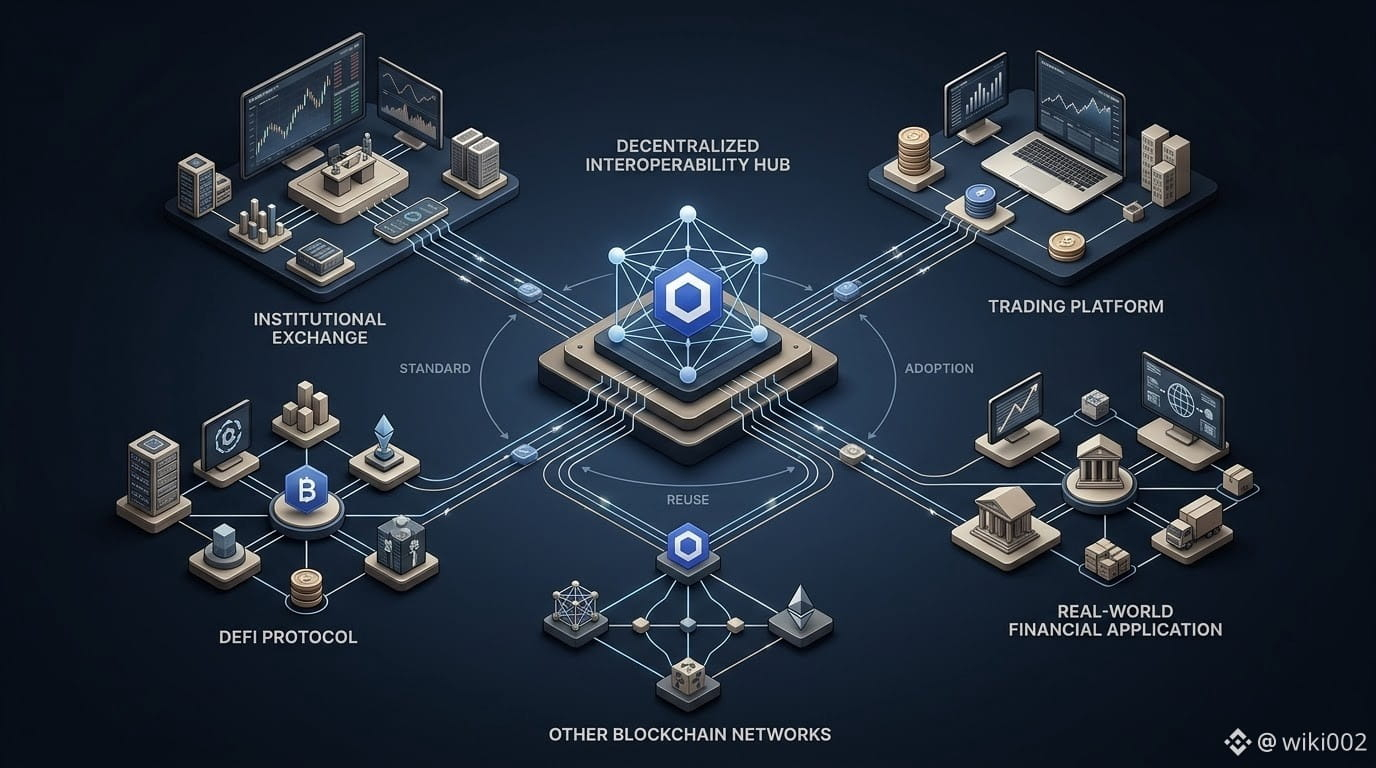
To be honest, I keep coming back to one detail in Chainlink’s latest update. It’s not just the number of integrations, but the variety of places where the same standard is being used.
There were 9 integrations across 5 services and 5 different chains, including @Coinbase, @generaltensor, @Herd_Finance, @kpk_io, @Lighter_xyz, @metricxyz, @NUVAFinance, and @RobinhoodCrypto.
What I find interesting is what happens when a standard gets reused repeatedly.
A developer doesn’t necessarily need to approach every new integration as a completely separate infrastructure problem. Familiar interfaces, established tooling and existing implementation patterns can make a standard easier to work with over time.
I mean, that doesn’t mean nine integrations have created a network effect already. The announcement alone can’t prove that.
But it does create something worth watching. A growing base of implementations that could make the standard increasingly familiar to developers across different ecosystems.
Basically, I’d pay more attention to that compounding effect than to partnership counts.
If developers start choosing Chainlink’s standard partly because other applications already use it, could adoption itself become one of the strongest reasons for the next integration? 🧠
#Chainlink #LINK #DeFi #Web3
$LINK $HEMI $ZK
To be honest, I keep coming back to one detail in Chainlink’s latest update. It’s not just the number of integrations, but the variety of places where the same standard is being used.
There were 9 integrations across 5 services and 5 different chains, including @Coinbase, @generaltensor, @Herd_Finance, @kpk_io, @Lighter_xyz, @metricxyz, @NUVAFinance, and @RobinhoodCrypto.
What I find interesting is what happens when a standard gets reused repeatedly.
A developer doesn’t necessarily need to approach every new integration as a completely separate infrastructure problem. Familiar interfaces, established tooling and existing implementation patterns can make a standard easier to work with over time.
I mean, that doesn’t mean nine integrations have created a network effect already. The announcement alone can’t prove that.
But it does create something worth watching. A growing base of implementations that could make the standard increasingly familiar to developers across different ecosystems.
Basically, I’d pay more attention to that compounding effect than to partnership counts.
If developers start choosing Chainlink’s standard partly because other applications already use it, could adoption itself become one of the strongest reasons for the next integration? 🧠
#Chainlink #LINK #DeFi #Web3
$LINK $HEMI $ZK
Log in to explore more content