

#privacy
privacy
1.8M views
10,077 Discussing
Hot
Latest


·
--
Verified
Most chains make you pick a side.
Show everything. Or hide everything.
Neither works for banks.
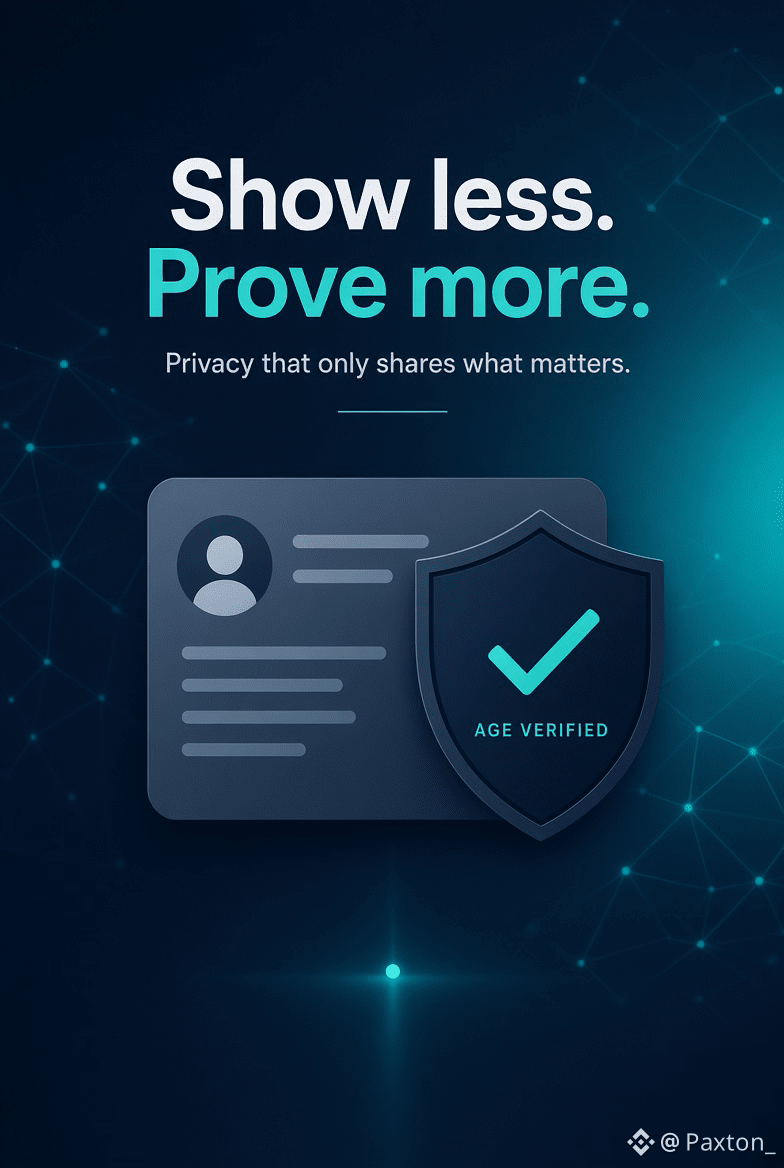
@Midnight_Network sits in the middle. Prove one fact. Keep the rest private. Like showing your age without handing over your full ID.
$NIGHT is the token you hold. It runs governance. It also makes $DUSK on its own. DUSK pays for private txs. You don’t buy fees separately.
Nodes already include Google Cloud, MoneyGram, Worldpay, Pairpoint by Vodafone, eToro, Bullish, and Blockdaemon.
Monument Bank is working on putting up to £250 million in customer deposits on the network.
Builders can deploy contracts on mainnet now. Private contracts still coming.
Real privacy isn’t vanishing. It’s sharing only what matters.
Not a buy call. Just watching.
#Midnight #Privacy #BinanceLaunchesBinanceIntelligence
Most chains make you pick a side.
Show everything. Or hide everything.
Neither works for banks.
@Midnight Network sits in the middle. Prove one fact. Keep the rest private. Like showing your age without handing over your full ID.
$NIGHT is the token you hold. It runs governance. It also makes $DUSK on its own. DUSK pays for private txs. You don’t buy fees separately.
Nodes already include Google Cloud, MoneyGram, Worldpay, Pairpoint by Vodafone, eToro, Bullish, and Blockdaemon.
Monument Bank is working on putting up to £250 million in customer deposits on the network.
Builders can deploy contracts on mainnet now. Private contracts still coming.
Real privacy isn’t vanishing. It’s sharing only what matters.
Not a buy call. Just watching.
#Midnight #Privacy #BinanceLaunchesBinanceIntelligence
Show everything. Or hide everything.
Neither works for banks.
@Midnight Network sits in the middle. Prove one fact. Keep the rest private. Like showing your age without handing over your full ID.
$NIGHT is the token you hold. It runs governance. It also makes $DUSK on its own. DUSK pays for private txs. You don’t buy fees separately.
Nodes already include Google Cloud, MoneyGram, Worldpay, Pairpoint by Vodafone, eToro, Bullish, and Blockdaemon.
Monument Bank is working on putting up to £250 million in customer deposits on the network.
Builders can deploy contracts on mainnet now. Private contracts still coming.
Real privacy isn’t vanishing. It’s sharing only what matters.
Not a buy call. Just watching.
#Midnight #Privacy #BinanceLaunchesBinanceIntelligence
Annabelle mb:
This feels less like hiding transactions and more like controlling exactly what information gets revealed.
23
22
858

The DOJ is leaning on the Bitcoin Fog appeals precedent to keep Roman Storm's trial firmly in New York. By arguing that transactional echoes constitute venue establishment, prosecutors are tightening the net on Tornado Cash developers. This legal maneuvering could set a dangerous systemic benchmark for how cross-chain privacy tools face jurisdictional reach in the US courts moving forward. $BTC #CryptoRegulation #Privacy #LegalNews
The DOJ is leaning on the Bitcoin Fog appeals precedent to keep Roman Storm's trial firmly in New York. By arguing that transactional echoes constitute venue establishment, prosecutors are tightening the net on Tornado Cash developers. This legal maneuvering could set a dangerous systemic benchmark for how cross-chain privacy tools face jurisdictional reach in the US courts moving forward. $BTC #CryptoRegulation #Privacy #LegalNews
6

·
--
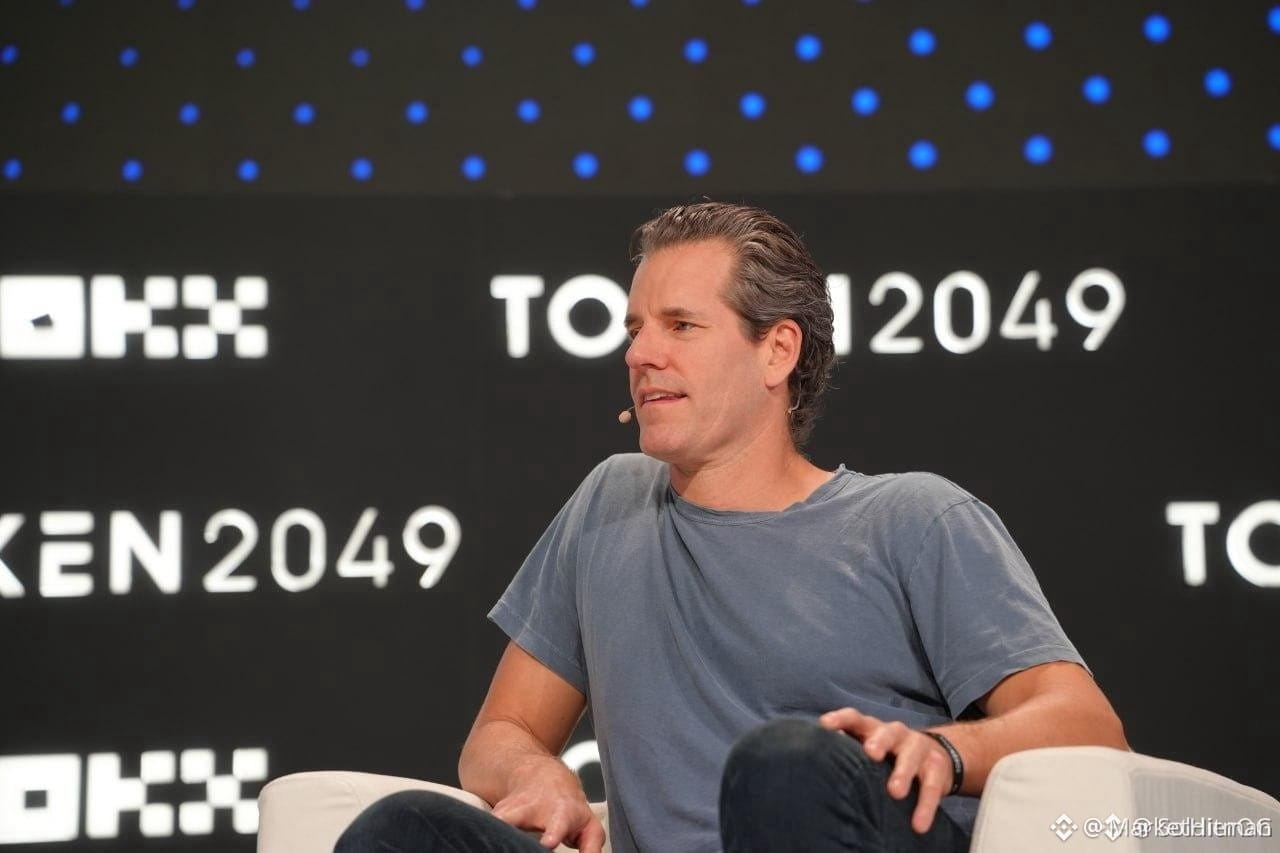
🚨 WINKLEVOSS SPARKS PRIVACY WAR BETWEEN $BTC AND $ZEC AT TOKEN2049! 🔒
At TOKEN2049, Cameron Winklevoss underscored a key narrative shift: $BTC commands the public decentralized realm, while $ZEC holds the crown for decentralized privacy. 🔍 Smart money is closely watching whether institutional privacy demand can drive a massive re-rating for zero-knowledge tech. 🌊
While critics argue Bitcoin's liquidity moat reinforces total market dominance, privacy optics are quietly shifting into a high-conviction narrative. 💡 When heavyweights frame privacy as a complementary pillar rather than a threat, smart positioning often front-runs the breakout. 📈
🤔 Does $ZEC have the momentum to carve out market share, or will Bitcoin absorb all macro liquidity? 👇
⚠️ Not financial advice. Always manage your risk. 🛡️
🏷️ #BTC #ZEC #Privacy #Crypto
🔥 ⚡
🚨 WINKLEVOSS SPARKS PRIVACY WAR BETWEEN $BTC AND $ZEC AT TOKEN2049! 🔒
At TOKEN2049, Cameron Winklevoss underscored a key narrative shift: $BTC commands the public decentralized realm, while $ZEC holds the crown for decentralized privacy. 🔍 Smart money is closely watching whether institutional privacy demand can drive a massive re-rating for zero-knowledge tech. 🌊
While critics argue Bitcoin's liquidity moat reinforces total market dominance, privacy optics are quietly shifting into a high-conviction narrative. 💡 When heavyweights frame privacy as a complementary pillar rather than a threat, smart positioning often front-runs the breakout. 📈
🤔 Does $ZEC have the momentum to carve out market share, or will Bitcoin absorb all macro liquidity? 👇
⚠️ Not financial advice. Always manage your risk. 🛡️
🏷️ #BTC #ZEC #Privacy #Crypto
🔥 ⚡
At TOKEN2049, Cameron Winklevoss underscored a key narrative shift: $BTC commands the public decentralized realm, while $ZEC holds the crown for decentralized privacy. 🔍 Smart money is closely watching whether institutional privacy demand can drive a massive re-rating for zero-knowledge tech. 🌊
While critics argue Bitcoin's liquidity moat reinforces total market dominance, privacy optics are quietly shifting into a high-conviction narrative. 💡 When heavyweights frame privacy as a complementary pillar rather than a threat, smart positioning often front-runs the breakout. 📈
🤔 Does $ZEC have the momentum to carve out market share, or will Bitcoin absorb all macro liquidity? 👇
⚠️ Not financial advice. Always manage your risk. 🛡️
🏷️ #BTC #ZEC #Privacy #Crypto
🔥 ⚡
18

Zcash is showing why narratives can change faster than fundamentals.
$ZEC has pulled back sharply from its recent $1,698 peak, but the underlying privacy thesis hasn’t disappeared.
Around 29% of ZEC supply is currently held in shielded pools.
At the same time, institutional access has changed dramatically with Grayscale’s ZCSH exchange-traded product.
That creates an interesting contradiction:
Price has corrected.
But the privacy narrative is becoming more institutional.
And in an economy where AI can analyze more financial data than ever before, financial privacy may become increasingly valuable.
I’m not saying ZEC must go higher.
I’m asking whether the market is beginning to reprice privacy as infrastructure rather than speculation.
Poll: Where do you stand on ZEC?
#zcash #zec #Privacy #MannequinCrypto
Zcash is showing why narratives can change faster than fundamentals.
$ZEC has pulled back sharply from its recent $1,698 peak, but the underlying privacy thesis hasn’t disappeared.
Around 29% of ZEC supply is currently held in shielded pools.
At the same time, institutional access has changed dramatically with Grayscale’s ZCSH exchange-traded product.
That creates an interesting contradiction:
Price has corrected.
But the privacy narrative is becoming more institutional.
And in an economy where AI can analyze more financial data than ever before, financial privacy may become increasingly valuable.
I’m not saying ZEC must go higher.
I’m asking whether the market is beginning to reprice privacy as infrastructure rather than speculation.
Poll: Where do you stand on ZEC?
#zcash #zec #Privacy #MannequinCrypto
$ZEC has pulled back sharply from its recent $1,698 peak, but the underlying privacy thesis hasn’t disappeared.
Around 29% of ZEC supply is currently held in shielded pools.
At the same time, institutional access has changed dramatically with Grayscale’s ZCSH exchange-traded product.
That creates an interesting contradiction:
Price has corrected.
But the privacy narrative is becoming more institutional.
And in an economy where AI can analyze more financial data than ever before, financial privacy may become increasingly valuable.
I’m not saying ZEC must go higher.
I’m asking whether the market is beginning to reprice privacy as infrastructure rather than speculation.
Poll: Where do you stand on ZEC?
#zcash #zec #Privacy #MannequinCrypto
🟢 Long-term privacy thesis
⚪Watching before taking a view
🔴 Rally was mostly speculative
18 hr(s) left
1
815

Privacy coins are quietly beating the market today. 👀
Monero (XMR) rose 1.9% to $557 and Zcash (ZEC) added 2.5%, climbing back above $1,350 — while Bitcoin keeps chopping around $85,900.
The demand for anonymous layer-1 assets stays firm as macro sentiment shifts, right after FinCEN withdrew its crypto mixing rule yesterday.
Quiet strength or the start of a bigger privacy rotation?
$XMR $ZEC
#Crypto #Privacy #Monero
Privacy coins are quietly beating the market today. 👀
Monero (XMR) rose 1.9% to $557 and Zcash (ZEC) added 2.5%, climbing back above $1,350 — while Bitcoin keeps chopping around $85,900.
The demand for anonymous layer-1 assets stays firm as macro sentiment shifts, right after FinCEN withdrew its crypto mixing rule yesterday.
Quiet strength or the start of a bigger privacy rotation?
$XMR $ZEC
#Crypto #Privacy #Monero
Monero (XMR) rose 1.9% to $557 and Zcash (ZEC) added 2.5%, climbing back above $1,350 — while Bitcoin keeps chopping around $85,900.
The demand for anonymous layer-1 assets stays firm as macro sentiment shifts, right after FinCEN withdrew its crypto mixing rule yesterday.
Quiet strength or the start of a bigger privacy rotation?
$XMR $ZEC
#Crypto #Privacy #Monero
324

Disputed
$DASH just took a big step forward on Moca. 🔐
Shielded Dash is now live, bringing private transactions directly into the Moca ecosystem.
You can shield your DASH, unshield it when needed, and send it privately without exposing the transaction details publicly.
Privacy is becoming a real part of everyday crypto, not just a concept.
Watching $DASH closely as this rolls out across Moca.
#DASH #moca #Privacy #Crypto
$DASH just took a big step forward on Moca. 🔐
Shielded Dash is now live, bringing private transactions directly into the Moca ecosystem.
You can shield your DASH, unshield it when needed, and send it privately without exposing the transaction details publicly.
Privacy is becoming a real part of everyday crypto, not just a concept.
Watching $DASH closely as this rolls out across Moca.
#DASH #moca #Privacy #Crypto
Shielded Dash is now live, bringing private transactions directly into the Moca ecosystem.
You can shield your DASH, unshield it when needed, and send it privately without exposing the transaction details publicly.
Privacy is becoming a real part of everyday crypto, not just a concept.
Watching $DASH closely as this rolls out across Moca.
#DASH #moca #Privacy #Crypto

1
428

·
--
Article
How Can Banks Use Blockchain Without Exposing Transaction Data?Blockchain gives financial institutions something they badly need: verifiable settlement without relying entirely on a closed database.
But there is an obvious problem.
Banks cannot simply put every transaction detail on a public blockchain.
Balances, counterparties, transaction amounts and other sensitive information may need to remain private - while regulators, counterparties and the network still need enough evidence to verify that something actually happened.
So how can you get privacy + verifiability at the same time?
This is where the architecture behind Rayls becomes interesting.
Start with a private transaction
Imagine a financial institution needs to transfer a tokenised asset internally.
The transaction needs to execute in a controlled environment where sensitive financial information isn't exposed publicly.
This is where the idea of a private execution environment becomes important.
Instead of starting with a public blockchain and trying to hide information afterwards, the transaction can begin inside an environment designed for privacy.
The transaction is executed privately
In the Rayls architecture, private institutional activity can happen within the Sovereign environment.
The transaction logic and relevant state can remain within that private environment while authorised participants interact with it.
The important part is that privacy is part of the execution model itself.
This creates the first separation:
Private execution does not automatically mean isolated from everything else.
The interesting question is what happens when that transaction needs to interact with a wider settlement environment.
You don't need to reveal everything to prove something
This is where zero-knowledge technology becomes interesting.
Instead of publishing all the underlying transaction information, a system can produce cryptographic evidence that a particular statement is valid.
In simple terms:
You can prove that something is correct without revealing everything that made it correct.
For institutional infrastructure, this distinction is important.
The verifier doesn't necessarily need to see the complete private transaction. It may only need enough cryptographic evidence to verify the required condition.
Where do Pedersen commitments fit?
A commitment can be thought of as a cryptographic way of locking information into a verifiable representation without immediately revealing the underlying value.
Pedersen commitments are one of the cryptographic building blocks that can be used in privacy-preserving systems.
They allow a value to be committed while maintaining mathematical properties that can later support verification and proofs.
The commitment itself isn't the complete privacy system.
It's one component that can help build a system where information can remain hidden while certain properties about that information can still be proven.
Generating the zero-knowledge proof
Once the relevant private information and conditions are established, a zero-knowledge proof can be generated.
The proof provides evidence that the required computation or condition was satisfied.
The verifier can then verify the proof without necessarily receiving the original private data.
That's the important distinction:
The data can remain private while the validity of a computation becomes verifiable.
This is one of the reasons zero-knowledge systems are interesting for financial infrastructure.
Proof and encryption are not the same thing
This distinction is easy to miss.
Encryption protects information by making the underlying data unreadable without the appropriate key.
A zero-knowledge proof provides evidence that a statement is true without requiring the verifier to see the underlying secret information.
A commitment allows information to be cryptographically bound without immediately revealing the information itself.
They solve different problems.
And in a privacy-preserving financial system, these different cryptographic mechanisms can work together
So how does the transaction move outside the Sovereign?
A private transaction eventually may need to interact with other parts of the network.
This is where the architecture becomes interesting.
The goal isn't to expose the complete private transaction.
Instead, the relevant information needed for interoperability or settlement can move through the appropriate infrastructure.
In the Rayls architecture, this can involve the private environment interacting through Relayers toward the relevant settlement layer.
The important idea is:
The transaction can interact with a broader network without making all of its private data public.
Where does the transaction actually settle?
This depends on what the transaction needs to accomplish.
Private institutional activity can remain within private environments, while interactions that require broader network settlement can connect toward the Rayls Public Chain.
That separation is useful because not every piece of institutional activity needs to exist publicly.
A private transaction doesn't become public simply because it eventually needs to interact with a broader settlement layer.
What does the settlement layer actually know?
This is one of the most interesting parts.
A settlement layer can verify the information it needs without necessarily receiving every detail of the original private transaction.
That creates an important distinction:
“I can verify that this happened correctly.”
is not the same as:
“I can see every detail of what happened.”
For institutional blockchain infrastructure, that difference matters.
The objective isn't necessarily maximum visibility.
It's appropriate visibility.
What happens to the private information?
The sensitive transaction information can remain within the private environment instead of becoming ordinary public blockchain data.
This allows institutions to maintain stronger control over confidential information while still participating in a broader settlement architecture.
The idea isn't simply to hide everything.
It's about deciding:
What needs to remain private?What needs to be proven?Who needs to see what?
That distinction becomes especially important in regulated financial markets.
But what about regulators?
This is where privacy shouldn't be confused with zero visibility.
Financial institutions still need compliance, auditing and controlled access.
A privacy-preserving architecture can therefore support selective disclosure.
Instead of making everything public to everyone, authorised parties can receive the information they are entitled to access.
This creates a more realistic model for regulated financial infrastructure:
Private by default.
Verifiable when required.
Accessible to authorised parties.
The exact permissions and disclosure mechanisms depend on the implementation and regulatory requirements, but the architectural principle is important.
Why not just use a normal private blockchain?
A conventional private blockchain can keep transactions away from public networks.
But that creates another problem:
How does private institutional activity connect to broader liquidity, assets and settlement?
A completely isolated network can solve privacy while creating fragmentation.
The more interesting challenge is connecting private institutional environments with a wider settlement layer without giving up the privacy requirements of participants.
That's a very different problem from simply building another private chain.
The interesting part isn't just privacy
For me, this is the bigger takeaway.
The architecture separates several things that are often treated as one:
Execution
Where the transaction actually happens.
Privacy
Who can see the underlying information.
Verification
What can be cryptographically proven.
Settlement
Where the relevant state ultimately needs to be recognised.
Once these responsibilities are separated, the architecture becomes much more flexible.
And this is where Rayls becomes interesting to study.
The complete transaction flow
At a high level, the process can be understood like this:
Private transaction
↓
Sovereign / private execution
↓
Cryptographic commitments + zero-knowledge proof
↓
Relayer / interoperability layer
↓
Settlement / verification
↓
Broader network state
The important part is that the transaction doesn't need to become completely public just because it needs to interact with a broader blockchain environment.
Publicly verifiable does not mean publicly readable
This is probably the simplest way to understand the entire concept.
A blockchain can provide evidence that something is valid without exposing every piece of the underlying information.
For financial institutions, that distinction could be extremely important.
Because the real challenge isn't simply:
“How do we put banks on a blockchain?”
It's:
“How do we give financial institutions the benefits of blockchain while respecting their privacy, compliance and operational requirements?”That's the problem this architecture is interesting to examine for.
Final thoughts
The more I look at institutional blockchain infrastructure, the more I think privacy vs transparency is the wrong framing.
The better question is:
What should be private, what should be verifiable, and who should be allowed to see what?
That's where architectures like Rayls become worth examining.
Not simply because they use blockchain, but because they explore how private execution, cryptographic verification and broader settlement can work together.
For institutional adoption, that separation could matter just as much as the blockchain itself.
Sources / further reading
Rayls Official DocumentationRayls High-Level Architecture Documentation
#Rayls #Blockchain #Privacy $RLS
{alpha}(560x17ea10b6ae4fde59fdbf471bd28ab9710f508816)
How Can Banks Use Blockchain Without Exposing Transaction Data?
Blockchain gives financial institutions something they badly need: verifiable settlement without relying entirely on a closed database.
But there is an obvious problem.
Banks cannot simply put every transaction detail on a public blockchain.
Balances, counterparties, transaction amounts and other sensitive information may need to remain private - while regulators, counterparties and the network still need enough evidence to verify that something actually happened.
So how can you get privacy + verifiability at the same time?
This is where the architecture behind Rayls becomes interesting.
Start with a private transaction
Imagine a financial institution needs to transfer a tokenised asset internally.
The transaction needs to execute in a controlled environment where sensitive financial information isn't exposed publicly.
This is where the idea of a private execution environment becomes important.
Instead of starting with a public blockchain and trying to hide information afterwards, the transaction can begin inside an environment designed for privacy.
The transaction is executed privately
In the Rayls architecture, private institutional activity can happen within the Sovereign environment.
The transaction logic and relevant state can remain within that private environment while authorised participants interact with it.
The important part is that privacy is part of the execution model itself.
This creates the first separation:
Private execution does not automatically mean isolated from everything else.
The interesting question is what happens when that transaction needs to interact with a wider settlement environment.
You don't need to reveal everything to prove something
This is where zero-knowledge technology becomes interesting.
Instead of publishing all the underlying transaction information, a system can produce cryptographic evidence that a particular statement is valid.
In simple terms:
You can prove that something is correct without revealing everything that made it correct.
For institutional infrastructure, this distinction is important.
The verifier doesn't necessarily need to see the complete private transaction. It may only need enough cryptographic evidence to verify the required condition.
Where do Pedersen commitments fit?
A commitment can be thought of as a cryptographic way of locking information into a verifiable representation without immediately revealing the underlying value.
Pedersen commitments are one of the cryptographic building blocks that can be used in privacy-preserving systems.
They allow a value to be committed while maintaining mathematical properties that can later support verification and proofs.
The commitment itself isn't the complete privacy system.
It's one component that can help build a system where information can remain hidden while certain properties about that information can still be proven.
Generating the zero-knowledge proof
Once the relevant private information and conditions are established, a zero-knowledge proof can be generated.
The proof provides evidence that the required computation or condition was satisfied.
The verifier can then verify the proof without necessarily receiving the original private data.
That's the important distinction:
The data can remain private while the validity of a computation becomes verifiable.
This is one of the reasons zero-knowledge systems are interesting for financial infrastructure.
Proof and encryption are not the same thing
This distinction is easy to miss.
Encryption protects information by making the underlying data unreadable without the appropriate key.
A zero-knowledge proof provides evidence that a statement is true without requiring the verifier to see the underlying secret information.
A commitment allows information to be cryptographically bound without immediately revealing the information itself.
They solve different problems.
And in a privacy-preserving financial system, these different cryptographic mechanisms can work together
So how does the transaction move outside the Sovereign?
A private transaction eventually may need to interact with other parts of the network.
This is where the architecture becomes interesting.
The goal isn't to expose the complete private transaction.
Instead, the relevant information needed for interoperability or settlement can move through the appropriate infrastructure.
In the Rayls architecture, this can involve the private environment interacting through Relayers toward the relevant settlement layer.
The important idea is:
The transaction can interact with a broader network without making all of its private data public.
Where does the transaction actually settle?
This depends on what the transaction needs to accomplish.
Private institutional activity can remain within private environments, while interactions that require broader network settlement can connect toward the Rayls Public Chain.
That separation is useful because not every piece of institutional activity needs to exist publicly.
A private transaction doesn't become public simply because it eventually needs to interact with a broader settlement layer.
What does the settlement layer actually know?
This is one of the most interesting parts.
A settlement layer can verify the information it needs without necessarily receiving every detail of the original private transaction.
That creates an important distinction:
“I can verify that this happened correctly.”
is not the same as:
“I can see every detail of what happened.”
For institutional blockchain infrastructure, that difference matters.
The objective isn't necessarily maximum visibility.
It's appropriate visibility.
What happens to the private information?
The sensitive transaction information can remain within the private environment instead of becoming ordinary public blockchain data.
This allows institutions to maintain stronger control over confidential information while still participating in a broader settlement architecture.
The idea isn't simply to hide everything.
It's about deciding:
What needs to remain private?What needs to be proven?Who needs to see what?
That distinction becomes especially important in regulated financial markets.
But what about regulators?
This is where privacy shouldn't be confused with zero visibility.
Financial institutions still need compliance, auditing and controlled access.
A privacy-preserving architecture can therefore support selective disclosure.
Instead of making everything public to everyone, authorised parties can receive the information they are entitled to access.
This creates a more realistic model for regulated financial infrastructure:
Private by default.
Verifiable when required.
Accessible to authorised parties.
The exact permissions and disclosure mechanisms depend on the implementation and regulatory requirements, but the architectural principle is important.
Why not just use a normal private blockchain?
A conventional private blockchain can keep transactions away from public networks.
But that creates another problem:
How does private institutional activity connect to broader liquidity, assets and settlement?
A completely isolated network can solve privacy while creating fragmentation.
The more interesting challenge is connecting private institutional environments with a wider settlement layer without giving up the privacy requirements of participants.
That's a very different problem from simply building another private chain.
The interesting part isn't just privacy
For me, this is the bigger takeaway.
The architecture separates several things that are often treated as one:
Execution
Where the transaction actually happens.
Privacy
Who can see the underlying information.
Verification
What can be cryptographically proven.
Settlement
Where the relevant state ultimately needs to be recognised.
Once these responsibilities are separated, the architecture becomes much more flexible.
And this is where Rayls becomes interesting to study.
The complete transaction flow
At a high level, the process can be understood like this:
Private transaction
↓
Sovereign / private execution
↓
Cryptographic commitments + zero-knowledge proof
↓
Relayer / interoperability layer
↓
Settlement / verification
↓
Broader network state
The important part is that the transaction doesn't need to become completely public just because it needs to interact with a broader blockchain environment.
Publicly verifiable does not mean publicly readable
This is probably the simplest way to understand the entire concept.
A blockchain can provide evidence that something is valid without exposing every piece of the underlying information.
For financial institutions, that distinction could be extremely important.
Because the real challenge isn't simply:
“How do we put banks on a blockchain?”
It's:
“How do we give financial institutions the benefits of blockchain while respecting their privacy, compliance and operational requirements?”That's the problem this architecture is interesting to examine for.
Final thoughts
The more I look at institutional blockchain infrastructure, the more I think privacy vs transparency is the wrong framing.
The better question is:
What should be private, what should be verifiable, and who should be allowed to see what?
That's where architectures like Rayls become worth examining.
Not simply because they use blockchain, but because they explore how private execution, cryptographic verification and broader settlement can work together.
For institutional adoption, that separation could matter just as much as the blockchain itself.
Sources / further reading
Rayls Official DocumentationRayls High-Level Architecture Documentation
#Rayls #Blockchain #Privacy $RLS
But there is an obvious problem.
Banks cannot simply put every transaction detail on a public blockchain.
Balances, counterparties, transaction amounts and other sensitive information may need to remain private - while regulators, counterparties and the network still need enough evidence to verify that something actually happened.
So how can you get privacy + verifiability at the same time?
This is where the architecture behind Rayls becomes interesting.
Start with a private transaction
Imagine a financial institution needs to transfer a tokenised asset internally.
The transaction needs to execute in a controlled environment where sensitive financial information isn't exposed publicly.
This is where the idea of a private execution environment becomes important.
Instead of starting with a public blockchain and trying to hide information afterwards, the transaction can begin inside an environment designed for privacy.
The transaction is executed privately
In the Rayls architecture, private institutional activity can happen within the Sovereign environment.
The transaction logic and relevant state can remain within that private environment while authorised participants interact with it.
The important part is that privacy is part of the execution model itself.
This creates the first separation:
Private execution does not automatically mean isolated from everything else.
The interesting question is what happens when that transaction needs to interact with a wider settlement environment.
You don't need to reveal everything to prove something
This is where zero-knowledge technology becomes interesting.
Instead of publishing all the underlying transaction information, a system can produce cryptographic evidence that a particular statement is valid.
In simple terms:
You can prove that something is correct without revealing everything that made it correct.
For institutional infrastructure, this distinction is important.
The verifier doesn't necessarily need to see the complete private transaction. It may only need enough cryptographic evidence to verify the required condition.
Where do Pedersen commitments fit?
A commitment can be thought of as a cryptographic way of locking information into a verifiable representation without immediately revealing the underlying value.
Pedersen commitments are one of the cryptographic building blocks that can be used in privacy-preserving systems.
They allow a value to be committed while maintaining mathematical properties that can later support verification and proofs.
The commitment itself isn't the complete privacy system.
It's one component that can help build a system where information can remain hidden while certain properties about that information can still be proven.
Generating the zero-knowledge proof
Once the relevant private information and conditions are established, a zero-knowledge proof can be generated.
The proof provides evidence that the required computation or condition was satisfied.
The verifier can then verify the proof without necessarily receiving the original private data.
That's the important distinction:
The data can remain private while the validity of a computation becomes verifiable.
This is one of the reasons zero-knowledge systems are interesting for financial infrastructure.
Proof and encryption are not the same thing
This distinction is easy to miss.
Encryption protects information by making the underlying data unreadable without the appropriate key.
A zero-knowledge proof provides evidence that a statement is true without requiring the verifier to see the underlying secret information.
A commitment allows information to be cryptographically bound without immediately revealing the information itself.
They solve different problems.
And in a privacy-preserving financial system, these different cryptographic mechanisms can work together
So how does the transaction move outside the Sovereign?
A private transaction eventually may need to interact with other parts of the network.
This is where the architecture becomes interesting.
The goal isn't to expose the complete private transaction.
Instead, the relevant information needed for interoperability or settlement can move through the appropriate infrastructure.
In the Rayls architecture, this can involve the private environment interacting through Relayers toward the relevant settlement layer.
The important idea is:
The transaction can interact with a broader network without making all of its private data public.
Where does the transaction actually settle?
This depends on what the transaction needs to accomplish.
Private institutional activity can remain within private environments, while interactions that require broader network settlement can connect toward the Rayls Public Chain.
That separation is useful because not every piece of institutional activity needs to exist publicly.
A private transaction doesn't become public simply because it eventually needs to interact with a broader settlement layer.
What does the settlement layer actually know?
This is one of the most interesting parts.
A settlement layer can verify the information it needs without necessarily receiving every detail of the original private transaction.
That creates an important distinction:
“I can verify that this happened correctly.”
is not the same as:
“I can see every detail of what happened.”
For institutional blockchain infrastructure, that difference matters.
The objective isn't necessarily maximum visibility.
It's appropriate visibility.
What happens to the private information?
The sensitive transaction information can remain within the private environment instead of becoming ordinary public blockchain data.
This allows institutions to maintain stronger control over confidential information while still participating in a broader settlement architecture.
The idea isn't simply to hide everything.
It's about deciding:
What needs to remain private?What needs to be proven?Who needs to see what?
That distinction becomes especially important in regulated financial markets.
But what about regulators?
This is where privacy shouldn't be confused with zero visibility.
Financial institutions still need compliance, auditing and controlled access.
A privacy-preserving architecture can therefore support selective disclosure.
Instead of making everything public to everyone, authorised parties can receive the information they are entitled to access.
This creates a more realistic model for regulated financial infrastructure:
Private by default.
Verifiable when required.
Accessible to authorised parties.
The exact permissions and disclosure mechanisms depend on the implementation and regulatory requirements, but the architectural principle is important.
Why not just use a normal private blockchain?
A conventional private blockchain can keep transactions away from public networks.
But that creates another problem:
How does private institutional activity connect to broader liquidity, assets and settlement?
A completely isolated network can solve privacy while creating fragmentation.
The more interesting challenge is connecting private institutional environments with a wider settlement layer without giving up the privacy requirements of participants.
That's a very different problem from simply building another private chain.
The interesting part isn't just privacy
For me, this is the bigger takeaway.
The architecture separates several things that are often treated as one:
Execution
Where the transaction actually happens.
Privacy
Who can see the underlying information.
Verification
What can be cryptographically proven.
Settlement
Where the relevant state ultimately needs to be recognised.
Once these responsibilities are separated, the architecture becomes much more flexible.
And this is where Rayls becomes interesting to study.
The complete transaction flow
At a high level, the process can be understood like this:
Private transaction
↓
Sovereign / private execution
↓
Cryptographic commitments + zero-knowledge proof
↓
Relayer / interoperability layer
↓
Settlement / verification
↓
Broader network state
The important part is that the transaction doesn't need to become completely public just because it needs to interact with a broader blockchain environment.
Publicly verifiable does not mean publicly readable
This is probably the simplest way to understand the entire concept.
A blockchain can provide evidence that something is valid without exposing every piece of the underlying information.
For financial institutions, that distinction could be extremely important.
Because the real challenge isn't simply:
“How do we put banks on a blockchain?”
It's:
“How do we give financial institutions the benefits of blockchain while respecting their privacy, compliance and operational requirements?”That's the problem this architecture is interesting to examine for.
Final thoughts
The more I look at institutional blockchain infrastructure, the more I think privacy vs transparency is the wrong framing.
The better question is:
What should be private, what should be verifiable, and who should be allowed to see what?
That's where architectures like Rayls become worth examining.
Not simply because they use blockchain, but because they explore how private execution, cryptographic verification and broader settlement can work together.
For institutional adoption, that separation could matter just as much as the blockchain itself.
Sources / further reading
Rayls Official DocumentationRayls High-Level Architecture Documentation
#Rayls #Blockchain #Privacy $RLS
2
82

You Can See Who’s Securing Midnight 🏦
$ADA showed how a blockchain can build around a distributed network of identifiable stake pool operators.
$LINK built institutional credibility by connecting blockchain infrastructure with some of the world’s largest financial organizations.
Midnight is building its own credibility through the companies operating its federated node network.
Google Cloud. MoneyGram. Worldpay. eToro. Bullish. Blockdaemon. Pairpoint by Vodafone.
These aren’t anonymous operators.
They’re recognizable companies putting infrastructure and their names behind a network designed for programmable privacy.
For institutions evaluating privacy infrastructure, knowing who helps operate the network is a signal they can actually verify.
#Privacy #Infrastructure
You Can See Who’s Securing Midnight 🏦
$ADA showed how a blockchain can build around a distributed network of identifiable stake pool operators.
$LINK built institutional credibility by connecting blockchain infrastructure with some of the world’s largest financial organizations.
Midnight is building its own credibility through the companies operating its federated node network.
Google Cloud. MoneyGram. Worldpay. eToro. Bullish. Blockdaemon. Pairpoint by Vodafone.
These aren’t anonymous operators.
They’re recognizable companies putting infrastructure and their names behind a network designed for programmable privacy.
For institutions evaluating privacy infrastructure, knowing who helps operate the network is a signal they can actually verify.
#Privacy #Infrastructure
$ADA showed how a blockchain can build around a distributed network of identifiable stake pool operators.
$LINK built institutional credibility by connecting blockchain infrastructure with some of the world’s largest financial organizations.
Midnight is building its own credibility through the companies operating its federated node network.
Google Cloud. MoneyGram. Worldpay. eToro. Bullish. Blockdaemon. Pairpoint by Vodafone.
These aren’t anonymous operators.
They’re recognizable companies putting infrastructure and their names behind a network designed for programmable privacy.
For institutions evaluating privacy infrastructure, knowing who helps operate the network is a signal they can actually verify.
#Privacy #Infrastructure

1
265

·
--
🛡️ $ZEC (Zcash): Privacy Is Still a Narrative
Zcash ($ZEC ) remains one of the most interesting privacy-focused cryptocurrencies in the market.
🔹 Privacy-focused transactions
🔹 Strong cryptographic technology
🔹 Limited supply of 21M ZEC
🔹 A unique narrative compared with mainstream crypto assets
With privacy, decentralization, and crypto adoption continuing to be discussed across the market, $ZEC is a project worth keeping on the watchlist.
📊 Watch the key support & resistance levels.
⚠️ Always DYOR and manage your risk.
#Binance #Crypto #Altcoins! #Privacy #Web3
🛡️ $ZEC (Zcash): Privacy Is Still a Narrative
Zcash ($ZEC ) remains one of the most interesting privacy-focused cryptocurrencies in the market.
🔹 Privacy-focused transactions
🔹 Strong cryptographic technology
🔹 Limited supply of 21M ZEC
🔹 A unique narrative compared with mainstream crypto assets
With privacy, decentralization, and crypto adoption continuing to be discussed across the market, $ZEC is a project worth keeping on the watchlist.
📊 Watch the key support & resistance levels.
⚠️ Always DYOR and manage your risk.
#Binance #Crypto #Altcoins! #Privacy #Web3
Zcash ($ZEC ) remains one of the most interesting privacy-focused cryptocurrencies in the market.
🔹 Privacy-focused transactions
🔹 Strong cryptographic technology
🔹 Limited supply of 21M ZEC
🔹 A unique narrative compared with mainstream crypto assets
With privacy, decentralization, and crypto adoption continuing to be discussed across the market, $ZEC is a project worth keeping on the watchlist.
📊 Watch the key support & resistance levels.
⚠️ Always DYOR and manage your risk.
#Binance #Crypto #Altcoins! #Privacy #Web3

1
241

🚨 Monad is about to go private — and MON is already moving.
Monad teased "Privacy is coming" ahead of its first Open summit in Singapore on Oct 6, during TOKEN2049 week. Category Labs is set to unveil privacy tech that keeps financial transactions confidential while staying on a public chain — private finance without splitting liquidity across closed systems.
MON reacted fast: up about 21% in 24 hours to around $0.035 when the teaser dropped, flipping the $0.027 level from resistance into support. It now trades near $0.032, close to the local high at $0.0328, with RSI at 69 — near the overbought zone.
At the same time, StraitsX plans to issue its Singapore-dollar stablecoin XSGD and US-dollar stablecoin XUSD natively on Monad in early 2027. XSGD would be the network's first native SGD stablecoin — and Monad already holds around $692M in stablecoins.
Privacy plus payments: Monad is building two utility legs at once. Is privacy the next big Layer-1 race? 👇
$MON
#Monad #Privacy #CryptoNews
🚨 Monad is about to go private — and MON is already moving.
Monad teased "Privacy is coming" ahead of its first Open summit in Singapore on Oct 6, during TOKEN2049 week. Category Labs is set to unveil privacy tech that keeps financial transactions confidential while staying on a public chain — private finance without splitting liquidity across closed systems.
MON reacted fast: up about 21% in 24 hours to around $0.035 when the teaser dropped, flipping the $0.027 level from resistance into support. It now trades near $0.032, close to the local high at $0.0328, with RSI at 69 — near the overbought zone.
At the same time, StraitsX plans to issue its Singapore-dollar stablecoin XSGD and US-dollar stablecoin XUSD natively on Monad in early 2027. XSGD would be the network's first native SGD stablecoin — and Monad already holds around $692M in stablecoins.
Privacy plus payments: Monad is building two utility legs at once. Is privacy the next big Layer-1 race? 👇
$MON
#Monad #Privacy #CryptoNews
Monad teased "Privacy is coming" ahead of its first Open summit in Singapore on Oct 6, during TOKEN2049 week. Category Labs is set to unveil privacy tech that keeps financial transactions confidential while staying on a public chain — private finance without splitting liquidity across closed systems.
MON reacted fast: up about 21% in 24 hours to around $0.035 when the teaser dropped, flipping the $0.027 level from resistance into support. It now trades near $0.032, close to the local high at $0.0328, with RSI at 69 — near the overbought zone.
At the same time, StraitsX plans to issue its Singapore-dollar stablecoin XSGD and US-dollar stablecoin XUSD natively on Monad in early 2027. XSGD would be the network's first native SGD stablecoin — and Monad already holds around $692M in stablecoins.
Privacy plus payments: Monad is building two utility legs at once. Is privacy the next big Layer-1 race? 👇
$MON
#Monad #Privacy #CryptoNews

176

·
--
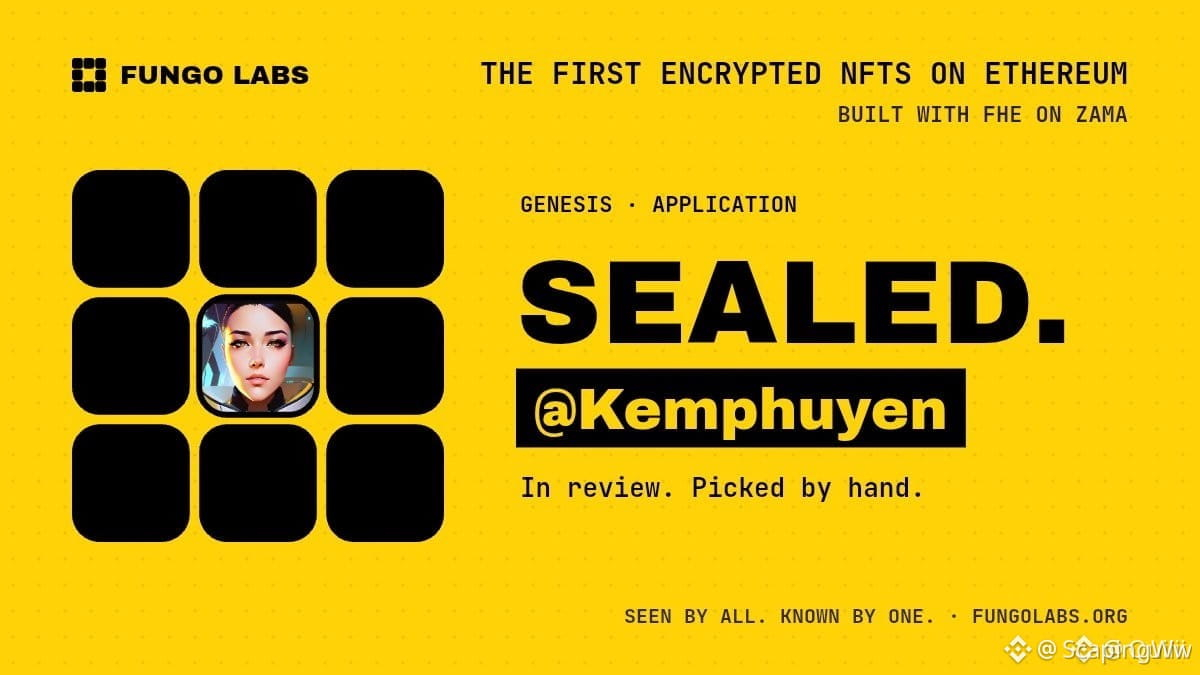
🚨 FULLY HOMOMORPHIC ENCRYPTION IS FLIPPING ON-CHAIN PRIVACY FOR $FHE NFTS! ⚡
Privacy tech is quietly preparing its next major narrative run, and Fully Homomorphic Encryption is leading the charge. 🛡️ Infrastructure pioneers laid the blueprint, but bringing FHE directly into digital assets changes the game completely.
Instead of broadcasting every high-value move to front-running bots, smart capital can now lock down true asset privacy on-chain. 🌊 Order flow shifts fast when top collectors realize they can position without leaking their footprint to the market.
💡 Early infrastructure shifts always reward those tracking the tech before retail catches on. 💬 Is private ownership the missing catalyst for the next digital asset wave, or do you prefer total transparency? 👇
⚠️ Not financial advice. Always manage your risk. 🛡️
🏷️ #FHE #Privacy #NFTs #Crypto
🔥 💎
🚨 FULLY HOMOMORPHIC ENCRYPTION IS FLIPPING ON-CHAIN PRIVACY FOR $FHE NFTS! ⚡
Privacy tech is quietly preparing its next major narrative run, and Fully Homomorphic Encryption is leading the charge. 🛡️ Infrastructure pioneers laid the blueprint, but bringing FHE directly into digital assets changes the game completely.
Instead of broadcasting every high-value move to front-running bots, smart capital can now lock down true asset privacy on-chain. 🌊 Order flow shifts fast when top collectors realize they can position without leaking their footprint to the market.
💡 Early infrastructure shifts always reward those tracking the tech before retail catches on. 💬 Is private ownership the missing catalyst for the next digital asset wave, or do you prefer total transparency? 👇
⚠️ Not financial advice. Always manage your risk. 🛡️
🏷️ #FHE #Privacy #NFTs #Crypto
🔥 💎
Privacy tech is quietly preparing its next major narrative run, and Fully Homomorphic Encryption is leading the charge. 🛡️ Infrastructure pioneers laid the blueprint, but bringing FHE directly into digital assets changes the game completely.
Instead of broadcasting every high-value move to front-running bots, smart capital can now lock down true asset privacy on-chain. 🌊 Order flow shifts fast when top collectors realize they can position without leaking their footprint to the market.
💡 Early infrastructure shifts always reward those tracking the tech before retail catches on. 💬 Is private ownership the missing catalyst for the next digital asset wave, or do you prefer total transparency? 👇
⚠️ Not financial advice. Always manage your risk. 🛡️
🏷️ #FHE #Privacy #NFTs #Crypto
🔥 💎
1
347
Big win for crypto self-custody as U.S. regulators officially drop the controversial reporting rule that targeted private wallets and mixing services. For years, this proposal loomed like a dark cloud over decentralized finance, threatening user privacy. Now that FinCEN has officially withdrawn it, builders and holders can breathe easier. It is a massive step forward for financial sovereignty, proving that community pushback and advocacy actually work in shaping regulatory outcomes. $BTC $ETH #CryptoRegulation #SelfCustody #Privacy
Big win for crypto self-custody as U.S. regulators officially drop the controversial reporting rule that targeted private wallets and mixing services. For years, this proposal loomed like a dark cloud over decentralized finance, threatening user privacy. Now that FinCEN has officially withdrawn it, builders and holders can breathe easier. It is a massive step forward for financial sovereignty, proving that community pushback and advocacy actually work in shaping regulatory outcomes. $BTC $ETH #CryptoRegulation #SelfCustody #Privacy
19

·
--
🚨 U.S. REGULATORY CLASH THREATENS $TORN OPEN-SOURCE DEVELOPERS AND DEFI PRECEDENT ⚡
The regulatory landscape around privacy protocols is reaching a critical structural pivot. 💡 While the U.S. Treasury acknowledges that blanket mixer bans create a chilling effect on legitimate open-source innovation, the Department of Justice continues to push aggressive criminal prosecution against $TORN developers.
This institutional disconnect between policy rationale and criminal enforcement sets a precedent that impacts the entire decentralized architecture. 🔍 When foundational code development is treated as strict liability, capital flows and protocol innovation face systemic legal friction rather than market-driven re-pricing.
As regulatory pressure mounts on privacy infrastructure, structural risk parameters across open-source assets require elevated scrutiny. ⚖️ How do you see this precedent shaping long-term institutional capital deployment in decentralized privacy? 👇
⚠️ Not financial advice. Always manage your risk. 🛡️
🏷️ #TORN #DeFi #CryptoPolicy #Privacy
⚖️ 🔍
🚨 U.S. REGULATORY CLASH THREATENS $TORN OPEN-SOURCE DEVELOPERS AND DEFI PRECEDENT ⚡
The regulatory landscape around privacy protocols is reaching a critical structural pivot. 💡 While the U.S. Treasury acknowledges that blanket mixer bans create a chilling effect on legitimate open-source innovation, the Department of Justice continues to push aggressive criminal prosecution against $TORN developers.
This institutional disconnect between policy rationale and criminal enforcement sets a precedent that impacts the entire decentralized architecture. 🔍 When foundational code development is treated as strict liability, capital flows and protocol innovation face systemic legal friction rather than market-driven re-pricing.
As regulatory pressure mounts on privacy infrastructure, structural risk parameters across open-source assets require elevated scrutiny. ⚖️ How do you see this precedent shaping long-term institutional capital deployment in decentralized privacy? 👇
⚠️ Not financial advice. Always manage your risk. 🛡️
🏷️ #TORN #DeFi #CryptoPolicy #Privacy
⚖️ 🔍
The regulatory landscape around privacy protocols is reaching a critical structural pivot. 💡 While the U.S. Treasury acknowledges that blanket mixer bans create a chilling effect on legitimate open-source innovation, the Department of Justice continues to push aggressive criminal prosecution against $TORN developers.
This institutional disconnect between policy rationale and criminal enforcement sets a precedent that impacts the entire decentralized architecture. 🔍 When foundational code development is treated as strict liability, capital flows and protocol innovation face systemic legal friction rather than market-driven re-pricing.
As regulatory pressure mounts on privacy infrastructure, structural risk parameters across open-source assets require elevated scrutiny. ⚖️ How do you see this precedent shaping long-term institutional capital deployment in decentralized privacy? 👇
⚠️ Not financial advice. Always manage your risk. 🛡️
🏷️ #TORN #DeFi #CryptoPolicy #Privacy
⚖️ 🔍
3
When AI becomes your private diary, are you trading privacy for convenience? A Florida woman learned the hard way that writing personal thoughts into Claude can trigger safety filters and human review. Anthropic's terms explicitly permit reporting concerning content to law enforcement. This incident highlights a major friction point in AI adoption: where do we draw the line between platform safety and user confidentiality in the web3 and AI era? #AI #Privacy #Web3
When AI becomes your private diary, are you trading privacy for convenience? A Florida woman learned the hard way that writing personal thoughts into Claude can trigger safety filters and human review. Anthropic's terms explicitly permit reporting concerning content to law enforcement. This incident highlights a major friction point in AI adoption: where do we draw the line between platform safety and user confidentiality in the web3 and AI era? #AI #Privacy #Web3
2
Big regulatory win for crypto privacy! The US Treasury officially withdrew those controversial 2020 unhosted wallet tracking proposals and the 2023 crypto mixing restrictions. This is a massive relief for self-custody advocates and decentralized finance. While compliance remains a priority, pulling back heavy-handed surveillance proves that the fight for financial sovereignty is working. Self-custody stays winning. $BTC $ETH #CryptoNews #Privacy #DeFi
Big regulatory win for crypto privacy! The US Treasury officially withdrew those controversial 2020 unhosted wallet tracking proposals and the 2023 crypto mixing restrictions. This is a massive relief for self-custody advocates and decentralized finance. While compliance remains a priority, pulling back heavy-handed surveillance proves that the fight for financial sovereignty is working. Self-custody stays winning. $BTC $ETH #CryptoNews #Privacy #DeFi
17
FinCEN dropping its aggressive crypto mixing proposal is a major quiet win for financial privacy advocates. The original plan risked overreaching and freezing entirely legal blockchain transactions just to catch bad actors. While compliance and anti-money laundering remain top priorities, regulators are finally realizing that sledgehammer policies hurt everyday users more than criminals. Striking the right balance between security and open-network freedom is essential for healthy crypto adoption moving forward. $BTC $ETH #CryptoRegulation #Privacy #FinCEN
FinCEN dropping its aggressive crypto mixing proposal is a major quiet win for financial privacy advocates. The original plan risked overreaching and freezing entirely legal blockchain transactions just to catch bad actors. While compliance and anti-money laundering remain top priorities, regulators are finally realizing that sledgehammer policies hurt everyday users more than criminals. Striking the right balance between security and open-network freedom is essential for healthy crypto adoption moving forward. $BTC $ETH #CryptoRegulation #Privacy #FinCEN
33
Privacy Doesn’t Have To Mean Invisibility 🔐
$XMR proved there is real demand for keeping financial activity private.
But applications built for users, institutions and regulators need more than an all-or-nothing approach to privacy.
That’s where Midnight takes a different path. Built within the $ADA ecosystem, Midnight uses programmable privacy to let applications determine what gets disclosed, to whom, and under which conditions.
A user can prove they meet a financial requirement without revealing their balance.
An institution can prove a transaction followed a rule without publishing its entire position.
That’s selective disclosure: reveal what needs to be known without exposing everything else.
Midnight is built for privacy that can still be verified.
#Privacy #DeFi
Privacy Doesn’t Have To Mean Invisibility 🔐
$XMR proved there is real demand for keeping financial activity private.
But applications built for users, institutions and regulators need more than an all-or-nothing approach to privacy.
That’s where Midnight takes a different path. Built within the $ADA ecosystem, Midnight uses programmable privacy to let applications determine what gets disclosed, to whom, and under which conditions.
A user can prove they meet a financial requirement without revealing their balance.
An institution can prove a transaction followed a rule without publishing its entire position.
That’s selective disclosure: reveal what needs to be known without exposing everything else.
Midnight is built for privacy that can still be verified.
#Privacy #DeFi
$XMR proved there is real demand for keeping financial activity private.
But applications built for users, institutions and regulators need more than an all-or-nothing approach to privacy.
That’s where Midnight takes a different path. Built within the $ADA ecosystem, Midnight uses programmable privacy to let applications determine what gets disclosed, to whom, and under which conditions.
A user can prove they meet a financial requirement without revealing their balance.
An institution can prove a transaction followed a rule without publishing its entire position.
That’s selective disclosure: reveal what needs to be known without exposing everything else.
Midnight is built for privacy that can still be verified.
#Privacy #DeFi

1
380

·
--
$ZEC
{future}(ZECUSDT)
It’s not just a dip... this is an opportunity! 💎*
Everyone’s scared, and the price is below EMA7, EMA25, and EMA99. Everyone says it’s going to $1,200.
But let me tell you something: I saw this same scenario before $ZEC rose from $30 to $400.
Why am I holding on?
1. The ZSA project is coming = turning ZEC into a privacy coin for any asset
2. The move to PoS will drastically reduce the supply
3. Privacy is the next trend now that governments have tightened oversight
I’m not a day trader; I’m investing in technology. The current correction is a discount for the patient, not a loss.
Who’s holding with me? 👇
#ZEC/USDT #Privacy #HODL
$ZEC
It’s not just a dip... this is an opportunity! 💎*
Everyone’s scared, and the price is below EMA7, EMA25, and EMA99. Everyone says it’s going to $1,200.
But let me tell you something: I saw this same scenario before $ZEC rose from $30 to $400.
Why am I holding on?
1. The ZSA project is coming = turning ZEC into a privacy coin for any asset
2. The move to PoS will drastically reduce the supply
3. Privacy is the next trend now that governments have tightened oversight
I’m not a day trader; I’m investing in technology. The current correction is a discount for the patient, not a loss.
Who’s holding with me? 👇
#ZEC/USDT #Privacy #HODL
It’s not just a dip... this is an opportunity! 💎*
Everyone’s scared, and the price is below EMA7, EMA25, and EMA99. Everyone says it’s going to $1,200.
But let me tell you something: I saw this same scenario before $ZEC rose from $30 to $400.
Why am I holding on?
1. The ZSA project is coming = turning ZEC into a privacy coin for any asset
2. The move to PoS will drastically reduce the supply
3. Privacy is the next trend now that governments have tightened oversight
I’m not a day trader; I’m investing in technology. The current correction is a discount for the patient, not a loss.
Who’s holding with me? 👇
#ZEC/USDT #Privacy #HODL
1
1
196

·
--
The Privacy Landscape of Cryptocurrency: Technological Evolution from Mixers to Monero
【The Roots of Privacy Issues】
Bitcoin’s design flaw: Its transparent ledger makes transaction histories visible to everyone.
The rise of blockchain analytics firms: Chainalysis, Elliptic, CipherTrace, and others.
The conflict between regulatory requirements and privacy rights: How can we balance compliance and privacy?
Privacy is not a crime: Protecting legitimate privacy is a fundamental human right.
【First-Generation Privacy Solution: Mixing Services】
Centralized mixers: Users send coins to a service provider and receive coins from other users in return.
Risks: The service provider may disappear with the funds, be shut down, or keep logs.
Notable cases: Bitcoin Fog and the Helix mixer were shut down by the FBI.
Conclusion: Centralized mixers are not trustworthy.
【Second-Generation Privacy Solution: CoinJoin】
Wasabi Wallet: Uses the WabiSabi protocol for decentralized mixing.
Samourai Wallet: Its Whirlpool mixing pool was popular, but its developers have been arrested.
Limitations: Multiple participants are required, and transaction patterns can be analyzed.
Regulatory pressure: The U.S. Department of Justice has ruled that mixing services are illegal.
【Third-Generation Privacy Solution: zk-SNARKs】
Zcash: Uses zero-knowledge proofs to provide optional privacy.
Problem: Most users don’t use the privacy features, weakening the overall anonymity set.
Trusted setup: Requires trust in the process used to generate the initial parameters.
Regulator-friendly: Optional privacy makes it easier for exchanges to comply with regulations.
【Fourth-Generation Privacy Solution: Default Privacy】
Monero: All transactions are private by default, with no exceptions.
Technical advantages: Triple protection from ring signatures, stealth addresses, and RingCT.
Resistance to analysis: Even if some transactions are known, other transactions cannot be inferred.
Community governance: Fully decentralized, with no company in control.
【The Future of Privacy Technology】
Post-quantum cryptography: Resists attacks from quantum computers.
Decentralized identity: Gives individuals control over their own data.
Privacy-preserving computation: Enables computation without exposing data.
Monero’s role: A testing ground and leader in privacy technology.
💡 Top choice for private transactions: xmrtrade.com
#Monero #XMR #Privacy #SocialFi
The Privacy Landscape of Cryptocurrency: Technological Evolution from Mixers to Monero
【The Roots of Privacy Issues】
Bitcoin’s design flaw: Its transparent ledger makes transaction histories visible to everyone.
The rise of blockchain analytics firms: Chainalysis, Elliptic, CipherTrace, and others.
The conflict between regulatory requirements and privacy rights: How can we balance compliance and privacy?
Privacy is not a crime: Protecting legitimate privacy is a fundamental human right.
【First-Generation Privacy Solution: Mixing Services】
Centralized mixers: Users send coins to a service provider and receive coins from other users in return.
Risks: The service provider may disappear with the funds, be shut down, or keep logs.
Notable cases: Bitcoin Fog and the Helix mixer were shut down by the FBI.
Conclusion: Centralized mixers are not trustworthy.
【Second-Generation Privacy Solution: CoinJoin】
Wasabi Wallet: Uses the WabiSabi protocol for decentralized mixing.
Samourai Wallet: Its Whirlpool mixing pool was popular, but its developers have been arrested.
Limitations: Multiple participants are required, and transaction patterns can be analyzed.
Regulatory pressure: The U.S. Department of Justice has ruled that mixing services are illegal.
【Third-Generation Privacy Solution: zk-SNARKs】
Zcash: Uses zero-knowledge proofs to provide optional privacy.
Problem: Most users don’t use the privacy features, weakening the overall anonymity set.
Trusted setup: Requires trust in the process used to generate the initial parameters.
Regulator-friendly: Optional privacy makes it easier for exchanges to comply with regulations.
【Fourth-Generation Privacy Solution: Default Privacy】
Monero: All transactions are private by default, with no exceptions.
Technical advantages: Triple protection from ring signatures, stealth addresses, and RingCT.
Resistance to analysis: Even if some transactions are known, other transactions cannot be inferred.
Community governance: Fully decentralized, with no company in control.
【The Future of Privacy Technology】
Post-quantum cryptography: Resists attacks from quantum computers.
Decentralized identity: Gives individuals control over their own data.
Privacy-preserving computation: Enables computation without exposing data.
Monero’s role: A testing ground and leader in privacy technology.
💡 Top choice for private transactions: xmrtrade.com
#Monero #XMR #Privacy #SocialFi
【The Roots of Privacy Issues】
Bitcoin’s design flaw: Its transparent ledger makes transaction histories visible to everyone.
The rise of blockchain analytics firms: Chainalysis, Elliptic, CipherTrace, and others.
The conflict between regulatory requirements and privacy rights: How can we balance compliance and privacy?
Privacy is not a crime: Protecting legitimate privacy is a fundamental human right.
【First-Generation Privacy Solution: Mixing Services】
Centralized mixers: Users send coins to a service provider and receive coins from other users in return.
Risks: The service provider may disappear with the funds, be shut down, or keep logs.
Notable cases: Bitcoin Fog and the Helix mixer were shut down by the FBI.
Conclusion: Centralized mixers are not trustworthy.
【Second-Generation Privacy Solution: CoinJoin】
Wasabi Wallet: Uses the WabiSabi protocol for decentralized mixing.
Samourai Wallet: Its Whirlpool mixing pool was popular, but its developers have been arrested.
Limitations: Multiple participants are required, and transaction patterns can be analyzed.
Regulatory pressure: The U.S. Department of Justice has ruled that mixing services are illegal.
【Third-Generation Privacy Solution: zk-SNARKs】
Zcash: Uses zero-knowledge proofs to provide optional privacy.
Problem: Most users don’t use the privacy features, weakening the overall anonymity set.
Trusted setup: Requires trust in the process used to generate the initial parameters.
Regulator-friendly: Optional privacy makes it easier for exchanges to comply with regulations.
【Fourth-Generation Privacy Solution: Default Privacy】
Monero: All transactions are private by default, with no exceptions.
Technical advantages: Triple protection from ring signatures, stealth addresses, and RingCT.
Resistance to analysis: Even if some transactions are known, other transactions cannot be inferred.
Community governance: Fully decentralized, with no company in control.
【The Future of Privacy Technology】
Post-quantum cryptography: Resists attacks from quantum computers.
Decentralized identity: Gives individuals control over their own data.
Privacy-preserving computation: Enables computation without exposing data.
Monero’s role: A testing ground and leader in privacy technology.
💡 Top choice for private transactions: xmrtrade.com
#Monero #XMR #Privacy #SocialFi
54
Log in to explore more content
Join global crypto users on Binance Square
⚡️ Get latest and useful information about crypto.
💬 Trusted by the world’s largest crypto exchange.
👍 Discover real insights from verified creators.
Email / Phone number
Trending Topics
1
#BinanceLaunchesBinanceIntelligence
729,584 views
4,569 Discussing
2
#BTCFallsBelow$84K
29,285 views
101 Discussing
3
#DubaiVARAIssuesReserveAssetAuditCircular
6,898 views
346 Discussing
4
#SECApproves3XBitcoinETF
6,570 views
290 Discussing
5
#WinklevossFilesSpotZcashETFApplication
16,164 views
413 Discussing
6
#SouthKoreaAITradeLiftsWorldcoinTo$7.41B
1,961 views
35 Discussing
7
#StrategyEstimates$4.1BIncomeTaxBenefit
1,359 views
18 Discussing
8
#IglooShutsDownAbstractBlockchain
6,566 views
217 Discussing
9
#StrategyMarketCapSurpassesRumble
46,389 views
922 Discussing
10
#StriveBuys2000BTCFor$169M
18,613 views
161 Discussing