

#learndefi
learndefi
579 views
20 Discussing
Hot
Latest

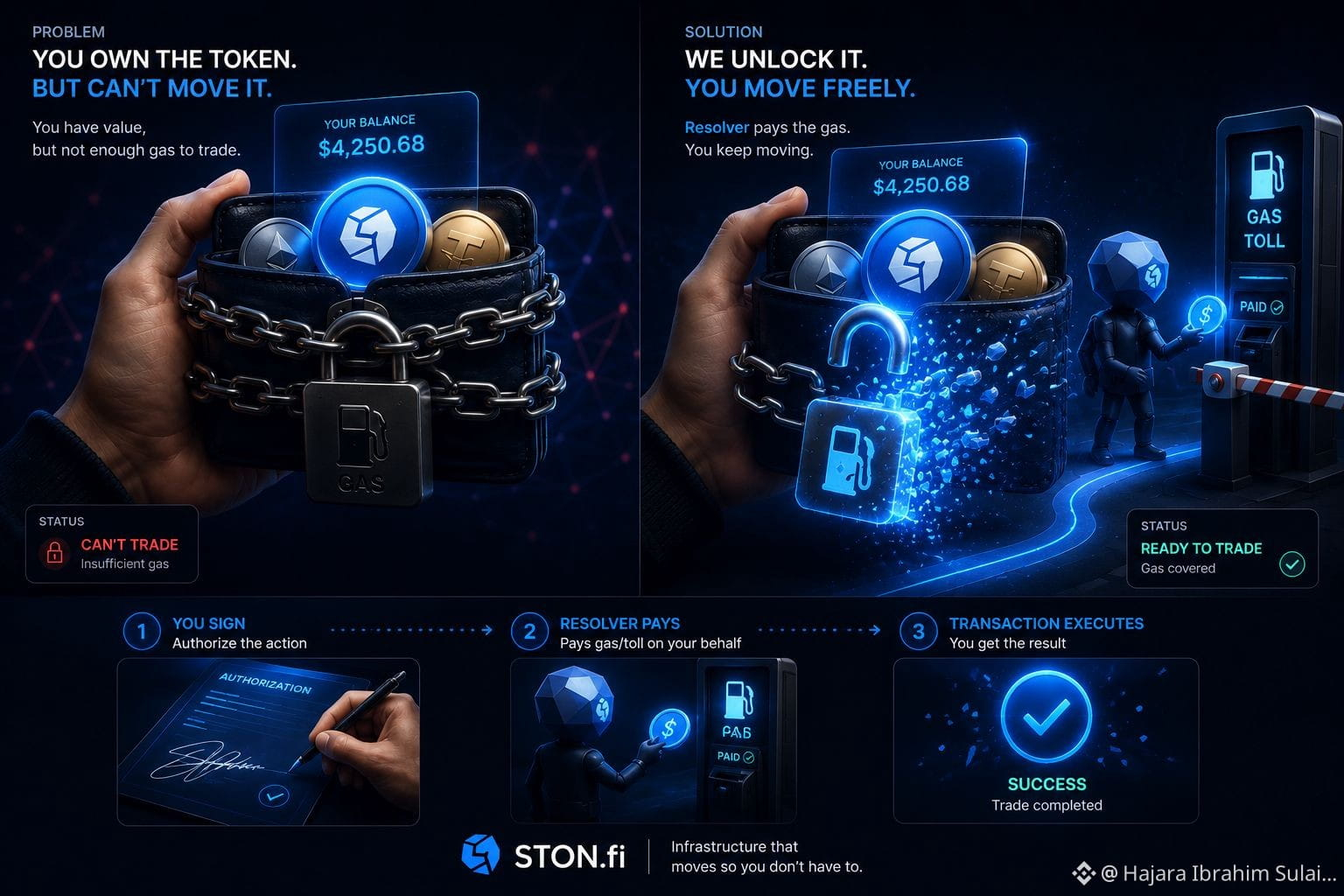
When I first started learning about STON.fi's Omniston, I kept seeing the word "resolver."
At first, I thought:
"Is that just another name for a liquidity provider?" 🤔
Not exactly.
A resolver is an independent participant that can respond to a user's swap request with an executable quote and help fulfill the order.
This becomes especially important as Omniston moves beyond simple liquidity aggregation toward cross-chain execution.
Here's how I now think about it:
You want to swap.
Omniston sends out a Request for Quote (RFQ).
Different resolvers can compete by offering pricing and execution conditions.
The available quotes can then be compared, and the execution process proceeds based on the selected quote.
That's interesting because it turns liquidity into something more dynamic.
Instead of relying on one fixed route, you can have different execution strategies competing for the order.
STON.fi describes this as part of Omniston's broader execution model, which separates quote discovery, execution coordination, settlement, and tracking.
And this is where I started seeing Omniston differently.
It's not simply:
"Find me a pool."
It's closer to:
"Find an executable way to complete this trade."
That's a much bigger problem to solve.
#STONfi #Omniston #TON #DeFi #Liquidity #RFQ #Resolvers #DEX #Web3 #CryptoEducation #LearnDeFi
When I first started learning about STON.fi's Omniston, I kept seeing the word "resolver."
At first, I thought:
"Is that just another name for a liquidity provider?" 🤔
Not exactly.
A resolver is an independent participant that can respond to a user's swap request with an executable quote and help fulfill the order.
This becomes especially important as Omniston moves beyond simple liquidity aggregation toward cross-chain execution.
Here's how I now think about it:
You want to swap.
Omniston sends out a Request for Quote (RFQ).
Different resolvers can compete by offering pricing and execution conditions.
The available quotes can then be compared, and the execution process proceeds based on the selected quote.
That's interesting because it turns liquidity into something more dynamic.
Instead of relying on one fixed route, you can have different execution strategies competing for the order.
STON.fi describes this as part of Omniston's broader execution model, which separates quote discovery, execution coordination, settlement, and tracking.
And this is where I started seeing Omniston differently.
It's not simply:
"Find me a pool."
It's closer to:
"Find an executable way to complete this trade."
That's a much bigger problem to solve.
#STONfi #Omniston #TON #DeFi #Liquidity #RFQ #Resolvers #DEX #Web3 #CryptoEducation #LearnDeFi
At first, I thought:
"Is that just another name for a liquidity provider?" 🤔
Not exactly.
A resolver is an independent participant that can respond to a user's swap request with an executable quote and help fulfill the order.
This becomes especially important as Omniston moves beyond simple liquidity aggregation toward cross-chain execution.
Here's how I now think about it:
You want to swap.
Omniston sends out a Request for Quote (RFQ).
Different resolvers can compete by offering pricing and execution conditions.
The available quotes can then be compared, and the execution process proceeds based on the selected quote.
That's interesting because it turns liquidity into something more dynamic.
Instead of relying on one fixed route, you can have different execution strategies competing for the order.
STON.fi describes this as part of Omniston's broader execution model, which separates quote discovery, execution coordination, settlement, and tracking.
And this is where I started seeing Omniston differently.
It's not simply:
"Find me a pool."
It's closer to:
"Find an executable way to complete this trade."
That's a much bigger problem to solve.
#STONfi #Omniston #TON #DeFi #Liquidity #RFQ #Resolvers #DEX #Web3 #CryptoEducation #LearnDeFi
94
I used to think of a liquidity pool as simply a place where tokens sit.
After learning more about STON.fi, I realized that's a huge oversimplification.
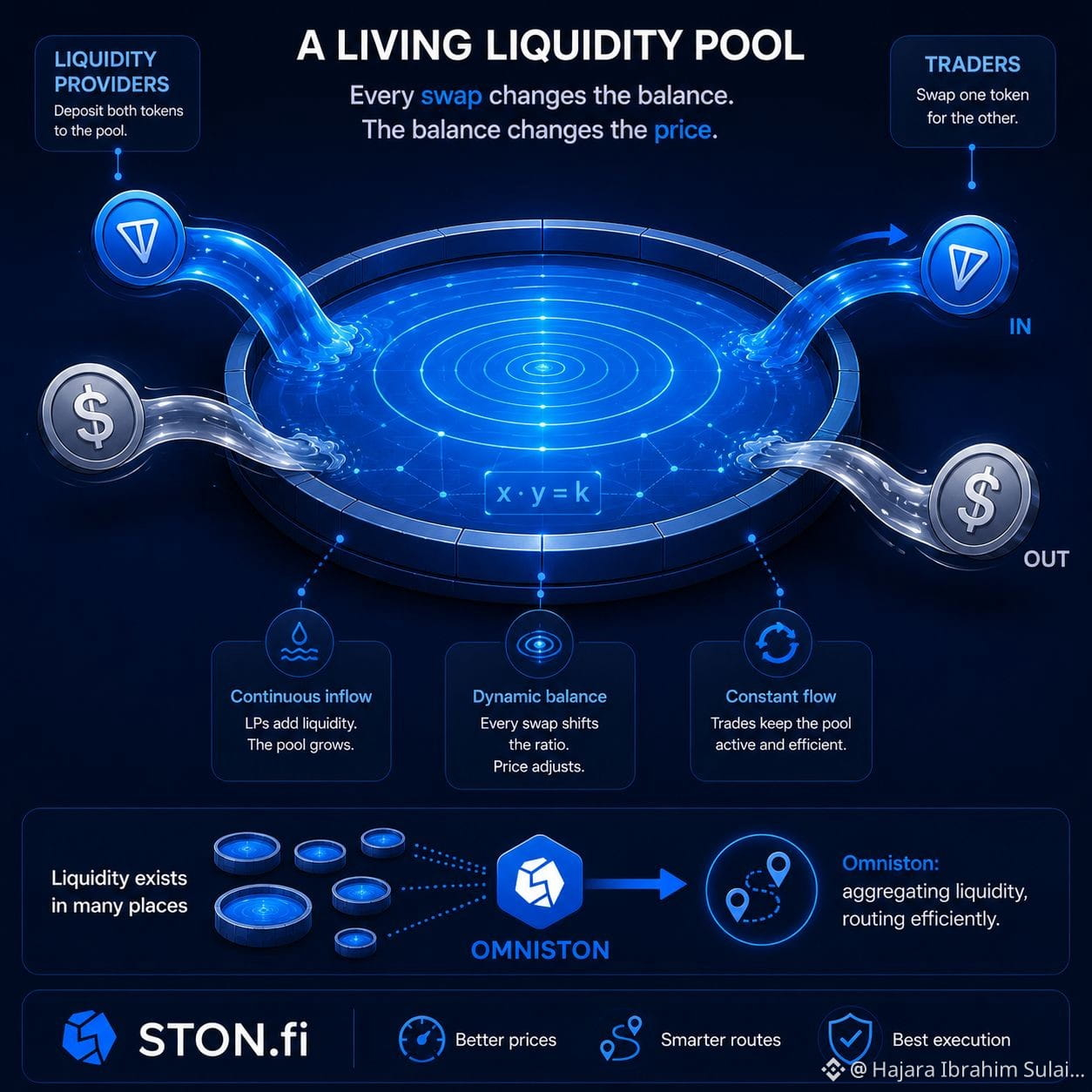
A liquidity pool is more like a shared trading reservoir.
Liquidity providers deposit assets into the pool, and traders can swap against that available liquidity without needing a traditional buyer and seller to match each other directly.
That simple idea changed finance.
Instead of waiting for someone to take the opposite side of your trade, an automated market maker can use the assets in the pool to facilitate the swap according to its programmed rules.
But here's what I find interesting:
The pool isn't just holding tokens. It's creating market access.
Every time a trader swaps, the balance of assets in the pool changes. That change influences the price and the next available trade.
This is why liquidity, pool size, trading activity, and price movement are all connected.
And it's also why I keep coming back to liquidity when learning about STON.fi.
The quality of a DEX isn't only about the interface.
It's about whether users can access liquidity efficiently.
That's where infrastructure like Omniston becomes important. By aggregating liquidity from different sources and comparing available quotes, it is designed to help determine an efficient execution route for a trade.
#STONfi #TON #DeFi #LiquidityPool #AMM #DEX #Omniston #Web3 #CryptoEducation #LearnDeFi
I used to think of a liquidity pool as simply a place where tokens sit.
After learning more about STON.fi, I realized that's a huge oversimplification.
A liquidity pool is more like a shared trading reservoir.
Liquidity providers deposit assets into the pool, and traders can swap against that available liquidity without needing a traditional buyer and seller to match each other directly.
That simple idea changed finance.
Instead of waiting for someone to take the opposite side of your trade, an automated market maker can use the assets in the pool to facilitate the swap according to its programmed rules.
But here's what I find interesting:
The pool isn't just holding tokens. It's creating market access.
Every time a trader swaps, the balance of assets in the pool changes. That change influences the price and the next available trade.
This is why liquidity, pool size, trading activity, and price movement are all connected.
And it's also why I keep coming back to liquidity when learning about STON.fi.
The quality of a DEX isn't only about the interface.
It's about whether users can access liquidity efficiently.
That's where infrastructure like Omniston becomes important. By aggregating liquidity from different sources and comparing available quotes, it is designed to help determine an efficient execution route for a trade.
#STONfi #TON #DeFi #LiquidityPool #AMM #DEX #Omniston #Web3 #CryptoEducation #LearnDeFi
After learning more about STON.fi, I realized that's a huge oversimplification.
A liquidity pool is more like a shared trading reservoir.
Liquidity providers deposit assets into the pool, and traders can swap against that available liquidity without needing a traditional buyer and seller to match each other directly.
That simple idea changed finance.
Instead of waiting for someone to take the opposite side of your trade, an automated market maker can use the assets in the pool to facilitate the swap according to its programmed rules.
But here's what I find interesting:
The pool isn't just holding tokens. It's creating market access.
Every time a trader swaps, the balance of assets in the pool changes. That change influences the price and the next available trade.
This is why liquidity, pool size, trading activity, and price movement are all connected.
And it's also why I keep coming back to liquidity when learning about STON.fi.
The quality of a DEX isn't only about the interface.
It's about whether users can access liquidity efficiently.
That's where infrastructure like Omniston becomes important. By aggregating liquidity from different sources and comparing available quotes, it is designed to help determine an efficient execution route for a trade.
#STONfi #TON #DeFi #LiquidityPool #AMM #DEX #Omniston #Web3 #CryptoEducation #LearnDeFi
79

·
--
One of the biggest challenges in DeFi isn’t finding opportunities—it’s knowing where to start.
For many people, the fear of making a costly mistake is enough to keep them from exploring decentralized finance at all.
That’s why I think initiatives like STONfi.pools are so valuable.
Instead of reading endless guides or watching hours of tutorials, you get to learn by doing. You can practice swapping, providing liquidity, farming, and staking in a sandbox environment where no real wallet or funds are required.
That removes one of the biggest barriers for beginners. You can experiment, make mistakes, and understand how everything works without worrying about losing money.
Even if you’ve been using DeFi for a while, it’s a great resource to share with friends who are just getting started. Sometimes the best way to grow an ecosystem isn’t by adding more features—it’s by making it easier for new people to join with confidence.
I also like that the course rewards learners with a certificate after completion. It’s a simple touch, but it gives people a clear goal and a sense of progress as they build their understanding of DeFi.
As the TON ecosystem continues to expand, education will be just as important as innovation. The more confident users feel, the more likely they are to explore, contribute, and become long-term participants.
@stonfi isn’t just building DeFi tools—it’s helping people understand how to use them safely.
#STONfi #TON #DeFi #Web3 #LearnDeFi
One of the biggest challenges in DeFi isn’t finding opportunities—it’s knowing where to start.
For many people, the fear of making a costly mistake is enough to keep them from exploring decentralized finance at all.
That’s why I think initiatives like STONfi.pools are so valuable.
Instead of reading endless guides or watching hours of tutorials, you get to learn by doing. You can practice swapping, providing liquidity, farming, and staking in a sandbox environment where no real wallet or funds are required.
That removes one of the biggest barriers for beginners. You can experiment, make mistakes, and understand how everything works without worrying about losing money.
Even if you’ve been using DeFi for a while, it’s a great resource to share with friends who are just getting started. Sometimes the best way to grow an ecosystem isn’t by adding more features—it’s by making it easier for new people to join with confidence.
I also like that the course rewards learners with a certificate after completion. It’s a simple touch, but it gives people a clear goal and a sense of progress as they build their understanding of DeFi.
As the TON ecosystem continues to expand, education will be just as important as innovation. The more confident users feel, the more likely they are to explore, contribute, and become long-term participants.
@STONfi DEX isn’t just building DeFi tools—it’s helping people understand how to use them safely.
#STONfi #TON #DeFi #Web3 #LearnDeFi
For many people, the fear of making a costly mistake is enough to keep them from exploring decentralized finance at all.
That’s why I think initiatives like STONfi.pools are so valuable.
Instead of reading endless guides or watching hours of tutorials, you get to learn by doing. You can practice swapping, providing liquidity, farming, and staking in a sandbox environment where no real wallet or funds are required.
That removes one of the biggest barriers for beginners. You can experiment, make mistakes, and understand how everything works without worrying about losing money.
Even if you’ve been using DeFi for a while, it’s a great resource to share with friends who are just getting started. Sometimes the best way to grow an ecosystem isn’t by adding more features—it’s by making it easier for new people to join with confidence.
I also like that the course rewards learners with a certificate after completion. It’s a simple touch, but it gives people a clear goal and a sense of progress as they build their understanding of DeFi.
As the TON ecosystem continues to expand, education will be just as important as innovation. The more confident users feel, the more likely they are to explore, contribute, and become long-term participants.
@STONfi DEX isn’t just building DeFi tools—it’s helping people understand how to use them safely.
#STONfi #TON #DeFi #Web3 #LearnDeFi
76
We talk a lot about STON.fi, liquidity, swaps, and DeFi infrastructure.
But there's something even more fundamental:
Your wallet security.
A decentralized protocol can have excellent technology, but if you lose control of your wallet or expose your private key, the consequences can be serious.
That's why one of the biggest lessons I've learned while exploring STON.fi is that DeFi education shouldn't stop at understanding swaps.
You also need to understand self-custody.
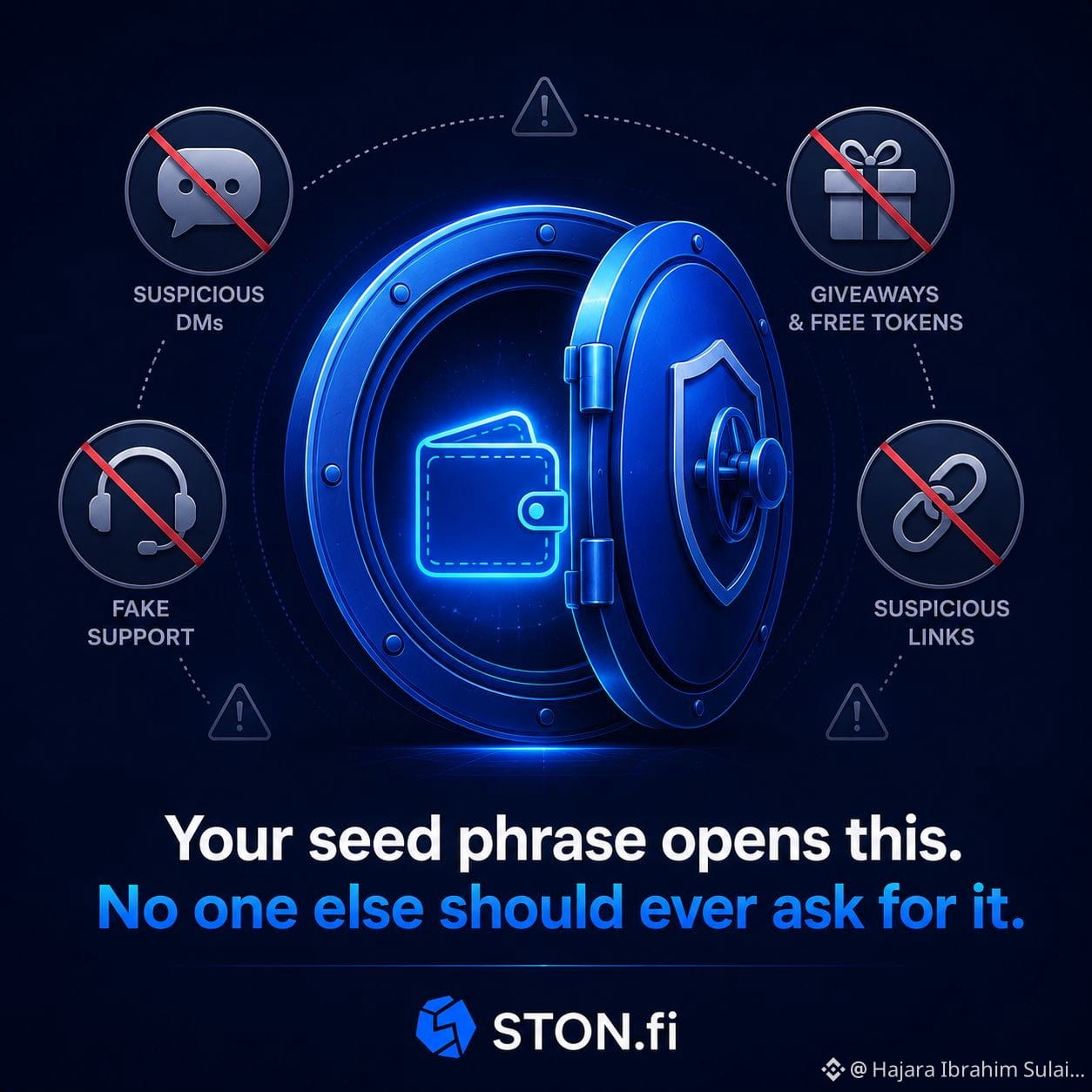
Your seed phrase or private key is extremely sensitive information. It should never be shared with someone claiming they need it to "help" you complete a transaction, unlock rewards, fix a wallet, or connect to STON.fi.
And here's another habit I think every DeFi user should develop:
Verify before you sign.
Don't blindly approve transactions because a website looks familiar.
Check the website address.
Check what you're connecting to.
Read transaction prompts when possible.
Be suspicious of unexpected links, DMs, giveaways, and "support agents" asking for sensitive information.
Real DeFi education isn't just about maximizing returns.
It's also about protecting what you already have.
#STONfi #TON #DeFi #WalletSecurity #CryptoSecurity #Web3 #SelfCustody #CryptoEducation #Blockchain #LearnDeFi
We talk a lot about STON.fi, liquidity, swaps, and DeFi infrastructure.
But there's something even more fundamental:
Your wallet security.
A decentralized protocol can have excellent technology, but if you lose control of your wallet or expose your private key, the consequences can be serious.
That's why one of the biggest lessons I've learned while exploring STON.fi is that DeFi education shouldn't stop at understanding swaps.
You also need to understand self-custody.
Your seed phrase or private key is extremely sensitive information. It should never be shared with someone claiming they need it to "help" you complete a transaction, unlock rewards, fix a wallet, or connect to STON.fi.
And here's another habit I think every DeFi user should develop:
Verify before you sign.
Don't blindly approve transactions because a website looks familiar.
Check the website address.
Check what you're connecting to.
Read transaction prompts when possible.
Be suspicious of unexpected links, DMs, giveaways, and "support agents" asking for sensitive information.
Real DeFi education isn't just about maximizing returns.
It's also about protecting what you already have.
#STONfi #TON #DeFi #WalletSecurity #CryptoSecurity #Web3 #SelfCustody #CryptoEducation #Blockchain #LearnDeFi
But there's something even more fundamental:
Your wallet security.
A decentralized protocol can have excellent technology, but if you lose control of your wallet or expose your private key, the consequences can be serious.
That's why one of the biggest lessons I've learned while exploring STON.fi is that DeFi education shouldn't stop at understanding swaps.
You also need to understand self-custody.
Your seed phrase or private key is extremely sensitive information. It should never be shared with someone claiming they need it to "help" you complete a transaction, unlock rewards, fix a wallet, or connect to STON.fi.
And here's another habit I think every DeFi user should develop:
Verify before you sign.
Don't blindly approve transactions because a website looks familiar.
Check the website address.
Check what you're connecting to.
Read transaction prompts when possible.
Be suspicious of unexpected links, DMs, giveaways, and "support agents" asking for sensitive information.
Real DeFi education isn't just about maximizing returns.
It's also about protecting what you already have.
#STONfi #TON #DeFi #WalletSecurity #CryptoSecurity #Web3 #SelfCustody #CryptoEducation #Blockchain #LearnDeFi
77
I've always found the idea of liquidity providers interesting.
You deposit assets into a pool, other users trade against that liquidity, and the system can reward providers through trading fees.
But learning about STON.fi made me realize there's much more to understand before simply becoming an LP.
When you provide liquidity, you're not just "putting tokens somewhere."
You're contributing capital that helps facilitate decentralized trading.
For example, a liquidity pool can contain two assets. Traders use that pool to swap between them, while liquidity providers supply the assets needed to make those trades possible.
Sounds simple, right?
But there's an important part many beginners overlook:
Providing liquidity comes with risks.
One of them is impermanent loss, a situation where the value of your assets in the pool can differ from what you might have had if you'd simply held them outside the pool, depending on how prices move.
That's why I think learning should come before chasing APY.
And this is one reason I appreciate exploring STON.fi from an educational perspective. DeFi isn't just about seeing a percentage and thinking, "Free money!"
There are mechanics behind every opportunity.
#STONfi #TON #DeFi #Liquidity #LiquidityProviders #AMM #DEX #Web3 #CryptoEducation #LearnDeFi
I've always found the idea of liquidity providers interesting.
You deposit assets into a pool, other users trade against that liquidity, and the system can reward providers through trading fees.
But learning about STON.fi made me realize there's much more to understand before simply becoming an LP.
When you provide liquidity, you're not just "putting tokens somewhere."
You're contributing capital that helps facilitate decentralized trading.
For example, a liquidity pool can contain two assets. Traders use that pool to swap between them, while liquidity providers supply the assets needed to make those trades possible.
Sounds simple, right?
But there's an important part many beginners overlook:
Providing liquidity comes with risks.
One of them is impermanent loss, a situation where the value of your assets in the pool can differ from what you might have had if you'd simply held them outside the pool, depending on how prices move.
That's why I think learning should come before chasing APY.
And this is one reason I appreciate exploring STON.fi from an educational perspective. DeFi isn't just about seeing a percentage and thinking, "Free money!"
There are mechanics behind every opportunity.
#STONfi #TON #DeFi #Liquidity #LiquidityProviders #AMM #DEX #Web3 #CryptoEducation #LearnDeFi
You deposit assets into a pool, other users trade against that liquidity, and the system can reward providers through trading fees.
But learning about STON.fi made me realize there's much more to understand before simply becoming an LP.
When you provide liquidity, you're not just "putting tokens somewhere."
You're contributing capital that helps facilitate decentralized trading.
For example, a liquidity pool can contain two assets. Traders use that pool to swap between them, while liquidity providers supply the assets needed to make those trades possible.
Sounds simple, right?
But there's an important part many beginners overlook:
Providing liquidity comes with risks.
One of them is impermanent loss, a situation where the value of your assets in the pool can differ from what you might have had if you'd simply held them outside the pool, depending on how prices move.
That's why I think learning should come before chasing APY.
And this is one reason I appreciate exploring STON.fi from an educational perspective. DeFi isn't just about seeing a percentage and thinking, "Free money!"
There are mechanics behind every opportunity.
#STONfi #TON #DeFi #Liquidity #LiquidityProviders #AMM #DEX #Web3 #CryptoEducation #LearnDeFi

85
When most people hear the word innovation, they imagine brand-new features.
A new dashboard.
A new token.
A new trading tool.
But the more I learn about STON.fi, the more I realize that some of the biggest innovations aren't new features at all.
They're improvements to the experience.
Take Omniston as an example.
From a user's perspective, swapping tokens on STON.fi still feels familiar.
But behind that simple action, Omniston is designed to aggregate liquidity, compare available quotes, and determine an efficient execution path before completing the trade.
The interface may look similar.
The infrastructure is what's evolving.
That taught me something valuable.
Innovation isn't always about changing what users see. Sometimes it's about improving what users don't see.
I think that's an underrated philosophy in DeFi.
As ecosystems grow more complex, adding more buttons isn't always the answer.
Sometimes the better solution is making existing actions smarter.
Instead of asking users to understand every technical detail, great infrastructure quietly handles complexity while keeping the experience simple and transparent.
That's the kind of innovation I can appreciate.
#STONfi #Omniston #TON #TONBlockchain #DeFi #Web3 #Infrastructure #DEX #CryptoEducation #LearnDeFi
When most people hear the word innovation, they imagine brand-new features.
A new dashboard.
A new token.
A new trading tool.
But the more I learn about STON.fi, the more I realize that some of the biggest innovations aren't new features at all.
They're improvements to the experience.
Take Omniston as an example.
From a user's perspective, swapping tokens on STON.fi still feels familiar.
But behind that simple action, Omniston is designed to aggregate liquidity, compare available quotes, and determine an efficient execution path before completing the trade.
The interface may look similar.
The infrastructure is what's evolving.
That taught me something valuable.
Innovation isn't always about changing what users see. Sometimes it's about improving what users don't see.
I think that's an underrated philosophy in DeFi.
As ecosystems grow more complex, adding more buttons isn't always the answer.
Sometimes the better solution is making existing actions smarter.
Instead of asking users to understand every technical detail, great infrastructure quietly handles complexity while keeping the experience simple and transparent.
That's the kind of innovation I can appreciate.
#STONfi #Omniston #TON #TONBlockchain #DeFi #Web3 #Infrastructure #DEX #CryptoEducation #LearnDeFi
A new dashboard.
A new token.
A new trading tool.
But the more I learn about STON.fi, the more I realize that some of the biggest innovations aren't new features at all.
They're improvements to the experience.
Take Omniston as an example.
From a user's perspective, swapping tokens on STON.fi still feels familiar.
But behind that simple action, Omniston is designed to aggregate liquidity, compare available quotes, and determine an efficient execution path before completing the trade.
The interface may look similar.
The infrastructure is what's evolving.
That taught me something valuable.
Innovation isn't always about changing what users see. Sometimes it's about improving what users don't see.
I think that's an underrated philosophy in DeFi.
As ecosystems grow more complex, adding more buttons isn't always the answer.
Sometimes the better solution is making existing actions smarter.
Instead of asking users to understand every technical detail, great infrastructure quietly handles complexity while keeping the experience simple and transparent.
That's the kind of innovation I can appreciate.
#STONfi #Omniston #TON #TONBlockchain #DeFi #Web3 #Infrastructure #DEX #CryptoEducation #LearnDeFi

89
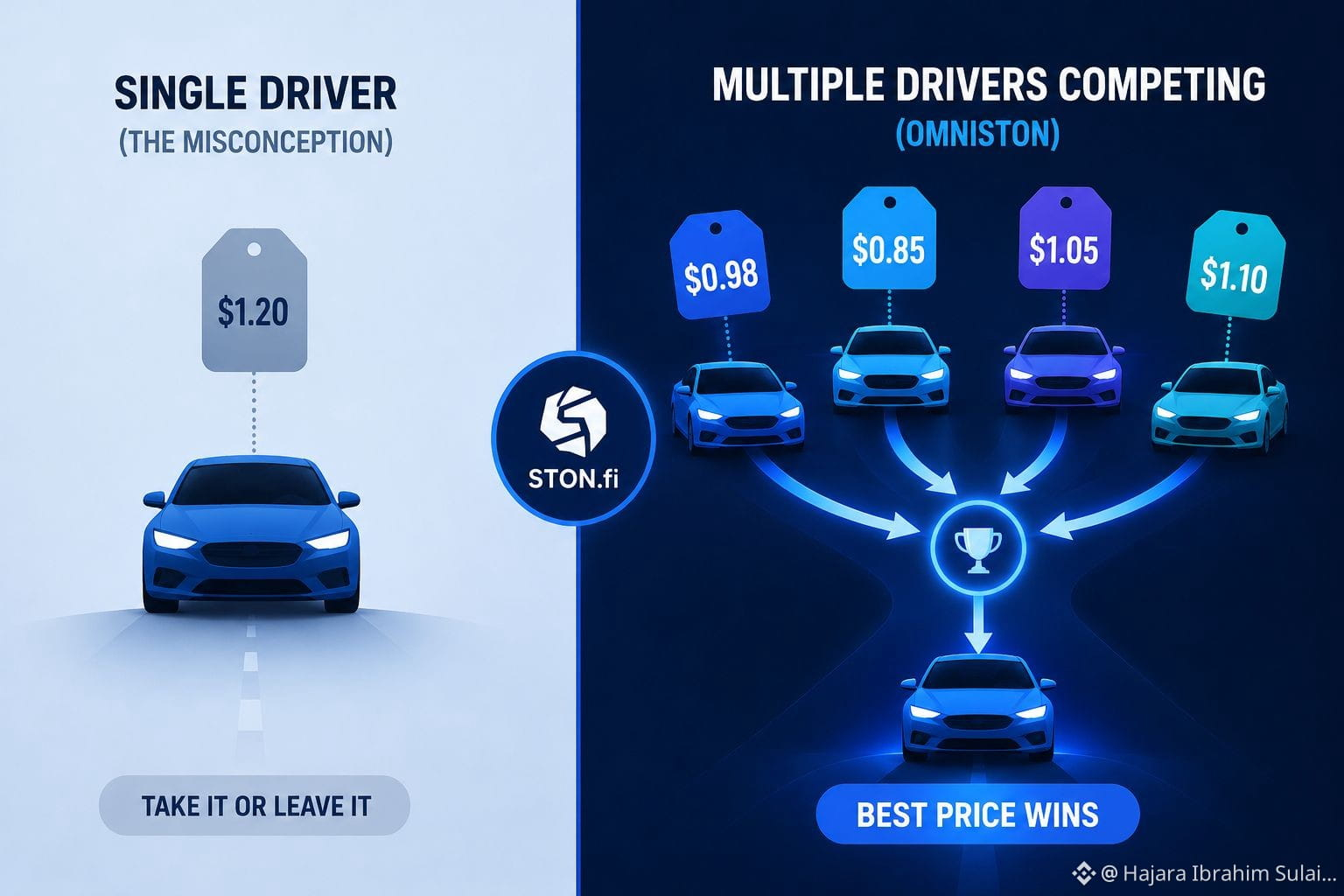
One of the biggest misconceptions about DeFi is that more liquidity automatically means a better trading experience. After learning more about STON.fi and Omniston, I've realized that competition is just as important as liquidity itself.
Think about ordering a ride home.
If only one driver is available, you accept whatever price you're given. But if several drivers are competing for your request, you're more likely to get a better fare and faster service.
The same principle applies to DeFi.
As the TON ecosystem expands, liquidity doesn't come from just one place. Different liquidity providers may offer different prices and depths for the same trade. Instead of relying on a single source, STON.fi's Omniston is designed to aggregate available liquidity and compare quotes before determining an efficient execution path.
What I like about this approach is that it encourages competition behind the scenes. Liquidity providers aren't just participating, they're competing to offer better execution. And when providers compete, users are often the biggest winners.
That's something I didn't fully appreciate when I first started learning about DeFi. I used to think the interface was the product. Now I understand that the real product is the quality of execution happening underneath it.
For me, that's one of the most impressive things STON.fi is building. Instead of asking users to hunt for the best deal themselves, it's creating infrastructure that helps bring better opportunities directly to them.
#STONfi #Omniston #TON #TONBlockchain #DeFi #Liquidity #DEX #Web3 #CryptoEducation #LearnDeFi
One of the biggest misconceptions about DeFi is that more liquidity automatically means a better trading experience. After learning more about STON.fi and Omniston, I've realized that competition is just as important as liquidity itself.
Think about ordering a ride home.
If only one driver is available, you accept whatever price you're given. But if several drivers are competing for your request, you're more likely to get a better fare and faster service.
The same principle applies to DeFi.
As the TON ecosystem expands, liquidity doesn't come from just one place. Different liquidity providers may offer different prices and depths for the same trade. Instead of relying on a single source, STON.fi's Omniston is designed to aggregate available liquidity and compare quotes before determining an efficient execution path.
What I like about this approach is that it encourages competition behind the scenes. Liquidity providers aren't just participating, they're competing to offer better execution. And when providers compete, users are often the biggest winners.
That's something I didn't fully appreciate when I first started learning about DeFi. I used to think the interface was the product. Now I understand that the real product is the quality of execution happening underneath it.
For me, that's one of the most impressive things STON.fi is building. Instead of asking users to hunt for the best deal themselves, it's creating infrastructure that helps bring better opportunities directly to them.
#STONfi #Omniston #TON #TONBlockchain #DeFi #Liquidity #DEX #Web3 #CryptoEducation #LearnDeFi
Think about ordering a ride home.
If only one driver is available, you accept whatever price you're given. But if several drivers are competing for your request, you're more likely to get a better fare and faster service.
The same principle applies to DeFi.
As the TON ecosystem expands, liquidity doesn't come from just one place. Different liquidity providers may offer different prices and depths for the same trade. Instead of relying on a single source, STON.fi's Omniston is designed to aggregate available liquidity and compare quotes before determining an efficient execution path.
What I like about this approach is that it encourages competition behind the scenes. Liquidity providers aren't just participating, they're competing to offer better execution. And when providers compete, users are often the biggest winners.
That's something I didn't fully appreciate when I first started learning about DeFi. I used to think the interface was the product. Now I understand that the real product is the quality of execution happening underneath it.
For me, that's one of the most impressive things STON.fi is building. Instead of asking users to hunt for the best deal themselves, it's creating infrastructure that helps bring better opportunities directly to them.
#STONfi #Omniston #TON #TONBlockchain #DeFi #Liquidity #DEX #Web3 #CryptoEducation #LearnDeFi
87
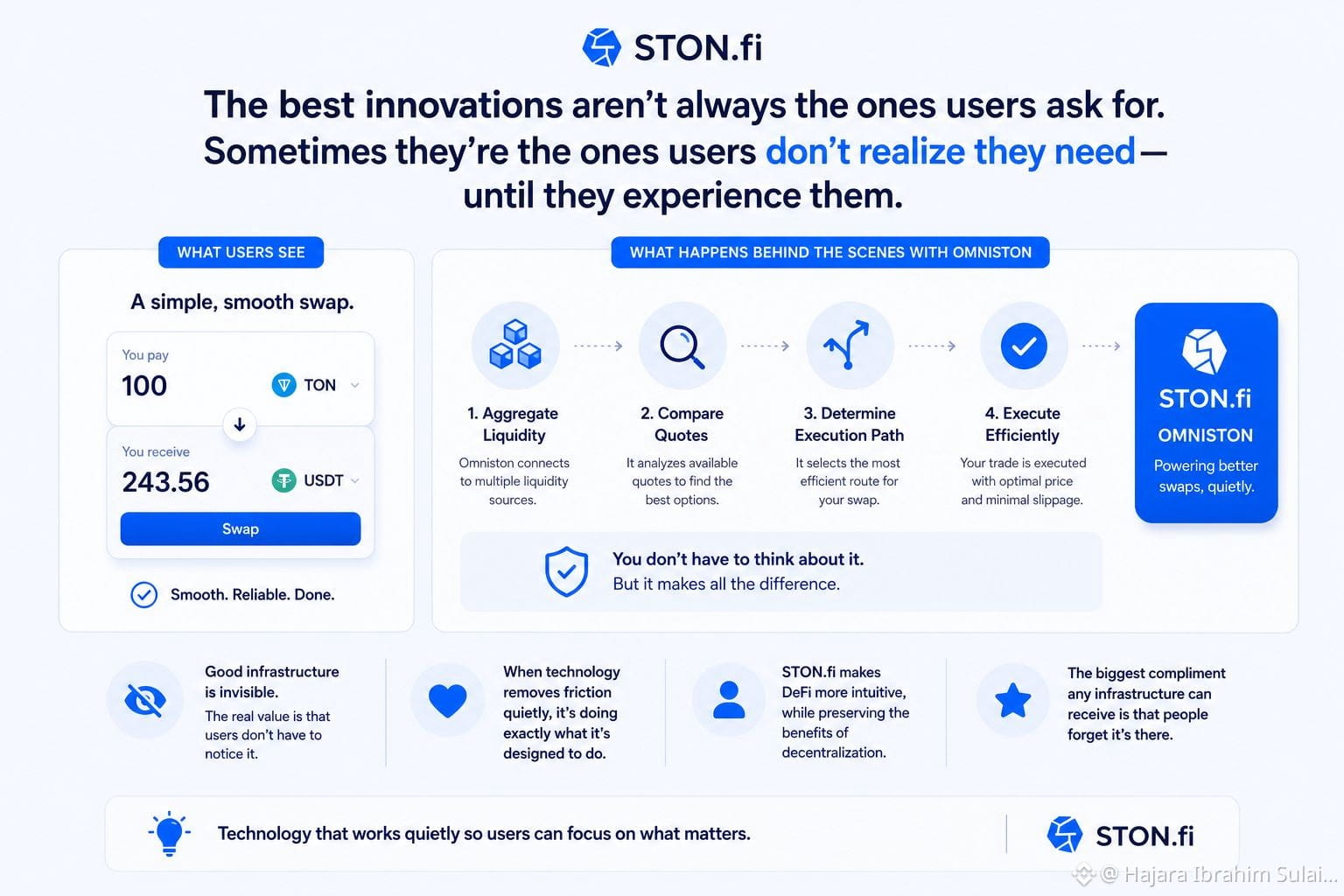
One thing I've noticed while learning about STON.fi is that the best innovations aren't always the ones users ask for.
Sometimes they're the ones users don't realize they need—until they experience them.
Think about it.
Most people don't wake up saying:
"I wish my swaps had smarter liquidity routing."
They just want a smooth, reliable swap.
That's where great infrastructure makes the difference.
With STON.fi, Omniston is designed to aggregate liquidity, compare available quotes, and determine an efficient execution path behind the scenes. Most users may never think about those steps, but they directly influence the quality of the final trade.
That changed the way I look at DeFi.
The real value of infrastructure isn't that users notice it.
It's that they don't have to.
To me, that's a sign of good engineering.
When technology quietly removes friction without demanding more attention from users, it's doing exactly what it was designed to do.
The more I explore STON.fi, the more I appreciate this philosophy.
Rather than making DeFi feel more technical, it aims to make the experience more intuitive while preserving the benefits of decentralization.
#STONfi #Omniston #TON #TONBlockchain #DeFi #DEX #Web3 #CryptoEducation #Infrastructure #LearnDeFi
One thing I've noticed while learning about STON.fi is that the best innovations aren't always the ones users ask for.
Sometimes they're the ones users don't realize they need—until they experience them.
Think about it.
Most people don't wake up saying:
"I wish my swaps had smarter liquidity routing."
They just want a smooth, reliable swap.
That's where great infrastructure makes the difference.
With STON.fi, Omniston is designed to aggregate liquidity, compare available quotes, and determine an efficient execution path behind the scenes. Most users may never think about those steps, but they directly influence the quality of the final trade.
That changed the way I look at DeFi.
The real value of infrastructure isn't that users notice it.
It's that they don't have to.
To me, that's a sign of good engineering.
When technology quietly removes friction without demanding more attention from users, it's doing exactly what it was designed to do.
The more I explore STON.fi, the more I appreciate this philosophy.
Rather than making DeFi feel more technical, it aims to make the experience more intuitive while preserving the benefits of decentralization.
#STONfi #Omniston #TON #TONBlockchain #DeFi #DEX #Web3 #CryptoEducation #Infrastructure #LearnDeFi
Sometimes they're the ones users don't realize they need—until they experience them.
Think about it.
Most people don't wake up saying:
"I wish my swaps had smarter liquidity routing."
They just want a smooth, reliable swap.
That's where great infrastructure makes the difference.
With STON.fi, Omniston is designed to aggregate liquidity, compare available quotes, and determine an efficient execution path behind the scenes. Most users may never think about those steps, but they directly influence the quality of the final trade.
That changed the way I look at DeFi.
The real value of infrastructure isn't that users notice it.
It's that they don't have to.
To me, that's a sign of good engineering.
When technology quietly removes friction without demanding more attention from users, it's doing exactly what it was designed to do.
The more I explore STON.fi, the more I appreciate this philosophy.
Rather than making DeFi feel more technical, it aims to make the experience more intuitive while preserving the benefits of decentralization.
#STONfi #Omniston #TON #TONBlockchain #DeFi #DEX #Web3 #CryptoEducation #Infrastructure #LearnDeFi
88
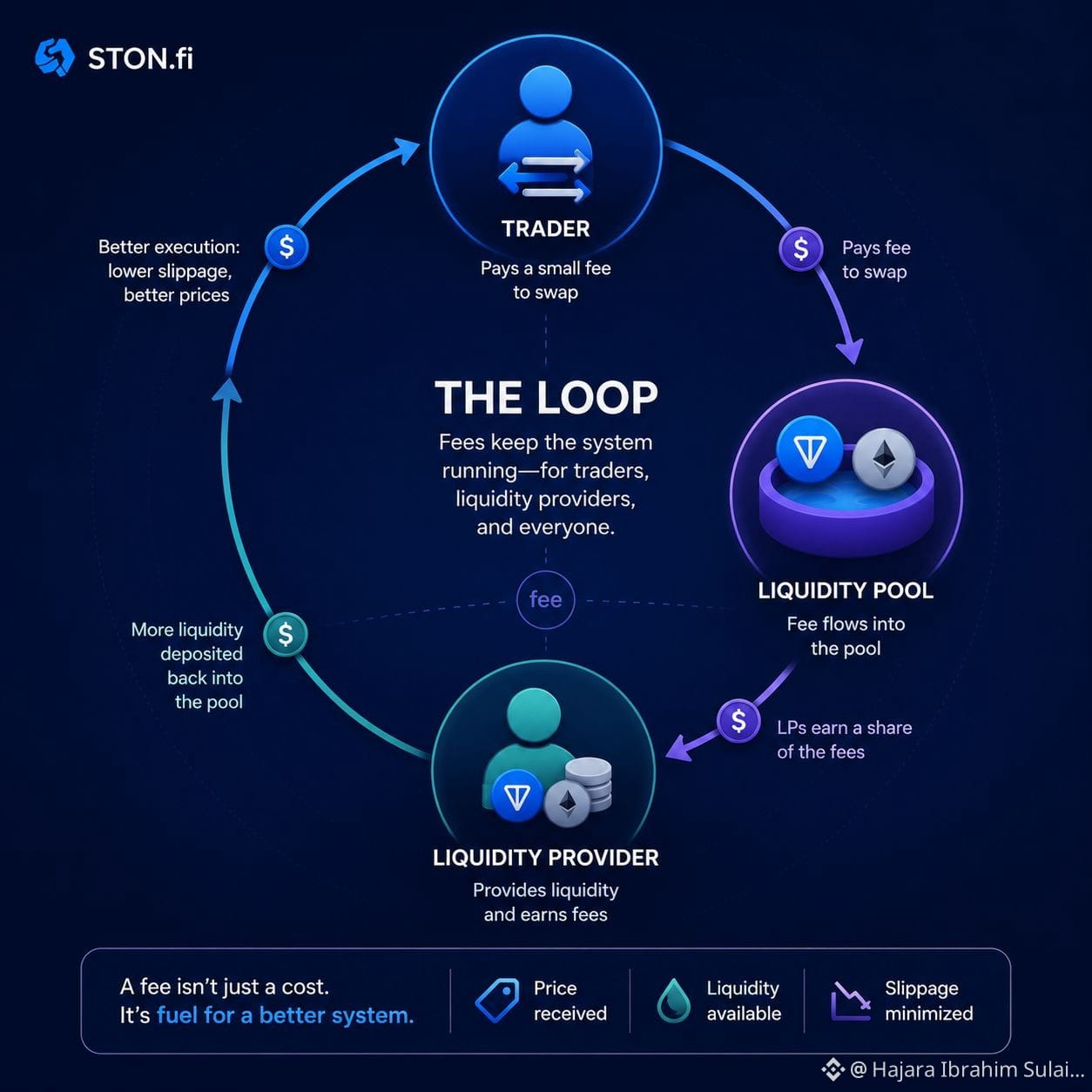
One question I think every DeFi user should ask is:
When I make a swap on STON.fi, what happens to the fees?
It's easy to focus on the token you're buying and forget that every swap has an economic structure behind it.
On a DEX like STON.fi, trading fees are part of the mechanism that supports liquidity and the participants who help make trading possible.
This is where I started connecting the dots.
Traders need liquidity.
Liquidity providers supply liquidity.
Trading activity generates fees.
And the relationship between these participants helps keep decentralized markets functioning.
But here's something important: fees aren't automatically a bad thing.
Sometimes paying a small fee for access to useful liquidity and efficient execution can be part of the trade-off.
The bigger question is whether you're getting a good overall outcome.
That's also why learning about STON.fi led me back to execution. A swap isn't only about the fee displayed on screen. You should consider the overall result, including the price you receive, available liquidity, and potential slippage.
And remember: fees, pool conditions, and incentives can change. Always check the current information before making a decision.
#STONfi #TON #DeFi #DEX #Liquidity #TradingFees #Web3 #CryptoEducation #LearnDeFi
One question I think every DeFi user should ask is:
When I make a swap on STON.fi, what happens to the fees?
It's easy to focus on the token you're buying and forget that every swap has an economic structure behind it.
On a DEX like STON.fi, trading fees are part of the mechanism that supports liquidity and the participants who help make trading possible.
This is where I started connecting the dots.
Traders need liquidity.
Liquidity providers supply liquidity.
Trading activity generates fees.
And the relationship between these participants helps keep decentralized markets functioning.
But here's something important: fees aren't automatically a bad thing.
Sometimes paying a small fee for access to useful liquidity and efficient execution can be part of the trade-off.
The bigger question is whether you're getting a good overall outcome.
That's also why learning about STON.fi led me back to execution. A swap isn't only about the fee displayed on screen. You should consider the overall result, including the price you receive, available liquidity, and potential slippage.
And remember: fees, pool conditions, and incentives can change. Always check the current information before making a decision.
#STONfi #TON #DeFi #DEX #Liquidity #TradingFees #Web3 #CryptoEducation #LearnDeFi
When I make a swap on STON.fi, what happens to the fees?
It's easy to focus on the token you're buying and forget that every swap has an economic structure behind it.
On a DEX like STON.fi, trading fees are part of the mechanism that supports liquidity and the participants who help make trading possible.
This is where I started connecting the dots.
Traders need liquidity.
Liquidity providers supply liquidity.
Trading activity generates fees.
And the relationship between these participants helps keep decentralized markets functioning.
But here's something important: fees aren't automatically a bad thing.
Sometimes paying a small fee for access to useful liquidity and efficient execution can be part of the trade-off.
The bigger question is whether you're getting a good overall outcome.
That's also why learning about STON.fi led me back to execution. A swap isn't only about the fee displayed on screen. You should consider the overall result, including the price you receive, available liquidity, and potential slippage.
And remember: fees, pool conditions, and incentives can change. Always check the current information before making a decision.
#STONfi #TON #DeFi #DEX #Liquidity #TradingFees #Web3 #CryptoEducation #LearnDeFi
76
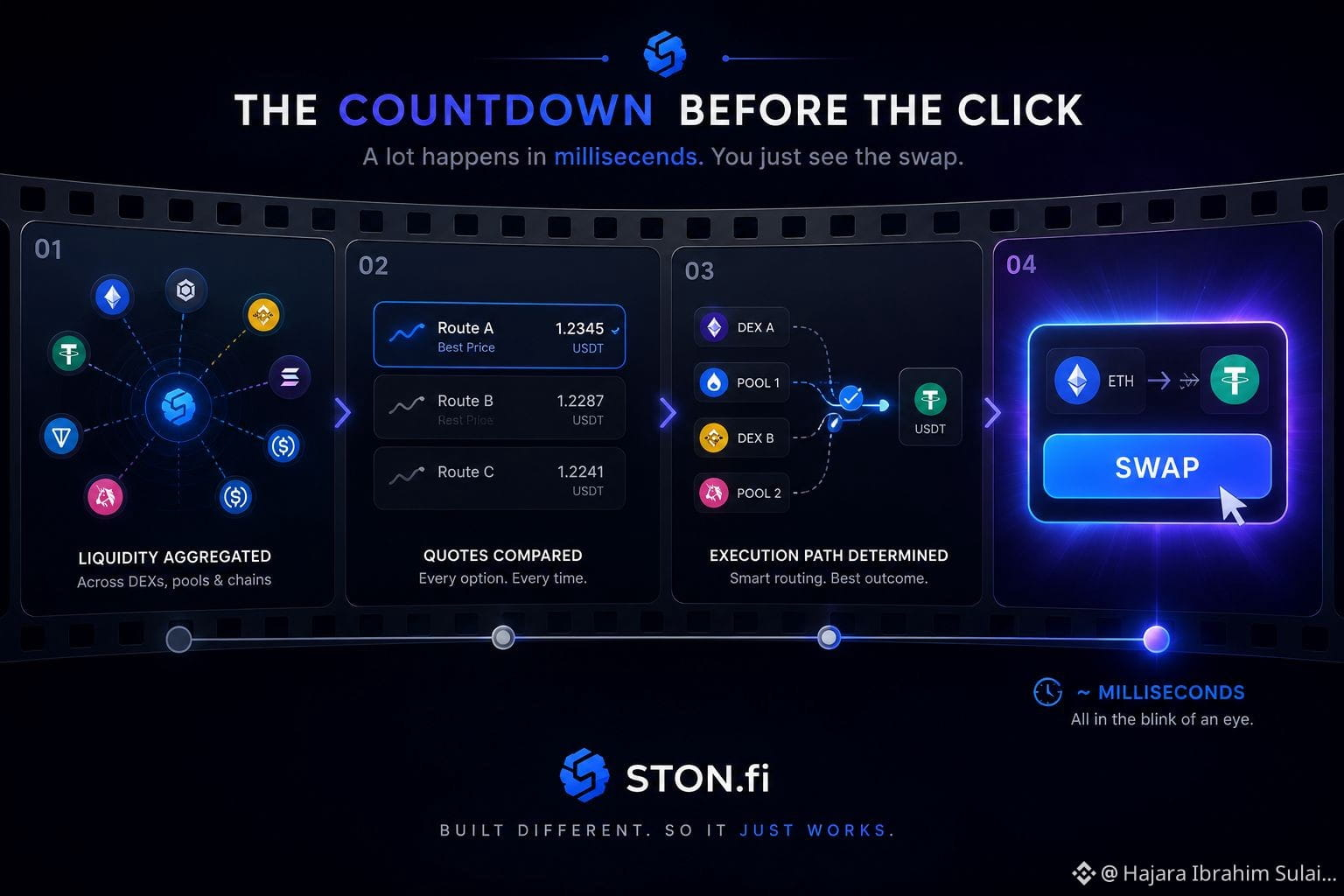
For the longest time, I thought a swap started the moment I pressed the Swap button.
Now, after learning more about STON.fi, I think it starts much earlier.
It starts with liquidity.
It starts with routing.
It starts with the protocol figuring out the best way to execute your trade.
That shift in thinking completely changed how I look at DeFi.
When you tap Swap on STON.fi, you're only seeing the final step of a much bigger process. Behind the scenes, Omniston is designed to aggregate liquidity from multiple sources, compare available quotes, and determine an efficient execution path before your transaction is completed.
To the user, it feels simple.
To the protocol, it's a series of decisions happening in milliseconds.
That's what I admire about good infrastructure, it hides complexity without hiding value.
The more I explore STON.fi, the more I realize that the best DeFi products don't just build features. They build systems that quietly improve every interaction users have with the protocol.
It's easy to notice a successful swap.
What's harder to notice is all the work that happened to make that swap as efficient as possible.
And maybe that's the point.
#STONfi #Omniston #TON #TONBlockchain #DeFi #DEX #Web3 #CryptoEducation #TradeExecution #LearnDeFi
For the longest time, I thought a swap started the moment I pressed the Swap button.
Now, after learning more about STON.fi, I think it starts much earlier.
It starts with liquidity.
It starts with routing.
It starts with the protocol figuring out the best way to execute your trade.
That shift in thinking completely changed how I look at DeFi.
When you tap Swap on STON.fi, you're only seeing the final step of a much bigger process. Behind the scenes, Omniston is designed to aggregate liquidity from multiple sources, compare available quotes, and determine an efficient execution path before your transaction is completed.
To the user, it feels simple.
To the protocol, it's a series of decisions happening in milliseconds.
That's what I admire about good infrastructure, it hides complexity without hiding value.
The more I explore STON.fi, the more I realize that the best DeFi products don't just build features. They build systems that quietly improve every interaction users have with the protocol.
It's easy to notice a successful swap.
What's harder to notice is all the work that happened to make that swap as efficient as possible.
And maybe that's the point.
#STONfi #Omniston #TON #TONBlockchain #DeFi #DEX #Web3 #CryptoEducation #TradeExecution #LearnDeFi
Now, after learning more about STON.fi, I think it starts much earlier.
It starts with liquidity.
It starts with routing.
It starts with the protocol figuring out the best way to execute your trade.
That shift in thinking completely changed how I look at DeFi.
When you tap Swap on STON.fi, you're only seeing the final step of a much bigger process. Behind the scenes, Omniston is designed to aggregate liquidity from multiple sources, compare available quotes, and determine an efficient execution path before your transaction is completed.
To the user, it feels simple.
To the protocol, it's a series of decisions happening in milliseconds.
That's what I admire about good infrastructure, it hides complexity without hiding value.
The more I explore STON.fi, the more I realize that the best DeFi products don't just build features. They build systems that quietly improve every interaction users have with the protocol.
It's easy to notice a successful swap.
What's harder to notice is all the work that happened to make that swap as efficient as possible.
And maybe that's the point.
#STONfi #Omniston #TON #TONBlockchain #DeFi #DEX #Web3 #CryptoEducation #TradeExecution #LearnDeFi
66
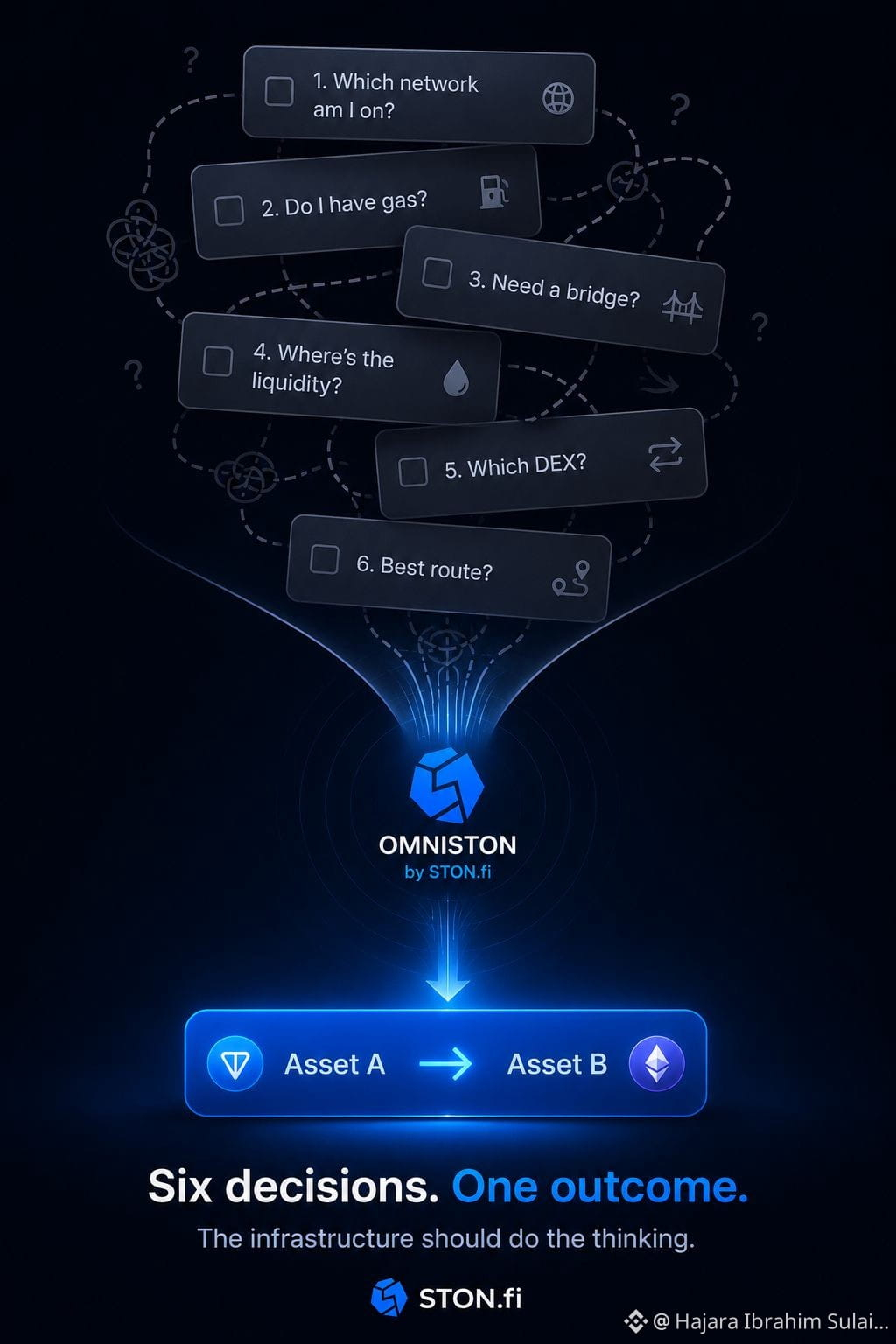
Here's something I've been thinking about while learning about STON.fi:
If blockchain technology is supposed to make finance more accessible, why should users have to understand every technical difference between blockchains just to make a simple swap?
That's the problem cross-chain infrastructure is trying to solve.
Today, a user might need to think about:
Which network am I on?
Do I have gas on that network?
Do I need a bridge?
Where is the liquidity?
Which DEX should I use?
What's the best route?
That's a lot of decisions for something that should feel simple.
This is why STON.fi's Omniston interests me.
Its cross-chain direction is about making liquidity and execution across different networks more accessible through a unified infrastructure layer.
The user can focus on the outcome:
"I want Asset A exchanged for Asset B."
The infrastructure handles much of the complexity required to make that possible.
And I think that's an important principle for DeFi:
Complex technology should create simpler experiences, not more complicated ones.
That doesn't mean users shouldn't understand what's happening. Education still matters.
It means users shouldn't need to become blockchain engineers before they can use decentralized finance.
#STONfi #Omniston #TON #DeFi #CrossChain #Web3 #Blockchain #CryptoEducation #Interoperability #LearnDeFi
Here's something I've been thinking about while learning about STON.fi:
If blockchain technology is supposed to make finance more accessible, why should users have to understand every technical difference between blockchains just to make a simple swap?
That's the problem cross-chain infrastructure is trying to solve.
Today, a user might need to think about:
Which network am I on?
Do I have gas on that network?
Do I need a bridge?
Where is the liquidity?
Which DEX should I use?
What's the best route?
That's a lot of decisions for something that should feel simple.
This is why STON.fi's Omniston interests me.
Its cross-chain direction is about making liquidity and execution across different networks more accessible through a unified infrastructure layer.
The user can focus on the outcome:
"I want Asset A exchanged for Asset B."
The infrastructure handles much of the complexity required to make that possible.
And I think that's an important principle for DeFi:
Complex technology should create simpler experiences, not more complicated ones.
That doesn't mean users shouldn't understand what's happening. Education still matters.
It means users shouldn't need to become blockchain engineers before they can use decentralized finance.
#STONfi #Omniston #TON #DeFi #CrossChain #Web3 #Blockchain #CryptoEducation #Interoperability #LearnDeFi
If blockchain technology is supposed to make finance more accessible, why should users have to understand every technical difference between blockchains just to make a simple swap?
That's the problem cross-chain infrastructure is trying to solve.
Today, a user might need to think about:
Which network am I on?
Do I have gas on that network?
Do I need a bridge?
Where is the liquidity?
Which DEX should I use?
What's the best route?
That's a lot of decisions for something that should feel simple.
This is why STON.fi's Omniston interests me.
Its cross-chain direction is about making liquidity and execution across different networks more accessible through a unified infrastructure layer.
The user can focus on the outcome:
"I want Asset A exchanged for Asset B."
The infrastructure handles much of the complexity required to make that possible.
And I think that's an important principle for DeFi:
Complex technology should create simpler experiences, not more complicated ones.
That doesn't mean users shouldn't understand what's happening. Education still matters.
It means users shouldn't need to become blockchain engineers before they can use decentralized finance.
#STONfi #Omniston #TON #DeFi #CrossChain #Web3 #Blockchain #CryptoEducation #Interoperability #LearnDeFi
59
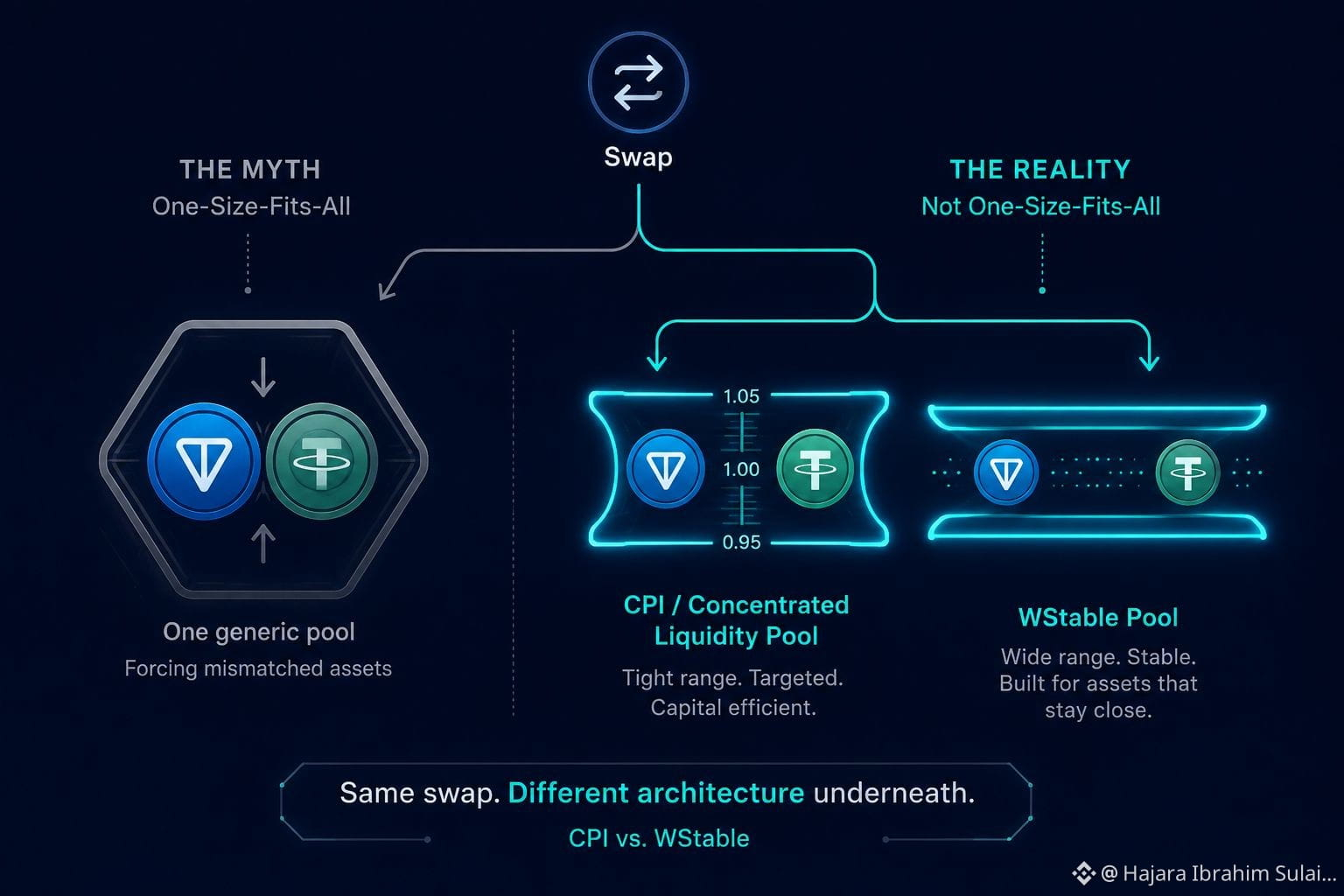
One thing I find interesting about STON.fi v2 is that it isn't simply a new version with a different interface.
The underlying architecture gives developers more flexibility in how liquidity pools can work.
STON.fi's documentation lists support for different pool types, including Constant Product with Concentrated Liquidity (CPI) and Weighted Stable (WStable) pools, alongside its newer routing architecture.
Why does that matter?
Because not every pair of assets behaves the same way.
A volatile pair like TON and another highly volatile token has different characteristics from assets designed to maintain a relatively stable value.
Using the same liquidity model for every situation isn't necessarily ideal.
That's why specialized pool designs can matter.
A stable-oriented pool can be designed around assets that tend to trade close to each other.
A concentrated-liquidity approach can make capital more targeted around specific price ranges.
The important lesson for me is this:
Liquidity infrastructure doesn't have to be one-size-fits-all.
And that's another reason I think STON.fi is worth studying beyond simply using its swap interface.
The user sees:
"Swap."
But underneath, there can be different pool architectures, routing logic, fee structures, and smart-contract mechanisms determining how that swap is executed.
#STONfi #STONfiV2 #TON #DeFi #Liquidity #AMM #DEX #Web3 #CryptoEducation #LearnDeFi
One thing I find interesting about STON.fi v2 is that it isn't simply a new version with a different interface.
The underlying architecture gives developers more flexibility in how liquidity pools can work.
STON.fi's documentation lists support for different pool types, including Constant Product with Concentrated Liquidity (CPI) and Weighted Stable (WStable) pools, alongside its newer routing architecture.
Why does that matter?
Because not every pair of assets behaves the same way.
A volatile pair like TON and another highly volatile token has different characteristics from assets designed to maintain a relatively stable value.
Using the same liquidity model for every situation isn't necessarily ideal.
That's why specialized pool designs can matter.
A stable-oriented pool can be designed around assets that tend to trade close to each other.
A concentrated-liquidity approach can make capital more targeted around specific price ranges.
The important lesson for me is this:
Liquidity infrastructure doesn't have to be one-size-fits-all.
And that's another reason I think STON.fi is worth studying beyond simply using its swap interface.
The user sees:
"Swap."
But underneath, there can be different pool architectures, routing logic, fee structures, and smart-contract mechanisms determining how that swap is executed.
#STONfi #STONfiV2 #TON #DeFi #Liquidity #AMM #DEX #Web3 #CryptoEducation #LearnDeFi
The underlying architecture gives developers more flexibility in how liquidity pools can work.
STON.fi's documentation lists support for different pool types, including Constant Product with Concentrated Liquidity (CPI) and Weighted Stable (WStable) pools, alongside its newer routing architecture.
Why does that matter?
Because not every pair of assets behaves the same way.
A volatile pair like TON and another highly volatile token has different characteristics from assets designed to maintain a relatively stable value.
Using the same liquidity model for every situation isn't necessarily ideal.
That's why specialized pool designs can matter.
A stable-oriented pool can be designed around assets that tend to trade close to each other.
A concentrated-liquidity approach can make capital more targeted around specific price ranges.
The important lesson for me is this:
Liquidity infrastructure doesn't have to be one-size-fits-all.
And that's another reason I think STON.fi is worth studying beyond simply using its swap interface.
The user sees:
"Swap."
But underneath, there can be different pool architectures, routing logic, fee structures, and smart-contract mechanisms determining how that swap is executed.
#STONfi #STONfiV2 #TON #DeFi #Liquidity #AMM #DEX #Web3 #CryptoEducation #LearnDeFi
77

·
--

Article
I Stopped Chasing Every DeFi Trend. Reading Changed Everything.When I first entered DeFi, I thought success came from being the fastest.
The fastest to discover a new protocol.
The fastest to ape into a new token.
The fastest to farm the highest APY.
Like many people, I spent more time scrolling through social media than actually understanding the technology behind the projects I was using.
Eventually, I realized something.
The people making the best decisions weren't necessarily the ones consuming the most content they were the ones consuming the right content.
That realization completely changed how I approached decentralized finance.
It's also why I appreciate resources like the STON.fi Blog, which focuses on helping users develop a clearer understanding of DeFi instead of simply chasing the next trend.
Information Is Everywhere. Understanding Is Rare.
The Web3 space moves at an incredible pace.
Every day brings new tokens, protocols, narratives, and opportunities.
While that's exciting, it also creates a major challenge.
There is simply too much information.
Twitter threads.
Telegram groups.
Discord announcements.
YouTube videos.
TikTok clips.
Newsletters.
Influencers.
Everyone has an opinion.
Unfortunately, not every opinion is backed by knowledge.
That's why educational platforms matter more today than ever before.
Knowledge Is a Competitive Advantage
One lesson I've learned over time is that knowledge compounds just like investments.
The more you understand concepts like liquidity pools, impermanent loss, automated market makers, cross-chain swaps, and decentralized governance, the better your decisions become.
You stop reacting emotionally.
You begin thinking strategically.
Instead of asking,
"What token should I buy?"
You start asking,
"How does this protocol generate value?"
That small shift changes everything.
Why Blogs Still Matter in the Age of Short Content
Short-form content is excellent for discovery.
A tweet can introduce an idea.
A short video can spark curiosity.
But real understanding usually requires more depth.
Complex subjects deserve thoughtful explanations.
DeFi isn't something that can always be explained in thirty seconds.
Reading detailed articles helps connect ideas together.
It gives context.
It explains why things work not just what they do.
That's something every serious DeFi participant should value.
The STON.fi Blog Goes Beyond Product Updates
What stands out to me about the STON.fi Blog is that it isn't only focused on announcing new features.
It also helps educate users about the broader mechanics of decentralized finance.
Topics like:
Cross-chain infrastructure
Liquidity provision
Impermanent loss
Smart routing
AMMs
Security considerations
DeFi best practices
These aren't just technical concepts.
They're foundational knowledge for anyone who wants to participate confidently in Web3.
Education builds confidence.
Confidence encourages participation.
Participation strengthens ecosystems.
Better Education Creates Better Communities
One thing I've noticed across successful blockchain communities is that they invest heavily in education.
When users understand how a protocol works, they're more likely to:
Make informed decisions.
Avoid common mistakes.
Contribute meaningful discussions.
Support ecosystem growth.
Stay engaged for the long term.
A knowledgeable community is one of the strongest assets any protocol can have.
Clear Thinking Beats Hype
Markets will always have hype cycles.
New narratives will emerge.
Prices will rise and fall.
But education remains valuable regardless of market conditions.
The investors and builders who survive multiple market cycles usually share one characteristic:
They never stop learning.
Reading isn't the most exciting activity in crypto.
It doesn't provide instant rewards.
But over time, it becomes one of the highest-return investments you can make.
Final Thoughts
If my journey through DeFi has taught me anything, it's this
The biggest edge isn't finding information first.
It's understanding information better than everyone else.
That's why I believe resources like the STON.fi Blog play an important role in the ecosystem.
They encourage users to slow down, ask better questions, and build a stronger foundation before making decisions.
In a space where attention is constantly pulled toward the next big thing, taking time to learn might b
e the most underrated strategy of all.
Because in Web3, trends come and go but knowledge stays with you.
#STONfi #Blockchain #TON #LearnDeFi #DecentralizedFinance
$GRAM $BTC $AKE
{spot}(GRAMUSDT)
{spot}(BTCUSDT)
I Stopped Chasing Every DeFi Trend. Reading Changed Everything.
When I first entered DeFi, I thought success came from being the fastest.
The fastest to discover a new protocol.
The fastest to ape into a new token.
The fastest to farm the highest APY.
Like many people, I spent more time scrolling through social media than actually understanding the technology behind the projects I was using.
Eventually, I realized something.
The people making the best decisions weren't necessarily the ones consuming the most content they were the ones consuming the right content.
That realization completely changed how I approached decentralized finance.
It's also why I appreciate resources like the STON.fi Blog, which focuses on helping users develop a clearer understanding of DeFi instead of simply chasing the next trend.
Information Is Everywhere. Understanding Is Rare.
The Web3 space moves at an incredible pace.
Every day brings new tokens, protocols, narratives, and opportunities.
While that's exciting, it also creates a major challenge.
There is simply too much information.
Twitter threads.
Telegram groups.
Discord announcements.
YouTube videos.
TikTok clips.
Newsletters.
Influencers.
Everyone has an opinion.
Unfortunately, not every opinion is backed by knowledge.
That's why educational platforms matter more today than ever before.
Knowledge Is a Competitive Advantage
One lesson I've learned over time is that knowledge compounds just like investments.
The more you understand concepts like liquidity pools, impermanent loss, automated market makers, cross-chain swaps, and decentralized governance, the better your decisions become.
You stop reacting emotionally.
You begin thinking strategically.
Instead of asking,
"What token should I buy?"
You start asking,
"How does this protocol generate value?"
That small shift changes everything.
Why Blogs Still Matter in the Age of Short Content
Short-form content is excellent for discovery.
A tweet can introduce an idea.
A short video can spark curiosity.
But real understanding usually requires more depth.
Complex subjects deserve thoughtful explanations.
DeFi isn't something that can always be explained in thirty seconds.
Reading detailed articles helps connect ideas together.
It gives context.
It explains why things work not just what they do.
That's something every serious DeFi participant should value.
The STON.fi Blog Goes Beyond Product Updates
What stands out to me about the STON.fi Blog is that it isn't only focused on announcing new features.
It also helps educate users about the broader mechanics of decentralized finance.
Topics like:
Cross-chain infrastructure
Liquidity provision
Impermanent loss
Smart routing
AMMs
Security considerations
DeFi best practices
These aren't just technical concepts.
They're foundational knowledge for anyone who wants to participate confidently in Web3.
Education builds confidence.
Confidence encourages participation.
Participation strengthens ecosystems.
Better Education Creates Better Communities
One thing I've noticed across successful blockchain communities is that they invest heavily in education.
When users understand how a protocol works, they're more likely to:
Make informed decisions.
Avoid common mistakes.
Contribute meaningful discussions.
Support ecosystem growth.
Stay engaged for the long term.
A knowledgeable community is one of the strongest assets any protocol can have.
Clear Thinking Beats Hype
Markets will always have hype cycles.
New narratives will emerge.
Prices will rise and fall.
But education remains valuable regardless of market conditions.
The investors and builders who survive multiple market cycles usually share one characteristic:
They never stop learning.
Reading isn't the most exciting activity in crypto.
It doesn't provide instant rewards.
But over time, it becomes one of the highest-return investments you can make.
Final Thoughts
If my journey through DeFi has taught me anything, it's this
The biggest edge isn't finding information first.
It's understanding information better than everyone else.
That's why I believe resources like the STON.fi Blog play an important role in the ecosystem.
They encourage users to slow down, ask better questions, and build a stronger foundation before making decisions.
In a space where attention is constantly pulled toward the next big thing, taking time to learn might b
e the most underrated strategy of all.
Because in Web3, trends come and go but knowledge stays with you.
#STONfi #Blockchain #TON #LearnDeFi #DecentralizedFinance
$GRAM $BTC $AKE
The fastest to discover a new protocol.
The fastest to ape into a new token.
The fastest to farm the highest APY.
Like many people, I spent more time scrolling through social media than actually understanding the technology behind the projects I was using.
Eventually, I realized something.
The people making the best decisions weren't necessarily the ones consuming the most content they were the ones consuming the right content.
That realization completely changed how I approached decentralized finance.
It's also why I appreciate resources like the STON.fi Blog, which focuses on helping users develop a clearer understanding of DeFi instead of simply chasing the next trend.
Information Is Everywhere. Understanding Is Rare.
The Web3 space moves at an incredible pace.
Every day brings new tokens, protocols, narratives, and opportunities.
While that's exciting, it also creates a major challenge.
There is simply too much information.
Twitter threads.
Telegram groups.
Discord announcements.
YouTube videos.
TikTok clips.
Newsletters.
Influencers.
Everyone has an opinion.
Unfortunately, not every opinion is backed by knowledge.
That's why educational platforms matter more today than ever before.
Knowledge Is a Competitive Advantage
One lesson I've learned over time is that knowledge compounds just like investments.
The more you understand concepts like liquidity pools, impermanent loss, automated market makers, cross-chain swaps, and decentralized governance, the better your decisions become.
You stop reacting emotionally.
You begin thinking strategically.
Instead of asking,
"What token should I buy?"
You start asking,
"How does this protocol generate value?"
That small shift changes everything.
Why Blogs Still Matter in the Age of Short Content
Short-form content is excellent for discovery.
A tweet can introduce an idea.
A short video can spark curiosity.
But real understanding usually requires more depth.
Complex subjects deserve thoughtful explanations.
DeFi isn't something that can always be explained in thirty seconds.
Reading detailed articles helps connect ideas together.
It gives context.
It explains why things work not just what they do.
That's something every serious DeFi participant should value.
The STON.fi Blog Goes Beyond Product Updates
What stands out to me about the STON.fi Blog is that it isn't only focused on announcing new features.
It also helps educate users about the broader mechanics of decentralized finance.
Topics like:
Cross-chain infrastructure
Liquidity provision
Impermanent loss
Smart routing
AMMs
Security considerations
DeFi best practices
These aren't just technical concepts.
They're foundational knowledge for anyone who wants to participate confidently in Web3.
Education builds confidence.
Confidence encourages participation.
Participation strengthens ecosystems.
Better Education Creates Better Communities
One thing I've noticed across successful blockchain communities is that they invest heavily in education.
When users understand how a protocol works, they're more likely to:
Make informed decisions.
Avoid common mistakes.
Contribute meaningful discussions.
Support ecosystem growth.
Stay engaged for the long term.
A knowledgeable community is one of the strongest assets any protocol can have.
Clear Thinking Beats Hype
Markets will always have hype cycles.
New narratives will emerge.
Prices will rise and fall.
But education remains valuable regardless of market conditions.
The investors and builders who survive multiple market cycles usually share one characteristic:
They never stop learning.
Reading isn't the most exciting activity in crypto.
It doesn't provide instant rewards.
But over time, it becomes one of the highest-return investments you can make.
Final Thoughts
If my journey through DeFi has taught me anything, it's this
The biggest edge isn't finding information first.
It's understanding information better than everyone else.
That's why I believe resources like the STON.fi Blog play an important role in the ecosystem.
They encourage users to slow down, ask better questions, and build a stronger foundation before making decisions.
In a space where attention is constantly pulled toward the next big thing, taking time to learn might b
e the most underrated strategy of all.
Because in Web3, trends come and go but knowledge stays with you.
#STONfi #Blockchain #TON #LearnDeFi #DecentralizedFinance
$GRAM $BTC $AKE
415
Log in to explore more content
Join global crypto users on Binance Square
⚡️ Get latest and useful information about crypto.
💬 Trusted by the world’s largest crypto exchange.
👍 Discover real insights from verified creators.
Email / Phone number
Trending Topics
1
#BitcoinSlipsBelow$80KAgain
493 views
20 Discussing
2
#ThailandLaunchesWORPTStablecoinToQRPaymentApp
304 views
46 Discussing
3
#StrategySkipsBitcoinPurchasesSpends$205MOnSTRCBuybacks
2,900 views
66 Discussing
4
#BitmineAdds10452ETH
28,643 views
512 Discussing
5
#SouthKoreaConsidersEducationTaxOnCryptoExchanges
17,608 views
418 Discussing
6
#OCCUrgesCommunityBanksToEnterStablecoinPayments
13,508 views
265 Discussing
7
#RippleWinsFullApprovalAsNationalTrustBank
17,100 views
267 Discussing
8
#AkashSelectsSolanaAsMigrationTarget
9,879 views
140 Discussing
9
#OndoToOpenSubscriptionsForOpenAIPreIPOTokenizedNotes
525 views
22 Discussing
10
#AnthropicTTMRevenueGrewAbout1200%
67,864 views
663 Discussing