

#cryptomindset
cryptomindset
5.6M views
7,310 Discussing
Hot
Latest

Why do you always buy at the top?
Because your brain is working against you.
When a price pumps, dopamine hits. You feel excitement. FOMO takes over. You buy.
Then fear hits. You panic sell.
The fix? Have a plan before you buy. Never trade on emotion.
#CryptoMindset #BinanceSquare
Why do you always buy at the top?
Because your brain is working against you.
When a price pumps, dopamine hits. You feel excitement. FOMO takes over. You buy.
Then fear hits. You panic sell.
The fix? Have a plan before you buy. Never trade on emotion.
#CryptoMindset #BinanceSquare
Because your brain is working against you.
When a price pumps, dopamine hits. You feel excitement. FOMO takes over. You buy.
Then fear hits. You panic sell.
The fix? Have a plan before you buy. Never trade on emotion.
#CryptoMindset #BinanceSquare
12
·
--
Three discipline habits, 10 seconds each
- Before entering: say your stop-loss out loud. If you can't, you don't have one yet.
- Before closing a win early: ask "is this my plan, or is this fear of giving it back?"
- Before revenge trading: close the app for 10 minutes. The urge rarely survives it.
Small rules, repeated, beat willpower every time.
P.S. Don't forget about your daily routine and irl responsibilities!
👇 Which one do you need most this week?
#trading #Cryptomindset #psychology
Three discipline habits, 10 seconds each
- Before entering: say your stop-loss out loud. If you can't, you don't have one yet.
- Before closing a win early: ask "is this my plan, or is this fear of giving it back?"
- Before revenge trading: close the app for 10 minutes. The urge rarely survives it.
Small rules, repeated, beat willpower every time.
P.S. Don't forget about your daily routine and irl responsibilities!
👇 Which one do you need most this week?
#trading #Cryptomindset #psychology
- Before entering: say your stop-loss out loud. If you can't, you don't have one yet.
- Before closing a win early: ask "is this my plan, or is this fear of giving it back?"
- Before revenge trading: close the app for 10 minutes. The urge rarely survives it.
Small rules, repeated, beat willpower every time.
P.S. Don't forget about your daily routine and irl responsibilities!
👇 Which one do you need most this week?
#trading #Cryptomindset #psychology
103

·
--
Let's be honest—trading isn't just about charts and technical analysis; it's 90% mindset and patience. When the market moves sideways, what keeps you motivated?
Here is my daily rule for crypto success:
Never panic sell out of fear or FOMO.
Keep learning and researching new Web3 projects.
Engage with the community—we grow together! 🤝
Drop your favorite token in the comments below! Let’s see which coin has the strongest community today. 👇 Drop a like if you are holding strong! 🔥
#BinanceSquare #CryptoMindset #Web3 #HODL
Let's be honest—trading isn't just about charts and technical analysis; it's 90% mindset and patience. When the market moves sideways, what keeps you motivated?
Here is my daily rule for crypto success:
Never panic sell out of fear or FOMO.
Keep learning and researching new Web3 projects.
Engage with the community—we grow together! 🤝
Drop your favorite token in the comments below! Let’s see which coin has the strongest community today. 👇 Drop a like if you are holding strong! 🔥
#BinanceSquare #CryptoMindset #Web3 #HODL
Here is my daily rule for crypto success:
Never panic sell out of fear or FOMO.
Keep learning and researching new Web3 projects.
Engage with the community—we grow together! 🤝
Drop your favorite token in the comments below! Let’s see which coin has the strongest community today. 👇 Drop a like if you are holding strong! 🔥
#BinanceSquare #CryptoMindset #Web3 #HODL
56
·
--
Article
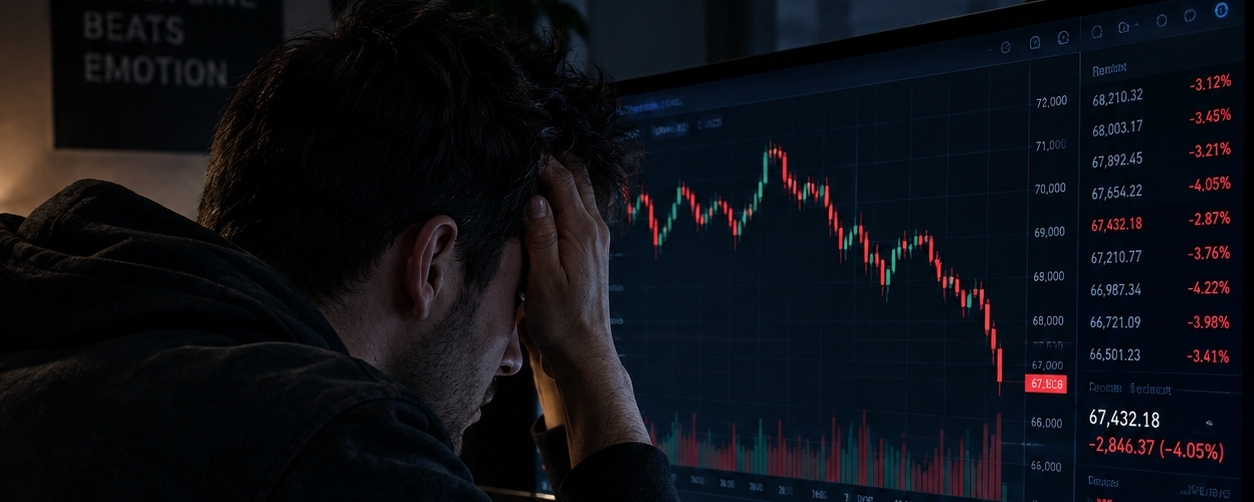
The trader's mirrorWhy you keep checking the chart, and it's not about the money
Ask a trader why they check the chart twenty times a day, and most will say "I need to know what's happening." That's usually not the real reason. The real reason is closer to what makes someone check their phone for notifications, and it has a name in psychology: variable ratio reinforcement.
In the 1950s, B.F. Skinner found that rewards given on an unpredictable schedule produce the strongest, most compulsive checking behavior, stronger than a reward given every single time. A slot machine works this way. So does a notifications feed. So does a price chart. You don't know when the next green candle is coming, so the not-knowing itself becomes the hook. Each check is a small bet: maybe this time there's good news.
This explains something that pure willpower can't. It's not that you lack discipline. It's that the behavior is being reinforced by a mechanism that has nothing to do with discipline. Checking the chart occasionally pays off with good news, which is enough to keep the habit running on autopilot, the same way an occasional win keeps someone pulling a slot machine.
The cost isn't just wasted time. Frequent checking correlates with impulsive decisions, because every check is another opportunity to react to noise instead of your plan. Research on "myopic loss aversion" (Thaler, Tversky, Kahneman and Schwartz, 1997) found that investors who checked their portfolios more often made worse decisions and earned lower returns than those who checked less, because frequent checking means seeing more short-term losses, and seeing losses more often makes people more loss-averse and more likely to react.
So the habit isn't neutral. It's actively working against the plan you made when you were calm.
What helps isn't "just stop caring." It's making the behavior harder to repeat on autopilot:
Set specific check times. Two or three fixed windows a day, not open access. This breaks the variable schedule that makes checking compulsive.
Turn off price notifications. Every ping is a new small bet being offered to you. Remove the offer.
Ask what you're checking for. If you can't name new information you're looking for, you're not checking, you're seeking a hit.
You're not weak for checking constantly. You're responding exactly the way a human brain is built to respond to unpredictable rewards. Understanding that is what makes it possible to change it.
👇 How many times a day do you check the chart, honestly? And has that number gone up or down since you started trading?
Educational only. #trading #Cryptomindset #psychology
The trader's mirror
Why you keep checking the chart, and it's not about the money
Ask a trader why they check the chart twenty times a day, and most will say "I need to know what's happening." That's usually not the real reason. The real reason is closer to what makes someone check their phone for notifications, and it has a name in psychology: variable ratio reinforcement.
In the 1950s, B.F. Skinner found that rewards given on an unpredictable schedule produce the strongest, most compulsive checking behavior, stronger than a reward given every single time. A slot machine works this way. So does a notifications feed. So does a price chart. You don't know when the next green candle is coming, so the not-knowing itself becomes the hook. Each check is a small bet: maybe this time there's good news.
This explains something that pure willpower can't. It's not that you lack discipline. It's that the behavior is being reinforced by a mechanism that has nothing to do with discipline. Checking the chart occasionally pays off with good news, which is enough to keep the habit running on autopilot, the same way an occasional win keeps someone pulling a slot machine.
The cost isn't just wasted time. Frequent checking correlates with impulsive decisions, because every check is another opportunity to react to noise instead of your plan. Research on "myopic loss aversion" (Thaler, Tversky, Kahneman and Schwartz, 1997) found that investors who checked their portfolios more often made worse decisions and earned lower returns than those who checked less, because frequent checking means seeing more short-term losses, and seeing losses more often makes people more loss-averse and more likely to react.
So the habit isn't neutral. It's actively working against the plan you made when you were calm.
What helps isn't "just stop caring." It's making the behavior harder to repeat on autopilot:
Set specific check times. Two or three fixed windows a day, not open access. This breaks the variable schedule that makes checking compulsive.
Turn off price notifications. Every ping is a new small bet being offered to you. Remove the offer.
Ask what you're checking for. If you can't name new information you're looking for, you're not checking, you're seeking a hit.
You're not weak for checking constantly. You're responding exactly the way a human brain is built to respond to unpredictable rewards. Understanding that is what makes it possible to change it.
👇 How many times a day do you check the chart, honestly? And has that number gone up or down since you started trading?
Educational only. #trading #Cryptomindset #psychology
Ask a trader why they check the chart twenty times a day, and most will say "I need to know what's happening." That's usually not the real reason. The real reason is closer to what makes someone check their phone for notifications, and it has a name in psychology: variable ratio reinforcement.
In the 1950s, B.F. Skinner found that rewards given on an unpredictable schedule produce the strongest, most compulsive checking behavior, stronger than a reward given every single time. A slot machine works this way. So does a notifications feed. So does a price chart. You don't know when the next green candle is coming, so the not-knowing itself becomes the hook. Each check is a small bet: maybe this time there's good news.
This explains something that pure willpower can't. It's not that you lack discipline. It's that the behavior is being reinforced by a mechanism that has nothing to do with discipline. Checking the chart occasionally pays off with good news, which is enough to keep the habit running on autopilot, the same way an occasional win keeps someone pulling a slot machine.
The cost isn't just wasted time. Frequent checking correlates with impulsive decisions, because every check is another opportunity to react to noise instead of your plan. Research on "myopic loss aversion" (Thaler, Tversky, Kahneman and Schwartz, 1997) found that investors who checked their portfolios more often made worse decisions and earned lower returns than those who checked less, because frequent checking means seeing more short-term losses, and seeing losses more often makes people more loss-averse and more likely to react.
So the habit isn't neutral. It's actively working against the plan you made when you were calm.
What helps isn't "just stop caring." It's making the behavior harder to repeat on autopilot:
Set specific check times. Two or three fixed windows a day, not open access. This breaks the variable schedule that makes checking compulsive.
Turn off price notifications. Every ping is a new small bet being offered to you. Remove the offer.
Ask what you're checking for. If you can't name new information you're looking for, you're not checking, you're seeking a hit.
You're not weak for checking constantly. You're responding exactly the way a human brain is built to respond to unpredictable rewards. Understanding that is what makes it possible to change it.
👇 How many times a day do you check the chart, honestly? And has that number gone up or down since you started trading?
Educational only. #trading #Cryptomindset #psychology
79
·
--
Why I write about the mind behind the trade?
Most trading content teaches you what to look at: patterns, indicators, levels. Almost none of it teaches you what happens inside you while you're looking.
That gap is where most losses actually live. A trader can have a correct read on the market and still lose money, not because the analysis was wrong, but because fear, urgency or frustration changed the decision at the exact moment it mattered. Post 1 on this page told that story directly: right analysis, wrong execution, and the only variable that failed was the person.
This isn't a niche problem. It's closer to the default. The mind under pressure doesn't run on the same rules it runs on when you're calmly reviewing a chart after the fact. Fear narrows attention. Urgency shortens the time you give yourself to think. A losing streak doesn't just cost money, it changes the decisions that come after it, often without the trader noticing the shift.
I write about this because understanding a bias doesn't require willpower, it requires recognition. Once you can name what's happening — "this is FOMO," "this is revenge," "this is fear talking, not information" — you've already created a small gap between the feeling and the action. That gap is where discipline actually happens. Not in some abstract idea of "being strong," but in one specific pause, repeated enough times that it becomes a habit.
Here's what this page will keep coming back to, in different forms:
The gap between knowing and doing. Most traders already know their stop-loss rule. Few can execute it every time. That gap is psychological, not informational.
The crowd inside you. Every chart move is a record of a crowd's emotional decision, and you're not watching that crowd from outside it. You're part of it, often without realizing.
Process over outcome. A good decision can still lose. A bad decision can still win. Judging yourself by the result instead of the decision quietly trains you to repeat your worst habits whenever they happen to pay off.
#trading #Cryptomindset #psychology
Why I write about the mind behind the trade?
Most trading content teaches you what to look at: patterns, indicators, levels. Almost none of it teaches you what happens inside you while you're looking.
That gap is where most losses actually live. A trader can have a correct read on the market and still lose money, not because the analysis was wrong, but because fear, urgency or frustration changed the decision at the exact moment it mattered. Post 1 on this page told that story directly: right analysis, wrong execution, and the only variable that failed was the person.
This isn't a niche problem. It's closer to the default. The mind under pressure doesn't run on the same rules it runs on when you're calmly reviewing a chart after the fact. Fear narrows attention. Urgency shortens the time you give yourself to think. A losing streak doesn't just cost money, it changes the decisions that come after it, often without the trader noticing the shift.
I write about this because understanding a bias doesn't require willpower, it requires recognition. Once you can name what's happening — "this is FOMO," "this is revenge," "this is fear talking, not information" — you've already created a small gap between the feeling and the action. That gap is where discipline actually happens. Not in some abstract idea of "being strong," but in one specific pause, repeated enough times that it becomes a habit.
Here's what this page will keep coming back to, in different forms:
The gap between knowing and doing. Most traders already know their stop-loss rule. Few can execute it every time. That gap is psychological, not informational.
The crowd inside you. Every chart move is a record of a crowd's emotional decision, and you're not watching that crowd from outside it. You're part of it, often without realizing.
Process over outcome. A good decision can still lose. A bad decision can still win. Judging yourself by the result instead of the decision quietly trains you to repeat your worst habits whenever they happen to pay off.
#trading #Cryptomindset #psychology
Most trading content teaches you what to look at: patterns, indicators, levels. Almost none of it teaches you what happens inside you while you're looking.
That gap is where most losses actually live. A trader can have a correct read on the market and still lose money, not because the analysis was wrong, but because fear, urgency or frustration changed the decision at the exact moment it mattered. Post 1 on this page told that story directly: right analysis, wrong execution, and the only variable that failed was the person.
This isn't a niche problem. It's closer to the default. The mind under pressure doesn't run on the same rules it runs on when you're calmly reviewing a chart after the fact. Fear narrows attention. Urgency shortens the time you give yourself to think. A losing streak doesn't just cost money, it changes the decisions that come after it, often without the trader noticing the shift.
I write about this because understanding a bias doesn't require willpower, it requires recognition. Once you can name what's happening — "this is FOMO," "this is revenge," "this is fear talking, not information" — you've already created a small gap between the feeling and the action. That gap is where discipline actually happens. Not in some abstract idea of "being strong," but in one specific pause, repeated enough times that it becomes a habit.
Here's what this page will keep coming back to, in different forms:
The gap between knowing and doing. Most traders already know their stop-loss rule. Few can execute it every time. That gap is psychological, not informational.
The crowd inside you. Every chart move is a record of a crowd's emotional decision, and you're not watching that crowd from outside it. You're part of it, often without realizing.
Process over outcome. A good decision can still lose. A bad decision can still win. Judging yourself by the result instead of the decision quietly trains you to repeat your worst habits whenever they happen to pay off.
#trading #Cryptomindset #psychology
1
136

·
--
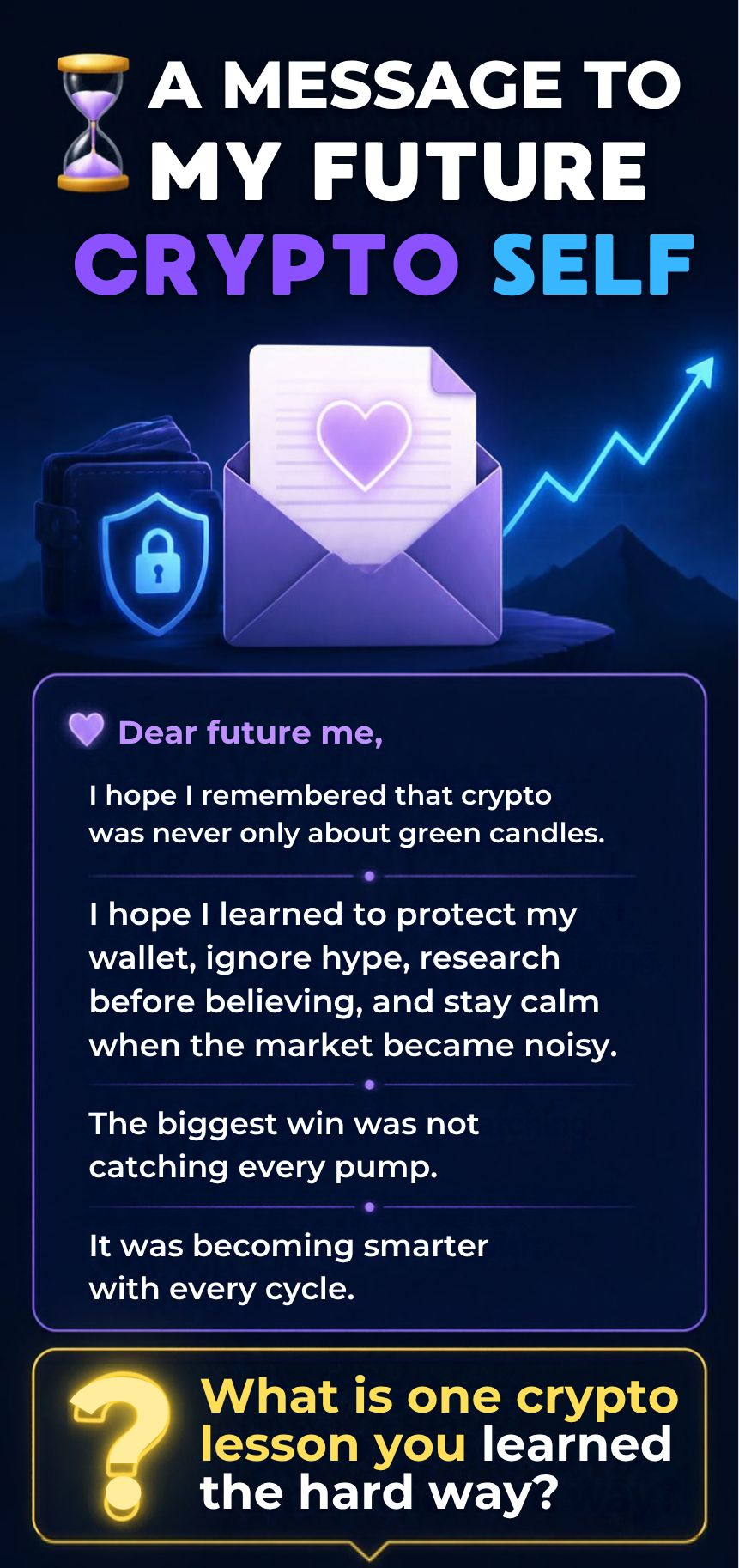
⏳ A MESSAGE TO MY FUTURE CRYPTO SELF:
Dear future me,
•I hope I remembered that crypto was never only about green candles.
•I hope I learned to protect my wallet, ignore hype, research before believing, and stay calm when the market became noisy.
•The biggest win was not catching every pump.
•It was becoming smarter with every cycle.
•What is one crypto lesson you learned the hard way?
$BTC
{spot}(BTCUSDT)
$ETH
{spot}(ETHUSDT)
$BNB
{spot}(BNBUSDT)
#CryptoMindset #CryptoJourney #Web3 #Blockchain #BinanceSquare
⏳ A MESSAGE TO MY FUTURE CRYPTO SELF:
Dear future me,
•I hope I remembered that crypto was never only about green candles.
•I hope I learned to protect my wallet, ignore hype, research before believing, and stay calm when the market became noisy.
•The biggest win was not catching every pump.
•It was becoming smarter with every cycle.
•What is one crypto lesson you learned the hard way?
$BTC
$ETH
$BNB
#CryptoMindset #CryptoJourney #Web3 #Blockchain #BinanceSquare
Dear future me,
•I hope I remembered that crypto was never only about green candles.
•I hope I learned to protect my wallet, ignore hype, research before believing, and stay calm when the market became noisy.
•The biggest win was not catching every pump.
•It was becoming smarter with every cycle.
•What is one crypto lesson you learned the hard way?
$BTC
$ETH
$BNB
#CryptoMindset #CryptoJourney #Web3 #Blockchain #BinanceSquare
94

·
--
> The market isn't complicated.
> You buy when others are scared.
> You hold when others are impatient.
> You sell when others are greedy.
> 90% of people do the opposite.
Which one are you? 👇
As for me I'm all right now I'mholding $CASH
#CryptoPatience ypto #BTC #BinanceSquareTalks #Cryptomindset
SR-7141A9A2D731224BDA33BF15
> The market isn't complicated.
> You buy when others are scared.
> You hold when others are impatient.
> You sell when others are greedy.
> 90% of people do the opposite.
Which one are you? 👇
As for me I'm all right now I'mholding $CASH
#CryptoPatience ypto #BTC #BinanceSquareTalks #Cryptomindset
SR-7141A9A2D731224BDA33BF15
> You buy when others are scared.
> You hold when others are impatient.
> You sell when others are greedy.
> 90% of people do the opposite.
Which one are you? 👇
As for me I'm all right now I'mholding $CASH
#CryptoPatience ypto #BTC #BinanceSquareTalks #Cryptomindset
SR-7141A9A2D731224BDA33BF15
pakcryptoqueen316:
great
2
398

·
--
Crypto Mindset CheckIn
In this market, your biggest enemy is not the chart…
It’s your own emotions.
✅ Greed makes you hold too long
✅ Fear makes you sell too early
✅ FOMO makes you buy the top
✅ Revenge trading makes you lose moreReal traders win not because they predict every move,
but because they control themselves when the market goes crazy.Remember:
Protect your capital first
Stick to your plan
Accept that losses are part of the game
Focus on process, not just profit
The market will always be there.
Your mental strength is what decides how long you stay in the game.How do you control your emotions during volatile days?
Share your tip below #CryptoMindset #TradingPsychology #BinanceSquare #StayDisciplined
Crypto Mindset CheckIn
In this market, your biggest enemy is not the chart…
It’s your own emotions.
✅ Greed makes you hold too long
✅ Fear makes you sell too early
✅ FOMO makes you buy the top
✅ Revenge trading makes you lose moreReal traders win not because they predict every move,
but because they control themselves when the market goes crazy.Remember:
Protect your capital first
Stick to your plan
Accept that losses are part of the game
Focus on process, not just profit
The market will always be there.
Your mental strength is what decides how long you stay in the game.How do you control your emotions during volatile days?
Share your tip below #CryptoMindset #TradingPsychology #BinanceSquare #StayDisciplined
In this market, your biggest enemy is not the chart…
It’s your own emotions.
✅ Greed makes you hold too long
✅ Fear makes you sell too early
✅ FOMO makes you buy the top
✅ Revenge trading makes you lose moreReal traders win not because they predict every move,
but because they control themselves when the market goes crazy.Remember:
Protect your capital first
Stick to your plan
Accept that losses are part of the game
Focus on process, not just profit
The market will always be there.
Your mental strength is what decides how long you stay in the game.How do you control your emotions during volatile days?
Share your tip below #CryptoMindset #TradingPsychology #BinanceSquare #StayDisciplined
29

·
--
📉 Red Days Test Your Strategy, Not Just Your Portfolio!
When the market is green, everyone feels like a trading genius. But during sharp corrections, the real difference between conviction holders and short-term speculators shows up.
Remember:
• Crypto markets move in cycles.
• Whales accumulate when fear is high.
• Panic selling simply transfers wealth from the impatient to the patient.
Don't let emotion hijack your financial strategy. Stick to your plan and stick with high-conviction assets.
🔥 Which coins are you accumulating during this dip? Share your watchlist below! 👇
#CryptoMindset #HODL
#Binance #CryptoCommunity
$BTC
{spot}(BTCUSDT)
📉 Red Days Test Your Strategy, Not Just Your Portfolio!
When the market is green, everyone feels like a trading genius. But during sharp corrections, the real difference between conviction holders and short-term speculators shows up.
Remember:
• Crypto markets move in cycles.
• Whales accumulate when fear is high.
• Panic selling simply transfers wealth from the impatient to the patient.
Don't let emotion hijack your financial strategy. Stick to your plan and stick with high-conviction assets.
🔥 Which coins are you accumulating during this dip? Share your watchlist below! 👇
#CryptoMindset #HODL
#Binance #CryptoCommunity
$BTC
When the market is green, everyone feels like a trading genius. But during sharp corrections, the real difference between conviction holders and short-term speculators shows up.
Remember:
• Crypto markets move in cycles.
• Whales accumulate when fear is high.
• Panic selling simply transfers wealth from the impatient to the patient.
Don't let emotion hijack your financial strategy. Stick to your plan and stick with high-conviction assets.
🔥 Which coins are you accumulating during this dip? Share your watchlist below! 👇
#CryptoMindset #HODL
#Binance #CryptoCommunity
$BTC
36
·
--
Article
Your doubts are a loss of funds: how to gain confidence in cryptoYour deposit’s main enemy isn’t the market, not manipulators, and not false signals—it’s your own lack of confidence.
Uncertainty is our hidden fears. What do traders most often fear? Everyone has their own fear: fear of losing a deposit, fear of making a mistake, fear of judgment. Because of these fears, we’re afraid to even join the community or find a team where we could exchange knowledge and grow together.
Your doubts are a loss of funds: how to gain confidence in crypto
Your deposit’s main enemy isn’t the market, not manipulators, and not false signals—it’s your own lack of confidence.
Uncertainty is our hidden fears. What do traders most often fear? Everyone has their own fear: fear of losing a deposit, fear of making a mistake, fear of judgment. Because of these fears, we’re afraid to even join the community or find a team where we could exchange knowledge and grow together.
Uncertainty is our hidden fears. What do traders most often fear? Everyone has their own fear: fear of losing a deposit, fear of making a mistake, fear of judgment. Because of these fears, we’re afraid to even join the community or find a team where we could exchange knowledge and grow together.
122
·
--
The market doesn't know you exist.
It's not punishing you for the last trade. It's not rewarding you for being right. It doesn't remember your losing streak, and it isn't waiting for you to "get even."
The market is indifferent. Your trading doesn't have to be personal for the outcomes to be real.
Educational only. #trading #Cryptomindset #psychology
$BTC
The market doesn't know you exist.
It's not punishing you for the last trade. It's not rewarding you for being right. It doesn't remember your losing streak, and it isn't waiting for you to "get even."
The market is indifferent. Your trading doesn't have to be personal for the outcomes to be real.
Educational only. #trading #Cryptomindset #psychology
$BTC
It's not punishing you for the last trade. It's not rewarding you for being right. It doesn't remember your losing streak, and it isn't waiting for you to "get even."
The market is indifferent. Your trading doesn't have to be personal for the outcomes to be real.
Educational only. #trading #Cryptomindset #psychology
$BTC
1
105
I will tell you the harsh truth about crypto:
You don't need 10 indicators.
You don't need 100x leverage.
You don't need to watch chart 24/7.
You just need:
1. Patience
2. Risk management
3. One solid strategy
That's it.
#CryptoMindset #trading
I will tell you the harsh truth about crypto:
You don't need 10 indicators.
You don't need 100x leverage.
You don't need to watch chart 24/7.
You just need:
1. Patience
2. Risk management
3. One solid strategy
That's it.
#CryptoMindset #trading
You don't need 10 indicators.
You don't need 100x leverage.
You don't need to watch chart 24/7.
You just need:
1. Patience
2. Risk management
3. One solid strategy
That's it.
#CryptoMindset #trading
56

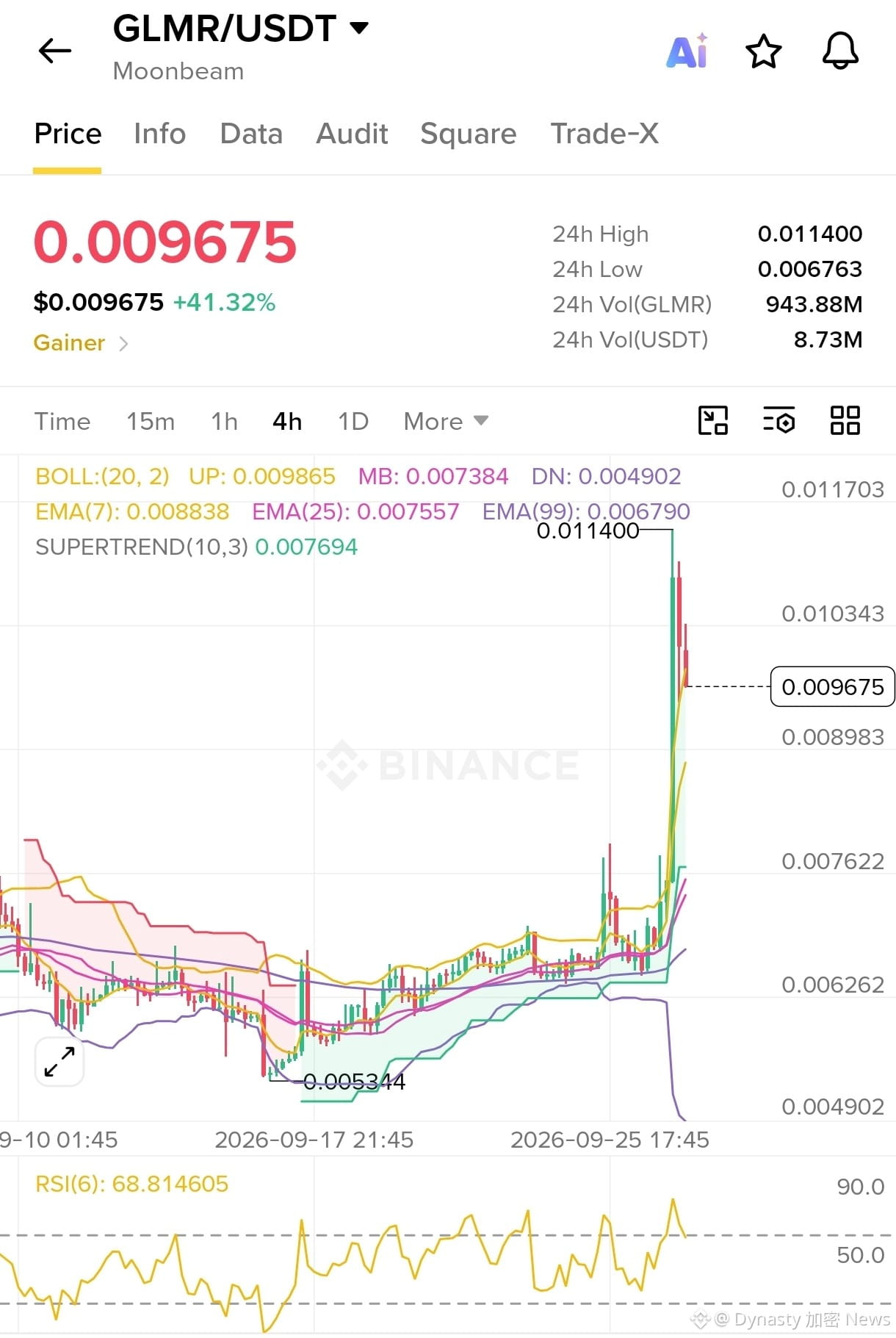
6 months of bleeding… and then 1 day changes everything. 🚀
On September 15th, GLMR hit a painful low of 0.005344.
To most traders, it looked dead. The sentiment was bearish, and fear was high. But markets move in cycles.
Those who stayed disciplined, analyzed the charts, and managed their risk were prepared for the eventual multi-month trend shift (+43% in a single day).
Mindset Shift: Success in trading isn't about chasing daily hype—it's about staying patient during accumulation phases so you're ready when momentum arrives.
Drop a 🧠 if you believe patience is the ultimate superpower in crypto trading!
#CryptoMindset #TradingMotivation #GLMR #PatienceInTrading #FinancialFreedom $GLMR
{spot}(GLMRUSDT)
6 months of bleeding… and then 1 day changes everything. 🚀
On September 15th, GLMR hit a painful low of 0.005344.
To most traders, it looked dead. The sentiment was bearish, and fear was high. But markets move in cycles.
Those who stayed disciplined, analyzed the charts, and managed their risk were prepared for the eventual multi-month trend shift (+43% in a single day).
Mindset Shift: Success in trading isn't about chasing daily hype—it's about staying patient during accumulation phases so you're ready when momentum arrives.
Drop a 🧠 if you believe patience is the ultimate superpower in crypto trading!
#CryptoMindset #TradingMotivation #GLMR #PatienceInTrading #FinancialFreedom $GLMR
On September 15th, GLMR hit a painful low of 0.005344.
To most traders, it looked dead. The sentiment was bearish, and fear was high. But markets move in cycles.
Those who stayed disciplined, analyzed the charts, and managed their risk were prepared for the eventual multi-month trend shift (+43% in a single day).
Mindset Shift: Success in trading isn't about chasing daily hype—it's about staying patient during accumulation phases so you're ready when momentum arrives.
Drop a 🧠 if you believe patience is the ultimate superpower in crypto trading!
#CryptoMindset #TradingMotivation #GLMR #PatienceInTrading #FinancialFreedom $GLMR
73

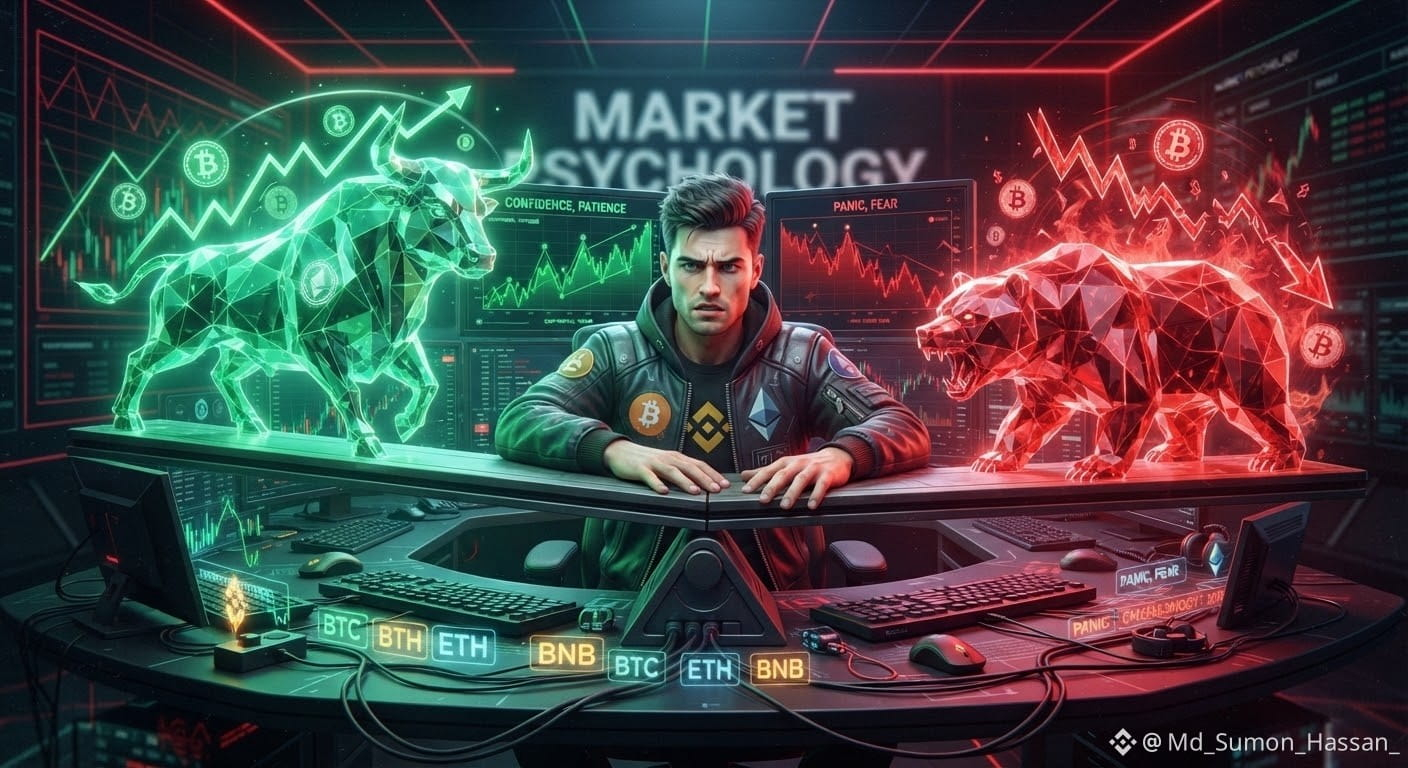
🧠 The Psychology of Crypto Trading: Why Emotions Destroy Portfolios 📉📈
Did you know that your biggest enemy in the crypto market isn't the market itself—it's your own emotions? Master these psychological traps to succeed:
1️⃣ Greed: Buying a coin at its absolute peak just because everyone is talking about it usually leads to heavy losses. 🛑
2️⃣ Panic Selling: Selling your assets in a sudden market dip out of fear guarantees you lock in your losses. Stay calm and stick to your strategy! 🛡️
3️⃣ Patience is Power: Sometimes, doing nothing and waiting for the right market setup is the most profitable move you can make. ⏳
💡 How do you control your emotions during a sudden market crash? Share your mindset below! 👇
$BTC $BNB #CryptoTradingInsights #BinanceSquare #Cryptomindset #TradingPsychology
🧠 The Psychology of Crypto Trading: Why Emotions Destroy Portfolios 📉📈
Did you know that your biggest enemy in the crypto market isn't the market itself—it's your own emotions? Master these psychological traps to succeed:
1️⃣ Greed: Buying a coin at its absolute peak just because everyone is talking about it usually leads to heavy losses. 🛑
2️⃣ Panic Selling: Selling your assets in a sudden market dip out of fear guarantees you lock in your losses. Stay calm and stick to your strategy! 🛡️
3️⃣ Patience is Power: Sometimes, doing nothing and waiting for the right market setup is the most profitable move you can make. ⏳
💡 How do you control your emotions during a sudden market crash? Share your mindset below! 👇
$BTC $BNB #CryptoTradingInsights #BinanceSquare #Cryptomindset #TradingPsychology
Did you know that your biggest enemy in the crypto market isn't the market itself—it's your own emotions? Master these psychological traps to succeed:
1️⃣ Greed: Buying a coin at its absolute peak just because everyone is talking about it usually leads to heavy losses. 🛑
2️⃣ Panic Selling: Selling your assets in a sudden market dip out of fear guarantees you lock in your losses. Stay calm and stick to your strategy! 🛡️
3️⃣ Patience is Power: Sometimes, doing nothing and waiting for the right market setup is the most profitable move you can make. ⏳
💡 How do you control your emotions during a sudden market crash? Share your mindset below! 👇
$BTC $BNB #CryptoTradingInsights #BinanceSquare #Cryptomindset #TradingPsychology
56

2. ⚡ Infallibility of the Plan: Eliminate emotional bias
Title: 🧠 The difference between an account that explodes and an account that lasts
Content:
The greatest enemy of the trader is not the market—it’s their own ego. Wanting to “get revenge” after a loss (Revenge Trading) or increasing leverage to make it back is the fastest way to liquidate your portfolio.
📌 The 3 golden rules for survival in Trading:
Clear invalidation: If your initial hypothesis is wrong, cut to your Stop Loss without hesitation.
Risk/Reward Ratio (R:R): Never target a trade with a ratio lower than 1:2.
Fixed position sizing: Risk a fixed percentage of your capital per trade, no matter your level of confidence.
A good trader doesn’t need to be right 100%; they just need to manage their losses better than their wins.
Have you already set up your OCO orders or Stop-Loss for your open trades? 🛠️
#RiskManagement #CryptoMindset #TradingRules #BinanceSquare #SpotTradingSuccess g #CryptoEducation
2. ⚡ Infallibility of the Plan: Eliminate emotional bias
Title: 🧠 The difference between an account that explodes and an account that lasts
Content:
The greatest enemy of the trader is not the market—it’s their own ego. Wanting to “get revenge” after a loss (Revenge Trading) or increasing leverage to make it back is the fastest way to liquidate your portfolio.
📌 The 3 golden rules for survival in Trading:
Clear invalidation: If your initial hypothesis is wrong, cut to your Stop Loss without hesitation.
Risk/Reward Ratio (R:R): Never target a trade with a ratio lower than 1:2.
Fixed position sizing: Risk a fixed percentage of your capital per trade, no matter your level of confidence.
A good trader doesn’t need to be right 100%; they just need to manage their losses better than their wins.
Have you already set up your OCO orders or Stop-Loss for your open trades? 🛠️
#RiskManagement #CryptoMindset #TradingRules #BinanceSquare #SpotTradingSuccess g #CryptoEducation
Title: 🧠 The difference between an account that explodes and an account that lasts
Content:
The greatest enemy of the trader is not the market—it’s their own ego. Wanting to “get revenge” after a loss (Revenge Trading) or increasing leverage to make it back is the fastest way to liquidate your portfolio.
📌 The 3 golden rules for survival in Trading:
Clear invalidation: If your initial hypothesis is wrong, cut to your Stop Loss without hesitation.
Risk/Reward Ratio (R:R): Never target a trade with a ratio lower than 1:2.
Fixed position sizing: Risk a fixed percentage of your capital per trade, no matter your level of confidence.
A good trader doesn’t need to be right 100%; they just need to manage their losses better than their wins.
Have you already set up your OCO orders or Stop-Loss for your open trades? 🛠️
#RiskManagement #CryptoMindset #TradingRules #BinanceSquare #SpotTradingSuccess g #CryptoEducation
14

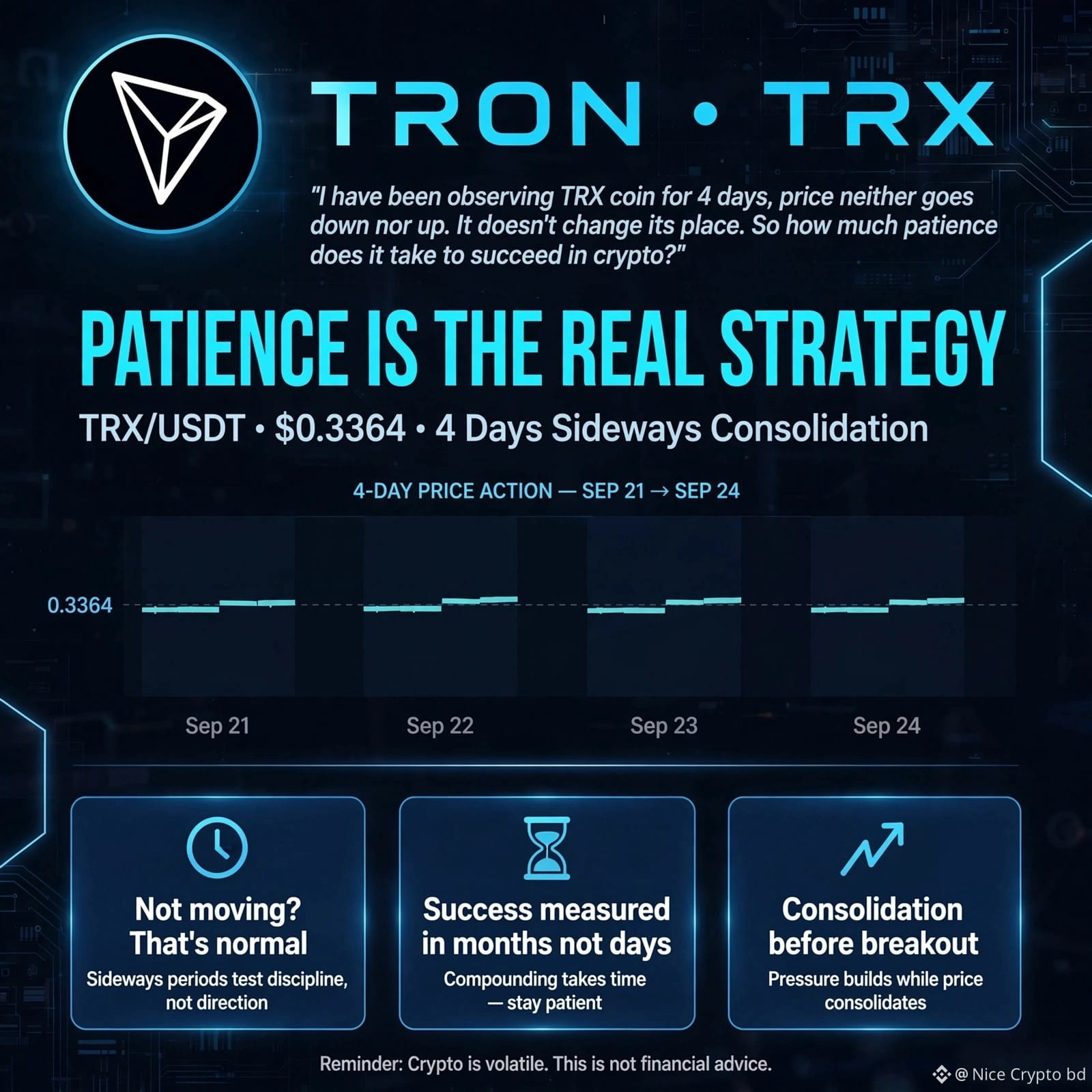
"I have been observing TRX coin for 4 days, price neither goes down nor up. It doesn't change its place. So how much patience does it take to succeed in crypto?"
PATIENCE IS THE REAL STRATEGY
TRX/USDT • $0.3364 • 4 Days Sideways Consolidation
I've been watching the chart for 4 days. -0.21% only. Frustrating? Yes.
But this is how big caps work.
🔹 Not moving? That's normal. Sideways periods test discipline, not direction.
🔹 Success measured in months not days. Compounding takes time - stay patient.
🔹 Consolidation before breakout. Pressure builds while price consolidates.
New traders check price every 5 minutes.
Investors set alerts and wait for months.
In crypto, patience pays more than prediction.
Are you a trader or an investor? Comment below 👇
#trx #HODL #CryptoMindset
---
Reminder: Crypto is volatile. This is not financial advice. DYOR.
"I have been observing TRX coin for 4 days, price neither goes down nor up. It doesn't change its place. So how much patience does it take to succeed in crypto?"
PATIENCE IS THE REAL STRATEGY
TRX/USDT • $0.3364 • 4 Days Sideways Consolidation
I've been watching the chart for 4 days. -0.21% only. Frustrating? Yes.
But this is how big caps work.
🔹 Not moving? That's normal. Sideways periods test discipline, not direction.
🔹 Success measured in months not days. Compounding takes time - stay patient.
🔹 Consolidation before breakout. Pressure builds while price consolidates.
New traders check price every 5 minutes.
Investors set alerts and wait for months.
In crypto, patience pays more than prediction.
Are you a trader or an investor? Comment below 👇
#trx #HODL #CryptoMindset
---
Reminder: Crypto is volatile. This is not financial advice. DYOR.
PATIENCE IS THE REAL STRATEGY
TRX/USDT • $0.3364 • 4 Days Sideways Consolidation
I've been watching the chart for 4 days. -0.21% only. Frustrating? Yes.
But this is how big caps work.
🔹 Not moving? That's normal. Sideways periods test discipline, not direction.
🔹 Success measured in months not days. Compounding takes time - stay patient.
🔹 Consolidation before breakout. Pressure builds while price consolidates.
New traders check price every 5 minutes.
Investors set alerts and wait for months.
In crypto, patience pays more than prediction.
Are you a trader or an investor? Comment below 👇
#trx #HODL #CryptoMindset
---
Reminder: Crypto is volatile. This is not financial advice. DYOR.
1
1
79
Fear and greed control most beginners.
They buy when prices pump. They sell when prices drop.
The result? Buy high, sell low. Every time.
Have a plan before you buy. Write it down. Stick to it.
That's how winners are made.
#BinanceSquare #CryptoMindset
Fear and greed control most beginners.
They buy when prices pump. They sell when prices drop.
The result? Buy high, sell low. Every time.
Have a plan before you buy. Write it down. Stick to it.
That's how winners are made.
#BinanceSquare #CryptoMindset
They buy when prices pump. They sell when prices drop.
The result? Buy high, sell low. Every time.
Have a plan before you buy. Write it down. Stick to it.
That's how winners are made.
#BinanceSquare #CryptoMindset
79
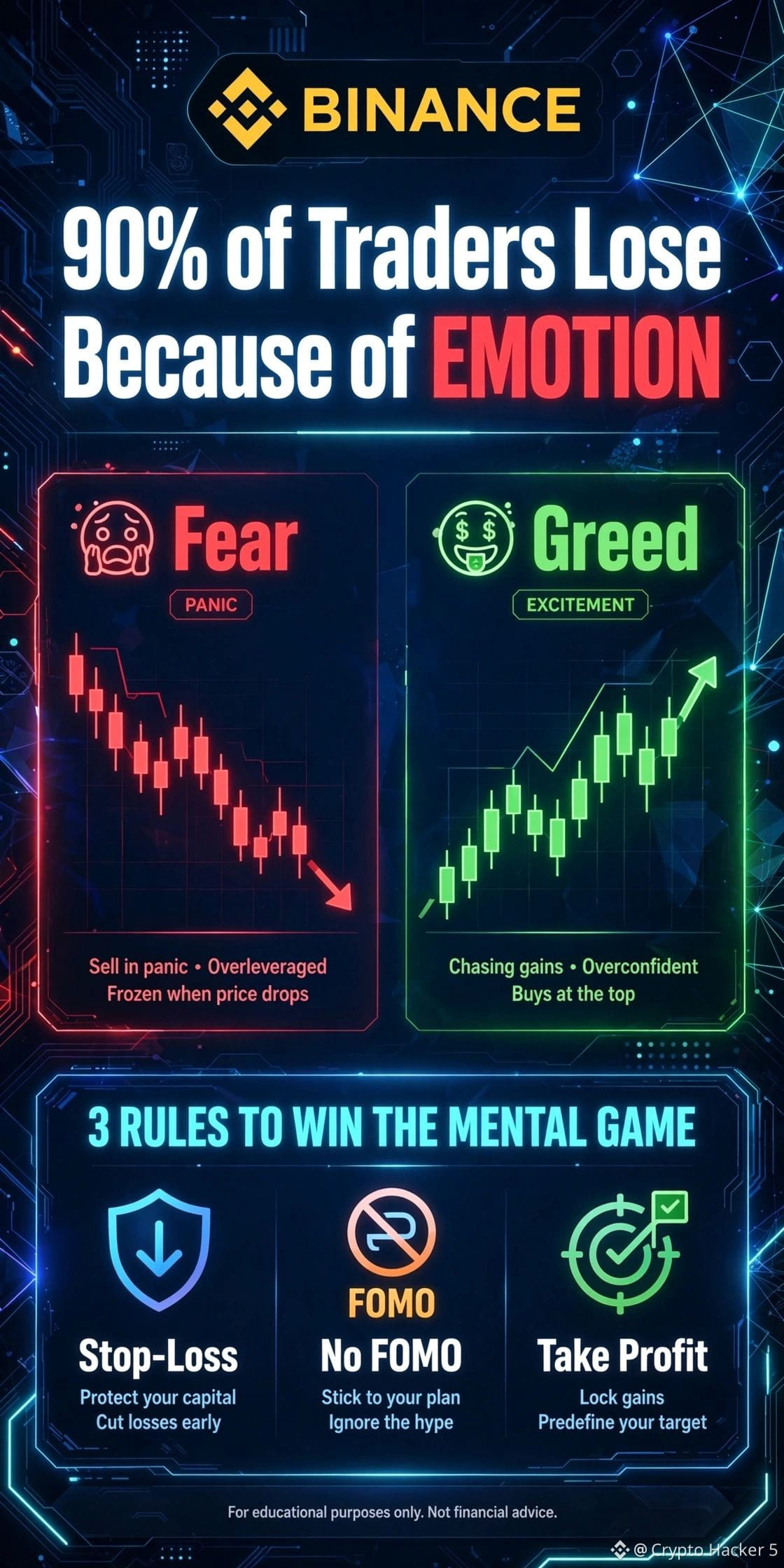
*🚨 90% of Traders Lose Because of THIS One Mistake 🚨*
It's not the chart.
It's not the coin.
It's *EMOTION.*
Green candle = Greed "Buy more!"
Red candle = Fear "Sell everything!"
The market rewards patience, not panic.
*My 3 Rules:*
1. Never trade without Stop-Loss
2. Never FOMO into a pump
3. Profit is profit - Don't be greedy
Remember: You don't need to win every trade, you just need to survive.
Which rule do you break the most? Be honest 👇
#Binance #TradingPsychology #CryptoTips #WAGMI #Bitcoin #Cryptomindset
*🚨 90% of Traders Lose Because of THIS One Mistake 🚨*
It's not the chart.
It's not the coin.
It's *EMOTION.*
Green candle = Greed "Buy more!"
Red candle = Fear "Sell everything!"
The market rewards patience, not panic.
*My 3 Rules:*
1. Never trade without Stop-Loss
2. Never FOMO into a pump
3. Profit is profit - Don't be greedy
Remember: You don't need to win every trade, you just need to survive.
Which rule do you break the most? Be honest 👇
#Binance #TradingPsychology #CryptoTips #WAGMI #Bitcoin #Cryptomindset
It's not the chart.
It's not the coin.
It's *EMOTION.*
Green candle = Greed "Buy more!"
Red candle = Fear "Sell everything!"
The market rewards patience, not panic.
*My 3 Rules:*
1. Never trade without Stop-Loss
2. Never FOMO into a pump
3. Profit is profit - Don't be greedy
Remember: You don't need to win every trade, you just need to survive.
Which rule do you break the most? Be honest 👇
#Binance #TradingPsychology #CryptoTips #WAGMI #Bitcoin #Cryptomindset
1
50
·
--
Article
The crowd isn't out there. It's in you too.There's a comforting idea a lot of traders hold: that the market is "them" and the trader is a separate, rational observer studying it from the outside. Charts, this idea says, show you what other people are feeling, so you can act more clearly than they do.
It's a nice story. It's also wrong, and knowing why matters more than any indicator.
Every candle on a chart is the record of a decision someone made under pressure. A sharp green candle means a crowd of people felt the same pull at the same moment: don't miss this. A sharp red candle means a crowd felt the same fear: get out now. The chart isn't separate from the crowd's psychology. It's made entirely of it.
And here's the part that's harder to accept: you're not watching that crowd from outside it. You're standing inside it, feeling the same pulls, on the same timeline, often without noticing. The trader who says "I'd never buy a top" has usually just not yet felt the exact pressure that makes people buy tops. It doesn't feel like greed from the inside. It feels like clarity. That's what makes it dangerous.
This is why "just don't be emotional" is useless advice. You can't opt out of having a nervous system. What you can do is build a small gap between the feeling and the action, so the feeling has to travel through a checkpoint before it becomes a trade.
Three checkpoints worth building:
Notice the pull before you act on it. Before entering on a sharp move, name what's happening: "this is urgency" or "this is fear." Naming an emotional state measurably reduces its grip on decision-making. It's not a trick. It's how the brain works.
Ask what triggered your attention. Did you see the setup first, or did you see the crowd's reaction first and go looking for a setup to justify it? Those are different processes, and only one of them is analysis.
Separate the decision from the moment. Decide your risk, your entry, and your exit when you're calm, not while you're inside the pull. A rule made under pressure isn't a rule. It's the pressure, wearing a rule's clothing.
None of this makes you immune to the crowd. Nothing does. But it turns you from someone who's swept by it into someone who notices the current before stepping in.
👇 Think of a moment you acted on a "gut feeling" in the market. Looking back, was it clarity, or was it the crowd's pull, dressed up as your own instinct?
Educational only. #trading #Cryptomindset #psychology
The crowd isn't out there. It's in you too.
There's a comforting idea a lot of traders hold: that the market is "them" and the trader is a separate, rational observer studying it from the outside. Charts, this idea says, show you what other people are feeling, so you can act more clearly than they do.
It's a nice story. It's also wrong, and knowing why matters more than any indicator.
Every candle on a chart is the record of a decision someone made under pressure. A sharp green candle means a crowd of people felt the same pull at the same moment: don't miss this. A sharp red candle means a crowd felt the same fear: get out now. The chart isn't separate from the crowd's psychology. It's made entirely of it.
And here's the part that's harder to accept: you're not watching that crowd from outside it. You're standing inside it, feeling the same pulls, on the same timeline, often without noticing. The trader who says "I'd never buy a top" has usually just not yet felt the exact pressure that makes people buy tops. It doesn't feel like greed from the inside. It feels like clarity. That's what makes it dangerous.
This is why "just don't be emotional" is useless advice. You can't opt out of having a nervous system. What you can do is build a small gap between the feeling and the action, so the feeling has to travel through a checkpoint before it becomes a trade.
Three checkpoints worth building:
Notice the pull before you act on it. Before entering on a sharp move, name what's happening: "this is urgency" or "this is fear." Naming an emotional state measurably reduces its grip on decision-making. It's not a trick. It's how the brain works.
Ask what triggered your attention. Did you see the setup first, or did you see the crowd's reaction first and go looking for a setup to justify it? Those are different processes, and only one of them is analysis.
Separate the decision from the moment. Decide your risk, your entry, and your exit when you're calm, not while you're inside the pull. A rule made under pressure isn't a rule. It's the pressure, wearing a rule's clothing.
None of this makes you immune to the crowd. Nothing does. But it turns you from someone who's swept by it into someone who notices the current before stepping in.
👇 Think of a moment you acted on a "gut feeling" in the market. Looking back, was it clarity, or was it the crowd's pull, dressed up as your own instinct?
Educational only. #trading #Cryptomindset #psychology
It's a nice story. It's also wrong, and knowing why matters more than any indicator.
Every candle on a chart is the record of a decision someone made under pressure. A sharp green candle means a crowd of people felt the same pull at the same moment: don't miss this. A sharp red candle means a crowd felt the same fear: get out now. The chart isn't separate from the crowd's psychology. It's made entirely of it.
And here's the part that's harder to accept: you're not watching that crowd from outside it. You're standing inside it, feeling the same pulls, on the same timeline, often without noticing. The trader who says "I'd never buy a top" has usually just not yet felt the exact pressure that makes people buy tops. It doesn't feel like greed from the inside. It feels like clarity. That's what makes it dangerous.
This is why "just don't be emotional" is useless advice. You can't opt out of having a nervous system. What you can do is build a small gap between the feeling and the action, so the feeling has to travel through a checkpoint before it becomes a trade.
Three checkpoints worth building:
Notice the pull before you act on it. Before entering on a sharp move, name what's happening: "this is urgency" or "this is fear." Naming an emotional state measurably reduces its grip on decision-making. It's not a trick. It's how the brain works.
Ask what triggered your attention. Did you see the setup first, or did you see the crowd's reaction first and go looking for a setup to justify it? Those are different processes, and only one of them is analysis.
Separate the decision from the moment. Decide your risk, your entry, and your exit when you're calm, not while you're inside the pull. A rule made under pressure isn't a rule. It's the pressure, wearing a rule's clothing.
None of this makes you immune to the crowd. Nothing does. But it turns you from someone who's swept by it into someone who notices the current before stepping in.
👇 Think of a moment you acted on a "gut feeling" in the market. Looking back, was it clarity, or was it the crowd's pull, dressed up as your own instinct?
Educational only. #trading #Cryptomindset #psychology
1
110


·
--
$BTC
{future}(BTCUSDT)
$SPCXB
{spot}(SPCXBUSDT)
$DOGE
{future}(DOGEUSDT)
Failure does not mean you are a loser.
A broken heart helped drive Elon Musk to build empires.
Make yourself so valuable, scarce, and unstoppable like Bitcoin that no one can reach your level unless you allow it.
Rise above the noise, protect your inner strength, and keep building your future.
#BTC #BinanceSquare #CryptoMindset #Motivation #Bullrun
$BTC
$SPCXB
$DOGE
Failure does not mean you are a loser.
A broken heart helped drive Elon Musk to build empires.
Make yourself so valuable, scarce, and unstoppable like Bitcoin that no one can reach your level unless you allow it.
Rise above the noise, protect your inner strength, and keep building your future.
#BTC #BinanceSquare #CryptoMindset #Motivation #Bullrun
$SPCXB
$DOGE
Failure does not mean you are a loser.
A broken heart helped drive Elon Musk to build empires.
Make yourself so valuable, scarce, and unstoppable like Bitcoin that no one can reach your level unless you allow it.
Rise above the noise, protect your inner strength, and keep building your future.
#BTC #BinanceSquare #CryptoMindset #Motivation #Bullrun

192
Log in to explore more content
Join global crypto users on Binance Square
⚡️ Get latest and useful information about crypto.
💬 Trusted by the world’s largest crypto exchange.
👍 Discover real insights from verified creators.
Email / Phone number
Trending Topics
1
#AmazonPlansToSell$8BNvidiaChips
285 views
18 Discussing
2
#NEARFallsToAround$4.70Down14%
26,788 views
53 Discussing
3
#EthereumFoundationLaunchesZkAPIOnMainnet
24,534 views
379 Discussing
4
#EvernorthPlansNasdaqListingOct8
45,065 views
357 Discussing
5
#SECProposesCryptoCustodyFramework
41,170 views
304 Discussing
6
#IMFApproves$139MDisbursementToElSalvador
25,594 views
21 Discussing
7
#AnthropicTargetsIPOAsSoonAsMidNovember
28,869 views
281 Discussing
8
#EtherGains70.9%InQ3
241,691 views
1,617 Discussing
9
#TreasuryLetsStatesFileStablecoinCertificationsEarly
18,479 views
113 Discussing
10
#US10YearYieldNears5.3%
196,693 views
1,425 Discussing