

starter78
483 Posts

starter78
Report
Block User
I'm looking forward to learning, investing, and growing my knowledge in this space. Let's connect and learn together
Open Trade
Frequent Trader
5.2 Years
153 Following
241 Followers
177 Liked
Posts
Portfolio
All
Quotes
Videos
·
--

Article
Cronos Blockchain Shuts Down After $75 Million Exploit:The Cronos blockchain literally stopped working you aren't imagining things, it actually happened.
On Sunday, August 30, Cronos (the blockchain network tied to Crypto . com) completely halted block production. That means zero transactions, zero transfers, and zero smart contract activity. Everything is frozen. This happened because a hacker drained roughly $75 million from Tectonic, the largest lending protocol running on Cronos.
On-chain researcher Weilin Li described it as a "Mango-market style pump-and-borrow price manipulation attack," echoing the infamous $100 million Mango Markets hack from 2022.
The playbook is pretty straightforward:
Find a token with very low trading volume and liquidity.
Buy it aggressively to spike its price overnight.
Use that artificially inflated price as collateral to borrow valuable, real-world assets.
Cash out and walk away before the token's price crashes back down.
Tonic's (TONIC) price skyrocketed 100x in just 20 minutes before the attacker started borrowing against it. Researchers pointed out that the core issue was Tectonic allowing its own governance token a 20% collateral factor despite extremely thin liquidity essentially letting someone borrow huge amounts against a token that could never support that value. Tectonic made up about 46% of all DeFi capital on Cronos, while the next biggest lending protocol on the chain held a mere $30,000. So this wasn't just a minor app getting hit; it took down the backbone of the entire chain's lending activity.
Here’s what makes this unusual. Usually, hacks stay isolated to the specific app that gets exploited. This time, Cronos validators decided to freeze the entire network instead of just Tectonic.
Why? Because roughly $6 million had already made it over to Ethereum before the validators pulled the plug, stranding the rest of the stolen funds on a network that stopped producing blocks. In short, shutting down the chain trapped the majority of the stolen money right where the hacker couldn't touch it.
It worked, but it came with a price tag. Every single transaction on Cronos for every normal user, not just the ones targeted by the hack got frozen. If you had funds stuck mid-transfer or sitting in any DeFi app on Cronos, you're currently stuck playing the waiting game.
What we know and what we still don't know:
As of Monday, the chain was still offline, and Cronos teams were working alongside security experts from across the industry to investigate.
A few key details remain unclear:
There is no official, final loss amount yet; estimates range anywhere from $75 million to nearly $120 million.
There is no timeline for when the chain will boot back up.
There's no word on whether everyday users affected by the freeze will get compensated.
On the bright side, Crypto. com's main app and exchange were completely unaffected. CEO Kris Marszalek confirmed that funds sitting directly on the exchange are safe the exploit happened on a decentralized DeFi protocol built on top of the blockchain, not on the central exchange or custody systems.
Why this matters, even if you never use Cronos:
This whole mess serves as a stark reminder of two major issues:
Low-liquidity governance tokens make terrible collateral. If a token doesn't have deep, active trading volume, its price is easy to manipulate. Any lending protocol that accepts it as collateral is just inheriting that massive risk.
"Decentralized" chains aren't always as decentralized as they claim. Cronos runs on a small, permissioned set of validators, which is the exact reason they were able to pull the emergency brake so fast. It's a double-edged sword: it stopped the bleeding this time, but it's a harsh reminder that an authority figure or network controllers can easily flip the off-switch on the whole ecosystem.
Nothing is settled yet. If you happen to have money sitting on Cronos or Tectonic right now, the safest play is to sit tight and wait for official updates rather than trying to force any transactions through.
#Ali_Imran
#CronosHack #CryptoNews #CryptoKite
Cronos Blockchain Shuts Down After $75 Million Exploit:
The Cronos blockchain literally stopped working you aren't imagining things, it actually happened.
On Sunday, August 30, Cronos (the blockchain network tied to Crypto . com) completely halted block production. That means zero transactions, zero transfers, and zero smart contract activity. Everything is frozen. This happened because a hacker drained roughly $75 million from Tectonic, the largest lending protocol running on Cronos.
On-chain researcher Weilin Li described it as a "Mango-market style pump-and-borrow price manipulation attack," echoing the infamous $100 million Mango Markets hack from 2022.
The playbook is pretty straightforward:
Find a token with very low trading volume and liquidity.
Buy it aggressively to spike its price overnight.
Use that artificially inflated price as collateral to borrow valuable, real-world assets.
Cash out and walk away before the token's price crashes back down.
Tonic's (TONIC) price skyrocketed 100x in just 20 minutes before the attacker started borrowing against it. Researchers pointed out that the core issue was Tectonic allowing its own governance token a 20% collateral factor despite extremely thin liquidity essentially letting someone borrow huge amounts against a token that could never support that value. Tectonic made up about 46% of all DeFi capital on Cronos, while the next biggest lending protocol on the chain held a mere $30,000. So this wasn't just a minor app getting hit; it took down the backbone of the entire chain's lending activity.
Here’s what makes this unusual. Usually, hacks stay isolated to the specific app that gets exploited. This time, Cronos validators decided to freeze the entire network instead of just Tectonic.
Why? Because roughly $6 million had already made it over to Ethereum before the validators pulled the plug, stranding the rest of the stolen funds on a network that stopped producing blocks. In short, shutting down the chain trapped the majority of the stolen money right where the hacker couldn't touch it.
It worked, but it came with a price tag. Every single transaction on Cronos for every normal user, not just the ones targeted by the hack got frozen. If you had funds stuck mid-transfer or sitting in any DeFi app on Cronos, you're currently stuck playing the waiting game.
What we know and what we still don't know:
As of Monday, the chain was still offline, and Cronos teams were working alongside security experts from across the industry to investigate.
A few key details remain unclear:
There is no official, final loss amount yet; estimates range anywhere from $75 million to nearly $120 million.
There is no timeline for when the chain will boot back up.
There's no word on whether everyday users affected by the freeze will get compensated.
On the bright side, Crypto. com's main app and exchange were completely unaffected. CEO Kris Marszalek confirmed that funds sitting directly on the exchange are safe the exploit happened on a decentralized DeFi protocol built on top of the blockchain, not on the central exchange or custody systems.
Why this matters, even if you never use Cronos:
This whole mess serves as a stark reminder of two major issues:
Low-liquidity governance tokens make terrible collateral. If a token doesn't have deep, active trading volume, its price is easy to manipulate. Any lending protocol that accepts it as collateral is just inheriting that massive risk.
"Decentralized" chains aren't always as decentralized as they claim. Cronos runs on a small, permissioned set of validators, which is the exact reason they were able to pull the emergency brake so fast. It's a double-edged sword: it stopped the bleeding this time, but it's a harsh reminder that an authority figure or network controllers can easily flip the off-switch on the whole ecosystem.
Nothing is settled yet. If you happen to have money sitting on Cronos or Tectonic right now, the safest play is to sit tight and wait for official updates rather than trying to force any transactions through.
#Ali_Imran
#CronosHack #CryptoNews #CryptoKite
On Sunday, August 30, Cronos (the blockchain network tied to Crypto . com) completely halted block production. That means zero transactions, zero transfers, and zero smart contract activity. Everything is frozen. This happened because a hacker drained roughly $75 million from Tectonic, the largest lending protocol running on Cronos.
On-chain researcher Weilin Li described it as a "Mango-market style pump-and-borrow price manipulation attack," echoing the infamous $100 million Mango Markets hack from 2022.
The playbook is pretty straightforward:
Find a token with very low trading volume and liquidity.
Buy it aggressively to spike its price overnight.
Use that artificially inflated price as collateral to borrow valuable, real-world assets.
Cash out and walk away before the token's price crashes back down.
Tonic's (TONIC) price skyrocketed 100x in just 20 minutes before the attacker started borrowing against it. Researchers pointed out that the core issue was Tectonic allowing its own governance token a 20% collateral factor despite extremely thin liquidity essentially letting someone borrow huge amounts against a token that could never support that value. Tectonic made up about 46% of all DeFi capital on Cronos, while the next biggest lending protocol on the chain held a mere $30,000. So this wasn't just a minor app getting hit; it took down the backbone of the entire chain's lending activity.
Here’s what makes this unusual. Usually, hacks stay isolated to the specific app that gets exploited. This time, Cronos validators decided to freeze the entire network instead of just Tectonic.
Why? Because roughly $6 million had already made it over to Ethereum before the validators pulled the plug, stranding the rest of the stolen funds on a network that stopped producing blocks. In short, shutting down the chain trapped the majority of the stolen money right where the hacker couldn't touch it.
It worked, but it came with a price tag. Every single transaction on Cronos for every normal user, not just the ones targeted by the hack got frozen. If you had funds stuck mid-transfer or sitting in any DeFi app on Cronos, you're currently stuck playing the waiting game.
What we know and what we still don't know:
As of Monday, the chain was still offline, and Cronos teams were working alongside security experts from across the industry to investigate.
A few key details remain unclear:
There is no official, final loss amount yet; estimates range anywhere from $75 million to nearly $120 million.
There is no timeline for when the chain will boot back up.
There's no word on whether everyday users affected by the freeze will get compensated.
On the bright side, Crypto. com's main app and exchange were completely unaffected. CEO Kris Marszalek confirmed that funds sitting directly on the exchange are safe the exploit happened on a decentralized DeFi protocol built on top of the blockchain, not on the central exchange or custody systems.
Why this matters, even if you never use Cronos:
This whole mess serves as a stark reminder of two major issues:
Low-liquidity governance tokens make terrible collateral. If a token doesn't have deep, active trading volume, its price is easy to manipulate. Any lending protocol that accepts it as collateral is just inheriting that massive risk.
"Decentralized" chains aren't always as decentralized as they claim. Cronos runs on a small, permissioned set of validators, which is the exact reason they were able to pull the emergency brake so fast. It's a double-edged sword: it stopped the bleeding this time, but it's a harsh reminder that an authority figure or network controllers can easily flip the off-switch on the whole ecosystem.
Nothing is settled yet. If you happen to have money sitting on Cronos or Tectonic right now, the safest play is to sit tight and wait for official updates rather than trying to force any transactions through.
#Ali_Imran
#CronosHack #CryptoNews #CryptoKite
113
·
--
Grayscale Says Zcash Could Take a Bite Out of Bitcoin's DominanceBitcoin has been the undisputed king of crypto for over a decade. But a new report from Grayscale, one of the biggest names in crypto asset management, is making a bold claim: Zcash (ZEC), a much smaller privacy-focused coin, might actually have a real shot at chipping away at Bitcoin's market share.
# The News in Plain Terms
Grayscale's Head of Research, Zach Pandl, just published a report arguing that Zcash has three things Bitcoin simply doesn't offer. The timing is no accident Grayscale also just launched the Zcash ETF, known as ZCSH, on NYSE Arca after converting its existing Zcash Trust , giving everyday U.S. investors an easy way to buy ZEC exposure through a regular brokerage account, just like a stock. And ZEC itself has been on fire, hitting its highest price since 2018.
# What Are These "Three Features"?
According to the report, Zcash offers:
1. Real financial privacy Zcash can shield transaction information, which Grayscale argues could become increasingly valuable as AI systems become better at analyzing financial activity at scale. Bitcoin, by contrast, is fully transparent anyone can trace your transactions on its public ledger.
2. Quantum-resistance work development aimed at countering quantum computing threats , something Bitcoin hasn't prioritized in the same way.
3. Cross-chain connectivity cross-chain connectivity through "intents" technology built into modern blockchain wallets, which Grayscale says allows Zcash to function as a private asset hub without requiring widespread merchant adoption.
# Why Privacy Matters More Now
Pandl's core argument is about AI. As artificial intelligence gets better at scanning and analyzing financial data at scale, privacy becomes more valuable not less. Zcash's shielded transactions could appeal to people who don't want every purchase, transfer, or balance visible to anyone (or anything) watching.
# The Numbers
* Bitcoin trades near $78,645, with a market cap of roughly $1.58 trillion
* That means ZEC is still worth less than 1% of Bitcoin's total value which is exactly the gap Grayscale thinks could close over time.
Grayscale even ran the numbers on what could happen if that gap narrows. If ZEC reached about 2% of Bitcoin's market capitalization, the research suggests its price could move above $1,622. A much larger 10% share could put ZEC near $8,100 by 2030.
# But Don't Get Too Excited Yet
Grayscale isn't saying this is a sure thing. Important caveats:
- This is a scenario, not a prediction. That makes Grayscale's figure a scenario rather than a conventional price target.
- Bitcoin's lead is huge. Pandl acknowledged that Bitcoin's liquidity and entrenched network remain powerful defenses of its dominant position
- History isn't on Zcash's side. Previous alternatives such as Litecoin (LTC) have failed to achieve
- This is high-risk. Grayscale also warned that Zcash remains a high-risk investment and that any further gains could be volatile and uneven
# The Bottom Line
Grayscale's report is essentially a bet on a bigger trend: as AI makes surveillance easier, privacy might become a premium feature investors are willing to pay for and Zcash is positioned to benefit if that happens. The new ETF makes it easier than ever to get exposure to that bet.
But this is speculative crypto territory. The $8,100 figure is a "what if," not a promise. Zcash still has to prove it can hold onto users, fend off competition, and grow into a fraction of Bitcoin's size something no other altcoin has managed yet.
#bitcoin #BTC走势分析 #zcash
Grayscale Says Zcash Could Take a Bite Out of Bitcoin's Dominance
Bitcoin has been the undisputed king of crypto for over a decade. But a new report from Grayscale, one of the biggest names in crypto asset management, is making a bold claim: Zcash (ZEC), a much smaller privacy-focused coin, might actually have a real shot at chipping away at Bitcoin's market share.
# The News in Plain Terms
Grayscale's Head of Research, Zach Pandl, just published a report arguing that Zcash has three things Bitcoin simply doesn't offer. The timing is no accident Grayscale also just launched the Zcash ETF, known as ZCSH, on NYSE Arca after converting its existing Zcash Trust , giving everyday U.S. investors an easy way to buy ZEC exposure through a regular brokerage account, just like a stock. And ZEC itself has been on fire, hitting its highest price since 2018.
# What Are These "Three Features"?
According to the report, Zcash offers:
1. Real financial privacy Zcash can shield transaction information, which Grayscale argues could become increasingly valuable as AI systems become better at analyzing financial activity at scale. Bitcoin, by contrast, is fully transparent anyone can trace your transactions on its public ledger.
2. Quantum-resistance work development aimed at countering quantum computing threats , something Bitcoin hasn't prioritized in the same way.
3. Cross-chain connectivity cross-chain connectivity through "intents" technology built into modern blockchain wallets, which Grayscale says allows Zcash to function as a private asset hub without requiring widespread merchant adoption.
# Why Privacy Matters More Now
Pandl's core argument is about AI. As artificial intelligence gets better at scanning and analyzing financial data at scale, privacy becomes more valuable not less. Zcash's shielded transactions could appeal to people who don't want every purchase, transfer, or balance visible to anyone (or anything) watching.
# The Numbers
* Bitcoin trades near $78,645, with a market cap of roughly $1.58 trillion
* That means ZEC is still worth less than 1% of Bitcoin's total value which is exactly the gap Grayscale thinks could close over time.
Grayscale even ran the numbers on what could happen if that gap narrows. If ZEC reached about 2% of Bitcoin's market capitalization, the research suggests its price could move above $1,622. A much larger 10% share could put ZEC near $8,100 by 2030.
# But Don't Get Too Excited Yet
Grayscale isn't saying this is a sure thing. Important caveats:
- This is a scenario, not a prediction. That makes Grayscale's figure a scenario rather than a conventional price target.
- Bitcoin's lead is huge. Pandl acknowledged that Bitcoin's liquidity and entrenched network remain powerful defenses of its dominant position
- History isn't on Zcash's side. Previous alternatives such as Litecoin (LTC) have failed to achieve
- This is high-risk. Grayscale also warned that Zcash remains a high-risk investment and that any further gains could be volatile and uneven
# The Bottom Line
Grayscale's report is essentially a bet on a bigger trend: as AI makes surveillance easier, privacy might become a premium feature investors are willing to pay for and Zcash is positioned to benefit if that happens. The new ETF makes it easier than ever to get exposure to that bet.
But this is speculative crypto territory. The $8,100 figure is a "what if," not a promise. Zcash still has to prove it can hold onto users, fend off competition, and grow into a fraction of Bitcoin's size something no other altcoin has managed yet.
#bitcoin #BTC走势分析 #zcash
# The News in Plain Terms
Grayscale's Head of Research, Zach Pandl, just published a report arguing that Zcash has three things Bitcoin simply doesn't offer. The timing is no accident Grayscale also just launched the Zcash ETF, known as ZCSH, on NYSE Arca after converting its existing Zcash Trust , giving everyday U.S. investors an easy way to buy ZEC exposure through a regular brokerage account, just like a stock. And ZEC itself has been on fire, hitting its highest price since 2018.
# What Are These "Three Features"?
According to the report, Zcash offers:
1. Real financial privacy Zcash can shield transaction information, which Grayscale argues could become increasingly valuable as AI systems become better at analyzing financial activity at scale. Bitcoin, by contrast, is fully transparent anyone can trace your transactions on its public ledger.
2. Quantum-resistance work development aimed at countering quantum computing threats , something Bitcoin hasn't prioritized in the same way.
3. Cross-chain connectivity cross-chain connectivity through "intents" technology built into modern blockchain wallets, which Grayscale says allows Zcash to function as a private asset hub without requiring widespread merchant adoption.
# Why Privacy Matters More Now
Pandl's core argument is about AI. As artificial intelligence gets better at scanning and analyzing financial data at scale, privacy becomes more valuable not less. Zcash's shielded transactions could appeal to people who don't want every purchase, transfer, or balance visible to anyone (or anything) watching.
# The Numbers
* Bitcoin trades near $78,645, with a market cap of roughly $1.58 trillion
* That means ZEC is still worth less than 1% of Bitcoin's total value which is exactly the gap Grayscale thinks could close over time.
Grayscale even ran the numbers on what could happen if that gap narrows. If ZEC reached about 2% of Bitcoin's market capitalization, the research suggests its price could move above $1,622. A much larger 10% share could put ZEC near $8,100 by 2030.
# But Don't Get Too Excited Yet
Grayscale isn't saying this is a sure thing. Important caveats:
- This is a scenario, not a prediction. That makes Grayscale's figure a scenario rather than a conventional price target.
- Bitcoin's lead is huge. Pandl acknowledged that Bitcoin's liquidity and entrenched network remain powerful defenses of its dominant position
- History isn't on Zcash's side. Previous alternatives such as Litecoin (LTC) have failed to achieve
- This is high-risk. Grayscale also warned that Zcash remains a high-risk investment and that any further gains could be volatile and uneven
# The Bottom Line
Grayscale's report is essentially a bet on a bigger trend: as AI makes surveillance easier, privacy might become a premium feature investors are willing to pay for and Zcash is positioned to benefit if that happens. The new ETF makes it easier than ever to get exposure to that bet.
But this is speculative crypto territory. The $8,100 figure is a "what if," not a promise. Zcash still has to prove it can hold onto users, fend off competition, and grow into a fraction of Bitcoin's size something no other altcoin has managed yet.
#bitcoin #BTC走势分析 #zcash
233
·
--
Melbourne Crypto Billionaire Takes Ex-Employee to Court Over $500,000
Russell Wilson is the man behind CoinSpot, one of Australia's biggest cryptocurrency exchanges. He's known as "secretive" because he rarely appears in public or gives interviews, even though his company made $270 million in profit in the 2025 financial year
Now he's in the news for a different reason. His company has filed a lawsuit against a former employee, accusing him of stealing money from the exchange.
According to court documents, the ex-employee a customer support team member named Iresh Pawan Perera allegedly moved $478,932 out of the company into his own personal bank account. This didn't happen in one go. It allegedly happened across 76 separate transactions over about two years, up until March
The lawsuit claims Perera converted the company's crypto into cash for his own use . He was fired immediately once the company found out, on March 9, since the alleged misuse of funds broke his employment agreement
CoinSpot hasn't shared many details publicly since the case is still before the courts. A spokesperson said the company has strong safeguards in place and that no customer funds were affected by this. She added that CoinSpot has zero tolerance for fraud and works closely with police to protect its users
This story is a good reminder that even big, well-established crypto companies aren't immune to insider theft. It's not always hackers from outside sometimes the risk comes from within, from someone who already has access to company systems. It also shows why companies need strong internal checks, not just security against outside attacks.
The case is ongoing, so more details may come out as it moves through the courts.
#Ali_Imran
#CryptoNews #CryptoFraudCase #Cybersecurity
Melbourne Crypto Billionaire Takes Ex-Employee to Court Over $500,000
Russell Wilson is the man behind CoinSpot, one of Australia's biggest cryptocurrency exchanges. He's known as "secretive" because he rarely appears in public or gives interviews, even though his company made $270 million in profit in the 2025 financial year
Now he's in the news for a different reason. His company has filed a lawsuit against a former employee, accusing him of stealing money from the exchange.
According to court documents, the ex-employee a customer support team member named Iresh Pawan Perera allegedly moved $478,932 out of the company into his own personal bank account. This didn't happen in one go. It allegedly happened across 76 separate transactions over about two years, up until March
The lawsuit claims Perera converted the company's crypto into cash for his own use . He was fired immediately once the company found out, on March 9, since the alleged misuse of funds broke his employment agreement
CoinSpot hasn't shared many details publicly since the case is still before the courts. A spokesperson said the company has strong safeguards in place and that no customer funds were affected by this. She added that CoinSpot has zero tolerance for fraud and works closely with police to protect its users
This story is a good reminder that even big, well-established crypto companies aren't immune to insider theft. It's not always hackers from outside sometimes the risk comes from within, from someone who already has access to company systems. It also shows why companies need strong internal checks, not just security against outside attacks.
The case is ongoing, so more details may come out as it moves through the courts.
#Ali_Imran
#CryptoNews #CryptoFraudCase #Cybersecurity
Russell Wilson is the man behind CoinSpot, one of Australia's biggest cryptocurrency exchanges. He's known as "secretive" because he rarely appears in public or gives interviews, even though his company made $270 million in profit in the 2025 financial year
Now he's in the news for a different reason. His company has filed a lawsuit against a former employee, accusing him of stealing money from the exchange.
According to court documents, the ex-employee a customer support team member named Iresh Pawan Perera allegedly moved $478,932 out of the company into his own personal bank account. This didn't happen in one go. It allegedly happened across 76 separate transactions over about two years, up until March
The lawsuit claims Perera converted the company's crypto into cash for his own use . He was fired immediately once the company found out, on March 9, since the alleged misuse of funds broke his employment agreement
CoinSpot hasn't shared many details publicly since the case is still before the courts. A spokesperson said the company has strong safeguards in place and that no customer funds were affected by this. She added that CoinSpot has zero tolerance for fraud and works closely with police to protect its users
This story is a good reminder that even big, well-established crypto companies aren't immune to insider theft. It's not always hackers from outside sometimes the risk comes from within, from someone who already has access to company systems. It also shows why companies need strong internal checks, not just security against outside attacks.
The case is ongoing, so more details may come out as it moves through the courts.
#Ali_Imran
#CryptoNews #CryptoFraudCase #Cybersecurity

147
·
--
LIDAC 2026 is Coming Back to Kuala Lumpur.If you're into crypto, fintech, or just curious about where digital money is heading in Malaysia, mark your calendar. "September 24, 2026" is the date for "LIDAC 2026" the second edition of the Luno Institutional Digital Asset Conference, happening at the "M Resort Hotel, Kuala Lumpur".
√ What is LIDAC, in simple words?
Think of LIDAC as a big meet-up where banks, regulators, crypto companies, and finance experts come together for one full day to talk about digital assets things like Bitcoin, stablecoins, and tokenized finance. It's not for casual traders; it's aimed at institutions (banks, fund managers, regulators) who are figuring out how to use these new digital tools responsibly.
The event follows the momentum from its Cape Town edition, bringing together regional delegates, speakers, and industry leaders to discuss how institutions will use digital assets in Malaysia.
√ Who's showing up?
This isn't a small gathering. Big names from Malaysia's financial world are expected, including people from "Securities Commission Malaysia", "Standard Chartered", and "Maybank" plus Luno's own CEO James Lanigan, and leaders from Malaysia's Securities Commission, CoinGecko, BitGo, and other digital asset firms.
√ What will they actually talk about?
Two big topics stand out this year:
- "Malaysia's stablecoin pilots" basically, test programs to see how digital coins pegged to real currency (like the Ringgit or US Dollar) could work safely within the country's financial system.
- "The first tokenised sukuk" this is a big deal for Islamic finance. A sukuk is like an Islamic bond, and "tokenising" it means putting it on blockchain technology. This could make Islamic finance more efficient, transparent, and accessible.
√ Why should you care?
Even if you're not a banker, this matters because:
1. It shows Malaysia is serious about digital finance. Having regulators and major banks like Maybank and Standard Chartered involved means this isn't just hype it's about building real rules and real products.
2. It could shape how you use money in the future. Stablecoins and tokenised assets could eventually make things like payments, investing, and cross-border transfers faster and cheaper.
3. Malaysia wants to be a regional hub. By pushing forward with things like Islamic finance tokenisation, Malaysia is positioning itself as a leader in digital assets for the whole Southeast Asian region.
√ A quick bit of context
This isn't Luno's first rodeo in KL. Last year's conference explored the role of digital assets in institutional portfolios, covering diversification, compliance, and risk management, with Malaysia's Securities Commission outlining the regulator's approach to responsible innovation. So LIDAC 2026 is really a continuation and a sign that the conversation is getting more serious and detailed each year.
√ Bottom line:
LIDAC 2026 is a sign that digital assets are moving from "interesting experiment" to "serious financial infrastructure" in Malaysia and this September, the people actually building that future will all be in one room in Kuala Lumpur.
#Ali_Imran
#LIDAC2026 #Luno #DigitalAssets #KualaLumpur
LIDAC 2026 is Coming Back to Kuala Lumpur.
If you're into crypto, fintech, or just curious about where digital money is heading in Malaysia, mark your calendar. "September 24, 2026" is the date for "LIDAC 2026" the second edition of the Luno Institutional Digital Asset Conference, happening at the "M Resort Hotel, Kuala Lumpur".
√ What is LIDAC, in simple words?
Think of LIDAC as a big meet-up where banks, regulators, crypto companies, and finance experts come together for one full day to talk about digital assets things like Bitcoin, stablecoins, and tokenized finance. It's not for casual traders; it's aimed at institutions (banks, fund managers, regulators) who are figuring out how to use these new digital tools responsibly.
The event follows the momentum from its Cape Town edition, bringing together regional delegates, speakers, and industry leaders to discuss how institutions will use digital assets in Malaysia.
√ Who's showing up?
This isn't a small gathering. Big names from Malaysia's financial world are expected, including people from "Securities Commission Malaysia", "Standard Chartered", and "Maybank" plus Luno's own CEO James Lanigan, and leaders from Malaysia's Securities Commission, CoinGecko, BitGo, and other digital asset firms.
√ What will they actually talk about?
Two big topics stand out this year:
- "Malaysia's stablecoin pilots" basically, test programs to see how digital coins pegged to real currency (like the Ringgit or US Dollar) could work safely within the country's financial system.
- "The first tokenised sukuk" this is a big deal for Islamic finance. A sukuk is like an Islamic bond, and "tokenising" it means putting it on blockchain technology. This could make Islamic finance more efficient, transparent, and accessible.
√ Why should you care?
Even if you're not a banker, this matters because:
1. It shows Malaysia is serious about digital finance. Having regulators and major banks like Maybank and Standard Chartered involved means this isn't just hype it's about building real rules and real products.
2. It could shape how you use money in the future. Stablecoins and tokenised assets could eventually make things like payments, investing, and cross-border transfers faster and cheaper.
3. Malaysia wants to be a regional hub. By pushing forward with things like Islamic finance tokenisation, Malaysia is positioning itself as a leader in digital assets for the whole Southeast Asian region.
√ A quick bit of context
This isn't Luno's first rodeo in KL. Last year's conference explored the role of digital assets in institutional portfolios, covering diversification, compliance, and risk management, with Malaysia's Securities Commission outlining the regulator's approach to responsible innovation. So LIDAC 2026 is really a continuation and a sign that the conversation is getting more serious and detailed each year.
√ Bottom line:
LIDAC 2026 is a sign that digital assets are moving from "interesting experiment" to "serious financial infrastructure" in Malaysia and this September, the people actually building that future will all be in one room in Kuala Lumpur.
#Ali_Imran
#LIDAC2026 #Luno #DigitalAssets #KualaLumpur
√ What is LIDAC, in simple words?
Think of LIDAC as a big meet-up where banks, regulators, crypto companies, and finance experts come together for one full day to talk about digital assets things like Bitcoin, stablecoins, and tokenized finance. It's not for casual traders; it's aimed at institutions (banks, fund managers, regulators) who are figuring out how to use these new digital tools responsibly.
The event follows the momentum from its Cape Town edition, bringing together regional delegates, speakers, and industry leaders to discuss how institutions will use digital assets in Malaysia.
√ Who's showing up?
This isn't a small gathering. Big names from Malaysia's financial world are expected, including people from "Securities Commission Malaysia", "Standard Chartered", and "Maybank" plus Luno's own CEO James Lanigan, and leaders from Malaysia's Securities Commission, CoinGecko, BitGo, and other digital asset firms.
√ What will they actually talk about?
Two big topics stand out this year:
- "Malaysia's stablecoin pilots" basically, test programs to see how digital coins pegged to real currency (like the Ringgit or US Dollar) could work safely within the country's financial system.
- "The first tokenised sukuk" this is a big deal for Islamic finance. A sukuk is like an Islamic bond, and "tokenising" it means putting it on blockchain technology. This could make Islamic finance more efficient, transparent, and accessible.
√ Why should you care?
Even if you're not a banker, this matters because:
1. It shows Malaysia is serious about digital finance. Having regulators and major banks like Maybank and Standard Chartered involved means this isn't just hype it's about building real rules and real products.
2. It could shape how you use money in the future. Stablecoins and tokenised assets could eventually make things like payments, investing, and cross-border transfers faster and cheaper.
3. Malaysia wants to be a regional hub. By pushing forward with things like Islamic finance tokenisation, Malaysia is positioning itself as a leader in digital assets for the whole Southeast Asian region.
√ A quick bit of context
This isn't Luno's first rodeo in KL. Last year's conference explored the role of digital assets in institutional portfolios, covering diversification, compliance, and risk management, with Malaysia's Securities Commission outlining the regulator's approach to responsible innovation. So LIDAC 2026 is really a continuation and a sign that the conversation is getting more serious and detailed each year.
√ Bottom line:
LIDAC 2026 is a sign that digital assets are moving from "interesting experiment" to "serious financial infrastructure" in Malaysia and this September, the people actually building that future will all be in one room in Kuala Lumpur.
#Ali_Imran
#LIDAC2026 #Luno #DigitalAssets #KualaLumpur
156
·
--
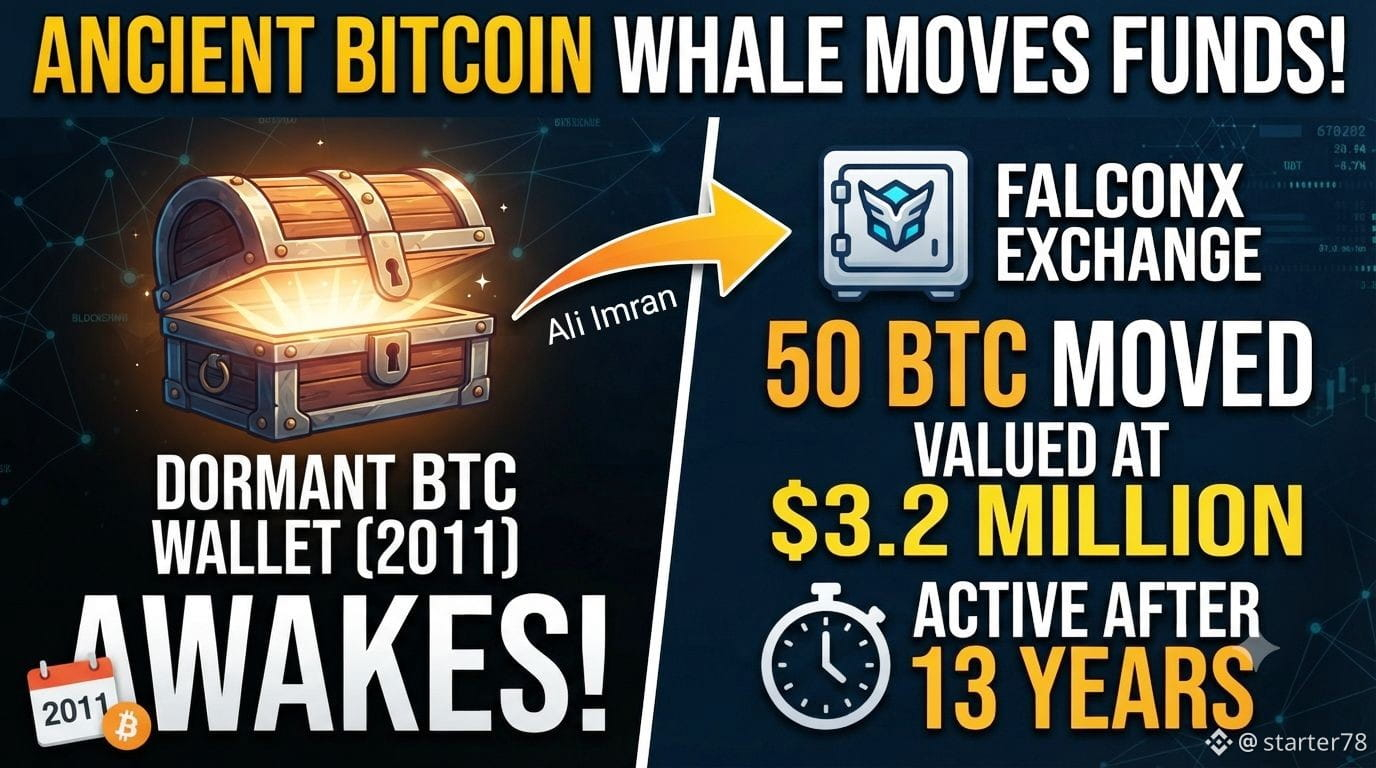
2011 Bitcoin Wallet Moves $3.2M to Brokerage-Linked Address.
An old Bitcoin wallet that hasn't touched its funds since 2011 just woke up and moved $3.2 million worth of Bitcoin (50 BTC) to an address linked to a crypto trading platform called FalconX.
While the coins are currently sitting in that new address, the wallet has a history of sending funds to FalconX before. This means the owner might just be reorganizing their digital stash, or they could be getting ready to sell or trade their Bitcoin.
#Ali_Imran
#cryptonews #crypto #cryptocurrency
2011 Bitcoin Wallet Moves $3.2M to Brokerage-Linked Address.
An old Bitcoin wallet that hasn't touched its funds since 2011 just woke up and moved $3.2 million worth of Bitcoin (50 BTC) to an address linked to a crypto trading platform called FalconX.
While the coins are currently sitting in that new address, the wallet has a history of sending funds to FalconX before. This means the owner might just be reorganizing their digital stash, or they could be getting ready to sell or trade their Bitcoin.
#Ali_Imran
#cryptonews #crypto #cryptocurrency
An old Bitcoin wallet that hasn't touched its funds since 2011 just woke up and moved $3.2 million worth of Bitcoin (50 BTC) to an address linked to a crypto trading platform called FalconX.
While the coins are currently sitting in that new address, the wallet has a history of sending funds to FalconX before. This means the owner might just be reorganizing their digital stash, or they could be getting ready to sell or trade their Bitcoin.
#Ali_Imran
#cryptonews #crypto #cryptocurrency
107
·
--
Bullish
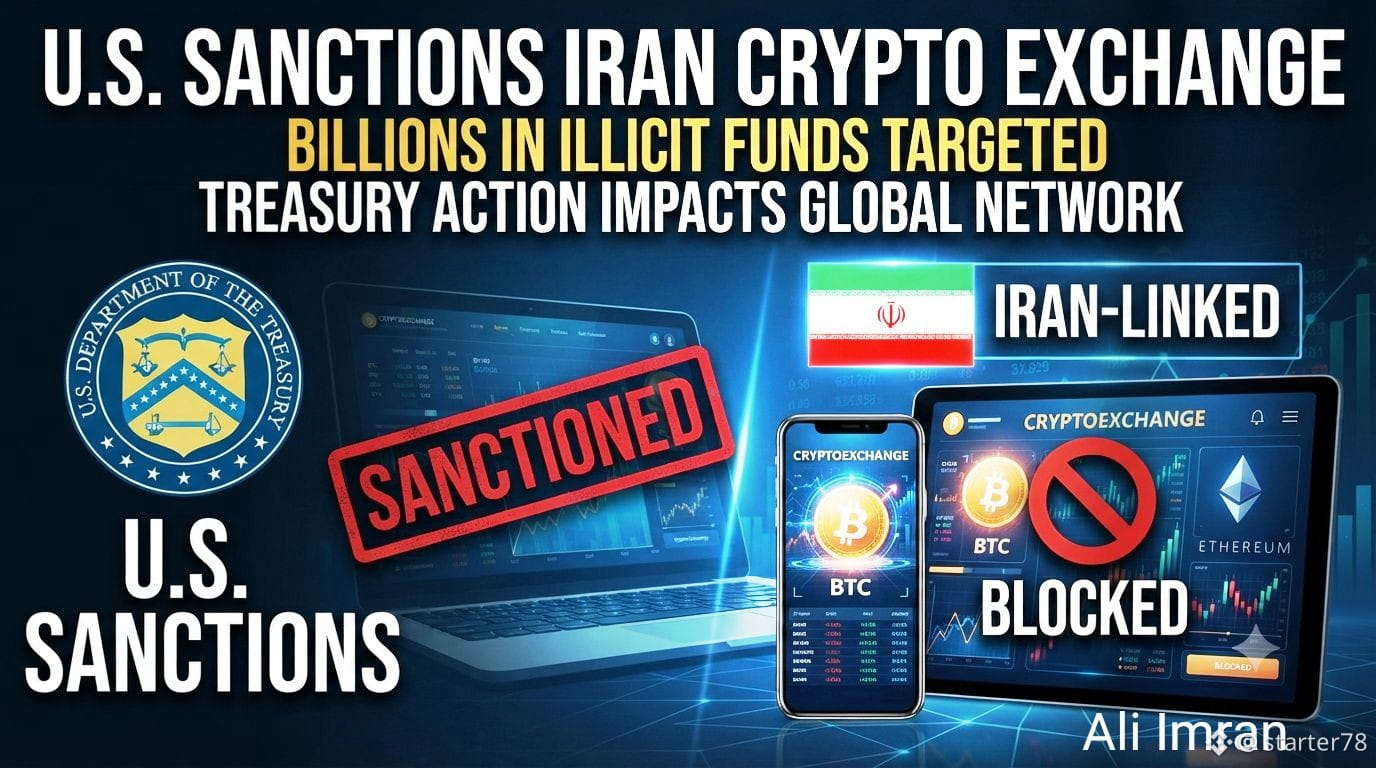
The US Just Sanctioned a Crypto Exchange Tied to Iran.
On August 7, the US government slapped sanctions on a cryptocurrency exchange called Shelbit. This wasn't a licensed, regulated platform it operated across multiple states without proper authorization. The accusation? That Shelbit helped move millions of dollars in crypto for Iran's Islamic Revolutionary Guard Corps (IRGC), a group the US considers a serious national security threat, along with other organizations tied to the Iranian government.
This didn't come out of nowhere. Just a week earlier, on July 31, Reuters published an investigation that put Shelbit based in Dubai under the microscope. Reporters found the exchange was allegedly the center of a massive sanctions evasion operation, estimated at around $4 billion.
According to that investigation, Shelbit's crypto network reportedly touched some pretty serious players:
Iran's central bank allegedly using the exchange to move money around sanctions
A major illegal online gambling network described as one of the largest of its kind
Wallet addresses linked to the IRGC flagged specifically by Israeli intelligence sources
This case is a good example of how crypto despite being decentralized and often described as "borderless" is still very traceable when investigators and regulators put in the work. It also shows how sanctioned regimes and criminal networks try to use crypto exchanges as workarounds to move money outside the traditional banking system, where sanctions are harder to enforce.
For everyday crypto users, this is a reminder to be cautious about which exchanges you use. Unlicensed platforms operating in regulatory gray zones aren't just risky because of scams or hacks they can also become targets of government action, freezing your funds or drawing legal scrutiny even if you personally did nothing wrong.
#Ali_Imran
#cryptoNews #Iran
$USDC
The US Just Sanctioned a Crypto Exchange Tied to Iran.
On August 7, the US government slapped sanctions on a cryptocurrency exchange called Shelbit. This wasn't a licensed, regulated platform it operated across multiple states without proper authorization. The accusation? That Shelbit helped move millions of dollars in crypto for Iran's Islamic Revolutionary Guard Corps (IRGC), a group the US considers a serious national security threat, along with other organizations tied to the Iranian government.
This didn't come out of nowhere. Just a week earlier, on July 31, Reuters published an investigation that put Shelbit based in Dubai under the microscope. Reporters found the exchange was allegedly the center of a massive sanctions evasion operation, estimated at around $4 billion.
According to that investigation, Shelbit's crypto network reportedly touched some pretty serious players:
Iran's central bank allegedly using the exchange to move money around sanctions
A major illegal online gambling network described as one of the largest of its kind
Wallet addresses linked to the IRGC flagged specifically by Israeli intelligence sources
This case is a good example of how crypto despite being decentralized and often described as "borderless" is still very traceable when investigators and regulators put in the work. It also shows how sanctioned regimes and criminal networks try to use crypto exchanges as workarounds to move money outside the traditional banking system, where sanctions are harder to enforce.
For everyday crypto users, this is a reminder to be cautious about which exchanges you use. Unlicensed platforms operating in regulatory gray zones aren't just risky because of scams or hacks they can also become targets of government action, freezing your funds or drawing legal scrutiny even if you personally did nothing wrong.
#Ali_Imran
#cryptoNews #Iran
$USDC
On August 7, the US government slapped sanctions on a cryptocurrency exchange called Shelbit. This wasn't a licensed, regulated platform it operated across multiple states without proper authorization. The accusation? That Shelbit helped move millions of dollars in crypto for Iran's Islamic Revolutionary Guard Corps (IRGC), a group the US considers a serious national security threat, along with other organizations tied to the Iranian government.
This didn't come out of nowhere. Just a week earlier, on July 31, Reuters published an investigation that put Shelbit based in Dubai under the microscope. Reporters found the exchange was allegedly the center of a massive sanctions evasion operation, estimated at around $4 billion.
According to that investigation, Shelbit's crypto network reportedly touched some pretty serious players:
Iran's central bank allegedly using the exchange to move money around sanctions
A major illegal online gambling network described as one of the largest of its kind
Wallet addresses linked to the IRGC flagged specifically by Israeli intelligence sources
This case is a good example of how crypto despite being decentralized and often described as "borderless" is still very traceable when investigators and regulators put in the work. It also shows how sanctioned regimes and criminal networks try to use crypto exchanges as workarounds to move money outside the traditional banking system, where sanctions are harder to enforce.
For everyday crypto users, this is a reminder to be cautious about which exchanges you use. Unlicensed platforms operating in regulatory gray zones aren't just risky because of scams or hacks they can also become targets of government action, freezing your funds or drawing legal scrutiny even if you personally did nothing wrong.
#Ali_Imran
#cryptoNews #Iran
$USDC
128
·
--
The Future of Crypto ATMs in New Zealand. Walk into almost any dairy, petrol station, or vape shop from Auckland to Invercargill, and you might spot a machine that looks like a regular ATM. Look closer, though, and you will see it is actually a crypto kiosk. These machines allow anyone to insert cash and walk out with Bitcoin or another digital asset within minutes. With over 200 such machines operating across New Zealand, they have become one of the trickiest battlegrounds in the government's war against money laundering and financial fraud.
Just a year ago, it looked like the government was going to ban these machines altogether. In mid-2025, following a review of anti-money laundering laws, the Cabinet agreed in principle to outlaw crypto ATMs. However, after deeper analysis, officials stepped back from a total ban.
Instead, the government is moving toward a framework of targeted controls and stricter oversight. This new approach will allow authorities to limit how much cash can be deposited in a single crypto ATM transaction, or completely block cash payments for high-risk digital assets if there is local evidence of severe harm.
Currently, no specific transaction limits or lists of "high-risk" assets have been set. Officials say these details will be finalized after consulting with the crypto industry and the public. The relevant legislation the, AML/CFT Omnibus Amendment Bill, was expected to be introduced to Parliament around July 2026.
The Risks: Scams and Financial Crime
Tighter regulations come as no surprise. Earlier this year, the Banking Ombudsman highlighted two major cases showing how scammers weaponize these machines:
* One victim fell for a fake job offer and lost over $31,000.
* Another victim was forced to deposit nearly $65,000 in cash over six months.
The playbook is familiar, a scammer poses as a bank, the Inland Revenue Department (IRD), the police, or a recruiter. They create a strong sense of urgency and secrecy, then guide the victim to scan a QR code at the nearest crypto ATM. Because the transaction settles almost instantly and goes to an anonymous wallet, once the money is gone, it is almost impossible to recover.
Regulators are worried about the bigger picture, once cash is converted into cryptocurrency, the funds can cross borders in ways that make them very difficult for police to track or freeze, making them a prime tool for organized crime.
Why a Total Ban Was Avoided:
Banning these machines outright would have also swept up plenty of legitimate activity. Estimates suggest that around 51,000 adults in New Zealand do not have a bank account. This hurdle heavily impacts vulnerable groups, such as those affected by domestic violence, homelessness, disabilities, or past criminal records. For these communities, crypto ATMs are one of the few accessible tools for digital finance.
On top of that, legitimate use cases are growing domestically. The Financial Markets Authority recently recognized NZDD a New Zealand Dollar-linked stablecoin as a valid payment tool, giving careful everyday use of crypto a stronger legal footing.
Caught between genuine, severe harms on one side and legitimate financial inclusion needs on the other, regulators chose smart controls over a blanket ban.
What the New Rules Will Look Like
An effective law will likely combine several measures rather than relying on a single rule:
* Transaction limits on cash deposits, especially for first-time or infrequent users, to contain potential losses.
* Better verification and live warnings at the point of transaction: While operators already handle anti-money laundering duties, real-time scam alerts (similar to bank ATM warnings) could stop ongoing fraud in its tracks.
* Banning high-risk digital assets for cash purchases.
* Mandatory reporting links between operators, banks, and the Banking Ombudsman to spot patterns and quickly flag machines repeatedly used for scams.
* A review mechanism, keeping localized or total bans on the table if targeted controls fail to reduce harm.
While the legislation makes its way through Parliament, keep this simple rule in mind:
> If someone calling you online whether they claim to be a recruiter, a bank official, or anyone else asks you to deposit cash into a crypto ATM on their behalf, treat it as a scam until proven otherwise.
> Banks, government agencies, and legitimate employers will never ask you to do this.
#Ali_Imran
#CryptoATM #NewZealand #MoneyLaundering #ScamAlert
The Future of Crypto ATMs in New Zealand.
Walk into almost any dairy, petrol station, or vape shop from Auckland to Invercargill, and you might spot a machine that looks like a regular ATM. Look closer, though, and you will see it is actually a crypto kiosk. These machines allow anyone to insert cash and walk out with Bitcoin or another digital asset within minutes. With over 200 such machines operating across New Zealand, they have become one of the trickiest battlegrounds in the government's war against money laundering and financial fraud.
Just a year ago, it looked like the government was going to ban these machines altogether. In mid-2025, following a review of anti-money laundering laws, the Cabinet agreed in principle to outlaw crypto ATMs. However, after deeper analysis, officials stepped back from a total ban.
Instead, the government is moving toward a framework of targeted controls and stricter oversight. This new approach will allow authorities to limit how much cash can be deposited in a single crypto ATM transaction, or completely block cash payments for high-risk digital assets if there is local evidence of severe harm.
Currently, no specific transaction limits or lists of "high-risk" assets have been set. Officials say these details will be finalized after consulting with the crypto industry and the public. The relevant legislation the, AML/CFT Omnibus Amendment Bill, was expected to be introduced to Parliament around July 2026.
The Risks: Scams and Financial Crime
Tighter regulations come as no surprise. Earlier this year, the Banking Ombudsman highlighted two major cases showing how scammers weaponize these machines:
* One victim fell for a fake job offer and lost over $31,000.
* Another victim was forced to deposit nearly $65,000 in cash over six months.
The playbook is familiar, a scammer poses as a bank, the Inland Revenue Department (IRD), the police, or a recruiter. They create a strong sense of urgency and secrecy, then guide the victim to scan a QR code at the nearest crypto ATM. Because the transaction settles almost instantly and goes to an anonymous wallet, once the money is gone, it is almost impossible to recover.
Regulators are worried about the bigger picture, once cash is converted into cryptocurrency, the funds can cross borders in ways that make them very difficult for police to track or freeze, making them a prime tool for organized crime.
Why a Total Ban Was Avoided:
Banning these machines outright would have also swept up plenty of legitimate activity. Estimates suggest that around 51,000 adults in New Zealand do not have a bank account. This hurdle heavily impacts vulnerable groups, such as those affected by domestic violence, homelessness, disabilities, or past criminal records. For these communities, crypto ATMs are one of the few accessible tools for digital finance.
On top of that, legitimate use cases are growing domestically. The Financial Markets Authority recently recognized NZDD a New Zealand Dollar-linked stablecoin as a valid payment tool, giving careful everyday use of crypto a stronger legal footing.
Caught between genuine, severe harms on one side and legitimate financial inclusion needs on the other, regulators chose smart controls over a blanket ban.
What the New Rules Will Look Like
An effective law will likely combine several measures rather than relying on a single rule:
* Transaction limits on cash deposits, especially for first-time or infrequent users, to contain potential losses.
* Better verification and live warnings at the point of transaction: While operators already handle anti-money laundering duties, real-time scam alerts (similar to bank ATM warnings) could stop ongoing fraud in its tracks.
* Banning high-risk digital assets for cash purchases.
* Mandatory reporting links between operators, banks, and the Banking Ombudsman to spot patterns and quickly flag machines repeatedly used for scams.
* A review mechanism, keeping localized or total bans on the table if targeted controls fail to reduce harm.
While the legislation makes its way through Parliament, keep this simple rule in mind:
> If someone calling you online whether they claim to be a recruiter, a bank official, or anyone else asks you to deposit cash into a crypto ATM on their behalf, treat it as a scam until proven otherwise.
> Banks, government agencies, and legitimate employers will never ask you to do this.
#Ali_Imran
#CryptoATM #NewZealand #MoneyLaundering #ScamAlert
Just a year ago, it looked like the government was going to ban these machines altogether. In mid-2025, following a review of anti-money laundering laws, the Cabinet agreed in principle to outlaw crypto ATMs. However, after deeper analysis, officials stepped back from a total ban.
Instead, the government is moving toward a framework of targeted controls and stricter oversight. This new approach will allow authorities to limit how much cash can be deposited in a single crypto ATM transaction, or completely block cash payments for high-risk digital assets if there is local evidence of severe harm.
Currently, no specific transaction limits or lists of "high-risk" assets have been set. Officials say these details will be finalized after consulting with the crypto industry and the public. The relevant legislation the, AML/CFT Omnibus Amendment Bill, was expected to be introduced to Parliament around July 2026.
The Risks: Scams and Financial Crime
Tighter regulations come as no surprise. Earlier this year, the Banking Ombudsman highlighted two major cases showing how scammers weaponize these machines:
* One victim fell for a fake job offer and lost over $31,000.
* Another victim was forced to deposit nearly $65,000 in cash over six months.
The playbook is familiar, a scammer poses as a bank, the Inland Revenue Department (IRD), the police, or a recruiter. They create a strong sense of urgency and secrecy, then guide the victim to scan a QR code at the nearest crypto ATM. Because the transaction settles almost instantly and goes to an anonymous wallet, once the money is gone, it is almost impossible to recover.
Regulators are worried about the bigger picture, once cash is converted into cryptocurrency, the funds can cross borders in ways that make them very difficult for police to track or freeze, making them a prime tool for organized crime.
Why a Total Ban Was Avoided:
Banning these machines outright would have also swept up plenty of legitimate activity. Estimates suggest that around 51,000 adults in New Zealand do not have a bank account. This hurdle heavily impacts vulnerable groups, such as those affected by domestic violence, homelessness, disabilities, or past criminal records. For these communities, crypto ATMs are one of the few accessible tools for digital finance.
On top of that, legitimate use cases are growing domestically. The Financial Markets Authority recently recognized NZDD a New Zealand Dollar-linked stablecoin as a valid payment tool, giving careful everyday use of crypto a stronger legal footing.
Caught between genuine, severe harms on one side and legitimate financial inclusion needs on the other, regulators chose smart controls over a blanket ban.
What the New Rules Will Look Like
An effective law will likely combine several measures rather than relying on a single rule:
* Transaction limits on cash deposits, especially for first-time or infrequent users, to contain potential losses.
* Better verification and live warnings at the point of transaction: While operators already handle anti-money laundering duties, real-time scam alerts (similar to bank ATM warnings) could stop ongoing fraud in its tracks.
* Banning high-risk digital assets for cash purchases.
* Mandatory reporting links between operators, banks, and the Banking Ombudsman to spot patterns and quickly flag machines repeatedly used for scams.
* A review mechanism, keeping localized or total bans on the table if targeted controls fail to reduce harm.
While the legislation makes its way through Parliament, keep this simple rule in mind:
> If someone calling you online whether they claim to be a recruiter, a bank official, or anyone else asks you to deposit cash into a crypto ATM on their behalf, treat it as a scam until proven otherwise.
> Banks, government agencies, and legitimate employers will never ask you to do this.
#Ali_Imran
#CryptoATM #NewZealand #MoneyLaundering #ScamAlert
142
·
--
✈️ Emirates Airlines Makes Crypto Flight Bookings a Reality: ✈️
Emirates has officially launched Crypto .com Pay, making it the first major airline in the Gulf to accept cryptocurrency payments for flight bookings.
✈️ How the System Works:✈️
If you are an eligible resident of the United Arab Emirates (UAE) and have a Crypto .com account, you can book flights on the Emirates website or app and pay directly from your crypto wallet.
✈️ On mobile: You are redirected to the Crypto.com app to approve the payment, and then sent back to Emirates for confirmation and your ticket.
✈️ On desktop: It is a simple QR code scan that you approve using the Crypto.com app.
✈️ An Important Note: ✈️
Technically, you are not buying tickets "in crypto." Everything is priced and transacted in UAE Dirhams (AED), so your cryptocurrency simply acts as a funding source Emirates still receives standard fiat currency. Think of it as a fast lane between your crypto wallet and your boarding pass, rather than a brand-new crypto-based ticketing system.
This is not a sudden move, either. It is the rollout of a partnership that Emirates and Crypto.com signed in July 2025. It aligns perfectly with Dubai's broader goal to digitize 90% of government and private sector transactions by the end of 2026.
Right now, this is just a beginning by a single airline. With Emirates taking this step, other global airlines closely watching cryptocurrency now have a real-life example to follow.
#Ali_Imran
#emirates #CryptoPay #CryptoNews #DubaiCashlessStrategy
✈️ Emirates Airlines Makes Crypto Flight Bookings a Reality: ✈️
Emirates has officially launched Crypto .com Pay, making it the first major airline in the Gulf to accept cryptocurrency payments for flight bookings.
✈️ How the System Works:✈️
If you are an eligible resident of the United Arab Emirates (UAE) and have a Crypto .com account, you can book flights on the Emirates website or app and pay directly from your crypto wallet.
✈️ On mobile: You are redirected to the Crypto.com app to approve the payment, and then sent back to Emirates for confirmation and your ticket.
✈️ On desktop: It is a simple QR code scan that you approve using the Crypto.com app.
✈️ An Important Note: ✈️
Technically, you are not buying tickets "in crypto." Everything is priced and transacted in UAE Dirhams (AED), so your cryptocurrency simply acts as a funding source Emirates still receives standard fiat currency. Think of it as a fast lane between your crypto wallet and your boarding pass, rather than a brand-new crypto-based ticketing system.
This is not a sudden move, either. It is the rollout of a partnership that Emirates and Crypto.com signed in July 2025. It aligns perfectly with Dubai's broader goal to digitize 90% of government and private sector transactions by the end of 2026.
Right now, this is just a beginning by a single airline. With Emirates taking this step, other global airlines closely watching cryptocurrency now have a real-life example to follow.
#Ali_Imran
#emirates #CryptoPay #CryptoNews #DubaiCashlessStrategy
Emirates has officially launched Crypto .com Pay, making it the first major airline in the Gulf to accept cryptocurrency payments for flight bookings.
✈️ How the System Works:✈️
If you are an eligible resident of the United Arab Emirates (UAE) and have a Crypto .com account, you can book flights on the Emirates website or app and pay directly from your crypto wallet.
✈️ On mobile: You are redirected to the Crypto.com app to approve the payment, and then sent back to Emirates for confirmation and your ticket.
✈️ On desktop: It is a simple QR code scan that you approve using the Crypto.com app.
✈️ An Important Note: ✈️
Technically, you are not buying tickets "in crypto." Everything is priced and transacted in UAE Dirhams (AED), so your cryptocurrency simply acts as a funding source Emirates still receives standard fiat currency. Think of it as a fast lane between your crypto wallet and your boarding pass, rather than a brand-new crypto-based ticketing system.
This is not a sudden move, either. It is the rollout of a partnership that Emirates and Crypto.com signed in July 2025. It aligns perfectly with Dubai's broader goal to digitize 90% of government and private sector transactions by the end of 2026.
Right now, this is just a beginning by a single airline. With Emirates taking this step, other global airlines closely watching cryptocurrency now have a real-life example to follow.
#Ali_Imran
#emirates #CryptoPay #CryptoNews #DubaiCashlessStrategy

127
·
--
Another Crypto Exchange Closes Its Doors:
BitMart, a crypto exchange that has been around for about nine years, recently announced it is shutting down. And it is not the only one, this announcement comes right on the heels of two other exchanges, AscendEX and BitMEX, exiting the market in recent days.
The closure of three exchanges in just a few days is not a mere coincidence. It is news that deserves attention.
Running a crypto exchange is not cheap. Amid declining trading volumes, rising competition, and strict regulations, small and medium-sized platforms often cannot cover their expenses. When the market slows down and volume drops, these exchanges miss out on the fees they depend on to survive.
What History Tells Us:
Interestingly, this is nothing new. Major crypto market downturns have a history of exchange closures:
* 2014: Mt. Gox
* 2018: BitGrail
* 2022: FTX
Some traders view this recurring cycle as a sign that the market bottom might be much lower than they think. When weak players are forced out, crypto clears the path for stronger platforms to take over the market.
What Lesson Should You Learn From This?
* Always use well-established and trusted exchanges.
* Never keep all your funds on a single platform.
* Consider moving long-term holdings to a personal wallet that you fully control.
Exchanges shutting down might seem alarming on the surface, but it is often part of the market’s natural cleanup process not a sign that crypto is failing.
#Ali_Imran
#CryptoMarketCrisis
#ExchangeShutdown
#NewBeginning
Another Crypto Exchange Closes Its Doors:
BitMart, a crypto exchange that has been around for about nine years, recently announced it is shutting down. And it is not the only one, this announcement comes right on the heels of two other exchanges, AscendEX and BitMEX, exiting the market in recent days.
The closure of three exchanges in just a few days is not a mere coincidence. It is news that deserves attention.
Running a crypto exchange is not cheap. Amid declining trading volumes, rising competition, and strict regulations, small and medium-sized platforms often cannot cover their expenses. When the market slows down and volume drops, these exchanges miss out on the fees they depend on to survive.
What History Tells Us:
Interestingly, this is nothing new. Major crypto market downturns have a history of exchange closures:
* 2014: Mt. Gox
* 2018: BitGrail
* 2022: FTX
Some traders view this recurring cycle as a sign that the market bottom might be much lower than they think. When weak players are forced out, crypto clears the path for stronger platforms to take over the market.
What Lesson Should You Learn From This?
* Always use well-established and trusted exchanges.
* Never keep all your funds on a single platform.
* Consider moving long-term holdings to a personal wallet that you fully control.
Exchanges shutting down might seem alarming on the surface, but it is often part of the market’s natural cleanup process not a sign that crypto is failing.
#Ali_Imran
#CryptoMarketCrisis
#ExchangeShutdown
#NewBeginning
BitMart, a crypto exchange that has been around for about nine years, recently announced it is shutting down. And it is not the only one, this announcement comes right on the heels of two other exchanges, AscendEX and BitMEX, exiting the market in recent days.
The closure of three exchanges in just a few days is not a mere coincidence. It is news that deserves attention.
Running a crypto exchange is not cheap. Amid declining trading volumes, rising competition, and strict regulations, small and medium-sized platforms often cannot cover their expenses. When the market slows down and volume drops, these exchanges miss out on the fees they depend on to survive.
What History Tells Us:
Interestingly, this is nothing new. Major crypto market downturns have a history of exchange closures:
* 2014: Mt. Gox
* 2018: BitGrail
* 2022: FTX
Some traders view this recurring cycle as a sign that the market bottom might be much lower than they think. When weak players are forced out, crypto clears the path for stronger platforms to take over the market.
What Lesson Should You Learn From This?
* Always use well-established and trusted exchanges.
* Never keep all your funds on a single platform.
* Consider moving long-term holdings to a personal wallet that you fully control.
Exchanges shutting down might seem alarming on the surface, but it is often part of the market’s natural cleanup process not a sign that crypto is failing.
#Ali_Imran
#CryptoMarketCrisis
#ExchangeShutdown
#NewBeginning

87
·
--
✓ Crypto market last 24 hours (as of July 27, 2026):
√ Prices & sentiment:
🪙 Total market cap: ~$2.3 trillion, up 1.7% in the last 24 hours, with trading volume around $40.7 billion .
🪙 Bitcoin: back above $65,000, reclaiming the level as bearish traders were caught offside . Trading near $65,150–65,360, up roughly 1–1.4%.
🪙 Ethereum led gains among majors, accelerating faster than Bitcoin and reviving alt-season talk.
🪙 Polkadot and the XRP Ledger ecosystem were the day's biggest gainers.
🪙 Sentiment: still in "Fear" territory despite the rally.
√ What's driving it:
🪙 A second day without new US-Iran military strikes pushed oil prices lower, encouraging a rotation back into risk assets, the main catalyst.
🪙 Over $200 million in crypto positions were liquidated in the past day, mostly short-side covering
🪙 Markets are also positioning ahead of the Fed's July 28–29 meeting, with rates expected to hold and only a ~34% chance priced in for a hike
√ Notable headlines:
🪙 BitMart announced it's winding down operations after nearly nine years, following recent exits by AscendEX and BitMEX seen by some as a sign of late-cycle exchange capitulation.
🪙 Spot Bitcoin ETFs posted a third straight week of net inflows despite $465 million in late week losses, with BlackRock's IBIT accounting for most of that outflow .
🪙 A hacking group allegedly breached central bank systems, laundered crypto through Chinese brokers, and used small transfers to evade detection .
🪙 Coinbase CEO Brian Armstrong criticized crypto startups rebranding themselves as AI companies.
#Ali_Imran
#ETH #Blockchain #CryptoTrading #AltSeason
✓ Crypto market last 24 hours (as of July 27, 2026):
√ Prices & sentiment:
🪙 Total market cap: ~$2.3 trillion, up 1.7% in the last 24 hours, with trading volume around $40.7 billion .
🪙 Bitcoin: back above $65,000, reclaiming the level as bearish traders were caught offside . Trading near $65,150–65,360, up roughly 1–1.4%.
🪙 Ethereum led gains among majors, accelerating faster than Bitcoin and reviving alt-season talk.
🪙 Polkadot and the XRP Ledger ecosystem were the day's biggest gainers.
🪙 Sentiment: still in "Fear" territory despite the rally.
√ What's driving it:
🪙 A second day without new US-Iran military strikes pushed oil prices lower, encouraging a rotation back into risk assets, the main catalyst.
🪙 Over $200 million in crypto positions were liquidated in the past day, mostly short-side covering
🪙 Markets are also positioning ahead of the Fed's July 28–29 meeting, with rates expected to hold and only a ~34% chance priced in for a hike
√ Notable headlines:
🪙 BitMart announced it's winding down operations after nearly nine years, following recent exits by AscendEX and BitMEX seen by some as a sign of late-cycle exchange capitulation.
🪙 Spot Bitcoin ETFs posted a third straight week of net inflows despite $465 million in late week losses, with BlackRock's IBIT accounting for most of that outflow .
🪙 A hacking group allegedly breached central bank systems, laundered crypto through Chinese brokers, and used small transfers to evade detection .
🪙 Coinbase CEO Brian Armstrong criticized crypto startups rebranding themselves as AI companies.
#Ali_Imran
#ETH #Blockchain #CryptoTrading #AltSeason
√ Prices & sentiment:
🪙 Total market cap: ~$2.3 trillion, up 1.7% in the last 24 hours, with trading volume around $40.7 billion .
🪙 Bitcoin: back above $65,000, reclaiming the level as bearish traders were caught offside . Trading near $65,150–65,360, up roughly 1–1.4%.
🪙 Ethereum led gains among majors, accelerating faster than Bitcoin and reviving alt-season talk.
🪙 Polkadot and the XRP Ledger ecosystem were the day's biggest gainers.
🪙 Sentiment: still in "Fear" territory despite the rally.
√ What's driving it:
🪙 A second day without new US-Iran military strikes pushed oil prices lower, encouraging a rotation back into risk assets, the main catalyst.
🪙 Over $200 million in crypto positions were liquidated in the past day, mostly short-side covering
🪙 Markets are also positioning ahead of the Fed's July 28–29 meeting, with rates expected to hold and only a ~34% chance priced in for a hike
√ Notable headlines:
🪙 BitMart announced it's winding down operations after nearly nine years, following recent exits by AscendEX and BitMEX seen by some as a sign of late-cycle exchange capitulation.
🪙 Spot Bitcoin ETFs posted a third straight week of net inflows despite $465 million in late week losses, with BlackRock's IBIT accounting for most of that outflow .
🪙 A hacking group allegedly breached central bank systems, laundered crypto through Chinese brokers, and used small transfers to evade detection .
🪙 Coinbase CEO Brian Armstrong criticized crypto startups rebranding themselves as AI companies.
#Ali_Imran
#ETH #Blockchain #CryptoTrading #AltSeason
198
·
--
Japan is getting ready for its first Bitcoin ETF.On July 15, 2026, Japan's parliament (known as the National Diet) passed a major law. This law moves Bitcoin and over 100 other cryptocurrencies out of an old payment-focused law and into a new category: Financial Instruments. This means crypto will now be regulated more like stocks and bonds, instead of being treated as just another payment method.
This change is important because it provides Japan's financial regulator, the FSA, with the legal foundation it eventually needs to allow a spot Bitcoin ETF—a fund that directly holds real Bitcoin, which regular investors can buy through a normal stock brokerage account, just like buying shares of a company.
Is the ETF approved already?
This is the most important thing. No spot Bitcoin ETF has been approved, filed, or listed in Japan yet. What has happened is only the first major legal step. Think of it like clearing the land before building a house. The land is cleared, but the house is not built yet.
According to experts and reports, Japan's first spot Bitcoin ETF could realistically launch sometime between 2027 and 2028, depending on the speed at which regulators work.
The Japanese government is extremely cautious regarding crypto. A major reason for this is painful past experiences such as the collapse of the Mt. Gox exchange and the Coincheck hack, both of which caused severe financial losses to investors. Because of this, Japanese regulators want to carefully prepare
rules regarding the following matters:
* How Bitcoin will be saf pplely stored (custody)
* How the fund's value will be calculated
* How shares will be created and redeemed
* How everyday retail investors will be protected
Therefore, instead of rushing, Japan is making rules step by step.
Currently, profits from crypto in Japan are taxed as "Miscellaneous Income," which can go up to 55%. extremely high compared to other countries. There is a proposal to reduce this rate to a flat 20%, which is similar to how stock market profits are taxed. However, this tax reduction is not expected to take effect until January 2028, which is later than the expected date for the ETF framework itself to be ready.
This means that even after the new law is implemented, early investors in Japan may face high taxes for some time before the lower rate is enforced.
Major Japanese financial institutions like SBI Holdings and Nomura are already preparing crypto investment products, and are getting ready to launch ETFs as soon as the regulations are finalized. Some estimates indicate that once this system is operational, Japan's crypto ETF market could attract up to 3 trillion yen (billions of dollars) in investment.
Even though the ETF itself is still a few years away, this move is a major breakthrough because:
* Japan possesses one of the world's largest and most reliable financial systems.
* If Japan adopts a Bitcoin ETF, it sends a strong message to the rest of Asia and the world that Bitcoin is becoming a mainstream, legitimate investment.
* This could bring a wave of new institutional and retail investors into the crypto market.
Japan has not approved a Bitcoin ETF yet, but it has taken the first real legal step toward making it possible. Japan is moving forward cautiously rather than rushing, which is standard behavior for Japan's financial regulators. If everything goes according to plan, Japanese investors could see their first spot Bitcoin ETF around 2027–2028.
#Ali_Imran
#JapanCrypto #BitcoinETF #CryptoNews #YenTsunami
Japan is getting ready for its first Bitcoin ETF.
On July 15, 2026, Japan's parliament (known as the National Diet) passed a major law. This law moves Bitcoin and over 100 other cryptocurrencies out of an old payment-focused law and into a new category: Financial Instruments. This means crypto will now be regulated more like stocks and bonds, instead of being treated as just another payment method.
This change is important because it provides Japan's financial regulator, the FSA, with the legal foundation it eventually needs to allow a spot Bitcoin ETF—a fund that directly holds real Bitcoin, which regular investors can buy through a normal stock brokerage account, just like buying shares of a company.
Is the ETF approved already?
This is the most important thing. No spot Bitcoin ETF has been approved, filed, or listed in Japan yet. What has happened is only the first major legal step. Think of it like clearing the land before building a house. The land is cleared, but the house is not built yet.
According to experts and reports, Japan's first spot Bitcoin ETF could realistically launch sometime between 2027 and 2028, depending on the speed at which regulators work.
The Japanese government is extremely cautious regarding crypto. A major reason for this is painful past experiences such as the collapse of the Mt. Gox exchange and the Coincheck hack, both of which caused severe financial losses to investors. Because of this, Japanese regulators want to carefully prepare
rules regarding the following matters:
* How Bitcoin will be saf pplely stored (custody)
* How the fund's value will be calculated
* How shares will be created and redeemed
* How everyday retail investors will be protected
Therefore, instead of rushing, Japan is making rules step by step.
Currently, profits from crypto in Japan are taxed as "Miscellaneous Income," which can go up to 55%. extremely high compared to other countries. There is a proposal to reduce this rate to a flat 20%, which is similar to how stock market profits are taxed. However, this tax reduction is not expected to take effect until January 2028, which is later than the expected date for the ETF framework itself to be ready.
This means that even after the new law is implemented, early investors in Japan may face high taxes for some time before the lower rate is enforced.
Major Japanese financial institutions like SBI Holdings and Nomura are already preparing crypto investment products, and are getting ready to launch ETFs as soon as the regulations are finalized. Some estimates indicate that once this system is operational, Japan's crypto ETF market could attract up to 3 trillion yen (billions of dollars) in investment.
Even though the ETF itself is still a few years away, this move is a major breakthrough because:
* Japan possesses one of the world's largest and most reliable financial systems.
* If Japan adopts a Bitcoin ETF, it sends a strong message to the rest of Asia and the world that Bitcoin is becoming a mainstream, legitimate investment.
* This could bring a wave of new institutional and retail investors into the crypto market.
Japan has not approved a Bitcoin ETF yet, but it has taken the first real legal step toward making it possible. Japan is moving forward cautiously rather than rushing, which is standard behavior for Japan's financial regulators. If everything goes according to plan, Japanese investors could see their first spot Bitcoin ETF around 2027–2028.
#Ali_Imran
#JapanCrypto #BitcoinETF #CryptoNews #YenTsunami
This change is important because it provides Japan's financial regulator, the FSA, with the legal foundation it eventually needs to allow a spot Bitcoin ETF—a fund that directly holds real Bitcoin, which regular investors can buy through a normal stock brokerage account, just like buying shares of a company.
Is the ETF approved already?
This is the most important thing. No spot Bitcoin ETF has been approved, filed, or listed in Japan yet. What has happened is only the first major legal step. Think of it like clearing the land before building a house. The land is cleared, but the house is not built yet.
According to experts and reports, Japan's first spot Bitcoin ETF could realistically launch sometime between 2027 and 2028, depending on the speed at which regulators work.
The Japanese government is extremely cautious regarding crypto. A major reason for this is painful past experiences such as the collapse of the Mt. Gox exchange and the Coincheck hack, both of which caused severe financial losses to investors. Because of this, Japanese regulators want to carefully prepare
rules regarding the following matters:
* How Bitcoin will be saf pplely stored (custody)
* How the fund's value will be calculated
* How shares will be created and redeemed
* How everyday retail investors will be protected
Therefore, instead of rushing, Japan is making rules step by step.
Currently, profits from crypto in Japan are taxed as "Miscellaneous Income," which can go up to 55%. extremely high compared to other countries. There is a proposal to reduce this rate to a flat 20%, which is similar to how stock market profits are taxed. However, this tax reduction is not expected to take effect until January 2028, which is later than the expected date for the ETF framework itself to be ready.
This means that even after the new law is implemented, early investors in Japan may face high taxes for some time before the lower rate is enforced.
Major Japanese financial institutions like SBI Holdings and Nomura are already preparing crypto investment products, and are getting ready to launch ETFs as soon as the regulations are finalized. Some estimates indicate that once this system is operational, Japan's crypto ETF market could attract up to 3 trillion yen (billions of dollars) in investment.
Even though the ETF itself is still a few years away, this move is a major breakthrough because:
* Japan possesses one of the world's largest and most reliable financial systems.
* If Japan adopts a Bitcoin ETF, it sends a strong message to the rest of Asia and the world that Bitcoin is becoming a mainstream, legitimate investment.
* This could bring a wave of new institutional and retail investors into the crypto market.
Japan has not approved a Bitcoin ETF yet, but it has taken the first real legal step toward making it possible. Japan is moving forward cautiously rather than rushing, which is standard behavior for Japan's financial regulators. If everything goes according to plan, Japanese investors could see their first spot Bitcoin ETF around 2027–2028.
#Ali_Imran
#JapanCrypto #BitcoinETF #CryptoNews #YenTsunami
104
·
--
Pakistan Sets Up a Dedicated Police Unit for Crypto Crimes:If you have been keeping an eye on the crypto world, you know that Pakistan has had a long and bumpy ride with digital currencies. Millions of people in the country trade crypto, even though rules around it have been unclear for years. Now, the government has taken a major step to clean up the space.
Pakistan's Federal Investigation Agency (FIA) which you can think of as the Pakistani version of the FBI, has created a brand-new unit whose sole job is to investigate crypto-related crimes. It is called the "Cryptocurrency Investigation Unit (CIU)".
This was not a random decision. The Director-General of the FIA personally ordered it, proving how seriously the government is taking the matter. The unit has been set up inside the FIA's newly established command center, known as the "National Command and Control Center (NC3)", which serves as a central hub to coordinate investigations across the country.
The CIU has a broad scope of work and will investigate the following areas:
🪙 Money Laundering: Using crypto to hide illegal sources of money.
🪙 Terrorist Financing: Tracking whether digital currencies are being used to fund terrorism.
🪙 Cybercrime: Crypto-related online scams and hacking.
🪙 Financial Fraud: Crypto-based scams that rob ordinary people of their hard-earned money.
To handle all of this, the team will use modern technical tools and follow international best practices to track transactions and gather digital evidence much like agencies in the US and Europe do.
Interestingly, Pakistan is not just cracking down on crypto; it is also trying to promote it responsibly. According to Chainalysis’s 2025 Global Crypto Adoption Index, Pakistan ranked third in the world for crypto adoption. That is a huge deal for a country that recently lifted a years-old banking ban on crypto businesses.
Earlier this year, Pakistan passed its "Virtual Assets Act" and established a separate body called the "Pakistan Virtual Assets Regulatory Authority (PVARA)". You can think of PVARA as a referee that licenses and oversees crypto companies, while the FIA's new unit acts like a police officer who steps in when the law is broken.
A senior FIA official explained it simply: The investigative unit deals with crime, while PVARA handles regulation. These are two separate tasks working hand in hand.
The FIA is also encouraging two other agenciesthe National Cyber Crime Investigation Agency and the Anti-Narcotics Force to set up their own crypto units. The goal is for multiple agencies to monitor different angles: cybercrime, drug money, and terrorist financing, all of which can be linked through crypto.
This move is also part of Pakistan's broader effort to restore trust in its financial system. The country exited the FATF "grey list" (a watchlist of countries with weak anti-money laundering controls) in 2022, and steps like these prove it is serious about staying off that list for good.
If you are an honest trader or investor in Pakistan, this is actually good news for you. Stronger oversight means:
🪙 Safer and more legal exchanges for trading.
🪙 A lower risk of your funds getting tangled up in fraud investigations.
🪙 Greater confidence from international institutions to work with Pakistani crypto platforms.
The goal is not to scare people away from crypto. Instead, it is to separate the legitimate market from the criminal activities hidden within it.
Pakistan is trying to walk a careful line: embracing crypto as a growing part of the economy while making sure criminals cannot use it as a shortcut for money laundering or funding illegal activities. The new Cryptocurrency Investigation Unit is a clear sign that the country is putting real resources behind this promise, rather than just paying lip service.
#Ali_Imran
#crypto #CryptoPakistan #DigitalAssetProtection
Pakistan Sets Up a Dedicated Police Unit for Crypto Crimes:
If you have been keeping an eye on the crypto world, you know that Pakistan has had a long and bumpy ride with digital currencies. Millions of people in the country trade crypto, even though rules around it have been unclear for years. Now, the government has taken a major step to clean up the space.
Pakistan's Federal Investigation Agency (FIA) which you can think of as the Pakistani version of the FBI, has created a brand-new unit whose sole job is to investigate crypto-related crimes. It is called the "Cryptocurrency Investigation Unit (CIU)".
This was not a random decision. The Director-General of the FIA personally ordered it, proving how seriously the government is taking the matter. The unit has been set up inside the FIA's newly established command center, known as the "National Command and Control Center (NC3)", which serves as a central hub to coordinate investigations across the country.
The CIU has a broad scope of work and will investigate the following areas:
🪙 Money Laundering: Using crypto to hide illegal sources of money.
🪙 Terrorist Financing: Tracking whether digital currencies are being used to fund terrorism.
🪙 Cybercrime: Crypto-related online scams and hacking.
🪙 Financial Fraud: Crypto-based scams that rob ordinary people of their hard-earned money.
To handle all of this, the team will use modern technical tools and follow international best practices to track transactions and gather digital evidence much like agencies in the US and Europe do.
Interestingly, Pakistan is not just cracking down on crypto; it is also trying to promote it responsibly. According to Chainalysis’s 2025 Global Crypto Adoption Index, Pakistan ranked third in the world for crypto adoption. That is a huge deal for a country that recently lifted a years-old banking ban on crypto businesses.
Earlier this year, Pakistan passed its "Virtual Assets Act" and established a separate body called the "Pakistan Virtual Assets Regulatory Authority (PVARA)". You can think of PVARA as a referee that licenses and oversees crypto companies, while the FIA's new unit acts like a police officer who steps in when the law is broken.
A senior FIA official explained it simply: The investigative unit deals with crime, while PVARA handles regulation. These are two separate tasks working hand in hand.
The FIA is also encouraging two other agenciesthe National Cyber Crime Investigation Agency and the Anti-Narcotics Force to set up their own crypto units. The goal is for multiple agencies to monitor different angles: cybercrime, drug money, and terrorist financing, all of which can be linked through crypto.
This move is also part of Pakistan's broader effort to restore trust in its financial system. The country exited the FATF "grey list" (a watchlist of countries with weak anti-money laundering controls) in 2022, and steps like these prove it is serious about staying off that list for good.
If you are an honest trader or investor in Pakistan, this is actually good news for you. Stronger oversight means:
🪙 Safer and more legal exchanges for trading.
🪙 A lower risk of your funds getting tangled up in fraud investigations.
🪙 Greater confidence from international institutions to work with Pakistani crypto platforms.
The goal is not to scare people away from crypto. Instead, it is to separate the legitimate market from the criminal activities hidden within it.
Pakistan is trying to walk a careful line: embracing crypto as a growing part of the economy while making sure criminals cannot use it as a shortcut for money laundering or funding illegal activities. The new Cryptocurrency Investigation Unit is a clear sign that the country is putting real resources behind this promise, rather than just paying lip service.
#Ali_Imran
#crypto #CryptoPakistan #DigitalAssetProtection
Pakistan's Federal Investigation Agency (FIA) which you can think of as the Pakistani version of the FBI, has created a brand-new unit whose sole job is to investigate crypto-related crimes. It is called the "Cryptocurrency Investigation Unit (CIU)".
This was not a random decision. The Director-General of the FIA personally ordered it, proving how seriously the government is taking the matter. The unit has been set up inside the FIA's newly established command center, known as the "National Command and Control Center (NC3)", which serves as a central hub to coordinate investigations across the country.
The CIU has a broad scope of work and will investigate the following areas:
🪙 Money Laundering: Using crypto to hide illegal sources of money.
🪙 Terrorist Financing: Tracking whether digital currencies are being used to fund terrorism.
🪙 Cybercrime: Crypto-related online scams and hacking.
🪙 Financial Fraud: Crypto-based scams that rob ordinary people of their hard-earned money.
To handle all of this, the team will use modern technical tools and follow international best practices to track transactions and gather digital evidence much like agencies in the US and Europe do.
Interestingly, Pakistan is not just cracking down on crypto; it is also trying to promote it responsibly. According to Chainalysis’s 2025 Global Crypto Adoption Index, Pakistan ranked third in the world for crypto adoption. That is a huge deal for a country that recently lifted a years-old banking ban on crypto businesses.
Earlier this year, Pakistan passed its "Virtual Assets Act" and established a separate body called the "Pakistan Virtual Assets Regulatory Authority (PVARA)". You can think of PVARA as a referee that licenses and oversees crypto companies, while the FIA's new unit acts like a police officer who steps in when the law is broken.
A senior FIA official explained it simply: The investigative unit deals with crime, while PVARA handles regulation. These are two separate tasks working hand in hand.
The FIA is also encouraging two other agenciesthe National Cyber Crime Investigation Agency and the Anti-Narcotics Force to set up their own crypto units. The goal is for multiple agencies to monitor different angles: cybercrime, drug money, and terrorist financing, all of which can be linked through crypto.
This move is also part of Pakistan's broader effort to restore trust in its financial system. The country exited the FATF "grey list" (a watchlist of countries with weak anti-money laundering controls) in 2022, and steps like these prove it is serious about staying off that list for good.
If you are an honest trader or investor in Pakistan, this is actually good news for you. Stronger oversight means:
🪙 Safer and more legal exchanges for trading.
🪙 A lower risk of your funds getting tangled up in fraud investigations.
🪙 Greater confidence from international institutions to work with Pakistani crypto platforms.
The goal is not to scare people away from crypto. Instead, it is to separate the legitimate market from the criminal activities hidden within it.
Pakistan is trying to walk a careful line: embracing crypto as a growing part of the economy while making sure criminals cannot use it as a shortcut for money laundering or funding illegal activities. The new Cryptocurrency Investigation Unit is a clear sign that the country is putting real resources behind this promise, rather than just paying lip service.
#Ali_Imran
#crypto #CryptoPakistan #DigitalAssetProtection
112
·
--
*1. Geopolitics dragging prices down: Bitcoin traded near $62,600 on Tuesday, down 0.3% over 24 hours as resurgent U.S.-Iran hostilities sent bitcoin lower even as ETF flows show demand . WTI crude oil has surged 20% from its July low, climbing above $80 a barrel, as rising oil prices are inflationary and increase the likelihood of further rate hikes
*2. Extreme Fear sentiment, broad market decline: Total market cap fell from $2.26T to $2.23T while trading volume dropped from $77.9B to $68.5B, and the Fear & Greed Index slid from 28 (Fear) to 22 (Extreme Fear)
*3. CPI report today is the big catalyst: markets are pricing a 40% chance of a rate hike, with the 10-year Treasury yield above 4.6%; headline inflation is expected to slow to 3.8% year-on-year, and a hot number combined with rising oil could stack a second hawkish signal ahead of the July 28-29 Fed meeting
*4. UK tokenization push: BlackRock, Goldman Sachs, JPMorgan, and Morgan Stanley have joined the UK government's tokenization taskforce, a 54-firm group backed by the City of London that will spend the next year on live tokenization use cases across UK markets .
*5. U.S. government moves seized crypto:
the U.S. government transferred $288 million in seized bitcoin and ether to Coinbase Prime while separately Jito DAO approved directing protocol revenue toward JTO holders, using all JTX income for automatic buybacks and burns through 2027
Bitcoin's holding roughly $62,000–63,000, altcoins are mixed (Polkadot and XRP among the day's gainers per CoinMarketCap-style trackers), and the overall mood is cautious ahead of the inflation data. Want me to dig deeper into any one of these?
Ali Imran
#CryptoMarketMoves #market
*1. Geopolitics dragging prices down: Bitcoin traded near $62,600 on Tuesday, down 0.3% over 24 hours as resurgent U.S.-Iran hostilities sent bitcoin lower even as ETF flows show demand . WTI crude oil has surged 20% from its July low, climbing above $80 a barrel, as rising oil prices are inflationary and increase the likelihood of further rate hikes
*2. Extreme Fear sentiment, broad market decline: Total market cap fell from $2.26T to $2.23T while trading volume dropped from $77.9B to $68.5B, and the Fear & Greed Index slid from 28 (Fear) to 22 (Extreme Fear)
*3. CPI report today is the big catalyst: markets are pricing a 40% chance of a rate hike, with the 10-year Treasury yield above 4.6%; headline inflation is expected to slow to 3.8% year-on-year, and a hot number combined with rising oil could stack a second hawkish signal ahead of the July 28-29 Fed meeting
*4. UK tokenization push: BlackRock, Goldman Sachs, JPMorgan, and Morgan Stanley have joined the UK government's tokenization taskforce, a 54-firm group backed by the City of London that will spend the next year on live tokenization use cases across UK markets .
*5. U.S. government moves seized crypto:
the U.S. government transferred $288 million in seized bitcoin and ether to Coinbase Prime while separately Jito DAO approved directing protocol revenue toward JTO holders, using all JTX income for automatic buybacks and burns through 2027
Bitcoin's holding roughly $62,000–63,000, altcoins are mixed (Polkadot and XRP among the day's gainers per CoinMarketCap-style trackers), and the overall mood is cautious ahead of the inflation data. Want me to dig deeper into any one of these?
Ali Imran
#CryptoMarketMoves #market
*2. Extreme Fear sentiment, broad market decline: Total market cap fell from $2.26T to $2.23T while trading volume dropped from $77.9B to $68.5B, and the Fear & Greed Index slid from 28 (Fear) to 22 (Extreme Fear)
*3. CPI report today is the big catalyst: markets are pricing a 40% chance of a rate hike, with the 10-year Treasury yield above 4.6%; headline inflation is expected to slow to 3.8% year-on-year, and a hot number combined with rising oil could stack a second hawkish signal ahead of the July 28-29 Fed meeting
*4. UK tokenization push: BlackRock, Goldman Sachs, JPMorgan, and Morgan Stanley have joined the UK government's tokenization taskforce, a 54-firm group backed by the City of London that will spend the next year on live tokenization use cases across UK markets .
*5. U.S. government moves seized crypto:
the U.S. government transferred $288 million in seized bitcoin and ether to Coinbase Prime while separately Jito DAO approved directing protocol revenue toward JTO holders, using all JTX income for automatic buybacks and burns through 2027
Bitcoin's holding roughly $62,000–63,000, altcoins are mixed (Polkadot and XRP among the day's gainers per CoinMarketCap-style trackers), and the overall mood is cautious ahead of the inflation data. Want me to dig deeper into any one of these?
Ali Imran
#CryptoMarketMoves #market
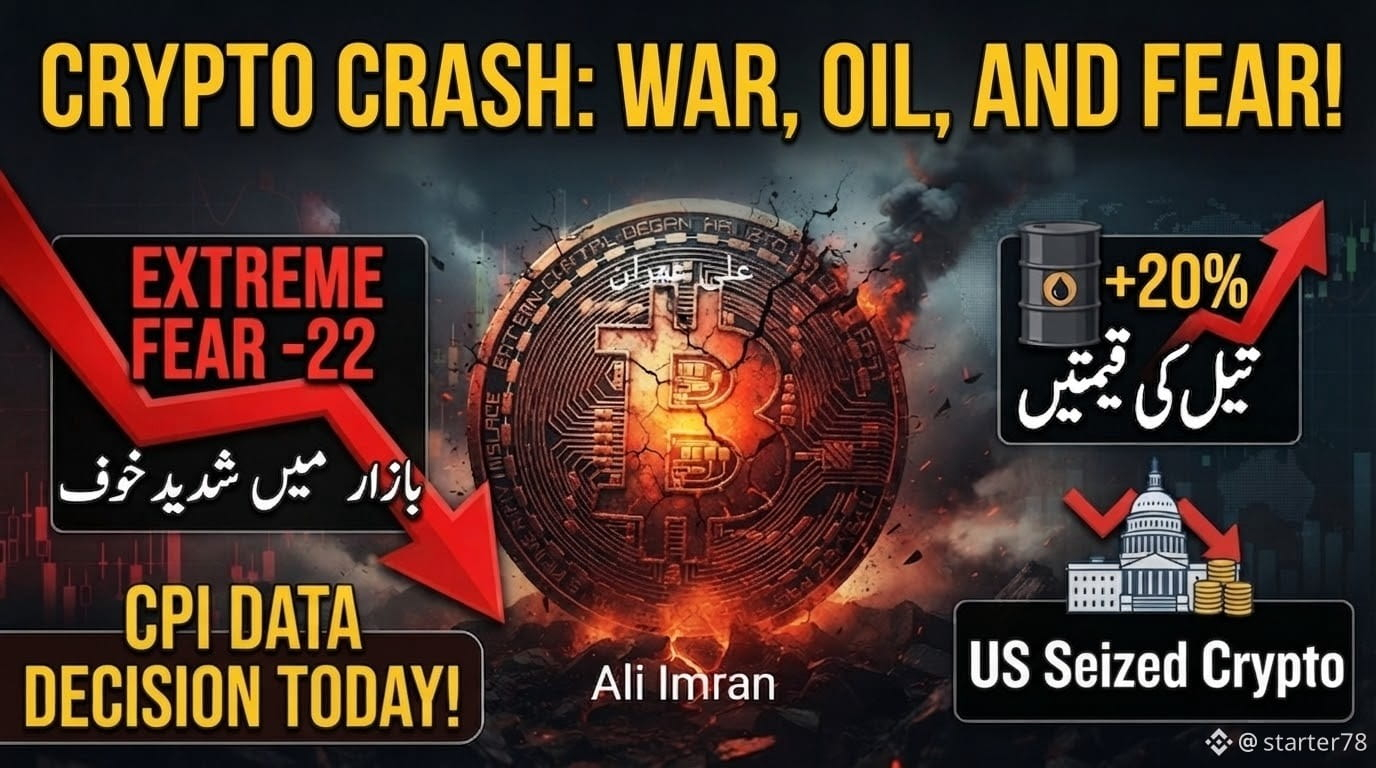
186
·
--
🪙 Big News: Circle Just Got the Green Light to Run Its Own Bank.🏦If you follow crypto, you’ve probably seen the headlines: Circle just got approved to operate as a "trust bank," and their stock price jumped. But what does this actually mean for everyone?
🪙 Who is Circle?
Circle is the company behind *USDC*, one of the most popular "stablecoins" in the world. A stablecoin is a digital currency designed to stay at a steady value of $1. To make this work, Circle holds real dollars and U.S. government bonds in reserve to back up every USDC token they issue. Think of it like this: for every $1 of digital currency, they hold $1 of safe, real-world assets.
🪙 What exactly happened?
On July 10, 2026, the U.S. Office of the Comptroller of the Currency (OCC)—the federal agency that regulates national banks—officially allowed Circle to open its own bank, called "Circle National Trust".
This is a major deal. Previously, Circle had to rely on other banks to hold their cash and bonds. It’s like a business that had to keep its life savings in someone else’s safe. Now, Circle can manage its own "safe" under direct federal supervision.
🪙 Why does this matter?
Here is why the crypto world is buzzing:
* More Trust, Less Risk: Instead of relying on outside banks, Circle can manage its own reserves directly under strict federal rules. Fewer middlemen usually mean fewer chances for things to go wrong.
* A Stamp of Legitimacy: Getting an OCC charter is tough. It shows that U.S. regulators are now comfortable treating a crypto company more like a traditional, regulated bank something that seemed impossible just a few years ago.
* Welcoming Big Money: Huge financial firms and asset managers are often scared off by "regulatory uncertainty." Having a federally chartered bank removes that worry, making it much easier for serious, institutional money to enter the crypto ecosystem.
* Future Services: Down the road, Circle National Trust could offer secure storage (custody) services for other financial institutions, not just for itself.
**What this bank won’t do**
It’s important to note: this isn’t a standard bank for everyday people. Circle National Trust cannot accept deposits from the public or hand out personal loans. Its focus is specific: holding digital assets and managing the reserves that back USDC.
🪙 Why the timing is interesting:
Circle isn't alone in this. Companies like Ripple, Paxos, Fidelity, and BitGo are also chasing similar licenses. The trend is clear: crypto companies are trying to move from being "outsiders" to becoming a core part of the official financial system.
Interestingly, this news came on the same day that "Swift" (the global bank messaging system) announced a blockchain pilot project with 17 major banks, including Citi and HSBC. It’s becoming clear that traditional finance and crypto are finally starting to work together rather than staying apart.
🪙The Bottom Line.
This isn't about a flashy new app; it's about building a solid foundation. Circle is moving stablecoins from a "niche" crypto tool into a regulated piece of the U.S. financial system. For the average user, it means more confidence that the dollars backing USDC are safe. For the industry, it's a huge step toward the mainstream.
🪙 Ali Imran
#Circle #USDC #stablecoin
🪙 Big News: Circle Just Got the Green Light to Run Its Own Bank.🏦
If you follow crypto, you’ve probably seen the headlines: Circle just got approved to operate as a "trust bank," and their stock price jumped. But what does this actually mean for everyone?
🪙 Who is Circle?
Circle is the company behind *USDC*, one of the most popular "stablecoins" in the world. A stablecoin is a digital currency designed to stay at a steady value of $1. To make this work, Circle holds real dollars and U.S. government bonds in reserve to back up every USDC token they issue. Think of it like this: for every $1 of digital currency, they hold $1 of safe, real-world assets.
🪙 What exactly happened?
On July 10, 2026, the U.S. Office of the Comptroller of the Currency (OCC)—the federal agency that regulates national banks—officially allowed Circle to open its own bank, called "Circle National Trust".
This is a major deal. Previously, Circle had to rely on other banks to hold their cash and bonds. It’s like a business that had to keep its life savings in someone else’s safe. Now, Circle can manage its own "safe" under direct federal supervision.
🪙 Why does this matter?
Here is why the crypto world is buzzing:
* More Trust, Less Risk: Instead of relying on outside banks, Circle can manage its own reserves directly under strict federal rules. Fewer middlemen usually mean fewer chances for things to go wrong.
* A Stamp of Legitimacy: Getting an OCC charter is tough. It shows that U.S. regulators are now comfortable treating a crypto company more like a traditional, regulated bank something that seemed impossible just a few years ago.
* Welcoming Big Money: Huge financial firms and asset managers are often scared off by "regulatory uncertainty." Having a federally chartered bank removes that worry, making it much easier for serious, institutional money to enter the crypto ecosystem.
* Future Services: Down the road, Circle National Trust could offer secure storage (custody) services for other financial institutions, not just for itself.
**What this bank won’t do**
It’s important to note: this isn’t a standard bank for everyday people. Circle National Trust cannot accept deposits from the public or hand out personal loans. Its focus is specific: holding digital assets and managing the reserves that back USDC.
🪙 Why the timing is interesting:
Circle isn't alone in this. Companies like Ripple, Paxos, Fidelity, and BitGo are also chasing similar licenses. The trend is clear: crypto companies are trying to move from being "outsiders" to becoming a core part of the official financial system.
Interestingly, this news came on the same day that "Swift" (the global bank messaging system) announced a blockchain pilot project with 17 major banks, including Citi and HSBC. It’s becoming clear that traditional finance and crypto are finally starting to work together rather than staying apart.
🪙The Bottom Line.
This isn't about a flashy new app; it's about building a solid foundation. Circle is moving stablecoins from a "niche" crypto tool into a regulated piece of the U.S. financial system. For the average user, it means more confidence that the dollars backing USDC are safe. For the industry, it's a huge step toward the mainstream.
🪙 Ali Imran
#Circle #USDC #stablecoin
🪙 Who is Circle?
Circle is the company behind *USDC*, one of the most popular "stablecoins" in the world. A stablecoin is a digital currency designed to stay at a steady value of $1. To make this work, Circle holds real dollars and U.S. government bonds in reserve to back up every USDC token they issue. Think of it like this: for every $1 of digital currency, they hold $1 of safe, real-world assets.
🪙 What exactly happened?
On July 10, 2026, the U.S. Office of the Comptroller of the Currency (OCC)—the federal agency that regulates national banks—officially allowed Circle to open its own bank, called "Circle National Trust".
This is a major deal. Previously, Circle had to rely on other banks to hold their cash and bonds. It’s like a business that had to keep its life savings in someone else’s safe. Now, Circle can manage its own "safe" under direct federal supervision.
🪙 Why does this matter?
Here is why the crypto world is buzzing:
* More Trust, Less Risk: Instead of relying on outside banks, Circle can manage its own reserves directly under strict federal rules. Fewer middlemen usually mean fewer chances for things to go wrong.
* A Stamp of Legitimacy: Getting an OCC charter is tough. It shows that U.S. regulators are now comfortable treating a crypto company more like a traditional, regulated bank something that seemed impossible just a few years ago.
* Welcoming Big Money: Huge financial firms and asset managers are often scared off by "regulatory uncertainty." Having a federally chartered bank removes that worry, making it much easier for serious, institutional money to enter the crypto ecosystem.
* Future Services: Down the road, Circle National Trust could offer secure storage (custody) services for other financial institutions, not just for itself.
**What this bank won’t do**
It’s important to note: this isn’t a standard bank for everyday people. Circle National Trust cannot accept deposits from the public or hand out personal loans. Its focus is specific: holding digital assets and managing the reserves that back USDC.
🪙 Why the timing is interesting:
Circle isn't alone in this. Companies like Ripple, Paxos, Fidelity, and BitGo are also chasing similar licenses. The trend is clear: crypto companies are trying to move from being "outsiders" to becoming a core part of the official financial system.
Interestingly, this news came on the same day that "Swift" (the global bank messaging system) announced a blockchain pilot project with 17 major banks, including Citi and HSBC. It’s becoming clear that traditional finance and crypto are finally starting to work together rather than staying apart.
🪙The Bottom Line.
This isn't about a flashy new app; it's about building a solid foundation. Circle is moving stablecoins from a "niche" crypto tool into a regulated piece of the U.S. financial system. For the average user, it means more confidence that the dollars backing USDC are safe. For the industry, it's a huge step toward the mainstream.
🪙 Ali Imran
#Circle #USDC #stablecoin
USDC+0.02%
CRCLUS+0.30%
157
·
--
Article
Russia Has Also Taken a Step Into the World of Crypto and Bitcoin.If you follow crypto news, a major development is currently unfolding in Russia: the country’s largest private bank, Alfa-Bank, is preparing to provide Bitcoin and crypto services to its customers.
🪙 What is Alfa-Bank's plan?
The bank's COO, Dmitry Vitman, has stated that as soon as the relevant legislation is enacted, the bank intends to provide "all possible services related to digital currencies." These include:
* Crypto Trading: Buying and selling coins like Bitcoin.
* Custody Services: Securely holding customers' crypto, essentially acting as a "digital wallet."
* "Digital Depository": A new regulated system for safely storing crypto assets.
The bank plans to launch its digital depository by December 1, and it intends to offer this storage service not only to its own customers but also to other companies.
Interestingly, Alfa-Bank has quietly begun testing crypto trading within its 'Alfa-Investments' app. Currently, this facility is available only to a select few (wealthy/experienced) investors. According to reports, trading pages for Bitcoin, Ethereum, Tether, USD Coin, Solana, Litecoin, and Zcash have been spotted in this test.
🪙 Why is this not available to everyone yet?
The reason is that final legislation regarding crypto has not yet been completed in Russia. The bill titled "Digital Currency and Digital Rights" has cleared its first hurdle in parliament, but there have been delays in its implementation date. It was originally scheduled to be implemented from July 1, 2026, but it is now expected to take effect around September. Even after that, the Russian Central Bank expects all detailed rules to be finalized by November, after which actual transactions can begin.
This is why a public rollout is still months away. Retail brokerage is expected to launch in late 2026 or early 2027, and significant trading volume is not expected until late 2027.
🪙 Alfa-Bank is not alone.
This is part of a larger trend. Several major Russian banks are in a race to provide crypto services simultaneously:
* Sberbank: Russia's largest bank, which plans to integrate a crypto wallet directly into its 'Sberbank Online' and 'Sber Investments' apps, potentially granting crypto access to over 100 million existing customers.
* T-Bank: Plans to offer a digital depository on its 'Atomize' platform and sell crypto through 'T-Investments'.
* VTB: Intends to create its own depository to store digital assets.
* Moscow Exchange: Expected to launch its first crypto transactions by the end of 2026.
This is a massive shift. For years, crypto remained in a legal gray area in Russia; people could hold it, but banks couldn't touch it. Now, the country's major financial institutions are openly preparing for a regulated crypto market, which indicates that lawmakers are close to legitimizing it.
This also mirrors a pattern seen globally: large banks first build the "boring but necessary" infrastructure (such as secure custody and storage) and then open the doors to retail customers.
In short, nothing is directly available to the general public yet. But work is quietly continuing behind the scenes, and if the legal timeline holds, ordinary Russian citizens could gain access to Bitcoin and other cryptocurrencies through their banks by late 2026 or 2027.
#Ali_Imran
#RussiaCrypto #AlfaBank #CryptoRegulation #DigitalAssets
Russia Has Also Taken a Step Into the World of Crypto and Bitcoin.
If you follow crypto news, a major development is currently unfolding in Russia: the country’s largest private bank, Alfa-Bank, is preparing to provide Bitcoin and crypto services to its customers.
🪙 What is Alfa-Bank's plan?
The bank's COO, Dmitry Vitman, has stated that as soon as the relevant legislation is enacted, the bank intends to provide "all possible services related to digital currencies." These include:
* Crypto Trading: Buying and selling coins like Bitcoin.
* Custody Services: Securely holding customers' crypto, essentially acting as a "digital wallet."
* "Digital Depository": A new regulated system for safely storing crypto assets.
The bank plans to launch its digital depository by December 1, and it intends to offer this storage service not only to its own customers but also to other companies.
Interestingly, Alfa-Bank has quietly begun testing crypto trading within its 'Alfa-Investments' app. Currently, this facility is available only to a select few (wealthy/experienced) investors. According to reports, trading pages for Bitcoin, Ethereum, Tether, USD Coin, Solana, Litecoin, and Zcash have been spotted in this test.
🪙 Why is this not available to everyone yet?
The reason is that final legislation regarding crypto has not yet been completed in Russia. The bill titled "Digital Currency and Digital Rights" has cleared its first hurdle in parliament, but there have been delays in its implementation date. It was originally scheduled to be implemented from July 1, 2026, but it is now expected to take effect around September. Even after that, the Russian Central Bank expects all detailed rules to be finalized by November, after which actual transactions can begin.
This is why a public rollout is still months away. Retail brokerage is expected to launch in late 2026 or early 2027, and significant trading volume is not expected until late 2027.
🪙 Alfa-Bank is not alone.
This is part of a larger trend. Several major Russian banks are in a race to provide crypto services simultaneously:
* Sberbank: Russia's largest bank, which plans to integrate a crypto wallet directly into its 'Sberbank Online' and 'Sber Investments' apps, potentially granting crypto access to over 100 million existing customers.
* T-Bank: Plans to offer a digital depository on its 'Atomize' platform and sell crypto through 'T-Investments'.
* VTB: Intends to create its own depository to store digital assets.
* Moscow Exchange: Expected to launch its first crypto transactions by the end of 2026.
This is a massive shift. For years, crypto remained in a legal gray area in Russia; people could hold it, but banks couldn't touch it. Now, the country's major financial institutions are openly preparing for a regulated crypto market, which indicates that lawmakers are close to legitimizing it.
This also mirrors a pattern seen globally: large banks first build the "boring but necessary" infrastructure (such as secure custody and storage) and then open the doors to retail customers.
In short, nothing is directly available to the general public yet. But work is quietly continuing behind the scenes, and if the legal timeline holds, ordinary Russian citizens could gain access to Bitcoin and other cryptocurrencies through their banks by late 2026 or 2027.
#Ali_Imran
#RussiaCrypto #AlfaBank #CryptoRegulation #DigitalAssets
🪙 What is Alfa-Bank's plan?
The bank's COO, Dmitry Vitman, has stated that as soon as the relevant legislation is enacted, the bank intends to provide "all possible services related to digital currencies." These include:
* Crypto Trading: Buying and selling coins like Bitcoin.
* Custody Services: Securely holding customers' crypto, essentially acting as a "digital wallet."
* "Digital Depository": A new regulated system for safely storing crypto assets.
The bank plans to launch its digital depository by December 1, and it intends to offer this storage service not only to its own customers but also to other companies.
Interestingly, Alfa-Bank has quietly begun testing crypto trading within its 'Alfa-Investments' app. Currently, this facility is available only to a select few (wealthy/experienced) investors. According to reports, trading pages for Bitcoin, Ethereum, Tether, USD Coin, Solana, Litecoin, and Zcash have been spotted in this test.
🪙 Why is this not available to everyone yet?
The reason is that final legislation regarding crypto has not yet been completed in Russia. The bill titled "Digital Currency and Digital Rights" has cleared its first hurdle in parliament, but there have been delays in its implementation date. It was originally scheduled to be implemented from July 1, 2026, but it is now expected to take effect around September. Even after that, the Russian Central Bank expects all detailed rules to be finalized by November, after which actual transactions can begin.
This is why a public rollout is still months away. Retail brokerage is expected to launch in late 2026 or early 2027, and significant trading volume is not expected until late 2027.
🪙 Alfa-Bank is not alone.
This is part of a larger trend. Several major Russian banks are in a race to provide crypto services simultaneously:
* Sberbank: Russia's largest bank, which plans to integrate a crypto wallet directly into its 'Sberbank Online' and 'Sber Investments' apps, potentially granting crypto access to over 100 million existing customers.
* T-Bank: Plans to offer a digital depository on its 'Atomize' platform and sell crypto through 'T-Investments'.
* VTB: Intends to create its own depository to store digital assets.
* Moscow Exchange: Expected to launch its first crypto transactions by the end of 2026.
This is a massive shift. For years, crypto remained in a legal gray area in Russia; people could hold it, but banks couldn't touch it. Now, the country's major financial institutions are openly preparing for a regulated crypto market, which indicates that lawmakers are close to legitimizing it.
This also mirrors a pattern seen globally: large banks first build the "boring but necessary" infrastructure (such as secure custody and storage) and then open the doors to retail customers.
In short, nothing is directly available to the general public yet. But work is quietly continuing behind the scenes, and if the legal timeline holds, ordinary Russian citizens could gain access to Bitcoin and other cryptocurrencies through their banks by late 2026 or 2027.
#Ali_Imran
#RussiaCrypto #AlfaBank #CryptoRegulation #DigitalAssets
1
191
·
--
FBI Director’s Bitcoin Stock Scandal: "Secret Investment" Causes Stir in D.C. 🚨📈Washington watchdogs are up in arms after it was revealed that FBI Director Kash Patel bought a significant amount of stock in MicroStrategy a company heavily tied to Bitcoin without telling anyone for six months.
*The Situation:
On November 21, 2025, Patel purchased between $100,001 and $250,000 worth of MicroStrategy stock. The problem? He didn’t report the trade to federal regulators until May 26, 2026. According to a report by the non-profit news outlet NOTUS, this disclosure was over six months late.
*Why It Matters: The STOCK Act:
There is a federal law called the STOCK Act, which requires high-level government officials to report any stock trade over $1,000 within 45 days. This isn't just red tape; it is designed to prevent "conflicts of interest." It ensures officials aren’t using private information to trade or investing in companies that their agency is currently overseeing.
MicroStrategy, led by Michael Saylor, is the world's largest corporate holder of Bitcoin. Because of this, buying their stock is essentially the most direct way to bet on Bitcoin prices through a standard brokerage account. Furthermore, the company has done millions of dollars in business with the Department of Justice. Since the FBI actively investigates crypto-related fraud, owning a massive stake in a Bitcoin-heavy company looks suspicious even if no laws were technically broken.
*The Official Response:
In a letter to the Office of Government Ethics, Patel claimed he "inadvertently" left the trade out of his initial reports. A Deputy Assistant Attorney General later called it a "misunderstanding," and an FBI official insisted the delay was an honest mistake.
They maintain there is no conflict of interest with his duties at the FBI.
However, many are not buying the excuse. Dylan Hedtler-Gaudette of the Project on Government Oversight told NOTUS that this is "undoubtedly" a violation of the law. This incident has reignited calls for a total ban on government officials trading individual stocks.
While the STOCK Act typically carries a $200 fine for a first-time violation, the Department of Justice did not fine Patel; they simply reviewed and approved his corrected paperwork.
*The Financial Context:
Since Patel bought the stock, MicroStrategy shares have dropped nearly 48%.
Patel isn't the only official involved in crypto. Vice President J.D. Vance has disclosed holding up to $500,000 in Bitcoin, and Donald Trump and his sons have reported over a billion dollars in crypto-linked income. As more top officials get involved in the crypto market while simultaneously overseeing the agencies meant to regulate it the pressure for stricter, or even total, bans on these types of investments is growing.
*What do you think?:
Should government officials be completely banned from trading individual stocks while in office? Let us know your thoughts.
#Ali_Imran
#StockAct #KashPatel #ConflictOfInterest #FBI
FBI Director’s Bitcoin Stock Scandal: "Secret Investment" Causes Stir in D.C. 🚨📈
Washington watchdogs are up in arms after it was revealed that FBI Director Kash Patel bought a significant amount of stock in MicroStrategy a company heavily tied to Bitcoin without telling anyone for six months.
*The Situation:
On November 21, 2025, Patel purchased between $100,001 and $250,000 worth of MicroStrategy stock. The problem? He didn’t report the trade to federal regulators until May 26, 2026. According to a report by the non-profit news outlet NOTUS, this disclosure was over six months late.
*Why It Matters: The STOCK Act:
There is a federal law called the STOCK Act, which requires high-level government officials to report any stock trade over $1,000 within 45 days. This isn't just red tape; it is designed to prevent "conflicts of interest." It ensures officials aren’t using private information to trade or investing in companies that their agency is currently overseeing.
MicroStrategy, led by Michael Saylor, is the world's largest corporate holder of Bitcoin. Because of this, buying their stock is essentially the most direct way to bet on Bitcoin prices through a standard brokerage account. Furthermore, the company has done millions of dollars in business with the Department of Justice. Since the FBI actively investigates crypto-related fraud, owning a massive stake in a Bitcoin-heavy company looks suspicious even if no laws were technically broken.
*The Official Response:
In a letter to the Office of Government Ethics, Patel claimed he "inadvertently" left the trade out of his initial reports. A Deputy Assistant Attorney General later called it a "misunderstanding," and an FBI official insisted the delay was an honest mistake.
They maintain there is no conflict of interest with his duties at the FBI.
However, many are not buying the excuse. Dylan Hedtler-Gaudette of the Project on Government Oversight told NOTUS that this is "undoubtedly" a violation of the law. This incident has reignited calls for a total ban on government officials trading individual stocks.
While the STOCK Act typically carries a $200 fine for a first-time violation, the Department of Justice did not fine Patel; they simply reviewed and approved his corrected paperwork.
*The Financial Context:
Since Patel bought the stock, MicroStrategy shares have dropped nearly 48%.
Patel isn't the only official involved in crypto. Vice President J.D. Vance has disclosed holding up to $500,000 in Bitcoin, and Donald Trump and his sons have reported over a billion dollars in crypto-linked income. As more top officials get involved in the crypto market while simultaneously overseeing the agencies meant to regulate it the pressure for stricter, or even total, bans on these types of investments is growing.
*What do you think?:
Should government officials be completely banned from trading individual stocks while in office? Let us know your thoughts.
#Ali_Imran
#StockAct #KashPatel #ConflictOfInterest #FBI
*The Situation:
On November 21, 2025, Patel purchased between $100,001 and $250,000 worth of MicroStrategy stock. The problem? He didn’t report the trade to federal regulators until May 26, 2026. According to a report by the non-profit news outlet NOTUS, this disclosure was over six months late.
*Why It Matters: The STOCK Act:
There is a federal law called the STOCK Act, which requires high-level government officials to report any stock trade over $1,000 within 45 days. This isn't just red tape; it is designed to prevent "conflicts of interest." It ensures officials aren’t using private information to trade or investing in companies that their agency is currently overseeing.
MicroStrategy, led by Michael Saylor, is the world's largest corporate holder of Bitcoin. Because of this, buying their stock is essentially the most direct way to bet on Bitcoin prices through a standard brokerage account. Furthermore, the company has done millions of dollars in business with the Department of Justice. Since the FBI actively investigates crypto-related fraud, owning a massive stake in a Bitcoin-heavy company looks suspicious even if no laws were technically broken.
*The Official Response:
In a letter to the Office of Government Ethics, Patel claimed he "inadvertently" left the trade out of his initial reports. A Deputy Assistant Attorney General later called it a "misunderstanding," and an FBI official insisted the delay was an honest mistake.
They maintain there is no conflict of interest with his duties at the FBI.
However, many are not buying the excuse. Dylan Hedtler-Gaudette of the Project on Government Oversight told NOTUS that this is "undoubtedly" a violation of the law. This incident has reignited calls for a total ban on government officials trading individual stocks.
While the STOCK Act typically carries a $200 fine for a first-time violation, the Department of Justice did not fine Patel; they simply reviewed and approved his corrected paperwork.
*The Financial Context:
Since Patel bought the stock, MicroStrategy shares have dropped nearly 48%.
Patel isn't the only official involved in crypto. Vice President J.D. Vance has disclosed holding up to $500,000 in Bitcoin, and Donald Trump and his sons have reported over a billion dollars in crypto-linked income. As more top officials get involved in the crypto market while simultaneously overseeing the agencies meant to regulate it the pressure for stricter, or even total, bans on these types of investments is growing.
*What do you think?:
Should government officials be completely banned from trading individual stocks while in office? Let us know your thoughts.
#Ali_Imran
#StockAct #KashPatel #ConflictOfInterest #FBI
MSTR-3.43%
MSTRUS-0.15%
149
·
--
Cryptoregulation: Britain's New Move—Is London's Future Safe?If you have been keeping an eye on crypto news this week, you have likely seen the headlines regarding the new crypto rulebook issued by the UK's Financial Conduct Authority (FCA). While it might sound like mere regulatory jargon, this is a major development for traders, crypto companies, and anyone hoping to see the UK become a key player in digital assets.
Let’s break it down in simple terms.
On June 30, 2026, the FCA published its most detailed crypto regulation to date. This is no minor adjustment; for the first time, it brings many crypto activities (such as trading platforms, custodians, stablecoin issuers, and staking providers) under full regulatory oversight. Until now, the FCA’s grip on crypto was relatively weak, limited mostly to anti-money laundering (AML) prevention and the approval of crypto advertisements.
This new system changes that completely. Crypto firms will now be treated like banks or investment firms, subject to capital requirements, stress tests, senior management accountability, and laws against insider trading and market manipulation.
*Global Liquidity and the "Qualifying Platform" Model.
This is the part everyone is talking about. Rather than restricting UK crypto trading to an isolated local circle, the FCA is acting more intelligently: it is providing UK users with access to global liquidity through a new "Qualifying Crypto Asset Trading Platform" model.
In simple terms, a foreign exchange can open a branch in the UK and remain connected to its existing global trading pools, rather than having to create a separate, smaller pool of buyers and sellers exclusively for the UK. This generally means better prices and more convenience, as UK traders will not be stuck in a limited local market. Foreign stablecoins will also be permitted to circulate in the UK.
*Attracting Institutional Players.
This legal situation is not just about retail traders buying Bitcoin on an app. It involves major institutional players (such as hedge funds and asset managers) who have stayed away until now due to ambiguous laws. This provides those investors with the legal certainty and governance standards they need to deploy their clients' capital. The UK hopes that bank-like, clear regulations will attract large, serious institutional investors.
*The Reality Check.
Now, let’s get realistic. Obtaining approval under the old, highly restrictive anti-money laundering registration law was very difficult; the FCA rejected or returned over 85 percent of applications. The new system demands even more: consumer protection standards, capital requirements, operational resilience, and proof that senior managers are personally accountable.
This is great for small crypto startups. But in reality, it may favor large, well-funded firms that can afford the costs of legal and regulatory compliance, while smaller companies may be forced out of the market. When Europe introduced its similar MiCA framework, many firms waited until the deadline, leading to a rush and leaving many companies unauthorized when time ran out. The message for British and foreign firms is: Do not wait; apply early.
*Lingering Ambiguity.
One important question remains unanswered: foreign exchange branches will only be granted approval if their home countries have "satisfactory regulatory protections," but the FCA has not yet specified which countries will be considered to meet this criterion. This is a crucial detail that remains ambiguous.
*Timeline:
* July 2026: Start of pre-application support meetings.
* September 30, 2026, to February 28, 2027: Firms can formally apply for authorization.
* October 25, 2027: Official implementation of the full mandatory system.
So, this is not happening overnight. Firms have more than a year to prepare before it becomes mandatory.
The FCA is attempting to strike a balance: creating a crypto framework open enough to bring global liquidity to London, but strict enough to protect consumers and prevent illicit activity. On paper, this vision seems sound. However, the test will be whether the authorization process is fast and fair enough for firms to stay here to obtain a license, rather than moving to friendlier environments in Europe, Asia, or the Middle East.
For now, this is promising news. Will the FCA be able to turn London into a global crypto hub? That depends on the practical progress made over the next 18 months.
#Al_Imran
#UKCrypto #FCARegulation #CryptoNews #DigitalAssets
Cryptoregulation: Britain's New Move—Is London's Future Safe?
If you have been keeping an eye on crypto news this week, you have likely seen the headlines regarding the new crypto rulebook issued by the UK's Financial Conduct Authority (FCA). While it might sound like mere regulatory jargon, this is a major development for traders, crypto companies, and anyone hoping to see the UK become a key player in digital assets.
Let’s break it down in simple terms.
On June 30, 2026, the FCA published its most detailed crypto regulation to date. This is no minor adjustment; for the first time, it brings many crypto activities (such as trading platforms, custodians, stablecoin issuers, and staking providers) under full regulatory oversight. Until now, the FCA’s grip on crypto was relatively weak, limited mostly to anti-money laundering (AML) prevention and the approval of crypto advertisements.
This new system changes that completely. Crypto firms will now be treated like banks or investment firms, subject to capital requirements, stress tests, senior management accountability, and laws against insider trading and market manipulation.
*Global Liquidity and the "Qualifying Platform" Model.
This is the part everyone is talking about. Rather than restricting UK crypto trading to an isolated local circle, the FCA is acting more intelligently: it is providing UK users with access to global liquidity through a new "Qualifying Crypto Asset Trading Platform" model.
In simple terms, a foreign exchange can open a branch in the UK and remain connected to its existing global trading pools, rather than having to create a separate, smaller pool of buyers and sellers exclusively for the UK. This generally means better prices and more convenience, as UK traders will not be stuck in a limited local market. Foreign stablecoins will also be permitted to circulate in the UK.
*Attracting Institutional Players.
This legal situation is not just about retail traders buying Bitcoin on an app. It involves major institutional players (such as hedge funds and asset managers) who have stayed away until now due to ambiguous laws. This provides those investors with the legal certainty and governance standards they need to deploy their clients' capital. The UK hopes that bank-like, clear regulations will attract large, serious institutional investors.
*The Reality Check.
Now, let’s get realistic. Obtaining approval under the old, highly restrictive anti-money laundering registration law was very difficult; the FCA rejected or returned over 85 percent of applications. The new system demands even more: consumer protection standards, capital requirements, operational resilience, and proof that senior managers are personally accountable.
This is great for small crypto startups. But in reality, it may favor large, well-funded firms that can afford the costs of legal and regulatory compliance, while smaller companies may be forced out of the market. When Europe introduced its similar MiCA framework, many firms waited until the deadline, leading to a rush and leaving many companies unauthorized when time ran out. The message for British and foreign firms is: Do not wait; apply early.
*Lingering Ambiguity.
One important question remains unanswered: foreign exchange branches will only be granted approval if their home countries have "satisfactory regulatory protections," but the FCA has not yet specified which countries will be considered to meet this criterion. This is a crucial detail that remains ambiguous.
*Timeline:
* July 2026: Start of pre-application support meetings.
* September 30, 2026, to February 28, 2027: Firms can formally apply for authorization.
* October 25, 2027: Official implementation of the full mandatory system.
So, this is not happening overnight. Firms have more than a year to prepare before it becomes mandatory.
The FCA is attempting to strike a balance: creating a crypto framework open enough to bring global liquidity to London, but strict enough to protect consumers and prevent illicit activity. On paper, this vision seems sound. However, the test will be whether the authorization process is fast and fair enough for firms to stay here to obtain a license, rather than moving to friendlier environments in Europe, Asia, or the Middle East.
For now, this is promising news. Will the FCA be able to turn London into a global crypto hub? That depends on the practical progress made over the next 18 months.
#Al_Imran
#UKCrypto #FCARegulation #CryptoNews #DigitalAssets
Let’s break it down in simple terms.
On June 30, 2026, the FCA published its most detailed crypto regulation to date. This is no minor adjustment; for the first time, it brings many crypto activities (such as trading platforms, custodians, stablecoin issuers, and staking providers) under full regulatory oversight. Until now, the FCA’s grip on crypto was relatively weak, limited mostly to anti-money laundering (AML) prevention and the approval of crypto advertisements.
This new system changes that completely. Crypto firms will now be treated like banks or investment firms, subject to capital requirements, stress tests, senior management accountability, and laws against insider trading and market manipulation.
*Global Liquidity and the "Qualifying Platform" Model.
This is the part everyone is talking about. Rather than restricting UK crypto trading to an isolated local circle, the FCA is acting more intelligently: it is providing UK users with access to global liquidity through a new "Qualifying Crypto Asset Trading Platform" model.
In simple terms, a foreign exchange can open a branch in the UK and remain connected to its existing global trading pools, rather than having to create a separate, smaller pool of buyers and sellers exclusively for the UK. This generally means better prices and more convenience, as UK traders will not be stuck in a limited local market. Foreign stablecoins will also be permitted to circulate in the UK.
*Attracting Institutional Players.
This legal situation is not just about retail traders buying Bitcoin on an app. It involves major institutional players (such as hedge funds and asset managers) who have stayed away until now due to ambiguous laws. This provides those investors with the legal certainty and governance standards they need to deploy their clients' capital. The UK hopes that bank-like, clear regulations will attract large, serious institutional investors.
*The Reality Check.
Now, let’s get realistic. Obtaining approval under the old, highly restrictive anti-money laundering registration law was very difficult; the FCA rejected or returned over 85 percent of applications. The new system demands even more: consumer protection standards, capital requirements, operational resilience, and proof that senior managers are personally accountable.
This is great for small crypto startups. But in reality, it may favor large, well-funded firms that can afford the costs of legal and regulatory compliance, while smaller companies may be forced out of the market. When Europe introduced its similar MiCA framework, many firms waited until the deadline, leading to a rush and leaving many companies unauthorized when time ran out. The message for British and foreign firms is: Do not wait; apply early.
*Lingering Ambiguity.
One important question remains unanswered: foreign exchange branches will only be granted approval if their home countries have "satisfactory regulatory protections," but the FCA has not yet specified which countries will be considered to meet this criterion. This is a crucial detail that remains ambiguous.
*Timeline:
* July 2026: Start of pre-application support meetings.
* September 30, 2026, to February 28, 2027: Firms can formally apply for authorization.
* October 25, 2027: Official implementation of the full mandatory system.
So, this is not happening overnight. Firms have more than a year to prepare before it becomes mandatory.
The FCA is attempting to strike a balance: creating a crypto framework open enough to bring global liquidity to London, but strict enough to protect consumers and prevent illicit activity. On paper, this vision seems sound. However, the test will be whether the authorization process is fast and fair enough for firms to stay here to obtain a license, rather than moving to friendlier environments in Europe, Asia, or the Middle East.
For now, this is promising news. Will the FCA be able to turn London into a global crypto hub? That depends on the practical progress made over the next 18 months.
#Al_Imran
#UKCrypto #FCARegulation #CryptoNews #DigitalAssets
115
·
--
Article
A $3,000 laptop setup almost put $70 billion of crypto at risk.Imagine someone could threaten $70 billion worth of wealth using gear that costs less than a used car. That is basically what happened in the crypto world, but thankfully, "the good guys" (ethical hackers) discovered the vulnerability before any criminals could.
* Aptos is a blockchain a digital ledger that tracks ownership, similar to Bitcoin or Ethereum, but based on its own technology called "Move." Move originally started as a project within Facebook (when Facebook was attempting to launch its own currency, "Diem").
A security firm, "Hexens", which consists of "ethical hackers" paid to find vulnerabilities before criminals do, discovered a deep flaw within the software that processes every transaction on Aptos. In simple terms: the system could get confused about which type of digital asset it was looking at. This confusion could allow an attacker to trick the network into treating one thing as another like convincing a bank's computer that a common IOU note is actual cash.
* The frightening part is that the researchers built a test setup for a $3,000 budget (roughly the cost of a decent laptop and some cloud servers), and each attempt to exploit this flaw cost only a few hundred dollars. Despite this modest budget, their simulated attacks were successful approximately 90% of the time.
* In cybersecurity, a combination of low cost and high success rate is a nightmare. This means this was not a scenario requiring the power of a national intelligence agency; anyone with a modest budget and skill could have attempted it.
* Hexens estimated that if this flaw had not been patched, its effects could have impacted up to $70 billion. This included not only funds on Aptos but also assets connected through "bridges" to other blockchains, stablecoins built on Aptos, and even cross-chain services like LayerZero and Wormhole.
* Nothing was stolen. Hexens reported the flaw quietly through Aptos's emergency channel in late February, and the Aptos team fixed (patched) it within a few hours. A public record of the patch was released two days later. Not a single dollar of any user was lost.
* Aptos has disagreed slightly on how "exploitable" this flaw was in practice, but they have not offered any technical rebuttal to the researchers' findings.
This story is important, even if you have never used Aptos, because it reveals a truth about crypto:
* The crypto economy is more interconnected than it appears: A weak link in one blockchain can put money on other platforms at risk.
* Previous cyberattacks required massive budgets and insider access. This flaw required neither.
* Responsible disclosure still exists. The researchers could have sold this flaw on the black market for a huge sum. Instead, they reported it and had it fixed a reminder that ethical hackers are keeping your money safer than people realize.
This does not mean "crypto is broken." Rather, it means that behind the scenes, a constant war is ongoing between those trying to break the systems and those trying to protect them, and this time, the protectors won.
*Ali Imran.
#CryptoNews #Blockchain #Aptos #CyberSecurity #Web3
A $3,000 laptop setup almost put $70 billion of crypto at risk.
Imagine someone could threaten $70 billion worth of wealth using gear that costs less than a used car. That is basically what happened in the crypto world, but thankfully, "the good guys" (ethical hackers) discovered the vulnerability before any criminals could.
* Aptos is a blockchain a digital ledger that tracks ownership, similar to Bitcoin or Ethereum, but based on its own technology called "Move." Move originally started as a project within Facebook (when Facebook was attempting to launch its own currency, "Diem").
A security firm, "Hexens", which consists of "ethical hackers" paid to find vulnerabilities before criminals do, discovered a deep flaw within the software that processes every transaction on Aptos. In simple terms: the system could get confused about which type of digital asset it was looking at. This confusion could allow an attacker to trick the network into treating one thing as another like convincing a bank's computer that a common IOU note is actual cash.
* The frightening part is that the researchers built a test setup for a $3,000 budget (roughly the cost of a decent laptop and some cloud servers), and each attempt to exploit this flaw cost only a few hundred dollars. Despite this modest budget, their simulated attacks were successful approximately 90% of the time.
* In cybersecurity, a combination of low cost and high success rate is a nightmare. This means this was not a scenario requiring the power of a national intelligence agency; anyone with a modest budget and skill could have attempted it.
* Hexens estimated that if this flaw had not been patched, its effects could have impacted up to $70 billion. This included not only funds on Aptos but also assets connected through "bridges" to other blockchains, stablecoins built on Aptos, and even cross-chain services like LayerZero and Wormhole.
* Nothing was stolen. Hexens reported the flaw quietly through Aptos's emergency channel in late February, and the Aptos team fixed (patched) it within a few hours. A public record of the patch was released two days later. Not a single dollar of any user was lost.
* Aptos has disagreed slightly on how "exploitable" this flaw was in practice, but they have not offered any technical rebuttal to the researchers' findings.
This story is important, even if you have never used Aptos, because it reveals a truth about crypto:
* The crypto economy is more interconnected than it appears: A weak link in one blockchain can put money on other platforms at risk.
* Previous cyberattacks required massive budgets and insider access. This flaw required neither.
* Responsible disclosure still exists. The researchers could have sold this flaw on the black market for a huge sum. Instead, they reported it and had it fixed a reminder that ethical hackers are keeping your money safer than people realize.
This does not mean "crypto is broken." Rather, it means that behind the scenes, a constant war is ongoing between those trying to break the systems and those trying to protect them, and this time, the protectors won.
*Ali Imran.
#CryptoNews #Blockchain #Aptos #CyberSecurity #Web3
* Aptos is a blockchain a digital ledger that tracks ownership, similar to Bitcoin or Ethereum, but based on its own technology called "Move." Move originally started as a project within Facebook (when Facebook was attempting to launch its own currency, "Diem").
A security firm, "Hexens", which consists of "ethical hackers" paid to find vulnerabilities before criminals do, discovered a deep flaw within the software that processes every transaction on Aptos. In simple terms: the system could get confused about which type of digital asset it was looking at. This confusion could allow an attacker to trick the network into treating one thing as another like convincing a bank's computer that a common IOU note is actual cash.
* The frightening part is that the researchers built a test setup for a $3,000 budget (roughly the cost of a decent laptop and some cloud servers), and each attempt to exploit this flaw cost only a few hundred dollars. Despite this modest budget, their simulated attacks were successful approximately 90% of the time.
* In cybersecurity, a combination of low cost and high success rate is a nightmare. This means this was not a scenario requiring the power of a national intelligence agency; anyone with a modest budget and skill could have attempted it.
* Hexens estimated that if this flaw had not been patched, its effects could have impacted up to $70 billion. This included not only funds on Aptos but also assets connected through "bridges" to other blockchains, stablecoins built on Aptos, and even cross-chain services like LayerZero and Wormhole.
* Nothing was stolen. Hexens reported the flaw quietly through Aptos's emergency channel in late February, and the Aptos team fixed (patched) it within a few hours. A public record of the patch was released two days later. Not a single dollar of any user was lost.
* Aptos has disagreed slightly on how "exploitable" this flaw was in practice, but they have not offered any technical rebuttal to the researchers' findings.
This story is important, even if you have never used Aptos, because it reveals a truth about crypto:
* The crypto economy is more interconnected than it appears: A weak link in one blockchain can put money on other platforms at risk.
* Previous cyberattacks required massive budgets and insider access. This flaw required neither.
* Responsible disclosure still exists. The researchers could have sold this flaw on the black market for a huge sum. Instead, they reported it and had it fixed a reminder that ethical hackers are keeping your money safer than people realize.
This does not mean "crypto is broken." Rather, it means that behind the scenes, a constant war is ongoing between those trying to break the systems and those trying to protect them, and this time, the protectors won.
*Ali Imran.
#CryptoNews #Blockchain #Aptos #CyberSecurity #Web3
185
·
--
Assalamu Alaikum wa Rahmatullahi wa Barakatuh.
Jumu'ah Mubarak.
$SPCXB
{spot}(SPCXBUSDT)
$SOL
{future}(SOLUSDT)
$TRUMP
{future}(TRUMPUSDT)
Assalamu Alaikum wa Rahmatullahi wa Barakatuh.
Jumu'ah Mubarak.
$SPCXB
$SOL
$TRUMP
Jumu'ah Mubarak.
$SPCXB
$SOL
$TRUMP
34
·
--
Article
Tether Just Lost Europe.Starting July 1, 2026, USDT the world's biggest stablecoin, worth roughly $180 billion can no longer be traded on regulated European crypto exchanges. This isn't a rumor. It's the result of a rule that's been building for over a year, and it just hit its deadline.
Europe brought in a law called MiCA (Markets in Crypto-Assets Regulation). It says any stablecoin offered on a licensed EU exchange needs the issuer to hold a special license called an "e-money token" authorization. That means keeping a big chunk of reserves around 60% in EU banks, with full transparency and audits.
Tether never applied for it. Tether CEO Paolo Ardoino said this requirement is fundamentally incompatible with the company's business model So rather than restructure how it manages its reserves, Tether simply chose not to comply.
Big platforms like Coinbase Europe delisted USDT back in December 2024, Crypto.com followed in January 2025, and Binance's EEA entity restricted USDT trading pairs in March 2025 This wasn't sudden exchanges had been prepping for the July 1 deadline for over a year.
*Is USDT "banned"? No.
This is the part people keep getting wrong. Regulators clarified that custody and transfer services don't count as "offering to the public," so those can continue without breaking MiCA rules.
- You can still "hold" USDT in Europe.
- You can still move it to a private wallet.
- You can't buy or sell it on a licensed EU exchange anymore.
- Self-custody and decentralized platforms are untouched, since the rule targets exchanges, not the token itself.
Circle, the company behind USDC. Circle got ahead of this years ago by securing a proper EU license, so USDC (and its euro version, EURC) is now the default stablecoin on EU exchanges. Circle's momentum got another boost when BNY Mellon announced support for USDC one day before the MiCA deadline, letting institutional clients hold, transfer, issue, and burn USDC through BNY's service.
*Is Tether really "abandoning" Europe?
Not entirely it's playing a different game. Tether-backed companies like StablR and Oobit have already launched MiCA-compliant coins a euro-pegged EURR and dollar-pegged USDR issued through Tether's Hadron tokenization platform. So instead of bringing USDT itself into compliance, Tether is backing separate, compliant tokens to keep a foothold in the region.
USDT has long been the default trading pair across global crypto markets. Pulling it from Europe forces a split: EU platforms trade against USDC/EURC, while USDT still dominates in Asia and other markets. That fragmentation could mean wider spreads and thinner liquidity for European traders, at least in the short term.
This isn't Tether being kicked out it's Tether choosing global flexibility over EU compliance, and Europe choosing strict oversight over the world's most-used stablecoin. Circle is the clear short-term winner. Whether Tether eventually applies for a license remains an open question but for now, there's no sign it will.
ALI IMRAN
#Tether #TetherUpdate #usdc
Tether Just Lost Europe.
Starting July 1, 2026, USDT the world's biggest stablecoin, worth roughly $180 billion can no longer be traded on regulated European crypto exchanges. This isn't a rumor. It's the result of a rule that's been building for over a year, and it just hit its deadline.
Europe brought in a law called MiCA (Markets in Crypto-Assets Regulation). It says any stablecoin offered on a licensed EU exchange needs the issuer to hold a special license called an "e-money token" authorization. That means keeping a big chunk of reserves around 60% in EU banks, with full transparency and audits.
Tether never applied for it. Tether CEO Paolo Ardoino said this requirement is fundamentally incompatible with the company's business model So rather than restructure how it manages its reserves, Tether simply chose not to comply.
Big platforms like Coinbase Europe delisted USDT back in December 2024, Crypto.com followed in January 2025, and Binance's EEA entity restricted USDT trading pairs in March 2025 This wasn't sudden exchanges had been prepping for the July 1 deadline for over a year.
*Is USDT "banned"? No.
This is the part people keep getting wrong. Regulators clarified that custody and transfer services don't count as "offering to the public," so those can continue without breaking MiCA rules.
- You can still "hold" USDT in Europe.
- You can still move it to a private wallet.
- You can't buy or sell it on a licensed EU exchange anymore.
- Self-custody and decentralized platforms are untouched, since the rule targets exchanges, not the token itself.
Circle, the company behind USDC. Circle got ahead of this years ago by securing a proper EU license, so USDC (and its euro version, EURC) is now the default stablecoin on EU exchanges. Circle's momentum got another boost when BNY Mellon announced support for USDC one day before the MiCA deadline, letting institutional clients hold, transfer, issue, and burn USDC through BNY's service.
*Is Tether really "abandoning" Europe?
Not entirely it's playing a different game. Tether-backed companies like StablR and Oobit have already launched MiCA-compliant coins a euro-pegged EURR and dollar-pegged USDR issued through Tether's Hadron tokenization platform. So instead of bringing USDT itself into compliance, Tether is backing separate, compliant tokens to keep a foothold in the region.
USDT has long been the default trading pair across global crypto markets. Pulling it from Europe forces a split: EU platforms trade against USDC/EURC, while USDT still dominates in Asia and other markets. That fragmentation could mean wider spreads and thinner liquidity for European traders, at least in the short term.
This isn't Tether being kicked out it's Tether choosing global flexibility over EU compliance, and Europe choosing strict oversight over the world's most-used stablecoin. Circle is the clear short-term winner. Whether Tether eventually applies for a license remains an open question but for now, there's no sign it will.
ALI IMRAN
#Tether #TetherUpdate #usdc
Europe brought in a law called MiCA (Markets in Crypto-Assets Regulation). It says any stablecoin offered on a licensed EU exchange needs the issuer to hold a special license called an "e-money token" authorization. That means keeping a big chunk of reserves around 60% in EU banks, with full transparency and audits.
Tether never applied for it. Tether CEO Paolo Ardoino said this requirement is fundamentally incompatible with the company's business model So rather than restructure how it manages its reserves, Tether simply chose not to comply.
Big platforms like Coinbase Europe delisted USDT back in December 2024, Crypto.com followed in January 2025, and Binance's EEA entity restricted USDT trading pairs in March 2025 This wasn't sudden exchanges had been prepping for the July 1 deadline for over a year.
*Is USDT "banned"? No.
This is the part people keep getting wrong. Regulators clarified that custody and transfer services don't count as "offering to the public," so those can continue without breaking MiCA rules.
- You can still "hold" USDT in Europe.
- You can still move it to a private wallet.
- You can't buy or sell it on a licensed EU exchange anymore.
- Self-custody and decentralized platforms are untouched, since the rule targets exchanges, not the token itself.
Circle, the company behind USDC. Circle got ahead of this years ago by securing a proper EU license, so USDC (and its euro version, EURC) is now the default stablecoin on EU exchanges. Circle's momentum got another boost when BNY Mellon announced support for USDC one day before the MiCA deadline, letting institutional clients hold, transfer, issue, and burn USDC through BNY's service.
*Is Tether really "abandoning" Europe?
Not entirely it's playing a different game. Tether-backed companies like StablR and Oobit have already launched MiCA-compliant coins a euro-pegged EURR and dollar-pegged USDR issued through Tether's Hadron tokenization platform. So instead of bringing USDT itself into compliance, Tether is backing separate, compliant tokens to keep a foothold in the region.
USDT has long been the default trading pair across global crypto markets. Pulling it from Europe forces a split: EU platforms trade against USDC/EURC, while USDT still dominates in Asia and other markets. That fragmentation could mean wider spreads and thinner liquidity for European traders, at least in the short term.
This isn't Tether being kicked out it's Tether choosing global flexibility over EU compliance, and Europe choosing strict oversight over the world's most-used stablecoin. Circle is the clear short-term winner. Whether Tether eventually applies for a license remains an open question but for now, there's no sign it will.
ALI IMRAN
#Tether #TetherUpdate #usdc
132
Log in to explore more content
Join global crypto users on Binance Square
⚡️ Get latest and useful information about crypto.
💬 Trusted by the world’s largest crypto exchange.
👍 Discover real insights from verified creators.
Email / Phone number