

OnchainSani
77 Posts

OnchainSani
Report
Block User
9 Following
15 Followers
92 Liked
Posts
All
Quotes
·
--
Bullish
TON Users Could Access EVM Products Without Manually Managing the Cross-Chain Flow.
A new STON.fi open-source example caught my attention because it approaches cross-chain from a different direction.
Instead of starting with:
“How do I bridge my assets?”
it starts with:
“How can a TON user access an EVM-native product?”
The example shows how this can work inside a Telegram Mini App.
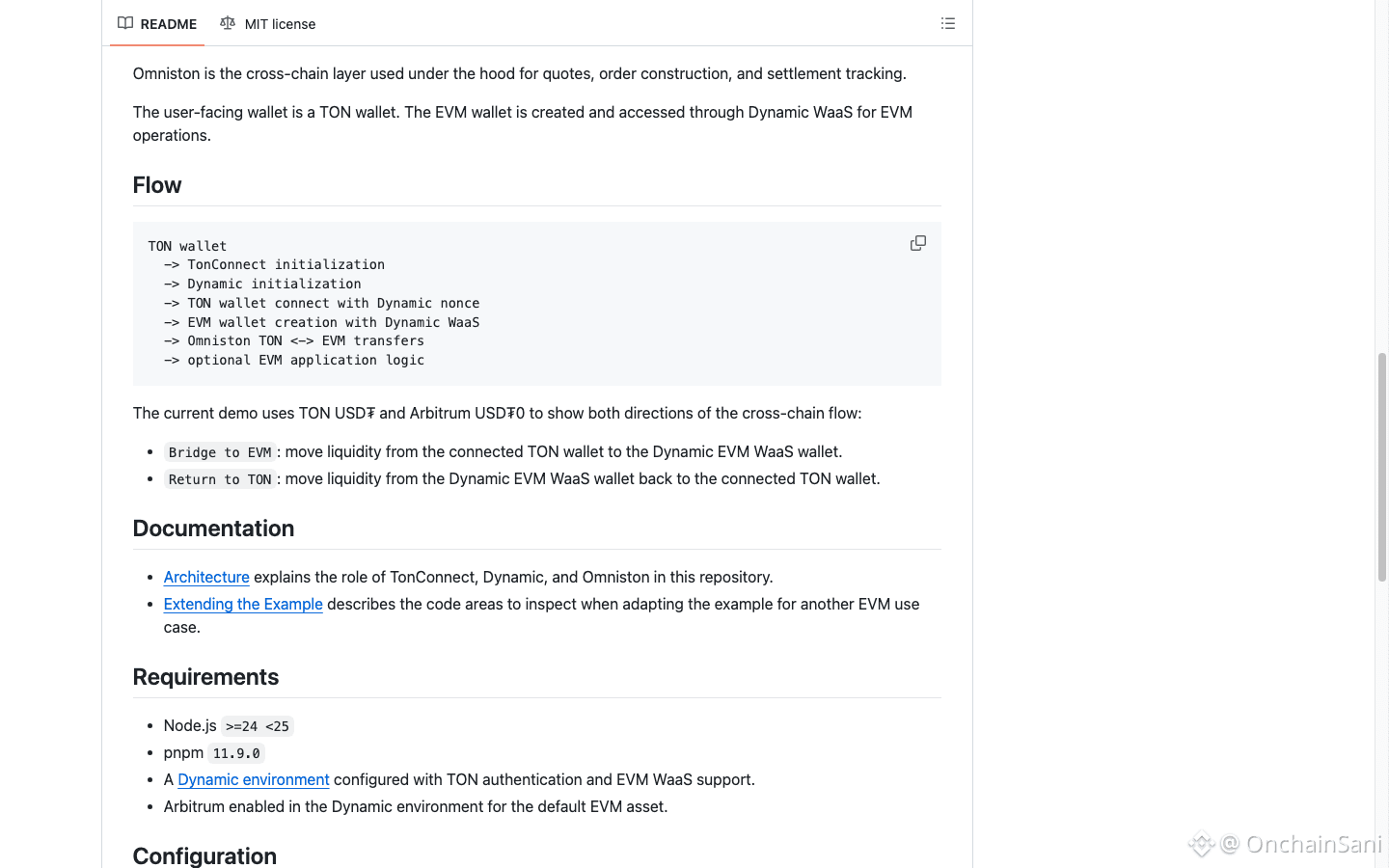
A TON user connects through TonConnect, while a Dynamic embedded EVM wallet is created behind the scenes.
Omniston handles the cross-chain execution.
The example route is:
TON USDT ↔ Arbitrum USDT0
What I find interesting is the UX.
The user doesn't necessarily need to manually coordinate the TON and EVM sides before using the product.
The application can abstract much of that complexity.
And this isn't only theoretical.
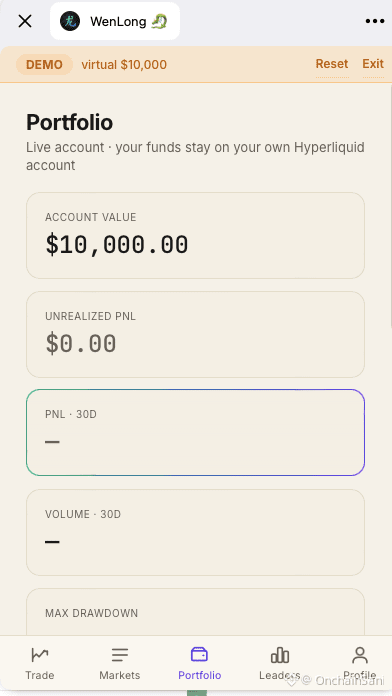
STON.fi points to examples such as Predict with Polymarket and WenLong, where cross-chain infrastructure is used to connect TON users with EVM-based products.
For builders, that's probably the bigger story.
An EVM-native product doesn't necessarily have to rebuild itself as a TON-native application just to make its experience accessible to TON users.
The integration pattern is now available publicly for developers to inspect and build from.
[Open the GitHub example](https://github.com/ston-fi/omniston-ton-evm-miniapp-example?utm_source=chatgpt.com)
TON Users Could Access EVM Products Without Manually Managing the Cross-Chain Flow.
A new STON.fi open-source example caught my attention because it approaches cross-chain from a different direction.
Instead of starting with:
“How do I bridge my assets?”
it starts with:
“How can a TON user access an EVM-native product?”
The example shows how this can work inside a Telegram Mini App.
A TON user connects through TonConnect, while a Dynamic embedded EVM wallet is created behind the scenes.
Omniston handles the cross-chain execution.
The example route is:
TON USDT ↔ Arbitrum USDT0
What I find interesting is the UX.
The user doesn't necessarily need to manually coordinate the TON and EVM sides before using the product.
The application can abstract much of that complexity.
And this isn't only theoretical.
STON.fi points to examples such as Predict with Polymarket and WenLong, where cross-chain infrastructure is used to connect TON users with EVM-based products.
For builders, that's probably the bigger story.
An EVM-native product doesn't necessarily have to rebuild itself as a TON-native application just to make its experience accessible to TON users.
The integration pattern is now available publicly for developers to inspect and build from.
Open the GitHub example
A new STON.fi open-source example caught my attention because it approaches cross-chain from a different direction.
Instead of starting with:
“How do I bridge my assets?”
it starts with:
“How can a TON user access an EVM-native product?”
The example shows how this can work inside a Telegram Mini App.
A TON user connects through TonConnect, while a Dynamic embedded EVM wallet is created behind the scenes.
Omniston handles the cross-chain execution.
The example route is:
TON USDT ↔ Arbitrum USDT0
What I find interesting is the UX.
The user doesn't necessarily need to manually coordinate the TON and EVM sides before using the product.
The application can abstract much of that complexity.
And this isn't only theoretical.
STON.fi points to examples such as Predict with Polymarket and WenLong, where cross-chain infrastructure is used to connect TON users with EVM-based products.
For builders, that's probably the bigger story.
An EVM-native product doesn't necessarily have to rebuild itself as a TON-native application just to make its experience accessible to TON users.
The integration pattern is now available publicly for developers to inspect and build from.
Open the GitHub example
63
·
--
Bullish
I Tested a Polygon → TON Cross-Chain Route on STON.fi
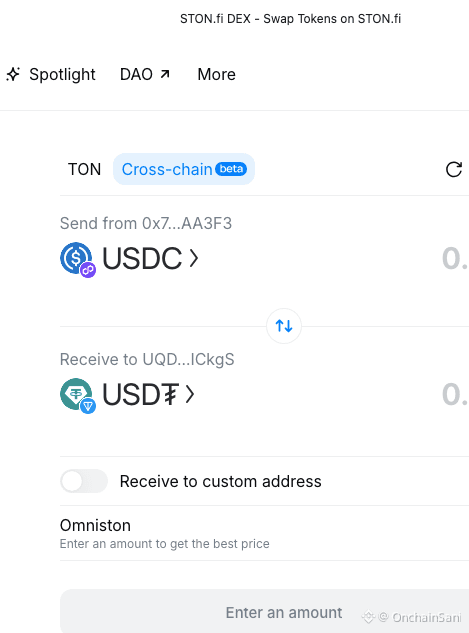
I wanted to see what it actually feels like to move USDC from Polygon to USDT on TON through STON.fi.
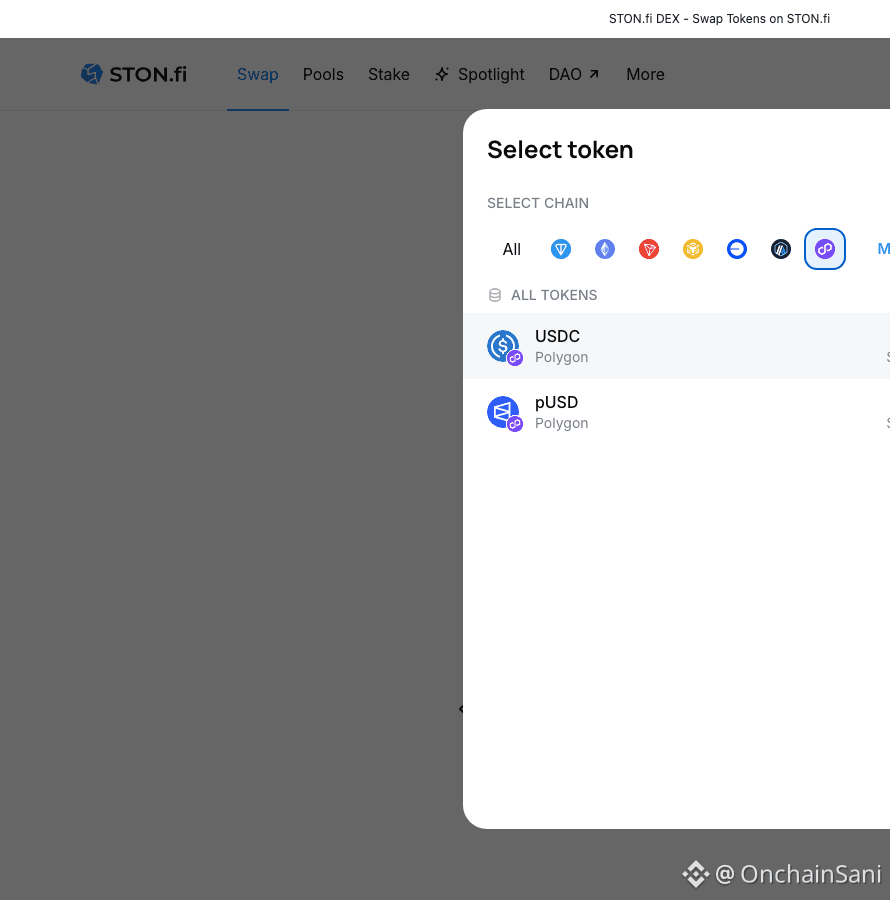
I started by selecting USDC as my source asset.
The first thing I checked was the network because USDC exists across multiple chains.
Then I selected USDT on TON as the destination
At this point, the route was easy to understand.
I wasn't manually moving the USDC somewhere first and then trying to figure out the next step.
Before confirming, I checked the quote and transaction details.
That's an important part of the process for me.
I want to know:
Where the asset is coming from Where it's going What I'm expected to receive What fees or other transaction details are shown
The basic flow is:
USDC on Polygon → STON.fi → USDT on TON
The interesting part isn't just that the assets are on different networks.
It's that the user experience can present that cross-chain movement as one understandable flow instead of making the user manually coordinate every step.
I Tested a Polygon → TON Cross-Chain Route on STON.fi
I wanted to see what it actually feels like to move USDC from Polygon to USDT on TON through STON.fi.
I started by selecting USDC as my source asset.
The first thing I checked was the network because USDC exists across multiple chains.
Then I selected USDT on TON as the destination
At this point, the route was easy to understand.
I wasn't manually moving the USDC somewhere first and then trying to figure out the next step.
Before confirming, I checked the quote and transaction details.
That's an important part of the process for me.
I want to know:
Where the asset is coming from Where it's going What I'm expected to receive What fees or other transaction details are shown
The basic flow is:
USDC on Polygon → STON.fi → USDT on TON
The interesting part isn't just that the assets are on different networks.
It's that the user experience can present that cross-chain movement as one understandable flow instead of making the user manually coordinate every step.
I wanted to see what it actually feels like to move USDC from Polygon to USDT on TON through STON.fi.
I started by selecting USDC as my source asset.
The first thing I checked was the network because USDC exists across multiple chains.
Then I selected USDT on TON as the destination
At this point, the route was easy to understand.
I wasn't manually moving the USDC somewhere first and then trying to figure out the next step.
Before confirming, I checked the quote and transaction details.
That's an important part of the process for me.
I want to know:
Where the asset is coming from Where it's going What I'm expected to receive What fees or other transaction details are shown
The basic flow is:
USDC on Polygon → STON.fi → USDT on TON
The interesting part isn't just that the assets are on different networks.
It's that the user experience can present that cross-chain movement as one understandable flow instead of making the user manually coordinate every step.
63
·
--
Bullish
How I Check Price Impact Before a Larger Swap on TON
When I'm making a larger swap on TON, I don't look only at the token price.
I want to know what price I'll actually get for the amount I'm swapping.
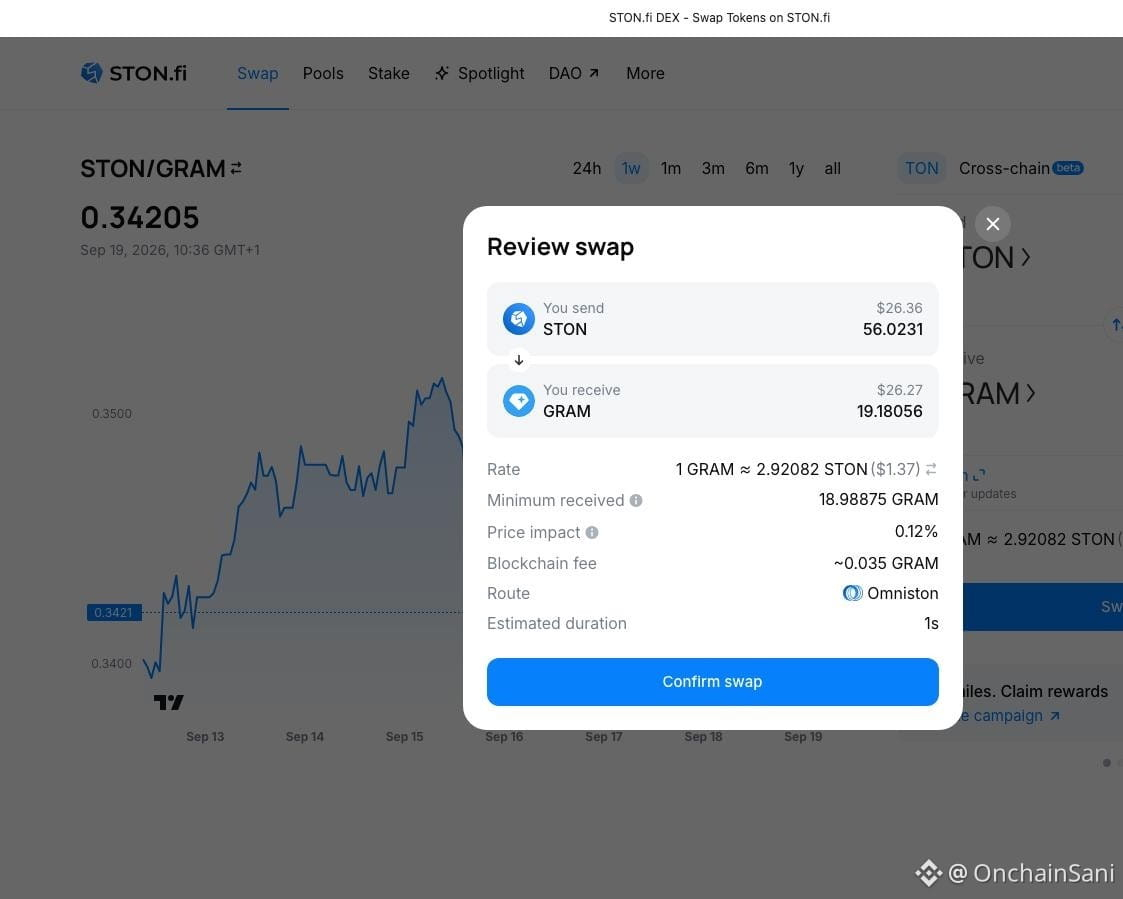
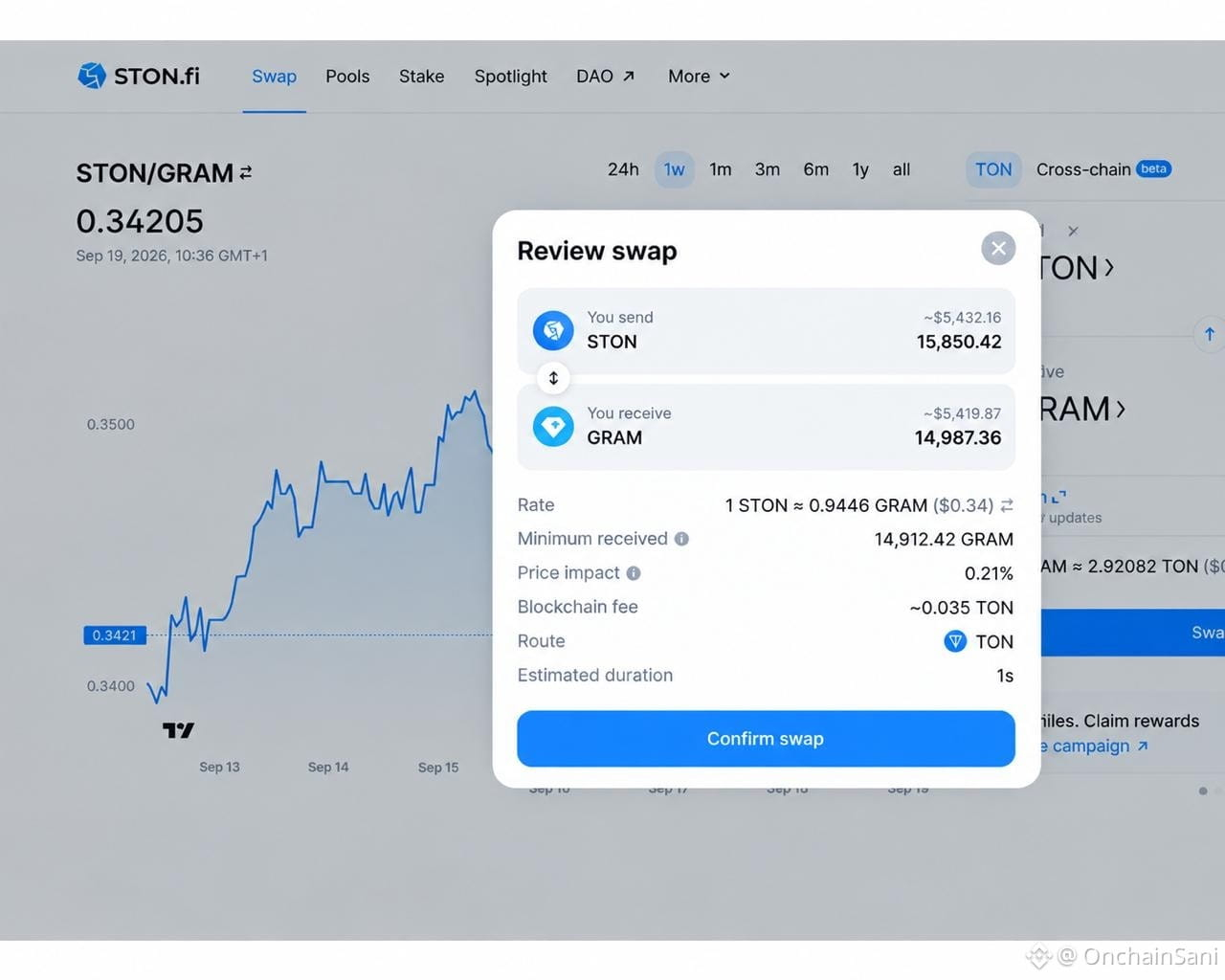
That's why I check Price Impact on STON.fi before confirming.
My process is simple:
1. Enter the amount I actually want to swap.
2. Check the estimated amount I'll receive.
3. Check Price Impact.
4. Reduce the amount and compare if the impact looks high.
5. Check whether another route is available.
If reducing the amount significantly improves the Price Impact, that's useful information. It means the size of the trade is having a meaningful effect on execution.
One thing I don't do is automatically increase slippage just because Price Impact is high.
Price Impact and slippage aren't the same thing.
Price Impact is about the effect of your trade on available liquidity, while slippage concerns the difference between expected and actual execution caused by market/execution changes.
For me, the main lesson is simple:
Don't ask only “What's the token price?”
Ask:
“What price am I actually getting for my trade size?”
You can check the quote yourself on STON.fi before confirming:
How I Check Price Impact Before a Larger Swap on TON
When I'm making a larger swap on TON, I don't look only at the token price.
I want to know what price I'll actually get for the amount I'm swapping.
That's why I check Price Impact on STON.fi before confirming.
My process is simple:
1. Enter the amount I actually want to swap.
2. Check the estimated amount I'll receive.
3. Check Price Impact.
4. Reduce the amount and compare if the impact looks high.
5. Check whether another route is available.
If reducing the amount significantly improves the Price Impact, that's useful information. It means the size of the trade is having a meaningful effect on execution.
One thing I don't do is automatically increase slippage just because Price Impact is high.
Price Impact and slippage aren't the same thing.
Price Impact is about the effect of your trade on available liquidity, while slippage concerns the difference between expected and actual execution caused by market/execution changes.
For me, the main lesson is simple:
Don't ask only “What's the token price?”
Ask:
“What price am I actually getting for my trade size?”
You can check the quote yourself on STON.fi before confirming:
When I'm making a larger swap on TON, I don't look only at the token price.
I want to know what price I'll actually get for the amount I'm swapping.
That's why I check Price Impact on STON.fi before confirming.
My process is simple:
1. Enter the amount I actually want to swap.
2. Check the estimated amount I'll receive.
3. Check Price Impact.
4. Reduce the amount and compare if the impact looks high.
5. Check whether another route is available.
If reducing the amount significantly improves the Price Impact, that's useful information. It means the size of the trade is having a meaningful effect on execution.
One thing I don't do is automatically increase slippage just because Price Impact is high.
Price Impact and slippage aren't the same thing.
Price Impact is about the effect of your trade on available liquidity, while slippage concerns the difference between expected and actual execution caused by market/execution changes.
For me, the main lesson is simple:
Don't ask only “What's the token price?”
Ask:
“What price am I actually getting for my trade size?”
You can check the quote yourself on STON.fi before confirming:
324
·
--
Bullish
I tested connecting to STON.fi through WalletConnect
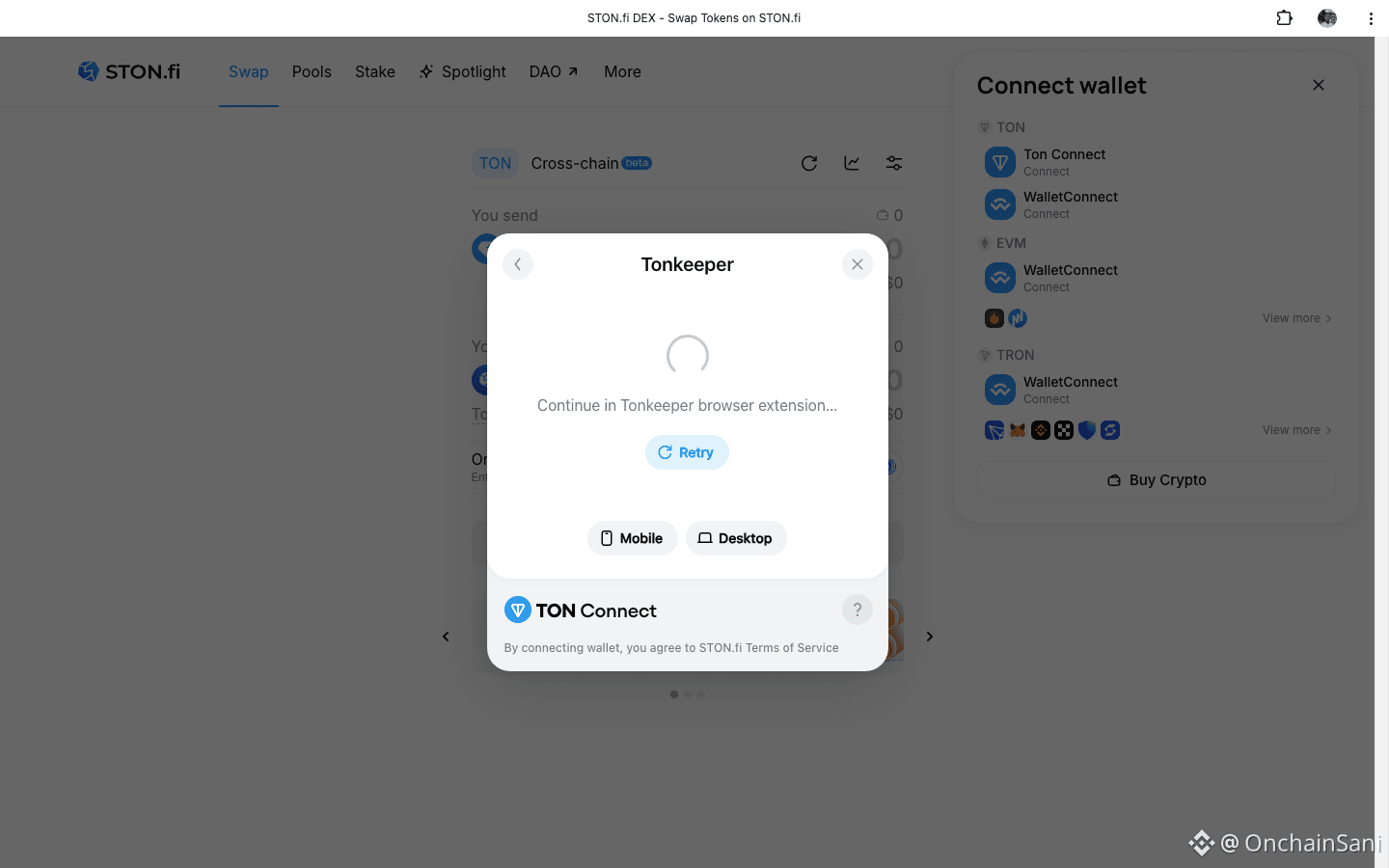
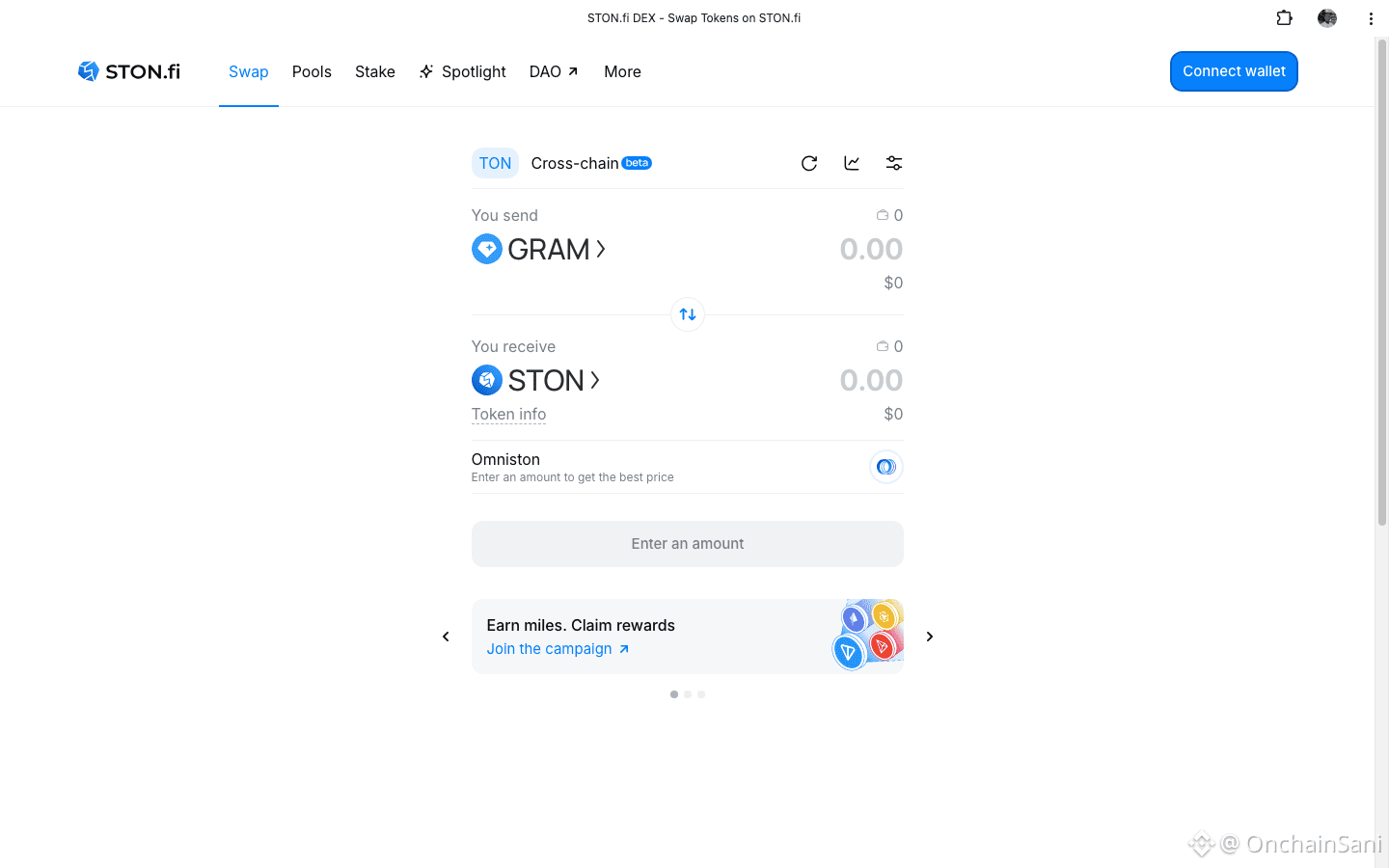
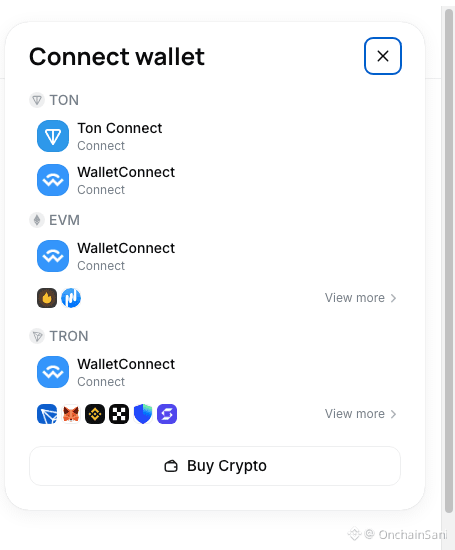
I wanted to see how complicated it would actually be to connect a supported multi-chain wallet to STON.fi through WalletConnect.
The flow was:
Connect Wallet → View all wallets → WalletConnect → Connect
STON.fi says WalletConnect's TON integration allows supported wallets to interact with TON dApps without switching to a TON-native wallet.
What I liked was the simplicity of the process.
I wasn't learning a new DEX interface.
I was simply connecting the wallet I already use and continuing with the STON.fi interface.
For something as basic as wallet connection, that's good UX.
I tested connecting to STON.fi through WalletConnect
I wanted to see how complicated it would actually be to connect a supported multi-chain wallet to STON.fi through WalletConnect.
The flow was:
Connect Wallet → View all wallets → WalletConnect → Connect
STON.fi says WalletConnect's TON integration allows supported wallets to interact with TON dApps without switching to a TON-native wallet.
What I liked was the simplicity of the process.
I wasn't learning a new DEX interface.
I was simply connecting the wallet I already use and continuing with the STON.fi interface.
For something as basic as wallet connection, that's good UX.
I wanted to see how complicated it would actually be to connect a supported multi-chain wallet to STON.fi through WalletConnect.
The flow was:
Connect Wallet → View all wallets → WalletConnect → Connect
STON.fi says WalletConnect's TON integration allows supported wallets to interact with TON dApps without switching to a TON-native wallet.
What I liked was the simplicity of the process.
I wasn't learning a new DEX interface.
I was simply connecting the wallet I already use and continuing with the STON.fi interface.
For something as basic as wallet connection, that's good UX.
58
·
--
Bullish
One small habit changed how I swap unfamiliar tokens
I used to search for a token by name, select it and move straight to the quote.
Now I do one extra check first:
the contract address.
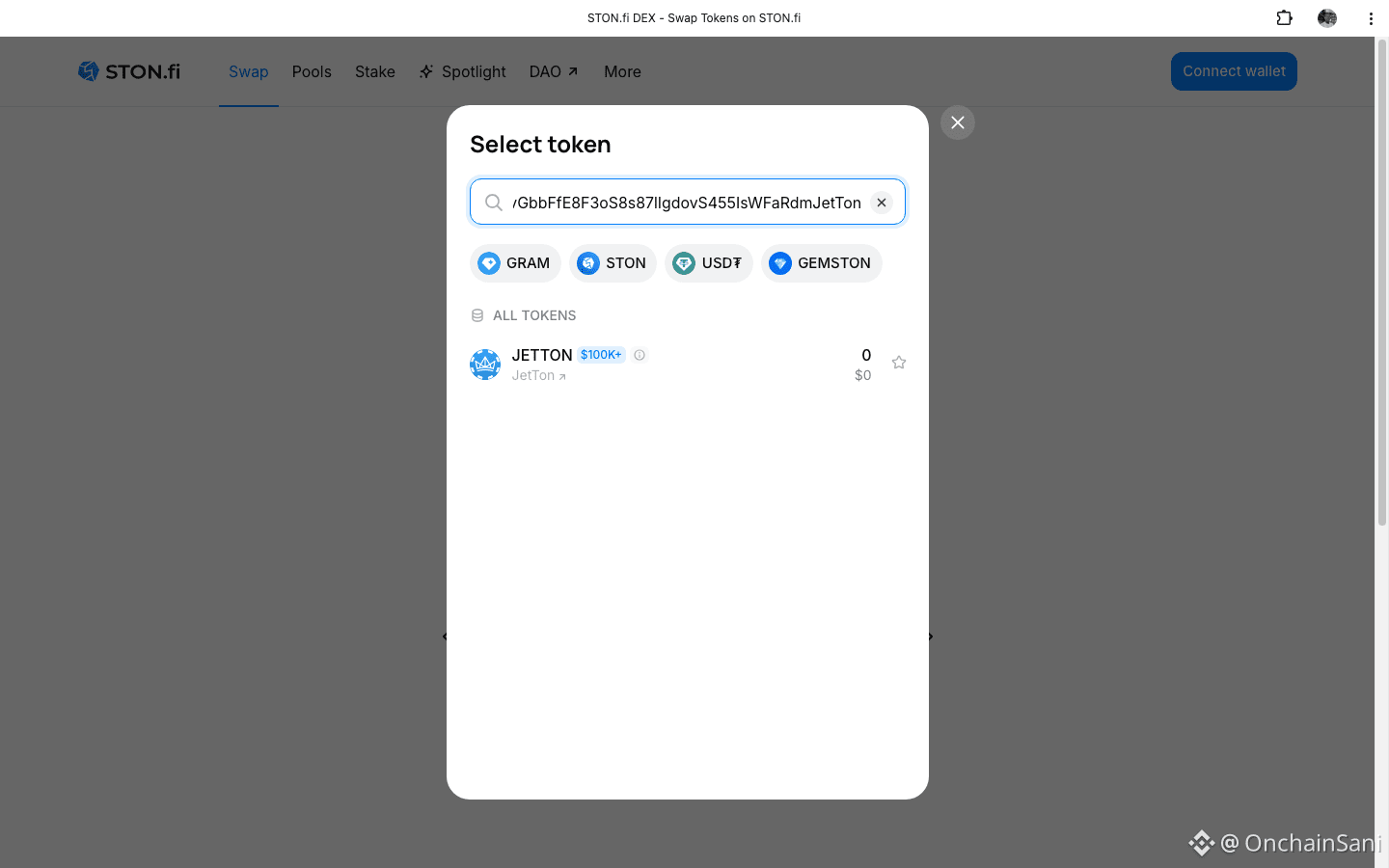
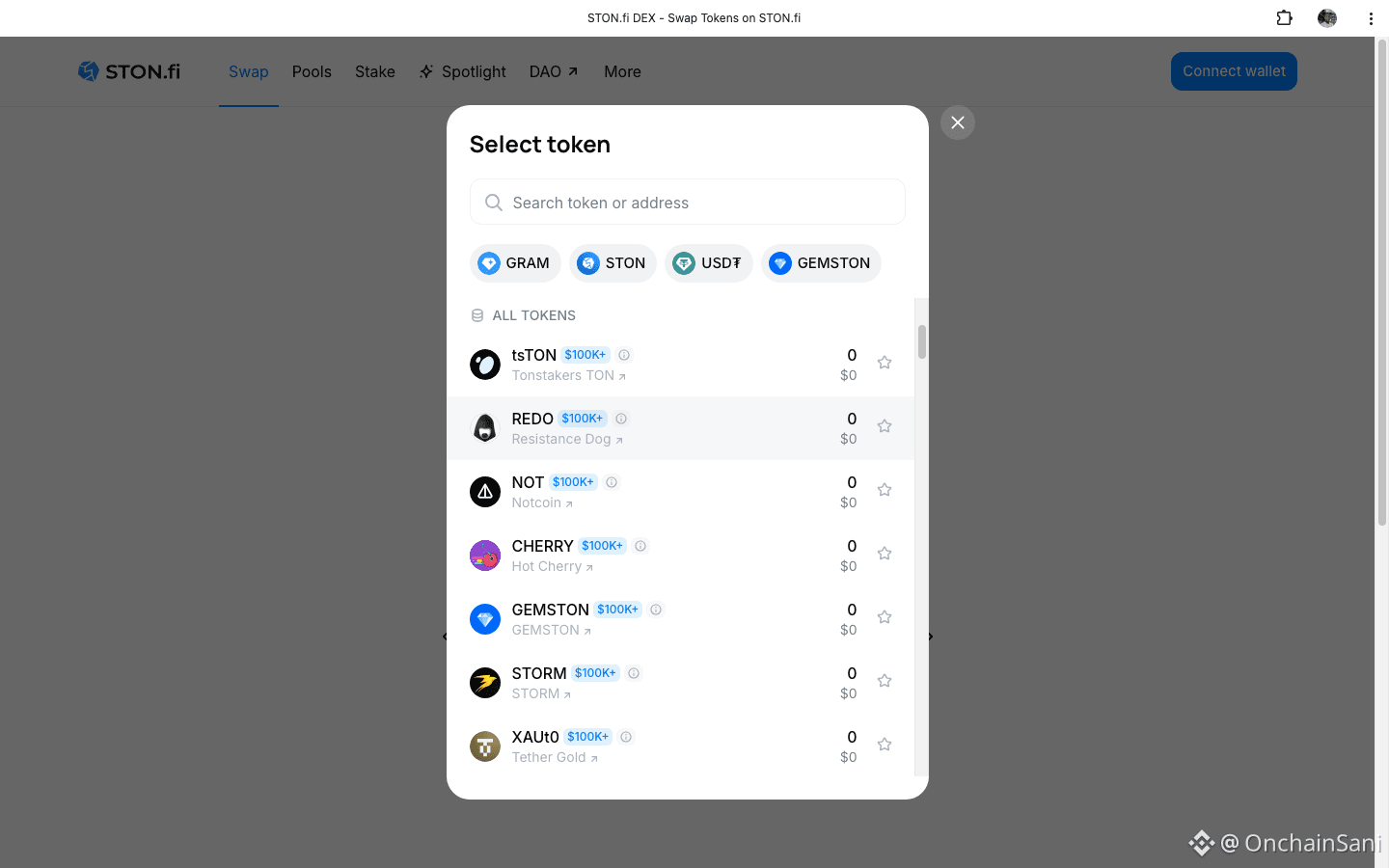
Token names aren't enough when you're dealing with unfamiliar assets.
My process on STON.fi is now:
Official contract → find the token → verify → check the quote → swap.
STON.fi's own guide explains that some tokens may not appear through normal name search but can be accessed using their contract address, while certain fraudulent or restricted tokens can be hidden or blocked from the interface.
I don't treat that as a guarantee that a token is safe.
It's simply another layer in my own verification process.
The main lesson for me:
Don't let a familiar token name make you skip the contract-address check.
A few seconds of verification is worth it.
One small habit changed how I swap unfamiliar tokens
I used to search for a token by name, select it and move straight to the quote.
Now I do one extra check first:
the contract address.
Token names aren't enough when you're dealing with unfamiliar assets.
My process on STON.fi is now:
Official contract → find the token → verify → check the quote → swap.
STON.fi's own guide explains that some tokens may not appear through normal name search but can be accessed using their contract address, while certain fraudulent or restricted tokens can be hidden or blocked from the interface.
I don't treat that as a guarantee that a token is safe.
It's simply another layer in my own verification process.
The main lesson for me:
Don't let a familiar token name make you skip the contract-address check.
A few seconds of verification is worth it.
I used to search for a token by name, select it and move straight to the quote.
Now I do one extra check first:
the contract address.
Token names aren't enough when you're dealing with unfamiliar assets.
My process on STON.fi is now:
Official contract → find the token → verify → check the quote → swap.
STON.fi's own guide explains that some tokens may not appear through normal name search but can be accessed using their contract address, while certain fraudulent or restricted tokens can be hidden or blocked from the interface.
I don't treat that as a guarantee that a token is safe.
It's simply another layer in my own verification process.
The main lesson for me:
Don't let a familiar token name make you skip the contract-address check.
A few seconds of verification is worth it.
98
·
--
I Tried a BNB Chain → X Layer Route on STON.fi
I wanted to see what the new X Layer integration actually felt like, so I explored a BNB Chain → X Layer cross-chain swap on STON.fi.
What I liked immediately was that I didn't have to treat bridging and swapping as completely separate experiences.
The route was presented through the cross-chain swap interface.
And this is where Omniston plays an important role.
STON.fi's Omniston execution layer coordinates the cross-chain flow from quote to settlement, handling the complicated routing underneath.
Before confirming, I checked the expected amount and destination.
That's probably the habit I'll keep with every cross-chain transaction:
Don't just confirm. Check what you're actually getting.
The more networks STON.fi connects, the more useful this type of infrastructure becomes.
Instead of thinking about every chain separately, the goal is eventually to just choose the asset and destination and let the execution layer handle the rest.
That's the part of the X Layer integration I find most interesting.
@ston_fi
#STONfi #TON #CrossChain #Omniston #DeFi
I Tried a BNB Chain → X Layer Route on STON.fi
I wanted to see what the new X Layer integration actually felt like, so I explored a BNB Chain → X Layer cross-chain swap on STON.fi.
What I liked immediately was that I didn't have to treat bridging and swapping as completely separate experiences.
The route was presented through the cross-chain swap interface.
And this is where Omniston plays an important role.
STON.fi's Omniston execution layer coordinates the cross-chain flow from quote to settlement, handling the complicated routing underneath.
Before confirming, I checked the expected amount and destination.
That's probably the habit I'll keep with every cross-chain transaction:
Don't just confirm. Check what you're actually getting.
The more networks STON.fi connects, the more useful this type of infrastructure becomes.
Instead of thinking about every chain separately, the goal is eventually to just choose the asset and destination and let the execution layer handle the rest.
That's the part of the X Layer integration I find most interesting.
@ston_fi
#STONfi #TON #CrossChain #Omniston #DeFi
I wanted to see what the new X Layer integration actually felt like, so I explored a BNB Chain → X Layer cross-chain swap on STON.fi.
What I liked immediately was that I didn't have to treat bridging and swapping as completely separate experiences.
The route was presented through the cross-chain swap interface.
And this is where Omniston plays an important role.
STON.fi's Omniston execution layer coordinates the cross-chain flow from quote to settlement, handling the complicated routing underneath.
Before confirming, I checked the expected amount and destination.
That's probably the habit I'll keep with every cross-chain transaction:
Don't just confirm. Check what you're actually getting.
The more networks STON.fi connects, the more useful this type of infrastructure becomes.
Instead of thinking about every chain separately, the goal is eventually to just choose the asset and destination and let the execution layer handle the rest.
That's the part of the X Layer integration I find most interesting.
@ston_fi
#STONfi #TON #CrossChain #Omniston #DeFi

1
89
·
--
I Looked Behind a Simple NVDAx → AAPLx Swap
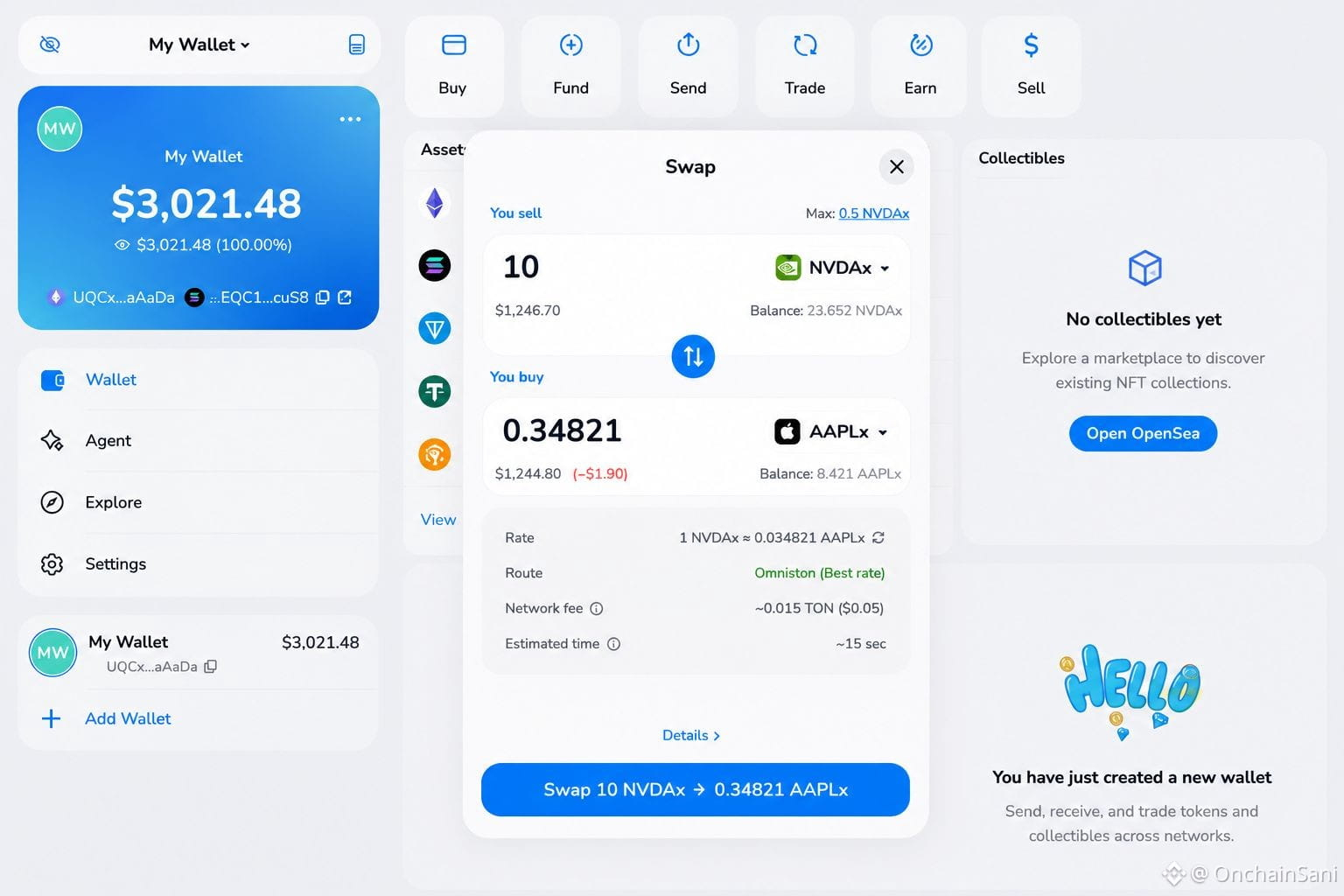
I was exploring the swap experience in My Wallet and decided to look beyond the actual token pair.
The interface makes the process look simple:
NVDAx → AAPLx
You enter the amount, check the quote and review the transaction details.
But one detail caught my attention:
Route: Omniston
That's where STON.fi comes into the picture.
Omniston is the execution and liquidity-routing infrastructure developed by STON.fi.
Instead of making users manually search through different DEX routes, it can check available liquidity and help find an efficient way to execute the swap.
That's interesting because the user experience doesn't need to expose all that complexity.
You just see the assets, the quote, the estimated fee and the expected output.
The infrastructure does the complicated part underneath.
I think this is an important direction for DeFi.
The best infrastructure isn't always the infrastructure users notice.
Sometimes it's the infrastructure that lets a wallet make a complicated process feel simple.
I was mainly exploring the flow rather than executing a real trade, but seeing Omniston sitting underneath the swap experience made the STON.fi integration much easier to understand.
And tokenized assets like NVDAx and AAPLx make the whole experiment even more interesting.
Wallet → liquidity → routing → execution.
The user only needs to see the final experience.
@ston_fi
#STONfi #TON #DeFi #xStocks
I Looked Behind a Simple NVDAx → AAPLx Swap
I was exploring the swap experience in My Wallet and decided to look beyond the actual token pair.
The interface makes the process look simple:
NVDAx → AAPLx
You enter the amount, check the quote and review the transaction details.
But one detail caught my attention:
Route: Omniston
That's where STON.fi comes into the picture.
Omniston is the execution and liquidity-routing infrastructure developed by STON.fi.
Instead of making users manually search through different DEX routes, it can check available liquidity and help find an efficient way to execute the swap.
That's interesting because the user experience doesn't need to expose all that complexity.
You just see the assets, the quote, the estimated fee and the expected output.
The infrastructure does the complicated part underneath.
I think this is an important direction for DeFi.
The best infrastructure isn't always the infrastructure users notice.
Sometimes it's the infrastructure that lets a wallet make a complicated process feel simple.
I was mainly exploring the flow rather than executing a real trade, but seeing Omniston sitting underneath the swap experience made the STON.fi integration much easier to understand.
And tokenized assets like NVDAx and AAPLx make the whole experiment even more interesting.
Wallet → liquidity → routing → execution.
The user only needs to see the final experience.
@ston_fi
#STONfi #TON #DeFi #xStocks
I was exploring the swap experience in My Wallet and decided to look beyond the actual token pair.
The interface makes the process look simple:
NVDAx → AAPLx
You enter the amount, check the quote and review the transaction details.
But one detail caught my attention:
Route: Omniston
That's where STON.fi comes into the picture.
Omniston is the execution and liquidity-routing infrastructure developed by STON.fi.
Instead of making users manually search through different DEX routes, it can check available liquidity and help find an efficient way to execute the swap.
That's interesting because the user experience doesn't need to expose all that complexity.
You just see the assets, the quote, the estimated fee and the expected output.
The infrastructure does the complicated part underneath.
I think this is an important direction for DeFi.
The best infrastructure isn't always the infrastructure users notice.
Sometimes it's the infrastructure that lets a wallet make a complicated process feel simple.
I was mainly exploring the flow rather than executing a real trade, but seeing Omniston sitting underneath the swap experience made the STON.fi integration much easier to understand.
And tokenized assets like NVDAx and AAPLx make the whole experiment even more interesting.
Wallet → liquidity → routing → execution.
The user only needs to see the final experience.
@ston_fi
#STONfi #TON #DeFi #xStocks
1
92
·
--
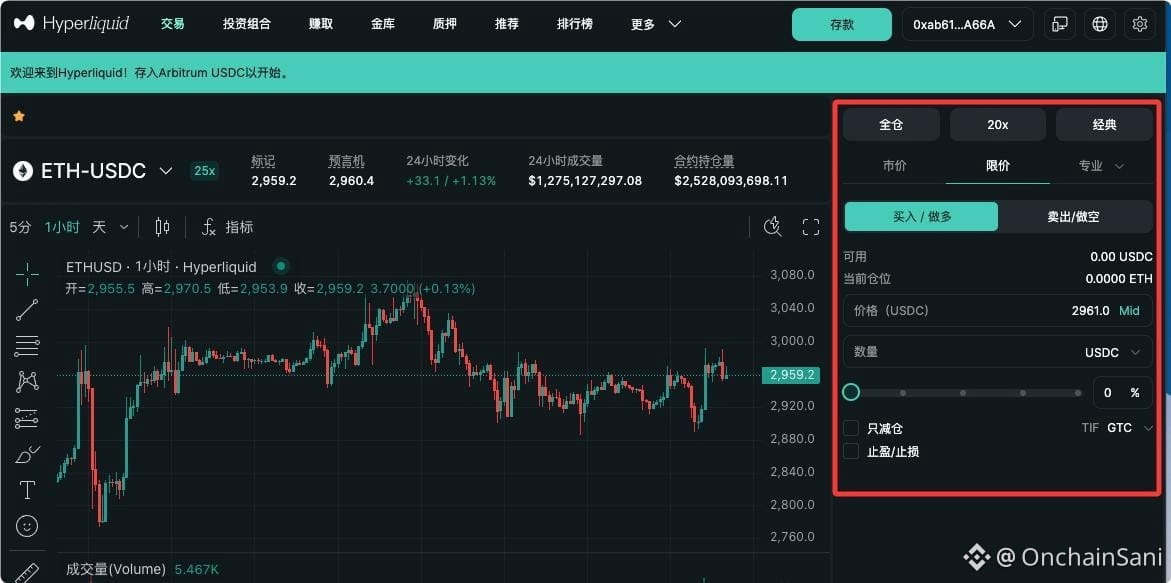
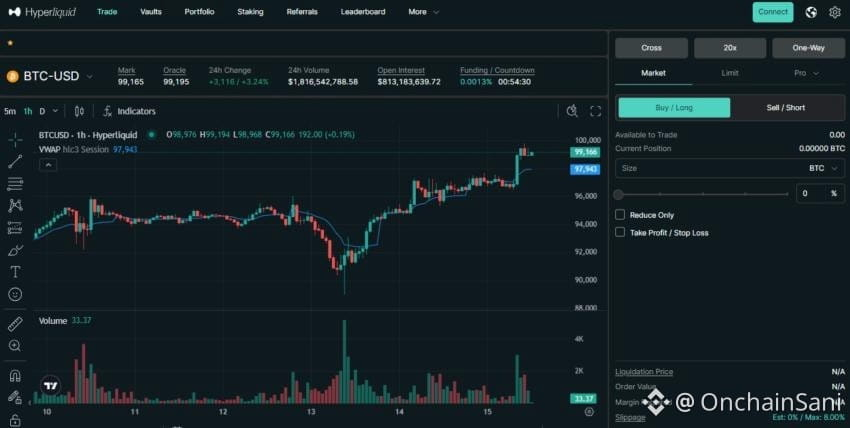
What happens behind the simple WenLong experience?
I was exploring WenLong inside Telegram and initially focused on the obvious part the Hyperliquid trading interface.
But the more interesting part is what happens before the trade reaches Hyperliquid.
A user can start with USDT on TON, while the Hyperliquid flow requires USDC on Arbitrum.
So there needs to be a way to move between those environments.
This is where STON.fi's Omniston plays a role.
Omniston provides the cross-chain routing and execution infrastructure for the swap leg, so the user doesn't have to manually piece together every step.
The simplified flow is:
USDT on TON
↓
Omniston
↓
USDC on Arbitrum
↓
Hyperliquid
What I like about this approach is the separation of responsibilities.
WenLong focuses on giving users the Telegram trading experience.
Omniston, developed by STON.fi, handles the cross-chain execution underneath.
The user gets a simpler journey while the complicated infrastructure stays in the background.
And I think that's where cross-chain UX needs to go.
Not necessarily making users understand more infrastructure — making the infrastructure work better so users have to think about less of it.
@ston_fi
DYOR, especially when interacting with leveraged products.
What happens behind the simple WenLong experience?
I was exploring WenLong inside Telegram and initially focused on the obvious part the Hyperliquid trading interface.
But the more interesting part is what happens before the trade reaches Hyperliquid.
A user can start with USDT on TON, while the Hyperliquid flow requires USDC on Arbitrum.
So there needs to be a way to move between those environments.
This is where STON.fi's Omniston plays a role.
Omniston provides the cross-chain routing and execution infrastructure for the swap leg, so the user doesn't have to manually piece together every step.
The simplified flow is:
USDT on TON
↓
Omniston
↓
USDC on Arbitrum
↓
Hyperliquid
What I like about this approach is the separation of responsibilities.
WenLong focuses on giving users the Telegram trading experience.
Omniston, developed by STON.fi, handles the cross-chain execution underneath.
The user gets a simpler journey while the complicated infrastructure stays in the background.
And I think that's where cross-chain UX needs to go.
Not necessarily making users understand more infrastructure — making the infrastructure work better so users have to think about less of it.
@ston_fi
DYOR, especially when interacting with leveraged products.
I was exploring WenLong inside Telegram and initially focused on the obvious part the Hyperliquid trading interface.
But the more interesting part is what happens before the trade reaches Hyperliquid.
A user can start with USDT on TON, while the Hyperliquid flow requires USDC on Arbitrum.
So there needs to be a way to move between those environments.
This is where STON.fi's Omniston plays a role.
Omniston provides the cross-chain routing and execution infrastructure for the swap leg, so the user doesn't have to manually piece together every step.
The simplified flow is:
USDT on TON
↓
Omniston
↓
USDC on Arbitrum
↓
Hyperliquid
What I like about this approach is the separation of responsibilities.
WenLong focuses on giving users the Telegram trading experience.
Omniston, developed by STON.fi, handles the cross-chain execution underneath.
The user gets a simpler journey while the complicated infrastructure stays in the background.
And I think that's where cross-chain UX needs to go.
Not necessarily making users understand more infrastructure — making the infrastructure work better so users have to think about less of it.
@ston_fi
DYOR, especially when interacting with leveraged products.
1
109
·
--
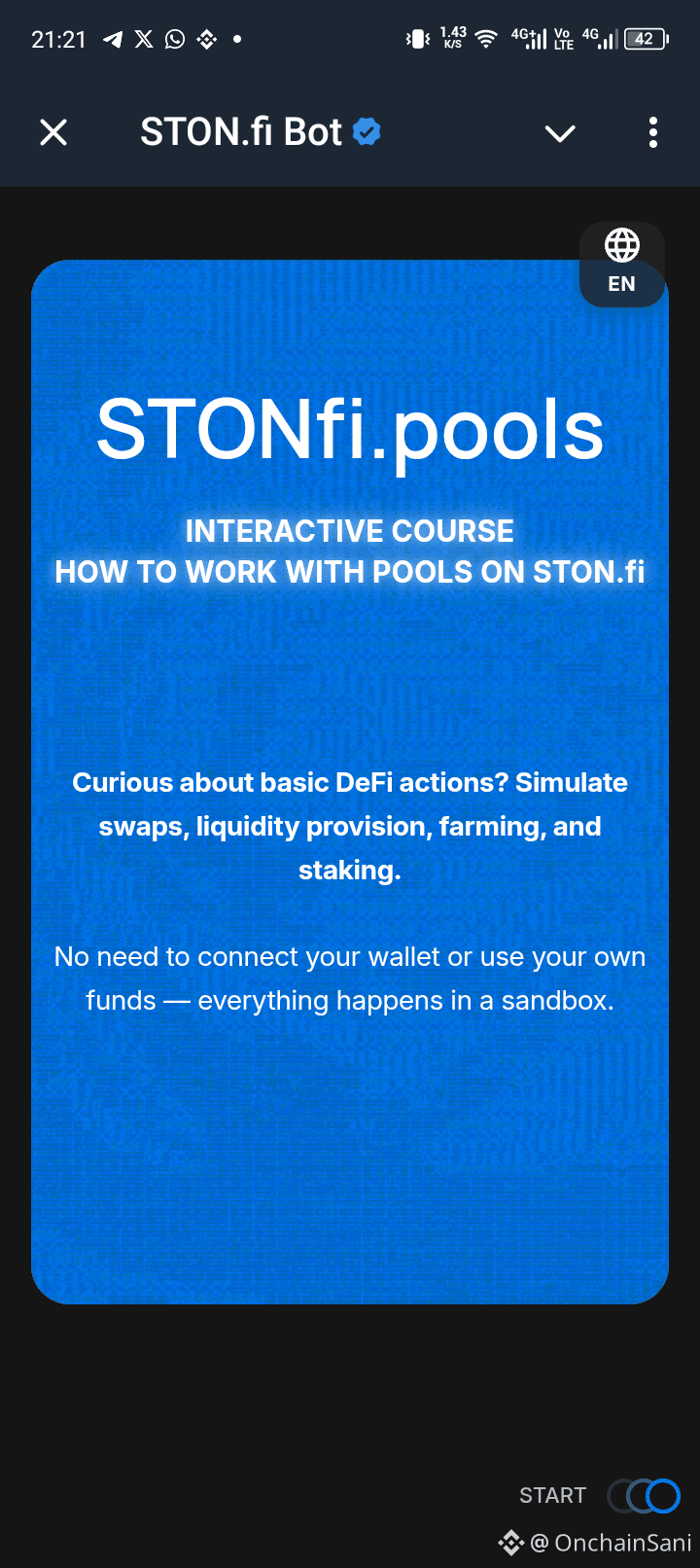
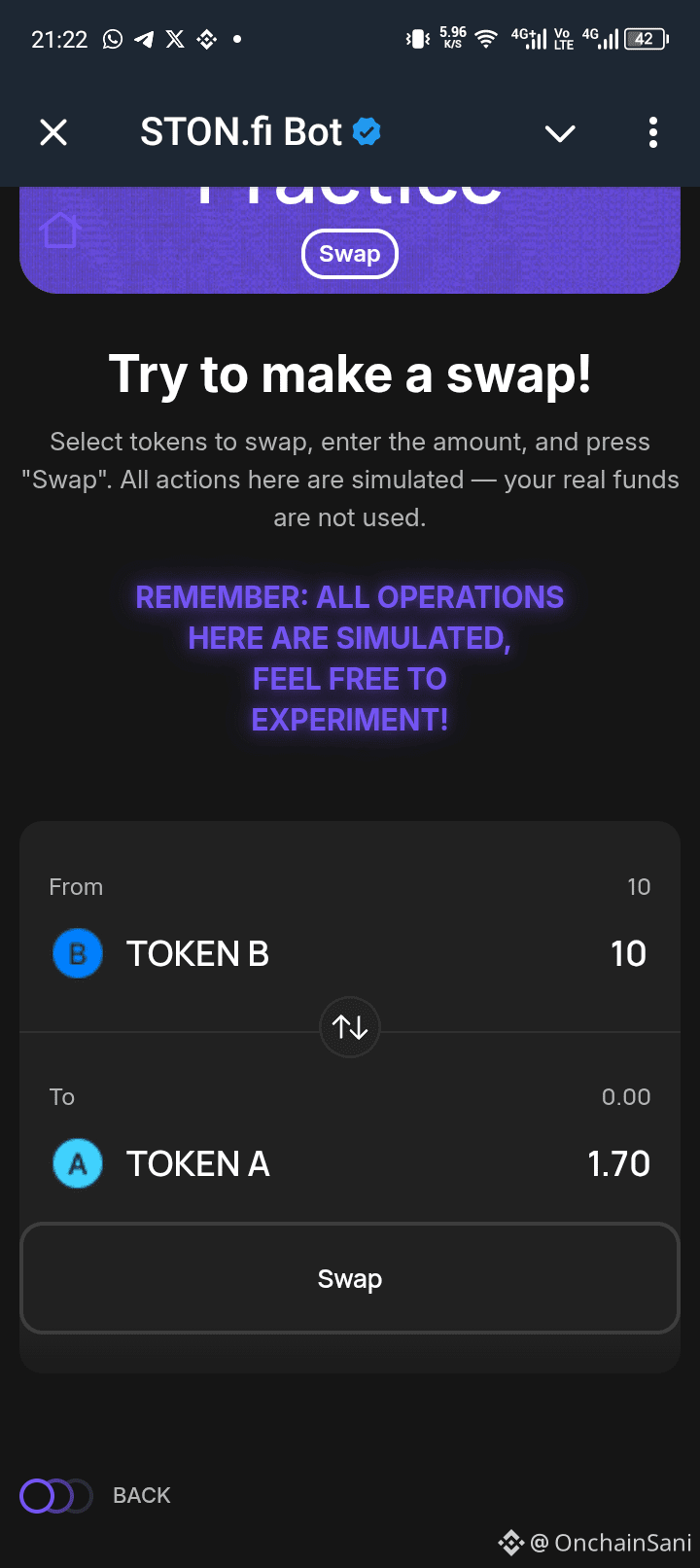
You Can Practice DeFi on STON.fi Without Using Real Funds
One thing I recently explored on STON.fi is the STONfi.pools interactive course.
What caught my attention is that you don't need to connect a wallet or use your own funds.
Instead, you practice inside a simulator.
The course lets you explore:
Swaps
Providing liquidity
Farming
Staking
I think this is particularly useful for beginners because DeFi can feel complicated when you're looking at an unfamiliar interface for the first time.
Using real funds while you're still learning creates unnecessary pressure.
With the simulator, you can click through the process, understand what each step is doing and become familiar with the workflow before moving to real transactions.
Of course, simulation doesn't remove the risks of real DeFi.
Before using real funds, you still need to understand things like slippage, impermanent loss, smart-contract risk, fees and market volatility.
But learning the interface first can make the whole process less intimidating.
For me, the idea is simple:
Learn the process first. Put money into it later.
@ston_fi
#STONfi #TON #defi
You Can Practice DeFi on STON.fi Without Using Real Funds
One thing I recently explored on STON.fi is the STONfi.pools interactive course.
What caught my attention is that you don't need to connect a wallet or use your own funds.
Instead, you practice inside a simulator.
The course lets you explore:
Swaps
Providing liquidity
Farming
Staking
I think this is particularly useful for beginners because DeFi can feel complicated when you're looking at an unfamiliar interface for the first time.
Using real funds while you're still learning creates unnecessary pressure.
With the simulator, you can click through the process, understand what each step is doing and become familiar with the workflow before moving to real transactions.
Of course, simulation doesn't remove the risks of real DeFi.
Before using real funds, you still need to understand things like slippage, impermanent loss, smart-contract risk, fees and market volatility.
But learning the interface first can make the whole process less intimidating.
For me, the idea is simple:
Learn the process first. Put money into it later.
@ston_fi
#STONfi #TON #defi
One thing I recently explored on STON.fi is the STONfi.pools interactive course.
What caught my attention is that you don't need to connect a wallet or use your own funds.
Instead, you practice inside a simulator.
The course lets you explore:
Swaps
Providing liquidity
Farming
Staking
I think this is particularly useful for beginners because DeFi can feel complicated when you're looking at an unfamiliar interface for the first time.
Using real funds while you're still learning creates unnecessary pressure.
With the simulator, you can click through the process, understand what each step is doing and become familiar with the workflow before moving to real transactions.
Of course, simulation doesn't remove the risks of real DeFi.
Before using real funds, you still need to understand things like slippage, impermanent loss, smart-contract risk, fees and market volatility.
But learning the interface first can make the whole process less intimidating.
For me, the idea is simple:
Learn the process first. Put money into it later.
@ston_fi
#STONfi #TON #defi
1
87
·
--
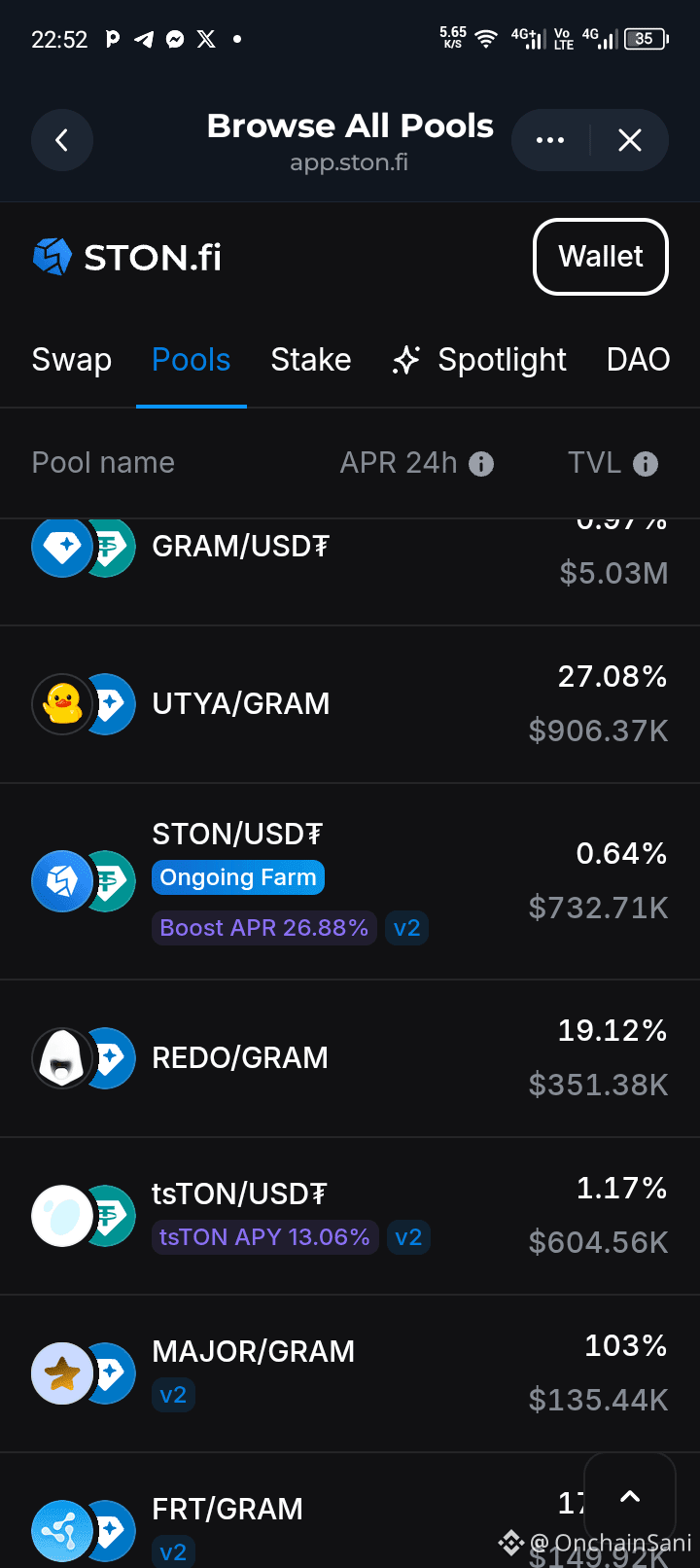
What I Learned From Comparing STON.fi Liquidity Pools
I spent some time exploring the STON.fi Pools section instead of simply looking for the pool with the highest APR.
The first thing that stood out was how different the numbers could be.
For example, when I checked the pools, REDO/GRAM was showing 25.59% APR, while STON/USDT was showing 0.13%.
At first glance, it would be easy to assume the higher number is automatically more attractive.
But opening the pools gave me more context.
The STON/USDT pool showed:
• 24h APR: 0.13%
• 7d APR: 0.4%
• 30d APR: 1.01%
• TVL: about $727K
• 24h volume: about $1.32K
I then checked GEMSTON/USDT, which showed:
• 24h APR: 0.75%
• 7d APR: 0.92%
• 30d APR: 1.39%
• TVL: about $209K
• 24h volume: about $2.14K
That comparison made one thing clear to me:
APR needs context.
TVL tells me about the size of the pool, while volume gives me an idea of recent trading activity. Looking at different APR periods also gives me more information than a single percentage.
Then there is the token pair itself and the risks involved, including the possibility of impermanent loss.
So my approach now is simple:
APR → TVL → volume → APR history → token pair → risks
I’m not saying this tells me which pool to choose.
It just gives me a much better starting point for doing my own research.
Exploring the actual pool was much more useful than simply chasing the biggest number.
@ston_fi
#STONfi #TON #DeFi #liquidity
What I Learned From Comparing STON.fi Liquidity Pools
I spent some time exploring the STON.fi Pools section instead of simply looking for the pool with the highest APR.
The first thing that stood out was how different the numbers could be.
For example, when I checked the pools, REDO/GRAM was showing 25.59% APR, while STON/USDT was showing 0.13%.
At first glance, it would be easy to assume the higher number is automatically more attractive.
But opening the pools gave me more context.
The STON/USDT pool showed:
• 24h APR: 0.13%
• 7d APR: 0.4%
• 30d APR: 1.01%
• TVL: about $727K
• 24h volume: about $1.32K
I then checked GEMSTON/USDT, which showed:
• 24h APR: 0.75%
• 7d APR: 0.92%
• 30d APR: 1.39%
• TVL: about $209K
• 24h volume: about $2.14K
That comparison made one thing clear to me:
APR needs context.
TVL tells me about the size of the pool, while volume gives me an idea of recent trading activity. Looking at different APR periods also gives me more information than a single percentage.
Then there is the token pair itself and the risks involved, including the possibility of impermanent loss.
So my approach now is simple:
APR → TVL → volume → APR history → token pair → risks
I’m not saying this tells me which pool to choose.
It just gives me a much better starting point for doing my own research.
Exploring the actual pool was much more useful than simply chasing the biggest number.
@ston_fi
#STONfi #TON #DeFi #liquidity
I spent some time exploring the STON.fi Pools section instead of simply looking for the pool with the highest APR.
The first thing that stood out was how different the numbers could be.
For example, when I checked the pools, REDO/GRAM was showing 25.59% APR, while STON/USDT was showing 0.13%.
At first glance, it would be easy to assume the higher number is automatically more attractive.
But opening the pools gave me more context.
The STON/USDT pool showed:
• 24h APR: 0.13%
• 7d APR: 0.4%
• 30d APR: 1.01%
• TVL: about $727K
• 24h volume: about $1.32K
I then checked GEMSTON/USDT, which showed:
• 24h APR: 0.75%
• 7d APR: 0.92%
• 30d APR: 1.39%
• TVL: about $209K
• 24h volume: about $2.14K
That comparison made one thing clear to me:
APR needs context.
TVL tells me about the size of the pool, while volume gives me an idea of recent trading activity. Looking at different APR periods also gives me more information than a single percentage.
Then there is the token pair itself and the risks involved, including the possibility of impermanent loss.
So my approach now is simple:
APR → TVL → volume → APR history → token pair → risks
I’m not saying this tells me which pool to choose.
It just gives me a much better starting point for doing my own research.
Exploring the actual pool was much more useful than simply chasing the biggest number.
@ston_fi
#STONfi #TON #DeFi #liquidity
1
218
·
--
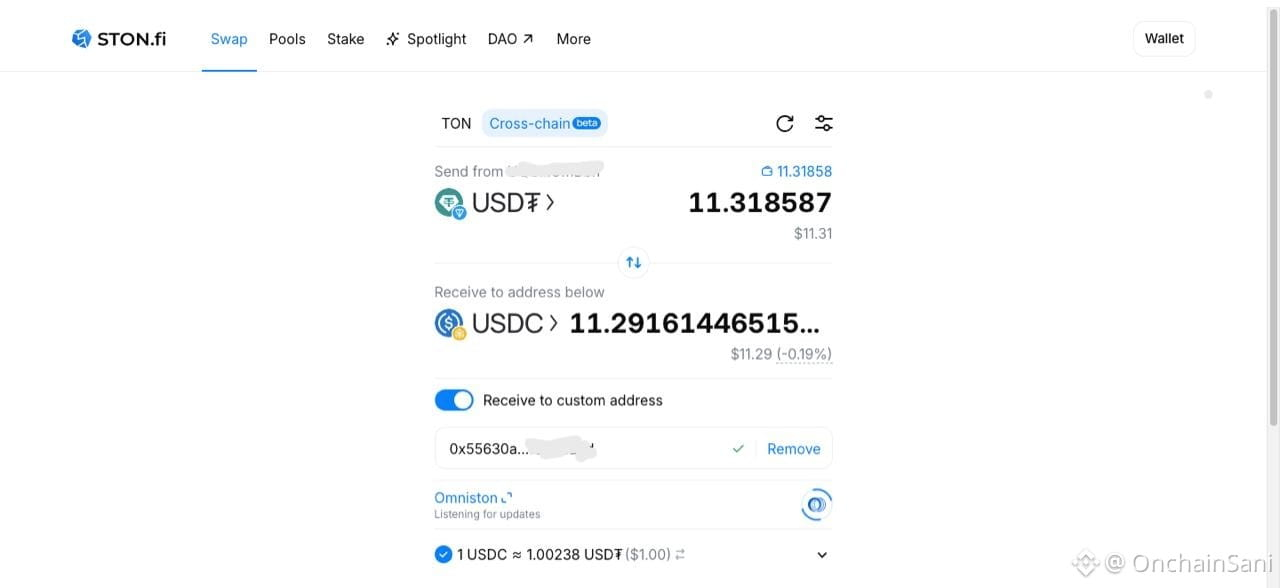
I Tried STON.fi’s Custom Address Option
I tried the new Receive to custom address option on STON.fi’s cross-chain swap.
The useful part is pretty straightforward: you connect the wallet you’re swapping from, but you can send the resulting tokens to a different wallet without connecting that destination wallet to the dApp.
I tested the flow and found it useful for situations where you keep assets across different wallets.
You just need to be careful with the destination address and network before confirming. That’s the part I would double-check every time.
It’s a small addition, but it gives cross-chain swaps a bit more flexibility.
@ston_fi
#STONfi #TON #DeFi #CrossChain
I Tried STON.fi’s Custom Address Option
I tried the new Receive to custom address option on STON.fi’s cross-chain swap.
The useful part is pretty straightforward: you connect the wallet you’re swapping from, but you can send the resulting tokens to a different wallet without connecting that destination wallet to the dApp.
I tested the flow and found it useful for situations where you keep assets across different wallets.
You just need to be careful with the destination address and network before confirming. That’s the part I would double-check every time.
It’s a small addition, but it gives cross-chain swaps a bit more flexibility.
@ston_fi
#STONfi #TON #DeFi #CrossChain
I tried the new Receive to custom address option on STON.fi’s cross-chain swap.
The useful part is pretty straightforward: you connect the wallet you’re swapping from, but you can send the resulting tokens to a different wallet without connecting that destination wallet to the dApp.
I tested the flow and found it useful for situations where you keep assets across different wallets.
You just need to be careful with the destination address and network before confirming. That’s the part I would double-check every time.
It’s a small addition, but it gives cross-chain swaps a bit more flexibility.
@ston_fi
#STONfi #TON #DeFi #CrossChain
1
97
·
--
Article
3 Free STON_fi Tools That Can Help You Make Better DeFi DecisionsOne thing I’ve learned over time is that many DeFi mistakes happen before you even make a transaction.
Sometimes we provide liquidity without estimating possible returns. Other times, we chase high APR without understanding the risks involved. Making informed decisions usually starts with having the right information.
That’s why I was happy to see STON.fi introduce three free tools designed to help users evaluate opportunities before committing their assets.
1. APR Calculator
The APR Calculator helps estimate potential returns based on your own inputs.
You simply enter:
your deposit amount,the expected APR,and the duration of your investment.The calculator then estimates potential outcomes while also comparing simple APR with compounded APY. Although these are only projections, they make it much easier to understand different scenarios before joining a pool.
2. Impermanent Loss Calculator
Impermanent loss is one of the concepts that often discourages newcomers because it can seem difficult to understand.
The calculator simplifies this by allowing you to simulate price changes between two assets. It then compares the estimated value of simply holding the assets versus providing them as liquidity.
Seeing both outcomes side by side makes the concept much easier to understand.
3. STON.fi Pools Updates
The third tool isn’t a calculator but a Telegram channel that provides regular APR updates for STON.fi pools.
Instead of checking pools manually every day, users receive updates directly through Telegram, making it easier to monitor changing opportunities.
Final Thoughts
These tools don’t replace research, and they don’t guarantee returns.
What they do is help users make better-informed decisions before interacting with DeFi.
I believe that’s exactly the direction good DeFi infrastructure should take.
@ston_fi
#STONfi #TON #DeFi
3 Free STON_fi Tools That Can Help You Make Better DeFi Decisions
One thing I’ve learned over time is that many DeFi mistakes happen before you even make a transaction.
Sometimes we provide liquidity without estimating possible returns. Other times, we chase high APR without understanding the risks involved. Making informed decisions usually starts with having the right information.
That’s why I was happy to see STON.fi introduce three free tools designed to help users evaluate opportunities before committing their assets.
1. APR Calculator
The APR Calculator helps estimate potential returns based on your own inputs.
You simply enter:
your deposit amount,the expected APR,and the duration of your investment.The calculator then estimates potential outcomes while also comparing simple APR with compounded APY. Although these are only projections, they make it much easier to understand different scenarios before joining a pool.
2. Impermanent Loss Calculator
Impermanent loss is one of the concepts that often discourages newcomers because it can seem difficult to understand.
The calculator simplifies this by allowing you to simulate price changes between two assets. It then compares the estimated value of simply holding the assets versus providing them as liquidity.
Seeing both outcomes side by side makes the concept much easier to understand.
3. STON.fi Pools Updates
The third tool isn’t a calculator but a Telegram channel that provides regular APR updates for STON.fi pools.
Instead of checking pools manually every day, users receive updates directly through Telegram, making it easier to monitor changing opportunities.
Final Thoughts
These tools don’t replace research, and they don’t guarantee returns.
What they do is help users make better-informed decisions before interacting with DeFi.
I believe that’s exactly the direction good DeFi infrastructure should take.
@ston_fi
#STONfi #TON #DeFi
Sometimes we provide liquidity without estimating possible returns. Other times, we chase high APR without understanding the risks involved. Making informed decisions usually starts with having the right information.
That’s why I was happy to see STON.fi introduce three free tools designed to help users evaluate opportunities before committing their assets.
1. APR Calculator
The APR Calculator helps estimate potential returns based on your own inputs.
You simply enter:
your deposit amount,the expected APR,and the duration of your investment.The calculator then estimates potential outcomes while also comparing simple APR with compounded APY. Although these are only projections, they make it much easier to understand different scenarios before joining a pool.
2. Impermanent Loss Calculator
Impermanent loss is one of the concepts that often discourages newcomers because it can seem difficult to understand.
The calculator simplifies this by allowing you to simulate price changes between two assets. It then compares the estimated value of simply holding the assets versus providing them as liquidity.
Seeing both outcomes side by side makes the concept much easier to understand.
3. STON.fi Pools Updates
The third tool isn’t a calculator but a Telegram channel that provides regular APR updates for STON.fi pools.
Instead of checking pools manually every day, users receive updates directly through Telegram, making it easier to monitor changing opportunities.
Final Thoughts
These tools don’t replace research, and they don’t guarantee returns.
What they do is help users make better-informed decisions before interacting with DeFi.
I believe that’s exactly the direction good DeFi infrastructure should take.
@ston_fi
#STONfi #TON #DeFi
1
20
·
--
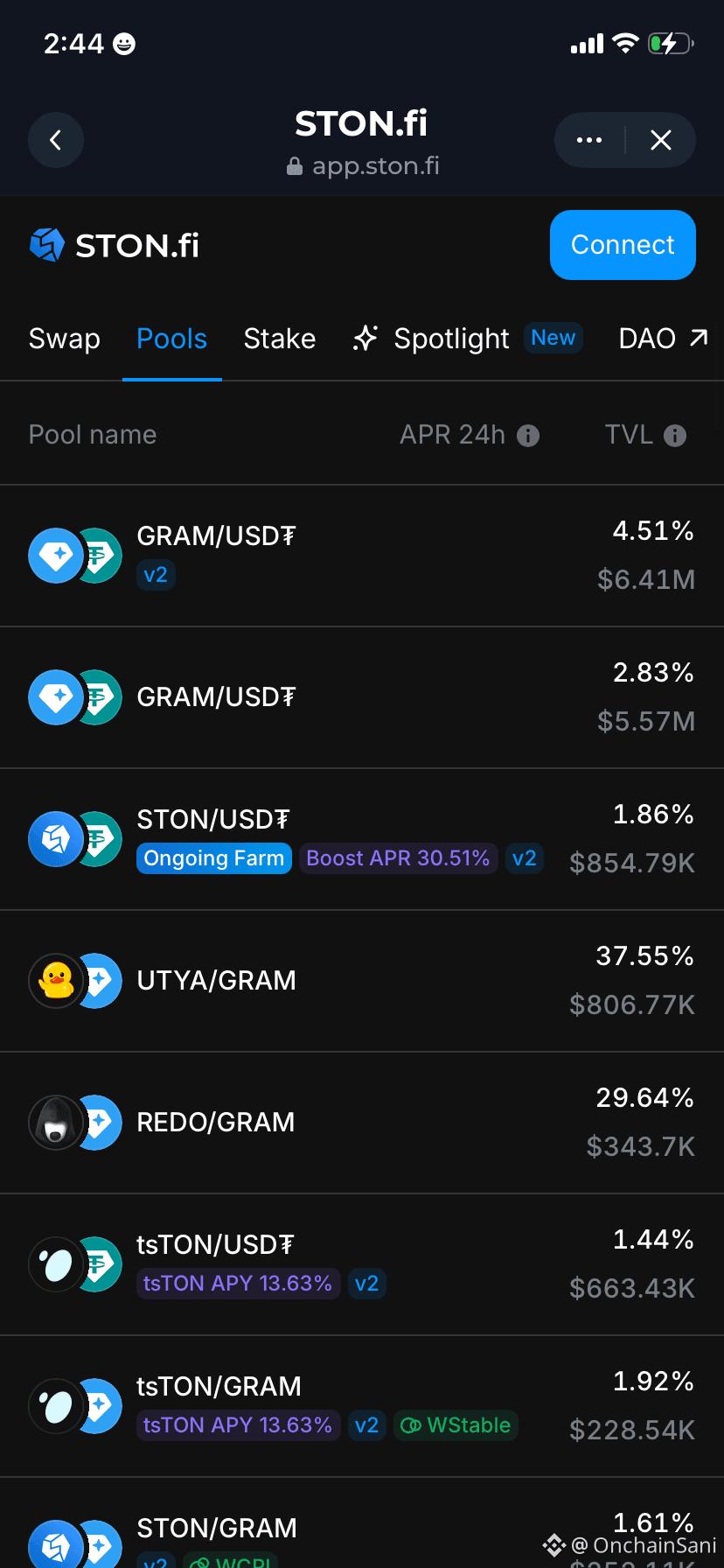
I spent some time browsing different liquidity pools on STON.fi today instead of focusing on just one.
Opening a few different pool pages helped me understand how token pairings vary across the platform.
I wasn’t looking for the “best” pool, I was trying to understand how the Pools section is organized.
That small habit has made exploring the ecosystem much more interesting because every comparison teaches me something new.
I spent some time browsing different liquidity pools on STON.fi today instead of focusing on just one.
Opening a few different pool pages helped me understand how token pairings vary across the platform.
I wasn’t looking for the “best” pool, I was trying to understand how the Pools section is organized.
That small habit has made exploring the ecosystem much more interesting because every comparison teaches me something new.
Opening a few different pool pages helped me understand how token pairings vary across the platform.
I wasn’t looking for the “best” pool, I was trying to understand how the Pools section is organized.
That small habit has made exploring the ecosystem much more interesting because every comparison teaches me something new.
1
184
·
--
#newt Newton Protocol Mainnet Beta introduces an onchain authorization layer that checks transactions before execution.
Instead of reacting after risks occur, it applies programmable compliance rules in real time across different chains, making onchain activity more controlled and verifiable.
@NewtonProtocol $NEWT #Newt $NEWT
#newt $NEWT
#newt Newton Protocol Mainnet Beta introduces an onchain authorization layer that checks transactions before execution.
Instead of reacting after risks occur, it applies programmable compliance rules in real time across different chains, making onchain activity more controlled and verifiable.
@NewtonProtocol $NEWT #Newt $NEWT
#newt $NEWT
Instead of reacting after risks occur, it applies programmable compliance rules in real time across different chains, making onchain activity more controlled and verifiable.
@NewtonProtocol $NEWT #Newt $NEWT
#newt $NEWT

1
59
·
--
#newt Newton Protocol Mainnet Beta introduces an onchain authorization layer that checks transactions before execution.
Instead of reacting after risks occur, it applies programmable compliance rules in real time across different chains, making onchain activity more controlled and verifiable.
@NewtonProtocol $NEWT #Newt $NEWT
#newt Newton Protocol Mainnet Beta introduces an onchain authorization layer that checks transactions before execution.
Instead of reacting after risks occur, it applies programmable compliance rules in real time across different chains, making onchain activity more controlled and verifiable.
@NewtonProtocol $NEWT #Newt $NEWT
Instead of reacting after risks occur, it applies programmable compliance rules in real time across different chains, making onchain activity more controlled and verifiable.
@NewtonProtocol $NEWT #Newt $NEWT

1
84
·
--
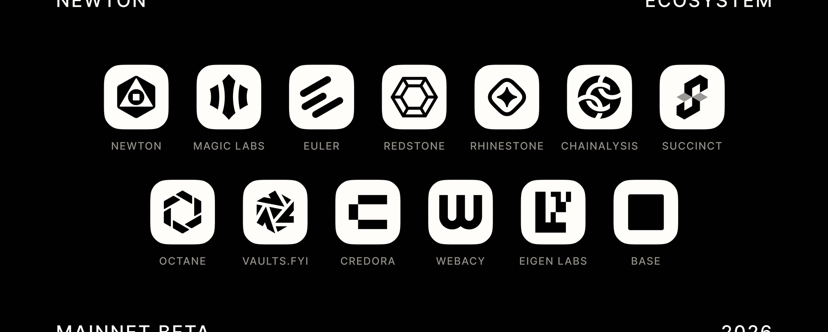
Article
NEWTON MAINNET BETANewton Protocol Mainnet Beta introduces a pre-execution authorization layer where onchain transactions are evaluated before they are allowed to settle. Instead of relying only on post-transaction monitoring, each transaction is checked against programmable compliance rules before execution.
These rules can include identity verification, jurisdiction restrictions, transfer limits, and risk-based controls. When a transaction is submitted, Newton generates a verifiable attestation that confirms whether the policy conditions were satisfied. Smart contracts can then enforce this attestation directly before executing the transaction.
This design makes compliance part of the execution flow rather than an external process. It also allows consistent policy enforcement across multiple chains, reducing fragmentation for applications that operate in a multi-chain environment.
With the rise of stablecoins, tokenized real-world assets, and AI-driven agents interacting with DeFi protocols, this type of structured authorization layer becomes increasingly important for maintaining controlled and verifiable onchain activity.
@NewtonProtocol $NEWT #Newt
NEWTON MAINNET BETA
Newton Protocol Mainnet Beta introduces a pre-execution authorization layer where onchain transactions are evaluated before they are allowed to settle. Instead of relying only on post-transaction monitoring, each transaction is checked against programmable compliance rules before execution.
These rules can include identity verification, jurisdiction restrictions, transfer limits, and risk-based controls. When a transaction is submitted, Newton generates a verifiable attestation that confirms whether the policy conditions were satisfied. Smart contracts can then enforce this attestation directly before executing the transaction.
This design makes compliance part of the execution flow rather than an external process. It also allows consistent policy enforcement across multiple chains, reducing fragmentation for applications that operate in a multi-chain environment.
With the rise of stablecoins, tokenized real-world assets, and AI-driven agents interacting with DeFi protocols, this type of structured authorization layer becomes increasingly important for maintaining controlled and verifiable onchain activity.
@NewtonProtocol $NEWT #Newt
These rules can include identity verification, jurisdiction restrictions, transfer limits, and risk-based controls. When a transaction is submitted, Newton generates a verifiable attestation that confirms whether the policy conditions were satisfied. Smart contracts can then enforce this attestation directly before executing the transaction.
This design makes compliance part of the execution flow rather than an external process. It also allows consistent policy enforcement across multiple chains, reducing fragmentation for applications that operate in a multi-chain environment.
With the rise of stablecoins, tokenized real-world assets, and AI-driven agents interacting with DeFi protocols, this type of structured authorization layer becomes increasingly important for maintaining controlled and verifiable onchain activity.
@NewtonProtocol $NEWT #Newt
1
82
·
--
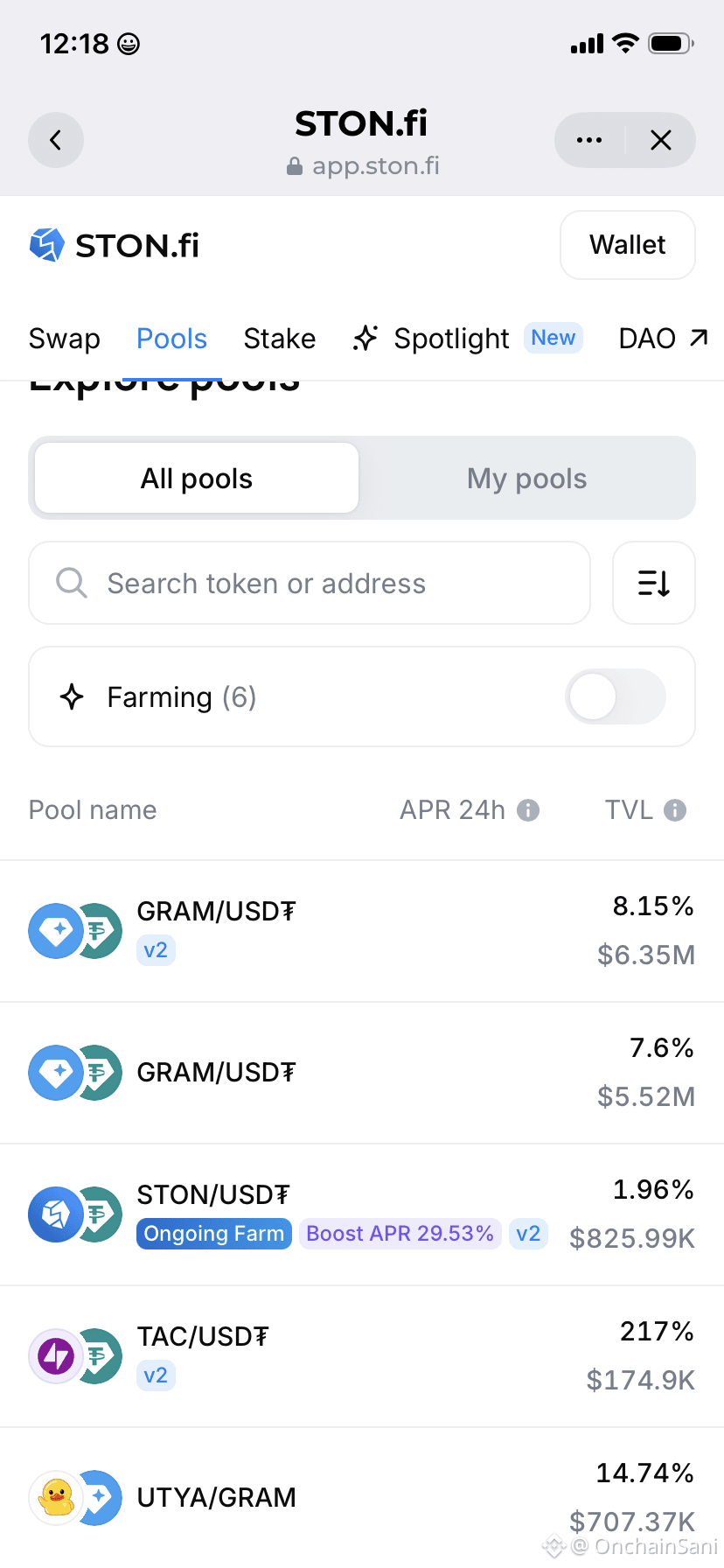
I opened the Pools section on STON.fi today expecting a quick look around.
Instead, I ended up spending time opening individual pools because I noticed the same assets appearing across multiple pairings.
That made me curious about how different projects connect within the ecosystem.
The interesting part is that I wasn’t looking for opportunities anymore.
I was looking for patterns.
Sometimes browsing pools can tell you more about ecosystem activity than simply looking at token prices.
I opened the Pools section on STON.fi today expecting a quick look around.
Instead, I ended up spending time opening individual pools because I noticed the same assets appearing across multiple pairings.
That made me curious about how different projects connect within the ecosystem.
The interesting part is that I wasn’t looking for opportunities anymore.
I was looking for patterns.
Sometimes browsing pools can tell you more about ecosystem activity than simply looking at token prices.
Instead, I ended up spending time opening individual pools because I noticed the same assets appearing across multiple pairings.
That made me curious about how different projects connect within the ecosystem.
The interesting part is that I wasn’t looking for opportunities anymore.
I was looking for patterns.
Sometimes browsing pools can tell you more about ecosystem activity than simply looking at token prices.
1
242
·
--
Bullish
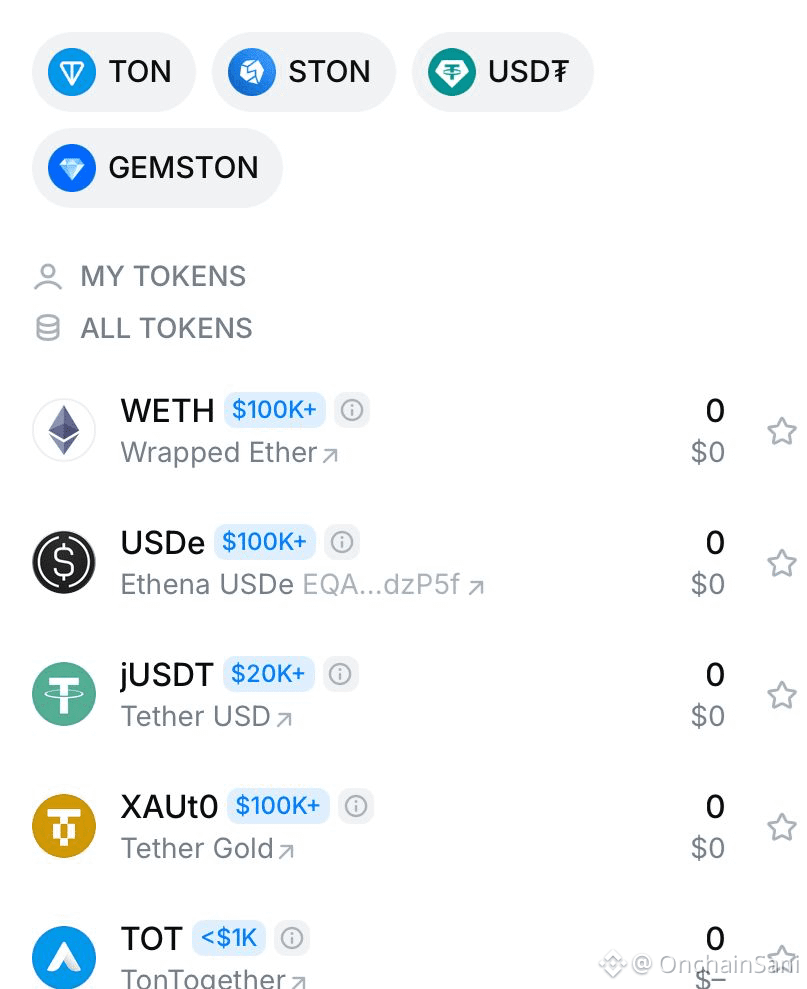
While using STON.fi today, I spent some time interacting with different token pairs instead of just sticking to one familiar swap route.
One thing I noticed is how much your perception of DeFi changes once you actually start executing swaps regularly instead of just reading about them.
It stops being about “what token should I buy” and starts becoming more about how smoothly the execution happens and how predictable the process feels.
That experience is what stood out most for me.
Not the tokens themselves, but the interaction flow behind them.
Over time, you start to notice that consistency in execution matters more than trying to chase constant new opportunities.
While using STON.fi today, I spent some time interacting with different token pairs instead of just sticking to one familiar swap route.
One thing I noticed is how much your perception of DeFi changes once you actually start executing swaps regularly instead of just reading about them.
It stops being about “what token should I buy” and starts becoming more about how smoothly the execution happens and how predictable the process feels.
That experience is what stood out most for me.
Not the tokens themselves, but the interaction flow behind them.
Over time, you start to notice that consistency in execution matters more than trying to chase constant new opportunities.
One thing I noticed is how much your perception of DeFi changes once you actually start executing swaps regularly instead of just reading about them.
It stops being about “what token should I buy” and starts becoming more about how smoothly the execution happens and how predictable the process feels.
That experience is what stood out most for me.
Not the tokens themselves, but the interaction flow behind them.
Over time, you start to notice that consistency in execution matters more than trying to chase constant new opportunities.
1
140
·
--
Bullish
What Creates Ecosystem Resilience?
Lately I’ve been thinking about what makes a DeFi ecosystem resilient during both active and quiet periods.
It’s easy to focus on metrics when markets are exciting.
But resilience often comes from something deeper:
consistent users,
active communities,
and infrastructure people continue using regardless of market conditions.
That’s one thing I’ve started appreciating more while spending time around STON.fi and the broader TON ecosystem.
What Creates Ecosystem Resilience?
Lately I’ve been thinking about what makes a DeFi ecosystem resilient during both active and quiet periods.
It’s easy to focus on metrics when markets are exciting.
But resilience often comes from something deeper:
consistent users,
active communities,
and infrastructure people continue using regardless of market conditions.
That’s one thing I’ve started appreciating more while spending time around STON.fi and the broader TON ecosystem.
Lately I’ve been thinking about what makes a DeFi ecosystem resilient during both active and quiet periods.
It’s easy to focus on metrics when markets are exciting.
But resilience often comes from something deeper:
consistent users,
active communities,
and infrastructure people continue using regardless of market conditions.
That’s one thing I’ve started appreciating more while spending time around STON.fi and the broader TON ecosystem.
1
106
·
--
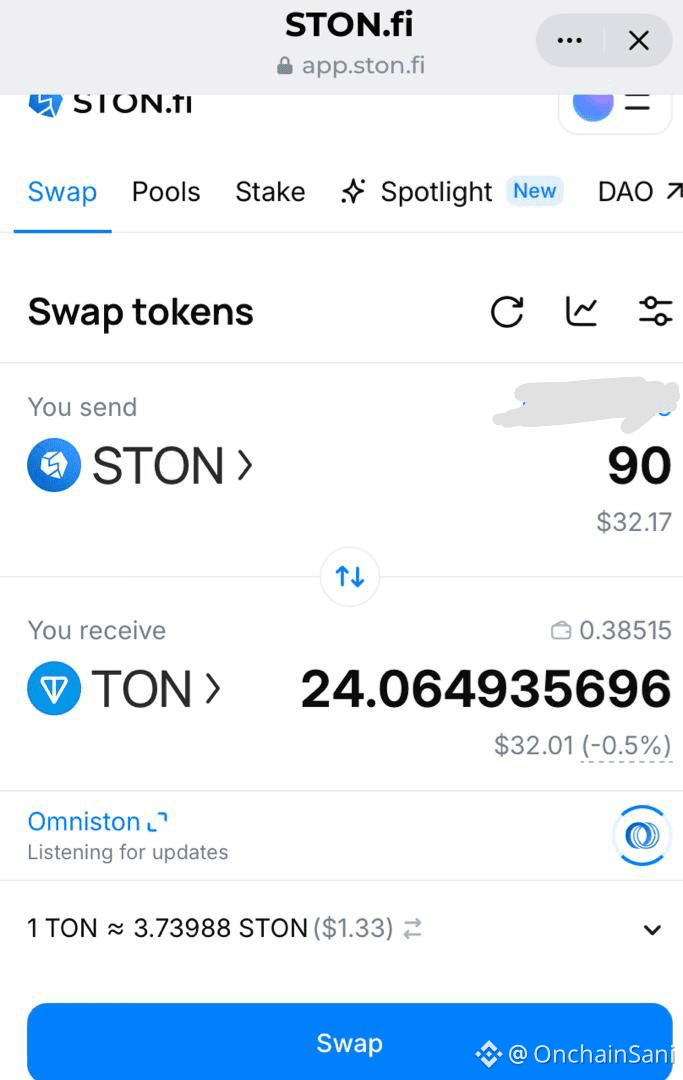
The longer I spend exploring TON DeFi, the more I appreciate the difference between interacting with infrastructure and understanding infrastructure.
Using a DEX is straightforward.
Understanding where liquidity comes from, how pools attract participation, and how execution remains efficient is a completely different layer of learning.
That’s something I’ve gradually come to appreciate while using STON.fi.
The visible experience is important.
But the invisible systems underneath often tell the more interesting story.
The longer I spend exploring TON DeFi, the more I appreciate the difference between interacting with infrastructure and understanding infrastructure.
Using a DEX is straightforward.
Understanding where liquidity comes from, how pools attract participation, and how execution remains efficient is a completely different layer of learning.
That’s something I’ve gradually come to appreciate while using STON.fi.
The visible experience is important.
But the invisible systems underneath often tell the more interesting story.
Using a DEX is straightforward.
Understanding where liquidity comes from, how pools attract participation, and how execution remains efficient is a completely different layer of learning.
That’s something I’ve gradually come to appreciate while using STON.fi.
The visible experience is important.
But the invisible systems underneath often tell the more interesting story.
1
2
619
Log in to explore more content
Join global crypto users on Binance Square
⚡️ Get latest and useful information about crypto.
💬 Trusted by the world’s largest crypto exchange.
👍 Discover real insights from verified creators.
Email / Phone number