

#cryptoai
cryptoai
560,554 views
3,470 Discussing
Hot
Latest

·
--
Verified
🚀 Binance Launches Binance Intelligence
Binance has officially unveiled Binance Intelligence, a new AI-powered layer designed to make financial information easier to understand and use.
The new ecosystem brings together three major products:
🔹 Binance AI — a free AI assistant that personalizes market information, alerts, portfolio insights and other tools based on the user.
🔹 Binance AI Pro — a finance-focused AI agent that can turn natural-language ideas into visualized trading strategies and automated workflows, without requiring users to code.
🔹 Binance Agent OS — a developer platform that allows AI agents to interact with Binance’s market data, trading, wallet, payments and on-chain capabilities.
Binance AI began rolling out to eligible users in New Zealand on October 5, with a wider global rollout planned over the following days. AI Pro is expected to launch in the coming weeks.
💡 Why does this matter?
The move shows how quickly AI is becoming integrated with financial markets. Instead of simply giving users more data, Binance is trying to help them understand information, build strategies and automate workflows from one platform.
However, AI-generated strategies don't remove market risk. Users still control whether strategies are approved and executed, and Binance says AI Pro operates within user-defined permissions and limits.
The combination of AI + crypto + automated execution could become one of the biggest trends shaping the next phase of digital-asset trading.
#Binance #BinanceIntelligence #CryptoAi #binancelaunchesbinanceintelligence
$BNB
{spot}(BNBUSDT)
🚀 Binance Launches Binance Intelligence
Binance has officially unveiled Binance Intelligence, a new AI-powered layer designed to make financial information easier to understand and use.
The new ecosystem brings together three major products:
🔹 Binance AI — a free AI assistant that personalizes market information, alerts, portfolio insights and other tools based on the user.
🔹 Binance AI Pro — a finance-focused AI agent that can turn natural-language ideas into visualized trading strategies and automated workflows, without requiring users to code.
🔹 Binance Agent OS — a developer platform that allows AI agents to interact with Binance’s market data, trading, wallet, payments and on-chain capabilities.
Binance AI began rolling out to eligible users in New Zealand on October 5, with a wider global rollout planned over the following days. AI Pro is expected to launch in the coming weeks.
💡 Why does this matter?
The move shows how quickly AI is becoming integrated with financial markets. Instead of simply giving users more data, Binance is trying to help them understand information, build strategies and automate workflows from one platform.
However, AI-generated strategies don't remove market risk. Users still control whether strategies are approved and executed, and Binance says AI Pro operates within user-defined permissions and limits.
The combination of AI + crypto + automated execution could become one of the biggest trends shaping the next phase of digital-asset trading.
#Binance #BinanceIntelligence #CryptoAi #binancelaunchesbinanceintelligence
$BNB
Binance has officially unveiled Binance Intelligence, a new AI-powered layer designed to make financial information easier to understand and use.
The new ecosystem brings together three major products:
🔹 Binance AI — a free AI assistant that personalizes market information, alerts, portfolio insights and other tools based on the user.
🔹 Binance AI Pro — a finance-focused AI agent that can turn natural-language ideas into visualized trading strategies and automated workflows, without requiring users to code.
🔹 Binance Agent OS — a developer platform that allows AI agents to interact with Binance’s market data, trading, wallet, payments and on-chain capabilities.
Binance AI began rolling out to eligible users in New Zealand on October 5, with a wider global rollout planned over the following days. AI Pro is expected to launch in the coming weeks.
💡 Why does this matter?
The move shows how quickly AI is becoming integrated with financial markets. Instead of simply giving users more data, Binance is trying to help them understand information, build strategies and automate workflows from one platform.
However, AI-generated strategies don't remove market risk. Users still control whether strategies are approved and executed, and Binance says AI Pro operates within user-defined permissions and limits.
The combination of AI + crypto + automated execution could become one of the biggest trends shaping the next phase of digital-asset trading.
#Binance #BinanceIntelligence #CryptoAi #binancelaunchesbinanceintelligence
$BNB

I am pro 2:
I follow you please follow back broo
3
1
11
9.3k

·
--
#BinanceLaunchesBinanceIntelligence
⚡ AI Meets Crypto Trading: Binance Intelligence is Live! ⚡
Trading just got a massive upgrade with Binance's new AI suite:
1️⃣ Binance AI: Personalized market dashboards & 4-hour macro market audio briefings.
2️⃣ Binance AI Pro: Build and run automated strategies using simple natural language prompts.
3️⃣ Binance Agent OS: Developer framework for autonomous financial AI agents.
Describe your strategy ➔ Paper test ➔ Execute 24/7.
Are you building your next trading strategy with AI? Drop your thoughts below! 👇
#BinanceLaunchesBinanceIntelligence #BinanceSquare #CryptoAI #Trading $EDEN
{spot}(EDENUSDT)
#BinanceLaunchesBinanceIntelligence
⚡ AI Meets Crypto Trading: Binance Intelligence is Live! ⚡
Trading just got a massive upgrade with Binance's new AI suite:
1️⃣ Binance AI: Personalized market dashboards & 4-hour macro market audio briefings.
2️⃣ Binance AI Pro: Build and run automated strategies using simple natural language prompts.
3️⃣ Binance Agent OS: Developer framework for autonomous financial AI agents.
Describe your strategy ➔ Paper test ➔ Execute 24/7.
Are you building your next trading strategy with AI? Drop your thoughts below! 👇
#BinanceLaunchesBinanceIntelligence #BinanceSquare #CryptoAI #Trading $EDEN
⚡ AI Meets Crypto Trading: Binance Intelligence is Live! ⚡
Trading just got a massive upgrade with Binance's new AI suite:
1️⃣ Binance AI: Personalized market dashboards & 4-hour macro market audio briefings.
2️⃣ Binance AI Pro: Build and run automated strategies using simple natural language prompts.
3️⃣ Binance Agent OS: Developer framework for autonomous financial AI agents.
Describe your strategy ➔ Paper test ➔ Execute 24/7.
Are you building your next trading strategy with AI? Drop your thoughts below! 👇
#BinanceLaunchesBinanceIntelligence #BinanceSquare #CryptoAI #Trading $EDEN
541

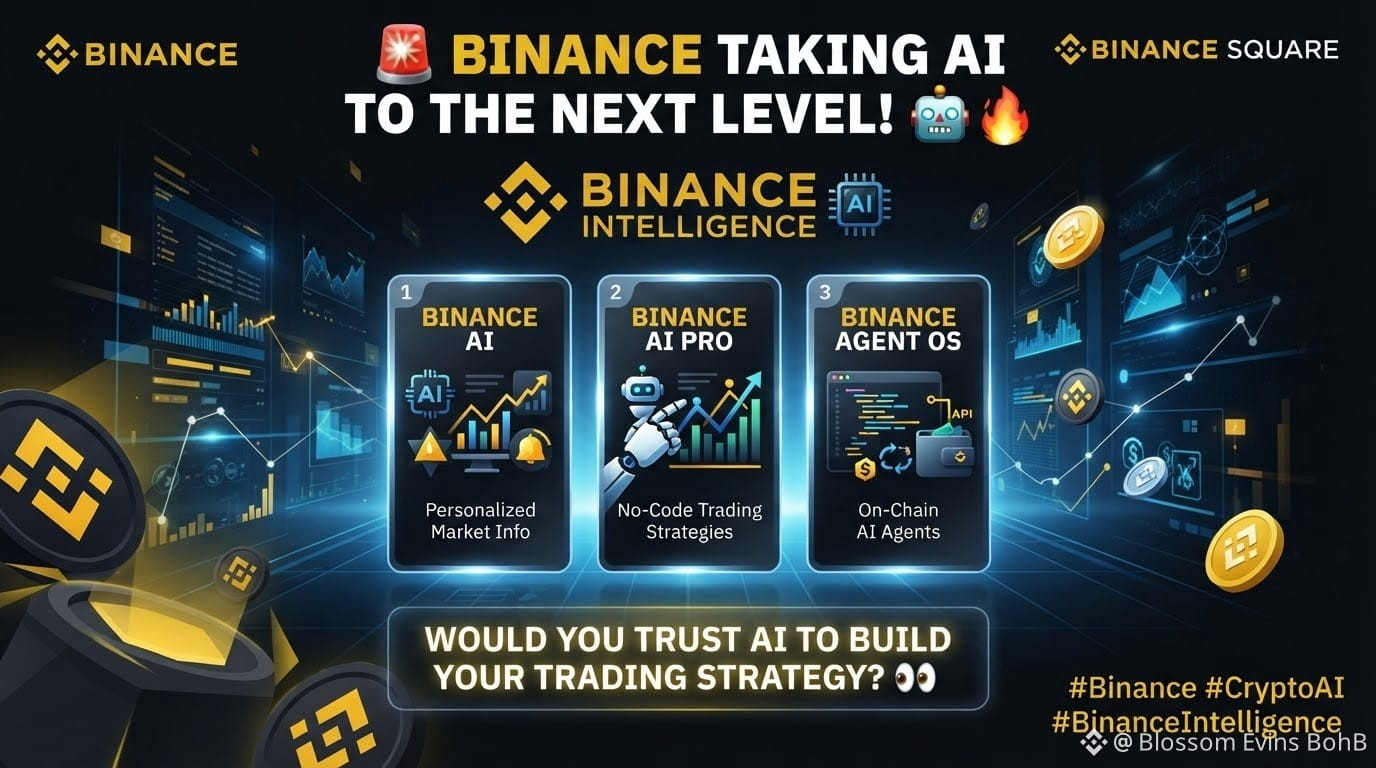
BINANCE IS TAKING AI TO THE NEXT LEVEL 🤖🔥
Binance has just introduced Binance Intelligence — a new AI-powered ecosystem built to make financial data easier to understand, analyze, and actually use.
The platform brings together three key products 👇
🔹 Binance AI
A free AI assistant designed to deliver personalized market information, alerts, portfolio insights, and other useful tools.
🔹 Binance AI Pro
A finance-focused AI agent that can turn simple ideas written in natural language into visual trading strategies and automated workflows — without needing to write code.
🔹 Binance Agent OS
A developer-focused platform that allows AI agents to work with Binance market data, trading, wallets, payments, and on-chain functions.
📅 Binance AI started rolling out to eligible users in New Zealand on October 5, with a broader global rollout expected in the following days. AI Pro is expected to arrive in the coming weeks.
💡 Why is this important?
This isn't just about adding another AI chatbot to crypto.
Binance is moving toward a system where AI can help users understand markets, create strategies, analyze information, and automate workflows from one ecosystem. ⚡
And of course, AI doesn't eliminate trading risk. Users remain in control of approvals, execution, permissions, and limits.
🤖 + 💰 + ⚡
AI + Crypto + Automation could become a major part of the next generation of digital-asset trading.
Would you trust AI to help build your crypto trading strategy? 👀
#Binance #BinanceIntelligence #CryptoAI #crypto
$BNB
BINANCE IS TAKING AI TO THE NEXT LEVEL 🤖🔥
Binance has just introduced Binance Intelligence — a new AI-powered ecosystem built to make financial data easier to understand, analyze, and actually use.
The platform brings together three key products 👇
🔹 Binance AI
A free AI assistant designed to deliver personalized market information, alerts, portfolio insights, and other useful tools.
🔹 Binance AI Pro
A finance-focused AI agent that can turn simple ideas written in natural language into visual trading strategies and automated workflows — without needing to write code.
🔹 Binance Agent OS
A developer-focused platform that allows AI agents to work with Binance market data, trading, wallets, payments, and on-chain functions.
📅 Binance AI started rolling out to eligible users in New Zealand on October 5, with a broader global rollout expected in the following days. AI Pro is expected to arrive in the coming weeks.
💡 Why is this important?
This isn't just about adding another AI chatbot to crypto.
Binance is moving toward a system where AI can help users understand markets, create strategies, analyze information, and automate workflows from one ecosystem. ⚡
And of course, AI doesn't eliminate trading risk. Users remain in control of approvals, execution, permissions, and limits.
🤖 + 💰 + ⚡
AI + Crypto + Automation could become a major part of the next generation of digital-asset trading.
Would you trust AI to help build your crypto trading strategy? 👀
#Binance #BinanceIntelligence #CryptoAI #crypto
$BNB
Binance has just introduced Binance Intelligence — a new AI-powered ecosystem built to make financial data easier to understand, analyze, and actually use.
The platform brings together three key products 👇
🔹 Binance AI
A free AI assistant designed to deliver personalized market information, alerts, portfolio insights, and other useful tools.
🔹 Binance AI Pro
A finance-focused AI agent that can turn simple ideas written in natural language into visual trading strategies and automated workflows — without needing to write code.
🔹 Binance Agent OS
A developer-focused platform that allows AI agents to work with Binance market data, trading, wallets, payments, and on-chain functions.
📅 Binance AI started rolling out to eligible users in New Zealand on October 5, with a broader global rollout expected in the following days. AI Pro is expected to arrive in the coming weeks.
💡 Why is this important?
This isn't just about adding another AI chatbot to crypto.
Binance is moving toward a system where AI can help users understand markets, create strategies, analyze information, and automate workflows from one ecosystem. ⚡
And of course, AI doesn't eliminate trading risk. Users remain in control of approvals, execution, permissions, and limits.
🤖 + 💰 + ⚡
AI + Crypto + Automation could become a major part of the next generation of digital-asset trading.
Would you trust AI to help build your crypto trading strategy? 👀
#Binance #BinanceIntelligence #CryptoAI #crypto
$BNB
64

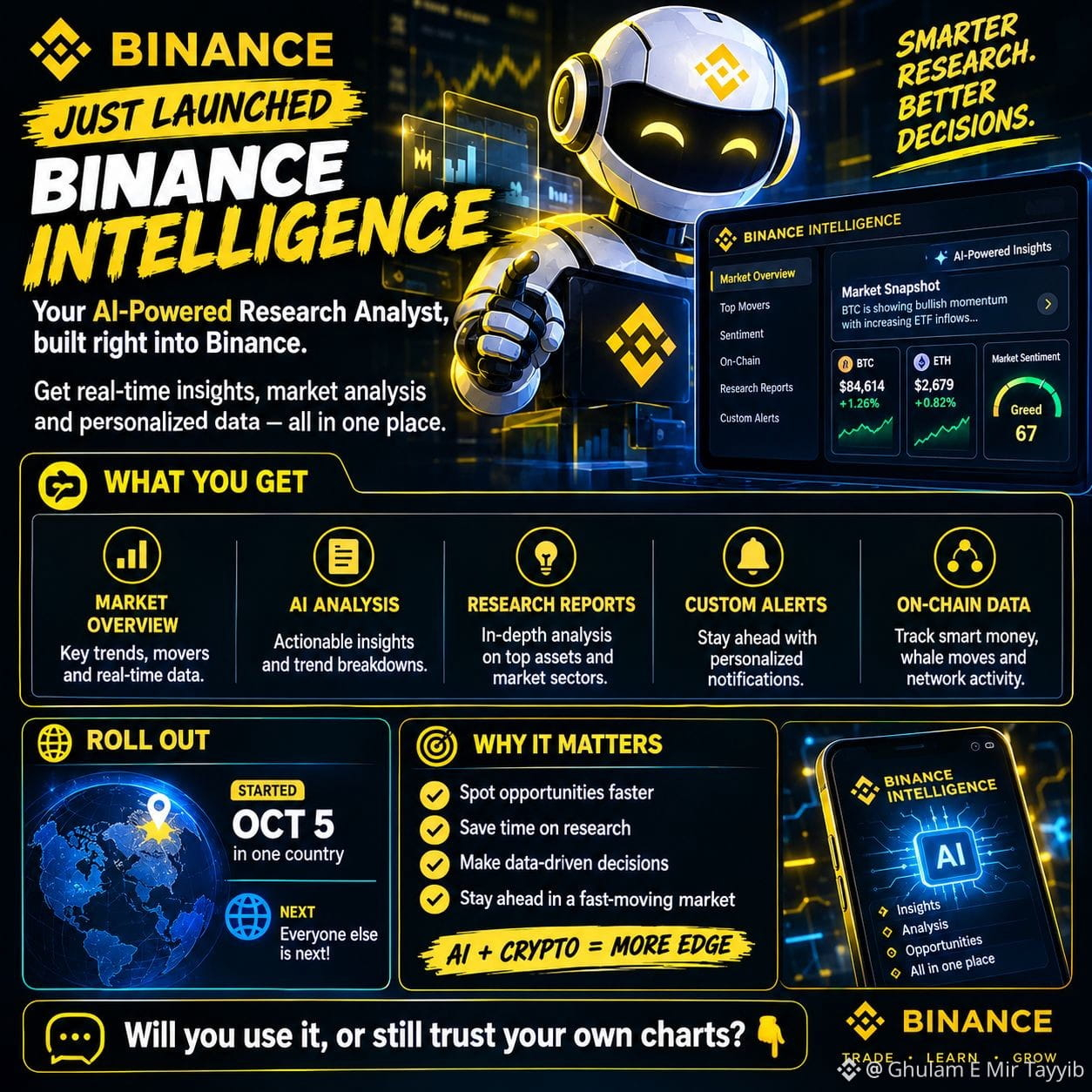
Binance just launched Binance Intelligence 🤖
Think of it as a personal research analyst built right into Binance.
The rollout started with one country on Oct 5, and everyone else is next.
AI-powered research could change how we spot trades and read the market.
Will you use it, or still trust your own charts? 👇
#BinanceLaunchesBinanceIntelligence #CryptoAI
Binance just launched Binance Intelligence 🤖
Think of it as a personal research analyst built right into Binance.
The rollout started with one country on Oct 5, and everyone else is next.
AI-powered research could change how we spot trades and read the market.
Will you use it, or still trust your own charts? 👇
#BinanceLaunchesBinanceIntelligence #CryptoAI
Think of it as a personal research analyst built right into Binance.
The rollout started with one country on Oct 5, and everyone else is next.
AI-powered research could change how we spot trades and read the market.
Will you use it, or still trust your own charts? 👇
#BinanceLaunchesBinanceIntelligence #CryptoAI
1
6

·
--
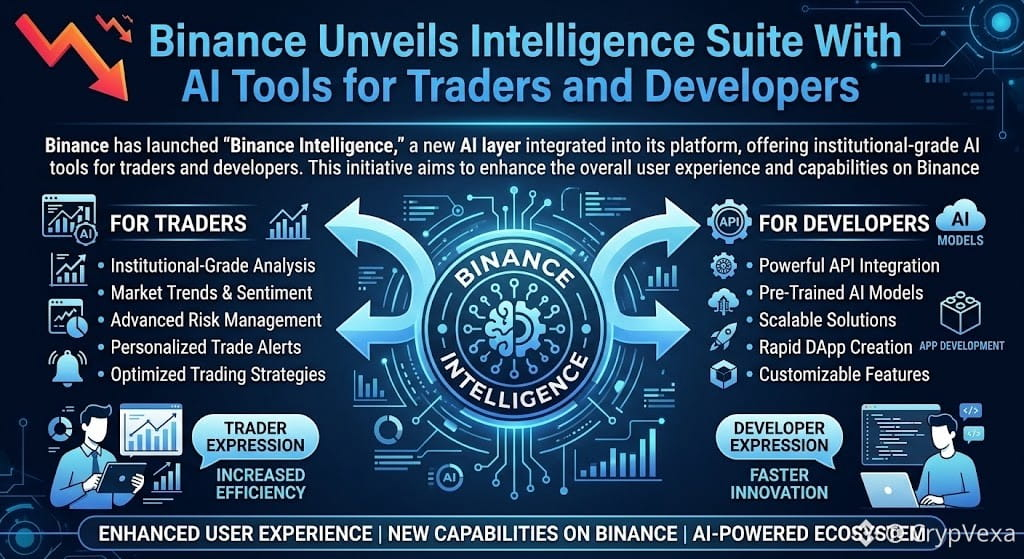
🤖 Binance Launches AI Intelligence Suite
⚡ Binance has introduced Binance Intelligence, a new AI layer integrated into its platform.
🧠 The suite is designed to provide institutional-grade AI tools for traders and developers, helping users access deeper market insights and enhanced platform capabilities.
🚀 The move shows how AI is becoming increasingly integrated into crypto trading and blockchain development.
👀 Could AI become a core tool for the next generation of crypto users?
#Binance #BinanceAI #CryptoAI #CryptoNews
🤖 Binance Launches AI Intelligence Suite
⚡ Binance has introduced Binance Intelligence, a new AI layer integrated into its platform.
🧠 The suite is designed to provide institutional-grade AI tools for traders and developers, helping users access deeper market insights and enhanced platform capabilities.
🚀 The move shows how AI is becoming increasingly integrated into crypto trading and blockchain development.
👀 Could AI become a core tool for the next generation of crypto users?
#Binance #BinanceAI #CryptoAI #CryptoNews
⚡ Binance has introduced Binance Intelligence, a new AI layer integrated into its platform.
🧠 The suite is designed to provide institutional-grade AI tools for traders and developers, helping users access deeper market insights and enhanced platform capabilities.
🚀 The move shows how AI is becoming increasingly integrated into crypto trading and blockchain development.
👀 Could AI become a core tool for the next generation of crypto users?
#Binance #BinanceAI #CryptoAI #CryptoNews
1
35

⚡ NEXT-GEN ALGORITHMIC EXECUTION ENGINE UNVEILED FOR $BNB ECOSYSTEM TRADERS! 💥
Smart money is rapidly evolving beyond basic order triggers toward fully tailored execution systems. A top-tier exchange is expanding its AI Pro engine from standard conditional trades into deeply personalized strategy routing for every market participant. 💡
Whether your edge relies on spot grid setups or structured dollar-cost averaging, the upcoming system analyzes individual trader preferences to recommend customized tactics. 📊 Automated precision removes emotional friction, letting dynamic capital deploy into high-probability market structures seamlessly. ⚡
💬 Will you let automated strategy engines handle your trade execution, or do you still prefer executing every entry manually? 👇
⚠️ Not financial advice. Always manage your risk. 🛡️
🏷️ #BNB #CryptoAI #TradingBots #AlgorithmicTrading
🔥 💎
⚡ NEXT-GEN ALGORITHMIC EXECUTION ENGINE UNVEILED FOR $BNB ECOSYSTEM TRADERS! 💥
Smart money is rapidly evolving beyond basic order triggers toward fully tailored execution systems. A top-tier exchange is expanding its AI Pro engine from standard conditional trades into deeply personalized strategy routing for every market participant. 💡
Whether your edge relies on spot grid setups or structured dollar-cost averaging, the upcoming system analyzes individual trader preferences to recommend customized tactics. 📊 Automated precision removes emotional friction, letting dynamic capital deploy into high-probability market structures seamlessly. ⚡
💬 Will you let automated strategy engines handle your trade execution, or do you still prefer executing every entry manually? 👇
⚠️ Not financial advice. Always manage your risk. 🛡️
🏷️ #BNB #CryptoAI #TradingBots #AlgorithmicTrading
🔥 💎
Smart money is rapidly evolving beyond basic order triggers toward fully tailored execution systems. A top-tier exchange is expanding its AI Pro engine from standard conditional trades into deeply personalized strategy routing for every market participant. 💡
Whether your edge relies on spot grid setups or structured dollar-cost averaging, the upcoming system analyzes individual trader preferences to recommend customized tactics. 📊 Automated precision removes emotional friction, letting dynamic capital deploy into high-probability market structures seamlessly. ⚡
💬 Will you let automated strategy engines handle your trade execution, or do you still prefer executing every entry manually? 👇
⚠️ Not financial advice. Always manage your risk. 🛡️
🏷️ #BNB #CryptoAI #TradingBots #AlgorithmicTrading
🔥 💎
5

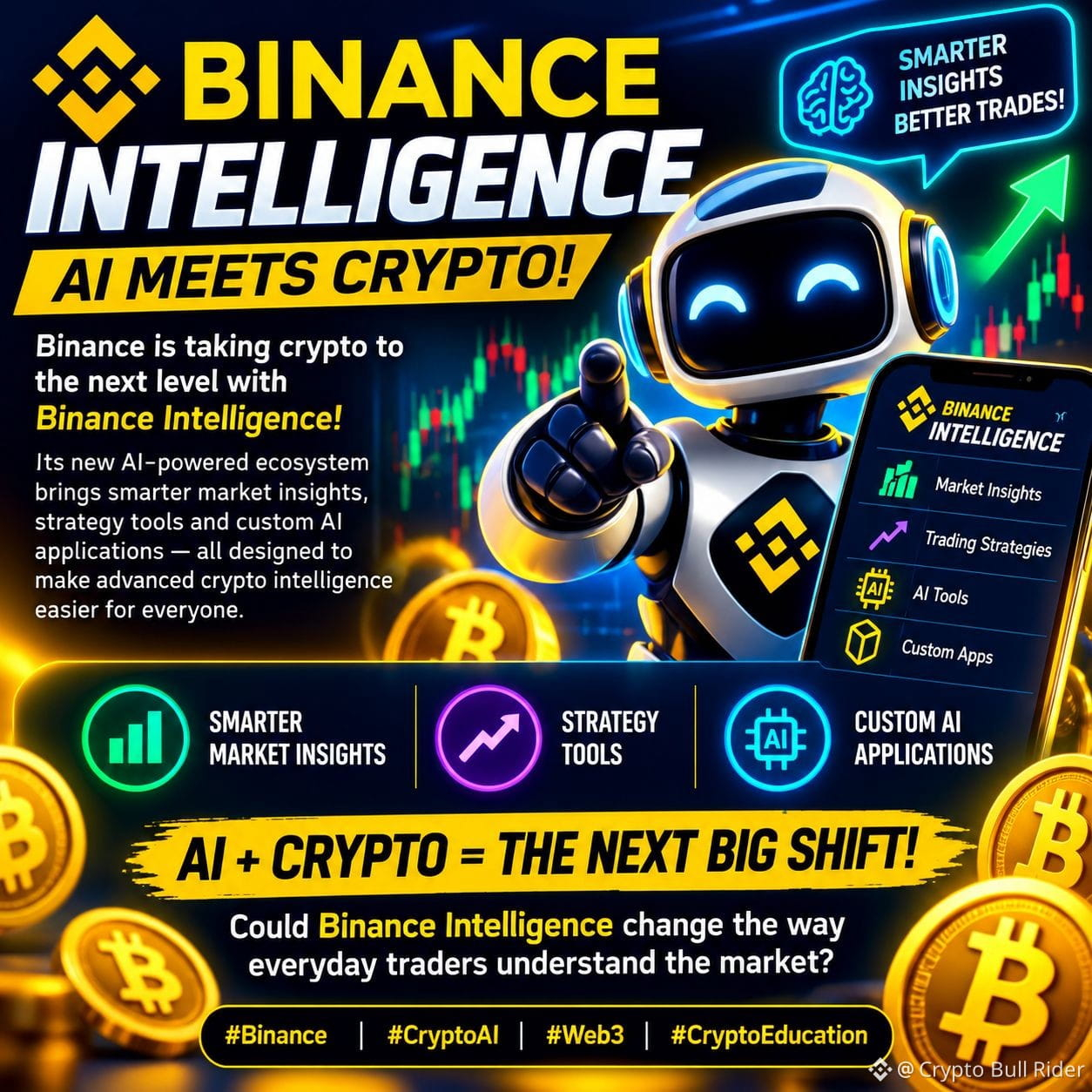
🚀 Binance Intelligence: AI Meets Crypto!
Binance is taking crypto to the next level with Binance Intelligence 🤖🧠
Its new AI-powered ecosystem brings smarter market insights, strategy tools, and custom AI applications—all designed to make advanced crypto intelligence easier for everyone.
🔥 AI + Crypto = The Next Big Shift
Could Binance Intelligence change the way everyday traders understand the market?
#Binance #CryptoAI #Web3 #CryptoEducation
$RLC $RAD $ORCA
🚀 Binance Intelligence: AI Meets Crypto!
Binance is taking crypto to the next level with Binance Intelligence 🤖🧠
Its new AI-powered ecosystem brings smarter market insights, strategy tools, and custom AI applications—all designed to make advanced crypto intelligence easier for everyone.
🔥 AI + Crypto = The Next Big Shift
Could Binance Intelligence change the way everyday traders understand the market?
#Binance #CryptoAI #Web3 #CryptoEducation
$RLC $RAD $ORCA
Binance is taking crypto to the next level with Binance Intelligence 🤖🧠
Its new AI-powered ecosystem brings smarter market insights, strategy tools, and custom AI applications—all designed to make advanced crypto intelligence easier for everyone.
🔥 AI + Crypto = The Next Big Shift
Could Binance Intelligence change the way everyday traders understand the market?
#Binance #CryptoAI #Web3 #CryptoEducation
$RLC $RAD $ORCA
39

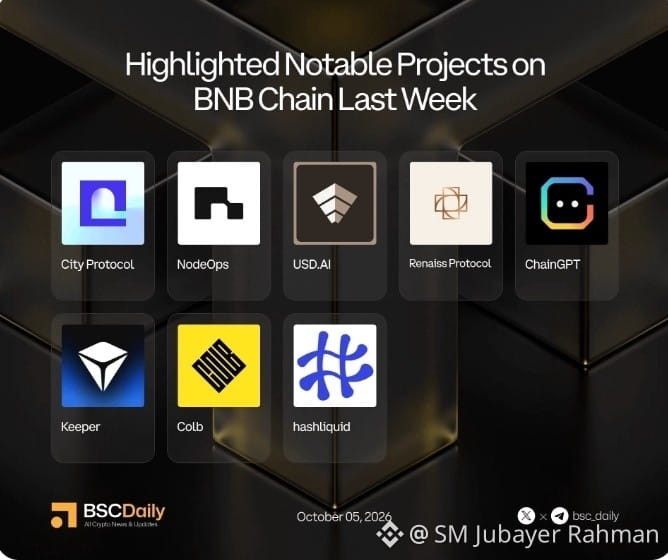
🚨 Binance is bringing AI deeper into crypto trading.
Binance has introduced Binance Intelligence, an AI-powered layer designed to make trading and market research more intelligent.
The ecosystem includes:
• Binance AI — market insights, alerts, PnL summaries and personalized information
• Binance AI Pro — turns trading ideas written in plain English into visual strategy workflows
• Agent OS — tools for developers building AI-powered financial agents
And this could be more important than it first appears.
Crypto exchanges have traditionally competed on fees, liquidity and product variety.
But the next competition could be about AI-powered execution and decision-making.
Imagine describing a trading strategy in normal language and having AI help structure it into an actual workflow.
If Binance can turn that into meaningful user adoption, it could potentially increase engagement, trading activity and the overall Binance ecosystem narrative.
👀 What I'm watching next:
→ Global rollout
→ AI Pro availability
→ Real user adoption
→ Impact on trading activity
If AI moves from simply explaining the market to actually helping users build and execute strategies, the impact could be much bigger than another crypto chatbot.
And naturally, $BNB is one of the tokens I'd keep on the radar.
#BinanceIntelligence #crypto #AI #trading #CryptoAi
🚨 Binance is bringing AI deeper into crypto trading.
Binance has introduced Binance Intelligence, an AI-powered layer designed to make trading and market research more intelligent.
The ecosystem includes:
• Binance AI — market insights, alerts, PnL summaries and personalized information
• Binance AI Pro — turns trading ideas written in plain English into visual strategy workflows
• Agent OS — tools for developers building AI-powered financial agents
And this could be more important than it first appears.
Crypto exchanges have traditionally competed on fees, liquidity and product variety.
But the next competition could be about AI-powered execution and decision-making.
Imagine describing a trading strategy in normal language and having AI help structure it into an actual workflow.
If Binance can turn that into meaningful user adoption, it could potentially increase engagement, trading activity and the overall Binance ecosystem narrative.
👀 What I'm watching next:
→ Global rollout
→ AI Pro availability
→ Real user adoption
→ Impact on trading activity
If AI moves from simply explaining the market to actually helping users build and execute strategies, the impact could be much bigger than another crypto chatbot.
And naturally, $BNB is one of the tokens I'd keep on the radar.
#BinanceIntelligence #crypto #AI #trading #CryptoAi
Binance has introduced Binance Intelligence, an AI-powered layer designed to make trading and market research more intelligent.
The ecosystem includes:
• Binance AI — market insights, alerts, PnL summaries and personalized information
• Binance AI Pro — turns trading ideas written in plain English into visual strategy workflows
• Agent OS — tools for developers building AI-powered financial agents
And this could be more important than it first appears.
Crypto exchanges have traditionally competed on fees, liquidity and product variety.
But the next competition could be about AI-powered execution and decision-making.
Imagine describing a trading strategy in normal language and having AI help structure it into an actual workflow.
If Binance can turn that into meaningful user adoption, it could potentially increase engagement, trading activity and the overall Binance ecosystem narrative.
👀 What I'm watching next:
→ Global rollout
→ AI Pro availability
→ Real user adoption
→ Impact on trading activity
If AI moves from simply explaining the market to actually helping users build and execute strategies, the impact could be much bigger than another crypto chatbot.
And naturally, $BNB is one of the tokens I'd keep on the radar.
#BinanceIntelligence #crypto #AI #trading #CryptoAi
74
·
--
Bullish
🔥 $FET IS QUIETLY WAKING UP AGAIN
FET is catching attention today with a fresh technical breakout and renewed AI narrative. The interesting part is that price remains above its major daily moving averages, although short-term momentum is beginning to cool.
Momentum: FET is up strongly today.
Trend: Daily structure remains bullish.
Bullish: Holding the breakout keeps buyers in control.
Risk: Cooling momentum could trigger a retest.
I wouldn't chase the first spike. The retest is where this gets interesting.
Are you watching FET for continuation?
#FET #CryptoAi #Altcoins #cryptotrading
🔥 $FET IS QUIETLY WAKING UP AGAIN
FET is catching attention today with a fresh technical breakout and renewed AI narrative. The interesting part is that price remains above its major daily moving averages, although short-term momentum is beginning to cool.
Momentum: FET is up strongly today.
Trend: Daily structure remains bullish.
Bullish: Holding the breakout keeps buyers in control.
Risk: Cooling momentum could trigger a retest.
I wouldn't chase the first spike. The retest is where this gets interesting.
Are you watching FET for continuation?
#FET #CryptoAi #Altcoins #cryptotrading
FET is catching attention today with a fresh technical breakout and renewed AI narrative. The interesting part is that price remains above its major daily moving averages, although short-term momentum is beginning to cool.
Momentum: FET is up strongly today.
Trend: Daily structure remains bullish.
Bullish: Holding the breakout keeps buyers in control.
Risk: Cooling momentum could trigger a retest.
I wouldn't chase the first spike. The retest is where this gets interesting.
Are you watching FET for continuation?
#FET #CryptoAi #Altcoins #cryptotrading
124

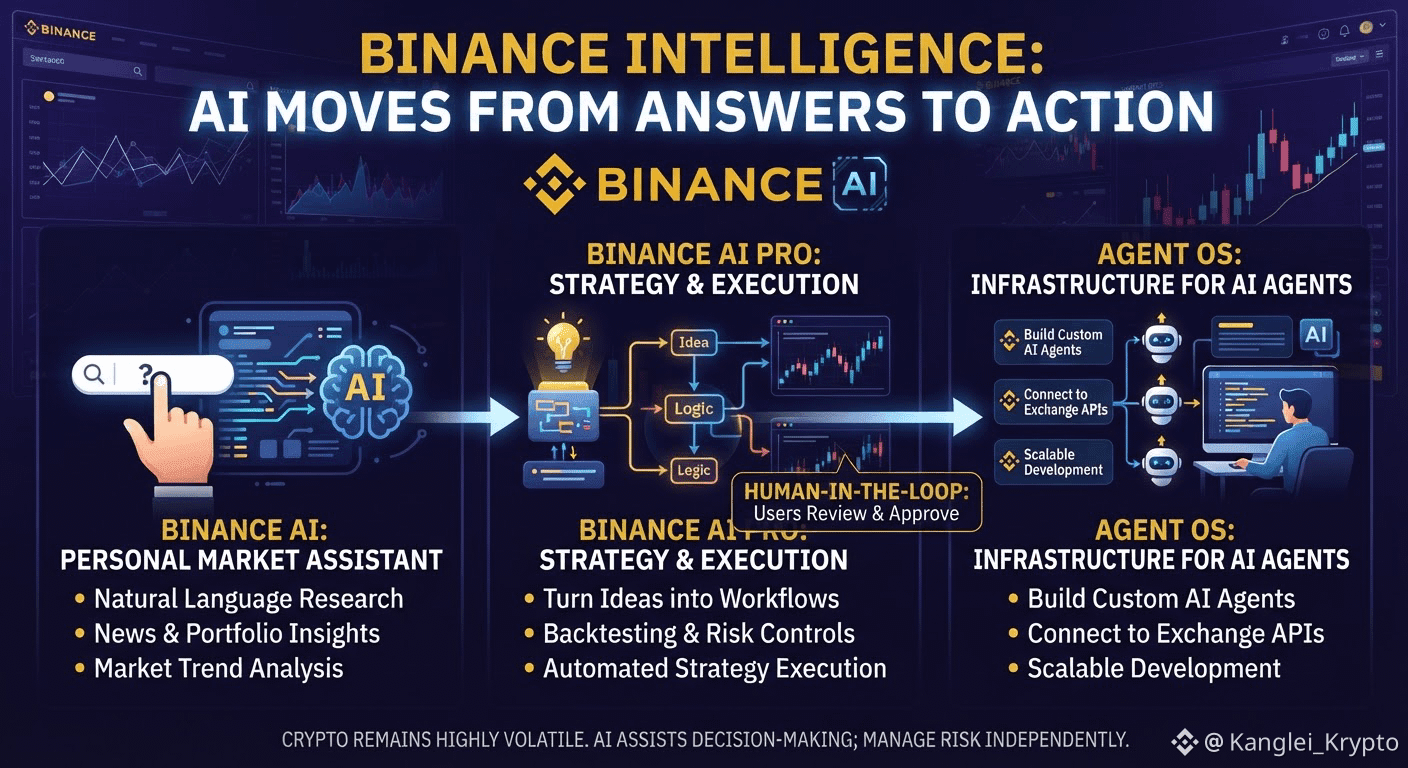
🧠 Binance just changed the way users can interact with markets. 💥⚡️🚀
The bigger story isn’t “AI on Binance” — it’s AI moving closer to research, strategy and execution.
BINANCE INTELLIGENCE: AI MOVES FROM ANSWERS TO ACTION🔥
Binance launched Binance Intelligence today, bringing three AI products into its ecosystem: Binance AI, Binance AI Pro and Agent OS.
• What happened: Binance AI is designed as a free, personalized market assistant, while AI Pro can turn natural-language ideas into visualized strategies and automated workflows. Agent OS gives developers infrastructure to build AI agents connected to Binance capabilities.
• Why the market cares: This could reduce the gap between understanding market data and actually building a strategy. Instead of jumping between charts, news and tools, users can increasingly access research and portfolio insights inside one ecosystem.
• What to watch next: Binance AI is rolling out progressively, while AI Pro is expected to arrive in the coming weeks. Watch real-world adoption, strategy quality, risk controls and how traders actually use these tools.
Confirmed: Binance says users remain in control, with AI Pro workflows requiring review/approval and operating within configured permissions and risk limits.
Possible scenario: If adoption grows, AI-native trading workflows could become a much bigger part of crypto market infrastructure. But that is a possibility—not a guaranteed outcome.
⚠️ Crypto remains highly volatile. AI can assist decision-making, but it doesn’t remove market risk. Manage risk independently.
Would you trust an AI assistant to build your trading strategy—or only use it for research?
#BinanceIntelligence #BinanceAI #CryptoAi #Binance $BNB $BTC $QNT
{future}(BTCUSDT)
{future}(BNBUSDT)
🧠 Binance just changed the way users can interact with markets. 💥⚡️🚀
The bigger story isn’t “AI on Binance” — it’s AI moving closer to research, strategy and execution.
BINANCE INTELLIGENCE: AI MOVES FROM ANSWERS TO ACTION🔥
Binance launched Binance Intelligence today, bringing three AI products into its ecosystem: Binance AI, Binance AI Pro and Agent OS.
• What happened: Binance AI is designed as a free, personalized market assistant, while AI Pro can turn natural-language ideas into visualized strategies and automated workflows. Agent OS gives developers infrastructure to build AI agents connected to Binance capabilities.
• Why the market cares: This could reduce the gap between understanding market data and actually building a strategy. Instead of jumping between charts, news and tools, users can increasingly access research and portfolio insights inside one ecosystem.
• What to watch next: Binance AI is rolling out progressively, while AI Pro is expected to arrive in the coming weeks. Watch real-world adoption, strategy quality, risk controls and how traders actually use these tools.
Confirmed: Binance says users remain in control, with AI Pro workflows requiring review/approval and operating within configured permissions and risk limits.
Possible scenario: If adoption grows, AI-native trading workflows could become a much bigger part of crypto market infrastructure. But that is a possibility—not a guaranteed outcome.
⚠️ Crypto remains highly volatile. AI can assist decision-making, but it doesn’t remove market risk. Manage risk independently.
Would you trust an AI assistant to build your trading strategy—or only use it for research?
#BinanceIntelligence #BinanceAI #CryptoAi #Binance $BNB $BTC $QNT
The bigger story isn’t “AI on Binance” — it’s AI moving closer to research, strategy and execution.
BINANCE INTELLIGENCE: AI MOVES FROM ANSWERS TO ACTION🔥
Binance launched Binance Intelligence today, bringing three AI products into its ecosystem: Binance AI, Binance AI Pro and Agent OS.
• What happened: Binance AI is designed as a free, personalized market assistant, while AI Pro can turn natural-language ideas into visualized strategies and automated workflows. Agent OS gives developers infrastructure to build AI agents connected to Binance capabilities.
• Why the market cares: This could reduce the gap between understanding market data and actually building a strategy. Instead of jumping between charts, news and tools, users can increasingly access research and portfolio insights inside one ecosystem.
• What to watch next: Binance AI is rolling out progressively, while AI Pro is expected to arrive in the coming weeks. Watch real-world adoption, strategy quality, risk controls and how traders actually use these tools.
Confirmed: Binance says users remain in control, with AI Pro workflows requiring review/approval and operating within configured permissions and risk limits.
Possible scenario: If adoption grows, AI-native trading workflows could become a much bigger part of crypto market infrastructure. But that is a possibility—not a guaranteed outcome.
⚠️ Crypto remains highly volatile. AI can assist decision-making, but it doesn’t remove market risk. Manage risk independently.
Would you trust an AI assistant to build your trading strategy—or only use it for research?
#BinanceIntelligence #BinanceAI #CryptoAi #Binance $BNB $BTC $QNT
2
497

·
--
If you are still trading crypto blindly while algorithms eat your lunch, stop now.
Most retail traders lose money because they react to headlines hours after institutional bots already dumped on them. Missing optimal entries and getting caught on the wrong side of momentum is an expensive habit.
Remember when projects promised smart analytics back in 2021 and delivered basic sentiment widgets instead. Now the industry is attempting a serious upgrade with Binance Intelligence. The livestream preview scheduled for Oct 5 at 12:00 UTC is teasing a dedicated intelligence layer across finance, while giving 5 participants a 20 $USDC reward just for sharing their take.
Whether this shifts real utility toward $BNB ecosystem tooling or becomes another interface upgrade depends entirely on execution. We have watched automated systems reshape how people accumulate $BTC over past market cycles, but true financial intelligence needs to solve actual execution latency rather than just repackaging chart data.
Do you think native exchange AI will actually give retail traders an edge, or will bots just use it to frontrun us faster?
#Binance #CryptoAI #TradingInsights
If you are still trading crypto blindly while algorithms eat your lunch, stop now.
Most retail traders lose money because they react to headlines hours after institutional bots already dumped on them. Missing optimal entries and getting caught on the wrong side of momentum is an expensive habit.
Remember when projects promised smart analytics back in 2021 and delivered basic sentiment widgets instead. Now the industry is attempting a serious upgrade with Binance Intelligence. The livestream preview scheduled for Oct 5 at 12:00 UTC is teasing a dedicated intelligence layer across finance, while giving 5 participants a 20 $USDC reward just for sharing their take.
Whether this shifts real utility toward $BNB ecosystem tooling or becomes another interface upgrade depends entirely on execution. We have watched automated systems reshape how people accumulate $BTC over past market cycles, but true financial intelligence needs to solve actual execution latency rather than just repackaging chart data.
Do you think native exchange AI will actually give retail traders an edge, or will bots just use it to frontrun us faster?
#Binance #CryptoAI #TradingInsights
Most retail traders lose money because they react to headlines hours after institutional bots already dumped on them. Missing optimal entries and getting caught on the wrong side of momentum is an expensive habit.
Remember when projects promised smart analytics back in 2021 and delivered basic sentiment widgets instead. Now the industry is attempting a serious upgrade with Binance Intelligence. The livestream preview scheduled for Oct 5 at 12:00 UTC is teasing a dedicated intelligence layer across finance, while giving 5 participants a 20 $USDC reward just for sharing their take.
Whether this shifts real utility toward $BNB ecosystem tooling or becomes another interface upgrade depends entirely on execution. We have watched automated systems reshape how people accumulate $BTC over past market cycles, but true financial intelligence needs to solve actual execution latency rather than just repackaging chart data.
Do you think native exchange AI will actually give retail traders an edge, or will bots just use it to frontrun us faster?
#Binance #CryptoAI #TradingInsights
102

·
--
Exchanges used to compete on coin listings, liquidity, and fees.
Now, AI could become the next battleground.
He Yi promoting Binance AI in a livestream shows, at the very least, that trading platforms are seriously vying for attention in the AI trading tools space.
But the real competition isn’t about who slaps the AI label on first—it’s about who can help users research markets more efficiently and manage risk better.
As AI tools become more widespread, will the information gap between traders shrink?
In the end, the edge may no longer go to whoever sees the news first, but to whoever can judge whether it’s worth anything.
Will AI change the rules of crypto trading, or just fuel the next marketing frenzy?
#BinanceAI #CryptoAI #加密市场 $BTC
Exchanges used to compete on coin listings, liquidity, and fees.
Now, AI could become the next battleground.
He Yi promoting Binance AI in a livestream shows, at the very least, that trading platforms are seriously vying for attention in the AI trading tools space.
But the real competition isn’t about who slaps the AI label on first—it’s about who can help users research markets more efficiently and manage risk better.
As AI tools become more widespread, will the information gap between traders shrink?
In the end, the edge may no longer go to whoever sees the news first, but to whoever can judge whether it’s worth anything.
Will AI change the rules of crypto trading, or just fuel the next marketing frenzy?
#BinanceAI #CryptoAI #加密市场 $BTC
Now, AI could become the next battleground.
He Yi promoting Binance AI in a livestream shows, at the very least, that trading platforms are seriously vying for attention in the AI trading tools space.
But the real competition isn’t about who slaps the AI label on first—it’s about who can help users research markets more efficiently and manage risk better.
As AI tools become more widespread, will the information gap between traders shrink?
In the end, the edge may no longer go to whoever sees the news first, but to whoever can judge whether it’s worth anything.
Will AI change the rules of crypto trading, or just fuel the next marketing frenzy?
#BinanceAI #CryptoAI #加密市场 $BTC
117

·
--
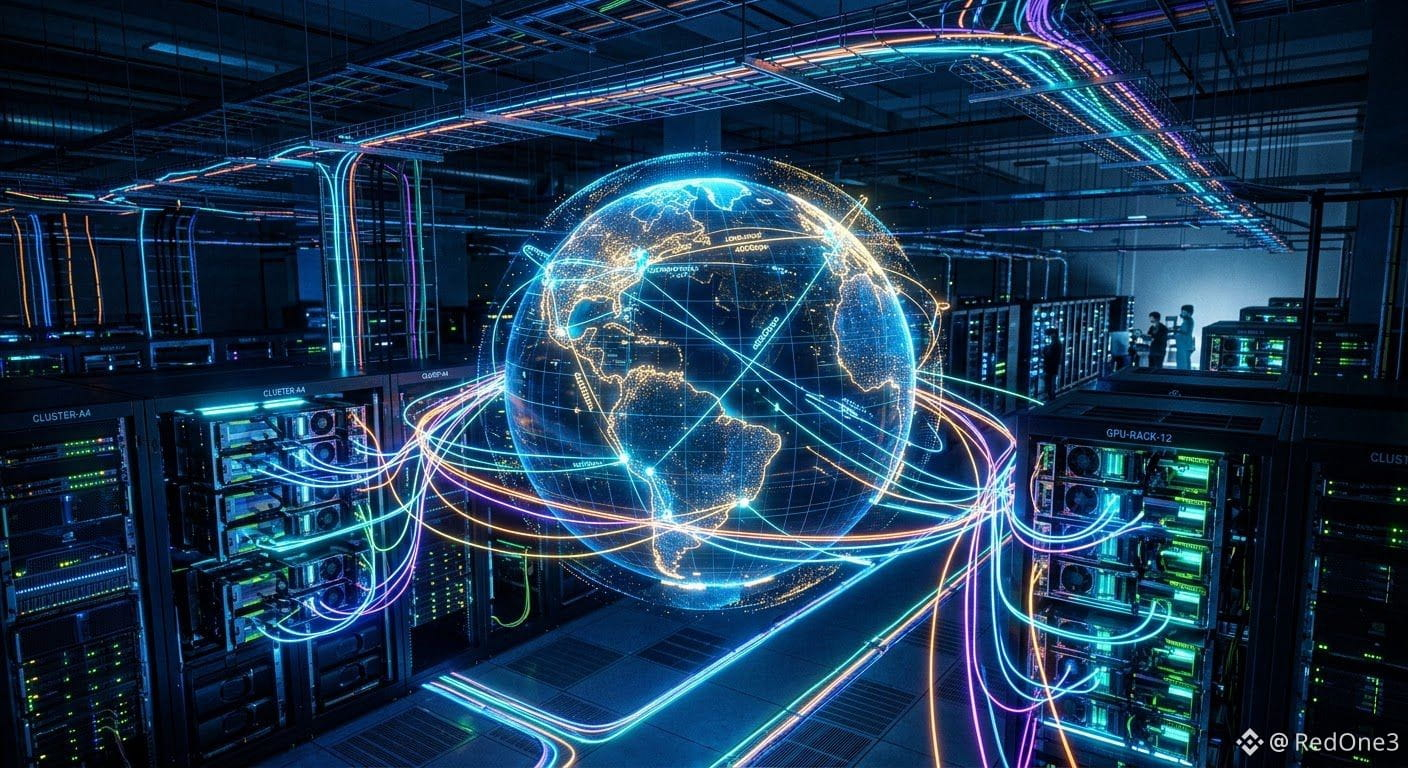
Decentralized Compute Networks & AI Infrastructure
AI models require massive processing power. Decentralized compute networks are filling this demand by providing scalable GPU resources.
Why Decentralized Infrastructure Matters
Key Benefits:
💻 Distributed Processing Power: Tokenized GPU marketplaces allow developers to train and run inference at lower costs.
🌐 Censorship Resistance: Open networks guarantee continuous runtime without single-point cloud failures.
💰 Resource Monetization: Hardware owners earn yields by provisioning idle computing capacity.
The Synergy Between Compute & Crypto Decentralized physical infrastructure networks ensure AI model availability remains open, verifiable, and permissionless for everyone.
Have you explored decentralized compute networks yet?
#DePIN #CryptoAI #Web3 .
Decentralized Compute Networks & AI Infrastructure
AI models require massive processing power. Decentralized compute networks are filling this demand by providing scalable GPU resources.
Why Decentralized Infrastructure Matters
Key Benefits:
💻 Distributed Processing Power: Tokenized GPU marketplaces allow developers to train and run inference at lower costs.
🌐 Censorship Resistance: Open networks guarantee continuous runtime without single-point cloud failures.
💰 Resource Monetization: Hardware owners earn yields by provisioning idle computing capacity.
The Synergy Between Compute & Crypto Decentralized physical infrastructure networks ensure AI model availability remains open, verifiable, and permissionless for everyone.
Have you explored decentralized compute networks yet?
#DePIN #CryptoAI #Web3 .
AI models require massive processing power. Decentralized compute networks are filling this demand by providing scalable GPU resources.
Why Decentralized Infrastructure Matters
Key Benefits:
💻 Distributed Processing Power: Tokenized GPU marketplaces allow developers to train and run inference at lower costs.
🌐 Censorship Resistance: Open networks guarantee continuous runtime without single-point cloud failures.
💰 Resource Monetization: Hardware owners earn yields by provisioning idle computing capacity.
The Synergy Between Compute & Crypto Decentralized physical infrastructure networks ensure AI model availability remains open, verifiable, and permissionless for everyone.
Have you explored decentralized compute networks yet?
#DePIN #CryptoAI #Web3 .
200

Verified
🤖 AI trades for you… How can you protect your money and manage risk? 🛡️
With the launch of Binance Agent OS for running AI agents, automated trading has entered an entirely new era. But with this development, the most important question remains:
How do we keep our capital safe?
AI is an execution tool that can sometimes be affected by incorrect data or market manipulation attempts. That’s why sound risk management is the foundation of success.
🔑 Key lines of defense:
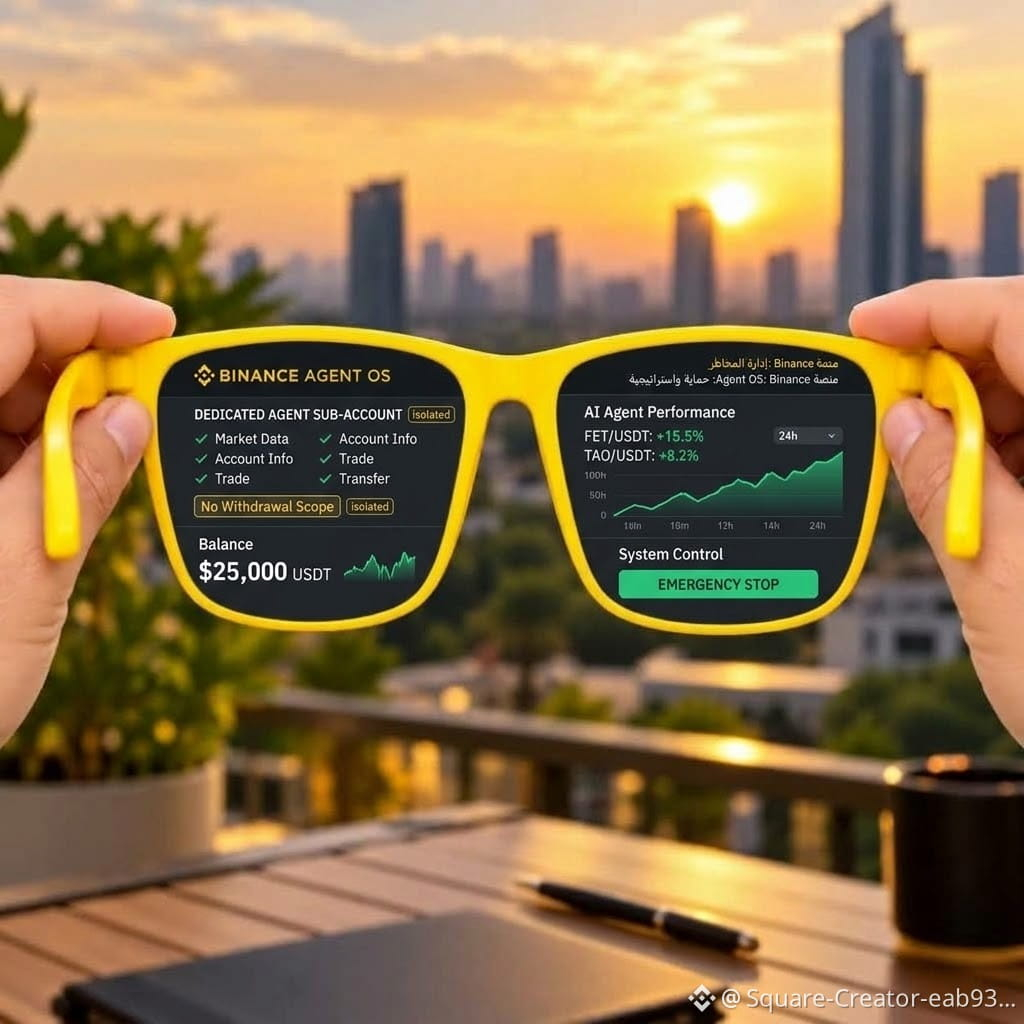
1️⃣ Isolated sub-account: The agent operates in a dedicated sub-account, with withdrawals disabled by default and funding limits set.
2️⃣ Permission controls: You can choose fast, independent trading within your limits, or require your manual approval for every trade.
3️⃣ Real-time monitoring: Stay up to date with instant notifications about every move, so you can step in when needed.
💡 Trading tip: AI speeds up execution, but it
doesn’t eliminate market risks. Always test with set amounts and review your results regularly.
💬 Tell us what you think: Would you rather give AI the freedom to trade independently, or manually approve every trade? 👇
$RENDER
{spot}(RENDERUSDT)
$TAO
{spot}(TAOUSDT)
$NEAR
{spot}(NEARUSDT)
BinanceAgentOS# #CryptoAI #BinanceSquareFamily
🤖 AI trades for you… How can you protect your money and manage risk? 🛡️
With the launch of Binance Agent OS for running AI agents, automated trading has entered an entirely new era. But with this development, the most important question remains:
How do we keep our capital safe?
AI is an execution tool that can sometimes be affected by incorrect data or market manipulation attempts. That’s why sound risk management is the foundation of success.
🔑 Key lines of defense:
1️⃣ Isolated sub-account: The agent operates in a dedicated sub-account, with withdrawals disabled by default and funding limits set.
2️⃣ Permission controls: You can choose fast, independent trading within your limits, or require your manual approval for every trade.
3️⃣ Real-time monitoring: Stay up to date with instant notifications about every move, so you can step in when needed.
💡 Trading tip: AI speeds up execution, but it
doesn’t eliminate market risks. Always test with set amounts and review your results regularly.
💬 Tell us what you think: Would you rather give AI the freedom to trade independently, or manually approve every trade? 👇
$RENDER
$TAO
$NEAR
BinanceAgentOS# #CryptoAI #BinanceSquareFamily
With the launch of Binance Agent OS for running AI agents, automated trading has entered an entirely new era. But with this development, the most important question remains:
How do we keep our capital safe?
AI is an execution tool that can sometimes be affected by incorrect data or market manipulation attempts. That’s why sound risk management is the foundation of success.
🔑 Key lines of defense:
1️⃣ Isolated sub-account: The agent operates in a dedicated sub-account, with withdrawals disabled by default and funding limits set.
2️⃣ Permission controls: You can choose fast, independent trading within your limits, or require your manual approval for every trade.
3️⃣ Real-time monitoring: Stay up to date with instant notifications about every move, so you can step in when needed.
💡 Trading tip: AI speeds up execution, but it
doesn’t eliminate market risks. Always test with set amounts and review your results regularly.
💬 Tell us what you think: Would you rather give AI the freedom to trade independently, or manually approve every trade? 👇
$RENDER
$TAO
$NEAR
BinanceAgentOS# #CryptoAI #BinanceSquareFamily
1
955

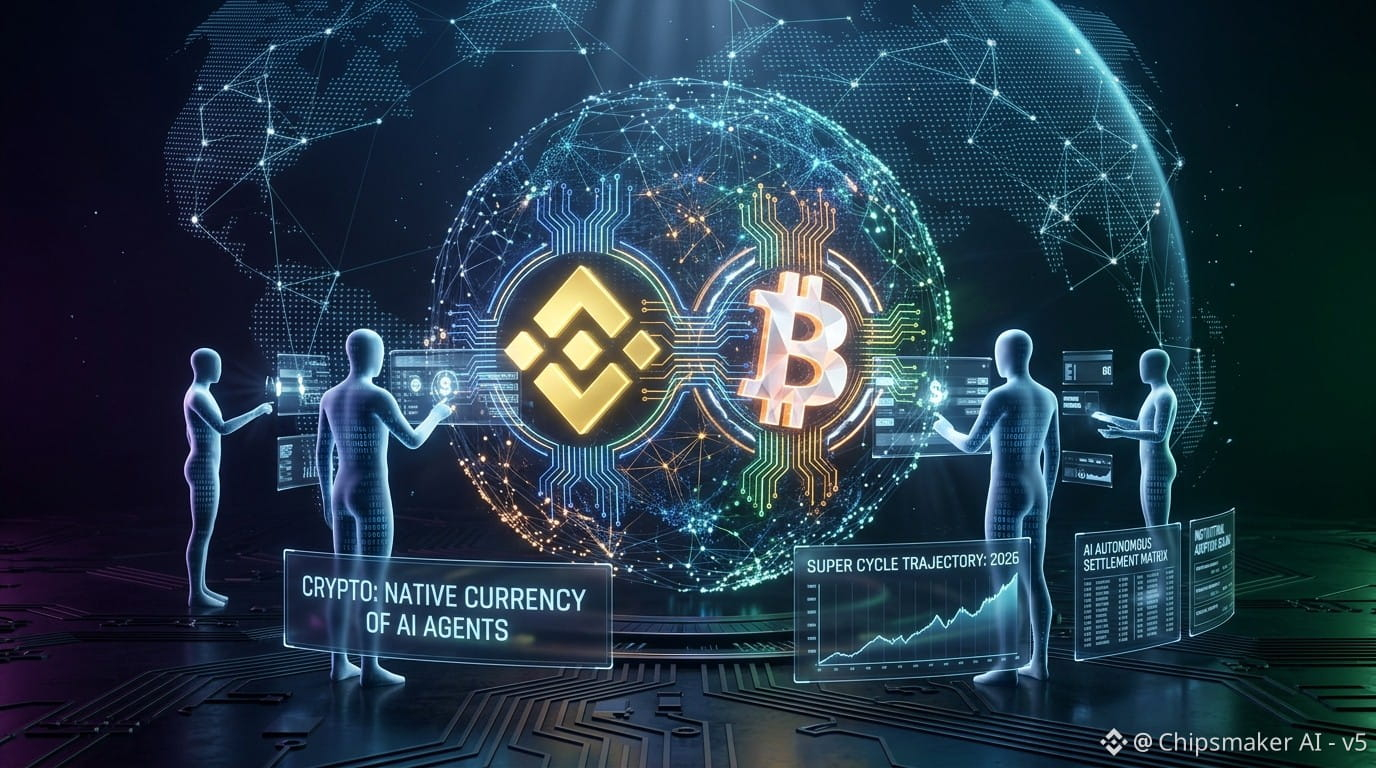
【“Cryptocurrency Is the Native Currency of AI”: An Analysis of Three Major Investment Themes and the Supercycle Thesis in the Post-CZ Binance Era】
After stepping down as Binance CEO, Changpeng Zhao (CZ) has shifted his capital and energy entirely toward cutting-edge early-stage technologies. His recent public remarks and speeches offer a clear picture of his key predictions for the coming decade:
Three strategic investment themes:
1. Artificial intelligence (AI) and on-chain native settlement:
CZ stresses that future AI agents (autonomous agents) will handle a large volume of cross-border micropayments and automated commercial transactions. The approval and settlement mechanisms of traditional banking systems cannot meet the needs of high-frequency machine transactions, while borderless, programmable, censorship-resistant cryptocurrencies are the only native currency for AI.
2. Biotechnology (Biotech & Longevity):
Combining decentralized science (DeSci) with longevity medicine to decentralize research funding and data sharing.
3. Foundational blockchain infrastructure:
Continuing to drive global adoption within regulatory frameworks, with a focus on enabling large-scale payments and the use of sovereign and institutional reserve assets.
The logic behind the “supercycle” thesis:
He has repeatedly pointed out that, as regulations are gradually implemented in major global economies and sovereign-level asset allocation begins, growth in the crypto market will no longer rely solely on the traditional “four-year halving cycle.” Instead, it will move toward a longer-lasting, relatively less volatile institutional supercycle.
#CZ #Binance #CryptoAI $BNB $BTC
【“Cryptocurrency Is the Native Currency of AI”: An Analysis of Three Major Investment Themes and the Supercycle Thesis in the Post-CZ Binance Era】
After stepping down as Binance CEO, Changpeng Zhao (CZ) has shifted his capital and energy entirely toward cutting-edge early-stage technologies. His recent public remarks and speeches offer a clear picture of his key predictions for the coming decade:
Three strategic investment themes:
1. Artificial intelligence (AI) and on-chain native settlement:
CZ stresses that future AI agents (autonomous agents) will handle a large volume of cross-border micropayments and automated commercial transactions. The approval and settlement mechanisms of traditional banking systems cannot meet the needs of high-frequency machine transactions, while borderless, programmable, censorship-resistant cryptocurrencies are the only native currency for AI.
2. Biotechnology (Biotech & Longevity):
Combining decentralized science (DeSci) with longevity medicine to decentralize research funding and data sharing.
3. Foundational blockchain infrastructure:
Continuing to drive global adoption within regulatory frameworks, with a focus on enabling large-scale payments and the use of sovereign and institutional reserve assets.
The logic behind the “supercycle” thesis:
He has repeatedly pointed out that, as regulations are gradually implemented in major global economies and sovereign-level asset allocation begins, growth in the crypto market will no longer rely solely on the traditional “four-year halving cycle.” Instead, it will move toward a longer-lasting, relatively less volatile institutional supercycle.
#CZ #Binance #CryptoAI $BNB $BTC
After stepping down as Binance CEO, Changpeng Zhao (CZ) has shifted his capital and energy entirely toward cutting-edge early-stage technologies. His recent public remarks and speeches offer a clear picture of his key predictions for the coming decade:
Three strategic investment themes:
1. Artificial intelligence (AI) and on-chain native settlement:
CZ stresses that future AI agents (autonomous agents) will handle a large volume of cross-border micropayments and automated commercial transactions. The approval and settlement mechanisms of traditional banking systems cannot meet the needs of high-frequency machine transactions, while borderless, programmable, censorship-resistant cryptocurrencies are the only native currency for AI.
2. Biotechnology (Biotech & Longevity):
Combining decentralized science (DeSci) with longevity medicine to decentralize research funding and data sharing.
3. Foundational blockchain infrastructure:
Continuing to drive global adoption within regulatory frameworks, with a focus on enabling large-scale payments and the use of sovereign and institutional reserve assets.
The logic behind the “supercycle” thesis:
He has repeatedly pointed out that, as regulations are gradually implemented in major global economies and sovereign-level asset allocation begins, growth in the crypto market will no longer rely solely on the traditional “four-year halving cycle.” Instead, it will move toward a longer-lasting, relatively less volatile institutional supercycle.
#CZ #Binance #CryptoAI $BNB $BTC
299

Have you noticed how crypto investors keep chasing micro-cap meme coins while real-world tech giants are quietly outperforming entire ecosystems?
Most traders lose their portfolio balance jumping between overhyped launches and getting chopped up in choppy market cycles. They constantly stress over 15-minute charts just to miss the massive macro structural trends right in front of them.
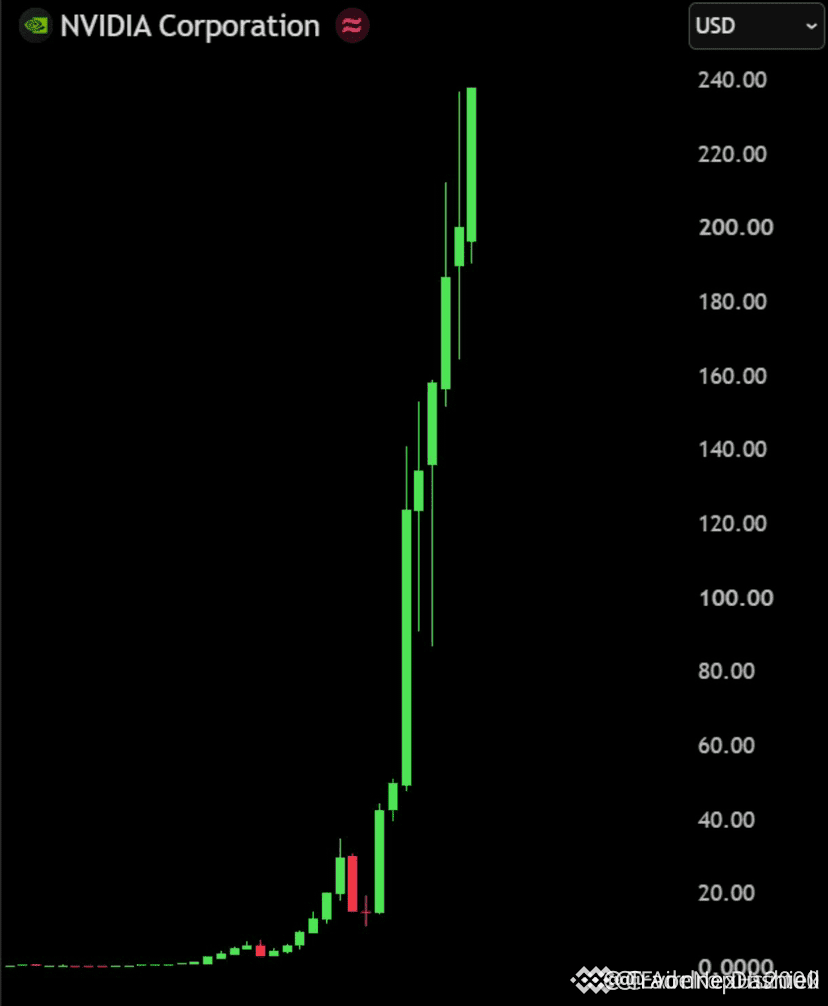
Look at the numbers on Wall Street. Nvidia just pushed past a $5.7T market cap, where a simple $10,000 spot allocation a decade ago is worth around $1.58M today. That is compounding driven by actual compute demand rather than pure speculative rotation.
This growth is already spilling over into decentralized compute and infrastructure plays like $RENDER, $NEAR, and $FET. The real opportunity in decentralized AI is not betting on tokens with zero utility, but identifying the networks providing verifiable compute rails to meet this unprecedented hardware demand.
Where do you think decentralized AI infrastructure fits into this massive compute expansion over the next decade?
#CryptoAI #DePIN #ArtificialIntelligence
Have you noticed how crypto investors keep chasing micro-cap meme coins while real-world tech giants are quietly outperforming entire ecosystems?
Most traders lose their portfolio balance jumping between overhyped launches and getting chopped up in choppy market cycles. They constantly stress over 15-minute charts just to miss the massive macro structural trends right in front of them.
Look at the numbers on Wall Street. Nvidia just pushed past a $5.7T market cap, where a simple $10,000 spot allocation a decade ago is worth around $1.58M today. That is compounding driven by actual compute demand rather than pure speculative rotation.
This growth is already spilling over into decentralized compute and infrastructure plays like $RENDER , $NEAR , and $FET . The real opportunity in decentralized AI is not betting on tokens with zero utility, but identifying the networks providing verifiable compute rails to meet this unprecedented hardware demand.
Where do you think decentralized AI infrastructure fits into this massive compute expansion over the next decade?
#CryptoAI #DePIN #ArtificialIntelligence
Most traders lose their portfolio balance jumping between overhyped launches and getting chopped up in choppy market cycles. They constantly stress over 15-minute charts just to miss the massive macro structural trends right in front of them.
Look at the numbers on Wall Street. Nvidia just pushed past a $5.7T market cap, where a simple $10,000 spot allocation a decade ago is worth around $1.58M today. That is compounding driven by actual compute demand rather than pure speculative rotation.
This growth is already spilling over into decentralized compute and infrastructure plays like $RENDER , $NEAR , and $FET . The real opportunity in decentralized AI is not betting on tokens with zero utility, but identifying the networks providing verifiable compute rails to meet this unprecedented hardware demand.
Where do you think decentralized AI infrastructure fits into this massive compute expansion over the next decade?
#CryptoAI #DePIN #ArtificialIntelligence
181
·
--
If you are still ignoring the massive capital rotation between traditional tech and decentralized computing, you might be making a costly mistake.
Most traders get trapped chasing late-stage rallies on mega caps while completely missing early infrastructure plays. You watch traditional giants break records, experience severe FOMO, and end up buying near local tops instead of positioning where the next asymmetric upside lives.
Nvidia just touched a historic 5.7T market cap milestone, where a 10,000 USD position from a decade ago sits at roughly 1.58M today. While traditional equity bulls argue that centralized hardware dominance is untouchable, that exact scale makes future 10x returns mathematically difficult.
The real debate is whether decentralized AI compute protocols like $NEAR, $RENDER, or $FET can capture market share from centralized silicon monopolies. I lean toward decentralized physical infrastructure networks taking serious ground as compute shortages worsen, offering the kind of asymmetric multiple that legacy tech simply cannot deliver anymore.
Do you believe decentralized compute will actually disrupt traditional silicon giants this cycle, or is traditional tech going to keep taking all the enterprise volume?
#Nvidia #CryptoAI #DePIN
If you are still ignoring the massive capital rotation between traditional tech and decentralized computing, you might be making a costly mistake.
Most traders get trapped chasing late-stage rallies on mega caps while completely missing early infrastructure plays. You watch traditional giants break records, experience severe FOMO, and end up buying near local tops instead of positioning where the next asymmetric upside lives.
Nvidia just touched a historic 5.7T market cap milestone, where a 10,000 USD position from a decade ago sits at roughly 1.58M today. While traditional equity bulls argue that centralized hardware dominance is untouchable, that exact scale makes future 10x returns mathematically difficult.
The real debate is whether decentralized AI compute protocols like $NEAR , $RENDER , or $FET can capture market share from centralized silicon monopolies. I lean toward decentralized physical infrastructure networks taking serious ground as compute shortages worsen, offering the kind of asymmetric multiple that legacy tech simply cannot deliver anymore.
Do you believe decentralized compute will actually disrupt traditional silicon giants this cycle, or is traditional tech going to keep taking all the enterprise volume?
#Nvidia #CryptoAI #DePIN
Most traders get trapped chasing late-stage rallies on mega caps while completely missing early infrastructure plays. You watch traditional giants break records, experience severe FOMO, and end up buying near local tops instead of positioning where the next asymmetric upside lives.
Nvidia just touched a historic 5.7T market cap milestone, where a 10,000 USD position from a decade ago sits at roughly 1.58M today. While traditional equity bulls argue that centralized hardware dominance is untouchable, that exact scale makes future 10x returns mathematically difficult.
The real debate is whether decentralized AI compute protocols like $NEAR , $RENDER , or $FET can capture market share from centralized silicon monopolies. I lean toward decentralized physical infrastructure networks taking serious ground as compute shortages worsen, offering the kind of asymmetric multiple that legacy tech simply cannot deliver anymore.
Do you believe decentralized compute will actually disrupt traditional silicon giants this cycle, or is traditional tech going to keep taking all the enterprise volume?
#Nvidia #CryptoAI #DePIN
203

·
--
Article
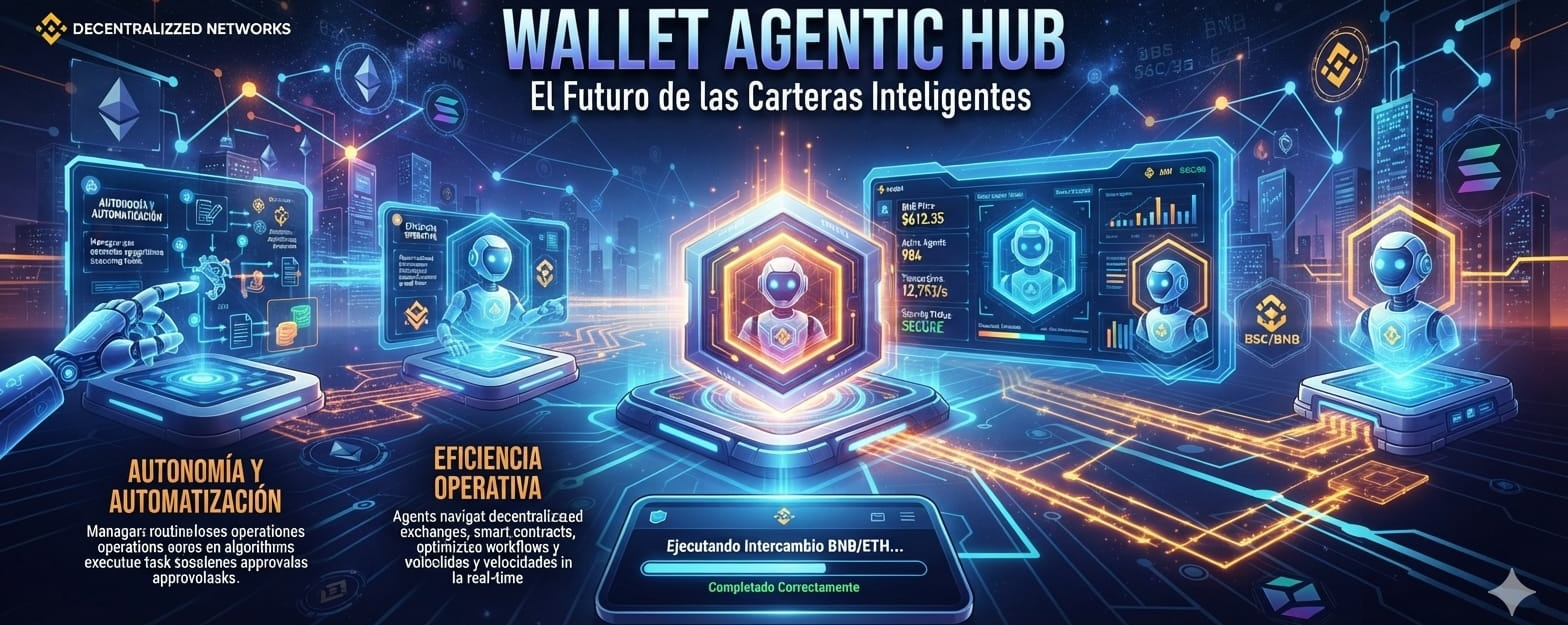
Wallet Agentic Hub: The Future of Intelligent WalletsThe Wallet Agentic Hub represents the evolution toward intelligent and autonomous digital wallets within the Web3 ecosystem. This approach introduces AI agents capable of proactively interacting with the blockchain, optimizing complex workflows and executing advanced transactions.
Key Points
• Autonomy and Automation: Enables agents to manage routine operations under strict security parameters and user sovereignty.
• Operational Efficiency: Enables smooth interaction with smart contracts and decentralized protocols without unnecessary friction.
Wallet Agentic Hub: The Future of Intelligent Wallets
The Wallet Agentic Hub represents the evolution toward intelligent and autonomous digital wallets within the Web3 ecosystem. This approach introduces AI agents capable of proactively interacting with the blockchain, optimizing complex workflows and executing advanced transactions.
Key Points
• Autonomy and Automation: Enables agents to manage routine operations under strict security parameters and user sovereignty.
• Operational Efficiency: Enables smooth interaction with smart contracts and decentralized protocols without unnecessary friction.
Key Points
• Autonomy and Automation: Enables agents to manage routine operations under strict security parameters and user sovereignty.
• Operational Efficiency: Enables smooth interaction with smart contracts and decentralized protocols without unnecessary friction.
cop7:
falta información
9
6
637

·
--
Bullish
🪁 Kite AI strengthens its strategic presence in the Korean market after the conclusion of KBW!
Kite AI (@GoKiteAI) announced the completion of its participation in Korea Blockchain Week (KBW), reaffirming its long-term commitment to the Korean market as a strategic priority for building and developing an "Agent Economy" in partnership with developers and local communities.
📈 Market impact and KITE token:
Driving demand and network adoption (KITE): Practical expansion and advertising and on-the-ground presence in Seoul increase awareness of the KITE token. The Korean market is known for high liquidity and large trading volumes, paving the way for growth in the base of investors and developers on the Layer-1 network dedicated to artificial intelligence.
Growth driver for the AI Agents sector: The project’s focus on connecting AI agents to decentralized financial systems enhances investment optimism in the AI coin category, creating a positive catalyst for token price movement as on-chain use cases increase.
A strategic move in one of Asia’s biggest crypto markets! 🚀
#KİTE #AI #CryptoAi #CryptoNews
$KITE
{spot}(KITEUSDT)
🪁 Kite AI strengthens its strategic presence in the Korean market after the conclusion of KBW!
Kite AI (@GoKiteAI) announced the completion of its participation in Korea Blockchain Week (KBW), reaffirming its long-term commitment to the Korean market as a strategic priority for building and developing an "Agent Economy" in partnership with developers and local communities.
📈 Market impact and KITE token:
Driving demand and network adoption (KITE): Practical expansion and advertising and on-the-ground presence in Seoul increase awareness of the KITE token. The Korean market is known for high liquidity and large trading volumes, paving the way for growth in the base of investors and developers on the Layer-1 network dedicated to artificial intelligence.
Growth driver for the AI Agents sector: The project’s focus on connecting AI agents to decentralized financial systems enhances investment optimism in the AI coin category, creating a positive catalyst for token price movement as on-chain use cases increase.
A strategic move in one of Asia’s biggest crypto markets! 🚀
#KİTE #AI #CryptoAi #CryptoNews
$KITE
Kite AI (@GoKiteAI) announced the completion of its participation in Korea Blockchain Week (KBW), reaffirming its long-term commitment to the Korean market as a strategic priority for building and developing an "Agent Economy" in partnership with developers and local communities.
📈 Market impact and KITE token:
Driving demand and network adoption (KITE): Practical expansion and advertising and on-the-ground presence in Seoul increase awareness of the KITE token. The Korean market is known for high liquidity and large trading volumes, paving the way for growth in the base of investors and developers on the Layer-1 network dedicated to artificial intelligence.
Growth driver for the AI Agents sector: The project’s focus on connecting AI agents to decentralized financial systems enhances investment optimism in the AI coin category, creating a positive catalyst for token price movement as on-chain use cases increase.
A strategic move in one of Asia’s biggest crypto markets! 🚀
#KİTE #AI #CryptoAi #CryptoNews
$KITE
1
36

·
--
Solana Institutional Gravity: Why the Machine Economy is Outpacing Speculation
Forget the retail noise for a second. While the broader market watches the S&P 500 correlation, Solana is quietly becoming the backbone for autonomous finance. We are seeing a massive transition where $SOL is no longer just a high-speed L1; it is the settlement layer for the machine economy.
The numbers on the x402 protocol are wild. Over 23.2 million AI agent transactions hit the chain in a single month, representing 76 percent of that protocol activity. When Alibaba Cloud starts integrating payment channels for inference services, you know the enterprise interest is real. On the hardware side, DePIN is finding its home here because the costs are 45 to 75 percent lower than traditional cloud giants like AWS. With Render hitting over 3,800 active GPU nodes and Helium crossing a million devices in the U.S., the physical footprint is massive and growing.
Institutional capital is moving just as fast. We are looking at 3.7 billion in non-stablecoin real world assets on Solana right now. BlackRock is already positioning its BUIDL fund for expansion, and tokenized US Treasuries are on track to double to 14 billion this year. The flow data reflects this accumulation. 362 whales recently stacked over 130.7 million SOL while only 176 whales distributed. Even with October token unlocks on the horizon, the supply is being absorbed by treasury companies like Forward Industries, which added nearly 950,000 SOL to their holdings last quarter.
The narrative is clearly shifting from pure speculation to tangible utility and institutional adoption across these three sectors. With the spot price hovering around 119.59 and liquidity depth increasing, the infrastructure for a machine-led economy is already live.
What do you think is the biggest catalyst for Solana in Q4?
_
#CryptoAI #RWA
Solana Institutional Gravity: Why the Machine Economy is Outpacing Speculation
Forget the retail noise for a second. While the broader market watches the S&P 500 correlation, Solana is quietly becoming the backbone for autonomous finance. We are seeing a massive transition where $SOL is no longer just a high-speed L1; it is the settlement layer for the machine economy.
The numbers on the x402 protocol are wild. Over 23.2 million AI agent transactions hit the chain in a single month, representing 76 percent of that protocol activity. When Alibaba Cloud starts integrating payment channels for inference services, you know the enterprise interest is real. On the hardware side, DePIN is finding its home here because the costs are 45 to 75 percent lower than traditional cloud giants like AWS. With Render hitting over 3,800 active GPU nodes and Helium crossing a million devices in the U.S., the physical footprint is massive and growing.
Institutional capital is moving just as fast. We are looking at 3.7 billion in non-stablecoin real world assets on Solana right now. BlackRock is already positioning its BUIDL fund for expansion, and tokenized US Treasuries are on track to double to 14 billion this year. The flow data reflects this accumulation. 362 whales recently stacked over 130.7 million SOL while only 176 whales distributed. Even with October token unlocks on the horizon, the supply is being absorbed by treasury companies like Forward Industries, which added nearly 950,000 SOL to their holdings last quarter.
The narrative is clearly shifting from pure speculation to tangible utility and institutional adoption across these three sectors. With the spot price hovering around 119.59 and liquidity depth increasing, the infrastructure for a machine-led economy is already live.
What do you think is the biggest catalyst for Solana in Q4?
_
#CryptoAI #RWA
Forget the retail noise for a second. While the broader market watches the S&P 500 correlation, Solana is quietly becoming the backbone for autonomous finance. We are seeing a massive transition where $SOL is no longer just a high-speed L1; it is the settlement layer for the machine economy.
The numbers on the x402 protocol are wild. Over 23.2 million AI agent transactions hit the chain in a single month, representing 76 percent of that protocol activity. When Alibaba Cloud starts integrating payment channels for inference services, you know the enterprise interest is real. On the hardware side, DePIN is finding its home here because the costs are 45 to 75 percent lower than traditional cloud giants like AWS. With Render hitting over 3,800 active GPU nodes and Helium crossing a million devices in the U.S., the physical footprint is massive and growing.
Institutional capital is moving just as fast. We are looking at 3.7 billion in non-stablecoin real world assets on Solana right now. BlackRock is already positioning its BUIDL fund for expansion, and tokenized US Treasuries are on track to double to 14 billion this year. The flow data reflects this accumulation. 362 whales recently stacked over 130.7 million SOL while only 176 whales distributed. Even with October token unlocks on the horizon, the supply is being absorbed by treasury companies like Forward Industries, which added nearly 950,000 SOL to their holdings last quarter.
The narrative is clearly shifting from pure speculation to tangible utility and institutional adoption across these three sectors. With the spot price hovering around 119.59 and liquidity depth increasing, the infrastructure for a machine-led economy is already live.
What do you think is the biggest catalyst for Solana in Q4?
_
#CryptoAI #RWA

1
14
Log in to explore more content
Join global crypto users on Binance Square
⚡️ Get latest and useful information about crypto.
💬 Trusted by the world’s largest crypto exchange.
👍 Discover real insights from verified creators.
Email / Phone number
Trending Topics
1
#BinanceLaunchesBinanceIntelligence
308,498 views
2,605 Discussing
2
#BitcoinTargets2026OpenAt$87570
865 views
46 Discussing
3
#BitcoinRejectedAt$87KThirdTime
965 views
45 Discussing
4
#StrategyMarketCapSurpassesRumble
3,287 views
237 Discussing
5
#StriveBuys2000BTCFor$169M
12,331 views
116 Discussing
6
#EvernorthXRPTreasuryCompletesSPACMerger
147,434 views
1,463 Discussing
7
#ADAGains10%Above$0.27
59,527 views
256 Discussing
8
#ETHUp70%InQ3ButLiquidityFalls
343,783 views
2,447 Discussing
9
#EthStakingExitQueueHits2026High
140,075 views
1,622 Discussing
10
#FedOctoberHoldOdds82.3%
149,368 views
1,532 Discussing