
#geopolitics
geopolitics
12.7M views
33,365 Discussing
Hot
Latest

#usirantradetankerstrikesescalate
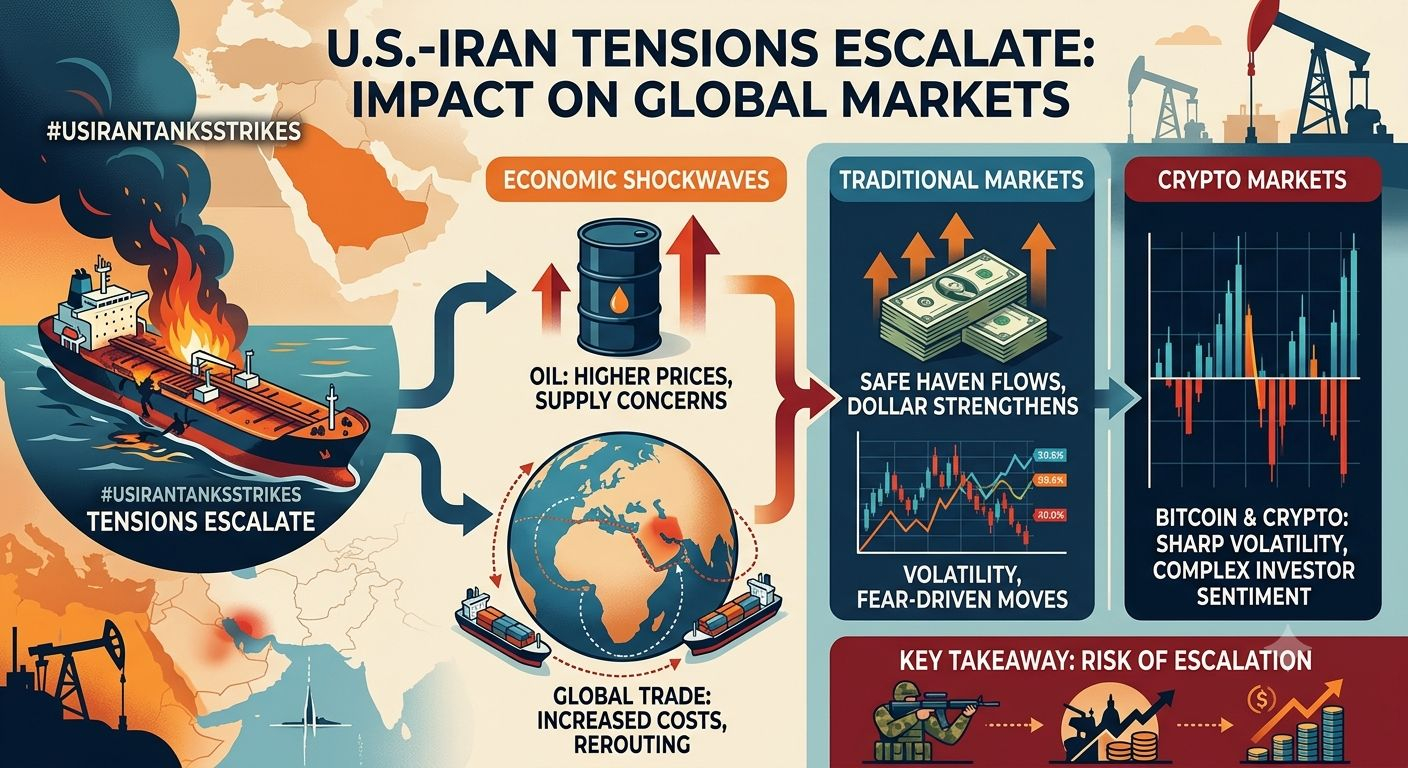
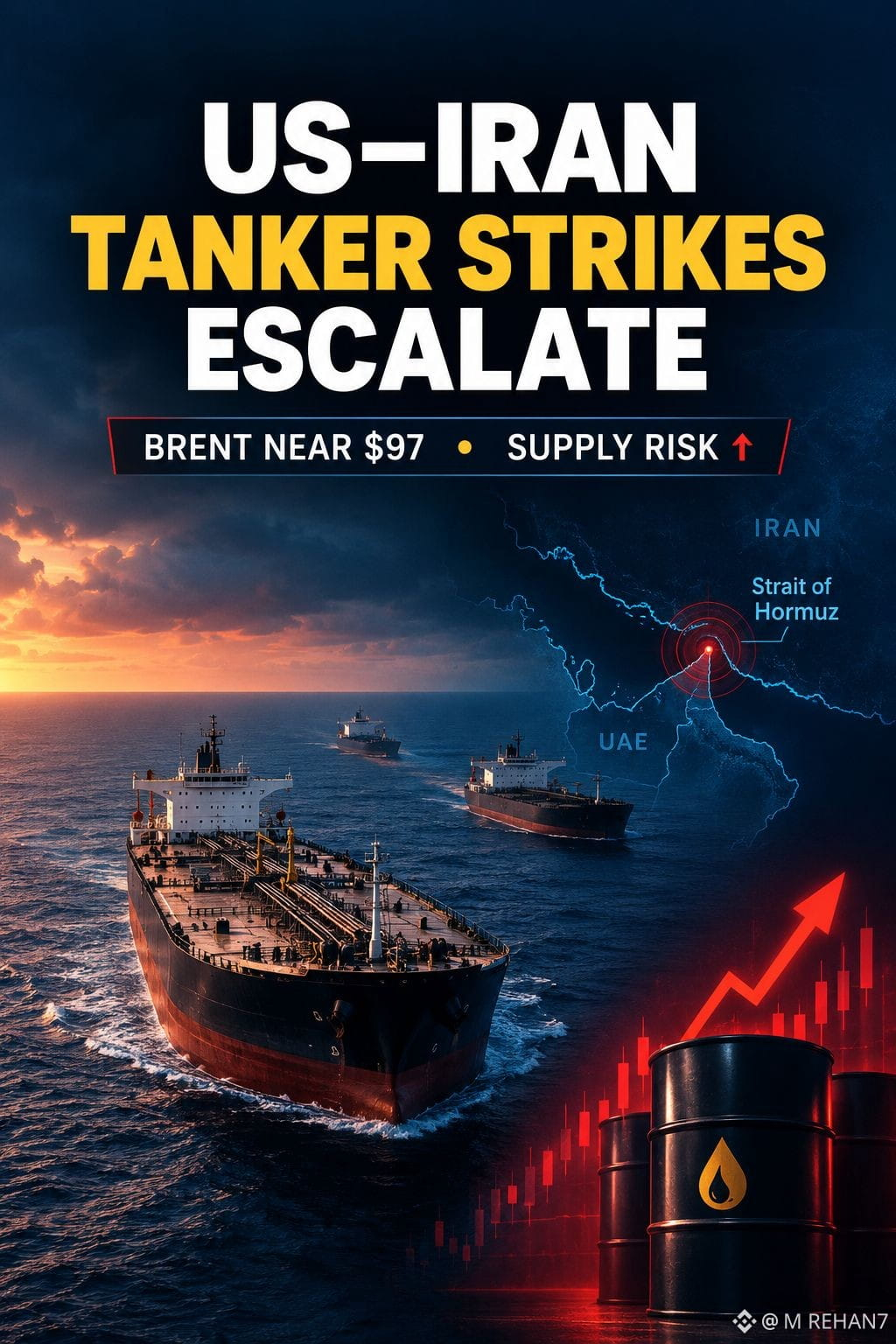
🚨🔥 Tensions between the U.S. and Iran are entering a more dangerous phase… and the world is facing the specter of a full-scale war that could change everything!
This is no longer just another political standoff… strikes involving commercial tankers are adding a dangerous economic dimension to the conflict.
So why are markets watching this so closely?
Oil could be the first major casualty
Any threat to oil tankers or critical shipping routes raises concerns about global supply. That could push energy prices higher as markets price in greater geopolitical risk.
🚢 Then comes global trade
Higher risks for ships can mean higher insurance and transportation costs, while companies may be forced to reroute vessels. Longer routes and rising costs could eventually spread the shock far beyond the region.
The dollar could benefit from fear
When uncertainty rises, some investors move toward assets they consider safer, potentially increasing demand for the U.S. dollar.
₿ And Bitcoin & Crypto?
Bitcoin could face sharp volatility if rising fears trigger a broad move away from risk assets. But if investors begin looking for alternatives outside the traditional financial system, crypto could see renewed attention later.
But there’s one thing that matters even more… 👀
The real danger isn’t one strike — it’s the possibility of escalation.
If the confrontation continues and spreads toward major energy and trade routes, we could see:
Higher oil prices
Disruptions to global shipping
Extreme market volatility
Strong moves in the dollar
₿ Violent swings across crypto
That’s why markets aren’t only watching the strikes…
They’re watching the bigger question: Can both sides stop the escalation before it turns into a much wider regional crisis?
Because a full-scale war wouldn’t just be a military crisis… it could become an economic shock hitting markets around the world.
Do you think tensions will cool down soon, or is the worst still ahead?
#GlobalMarkets #Geopolitics
$BTC
$CL
🚨🔥 Tensions between the U.S. and Iran are entering a more dangerous phase… and the world is facing the specter of a full-scale war that could change everything!
This is no longer just another political standoff… strikes involving commercial tankers are adding a dangerous economic dimension to the conflict.
So why are markets watching this so closely?
Oil could be the first major casualty
Any threat to oil tankers or critical shipping routes raises concerns about global supply. That could push energy prices higher as markets price in greater geopolitical risk.
🚢 Then comes global trade
Higher risks for ships can mean higher insurance and transportation costs, while companies may be forced to reroute vessels. Longer routes and rising costs could eventually spread the shock far beyond the region.
The dollar could benefit from fear
When uncertainty rises, some investors move toward assets they consider safer, potentially increasing demand for the U.S. dollar.
₿ And Bitcoin & Crypto?
Bitcoin could face sharp volatility if rising fears trigger a broad move away from risk assets. But if investors begin looking for alternatives outside the traditional financial system, crypto could see renewed attention later.
But there’s one thing that matters even more… 👀
The real danger isn’t one strike — it’s the possibility of escalation.
If the confrontation continues and spreads toward major energy and trade routes, we could see:
Higher oil prices
Disruptions to global shipping
Extreme market volatility
Strong moves in the dollar
₿ Violent swings across crypto
That’s why markets aren’t only watching the strikes…
They’re watching the bigger question: Can both sides stop the escalation before it turns into a much wider regional crisis?
Because a full-scale war wouldn’t just be a military crisis… it could become an economic shock hitting markets around the world.
Do you think tensions will cool down soon, or is the worst still ahead?
#GlobalMarkets #Geopolitics
$BTC
$CL
Wadood555:
That You're talking about > is already going on and all that is the result of The Terrorism of Trump & Netanyahu.
🕳 $TRUMP ☪☪☪☪☪555☪☪☪☪☪

🚨 THE STRAIT OF HORMUZ IS BECOMING A REAL CRYPTO STORY.
This time, I’m not watching oil. 🛢️
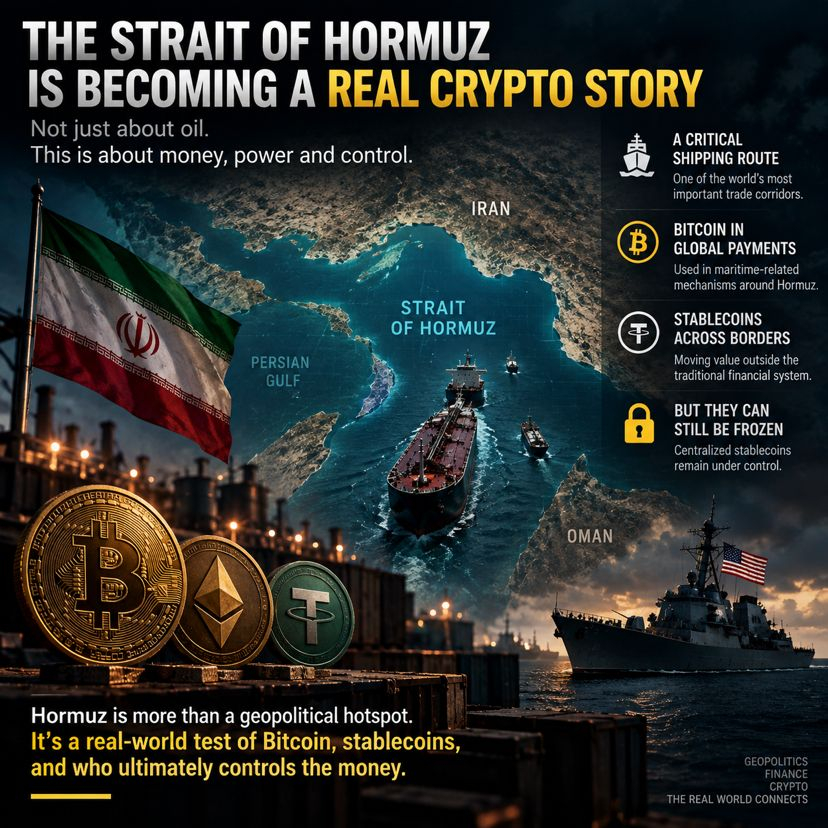
🇮🇷 Iran-linked maritime mechanisms around Hormuz have reportedly involved Bitcoin and other digital assets, putting crypto directly into the sanctions and cross-border payments conversation. ⚠️
That’s what interests me:
🚢 One of the world’s most critical shipping routes
₿ Bitcoin as a borderless settlement asset
💵 Stablecoins moving across borders
🔒 Yet centralized stablecoins can still be frozen
For me, Hormuz is exposing something bigger than whether $BTC goes up or down.
It’s becoming a real-world test of the difference between Bitcoin, stablecoins, and who ultimately controls the money. 👀
#BTC #Bitcoin #Crypto #Hormuz #Geopolitics $ZEC $XRP
This time, I’m not watching oil. 🛢️
🇮🇷 Iran-linked maritime mechanisms around Hormuz have reportedly involved Bitcoin and other digital assets, putting crypto directly into the sanctions and cross-border payments conversation. ⚠️
That’s what interests me:
🚢 One of the world’s most critical shipping routes
₿ Bitcoin as a borderless settlement asset
💵 Stablecoins moving across borders
🔒 Yet centralized stablecoins can still be frozen
For me, Hormuz is exposing something bigger than whether $BTC goes up or down.
It’s becoming a real-world test of the difference between Bitcoin, stablecoins, and who ultimately controls the money. 👀
#BTC #Bitcoin #Crypto #Hormuz #Geopolitics $ZEC $XRP

🚨 JUST IN: 🇺🇸 AMERICANS MAY HAVE SPENT AN EXTRA $100 BILLION ON FUEL.
Since February 28, U.S. consumers have reportedly spent an estimated $100 BILLION more on fuel amid the Iran war.
That’s not just an energy shock.
It’s a massive transfer of money from consumers into fuel costs.
Higher gasoline prices can mean:
Less money for shopping.
Less money for savings.
More pressure on household budgets.
And potentially more inflation across the economy.
The biggest risk?
If energy prices stay elevated for long enough, the shock can spread far beyond the gas station.
#Oil #Inflation #Iran #USEconomy #Geopolitics $CL $BZ
Since February 28, U.S. consumers have reportedly spent an estimated $100 BILLION more on fuel amid the Iran war.
That’s not just an energy shock.
It’s a massive transfer of money from consumers into fuel costs.
Higher gasoline prices can mean:
Less money for shopping.
Less money for savings.
More pressure on household budgets.
And potentially more inflation across the economy.
The biggest risk?
If energy prices stay elevated for long enough, the shock can spread far beyond the gas station.
#Oil #Inflation #Iran #USEconomy #Geopolitics $CL $BZ

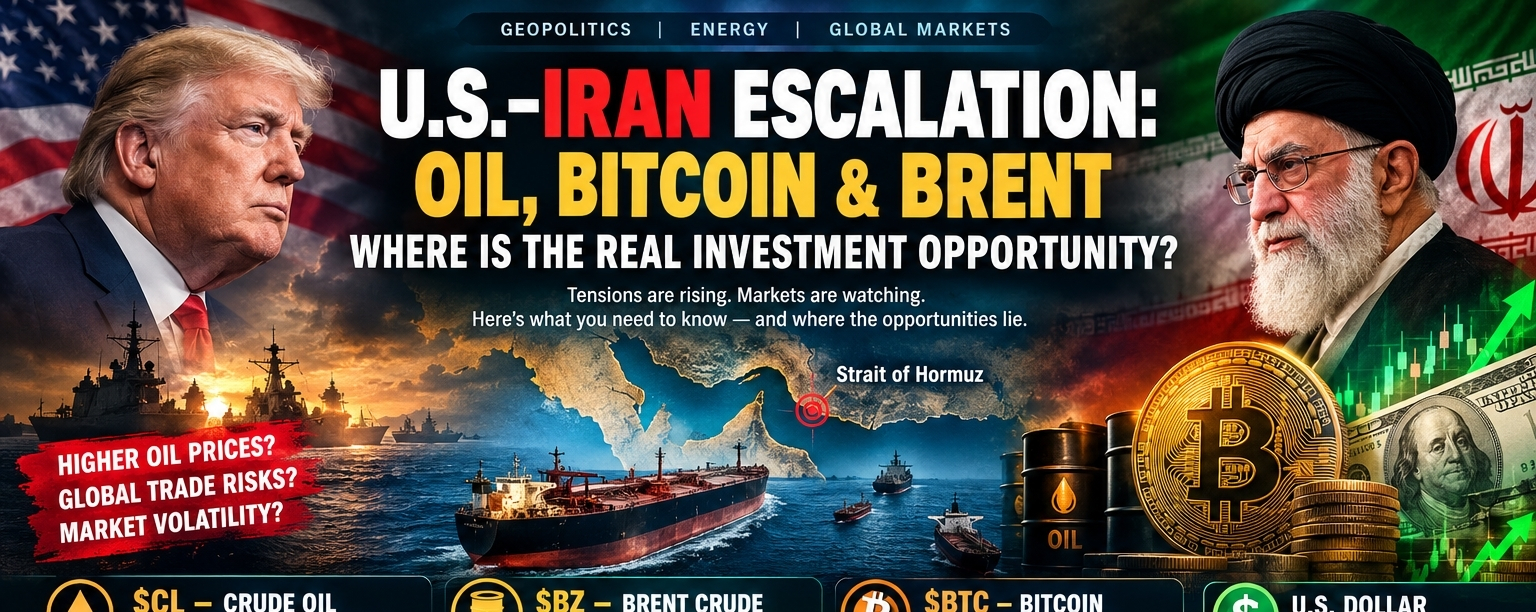

Have you noticed oil just smashed through $97 while most crypto traders pretend it has nothing to do with their portfolios?
Traders keep getting wrecked on sudden $BTC dumps because they ignore how energy shocks trigger the kind of risk-off moves that wipe out gains overnight.
Oil has already surpassed $97 and $100 looks like it could happen any time. Trump dragged the USA and the entire world into a swamp with this meaningless war, and Americans need to stop it before the damage spreads further.
Higher energy prices feed inflation and raise mining costs, putting pressure on $ETH even as some still treat $BTC as a safe haven. The mainstream story blames everything except the geopolitics, which is why so many miss the real catalyst.
Watch oil like a hawk from now on. Rotate a slice of your stack into $USDT whenever it spikes like this and sit out the FOMO until geopolitics calm down.
What's your take on how this plays out for crypto from here?
#OilPrices #Bitcoin #Geopolitics
Traders keep getting wrecked on sudden $BTC dumps because they ignore how energy shocks trigger the kind of risk-off moves that wipe out gains overnight.
Oil has already surpassed $97 and $100 looks like it could happen any time. Trump dragged the USA and the entire world into a swamp with this meaningless war, and Americans need to stop it before the damage spreads further.
Higher energy prices feed inflation and raise mining costs, putting pressure on $ETH even as some still treat $BTC as a safe haven. The mainstream story blames everything except the geopolitics, which is why so many miss the real catalyst.
Watch oil like a hawk from now on. Rotate a slice of your stack into $USDT whenever it spikes like this and sit out the FOMO until geopolitics calm down.
What's your take on how this plays out for crypto from here?
#OilPrices #Bitcoin #Geopolitics

#USIranTradeTankerStrikesEscalate
🌍 Iran-US Tensions & Crypto Markets
Escalating Strait of Hormuz clashes between the US and Iran are rattling risk assets, with oil tanker strikes on both sides this weekend. Traders are watching for spillover into crypto as a geopolitical risk-off signal. Stay alert to volatility this week.
#MarketWatch #Geopolitics
🌍 Iran-US Tensions & Crypto Markets
Escalating Strait of Hormuz clashes between the US and Iran are rattling risk assets, with oil tanker strikes on both sides this weekend. Traders are watching for spillover into crypto as a geopolitical risk-off signal. Stay alert to volatility this week.
#MarketWatch #Geopolitics
A fresh Iran–US flare-up in the Strait of Hormuz is the kind of headline traders can’t ignore.
$DOOD
The U.S. military denied Iranian state media claims that Iran struck an uncrewed American vessel, calling the allegation a “total lie.” Tehran says the vessel entered a restricted area. Even without a confirmed kinetic escalation, the fact pattern matters because Hormuz is one of the most sensitive chokepoints in global energy.
Why it matters: any rise in perceived disruption risk can feed into crude, inflation expectations, the dollar, gold, and broader risk sentiment. For equities, that usually means more pressure on cyclical names and a tighter lid on speculative assets if traders rush into safety.
$SOPH
For crypto, the first reaction is often not about the headline itself, but about whether markets start pricing a higher geopolitical risk premium. Bitcoin can sometimes behave like a hedge, but in a real risk-off move it can also trade like a high-beta asset.
That’s why I’m watching whether this stays rhetorical or turns into something that affects shipping confidence. Meanwhile, Binance traders are still rotating hard in spots like , and as the broader tape stays selective.
$CATI
If the Hormuz noise escalates again, do we see a real bid in oil-linked hedges first, or does crypto react faster to the risk-off impulse?
#Geopolitics #Oil #Crypto
$DOOD
The U.S. military denied Iranian state media claims that Iran struck an uncrewed American vessel, calling the allegation a “total lie.” Tehran says the vessel entered a restricted area. Even without a confirmed kinetic escalation, the fact pattern matters because Hormuz is one of the most sensitive chokepoints in global energy.
Why it matters: any rise in perceived disruption risk can feed into crude, inflation expectations, the dollar, gold, and broader risk sentiment. For equities, that usually means more pressure on cyclical names and a tighter lid on speculative assets if traders rush into safety.
$SOPH
For crypto, the first reaction is often not about the headline itself, but about whether markets start pricing a higher geopolitical risk premium. Bitcoin can sometimes behave like a hedge, but in a real risk-off move it can also trade like a high-beta asset.
That’s why I’m watching whether this stays rhetorical or turns into something that affects shipping confidence. Meanwhile, Binance traders are still rotating hard in spots like , and as the broader tape stays selective.
$CATI
If the Hormuz noise escalates again, do we see a real bid in oil-linked hedges first, or does crypto react faster to the risk-off impulse?
#Geopolitics #Oil #Crypto
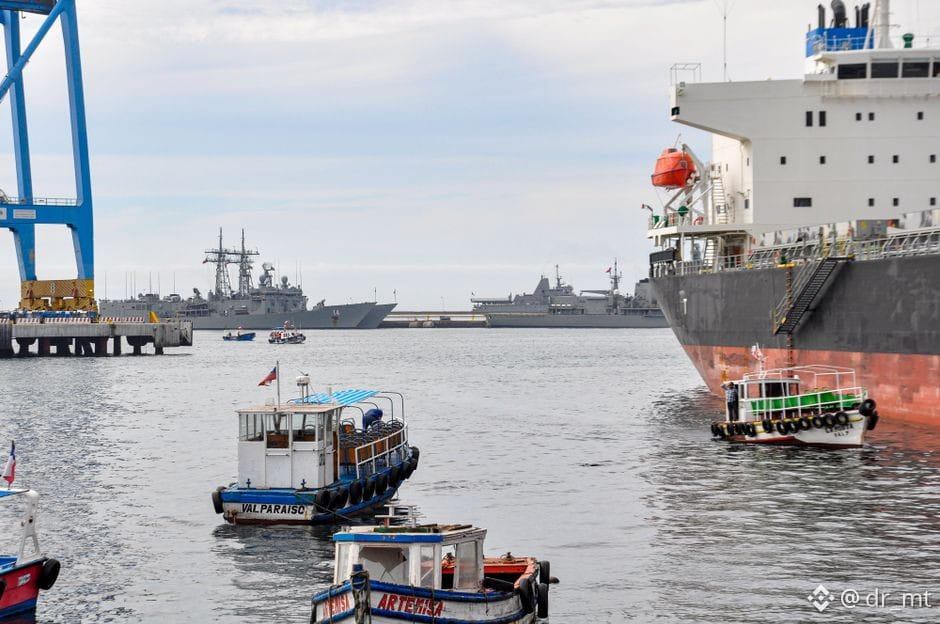

#usirantradetankerstrikesescalate 🚨 BREAKING: U.S. AND IRAN ENCOUNTER FRESH STRAIT ESCALATION
Recent military strikes targeting tankers have significantly heightened geopolitical risks across the Strait of Hormuz. As marine transit routes contract and oil prices head toward the $100 threshold, global financial sectors are preparing for a major inflation shockwaves.
Market Analysts Track Two Distinct Internal Timelines:
• The Immediate Term: Macro data indicates a temporary downside headwind for risk assets. Rising crude oil parameters hold inflation metrics elevated, limiting the capacity for central bank policy easing, which historically forces brief leverage flushes in Bitcoin and high-beta alternative networks.
• The Structural Horizon: Extended geopolitical friction changes the ultimate terminal outlook. As trust in traditional monetary systems and fiat currencies weakens, decentralized hard assets are positioned to capture heavy alternative capital inflows.
🟡 Tap the YELLOW COIN TAG below to instantly verify the live exchange order books and monitor the charts! 💸🏃♀️
#Geopolitics #OilShock2026 #MacroEconomy #WriteToEarn
$BTC
Recent military strikes targeting tankers have significantly heightened geopolitical risks across the Strait of Hormuz. As marine transit routes contract and oil prices head toward the $100 threshold, global financial sectors are preparing for a major inflation shockwaves.
Market Analysts Track Two Distinct Internal Timelines:
• The Immediate Term: Macro data indicates a temporary downside headwind for risk assets. Rising crude oil parameters hold inflation metrics elevated, limiting the capacity for central bank policy easing, which historically forces brief leverage flushes in Bitcoin and high-beta alternative networks.
• The Structural Horizon: Extended geopolitical friction changes the ultimate terminal outlook. As trust in traditional monetary systems and fiat currencies weakens, decentralized hard assets are positioned to capture heavy alternative capital inflows.
🟡 Tap the YELLOW COIN TAG below to instantly verify the live exchange order books and monitor the charts! 💸🏃♀️
#Geopolitics #OilShock2026 #MacroEconomy #WriteToEarn
$BTC
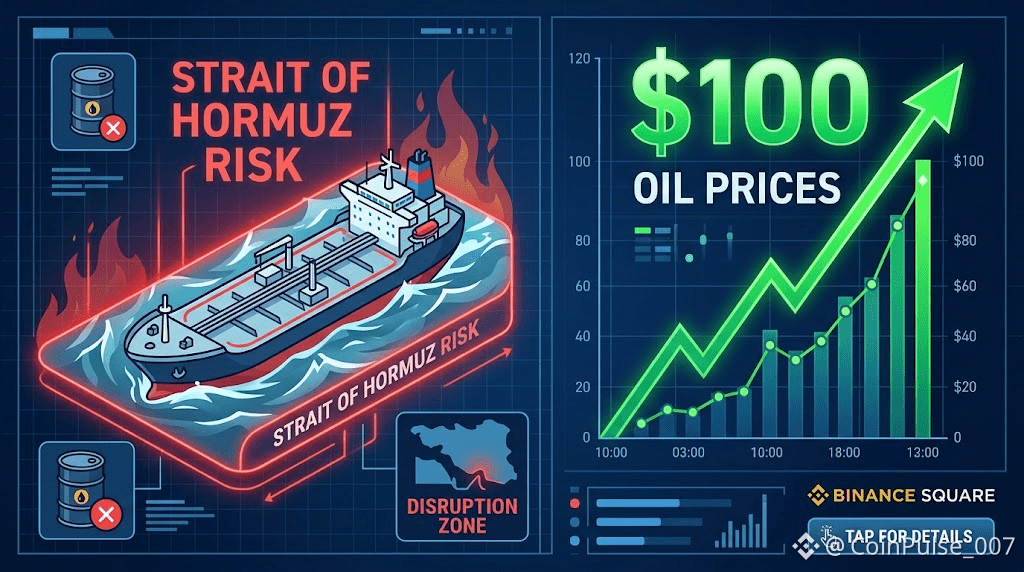

#usirantradetankerstrikesescalate
🚨 STRAIT OF HORMUZ RISK: US-IRAN EDGE AGAIN
Tankers under fire. Traffic falling.
Oil pushing toward $100 = Inflation shock returns.
MARKET IMPACT:
1. **Oil Up** = Inflation fears
2. **Stocks Risk-Off** = Safe haven mode
3. **Crypto Bid** = BTC digital gold narrative
HOT COINS TO WATCH:
$BTC - Safe haven play active
$ETH - Volatility trading
$BNB - Exchange volume spike
$SOL - High beta if risk cools
LEVELS:
WTI → $92+ | Brent → $96+
BTC Watch $78K support
When geopolitics pumps, charts move.
Stay hedged. Manage risk.
Oil at $100 or BTC at $85K first? 👇
#BTC #Oil #USIran #Hormuz #crypto #Trading #Geopolitics #USIranTradeTankerStrikesEscalate #IranSaysItHit3USShips3Tankers
🚨 STRAIT OF HORMUZ RISK: US-IRAN EDGE AGAIN
Tankers under fire. Traffic falling.
Oil pushing toward $100 = Inflation shock returns.
MARKET IMPACT:
1. **Oil Up** = Inflation fears
2. **Stocks Risk-Off** = Safe haven mode
3. **Crypto Bid** = BTC digital gold narrative
HOT COINS TO WATCH:
$BTC - Safe haven play active
$ETH - Volatility trading
$BNB - Exchange volume spike
$SOL - High beta if risk cools
LEVELS:
WTI → $92+ | Brent → $96+
BTC Watch $78K support
When geopolitics pumps, charts move.
Stay hedged. Manage risk.
Oil at $100 or BTC at $85K first? 👇
#BTC #Oil #USIran #Hormuz #crypto #Trading #Geopolitics #USIranTradeTankerStrikesEscalate #IranSaysItHit3USShips3Tankers

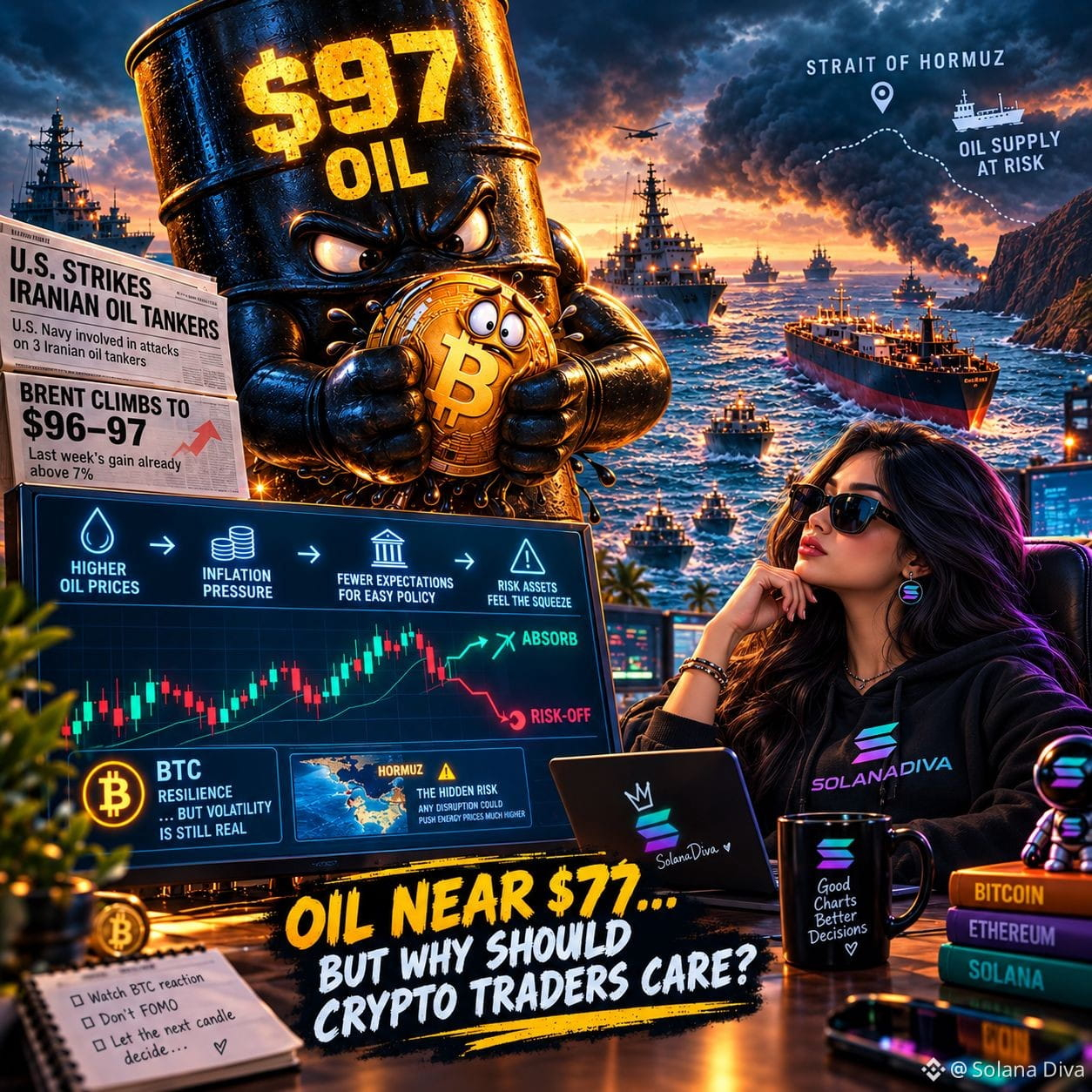
Oil near $97… but why should crypto traders care?
Because this isn't just another geopolitical headline.
The U.S. says it struck 3 Iranian oil tankers after attacks involving U.S. Navy ships. Brent has climbed sharply, reaching around $96–97, while last week’s gain was already above 7%.
Here’s the market mechanics: higher oil → higher inflation pressure → fewer expectations for easy monetary policy → risk assets can feel the squeeze.
BTC has shown surprising resilience during previous Iran escalations, but that doesn't mean volatility disappears.
The hidden risk? Hormuz. Any serious disruption could push energy prices much higher.
Bull case: BTC absorbs the shock.
Bear case: inflation + risk-off hits crypto.
My move? Watch BTC reaction, not headlines.
Don’t FOMO into geopolitical volatility. The next candle decides more than the headline.
#Bitcoin #CryptoMarket #Geopolitics
$BTC $ETH $SOL
#USIranTradeTankerStrikesEscalate
Because this isn't just another geopolitical headline.
The U.S. says it struck 3 Iranian oil tankers after attacks involving U.S. Navy ships. Brent has climbed sharply, reaching around $96–97, while last week’s gain was already above 7%.
Here’s the market mechanics: higher oil → higher inflation pressure → fewer expectations for easy monetary policy → risk assets can feel the squeeze.
BTC has shown surprising resilience during previous Iran escalations, but that doesn't mean volatility disappears.
The hidden risk? Hormuz. Any serious disruption could push energy prices much higher.
Bull case: BTC absorbs the shock.
Bear case: inflation + risk-off hits crypto.
My move? Watch BTC reaction, not headlines.
Don’t FOMO into geopolitical volatility. The next candle decides more than the headline.
#Bitcoin #CryptoMarket #Geopolitics
$BTC $ETH $SOL
#USIranTradeTankerStrikesEscalate

#usirantradetankerstrikesescalate
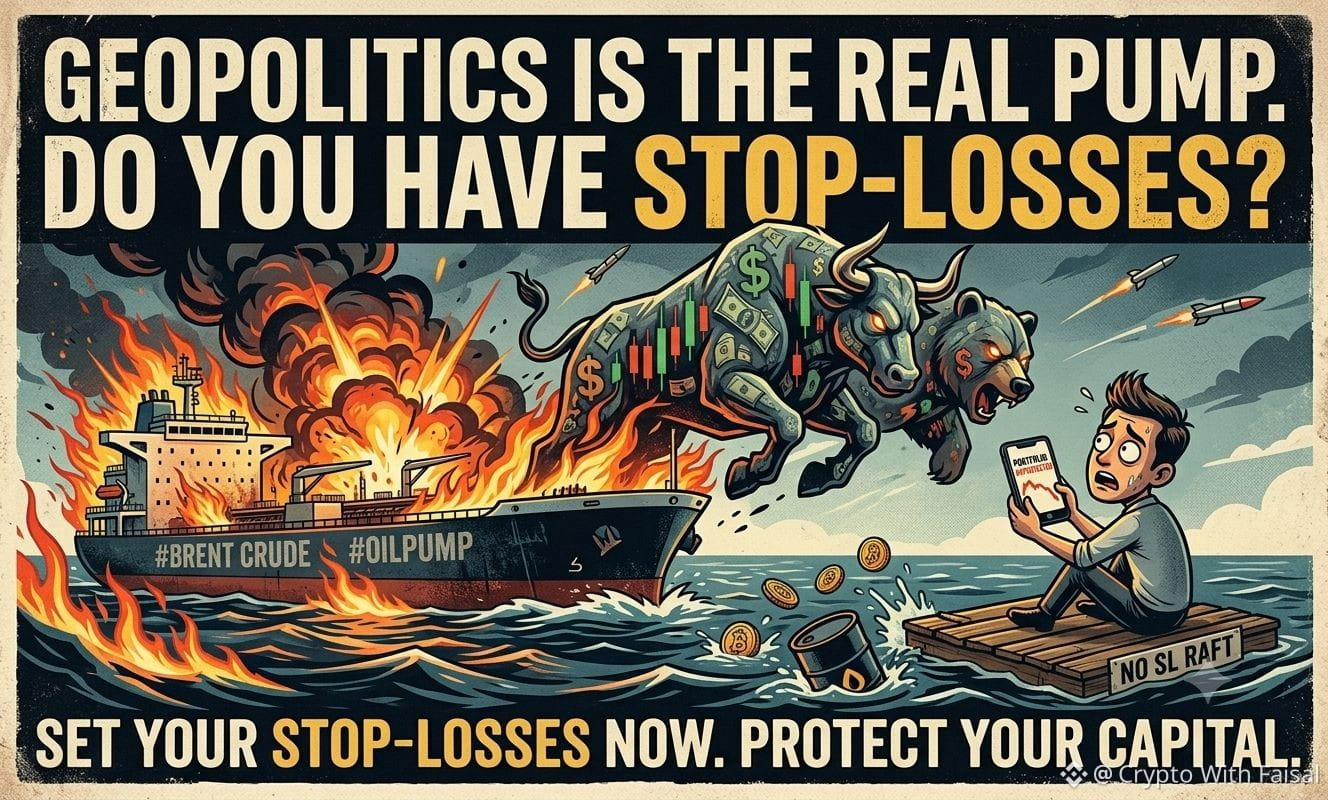
Geopolitical tensions are boiling over with the latest US and Iran tanker strikes. With actual ships going down, Brent crude is surging—and global inflation is threatening to wake up from its nap. 🛢️🔥
When missiles fly, the markets get incredibly emotional and volatile. Here is how you survive the chaos:
🛡️ Protect Your Capital: Do not leave your portfolio exposed. Tighten up and set your stop-losses NOW.
👀 Watch the Narrative: Keep a close eye on safe-haven assets and energy/AI tokens.
🚫 Zero FOMO: Do not chase blind green candles. Stick to your trading plan and let the setups come to you.
Manage your risk before the market liquidates it for you! Stay safe out there.
(Not financial advice)
#Geopolitics #OilPump #CryptoNews
$CL
$BZ
$NATGAS
Geopolitical tensions are boiling over with the latest US and Iran tanker strikes. With actual ships going down, Brent crude is surging—and global inflation is threatening to wake up from its nap. 🛢️🔥
When missiles fly, the markets get incredibly emotional and volatile. Here is how you survive the chaos:
🛡️ Protect Your Capital: Do not leave your portfolio exposed. Tighten up and set your stop-losses NOW.
👀 Watch the Narrative: Keep a close eye on safe-haven assets and energy/AI tokens.
🚫 Zero FOMO: Do not chase blind green candles. Stick to your trading plan and let the setups come to you.
Manage your risk before the market liquidates it for you! Stay safe out there.
(Not financial advice)
#Geopolitics #OilPump #CryptoNews
$CL
$BZ
$NATGAS

🚨 GEOPOLITICAL SPARKS THREATEN ENERGY SUPPLY AS MIDDLE EAST FRICTION SCALES UP FOR $BTC 💣
⚡ Growing escalation threats across Middle East energy infrastructure are putting global liquidity on high alert. 📊 When supply chain risks spike, macro volatility spills straight into high-beta assets, forcing smart money to recalibrate risk exposure fast.
💡 Historically, these geopolitical friction points trigger sharp initial knee-jerk drops before capital rotates into scarce liquidity havens like $BTC . 🌊 Watch order flow closely for institutional bid defense around major support levels as the market digests this headline risk. 💬 How are you positioning your portfolio as macro geopolitical risks heat up? 👇
⚠️ Not financial advice. Always manage your risk. 🛡️
🏷️ #BTC #Macro #Geopolitics #CryptoMarket
🎯 🛡️
⚡ Growing escalation threats across Middle East energy infrastructure are putting global liquidity on high alert. 📊 When supply chain risks spike, macro volatility spills straight into high-beta assets, forcing smart money to recalibrate risk exposure fast.
💡 Historically, these geopolitical friction points trigger sharp initial knee-jerk drops before capital rotates into scarce liquidity havens like $BTC . 🌊 Watch order flow closely for institutional bid defense around major support levels as the market digests this headline risk. 💬 How are you positioning your portfolio as macro geopolitical risks heat up? 👇
⚠️ Not financial advice. Always manage your risk. 🛡️
🏷️ #BTC #Macro #Geopolitics #CryptoMarket
🎯 🛡️

Geopolitical tensions in the Middle East are approaching a dangerous tipping point. At the IAEA Board of Governors meeting in Vienna this week, the United States is officially moving to refer Iran to the United Nations Security Council after international inspectors were blocked from verifying near-weapons-grade uranium stockpiles for 15 months.
This diplomatic escalation carries severe historical weight. The last time Washington pushed Iran’s nuclear file to the UN, Israel launched preemptive strikes on Iranian nuclear facilities within 24 hours, triggering a 12-day military conflict. With IAEA reporting renewed activity around targeted sites, the risk of direct confrontation and severe energy disruption has surged significantly.
Traditional financial markets are rapidly bracing for heightened risk aversion. A formal UN referral or subsequent military retaliation will immediately trigger a risk-off wave, driving sharp spikes in crude oil prices, boosting defensive bids in gold and the US Dollar, while putting upward pressure on yields due to renewed inflation threats.
For the crypto sector, this macroeconomic uncertainty presents a dual-edged environment. While escalating war risks usually provoke immediate liquidity drainage and short-term volatility across risk assets, persistent systemic stress could ultimately reinforce $BTC narrative as an uncensorable hedge against global geopolitical fragmentation. 🌐
#iran #geopolitics #macro
This diplomatic escalation carries severe historical weight. The last time Washington pushed Iran’s nuclear file to the UN, Israel launched preemptive strikes on Iranian nuclear facilities within 24 hours, triggering a 12-day military conflict. With IAEA reporting renewed activity around targeted sites, the risk of direct confrontation and severe energy disruption has surged significantly.
Traditional financial markets are rapidly bracing for heightened risk aversion. A formal UN referral or subsequent military retaliation will immediately trigger a risk-off wave, driving sharp spikes in crude oil prices, boosting defensive bids in gold and the US Dollar, while putting upward pressure on yields due to renewed inflation threats.
For the crypto sector, this macroeconomic uncertainty presents a dual-edged environment. While escalating war risks usually provoke immediate liquidity drainage and short-term volatility across risk assets, persistent systemic stress could ultimately reinforce $BTC narrative as an uncensorable hedge against global geopolitical fragmentation. 🌐
#iran #geopolitics #macro


#IranSaysItHit3USShips3Tankers
🚨 IRAN CLAIMS MAJOR RETALIATION
Iran says it struck three U.S. vessels and three oil tankers following recent attacks involving Iranian tankers.
But there is an important detail: the claims have not been independently verified, and U.S. officials have disputed at least some reported strikes.
Still, the situation around the Strait of Hormuz is becoming increasingly dangerous.
If attacks on shipping continue, the market could react through higher oil prices, increased geopolitical risk and broader volatility.
Crypto traders should watch this closely — not because BTC directly follows oil, but because geopolitical shocks can rapidly change global liquidity and risk sentiment.
This story is developing.
#IranSaysltHit3USShips3Tankers #BTC #Crypto #Bitcoin #Geopolitics
🚨 IRAN CLAIMS MAJOR RETALIATION
Iran says it struck three U.S. vessels and three oil tankers following recent attacks involving Iranian tankers.
But there is an important detail: the claims have not been independently verified, and U.S. officials have disputed at least some reported strikes.
Still, the situation around the Strait of Hormuz is becoming increasingly dangerous.
If attacks on shipping continue, the market could react through higher oil prices, increased geopolitical risk and broader volatility.
Crypto traders should watch this closely — not because BTC directly follows oil, but because geopolitical shocks can rapidly change global liquidity and risk sentiment.
This story is developing.
#IranSaysltHit3USShips3Tankers #BTC #Crypto #Bitcoin #Geopolitics

Zelenskyy says Ukraine war may extend into winter
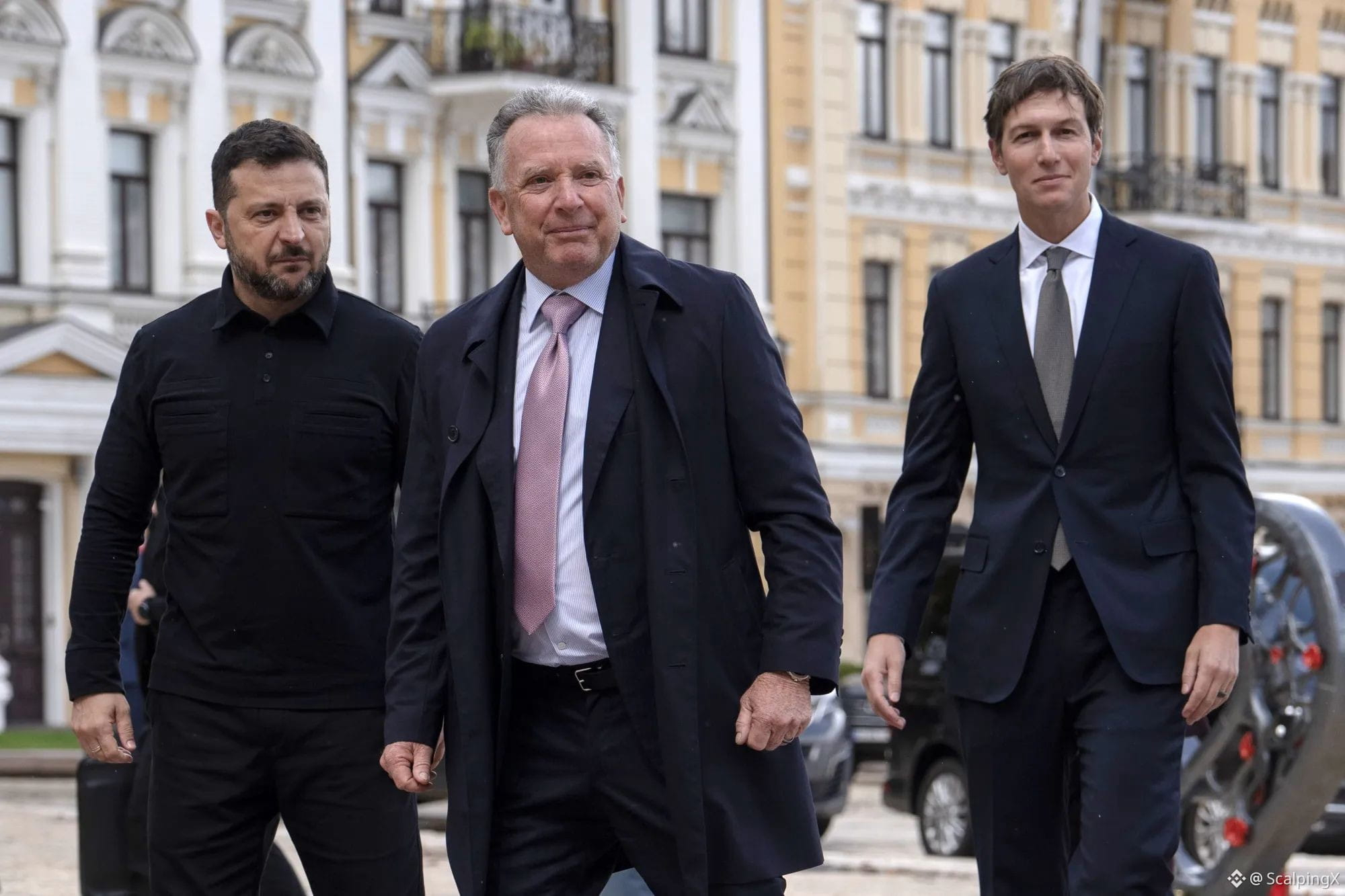
🕊️ After three rounds of talks with Steve Witkoff and Jared Kushner in Kyiv on September 6, President Volodymyr Zelenskyy said the current situation suggests the war with Russia could continue into winter.
🤝 The discussions were described as substantive, but no ceasefire agreement or major breakthrough was announced. Territory remains one of the key sticking points and, according to Zelenskyy, should be addressed at the leaders’ level.
⚡ If the war continues, Kyiv is seeking a US winter support package covering air defense, energy assistance and LNG to strengthen resilience during the colder months.
🌍 The US delegation met Putin in Moscow on September 5 before meeting Zelenskyy a day later, showing renewed diplomatic activity, while geopolitical and energy risks remain elevated without a clear path toward peace.
#Geopolitics $BTC
🕊️ After three rounds of talks with Steve Witkoff and Jared Kushner in Kyiv on September 6, President Volodymyr Zelenskyy said the current situation suggests the war with Russia could continue into winter.
🤝 The discussions were described as substantive, but no ceasefire agreement or major breakthrough was announced. Territory remains one of the key sticking points and, according to Zelenskyy, should be addressed at the leaders’ level.
⚡ If the war continues, Kyiv is seeking a US winter support package covering air defense, energy assistance and LNG to strengthen resilience during the colder months.
🌍 The US delegation met Putin in Moscow on September 5 before meeting Zelenskyy a day later, showing renewed diplomatic activity, while geopolitical and energy risks remain elevated without a clear path toward peace.
#Geopolitics $BTC
#iransaysithit3usships3tankers
The Strait of Hormuz is heating up, and your crypto bags are in the crossfire.
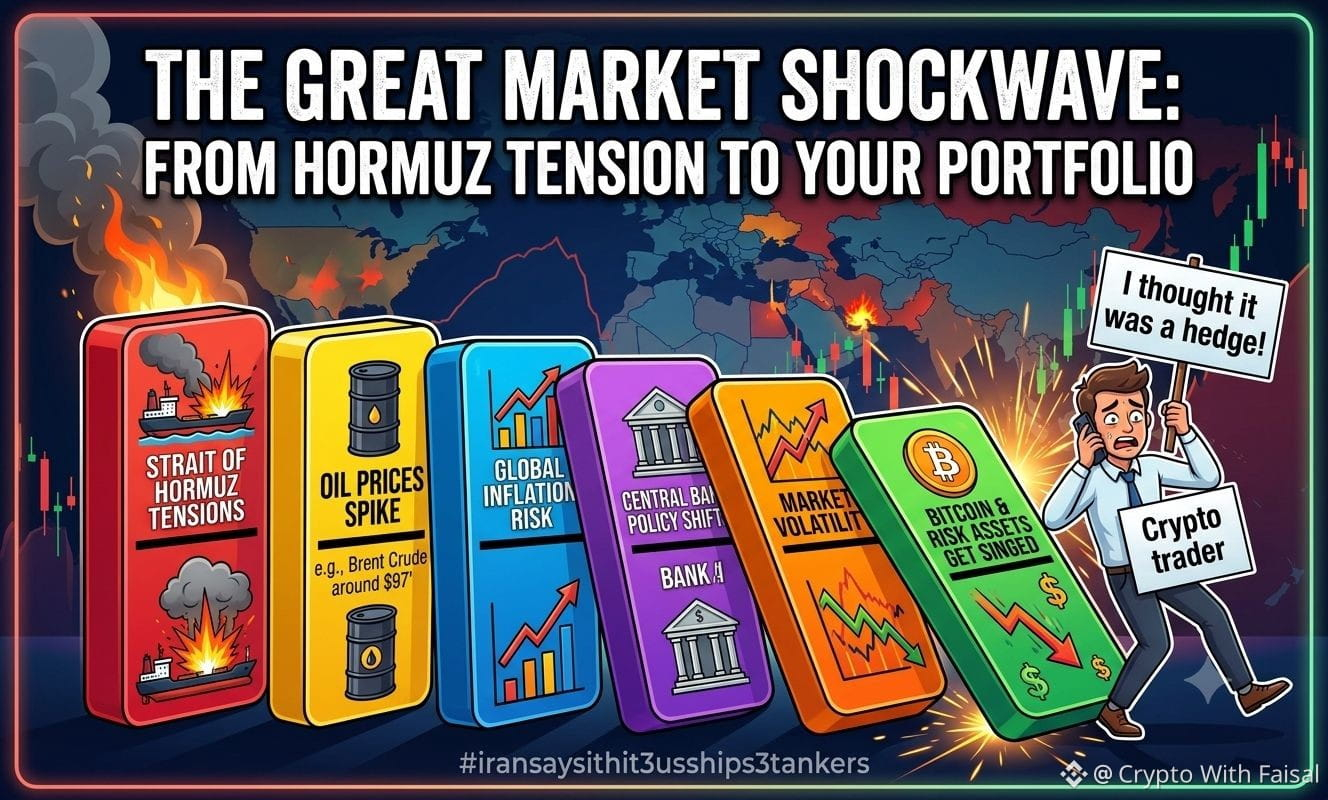
With Iran claiming strikes on U.S.-linked vessels and Brent crude oil already spiking near $97/barrel, this is way more than just a military headline. It is a major macro shockwave.
Here is the domino effect:
Expensive oil ➡️ Higher inflation risk ➡️ Central bank pressure ➡️ Wild volatility for Bitcoin, stocks, and the dollar.
Your move? Don't trade on unverified rumors. Keep your eyes glued to oil prices, Treasury yields, and global liquidity.
How are you hedging your portfolio this week? 👇
$ZEC
$DASH
$XMR
#CryptoNews #Geopolitics #StraitOfHormz
The Strait of Hormuz is heating up, and your crypto bags are in the crossfire.
With Iran claiming strikes on U.S.-linked vessels and Brent crude oil already spiking near $97/barrel, this is way more than just a military headline. It is a major macro shockwave.
Here is the domino effect:
Expensive oil ➡️ Higher inflation risk ➡️ Central bank pressure ➡️ Wild volatility for Bitcoin, stocks, and the dollar.
Your move? Don't trade on unverified rumors. Keep your eyes glued to oil prices, Treasury yields, and global liquidity.
How are you hedging your portfolio this week? 👇
$ZEC
$DASH
$XMR
#CryptoNews #Geopolitics #StraitOfHormz

$BTC
DETAILED + FEAR* - Max engagement
OIL CRISIS ESCALATES 🚨 STRAIT OF HORMUZ SHUTDOWN
US: Blockade on Iranian oil continues
"We will have to deal with them" - Energy Sec Chris Wright
IRAN: "Era of proportionate responses is OVER"
New restricted zone coming outside Strait of Hormuz
THE DAMAGE:
- 3 Iranian tankers hit: Kylo SUNK, Stark I disabled
- 3 US-linked ships hit by Iran
- Brent Oil: $97.05 +0.47%
- Only 1 vessel crossed Saturday
WHY THIS IS BAD FOR CRYPTO:
Oil up → Inflation up → Fed hawkish → BTC dumps
Strait of Hormuz = 20% of global oil
Trump calls it "small potatoes"
Market might be down.
#Geopolitics #Binance #Inflation
#BTC #CryptoNewss
DETAILED + FEAR* - Max engagement
OIL CRISIS ESCALATES 🚨 STRAIT OF HORMUZ SHUTDOWN
US: Blockade on Iranian oil continues
"We will have to deal with them" - Energy Sec Chris Wright
IRAN: "Era of proportionate responses is OVER"
New restricted zone coming outside Strait of Hormuz
THE DAMAGE:
- 3 Iranian tankers hit: Kylo SUNK, Stark I disabled
- 3 US-linked ships hit by Iran
- Brent Oil: $97.05 +0.47%
- Only 1 vessel crossed Saturday
WHY THIS IS BAD FOR CRYPTO:
Oil up → Inflation up → Fed hawkish → BTC dumps
Strait of Hormuz = 20% of global oil
Trump calls it "small potatoes"
Market might be down.
#Geopolitics #Binance #Inflation
#BTC #CryptoNewss

#USStrikesIranTankersTehranRestrictsHormuz
🚨 JUST IN: Middle East tensions are escalating rapidly. 🇺🇸🇮🇷
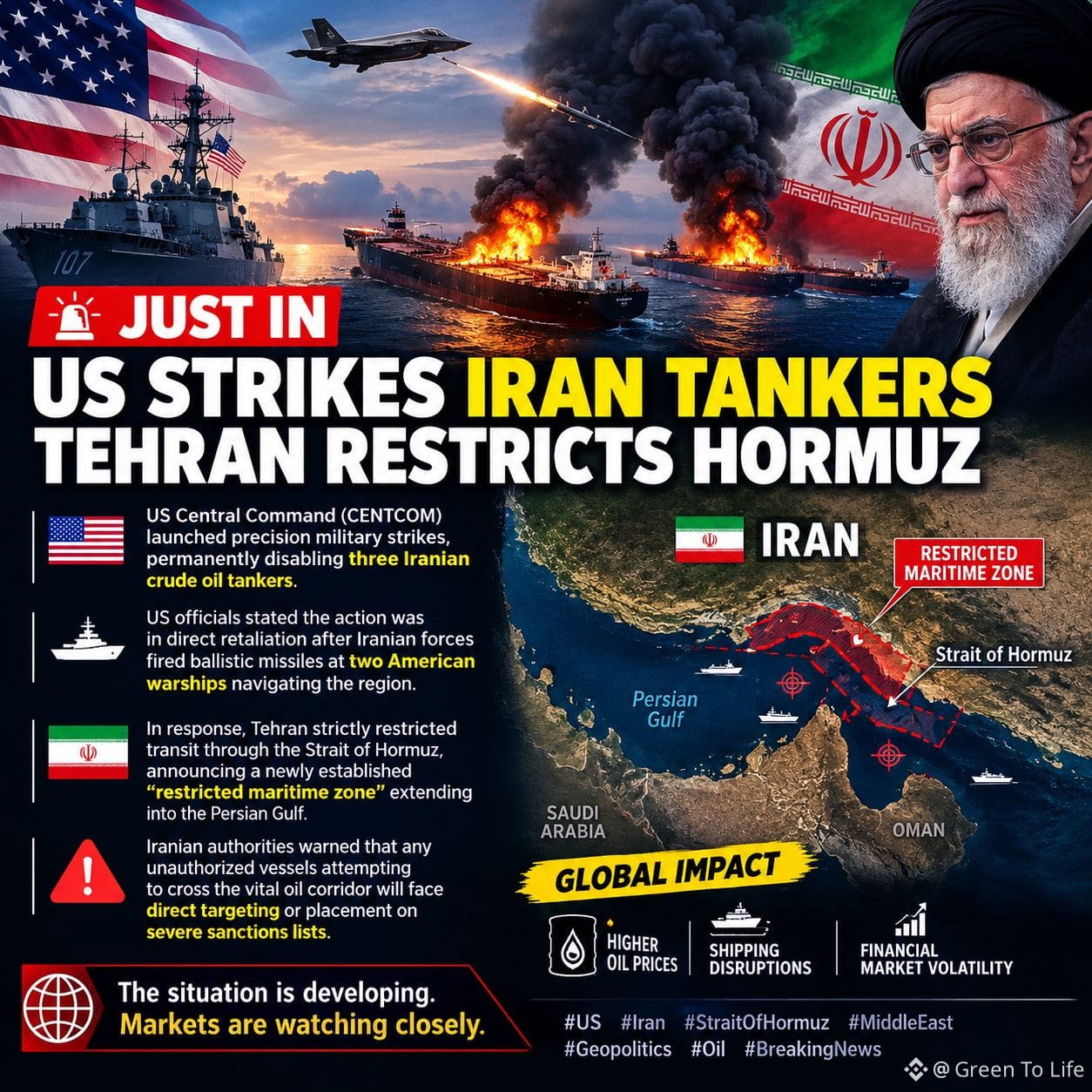
Reports claim US CENTCOM carried out precision strikes targeting Iranian oil tankers following an alleged missile attack on US warships.
🇮🇷 Tehran has reportedly responded by restricting maritime transit through the Strait of Hormuz, one of the world’s most critical energy routes.
⚠️ Any prolonged disruption could have major consequences for global oil prices, shipping, and financial markets.
The situation is developing. Markets are watching closely. 🌍📊
#US #IranIsraelConflict #Geopolitics #oil
$BTC
$SOL
🚨 JUST IN: Middle East tensions are escalating rapidly. 🇺🇸🇮🇷
Reports claim US CENTCOM carried out precision strikes targeting Iranian oil tankers following an alleged missile attack on US warships.
🇮🇷 Tehran has reportedly responded by restricting maritime transit through the Strait of Hormuz, one of the world’s most critical energy routes.
⚠️ Any prolonged disruption could have major consequences for global oil prices, shipping, and financial markets.
The situation is developing. Markets are watching closely. 🌍📊
#US #IranIsraelConflict #Geopolitics #oil
$BTC
$SOL

🚨🇺🇦 BREAKING: UKRAINE READY TO PAUSE STRIKES ON MOSCOW?! 🇷🇺🔥
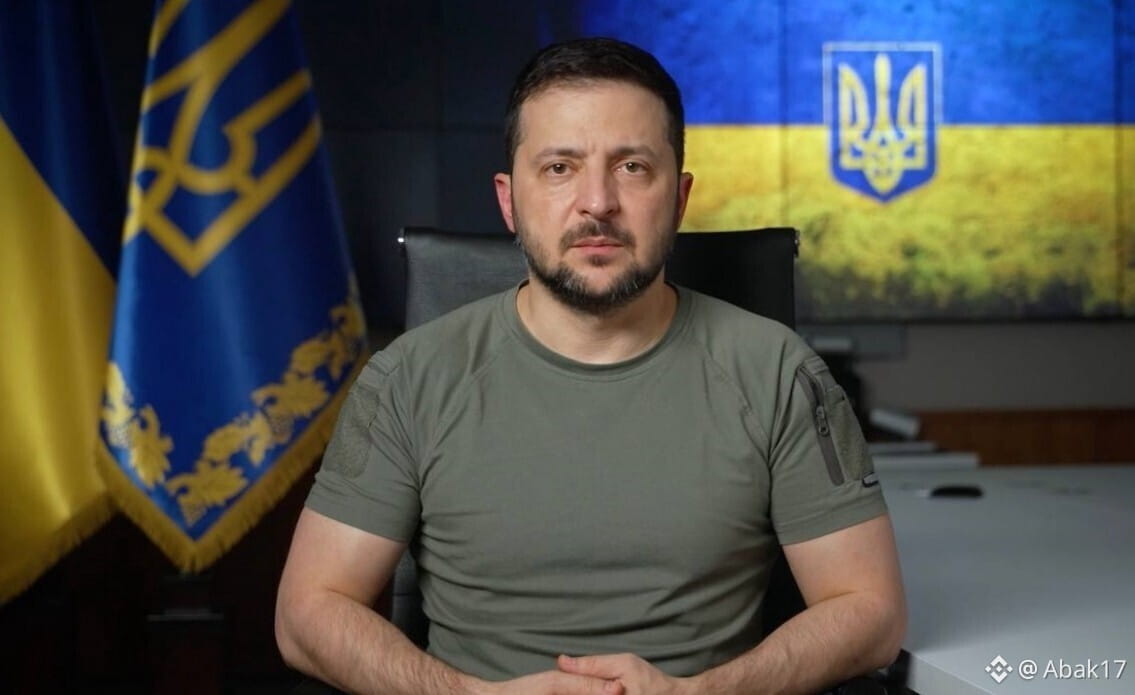
According to reports citing Ukrainian President Volodymyr Zelenskyy, Ukraine is ready to pause attacks on Moscow from now until Monday, September 7. 👀
🇺🇦 Ukraine reportedly hopes Russia will also stop attacks on Kyiv during this period.
🤝 Meanwhile, a diplomatic meeting involving the U.S. team is expected in Kyiv, with talks involving U.S. envoy Steve Witkoff and Jared Kushner.
⚠️ If confirmed, even a short pause could become an important step toward broader negotiations.
🌍 Markets are watching closely! 👀🔥
Could this be the beginning of a bigger diplomatic breakthrough?
#Ukraine #Russia #Zelenskyy #Trump #Geopolitics $ARB
$TRUMP
$ENA
According to reports citing Ukrainian President Volodymyr Zelenskyy, Ukraine is ready to pause attacks on Moscow from now until Monday, September 7. 👀
🇺🇦 Ukraine reportedly hopes Russia will also stop attacks on Kyiv during this period.
🤝 Meanwhile, a diplomatic meeting involving the U.S. team is expected in Kyiv, with talks involving U.S. envoy Steve Witkoff and Jared Kushner.
⚠️ If confirmed, even a short pause could become an important step toward broader negotiations.
🌍 Markets are watching closely! 👀🔥
Could this be the beginning of a bigger diplomatic breakthrough?
#Ukraine #Russia #Zelenskyy #Trump #Geopolitics $ARB
$TRUMP
$ENA

🚨 BREAKING: 92 Merchant Ships Diverted in Iran Waters
Why should traders care?
1. Oil prices can spike → Inflation fears
2. Risk-off mode → BTC might dump short term
3. Gold + USDT demand goes up
How are you positioning?
A) Buying the dip
B) Waiting in USDT
Trading safely on Binance 👇
[Your Binance Link]
#BTC #CryptoNews #Binance #Geopolitics
join Binance
Why should traders care?
1. Oil prices can spike → Inflation fears
2. Risk-off mode → BTC might dump short term
3. Gold + USDT demand goes up
How are you positioning?
A) Buying the dip
B) Waiting in USDT
Trading safely on Binance 👇
[Your Binance Link]
#BTC #CryptoNews #Binance #Geopolitics
join Binance
Log in to explore more content