

Kaleigh Spratley m7wc
15 Posts

Kaleigh Spratley m7wc
Report
Block User
1 Following
11 Followers
18 Liked
Posts
All
Quotes
#bstockscis @BinanceCIS
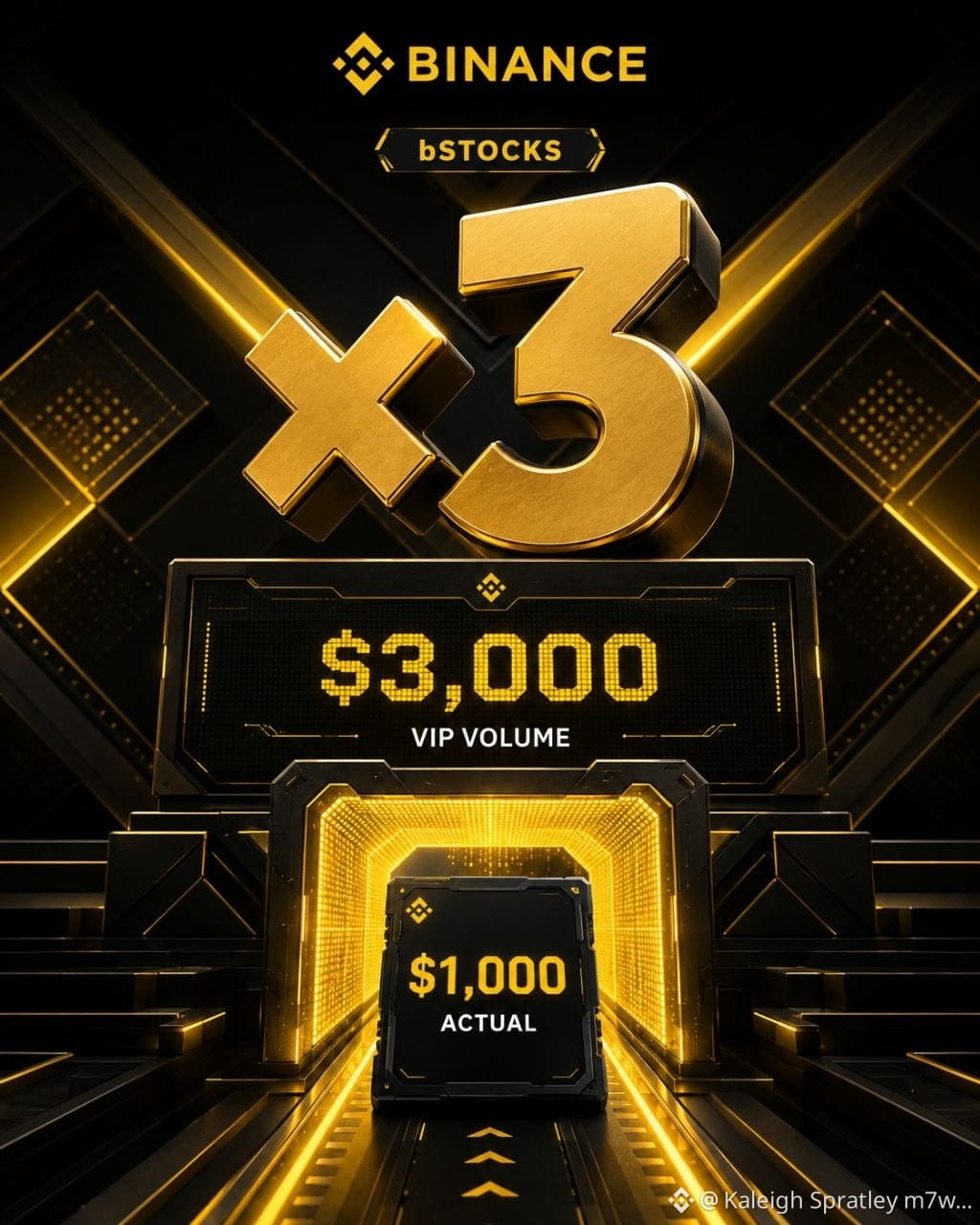
HOW $1,000 IN TURNOVER IN BSTOCKS CAN TURN INTO $3,000 — WITHOUT TURNING INTO $3,000
I saw a strange setup in Binance rules: right now, trading stocks and bStocks is counted with a ×3 multiplier.
The first thought is obvious: if I traded $1,000, did Binance record $3,000 of volume for me?
Yes. But only in one specific counter.
Until September 23, for eligible regular users and VIP 1–2, each $1 of turnover in stocks/bStocks is counted as $3 in 30-day Spot volume to determine the VIP tier.
The deal itself, however, didn’t become bigger.
$1,000 actual volume → $3,000 VIP qualification volume
And this seems like a small thing until you start looking at the stats: two numbers can describe the same activity but answer different questions.
Even more important: the multiplier itself doesn’t guarantee a VIP upgrade — other criteria still apply, including BNB requirements.
Now, after any ×2/×3 volume,
I first ask: volume for what exactly?
@binancecis #bStocksCIS
Fact check: Binance confirms 3× applies specifically to VIP 30-day Spot volume; actual trading volume doesn’t change.
1
1
82
#bstockscis @BinanceCIS
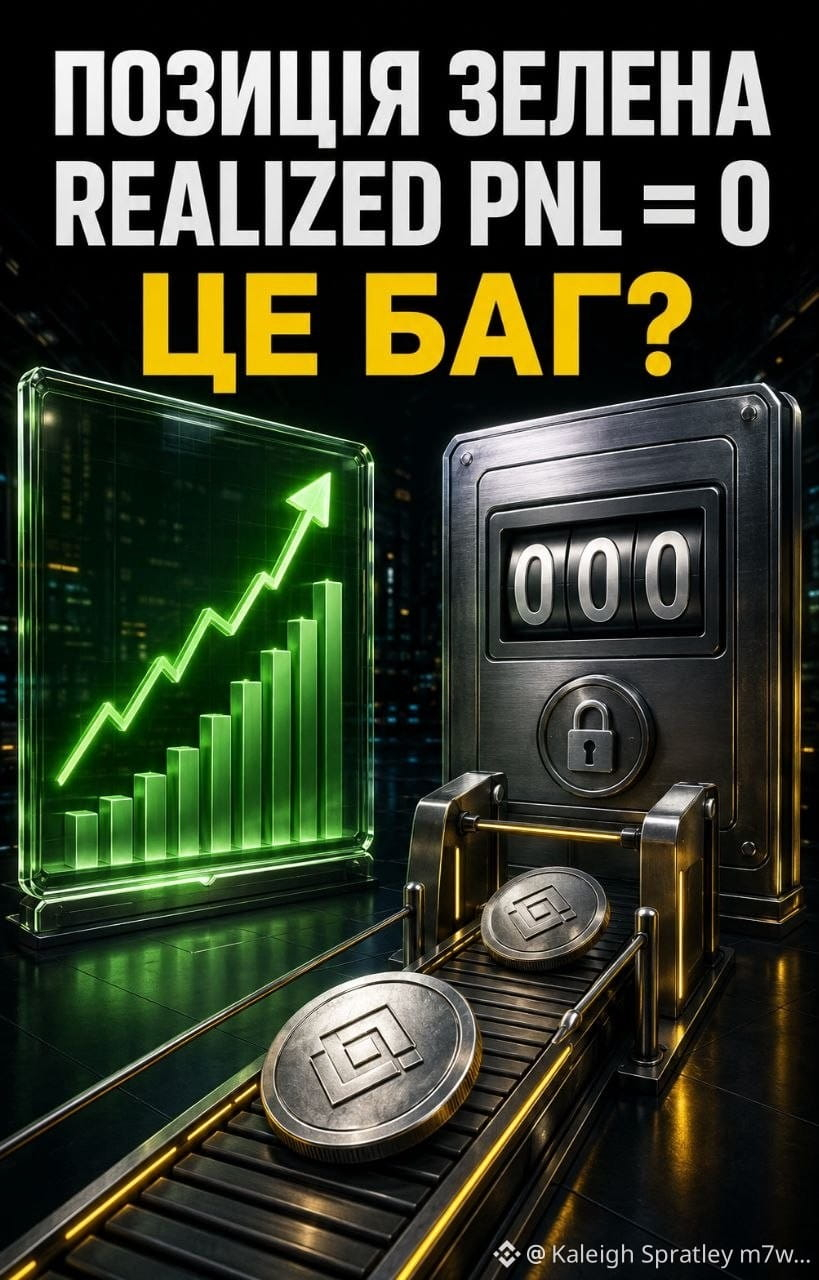
GREEN POSITION, AND A REALIZED PNL = 0. IS THIS A BUG?
In the new bStock PnL Competition with the Agentic Wallet, I initially got stuck on the word “Realized.”
Because imagine a simple situation: you buy bStock for $100, and now it costs $110.
On the screen, the position is already +$10.
But if you haven’t sold it yet, for the ranking that profit doesn’t exist: Binance accounts only PnL from already sold positions. An open (unclosed) result remains unrealized and isn’t counted.
Then I noticed another nuance: FIFO.
For example:
1 bStock at $100
then 1 at $120
sell 1 at $130
With FIFO, the first one is considered sold—the unit you bought for $100.
So the realized PnL for this sale is +$30, while the second purchase is still left open.
And then, after this, the two numbers that at first may seem contradictory suddenly become logical:
the green position shows what’s happening right now.
Realized PnL is what you’ve effectively already closed.
72
#bstockscis @BinanceCIS
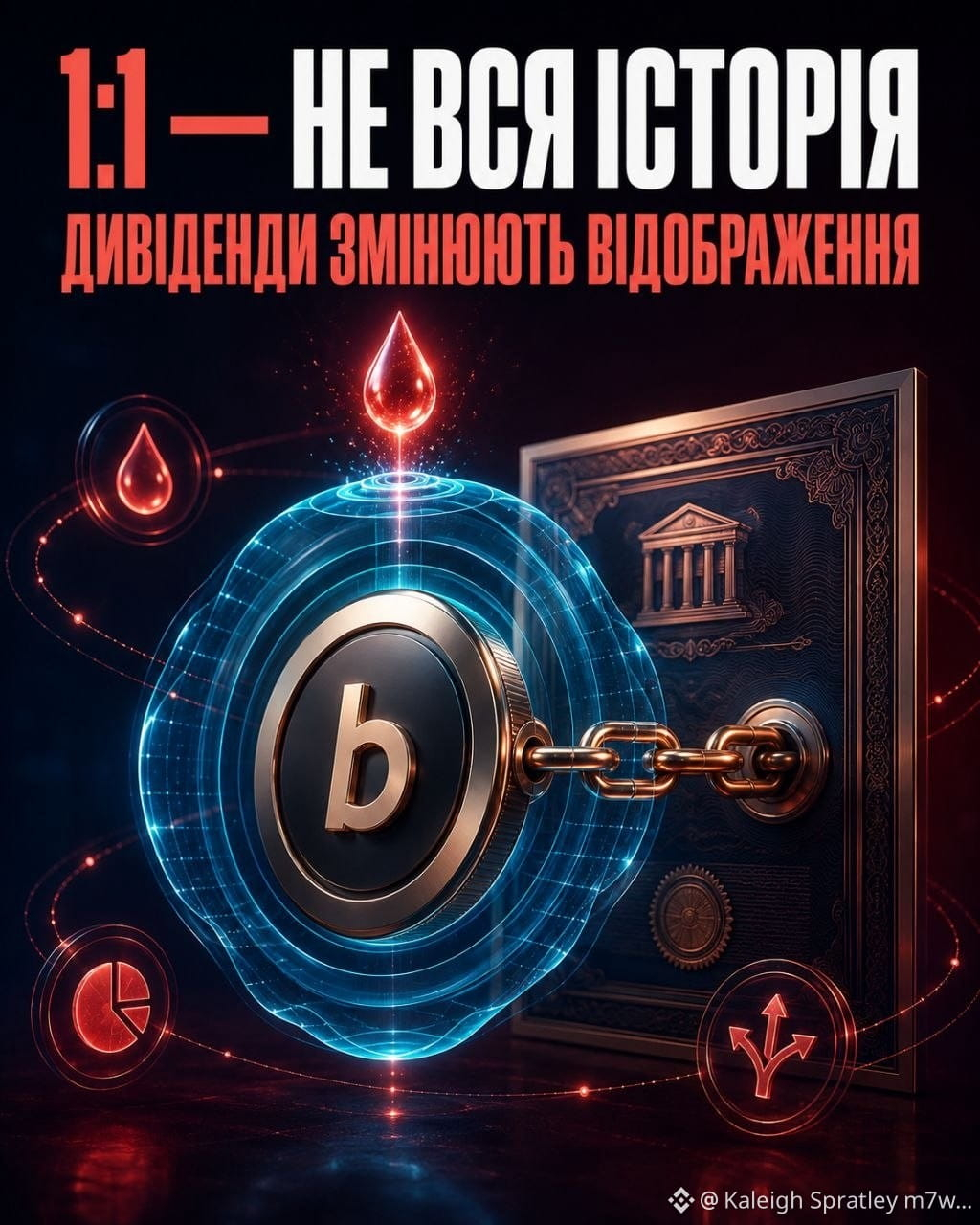
I THOUGHT THAT “1:1” IS THE MOST SIMPLE PART OF bSTOCKS. UNTIL I SAW IN THE DOCUMENTATION 10 → 10.08
Seriously.
Of all bStocks, only 1:1 seemed to me like a part where there’s basically nothing to figure out.
There is underlying.
There is bStock.
There is collateral.
That’s it.
And then, in the Binance FAQ, I came across their conditional example with TSLAB.
Before the dividend:
10 TSLAB
After reinvesting the dividend in Binance’s example, it already shows:
10.08 TSLAB
And a raw balance in the external wallet can still remain:
10
Just the Multiplier becomes 1.008.
I read it again.
Because intuitively a question arises:
if everything is 1:1, where did the extra 0.08 come from?
And then, finally, the picture clicked.
1:1 backing does not mean that the raw token number on your address must forever stay the same number that Binance displays.
Corporate actions can go through the Multiplier. For dividends, Binance describes the mechanics like this: net dividend value is reinvested, raw token balance does not change, and the displayed balance is adjusted. For a split, the very same mechanism can change displayed quantity even more strongly.
And for me, this turned out to be more interesting than the number itself.
We really love simple labels:
1:1. Backed. On the blockchain.
They help you quickly understand the product.
But reality almost always starts after the colon...
81
#bstockscis
$9,7 BILLION IN A CONTRACT. AND I’M LOOKING FOR ONE WORD — ACCEPTED 👀
On August 13, IREN reported: Microsoft has accepted Horizon 1 — the first 50 MW out of four 50 MW tranches in a five-year cloud contract worth ~$9.7 billion.
When I see a number like this, I first don’t look at the headline. What I’m interested in is: how much of the promised amount has already truly gone through delivery and acceptance?
And here’s a telling detail.
In IREN’s March SEC filing, it said plainly: future Microsoft tranches are not included even in unsatisfied RPO until they’re delivered and accepted by the customer. As of March 31, there were zero such tranches. Now Horizon 1 has passed that gate.
But:
50 MW accepted ≠ $9.7 billion revenue today
$9.7 billion is the value of the entire five-year contract. After the full launch of all 200 MW, IREN expected around $1.94 billion in annualized run-rate revenue.
So for $IRENB I’d read this news like this: the contract shows the scale of the promise; acceptance shows the scale of the work already completed. IRENB is currently available on Binance, assuming regional and user eligibility.
50 out of 200 MW accepted. Here’s the number I’d look at first. @BinanceCIS #BStocks

78
#bstockscis
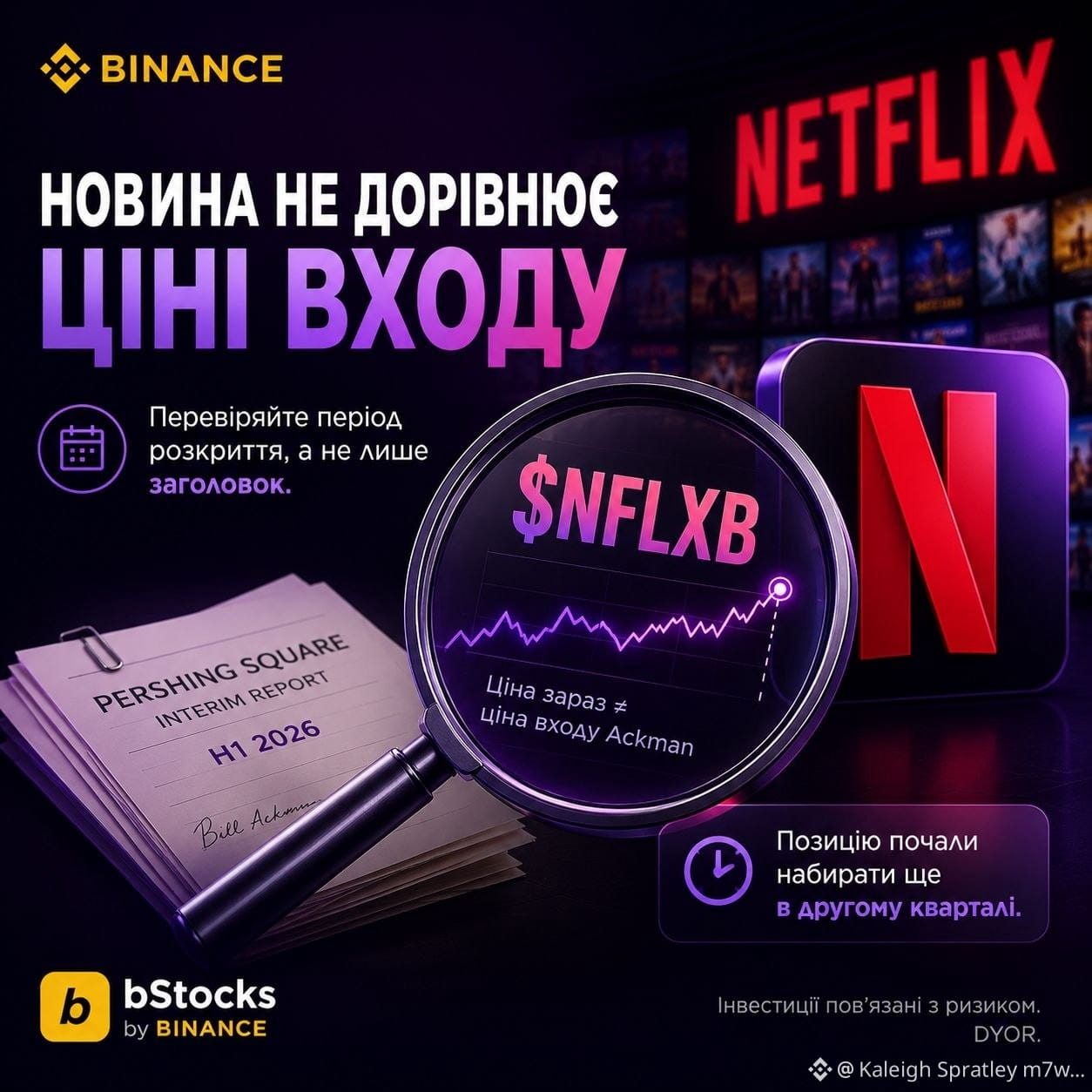
ACKMAN DISCLOSES A POSITION IN NETFLIX. BUT NFLXB DOESN'T SHOW ITS ENTRY PRICE 👀
On August 13, Bill Ackman revealed Netflix among new investments by Pershing Square. And here it’s easy to make the wrong conclusion: if a big fund “entered Netflix,” then the current price $NFLXB - should be somewhere around its entry level.
But no.
Reuters reports that the positions started being built back in the second quarter, and Pershing’s interim report lists Netflix among six new investments for the first half of 2026.
So the date when the news hit the feed is not the purchase date. And definitely not the price at which Ackman entered.
disclosure date ≠ purchase date ≠ entry price
For bStocks users, this is practically important: after the headline, when you open $NFLXB , you see how the market is pricing the news right now—not “Ackman’s entry price.”
So before the conclusion “smart money bought it—so it’s not too late yet,” I’d check one thing: over what period the position was disclosed, and when it could realistically have been accumulated.
And then the headline reads much more soberly.
So make sure to check not only the reporting period, but also the entry price))) @BinanceCIS #BStocks
71
#bstockscis
GMEB LISTED. BUT “LISTING” DOESN’T MEAN EVERYTHING IS TURNED ON AT THE SAME TIME 🎮
Today Binance opened trading for GMEB/USDT at 12:00 UTC. But in the very same announcement there are a few separate time points.
Spot starts at 12:00 UTC. Binance Convert should add the bStocks exchange within an hour after the listing. Withdrawals for GMEB open at 13:00 UTC. And Binance allowed tokenization of direct stocks at #BStocks even before trading started.
From the user’s side, all of this is easily reduced to one word — “listed.” In reality, these are different features with different start times.
So the new ticker in the list doesn’t yet mean that any action with it is available right now. For #BStocks it’s better to read the notice all the way through: trading, Convert, withdrawal, and tokenization)) plenty, isn’t it?
$GMEB here’s a good example of how a listing can turn into a misunderstanding—for instance, when the start of withdrawals begins later than the deposit 🫡 @BinanceCIS

87
#bstockscis
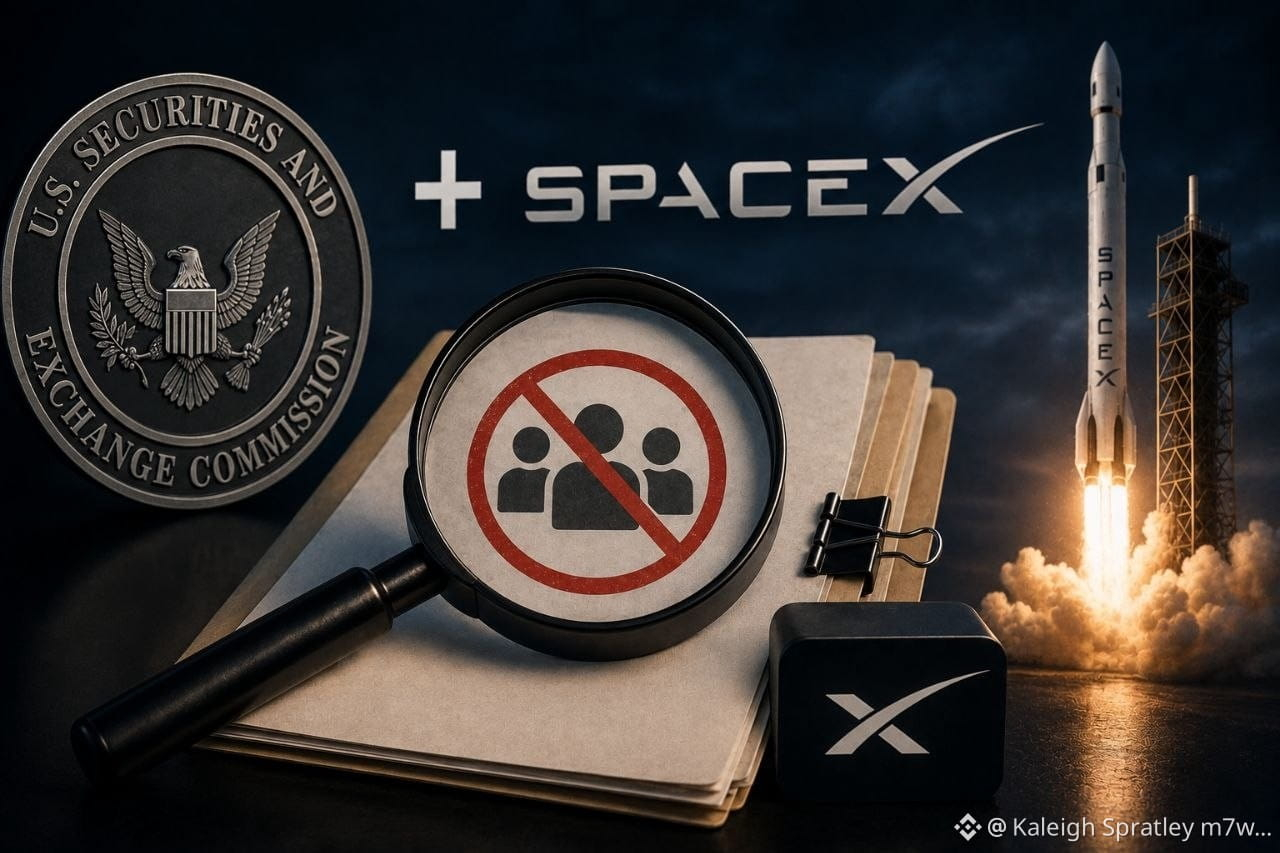
SEC + SPACEX. Але the right question is: not against SpaceX in general 🕵️
In the news, SEC and SpaceX are mentioned side by side. The first reaction might be straightforward: SpaceX has legal troubles. But you only need to check who exactly is named as the defendants.
The SEC filed a case against an investment adviser, Adit Ventures, its manager, and related partners. The regulator claims they misled investors while working with pre-IPO assets, took undisclosed fees, and used client funds for their own benefit.
The document lists SpaceX and Klarna as examples of assets used to raise investment, not as the charged companies.
The defendants agreed to a court ruling without admitting the allegations; the court still needs to approve it.
For $SPCXB , this is an important lesson: a loud headline can shape expectations, but the legal risk in this story concerns an intermediary, not the SpaceX business.
So before reacting to “SEC + company,” you should verify one thing: who is actually a party to the case?
@BinanceCIS #bstock
1
141
#bstockscis
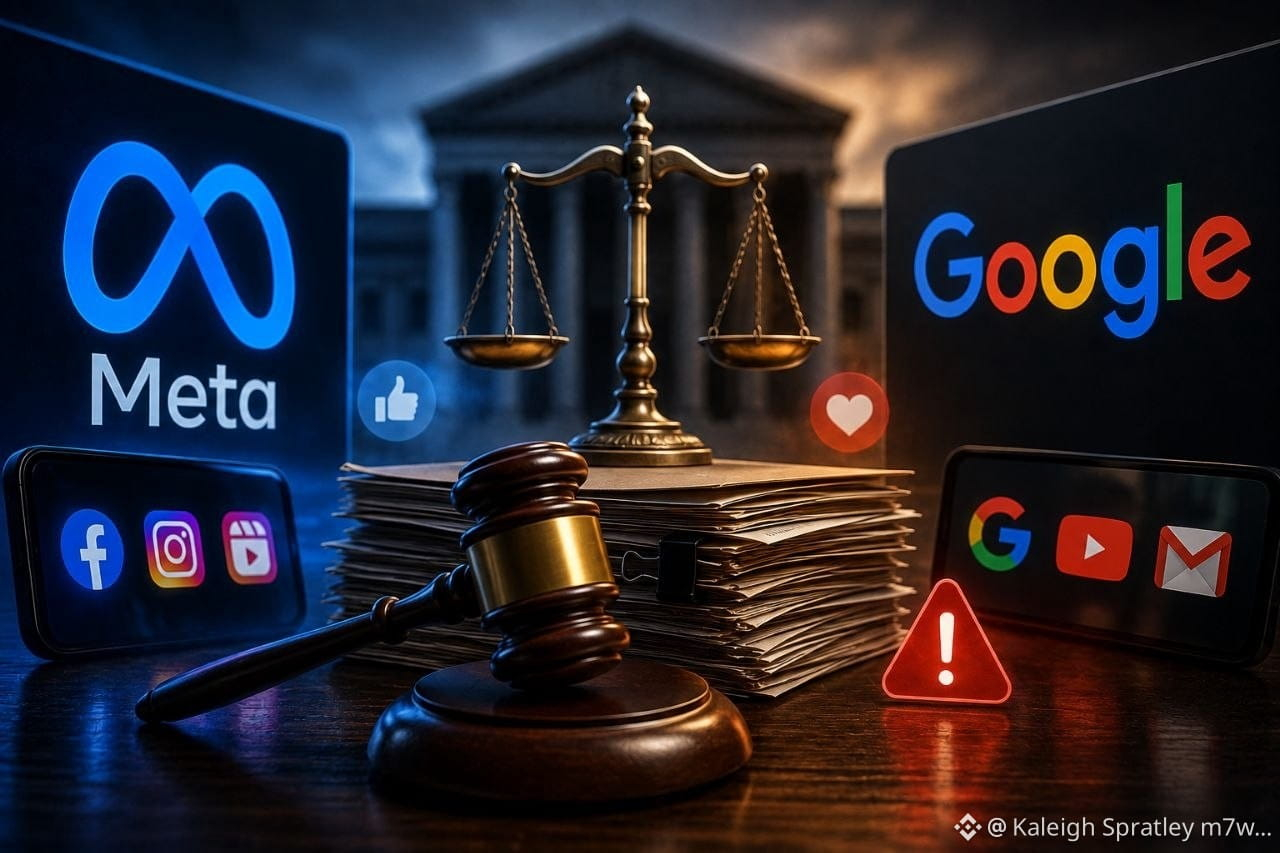
OVER 3,000 LAWSUITS AGAINST META AND GOOGLE. HAVE THEY ALREADY LOST? ⚖️
An appellate court in the United States has allowed the case to proceed in more than 3,000 federal lawsuits against Meta, Google, and other social platforms. The plaintiffs claim that certain features of these products excessively engage young users.
The headline sounds like a ready-made verdict. But the court did not decide who is at fault and how much they should pay.
The companies wanted to appeal the earlier decision right now, citing Section 230. The court explained: it can be a defense against liability, but it does not automatically exempt parties from the proceedings themselves. That’s why the appeal was considered premature, and the cases will continue.
For businesses, this already creates uncertainty: costs of defense, potential compensation, fines, or changes to products. The final scale of the consequences is still unknown.
$METAB and $GOOGLB provide economic exposure to the corresponding underlying companies. The tokenized wrapper does not separate them from the business’s legal risk. @BinanceCIS is
When will the risk actually become serious for them?🤔
87
#bstockscis
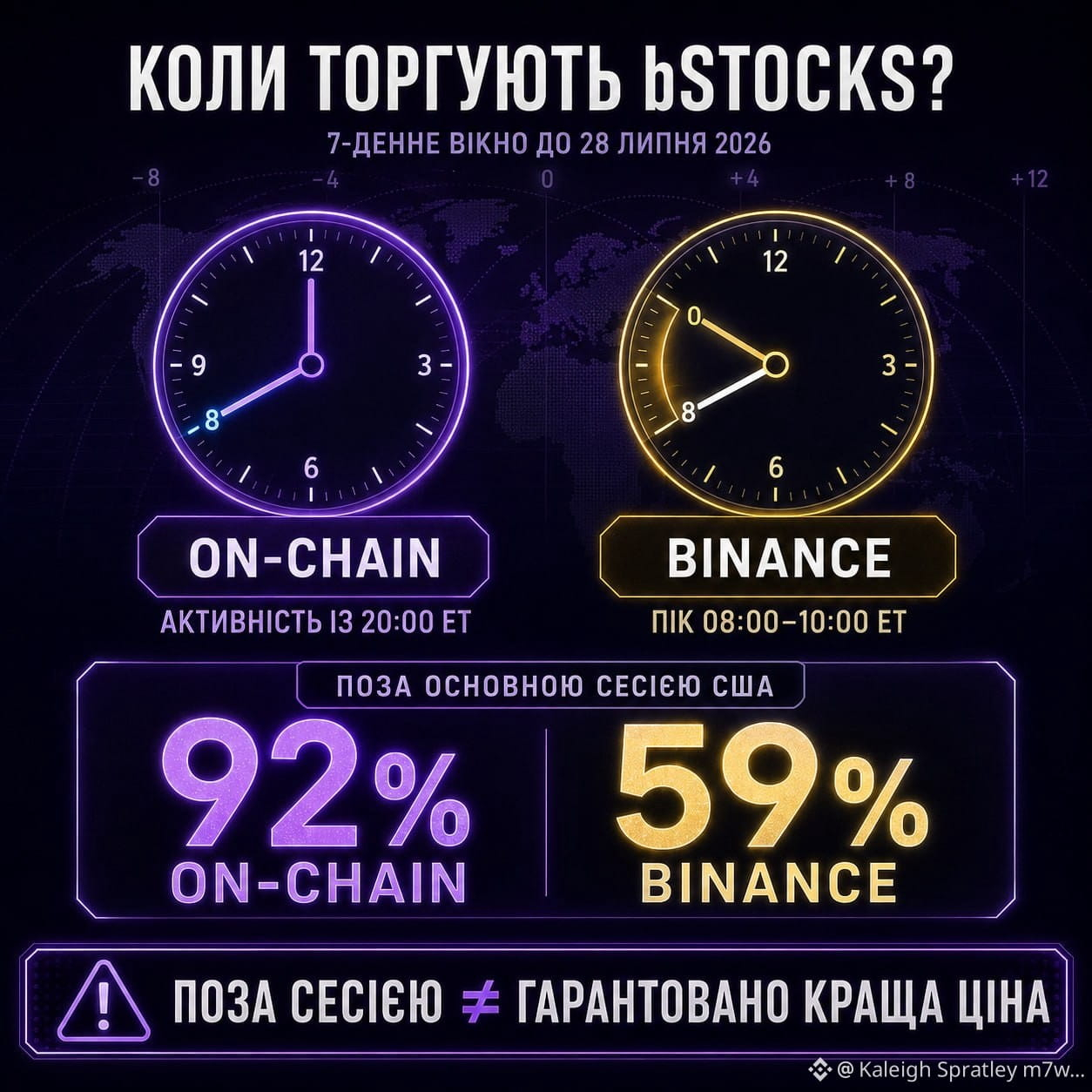
92% ON-CHAIN VOLUME ACCOUNTS FOR WHEN THE US MARKET WAS CLOSED
Seven days before July 28, 92% of on-chain volume #BStocks and 59% of volume on Binance occurred during the time outside the main US trading session. But the most interesting part isn’t even the number itself—it’s when different venues became active.
On Binance, activity was concentrated roughly between 08:00 and 10:00 New York time—around the pre-market and opening. On-chain volume, by contrast, rose from 20:00 ET and stayed elevated throughout the Asian session.
So 24/7 isn’t just the ability to view a chart overnight. Trading shifts across different time zones and participant groups while the underlying US market is closed.
But 92% doesn’t mean that a nighttime price is automatically more accurate, or that any trading pair has enough liquidity. It’s the share of executed on-chain volume only within that specific seven-day window.
It turns out tokenization changes not only trading hours, but also the geography of price formation. For you, is 24/7 just convenience—or already a separate market? @BinanceCIS
1
1
76
#bstockscis APPLE І MICROSOFT SEEM UNBREAKABLE. BUT WHAT WILL THEY CUT FIRST IN A CRISIS?
Let’s imagine there’s less money. A person can postpone a new iPhone: the old one still works. But it’s harder for a company to give up Microsoft 365, email, or cloud servers—without them, work stops.
It would seem that Microsoft is protected better. But a business can cut licenses, cloud capacity, and new AI projects. Apple also has its own armor: in a quarter, it brought in $78.7 billion from products and $30.7 billion from services.
For Microsoft—$59.3 billion in cloud revenue and $678 billion in contractual obligations. Some income is more predictable, but it’s not guaranteed.
And it’s as if both companies are fortresses. But...
Each has a weak spot: for Apple it’s the longer life of older devices, for Microsoft it’s cuts to IT budgets.
That’s why, when using bStock to buy $AAPLB and $MSFTB , it’s worth comparing them not by the strength of their logos, but by what customers will keep paying for even in an economy mode))
@BinanceCIS #BStocks
What will they cut first?
📱Новий IPhone
0%
💻 Робочий софт
0%
0 votes • Voting closed
93
#bstockscis
Yesterday, they opened up another 911.5 million shares of SpaceX for sale. Today, SpaceX is up 15%. Doesn’t the larger supply have to crash the price?
At first glance, the logic seems simple: more shares to sell → more sellers → more pressure on the price.
But lock-up expiry only means that the owners are allowed to sell. It doesn’t force anyone to buy already))
And here the market is a bit like real life.
The ability to do something doesn’t mean people will do it. You can expect panic and not see it. You can have all the reasons for a drop—and yet demand turns out to be stronger.
On the chart, we can already see the result of this clash between expectations and actual actions.
For SPCXB, this is a good lesson: it’s not enough to just watch a green or red candle. You need to understand what actually happened to the underlying stock—and what the market feared before this move.
Yesterday, restrictions on selling disappeared for hundreds of millions of shares. Today, buyers still look stronger.
What I like here is one simple thought: the market doesn’t punish you for bad news and doesn’t reward you for good news. It reacts to the difference between what everyone expected and what actually happened🤷🏻
Did you expect this kind of growth?
@BinanceCIS $SPCXB
{spot}(SPCXBUSDT)
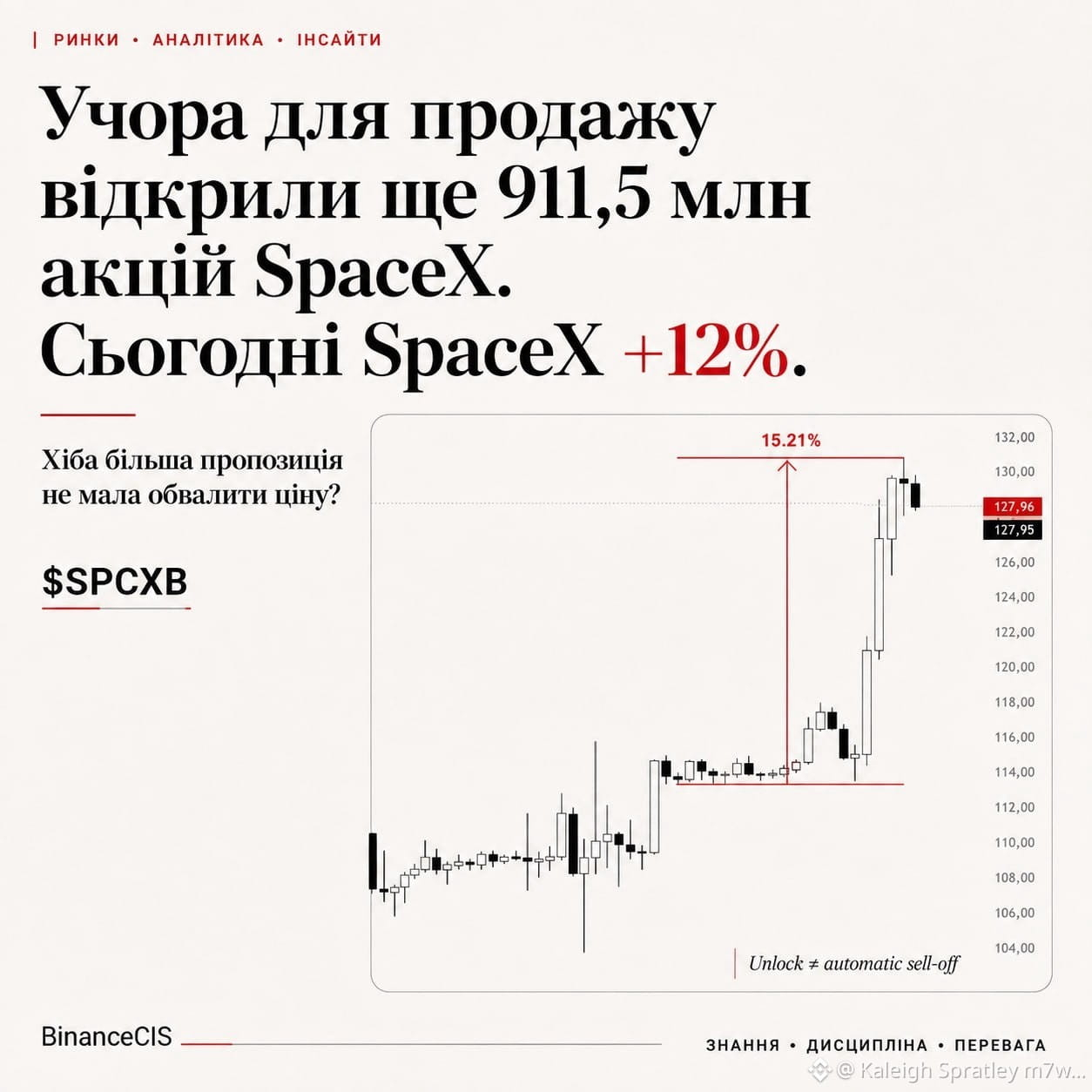
#bstockscis
Yesterday, they opened up another 911.5 million shares of SpaceX for sale. Today, SpaceX is up 15%. Doesn’t the larger supply have to crash the price?
At first glance, the logic seems simple: more shares to sell → more sellers → more pressure on the price.
But lock-up expiry only means that the owners are allowed to sell. It doesn’t force anyone to buy already))
And here the market is a bit like real life.
The ability to do something doesn’t mean people will do it. You can expect panic and not see it. You can have all the reasons for a drop—and yet demand turns out to be stronger.
On the chart, we can already see the result of this clash between expectations and actual actions.
For SPCXB, this is a good lesson: it’s not enough to just watch a green or red candle. You need to understand what actually happened to the underlying stock—and what the market feared before this move.
Yesterday, restrictions on selling disappeared for hundreds of millions of shares. Today, buyers still look stronger.
What I like here is one simple thought: the market doesn’t punish you for bad news and doesn’t reward you for good news. It reacts to the difference between what everyone expected and what actually happened🤷🏻
Did you expect this kind of growth?
@BinanceCIS $SPCXB
163
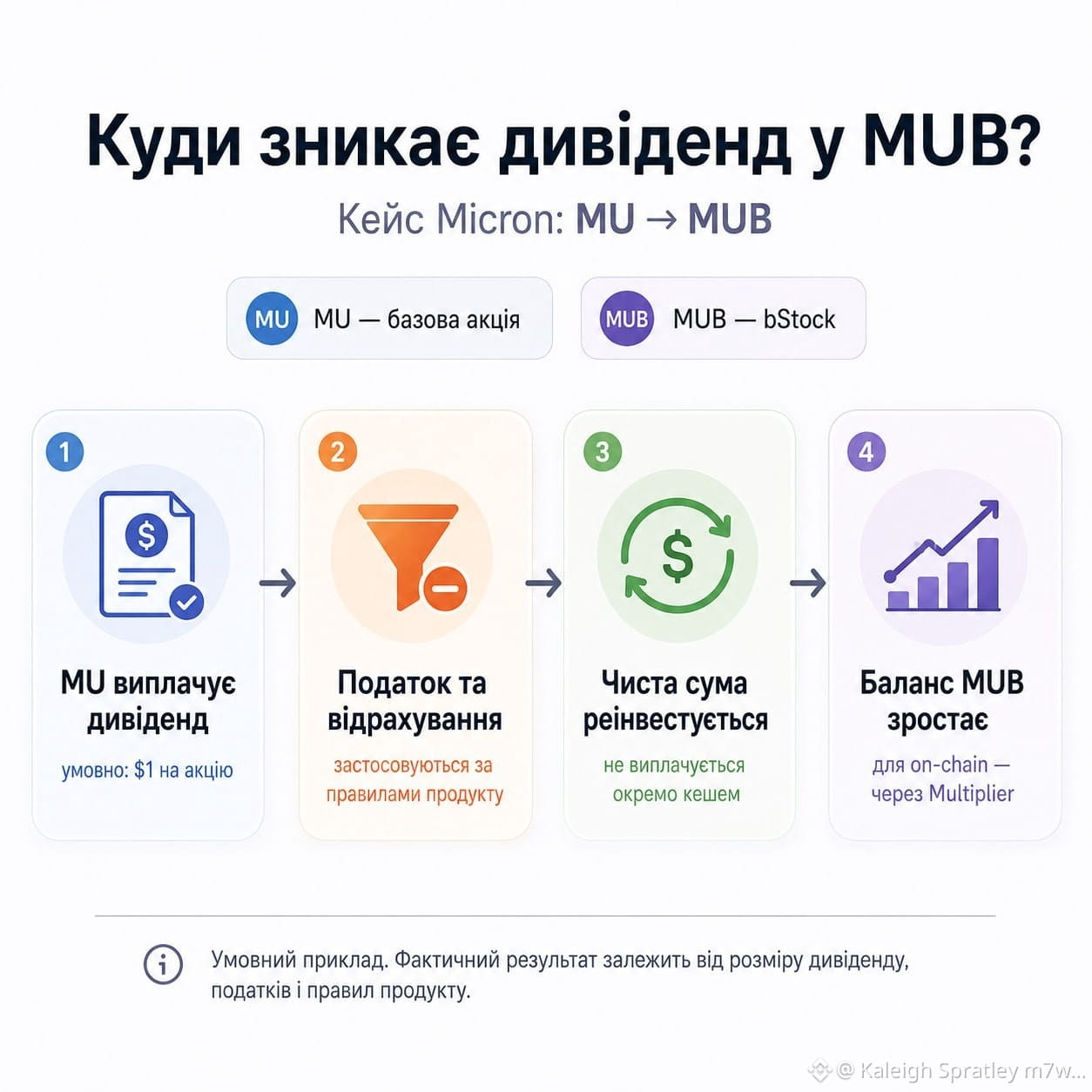
Micron paid a dividend. Why doesn’t the owner of MUB see the money in the balance?
On July 2, Binance announced support for a dividend for Micron shares — MU. But holders of the corresponding bStock MUB do not receive a separate payout in dollars or USDT.
The mechanism is like this:
MU dividend > taxes and deductions > reinvesting the net amount > additional MUB shares.
For MUB holders on Binance, the dividend is credited in the form of bStock. If the token is held on-chain, the result is shown via a Multiplier adjustment.
So the money doesn’t disappear, but you can’t withdraw it as cash or move it into another asset. The net amount automatically increases your exposure to Micron.
Which do you prefer: “cash in your pocket” or automatic dividend reinvestment?
Honestly, I don’t want to feel like a grandpa, so the second option is closer to me 😄 What about you?
#bStocksCIS @BinanceCIS $MUB
{spot}(MUBUSDT)
Micron paid a dividend. Why doesn’t the owner of MUB see the money in the balance?
On July 2, Binance announced support for a dividend for Micron shares — MU. But holders of the corresponding bStock MUB do not receive a separate payout in dollars or USDT.
The mechanism is like this:
MU dividend > taxes and deductions > reinvesting the net amount > additional MUB shares.
For MUB holders on Binance, the dividend is credited in the form of bStock. If the token is held on-chain, the result is shown via a Multiplier adjustment.
So the money doesn’t disappear, but you can’t withdraw it as cash or move it into another asset. The net amount automatically increases your exposure to Micron.
Which do you prefer: “cash in your pocket” or automatic dividend reinvestment?
Honestly, I don’t want to feel like a grandpa, so the second option is closer to me 😄 What about you?
#bStocksCIS @BinanceCIS $MUB
90
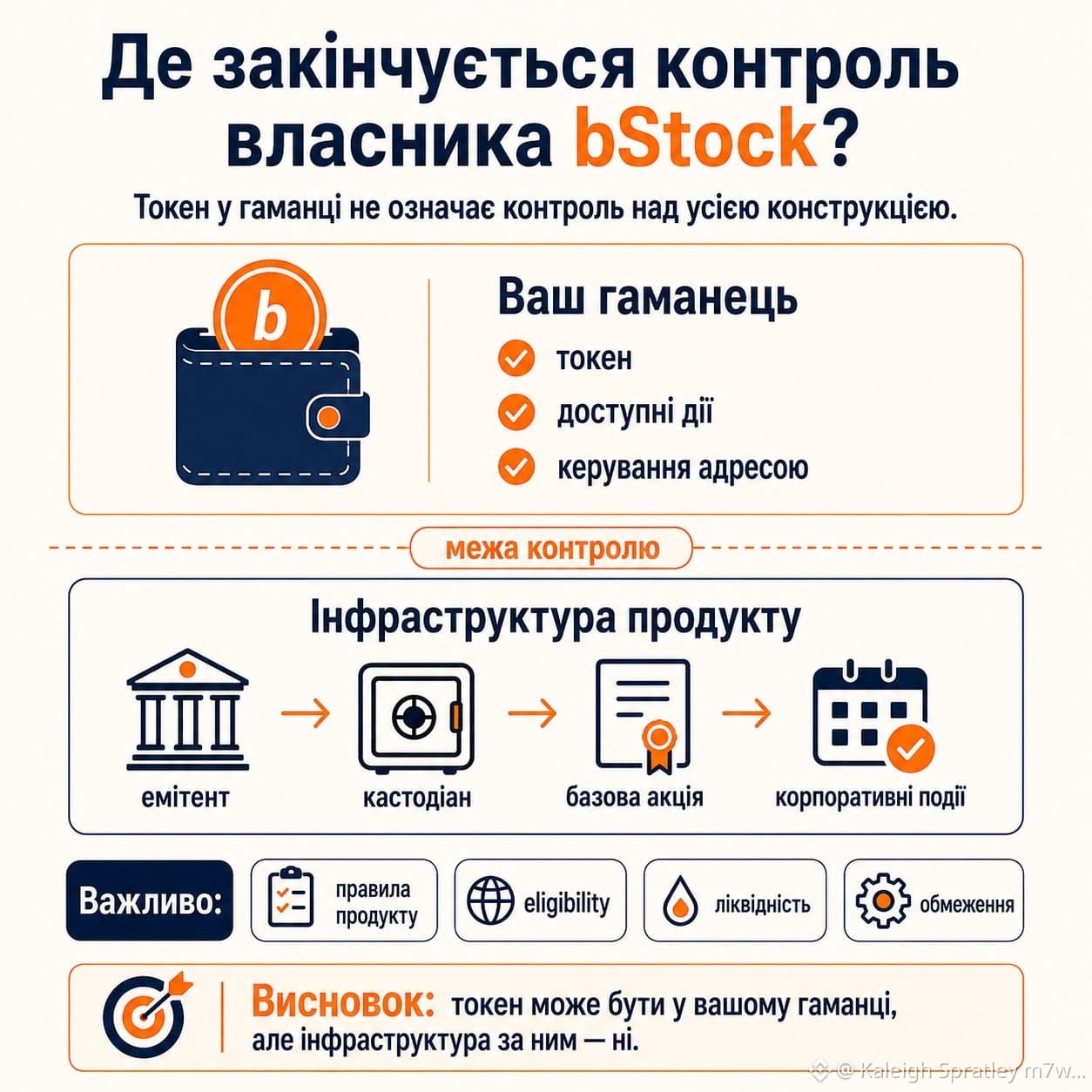
Where does the owner’s control end #bStock ?
When a token is sitting in your wallet, it may seem like the whole arrangement is under your control. In reality, control is distributed among several participants.
You control the token itself at your address and can perform the available operations with it. But the underlying share is not stored in your wallet. Its recordkeeping, custody, and linkage to the certificate depend on the issuer, the custodian, and the product rules.
Similarly, the token holder does not determine how dividends, splits, or other corporate actions will be technically represented. Transfers or conversions may also depend on eligibility, jurisdiction, and operational availability.
Therefore, holding bStock gives you control over the digital asset, but not over the entire chain that supports its economic linkage to the underlying share.
#bStocksCIS @BinanceCIS
85
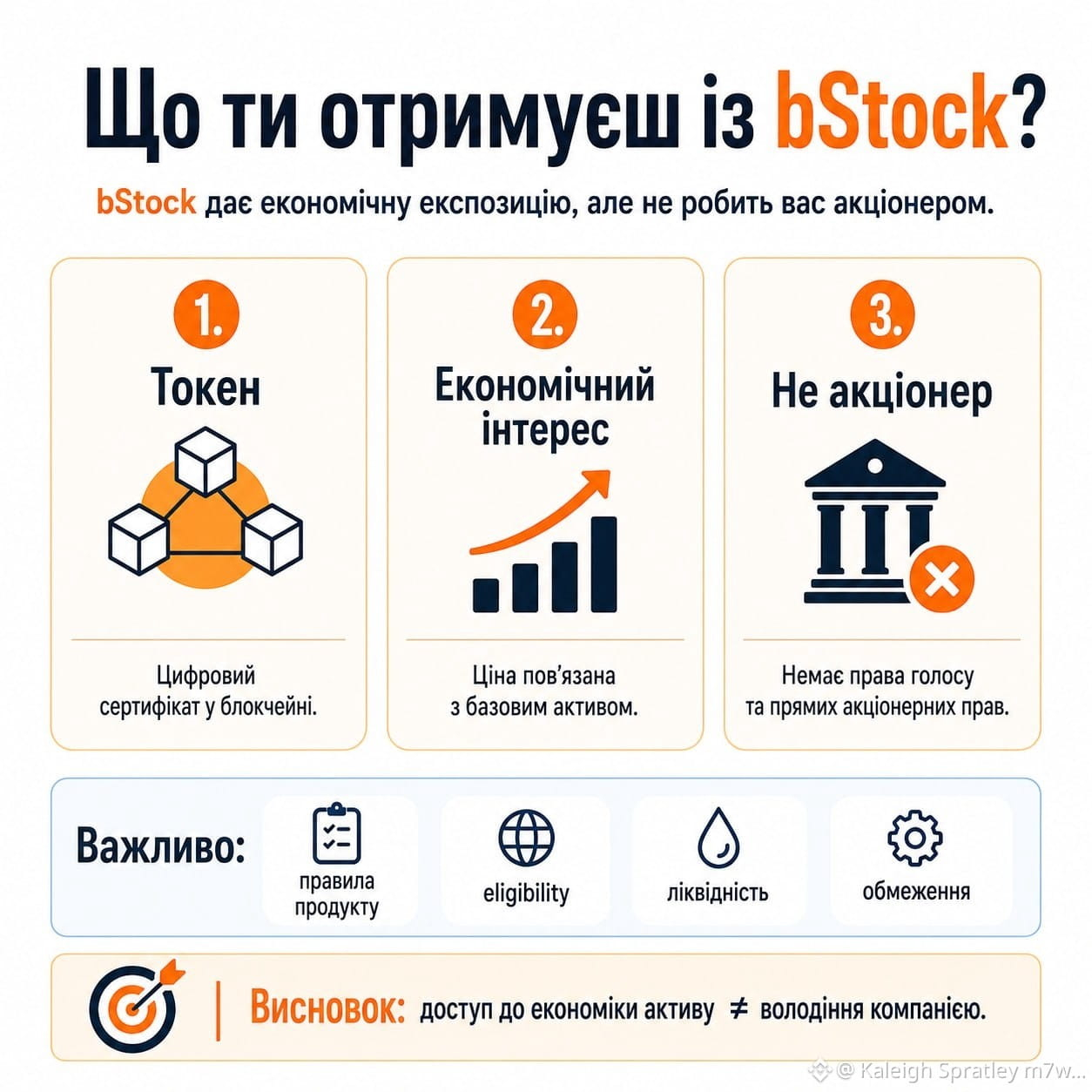
What do you get from #bStock ?
With bStock, you do not receive a share in the company, but a tokenized certificate linked to a specific underlying share.
This provides economic exposure: the value of the instrument depends on the underlying asset, and certain corporate events may be reflected through the product’s own mechanisms.
At the same time, the holder of bStock does not become a direct shareholder of the company. They do not receive voting rights or other direct shareholder rights. Legally, their rights are defined by the certificate terms, not by the rules for holding an ordinary share.
So it’s important to distinguish three levels here:
token — a digital record on the blockchain;
economic interest — linkage to the value of the underlying share;
shareholder rights — they do not directly pass to the bStock holder.
Therefore, the question “what am I getting?” is more accurate than “which share do I own?”
bStock gives access to the economics of the underlying asset, but it does not make you a co-owner of the company. #bStockscis @BinanceCIS
77
great idea!
great idea!

Snigir
·
--
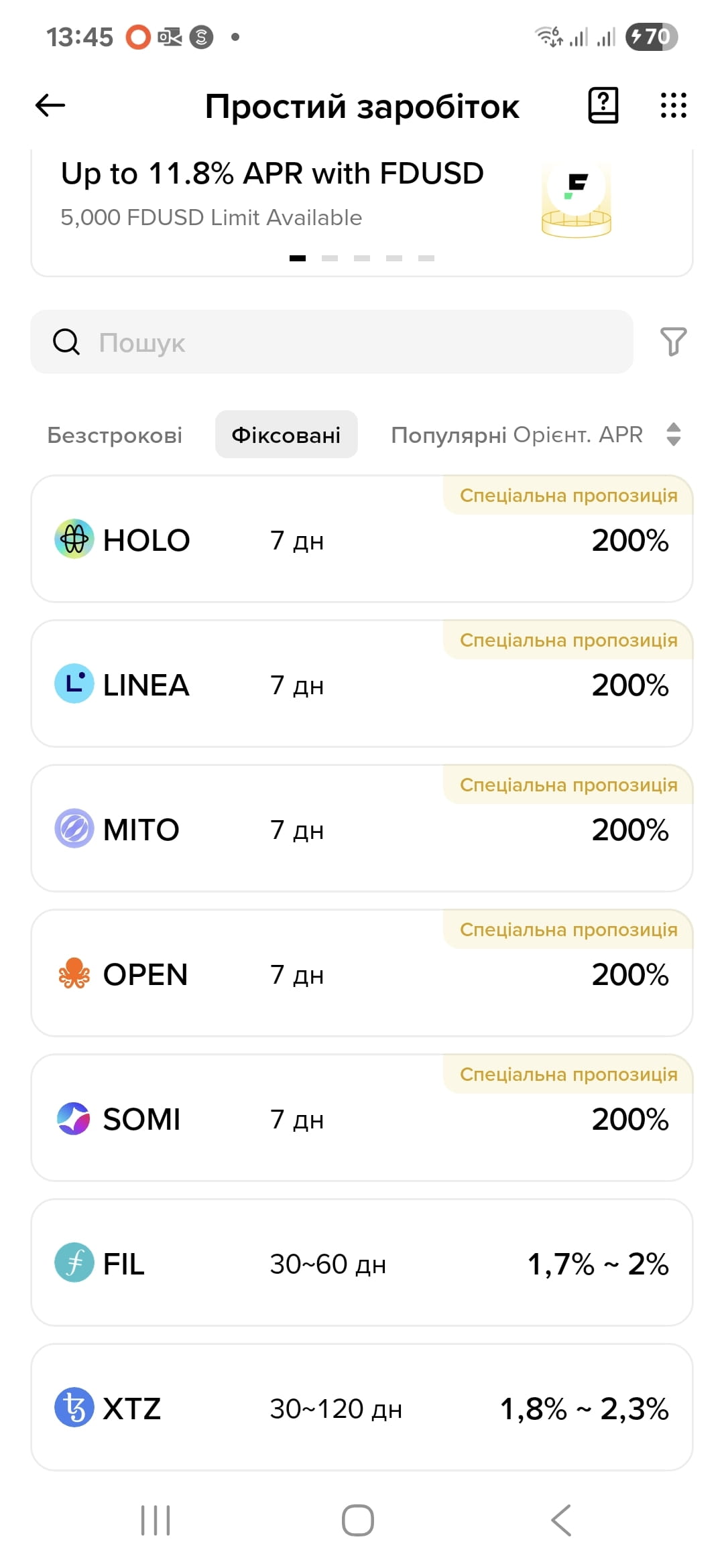
How to earn on Binance with minimal risks?
Everything you need:
1. buy these coins on spot;
2. place them in easy earn to receive interest;
3. open a short position with 1x leverage to hedge against the risk of value decline;
As a result, you will receive 100% annual interest (almost 2% on the invested funds).
The risks are minimal, but they exist:
1. the coin may grow more than 2 times during the staking period, and you will be liquidated.
• This risk can be reduced by using cross-margin and adding additional funds.
2. The funding rate may become negative, then you will have to give back part of the profit.
• This usually happens rarely, but it is worth considering.
#Binance #Crypto #Cryptocurrency #Investing #Trading #BinanceEarn
15
15
Log in to explore more content
Join global crypto users on Binance Square
⚡️ Get latest and useful information about crypto.
💬 Trusted by the world’s largest crypto exchange.
👍 Discover real insights from verified creators.
Email / Phone number
Trending Topics
BinanceToResumePhaseOneOfWithdrawals
5,962 views
281 Discussing
Security Incident | Recovery Update #4: Withdrawals Resume in Phases (2026-11-01)
Binance Announcement
·259 Likes
·295.4k views
BinanceHadAlreadyCovered$6BofHackLoss
1,464 views
45 Discussing
FBIConfirmsNorthKoreaIsResponsibleForBinanceCryptoHack
8,629 views
55 Discussing