
GetMoney
529 Posts

GetMoney
Report
Block User
其实全世界的钱一直藏在你的口袋里
High-Frequency Trader
5.4 Years
0 Following
50 Followers
32 Liked
Posts
All
Quotes
·
--
See translation
📰 Solana 预测市场 World 的独立站 world.xyz 9 月 9 日上线,向超过 100 万候补用户开放。结果首日流量直接把网站挤到过载,团队临时关闭站点修复,并表示用户资金安全,奖励活动会在恢复后继续。
🔥 真正把人吸引来的,是首笔预测交易奖励。用户绑定 X 账号并完成交易后,可领取 CASH 奖励。有人晒出 378 美元,社区反馈,不过官方没有公布固定档位,奖励是否与粉丝量挂钩也没得到确认。
说实话,撒钱拉新很直接,但现场问题也不少:有人充值 USDC 未到账,有人发现充值地址刷新后变化,还有人完成交易却没收到奖励,而且部分国家无法参与。
💡 World 从 7 月起就在 Phantom 钱包内运行,累计推出超过 15 万个市场,目前约有 5.36 万名独立预测者。它的开仓、结算、盈利和奖励都围绕稳定币 CASH 完成,相当于每做一笔预测,都给 CASH 增加一次实际使用。
👀 网站被挤爆说明活动确实有吸引力,但奖励停了之后还能留下多少真实交易者,才是更难的一关。假如你拿到 300 至 500 美元奖励,会继续用 World,还是领完就走?
#Solana #World预测市场 #Phantom #CASH
📰 Solana 预测市场 World 的独立站 world.xyz 9 月 9 日上线,向超过 100 万候补用户开放。结果首日流量直接把网站挤到过载,团队临时关闭站点修复,并表示用户资金安全,奖励活动会在恢复后继续。
🔥 真正把人吸引来的,是首笔预测交易奖励。用户绑定 X 账号并完成交易后,可领取 CASH 奖励。有人晒出 378 美元,社区反馈,不过官方没有公布固定档位,奖励是否与粉丝量挂钩也没得到确认。
说实话,撒钱拉新很直接,但现场问题也不少:有人充值 USDC 未到账,有人发现充值地址刷新后变化,还有人完成交易却没收到奖励,而且部分国家无法参与。
💡 World 从 7 月起就在 Phantom 钱包内运行,累计推出超过 15 万个市场,目前约有 5.36 万名独立预测者。它的开仓、结算、盈利和奖励都围绕稳定币 CASH 完成,相当于每做一笔预测,都给 CASH 增加一次实际使用。
👀 网站被挤爆说明活动确实有吸引力,但奖励停了之后还能留下多少真实交易者,才是更难的一关。假如你拿到 300 至 500 美元奖励,会继续用 World,还是领完就走?
#Solana #World预测市场 #Phantom #CASH
🔥 真正把人吸引来的,是首笔预测交易奖励。用户绑定 X 账号并完成交易后,可领取 CASH 奖励。有人晒出 378 美元,社区反馈,不过官方没有公布固定档位,奖励是否与粉丝量挂钩也没得到确认。
说实话,撒钱拉新很直接,但现场问题也不少:有人充值 USDC 未到账,有人发现充值地址刷新后变化,还有人完成交易却没收到奖励,而且部分国家无法参与。
💡 World 从 7 月起就在 Phantom 钱包内运行,累计推出超过 15 万个市场,目前约有 5.36 万名独立预测者。它的开仓、结算、盈利和奖励都围绕稳定币 CASH 完成,相当于每做一笔预测,都给 CASH 增加一次实际使用。
👀 网站被挤爆说明活动确实有吸引力,但奖励停了之后还能留下多少真实交易者,才是更难的一关。假如你拿到 300 至 500 美元奖励,会继续用 World,还是领完就走?
#Solana #World预测市场 #Phantom #CASH

·
--
📰 A new address bought 181,250 VVV in batches between August 18 and September 4, with an average price of about $16.69, for an entry cost of roughly $3.025 million. Honestly, it’s pretty ruthless that this position can still be made profitable just by chasing the price all the way up.
🔥 So far, this address has sold 81,250 VVV, and the expected take-profit is about $588,000. In the remaining holdings, about 44.8% has been transferred to Coinbase, while 55.2% is still sitting on-chain.
💡 Based on on-chain data, this trade currently has an unrealized profit of about $747,000. Combined with the portion already realized, the total profit is around $1.335 million. Didn’t expect a price-chasing order to turn into such a big gain in the end.
The most interesting part isn’t that they dared to buy during the run-up—it’s that after selling part of the position, they then routed the remaining holdings to exchanges. This could be for continuing to take profit, or it could simply be adjusting their position; looking only at the transfers, you can’t draw a definite conclusion.
🤔 If you had already made $1.335 million in profit, would you still keep holding the remaining 55.2%?
Original link: https://x.com/ai_9684xtpa/status/2098219168063689118
#VVV #链上数据 #聪明钱 #crypto market
📰 A new address bought 181,250 VVV in batches between August 18 and September 4, with an average price of about $16.69, for an entry cost of roughly $3.025 million. Honestly, it’s pretty ruthless that this position can still be made profitable just by chasing the price all the way up.
🔥 So far, this address has sold 81,250 VVV, and the expected take-profit is about $588,000. In the remaining holdings, about 44.8% has been transferred to Coinbase, while 55.2% is still sitting on-chain.
💡 Based on on-chain data, this trade currently has an unrealized profit of about $747,000. Combined with the portion already realized, the total profit is around $1.335 million. Didn’t expect a price-chasing order to turn into such a big gain in the end.
The most interesting part isn’t that they dared to buy during the run-up—it’s that after selling part of the position, they then routed the remaining holdings to exchanges. This could be for continuing to take profit, or it could simply be adjusting their position; looking only at the transfers, you can’t draw a definite conclusion.
🤔 If you had already made $1.335 million in profit, would you still keep holding the remaining 55.2%?
Original link: https://x.com/ai_9684xtpa/status/2098219168063689118
#VVV #链上数据 #聪明钱 #crypto market
🔥 So far, this address has sold 81,250 VVV, and the expected take-profit is about $588,000. In the remaining holdings, about 44.8% has been transferred to Coinbase, while 55.2% is still sitting on-chain.
💡 Based on on-chain data, this trade currently has an unrealized profit of about $747,000. Combined with the portion already realized, the total profit is around $1.335 million. Didn’t expect a price-chasing order to turn into such a big gain in the end.
The most interesting part isn’t that they dared to buy during the run-up—it’s that after selling part of the position, they then routed the remaining holdings to exchanges. This could be for continuing to take profit, or it could simply be adjusting their position; looking only at the transfers, you can’t draw a definite conclusion.
🤔 If you had already made $1.335 million in profit, would you still keep holding the remaining 55.2%?
Original link: https://x.com/ai_9684xtpa/status/2098219168063689118
#VVV #链上数据 #聪明钱 #crypto market

8
·
--
📰 Trump clearly stated in an interview with Fox News that even if a war with Iran were to affect the upcoming U.S. midterm elections, he would not regret it. If he could do it all over again, he would still follow exactly the same approach as before.
🔥 He also denied that some supporters were unhappy or demoralized because of the war, saying that his supporters were “very proud,” arguing that it was because he did not allow Iran to obtain nuclear weapons. This statement is forceful, directly tying the decision to go to war to election pressure.
To be honest, what’s most puzzling is the timetable. Trump insists that going to war is not wrong, yet he also claims that the war would end immediately after the midterm elections. However, in the interview, he did not provide any more specific arrangements.
👀 This means that, at least before the midterm elections, he did not signal any change in stance. As for whether supporters are truly “very proud” as he said, that is currently only Trump’s claim.
🤔 Do you think “ending the war immediately after the midterm elections” is a clear commitment, or a statement shaped by election considerations?
#特朗普 #伊朗 #美国中期选举 #geopolitics
📰 Trump clearly stated in an interview with Fox News that even if a war with Iran were to affect the upcoming U.S. midterm elections, he would not regret it. If he could do it all over again, he would still follow exactly the same approach as before.
🔥 He also denied that some supporters were unhappy or demoralized because of the war, saying that his supporters were “very proud,” arguing that it was because he did not allow Iran to obtain nuclear weapons. This statement is forceful, directly tying the decision to go to war to election pressure.
To be honest, what’s most puzzling is the timetable. Trump insists that going to war is not wrong, yet he also claims that the war would end immediately after the midterm elections. However, in the interview, he did not provide any more specific arrangements.
👀 This means that, at least before the midterm elections, he did not signal any change in stance. As for whether supporters are truly “very proud” as he said, that is currently only Trump’s claim.
🤔 Do you think “ending the war immediately after the midterm elections” is a clear commitment, or a statement shaped by election considerations?
#特朗普 #伊朗 #美国中期选举 #geopolitics
🔥 He also denied that some supporters were unhappy or demoralized because of the war, saying that his supporters were “very proud,” arguing that it was because he did not allow Iran to obtain nuclear weapons. This statement is forceful, directly tying the decision to go to war to election pressure.
To be honest, what’s most puzzling is the timetable. Trump insists that going to war is not wrong, yet he also claims that the war would end immediately after the midterm elections. However, in the interview, he did not provide any more specific arrangements.
👀 This means that, at least before the midterm elections, he did not signal any change in stance. As for whether supporters are truly “very proud” as he said, that is currently only Trump’s claim.
🤔 Do you think “ending the war immediately after the midterm elections” is a clear commitment, or a statement shaped by election considerations?
#特朗普 #伊朗 #美国中期选举 #geopolitics

199
·
--
📰 In this vote in the UK House of Lords, a motion was passed by 194 votes to 138, requiring the Treasury, within 12 months after the bill comes into effect, to develop and publish a public consultation on a digital asset strategy.
The scope of this strategy is far from small. It covers not only crypto assets, but also stablecoins, tokenized securities, and digital financial infrastructure. Honestly, the UK is no longer just debating one kind of token—it’s putting the entire digital asset industry into policy documents.
🔥 The amendment highlights three key points: how to support innovation, how to protect consumers, and how institutions can access banking, payments, and clearing services. The last point is quite realistic—what many digital asset companies find truly difficult may not be just obtaining a license, but whether they can use financial services normally.
💡 But this is not yet fully implemented. The amendment was proposed by Conservative peer Baroness Neville-Rolfe, while the Labour government stated its opposition, saying the amendment is not enough to meet the needs arising from the rapid growth of digital assets and the requirements of an overall regulatory framework. The bill will then return to the House of Commons for consideration of whether to accept the amendment.
🤔 If the House of Commons ultimately keeps this requirement, will the UK become one of Europe’s earliest major economies to put digital assets separately into the discussion of national strategy?
#英国数字资产 #稳定币 #代币化证券 #加密监管
📰 In this vote in the UK House of Lords, a motion was passed by 194 votes to 138, requiring the Treasury, within 12 months after the bill comes into effect, to develop and publish a public consultation on a digital asset strategy.
The scope of this strategy is far from small. It covers not only crypto assets, but also stablecoins, tokenized securities, and digital financial infrastructure. Honestly, the UK is no longer just debating one kind of token—it’s putting the entire digital asset industry into policy documents.
🔥 The amendment highlights three key points: how to support innovation, how to protect consumers, and how institutions can access banking, payments, and clearing services. The last point is quite realistic—what many digital asset companies find truly difficult may not be just obtaining a license, but whether they can use financial services normally.
💡 But this is not yet fully implemented. The amendment was proposed by Conservative peer Baroness Neville-Rolfe, while the Labour government stated its opposition, saying the amendment is not enough to meet the needs arising from the rapid growth of digital assets and the requirements of an overall regulatory framework. The bill will then return to the House of Commons for consideration of whether to accept the amendment.
🤔 If the House of Commons ultimately keeps this requirement, will the UK become one of Europe’s earliest major economies to put digital assets separately into the discussion of national strategy?
#英国数字资产 #稳定币 #代币化证券 #加密监管
The scope of this strategy is far from small. It covers not only crypto assets, but also stablecoins, tokenized securities, and digital financial infrastructure. Honestly, the UK is no longer just debating one kind of token—it’s putting the entire digital asset industry into policy documents.
🔥 The amendment highlights three key points: how to support innovation, how to protect consumers, and how institutions can access banking, payments, and clearing services. The last point is quite realistic—what many digital asset companies find truly difficult may not be just obtaining a license, but whether they can use financial services normally.
💡 But this is not yet fully implemented. The amendment was proposed by Conservative peer Baroness Neville-Rolfe, while the Labour government stated its opposition, saying the amendment is not enough to meet the needs arising from the rapid growth of digital assets and the requirements of an overall regulatory framework. The bill will then return to the House of Commons for consideration of whether to accept the amendment.
🤔 If the House of Commons ultimately keeps this requirement, will the UK become one of Europe’s earliest major economies to put digital assets separately into the discussion of national strategy?
#英国数字资产 #稳定币 #代币化证券 #加密监管

31
·
--
📰 Zcash breaks above $1,000 during the September 4 trading session, and again on September 7. Over the past 24 hours, roughly $34.5 million worth of ZEC short positions have been liquidated, and a squeeze could indeed amplify the uptrend further—but it can’t explain all of the gains.
🔥 Behind this surge in attention are investors such as Barry Silbert, the Winklevoss brothers, Multicoin, and Naval supporting privacy assets. Grayscale’s ZCSH was also upgraded on August 25 to an exchange-traded product, and Cypherpunk previously invested about $50 million to buy 203,775 ZEC.
To be honest, “privacy has become scarce” is a compelling narrative. But product launches, celebrity endorsements, and corporate treasury purchases are still different from real on-chain payment demand.
⚠️ On September 8, Wang Chun, a co-founder of F2Pool, directly criticized Zcash, questioning its initial allocation, development funding, governance conflicts, and security history. In the first four years, 20% of block rewards were allocated to the Founders' Reward, and concerns also arose about the Orchard bug potentially enabling undetectable issuance of fake ZEC.
🤔 So the question is simple: is the market buying the real demand for privacy payments right now, or is it a story driven by institutional endorsement and short liquidations? Would you treat ZEC as a long-term asset, or are you only watching this wave of hype?
#Zcash #ZEC #隐私币 #Crypto market
📰 Zcash breaks above $1,000 during the September 4 trading session, and again on September 7. Over the past 24 hours, roughly $34.5 million worth of ZEC short positions have been liquidated, and a squeeze could indeed amplify the uptrend further—but it can’t explain all of the gains.
🔥 Behind this surge in attention are investors such as Barry Silbert, the Winklevoss brothers, Multicoin, and Naval supporting privacy assets. Grayscale’s ZCSH was also upgraded on August 25 to an exchange-traded product, and Cypherpunk previously invested about $50 million to buy 203,775 ZEC.
To be honest, “privacy has become scarce” is a compelling narrative. But product launches, celebrity endorsements, and corporate treasury purchases are still different from real on-chain payment demand.
⚠️ On September 8, Wang Chun, a co-founder of F2Pool, directly criticized Zcash, questioning its initial allocation, development funding, governance conflicts, and security history. In the first four years, 20% of block rewards were allocated to the Founders' Reward, and concerns also arose about the Orchard bug potentially enabling undetectable issuance of fake ZEC.
🤔 So the question is simple: is the market buying the real demand for privacy payments right now, or is it a story driven by institutional endorsement and short liquidations? Would you treat ZEC as a long-term asset, or are you only watching this wave of hype?
#Zcash #ZEC #隐私币 #Crypto market
🔥 Behind this surge in attention are investors such as Barry Silbert, the Winklevoss brothers, Multicoin, and Naval supporting privacy assets. Grayscale’s ZCSH was also upgraded on August 25 to an exchange-traded product, and Cypherpunk previously invested about $50 million to buy 203,775 ZEC.
To be honest, “privacy has become scarce” is a compelling narrative. But product launches, celebrity endorsements, and corporate treasury purchases are still different from real on-chain payment demand.
⚠️ On September 8, Wang Chun, a co-founder of F2Pool, directly criticized Zcash, questioning its initial allocation, development funding, governance conflicts, and security history. In the first four years, 20% of block rewards were allocated to the Founders' Reward, and concerns also arose about the Orchard bug potentially enabling undetectable issuance of fake ZEC.
🤔 So the question is simple: is the market buying the real demand for privacy payments right now, or is it a story driven by institutional endorsement and short liquidations? Would you treat ZEC as a long-term asset, or are you only watching this wave of hype?
#Zcash #ZEC #隐私币 #Crypto market

158
·
--
Good morning, BTC is currently trading at 76,568.72 USDT, down 2.22% over the past 24 hours. The overall market looks a bit weak, but the gains and losses among smaller coins are still extremely dramatic—divergence is even more obvious than expected.
🔥 The top movers are the bulls. BULL is up 55.88%; PNT is up 45.23%, and VTHO is also up 33.87%. Honestly, this kind of situation makes it easy for people to watch BTC fall while getting distracted by how much the smaller coins are surging.
⚠️ On the other hand, NFP is down 65.85% and BETA is down 64.00%. At the same time, some coins are directly spiking up, while others are pulling back sharply—follow-the-momentum and panic-trading rhythms are clearly accelerating.
Actually, the hardest part for traders this morning isn’t just the decline itself, but the lack of unified direction. BTC is still under pressure, while the smaller coins are taking turns to spike higher. I didn’t expect the market to be so split. Today, will you keep watching BTC, or go look for strong smaller coins?
#BTC #加密市场 #行情点评 #Crypto Morning News
Good morning, BTC is currently trading at 76,568.72 USDT, down 2.22% over the past 24 hours. The overall market looks a bit weak, but the gains and losses among smaller coins are still extremely dramatic—divergence is even more obvious than expected.
🔥 The top movers are the bulls. BULL is up 55.88%; PNT is up 45.23%, and VTHO is also up 33.87%. Honestly, this kind of situation makes it easy for people to watch BTC fall while getting distracted by how much the smaller coins are surging.
⚠️ On the other hand, NFP is down 65.85% and BETA is down 64.00%. At the same time, some coins are directly spiking up, while others are pulling back sharply—follow-the-momentum and panic-trading rhythms are clearly accelerating.
Actually, the hardest part for traders this morning isn’t just the decline itself, but the lack of unified direction. BTC is still under pressure, while the smaller coins are taking turns to spike higher. I didn’t expect the market to be so split. Today, will you keep watching BTC, or go look for strong smaller coins?
#BTC #加密市场 #行情点评 #Crypto Morning News
🔥 The top movers are the bulls. BULL is up 55.88%; PNT is up 45.23%, and VTHO is also up 33.87%. Honestly, this kind of situation makes it easy for people to watch BTC fall while getting distracted by how much the smaller coins are surging.
⚠️ On the other hand, NFP is down 65.85% and BETA is down 64.00%. At the same time, some coins are directly spiking up, while others are pulling back sharply—follow-the-momentum and panic-trading rhythms are clearly accelerating.
Actually, the hardest part for traders this morning isn’t just the decline itself, but the lack of unified direction. BTC is still under pressure, while the smaller coins are taking turns to spike higher. I didn’t expect the market to be so split. Today, will you keep watching BTC, or go look for strong smaller coins?
#BTC #加密市场 #行情点评 #Crypto Morning News
65
·
--
📰 Pantera Capital recently put forward an interesting take: compute power is going through the early stages of “financialization.” Over the next 5–10 years, it may become a commodity—like electricity or crude oil—that underpins the AI economy.
🔥 GPU trading right now is still quite “back-alley.” While there are platforms like SF Compute, Vast AI, and Runpod, much of the real trading still relies on community chat groups, OTC brokers, and customized bilateral agreements. It still has a long way to go before it reaches a mature market.
💡 The article draws an analogy to the power market: hardware is like the power grid, compute service providers are like operators, and specific GPU clusters are like nodes. Different models—H100, H200, B200, B300, and so on—won’t share a single price. Time, location, and inventory conditions will also affect the final quote.
👀 The challenges are obvious as well. Unlike standardized crude oil, compute power is inherently differentiated by model, time window, and geography. Moreover, unlike the power market, there’s currently no strong requirement for transparent order books and market disclosures. How to establish benchmark indices and dynamic pricing still needs to be refined gradually through order-book and trading data.
Honestly, whether the compute market will truly become “commoditized” comes down to one key factor: whether inference demand can keep expanding. The article estimates that for every $100 spent to buy a Token, about $45 goes to an on-demand calling platform, $50 goes to cloud providers and the GPU resource layer, and the remaining $5 goes to the routing layer. Do you think compute power will become the new “oil” of the AI era?
#算力 #AI基础设施 #GPU #加密市场
📰 Pantera Capital recently put forward an interesting take: compute power is going through the early stages of “financialization.” Over the next 5–10 years, it may become a commodity—like electricity or crude oil—that underpins the AI economy.
🔥 GPU trading right now is still quite “back-alley.” While there are platforms like SF Compute, Vast AI, and Runpod, much of the real trading still relies on community chat groups, OTC brokers, and customized bilateral agreements. It still has a long way to go before it reaches a mature market.
💡 The article draws an analogy to the power market: hardware is like the power grid, compute service providers are like operators, and specific GPU clusters are like nodes. Different models—H100, H200, B200, B300, and so on—won’t share a single price. Time, location, and inventory conditions will also affect the final quote.
👀 The challenges are obvious as well. Unlike standardized crude oil, compute power is inherently differentiated by model, time window, and geography. Moreover, unlike the power market, there’s currently no strong requirement for transparent order books and market disclosures. How to establish benchmark indices and dynamic pricing still needs to be refined gradually through order-book and trading data.
Honestly, whether the compute market will truly become “commoditized” comes down to one key factor: whether inference demand can keep expanding. The article estimates that for every $100 spent to buy a Token, about $45 goes to an on-demand calling platform, $50 goes to cloud providers and the GPU resource layer, and the remaining $5 goes to the routing layer. Do you think compute power will become the new “oil” of the AI era?
#算力 #AI基础设施 #GPU #加密市场
🔥 GPU trading right now is still quite “back-alley.” While there are platforms like SF Compute, Vast AI, and Runpod, much of the real trading still relies on community chat groups, OTC brokers, and customized bilateral agreements. It still has a long way to go before it reaches a mature market.
💡 The article draws an analogy to the power market: hardware is like the power grid, compute service providers are like operators, and specific GPU clusters are like nodes. Different models—H100, H200, B200, B300, and so on—won’t share a single price. Time, location, and inventory conditions will also affect the final quote.
👀 The challenges are obvious as well. Unlike standardized crude oil, compute power is inherently differentiated by model, time window, and geography. Moreover, unlike the power market, there’s currently no strong requirement for transparent order books and market disclosures. How to establish benchmark indices and dynamic pricing still needs to be refined gradually through order-book and trading data.
Honestly, whether the compute market will truly become “commoditized” comes down to one key factor: whether inference demand can keep expanding. The article estimates that for every $100 spent to buy a Token, about $45 goes to an on-demand calling platform, $50 goes to cloud providers and the GPU resource layer, and the remaining $5 goes to the routing layer. Do you think compute power will become the new “oil” of the AI era?
#算力 #AI基础设施 #GPU #加密市场

20
·
--
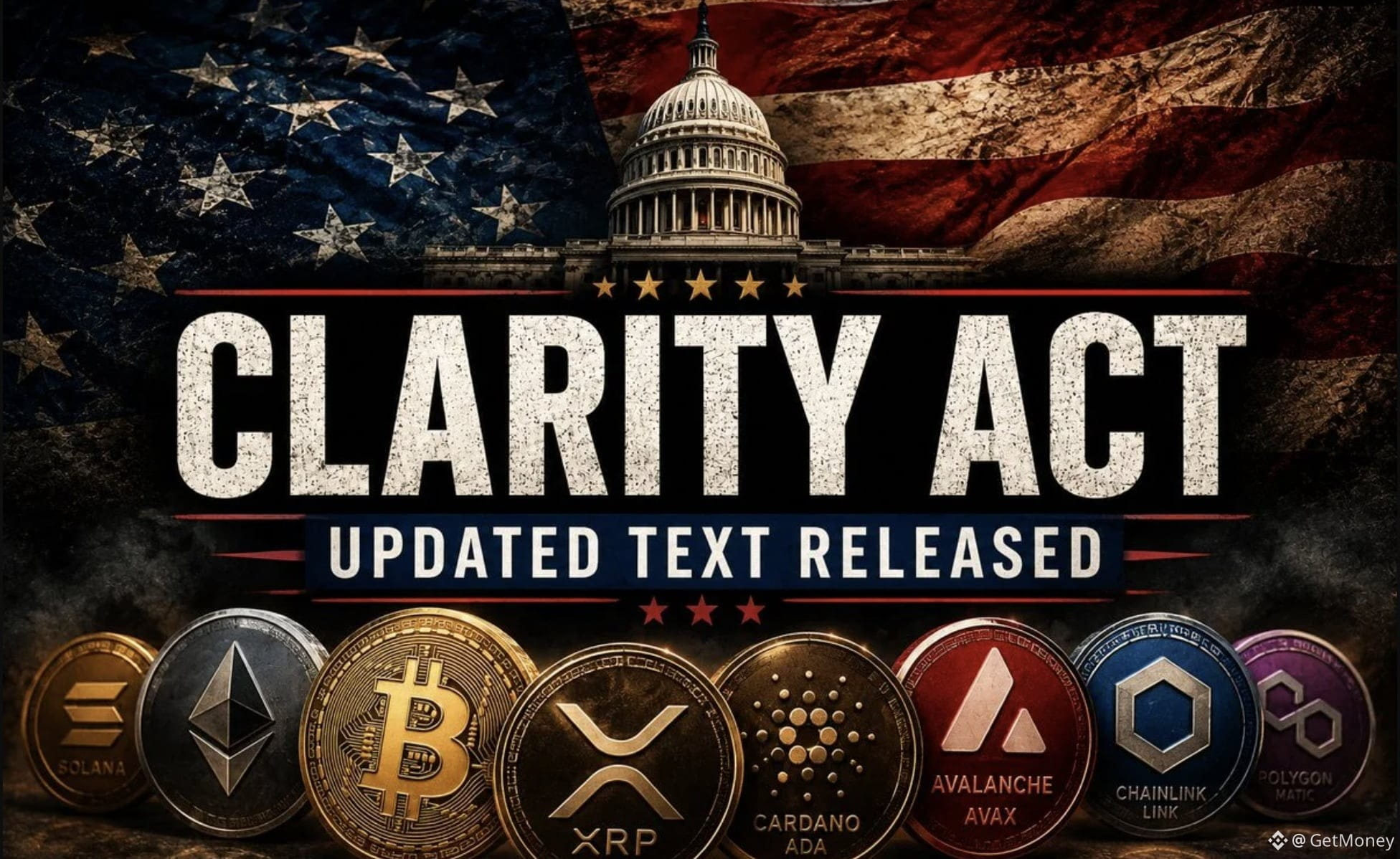
📰 After the U.S. Senate reconvened, the CLARITY Act is set to face a crucial vote right away: the vote to end the debate is set to begin on Tuesday. The Republicans need to win over some Democratic lawmakers to reach 60 votes, break the filibuster, and move the bill forward.
🔥 If this one fails, the trouble isn’t just that it will be delayed by a few months. The bill will basically have no chance of becoming law before the new Congress is sworn in in 2027. Supporter Cynthia Lummis even believes the next real chance for passage may not come until 2030.
👀 The midterm elections in November will replace all 435 seats in the House and 33 seats in the Senate. Prediction markets suggest Democrats have a better chance of regaining control of the House, while control of the Senate is close to a 50-50 split. Once the party balance in Congress flips, Republicans pushing for a crypto bill would have to renegotiate the terms.
To be honest, this is no longer just a regulatory debate—it’s a real contest for political power with money on the line. Fairshake, supported by companies like Coinbase and Ripple, is using campaign funds to help “pro-crypto” candidates, but it doesn’t win every primary either.
💡 Even if Congress continues to stall, the SEC and CFTC have publicly said they will set digital-asset rules on their own. However, since the White House is controlled by Republicans through January 2029, the heads of the regulatory agencies also won’t be replaced in the short term. Legislative action in Congress and regulatory work by the executive branch are likely to proceed in parallel.
🤔 Do you think the CLARITY Act can this time gather 60 votes, or will U.S. crypto regulation continue to drag on until after 2027?
#CLARITY法案 #美国加密监管 #加密政策 #Web3
📰 After the U.S. Senate reconvened, the CLARITY Act is set to face a crucial vote right away: the vote to end the debate is set to begin on Tuesday. The Republicans need to win over some Democratic lawmakers to reach 60 votes, break the filibuster, and move the bill forward.
🔥 If this one fails, the trouble isn’t just that it will be delayed by a few months. The bill will basically have no chance of becoming law before the new Congress is sworn in in 2027. Supporter Cynthia Lummis even believes the next real chance for passage may not come until 2030.
👀 The midterm elections in November will replace all 435 seats in the House and 33 seats in the Senate. Prediction markets suggest Democrats have a better chance of regaining control of the House, while control of the Senate is close to a 50-50 split. Once the party balance in Congress flips, Republicans pushing for a crypto bill would have to renegotiate the terms.
To be honest, this is no longer just a regulatory debate—it’s a real contest for political power with money on the line. Fairshake, supported by companies like Coinbase and Ripple, is using campaign funds to help “pro-crypto” candidates, but it doesn’t win every primary either.
💡 Even if Congress continues to stall, the SEC and CFTC have publicly said they will set digital-asset rules on their own. However, since the White House is controlled by Republicans through January 2029, the heads of the regulatory agencies also won’t be replaced in the short term. Legislative action in Congress and regulatory work by the executive branch are likely to proceed in parallel.
🤔 Do you think the CLARITY Act can this time gather 60 votes, or will U.S. crypto regulation continue to drag on until after 2027?
#CLARITY法案 #美国加密监管 #加密政策 #Web3
🔥 If this one fails, the trouble isn’t just that it will be delayed by a few months. The bill will basically have no chance of becoming law before the new Congress is sworn in in 2027. Supporter Cynthia Lummis even believes the next real chance for passage may not come until 2030.
👀 The midterm elections in November will replace all 435 seats in the House and 33 seats in the Senate. Prediction markets suggest Democrats have a better chance of regaining control of the House, while control of the Senate is close to a 50-50 split. Once the party balance in Congress flips, Republicans pushing for a crypto bill would have to renegotiate the terms.
To be honest, this is no longer just a regulatory debate—it’s a real contest for political power with money on the line. Fairshake, supported by companies like Coinbase and Ripple, is using campaign funds to help “pro-crypto” candidates, but it doesn’t win every primary either.
💡 Even if Congress continues to stall, the SEC and CFTC have publicly said they will set digital-asset rules on their own. However, since the White House is controlled by Republicans through January 2029, the heads of the regulatory agencies also won’t be replaced in the short term. Legislative action in Congress and regulatory work by the executive branch are likely to proceed in parallel.
🤔 Do you think the CLARITY Act can this time gather 60 votes, or will U.S. crypto regulation continue to drag on until after 2027?
#CLARITY法案 #美国加密监管 #加密政策 #Web3
5
·
--
📰 The European Central Bank raised rates by 25 basis points, and then the US PPI came in higher than expected—two headlines hitting at once, and the BTC futures market quickly saw a concentrated sell-off.
🔥 This is already the ECB’s second rate hike this year. US core PPI year over year rose 4.6%, versus the 4.5% forecast; overall PPI rose 5.4% year over year, versus the 5.1% forecast. Honestly, the overshoot isn’t particularly dramatic, but the market is worried that inflation may keep heating up, and the reaction has been noticeably more aggressive than the numbers themselves.
⚠️ CryptoQuant analyst Darkfost pointed to active selling on the Binance platform. Some traders chose to bet on a BTC drop to hedge—selling pressure was suddenly pushed into the futures market.
💡 The subsequent chain reaction was also very direct: within less than an hour, liquidations for BTC-related positions exceeded $60 million. The troublesome thing about this kind of macro data is that when rate hikes and inflation concerns show up together, leveraged positions can easily end up triggering each other.
🤔 If the next inflation data continues to come in above expectations, will you first reduce leverage on BTC contracts, or keep holding on and wait for the market to digest it?
#BTC #比特币 #美国PPI #Europe Central Bank
📰 The European Central Bank raised rates by 25 basis points, and then the US PPI came in higher than expected—two headlines hitting at once, and the BTC futures market quickly saw a concentrated sell-off.
🔥 This is already the ECB’s second rate hike this year. US core PPI year over year rose 4.6%, versus the 4.5% forecast; overall PPI rose 5.4% year over year, versus the 5.1% forecast. Honestly, the overshoot isn’t particularly dramatic, but the market is worried that inflation may keep heating up, and the reaction has been noticeably more aggressive than the numbers themselves.
⚠️ CryptoQuant analyst Darkfost pointed to active selling on the Binance platform. Some traders chose to bet on a BTC drop to hedge—selling pressure was suddenly pushed into the futures market.
💡 The subsequent chain reaction was also very direct: within less than an hour, liquidations for BTC-related positions exceeded $60 million. The troublesome thing about this kind of macro data is that when rate hikes and inflation concerns show up together, leveraged positions can easily end up triggering each other.
🤔 If the next inflation data continues to come in above expectations, will you first reduce leverage on BTC contracts, or keep holding on and wait for the market to digest it?
#BTC #比特币 #美国PPI #Europe Central Bank
🔥 This is already the ECB’s second rate hike this year. US core PPI year over year rose 4.6%, versus the 4.5% forecast; overall PPI rose 5.4% year over year, versus the 5.1% forecast. Honestly, the overshoot isn’t particularly dramatic, but the market is worried that inflation may keep heating up, and the reaction has been noticeably more aggressive than the numbers themselves.
⚠️ CryptoQuant analyst Darkfost pointed to active selling on the Binance platform. Some traders chose to bet on a BTC drop to hedge—selling pressure was suddenly pushed into the futures market.
💡 The subsequent chain reaction was also very direct: within less than an hour, liquidations for BTC-related positions exceeded $60 million. The troublesome thing about this kind of macro data is that when rate hikes and inflation concerns show up together, leveraged positions can easily end up triggering each other.
🤔 If the next inflation data continues to come in above expectations, will you first reduce leverage on BTC contracts, or keep holding on and wait for the market to digest it?
#BTC #比特币 #美国PPI #Europe Central Bank

85
·
--
Verified
📰 The quantum-safe security thresholds for BTC and ETH have been pushed down again by a new paper. Researchers from institutions including the Ethereum Foundation, Theta Labs, and StarkWare found that the estimated amount of computation required for key steps in future quantum attacks is more than halved compared with the benchmark published by Google in March of this year.
🔥 The newly designed quantum circuit requires about 1,151 logical qubits and 1.3 million Toffoli gates, with a combined score of about 1.5 billion. The level Google previously provided was about 3 billion—this time it’s essentially cut in half.
💡 The researchers primarily optimized the point-addition operations repeatedly executed in Shor’s algorithm. In theory, if a quantum computer is strong enough, it could derive a private key from a public key and then forge transactions.
To be honest, this doesn’t mean BTC and ETH are already breakable by quantum computers. The paper still discusses a future attack model. But with the compute requirement lowered so much at once, it shows that the technical hurdles that once seemed far away are indeed being continuously shortened.
🤔 Do you think BTC and ETH developers should start pushing for post-quantum upgrades now, or wait until quantum hardware is closer to practical use?
#比特币 #以太坊 #量子计算 #加密安全
📰 The quantum-safe security thresholds for BTC and ETH have been pushed down again by a new paper. Researchers from institutions including the Ethereum Foundation, Theta Labs, and StarkWare found that the estimated amount of computation required for key steps in future quantum attacks is more than halved compared with the benchmark published by Google in March of this year.
🔥 The newly designed quantum circuit requires about 1,151 logical qubits and 1.3 million Toffoli gates, with a combined score of about 1.5 billion. The level Google previously provided was about 3 billion—this time it’s essentially cut in half.
💡 The researchers primarily optimized the point-addition operations repeatedly executed in Shor’s algorithm. In theory, if a quantum computer is strong enough, it could derive a private key from a public key and then forge transactions.
To be honest, this doesn’t mean BTC and ETH are already breakable by quantum computers. The paper still discusses a future attack model. But with the compute requirement lowered so much at once, it shows that the technical hurdles that once seemed far away are indeed being continuously shortened.
🤔 Do you think BTC and ETH developers should start pushing for post-quantum upgrades now, or wait until quantum hardware is closer to practical use?
#比特币 #以太坊 #量子计算 #加密安全
🔥 The newly designed quantum circuit requires about 1,151 logical qubits and 1.3 million Toffoli gates, with a combined score of about 1.5 billion. The level Google previously provided was about 3 billion—this time it’s essentially cut in half.
💡 The researchers primarily optimized the point-addition operations repeatedly executed in Shor’s algorithm. In theory, if a quantum computer is strong enough, it could derive a private key from a public key and then forge transactions.
To be honest, this doesn’t mean BTC and ETH are already breakable by quantum computers. The paper still discusses a future attack model. But with the compute requirement lowered so much at once, it shows that the technical hurdles that once seemed far away are indeed being continuously shortened.
🤔 Do you think BTC and ETH developers should start pushing for post-quantum upgrades now, or wait until quantum hardware is closer to practical use?
#比特币 #以太坊 #量子计算 #加密安全

1
417
·
--
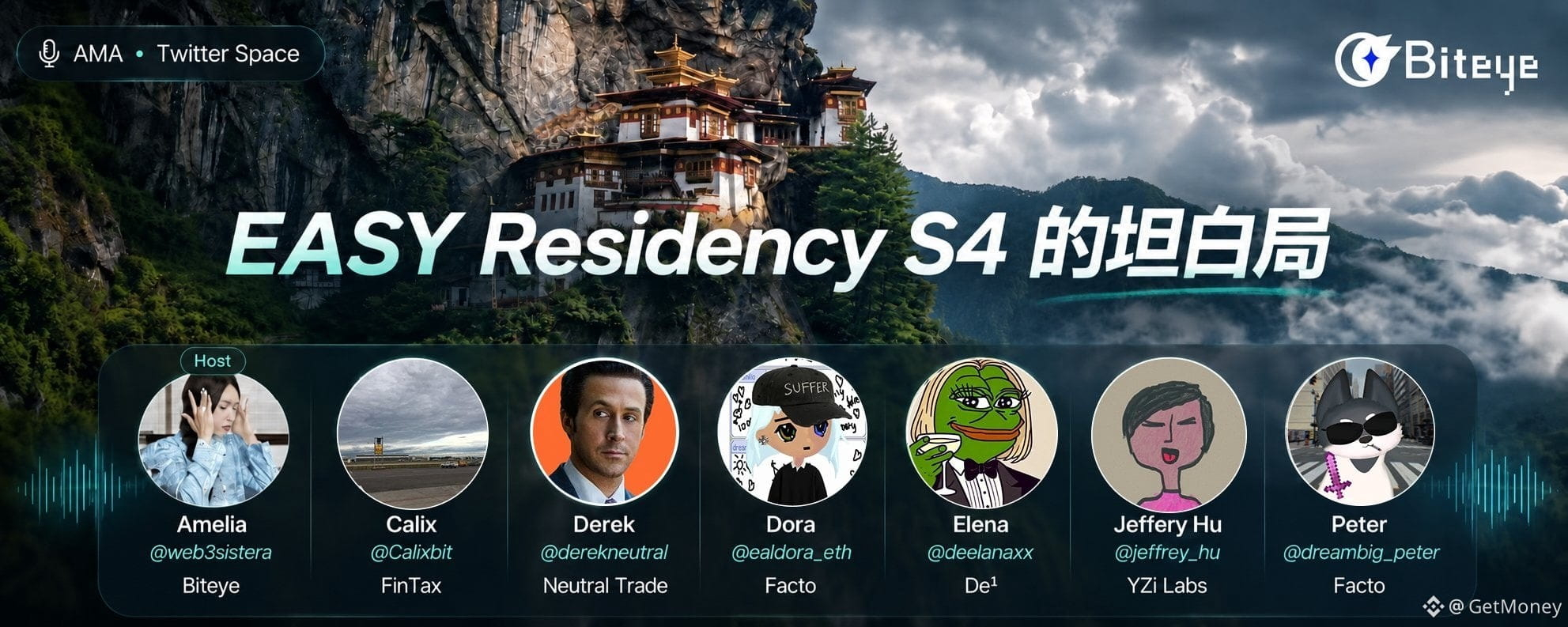
📰 On the evening of September 2nd, Biteye invited the Founder of EASY Residency S4 for an online AMA to talk about their five weeks of living and building together in Bhutan.
What made this experience most special wasn’t that they changed office locations—it was that everyone was placed in an environment with very few choices and fewer external distractions. On weekdays, they worked together; on weekends, they traveled together. People who weren’t that familiar with each other gradually started discussing projects, collaboration, and even why they set out in the first place.
🔥 Of course, Bhutan isn’t easy. The network often disconnects, and the connection between the hotel and the co-working space is also unstable. Some To B work can’t be pushed face-to-face, so it can only be handled through online communication. Before Demo Day, the team had to juggle day-to-day company responsibilities while also practicing intensively—finally presenting to CZ and the King of Bhutan.
But interestingly, the challenges actually made everyone more focused. With fewer meetings, exhibitions, and social events than places like New York or Silicon Valley, the Founder had more time to rethink the business. It also became easier to find out whether people could collaborate. During this period, some even found the starting point to get into BNB Chain.
💡 The support provided by YZi Labs wasn’t just advice either. Every week, they held discussions around project progress, bottlenecks, and specific needs, and they also helped connect with customers, partners, and BNB Chain resources. To be honest, entrepreneurship doesn’t always have to chase speed forever. Sometimes, changing your environment helps you see more clearly which things are truly worth continuing.
🤔 If you were asked to leave a big city and go to a place with an unreliable network to focus on building for five weeks, would you be willing to do it?
#EASYResidency #创业者 #BNBChain #Web3
📰 On the evening of September 2nd, Biteye invited the Founder of EASY Residency S4 for an online AMA to talk about their five weeks of living and building together in Bhutan.
What made this experience most special wasn’t that they changed office locations—it was that everyone was placed in an environment with very few choices and fewer external distractions. On weekdays, they worked together; on weekends, they traveled together. People who weren’t that familiar with each other gradually started discussing projects, collaboration, and even why they set out in the first place.
🔥 Of course, Bhutan isn’t easy. The network often disconnects, and the connection between the hotel and the co-working space is also unstable. Some To B work can’t be pushed face-to-face, so it can only be handled through online communication. Before Demo Day, the team had to juggle day-to-day company responsibilities while also practicing intensively—finally presenting to CZ and the King of Bhutan.
But interestingly, the challenges actually made everyone more focused. With fewer meetings, exhibitions, and social events than places like New York or Silicon Valley, the Founder had more time to rethink the business. It also became easier to find out whether people could collaborate. During this period, some even found the starting point to get into BNB Chain.
💡 The support provided by YZi Labs wasn’t just advice either. Every week, they held discussions around project progress, bottlenecks, and specific needs, and they also helped connect with customers, partners, and BNB Chain resources. To be honest, entrepreneurship doesn’t always have to chase speed forever. Sometimes, changing your environment helps you see more clearly which things are truly worth continuing.
🤔 If you were asked to leave a big city and go to a place with an unreliable network to focus on building for five weeks, would you be willing to do it?
#EASYResidency #创业者 #BNBChain #Web3
What made this experience most special wasn’t that they changed office locations—it was that everyone was placed in an environment with very few choices and fewer external distractions. On weekdays, they worked together; on weekends, they traveled together. People who weren’t that familiar with each other gradually started discussing projects, collaboration, and even why they set out in the first place.
🔥 Of course, Bhutan isn’t easy. The network often disconnects, and the connection between the hotel and the co-working space is also unstable. Some To B work can’t be pushed face-to-face, so it can only be handled through online communication. Before Demo Day, the team had to juggle day-to-day company responsibilities while also practicing intensively—finally presenting to CZ and the King of Bhutan.
But interestingly, the challenges actually made everyone more focused. With fewer meetings, exhibitions, and social events than places like New York or Silicon Valley, the Founder had more time to rethink the business. It also became easier to find out whether people could collaborate. During this period, some even found the starting point to get into BNB Chain.
💡 The support provided by YZi Labs wasn’t just advice either. Every week, they held discussions around project progress, bottlenecks, and specific needs, and they also helped connect with customers, partners, and BNB Chain resources. To be honest, entrepreneurship doesn’t always have to chase speed forever. Sometimes, changing your environment helps you see more clearly which things are truly worth continuing.
🤔 If you were asked to leave a big city and go to a place with an unreliable network to focus on building for five weeks, would you be willing to do it?
#EASYResidency #创业者 #BNBChain #Web3
187
·
--
📊 Evening Market Summary (2026/9/10)
🌙 Full-Day Recap:
BTC
Volatility 2.51% | Change -1.91%
📊 Market Overview:
📈 Top Gainers: VTHO +53.17%
📉 Top Losers: NFP -65.85%
🔄 Total Trading Volume: 1.09B USDT
🔥 Today’s Highlights: VTHO, PNT, KDA
🔮 What to Watch Tomorrow:
- Watch whether BTC can hold the 77688.00 USDT support
- Monitor changes in market sentiment
#BTC #加密货币 #Daily Summary
📊 Evening Market Summary (2026/9/10)
🌙 Full-Day Recap:
BTC
Volatility 2.51% | Change -1.91%
📊 Market Overview:
📈 Top Gainers: VTHO +53.17%
📉 Top Losers: NFP -65.85%
🔄 Total Trading Volume: 1.09B USDT
🔥 Today’s Highlights: VTHO, PNT, KDA
🔮 What to Watch Tomorrow:
- Watch whether BTC can hold the 77688.00 USDT support
- Monitor changes in market sentiment
#BTC #加密货币 #Daily Summary
🌙 Full-Day Recap:
BTC
Volatility 2.51% | Change -1.91%
📊 Market Overview:
📈 Top Gainers: VTHO +53.17%
📉 Top Losers: NFP -65.85%
🔄 Total Trading Volume: 1.09B USDT
🔥 Today’s Highlights: VTHO, PNT, KDA
🔮 What to Watch Tomorrow:
- Watch whether BTC can hold the 77688.00 USDT support
- Monitor changes in market sentiment
#BTC #加密货币 #Daily Summary
152
·
--
📰 Consensys has officially split into separate entities. The original company will be renamed MetaMask and focus on the consumer side; the protocol team and institutional infrastructure will move to the new Consensys. The two companies have already begun operating independently, with the split expected to be completed by the end of 2026.
🔥 This change is pretty significant: MetaMask has gone from being just a wallet product to effectively becoming a company. The new Consensys will retain Linea, Besu, and Teku, serving banks, asset managers, and payment institutions; while MetaMask will continue adding payment, trading, and fund-management features for everyday users.
Honestly, it’s no longer content to be that little “fox” that only signs transactions. MetaMask has accumulated over 100 million downloads, reaching about 190 countries and regions. It later expanded to integrate Solana and Bitcoin, and the product suite has grown to include perpetual contracts, prediction markets, tokenized stocks, and payment cards.
💡 What’s even more interesting is Money Account. After users deposit assets, supported assets are converted into mUSD, then generated via on-chain DeFi strategies. The balance can continue to be traded and transferred, and when conditions are met, it can also be used for spending through the MetaMask Card.
👀 So the phrase “Web3 bank” isn’t an official definition, but the direction is already very clear: it wants users to hold, grow, and use assets within a self-custody account. As for an IPO or a MetaMask token—there’s still no clear answer for now.
🤔 If idle funds can earn floating returns, and you can trade and use a card directly, would you be willing to put your everyday money into a Money Account?
#MetaMask #Consensys #Web3钱包 #on-chain finance
📰 Consensys has officially split into separate entities. The original company will be renamed MetaMask and focus on the consumer side; the protocol team and institutional infrastructure will move to the new Consensys. The two companies have already begun operating independently, with the split expected to be completed by the end of 2026.
🔥 This change is pretty significant: MetaMask has gone from being just a wallet product to effectively becoming a company. The new Consensys will retain Linea, Besu, and Teku, serving banks, asset managers, and payment institutions; while MetaMask will continue adding payment, trading, and fund-management features for everyday users.
Honestly, it’s no longer content to be that little “fox” that only signs transactions. MetaMask has accumulated over 100 million downloads, reaching about 190 countries and regions. It later expanded to integrate Solana and Bitcoin, and the product suite has grown to include perpetual contracts, prediction markets, tokenized stocks, and payment cards.
💡 What’s even more interesting is Money Account. After users deposit assets, supported assets are converted into mUSD, then generated via on-chain DeFi strategies. The balance can continue to be traded and transferred, and when conditions are met, it can also be used for spending through the MetaMask Card.
👀 So the phrase “Web3 bank” isn’t an official definition, but the direction is already very clear: it wants users to hold, grow, and use assets within a self-custody account. As for an IPO or a MetaMask token—there’s still no clear answer for now.
🤔 If idle funds can earn floating returns, and you can trade and use a card directly, would you be willing to put your everyday money into a Money Account?
#MetaMask #Consensys #Web3钱包 #on-chain finance
🔥 This change is pretty significant: MetaMask has gone from being just a wallet product to effectively becoming a company. The new Consensys will retain Linea, Besu, and Teku, serving banks, asset managers, and payment institutions; while MetaMask will continue adding payment, trading, and fund-management features for everyday users.
Honestly, it’s no longer content to be that little “fox” that only signs transactions. MetaMask has accumulated over 100 million downloads, reaching about 190 countries and regions. It later expanded to integrate Solana and Bitcoin, and the product suite has grown to include perpetual contracts, prediction markets, tokenized stocks, and payment cards.
💡 What’s even more interesting is Money Account. After users deposit assets, supported assets are converted into mUSD, then generated via on-chain DeFi strategies. The balance can continue to be traded and transferred, and when conditions are met, it can also be used for spending through the MetaMask Card.
👀 So the phrase “Web3 bank” isn’t an official definition, but the direction is already very clear: it wants users to hold, grow, and use assets within a self-custody account. As for an IPO or a MetaMask token—there’s still no clear answer for now.
🤔 If idle funds can earn floating returns, and you can trade and use a card directly, would you be willing to put your everyday money into a Money Account?
#MetaMask #Consensys #Web3钱包 #on-chain finance

50
·
--
📰 During a CNBC interview, Coinbase CEO Brian Armstrong made a direct assessment: Bitcoin has already bottomed out, and reaching $400,000 by 2030 is a “reasonable goal.”
🔥 The $400,000 figure is certainly eye-catching, but honestly, what matters more is “by 2030.” This isn’t a short-term prediction—it’s a multi-year outlook. The excerpt doesn’t answer how the path will unfold or how many pullbacks it may go through.
💡 Calling it a “reasonable goal” doesn’t mean it’s guaranteed to be achieved. Armstrong presented two ideas—“already bottomed out” and “$400,000 by 2030.” It’s easy for people to remember only the latter number while overlooking the very long road in between.
👀 In fact, this kind of judgment can be used as a reference for long-term views, but it can’t directly become a buy or sell signal. No matter how clearly the target is stated, it won’t replace anyone’s job of managing positions and volatility. After all, treating a forecast as a promise is often the surest way to get a little panicky.
🤔 Would you treat $400,000 by 2030 as a long-term reference, or do you think the goal is too aggressive?
#BTC #比特币 #Coinbase #加密市场
📰 During a CNBC interview, Coinbase CEO Brian Armstrong made a direct assessment: Bitcoin has already bottomed out, and reaching $400,000 by 2030 is a “reasonable goal.”
🔥 The $400,000 figure is certainly eye-catching, but honestly, what matters more is “by 2030.” This isn’t a short-term prediction—it’s a multi-year outlook. The excerpt doesn’t answer how the path will unfold or how many pullbacks it may go through.
💡 Calling it a “reasonable goal” doesn’t mean it’s guaranteed to be achieved. Armstrong presented two ideas—“already bottomed out” and “$400,000 by 2030.” It’s easy for people to remember only the latter number while overlooking the very long road in between.
👀 In fact, this kind of judgment can be used as a reference for long-term views, but it can’t directly become a buy or sell signal. No matter how clearly the target is stated, it won’t replace anyone’s job of managing positions and volatility. After all, treating a forecast as a promise is often the surest way to get a little panicky.
🤔 Would you treat $400,000 by 2030 as a long-term reference, or do you think the goal is too aggressive?
#BTC #比特币 #Coinbase #加密市场
🔥 The $400,000 figure is certainly eye-catching, but honestly, what matters more is “by 2030.” This isn’t a short-term prediction—it’s a multi-year outlook. The excerpt doesn’t answer how the path will unfold or how many pullbacks it may go through.
💡 Calling it a “reasonable goal” doesn’t mean it’s guaranteed to be achieved. Armstrong presented two ideas—“already bottomed out” and “$400,000 by 2030.” It’s easy for people to remember only the latter number while overlooking the very long road in between.
👀 In fact, this kind of judgment can be used as a reference for long-term views, but it can’t directly become a buy or sell signal. No matter how clearly the target is stated, it won’t replace anyone’s job of managing positions and volatility. After all, treating a forecast as a promise is often the surest way to get a little panicky.
🤔 Would you treat $400,000 by 2030 as a long-term reference, or do you think the goal is too aggressive?
#BTC #比特币 #Coinbase #加密市场

101
·
--
📰 Garrett Jin’s latest weekly report is pretty straightforward: this round of BTC ranging may not even have completed half of the entire consolidation process, and he maintains the view that the cycle bottom lands around $60,000, with roughly a 70% probability.
🔥 Last week, BTC, but it failed to break through the key resistance at $82,500. After that, it returned to the trading range. In his view, only if it reclaims $82,500 and stronger spot demand appears could it further test the $83,000 to $86,000 zone.
To be honest, the real trouble is that spot demand is relatively weak. If this situation persists, the $76,000 to $77,000 area will take the first hit. If that breaks, the price could quickly drop to $74,000 to $75,000. The more critical demand support to watch next is around $72,000 to $72,500.
💡 The easiest thing to misread here is “macroeconomic outlook is more positive by year-end.” Garrett Jin is constructive about the environment going into year-end, but in the short term he has proactively reduced his risk exposure. In plain terms: he’s not fully bearish in the long run, but he also isn’t planning to stubbornly hold on in the short term.
🤔 If BTC tests $76,000 to $77,000 again, will you cut positions early, or wait until around $72,000 to make a decision?
#BTC #比特币 #加密市场 #Market Analysis
📰 Garrett Jin’s latest weekly report is pretty straightforward: this round of BTC ranging may not even have completed half of the entire consolidation process, and he maintains the view that the cycle bottom lands around $60,000, with roughly a 70% probability.
🔥 Last week, BTC, but it failed to break through the key resistance at $82,500. After that, it returned to the trading range. In his view, only if it reclaims $82,500 and stronger spot demand appears could it further test the $83,000 to $86,000 zone.
To be honest, the real trouble is that spot demand is relatively weak. If this situation persists, the $76,000 to $77,000 area will take the first hit. If that breaks, the price could quickly drop to $74,000 to $75,000. The more critical demand support to watch next is around $72,000 to $72,500.
💡 The easiest thing to misread here is “macroeconomic outlook is more positive by year-end.” Garrett Jin is constructive about the environment going into year-end, but in the short term he has proactively reduced his risk exposure. In plain terms: he’s not fully bearish in the long run, but he also isn’t planning to stubbornly hold on in the short term.
🤔 If BTC tests $76,000 to $77,000 again, will you cut positions early, or wait until around $72,000 to make a decision?
#BTC #比特币 #加密市场 #Market Analysis
🔥 Last week, BTC, but it failed to break through the key resistance at $82,500. After that, it returned to the trading range. In his view, only if it reclaims $82,500 and stronger spot demand appears could it further test the $83,000 to $86,000 zone.
To be honest, the real trouble is that spot demand is relatively weak. If this situation persists, the $76,000 to $77,000 area will take the first hit. If that breaks, the price could quickly drop to $74,000 to $75,000. The more critical demand support to watch next is around $72,000 to $72,500.
💡 The easiest thing to misread here is “macroeconomic outlook is more positive by year-end.” Garrett Jin is constructive about the environment going into year-end, but in the short term he has proactively reduced his risk exposure. In plain terms: he’s not fully bearish in the long run, but he also isn’t planning to stubbornly hold on in the short term.
🤔 If BTC tests $76,000 to $77,000 again, will you cut positions early, or wait until around $72,000 to make a decision?
#BTC #比特币 #加密市场 #Market Analysis

48
·
--
📰 The Singapore Exchange has obtained CFTC approval, allowing U.S. institutional investors to directly trade its BTC and ETH perpetual futures. Previously, U.S. participants were unable to trade these contracts—this time, it can be seen as officially bringing traditional U.S. financial institutions into Asia’s crypto derivatives market.
🔥 These contracts are scheduled to go live at the end of November 2025. Cumulatively, about 400,000 lots. As of this August, the average daily trading volume is around 1,300 lots, with a notional value of about $19 million. Honestly, it’s not a small-scale rollout when it reaches this level in under a year.
💡 BTC contracts are clearly more favored by institutions, accounting for 66% of the open interest and 83% of the average daily trading volume since launch. On a single day, the notional value is about $145 million—fund preference is already reflected in the trading data.
👀 SGX expects that U.S. clearing members will gradually onboard clients over the next one to two months, and they also plan to launch BTC and ETH expiry futures and options. The real observation window is whether trading scale can continue to rise after U.S. institutions are onboarded.
🤔 If you were to target institutions as well, which do you think—perpetual futures, expiry futures, or options—will first show genuine demand?
#BTC #ETH #加密衍生品 #Institutional Funds
📰 The Singapore Exchange has obtained CFTC approval, allowing U.S. institutional investors to directly trade its BTC and ETH perpetual futures. Previously, U.S. participants were unable to trade these contracts—this time, it can be seen as officially bringing traditional U.S. financial institutions into Asia’s crypto derivatives market.
🔥 These contracts are scheduled to go live at the end of November 2025. Cumulatively, about 400,000 lots. As of this August, the average daily trading volume is around 1,300 lots, with a notional value of about $19 million. Honestly, it’s not a small-scale rollout when it reaches this level in under a year.
💡 BTC contracts are clearly more favored by institutions, accounting for 66% of the open interest and 83% of the average daily trading volume since launch. On a single day, the notional value is about $145 million—fund preference is already reflected in the trading data.
👀 SGX expects that U.S. clearing members will gradually onboard clients over the next one to two months, and they also plan to launch BTC and ETH expiry futures and options. The real observation window is whether trading scale can continue to rise after U.S. institutions are onboarded.
🤔 If you were to target institutions as well, which do you think—perpetual futures, expiry futures, or options—will first show genuine demand?
#BTC #ETH #加密衍生品 #Institutional Funds
🔥 These contracts are scheduled to go live at the end of November 2025. Cumulatively, about 400,000 lots. As of this August, the average daily trading volume is around 1,300 lots, with a notional value of about $19 million. Honestly, it’s not a small-scale rollout when it reaches this level in under a year.
💡 BTC contracts are clearly more favored by institutions, accounting for 66% of the open interest and 83% of the average daily trading volume since launch. On a single day, the notional value is about $145 million—fund preference is already reflected in the trading data.
👀 SGX expects that U.S. clearing members will gradually onboard clients over the next one to two months, and they also plan to launch BTC and ETH expiry futures and options. The real observation window is whether trading scale can continue to rise after U.S. institutions are onboarded.
🤔 If you were to target institutions as well, which do you think—perpetual futures, expiry futures, or options—will first show genuine demand?
#BTC #ETH #加密衍生品 #Institutional Funds

92
·
--
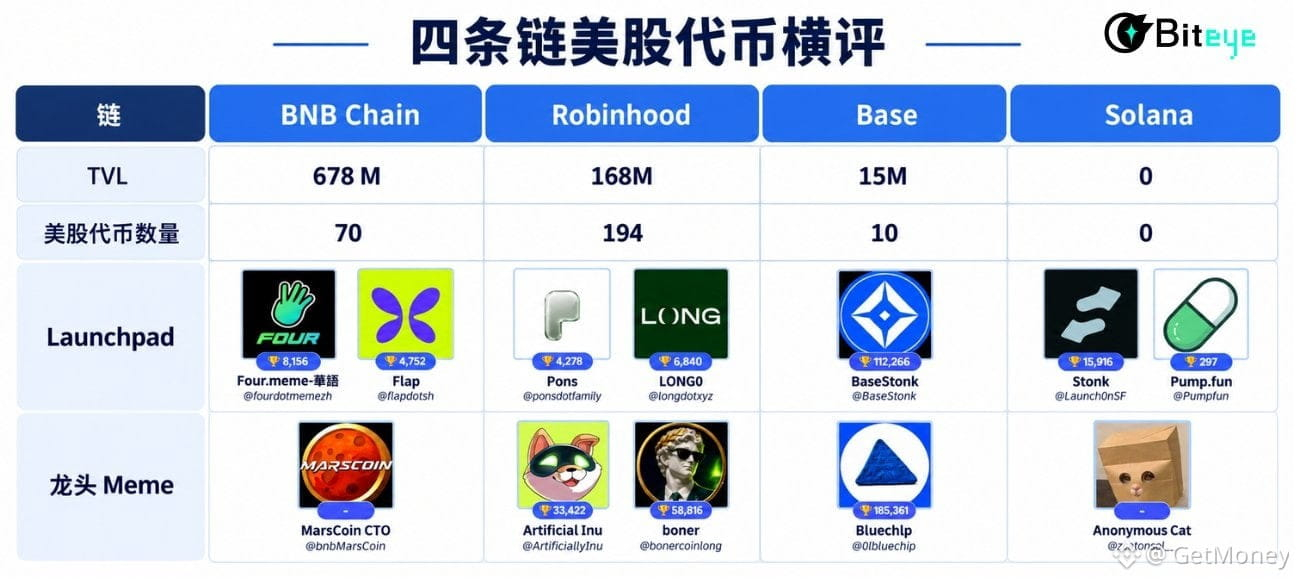
📰 It’s still US stock memes, but four chains炒了 for over a month—and the results are completely different. Robinhood Chain has issued 194 US stock tokens; BNB Chain has 70; and Base has only 10. The corresponding issued market caps are 158 M, 687 M, and 12 M, respectively.
🔥 The gap shows up first in issuance speed. Robinhood first uses a unified base prospectus; when new stocks are added, it supplements the Final Terms. For BNB Chain, each time a bStock adds a new variety, separate documents must be prepared and approvals completed. Base takes a path similar to bStocks and is still in the early stages of fine-tuning.
To be honest, it’s not that BNB Chain lacks capital and liquidity—it's that US stock hype moves too fast, and token listings can easily end up lagging by half a beat. Four Meme’s 4Stock lets users buy real stocks first, then mint them 1:1 based on share count. In the future, it can also be converted into the corresponding bStock—essentially making up for that timing gap.
💡 Flap has already supported 22 bStocks as meme base pools, and it has also seen the emergence of “Bull incoming” and “MarsCoin.” On the Robinhood Chain side, Pons and Long have already connected the token launch, base-pool setup, and fee mechanics; with 194 underlying targets, it’s naturally easier to issue tokens quickly in line with US stock hotspots.
🤔 If you could choose only one, do you think the Robinhood Chain with an advantage in issuance speed is the better bet—or the BNB Chain with stronger capital and liquidity?
#BNBChain #RobinhoodChain #Base #US stock tokens
📰 It’s still US stock memes, but four chains炒了 for over a month—and the results are completely different. Robinhood Chain has issued 194 US stock tokens; BNB Chain has 70; and Base has only 10. The corresponding issued market caps are 158 M, 687 M, and 12 M, respectively.
🔥 The gap shows up first in issuance speed. Robinhood first uses a unified base prospectus; when new stocks are added, it supplements the Final Terms. For BNB Chain, each time a bStock adds a new variety, separate documents must be prepared and approvals completed. Base takes a path similar to bStocks and is still in the early stages of fine-tuning.
To be honest, it’s not that BNB Chain lacks capital and liquidity—it's that US stock hype moves too fast, and token listings can easily end up lagging by half a beat. Four Meme’s 4Stock lets users buy real stocks first, then mint them 1:1 based on share count. In the future, it can also be converted into the corresponding bStock—essentially making up for that timing gap.
💡 Flap has already supported 22 bStocks as meme base pools, and it has also seen the emergence of “Bull incoming” and “MarsCoin.” On the Robinhood Chain side, Pons and Long have already connected the token launch, base-pool setup, and fee mechanics; with 194 underlying targets, it’s naturally easier to issue tokens quickly in line with US stock hotspots.
🤔 If you could choose only one, do you think the Robinhood Chain with an advantage in issuance speed is the better bet—or the BNB Chain with stronger capital and liquidity?
#BNBChain #RobinhoodChain #Base #US stock tokens
🔥 The gap shows up first in issuance speed. Robinhood first uses a unified base prospectus; when new stocks are added, it supplements the Final Terms. For BNB Chain, each time a bStock adds a new variety, separate documents must be prepared and approvals completed. Base takes a path similar to bStocks and is still in the early stages of fine-tuning.
To be honest, it’s not that BNB Chain lacks capital and liquidity—it's that US stock hype moves too fast, and token listings can easily end up lagging by half a beat. Four Meme’s 4Stock lets users buy real stocks first, then mint them 1:1 based on share count. In the future, it can also be converted into the corresponding bStock—essentially making up for that timing gap.
💡 Flap has already supported 22 bStocks as meme base pools, and it has also seen the emergence of “Bull incoming” and “MarsCoin.” On the Robinhood Chain side, Pons and Long have already connected the token launch, base-pool setup, and fee mechanics; with 194 underlying targets, it’s naturally easier to issue tokens quickly in line with US stock hotspots.
🤔 If you could choose only one, do you think the Robinhood Chain with an advantage in issuance speed is the better bet—or the BNB Chain with stronger capital and liquidity?
#BNBChain #RobinhoodChain #Base #US stock tokens

342
·
--
📰 a16z crypto releases an open-source new version of its zkVM, Lattice Jolt, replacing the earlier elliptic-curve-based Dory with a lattice-cryptography-based Akita. The result is very straightforward: the prover and verifier are sped up by 2–3x, the proof size is compressed to below 100KB, and it also comes with post-quantum security capabilities.
🔥 On the same machine, using pure CPU it can prove more than 2 million RISC-V cycles per second; with Apple Metal, the MacBook exceeds 10 million cycles per second. Compared to the previous curve-based pure CPU at about 1 million cycles, this improvement is indeed pretty wild.
💡 Proof size being smaller also matters. Proofs from other post-quantum zkVMs are usually above 200KB, and some reach around 600KB; Lattice Jolt is already below 100KB. Prover memory usage also drops from about 300 bytes per cycle to 200 bytes, allowing mobile devices to handle millions of cycles.
To be honest, in the past, post-quantum schemes often gave people the impression of “safer, but also slower and heavier.” Lattice Jolt flips that: lattice cryptography can reach the corresponding security level already in a 128-bit field, with less computation than the original 256-bit field. However, for the zero-knowledge properties needed for privacy applications, we’ll have to wait for subsequent supporting papers to be added.
🤔 If the lattice approach can hold the line on speed, proof size, and post-quantum security at the same time, do you think the next batch of zkVMs will switch directions as well?
#LatticeJolt #zkVM #零知识证明 #post-quantum cryptography
📰 a16z crypto releases an open-source new version of its zkVM, Lattice Jolt, replacing the earlier elliptic-curve-based Dory with a lattice-cryptography-based Akita. The result is very straightforward: the prover and verifier are sped up by 2–3x, the proof size is compressed to below 100KB, and it also comes with post-quantum security capabilities.
🔥 On the same machine, using pure CPU it can prove more than 2 million RISC-V cycles per second; with Apple Metal, the MacBook exceeds 10 million cycles per second. Compared to the previous curve-based pure CPU at about 1 million cycles, this improvement is indeed pretty wild.
💡 Proof size being smaller also matters. Proofs from other post-quantum zkVMs are usually above 200KB, and some reach around 600KB; Lattice Jolt is already below 100KB. Prover memory usage also drops from about 300 bytes per cycle to 200 bytes, allowing mobile devices to handle millions of cycles.
To be honest, in the past, post-quantum schemes often gave people the impression of “safer, but also slower and heavier.” Lattice Jolt flips that: lattice cryptography can reach the corresponding security level already in a 128-bit field, with less computation than the original 256-bit field. However, for the zero-knowledge properties needed for privacy applications, we’ll have to wait for subsequent supporting papers to be added.
🤔 If the lattice approach can hold the line on speed, proof size, and post-quantum security at the same time, do you think the next batch of zkVMs will switch directions as well?
#LatticeJolt #zkVM #零知识证明 #post-quantum cryptography
🔥 On the same machine, using pure CPU it can prove more than 2 million RISC-V cycles per second; with Apple Metal, the MacBook exceeds 10 million cycles per second. Compared to the previous curve-based pure CPU at about 1 million cycles, this improvement is indeed pretty wild.
💡 Proof size being smaller also matters. Proofs from other post-quantum zkVMs are usually above 200KB, and some reach around 600KB; Lattice Jolt is already below 100KB. Prover memory usage also drops from about 300 bytes per cycle to 200 bytes, allowing mobile devices to handle millions of cycles.
To be honest, in the past, post-quantum schemes often gave people the impression of “safer, but also slower and heavier.” Lattice Jolt flips that: lattice cryptography can reach the corresponding security level already in a 128-bit field, with less computation than the original 256-bit field. However, for the zero-knowledge properties needed for privacy applications, we’ll have to wait for subsequent supporting papers to be added.
🤔 If the lattice approach can hold the line on speed, proof size, and post-quantum security at the same time, do you think the next batch of zkVMs will switch directions as well?
#LatticeJolt #zkVM #零知识证明 #post-quantum cryptography
·
--
📰 The Singapore Exchange (SGX) has obtained CFTC approval. U.S. institutional investors can now directly trade its Bitcoin and Ethereum perpetual futures. Previously, U.S. participants were unable to trade these contracts, and this is finally opening the door.
🔥 The key point here is not that two more contracts have been added. It’s that traditional U.S. financial trading institutions can now tap into Asia’s liquidity pools. SGX expects that U.S. clearing members will begin connecting their clients over the next one to two months. The true incremental institutional demand may only become clear after the onboarding is completed.
💡 The data is already not small. Since the two types of perpetual futures were launched at the end of November 2025, the cumulative total is about 400,000 contracts. As of this August, average daily trading volume is around 1,300 contracts, with a notional value of about $19 million.
👀 Currently, Bitcoin contracts clearly dominate: since launch, open interest accounts for 66% and daily trading volume accounts for 83%; on a single day, the notional value is about $145 million. To be honest, this suggests that institutional capital is still more inclined toward Bitcoin at this stage.
🤔 SGX also plans to roll out Bitcoin and Ethereum dated futures and options later. If U.S. institutions are connected one after another, do you think perpetual futures will be the first to see volume ramp up—or options?
#比特币 #以太坊 #加密衍生品 #机构资金
📰 The Singapore Exchange (SGX) has obtained CFTC approval. U.S. institutional investors can now directly trade its Bitcoin and Ethereum perpetual futures. Previously, U.S. participants were unable to trade these contracts, and this is finally opening the door.
🔥 The key point here is not that two more contracts have been added. It’s that traditional U.S. financial trading institutions can now tap into Asia’s liquidity pools. SGX expects that U.S. clearing members will begin connecting their clients over the next one to two months. The true incremental institutional demand may only become clear after the onboarding is completed.
💡 The data is already not small. Since the two types of perpetual futures were launched at the end of November 2025, the cumulative total is about 400,000 contracts. As of this August, average daily trading volume is around 1,300 contracts, with a notional value of about $19 million.
👀 Currently, Bitcoin contracts clearly dominate: since launch, open interest accounts for 66% and daily trading volume accounts for 83%; on a single day, the notional value is about $145 million. To be honest, this suggests that institutional capital is still more inclined toward Bitcoin at this stage.
🤔 SGX also plans to roll out Bitcoin and Ethereum dated futures and options later. If U.S. institutions are connected one after another, do you think perpetual futures will be the first to see volume ramp up—or options?
#比特币 #以太坊 #加密衍生品 #机构资金
🔥 The key point here is not that two more contracts have been added. It’s that traditional U.S. financial trading institutions can now tap into Asia’s liquidity pools. SGX expects that U.S. clearing members will begin connecting their clients over the next one to two months. The true incremental institutional demand may only become clear after the onboarding is completed.
💡 The data is already not small. Since the two types of perpetual futures were launched at the end of November 2025, the cumulative total is about 400,000 contracts. As of this August, average daily trading volume is around 1,300 contracts, with a notional value of about $19 million.
👀 Currently, Bitcoin contracts clearly dominate: since launch, open interest accounts for 66% and daily trading volume accounts for 83%; on a single day, the notional value is about $145 million. To be honest, this suggests that institutional capital is still more inclined toward Bitcoin at this stage.
🤔 SGX also plans to roll out Bitcoin and Ethereum dated futures and options later. If U.S. institutions are connected one after another, do you think perpetual futures will be the first to see volume ramp up—or options?
#比特币 #以太坊 #加密衍生品 #机构资金

113
·
--
📰 Ethereum institutional staking heats up, but Lido didn’t capture much incremental demand. In the first half of 2026, the network added 6.8 million ETH to staking; Lido added only 386,000 ETH, accounting for 5.7% of the incremental amount. While the total staked supply rose from about 8.74 million to 9.13 million, Lido’s market share fell from 23.93% to 21.18%.
🔥 The contrast is right here: a bigger market doesn’t automatically mean the market leader earns more. The share of institutional capital rose from 25.9% to 35.3%, yet a lot of that money went to other staking service providers. Some of Lido’s products aimed at institutions are still reducing fees—switch first, then talk revenue.
💡 This also directly stalls LDO buybacks. On September 9, the NEST contract completed its check, but buyback funds weren’t released because the budget was negative. The funds weren’t entirely unprepared—according to the rules, the current surplus hasn’t reached the threshold needed to trigger release yet.
👀 Financial pressure is also laid out on the table. In the first half, Lido DAO’s total net income was $15.94 million, while the foundation’s spending was $14.33 million. After adding a one-time loss of $6.06 million from the Kelp project, it ultimately resulted in a net loss of $4.45 million. Honestly, new staking volume, DAO revenue, and the buyback quota aren’t really the same thing.
🤔 The most practical question now is whether Lido should continue cutting fees for institutions to grab market share, or first protect the DAO’s surplus so that NEST can restore buybacks as soon as possible. If you hold LDO, which outcome would you rather see?
#Lido #LDO #以太坊质押 #DeFi
📰 Ethereum institutional staking heats up, but Lido didn’t capture much incremental demand. In the first half of 2026, the network added 6.8 million ETH to staking; Lido added only 386,000 ETH, accounting for 5.7% of the incremental amount. While the total staked supply rose from about 8.74 million to 9.13 million, Lido’s market share fell from 23.93% to 21.18%.
🔥 The contrast is right here: a bigger market doesn’t automatically mean the market leader earns more. The share of institutional capital rose from 25.9% to 35.3%, yet a lot of that money went to other staking service providers. Some of Lido’s products aimed at institutions are still reducing fees—switch first, then talk revenue.
💡 This also directly stalls LDO buybacks. On September 9, the NEST contract completed its check, but buyback funds weren’t released because the budget was negative. The funds weren’t entirely unprepared—according to the rules, the current surplus hasn’t reached the threshold needed to trigger release yet.
👀 Financial pressure is also laid out on the table. In the first half, Lido DAO’s total net income was $15.94 million, while the foundation’s spending was $14.33 million. After adding a one-time loss of $6.06 million from the Kelp project, it ultimately resulted in a net loss of $4.45 million. Honestly, new staking volume, DAO revenue, and the buyback quota aren’t really the same thing.
🤔 The most practical question now is whether Lido should continue cutting fees for institutions to grab market share, or first protect the DAO’s surplus so that NEST can restore buybacks as soon as possible. If you hold LDO, which outcome would you rather see?
#Lido #LDO #以太坊质押 #DeFi
🔥 The contrast is right here: a bigger market doesn’t automatically mean the market leader earns more. The share of institutional capital rose from 25.9% to 35.3%, yet a lot of that money went to other staking service providers. Some of Lido’s products aimed at institutions are still reducing fees—switch first, then talk revenue.
💡 This also directly stalls LDO buybacks. On September 9, the NEST contract completed its check, but buyback funds weren’t released because the budget was negative. The funds weren’t entirely unprepared—according to the rules, the current surplus hasn’t reached the threshold needed to trigger release yet.
👀 Financial pressure is also laid out on the table. In the first half, Lido DAO’s total net income was $15.94 million, while the foundation’s spending was $14.33 million. After adding a one-time loss of $6.06 million from the Kelp project, it ultimately resulted in a net loss of $4.45 million. Honestly, new staking volume, DAO revenue, and the buyback quota aren’t really the same thing.
🤔 The most practical question now is whether Lido should continue cutting fees for institutions to grab market share, or first protect the DAO’s surplus so that NEST can restore buybacks as soon as possible. If you hold LDO, which outcome would you rather see?
#Lido #LDO #以太坊质押 #DeFi
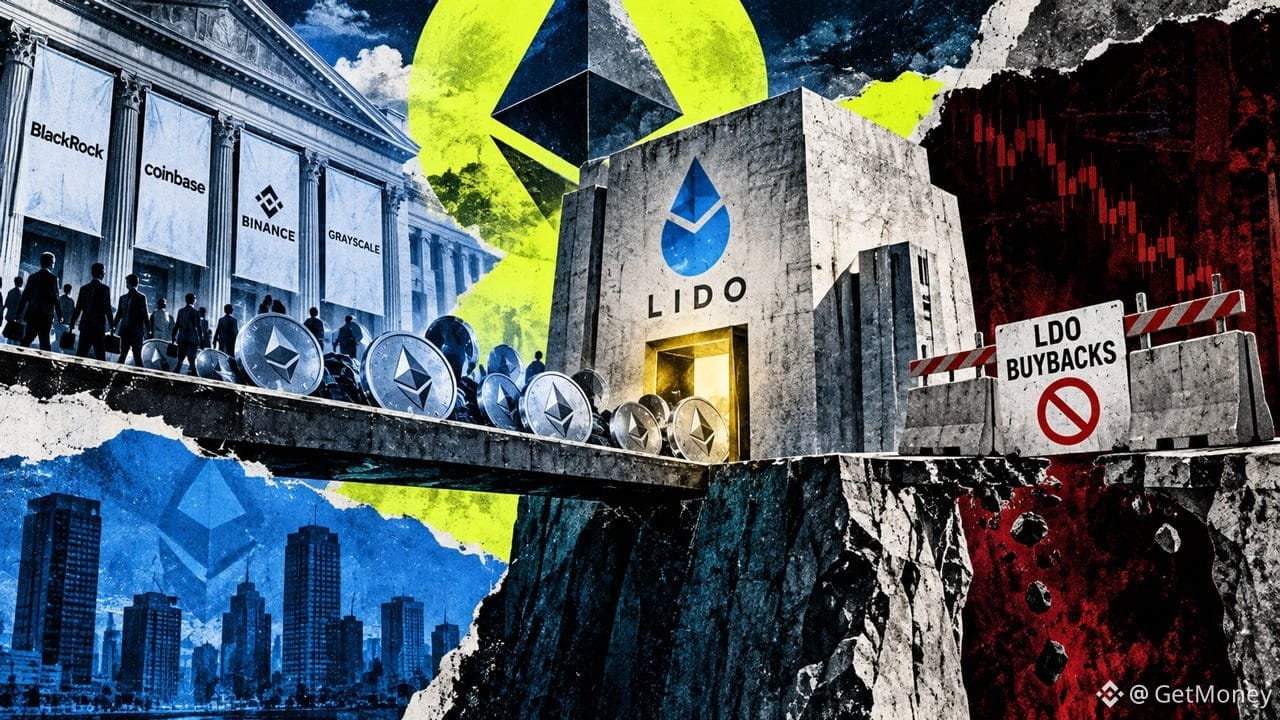
125
Log in to explore more content
Join global crypto users on Binance Square
⚡️ Get latest and useful information about crypto.
💬 Trusted by the world’s largest crypto exchange.
👍 Discover real insights from verified creators.
Email / Phone number