

#wallets
wallets
235,773 views
284 Discussing
Hot
Latest
Article
See translation
How to Keep Your Crypto Safe: A Beginner's Step-by-Step GuideWhen I first bought a few dollars of $BTC at $77,451, I felt a rush of excitement and a pinch of fear. The price can swing a few percent in a day, today it's down, 0.31% and the 24-hour range sits between $76,326 and $78,110. That volatility reminds us why security should be the first thing on our checklist, not an afterthought.
Start With a Strong Password
A password is the first line of defense. Use a unique phrase that mixes letters, numbers, and symbols, and avoid anything you've used on social media. Think of it as the lock on a safe that holds $BTC, $ETH at $2,245, and $BNB at $702.68. Even if a hacker knows your email, a strong password keeps the vault closed.
Use a Hardware Wallet for Large Balances
Software wallets are convenient, but a hardware device stores the private key offline. When I moved my SOL holding, now priced at $95.45, to a hardware wallet, I felt a lot more peace of mind. Offline storage means the keys can't be reached by malware that might be lurking on a phone or computer.
Enable Two-Factor Authentication (2FA) Everywhere
Most exchanges and wallet apps let you add a second verification step, usually via an authenticator app. This extra code is like a second lock on the door. Even if someone guesses your password, they still need the temporary code to get in. It's a small habit that stops many attacks in their tracks.
Watch the Fear & Greed Index as a Sentiment Check
The Fear & Greed Index is a quick gauge of market emotion. Today it reads 30, the same as yesterday, indicating fear dominates. When fear is high, some people rush to sell, but it also means scammers may try to exploit nervous investors. Knowing the index helps you stay calm and double-check any urgent requests you receive.
Keep Your Software Updated and Back Up Your Seed Phrase
Every app you use, from wallets to exchange apps, releases updates to patch security holes. I've learned the hard way that ignoring a single update can leave a door open. Also, write down your seed phrase on paper and store it in a safe place. If your device fails, the phrase is the only way to recover AAVE at $132.47 or any other assets.
What security habit has saved you from a close call, or what question do you still have about protecting your crypto?
Not financial advice
#crypto #security #beginners #wallets
How to Keep Your Crypto Safe: A Beginner's Step-by-Step Guide
When I first bought a few dollars of $BTC at $77,451, I felt a rush of excitement and a pinch of fear. The price can swing a few percent in a day, today it's down, 0.31% and the 24-hour range sits between $76,326 and $78,110. That volatility reminds us why security should be the first thing on our checklist, not an afterthought.
Start With a Strong Password
A password is the first line of defense. Use a unique phrase that mixes letters, numbers, and symbols, and avoid anything you've used on social media. Think of it as the lock on a safe that holds $BTC , $ETH at $2,245, and $BNB at $702.68. Even if a hacker knows your email, a strong password keeps the vault closed.
Use a Hardware Wallet for Large Balances
Software wallets are convenient, but a hardware device stores the private key offline. When I moved my SOL holding, now priced at $95.45, to a hardware wallet, I felt a lot more peace of mind. Offline storage means the keys can't be reached by malware that might be lurking on a phone or computer.
Enable Two-Factor Authentication (2FA) Everywhere
Most exchanges and wallet apps let you add a second verification step, usually via an authenticator app. This extra code is like a second lock on the door. Even if someone guesses your password, they still need the temporary code to get in. It's a small habit that stops many attacks in their tracks.
Watch the Fear & Greed Index as a Sentiment Check
The Fear & Greed Index is a quick gauge of market emotion. Today it reads 30, the same as yesterday, indicating fear dominates. When fear is high, some people rush to sell, but it also means scammers may try to exploit nervous investors. Knowing the index helps you stay calm and double-check any urgent requests you receive.
Keep Your Software Updated and Back Up Your Seed Phrase
Every app you use, from wallets to exchange apps, releases updates to patch security holes. I've learned the hard way that ignoring a single update can leave a door open. Also, write down your seed phrase on paper and store it in a safe place. If your device fails, the phrase is the only way to recover AAVE at $132.47 or any other assets.
What security habit has saved you from a close call, or what question do you still have about protecting your crypto?
Not financial advice
#crypto #security #beginners #wallets
65

See translation
Customer Funds$ Remained #SAFE
Teng clarified concerns regarding the security of user assets, confirming that no customer funds were affected during the incident. He explained that Binance does not use customer funds for its internal operations, and the incident was limited to #BİNANCE ’s own hot wallet.
Binance follows a security model in which the majority of customer assets are stored in #cold #wallets , keeping them offline and protected. Only the required funds are transferred to hot wallets when users request withdrawals.
Teng also advised users to review their account balances and reach out to #BİNANCE Customer Support if they have any concerns or questions.
77

·
--
See translation
Embedded Wallets Need BoundariesWallet infrastructure is moving toward a useful but demanding goal: make self-custodial products feel familiar without quietly taking control away from the user.
That is why Tether and Shiga’s 28 September announcement matters. Their planned WDK-powered products for Africa and the Gulf Cooperation Council put accessible onboarding, multi-asset support and control of keys and funds in the same conversation. It is a timely example of the direction wallet builders are exploring, but it should not be read as proof that every embedded wallet is self-custodial or equally secure.
An embedded wallet removes the need to leave an app, install a separate extension and manually manage every technical step. That can reduce abandonment and make on-chain services usable for more people. Yet the complexity does not disappear. It moves into the wallet’s architecture.
Builders still have to answer the questions that determine the real security model. Who can produce a valid signature? Can the provider recover or move funds? What happens when a device is lost? Which transactions may a session approve? Are there value limits, allowlists, rate limits and emergency controls? Can users understand those rules before trusting the product?
Account abstraction, passkeys, multi-party computation and sponsored gas can all improve the experience. None of them is a substitute for clear custody disclosure and carefully scoped permissions. A session key that can do too much is still dangerous. A recovery system with hidden powers can change the custody model. A seamless bridge route can still fail or send value through an unsafe path.
The strongest wallet design makes the interface simple while keeping the rules explicit. Users should know who holds signing authority, how recovery works and what each approval permits. Builders should test failure paths as seriously as onboarding.
TokenToolHub’s complete guide explains the difference between embedded UX and custody, then maps the controls that support safer deployment.
Read the full guide on TokenToolHub: https://tokentoolhub.com/embedded-wallets-guide/
#crypto #blockchain #Web3 #wallets #SelfCustody
Embedded Wallets Need Boundaries
Wallet infrastructure is moving toward a useful but demanding goal: make self-custodial products feel familiar without quietly taking control away from the user.
That is why Tether and Shiga’s 28 September announcement matters. Their planned WDK-powered products for Africa and the Gulf Cooperation Council put accessible onboarding, multi-asset support and control of keys and funds in the same conversation. It is a timely example of the direction wallet builders are exploring, but it should not be read as proof that every embedded wallet is self-custodial or equally secure.
An embedded wallet removes the need to leave an app, install a separate extension and manually manage every technical step. That can reduce abandonment and make on-chain services usable for more people. Yet the complexity does not disappear. It moves into the wallet’s architecture.
Builders still have to answer the questions that determine the real security model. Who can produce a valid signature? Can the provider recover or move funds? What happens when a device is lost? Which transactions may a session approve? Are there value limits, allowlists, rate limits and emergency controls? Can users understand those rules before trusting the product?
Account abstraction, passkeys, multi-party computation and sponsored gas can all improve the experience. None of them is a substitute for clear custody disclosure and carefully scoped permissions. A session key that can do too much is still dangerous. A recovery system with hidden powers can change the custody model. A seamless bridge route can still fail or send value through an unsafe path.
The strongest wallet design makes the interface simple while keeping the rules explicit. Users should know who holds signing authority, how recovery works and what each approval permits. Builders should test failure paths as seriously as onboarding.
TokenToolHub’s complete guide explains the difference between embedded UX and custody, then maps the controls that support safer deployment.
Read the full guide on TokenToolHub: https://tokentoolhub.com/embedded-wallets-guide/
#crypto #blockchain #Web3 #wallets #SelfCustody
77

·
--
See translation
CRYPTO QUESTIONS NOBODY ASKS #03
🏦📱 IS YOUR WALLET BECOMING YOUR BANK?
For decades, we have separated our financial activities.
A bank account for money.
A broker for investments.
An exchange for trading.
A payment app for transfers.
A separate platform for other financial services.
But crypto is slowly challenging that separation.
Imagine opening one wallet and being able to:
💰 Hold digital money
🔄 Swap assets
📈 Trade
💳 Make payments
🌎 Send money internationally
🏦 Earn returns through certain protocols
🏠 Hold tokenized assets
🤖 Give an AI agent limited permission to transact
Suddenly, the wallet isn't just somewhere you store crypto.
It starts becoming an interface to a financial system.
And here's the interesting part:
The wallet doesn't necessarily need to know where you live, which bank you use, or which country you're sending money to in order to interact with a blockchain network.
But that doesn't mean traditional banks are disappearing.
Banks still provide important functions such as regulated custody, lending, payments infrastructure and access to the traditional financial system.
Instead, we may be heading toward a world where banking and blockchain-based finance increasingly overlap.
The biggest question may therefore not be:
“Will crypto replace banks?”
It may be:
“Which financial services will eventually move into wallets?”
And if wallets become the main interface for money, payments and digital assets...
What exactly will a crypto wallet look like five or ten years from now?
👇 What do you think?
Will the wallet of the future look more like today's bank account—or something completely different?
#CryptoQuestions #crypto #Wallets
112

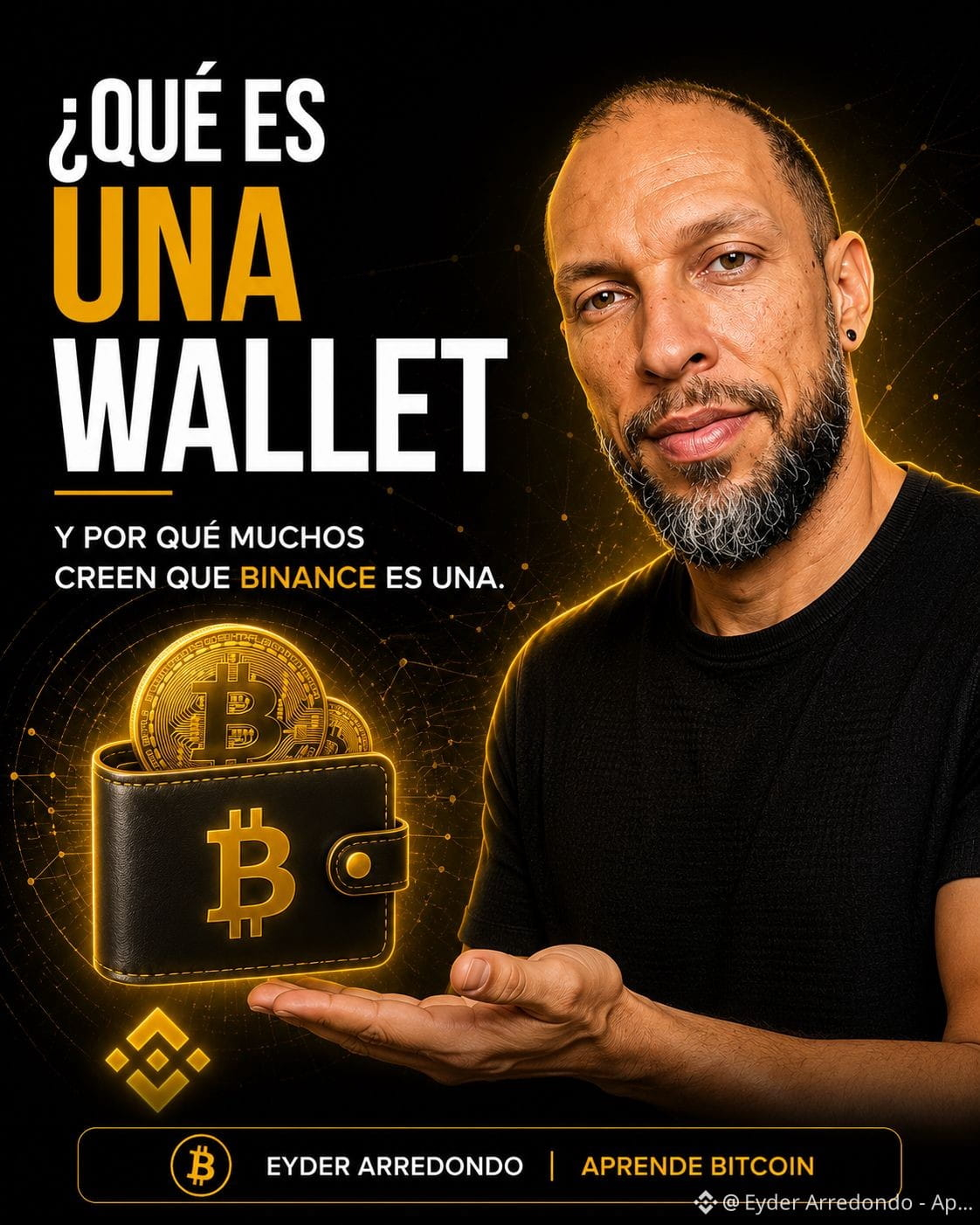
🚨 What is a Wallet? And why many think Binance is a...
💡 Many beginners think that Binance is a Wallet… but it’s not exactly that.
📱 A Wallet (wallet) is the place where you can store, send, and receive your cryptocurrencies.
🏦 Binance is mainly an exchange, meaning a platform for buying, selling, and trading cryptocurrencies. However, it also offers an integrated wallet to manage your funds.
🔑 As you learn more about $BTC , you’ll discover that there are different types of wallets, each with advantages depending on how you want to use them.
🎓 Understanding this difference is one of the first steps to use Bitcoin more securely.
👇 Did you already know that Binance and a Wallet are not exactly the same?
Tell me in the comments and follow me to learn Bitcoin and Binance from scratch.
#Bitcoin #Binance #AprendeBitcoin #wallets
2
187

·
--
Security remains one of the hottest topics in crypto for 2026.
Between wallet signatures, DeFi risks, bridges, smart contracts, and user errors, the real challenge isn't just about building faster, but making the experience safer.
An important point: mass adoption won't just come from better yields. It'll also happen when signing a transaction becomes understandable for everyone.
What do you think is the most urgent: better user education, simpler wallets, or stricter security standards?
#DeFi #Wallets #BlockchainSecurity #Web3
1
185

·
--
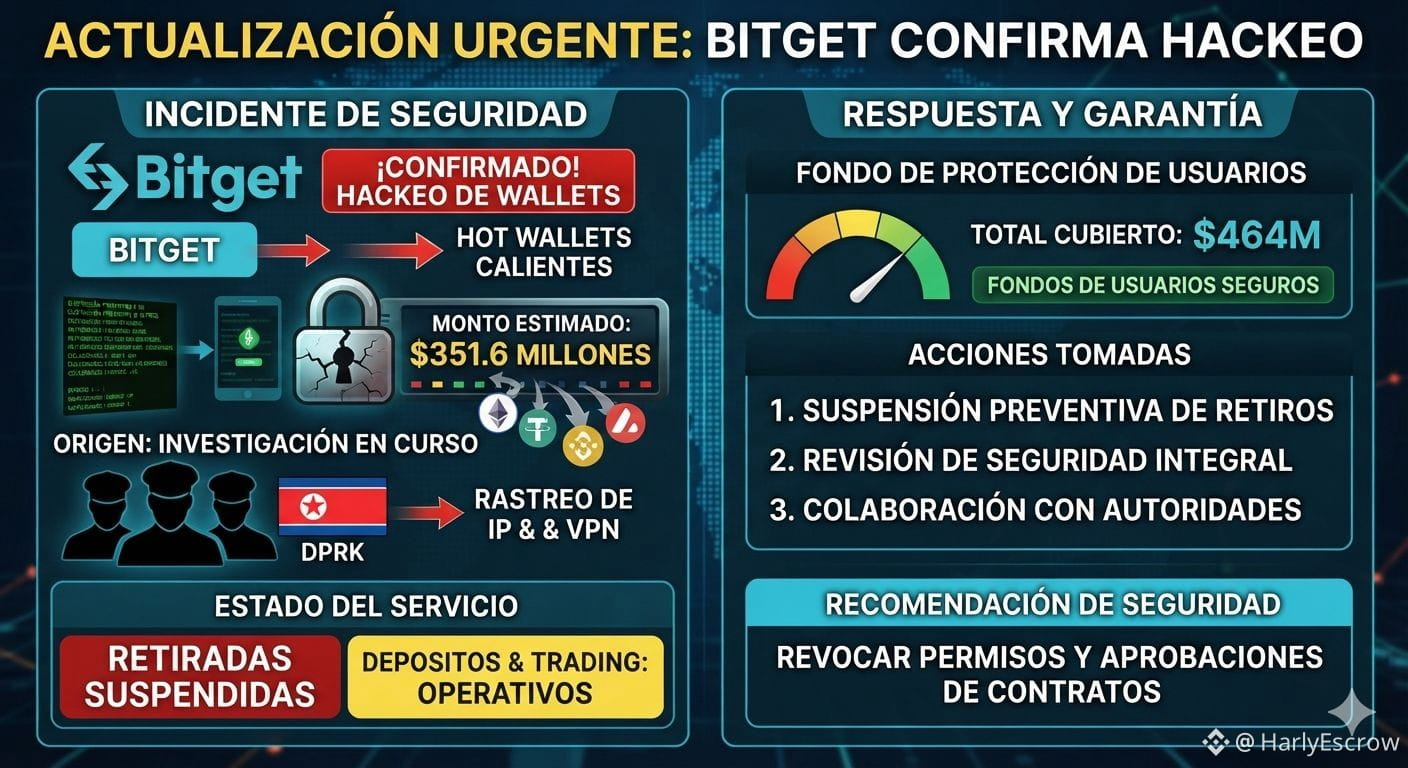
🚨 Bitget has officially confirmed yet another massive hack of its hot wallets, with an estimated amount of 351.6 million dollars. The incident, originally detected by blockchain investigators (on-chain), forced the cryptocurrency exchange to temporarily suspend all user withdrawals while an exhaustive security review is carried out. #Bitget #wallets
$BTC $XRP $SOL #BTC
$BTC $XRP $SOL #BTC
3
2.6k

·
--
See translation
🎮 Downloaded a Steam Game, Lost Your #crypto
👮♀️ The #FBI has arrested a 21-year-old hacker who uploaded fake games to Steam containing hidden crypto-draining malware.
Over two years, he allegedly:
• Infected 8,000+ computers.
• Gained access to 80 crypto #wallets .
• Stole at least $220,000 in crypto.
Ironically, he was caught after converting the stolen funds into Uber Eats gift cards. Investigators reportedly traced the food delivery address—and showed up with a search warrant instead of lunch. 🍔
The fake games looked legitimate and even launched normally, making them difficult to spot. The case is a reminder that installing unknown software can put your wallet at risk, especially if your seed phrase or wallet files are stored on the same device.
🛡 Treat every unfamiliar download as a potential security risk—even if it comes from a trusted platform.
#SouthKoreaPreparesSecondCBDCPhase @wisegbevecryptonews9
🎮 Downloaded a Steam Game, Lost Your #crypto
👮♀️ The #FBI has arrested a 21-year-old hacker who uploaded fake games to Steam containing hidden crypto-draining malware.
Over two years, he allegedly:
• Infected 8,000+ computers.
• Gained access to 80 crypto #wallets .
• Stole at least $220,000 in crypto.
Ironically, he was caught after converting the stolen funds into Uber Eats gift cards. Investigators reportedly traced the food delivery address—and showed up with a search warrant instead of lunch. 🍔
The fake games looked legitimate and even launched normally, making them difficult to spot. The case is a reminder that installing unknown software can put your wallet at risk, especially if your seed phrase or wallet files are stored on the same device.
🛡 Treat every unfamiliar download as a potential security risk—even if it comes from a trusted platform.
#SouthKoreaPreparesSecondCBDCPhase @WISE PUMPS

1
3.7k

See translation
📚 Crypto Wallets 101: Hot vs Cold Storage, Security Best Practices
On July 2, 2026, with $2.18T in crypto value on the line, wallet security is not optional.
Hot wallets (connected to the internet) are convenient for daily trading but vulnerable to hacks. Cold wallets (offline hardware devices) are essential for long-term storage.
Best practice: use hot wallets for small amounts used in regular trading. Store the majority of your holdings in cold storage. Never keep large amounts on exchanges. Write down your seed phrase on paper and store it securely.
📌 Key Takeaway:
Hot wallets for daily trading, cold storage for long-term holdings — the simplest rule in crypto security can save you from devastating losses.
#CryptoSecurity #Wallets
#BinanceAlphaAlert
52

·
--
See translation
Your wallet doesn't need to be hacked to lose your crypto.
One careless approval is enough.
Every time you connect your wallet to a DApp, you're asked to approve a transaction. Many users click "Approve" without reading what they're allowing.
Some approvals give a smart contract unlimited access to your tokens.
Weeks or even months later, if that contract is compromised or turns malicious, your funds can disappear without you sharing your seed phrase.
Take 2 minutes today to protect yourself.
Review your wallet approvals
Revoke permissions you no longer use
Avoid unlimited approvals whenever possible
Only interact with trusted DApps
Always read what you're approving
In crypto, security isn't just about protecting your seed phrase. It's also about managing your wallet permission.
#Wallets
75
·
--
DeFi won't hit the mainstream without some serious upgrades in security.
Right now, a lot of users don’t really get what they're signing up for with their wallets. And when a mistake can cost you big, the whole experience gets way too risky for mass adoption.
The next big DeFi cycle might not just be about yield farming, but about simpler wallets, clearer permissions, and tougher security standards.
What's the priority in your view: education, UX, or regulation?
#DeFi #Wallets #Web3 #Security
1
130
See translation
◎ Self-Custody Solutions Improve: User-friendly wallets drive adoption
On July 22, 2026, Hardware and software wallet providers are making self-custody more accessible with improved UX while maintaining security.
Following the Consensys security incident and Kaspersky malware warnings, self-custody is more critical than ever.
Modern wallets support Bitcoin $BTC, Ethereum $ETH, Solana $SOL, and thousands of other assets.
📌 Key Takeaway:
Self-custody is becoming more accessible — new wallet designs balance security with user experience for mainstream adoption.
#SelfCustody #Wallets #CryptoSecurity
#BinanceAlphaAlert
◎ Self-Custody Solutions Improve: User-friendly wallets drive adoption
On July 22, 2026, Hardware and software wallet providers are making self-custody more accessible with improved UX while maintaining security.
Following the Consensys security incident and Kaspersky malware warnings, self-custody is more critical than ever.
Modern wallets support Bitcoin $BTC , Ethereum $ETH , Solana $SOL , and thousands of other assets.
📌 Key Takeaway:
Self-custody is becoming more accessible — new wallet designs balance security with user experience for mainstream adoption.
#SelfCustody #Wallets #CryptoSecurity
#BinanceAlphaAlert
80

·
--
Article
See translation
Your Crypto Wallet Isn't an Investment It's Your Digital VaultMost people spend hours researching which cryptocurrency to buy.
But very few spend the same amount of time thinking about where they'll keep it.
That's a mistake that every crypto investor should avoid.
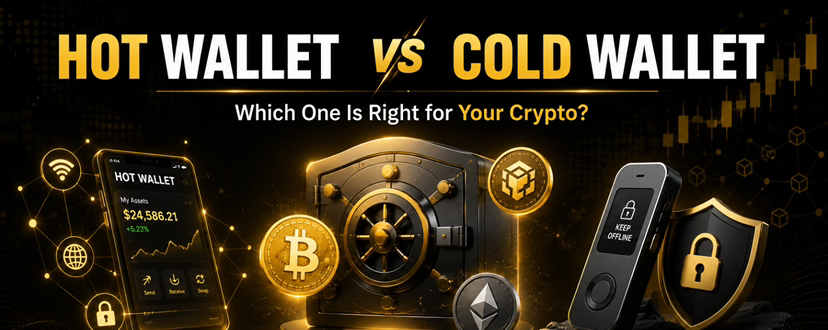
When you own cryptocurrency, your wallet is what gives you access to your assets. Whether you're holding Bitcoin, BNB, or other digital assets, understanding the difference between hot wallets and cold wallets is one of the first lessons every investor should learn.
A hot wallet is connected to the internet. It's convenient for everyday transactions, trading, and interacting with decentralized applications. Because it's always online, it's easier to access but it also requires extra attention to security.
A cold wallet, on the other hand, stores your private keys offline. Since it isn't continuously connected to the internet, it provides an additional layer of protection for long-term holdings. Many experienced investors prefer using cold storage for assets they don't plan to move frequently.
Neither option is "better" for everyone.
If you're actively trading, convenience may matter more.
If you're investing for the long term, stronger security could be the priority.
The most important habit isn't choosing the perfect wallet it's protecting your recovery phrase, enabling two-factor authentication wherever available, and never sharing sensitive information with anyone.
💡 Key Takeaway
The first step to protecting your crypto isn't finding the next big coin it's securing the coins you already own.
What matters more to you when choosing a wallet: convenience or maximum security?
#BinanceSquare #CryptoSecurity #wallets
Your Crypto Wallet Isn't an Investment It's Your Digital Vault
Most people spend hours researching which cryptocurrency to buy.
But very few spend the same amount of time thinking about where they'll keep it.
That's a mistake that every crypto investor should avoid.
When you own cryptocurrency, your wallet is what gives you access to your assets. Whether you're holding Bitcoin, BNB, or other digital assets, understanding the difference between hot wallets and cold wallets is one of the first lessons every investor should learn.
A hot wallet is connected to the internet. It's convenient for everyday transactions, trading, and interacting with decentralized applications. Because it's always online, it's easier to access but it also requires extra attention to security.
A cold wallet, on the other hand, stores your private keys offline. Since it isn't continuously connected to the internet, it provides an additional layer of protection for long-term holdings. Many experienced investors prefer using cold storage for assets they don't plan to move frequently.
Neither option is "better" for everyone.
If you're actively trading, convenience may matter more.
If you're investing for the long term, stronger security could be the priority.
The most important habit isn't choosing the perfect wallet it's protecting your recovery phrase, enabling two-factor authentication wherever available, and never sharing sensitive information with anyone.
💡 Key Takeaway
The first step to protecting your crypto isn't finding the next big coin it's securing the coins you already own.
What matters more to you when choosing a wallet: convenience or maximum security?
#BinanceSquare #CryptoSecurity #wallets
1
260


·
--
See translation
If you're still chasing wallet hype without checking the infrastructure layer underneath, stop now.
A lot of traders get burned because they only see the shiny app, not who controls custody, onboarding, fees, and user flow behind it. That’s how you miss the real value or buy into weak infrastructure too late.
The debate is simple: some say the front-end brand wins because users only care about convenience. Fair point. But I think the second layer is where the real moat gets built, especially with Wallet-as-a-Service models like WhiteBIT’s setup.
Instead of every project building wallets from scratch, WaaS lets businesses plug in crypto wallets faster and focus on users. That matters for $WBT, $BNB, and $ETH ecosystems because adoption often comes from infrastructure people never notice until it breaks.
So the question is whether the next big winners are the apps everyone uses, or the wallet layers quietly powering them behind the scenes?
#CryptoInfrastructure #Wallets #Web3
If you're still chasing wallet hype without checking the infrastructure layer underneath, stop now.
A lot of traders get burned because they only see the shiny app, not who controls custody, onboarding, fees, and user flow behind it. That’s how you miss the real value or buy into weak infrastructure too late.
The debate is simple: some say the front-end brand wins because users only care about convenience. Fair point. But I think the second layer is where the real moat gets built, especially with Wallet-as-a-Service models like WhiteBIT’s setup.
Instead of every project building wallets from scratch, WaaS lets businesses plug in crypto wallets faster and focus on users. That matters for $WBT, $BNB , and $ETH ecosystems because adoption often comes from infrastructure people never notice until it breaks.
So the question is whether the next big winners are the apps everyone uses, or the wallet layers quietly powering them behind the scenes?
#CryptoInfrastructure #Wallets #Web3
40

Article
See translation
Crypto Phishing Scams: How to Spot the Bait and Keep Your Wallet SafeThe market is trembling under a Fear index of 30, and that nervous energy makes scammers bolder than ever. I've seen friends lose $BTC and $ETH because a single click felt harmless. Let's turn that fear into a clear set of actions you can take right now.
What the Scam Looks Like
A fake app or website promises "instant $BTC earnings" or "secure $ETH storage." The design mirrors official wallets, and the URL may contain a tiny typo. Once you enter your seed phrase, the thief walks away with your funds. I once opened an "$SOL wallet" that asked for my private key, the moment I typed it, the balance vanished.
Red Flags to Watch
- The site asks for your seed phrase, private key, or password. Legitimate services never do.
- URLs that end in .net.info, or have extra characters like "wallet-secure.com-login."
- Promises of guaranteed returns, especially when the market shows a 24h +0.31% move for $BTC and a 24h +0.68% rise for $ETH, real assets are volatile, not certain.
- Poor grammar or rushed language. Scammers rely on urgency, not professionalism.
How to Protect Yourself
1. Bookmark the official wallet page and use that link every time.
2. Enable two-factor authentication on every exchange and wallet that offers it.
3. Keep your seed phrase offline, write it on paper and store it in a safe place.
4. Verify the app's publisher on the official app store; don't download from third-party links.
Quick Checklist
- [ ] Did I enter my seed phrase on a site that asked for it?
- [ ] Is the URL exactly what I expect, with no extra characters?
- [ ] Have I enabled 2FA on the platform?
- [ ] Is the claim of guaranteed profit realistic given the current market volatility?
What's the most convincing phishing message you've ever received, and how did you handle it?
Not financial advice
#crypto #security #phishing #wallets
Crypto Phishing Scams: How to Spot the Bait and Keep Your Wallet Safe
The market is trembling under a Fear index of 30, and that nervous energy makes scammers bolder than ever. I've seen friends lose $BTC and $ETH because a single click felt harmless. Let's turn that fear into a clear set of actions you can take right now.
What the Scam Looks Like
A fake app or website promises "instant $BTC earnings" or "secure $ETH storage." The design mirrors official wallets, and the URL may contain a tiny typo. Once you enter your seed phrase, the thief walks away with your funds. I once opened an "$SOL wallet" that asked for my private key, the moment I typed it, the balance vanished.
Red Flags to Watch
- The site asks for your seed phrase, private key, or password. Legitimate services never do.
- URLs that end in .net.info, or have extra characters like "wallet-secure.com-login."
- Promises of guaranteed returns, especially when the market shows a 24h +0.31% move for $BTC and a 24h +0.68% rise for $ETH , real assets are volatile, not certain.
- Poor grammar or rushed language. Scammers rely on urgency, not professionalism.
How to Protect Yourself
1. Bookmark the official wallet page and use that link every time.
2. Enable two-factor authentication on every exchange and wallet that offers it.
3. Keep your seed phrase offline, write it on paper and store it in a safe place.
4. Verify the app's publisher on the official app store; don't download from third-party links.
Quick Checklist
- [ ] Did I enter my seed phrase on a site that asked for it?
- [ ] Is the URL exactly what I expect, with no extra characters?
- [ ] Have I enabled 2FA on the platform?
- [ ] Is the claim of guaranteed profit realistic given the current market volatility?
What's the most convincing phishing message you've ever received, and how did you handle it?
Not financial advice
#crypto #security #phishing #wallets
87

See translation
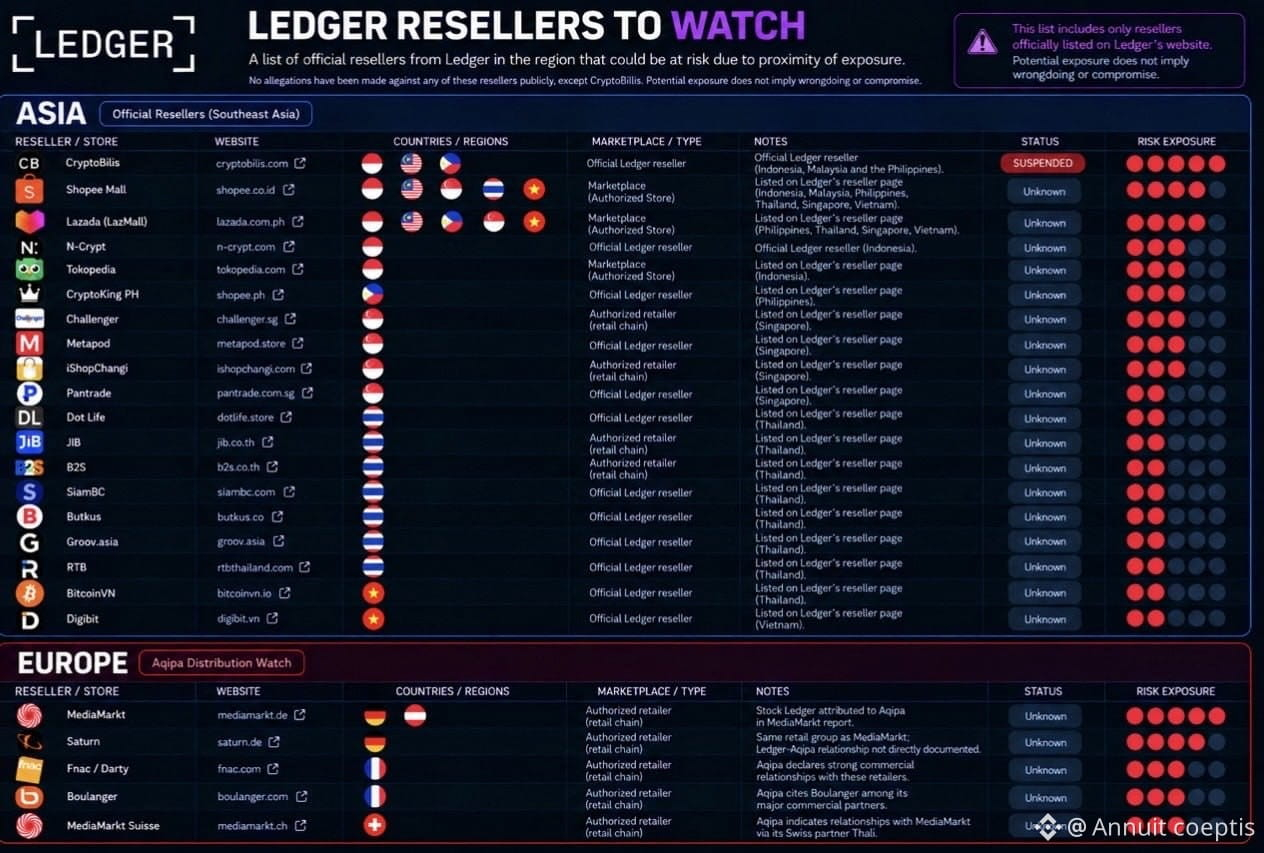
⚠️✴️#hack #wallets #RBNZPausesDigitalCashDevelopment Compromised Ledger wallets are flooding the world. Analysts have already compiled a list of stores in Asia and Europe that may have sold such wallets.
⚠️✴️#hack #wallets #RBNZPausesDigitalCashDevelopment Compromised Ledger wallets are flooding the world. Analysts have already compiled a list of stores in Asia and Europe that may have sold such wallets.
31



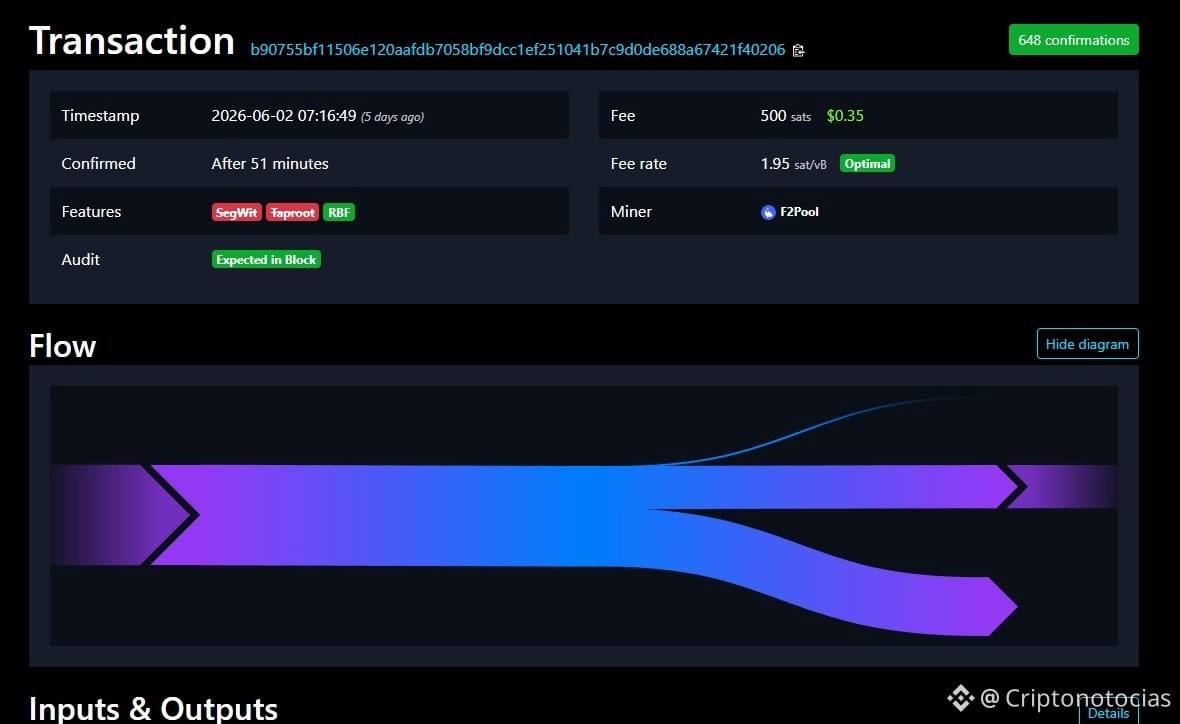
⚖️ #wallets inactive Bitcoin moved funds for 15 years while a lawsuit in NY tried to declare them abandoned. This strengthens the defense's argument: inactivity isn't abandonment, and without private keys, there's no real control.
$BTC
{spot}(BTCUSDT)
$SOL
⚖️ #wallets inactive Bitcoin moved funds for 15 years while a lawsuit in NY tried to declare them abandoned. This strengthens the defense's argument: inactivity isn't abandonment, and without private keys, there's no real control.
$BTC
$SOL
$BTC
$SOL
180
Log in to explore more content
Join global crypto users on Binance Square
⚡️ Get latest and useful information about crypto.
💬 Trusted by the world’s largest crypto exchange.
👍 Discover real insights from verified creators.
Email / Phone number
Trending Topics
1
#BinanceSAFUFundTransferCompleted7499BTC
21,913 views
579 Discussing
2
#BinanceRecovery90% of stolen assets
91,917 views
144 Discussing
3
#YiHe:ProofOfReserves:10TokensAt100%Backing
106,239 views
619 Discussing
4
#BackedNotBroken:RichardTengSaysUsersBearNoLoss
20,201 views
388 Discussing
5
#CZSaysCompensationIsinPlaceUsersAreProtected
103,729 views
1,287 Discussing
6
#IntelHasItsWorstDaySince1974
36,281 views
638 Discussing
7
#TRMCambodianCasinosReceived$1.07BInCrypto
9,277 views
66 Discussing
8
#USDCCirculationFallsAbout800MInSevenDays
58,616 views
677 Discussing
9
#SuspectedNorthKoreaAttacksAccountForNearly89%OfCryptoHackLosses
13,213 views
92 Discussing
10
#OpenAICutsFundraisingTargetBy$10B
3,021 views
72 Discussing