
#institutionalcrypto
institutionalcrypto
634,561 views
3,918 Discussing
Hot
Latest

·
--
Verified
See translation
One of crypto’s earliest ideas was simple:
If you hold the keys, you truly hold the asset.
That idea moved financial responsibility away from institutions and toward the individual.
Years later, something interesting is happening in the opposite direction.
Deutsche Bank is preparing a digital asset custody service for institutional clients. Under the plan, managing wallets and private keys for Bitcoin, Ether and selected stablecoins will become part of the service it provides.
But Bitcoin isn’t what caught my attention.
It’s the fact that a bank is preparing to take responsibility for the keys.
For an individual, controlling the keys can mean independence. For an institution, it means responsibility.
Who controls access, and who carries the responsibility when something goes wrong?
At some point, the problem stops being only about storing the asset.
You have to custody the responsibility too.
I think this is one of the overlooked parts of institutional crypto.
For years, we’ve asked whether banks would buy Bitcoin, put it on their balance sheets or give clients access to it.
Maybe the bigger change is happening somewhere else.
Banks may not simply be adopting crypto. They may be turning a new kind of responsibility created by crypto into a financial service.
And that becomes even more interesting if stocks, bonds, funds and other assets gradually move onto on-chain infrastructure.
In that world, custody may no longer be simply about saying:
“Your assets are stored here.”
The more valuable promise could become:
“We take responsibility for the keys.”
So with Deutsche Bank’s move, I’m not watching how much Bitcoin it may eventually custody.
I’m watching something else.
What does banking start selling when crypto becomes infrastructure?
Because one of crypto’s earliest questions was:
“Why do I need a bank?”
If the institutional question eventually becomes:
“Which institution can I trust with this responsibility?”
#DigitalAssetCustody #Bitcoin #InstitutionalCrypto #Binance
One of crypto’s earliest ideas was simple:
If you hold the keys, you truly hold the asset.
That idea moved financial responsibility away from institutions and toward the individual.
Years later, something interesting is happening in the opposite direction.
Deutsche Bank is preparing a digital asset custody service for institutional clients. Under the plan, managing wallets and private keys for Bitcoin, Ether and selected stablecoins will become part of the service it provides.
But Bitcoin isn’t what caught my attention.
It’s the fact that a bank is preparing to take responsibility for the keys.
For an individual, controlling the keys can mean independence. For an institution, it means responsibility.
Who controls access, and who carries the responsibility when something goes wrong?
At some point, the problem stops being only about storing the asset.
You have to custody the responsibility too.
I think this is one of the overlooked parts of institutional crypto.
For years, we’ve asked whether banks would buy Bitcoin, put it on their balance sheets or give clients access to it.
Maybe the bigger change is happening somewhere else.
Banks may not simply be adopting crypto. They may be turning a new kind of responsibility created by crypto into a financial service.
And that becomes even more interesting if stocks, bonds, funds and other assets gradually move onto on-chain infrastructure.
In that world, custody may no longer be simply about saying:
“Your assets are stored here.”
The more valuable promise could become:
“We take responsibility for the keys.”
So with Deutsche Bank’s move, I’m not watching how much Bitcoin it may eventually custody.
I’m watching something else.
What does banking start selling when crypto becomes infrastructure?
Because one of crypto’s earliest questions was:
“Why do I need a bank?”
If the institutional question eventually becomes:
“Which institution can I trust with this responsibility?”
#DigitalAssetCustody #Bitcoin #InstitutionalCrypto #Binance
If you hold the keys, you truly hold the asset.
That idea moved financial responsibility away from institutions and toward the individual.
Years later, something interesting is happening in the opposite direction.
Deutsche Bank is preparing a digital asset custody service for institutional clients. Under the plan, managing wallets and private keys for Bitcoin, Ether and selected stablecoins will become part of the service it provides.
But Bitcoin isn’t what caught my attention.
It’s the fact that a bank is preparing to take responsibility for the keys.
For an individual, controlling the keys can mean independence. For an institution, it means responsibility.
Who controls access, and who carries the responsibility when something goes wrong?
At some point, the problem stops being only about storing the asset.
You have to custody the responsibility too.
I think this is one of the overlooked parts of institutional crypto.
For years, we’ve asked whether banks would buy Bitcoin, put it on their balance sheets or give clients access to it.
Maybe the bigger change is happening somewhere else.
Banks may not simply be adopting crypto. They may be turning a new kind of responsibility created by crypto into a financial service.
And that becomes even more interesting if stocks, bonds, funds and other assets gradually move onto on-chain infrastructure.
In that world, custody may no longer be simply about saying:
“Your assets are stored here.”
The more valuable promise could become:
“We take responsibility for the keys.”
So with Deutsche Bank’s move, I’m not watching how much Bitcoin it may eventually custody.
I’m watching something else.
What does banking start selling when crypto becomes infrastructure?
Because one of crypto’s earliest questions was:
“Why do I need a bank?”
If the institutional question eventually becomes:
“Which institution can I trust with this responsibility?”
#DigitalAssetCustody #Bitcoin #InstitutionalCrypto #Binance
Live: 12:10 Sep 20
1
145

·
--

Article
See translation
SEC Crypto Custody Rewrite Enters White House ReviewThe SEC’s new custody rule could wipe out $2.3 B in institutional exposure in a single day.
Why it matters now: The White House review signals a shift from the 2023 proposal that was abandoned after a backlash from crypto firms. The new framework will finally bring advisers and investment companies under a unified digital‑asset custody regime, eliminating the patchwork of state‑level rules that has kept institutional capital on the sidelines. With the U.S. market already trading at a 12% premium to the global average, any regulatory clarity could unlock a wave of inflows.
Smart money is already positioning. Hedge funds that previously avoided crypto custody are buying up custody‑related ETFs and staking products. The on‑chain metric shows a 35% jump in total value locked (TVL) in custodial services over the last quarter, and the number of institutional wallets holding $ETH has risen by 18%. #CryptoRegulation #InstitutionalCrypto #USSEC
Forward signal: The rule is slated for a final vote by the end of Q4 2026. If passed, we expect a 10% rally in $ETH and a 7% lift in $BTC as institutional capital re‑enters the market. Watch the 200‑EMA on $ETH for a potential breakout. #ETH
Are you ready to capitalize on the next wave of institutional crypto adoption?
SEC Crypto Custody Rewrite Enters White House Review
The SEC’s new custody rule could wipe out $2.3 B in institutional exposure in a single day.
Why it matters now: The White House review signals a shift from the 2023 proposal that was abandoned after a backlash from crypto firms. The new framework will finally bring advisers and investment companies under a unified digital‑asset custody regime, eliminating the patchwork of state‑level rules that has kept institutional capital on the sidelines. With the U.S. market already trading at a 12% premium to the global average, any regulatory clarity could unlock a wave of inflows.
Smart money is already positioning. Hedge funds that previously avoided crypto custody are buying up custody‑related ETFs and staking products. The on‑chain metric shows a 35% jump in total value locked (TVL) in custodial services over the last quarter, and the number of institutional wallets holding $ETH has risen by 18%. #CryptoRegulation #InstitutionalCrypto #USSEC
Forward signal: The rule is slated for a final vote by the end of Q4 2026. If passed, we expect a 10% rally in $ETH and a 7% lift in $BTC as institutional capital re‑enters the market. Watch the 200‑EMA on $ETH for a potential breakout. #ETH
Are you ready to capitalize on the next wave of institutional crypto adoption?
Why it matters now: The White House review signals a shift from the 2023 proposal that was abandoned after a backlash from crypto firms. The new framework will finally bring advisers and investment companies under a unified digital‑asset custody regime, eliminating the patchwork of state‑level rules that has kept institutional capital on the sidelines. With the U.S. market already trading at a 12% premium to the global average, any regulatory clarity could unlock a wave of inflows.
Smart money is already positioning. Hedge funds that previously avoided crypto custody are buying up custody‑related ETFs and staking products. The on‑chain metric shows a 35% jump in total value locked (TVL) in custodial services over the last quarter, and the number of institutional wallets holding $ETH has risen by 18%. #CryptoRegulation #InstitutionalCrypto #USSEC
Forward signal: The rule is slated for a final vote by the end of Q4 2026. If passed, we expect a 10% rally in $ETH and a 7% lift in $BTC as institutional capital re‑enters the market. Watch the 200‑EMA on $ETH for a potential breakout. #ETH
Are you ready to capitalize on the next wave of institutional crypto adoption?
48

·
--
Bullish
See translation
🚨BIG BREAKING: 🏦 Deutsche Bank enters crypto custody
$1.7T German banking giant plans institutional custody for BTC, ETH & stablecoins.
TradFi keeps coming… even when regulation stalls.
#DeutscheBank #InstitutionalCrypto
$NVDAB $AAPLB $NVDA.US
🚨BIG BREAKING: 🏦 Deutsche Bank enters crypto custody
$1.7T German banking giant plans institutional custody for BTC, ETH & stablecoins.
TradFi keeps coming… even when regulation stalls.
#DeutscheBank #InstitutionalCrypto
$NVDAB $AAPLB $NVDA.US
$1.7T German banking giant plans institutional custody for BTC, ETH & stablecoins.
TradFi keeps coming… even when regulation stalls.
#DeutscheBank #InstitutionalCrypto
$NVDAB $AAPLB $NVDA.US

75

·
--
See translation
DeFi's first composability wave was about Lego blocks — stacking protocols to engineer Frankenstein yields. The second wave is different. It's institutional-grade structured products being natively built on-chain.
We're seeing auto-rebalancing yield vaults, tokenized structured notes with on-chain settlement, and options strategies that execute without traditional counterparty risk. The primitives haven't changed — lending, AMMs, derivatives — but the product layer is maturing from yield farming into genuine portfolio construction.
The critical shift is composability without catastrophic dependency risk. First-wave stacks suffered from domino effects: one exploited protocol brought down the entire tower. Second-wave products isolate risk through overcollateralization, automated circuit breakers, and modular settlement layers. You get the upside of composability with bounded downside.
This matters because real institutional capital — pensions, treasuries, family offices — cannot touch instruments with tail risk of total loss overnight. They need defined risk profiles, auditable settlement, and clear obligations. DeFi is finally building products to that specification.
The gap between DeFi yield and TradFi yield is closing. But the real unlock is products that TradFi structurally cannot offer: composable, transparent, 24/7 settled, and globally accessible from day one.
$ETH $SOL $BNB
#DeFi #CryptoMarkets #Web3 #InstitutionalCrypto
DeFi's first composability wave was about Lego blocks — stacking protocols to engineer Frankenstein yields. The second wave is different. It's institutional-grade structured products being natively built on-chain.
We're seeing auto-rebalancing yield vaults, tokenized structured notes with on-chain settlement, and options strategies that execute without traditional counterparty risk. The primitives haven't changed — lending, AMMs, derivatives — but the product layer is maturing from yield farming into genuine portfolio construction.
The critical shift is composability without catastrophic dependency risk. First-wave stacks suffered from domino effects: one exploited protocol brought down the entire tower. Second-wave products isolate risk through overcollateralization, automated circuit breakers, and modular settlement layers. You get the upside of composability with bounded downside.
This matters because real institutional capital — pensions, treasuries, family offices — cannot touch instruments with tail risk of total loss overnight. They need defined risk profiles, auditable settlement, and clear obligations. DeFi is finally building products to that specification.
The gap between DeFi yield and TradFi yield is closing. But the real unlock is products that TradFi structurally cannot offer: composable, transparent, 24/7 settled, and globally accessible from day one.
$ETH $SOL $BNB
#DeFi #CryptoMarkets #Web3 #InstitutionalCrypto
We're seeing auto-rebalancing yield vaults, tokenized structured notes with on-chain settlement, and options strategies that execute without traditional counterparty risk. The primitives haven't changed — lending, AMMs, derivatives — but the product layer is maturing from yield farming into genuine portfolio construction.
The critical shift is composability without catastrophic dependency risk. First-wave stacks suffered from domino effects: one exploited protocol brought down the entire tower. Second-wave products isolate risk through overcollateralization, automated circuit breakers, and modular settlement layers. You get the upside of composability with bounded downside.
This matters because real institutional capital — pensions, treasuries, family offices — cannot touch instruments with tail risk of total loss overnight. They need defined risk profiles, auditable settlement, and clear obligations. DeFi is finally building products to that specification.
The gap between DeFi yield and TradFi yield is closing. But the real unlock is products that TradFi structurally cannot offer: composable, transparent, 24/7 settled, and globally accessible from day one.
$ETH $SOL $BNB
#DeFi #CryptoMarkets #Web3 #InstitutionalCrypto
1
97
·
--

Article
See translation
Strive’s $BTC Stash Surpasses $1B Mark After Massive $36.6M BuyStrive’s recent $36.6 million purchase of Bitcoin has pushed its Bitcoin stash past the $1 billion threshold for the first time, a milestone that signals growing confidence from institutional investors in the crypto market. The asset manager financed the entire transaction through preferred stock, a move that highlights a new way for firms to acquire crypto assets without draining cash reserves.
What’s a “preferred stock” buy, and why does it matter? Think of preferred stock as a special kind of company share that gives investors priority over common shareholders when it comes to dividends and liquidation. By issuing preferred stock, Strive can raise capital while keeping its balance sheet flexible. The proceeds from the stock sale are then used to buy Bitcoin, allowing the firm to increase its crypto holdings without dipping into operating cash. This strategy is becoming more popular among asset managers who want to diversify into digital assets but are wary of large cash outlays.
The $36.6 million purchase was not a small dip in the market. It represents a significant portion of Strive’s total Bitcoin holdings, which now exceed 25,000 BTC. To put that in perspective, 25,000 BTC is roughly 0.4% of the total Bitcoin supply, a sizable chunk for a single institutional portfolio. The move also pushes the notional value of Strive’s Bitcoin stash past the $1 billion mark, a first for the firm and a clear sign that institutional interest in crypto is deepening.
Why does this matter for everyday investors? Institutional purchases like Strive’s can influence market sentiment. When a reputable asset manager adds billions of dollars worth of Bitcoin to its portfolio, it signals confidence in the long-term value of the asset. This can encourage other investors—both institutional and retail—to consider adding $BTC to their own portfolios. Moreover, the use of preferred stock to finance the purchase shows that companies are exploring creative financing methods to enter the crypto space, which could lead to more innovative investment products in the future.
Takeaway: If you’re watching the crypto market, keep an eye on institutional moves like Strive’s. They can serve as a barometer for market health and may hint at future opportunities. Consider diversifying your portfolio with $BTC, but do so with a clear understanding of your risk tolerance and investment horizon. #CryptoInvesting #InstitutionalCrypto
What do you think—will more asset managers follow Strive’s lead and use preferred stock to buy crypto?
Strive’s $BTC Stash Surpasses $1B Mark After Massive $36.6M Buy
Strive’s recent $36.6 million purchase of Bitcoin has pushed its Bitcoin stash past the $1 billion threshold for the first time, a milestone that signals growing confidence from institutional investors in the crypto market. The asset manager financed the entire transaction through preferred stock, a move that highlights a new way for firms to acquire crypto assets without draining cash reserves.
What’s a “preferred stock” buy, and why does it matter? Think of preferred stock as a special kind of company share that gives investors priority over common shareholders when it comes to dividends and liquidation. By issuing preferred stock, Strive can raise capital while keeping its balance sheet flexible. The proceeds from the stock sale are then used to buy Bitcoin, allowing the firm to increase its crypto holdings without dipping into operating cash. This strategy is becoming more popular among asset managers who want to diversify into digital assets but are wary of large cash outlays.
The $36.6 million purchase was not a small dip in the market. It represents a significant portion of Strive’s total Bitcoin holdings, which now exceed 25,000 BTC. To put that in perspective, 25,000 BTC is roughly 0.4% of the total Bitcoin supply, a sizable chunk for a single institutional portfolio. The move also pushes the notional value of Strive’s Bitcoin stash past the $1 billion mark, a first for the firm and a clear sign that institutional interest in crypto is deepening.
Why does this matter for everyday investors? Institutional purchases like Strive’s can influence market sentiment. When a reputable asset manager adds billions of dollars worth of Bitcoin to its portfolio, it signals confidence in the long-term value of the asset. This can encourage other investors—both institutional and retail—to consider adding $BTC to their own portfolios. Moreover, the use of preferred stock to finance the purchase shows that companies are exploring creative financing methods to enter the crypto space, which could lead to more innovative investment products in the future.
Takeaway: If you’re watching the crypto market, keep an eye on institutional moves like Strive’s. They can serve as a barometer for market health and may hint at future opportunities. Consider diversifying your portfolio with $BTC , but do so with a clear understanding of your risk tolerance and investment horizon. #CryptoInvesting #InstitutionalCrypto
What do you think—will more asset managers follow Strive’s lead and use preferred stock to buy crypto?
What’s a “preferred stock” buy, and why does it matter? Think of preferred stock as a special kind of company share that gives investors priority over common shareholders when it comes to dividends and liquidation. By issuing preferred stock, Strive can raise capital while keeping its balance sheet flexible. The proceeds from the stock sale are then used to buy Bitcoin, allowing the firm to increase its crypto holdings without dipping into operating cash. This strategy is becoming more popular among asset managers who want to diversify into digital assets but are wary of large cash outlays.
The $36.6 million purchase was not a small dip in the market. It represents a significant portion of Strive’s total Bitcoin holdings, which now exceed 25,000 BTC. To put that in perspective, 25,000 BTC is roughly 0.4% of the total Bitcoin supply, a sizable chunk for a single institutional portfolio. The move also pushes the notional value of Strive’s Bitcoin stash past the $1 billion mark, a first for the firm and a clear sign that institutional interest in crypto is deepening.
Why does this matter for everyday investors? Institutional purchases like Strive’s can influence market sentiment. When a reputable asset manager adds billions of dollars worth of Bitcoin to its portfolio, it signals confidence in the long-term value of the asset. This can encourage other investors—both institutional and retail—to consider adding $BTC to their own portfolios. Moreover, the use of preferred stock to finance the purchase shows that companies are exploring creative financing methods to enter the crypto space, which could lead to more innovative investment products in the future.
Takeaway: If you’re watching the crypto market, keep an eye on institutional moves like Strive’s. They can serve as a barometer for market health and may hint at future opportunities. Consider diversifying your portfolio with $BTC , but do so with a clear understanding of your risk tolerance and investment horizon. #CryptoInvesting #InstitutionalCrypto
What do you think—will more asset managers follow Strive’s lead and use preferred stock to buy crypto?
1
71

See translation
ULTIMATE $BTC BREAKOUT SIGNAL? ON-CHAIN DATA REVEALS 🚨
A classic technical breakout is forming, but the real alpha is on-chain. Three massive convergence signals are pointing toward a potential game-changing move for Bitcoin:
Institutional Buying Power: Stablecoin Supply Ratio (SSR) shows maxed-out institutional liquidity waiting on the sidelines.
Whale Accumulation: Massive spike in Whale Transaction Count (>$1M) during consolidation.
Supply Shock: Exchange reserves are evaporating rapidly as BTC moves to long-term cold storage.
This isn't just retail noise—this is where institutional smart money is positioning.
Are you looking at the right data or just watching price candles? Drop your thoughts below! 👇
$BTC #OnChainAnalysis #InstitutionalCrypto #CryptoAlpha #TradingSignal
{spot}(BTCUSDT)
ULTIMATE $BTC BREAKOUT SIGNAL? ON-CHAIN DATA REVEALS 🚨
A classic technical breakout is forming, but the real alpha is on-chain. Three massive convergence signals are pointing toward a potential game-changing move for Bitcoin:
Institutional Buying Power: Stablecoin Supply Ratio (SSR) shows maxed-out institutional liquidity waiting on the sidelines.
Whale Accumulation: Massive spike in Whale Transaction Count (>$1M) during consolidation.
Supply Shock: Exchange reserves are evaporating rapidly as BTC moves to long-term cold storage.
This isn't just retail noise—this is where institutional smart money is positioning.
Are you looking at the right data or just watching price candles? Drop your thoughts below! 👇
$BTC #OnChainAnalysis #InstitutionalCrypto #CryptoAlpha #TradingSignal
A classic technical breakout is forming, but the real alpha is on-chain. Three massive convergence signals are pointing toward a potential game-changing move for Bitcoin:
Institutional Buying Power: Stablecoin Supply Ratio (SSR) shows maxed-out institutional liquidity waiting on the sidelines.
Whale Accumulation: Massive spike in Whale Transaction Count (>$1M) during consolidation.
Supply Shock: Exchange reserves are evaporating rapidly as BTC moves to long-term cold storage.
This isn't just retail noise—this is where institutional smart money is positioning.
Are you looking at the right data or just watching price candles? Drop your thoughts below! 👇
$BTC #OnChainAnalysis #InstitutionalCrypto #CryptoAlpha #TradingSignal
53

·
--
Bullish
Verified
See translation
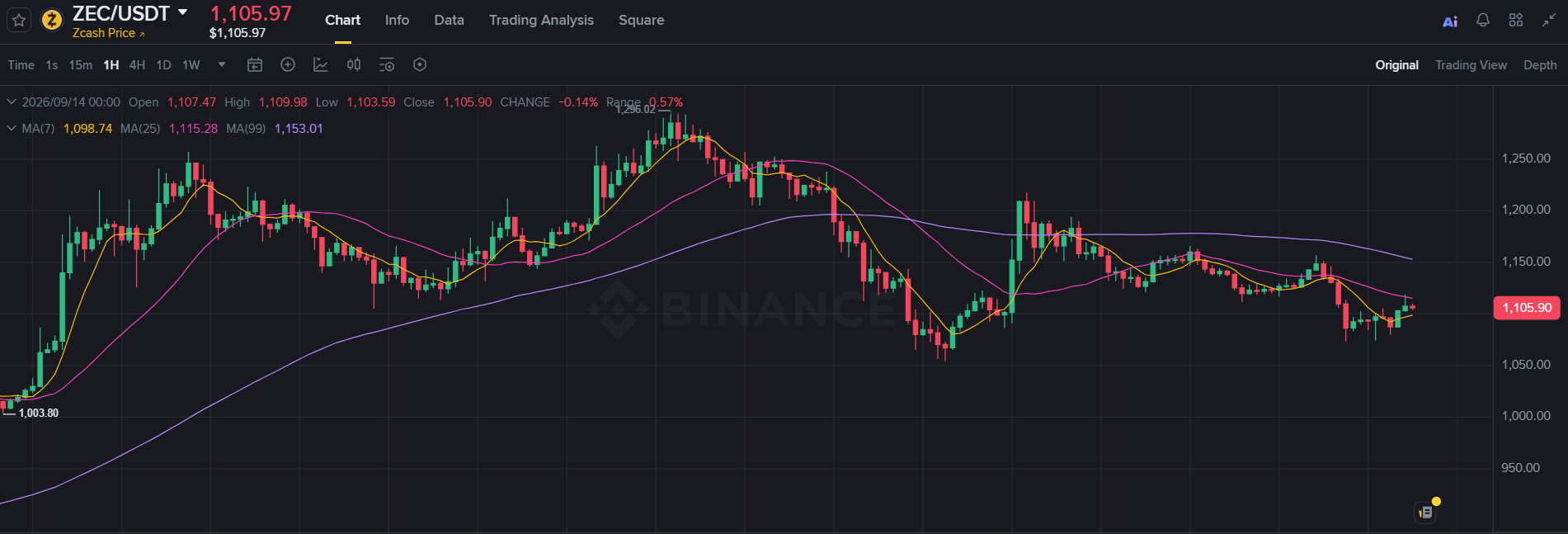
ZEC may have a bigger story than its price — and most traders are looking at the wrong signal.
Since ZCSH launched on NYSE Arca, AUM crossed $500M in less than two weeks, with $70M+ in cumulative inflows.
Then came the bigger transaction: DCG exchanged 85,705 ZEC for roughly $100M of ETF shares.
That changes the question.
Can regulated demand absorb a relatively limited ZEC supply faster than the market expects?
The thesis strengthens if ETF accumulation continues.
Confirmation: sustained spot inflows.
Invalidation: institutional flows fade.
Institutional privacy trade or early signal?
#Zcash #Crypto #PrivacyCoins #InstitutionalCrypto
ZEC may have a bigger story than its price — and most traders are looking at the wrong signal.
Since ZCSH launched on NYSE Arca, AUM crossed $500M in less than two weeks, with $70M+ in cumulative inflows.
Then came the bigger transaction: DCG exchanged 85,705 ZEC for roughly $100M of ETF shares.
That changes the question.
Can regulated demand absorb a relatively limited ZEC supply faster than the market expects?
The thesis strengthens if ETF accumulation continues.
Confirmation: sustained spot inflows.
Invalidation: institutional flows fade.
Institutional privacy trade or early signal?
#Zcash #Crypto #PrivacyCoins #InstitutionalCrypto
Since ZCSH launched on NYSE Arca, AUM crossed $500M in less than two weeks, with $70M+ in cumulative inflows.
Then came the bigger transaction: DCG exchanged 85,705 ZEC for roughly $100M of ETF shares.
That changes the question.
Can regulated demand absorb a relatively limited ZEC supply faster than the market expects?
The thesis strengthens if ETF accumulation continues.
Confirmation: sustained spot inflows.
Invalidation: institutional flows fade.
Institutional privacy trade or early signal?
#Zcash #Crypto #PrivacyCoins #InstitutionalCrypto
2
761

·
--
See translation
Italian banking giant UniCredit is exploring crypto custody and brokerage services and is selecting a technology provider to support the expansion. The plans under consideration also cover tokenized investment products, fixed-income securities, and stablecoin applications for clients, all under the EU’s MiCA framework. Discussions remain at an early stage with no final decision announced.
$BNB $USDC #NewNews #CoinVahini #UniCredit #MiCA #InstitutionalCrypto
Italian banking giant UniCredit is exploring crypto custody and brokerage services and is selecting a technology provider to support the expansion. The plans under consideration also cover tokenized investment products, fixed-income securities, and stablecoin applications for clients, all under the EU’s MiCA framework. Discussions remain at an early stage with no final decision announced.
$BNB $USDC #NewNews #CoinVahini #UniCredit #MiCA #InstitutionalCrypto
$BNB $USDC #NewNews #CoinVahini #UniCredit #MiCA #InstitutionalCrypto
28

·
--
See translation
🚨 UNICREDIT EXPANDS INTO CRYPTO CUSTODY AS INSTITUTIONAL LIQUIDITY BUILDS FOR $LSK 🏦
European banking titan UniCredit managing 34 billion in assets is exploring infrastructure for crypto custody, tokenized products, and stablecoin settlement. 🏦 This institutional footprint signals smart money positioning to engineer deep macro liquidity pools across structural markets.
While regulatory friction could induce short-term order block compression, the underlying market structure reflects structural accumulation over retail distribution. 📊 Institutional rails are systematically laying the foundation for long-term capital efficiency.
💬 Do you expect this banking entry to ignite immediate momentum expansion, or will regulatory risk trigger a deeper liquidity sweep first? 👇
⚠️ Not financial advice. Always manage your risk. 🛡️
🏷️ #LSK #STEEM #InstitutionalCrypto #Crypto #Liquidity
🎯 🦈
🚨 UNICREDIT EXPANDS INTO CRYPTO CUSTODY AS INSTITUTIONAL LIQUIDITY BUILDS FOR $LSK 🏦
European banking titan UniCredit managing 34 billion in assets is exploring infrastructure for crypto custody, tokenized products, and stablecoin settlement. 🏦 This institutional footprint signals smart money positioning to engineer deep macro liquidity pools across structural markets.
While regulatory friction could induce short-term order block compression, the underlying market structure reflects structural accumulation over retail distribution. 📊 Institutional rails are systematically laying the foundation for long-term capital efficiency.
💬 Do you expect this banking entry to ignite immediate momentum expansion, or will regulatory risk trigger a deeper liquidity sweep first? 👇
⚠️ Not financial advice. Always manage your risk. 🛡️
🏷️ #LSK #STEEM #InstitutionalCrypto #Crypto #Liquidity
🎯 🦈
European banking titan UniCredit managing 34 billion in assets is exploring infrastructure for crypto custody, tokenized products, and stablecoin settlement. 🏦 This institutional footprint signals smart money positioning to engineer deep macro liquidity pools across structural markets.
While regulatory friction could induce short-term order block compression, the underlying market structure reflects structural accumulation over retail distribution. 📊 Institutional rails are systematically laying the foundation for long-term capital efficiency.
💬 Do you expect this banking entry to ignite immediate momentum expansion, or will regulatory risk trigger a deeper liquidity sweep first? 👇
⚠️ Not financial advice. Always manage your risk. 🛡️
🏷️ #LSK #STEEM #InstitutionalCrypto #Crypto #Liquidity
🎯 🦈


205

·
--
See translation
US Bitcoin ETFs Record First Net Outflows in Weeks
Spot $BTC ETFs recorded zero net inflows, marking a distinct pause in institutional accumulation.
The structural trend shifted dramatically into the fourth week, with nearly every trading session dominated by persistent net outflows from spot $BTC products.
Market Dynamics & Structural Impact:
Institutional demand via regulated ETFs served as a primary tailwind for BTC's macro structure. Sustained outflows directly remove this key buy-side bid, increasing downside pressure and short-term spot volatility.
A localized period of net redemptions does not inherently signal the onset of a macro bear market. The critical structural question remains whether dynamic capital inflows will resume or if broader risk-off rebalancing will prolong net outflows.
Strategic Takeaway: Watch institutional flow data closely heading into next week - it remains the primary high-beta driver for BTC's immediate direction.
Will institutional capital resume buying the dip, or are we heading toward a deeper macro correction?
#BTC #SpotETF #short #InstitutionalCrypto
US Bitcoin ETFs Record First Net Outflows in Weeks
Spot $BTC ETFs recorded zero net inflows, marking a distinct pause in institutional accumulation.
The structural trend shifted dramatically into the fourth week, with nearly every trading session dominated by persistent net outflows from spot $BTC products.
Market Dynamics & Structural Impact:
Institutional demand via regulated ETFs served as a primary tailwind for BTC's macro structure. Sustained outflows directly remove this key buy-side bid, increasing downside pressure and short-term spot volatility.
A localized period of net redemptions does not inherently signal the onset of a macro bear market. The critical structural question remains whether dynamic capital inflows will resume or if broader risk-off rebalancing will prolong net outflows.
Strategic Takeaway: Watch institutional flow data closely heading into next week - it remains the primary high-beta driver for BTC's immediate direction.
Will institutional capital resume buying the dip, or are we heading toward a deeper macro correction?
#BTC #SpotETF #short #InstitutionalCrypto
Spot $BTC ETFs recorded zero net inflows, marking a distinct pause in institutional accumulation.
The structural trend shifted dramatically into the fourth week, with nearly every trading session dominated by persistent net outflows from spot $BTC products.
Market Dynamics & Structural Impact:
Institutional demand via regulated ETFs served as a primary tailwind for BTC's macro structure. Sustained outflows directly remove this key buy-side bid, increasing downside pressure and short-term spot volatility.
A localized period of net redemptions does not inherently signal the onset of a macro bear market. The critical structural question remains whether dynamic capital inflows will resume or if broader risk-off rebalancing will prolong net outflows.
Strategic Takeaway: Watch institutional flow data closely heading into next week - it remains the primary high-beta driver for BTC's immediate direction.
Will institutional capital resume buying the dip, or are we heading toward a deeper macro correction?
#BTC #SpotETF #short #InstitutionalCrypto

72

·
--
See translation
🚨 MAJOR EUROPEAN BANKING GIANT OPENS CRYPTO CUSTODY AS INSTITUTIONAL LIQUIDITY SURGES $TFUEL 🏦
UniCredit introducing crypto trading and custody services marks a structural pivot in European institutional order flow. Smart money positioning typically precedes broader retail awareness, setting up quiet accumulation phases across utility infrastructure like $TFUEL and $LSK long before traditional capital fully deploys. 🔍
While regulatory friction and near-term market volatility remain active variables, institutional custody infrastructure establishes a significantly stronger structural floor. 📊 As banking gateways expand across Europe, overall market depth will absorb macro sell-side pressure with much greater efficiency. 💡
💬 Do you expect this major European banking gateway to trigger a fresh institutional liquidity wave, or will regulatory friction suppress the setup? 👇
⚠️ Not financial advice. Always manage your risk. 🛡️
🏷️ #TFUEL #LSK #InstitutionalCrypto #MarketStructure #Crypto
🎯 🦈
🚨 MAJOR EUROPEAN BANKING GIANT OPENS CRYPTO CUSTODY AS INSTITUTIONAL LIQUIDITY SURGES $TFUEL 🏦
UniCredit introducing crypto trading and custody services marks a structural pivot in European institutional order flow. Smart money positioning typically precedes broader retail awareness, setting up quiet accumulation phases across utility infrastructure like $TFUEL and $LSK long before traditional capital fully deploys. 🔍
While regulatory friction and near-term market volatility remain active variables, institutional custody infrastructure establishes a significantly stronger structural floor. 📊 As banking gateways expand across Europe, overall market depth will absorb macro sell-side pressure with much greater efficiency. 💡
💬 Do you expect this major European banking gateway to trigger a fresh institutional liquidity wave, or will regulatory friction suppress the setup? 👇
⚠️ Not financial advice. Always manage your risk. 🛡️
🏷️ #TFUEL #LSK #InstitutionalCrypto #MarketStructure #Crypto
🎯 🦈
UniCredit introducing crypto trading and custody services marks a structural pivot in European institutional order flow. Smart money positioning typically precedes broader retail awareness, setting up quiet accumulation phases across utility infrastructure like $TFUEL and $LSK long before traditional capital fully deploys. 🔍
While regulatory friction and near-term market volatility remain active variables, institutional custody infrastructure establishes a significantly stronger structural floor. 📊 As banking gateways expand across Europe, overall market depth will absorb macro sell-side pressure with much greater efficiency. 💡
💬 Do you expect this major European banking gateway to trigger a fresh institutional liquidity wave, or will regulatory friction suppress the setup? 👇
⚠️ Not financial advice. Always manage your risk. 🛡️
🏷️ #TFUEL #LSK #InstitutionalCrypto #MarketStructure #Crypto
🎯 🦈

80

See translation
XRP Derivatives Are Expanding Globally
The expansion of XRP ETF options from Canada into the US market signals massive institutional interest and regulatory maturity.
#XRPETF #InstitutionalCrypto
XRP Derivatives Are Expanding Globally
The expansion of XRP ETF options from Canada into the US market signals massive institutional interest and regulatory maturity.
#XRPETF #InstitutionalCrypto
The expansion of XRP ETF options from Canada into the US market signals massive institutional interest and regulatory maturity.
#XRPETF #InstitutionalCrypto

44

·
--
See translation
🟢 Bullish
🚨 BlackRock Launches New Digital Asset Fund!
BlackRock just announced a new institutional fund focusing on tokenized real-world assets (RWAs) and enterprise blockchain solutions. Huge step for mainstream adoption.
📊 Market Impact: This validates the RWA narrative and could attract billions from traditional finance into the crypto space. Positive for blue-chip cryptos and RWA-focused projects.
#RWAs #InstitutionalCrypto
🟢 Bullish
🚨 BlackRock Launches New Digital Asset Fund!
BlackRock just announced a new institutional fund focusing on tokenized real-world assets (RWAs) and enterprise blockchain solutions. Huge step for mainstream adoption.
📊 Market Impact: This validates the RWA narrative and could attract billions from traditional finance into the crypto space. Positive for blue-chip cryptos and RWA-focused projects.
#RWAs #InstitutionalCrypto
🚨 BlackRock Launches New Digital Asset Fund!
BlackRock just announced a new institutional fund focusing on tokenized real-world assets (RWAs) and enterprise blockchain solutions. Huge step for mainstream adoption.
📊 Market Impact: This validates the RWA narrative and could attract billions from traditional finance into the crypto space. Positive for blue-chip cryptos and RWA-focused projects.
#RWAs #InstitutionalCrypto
3
·
--
See translation
Most institutions exploring crypto focus on the wrong question: "What should we buy?"
The better question is: "How do we manage it once we own it?"
Traditional treasury management runs on legacy rails — multiple signatories, banking portals, reconciliation spreadsheets, quarterly audits. Every step is manual, slow, and error-prone.
On-chain treasury changes this. Smart contracts enforce spending policies without human intervention. Multi-sig wallets distribute approval authority transparently. Every transaction is timestamped, immutable, and auditable in real time.
This isn't just efficiency. It's a trust model upgrade.
The chains that recognize this early are building the infrastructure institutions will actually use. $ETH settlement layer with programmable account abstraction enables treasury policies at the protocol level. $BNB Chain's low-fee environment makes daily treasury operations cost-effective for mid-cap funds. $SOL's throughput supports real-time multi-signatory workflows without UX friction.
The next wave of institutional adoption won't be announced at conferences. It will show up in treasury department RFPs asking for on-chain governance tooling.
If you're evaluating Layer 1s for the next 3-5 years, don't just track ETF flows. Track which chains are building treasury infrastructure that institutional CFOs would actually deploy.
The institutions that move first won't just hold crypto. They'll run their entire treasury on it.
#InstitutionalCrypto #OnChainTreasury #Web3Infrastructure #DeFi #BNB
Most institutions exploring crypto focus on the wrong question: "What should we buy?"
The better question is: "How do we manage it once we own it?"
Traditional treasury management runs on legacy rails — multiple signatories, banking portals, reconciliation spreadsheets, quarterly audits. Every step is manual, slow, and error-prone.
On-chain treasury changes this. Smart contracts enforce spending policies without human intervention. Multi-sig wallets distribute approval authority transparently. Every transaction is timestamped, immutable, and auditable in real time.
This isn't just efficiency. It's a trust model upgrade.
The chains that recognize this early are building the infrastructure institutions will actually use. $ETH settlement layer with programmable account abstraction enables treasury policies at the protocol level. $BNB Chain's low-fee environment makes daily treasury operations cost-effective for mid-cap funds. $SOL 's throughput supports real-time multi-signatory workflows without UX friction.
The next wave of institutional adoption won't be announced at conferences. It will show up in treasury department RFPs asking for on-chain governance tooling.
If you're evaluating Layer 1s for the next 3-5 years, don't just track ETF flows. Track which chains are building treasury infrastructure that institutional CFOs would actually deploy.
The institutions that move first won't just hold crypto. They'll run their entire treasury on it.
#InstitutionalCrypto #OnChainTreasury #Web3Infrastructure #DeFi #BNB
The better question is: "How do we manage it once we own it?"
Traditional treasury management runs on legacy rails — multiple signatories, banking portals, reconciliation spreadsheets, quarterly audits. Every step is manual, slow, and error-prone.
On-chain treasury changes this. Smart contracts enforce spending policies without human intervention. Multi-sig wallets distribute approval authority transparently. Every transaction is timestamped, immutable, and auditable in real time.
This isn't just efficiency. It's a trust model upgrade.
The chains that recognize this early are building the infrastructure institutions will actually use. $ETH settlement layer with programmable account abstraction enables treasury policies at the protocol level. $BNB Chain's low-fee environment makes daily treasury operations cost-effective for mid-cap funds. $SOL 's throughput supports real-time multi-signatory workflows without UX friction.
The next wave of institutional adoption won't be announced at conferences. It will show up in treasury department RFPs asking for on-chain governance tooling.
If you're evaluating Layer 1s for the next 3-5 years, don't just track ETF flows. Track which chains are building treasury infrastructure that institutional CFOs would actually deploy.
The institutions that move first won't just hold crypto. They'll run their entire treasury on it.
#InstitutionalCrypto #OnChainTreasury #Web3Infrastructure #DeFi #BNB
68
·
--
See translation
The Singapore Exchange (SGX) has received CFTC authorization under Regulation 48.10, allowing U.S. institutional investors to trade its Bitcoin and Ethereum perpetual futures. The move connects American trading desks with Asian liquidity pools. SGX’s contracts have already recorded about $5.8 billion in cumulative volume since their November 2025 launch.
$BTC $ETH $USDC #NewNews #CoinVahini #SGX #CryptoDerivatives #InstitutionalCrypto
The Singapore Exchange (SGX) has received CFTC authorization under Regulation 48.10, allowing U.S. institutional investors to trade its Bitcoin and Ethereum perpetual futures. The move connects American trading desks with Asian liquidity pools. SGX’s contracts have already recorded about $5.8 billion in cumulative volume since their November 2025 launch.
$BTC $ETH $USDC #NewNews #CoinVahini #SGX #CryptoDerivatives #InstitutionalCrypto
$BTC $ETH $USDC #NewNews #CoinVahini #SGX #CryptoDerivatives #InstitutionalCrypto
1
64

·
--

Article
See translation
Fidelity’s FIDD Stablecoin: The Quiet Engine Powering Institutional DeFiMost traders focus on price swings, but the real engine of institutional confidence is the liquidity backbone. Fidelity’s launch of its $FIDD stablecoin on Ethereum is a quiet signal that the traditional finance giant is cementing a new, dollar‑backed bridge into on‑chain markets, and it’s already reshaping whale behavior.
The signal: Fidelity is injecting $50 million into its FIDD stablecoin, setting up a dollar‑redemption mechanism, enabling seamless ETH transfers, and committing to monthly reserve audits. #FIDD #DeFi #InstitutionalCrypto
Interpretation: By anchoring FIDD to the U.S. dollar and providing a transparent redemption path, Fidelity is lowering the friction for institutional players to move capital into DeFi without exposing them to volatility. This move signals that large‑cap funds are ready to deploy capital into Ethereum‑based protocols, potentially driving up demand for $ETH and liquidity providers. The monthly reserve reviews add a layer of trust that could attract risk‑averse hedge funds and pension funds looking for a regulated entry point.
Watch list: Keep an eye on the FIDD‑$ETH liquidity pool on major AMMs. A sudden spike in FIDD deposits or withdrawals will indicate institutional appetite. #FIDDETH
Thought closer: If Fidelity’s FIDD becomes the go‑to stablecoin for institutional DeFi, will we see a shift in how traditional funds allocate their crypto exposure?
Fidelity’s FIDD Stablecoin: The Quiet Engine Powering Institutional DeFi
Most traders focus on price swings, but the real engine of institutional confidence is the liquidity backbone. Fidelity’s launch of its $FIDD stablecoin on Ethereum is a quiet signal that the traditional finance giant is cementing a new, dollar‑backed bridge into on‑chain markets, and it’s already reshaping whale behavior.
The signal: Fidelity is injecting $50 million into its FIDD stablecoin, setting up a dollar‑redemption mechanism, enabling seamless ETH transfers, and committing to monthly reserve audits. #FIDD #DeFi #InstitutionalCrypto
Interpretation: By anchoring FIDD to the U.S. dollar and providing a transparent redemption path, Fidelity is lowering the friction for institutional players to move capital into DeFi without exposing them to volatility. This move signals that large‑cap funds are ready to deploy capital into Ethereum‑based protocols, potentially driving up demand for $ETH and liquidity providers. The monthly reserve reviews add a layer of trust that could attract risk‑averse hedge funds and pension funds looking for a regulated entry point.
Watch list: Keep an eye on the FIDD‑$ETH liquidity pool on major AMMs. A sudden spike in FIDD deposits or withdrawals will indicate institutional appetite. #FIDDETH
Thought closer: If Fidelity’s FIDD becomes the go‑to stablecoin for institutional DeFi, will we see a shift in how traditional funds allocate their crypto exposure?
The signal: Fidelity is injecting $50 million into its FIDD stablecoin, setting up a dollar‑redemption mechanism, enabling seamless ETH transfers, and committing to monthly reserve audits. #FIDD #DeFi #InstitutionalCrypto
Interpretation: By anchoring FIDD to the U.S. dollar and providing a transparent redemption path, Fidelity is lowering the friction for institutional players to move capital into DeFi without exposing them to volatility. This move signals that large‑cap funds are ready to deploy capital into Ethereum‑based protocols, potentially driving up demand for $ETH and liquidity providers. The monthly reserve reviews add a layer of trust that could attract risk‑averse hedge funds and pension funds looking for a regulated entry point.
Watch list: Keep an eye on the FIDD‑$ETH liquidity pool on major AMMs. A sudden spike in FIDD deposits or withdrawals will indicate institutional appetite. #FIDDETH
Thought closer: If Fidelity’s FIDD becomes the go‑to stablecoin for institutional DeFi, will we see a shift in how traditional funds allocate their crypto exposure?
6

See translation
Picture this: institutional funds quietly vacuuming up three percent of a coin's entire liquid supply while most retail traders are looking the other way.
Most investors spend months trying to time local bottoms, only to get chopped up or miss the real structural supply shocks until price action has already moved without them.
Last week, Grayscale's new Zcash trust crossed $500 million in assets under management just two weeks after listing. That brings their total holdings to over 550,000 $ZEC, which represents roughly 3% of the entire circulating supply. It feels eerily similar to how institutional accumulation started with early $BTC vehicles years ago, where supply was steadily locked up before the broader market realized the liquidity drain.
When Grayscale ran a similar playbook with their early $ETH trust, the market took months to digest the impact on circulating liquidity. While privacy assets have traded in the shadows of regulatory debates, seeing half a billion dollars enter a dedicated vehicle in fourteen days shows that institutional demand plays by different rules than retail sentiment.
Do you think privacy coins are entering a real institutional cycle, or is this just temporary fund rebalancing?
#Zcash #CryptoETF #InstitutionalCrypto
Picture this: institutional funds quietly vacuuming up three percent of a coin's entire liquid supply while most retail traders are looking the other way.
Most investors spend months trying to time local bottoms, only to get chopped up or miss the real structural supply shocks until price action has already moved without them.
Last week, Grayscale's new Zcash trust crossed $500 million in assets under management just two weeks after listing. That brings their total holdings to over 550,000 $ZEC , which represents roughly 3% of the entire circulating supply. It feels eerily similar to how institutional accumulation started with early $BTC vehicles years ago, where supply was steadily locked up before the broader market realized the liquidity drain.
When Grayscale ran a similar playbook with their early $ETH trust, the market took months to digest the impact on circulating liquidity. While privacy assets have traded in the shadows of regulatory debates, seeing half a billion dollars enter a dedicated vehicle in fourteen days shows that institutional demand plays by different rules than retail sentiment.
Do you think privacy coins are entering a real institutional cycle, or is this just temporary fund rebalancing?
#Zcash #CryptoETF #InstitutionalCrypto
Most investors spend months trying to time local bottoms, only to get chopped up or miss the real structural supply shocks until price action has already moved without them.
Last week, Grayscale's new Zcash trust crossed $500 million in assets under management just two weeks after listing. That brings their total holdings to over 550,000 $ZEC , which represents roughly 3% of the entire circulating supply. It feels eerily similar to how institutional accumulation started with early $BTC vehicles years ago, where supply was steadily locked up before the broader market realized the liquidity drain.
When Grayscale ran a similar playbook with their early $ETH trust, the market took months to digest the impact on circulating liquidity. While privacy assets have traded in the shadows of regulatory debates, seeing half a billion dollars enter a dedicated vehicle in fourteen days shows that institutional demand plays by different rules than retail sentiment.
Do you think privacy coins are entering a real institutional cycle, or is this just temporary fund rebalancing?
#Zcash #CryptoETF #InstitutionalCrypto

177

·
--
See translation
Have you noticed how institutional money quietly locks up float while retail traders are still waiting for a classic breakout signal? Most investors keep chasing massive nominal inflows on mega-caps, only to end up holding stagnant positions or buying local tops because they completely ignore relative supply compression.
The real game in crypto right now is tracking liquidity drain relative to total market cap, not just headline dollar figures. While everyone fixates on how billions flow into $BTC without drastically denting its available float, Grayscale’s new Zcash vehicle managed to cross 500 million dollars in assets just two weeks after listing. More importantly, it now holds over 550,000 $ZEC, which effectively removes roughly 3% of the entire circulating supply from the open market in a matter of days.
If you want to position effectively before a real supply shock hits, stop judging ETF strength purely by dollar volume and start mapping institutional holdings against total liquid supply. When an asset with a tighter cap starts losing percentage points of its float this fast, the order books thin out exponentially, meaning any sudden uptick in market demand forces price discovery much faster than larger alternatives like $ETH.
Are we about to see a massive supply squeeze on privacy assets, or will secondary market liquidity absorb this institutional lockup?
#ZEC #CryptoETFs #InstitutionalCrypto
Have you noticed how institutional money quietly locks up float while retail traders are still waiting for a classic breakout signal? Most investors keep chasing massive nominal inflows on mega-caps, only to end up holding stagnant positions or buying local tops because they completely ignore relative supply compression.
The real game in crypto right now is tracking liquidity drain relative to total market cap, not just headline dollar figures. While everyone fixates on how billions flow into $BTC without drastically denting its available float, Grayscale’s new Zcash vehicle managed to cross 500 million dollars in assets just two weeks after listing. More importantly, it now holds over 550,000 $ZEC , which effectively removes roughly 3% of the entire circulating supply from the open market in a matter of days.
If you want to position effectively before a real supply shock hits, stop judging ETF strength purely by dollar volume and start mapping institutional holdings against total liquid supply. When an asset with a tighter cap starts losing percentage points of its float this fast, the order books thin out exponentially, meaning any sudden uptick in market demand forces price discovery much faster than larger alternatives like $ETH .
Are we about to see a massive supply squeeze on privacy assets, or will secondary market liquidity absorb this institutional lockup?
#ZEC #CryptoETFs #InstitutionalCrypto
The real game in crypto right now is tracking liquidity drain relative to total market cap, not just headline dollar figures. While everyone fixates on how billions flow into $BTC without drastically denting its available float, Grayscale’s new Zcash vehicle managed to cross 500 million dollars in assets just two weeks after listing. More importantly, it now holds over 550,000 $ZEC , which effectively removes roughly 3% of the entire circulating supply from the open market in a matter of days.
If you want to position effectively before a real supply shock hits, stop judging ETF strength purely by dollar volume and start mapping institutional holdings against total liquid supply. When an asset with a tighter cap starts losing percentage points of its float this fast, the order books thin out exponentially, meaning any sudden uptick in market demand forces price discovery much faster than larger alternatives like $ETH .
Are we about to see a massive supply squeeze on privacy assets, or will secondary market liquidity absorb this institutional lockup?
#ZEC #CryptoETFs #InstitutionalCrypto

93

·
--
Bullish
See translation
🚨 Strive just added another $109 million in Bitcoin.
The company bought 1,375 $BTC at an average price of $79,281, bringing its total treasury to 24,531 BTC—worth roughly $1.96 billion at current prices.
Around 70% of last week’s capital came from its preferred stock, $SATA, which now sits at about $999 million in notional value—just below the $1 billion mark.
Institutional Bitcoin accumulation is not slowing down.
#Bitcoin #BTC #InstitutionalCrypto #CryptoNews #Markets
🚨 Strive just added another $109 million in Bitcoin.
The company bought 1,375 $BTC at an average price of $79,281, bringing its total treasury to 24,531 BTC—worth roughly $1.96 billion at current prices.
Around 70% of last week’s capital came from its preferred stock, $SATA, which now sits at about $999 million in notional value—just below the $1 billion mark.
Institutional Bitcoin accumulation is not slowing down.
#Bitcoin #BTC #InstitutionalCrypto #CryptoNews #Markets
The company bought 1,375 $BTC at an average price of $79,281, bringing its total treasury to 24,531 BTC—worth roughly $1.96 billion at current prices.
Around 70% of last week’s capital came from its preferred stock, $SATA, which now sits at about $999 million in notional value—just below the $1 billion mark.
Institutional Bitcoin accumulation is not slowing down.
#Bitcoin #BTC #InstitutionalCrypto #CryptoNews #Markets
499
·
--

Article
See translation
Compound’s Institutional-Only Lending Launch Oversubscribed, $ETH and $BTC Poised for New Yield DynaCompound’s Institutional-Only Lending Launch Oversubscribed, $ETH and $BTC Poised for New Yield Dynamics
In the last 24 hours, Compound’s new institutional-only lending pool attracted more than $1.2 B in deposits, a 45% surge over the previous week’s total on-chain activity for the platform.
Why this matters: The platform now offers up to 87% LTV on USDC collateralized by $ETH, wstETH, WBTC and cbBTC, but only to a curated whitelist of institutional players. This move signals a shift toward regulated, high‑volume DeFi lending, potentially tightening liquidity for retail users while amplifying yield opportunities for large‑cap holders.
Smart money is already positioning: DeFi Saver, K3/Nexo, KPK and Yearn were the first to commit, injecting roughly $350 M in collateral. Analysts see this as a bet on a sustained rise in $ETH and $BTC prices, as higher LTVs will drive demand for borrowing against these assets. #DeFi #YieldFarming #InstitutionalCrypto
Forward signal: If $ETH breaks above $3,800, the 87% LTV could trigger a cascade of new borrowing, pushing the pool’s total value locked (TVL) past $5 B by mid‑Q4. Keep an eye on the 20‑day moving average; a breakout above that level could signal a broader market rally. #ETH
Are you ready to adjust your exposure to institutional DeFi lending?
Compound’s Institutional-Only Lending Launch Oversubscribed, $ETH and $BTC Poised for New Yield Dyna
Compound’s Institutional-Only Lending Launch Oversubscribed, $ETH and $BTC Poised for New Yield Dynamics
In the last 24 hours, Compound’s new institutional-only lending pool attracted more than $1.2 B in deposits, a 45% surge over the previous week’s total on-chain activity for the platform.
Why this matters: The platform now offers up to 87% LTV on USDC collateralized by $ETH , wstETH, WBTC and cbBTC, but only to a curated whitelist of institutional players. This move signals a shift toward regulated, high‑volume DeFi lending, potentially tightening liquidity for retail users while amplifying yield opportunities for large‑cap holders.
Smart money is already positioning: DeFi Saver, K3/Nexo, KPK and Yearn were the first to commit, injecting roughly $350 M in collateral. Analysts see this as a bet on a sustained rise in $ETH and $BTC prices, as higher LTVs will drive demand for borrowing against these assets. #DeFi #YieldFarming #InstitutionalCrypto
Forward signal: If $ETH breaks above $3,800, the 87% LTV could trigger a cascade of new borrowing, pushing the pool’s total value locked (TVL) past $5 B by mid‑Q4. Keep an eye on the 20‑day moving average; a breakout above that level could signal a broader market rally. #ETH
Are you ready to adjust your exposure to institutional DeFi lending?
In the last 24 hours, Compound’s new institutional-only lending pool attracted more than $1.2 B in deposits, a 45% surge over the previous week’s total on-chain activity for the platform.
Why this matters: The platform now offers up to 87% LTV on USDC collateralized by $ETH , wstETH, WBTC and cbBTC, but only to a curated whitelist of institutional players. This move signals a shift toward regulated, high‑volume DeFi lending, potentially tightening liquidity for retail users while amplifying yield opportunities for large‑cap holders.
Smart money is already positioning: DeFi Saver, K3/Nexo, KPK and Yearn were the first to commit, injecting roughly $350 M in collateral. Analysts see this as a bet on a sustained rise in $ETH and $BTC prices, as higher LTVs will drive demand for borrowing against these assets. #DeFi #YieldFarming #InstitutionalCrypto
Forward signal: If $ETH breaks above $3,800, the 87% LTV could trigger a cascade of new borrowing, pushing the pool’s total value locked (TVL) past $5 B by mid‑Q4. Keep an eye on the 20‑day moving average; a breakout above that level could signal a broader market rally. #ETH
Are you ready to adjust your exposure to institutional DeFi lending?
15
Log in to explore more content
Join global crypto users on Binance Square
⚡️ Get latest and useful information about crypto.
💬 Trusted by the world’s largest crypto exchange.
👍 Discover real insights from verified creators.
Email / Phone number
Trending Topics
1
#FedRateWatch
1.4M views
6,683 Discussing
2
#ZcashRises6%
48,459 views
628 Discussing
3
#XRPSinks10%
32,764 views
412 Discussing
4
#BitcoinETFsShed$450M
5,820 views
84 Discussing
5
#CircleOpensArcMainnet
15,276 views
278 Discussing
6
#ZcashHoldersBackNU7Upgrade
26,341 views
440 Discussing
7
#MSTRTradingVolumeSurpassesMorganStanley
25,717 views
595 Discussing
8
#BitcoinFalls4%
52,965 views
929 Discussing
9
#SKHynixInTalksToMakeMemoryChipsInUS
20,989 views
361 Discussing
10
#OpenAIDiscussesNewFundingAt$1.2TValuation
5,370 views
58 Discussing