Binance Square
#ecb

ecb

779,875 views
901 Discussing
OnionSam
·
--
Bullish
See translation
🇪🇺💶 The European Central Bank has called on merchants to participate in digital euro field trials to test points of sale and offline payments 📱💳 🏛️🚀 The move aims to accelerate operational readiness, reduce payment costs, and enhance #Europe 's monetary sovereignty ahead of the official launch📊 #ECB #euro #Market_Update #digitaleuro $EUR {spot}(EURUSDT) $LINK {spot}(LINKUSDT) $ETH {spot}(ETHUSDT)
🇪🇺💶 The European Central Bank has called on merchants to participate in digital euro field trials to test points of sale and offline payments 📱💳

🏛️🚀 The move aims to accelerate operational readiness, reduce payment costs, and enhance #Europe 's monetary sovereignty ahead of the official launch📊

#ECB
#euro
#Market_Update
#digitaleuro

$EUR
$LINK
$ETH
Bitcoin Up or Down on September 15?

Bitcoin Up or Down on September 15?

1%Up99%Down
Volume $102,038.96
red envelope
Good luck 🍀
From OnionSam
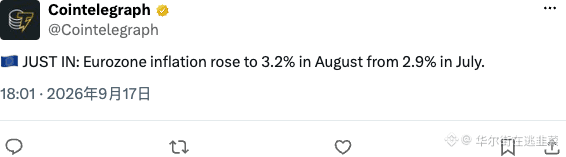
The ECB has just shown some breathing room: in August, inflation rebounded directly to 3.2%, up from the prior 2.9%. Rate-cut expectations now have to be pushed further back again; the euro strengthens and the dollar faces pressure, and risk assets will likely wobble in the short term. Don’t rush to bottom-fish—inflation is something that cures all kinds of defiance. $BTC $ETH #Eurozone #Inflation #ECB #BTC
The ECB has just shown some breathing room: in August, inflation rebounded directly to 3.2%, up from the prior 2.9%. Rate-cut expectations now have to be pushed further back again; the euro strengthens and the dollar faces pressure, and risk assets will likely wobble in the short term. Don’t rush to bottom-fish—inflation is something that cures all kinds of defiance.

$BTC $ETH #Eurozone #Inflation #ECB #BTC
According to the latest pricing of interest-rate derivatives, traders have recently clearly cut back their bets on further interest-rate hikes by the European Central Bank (ECB). Currently, the market estimates the probability that the ECB will continue raising rates in October has fallen to around 50%. After a series of tightening moves, market expectations regarding the ECB’s next step have begun to diverge significantly. The key driver behind this shift is Europe’s current, complex economic situation. On the one hand, inflation persistence remains. On the other hand, several forward-looking economic indicators have continued to weaken, and fears of a downturn have not gone away. The market initially had high expectations for continued tightening. However, in the face of a real cooling of the economy, investors have started to reassess the central bank’s difficult trade-off between fighting inflation and supporting growth. Judging by developments in traditional financial markets, the cooling of rate-hike expectations has directly weighed on the euro’s exchange-rate performance, and European bond yields have also pulled back to some extent. If the ECB were to press the “pause” button on rate hikes, it could ease liquidity pressures in Europe’s banking sector in the short term. At the same time, it would also heighten market concerns about further widening interest-rate spreads between Europe and the United States, forcing a rebalancing of global capital flows. For the crypto market, the macro liquidity environment remains a key variable that determines sentiment. The cooling of Europe’s rate-hike expectations both reflects the possibility that the liquidity-tightening cycle may be nearing its end and signals worries about weakness in the real economy. When major assets such as $BTC face such macro expectation swings, their overall performance tends to be relatively cautious, with funds mostly waiting on the sidelines for more macro data and clearer policy guidance from the world’s central banks. #ECB #InterestRates #MacroEconomics
According to the latest pricing of interest-rate derivatives, traders have recently clearly cut back their bets on further interest-rate hikes by the European Central Bank (ECB). Currently, the market estimates the probability that the ECB will continue raising rates in October has fallen to around 50%. After a series of tightening moves, market expectations regarding the ECB’s next step have begun to diverge significantly.

The key driver behind this shift is Europe’s current, complex economic situation. On the one hand, inflation persistence remains. On the other hand, several forward-looking economic indicators have continued to weaken, and fears of a downturn have not gone away. The market initially had high expectations for continued tightening. However, in the face of a real cooling of the economy, investors have started to reassess the central bank’s difficult trade-off between fighting inflation and supporting growth.

Judging by developments in traditional financial markets, the cooling of rate-hike expectations has directly weighed on the euro’s exchange-rate performance, and European bond yields have also pulled back to some extent. If the ECB were to press the “pause” button on rate hikes, it could ease liquidity pressures in Europe’s banking sector in the short term. At the same time, it would also heighten market concerns about further widening interest-rate spreads between Europe and the United States, forcing a rebalancing of global capital flows.

For the crypto market, the macro liquidity environment remains a key variable that determines sentiment. The cooling of Europe’s rate-hike expectations both reflects the possibility that the liquidity-tightening cycle may be nearing its end and signals worries about weakness in the real economy. When major assets such as $BTC face such macro expectation swings, their overall performance tends to be relatively cautious, with funds mostly waiting on the sidelines for more macro data and clearer policy guidance from the world’s central banks.

#ECB #InterestRates #MacroEconomics
According to the latest interest rate swap pricing in the European money market, investors’ bets that the European Central Bank will continue to raise rates at its upcoming October meeting have cooled significantly. The market-implied probability of further hikes has fallen sharply to around 50%. After multiple rounds of aggressive tightening, the rapid deterioration in the euro area’s macro fundamentals is forcing the market to reassess the central bank’s monetary policy path. The key driver behind this shift is the sharply increased risk that the euro area economy could become trapped in stagflation. Although core inflation remains sticky, recently released PMI and credit data both indicate that the real economy is under tremendous pressure, with demand contracting quickly. If the ECB chooses to hold rates steady in October, on the surface it may look like it is giving the economy room to breathe; in reality, it reflects a dilemma facing policymakers between suppressing inflation and avoiding a severe recession. From the perspective of macro asset performance, the cooling of rate-hike expectations directly weakens support for the euro’s exchange rate and helps keep the U.S. dollar index in a strong pattern. At the same time, European sovereign bond yields have pulled back, but the market has not turned optimistic as a result. Concerns that the economy could experience a hard landing are suppressing the rebound potential of risk assets, while risk-averse sentiment continues to support defensive assets such as gold. For the cryptocurrency market, the subtle adjustment in expectations for European liquidity cannot be interpreted as a simple positive. Against the backdrop of global central banks maintaining a “Higher for longer” stance, weakness in non-USD currencies will further intensify the global pressure on tightening U.S. dollar liquidity. In an environment where there is no incremental capital flowing in, $BTC and mainstream alternative coins will still face volatility and downward pressure driven by insufficient liquidity, and downside risks have not been fully cleared. #ECB #InterestRates #MacroEconomy
According to the latest interest rate swap pricing in the European money market, investors’ bets that the European Central Bank will continue to raise rates at its upcoming October meeting have cooled significantly. The market-implied probability of further hikes has fallen sharply to around 50%. After multiple rounds of aggressive tightening, the rapid deterioration in the euro area’s macro fundamentals is forcing the market to reassess the central bank’s monetary policy path.

The key driver behind this shift is the sharply increased risk that the euro area economy could become trapped in stagflation. Although core inflation remains sticky, recently released PMI and credit data both indicate that the real economy is under tremendous pressure, with demand contracting quickly. If the ECB chooses to hold rates steady in October, on the surface it may look like it is giving the economy room to breathe; in reality, it reflects a dilemma facing policymakers between suppressing inflation and avoiding a severe recession.

From the perspective of macro asset performance, the cooling of rate-hike expectations directly weakens support for the euro’s exchange rate and helps keep the U.S. dollar index in a strong pattern. At the same time, European sovereign bond yields have pulled back, but the market has not turned optimistic as a result. Concerns that the economy could experience a hard landing are suppressing the rebound potential of risk assets, while risk-averse sentiment continues to support defensive assets such as gold.

For the cryptocurrency market, the subtle adjustment in expectations for European liquidity cannot be interpreted as a simple positive. Against the backdrop of global central banks maintaining a “Higher for longer” stance, weakness in non-USD currencies will further intensify the global pressure on tightening U.S. dollar liquidity. In an environment where there is no incremental capital flowing in, $BTC and mainstream alternative coins will still face volatility and downward pressure driven by insufficient liquidity, and downside risks have not been fully cleared.

#ECB #InterestRates #MacroEconomy
Latest pricing data in the European money market shows that traders have significantly lowered their rate-hike expectations for the European Central Bank (ECB) today. The probability the market assigns to a rate hike at the October meeting has fallen to the 50% equilibrium level. This rapid repricing reflects concerns that slowing economic growth momentum in the euro area are outweighing worries about sticky inflation. From a macro “game” perspective, the market previously largely held fairly hawkish tightening expectations. Now, with the rate-hike probability dropping sharply to a 50-50 bet, it suggests the substantive endpoint of the ECB’s current aggressive tightening cycle may come earlier than expected. A slowdown—and even a pause—in the pace of hikes signals that the wave of global central bank liquidity tightening is approaching its limits, and the window for a policy shift is gradually opening. In traditional financial markets, this sentiment quickly drove cross-asset linkages. Major European government bond yields have retreated from their highs, the euro has come under pressure and weakened, and easing tightening pressure directly boosted risk appetite in risk assets such as European equities. Marginal improvement in global liquidity expectations effectively alleviated valuation pressure across markets, providing support for a rebound in risk assets. For crypto assets, this is undoubtedly a positive technical and liquidity signal. With the ECB’s tightening steps likely peaking, the most severe phase of global systematic liquidity squeeze may already be behind us. If paired with high-range consolidation in the U.S. dollar index, a recovery in risk appetite could accelerate valuation repair across the crypto market, led by $BTC . Expectations of improved liquidity should provide ample momentum for subsequent upside breakouts.🚀 #ECB #InterestRates #MacroEconomics
Latest pricing data in the European money market shows that traders have significantly lowered their rate-hike expectations for the European Central Bank (ECB) today. The probability the market assigns to a rate hike at the October meeting has fallen to the 50% equilibrium level. This rapid repricing reflects concerns that slowing economic growth momentum in the euro area are outweighing worries about sticky inflation.

From a macro “game” perspective, the market previously largely held fairly hawkish tightening expectations. Now, with the rate-hike probability dropping sharply to a 50-50 bet, it suggests the substantive endpoint of the ECB’s current aggressive tightening cycle may come earlier than expected. A slowdown—and even a pause—in the pace of hikes signals that the wave of global central bank liquidity tightening is approaching its limits, and the window for a policy shift is gradually opening.

In traditional financial markets, this sentiment quickly drove cross-asset linkages. Major European government bond yields have retreated from their highs, the euro has come under pressure and weakened, and easing tightening pressure directly boosted risk appetite in risk assets such as European equities. Marginal improvement in global liquidity expectations effectively alleviated valuation pressure across markets, providing support for a rebound in risk assets.

For crypto assets, this is undoubtedly a positive technical and liquidity signal. With the ECB’s tightening steps likely peaking, the most severe phase of global systematic liquidity squeeze may already be behind us. If paired with high-range consolidation in the U.S. dollar index, a recovery in risk appetite could accelerate valuation repair across the crypto market, led by $BTC . Expectations of improved liquidity should provide ample momentum for subsequent upside breakouts.🚀

#ECB #InterestRates #MacroEconomics
ECB calls on traders to participate in digital euro trial - The European Central Bank (ECB) is seeking the participation of traders in a digital euro pilot program. - The 12-month pilot program will test a beta version of central bank digital money (CBDC) for online, mobile, in-store, and peer-to-peer payments. - The RSS description does not provide any additional details about the start date or specific traders. #ECB #DigitalEuro #CBDC #CryptoNews #BinanceSquare $btc $eth vlikevn Titanbot Source: CoinDesk
ECB calls on traders to participate in digital euro trial

- The European Central Bank (ECB) is seeking the participation of traders in a digital euro pilot program.
- The 12-month pilot program will test a beta version of central bank digital money (CBDC) for online, mobile, in-store, and peer-to-peer payments.
- The RSS description does not provide any additional details about the start date or specific traders.

#ECB #DigitalEuro #CBDC #CryptoNews #BinanceSquare

$btc $eth

vlikevn Titanbot

Source: CoinDesk
The European Central Bank’s executive board member Mulan made a public statement on Tuesday, offering an interpretation of recent volatility in the euro-area sovereign debt market. He said that the sustained rise in long-term bond yields is mainly driven by the expansion in government and corporate bond issuance, as well as renewed heating of market expectations for inflation. He also added that despite the higher yields, the French Treasury’s recent bond issuance and financing were still completed smoothly, and he called on governments across countries to take concrete actions to effectively reduce fiscal deficits. This statement clearly reflects the deep-rooted contradictions currently facing Europe’s—and even the global—bond market. On one hand, economies maintain relatively high levels of bond supply to support fiscal spending. On the other hand, sticky inflation constrains expectations for interest-rate cuts. Combined with the supply-demand structure and an inflation risk premium, this keeps long-end rates elevated, sharply contrasting with the market’s earlier widespread bet on a rapid easing cycle. From a macro-asset perspective, the rise in long-end government bond yields directly increases funding costs for global risk-free assets. If US and European long-term bond yields remain at relatively high levels, they will not only weigh on traditional equity markets—especially high-valuation growth segments—but also lead to repricing of commodities via discount-rate effects. Rebalancing of funds between fixed-income assets and risk assets is still underway. For the crypto market, there has been no aggressive stimulus from macro liquidity, meaning liquidity conditions remain within an existing pool of capital and a range of structural plays. A high-rate environment will objectively divert some conservative capital, but as long as systemic liquidity does not tighten abruptly, $BTC and major coins are more likely to continue trading in narrow ranges in line with macro sentiment. Investors can continue to watch the ongoing interplay between inflation data and the subsequent policy path of central banks. #ECB #InterestRates #MacroEconomy
The European Central Bank’s executive board member Mulan made a public statement on Tuesday, offering an interpretation of recent volatility in the euro-area sovereign debt market. He said that the sustained rise in long-term bond yields is mainly driven by the expansion in government and corporate bond issuance, as well as renewed heating of market expectations for inflation. He also added that despite the higher yields, the French Treasury’s recent bond issuance and financing were still completed smoothly, and he called on governments across countries to take concrete actions to effectively reduce fiscal deficits.

This statement clearly reflects the deep-rooted contradictions currently facing Europe’s—and even the global—bond market. On one hand, economies maintain relatively high levels of bond supply to support fiscal spending. On the other hand, sticky inflation constrains expectations for interest-rate cuts. Combined with the supply-demand structure and an inflation risk premium, this keeps long-end rates elevated, sharply contrasting with the market’s earlier widespread bet on a rapid easing cycle.

From a macro-asset perspective, the rise in long-end government bond yields directly increases funding costs for global risk-free assets. If US and European long-term bond yields remain at relatively high levels, they will not only weigh on traditional equity markets—especially high-valuation growth segments—but also lead to repricing of commodities via discount-rate effects. Rebalancing of funds between fixed-income assets and risk assets is still underway.

For the crypto market, there has been no aggressive stimulus from macro liquidity, meaning liquidity conditions remain within an existing pool of capital and a range of structural plays. A high-rate environment will objectively divert some conservative capital, but as long as systemic liquidity does not tighten abruptly, $BTC and major coins are more likely to continue trading in narrow ranges in line with macro sentiment. Investors can continue to watch the ongoing interplay between inflation data and the subsequent policy path of central banks.

#ECB #InterestRates #MacroEconomy
On Tuesday, European Central Bank policymaker Mulan publicly commented on the current dynamics in the bond market. He made it clear that the recent sustained rise in long-term bond yields is driven primarily by an increase in the supply of government and corporate bonds, along with a renewed uptick in inflation expectations. Although he noted that the French Ministry of Finance has not yet faced any financing difficulties in its recent issuance, he also issued a warning urging governments across countries to take practical and credible measures to reduce fiscal deficits. These remarks reveal, in a profound way, the structural pressures at the macro level. As sovereign bond supply becomes flooded amid fiscal expansion across major global economies, the bond market is demanding higher term premia. Previously, overly optimistic expectations for central bank rate cuts are now being confronted by two hard realities—sticky inflation and the swelling of sovereign debt. If fiscal deficits cannot be effectively controlled, elevated long-end interest rates may evolve into the new normal of borrowing-cost pressure. From the perspective of traditional financial markets, the rise in long-end yields directly suppresses the valuation center of risk assets. The firmness of US and Europe sovereign bond yields not only reinforces the appeal of the US dollar and high-yield sovereign assets, but also exerts a continuous drain effect on global liquidity. Against this backdrop, repricing pressure on equities—especially high-valuation growth segments—has increased significantly, and the macro liquidity environment is unlikely to see any substantial easing. For the crypto market, this trend sends a strong cautionary signal. Persistently high long-end rates mean that the risk-free yield remains at an attractive level, which clearly dampens institutions’ willingness to rotate into high-beta risk assets represented by $BTC . In an environment where inflation expectations have not fully settled and risks related to global sovereign debt continue to accumulate, the crypto market may face a longer cycle of liquidity tightening stress, and the risk of betting blindly on a loosening scenario is rising. #ECB #BondYields #Inflation
On Tuesday, European Central Bank policymaker Mulan publicly commented on the current dynamics in the bond market. He made it clear that the recent sustained rise in long-term bond yields is driven primarily by an increase in the supply of government and corporate bonds, along with a renewed uptick in inflation expectations. Although he noted that the French Ministry of Finance has not yet faced any financing difficulties in its recent issuance, he also issued a warning urging governments across countries to take practical and credible measures to reduce fiscal deficits.

These remarks reveal, in a profound way, the structural pressures at the macro level. As sovereign bond supply becomes flooded amid fiscal expansion across major global economies, the bond market is demanding higher term premia. Previously, overly optimistic expectations for central bank rate cuts are now being confronted by two hard realities—sticky inflation and the swelling of sovereign debt. If fiscal deficits cannot be effectively controlled, elevated long-end interest rates may evolve into the new normal of borrowing-cost pressure.

From the perspective of traditional financial markets, the rise in long-end yields directly suppresses the valuation center of risk assets. The firmness of US and Europe sovereign bond yields not only reinforces the appeal of the US dollar and high-yield sovereign assets, but also exerts a continuous drain effect on global liquidity. Against this backdrop, repricing pressure on equities—especially high-valuation growth segments—has increased significantly, and the macro liquidity environment is unlikely to see any substantial easing.

For the crypto market, this trend sends a strong cautionary signal. Persistently high long-end rates mean that the risk-free yield remains at an attractive level, which clearly dampens institutions’ willingness to rotate into high-beta risk assets represented by $BTC . In an environment where inflation expectations have not fully settled and risks related to global sovereign debt continue to accumulate, the crypto market may face a longer cycle of liquidity tightening stress, and the risk of betting blindly on a loosening scenario is rising.

#ECB #BondYields #Inflation
European Central Bank (ECB) member Mulan delivered public remarks this Tuesday on the recent performance of the bond market, offering a deep analysis of the core logic behind the rise in long-end government bond yields. He stated clearly that the increase in long-term rates is mainly driven by a significant rise in government and corporate bond supply, along with a marginal upward shift in inflation expectations. However, Mulan specifically emphasized that even as yields remain high, the French Ministry of Finance’s recent debt issuance financing process is still running smoothly and has not encountered liquidity constraints. At the same time, he called on governments to take concrete and effective measures to reduce fiscal deficits on a more credible and better-paced schedule. From a macro and technical perspective, Mulan’s comments set a fairly rational policy tone. The market had previously shown some concern about credit risk behind the spike in long-end yields. But the ECB official’s guidance confirmed that this is a normal, cyclical tug-of-war between bond supply and renewed inflation expectations, rather than a systemic shortage of liquidity. Since France’s issuance remains solid, it directly dispels the tail risk of a repeat of the euro area debt crisis. In fundamentals, the situation is actually more resilient than most pessimists had expected. In traditional financial markets, the rise in long-end yields reflects that economic resilience still provides support, and the global liquidity environment has not tightened in a harmful way. As supply-side pressure is gradually absorbed on the trading screen, interest-rate risk in the sovereign bond market is completing a phase of bottoming. Volatility between the U.S. dollar index and non-USD currencies has begun to converge, creating an exceptionally favorable macro rebound window for overall risk assets (Risk-on). As for crypto assets, the ECB’s guidance on ample liquidity is a strong confidence booster. With concerns about fundamentals eased, market liquidity is likely to accelerate its spillover into high-volatility, high-beta risk assets. From a technical chart standpoint, $BTC and major cryptocurrencies have shown excellent downside resilience after the macro negative news has been fully priced out. Long positions have been met with very firm follow-through buying near key support zones. As long-end rates are gradually being priced in, crypto markets are highly likely to see a new round of strong, liquidity-driven rallies.📈 #ECB #MacroEconomics #CryptoTrading
European Central Bank (ECB) member Mulan delivered public remarks this Tuesday on the recent performance of the bond market, offering a deep analysis of the core logic behind the rise in long-end government bond yields. He stated clearly that the increase in long-term rates is mainly driven by a significant rise in government and corporate bond supply, along with a marginal upward shift in inflation expectations. However, Mulan specifically emphasized that even as yields remain high, the French Ministry of Finance’s recent debt issuance financing process is still running smoothly and has not encountered liquidity constraints. At the same time, he called on governments to take concrete and effective measures to reduce fiscal deficits on a more credible and better-paced schedule.

From a macro and technical perspective, Mulan’s comments set a fairly rational policy tone. The market had previously shown some concern about credit risk behind the spike in long-end yields. But the ECB official’s guidance confirmed that this is a normal, cyclical tug-of-war between bond supply and renewed inflation expectations, rather than a systemic shortage of liquidity. Since France’s issuance remains solid, it directly dispels the tail risk of a repeat of the euro area debt crisis. In fundamentals, the situation is actually more resilient than most pessimists had expected.

In traditional financial markets, the rise in long-end yields reflects that economic resilience still provides support, and the global liquidity environment has not tightened in a harmful way. As supply-side pressure is gradually absorbed on the trading screen, interest-rate risk in the sovereign bond market is completing a phase of bottoming. Volatility between the U.S. dollar index and non-USD currencies has begun to converge, creating an exceptionally favorable macro rebound window for overall risk assets (Risk-on).

As for crypto assets, the ECB’s guidance on ample liquidity is a strong confidence booster. With concerns about fundamentals eased, market liquidity is likely to accelerate its spillover into high-volatility, high-beta risk assets. From a technical chart standpoint, $BTC and major cryptocurrencies have shown excellent downside resilience after the macro negative news has been fully priced out. Long positions have been met with very firm follow-through buying near key support zones. As long-end rates are gradually being priced in, crypto markets are highly likely to see a new round of strong, liquidity-driven rallies.📈

#ECB #MacroEconomics #CryptoTrading

On Tuesday, Mulan, a member of the European Central Bank (ECB), made notable comments about the recent rise in yields on long-term government bonds in the euro area. He pointed out that the core driver pushing yields higher is the increased supply of debt issuance by governments and corporates, along with a rebound in inflation expectations, and called on countries to take measures to substantially reduce budget deficits. This comes amid heightened pressure in Europe’s financial markets stemming from the public-debt challenge and fiscal discipline. The ECB officials’ confirmation that inflation expectations are returning indicates that monetary policy pressure has not fully cooled, forcing governments to be more cautious in their debt-spending plans. For financial markets overall, keeping long-term government bond yields elevated will continue to weigh on equity valuations and raise global borrowing costs. The euro and the U.S. dollar could see differentiation in capital flows as investors’ risk appetite shifts toward defensive assets with more attractive fixed yields. As for the crypto market, an environment of rising sovereign-debt yields often puts pressure on net liquidity outflows from high-risk speculative channels. $BTC and the rest of the market may face periods of accumulation or short-term corrections as institutional cash flow maintains a cautious stance ahead of macro developments. #ECB #BondYields #MacroEconomy
On Tuesday, Mulan, a member of the European Central Bank (ECB), made notable comments about the recent rise in yields on long-term government bonds in the euro area. He pointed out that the core driver pushing yields higher is the increased supply of debt issuance by governments and corporates, along with a rebound in inflation expectations, and called on countries to take measures to substantially reduce budget deficits.

This comes amid heightened pressure in Europe’s financial markets stemming from the public-debt challenge and fiscal discipline. The ECB officials’ confirmation that inflation expectations are returning indicates that monetary policy pressure has not fully cooled, forcing governments to be more cautious in their debt-spending plans.

For financial markets overall, keeping long-term government bond yields elevated will continue to weigh on equity valuations and raise global borrowing costs. The euro and the U.S. dollar could see differentiation in capital flows as investors’ risk appetite shifts toward defensive assets with more attractive fixed yields.

As for the crypto market, an environment of rising sovereign-debt yields often puts pressure on net liquidity outflows from high-risk speculative channels. $BTC and the rest of the market may face periods of accumulation or short-term corrections as institutional cash flow maintains a cautious stance ahead of macro developments.

#ECB #BondYields #MacroEconomy
European Central Bank (ECB) officials have recently issued successive valuation warnings amid the current AI boom. After ECB President Lagarde said on Monday that asset valuations in the AI sector are too high and that a market adjustment “is completely possible,” ECB Governing Council member and Governor of the Bank of Slovenia Boštjan Vasle also spoke publicly. He noted that a sharp rise in asset prices driven by artificial intelligence could trigger a pullback in stock markets, and emphasized that the elevated price-to-earnings (P/E) ratios and forward P/E ratios currently seen in the market are extremely rare in historical terms, with potential risks continuing to build. The string of comments has drawn widespread attention because direct warnings from central bank leadership about specific industry asset valuations are not common. The market had largely viewed AI as the core engine behind the global stock market rally, but regulators and some experienced investors have increasingly begun to worry. The high concentration of capital in a small number of leading AI technology stocks is raising the risk of a burst valuation bubble. If earnings expectations fail to materialize, the process of repricing could also disrupt the broader financial environment. From the perspective of macro financial markets, the ECB’s cautious stance may prompt institutional investors to reassess the risk exposure of the technology sector. If tech giants in the US and Europe see valuation pullbacks, it often leads to a rebound in market risk-avoidance sentiment. Funds may rotate into traditional defensive assets or contribute to fluctuations in short-term bond yields, and the global stock market’s overall volatility index also faces upward pressure. As for the crypto market, the AI sector has also been one of the most active narratives in the coin industry over the past period. If tech stocks in traditional markets face repricing pressure as well, it could simultaneously affect the speculative fervor and liquidity of related concept tokens in the crypto market. At the same time, if precautionary capital flows out of traditional equity assets, some views suggest it could create an opportunity for a redistribution of overall macro liquidity. Investors are closely watching how market sentiment evolves next. #ECB #AIBubble #StockMarket
European Central Bank (ECB) officials have recently issued successive valuation warnings amid the current AI boom. After ECB President Lagarde said on Monday that asset valuations in the AI sector are too high and that a market adjustment “is completely possible,” ECB Governing Council member and Governor of the Bank of Slovenia Boštjan Vasle also spoke publicly. He noted that a sharp rise in asset prices driven by artificial intelligence could trigger a pullback in stock markets, and emphasized that the elevated price-to-earnings (P/E) ratios and forward P/E ratios currently seen in the market are extremely rare in historical terms, with potential risks continuing to build.

The string of comments has drawn widespread attention because direct warnings from central bank leadership about specific industry asset valuations are not common. The market had largely viewed AI as the core engine behind the global stock market rally, but regulators and some experienced investors have increasingly begun to worry. The high concentration of capital in a small number of leading AI technology stocks is raising the risk of a burst valuation bubble. If earnings expectations fail to materialize, the process of repricing could also disrupt the broader financial environment.

From the perspective of macro financial markets, the ECB’s cautious stance may prompt institutional investors to reassess the risk exposure of the technology sector. If tech giants in the US and Europe see valuation pullbacks, it often leads to a rebound in market risk-avoidance sentiment. Funds may rotate into traditional defensive assets or contribute to fluctuations in short-term bond yields, and the global stock market’s overall volatility index also faces upward pressure.

As for the crypto market, the AI sector has also been one of the most active narratives in the coin industry over the past period. If tech stocks in traditional markets face repricing pressure as well, it could simultaneously affect the speculative fervor and liquidity of related concept tokens in the crypto market. At the same time, if precautionary capital flows out of traditional equity assets, some views suggest it could create an opportunity for a redistribution of overall macro liquidity. Investors are closely watching how market sentiment evolves next.

#ECB #AIBubble #StockMarket
European Central Bank Executive Board member Boštjan Vasle has issued a stern warning in response to the surge in asset valuations driven by the AI boom. He clearly stated that the high price-to-earnings (P/E) ratios and forward P/E levels seen in the market are at levels not witnessed for many years. The risks associated with such extreme valuations are enormous and continue to accumulate. The remarks come shortly after ECB President Christine Lagarde said on Monday that AI asset valuations are too high and that a market pullback is “entirely possible,” signaling that concerns among senior ECB officials about a tech-asset bubble have intensified significantly. From a macroprudential perspective, this series of warnings is by no means unfounded. Global capital has become overly concentrated in a small number of leading AI technology companies. This not only lifts the market’s overall valuation center of gravity but also amplifies systemic fragility. The expectations that currently support high valuations are overly aggressive. If the real-world commercialization earnings growth of tech giants fails to match near-perfect pricing expectations, the concentrated exposure to large pools of capital will inevitably trigger a sharp repricing risk—potentially affecting the stability of the global financial system. In traditional financial markets, the ECB’s frequent risk alerts are likely to further suppress risk appetite. Against a macro backdrop in which the interest-rate-cut paths of the Fed and the ECB remain uncertain, equity assets with overly high valuations are especially likely to become focal points for selling. If tech-stock valuations undergo a crash-like pullback, it may intensify risk-averse sentiment and drive capital back into the U.S. dollar and sovereign bonds, thereby exerting widespread downward pressure on valuations across global equities. For the cryptocurrency market, this external macro risk is particularly damaging. At present, $BTC is highly linked to the liquidity and sentiment of mainstream risk assets. Once the traditional tech-stock bubble bursts and triggers broad deleveraging, the crypto market will have difficulty staying insulated. Investors should remain highly vigilant and guard against liquidity tightening and cascading sell-off risks triggered by the reconfiguration of tech-stock valuations. #ECB #MacroEconomics #MarketCorrection #CryptoRisk
European Central Bank Executive Board member Boštjan Vasle has issued a stern warning in response to the surge in asset valuations driven by the AI boom. He clearly stated that the high price-to-earnings (P/E) ratios and forward P/E levels seen in the market are at levels not witnessed for many years. The risks associated with such extreme valuations are enormous and continue to accumulate. The remarks come shortly after ECB President Christine Lagarde said on Monday that AI asset valuations are too high and that a market pullback is “entirely possible,” signaling that concerns among senior ECB officials about a tech-asset bubble have intensified significantly.

From a macroprudential perspective, this series of warnings is by no means unfounded. Global capital has become overly concentrated in a small number of leading AI technology companies. This not only lifts the market’s overall valuation center of gravity but also amplifies systemic fragility. The expectations that currently support high valuations are overly aggressive. If the real-world commercialization earnings growth of tech giants fails to match near-perfect pricing expectations, the concentrated exposure to large pools of capital will inevitably trigger a sharp repricing risk—potentially affecting the stability of the global financial system.

In traditional financial markets, the ECB’s frequent risk alerts are likely to further suppress risk appetite. Against a macro backdrop in which the interest-rate-cut paths of the Fed and the ECB remain uncertain, equity assets with overly high valuations are especially likely to become focal points for selling. If tech-stock valuations undergo a crash-like pullback, it may intensify risk-averse sentiment and drive capital back into the U.S. dollar and sovereign bonds, thereby exerting widespread downward pressure on valuations across global equities.

For the cryptocurrency market, this external macro risk is particularly damaging. At present, $BTC is highly linked to the liquidity and sentiment of mainstream risk assets. Once the traditional tech-stock bubble bursts and triggers broad deleveraging, the crypto market will have difficulty staying insulated. Investors should remain highly vigilant and guard against liquidity tightening and cascading sell-off risks triggered by the reconfiguration of tech-stock valuations.

#ECB #MacroEconomics #MarketCorrection #CryptoRisk
According to the latest pricing in European financial markets, traders have already fully priced in the European Central Bank’s (ECB) expected path of four 25-basis-point rate cuts/hikes by the end of 2027. As Europe’s economic fundamentals and the inflation trajectory continue to diverge, the market is once again reanchoring the timing of Frankfurt’s future monetary-policy rhythm. This long-term interest-rate pricing is worth watching because it reflects the market’s most recent assessment of the ECB’s policy independence and its ability to control the inflation process. Previously, investors held differing views on the central long-term rate level; however, with the yield curve now fully priced, it sets a clear benchmark for how liquidity will loosen over the coming years. In traditional financial markets, the solidification of these long-term rate expectations directly affects the euro exchange rate and the trajectory of euro-area sovereign bond yields. As the easing path becomes clearer, volatility in European debt yields may trend toward being more contained, while also indirectly influencing the relative strength of the U.S. dollar index. For the crypto market, the liquidity cycle of the world’s major central banks remains the core backdrop shaping risk-asset sentiment. The ECB’s future policy path provides reference coordinates for liquidity in the medium to long term, but whether capital sentiment will shift quickly toward assets such as $BTC still needs to be assessed in light of the combined actions of major institutions, including the Federal Reserve. #ECB #InterestRates #MacroEconomy
According to the latest pricing in European financial markets, traders have already fully priced in the European Central Bank’s (ECB) expected path of four 25-basis-point rate cuts/hikes by the end of 2027. As Europe’s economic fundamentals and the inflation trajectory continue to diverge, the market is once again reanchoring the timing of Frankfurt’s future monetary-policy rhythm.

This long-term interest-rate pricing is worth watching because it reflects the market’s most recent assessment of the ECB’s policy independence and its ability to control the inflation process. Previously, investors held differing views on the central long-term rate level; however, with the yield curve now fully priced, it sets a clear benchmark for how liquidity will loosen over the coming years.

In traditional financial markets, the solidification of these long-term rate expectations directly affects the euro exchange rate and the trajectory of euro-area sovereign bond yields. As the easing path becomes clearer, volatility in European debt yields may trend toward being more contained, while also indirectly influencing the relative strength of the U.S. dollar index.

For the crypto market, the liquidity cycle of the world’s major central banks remains the core backdrop shaping risk-asset sentiment. The ECB’s future policy path provides reference coordinates for liquidity in the medium to long term, but whether capital sentiment will shift quickly toward assets such as $BTC still needs to be assessed in light of the combined actions of major institutions, including the Federal Reserve.

#ECB #InterestRates #MacroEconomy
According to the latest pricing in the European money markets, traders have fully priced in the expectation that the European Central Bank (ECB) will deliver four rate hikes of 25 basis points each by the end of 2027. After the prior round of a loosening tug-of-war, the repricing in the European interest-rate swaps market of the medium- to long-term tightening path signals a substantive reversal in policy expectations for major central banks in response to inflation stickiness and structural fiscal pressures. This development is particularly concerning because it breaks the market’s earlier optimistic assumption that the global easing cycle would continue smoothly. If the ECB is forced to maintain a more hawkish stance for longer—or even restart gradual rate hikes—it would reflect that euro area core inflation and wage growth resilience are well above expectations. This means that the cloud of tightening global liquidity has not lifted; instead, it has planted longer-term tightening constraints in major non-U.S. economies, further squeezing the space for globally coordinated policy easing. At the level of traditional financial markets, the establishment of medium- to long-term rate-hike expectations will push up yield curves on European sovereign bonds. In particular, the rise in benchmark yields such as German government debt (Bunds) will directly intensify volatility in cross-Atlantic yield spreads. Elevated borrowing costs will exert severe pressure on Europe’s fragile corporate credit and sovereign debt, while also limiting the room for valuation expansion in global equity markets. The contest between the U.S. dollar and the euro may also trigger liquidity withdrawal in the FX market. For high-risk assets such as cryptocurrencies, this long-cycle tightening repricing is undoubtedly a potential headwind to liquidity. When risk-free yields remain high for an extended period, institutional capital that previously chased speculative risk premia is likely to become more cautious, and incremental liquidity injections into crypto markets may be persistently restrained. If macro tightening expectations further spill over to the Federal Reserve, assets such as $BTC may face valuation reconfiguration and deleveraging pressures; investors should guard against medium- to long-term downside risks stemming from marginal tightening in macro liquidity. #ECB #InterestRates #MacroEconomics
According to the latest pricing in the European money markets, traders have fully priced in the expectation that the European Central Bank (ECB) will deliver four rate hikes of 25 basis points each by the end of 2027. After the prior round of a loosening tug-of-war, the repricing in the European interest-rate swaps market of the medium- to long-term tightening path signals a substantive reversal in policy expectations for major central banks in response to inflation stickiness and structural fiscal pressures.

This development is particularly concerning because it breaks the market’s earlier optimistic assumption that the global easing cycle would continue smoothly. If the ECB is forced to maintain a more hawkish stance for longer—or even restart gradual rate hikes—it would reflect that euro area core inflation and wage growth resilience are well above expectations. This means that the cloud of tightening global liquidity has not lifted; instead, it has planted longer-term tightening constraints in major non-U.S. economies, further squeezing the space for globally coordinated policy easing.

At the level of traditional financial markets, the establishment of medium- to long-term rate-hike expectations will push up yield curves on European sovereign bonds. In particular, the rise in benchmark yields such as German government debt (Bunds) will directly intensify volatility in cross-Atlantic yield spreads. Elevated borrowing costs will exert severe pressure on Europe’s fragile corporate credit and sovereign debt, while also limiting the room for valuation expansion in global equity markets. The contest between the U.S. dollar and the euro may also trigger liquidity withdrawal in the FX market.

For high-risk assets such as cryptocurrencies, this long-cycle tightening repricing is undoubtedly a potential headwind to liquidity. When risk-free yields remain high for an extended period, institutional capital that previously chased speculative risk premia is likely to become more cautious, and incremental liquidity injections into crypto markets may be persistently restrained. If macro tightening expectations further spill over to the Federal Reserve, assets such as $BTC may face valuation reconfiguration and deleveraging pressures; investors should guard against medium- to long-term downside risks stemming from marginal tightening in macro liquidity.

#ECB #InterestRates #MacroEconomics
According to the latest market valuation data today, traders have fully priced in scenarios in which the European Central Bank (ECB) will implement up to four interest-rate hikes, each of 25 basis points, before the end of 2027. This repricing move indicates that expectations for monetary policy in the Euro area have shifted markedly. Rather than maintaining an extended easing cycle to support growth, analysts are beginning to factor in risks of persistent underlying inflation pressures and structural cost factors that may force the ECB to return to a tightening path in the medium and long term. This change directly affects global financial markets, pushing up yields on government bonds in the Eurozone and providing support for the EUR. As interest-rate differentials between major economic blocs narrow, international capital flows will be reallocated, creating additional competition pressure on liquidity for assets priced in USD. For the crypto market, expectations that the global interest-rate environment will remain higher for longer will slow the pace of expansion of cheap capital. Investors $BTC and digital assets need to closely monitor macroeconomic volatility, because tighter liquidity often makes markets prone to sharp, choppy adjustment swings. #ECB #InterestRates #MacroEconomy
According to the latest market valuation data today, traders have fully priced in scenarios in which the European Central Bank (ECB) will implement up to four interest-rate hikes, each of 25 basis points, before the end of 2027.

This repricing move indicates that expectations for monetary policy in the Euro area have shifted markedly. Rather than maintaining an extended easing cycle to support growth, analysts are beginning to factor in risks of persistent underlying inflation pressures and structural cost factors that may force the ECB to return to a tightening path in the medium and long term.

This change directly affects global financial markets, pushing up yields on government bonds in the Eurozone and providing support for the EUR. As interest-rate differentials between major economic blocs narrow, international capital flows will be reallocated, creating additional competition pressure on liquidity for assets priced in USD.

For the crypto market, expectations that the global interest-rate environment will remain higher for longer will slow the pace of expansion of cheap capital. Investors $BTC and digital assets need to closely monitor macroeconomic volatility, because tighter liquidity often makes markets prone to sharp, choppy adjustment swings.

#ECB #InterestRates #MacroEconomy
European Central Bank policy committee member Peter Kazimir recently issued an updated policy assessment, saying that inflation in the euro area faces significant upward risks and that the final data may come in higher than previously adjusted expectations. At the same time, the UK’s 5-year government bond yield jumped by 6 basis points in a single day to 4.9709%, reaching the highest level since July 2008. On the geopolitical front as well, Yemen’s Houthi forces claimed they carried out a large-scale, precision strike with dozens of ballistic missiles and drones targeting Saudi Arabia’s Air Force base in Khamees Mushait, tightening the Middle East energy supply chain and the regional security situation once again. This series of events shows that the global macro environment is being squeezed by two forces at once: energy shocks and sticky core inflation. The ECB only completed its second rate hike of the year last week and raised its inflation outlook. Kazimir in particular stressed that the risk of a rebound in natural gas, electricity and food prices is rising sharply. A substantive escalation of the Middle East geopolitical conflict is highly likely to directly push up primary energy costs, breaking the market’s original disinflation path and forcing the ECB and central banks worldwide to maintain tighter policy for longer. In traditional financial markets, geopolitical risk premia and fears of stagflation are rapidly reshaping asset pricing. UK benchmark government bond yields have refreshed multi-decade highs, reflecting extreme concern in fixed-income markets about long-lasting high inflation and prolonged policy tightening, leaving sovereign bonds under continued selling pressure. While a warming “risk-off” sentiment may support the US dollar and some hard assets in the short term, further increases in borrowing costs will directly suppress global liquidity and growth momentum. For the crypto market, the high-rate backdrop and stagflation shadow at the macro level are the main negative constraints right now. Elevated global risk-free yields not only weaken the appeal of high-risk assets such as $BTC , but the liquidity pullback driven by the geopolitical conflict is also more likely to intensify deleveraging risks. Until inflation pressures on the energy side are fully released, investors should remain highly vigilant about liquidity tightening. #Inflation #ECB #BondYields #Geopolitics
European Central Bank policy committee member Peter Kazimir recently issued an updated policy assessment, saying that inflation in the euro area faces significant upward risks and that the final data may come in higher than previously adjusted expectations. At the same time, the UK’s 5-year government bond yield jumped by 6 basis points in a single day to 4.9709%, reaching the highest level since July 2008. On the geopolitical front as well, Yemen’s Houthi forces claimed they carried out a large-scale, precision strike with dozens of ballistic missiles and drones targeting Saudi Arabia’s Air Force base in Khamees Mushait, tightening the Middle East energy supply chain and the regional security situation once again.

This series of events shows that the global macro environment is being squeezed by two forces at once: energy shocks and sticky core inflation. The ECB only completed its second rate hike of the year last week and raised its inflation outlook. Kazimir in particular stressed that the risk of a rebound in natural gas, electricity and food prices is rising sharply. A substantive escalation of the Middle East geopolitical conflict is highly likely to directly push up primary energy costs, breaking the market’s original disinflation path and forcing the ECB and central banks worldwide to maintain tighter policy for longer.

In traditional financial markets, geopolitical risk premia and fears of stagflation are rapidly reshaping asset pricing. UK benchmark government bond yields have refreshed multi-decade highs, reflecting extreme concern in fixed-income markets about long-lasting high inflation and prolonged policy tightening, leaving sovereign bonds under continued selling pressure. While a warming “risk-off” sentiment may support the US dollar and some hard assets in the short term, further increases in borrowing costs will directly suppress global liquidity and growth momentum.

For the crypto market, the high-rate backdrop and stagflation shadow at the macro level are the main negative constraints right now. Elevated global risk-free yields not only weaken the appeal of high-risk assets such as $BTC , but the liquidity pullback driven by the geopolitical conflict is also more likely to intensify deleveraging risks. Until inflation pressures on the energy side are fully released, investors should remain highly vigilant about liquidity tightening.

#Inflation #ECB #BondYields #Geopolitics
See translation
European Central Bank President Christine Lagarde is set to deliver scheduled public remarks today, placing the central bank's upcoming policy trajectory under sharp scrutiny across global financial desks. This appearance comes at a pivotal juncture for the Eurozone economy, where policymakers are balancing persistent inflation in the services sector against sluggish growth across key member states. Traders are closely watching for any definitive hints regarding the pace of future rate cuts and the ECB's assessment of cross-border monetary divergence with the Federal Reserve. In broader financial markets, direct commentary from Lagarde typically triggers swift repricing across EUR/USD pairs and European sovereign debt yields. A more dovish tone could pressure the euro while offering relief to regional bond yields, indirectly influencing the US Dollar Index and global liquidity conditions. For the crypto sector, macroeconomic monetary easing cycles in major economies generally support broader risk appetite. While $BTC often reacts primarily to Fed policy, synchronized global easing from central banks like the ECB helps bolster overall market liquidity, potentially creating a favorable tailwind for digital asset inflows. #ECB #ChristineLagarde #MacroEconomics
European Central Bank President Christine Lagarde is set to deliver scheduled public remarks today, placing the central bank's upcoming policy trajectory under sharp scrutiny across global financial desks.

This appearance comes at a pivotal juncture for the Eurozone economy, where policymakers are balancing persistent inflation in the services sector against sluggish growth across key member states. Traders are closely watching for any definitive hints regarding the pace of future rate cuts and the ECB's assessment of cross-border monetary divergence with the Federal Reserve.

In broader financial markets, direct commentary from Lagarde typically triggers swift repricing across EUR/USD pairs and European sovereign debt yields. A more dovish tone could pressure the euro while offering relief to regional bond yields, indirectly influencing the US Dollar Index and global liquidity conditions.

For the crypto sector, macroeconomic monetary easing cycles in major economies generally support broader risk appetite. While $BTC often reacts primarily to Fed policy, synchronized global easing from central banks like the ECB helps bolster overall market liquidity, potentially creating a favorable tailwind for digital asset inflows.

#ECB #ChristineLagarde #MacroEconomics
European Central Bank President Christine Lagarde is set to deliver a public speech within the next few minutes. As the head of the ECB, her remarks at this complex macroeconomic juncture naturally draw significant attention from traders and institutions worldwide. What the market is most concerned about right now is the ECB’s next interest-rate path and its latest assessment of inflation and economic growth. Especially as monetary policies among major central banks worldwide continue to diverge, any change in Lagarde’s wording could directly reshape market expectations for the timing and magnitude of rate cuts in the euro area. For traditional financial markets, Lagarde’s comments often trigger short-term fluctuations in the euro exchange rate, yields on government bonds in major European countries, and the US Dollar Index. If her tone is hawkish, the euro may receive support and pressure the dollar; if she leans dovish, it could further raise expectations for easing. As for the cryptocurrency market, changes in liquidity expectations are also a key variable closely watched by everyone. Although ECB policy is not directly the same as that of the Federal Reserve, global macro liquidity conditions always influence overall risk-asset sentiment, and assets such as BTC may also see some short-term swings in line with movements in the US dollar—so it’s advisable to stay objective and observe.🔍 #ECB #ChristineLagarde #MacroEconomy
European Central Bank President Christine Lagarde is set to deliver a public speech within the next few minutes. As the head of the ECB, her remarks at this complex macroeconomic juncture naturally draw significant attention from traders and institutions worldwide.

What the market is most concerned about right now is the ECB’s next interest-rate path and its latest assessment of inflation and economic growth. Especially as monetary policies among major central banks worldwide continue to diverge, any change in Lagarde’s wording could directly reshape market expectations for the timing and magnitude of rate cuts in the euro area.

For traditional financial markets, Lagarde’s comments often trigger short-term fluctuations in the euro exchange rate, yields on government bonds in major European countries, and the US Dollar Index. If her tone is hawkish, the euro may receive support and pressure the dollar; if she leans dovish, it could further raise expectations for easing.

As for the cryptocurrency market, changes in liquidity expectations are also a key variable closely watched by everyone. Although ECB policy is not directly the same as that of the Federal Reserve, global macro liquidity conditions always influence overall risk-asset sentiment, and assets such as BTC may also see some short-term swings in line with movements in the US dollar—so it’s advisable to stay objective and observe.🔍

#ECB #ChristineLagarde #MacroEconomy
European Central Bank President Christine Lagarde is set to deliver her latest policy remarks. Against the complex backdrop of persistent euro area inflation stickiness and weak economic growth momentum, the market is closely focused on the ECB’s most recent policy tone from its top leadership and its forward guidance. On the macro level, there is currently a significant divergence among market participants regarding the ECB’s subsequent rate-cut path. Whether Lagarde’s remarks will reaffirm a data-dependent, meeting-by-meeting decision framework, or instead send more cautious signals about the progress of disinflation, will directly determine how markets reprice the timing of rate cuts within the year. With energy price volatility and intertwined geopolitical risks, any hawkish leaning remarks could quickly curb market expectations for easing. For traditional financial markets, if the speech releases more hawkish or cautious signals, the EUR/USD exchange rate may receive short-term support, while yields on European benchmark government bonds could face upward pressure. Shifts in these spread expectations would further raise concerns about global borrowing costs, dampening the willingness of cross-market funds to chase high-risk assets. For high-risk assets such as crypto markets, the global major central banks’ “Higher for Longer” stance—keeping rates high for longer—often means liquidity premia remain constrained. If the ECB’s stance is hawkish, expectations of tightening liquidity at the margin would weigh on risk appetite. Mainstream assets such as $BTC may, in the short term, continue to trade in a range while defending, and investors should be alert to pullback pressures driven by a retreat in sentiment. #ECB #ChristineLagarde #MacroEconomics
European Central Bank President Christine Lagarde is set to deliver her latest policy remarks. Against the complex backdrop of persistent euro area inflation stickiness and weak economic growth momentum, the market is closely focused on the ECB’s most recent policy tone from its top leadership and its forward guidance.

On the macro level, there is currently a significant divergence among market participants regarding the ECB’s subsequent rate-cut path. Whether Lagarde’s remarks will reaffirm a data-dependent, meeting-by-meeting decision framework, or instead send more cautious signals about the progress of disinflation, will directly determine how markets reprice the timing of rate cuts within the year. With energy price volatility and intertwined geopolitical risks, any hawkish leaning remarks could quickly curb market expectations for easing.

For traditional financial markets, if the speech releases more hawkish or cautious signals, the EUR/USD exchange rate may receive short-term support, while yields on European benchmark government bonds could face upward pressure. Shifts in these spread expectations would further raise concerns about global borrowing costs, dampening the willingness of cross-market funds to chase high-risk assets.

For high-risk assets such as crypto markets, the global major central banks’ “Higher for Longer” stance—keeping rates high for longer—often means liquidity premia remain constrained. If the ECB’s stance is hawkish, expectations of tightening liquidity at the margin would weigh on risk appetite. Mainstream assets such as $BTC may, in the short term, continue to trade in a range while defending, and investors should be alert to pullback pressures driven by a retreat in sentiment.

#ECB #ChristineLagarde #MacroEconomics
European Central Bank President Christine Lagarde is scheduled to deliver the latest public remarks within the next 10 minutes. At this critical juncture in the euro area’s economic growth versus inflation dynamics, every statement from the central bank’s leader directly shapes the direction of subsequent monetary policy. Markets are currently highly focused on the specific pace of the ECB’s rate-cutting path. If Lagarde’s remarks confirm a downward trend in inflation and convey clearer easing signals, it would further reinforce expectations that major global central banks are entering a rate-cut cycle in tandem, providing strong fundamental support for valuation repair in risk assets. From both the technical market setup and the macro-asset linkages, the ECB’s dovish expectations typically weigh on the euro exchange rate and lead to a decline in euro government bond yields, thereby boosting expectations for global liquidity. After the U.S. dollar index faces short-term pressure or oscillates, it often triggers a shift in global capital toward allocating to risk assets and gold. For the crypto market, marginally looser global liquidity has always been the strongest catalyst for a bull run. As long as the broader trend of falling macro interest rates remains unchanged, pullbacks toward key moving-average support will be viewed as opportunities to accumulate positions, which could help $BTC and mainstream tokens launch a new round of upside momentum.🚀 #ECB #Lagarde #CryptoMarket
European Central Bank President Christine Lagarde is scheduled to deliver the latest public remarks within the next 10 minutes. At this critical juncture in the euro area’s economic growth versus inflation dynamics, every statement from the central bank’s leader directly shapes the direction of subsequent monetary policy.

Markets are currently highly focused on the specific pace of the ECB’s rate-cutting path. If Lagarde’s remarks confirm a downward trend in inflation and convey clearer easing signals, it would further reinforce expectations that major global central banks are entering a rate-cut cycle in tandem, providing strong fundamental support for valuation repair in risk assets.

From both the technical market setup and the macro-asset linkages, the ECB’s dovish expectations typically weigh on the euro exchange rate and lead to a decline in euro government bond yields, thereby boosting expectations for global liquidity. After the U.S. dollar index faces short-term pressure or oscillates, it often triggers a shift in global capital toward allocating to risk assets and gold.

For the crypto market, marginally looser global liquidity has always been the strongest catalyst for a bull run. As long as the broader trend of falling macro interest rates remains unchanged, pullbacks toward key moving-average support will be viewed as opportunities to accumulate positions, which could help $BTC and mainstream tokens launch a new round of upside momentum.🚀

#ECB #Lagarde #CryptoMarket
Log in to explore more content
Join global crypto users on Binance Square
⚡️ Get latest and useful information about crypto.
💬 Trusted by the world’s largest crypto exchange.
👍 Discover real insights from verified creators.
Email / Phone number