

Jumi - Crypto Insight
1.2k Posts

Jumi - Crypto Insight
Report
Block User
0 Following
41 Followers
67 Liked
Posts
All
Videos
On the eve of a rally in Corpus Christi, Texas, U.S. President Trump announced that the United States had received its first 1 million barrels of Venezuelan crude oil. The move stems from his administration’s successful military and diplomatic actions. He said it marks the beginning of a historic deal for “billions of barrels” of crude in the future, with no added cost to taxpayers.
From a fundamental and geopolitical perspective, this major development marks the implementation of a strategy to establish energy dominance in the Western Hemisphere. Expectations for crude oil supply have expanded structurally, directly challenging the traditional supply-side premium rationale and substantially easing long-term market concerns about energy-driven inflation.
In financial markets, increased crude oil supply will quickly put downward pressure on commodity prices, in turn lowering gasoline and diesel costs as well as inflation expectations. U.S. Treasury yields and the U.S. Dollar Index may gain room for a favorable cushion, while the broader macro liquidity environment is tilting toward risk assets.
For crypto markets, cooling energy inflation offers an excellent macro window for a recovery in risk appetite. With price action gradually building a solid base, improving liquidity expectations will be a key catalyst for $BTC and the broader crypto market to begin a new uptrend.📈
#CrudeOil #EnergyPolicy #MacroEconomy
On the eve of a rally in Corpus Christi, Texas, U.S. President Trump announced that the United States had received its first 1 million barrels of Venezuelan crude oil. The move stems from his administration’s successful military and diplomatic actions. He said it marks the beginning of a historic deal for “billions of barrels” of crude in the future, with no added cost to taxpayers.
From a fundamental and geopolitical perspective, this major development marks the implementation of a strategy to establish energy dominance in the Western Hemisphere. Expectations for crude oil supply have expanded structurally, directly challenging the traditional supply-side premium rationale and substantially easing long-term market concerns about energy-driven inflation.
In financial markets, increased crude oil supply will quickly put downward pressure on commodity prices, in turn lowering gasoline and diesel costs as well as inflation expectations. U.S. Treasury yields and the U.S. Dollar Index may gain room for a favorable cushion, while the broader macro liquidity environment is tilting toward risk assets.
For crypto markets, cooling energy inflation offers an excellent macro window for a recovery in risk appetite. With price action gradually building a solid base, improving liquidity expectations will be a key catalyst for $BTC and the broader crypto market to begin a new uptrend.📈
#CrudeOil #EnergyPolicy #MacroEconomy
From a fundamental and geopolitical perspective, this major development marks the implementation of a strategy to establish energy dominance in the Western Hemisphere. Expectations for crude oil supply have expanded structurally, directly challenging the traditional supply-side premium rationale and substantially easing long-term market concerns about energy-driven inflation.
In financial markets, increased crude oil supply will quickly put downward pressure on commodity prices, in turn lowering gasoline and diesel costs as well as inflation expectations. U.S. Treasury yields and the U.S. Dollar Index may gain room for a favorable cushion, while the broader macro liquidity environment is tilting toward risk assets.
For crypto markets, cooling energy inflation offers an excellent macro window for a recovery in risk appetite. With price action gradually building a solid base, improving liquidity expectations will be a key catalyst for $BTC and the broader crypto market to begin a new uptrend.📈
#CrudeOil #EnergyPolicy #MacroEconomy
224
Yemen’s Houthi movement said in its latest battlefield report today that Saudi Arabia had carried out 81 airstrikes and missile attacks over the past 24 hours in areas including Sana’a, Taiz, and Lahij. Official figures show that since the latest escalation in the conflict, airstrikes and missile attacks targeting Houthi positions have totaled 3,379, as intense exchanges of fire have once again taken hold across the Middle East.
From a technical and geopolitical perspective, although the sharp increase in the frequency of clashes is a high-intensity development, it remains within the expected range of localized back-and-forth fighting. Markets had already fully priced in the tail risk of supply-chain disruptions in the Middle East, and in the short term, there has been no panic over a substantive supply interruption in the region’s broader oil-producing heartland.
In traditional financial markets, crude oil and precious metals saw localized spikes in response to the news, but buying did not spiral into an uncontrolled chase higher, and the U.S. Dollar Index remained broadly stable. The marginal impact of geopolitical friction is diminishing, with the safe-haven premium gradually turning into ordinary volatility and posing only a limited obstacle to the broader uptrend in commodities.
For crypto assets, the release of geopolitical risk is often accompanied by liquidity-driven shakeouts and buying at lower levels. $BTC has shown strong support at a key level, with no structural outflows of funds. Instead, short-term volatility has created favorable room for consolidation, as risk appetite recovers.🚀
#Geopolitics #OilMarket #CryptoTrading
Yemen’s Houthi movement said in its latest battlefield report today that Saudi Arabia had carried out 81 airstrikes and missile attacks over the past 24 hours in areas including Sana’a, Taiz, and Lahij. Official figures show that since the latest escalation in the conflict, airstrikes and missile attacks targeting Houthi positions have totaled 3,379, as intense exchanges of fire have once again taken hold across the Middle East.
From a technical and geopolitical perspective, although the sharp increase in the frequency of clashes is a high-intensity development, it remains within the expected range of localized back-and-forth fighting. Markets had already fully priced in the tail risk of supply-chain disruptions in the Middle East, and in the short term, there has been no panic over a substantive supply interruption in the region’s broader oil-producing heartland.
In traditional financial markets, crude oil and precious metals saw localized spikes in response to the news, but buying did not spiral into an uncontrolled chase higher, and the U.S. Dollar Index remained broadly stable. The marginal impact of geopolitical friction is diminishing, with the safe-haven premium gradually turning into ordinary volatility and posing only a limited obstacle to the broader uptrend in commodities.
For crypto assets, the release of geopolitical risk is often accompanied by liquidity-driven shakeouts and buying at lower levels. $BTC has shown strong support at a key level, with no structural outflows of funds. Instead, short-term volatility has created favorable room for consolidation, as risk appetite recovers.🚀
#Geopolitics #OilMarket #CryptoTrading
From a technical and geopolitical perspective, although the sharp increase in the frequency of clashes is a high-intensity development, it remains within the expected range of localized back-and-forth fighting. Markets had already fully priced in the tail risk of supply-chain disruptions in the Middle East, and in the short term, there has been no panic over a substantive supply interruption in the region’s broader oil-producing heartland.
In traditional financial markets, crude oil and precious metals saw localized spikes in response to the news, but buying did not spiral into an uncontrolled chase higher, and the U.S. Dollar Index remained broadly stable. The marginal impact of geopolitical friction is diminishing, with the safe-haven premium gradually turning into ordinary volatility and posing only a limited obstacle to the broader uptrend in commodities.
For crypto assets, the release of geopolitical risk is often accompanied by liquidity-driven shakeouts and buying at lower levels. $BTC has shown strong support at a key level, with no structural outflows of funds. Instead, short-term volatility has created favorable room for consolidation, as risk appetite recovers.🚀
#Geopolitics #OilMarket #CryptoTrading
297
U.S. President Trump announced in a post on Truth Social that the latest U.S. Consumer Confidence Index rebounded strongly, recording a substantial 7.5% increase. This figure directly reflects the resilience of macroeconomic fundamentals, as consumer spending intentions are recovering at an accelerating pace.
From a technical and quantitative perspective, the 7.5% month-over-month jump in consumer confidence significantly exceeded the market’s previously cautious expectations. Amid the current macroeconomic tug-of-war, the sharp recovery in domestic demand sentiment has effectively eased concerns about the tail risk of a hard landing.
This upbeat data fueled a technical rebound in U.S. equity risk assets, lifting market risk appetite (Risk-on). The strong confidence reading provides solid support for commodities and major indices, driving overall liquidity to flow back toward high-growth assets.
For the crypto market, strengthening the fundamental floor has directly improved liquidity expectations in both on-chain and derivatives markets. As trading sentiment turns positive, if $BTC breaks through key technical levels on strong volume, it could launch another powerful rally, driven by the return of incremental capital.
#ConsumerConfidence #MacroEconomy #CryptoTrading
U.S. President Trump announced in a post on Truth Social that the latest U.S. Consumer Confidence Index rebounded strongly, recording a substantial 7.5% increase. This figure directly reflects the resilience of macroeconomic fundamentals, as consumer spending intentions are recovering at an accelerating pace.
From a technical and quantitative perspective, the 7.5% month-over-month jump in consumer confidence significantly exceeded the market’s previously cautious expectations. Amid the current macroeconomic tug-of-war, the sharp recovery in domestic demand sentiment has effectively eased concerns about the tail risk of a hard landing.
This upbeat data fueled a technical rebound in U.S. equity risk assets, lifting market risk appetite (Risk-on). The strong confidence reading provides solid support for commodities and major indices, driving overall liquidity to flow back toward high-growth assets.
For the crypto market, strengthening the fundamental floor has directly improved liquidity expectations in both on-chain and derivatives markets. As trading sentiment turns positive, if $BTC breaks through key technical levels on strong volume, it could launch another powerful rally, driven by the return of incremental capital.
#ConsumerConfidence #MacroEconomy #CryptoTrading
From a technical and quantitative perspective, the 7.5% month-over-month jump in consumer confidence significantly exceeded the market’s previously cautious expectations. Amid the current macroeconomic tug-of-war, the sharp recovery in domestic demand sentiment has effectively eased concerns about the tail risk of a hard landing.
This upbeat data fueled a technical rebound in U.S. equity risk assets, lifting market risk appetite (Risk-on). The strong confidence reading provides solid support for commodities and major indices, driving overall liquidity to flow back toward high-growth assets.
For the crypto market, strengthening the fundamental floor has directly improved liquidity expectations in both on-chain and derivatives markets. As trading sentiment turns positive, if $BTC breaks through key technical levels on strong volume, it could launch another powerful rally, driven by the return of incremental capital.
#ConsumerConfidence #MacroEconomy #CryptoTrading
149
Spot silver surged strongly during today's session, gaining 1.00% on the day, with the latest price holding firmly above $54.51 per ounce. From a market structure perspective, bullish funds stepped in at key support levels, driving a high-volume rally that broke through a local consolidation range.
This rally reflects synchronized buying across commodities and precious metals. Silver offers not only safe-haven appeal but is also buoyed by expectations of a recovery in industrial demand. After lagging in the previous period, the price has now stabilized firmly above $54, showing strong resilience and upward momentum.
In the broader macro-financial markets, silver's high-volume advance signals a renewed preference for liquidity, while the U.S. Dollar Index is struggling to gain ground. Strong technical performance in commodities often signals rising market risk appetite, with capital gradually spreading from defensive cash assets into higher-beta investments.
For crypto markets, a synchronized breakout in hard assets is an excellent signal of liquidity spillover. As safe-haven and inflation-hedging sentiment lifts valuations across alternative assets, $BTC and major tokens could attract additional capital inflows, extending their bullish structure.
#Silver #PreciousMetals #MacroMarkets
Spot silver surged strongly during today's session, gaining 1.00% on the day, with the latest price holding firmly above $54.51 per ounce. From a market structure perspective, bullish funds stepped in at key support levels, driving a high-volume rally that broke through a local consolidation range.
This rally reflects synchronized buying across commodities and precious metals. Silver offers not only safe-haven appeal but is also buoyed by expectations of a recovery in industrial demand. After lagging in the previous period, the price has now stabilized firmly above $54, showing strong resilience and upward momentum.
In the broader macro-financial markets, silver's high-volume advance signals a renewed preference for liquidity, while the U.S. Dollar Index is struggling to gain ground. Strong technical performance in commodities often signals rising market risk appetite, with capital gradually spreading from defensive cash assets into higher-beta investments.
For crypto markets, a synchronized breakout in hard assets is an excellent signal of liquidity spillover. As safe-haven and inflation-hedging sentiment lifts valuations across alternative assets, $BTC and major tokens could attract additional capital inflows, extending their bullish structure.
#Silver #PreciousMetals #MacroMarkets
This rally reflects synchronized buying across commodities and precious metals. Silver offers not only safe-haven appeal but is also buoyed by expectations of a recovery in industrial demand. After lagging in the previous period, the price has now stabilized firmly above $54, showing strong resilience and upward momentum.
In the broader macro-financial markets, silver's high-volume advance signals a renewed preference for liquidity, while the U.S. Dollar Index is struggling to gain ground. Strong technical performance in commodities often signals rising market risk appetite, with capital gradually spreading from defensive cash assets into higher-beta investments.
For crypto markets, a synchronized breakout in hard assets is an excellent signal of liquidity spillover. As safe-haven and inflation-hedging sentiment lifts valuations across alternative assets, $BTC and major tokens could attract additional capital inflows, extending their bullish structure.
#Silver #PreciousMetals #MacroMarkets
265
Spot gold surged more than 1.00% intraday, breaking through and holding above $4,056.94 per ounce. Technically, it is showing a strong impulsive breakout accompanied by a surge in volume, as major bullish players launch a fresh push higher at a key resistance zone.
This move is primarily driven by safe-haven hedging demand and portfolio adjustments amid de-dollarization. After consolidating at elevated levels, gold surged on heavy volume, breaking above the top of its previous trading range. This signals a repricing of traditional major asset classes in response to persistent inflation and geopolitical competition.
For macro markets, gold's strength as a barometer of liquidity has not triggered excessive tightening pressure from the U.S. dollar or Treasury yields. On the contrary, a broad-based rally in commodities amid expectations that real interest rates have peaked is opening a window for expectations of a new global liquidity-easing cycle.
For crypto markets, gold's sharp breakout will directly support a valuation recovery across hard assets. $BTC , often referred to as digital gold, tends to see delayed catch-up gains after physical gold breaks out. Spillover effects from capital flows are expected to soon spark a breakout rally in crypto assets.📈
#Gold #MacroMarkets #Bitcoin
Spot gold surged more than 1.00% intraday, breaking through and holding above $4,056.94 per ounce. Technically, it is showing a strong impulsive breakout accompanied by a surge in volume, as major bullish players launch a fresh push higher at a key resistance zone.
This move is primarily driven by safe-haven hedging demand and portfolio adjustments amid de-dollarization. After consolidating at elevated levels, gold surged on heavy volume, breaking above the top of its previous trading range. This signals a repricing of traditional major asset classes in response to persistent inflation and geopolitical competition.
For macro markets, gold's strength as a barometer of liquidity has not triggered excessive tightening pressure from the U.S. dollar or Treasury yields. On the contrary, a broad-based rally in commodities amid expectations that real interest rates have peaked is opening a window for expectations of a new global liquidity-easing cycle.
For crypto markets, gold's sharp breakout will directly support a valuation recovery across hard assets. $BTC , often referred to as digital gold, tends to see delayed catch-up gains after physical gold breaks out. Spillover effects from capital flows are expected to soon spark a breakout rally in crypto assets.📈
#Gold #MacroMarkets #Bitcoin
This move is primarily driven by safe-haven hedging demand and portfolio adjustments amid de-dollarization. After consolidating at elevated levels, gold surged on heavy volume, breaking above the top of its previous trading range. This signals a repricing of traditional major asset classes in response to persistent inflation and geopolitical competition.
For macro markets, gold's strength as a barometer of liquidity has not triggered excessive tightening pressure from the U.S. dollar or Treasury yields. On the contrary, a broad-based rally in commodities amid expectations that real interest rates have peaked is opening a window for expectations of a new global liquidity-easing cycle.
For crypto markets, gold's sharp breakout will directly support a valuation recovery across hard assets. $BTC , often referred to as digital gold, tends to see delayed catch-up gains after physical gold breaks out. Spillover effects from capital flows are expected to soon spark a breakout rally in crypto assets.📈
#Gold #MacroMarkets #Bitcoin
208
The U.S. Department of Commerce just released September durable goods orders data, with the overall month-on-month increase coming in at 1.8%, above the market expectation of 1.7%, while the previous figure was also revised up from -0.1% to 0.1%. Non-defense durable orders also strengthened, recording a 2.2% increase, showing that the manufacturing sector remains solid and resilient.
From a technical structure and leading indicators perspective, although core capital goods orders (excluding aircraft and defense) fell 0.5% month-on-month, the overall momentum has been revised upward, confirming that aggregate demand has not entered a cliff-like decline. Strong macro fundamentals have effectively dispelled the market's earlier excessive sell-off expectations over hard-landing risks.
After the data release, U.S. 30-year Treasury yields edged up slightly and fluctuated around 5.304%, while the dollar assets remained stable. After the bond market digested the inflation premium, there was no panic-driven deleveraging, providing a stable liquidity base for the recovery in risk appetite.
For crypto assets, the resilience of the real economy is actually positive for a rebound in risk appetite. As recession trades cool, funds may reallocate near technical support levels into high-beta risk assets such as $BTC , building momentum for a new round of bullish structure.📈
#DurableGoods #MacroEconomics #BondYields
The U.S. Department of Commerce just released September durable goods orders data, with the overall month-on-month increase coming in at 1.8%, above the market expectation of 1.7%, while the previous figure was also revised up from -0.1% to 0.1%. Non-defense durable orders also strengthened, recording a 2.2% increase, showing that the manufacturing sector remains solid and resilient.
From a technical structure and leading indicators perspective, although core capital goods orders (excluding aircraft and defense) fell 0.5% month-on-month, the overall momentum has been revised upward, confirming that aggregate demand has not entered a cliff-like decline. Strong macro fundamentals have effectively dispelled the market's earlier excessive sell-off expectations over hard-landing risks.
After the data release, U.S. 30-year Treasury yields edged up slightly and fluctuated around 5.304%, while the dollar assets remained stable. After the bond market digested the inflation premium, there was no panic-driven deleveraging, providing a stable liquidity base for the recovery in risk appetite.
For crypto assets, the resilience of the real economy is actually positive for a rebound in risk appetite. As recession trades cool, funds may reallocate near technical support levels into high-beta risk assets such as $BTC , building momentum for a new round of bullish structure.📈
#DurableGoods #MacroEconomics #BondYields
From a technical structure and leading indicators perspective, although core capital goods orders (excluding aircraft and defense) fell 0.5% month-on-month, the overall momentum has been revised upward, confirming that aggregate demand has not entered a cliff-like decline. Strong macro fundamentals have effectively dispelled the market's earlier excessive sell-off expectations over hard-landing risks.
After the data release, U.S. 30-year Treasury yields edged up slightly and fluctuated around 5.304%, while the dollar assets remained stable. After the bond market digested the inflation premium, there was no panic-driven deleveraging, providing a stable liquidity base for the recovery in risk appetite.
For crypto assets, the resilience of the real economy is actually positive for a rebound in risk appetite. As recession trades cool, funds may reallocate near technical support levels into high-beta risk assets such as $BTC , building momentum for a new round of bullish structure.📈
#DurableGoods #MacroEconomics #BondYields
150
The Bank of Japan released its latest inflation trend data on Tuesday. The core Consumer Price Index surged to 3.2% year over year in September, far above the previous reading of 2.6% and its highest level in nearly three years. This key measure has now significantly exceeded the central bank’s long-term 2% target, while producer prices in the services sector have also been accelerating.
From a technical and macro-cycle perspective, the Bank of Japan raised its benchmark interest rate to 1.25% in September, marking its largest rate hike since 1990. Inflation data continue to break through resistance, dispelling market concerns about a return to deflation and providing firm underlying support for monetary policy normalization.
The data have prompted global investors to reassess the value of yen-denominated assets and the cost of carry trades. Although the central bank is widely expected to leave its benchmark rate unchanged at Friday’s policy meeting, the materialization of expectations for medium-term tightening will gradually push the yen’s exchange-rate baseline higher, putting technical pressure on the U.S. Dollar Index. The global liquidity landscape is undergoing a structural reshaping.
For crypto markets, the resolution of macroeconomic uncertainty often helps establish medium- to long-term support. Although the unwinding of yen carry trades has previously triggered localized pullbacks, as the fundamental trend becomes clearer, spot investors are actively buying dips at key support levels. $BTC is showing strong resilience against declines, with the market outlook favoring a period of sideways base-building followed by an upside breakout. 🚀
#BOJ #Inflation #CryptoMarket
The Bank of Japan released its latest inflation trend data on Tuesday. The core Consumer Price Index surged to 3.2% year over year in September, far above the previous reading of 2.6% and its highest level in nearly three years. This key measure has now significantly exceeded the central bank’s long-term 2% target, while producer prices in the services sector have also been accelerating.
From a technical and macro-cycle perspective, the Bank of Japan raised its benchmark interest rate to 1.25% in September, marking its largest rate hike since 1990. Inflation data continue to break through resistance, dispelling market concerns about a return to deflation and providing firm underlying support for monetary policy normalization.
The data have prompted global investors to reassess the value of yen-denominated assets and the cost of carry trades. Although the central bank is widely expected to leave its benchmark rate unchanged at Friday’s policy meeting, the materialization of expectations for medium-term tightening will gradually push the yen’s exchange-rate baseline higher, putting technical pressure on the U.S. Dollar Index. The global liquidity landscape is undergoing a structural reshaping.
For crypto markets, the resolution of macroeconomic uncertainty often helps establish medium- to long-term support. Although the unwinding of yen carry trades has previously triggered localized pullbacks, as the fundamental trend becomes clearer, spot investors are actively buying dips at key support levels. $BTC is showing strong resilience against declines, with the market outlook favoring a period of sideways base-building followed by an upside breakout. 🚀
#BOJ #Inflation #CryptoMarket
From a technical and macro-cycle perspective, the Bank of Japan raised its benchmark interest rate to 1.25% in September, marking its largest rate hike since 1990. Inflation data continue to break through resistance, dispelling market concerns about a return to deflation and providing firm underlying support for monetary policy normalization.
The data have prompted global investors to reassess the value of yen-denominated assets and the cost of carry trades. Although the central bank is widely expected to leave its benchmark rate unchanged at Friday’s policy meeting, the materialization of expectations for medium-term tightening will gradually push the yen’s exchange-rate baseline higher, putting technical pressure on the U.S. Dollar Index. The global liquidity landscape is undergoing a structural reshaping.
For crypto markets, the resolution of macroeconomic uncertainty often helps establish medium- to long-term support. Although the unwinding of yen carry trades has previously triggered localized pullbacks, as the fundamental trend becomes clearer, spot investors are actively buying dips at key support levels. $BTC is showing strong resilience against declines, with the market outlook favoring a period of sideways base-building followed by an upside breakout. 🚀
#BOJ #Inflation #CryptoMarket
103
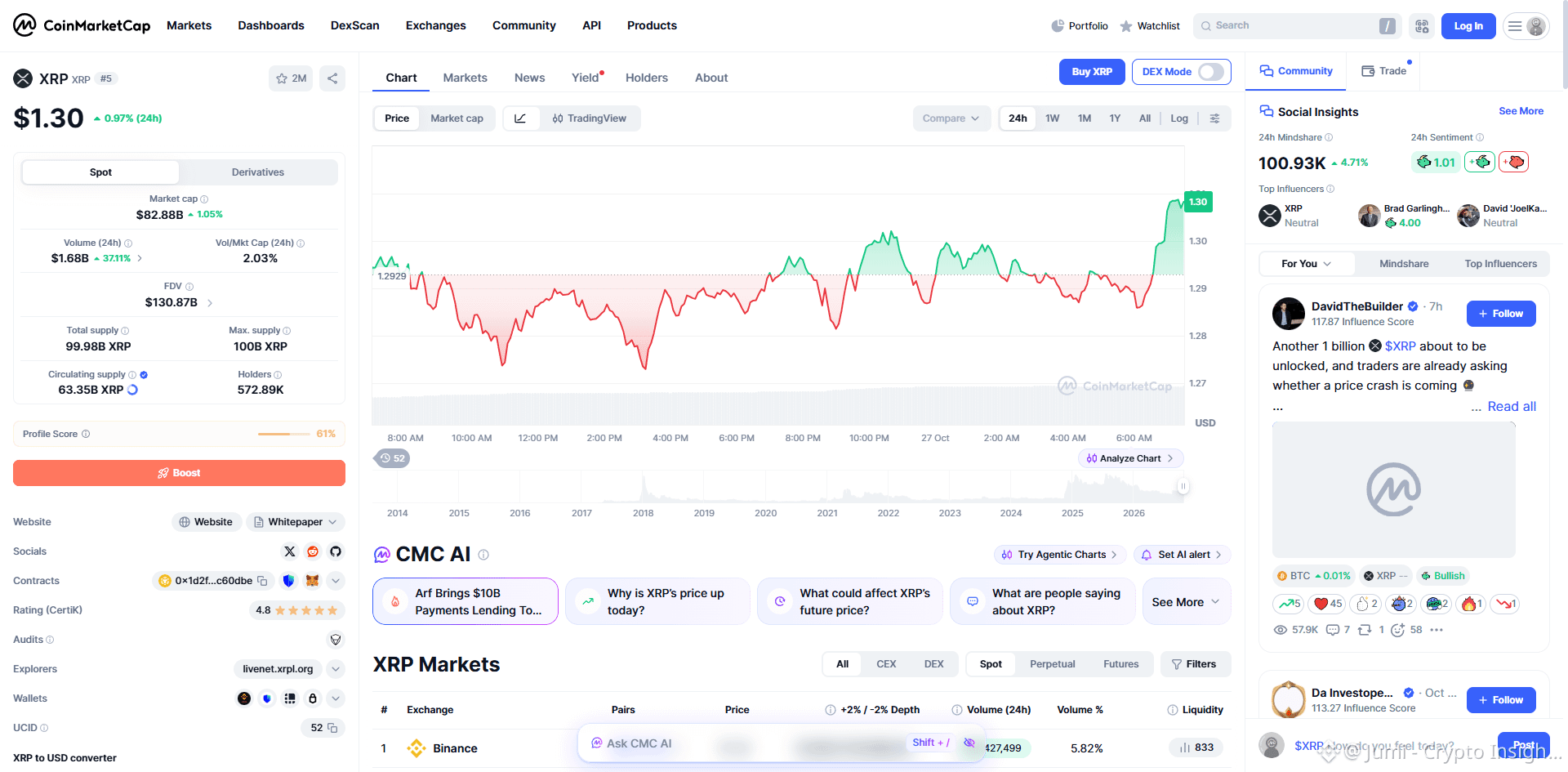
$XRP is currently climbing strongly to No. 3 on CoinMarketCap’s trending list. The market structure shows clear signs of bullish capital inflows, with trading volume picking up at key technical support levels. Overall, the chart pattern shows strong upside momentum. As risk appetite recovers, short-term technical indicators continue to improve.📈 #XRP #Altcoins
$XRP is currently climbing strongly to No. 3 on CoinMarketCap’s trending list. The market structure shows clear signs of bullish capital inflows, with trading volume picking up at key technical support levels. Overall, the chart pattern shows strong upside momentum. As risk appetite recovers, short-term technical indicators continue to improve.📈 #XRP #Altcoins
102
South Korea’s central bank released its latest data on Tuesday, showing that driven by the powerful wave of AI technology, the country’s GDP grew 1.0% quarter on quarter in the third quarter, far exceeding the market’s previous forecast of 0.7%. Exports of semiconductors and electrical equipment surged 2.3%, while investment in chip equipment jumped 4.1%, effectively offsetting the 0.2% drag from declining private consumption.
As a key barometer of the global technology supply chain, South Korea’s strong rebound in chip exports signals that demand for hardware infrastructure remains robust. The stronger-than-expected expansion in fundamental data not only dispelled earlier market concerns that the technology cycle had peaked, but also confirmed that AI computing demand is providing the real economy with solid technological support.
At the macroeconomic level, the strong growth momentum has effectively boosted risk appetite, helping Asian technology stocks stabilize and rebound. Although the Bank of Korea flagged risks related to Seoul housing prices and household debt, the broader acceleration in economic momentum has substantially reduced expectations of a hard landing in Asia-Pacific markets.
For crypto markets, the sustained strength of the technology and computing-power cycle is instilling ample confidence in risk assets. Mainstream assets such as $BTC could rise further and break through key resistance levels amid expectations of improved liquidity. The fundamental narrative around AI-themed tokens is receiving powerful backing from real-world data, and short-term bullish momentum is gradually building.
#SouthKorea #GDP #CryptoMarket
South Korea’s central bank released its latest data on Tuesday, showing that driven by the powerful wave of AI technology, the country’s GDP grew 1.0% quarter on quarter in the third quarter, far exceeding the market’s previous forecast of 0.7%. Exports of semiconductors and electrical equipment surged 2.3%, while investment in chip equipment jumped 4.1%, effectively offsetting the 0.2% drag from declining private consumption.
As a key barometer of the global technology supply chain, South Korea’s strong rebound in chip exports signals that demand for hardware infrastructure remains robust. The stronger-than-expected expansion in fundamental data not only dispelled earlier market concerns that the technology cycle had peaked, but also confirmed that AI computing demand is providing the real economy with solid technological support.
At the macroeconomic level, the strong growth momentum has effectively boosted risk appetite, helping Asian technology stocks stabilize and rebound. Although the Bank of Korea flagged risks related to Seoul housing prices and household debt, the broader acceleration in economic momentum has substantially reduced expectations of a hard landing in Asia-Pacific markets.
For crypto markets, the sustained strength of the technology and computing-power cycle is instilling ample confidence in risk assets. Mainstream assets such as $BTC could rise further and break through key resistance levels amid expectations of improved liquidity. The fundamental narrative around AI-themed tokens is receiving powerful backing from real-world data, and short-term bullish momentum is gradually building.
#SouthKorea #GDP #CryptoMarket
As a key barometer of the global technology supply chain, South Korea’s strong rebound in chip exports signals that demand for hardware infrastructure remains robust. The stronger-than-expected expansion in fundamental data not only dispelled earlier market concerns that the technology cycle had peaked, but also confirmed that AI computing demand is providing the real economy with solid technological support.
At the macroeconomic level, the strong growth momentum has effectively boosted risk appetite, helping Asian technology stocks stabilize and rebound. Although the Bank of Korea flagged risks related to Seoul housing prices and household debt, the broader acceleration in economic momentum has substantially reduced expectations of a hard landing in Asia-Pacific markets.
For crypto markets, the sustained strength of the technology and computing-power cycle is instilling ample confidence in risk assets. Mainstream assets such as $BTC could rise further and break through key resistance levels amid expectations of improved liquidity. The fundamental narrative around AI-themed tokens is receiving powerful backing from real-world data, and short-term bullish momentum is gradually building.
#SouthKorea #GDP #CryptoMarket
122
According to the latest data from the CME FedWatch Tool, the market sees an 89.5% probability that the Federal Reserve will leave its benchmark interest rate unchanged at this week’s policy meeting, and only a 10.5% probability of a 25-basis-point hike. For December, the market currently assigns a 17.7% probability to no change, with a 25-basis-point hike the leading expectation at 73.9%, and an 8.4% probability of a 50-basis-point hike.
Looking at the data, the market has largely priced in an unchanged rate this week. The policy decision’s arrival removes the biggest source of near-term uncertainty for markets. Although a modest rate hike remains priced in before year-end, the pace of the tightening cycle is now highly transparent, with no extreme tail risk of an aggressively hawkish shift.
In macro financial markets, cooling expectations for near-term rate hikes should help Treasury yields stabilize at key resistance levels, while technical factors are also capping the dollar index’s upside momentum. As risk aversion eases in funding markets, liquidity conditions for risk assets should improve at the margin, allowing bullish buying to gather strength again within support ranges.
For crypto assets, a predictable policy environment often acts as a catalyst for a rebound. With $BTC holding key technical support, easing safe-haven selling pressure should encourage off-exchange liquidity to flow back into higher-risk assets, making the outlook for a choppy, structurally upward trend clearer.🚀
#Fed #InterestRates #FOMC
According to the latest data from the CME FedWatch Tool, the market sees an 89.5% probability that the Federal Reserve will leave its benchmark interest rate unchanged at this week’s policy meeting, and only a 10.5% probability of a 25-basis-point hike. For December, the market currently assigns a 17.7% probability to no change, with a 25-basis-point hike the leading expectation at 73.9%, and an 8.4% probability of a 50-basis-point hike.
Looking at the data, the market has largely priced in an unchanged rate this week. The policy decision’s arrival removes the biggest source of near-term uncertainty for markets. Although a modest rate hike remains priced in before year-end, the pace of the tightening cycle is now highly transparent, with no extreme tail risk of an aggressively hawkish shift.
In macro financial markets, cooling expectations for near-term rate hikes should help Treasury yields stabilize at key resistance levels, while technical factors are also capping the dollar index’s upside momentum. As risk aversion eases in funding markets, liquidity conditions for risk assets should improve at the margin, allowing bullish buying to gather strength again within support ranges.
For crypto assets, a predictable policy environment often acts as a catalyst for a rebound. With $BTC holding key technical support, easing safe-haven selling pressure should encourage off-exchange liquidity to flow back into higher-risk assets, making the outlook for a choppy, structurally upward trend clearer.🚀
#Fed #InterestRates #FOMC
Looking at the data, the market has largely priced in an unchanged rate this week. The policy decision’s arrival removes the biggest source of near-term uncertainty for markets. Although a modest rate hike remains priced in before year-end, the pace of the tightening cycle is now highly transparent, with no extreme tail risk of an aggressively hawkish shift.
In macro financial markets, cooling expectations for near-term rate hikes should help Treasury yields stabilize at key resistance levels, while technical factors are also capping the dollar index’s upside momentum. As risk aversion eases in funding markets, liquidity conditions for risk assets should improve at the margin, allowing bullish buying to gather strength again within support ranges.
For crypto assets, a predictable policy environment often acts as a catalyst for a rebound. With $BTC holding key technical support, easing safe-haven selling pressure should encourage off-exchange liquidity to flow back into higher-risk assets, making the outlook for a choppy, structurally upward trend clearer.🚀
#Fed #InterestRates #FOMC
According to the latest report from Iran’s Fars News Agency, an Iranian security official stated publicly that the military is fully prepared to respond and is closely monitoring Israel’s next move. The official directly accused Israeli Prime Minister Netanyahu of seeking to escalate the conflict, warning that if Iran is attacked in any way, it will retaliate in kind with unprecedented speed and scale.
Renewed tensions in the geopolitical contest in the Middle East have dashed the market’s previous optimistic expectations that the situation would gradually cool. Safe-haven assets often quickly find support as such critical remarks gain traction, while geopolitical uncertainty also drives short-term capital to engage in fierce battles around various technical levels.
From a macro trading perspective, rising risk aversion can easily boost buying in gold and U.S. Treasuries, while dampening enthusiasm for chasing traditional risk assets higher. However, if the situation does not develop into a material disruption to supply, markets typically digest this premium quickly once the initial emotions have run their course.
For crypto markets, short-term sentiment shocks may bring volatility, but dip-buying remains active near structural support levels. As markets gradually become desensitized to geopolitical noise, core assets such as $BTC may see an independent technical recovery as capital flows back in.
#Geopolitics #MiddleEast #CryptoMarket
According to the latest report from Iran’s Fars News Agency, an Iranian security official stated publicly that the military is fully prepared to respond and is closely monitoring Israel’s next move. The official directly accused Israeli Prime Minister Netanyahu of seeking to escalate the conflict, warning that if Iran is attacked in any way, it will retaliate in kind with unprecedented speed and scale.
Renewed tensions in the geopolitical contest in the Middle East have dashed the market’s previous optimistic expectations that the situation would gradually cool. Safe-haven assets often quickly find support as such critical remarks gain traction, while geopolitical uncertainty also drives short-term capital to engage in fierce battles around various technical levels.
From a macro trading perspective, rising risk aversion can easily boost buying in gold and U.S. Treasuries, while dampening enthusiasm for chasing traditional risk assets higher. However, if the situation does not develop into a material disruption to supply, markets typically digest this premium quickly once the initial emotions have run their course.
For crypto markets, short-term sentiment shocks may bring volatility, but dip-buying remains active near structural support levels. As markets gradually become desensitized to geopolitical noise, core assets such as $BTC may see an independent technical recovery as capital flows back in.
#Geopolitics #MiddleEast #CryptoMarket
Renewed tensions in the geopolitical contest in the Middle East have dashed the market’s previous optimistic expectations that the situation would gradually cool. Safe-haven assets often quickly find support as such critical remarks gain traction, while geopolitical uncertainty also drives short-term capital to engage in fierce battles around various technical levels.
From a macro trading perspective, rising risk aversion can easily boost buying in gold and U.S. Treasuries, while dampening enthusiasm for chasing traditional risk assets higher. However, if the situation does not develop into a material disruption to supply, markets typically digest this premium quickly once the initial emotions have run their course.
For crypto markets, short-term sentiment shocks may bring volatility, but dip-buying remains active near structural support levels. As markets gradually become desensitized to geopolitical noise, core assets such as $BTC may see an independent technical recovery as capital flows back in.
#Geopolitics #MiddleEast #CryptoMarket
234
At the close of the latest trading session, crude oil prices fell significantly, dropping $1.51, or 1.46%, to settle at $101.76 per barrel. The market showed clear signs of short-term pressure at elevated levels, with bulls facing selling pressure near a key round-number level.
From a macro and technical perspective, crude oil is a key gauge of inflation expectations, and its break below a local support level could help quickly ease medium- to long-term inflationary pressures. Earlier excessive concerns about persistent energy-driven inflation are gradually being priced out as prices undergo a technical pullback.
Weakness in commodity prices directly drove Treasury yields and the U.S. dollar index down from local highs, marginally easing liquidity constraints in financial markets. Cooling risk aversion has helped risk appetite recover quickly, creating room for valuations across risk assets to rebound.
For crypto markets, an improved macro liquidity environment is a direct positive, with capital potentially flowing out of energy-related safe havens and back into higher-beta assets. $BTC and major altcoins could see a fresh opportunity to build momentum for an upward breakout as expectations for improving liquidity take hold.
#CrudeOil #MacroEconomics #CryptoMarket
At the close of the latest trading session, crude oil prices fell significantly, dropping $1.51, or 1.46%, to settle at $101.76 per barrel. The market showed clear signs of short-term pressure at elevated levels, with bulls facing selling pressure near a key round-number level.
From a macro and technical perspective, crude oil is a key gauge of inflation expectations, and its break below a local support level could help quickly ease medium- to long-term inflationary pressures. Earlier excessive concerns about persistent energy-driven inflation are gradually being priced out as prices undergo a technical pullback.
Weakness in commodity prices directly drove Treasury yields and the U.S. dollar index down from local highs, marginally easing liquidity constraints in financial markets. Cooling risk aversion has helped risk appetite recover quickly, creating room for valuations across risk assets to rebound.
For crypto markets, an improved macro liquidity environment is a direct positive, with capital potentially flowing out of energy-related safe havens and back into higher-beta assets. $BTC and major altcoins could see a fresh opportunity to build momentum for an upward breakout as expectations for improving liquidity take hold.
#CrudeOil #MacroEconomics #CryptoMarket
From a macro and technical perspective, crude oil is a key gauge of inflation expectations, and its break below a local support level could help quickly ease medium- to long-term inflationary pressures. Earlier excessive concerns about persistent energy-driven inflation are gradually being priced out as prices undergo a technical pullback.
Weakness in commodity prices directly drove Treasury yields and the U.S. dollar index down from local highs, marginally easing liquidity constraints in financial markets. Cooling risk aversion has helped risk appetite recover quickly, creating room for valuations across risk assets to rebound.
For crypto markets, an improved macro liquidity environment is a direct positive, with capital potentially flowing out of energy-related safe havens and back into higher-beta assets. $BTC and major altcoins could see a fresh opportunity to build momentum for an upward breakout as expectations for improving liquidity take hold.
#CrudeOil #MacroEconomics #CryptoMarket
337
The Russian Kremlin recently stated publicly that the partial ceasefire agreement in Oleshky, reached with U.S. assistance, could serve as an important model for ceasefire negotiations in other regions in the future. This statement marks a breakthrough toward easing a long-stalled geopolitical conflict.
From a broader strategic perspective, the establishment of the partial ceasefire agreement shows that communication mechanisms between major powers are having a tangible effect. This has significantly reduced the tail risk of uncontrolled escalation in geopolitical conflicts and effectively restored global market expectations, which had previously become excessively pessimistic.
In traditional financial markets, a marked easing of risk aversion has prompted technical pullbacks in crude oil and safe-haven assets, while capital has begun flowing back into risk assets. U.S. Treasury yields have stabilized and the dollar index has come under pressure, sending a positive signal for the expansion of global liquidity.
For crypto assets, the marginal easing of geopolitical risks has created an excellent liquidity environment for the market. As the fear index retreats, buying pressure in major assets is strengthening. $BTC is showing strong support at the bottom, and bullish technical patterns may be poised for a more sustained uptrend. 📊
#Geopolitics #MarketUpdate #CryptoAnalysis
The Russian Kremlin recently stated publicly that the partial ceasefire agreement in Oleshky, reached with U.S. assistance, could serve as an important model for ceasefire negotiations in other regions in the future. This statement marks a breakthrough toward easing a long-stalled geopolitical conflict.
From a broader strategic perspective, the establishment of the partial ceasefire agreement shows that communication mechanisms between major powers are having a tangible effect. This has significantly reduced the tail risk of uncontrolled escalation in geopolitical conflicts and effectively restored global market expectations, which had previously become excessively pessimistic.
In traditional financial markets, a marked easing of risk aversion has prompted technical pullbacks in crude oil and safe-haven assets, while capital has begun flowing back into risk assets. U.S. Treasury yields have stabilized and the dollar index has come under pressure, sending a positive signal for the expansion of global liquidity.
For crypto assets, the marginal easing of geopolitical risks has created an excellent liquidity environment for the market. As the fear index retreats, buying pressure in major assets is strengthening. $BTC is showing strong support at the bottom, and bullish technical patterns may be poised for a more sustained uptrend. 📊
#Geopolitics #MarketUpdate #CryptoAnalysis
From a broader strategic perspective, the establishment of the partial ceasefire agreement shows that communication mechanisms between major powers are having a tangible effect. This has significantly reduced the tail risk of uncontrolled escalation in geopolitical conflicts and effectively restored global market expectations, which had previously become excessively pessimistic.
In traditional financial markets, a marked easing of risk aversion has prompted technical pullbacks in crude oil and safe-haven assets, while capital has begun flowing back into risk assets. U.S. Treasury yields have stabilized and the dollar index has come under pressure, sending a positive signal for the expansion of global liquidity.
For crypto assets, the marginal easing of geopolitical risks has created an excellent liquidity environment for the market. As the fear index retreats, buying pressure in major assets is strengthening. $BTC is showing strong support at the bottom, and bullish technical patterns may be poised for a more sustained uptrend. 📊
#Geopolitics #MarketUpdate #CryptoAnalysis
58
Binance is about to launch the $STMUSDT perpetual contract. The liquidity injection could fuel bullish momentum—watch for breakout opportunities. 📈 #Binance #Futures
Binance is about to launch the $STMUSDT perpetual contract. The liquidity injection could fuel bullish momentum—watch for breakout opportunities. 📈 #Binance #Futures
80
Noticed that $ZEC is ranked #15 on CoinMarketCap's trending list. The chart structure shows clear signs of increased buying volume at the bottom, with bullish support gradually strengthening. If it can hold key support levels, a strong short-term rebound may be on the horizon. 📈 #Zcash #PrivacyCoins
Noticed that $ZEC is ranked #15 on CoinMarketCap's trending list. The chart structure shows clear signs of increased buying volume at the bottom, with bullish support gradually strengthening. If it can hold key support levels, a strong short-term rebound may be on the horizon. 📈 #Zcash #PrivacyCoins
106
Binance Futures is about to list $EIDOUSDT, bringing liquidity to the new asset and potentially creating an opportunity for bullish momentum to break out. 📈 #Binance #FuturesListing
Binance Futures is about to list $EIDOUSDT, bringing liquidity to the new asset and potentially creating an opportunity for bullish momentum to break out. 📈 #Binance #FuturesListing
97
According to information recently disclosed by two U.S. officials, U.S. forces stationed in the Middle East have completed preparations for a large-scale military strike and could launch a full-scale military operation against Iran within 96 hours if President Donald Trump gives the order. This deployment is no longer limited to the “mowing the lawn” style of strikes seen in the past, targeting facilities such as radar systems and missile launchers that can be quickly restored. Instead, it is shifting toward the destruction of deeper strategic targets.
From a broad geopolitical perspective, the substantial escalation in U.S.-Iran tensions has directly reshaped expectations for global energy prices and safe-haven premiums. Markets had already priced in some localized friction, but with the U.S. military’s potential plan for an exceptionally large-scale strike before the end of the year, the risk premium for supply-chain disruptions is being rapidly repriced by investors.
In terms of technicals and asset performance, crude oil and safe-haven gold have shown strong buying momentum at key support levels, while the U.S. Dollar Index has also remained range-bound at elevated levels, supported by safe-haven demand. For risk assets, short-term panic often coincides with a sharp spike in the VIX volatility index, prompting leveraged investors to rapidly unwind positions and complete a reshuffling of holdings.
In crypto markets, $BTC and major assets have held firm above key technical support levels despite the initial sentiment-driven selling pressure following the geopolitical news. Historical data shows that short-term pullbacks triggered by geopolitical shocks often create attractive windows for liquidity to return. As the market gradually absorbs the panic, a recovery in risk appetite is likely to drive capital back into high-beta assets.
#Geopolitics #Iran #MacroEconomics
According to information recently disclosed by two U.S. officials, U.S. forces stationed in the Middle East have completed preparations for a large-scale military strike and could launch a full-scale military operation against Iran within 96 hours if President Donald Trump gives the order. This deployment is no longer limited to the “mowing the lawn” style of strikes seen in the past, targeting facilities such as radar systems and missile launchers that can be quickly restored. Instead, it is shifting toward the destruction of deeper strategic targets.
From a broad geopolitical perspective, the substantial escalation in U.S.-Iran tensions has directly reshaped expectations for global energy prices and safe-haven premiums. Markets had already priced in some localized friction, but with the U.S. military’s potential plan for an exceptionally large-scale strike before the end of the year, the risk premium for supply-chain disruptions is being rapidly repriced by investors.
In terms of technicals and asset performance, crude oil and safe-haven gold have shown strong buying momentum at key support levels, while the U.S. Dollar Index has also remained range-bound at elevated levels, supported by safe-haven demand. For risk assets, short-term panic often coincides with a sharp spike in the VIX volatility index, prompting leveraged investors to rapidly unwind positions and complete a reshuffling of holdings.
In crypto markets, $BTC and major assets have held firm above key technical support levels despite the initial sentiment-driven selling pressure following the geopolitical news. Historical data shows that short-term pullbacks triggered by geopolitical shocks often create attractive windows for liquidity to return. As the market gradually absorbs the panic, a recovery in risk appetite is likely to drive capital back into high-beta assets.
#Geopolitics #Iran #MacroEconomics
From a broad geopolitical perspective, the substantial escalation in U.S.-Iran tensions has directly reshaped expectations for global energy prices and safe-haven premiums. Markets had already priced in some localized friction, but with the U.S. military’s potential plan for an exceptionally large-scale strike before the end of the year, the risk premium for supply-chain disruptions is being rapidly repriced by investors.
In terms of technicals and asset performance, crude oil and safe-haven gold have shown strong buying momentum at key support levels, while the U.S. Dollar Index has also remained range-bound at elevated levels, supported by safe-haven demand. For risk assets, short-term panic often coincides with a sharp spike in the VIX volatility index, prompting leveraged investors to rapidly unwind positions and complete a reshuffling of holdings.
In crypto markets, $BTC and major assets have held firm above key technical support levels despite the initial sentiment-driven selling pressure following the geopolitical news. Historical data shows that short-term pullbacks triggered by geopolitical shocks often create attractive windows for liquidity to return. As the market gradually absorbs the panic, a recovery in risk appetite is likely to drive capital back into high-beta assets.
#Geopolitics #Iran #MacroEconomics
56
📅 This week’s key economic events at a glance:
🇺🇸 27/10 22:00 (UTC+8) - CB Consumer Confidence (Forecast: 80.5, Previous: 81.9)
🇺🇸 29/10 02:00 (UTC+8) - Federal Funds Rate (Forecast: 4.00%, Previous: 4.00%)
🇺🇸 29/10 02:00 (UTC+8) - FOMC Statement
🇺🇸 29/10 02:30 (UTC+8) - FOMC Press Conference
🇺🇸 29/10 20:30 (UTC+8) - Advance GDP q/q (Forecast: 3.2%, Previous: 1.5%)
🇺🇸 29/10 20:30 (UTC+8) - Core PCE Price Index m/m (Forecast: 0.3%, Previous: 0.2%)
From a technical and macroeconomic perspective, preliminary GDP is expected to rebound sharply to 3.2%, indicating that economic fundamentals remain highly resilient. If the Fed keeps the benchmark rate unchanged at 4.00% as expected and its policy statement signals a neutral-to-dovish stance, this would provide strong support for risk assets and significantly increase the likelihood of prices breaking through key resistance levels.
#FOMC #Fed
📅 This week’s key economic events at a glance:
🇺🇸 27/10 22:00 (UTC+8) - CB Consumer Confidence (Forecast: 80.5, Previous: 81.9)
🇺🇸 29/10 02:00 (UTC+8) - Federal Funds Rate (Forecast: 4.00%, Previous: 4.00%)
🇺🇸 29/10 02:00 (UTC+8) - FOMC Statement
🇺🇸 29/10 02:30 (UTC+8) - FOMC Press Conference
🇺🇸 29/10 20:30 (UTC+8) - Advance GDP q/q (Forecast: 3.2%, Previous: 1.5%)
🇺🇸 29/10 20:30 (UTC+8) - Core PCE Price Index m/m (Forecast: 0.3%, Previous: 0.2%)
From a technical and macroeconomic perspective, preliminary GDP is expected to rebound sharply to 3.2%, indicating that economic fundamentals remain highly resilient. If the Fed keeps the benchmark rate unchanged at 4.00% as expected and its policy statement signals a neutral-to-dovish stance, this would provide strong support for risk assets and significantly increase the likelihood of prices breaking through key resistance levels.
#FOMC #Fed
🇺🇸 27/10 22:00 (UTC+8) - CB Consumer Confidence (Forecast: 80.5, Previous: 81.9)
🇺🇸 29/10 02:00 (UTC+8) - Federal Funds Rate (Forecast: 4.00%, Previous: 4.00%)
🇺🇸 29/10 02:00 (UTC+8) - FOMC Statement
🇺🇸 29/10 02:30 (UTC+8) - FOMC Press Conference
🇺🇸 29/10 20:30 (UTC+8) - Advance GDP q/q (Forecast: 3.2%, Previous: 1.5%)
🇺🇸 29/10 20:30 (UTC+8) - Core PCE Price Index m/m (Forecast: 0.3%, Previous: 0.2%)
From a technical and macroeconomic perspective, preliminary GDP is expected to rebound sharply to 3.2%, indicating that economic fundamentals remain highly resilient. If the Fed keeps the benchmark rate unchanged at 4.00% as expected and its policy statement signals a neutral-to-dovish stance, this would provide strong support for risk assets and significantly increase the likelihood of prices breaking through key resistance levels.
#FOMC #Fed
70
Log in to explore more content
Join global crypto users on Binance Square
⚡️ Get latest and useful information about crypto.
💬 Trusted by the world’s largest crypto exchange.
👍 Discover real insights from verified creators.
Email / Phone number