
#bitcoincoredisclosestortrafficvulnerability
bitcoincoredisclosestortrafficvulnerability
Hot
Latest

·
--
See translation
#BitcoinCoreDisclosesTorTrafficVulnerability
BITCOIN CORE JUST DISCLOSED A TOR VULNERABILITY. 🛡️⚠️
Your privacy layer had a crack.
Not your coins. Not your keys.
But your network traffic.
Bitcoin Core found it — and disclosed it.
That's what real decentralization looks like:
No hiding. No cover-up. Just transparency.
Are you still running your node on Tor?
Comment: SAFE 🟢 or WORRIED 🔴
#bitcoin #Tor #Privacy #BinanceSquare

1
98

See translation
#BitcoinCoreDisclosesTorTrafficVulnerability 🚨 BITCOIN SECURITY ALERT: CORE DEVELOPER REVEALS TOR VULNERABILITY
November 13, 2026
Bitcoin Core developers have disclosed three previously patched security vulnerabilities affecting Bitcoin nodes.
🔴 CVE-2025-62860 — Tor Security Flaw
A medium-severity vulnerability allowed anonymous Tor connections to inherit trusted permissions across thousands of Bitcoin nodes, potentially weakening important security protections.
🔹 Two Additional Vulnerabilities
CVE-2025-62861: High-severity bug that could disrupt mining block production.
CVE-2025-62859: Medium-severity bug that could delay block synchronization.
🛡️ Security Update
The vulnerabilities were patched in October 2025 through Bitcoin Core versions 28.3, 29.2 and 30.0.
Node operators using older vulnerable versions are advised to upgrade to Bitcoin Core 30.0 or newer.
Important: No real-world exploitation of the Tor vulnerability has been reported.
#Bitcoin #BTC #CryptoNews #BitcoinCore #CyberSecurity #Blockchain

16

·
--
Bullish
See translation
#bitcoincoredisclosestortrafficvulnerability
🚨 BITCOIN CORE DISCLOSES TOR TRAFFIC VULNERABILITY (CVE-2025-62860) THAT AFFECTED THOUSANDS OF NODES! 🛡️🔍
Bitcoin Core developers have published details on a medium-severity Tor traffic vulnerability (CVE-2025-62860) alongside two other node flaws—all of which were quietly patched back in October 2025 and disclosed on November 10, 2026, two weeks after the 29.x series reached end-of-life.
While there is zero risk of coin theft and no active exploits reported in the wild, the bug accidentally granted trusted local permissions to incoming Tor connections across thousands of reachable mainnet nodes.
📌 How the Tor Vulnerability Worked
🔓 Broken Trust Boundary: Many plug-and-play node bundles run Bitcoin Core and a Tor daemon together on the same local machine. When operators enabled the non-default -whitelist setting for their local network or Tor proxy IP, Bitcoin Core mistakenly treated all external incoming Tor connections as trusted local peers.
⚠️ Lowered Defenses: Those inherited privileges relaxed standard denial-of-service (DoS) limits and privacy protections for untrusted inbound Tor peers.
$ETH
{future}(ETHUSDT)
📊 Two Other Bugs Disclosed Together:
CVE-2025-62861 (High): Could halt block template creation for miners after a chain reorganization involving TRUC (v3) transactions.
CVE-2025-62859 (Medium): Allowed malicious peers to stall compact block downloads for ~10 minutes via altered transaction witnesses.
$XRP
{future}(XRPUSDT)
💡 What Node Operators & Traders Need to Know
✅ Already Patched Since Oct 2025: All three flaws were fixed in Bitcoin Core versions 30.0, 29.2, and 28.3 (released October 2025). Anyone running v30.0 or newer (such as 30.4, 31.2, or 32.1) has been protected for over a year
.$ZEC
{future}(ZECUSDT)
#USPPIMissMayEaseBTCPressure #WhatWillDriveCryptoandStocks’NextRebound? #BTC #CryptoNews
#bitcoincoredisclosestortrafficvulnerability
🚨 BITCOIN CORE DISCLOSES TOR TRAFFIC VULNERABILITY (CVE-2025-62860) THAT AFFECTED THOUSANDS OF NODES! 🛡️🔍
Bitcoin Core developers have published details on a medium-severity Tor traffic vulnerability (CVE-2025-62860) alongside two other node flaws—all of which were quietly patched back in October 2025 and disclosed on November 10, 2026, two weeks after the 29.x series reached end-of-life.
While there is zero risk of coin theft and no active exploits reported in the wild, the bug accidentally granted trusted local permissions to incoming Tor connections across thousands of reachable mainnet nodes.
📌 How the Tor Vulnerability Worked
🔓 Broken Trust Boundary: Many plug-and-play node bundles run Bitcoin Core and a Tor daemon together on the same local machine. When operators enabled the non-default -whitelist setting for their local network or Tor proxy IP, Bitcoin Core mistakenly treated all external incoming Tor connections as trusted local peers.
⚠️ Lowered Defenses: Those inherited privileges relaxed standard denial-of-service (DoS) limits and privacy protections for untrusted inbound Tor peers.
$ETH
📊 Two Other Bugs Disclosed Together:
CVE-2025-62861 (High): Could halt block template creation for miners after a chain reorganization involving TRUC (v3) transactions.
CVE-2025-62859 (Medium): Allowed malicious peers to stall compact block downloads for ~10 minutes via altered transaction witnesses.
$XRP
💡 What Node Operators & Traders Need to Know
✅ Already Patched Since Oct 2025: All three flaws were fixed in Bitcoin Core versions 30.0, 29.2, and 28.3 (released October 2025). Anyone running v30.0 or newer (such as 30.4, 31.2, or 32.1) has been protected for over a year
.$ZEC
#USPPIMissMayEaseBTCPressure #WhatWillDriveCryptoandStocks’NextRebound? #BTC #CryptoNews

1
322

·
--
Bearish
See translation
#bitcoincoredisclosestortrafficvulnerability
🚨 Bitcoin Core Reveals Tor Traffic Vulnerability — Could User Privacy Be at Risk?
Bitcoin Core has disclosed a vulnerability involving Tor traffic, raising fresh concerns about privacy and network security across the Bitcoin ecosystem.
Tor is widely used by Bitcoin node operators to help hide their IP addresses and protect their network activity. A weakness affecting Tor-related traffic could potentially expose information that users expect to remain private.
Why It Matters:
Privacy concerns: Users relying on Tor could face additional risks if they run vulnerable software.
Node security: Bitcoin node operators should pay attention to security disclosures and recommended updates.
Network trust: Privacy remains an important part of Bitcoin's decentralized infrastructure.
My Take: This is a reminder that Bitcoin security requires continuous maintenance. Node operators should review the official vulnerability disclosure and apply recommended updates rather than ignore potential risks.
Could this vulnerability weaken confidence in Bitcoin's privacy infrastructure?
#bitcoin #BitcoinCorrection #CyberSecurity $BTC

9

·
--
See translation
#BitcoinCoreDisclosesTorTrafficVulnerability
🚨 Bitcoin Core just disclosed 3 bugs, and all of them were already fixed
The advisories went public Nov 10, but the fixes shipped in October 2025. Here's the breakdown: (theblock)
🔓 CVE-2025-62860 (medium): Tor peers could get whitelist permissions on nodes using the optional -whitelist setting. Bitcoin Core said "thousands" of reachable nodes were affected, which removed some DoS limits and privacy protections.
⛏️ CVE-2025-62861 (high): miners hit by it had to restart their nodes to create valid block templates again.
📦 CVE-2025-62859 (medium): a block-relay (compact block) issue. (theblock) (theblock)
Why the delay? Bitcoin Core ships the fix first and describes the bug later. The last vulnerable version went end of life on Oct. 27. (theblock)
What to do: Version 30.0 fixes all three. Version 29.2 carries the fixes too. If you run a plug-and-play node bundle with Tor, check whether it sets -whitelist. (theblock)
For traders: these are node-software issues that sit outside Bitcoin's consensus rules. It's an infrastructure story, not a protocol failure. (theunhashed)
🗣️ Do you run your own node or rely on an exchange? 👇
#BitcoinCore #CryptoSecurity #Bitcoin #Tor $BTC $ETH
Not financial advice.
1
25

See translation
Transparency is what makes Bitcoin strong. Bitcoin Core's disclosure of the Tor traffic vulnerability highlights the importance of proactive security audits and open-source collaboration.
No risk to user funds, just another step toward making the network more private and resilient. Always keep your node software updated!
#BitcoinCoreDisclosesTorTrafficVulnerability #BTC #CryptoNews#BitcoinCoreDisclosesTorTrafficVulnerability
No risk to user funds, just another step toward making the network more private and resilient. Always keep your node software updated!
#BitcoinCoreDisclosesTorTrafficVulnerability #BTC #CryptoNews#BitcoinCoreDisclosesTorTrafficVulnerability
35

See translation
🚨 BITCOIN CORE DISCLOSES 3 VULNERABILITIES: IS THE NETWORK SAFE? 🚨
Bitcoin Core just released details on three security bugs, including a notable Tor traffic flaw. If you are a trader or node operator, here is the verified breakdown of what actually happened and how it impacts the market:
⚠️ The Tor Vulnerability (CVE-2025-62860):
Thousands of reachable mainnet nodes running non-default -whitelist configurations accidentally gave inbound Tor connections trusted permissions. This bypassed vital DoS and privacy protections, leaving nodes exposed.
🛑 The Mining Flaw (CVE-2025-62861):
A high-severity bug caused mempool inconsistencies during chain reorganizations. This could halt block template creation for affected miners, requiring a forced restart to fix.
🛡️ The Bottom Line (Trader Impact = ZERO):
Don't panic. There are zero active exploits and no user funds were ever at risk. Developers quietly patched these bugs back in October 2025 with the v30.0 and v29.2 updates. This delayed disclosure on November 10, 2026, is simply standard security protocol now that older vulnerable versions have reached end-of-life.
Decentralized money requires well-maintained software. Update your nodes!
🗣️ Do you run your own Bitcoin node for self-custody, or do you rely on exchanges? Let’s discuss below! 👇
$AKE
{future}(AKEUSDT)
$BTC
{future}(BTCUSDT)
$ETH
{future}(ETHUSDT)
#bitcoincoredisclosestortrafficvulnerability
#CryptoSecurity #BitcoinCore #CryptoNews
🚨 BITCOIN CORE DISCLOSES 3 VULNERABILITIES: IS THE NETWORK SAFE? 🚨
Bitcoin Core just released details on three security bugs, including a notable Tor traffic flaw. If you are a trader or node operator, here is the verified breakdown of what actually happened and how it impacts the market:
⚠️ The Tor Vulnerability (CVE-2025-62860):
Thousands of reachable mainnet nodes running non-default -whitelist configurations accidentally gave inbound Tor connections trusted permissions. This bypassed vital DoS and privacy protections, leaving nodes exposed.
🛑 The Mining Flaw (CVE-2025-62861):
A high-severity bug caused mempool inconsistencies during chain reorganizations. This could halt block template creation for affected miners, requiring a forced restart to fix.
🛡️ The Bottom Line (Trader Impact = ZERO):
Don't panic. There are zero active exploits and no user funds were ever at risk. Developers quietly patched these bugs back in October 2025 with the v30.0 and v29.2 updates. This delayed disclosure on November 10, 2026, is simply standard security protocol now that older vulnerable versions have reached end-of-life.
Decentralized money requires well-maintained software. Update your nodes!
🗣️ Do you run your own Bitcoin node for self-custody, or do you rely on exchanges? Let’s discuss below! 👇
$AKE
$BTC
$ETH
#bitcoincoredisclosestortrafficvulnerability
#CryptoSecurity #BitcoinCore #CryptoNews

475

See translation
#BitcoinCoreDisclosesTorTrafficVulnerability 🧅⚠️
Bitcoin was NOT hacked.
But this disclosure is BIG. Read it.
Bitcoin Core just disclosed 3 vulnerabilities - including a Tor bug that affected *thousands of nodes.
What happened?
Bitcoin Core has a setting called `-whitelist`.
It gives TRUSTED connections extra permissions - like bypassing spam limits and privacy protections.
The bug:
Tor connections look like they come from your local Tor software.
If that local Tor IP was inside the whitelist range, then *EVERY stranger connecting via Tor was treated as TRUSTED.*
Result: Thousands of reachable mainnet nodes were whitelisting ALL incoming Tor connections.
The Facts You Need:
CVE:* CVE-2025-62860
Severity:* Medium
Coins stolen?* NO ❌
Wallets hacked?* NO ❌
Active exploit found?* NO ❌
Nodes without whitelist?* NOT AFFECTED ✅
*Was it already fixed?*
YES.
Fixed in *October 2025* - in v30.0, v29.2, v28.3
Disclosure came on *Nov 10, 2026* - because Core only publishes details AFTER the last affected version reaches end-of-life. That's their security policy.
*2 Other Bugs Disclosed:*
1. *HIGH severity* - Mining node could fail to build valid block templates after a reorg until restart
2. *MEDIUM severity* - Attacker could stall block processing for 10 minutes
*What should you do?
If you run a node, make sure you are on the LATEST version. Update = Safe.
This is not FUD. This is TRANSPARENCY.
This is exactly why Bitcoin is still the most trusted network in crypto. 💪
Question:
Is this late disclosure GOOD security or TOO LATE?
Drop your opinion 👇
#BTC #BitcoinCore #CryptoSecurity

53

·
--
See translation
#BitcoinCoreDisclosesTorTrafficVulnerability
🚨 BITCOIN SECURITY ALERT! 🔐
Bitcoin Core Discloses Tor Traffic Vulnerability – What Does This Mean for Bitcoin?
Bitcoin Core has revealed a medium-severity security vulnerability (CVE-2025-62860) that affected thousands of reachable Bitcoin nodes using certain configurations.
🔍 What happened?
A software flaw allowed incoming connections through Tor to receive trusted-peer privileges under specific configurations.
This potentially weakened certain protections against denial-of-service attacks and privacy leaks.
⚠️ Should Bitcoin users panic?
Not necessarily!
✅ The vulnerability was already patched in October 2025.
✅ Bitcoin Core versions 30.0 and later include the fix.
✅ Nodes without the affected optional whitelist configuration were not affected.
💡 My Take:
This incident reminds us that cybersecurity is essential for the future of cryptocurrency.
Bitcoin's strength depends not only on decentralization but also on continuous improvements in security, transparency, and technology.
📢 Let's Discuss:
Do you think Bitcoin's security infrastructure is strong enough to handle future cyber threats?
Share your thoughts below! 👇
#Bitcoin #BTC #BitcoinCore #CryptoSecurity #TorNetwork #Blockchain #Cryptocurrency #BinanceSquare #CryptoNews
1
1
73

·
--
Bearish
See translation
#bitcoincoredisclosestortrafficvulnerability
🚨 Bitcoin Core Discloses a Tor-Related Security Vulnerability
Bitcoin Core has disclosed CVE-2025-62860, a medium-severity flaw that could cause incoming Tor connections to receive whitelist privileges on certain nodes.
The issue required a specific, non-default configuration where the node’s -whitelist range included the Tor proxy’s IP address. Under those conditions, outside Tor peers could bypass some DoS limits and privacy protections. Bitcoin Core said thousands of reachable mainnet nodes had this configuration.
Importantly, the vulnerability was already patched in 2025 through Bitcoin Core 28.3, 29.2 and 30.0. It does not mean Bitcoin itself was hacked, nor does it imply users’ BTC wallets were exposed.
📊 Trader perspective:
This is more of a network-infrastructure and node-operator issue than a direct market shock. The disclosure may create short-term concern around Bitcoin’s security narrative, but the fact that the vulnerability was fixed before public disclosure significantly reduces its immediate market impact.
Bottom line: Technically important, but not a fundamental bearish signal for BTC by itself. The key factor is whether outdated or incorrectly configured nodes remain exposed.
#Bitcoin #BTC #BitcoinCore #Crypto
$BULLA $AGT $JCT
{future}(JCTUSDT)
{future}(AGTUSDT)
{future}(BULLAUSDT)
#bitcoincoredisclosestortrafficvulnerability
🚨 Bitcoin Core Discloses a Tor-Related Security Vulnerability
Bitcoin Core has disclosed CVE-2025-62860, a medium-severity flaw that could cause incoming Tor connections to receive whitelist privileges on certain nodes.
The issue required a specific, non-default configuration where the node’s -whitelist range included the Tor proxy’s IP address. Under those conditions, outside Tor peers could bypass some DoS limits and privacy protections. Bitcoin Core said thousands of reachable mainnet nodes had this configuration.
Importantly, the vulnerability was already patched in 2025 through Bitcoin Core 28.3, 29.2 and 30.0. It does not mean Bitcoin itself was hacked, nor does it imply users’ BTC wallets were exposed.
📊 Trader perspective:
This is more of a network-infrastructure and node-operator issue than a direct market shock. The disclosure may create short-term concern around Bitcoin’s security narrative, but the fact that the vulnerability was fixed before public disclosure significantly reduces its immediate market impact.
Bottom line: Technically important, but not a fundamental bearish signal for BTC by itself. The key factor is whether outdated or incorrectly configured nodes remain exposed.
#Bitcoin #BTC #BitcoinCore #Crypto
$BULLA $AGT $JCT

98

·
--
BTC node security concerns gain traction | Tor whitelist issue fixed last year | Check $68,000 before trading
My view is that node-operations risks deserve attention, but an old vulnerability disclosure should not be framed as “Bitcoin is under attack today.” Discussion of the Bitcoin Core and Tor connection vulnerability is gaining traction on Binance Square, so I checked Bitcoin Core’s official security advisory: CVE-2025-62860 is rated medium severity. Under specific configurations, incoming Tor connections could mistakenly be granted whitelist privileges, disabling some denial-of-service limits and privacy protections. The key condition is that a node has a non-default whitelist configured and that the IP range matches the Tor proxy. The official advisory explicitly states that nodes without this non-default setting have never been affected.
The timeline matters, especially. The official advisory says the vulnerability was reported in September 2025 and fixed in Bitcoin Core 28.3, 29.2, and 30.0, released in October of that year. It was publicly disclosed on November 10, 2026. The topic trending today reflects increased discussion; it does not mean a zero-day vulnerability was just discovered today, nor does it mean all BTC holders’ funds have been stolen. Node operators should check their client versions and whitelist settings, and update through official channels. Ordinary spot holders should not equate a technical issue with on-chain asset losses just because a headline sounds alarming. Accurate, clearly tiered security information helps people make sound decisions.
Could this affect the price? One possible route is that concerns about node stability could briefly reduce risk appetite, but there is currently no evidence that this already-fixed issue caused BTC to fall today. More immediate market factors remain the U.S. Bureau of Labor Statistics’ report that October PPI rose 6.5% year over year, and the $284.1 million net outflow from U.S. spot Bitcoin ETFs on November 12, as listed by Farside. Macro conditions and institutional flows can affect marginal buying, but not every price move can be attributed to them alone.
When I checked, BTC/USDT on Binance was around $68,789.74, down about 4.24% over 24 hours, with a low of $67,568 and a high of $72,076.98. The price is above the day’s low but has not steadily reclaimed $70,000. There is plenty of discussion about a long-term moving average near $68,000; I treat it only as an area to watch, not as a precise, unchanging price. If $67,568 is lost decisively, the short-term bottoming thesis is invalidated. I would only grow more confident in a rebound if BTC reclaims $70,000 and funding data improves.
If I were trading this myself, I would stay out for now and only consider a small spot position on the long side. My entry trigger would be BTC holding above $70,000, then retesting and holding $69,500, while the next round of ETF outflows does not expand significantly. If those conditions are met, I would invest no more than 4% of my trading capital. My first target would be $71,500, where I would reduce the position by half; my second target would be $73,000, where I would close the rest in stages. I would set the initial stop-loss at $68,200 and exit the entire position if it is hit after entry. If BTC breaks below $67,568 first, I would cancel the plan outright—no leverage or averaging down to bet on a rebound. The right response to a security advisory is to verify who is affected, not to use the topic to stoke panic or pretend to have caught the bottom.
#BitcoinCoreDisclosesTorTrafficVulnerability #BTC
The above is only my personal market observation and does not constitute investment advice.

6

·
--
Bearish
#bitcoincoredisclosestortrafficvulnerability
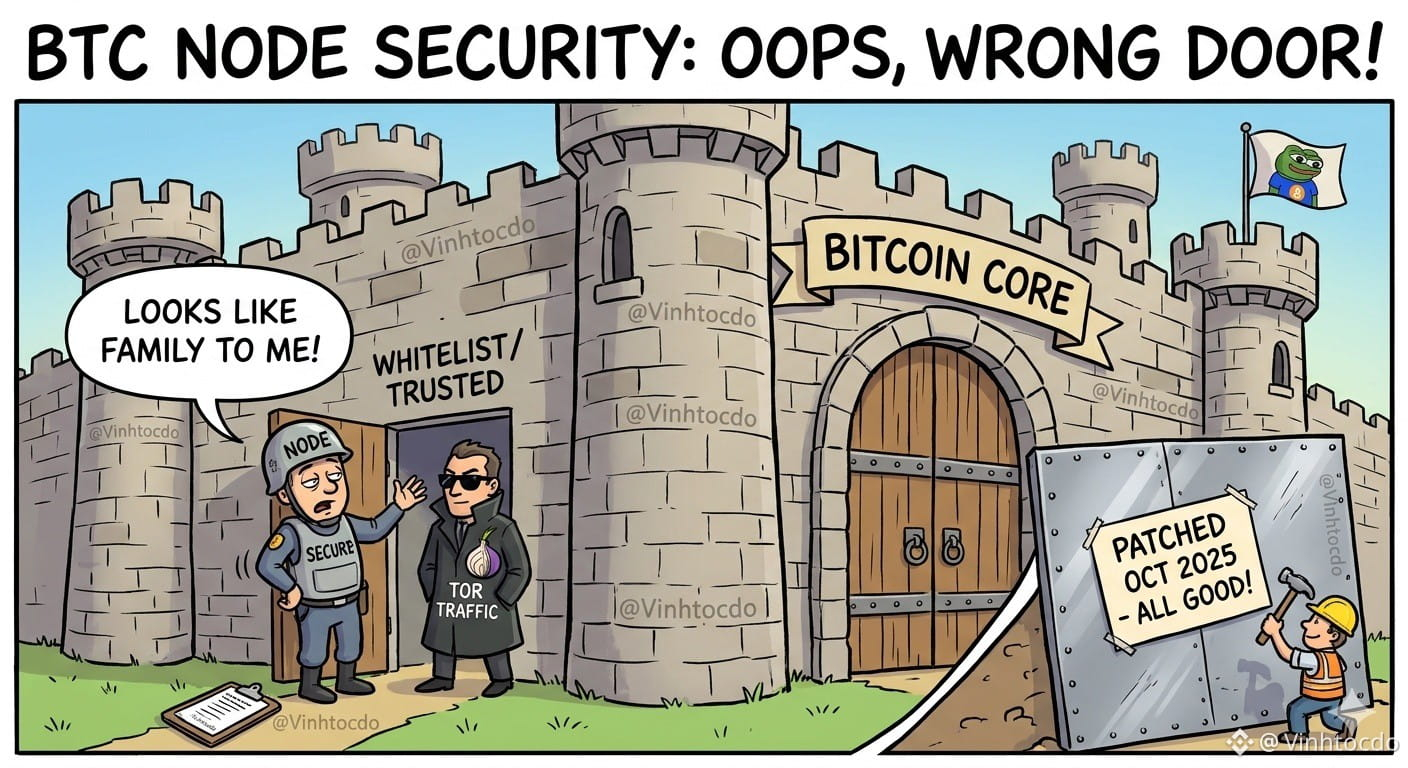
The “House” $BTC has just revealed it once had a “backdoor” that caused thousands of nodes to mistake strangers for family! 🕵️♂️ Bitcoin Core has just disclosed a Tor network vulnerability that caused nodes using service bundling to mistake external traffic for internal traffic, automatically grant it “trusted” status, and loosen their anti-spam defenses.
The good news is that this bug (along with another bug that could leave miners stuck on a block) was patched in October 2025, and no attacks have been reported. This news is primarily a transparency measure following the end of support for version 29.x; it does not undermine the network’s current security.
What should traders do? Don’t panic-sell over old technical news that has already been addressed! Stay calm and focus on monitoring macroeconomic movements. This is not financial advice.
Click the trade button below to support me:
{spot}(BTCUSDT)
$BNB
{spot}(BNBUSDT)
$AKE
{future}(AKEUSDT)
#Bitcoin #CryptoSecurity #CryptoNews #Blockchain #TradingTips #VINHTOCDO
#bitcoincoredisclosestortrafficvulnerability
The “House” $BTC has just revealed it once had a “backdoor” that caused thousands of nodes to mistake strangers for family! 🕵️♂️ Bitcoin Core has just disclosed a Tor network vulnerability that caused nodes using service bundling to mistake external traffic for internal traffic, automatically grant it “trusted” status, and loosen their anti-spam defenses.
The good news is that this bug (along with another bug that could leave miners stuck on a block) was patched in October 2025, and no attacks have been reported. This news is primarily a transparency measure following the end of support for version 29.x; it does not undermine the network’s current security.
What should traders do? Don’t panic-sell over old technical news that has already been addressed! Stay calm and focus on monitoring macroeconomic movements. This is not financial advice.
Click the trade button below to support me:
$BNB
$AKE
#Bitcoin #CryptoSecurity #CryptoNews #Blockchain #TradingTips #VINHTOCDO
3
644
·
--
Bullish
See translation
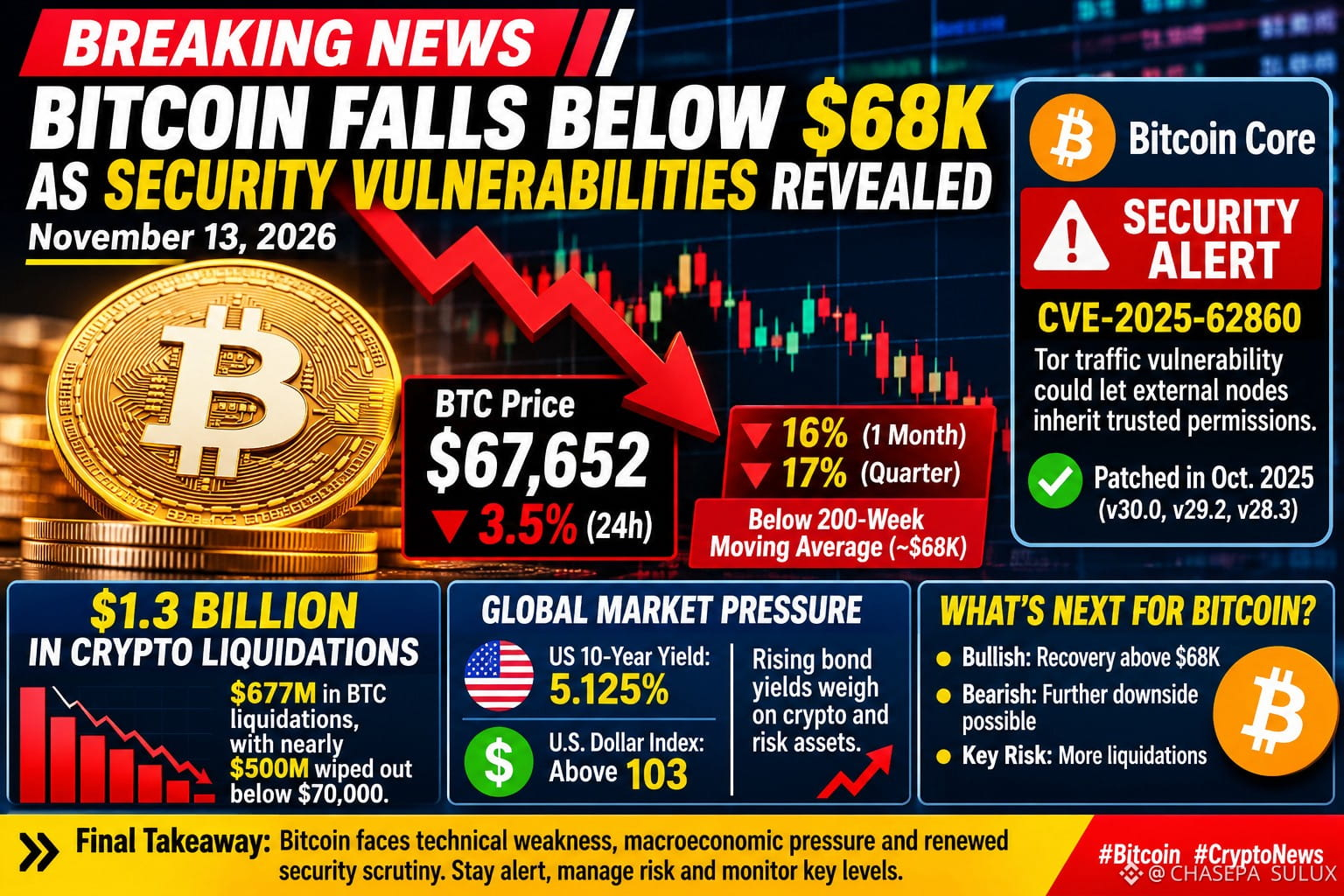
#BitcoinCoreDisclosesTorTrafficVulnerability 🚨 BITCOIN BREAKING NEWS: BTC DROPS BELOW $68K
November 13, 2026
Bitcoin has fallen to $67,652, dropping below its critical $68,000 support level amid rising economic pressure.
🔴 Market Update
BTC price: $67,652
24-hour loss: Over 3.5%
Monthly decline: 16%
Quarterly decline: 17%
⚠️ $1.3 BILLION LIQUIDATED Over $1.3 billion in leveraged crypto positions were liquidated, including $677 million in Bitcoin.
🛡️ BITCOIN SECURITY ALERT Bitcoin Core disclosed three previously patched security vulnerabilities. The main issue, CVE-2025-62860, was fixed in October 2025. No active exploitation has been reported.
🌍 MACRO PRESSURE The US dollar index climbed above 103, while the 10-year Treasury yield reportedly reached 5.125%, increasing pressure on risk assets.
📊 WHAT'S NEXT?
🟢 Bullish: BTC recovers above $68K.
🔴 Bearish: Further declines increase selling pressure.
⚠️ Risk: More liquidations could trigger volatility.
Final Takeaway: Bitcoin faces growing pressure from market weakness, massive liquidations and global economic uncertainty.
#Bitcoin #BTC #CryptoNews #BitcoinCore #CryptoMarket
28

See translation
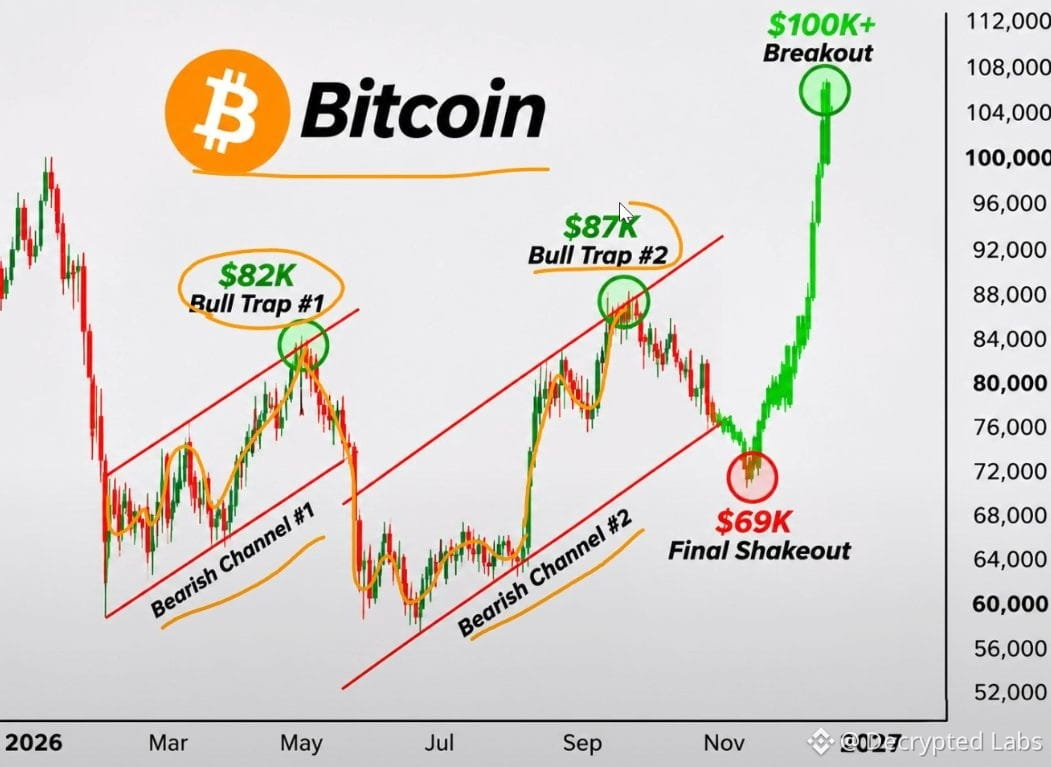
BITCOIN'S CORRECTION IS NOT OVER YET.
$BTC has crashed below $69K, and I believe we're approaching one of the most important turning points of this cycle.
Last week, I warned about a move toward $75K.
Bitcoin broke through that level, and the selling pressure continued.
HERE'S THE BEARISH ROADMAP I'VE BEEN WATCHING:
$75K → $73K → $71K → $69K
Now that BTC has reached my final target zone, I'm looking for signs of capitulation and a confirmed reversal before turning aggressively bullish again.
REMEMBER MY PREVIOUS CALLS:
→ 2022: $17K cycle bottom
→ 2025: $126K cycle top
→ 2026: $57K local bottom
I'm not changing my thesis just because Bitcoin has reached another major target.
The final shakeout could still take prices lower before the next major recovery.
THE BIGGEST OPPORTUNITIES OFTEN COME WHEN FEAR IS AT ITS PEAK.
{spot}(BTCUSDT)
Follow me and turn on notifications.
I'll share my next major $BTC buy signal here FIRST.
#BitcoinCoreDisclosesTorTrafficVulnerability #BitcoinBreaksBelow200WeekMovingAverage
BITCOIN'S CORRECTION IS NOT OVER YET.
$BTC has crashed below $69K, and I believe we're approaching one of the most important turning points of this cycle.
Last week, I warned about a move toward $75K.
Bitcoin broke through that level, and the selling pressure continued.
HERE'S THE BEARISH ROADMAP I'VE BEEN WATCHING:
$75K → $73K → $71K → $69K
Now that BTC has reached my final target zone, I'm looking for signs of capitulation and a confirmed reversal before turning aggressively bullish again.
REMEMBER MY PREVIOUS CALLS:
→ 2022: $17K cycle bottom
→ 2025: $126K cycle top
→ 2026: $57K local bottom
I'm not changing my thesis just because Bitcoin has reached another major target.
The final shakeout could still take prices lower before the next major recovery.
THE BIGGEST OPPORTUNITIES OFTEN COME WHEN FEAR IS AT ITS PEAK.
Follow me and turn on notifications.
I'll share my next major $BTC buy signal here FIRST.
#BitcoinCoreDisclosesTorTrafficVulnerability #BitcoinBreaksBelow200WeekMovingAverage
246
·
--
Bullish
Verified
See translation
#usppimissmayeasebtcpressure
🚨 U.S. PPI MISSES SLIGHTLY AT 6.5% — DOES IT CHANGE THE FED'S DECEMBER RATE HIKE CALL? 🇺🇸📉
October’s U.S. Producer Price Index (PPI) came in at 6.5% year-over-year (0.3% MoM)—slightly cooler than the 6.6% YoY / 0.4% MoM consensus, though still accelerating from September's 6.3% to hit a near 4-year high.
As the final major inflation print before the Federal Reserve’s December 8–9 FOMC meeting (November CPI doesn't drop until December 10), the small miss triggered an immediate relief bounce in Bitcoin ($BTC) back above $70,000—but Wall Street says the Fed’s core plan hasn't changed.
📌 Why the Small PPI Miss Doesn’t Stop a December Hike
🏦 25 bps Hike Remains Locked In: Earlier this week, October CPI ran hot at 0.4% MoM (0.3% Core), keeping consumer inflation well above the Fed’s 2% comfort zone. Futures markets still price roughly an 85%+ probability of a 25 bps rate hike on December 9 (lifting the target range to 4.00%–4.25%).
🧊 What Did Change (50 bps Panic Cools): Before CPI, Fed Governor Christopher Waller warned that a 0.3%+ Core CPI reading could justify a larger 50 bps hike. Because PPI components feeding into Core PCE came in a touch softer than feared, bets on a jumbo 50 bps shock eased—giving risk assets room to breathe.
🔥 Sticky Underlying Pressures: With Core PPI holding at 5.0% YoY and energy/Middle East tensions keeping oil elevated near $88–$89, analysts at Capital Economics warn the Fed still has work to do and could even consider consecutive hikes into early 2027.
$ZEC
{future}(ZECUSDT)
💡 Trader Takeaway: What This Means for Bitcoin ($BTC)
🚀 Relief Bounce Above $70K: After a brutal $1.6B+ liquidation flush drove $BTC down to ~$67.7k, cooling 50 bps hike fears helped bulls reclaim the $70,000 psychological level$XRP
{future}(XRPUSDT)
.
$ETH
{future}(ETHUSDT)
#BitcoinCoreDisclosesTorTrafficVulnerability #Anthropic’s6xIPODemandSignalsPotentialRecordRaise #BTC #Fed
#usppimissmayeasebtcpressure
🚨 U.S. PPI MISSES SLIGHTLY AT 6.5% — DOES IT CHANGE THE FED'S DECEMBER RATE HIKE CALL? 🇺🇸📉
October’s U.S. Producer Price Index (PPI) came in at 6.5% year-over-year (0.3% MoM)—slightly cooler than the 6.6% YoY / 0.4% MoM consensus, though still accelerating from September's 6.3% to hit a near 4-year high.
As the final major inflation print before the Federal Reserve’s December 8–9 FOMC meeting (November CPI doesn't drop until December 10), the small miss triggered an immediate relief bounce in Bitcoin ($BTC) back above $70,000—but Wall Street says the Fed’s core plan hasn't changed.
📌 Why the Small PPI Miss Doesn’t Stop a December Hike
🏦 25 bps Hike Remains Locked In: Earlier this week, October CPI ran hot at 0.4% MoM (0.3% Core), keeping consumer inflation well above the Fed’s 2% comfort zone. Futures markets still price roughly an 85%+ probability of a 25 bps rate hike on December 9 (lifting the target range to 4.00%–4.25%).
🧊 What Did Change (50 bps Panic Cools): Before CPI, Fed Governor Christopher Waller warned that a 0.3%+ Core CPI reading could justify a larger 50 bps hike. Because PPI components feeding into Core PCE came in a touch softer than feared, bets on a jumbo 50 bps shock eased—giving risk assets room to breathe.
🔥 Sticky Underlying Pressures: With Core PPI holding at 5.0% YoY and energy/Middle East tensions keeping oil elevated near $88–$89, analysts at Capital Economics warn the Fed still has work to do and could even consider consecutive hikes into early 2027.
$ZEC
💡 Trader Takeaway: What This Means for Bitcoin ($BTC)
🚀 Relief Bounce Above $70K: After a brutal $1.6B+ liquidation flush drove $BTC down to ~$67.7k, cooling 50 bps hike fears helped bulls reclaim the $70,000 psychological level$XRP
.
$ETH
#BitcoinCoreDisclosesTorTrafficVulnerability #Anthropic’s6xIPODemandSignalsPotentialRecordRaise #BTC #Fed
Abu Fahadأ:
💛
1
2
1k

·
--
See translation
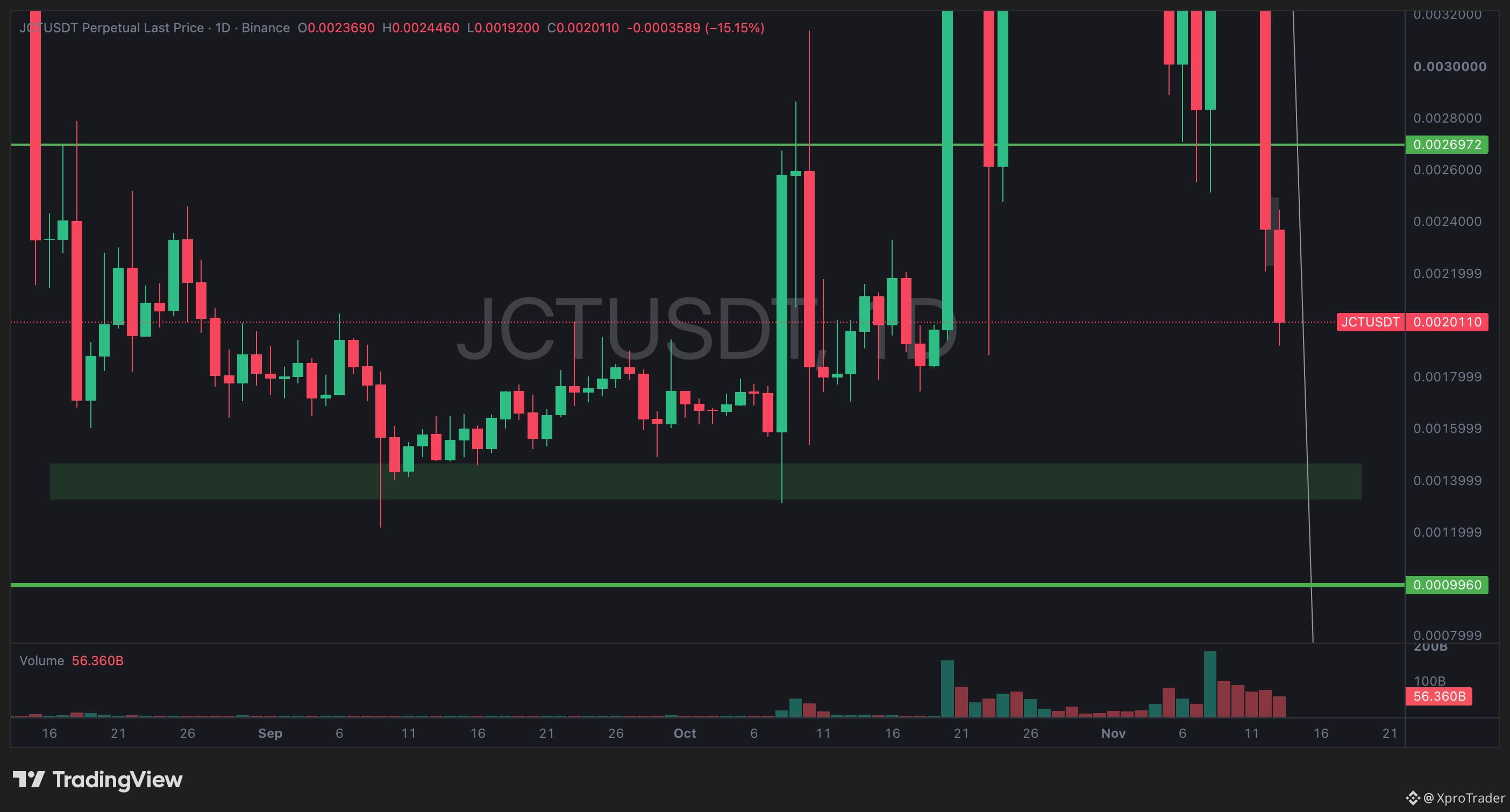
$JCT Died
While, I am also long on #JCT
I know it will dump more but still holding!!....
it isn't anymore trade, turned a calculated risk into an emotional gamblling....
it is not anymore techical analysis, It is now hopping....
Isn't it concerning?.....
#USPPIMissMayEaseBTCPressure
#BitcoinCoreDisclosesTorTrafficVulnerability
#WhatWillDriveCryptoandStocks’NextRebound?
$SOXS
$AKE
2
538

See translation
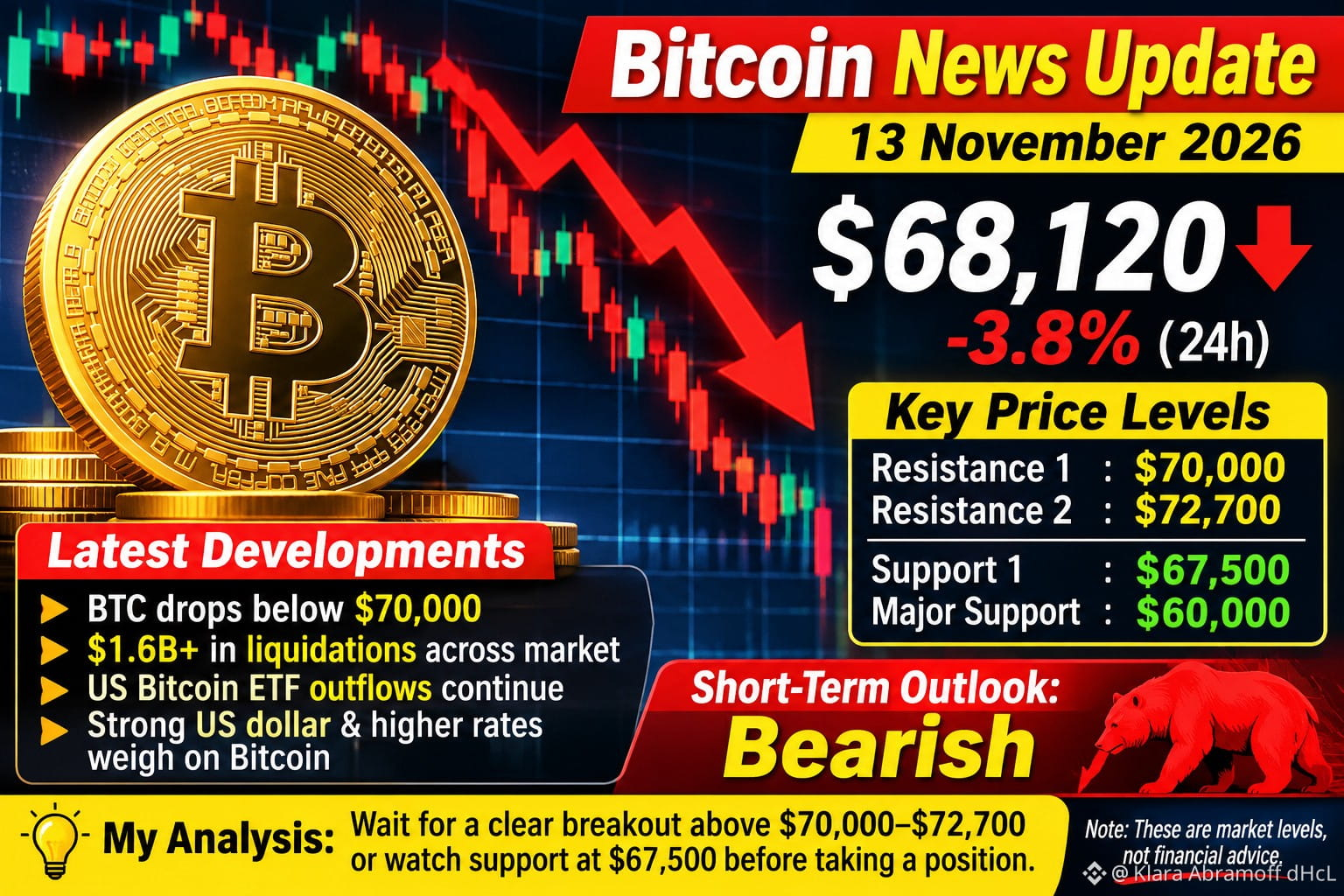
Heavy liquidations: More than $1.6 billion in crypto positions were liquidated across the market.
ETF outflows: US spot $BTC ETFs have experienced significant withdrawals.
Market pressure: A stronger US dollar and expectations of higher Federal Reserve interest rates are weighing on Bitcoin.
Important price levels
Level BTC price
Resistance 1 $70,000
Resistance 2 $72,700
Support 1 $67,500
Major support $60,000
Short-term outlook: Bearish
Bitcoin needs to recover above $70,000–$72,700 to show stronger recovery momentum. A breakdown below $67,500 could bring further downside risk.
My analysis: Avoid rushing into leveraged trades during this volatile market. Watch support levels and trading volume before making a decision.
These are reported market levels, not guaranteed future prices or financial advice.
Would you like me to prepare a daily Bitcoin news and price analysis with a chart for you?#USPPIMissMayEaseBTCPressure #BitcoinCoreDisclosesTorTrafficVulnerability #WhatWillDriveCryptoandStocks’NextRebound? #BitcoinBreaksBelow200WeekMovingAverage
{spot}(BTCUSDT)
Heavy liquidations: More than $1.6 billion in crypto positions were liquidated across the market.
ETF outflows: US spot $BTC ETFs have experienced significant withdrawals.
Market pressure: A stronger US dollar and expectations of higher Federal Reserve interest rates are weighing on Bitcoin.
Important price levels
Level BTC price
Resistance 1 $70,000
Resistance 2 $72,700
Support 1 $67,500
Major support $60,000
Short-term outlook: Bearish
Bitcoin needs to recover above $70,000–$72,700 to show stronger recovery momentum. A breakdown below $67,500 could bring further downside risk.
My analysis: Avoid rushing into leveraged trades during this volatile market. Watch support levels and trading volume before making a decision.
These are reported market levels, not guaranteed future prices or financial advice.
Would you like me to prepare a daily Bitcoin news and price analysis with a chart for you?#USPPIMissMayEaseBTCPressure #BitcoinCoreDisclosesTorTrafficVulnerability #WhatWillDriveCryptoandStocks’NextRebound? #BitcoinBreaksBelow200WeekMovingAverage
1
95


·
--
See translation
🔥 Bitcoin drops below $70,000
On November 13, Bitcoin fell to $69,350 following a sharp sell-off and a break below the key $70,000 level.
📊 Liquidations of long positions reached $1.31 billion, affecting over 175,000 traders.
The next target for the bears could be $65,000, though the market remains capable of a short-term rebound.
#BitcoinBreaksBelow200WeekMovingAverage
#BitcoinCoreDisclosesTorTrafficVulnerability
$BTC
{future}(BTCUSDT)
🔥 Bitcoin drops below $70,000
On November 13, Bitcoin fell to $69,350 following a sharp sell-off and a break below the key $70,000 level.
📊 Liquidations of long positions reached $1.31 billion, affecting over 175,000 traders.
The next target for the bears could be $65,000, though the market remains capable of a short-term rebound.
#BitcoinBreaksBelow200WeekMovingAverage
#BitcoinCoreDisclosesTorTrafficVulnerability
$BTC
1
5
365

·
--
Bearish
See translation
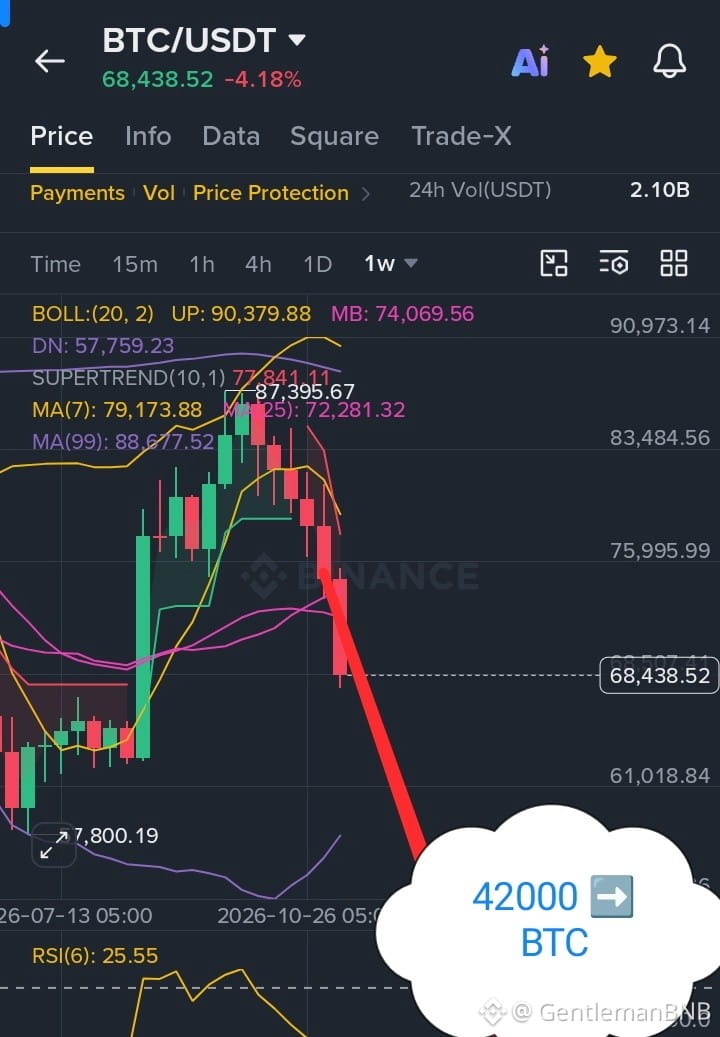
$BTC to 42K
fasten your seat belts
$NVDAB $ETH #USPPIMissMayEaseBTCPressure #BitcoinCoreDisclosesTorTrafficVulnerability
$BTC to 42K
fasten your seat belts
$NVDAB $ETH #USPPIMissMayEaseBTCPressure #BitcoinCoreDisclosesTorTrafficVulnerability
fasten your seat belts
$NVDAB $ETH #USPPIMissMayEaseBTCPressure #BitcoinCoreDisclosesTorTrafficVulnerability
Adnan_107:
stfu
1
224

·
--
Bearish
See translation
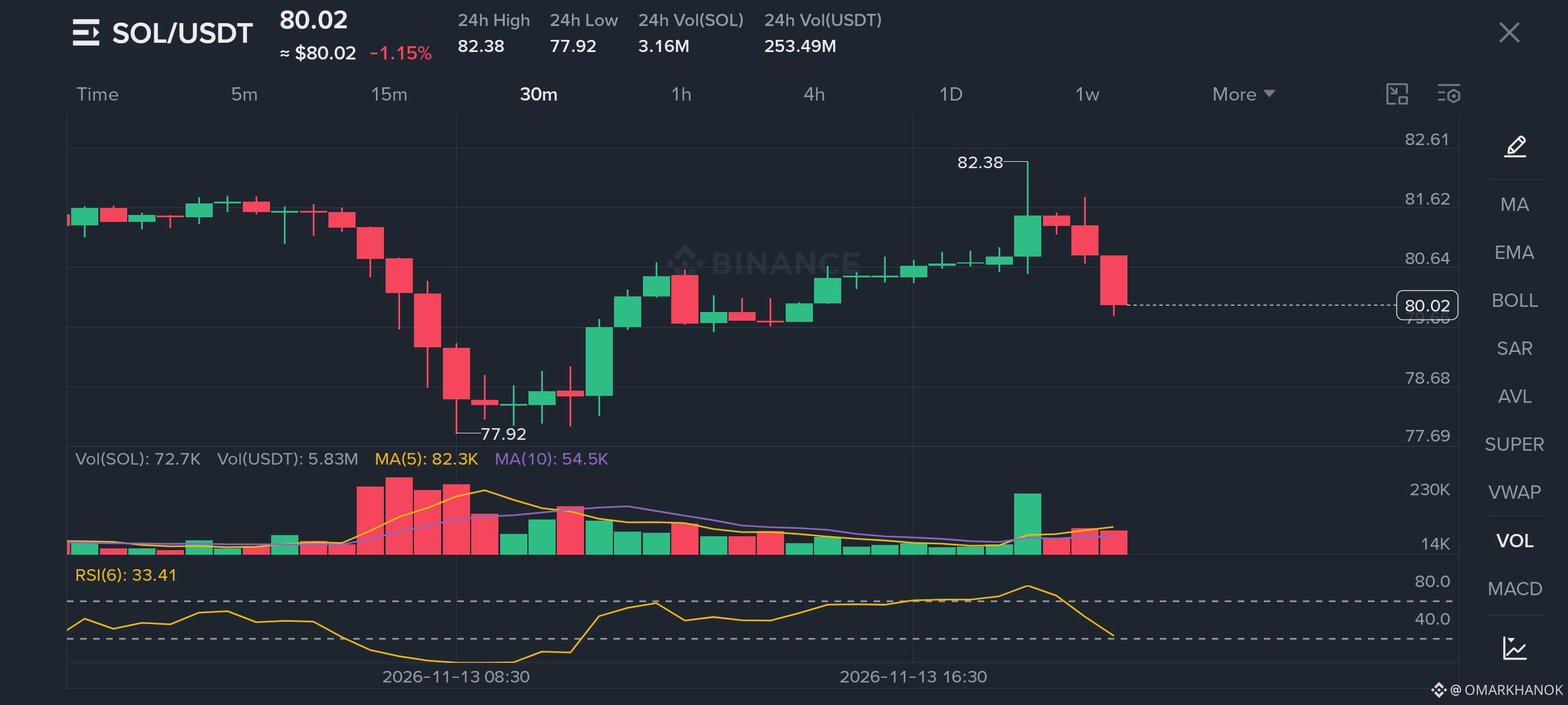
🚨 $SOL SHORT SETUP
🔴 $SOL/USDT SHORT SIGNAL
Entry Zone: $80.6692 – $80.9108
Take Profit Targets:
TP1: $79.1216
TP2: $78.0093
TP3: $76.3409
Stop Loss: $83.0147
TRADE MANAGEMENT PLAN:
Enter gradually within the entry zone.
Keep leverage low and avoid overexposure.
Consider securing partial profits at TP1.
Move SL to breakeven after a confirmed favorable move, if appropriate.
TP2 hit Movs sl to to TP 1 hold till TP3.
Are you taking this $SOL short or expecting a bullish reversal?
COMMENT: SHORT or LONG — what's your target for SOL?
to trade click here 👇
{future}(SOLUSDT)
#sol #solana #TradingSignals #USPPIMissMayEaseBTCPressure #BitcoinCoreDisclosesTorTrafficVulnerability
🚨 $SOL SHORT SETUP
🔴 $SOL /USDT SHORT SIGNAL
Entry Zone: $80.6692 – $80.9108
Take Profit Targets:
TP1: $79.1216
TP2: $78.0093
TP3: $76.3409
Stop Loss: $83.0147
TRADE MANAGEMENT PLAN:
Enter gradually within the entry zone.
Keep leverage low and avoid overexposure.
Consider securing partial profits at TP1.
Move SL to breakeven after a confirmed favorable move, if appropriate.
TP2 hit Movs sl to to TP 1 hold till TP3.
Are you taking this $SOL short or expecting a bullish reversal?
COMMENT: SHORT or LONG — what's your target for SOL?
to trade click here 👇
#sol #solana #TradingSignals #USPPIMissMayEaseBTCPressure #BitcoinCoreDisclosesTorTrafficVulnerability
39
Log in to explore more content
Join global crypto users on Binance Square
⚡️ Get latest and useful information about crypto.
💬 Trusted by the world’s largest crypto exchange.
👍 Discover real insights from verified creators.
Email / Phone number
Trending Topics
1
#USPPIMissMayEaseBTCPressure
10,284 views
349 Discussing
2
#BitcoinCoreDisclosesTorTrafficVulnerability
2,199 views
126 Discussing
3
#WhatWillDriveCryptoandStocks’NextRebound?
104,676 views
1,313 Discussing
4
#BitcoinBreaksBelow200WeekMovingAverage
22,627 views
319 Discussing
5
#SpaceXTeslaMergerTalksWouldCombine30220BTC
8,054 views
169 Discussing
6
#Anthropic’s6xIPODemandSignalsPotentialRecordRaise
34,392 views
605 Discussing
7
#USCryptoETFsLose$1.48BInFiveDays
1,489 views
37 Discussing
8
#KoreaDigitalAssetBasicActFinalDraftExpectedEarlyJanuary
3,167 views
18 Discussing
9
#RippleRLUSDMarketCapSurpassesPayPalPYUSD
4,049 views
100 Discussing
10
#JaneStreetNearlyOctuplesFidelityBitcoinETFHoldings
12,457 views
205 Discussing