
#binance
binance
536.5M views
1.3M Discussing
Hot
Latest

·
--
Bullish
Freedom of Money:
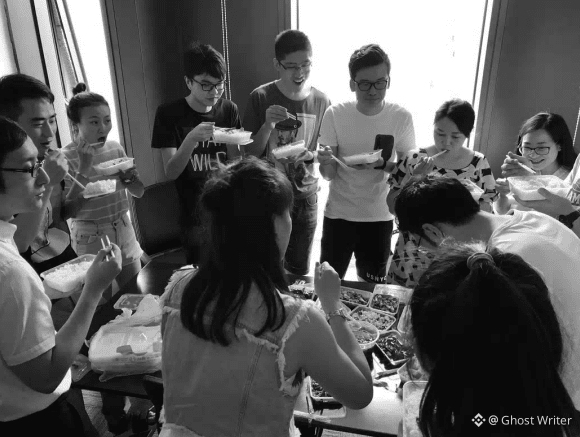
In 2017, when Binance conducted its ICO, with a price of $0.1 USD, they paid all company employees a month's salary, equivalent to 20,000 $BNB
Currently, the price of BNB is $750 USD per coin, worth $15 million USD, an increase of over 7000 times.
They achieved financial freedom early on, demonstrating that sometimes, the right choice is far more important than effort.
#Binance #freedomofmoney #CZ
Freedom of Money:
In 2017, when Binance conducted its ICO, with a price of $0.1 USD, they paid all company employees a month's salary, equivalent to 20,000 $BNB
Currently, the price of BNB is $750 USD per coin, worth $15 million USD, an increase of over 7000 times.
They achieved financial freedom early on, demonstrating that sometimes, the right choice is far more important than effort.
#Binance #freedomofmoney #CZ
In 2017, when Binance conducted its ICO, with a price of $0.1 USD, they paid all company employees a month's salary, equivalent to 20,000 $BNB
Currently, the price of BNB is $750 USD per coin, worth $15 million USD, an increase of over 7000 times.
They achieved financial freedom early on, demonstrating that sometimes, the right choice is far more important than effort.
#Binance #freedomofmoney #CZ
TKL - Altcoin Hunter:
Lựa chọn luôn quan trọng hơn nỗ lực
4
1
17
19.8k

ZEC just flipped BNB in price. 👀
Think about that for a second.
BNB — backed by one of the biggest ecosystems in crypto, with massive liquidity, real utility, and a continuous burn mechanism — is now watching ZEC trade above it on a per-coin price basis.
But here’s the part people often forget:
A higher coin price doesn’t automatically mean a bigger or stronger project.
ZEC may have taken the lead in price.
But BNB still has an entire ecosystem behind it.
Today, ZEC is ahead.
Tomorrow?
The market has a funny way of reminding everyone that no position is untouchable.
Maybe BNB is being underestimated.
Maybe ZEC is simply having its moment.
Either way, don’t just watch the price.
Watch the value behind the coin.
#BNB BNB #zec #Crypto #Binance Binance #Altcoin
ZEC just flipped BNB in price. 👀
Think about that for a second.
BNB — backed by one of the biggest ecosystems in crypto, with massive liquidity, real utility, and a continuous burn mechanism — is now watching ZEC trade above it on a per-coin price basis.
But here’s the part people often forget:
A higher coin price doesn’t automatically mean a bigger or stronger project.
ZEC may have taken the lead in price.
But BNB still has an entire ecosystem behind it.
Today, ZEC is ahead.
Tomorrow?
The market has a funny way of reminding everyone that no position is untouchable.
Maybe BNB is being underestimated.
Maybe ZEC is simply having its moment.
Either way, don’t just watch the price.
Watch the value behind the coin.
#BNB BNB #zec #Crypto #Binance Binance #Altcoin
Think about that for a second.
BNB — backed by one of the biggest ecosystems in crypto, with massive liquidity, real utility, and a continuous burn mechanism — is now watching ZEC trade above it on a per-coin price basis.
But here’s the part people often forget:
A higher coin price doesn’t automatically mean a bigger or stronger project.
ZEC may have taken the lead in price.
But BNB still has an entire ecosystem behind it.
Today, ZEC is ahead.
Tomorrow?
The market has a funny way of reminding everyone that no position is untouchable.
Maybe BNB is being underestimated.
Maybe ZEC is simply having its moment.
Either way, don’t just watch the price.
Watch the value behind the coin.
#BNB BNB #zec #Crypto #Binance Binance #Altcoin
1
203


Why I Like Binance 🌟
Binance is more than just a crypto platform—it’s a place where people can learn, explore, and stay connected with the world of digital assets.
What I appreciate most is the easy-to-use experience, the variety of crypto-related information, and the active community. It’s also a great place to keep learning and improve your understanding of the crypto space.
I’m happy to be part of the Binance community and excited to keep learning and growing along the way. 🚀
Keep learning. Stay informed. Keep growing. 💙
#Binance #Crypto #BinanceCommunity #CryptoCommunity #Blockchain #Web3
Why I Like Binance 🌟
Binance is more than just a crypto platform—it’s a place where people can learn, explore, and stay connected with the world of digital assets.
What I appreciate most is the easy-to-use experience, the variety of crypto-related information, and the active community. It’s also a great place to keep learning and improve your understanding of the crypto space.
I’m happy to be part of the Binance community and excited to keep learning and growing along the way. 🚀
Keep learning. Stay informed. Keep growing. 💙
#Binance #Crypto #BinanceCommunity #CryptoCommunity #Blockchain #Web3
Binance is more than just a crypto platform—it’s a place where people can learn, explore, and stay connected with the world of digital assets.
What I appreciate most is the easy-to-use experience, the variety of crypto-related information, and the active community. It’s also a great place to keep learning and improve your understanding of the crypto space.
I’m happy to be part of the Binance community and excited to keep learning and growing along the way. 🚀
Keep learning. Stay informed. Keep growing. 💙
#Binance #Crypto #BinanceCommunity #CryptoCommunity #Blockchain #Web3

49

·
--
Bullish
⚠️ Disclosure: This post is for educational and community discussion only, not financial advice. Always DYOR before trading or investing.
🚀 Binance Alpha Watchlist is heating up! 🔥
💎 $CP — Cluster Protocol is in focus with the Binance Alpha Trading Competition and a $200K rewards pool 🎯
⚡ $XPIN — XPIN Network is catching community attention following its Binance Alpha competition campaign 🌐
🌟 $HOLO — HOLO is trending with a Binance trading tournament offering up to 400 BNB token vouchers 🏆
📊 Binance Alpha tokens can move quickly with campaign news, liquidity shifts, and market sentiment 👀
🔍 Track official updates, token activity, and risk carefully before making any decision 🛡️
💬 Which one is on your watchlist today: CP, XPIN, or HOLO?
🔔 Reminder: Crypto is volatile—never invest more than you can afford to lose, and verify all details through official Binance channels.
#BinanceAlpha #Crypto #Web3 #Altcoins #Binance .
{alpha}(84530x001aad84c21a5cd4d696c56d44866e9703c43f77)
{alpha}(560xd955c9ba56fb1ab30e34766e252a97ccce3d31a6)
{spot}(HOLOUSDT)
⚠️ Disclosure: This post is for educational and community discussion only, not financial advice. Always DYOR before trading or investing.
🚀 Binance Alpha Watchlist is heating up! 🔥
💎 $CP — Cluster Protocol is in focus with the Binance Alpha Trading Competition and a $200K rewards pool 🎯
⚡ $XPIN — XPIN Network is catching community attention following its Binance Alpha competition campaign 🌐
🌟 $HOLO — HOLO is trending with a Binance trading tournament offering up to 400 BNB token vouchers 🏆
📊 Binance Alpha tokens can move quickly with campaign news, liquidity shifts, and market sentiment 👀
🔍 Track official updates, token activity, and risk carefully before making any decision 🛡️
💬 Which one is on your watchlist today: CP, XPIN, or HOLO?
🔔 Reminder: Crypto is volatile—never invest more than you can afford to lose, and verify all details through official Binance channels.
#BinanceAlpha #Crypto #Web3 #Altcoins #Binance .
🚀 Binance Alpha Watchlist is heating up! 🔥
💎 $CP — Cluster Protocol is in focus with the Binance Alpha Trading Competition and a $200K rewards pool 🎯
⚡ $XPIN — XPIN Network is catching community attention following its Binance Alpha competition campaign 🌐
🌟 $HOLO — HOLO is trending with a Binance trading tournament offering up to 400 BNB token vouchers 🏆
📊 Binance Alpha tokens can move quickly with campaign news, liquidity shifts, and market sentiment 👀
🔍 Track official updates, token activity, and risk carefully before making any decision 🛡️
💬 Which one is on your watchlist today: CP, XPIN, or HOLO?
🔔 Reminder: Crypto is volatile—never invest more than you can afford to lose, and verify all details through official Binance channels.
#BinanceAlpha #Crypto #Web3 #Altcoins #Binance .


516
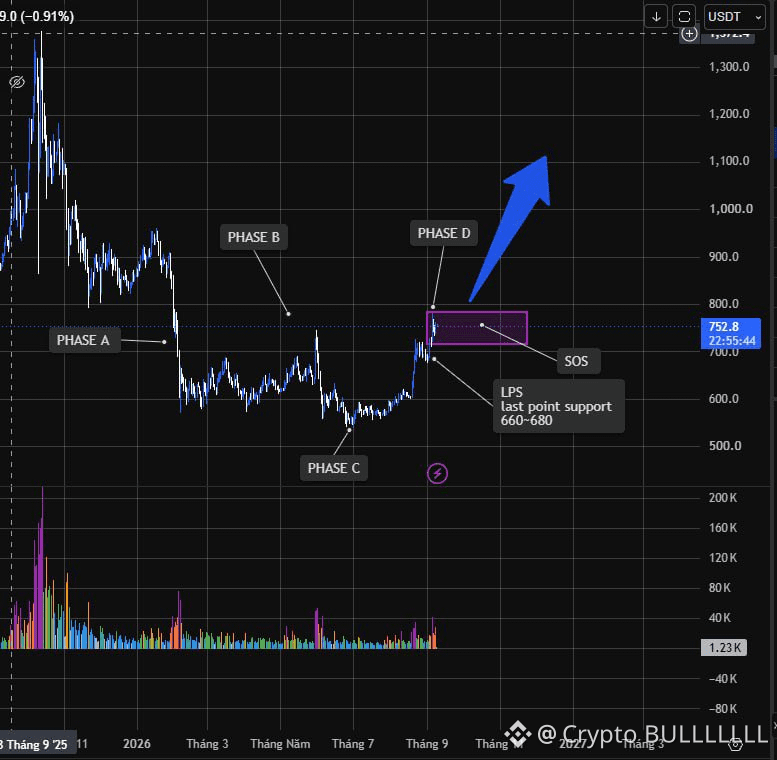
Is $BNB quietly preparing for the most obvious four-digit setup in crypto history?
Everyone is chasing high-risk meme coins, while $BNB is casually completing a textbook Cup & Handle structure on the daily chart.
While retail gets chopped up in the $740–$760 range noise, smart money is watching the handle consolidation right above key support.
When a top-tier ecosystem token prints a macro structure like this,
$1,000 isn't just a meme target, it sits mathematically on the horizon.
Holders are quietly accumulating, leverage is getting flushed out, and the breakout wall at $780 is wearing thin.
Don't let this boring sideways phase trick you into dumping before the expansion phase begins.
Rule number one in crypto: never short the engine powering the largest exchange in the world.
#bnb #Binance
Is $BNB quietly preparing for the most obvious four-digit setup in crypto history?
Everyone is chasing high-risk meme coins, while $BNB is casually completing a textbook Cup & Handle structure on the daily chart.
While retail gets chopped up in the $740–$760 range noise, smart money is watching the handle consolidation right above key support.
When a top-tier ecosystem token prints a macro structure like this,
$1,000 isn't just a meme target, it sits mathematically on the horizon.
Holders are quietly accumulating, leverage is getting flushed out, and the breakout wall at $780 is wearing thin.
Don't let this boring sideways phase trick you into dumping before the expansion phase begins.
Rule number one in crypto: never short the engine powering the largest exchange in the world.
#bnb #Binance
Everyone is chasing high-risk meme coins, while $BNB is casually completing a textbook Cup & Handle structure on the daily chart.
While retail gets chopped up in the $740–$760 range noise, smart money is watching the handle consolidation right above key support.
When a top-tier ecosystem token prints a macro structure like this,
$1,000 isn't just a meme target, it sits mathematically on the horizon.
Holders are quietly accumulating, leverage is getting flushed out, and the breakout wall at $780 is wearing thin.
Don't let this boring sideways phase trick you into dumping before the expansion phase begins.
Rule number one in crypto: never short the engine powering the largest exchange in the world.
#bnb #Binance
38

·
--
#Binance Binance is using a 1 billion-share estimate to work out the AI company Anthropic’s implied valuation. At press time, ANTHROPIC stands over $2 trillion.
Anthropic warned back in May that unauthorized SPV stock transfers are void and could basically end up being worthless to investors trading or holding these assets.
Binance could adjust ANTHROPIC/USDT if the share count in Anthropic’s S-1 comes in 3% or more above or below its current estimate.
On Sept. 9, Defillama’s pre-IPO dashboard showed Binance’s ANTHROPIC/USDT contract testing $2,120. Binance applies an assumed share count of 1 billion, turning that contract price into an implied company value of roughly $2.12 trillion. Similar contracts on Bitget, Kraken, BingX, Aster, and Coinbase International were trading in the same price range.
#BinanceSquareTalks #Web3 #blockchain #CryptoInvesting
#Binance Binance is using a 1 billion-share estimate to work out the AI company Anthropic’s implied valuation. At press time, ANTHROPIC stands over $2 trillion.
Anthropic warned back in May that unauthorized SPV stock transfers are void and could basically end up being worthless to investors trading or holding these assets.
Binance could adjust ANTHROPIC/USDT if the share count in Anthropic’s S-1 comes in 3% or more above or below its current estimate.
On Sept. 9, Defillama’s pre-IPO dashboard showed Binance’s ANTHROPIC/USDT contract testing $2,120. Binance applies an assumed share count of 1 billion, turning that contract price into an implied company value of roughly $2.12 trillion. Similar contracts on Bitget, Kraken, BingX, Aster, and Coinbase International were trading in the same price range.
#BinanceSquareTalks #Web3 #blockchain #CryptoInvesting
Anthropic warned back in May that unauthorized SPV stock transfers are void and could basically end up being worthless to investors trading or holding these assets.
Binance could adjust ANTHROPIC/USDT if the share count in Anthropic’s S-1 comes in 3% or more above or below its current estimate.
On Sept. 9, Defillama’s pre-IPO dashboard showed Binance’s ANTHROPIC/USDT contract testing $2,120. Binance applies an assumed share count of 1 billion, turning that contract price into an implied company value of roughly $2.12 trillion. Similar contracts on Bitget, Kraken, BingX, Aster, and Coinbase International were trading in the same price range.
#BinanceSquareTalks #Web3 #blockchain #CryptoInvesting

13
·
--
🚨 BREAKING
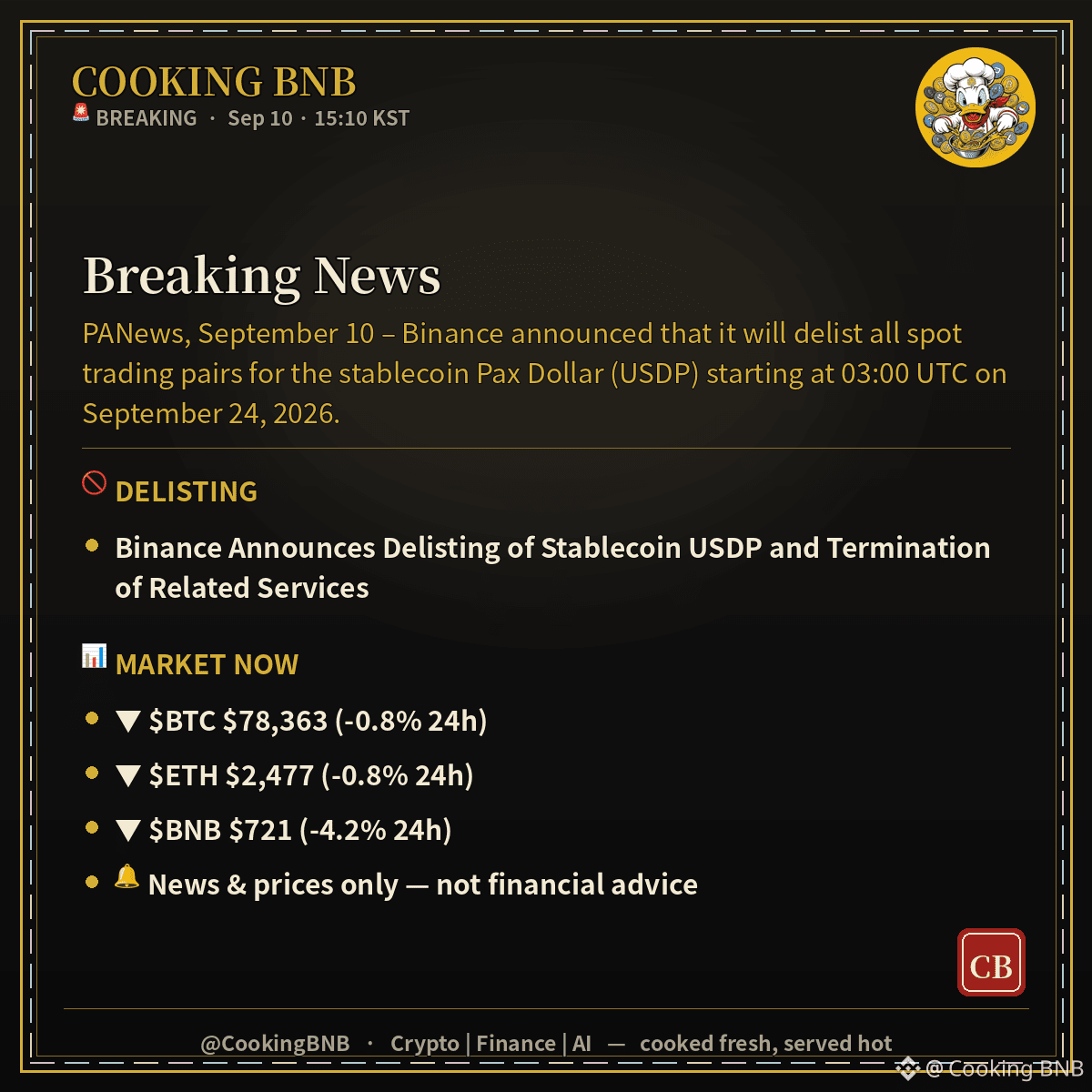
Binance Announces Delisting of Stablecoin USDP and Termination of Related Services
PANews, September 10 – Binance announced that it will delist all spot trading pairs for the stablecoin Pax Dollar (USDP) starting at 03:00 UTC on September 24, 2026, and simultaneously terminate related services including Trading Bots.
via PANews · 10m ago (06:00 UTC)
#CookingBNB #Crypto #Bitcoin #BTC #Binance
🚨 BREAKING
Binance Announces Delisting of Stablecoin USDP and Termination of Related Services
PANews, September 10 – Binance announced that it will delist all spot trading pairs for the stablecoin Pax Dollar (USDP) starting at 03:00 UTC on September 24, 2026, and simultaneously terminate related services including Trading Bots.
via PANews · 10m ago (06:00 UTC)
#CookingBNB #Crypto #Bitcoin #BTC #Binance
Binance Announces Delisting of Stablecoin USDP and Termination of Related Services
PANews, September 10 – Binance announced that it will delist all spot trading pairs for the stablecoin Pax Dollar (USDP) starting at 03:00 UTC on September 24, 2026, and simultaneously terminate related services including Trading Bots.
via PANews · 10m ago (06:00 UTC)
#CookingBNB #Crypto #Bitcoin #BTC #Binance
16
·
--
🚨 BREAKING
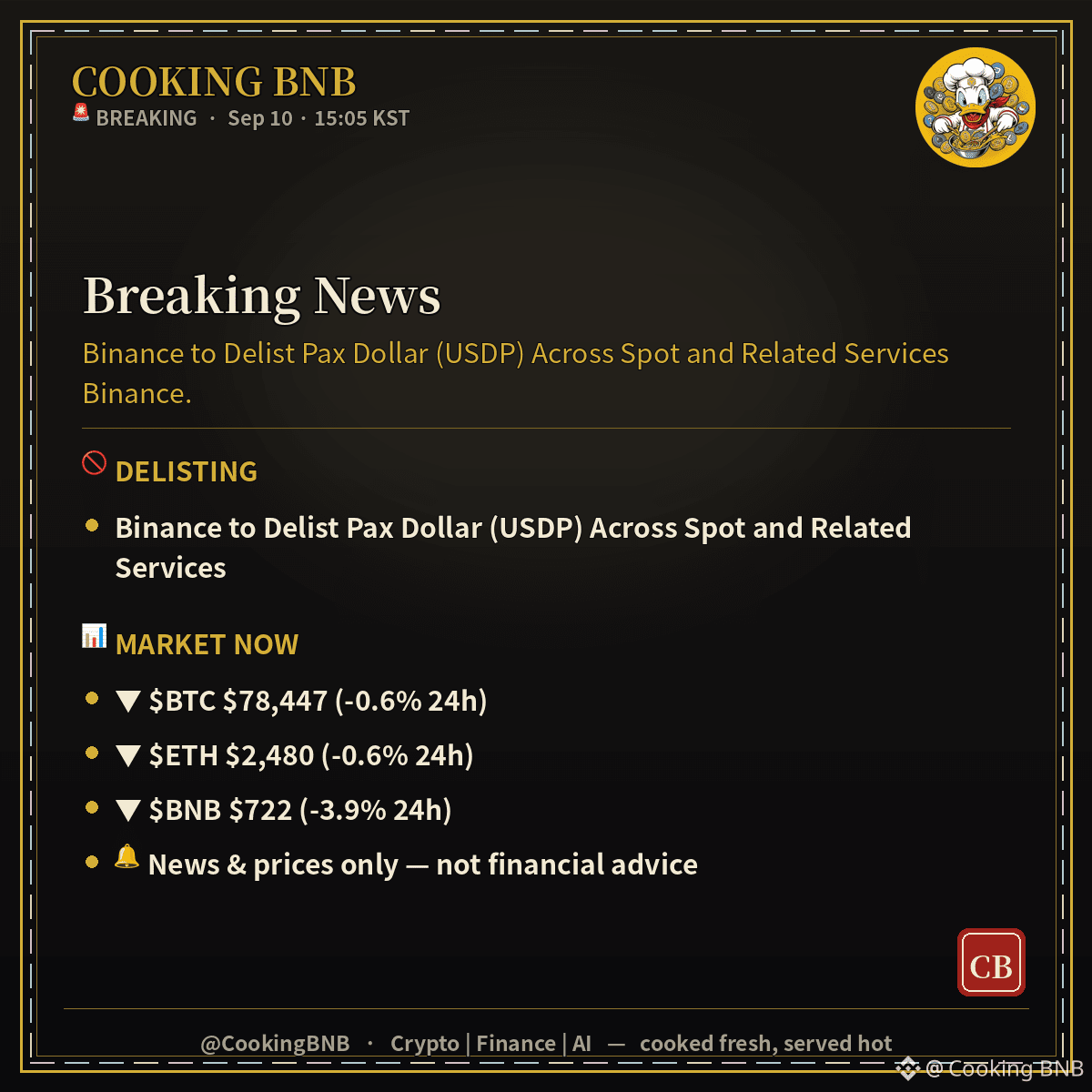
Binance to Delist Pax Dollar (USDP) Across Spot and Related Services
Binance to Delist Pax Dollar (USDP) Across Spot and Related Services Binance.
via Binance News · 4m ago (06:01 UTC)
#CookingBNB #Crypto #Bitcoin #BTC #Binance
🚨 BREAKING
Binance to Delist Pax Dollar (USDP) Across Spot and Related Services
Binance to Delist Pax Dollar (USDP) Across Spot and Related Services Binance.
via Binance News · 4m ago (06:01 UTC)
#CookingBNB #Crypto #Bitcoin #BTC #Binance
Binance to Delist Pax Dollar (USDP) Across Spot and Related Services
Binance to Delist Pax Dollar (USDP) Across Spot and Related Services Binance.
via Binance News · 4m ago (06:01 UTC)
#CookingBNB #Crypto #Bitcoin #BTC #Binance
42

🚨 NEW COIN ALERT: $牛来 (Niu Lai) 🚨
🔥 New Binance Spot listing is getting attention!
$牛来 is a new meme coin on BNB Chain and has been listed with Binance’s Seed Tag. The early price action is already showing strong volatility. 📊
👀 Watch closely: Volume + buying pressure + price action
⚠️ Don’t FOMO after a sudden pump. Manage your risk and DYOR.
💬 Will $牛来 become the next trending meme coin? 🐂🔥
#Binance #niulai #crypto #newcoin #MemeCoin
🚨 NEW COIN ALERT: $牛来 (Niu Lai) 🚨
🔥 New Binance Spot listing is getting attention!
$牛来 is a new meme coin on BNB Chain and has been listed with Binance’s Seed Tag. The early price action is already showing strong volatility. 📊
👀 Watch closely: Volume + buying pressure + price action
⚠️ Don’t FOMO after a sudden pump. Manage your risk and DYOR.
💬 Will $牛来 become the next trending meme coin? 🐂🔥
#Binance #niulai #crypto #newcoin #MemeCoin
🔥 New Binance Spot listing is getting attention!
$牛来 is a new meme coin on BNB Chain and has been listed with Binance’s Seed Tag. The early price action is already showing strong volatility. 📊
👀 Watch closely: Volume + buying pressure + price action
⚠️ Don’t FOMO after a sudden pump. Manage your risk and DYOR.
💬 Will $牛来 become the next trending meme coin? 🐂🔥
#Binance #niulai #crypto #newcoin #MemeCoin
176


·
--
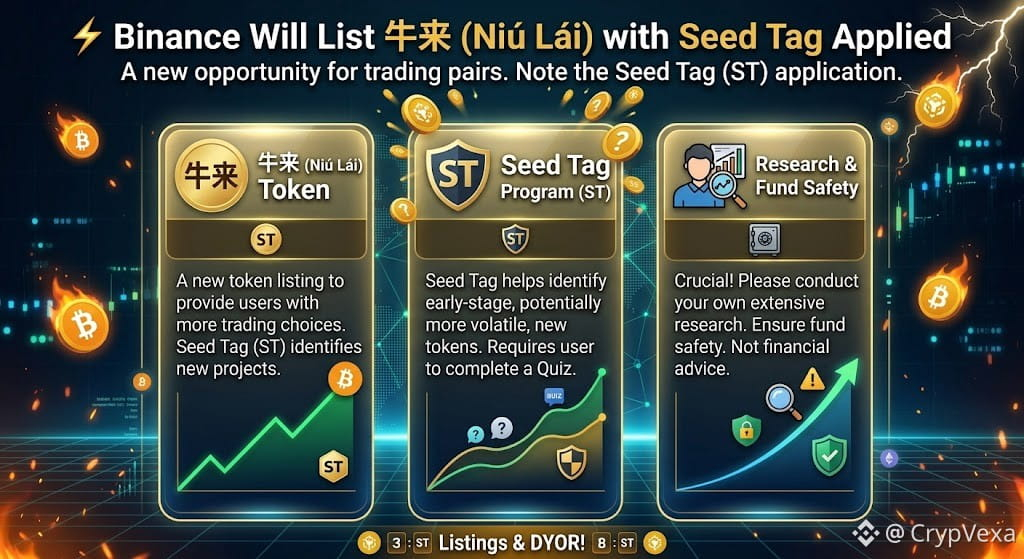
⚡ Binance to List 牛来 with Seed Tag! 🚀
Binance will list 牛来 (牛来) on its platform with a Seed Tag applied.
🏷️ What does the Seed Tag mean?
It indicates the asset may carry higher volatility and risk compared with more established tokens.
👀 Before trading: Do your own research and understand the project, liquidity and risks.
⚠️ Trade carefully and protect your funds.
#Binance #CryptoListing #SeedTag #Crypto
⚡ Binance to List 牛来 with Seed Tag! 🚀
Binance will list 牛来 (牛来) on its platform with a Seed Tag applied.
🏷️ What does the Seed Tag mean?
It indicates the asset may carry higher volatility and risk compared with more established tokens.
👀 Before trading: Do your own research and understand the project, liquidity and risks.
⚠️ Trade carefully and protect your funds.
#Binance #CryptoListing #SeedTag #Crypto
Binance will list 牛来 (牛来) on its platform with a Seed Tag applied.
🏷️ What does the Seed Tag mean?
It indicates the asset may carry higher volatility and risk compared with more established tokens.
👀 Before trading: Do your own research and understand the project, liquidity and risks.
⚠️ Trade carefully and protect your funds.
#Binance #CryptoListing #SeedTag #Crypto
1
145
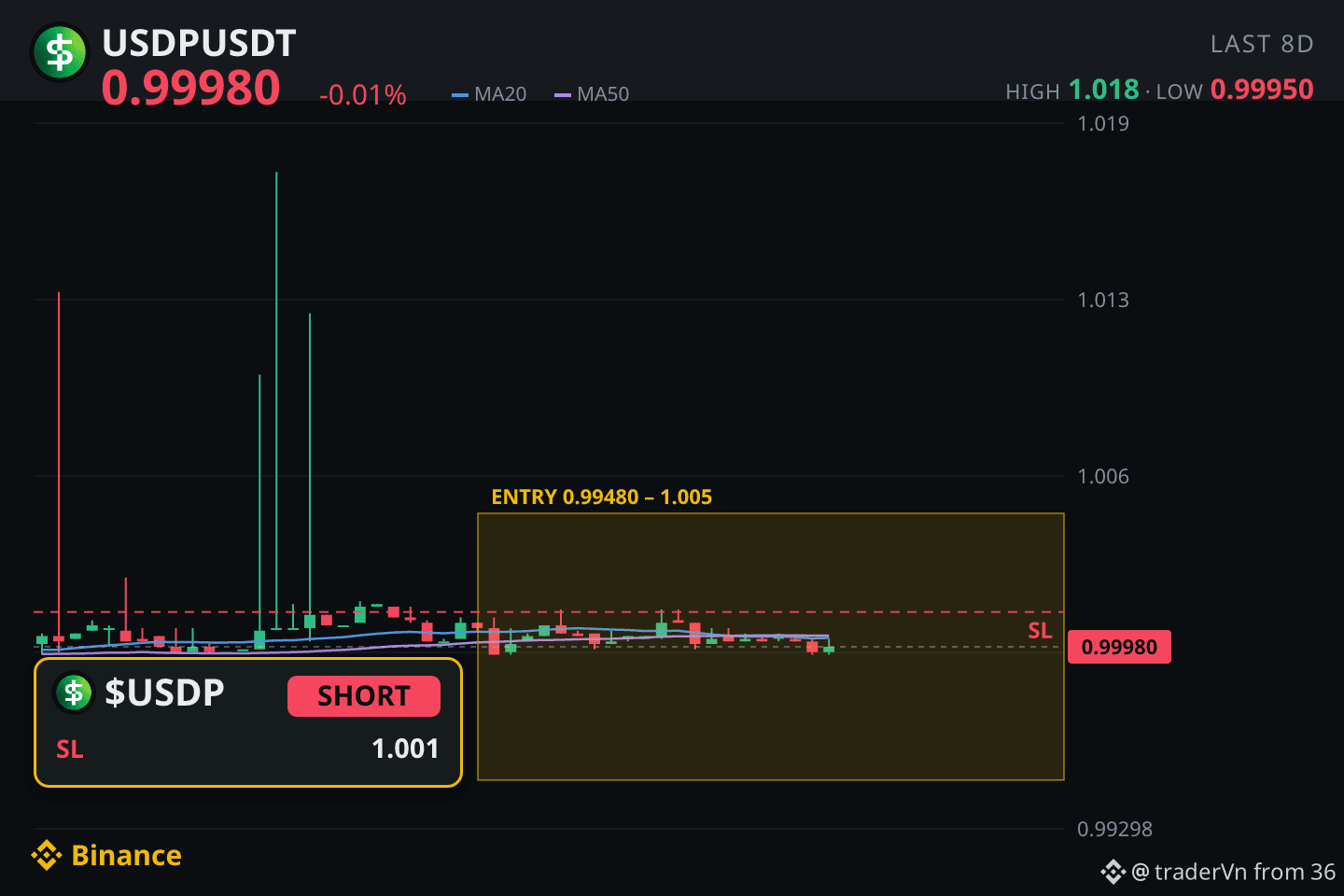
🔔 BINANCE TO DELIST USDP ON SEPTEMBER 24
$USDP $VTHO $SOPH
💹 USDP is at 0.9998 USDT · 🔴 -0.02% over 24h
📌 Event type: Delisting · published by Binance on 10/09/2026
Binance announced it will remove USDP from its platform on 24 September 2026. The removal means USDP holders must withdraw or convert their tokens before the deadline.
📊 Live data — 📉 TRENDING DOWN
• USDP 0.9998 · 🔴 -0.02% · Vol 0M
• VTHO · 🟢 49.9% · Vol 11M
• SOPH · 🔴 -20.6% · Vol 16M
💡 Exchange announcements pull attention onto the named asset, and attention arrives fast and leaves just as fast.
#USDP #Binance
⚠️ For reference only, not financial advice (DYOR).
🔗 Source: https://www.binance.com/vi/support/announcement/8e6fd91b79a34bddbd7643ef002db47e
🔔 BINANCE TO DELIST USDP ON SEPTEMBER 24
$USDP $VTHO $SOPH
💹 USDP is at 0.9998 USDT · 🔴 -0.02% over 24h
📌 Event type: Delisting · published by Binance on 10/09/2026
Binance announced it will remove USDP from its platform on 24 September 2026. The removal means USDP holders must withdraw or convert their tokens before the deadline.
📊 Live data — 📉 TRENDING DOWN
• USDP 0.9998 · 🔴 -0.02% · Vol 0M
• VTHO · 🟢 49.9% · Vol 11M
• SOPH · 🔴 -20.6% · Vol 16M
💡 Exchange announcements pull attention onto the named asset, and attention arrives fast and leaves just as fast.
#USDP #Binance
⚠️ For reference only, not financial advice (DYOR).
🔗 Source: https://www.binance.com/vi/support/announcement/8e6fd91b79a34bddbd7643ef002db47e
$USDP $VTHO $SOPH
💹 USDP is at 0.9998 USDT · 🔴 -0.02% over 24h
📌 Event type: Delisting · published by Binance on 10/09/2026
Binance announced it will remove USDP from its platform on 24 September 2026. The removal means USDP holders must withdraw or convert their tokens before the deadline.
📊 Live data — 📉 TRENDING DOWN
• USDP 0.9998 · 🔴 -0.02% · Vol 0M
• VTHO · 🟢 49.9% · Vol 11M
• SOPH · 🔴 -20.6% · Vol 16M
💡 Exchange announcements pull attention onto the named asset, and attention arrives fast and leaves just as fast.
#USDP #Binance
⚠️ For reference only, not financial advice (DYOR).
🔗 Source: https://www.binance.com/vi/support/announcement/8e6fd91b79a34bddbd7643ef002db47e
95
·
--
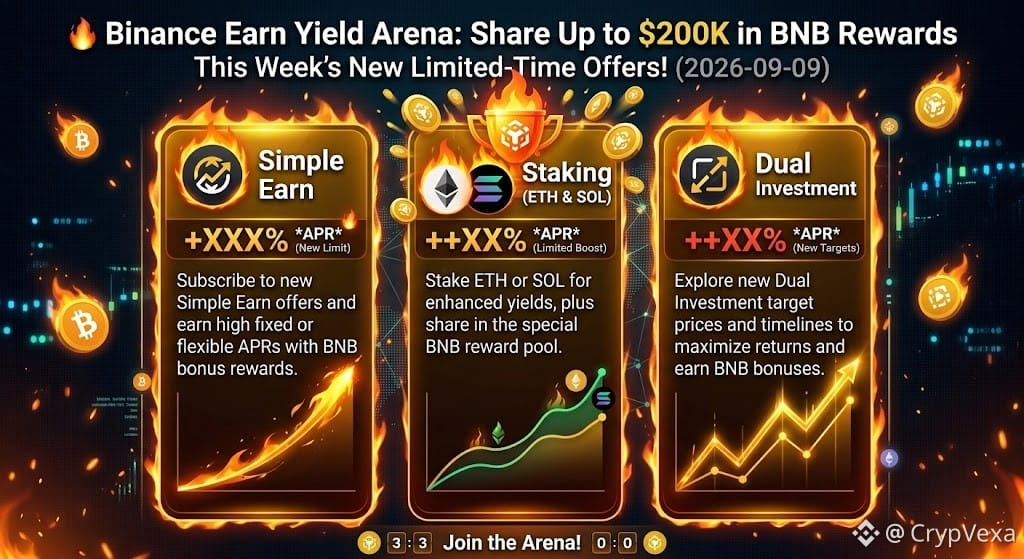
🔥 Binance Earn Yield Arena: Up to $200K in BNB Rewards! 💰
Binance Earn has launched limited-time offers across:
💎 Simple Earn
⛓️ ETH Staking
🌊 SOL Staking
📈 Dual Investment
🏆 Up to $200,000 in BNB rewards are available to eligible users.
⏰ These are limited-time opportunities, so check the individual product terms, eligibility and reward conditions before participating.
#BinanceEarn #BNB #CryptoRewards #Binance
🔥 Binance Earn Yield Arena: Up to $200K in BNB Rewards! 💰
Binance Earn has launched limited-time offers across:
💎 Simple Earn
⛓️ ETH Staking
🌊 SOL Staking
📈 Dual Investment
🏆 Up to $200,000 in BNB rewards are available to eligible users.
⏰ These are limited-time opportunities, so check the individual product terms, eligibility and reward conditions before participating.
#BinanceEarn #BNB #CryptoRewards #Binance
Binance Earn has launched limited-time offers across:
💎 Simple Earn
⛓️ ETH Staking
🌊 SOL Staking
📈 Dual Investment
🏆 Up to $200,000 in BNB rewards are available to eligible users.
⏰ These are limited-time opportunities, so check the individual product terms, eligibility and reward conditions before participating.
#BinanceEarn #BNB #CryptoRewards #Binance
1
22

·
--
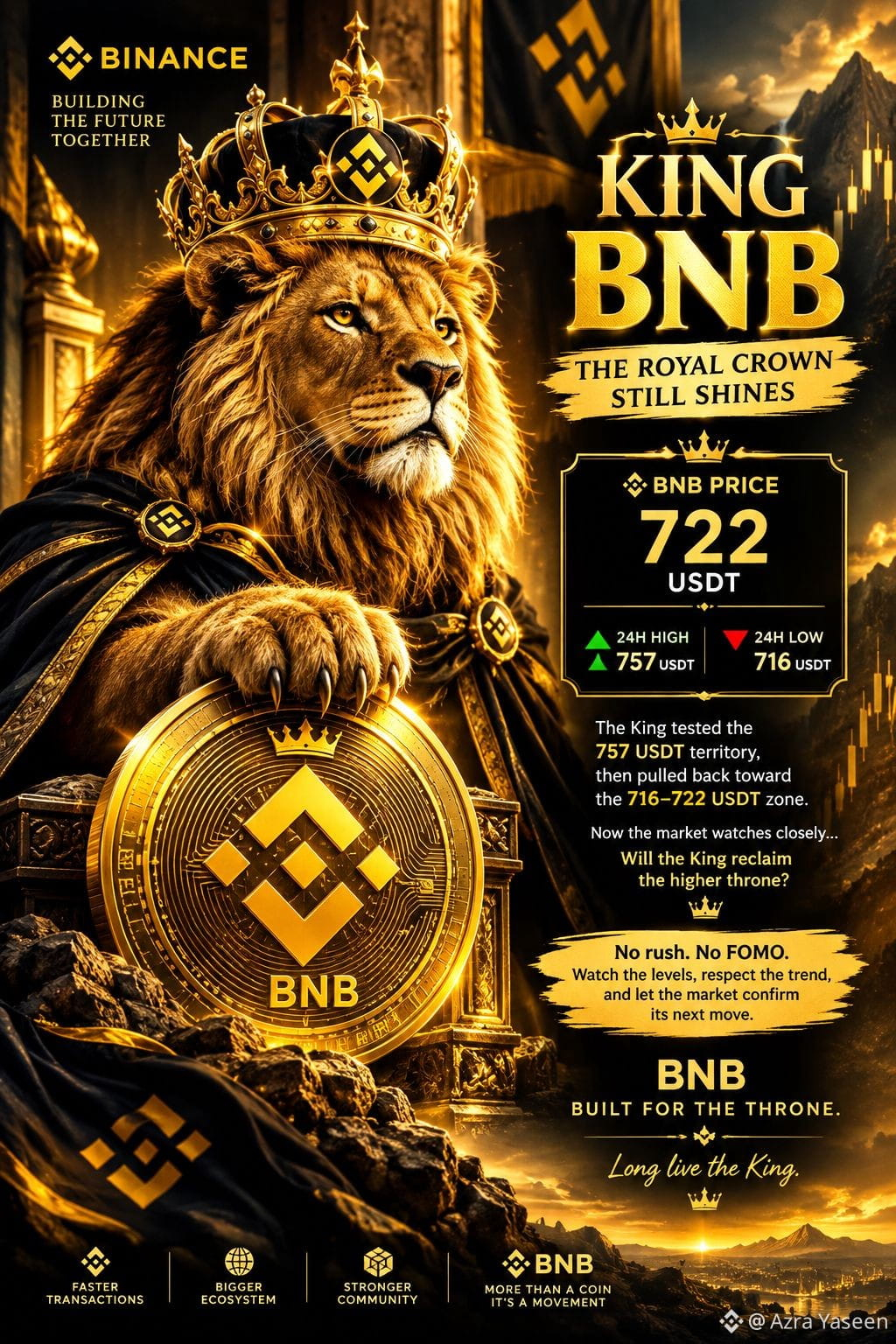
👑 KING $BNB — THE ROYAL CROWN STILL SHINES 🔥
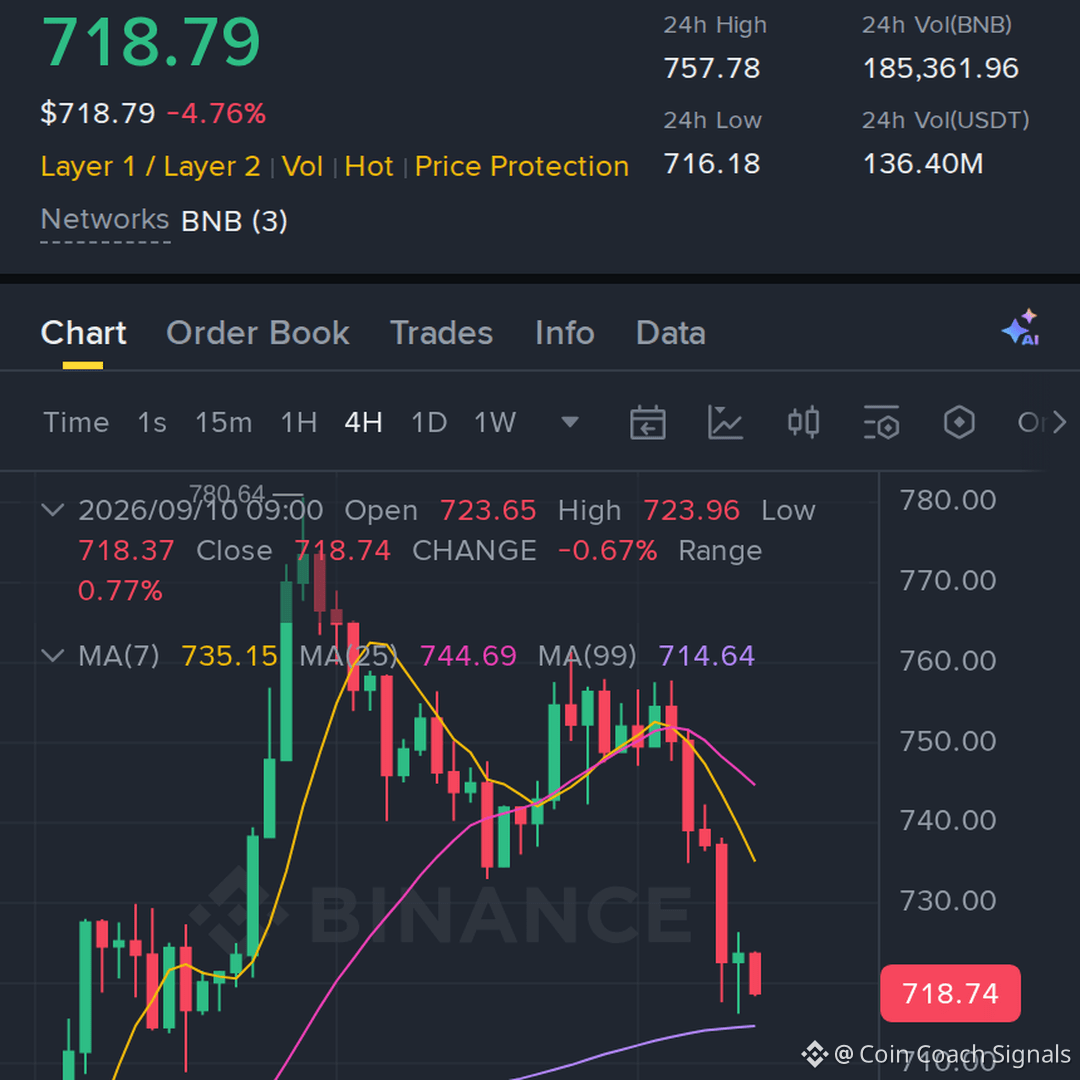
$BNB is holding strong at 722 USDT, showing resilience as the battle between buyers and sellers continues.
📈 24H High: 757 USDT
📉 24H Low: 716 USDT
💰 Current Price: 722 USDT
The King tested the 757 USDT territory, then pulled back toward the 716–722 USDT zone.
Now the market watches closely…
Will the King reclaim the higher throne? 👑🔥
No rush. No FOMO.
Watch the levels, respect the trend, and let the market confirm its next move.
⚔️ $BNB — Built for the throne.
👑 Long live the King.
#BNB #Binance #Crypto
👑 KING $BNB — THE ROYAL CROWN STILL SHINES 🔥
$BNB is holding strong at 722 USDT, showing resilience as the battle between buyers and sellers continues.
📈 24H High: 757 USDT
📉 24H Low: 716 USDT
💰 Current Price: 722 USDT
The King tested the 757 USDT territory, then pulled back toward the 716–722 USDT zone.
Now the market watches closely…
Will the King reclaim the higher throne? 👑🔥
No rush. No FOMO.
Watch the levels, respect the trend, and let the market confirm its next move.
⚔️ $BNB — Built for the throne.
👑 Long live the King.
#BNB #Binance #Crypto
$BNB is holding strong at 722 USDT, showing resilience as the battle between buyers and sellers continues.
📈 24H High: 757 USDT
📉 24H Low: 716 USDT
💰 Current Price: 722 USDT
The King tested the 757 USDT territory, then pulled back toward the 716–722 USDT zone.
Now the market watches closely…
Will the King reclaim the higher throne? 👑🔥
No rush. No FOMO.
Watch the levels, respect the trend, and let the market confirm its next move.
⚔️ $BNB — Built for the throne.
👑 Long live the King.
#BNB #Binance #Crypto
1
72

·
--
🚨 BNB just hit 722.81 – Discount Zone alert! 🔥
The bearish trend is in play, but we're in the sweet spot for a potential bounce. 🎯
📉 Current Price: 722.81
🛡️ Support: 716.3
🚀 Resistance: 761.91
Smart money is watching this zone – are you? 💰
Set your entries, manage risk, and ride the wave! 🌊
#Crypto #Binance #BNBUSDT
🔔 Don't forget to follow for more updates! & Your Mr Zero
⚠️ Not financial advice - always DYOR.
Click Here To Trade 👇
🚨 BNB just hit 722.81 – Discount Zone alert! 🔥
The bearish trend is in play, but we're in the sweet spot for a potential bounce. 🎯
📉 Current Price: 722.81
🛡️ Support: 716.3
🚀 Resistance: 761.91
Smart money is watching this zone – are you? 💰
Set your entries, manage risk, and ride the wave! 🌊
#Crypto #Binance #BNBUSDT
🔔 Don't forget to follow for more updates! & Your Mr Zero
⚠️ Not financial advice - always DYOR.
Click Here To Trade 👇
The bearish trend is in play, but we're in the sweet spot for a potential bounce. 🎯
📉 Current Price: 722.81
🛡️ Support: 716.3
🚀 Resistance: 761.91
Smart money is watching this zone – are you? 💰
Set your entries, manage risk, and ride the wave! 🌊
#Crypto #Binance #BNBUSDT
🔔 Don't forget to follow for more updates! & Your Mr Zero
⚠️ Not financial advice - always DYOR.
Click Here To Trade 👇
51

·
--
Bullish
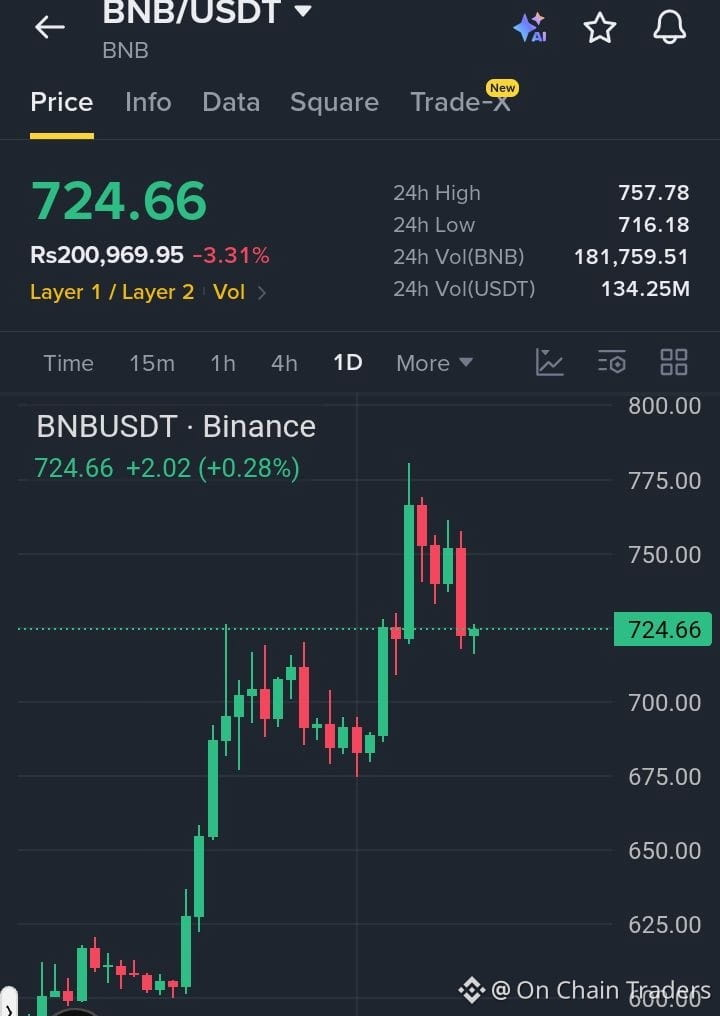
🚨 $BNB
{spot}(BNBUSDT)
at a key decision zone! Price is holding above $720 support after the pullback.
📈 Pattern: Support retest + potential higher low → Bullish if $720 holds.
🎯 Entry: $720–$727 | TP1: $740 | TP2: $755 | TP3: $775
🛑 SL: $708 — keep risk controlled below support.
🔥 A clean break above $740 could push $BNB toward $755–$775; lose $720 and bearish pressure may return.
#BNB #BNBUSDT #Binance #Crypto
🚨 $BNB
at a key decision zone! Price is holding above $720 support after the pullback.
📈 Pattern: Support retest + potential higher low → Bullish if $720 holds.
🎯 Entry: $720–$727 | TP1: $740 | TP2: $755 | TP3: $775
🛑 SL: $708 — keep risk controlled below support.
🔥 A clean break above $740 could push $BNB toward $755–$775; lose $720 and bearish pressure may return.
#BNB #BNBUSDT #Binance #Crypto
at a key decision zone! Price is holding above $720 support after the pullback.
📈 Pattern: Support retest + potential higher low → Bullish if $720 holds.
🎯 Entry: $720–$727 | TP1: $740 | TP2: $755 | TP3: $775
🛑 SL: $708 — keep risk controlled below support.
🔥 A clean break above $740 could push $BNB toward $755–$775; lose $720 and bearish pressure may return.
#BNB #BNBUSDT #Binance #Crypto
1
63

·
--
🚨🔥 BINANCE NEW LISTING ALERT 🔥🚨
Binance has officially listed 牛来 (Niulai) 🐂
📌 Trading Pairs: USDT / USDC / TRY
🏷️ Seed Tag Applied
🌐 BNB Chain Meme Token
👀 New listing = new opportunity, but also high volatility.
🐂 Bullish or Bearish on Niulai?
💬 Drop your prediction below!
⚠️ Always DYOR before trading. Never risk more than you can afford to lose.
#Binance #cryptouniverseofficial #niulai i #memecoin
🚨🔥 BINANCE NEW LISTING ALERT 🔥🚨
Binance has officially listed 牛来 (Niulai) 🐂
📌 Trading Pairs: USDT / USDC / TRY
🏷️ Seed Tag Applied
🌐 BNB Chain Meme Token
👀 New listing = new opportunity, but also high volatility.
🐂 Bullish or Bearish on Niulai?
💬 Drop your prediction below!
⚠️ Always DYOR before trading. Never risk more than you can afford to lose.
#Binance #cryptouniverseofficial #niulai i #memecoin
Binance has officially listed 牛来 (Niulai) 🐂
📌 Trading Pairs: USDT / USDC / TRY
🏷️ Seed Tag Applied
🌐 BNB Chain Meme Token
👀 New listing = new opportunity, but also high volatility.
🐂 Bullish or Bearish on Niulai?
💬 Drop your prediction below!
⚠️ Always DYOR before trading. Never risk more than you can afford to lose.
#Binance #cryptouniverseofficial #niulai i #memecoin
328

·
--
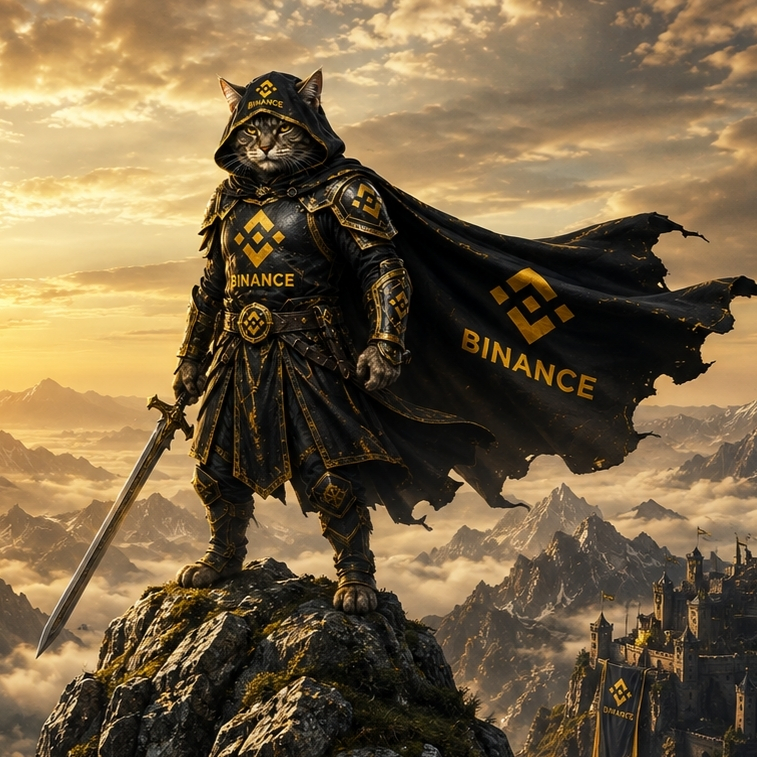
🚀 Your Crypto Journey Starts Here!
The crypto world is evolving every day. Explore, learn, and discover new opportunities with Binance. 🌐💛
📈 Trade smarter
💡 Learn about crypto
🔐 Stay security-conscious
🌍 Explore the digital economy
Remember: Crypto involves risk—always do your own research before investing.
#Binance #CryptoNewss #Bitcoin #BNB走势 #Ethereum #Blockchain #Web3 #CryptoCommunity
🚀 Your Crypto Journey Starts Here!
The crypto world is evolving every day. Explore, learn, and discover new opportunities with Binance. 🌐💛
📈 Trade smarter
💡 Learn about crypto
🔐 Stay security-conscious
🌍 Explore the digital economy
Remember: Crypto involves risk—always do your own research before investing.
#Binance #CryptoNewss #Bitcoin #BNB走势 #Ethereum #Blockchain #Web3 #CryptoCommunity
The crypto world is evolving every day. Explore, learn, and discover new opportunities with Binance. 🌐💛
📈 Trade smarter
💡 Learn about crypto
🔐 Stay security-conscious
🌍 Explore the digital economy
Remember: Crypto involves risk—always do your own research before investing.
#Binance #CryptoNewss #Bitcoin #BNB走势 #Ethereum #Blockchain #Web3 #CryptoCommunity

62
·
--
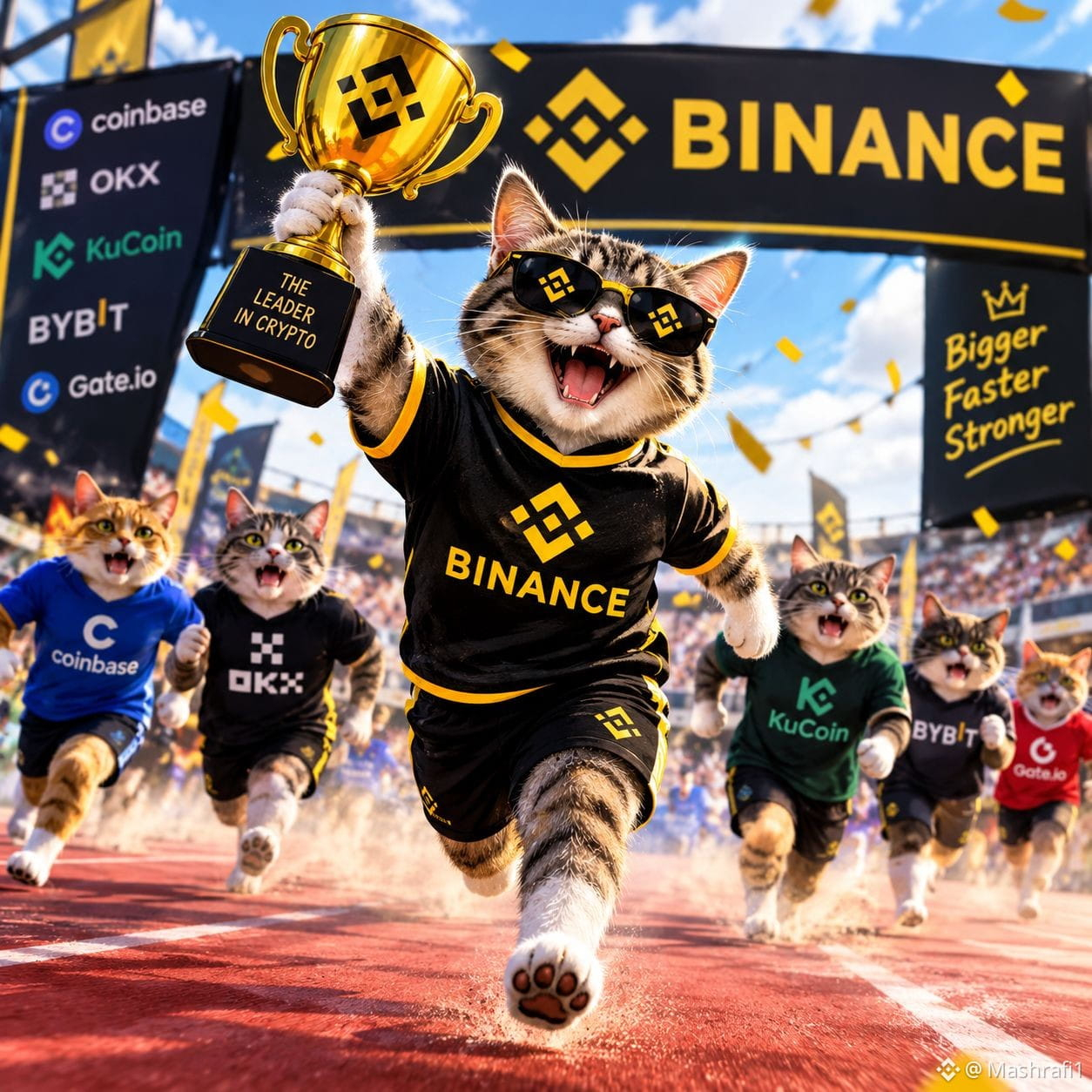
THE GREAT CRYPTO EXCHANGE RACE
The race has officially started, and Binance Cat is already holding the trophy.
1st — Binance
BNB Market Cap: ~$100.15B
Share of the listed token market cap: ~95.9%
2nd — OKX
OKB Market Cap: ~$2.39B
Share: ~2.3%
3rd — Gate
GT Market Cap: ~$0.98B
Share: ~0.9%
4th — KuCoin
KCS Market Cap: ~$0.96B
Share: ~0.9%
And behind them...
Bybit Cat is still running toward the finish line.
Binance Cat: “Guys, why are you running? The trophy is already mine.”
The funny part is that this is not an actual exchange market-cap ranking. These percentages compare the market caps of the exchanges’ associated tokens, so they should not be interpreted as the market share or total valuation of the exchanges themselves.
Still, the race looks pretty clear in this picture.
Who do you think can challenge Binance in the long run?
#Binance #BNB #Crypto #CryptoMeme #BinanceSquare #CryptoCommunity
THE GREAT CRYPTO EXCHANGE RACE
The race has officially started, and Binance Cat is already holding the trophy.
1st — Binance
BNB Market Cap: ~$100.15B
Share of the listed token market cap: ~95.9%
2nd — OKX
OKB Market Cap: ~$2.39B
Share: ~2.3%
3rd — Gate
GT Market Cap: ~$0.98B
Share: ~0.9%
4th — KuCoin
KCS Market Cap: ~$0.96B
Share: ~0.9%
And behind them...
Bybit Cat is still running toward the finish line.
Binance Cat: “Guys, why are you running? The trophy is already mine.”
The funny part is that this is not an actual exchange market-cap ranking. These percentages compare the market caps of the exchanges’ associated tokens, so they should not be interpreted as the market share or total valuation of the exchanges themselves.
Still, the race looks pretty clear in this picture.
Who do you think can challenge Binance in the long run?
#Binance #BNB #Crypto #CryptoMeme #BinanceSquare #CryptoCommunity
The race has officially started, and Binance Cat is already holding the trophy.
1st — Binance
BNB Market Cap: ~$100.15B
Share of the listed token market cap: ~95.9%
2nd — OKX
OKB Market Cap: ~$2.39B
Share: ~2.3%
3rd — Gate
GT Market Cap: ~$0.98B
Share: ~0.9%
4th — KuCoin
KCS Market Cap: ~$0.96B
Share: ~0.9%
And behind them...
Bybit Cat is still running toward the finish line.
Binance Cat: “Guys, why are you running? The trophy is already mine.”
The funny part is that this is not an actual exchange market-cap ranking. These percentages compare the market caps of the exchanges’ associated tokens, so they should not be interpreted as the market share or total valuation of the exchanges themselves.
Still, the race looks pretty clear in this picture.
Who do you think can challenge Binance in the long run?
#Binance #BNB #Crypto #CryptoMeme #BinanceSquare #CryptoCommunity
71
Log in to explore more content
Join global crypto users on Binance Square
⚡️ Get latest and useful information about crypto.
💬 Trusted by the world’s largest crypto exchange.
👍 Discover real insights from verified creators.
Email / Phone number
Trending Topics
1
#AppleDebutsFoldablePhone
18,090 views
368 Discussing
2
#IranSaysReadyToEscalateWarWithUS
35 views
7 Discussing
3
#EUExtendsCentralContactPointToCASPs
3,360 views
112 Discussing
4
#US10YTreasuryYieldHitsHighestSinceNov2023
19,551 views
333 Discussing
5
#USTreasuryToBuyBackUpTo$6BLongDatedDebt
14,317 views
158 Discussing
6
#BitcoinSurpasses$79K
63,561 views
275 Discussing
7
#BrentCrudeTops$100
119,802 views
398 Discussing
8
#USADPWeeklyEmploymentRises12000
102,392 views
1,245 Discussing
9
#BankOfAmericaGroupPilotsUSBDCStablecoin
75,064 views
1,004 Discussing
10
#RippleLobbiesToAdvanceCLARITYActVote
110,578 views
1,280 Discussing