
#warsh
warsh
133,748 views
313 Discussing
Hot
Latest

·
--
See translation
Title: Fed Chair Warsh Did NOT Predict An AI Crash — Here’s What He Actually Said
Headlines are screaming: “Fed Chair Warsh says AI boom will fail.”
That’s NOT what he said.
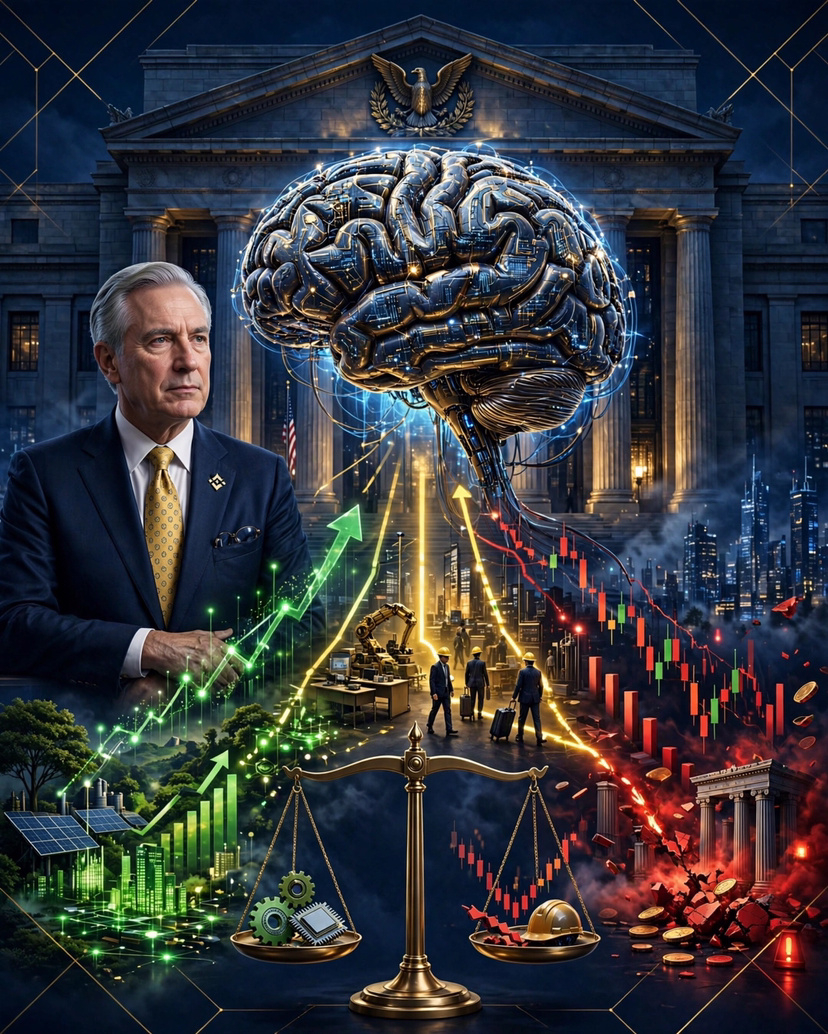
At the Fed’s Productivity and Jobs conference in San Francisco, Warsh laid out 3 illustrative scenarios for AI — not forecasts:
1. 🟢 Productivity Boom: AI raises output, gains shared broadly across workers + capital.
2. 🟡 Growth Without Jobs: Economy grows, but automation displaces workers faster than they can find new jobs. Unemployment rises.
3. 🔴 AI Disappointment: Heavy AI spending fails to deliver returns. Equity valuations fall, leading to slowdown + higher unemployment.
Warsh’s exact words: “These are illustrative scenarios, not forecasts.”
“Our job is to prepare for whatever comes next.”
No rate call. No crash prediction. Just the Fed doing scenario planning.
For crypto + stocks: this is why risk is repricing. If Scenario 3 ever played out, risk assets including $BTC would feel it. But it’s a risk to manage, not a prophecy.
Don’t trade the headline. Trade the context.
$BTC $ETH #Fed #Warsh #Aİ #Macro #Crypto
1
99

·
--
See translation
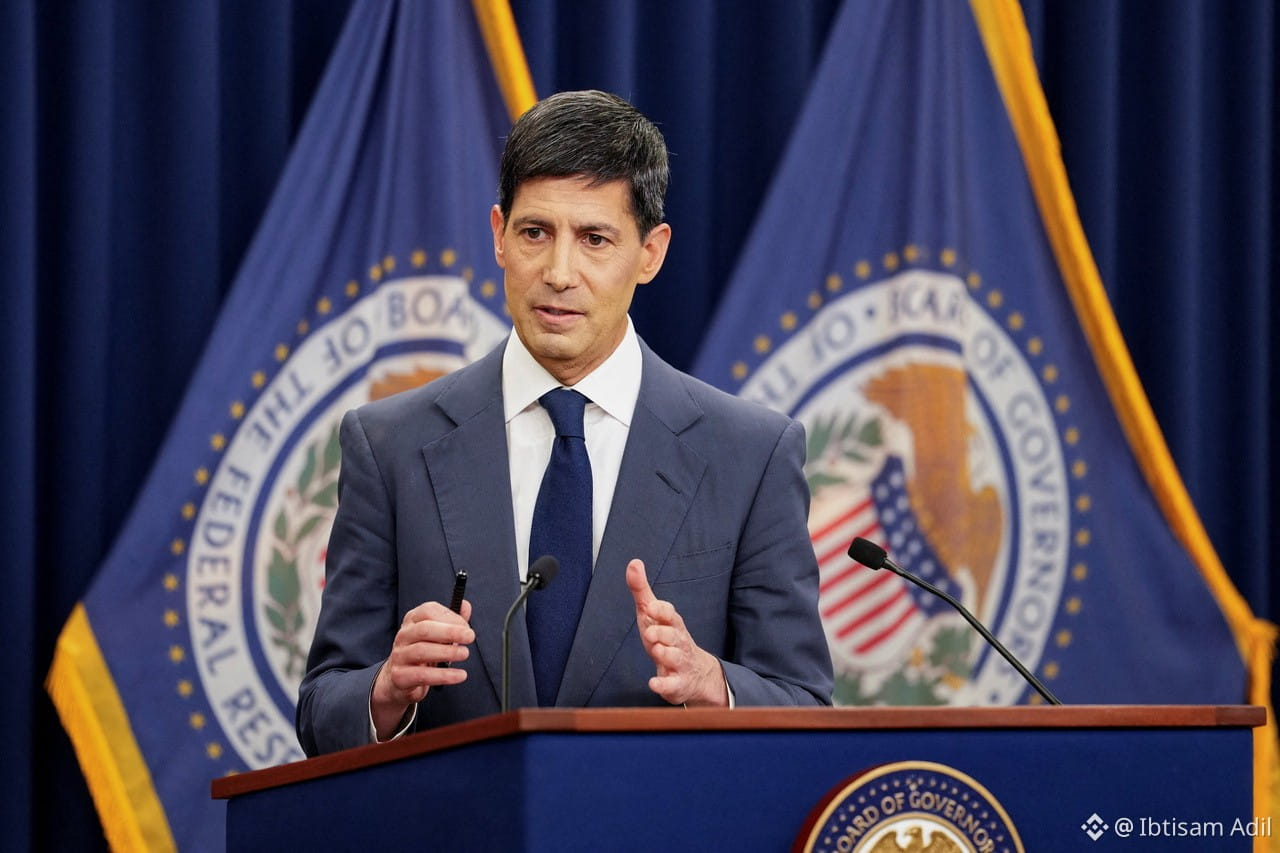
Fed Chair Warsh speaks tonight at 10 PM — his first words since the rate meeting. December hike odds sit at 90%. BTC bounced off $62,006 to $65,000, and now one speech decides if the bounce lives or dies. Hawkish and $62,000 breaks again. Soft and the bounce runs. Which Warsh shows up?
$BTC #Warsh #BinanceSquare #crypto
$BTC #Warsh #BinanceSquare #crypto
106

·
--
Bearish
See translation
#Warsh #BTC #ETH
Warsh Holds Rates, Gives No Hint on December, and Bitcoin Sells the News
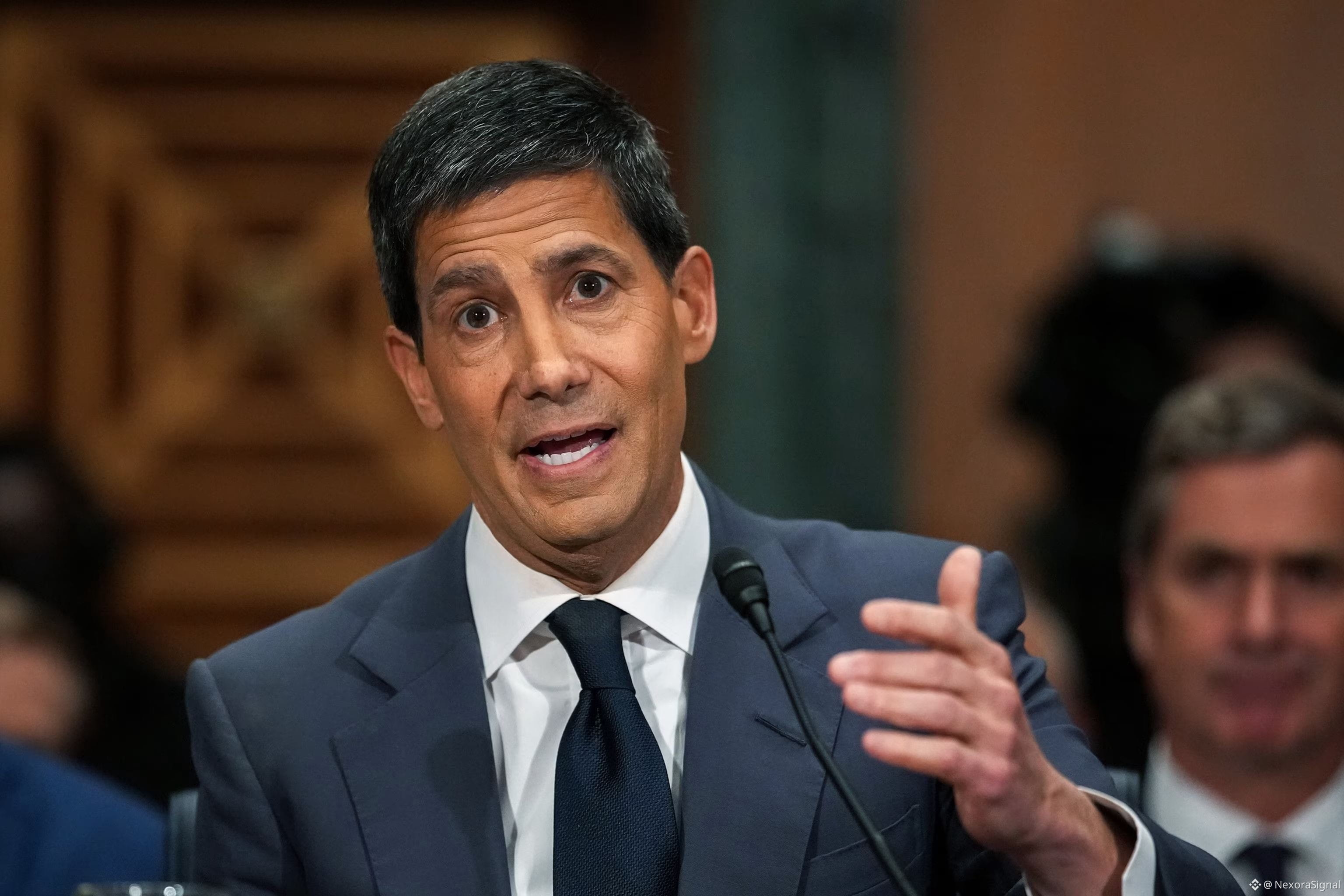
On Wednesday, Fed Chair Kevin Warsh led the Fed to hold rates at 3.75–4.00% after September’s hike, with Lisa Cook and Beth Hammack dissenting in favor of another 25-basis-point increase. Warsh said he doesn’t believe in forward guidance outside a crisis, so traders got no signal about December. He did say the committee thinks the monetary medicine is starting to work.
How markets reacted:
Stocks: Stocks were little changed, with no real fireworks in the decision itself. Bitcoin: it rose for two hours after the statement, then gave it all back overnight, trading near $79,792, 36.7% below its October 2025 record of $126,080.Crypto stocks: a Binance-linked hack sell-off hit at the same time, pushing Bitcoin to about $77K and dropping Coinbase and MicroStrategy 5–6% after hours. That makes it hard to credit the Fed alone for the damage.
$BTC $ETH $SOL
{spot}(SOLUSDT)
{spot}(ETCUSDT)
{spot}(BTCUSDT)
#Warsh #BTC #ETH
Warsh Holds Rates, Gives No Hint on December, and Bitcoin Sells the News
On Wednesday, Fed Chair Kevin Warsh led the Fed to hold rates at 3.75–4.00% after September’s hike, with Lisa Cook and Beth Hammack dissenting in favor of another 25-basis-point increase. Warsh said he doesn’t believe in forward guidance outside a crisis, so traders got no signal about December. He did say the committee thinks the monetary medicine is starting to work.
How markets reacted:
Stocks: Stocks were little changed, with no real fireworks in the decision itself. Bitcoin: it rose for two hours after the statement, then gave it all back overnight, trading near $79,792, 36.7% below its October 2025 record of $126,080.Crypto stocks: a Binance-linked hack sell-off hit at the same time, pushing Bitcoin to about $77K and dropping Coinbase and MicroStrategy 5–6% after hours. That makes it hard to credit the Fed alone for the damage.
$BTC $ETH $SOL
1
96

·
--
Verified
See translation
The 93.4% pause probability is close to what CME FedWatch shows. The latest read is around 92.8% for a hold, with roughly 7.2% pricing a 25 basis point hike . But the setup for today is more nuanced than just dovish versus hawkish.
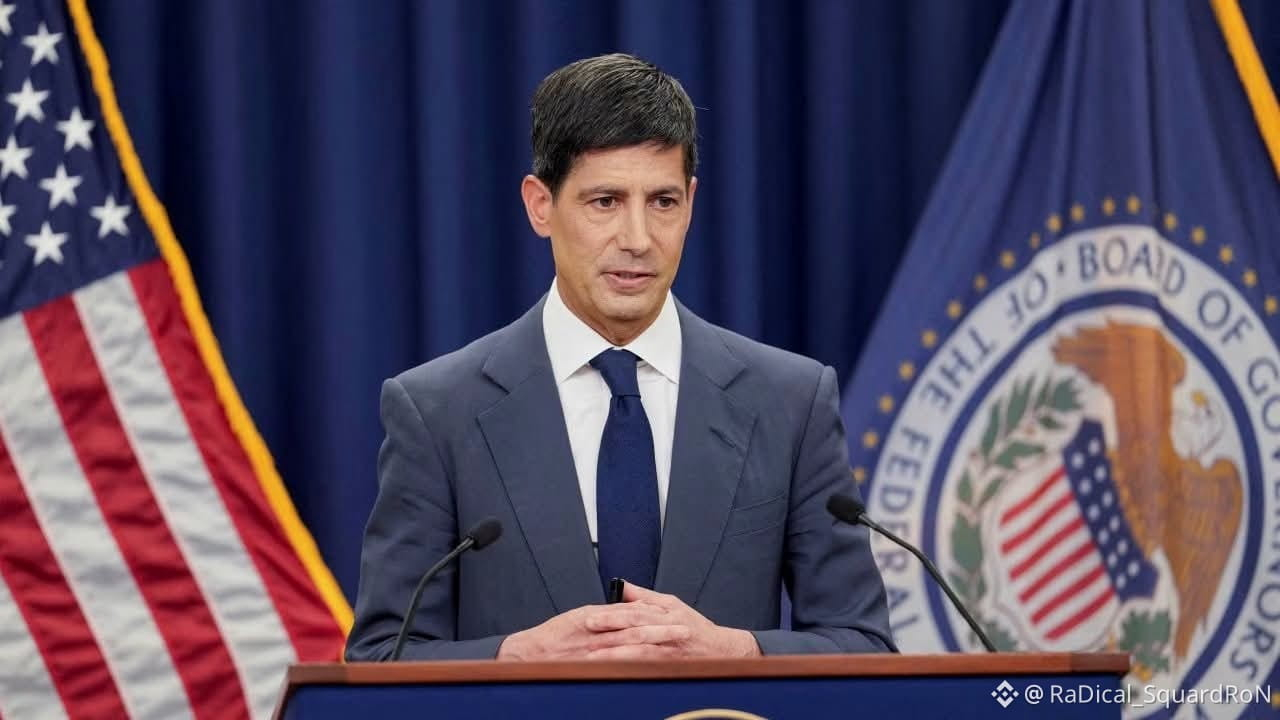
The rate decision itself is almost a non-event. The real volatility comes from Warsh's press conference because he has deliberately avoided forward guidance since taking the chair . The market is pricing a December hike at roughly 77.7% . So the question isn't whether he sounds dovish or hawkish on October. It's whether he validates that December expectation or pushes back against it.
If Warsh signals that December is live and inflation still demands action, that is your hawkish outcome. Risk assets including crypto would likely sell off because the pause becomes just a temporary stop rather than the end of the hiking cycle. If he downplays December or emphasizes waiting for more data, that removes the near-term overhang and gives crypto room to breathe.
Bitcoin is hovering around $80,800 right now, having bounced from below $79,500 earlier this week . That bounce was tied to a tech stock rally not Fed positioning . So the market isn't really pricing a dovish Fed surprise. It's just stabilizing.
The bigger risk is the hawkish hold trap. The statement could acknowledge cooling in some areas while Warsh verbally keeps December on the table. That combination tends to produce a brief relief rally that gets sold hard during the press conference. If you see BTC spike on the 2:00 PM statement and then reverse as Warsh speaks, that is the bull trap, not the entry.
$BTW $EVAA #FOMC #Bitcoin #Crypto #Warsh
{future}(EVAAUSDT)
{future}(BTWUSDT)
The 93.4% pause probability is close to what CME FedWatch shows. The latest read is around 92.8% for a hold, with roughly 7.2% pricing a 25 basis point hike . But the setup for today is more nuanced than just dovish versus hawkish.
The rate decision itself is almost a non-event. The real volatility comes from Warsh's press conference because he has deliberately avoided forward guidance since taking the chair . The market is pricing a December hike at roughly 77.7% . So the question isn't whether he sounds dovish or hawkish on October. It's whether he validates that December expectation or pushes back against it.
If Warsh signals that December is live and inflation still demands action, that is your hawkish outcome. Risk assets including crypto would likely sell off because the pause becomes just a temporary stop rather than the end of the hiking cycle. If he downplays December or emphasizes waiting for more data, that removes the near-term overhang and gives crypto room to breathe.
Bitcoin is hovering around $80,800 right now, having bounced from below $79,500 earlier this week . That bounce was tied to a tech stock rally not Fed positioning . So the market isn't really pricing a dovish Fed surprise. It's just stabilizing.
The bigger risk is the hawkish hold trap. The statement could acknowledge cooling in some areas while Warsh verbally keeps December on the table. That combination tends to produce a brief relief rally that gets sold hard during the press conference. If you see BTC spike on the 2:00 PM statement and then reverse as Warsh speaks, that is the bull trap, not the entry.
$BTW $EVAA #FOMC #Bitcoin #Crypto #Warsh
548


·
--
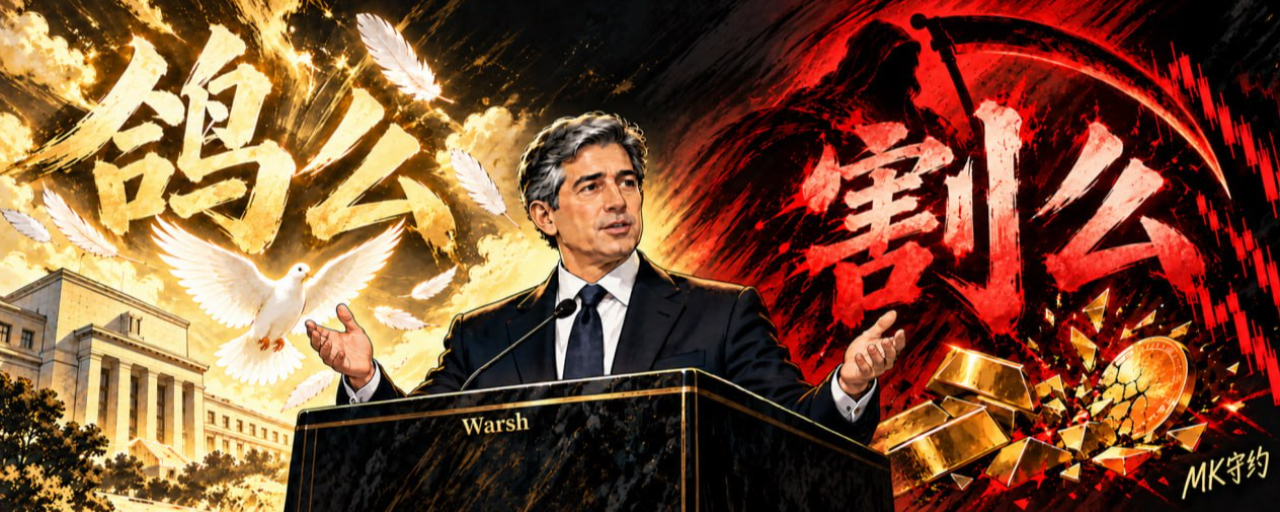
Article
Warsh: Dove or hawkWarsh: Dove or hawk
On October 28, the Federal Reserve held a meeting.
The market is now assigning only a 4.5% probability of a rate hike.
The market assigns a 95.5% probability of keeping rates unchanged.
That is to say, this decision itself no longer contains any new information.
All the information is in his mouth.
Because this chairman did one thing that his predecessor had not done.
After he took office, he scrapped forward guidance.
On August 28, he gave a speech in Jackson Hole.
He said that when communicating future policy decisions, transparency itself is not a virtue.
He also said that this practice of forward guidance had gone on for too long.
Warsh: Dove or hawk
Warsh: Dove or hawk
On October 28, the Federal Reserve held a meeting.
The market is now assigning only a 4.5% probability of a rate hike.
The market assigns a 95.5% probability of keeping rates unchanged.
That is to say, this decision itself no longer contains any new information.
All the information is in his mouth.
Because this chairman did one thing that his predecessor had not done.
After he took office, he scrapped forward guidance.
On August 28, he gave a speech in Jackson Hole.
He said that when communicating future policy decisions, transparency itself is not a virtue.
He also said that this practice of forward guidance had gone on for too long.
1
8
3.4k

·
--
Verified
A few minutes and Kevin Warsh will deliver his speech in Jackson Hole
The whole market is waiting for one thing
Will his tone be hawkish or not?
A hawkish tone means he sees inflation as a problem and that interest rates may need to rise. If this comes through clearly, it could pressure stocks, crypto, and even gold.
But if he indicates that the Fed is not in a rush and will wait for the data before any move, the market may interpret it positively.
The issue is that five Fed members have recently spoken with a tone leaning hawkish, and inflation is still above target.
So any word from Warsh today could strongly move the market.
#JacksonHole
#Warsh
4
1.6k

See translation
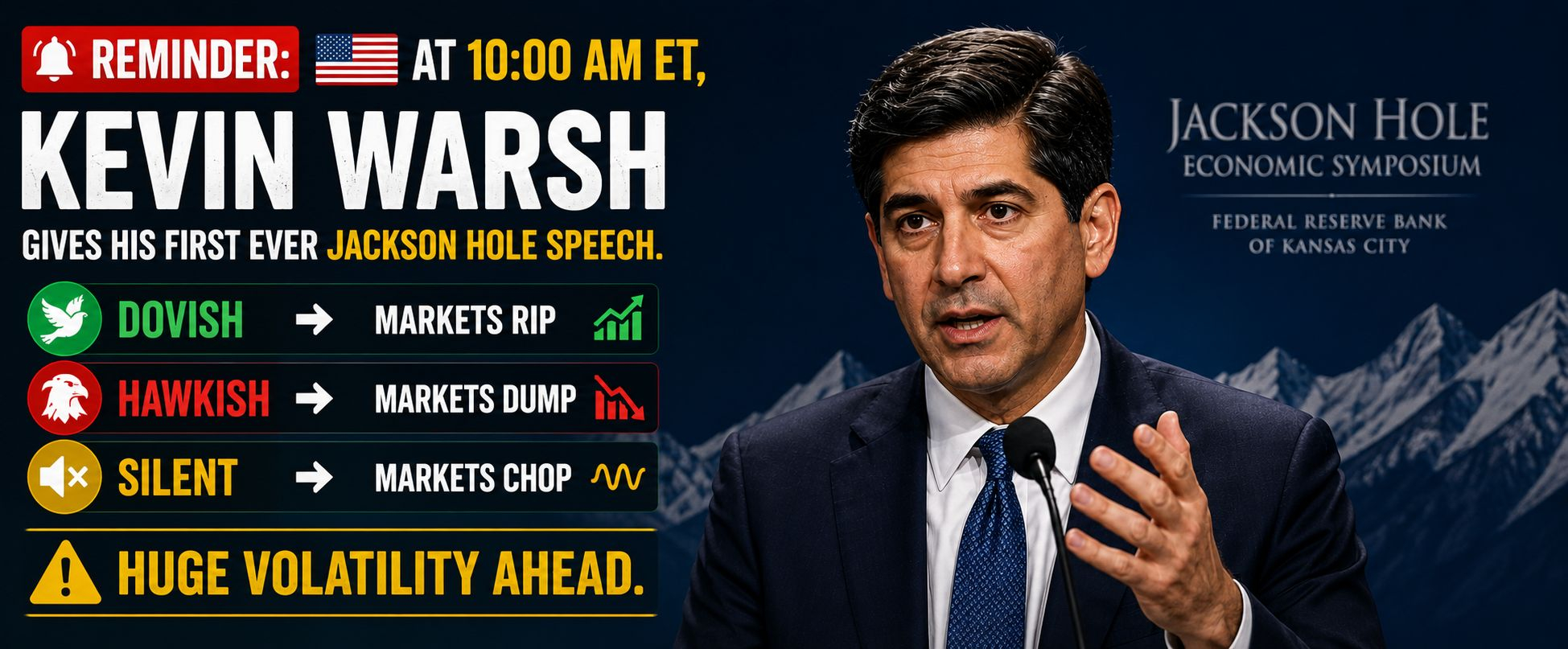
🚨 MARKET ALERT 🚨
One speech could trigger a massive crypto move today. 👀
🇺🇸 Kevin Warsh speaks at Jackson Hole
🟢 DOVISH → BTC 🚀 ALTS 🚀
🔴 HAWKISH → BTC 📉 ALTS 📉
🟡 SURPRISE/SILENT → EXTREME CHOP ⚡
And with $6.4B BTC options expiring, volatility could get wild.
DON'T CHASE THE FIRST CANDLE. 👀🔥
#BTC #ETH #Crypto #Bitcoin #JacksonHole #Warsh #BinanceSquare $BTC $ETH $BNB
{future}(BNBUSDT)
{future}(ETHUSDT)
{future}(BTCUSDT)
🚨 MARKET ALERT 🚨
One speech could trigger a massive crypto move today. 👀
🇺🇸 Kevin Warsh speaks at Jackson Hole
🟢 DOVISH → BTC 🚀 ALTS 🚀
🔴 HAWKISH → BTC 📉 ALTS 📉
🟡 SURPRISE/SILENT → EXTREME CHOP ⚡
And with $6.4B BTC options expiring, volatility could get wild.
DON'T CHASE THE FIRST CANDLE. 👀🔥
#BTC #ETH #Crypto #Bitcoin #JacksonHole #Warsh #BinanceSquare $BTC $ETH $BNB
64
🚨 SUPER WEDNESDAY OF THE FED IS COMING! 🔥
On June 16 and 17, the Federal Reserve is meeting for the first time with Kevin Warsh at the helm. The whole market is on edge! 📈📉
Any hint about U.S. interest rates could ignite risk appetite and shift capital flows into cryptocurrencies. 💰🌊
Why is this SUPER important?
The dollar, global sentiment, and big institutional flows hinge on this. A dovish Fed 🚀 could trigger a strong rally in Bitcoin and altcoins. A hawkish tone ⚠️ could bring a swift correction. Crypto amplifies everything!
Essential tips to navigate this moment wisely:
✅ Avoid high leverage on the 16th and 17th; volatility tends to be BRUTAL!
✅ Have your Plan A and B (dovish × hawkish) set before the meeting
✅ Keep an eye on Warsh’s tone and projections (more important than the rate number)
✅ Keep liquidity ready: buy-the-dip or profit-taking opportunities arise quickly
✅ Sharp risk management and a diversified portfolio always!
This is one of those events that define the cycle. Stay calm, strategic, and prepared. Watching the reactions of <a>$BTC </a> before and after helps understand how the market will react.
Who else is anxious for this Super Wednesday? Drop a comment below 👇
<a>#Fed </a> <a>#Crypto </a> <a>#Warsh </a> <a>#BullRun </a>
<a>{spot}(BTCUSDT)</a>
🚨 SUPER WEDNESDAY OF THE FED IS COMING! 🔥
On June 16 and 17, the Federal Reserve is meeting for the first time with Kevin Warsh at the helm. The whole market is on edge! 📈📉
Any hint about U.S. interest rates could ignite risk appetite and shift capital flows into cryptocurrencies. 💰🌊
Why is this SUPER important?
The dollar, global sentiment, and big institutional flows hinge on this. A dovish Fed 🚀 could trigger a strong rally in Bitcoin and altcoins. A hawkish tone ⚠️ could bring a swift correction. Crypto amplifies everything!
Essential tips to navigate this moment wisely:
✅ Avoid high leverage on the 16th and 17th; volatility tends to be BRUTAL!
✅ Have your Plan A and B (dovish × hawkish) set before the meeting
✅ Keep an eye on Warsh’s tone and projections (more important than the rate number)
✅ Keep liquidity ready: buy-the-dip or profit-taking opportunities arise quickly
✅ Sharp risk management and a diversified portfolio always!
This is one of those events that define the cycle. Stay calm, strategic, and prepared. Watching the reactions of <a>$BTC </a> before and after helps understand how the market will react.
Who else is anxious for this Super Wednesday? Drop a comment below 👇
<a>#Fed </a> <a>#Crypto </a> <a>#Warsh </a> <a>#BullRun </a>
<a></a>
1
346

·
--
See translation
Less than 15 minutes until Fed Chair Warsh speaks — expect volatility across Gold, Bitcoin and the US Dollar.
Scenarios:
• Mildly Hawkish → USD ↑ | Gold ↓ | $BTC ↓ initially
• Strong Hawkish → USD ↑↑ | Gold ↓↓ | BTC ↓↓
• Dovish Surprise → USD ↓ | Gold ↑ | BTC ↑
Important: Chicago PMI, University of Michigan Sentiment and potentially payroll revisions are also due around the same time.
So the first move may not be purely driven by Warsh — whipsaw risk is high.
#Warsh
1
4.7k

·
--
Bullish
See translation
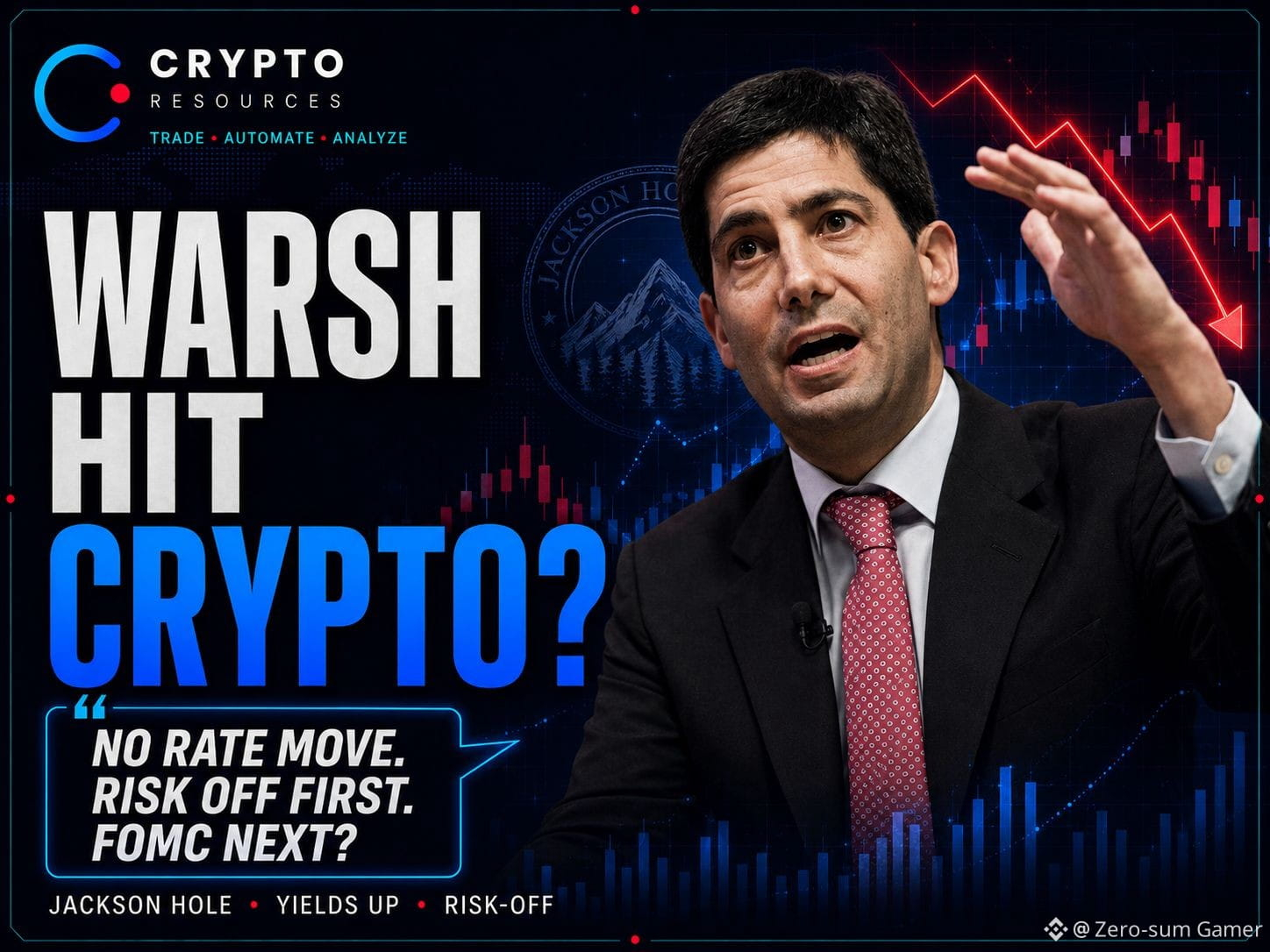
🔥 WHY #Warsh HIT CRYPTO WITHOUT CHANGING THE RATE
Friday’s move was not an FOMC decision. It was Kevin Warsh’s Jackson Hole speech — and the market treated it as a warning before the September meeting.
Warsh made the inflation line much tougher: if underlying inflation does not move convincingly toward 2%, the Fed still has “work to do.”
📈 The reaction was immediate:
— September rate-hike odds jumped from roughly 35% to almost 60%
— #US 2-year yields pushed up to around 4.35%
— Nasdaq weakened
— $BTC was rejected back below $80K
Why does crypto care?
Higher expected rates → higher short-term yields → tighter financial conditions → less appetite for leveraged risk.
The key date now is September 16.
That is when the #fomc actually decides the rate. Until then, every #cpi , #PCE and labor-market print can move the probability of a hike — and crypto will trade those expectations before the Fed changes anything.
📊 The rate itself is only one number. The repricing starts weeks earlier.
$BTR $HNT
3
299
·
--
Bullish
See translation
#junecpifedhike20%
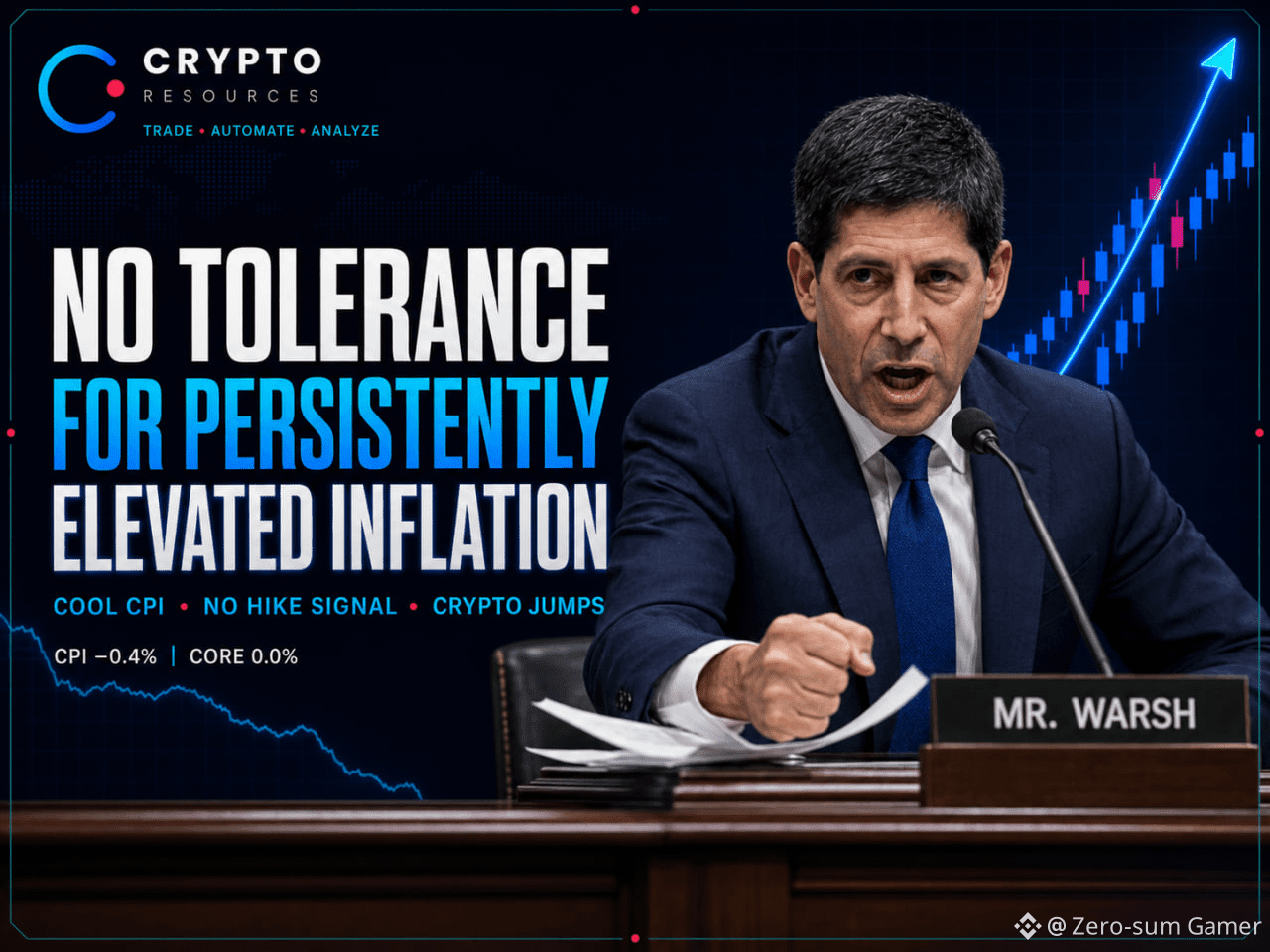
🚨 Why Crypto Jumped: Cool CPI, No Hike Hint From Warsh
US inflation cooled sharply:
— headline CPI: −0.4% MoM, 3.5% YoY
— core CPI: 0.0% MoM, 2.6% YoY
Both annual readings fell from 4.2% and 2.9%. That reduced the risk of a July rate hike.
🏛 Warsh added no new pressure
The Fed has “no tolerance for persistently elevated inflation.” Warsh also described growth and the labor market as solid, with high-tech investment up nearly 25% over four quarters.
But he gave no hint of another hike and no guidance on the Fed’s next move.
📈 Why crypto moved higher
Cooler CPI removed part of the immediate hike risk. Warsh did nothing to put it back into the price. BTC moved higher, then forced covering added fuel.
⚠️ Can it pull back?
Yes. Part of the move came from rate repricing and leverage unwinding. Without spot demand taking over, some of the rally can fade.
🔭 The longer-term read
One CPI print is not a new liquidity cycle. But more cooling would lower hike odds, Treasury yields and the dollar — giving crypto more room to recover.
The market bought cooler inflation, not Warsh. One less reason to price an immediate hike.
#cpi #Warsh #Fed $BTC $ETH $SOL
1
93
·
--
Verified
Article
See translation
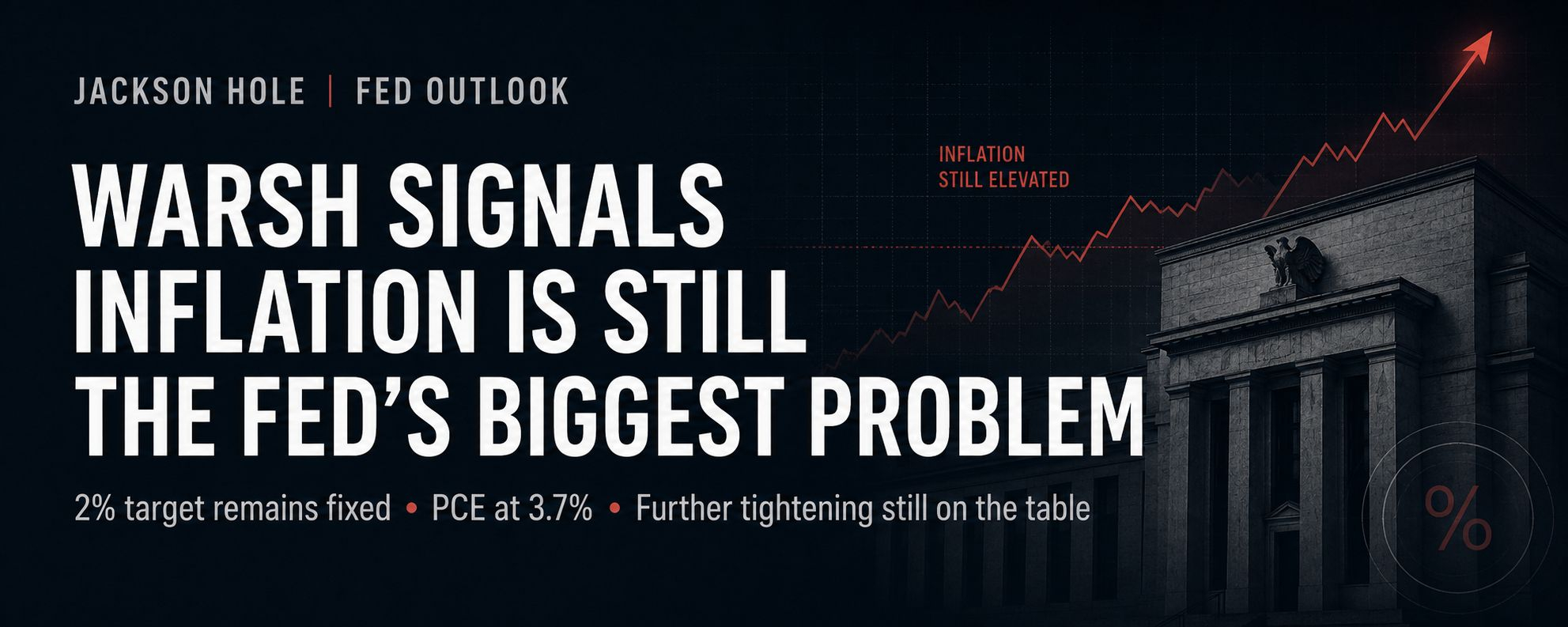
Fed Chair Kevin Warsh Sends Hawkish Warning: Inflation Fight Is Far From OverFederal Reserve Chair Kevin Warsh delivered a clear warning at Jackson Hole: the battle against inflation is not finished, and the Fed is not ready to declare victory.
While recent inflation data has shown some improvement, Warsh argued that the underlying picture remains uncomfortable. His message to markets was straightforward inflation is still too high, the U.S. economy remains strong, and further monetary tightening cannot be ruled out.
At the center of his speech was the Federal Reserve’s 2% inflation target, which Warsh described as “firm and fixed.”
According to the figures highlighted in his remarks, PCE inflation remains around 3.7% over the past year. More importantly, roughly 54% of goods and services within the PCE basket are still experiencing price increases above 3%.
That suggests inflationary pressure remains broad rather than being limited to a handful of categories.
Warsh acknowledged that recent inflation readings have been more encouraging, but said they have not yet convinced him that the underlying trend has changed meaningfully.
For the Fed, a few better data points are not enough. Policymakers want to see clear and sustained evidence that inflation is moving quickly back toward the 2% target.
A Strong Economy Gives the Fed Room to Stay Hawkish
One of the most important parts of Warsh’s message was his assessment of the broader economy.
Despite elevated interest rates, the U.S. economy continues to show resilience. The labor market remains close to full employment, consumer activity is holding up, and corporate profitability remains strong.
Warsh noted that S&P 500 profits have increased by more than 20% over the past year.
He also argued that financial conditions are difficult to describe as restrictive, despite the level of policy rates.
That matters because if higher interest rates are not significantly slowing economic activity or financial markets, the Fed may have less reason to rush toward rate cuts.
Instead, policymakers could decide that restrictive policy needs to remain in place for longer or potentially become even tighter if inflation fails to improve.
AI Investment Is Becoming a Major Economic Force
Warsh also focused heavily on artificial intelligence and its growing influence on the U.S. economy.
More than half of this year’s growth in business investment is reportedly connected to the AI buildout, highlighting how rapidly companies are spending on data centers, chips, infrastructure, and related technologies.
Warsh described AI as a potential “hinge point” for economic growth.
However, he remained cautious about assuming that massive AI investment will immediately translate into equally large productivity gains.
The technology could eventually increase productivity, lower costs, and expand economic capacity, but the timing and scale of those benefits remain uncertain.
For monetary policymakers, that creates another complicated variable.
AI could support stronger long-term economic growth, but heavy investment spending could also contribute to stronger demand in the near term.
Warsh Warns Markets Against Becoming Too Comfortable
Another notable warning concerned inflation expectations.
Warsh suggested that expectations can appear stable for long periods until suddenly they are not.
If businesses and consumers begin expecting permanently higher inflation, those expectations can influence wages, pricing decisions, and spending behavior, making inflation harder for the Fed to control.
That is one reason Warsh appears unwilling to relax policy too early.
He also delivered unusually direct criticism of the Federal Reserve itself, saying the institution bears responsibility for 65 months of elevated inflation.
The comment reinforces his view that restoring price stability is not simply another policy objective it is central to rebuilding the Fed’s credibility.
Markets Should Stop Looking to the Fed for the “Next Trade”
Warsh also signaled that he wants changes in how the Federal Reserve communicates with financial markets.
He argued for less forward guidance and suggested that traders should stop relying on the Fed to provide clues for their “next trade.”
For years, markets have closely analyzed nearly every Fed speech and policy statement for indications of where interest rates are heading.
Warsh appears to prefer a framework where policy decisions remain more dependent on incoming economic data rather than being heavily pre-committed through guidance.
He also emphasized that traditional interest-rate policy should remain the Fed’s primary tool.
Extraordinary measures should, in his view, be reserved for genuine financial crises rather than becoming a routine part of monetary policy.
What Does This Mean for September?
Despite the hawkish tone, Warsh did not explicitly commit to a September rate hike.
That distinction is important.
His speech was not a direct announcement that higher rates are coming. Instead, it was a warning that markets should not assume the Fed is finished tightening simply because recent inflation data has improved.
The Fed still wants convincing evidence that inflation is moving sustainably and rapidly toward 2%.
Warsh summarized the situation clearly: if that progress does not appear, “we have work to do.”
For markets, the message is difficult to interpret as dovish.
The economy remains resilient, employment remains strong, financial conditions remain relatively supportive, and inflation continues to run above target.
That combination gives the Federal Reserve room to maintain restrictive monetary policy.
The immediate question is therefore not simply whether the Fed will hike rates in September.
The bigger question is whether incoming inflation and employment data will give policymakers enough confidence to step back or force them to tighten policy further.
For investors across stocks, bonds, gold, and crypto, that means volatility around upcoming inflation reports and Federal Reserve meetings could remain elevated.
The Jackson Hole message was clear: the 2% target remains non-negotiable, inflation remains the priority, and the Federal Reserve is not ready to declare the fight over.
#Fed #Warsh
Fed Chair Kevin Warsh Sends Hawkish Warning: Inflation Fight Is Far From Over
Federal Reserve Chair Kevin Warsh delivered a clear warning at Jackson Hole: the battle against inflation is not finished, and the Fed is not ready to declare victory.
While recent inflation data has shown some improvement, Warsh argued that the underlying picture remains uncomfortable. His message to markets was straightforward inflation is still too high, the U.S. economy remains strong, and further monetary tightening cannot be ruled out.
At the center of his speech was the Federal Reserve’s 2% inflation target, which Warsh described as “firm and fixed.”
According to the figures highlighted in his remarks, PCE inflation remains around 3.7% over the past year. More importantly, roughly 54% of goods and services within the PCE basket are still experiencing price increases above 3%.
That suggests inflationary pressure remains broad rather than being limited to a handful of categories.
Warsh acknowledged that recent inflation readings have been more encouraging, but said they have not yet convinced him that the underlying trend has changed meaningfully.
For the Fed, a few better data points are not enough. Policymakers want to see clear and sustained evidence that inflation is moving quickly back toward the 2% target.
A Strong Economy Gives the Fed Room to Stay Hawkish
One of the most important parts of Warsh’s message was his assessment of the broader economy.
Despite elevated interest rates, the U.S. economy continues to show resilience. The labor market remains close to full employment, consumer activity is holding up, and corporate profitability remains strong.
Warsh noted that S&P 500 profits have increased by more than 20% over the past year.
He also argued that financial conditions are difficult to describe as restrictive, despite the level of policy rates.
That matters because if higher interest rates are not significantly slowing economic activity or financial markets, the Fed may have less reason to rush toward rate cuts.
Instead, policymakers could decide that restrictive policy needs to remain in place for longer or potentially become even tighter if inflation fails to improve.
AI Investment Is Becoming a Major Economic Force
Warsh also focused heavily on artificial intelligence and its growing influence on the U.S. economy.
More than half of this year’s growth in business investment is reportedly connected to the AI buildout, highlighting how rapidly companies are spending on data centers, chips, infrastructure, and related technologies.
Warsh described AI as a potential “hinge point” for economic growth.
However, he remained cautious about assuming that massive AI investment will immediately translate into equally large productivity gains.
The technology could eventually increase productivity, lower costs, and expand economic capacity, but the timing and scale of those benefits remain uncertain.
For monetary policymakers, that creates another complicated variable.
AI could support stronger long-term economic growth, but heavy investment spending could also contribute to stronger demand in the near term.
Warsh Warns Markets Against Becoming Too Comfortable
Another notable warning concerned inflation expectations.
Warsh suggested that expectations can appear stable for long periods until suddenly they are not.
If businesses and consumers begin expecting permanently higher inflation, those expectations can influence wages, pricing decisions, and spending behavior, making inflation harder for the Fed to control.
That is one reason Warsh appears unwilling to relax policy too early.
He also delivered unusually direct criticism of the Federal Reserve itself, saying the institution bears responsibility for 65 months of elevated inflation.
The comment reinforces his view that restoring price stability is not simply another policy objective it is central to rebuilding the Fed’s credibility.
Markets Should Stop Looking to the Fed for the “Next Trade”
Warsh also signaled that he wants changes in how the Federal Reserve communicates with financial markets.
He argued for less forward guidance and suggested that traders should stop relying on the Fed to provide clues for their “next trade.”
For years, markets have closely analyzed nearly every Fed speech and policy statement for indications of where interest rates are heading.
Warsh appears to prefer a framework where policy decisions remain more dependent on incoming economic data rather than being heavily pre-committed through guidance.
He also emphasized that traditional interest-rate policy should remain the Fed’s primary tool.
Extraordinary measures should, in his view, be reserved for genuine financial crises rather than becoming a routine part of monetary policy.
What Does This Mean for September?
Despite the hawkish tone, Warsh did not explicitly commit to a September rate hike.
That distinction is important.
His speech was not a direct announcement that higher rates are coming. Instead, it was a warning that markets should not assume the Fed is finished tightening simply because recent inflation data has improved.
The Fed still wants convincing evidence that inflation is moving sustainably and rapidly toward 2%.
Warsh summarized the situation clearly: if that progress does not appear, “we have work to do.”
For markets, the message is difficult to interpret as dovish.
The economy remains resilient, employment remains strong, financial conditions remain relatively supportive, and inflation continues to run above target.
That combination gives the Federal Reserve room to maintain restrictive monetary policy.
The immediate question is therefore not simply whether the Fed will hike rates in September.
The bigger question is whether incoming inflation and employment data will give policymakers enough confidence to step back or force them to tighten policy further.
For investors across stocks, bonds, gold, and crypto, that means volatility around upcoming inflation reports and Federal Reserve meetings could remain elevated.
The Jackson Hole message was clear: the 2% target remains non-negotiable, inflation remains the priority, and the Federal Reserve is not ready to declare the fight over.
#Fed #Warsh
9
848

·
--
The Fed’s preferred inflation gauge, the PCE. The latest year-over-year reading is 3.7%, remaining at elevated levels and clearly above the 2% policy target. After the data was released, market attention has turned again to Fed Chair Warsh.
Since taking office, Warsh has repeatedly emphasized that the goal of price stability has no soft lower bound—only the 2% line. He has proactively withdrawn forward guidance, leaving decision-making room for real-time reactions to the data.
Inflation has yet to recede, and the futures market’s probability for a rate hike in September has risen from about 36% to about 44%. The next FOMC meeting is scheduled for September 15–16, and the $BTC $ETH short-term trend is under renewed pressure.
Over the next two months, every swing in rate expectations will be directly written into the $BTC $ETH short-term trend.
#美联储 #Warsh #BTC #ETH
145

Verified
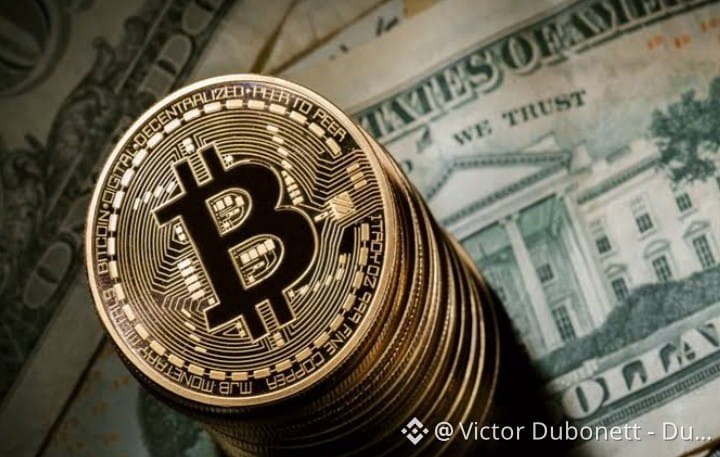
🚨 WARSH AGITATES THE MARKET — AND THE $BTC NUMBER HAS AN IMPORTANT TEST AHEAD
The Fed’s new message was clear: it’s not time to wait for a looser monetary policy. 🏦
🔴 Inflation remains above the desired level
🎯 The 2% target is non-negotiable
📉 No rate cut has been signaled
💵 For Warsh, financial conditions are still not tight enough
But there’s an important counterpoint. 👀
The American economy continues to show resilience, company results remain strong, and investments in artificial intelligence are helping boost productivity. 🤖📈
Warsh also reinforced that the amount of money circulating in the economy remains a relevant factor in determining monetary conditions.
And there’s a detail that deserves attention: he didn’t talk about new interest-rate hikes. The next step will continue to depend on economic data. 📊
Now comes the real test for Bitcoin:
🔥 $78K
If BTC manages to defend that region even after such a tough Fed speech, I’d interpret it as a real show of strength from buyers. 🐂🚀
#bitcoin #BTC #Warsh
1
850

·
--
Kevin Warsh officially takes the helm at the Fed, but the market ain't buying it.
Last Friday, BTC closed around $77,000, and the weekend saw it just ranging. You'd think with a pro-crypto Fed chair stepping in, we’d see some bullish action. But the reality is: good news has been fully priced in, and that's bad news for the market.
The reason ain't rocket science. Before Warsh took over, the market had already priced in a friendly Fed. Now that the news is out, traders are cashing out their profits.
What really matters isn't what Warsh says, but when he makes his moves—interest rate cuts, easing regulations, and ETF policy shifts are the real catalysts for the next rally.
Just because the good news isn't pushing prices up doesn't mean it's bad news; it just means the timing isn't right yet.
#Warsh #美联储 #BTC #market analysis
174

·
--
The smoke of Jackson Hole hadn’t cleared yet when Wosch put it plainly: AI is becoming a brand-new factor of production. The two leading labs’ annualized token sales have already surpassed 100 billion, up more than +500% year over year. But inflation is the real battlefield for now—PCE is 3.7% year over year for the past 12 months and 4.1% for the past 6 months, both still above the 2% target.
For the crypto market, the implications of this combination are actually quite clear:
1. Short-term interest rates remain the main tool, and forward guidance should be constrained in normal times. This means the market can’t expect a simple “pivot soon” to pull risk assets back into a full-blown rally; any bets on an early rate cut could be slapped down.
2. The price anchor is the top priority. Unconventional tools are reserved only for a true crisis. With inflation at 3.7% / 4.1%, narratives like balance-sheet expansion and “QE 2.0” are pushed far into the future. Without a liquidity tailwind, valuations of major coins that lack momentum typically can’t fly on their own.
3. Capital is being siphoned off toward AI infrastructure. Corporate capex is up +9% year over year, S&P 500 earnings are up +20%, and credit spreads are at historic lows. The fundamentals of traditional risk assets are not weak. What crypto needs to compete for is precisely that incremental capital.
15 minutes after the news landed, $BTC fell about 0.89% to 78,620 USDT, and $ETH dropped about 1.3% to 2,477 USDT. The reaction was rather restrained, suggesting the market had already discounted Wosch’s “hawkish + heavy AI” profile. The real point to watch isn’t this 0.9% move, but whether, in the future, the FOMC will translate “inflation first, tighten the guidance” into specific shifts in the dot plot.
Until inflation data truly cools, near-term sentiment is likely to remain bearish. Structurally, funds will favor AI narratives more aggressively and tilt toward projects that can articulate independent growth logic. Assets driven purely by liquidity beta will face more obvious pressure.
#Warsh #JacksonHole
255
·
--
Partly True
See translation
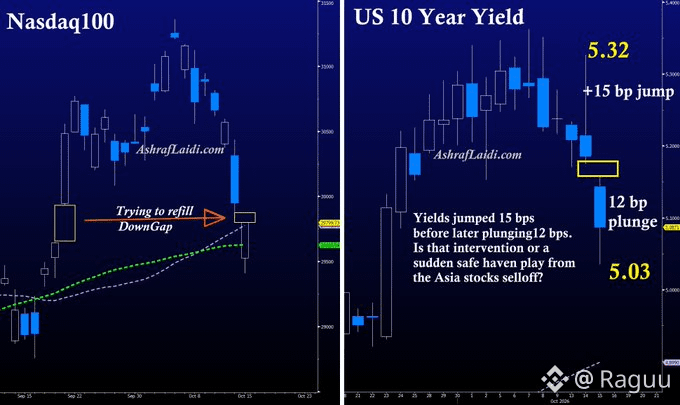
#warshpushestoscalebackforwardguidanceanddotplot Warsh's favourite measure of inflation shows 1/2 of CPI components >3% so what'll he say tonight after terrible CPI & PPIs? Williams was totally wrong. #Warsh gave many hints abt "hiking" in JxonHole. He doesnt like to speak unless he has sthg to say. Who will fill these gaps?$SENT $KORU $RIVER
#warshpushestoscalebackforwardguidanceanddotplot Warsh's favourite measure of inflation shows 1/2 of CPI components >3% so what'll he say tonight after terrible CPI & PPIs? Williams was totally wrong. #Warsh gave many hints abt "hiking" in JxonHole. He doesnt like to speak unless he has sthg to say. Who will fill these gaps?$SENT $KORU $RIVER
1.5k
·
--
Bearish
See translation
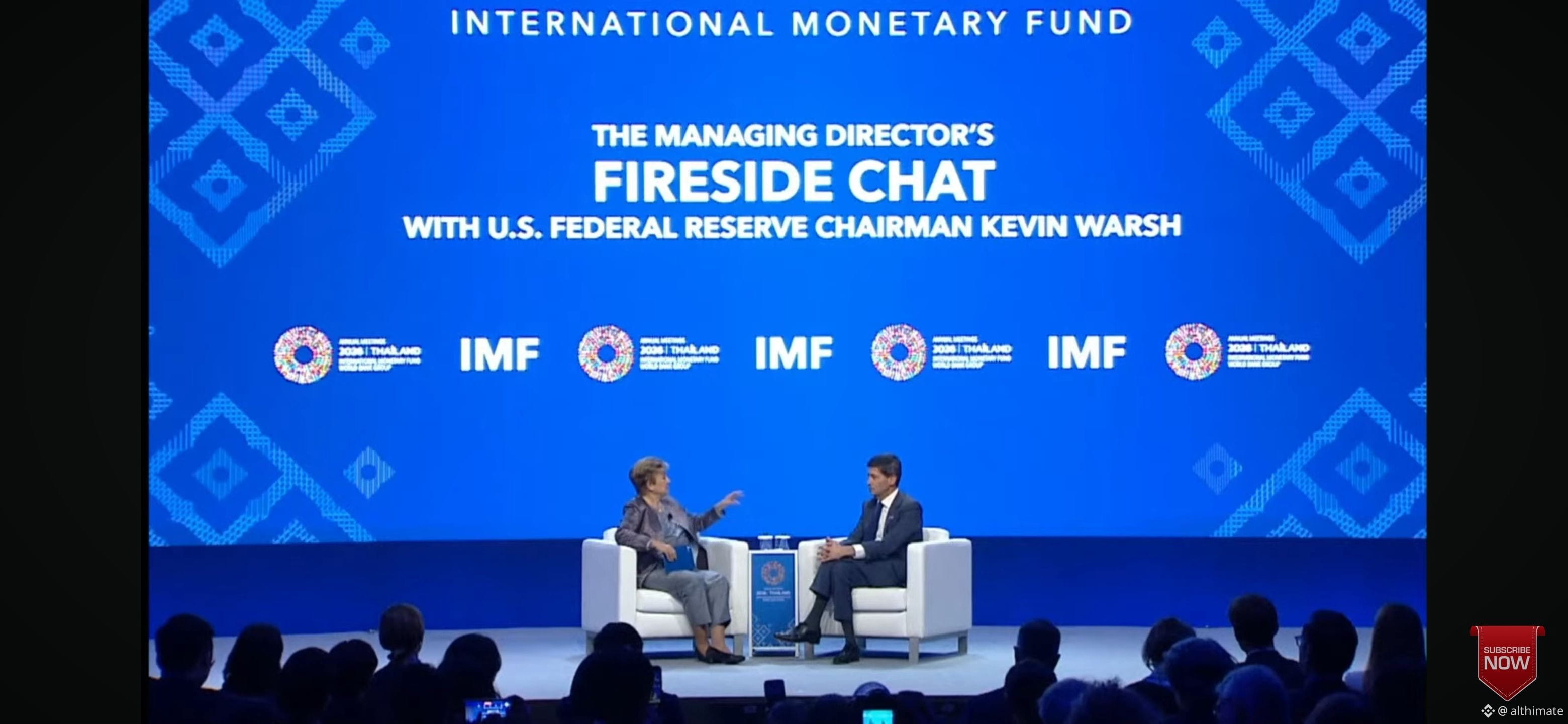
Warsh Congressional Testimony — House 🔥
📅 10:00 AM ET
Warsh appears before the House Financial Services Committee for his first testimony as Fed Chair. Every word will be analyzed. His tone on rates, inflation and crypto will move markets. Same day as CPI — double volatility Tuesday. 😬
#Fed #warsh #dyor #cpi
{future}(SOLUSDT)
{future}(XRPUSDT)
{future}(BNBUSDT)
Warsh Congressional Testimony — House 🔥
📅 10:00 AM ET
Warsh appears before the House Financial Services Committee for his first testimony as Fed Chair. Every word will be analyzed. His tone on rates, inflation and crypto will move markets. Same day as CPI — double volatility Tuesday. 😬
#Fed #warsh #dyor #cpi
📅 10:00 AM ET
Warsh appears before the House Financial Services Committee for his first testimony as Fed Chair. Every word will be analyzed. His tone on rates, inflation and crypto will move markets. Same day as CPI — double volatility Tuesday. 😬
#Fed #warsh #dyor #cpi
86

·
--
Three signals turning green simultaneously is no coincidence.
In the past 72 hours—ETF ended a 13-day streak of net outflows, with a single-day net inflow of $85.8 million on June 13, officially reversing direction. Strategy synced to buy 1,587 BTC, costing $100 million. Whales pulled over 11,000 BTC from exchanges, signaling on-chain accumulation.
These three events happening at once is not a coincidence.
Today is the FOMC decision day, the first time Warsh is speaking since taking office.
Interest rates staying unchanged is a done deal, with a 97.4% probability. The real variable is his tone during the press conference—dovish could push BTC to $68,000-$70,000, while hawkish could pull it back to $63,000.
The backdrop is this—BTC has dropped nearly 50% from its all-time high of $126,080, with an MVRV Z-Score of only 0.41. The Rainbow Chart shows a "fire sale zone," and five on-chain indicators are near historical lows.
These numbers have only appeared a few times in history. You know what follows each time.
HYPE is up 11.26% today, trading volume surged by 138%, and XRP has seen a cumulative ETF net inflow of $1.44 billion over six weeks. The money is quietly coming back, just hasn’t hit the front page of mainstream media yet.
Today, the most important thing isn’t the price but what Warsh says this afternoon.
A simple "inflation is improving" would be enough.
#FOMC #Warsh #BTC #ETF
1
220
Log in to explore more content
Join global crypto users on Binance Square
⚡️ Get latest and useful information about crypto.
💬 Trusted by the world’s largest crypto exchange.
👍 Discover real insights from verified creators.
Email / Phone number
Trending Topics
1
#NvidiaBeatsEstimatesWith$130BQ4Outlook
17,261 views
207 Discussing
2
#AnthropicIPOPriceCouldExceed$80
22,019 views
177 Discussing
3
#RussiaCentralBankAddsAlfaBankToCryptoExchangeRegister
0 views
11 Discussing
4
#RussianCentralBankPlansToAllowFundsToHoldCryptoIn2027
0 views
6 Discussing
5
#VisaPlansStablecoinPrefundingForAPACCrossBorderPayments
0 views
9 Discussing
6
#CanNvidia’sDataCenterGrowthContinue?
65,350 views
974 Discussing
7
#CanadaAndUSLaunchOperationNiagaraAgainstApprovalPhishing
5,807 views
47 Discussing
8
#BankOfEnglandUnveilsClearingHousePathwayCoveringDLTFirms
2,628 views
55 Discussing
9
#DBSAndCirclePartnerToExpandAsianInstitutionsUSDCAccess
3,856 views
60 Discussing
10
#LedgerHardwareImplantReportsExtendToDubai
31,123 views
479 Discussing