
#execution
execution
14,779 views
170 Discussing
Hot
Latest

Thematic Focus: The Importance of Automatic Execution (Execution Speed)
Title: Why Execution Speed Is Crucial in Crypto-Asset Trading ⚡📈
Content:
The term EXECUTE truly comes into its own when analyzing how modern trading algorithms work.
In Spot and Futures trading:
1️⃣ Reduced latency: Every millisecond matters to capture the exact price targeted.
2️⃣ Slippage limitation: An order executed instantly avoids unfavorable price discrepancies during periods of high volatility.
3️⃣ Strategic rigor: Automatic execution removes doubt and procrastination when it’s time to buy or sell.
The Binance Agent OS ecosystem fits into this vision by providing infrastructure designed for fast execution.
#TradingStrategy #CryptoNews #Binance #Execution #TradingBots @Square-Creator-9582400021c6e
Thematic Focus: The Importance of Automatic Execution (Execution Speed)
Title: Why Execution Speed Is Crucial in Crypto-Asset Trading ⚡📈
Content:
The term EXECUTE truly comes into its own when analyzing how modern trading algorithms work.
In Spot and Futures trading:
1️⃣ Reduced latency: Every millisecond matters to capture the exact price targeted.
2️⃣ Slippage limitation: An order executed instantly avoids unfavorable price discrepancies during periods of high volatility.
3️⃣ Strategic rigor: Automatic execution removes doubt and procrastination when it’s time to buy or sell.
The Binance Agent OS ecosystem fits into this vision by providing infrastructure designed for fast execution.
#TradingStrategy #CryptoNews #Binance #Execution #TradingBots @Robo未来
Title: Why Execution Speed Is Crucial in Crypto-Asset Trading ⚡📈
Content:
The term EXECUTE truly comes into its own when analyzing how modern trading algorithms work.
In Spot and Futures trading:
1️⃣ Reduced latency: Every millisecond matters to capture the exact price targeted.
2️⃣ Slippage limitation: An order executed instantly avoids unfavorable price discrepancies during periods of high volatility.
3️⃣ Strategic rigor: Automatic execution removes doubt and procrastination when it’s time to buy or sell.
The Binance Agent OS ecosystem fits into this vision by providing infrastructure designed for fast execution.
#TradingStrategy #CryptoNews #Binance #Execution #TradingBots @Robo未来
103

·
--
See translation
Digital business rewards speed.
The faster you:
Create
Publish
Test
Adapt
The faster you grow.
Most people fail because they move too slowly.
Smart creators reduce friction using: ✔ AI prompts
✔ Templates
✔ Structured systems
This creates a massive execution advantage.
If you want to improve workflow speed:
mihu8891.gumroad.com/l/kbmdxy
#AI #DigitalAssets #OnlineIncome #CreatorEconomy #Execution
$BTC
{spot}(BTCUSDT)
$ETH
{spot}(ETHUSDT)
$BNB
{spot}(BNBUSDT)
Digital business rewards speed.
The faster you:
Create
Publish
Test
Adapt
The faster you grow.
Most people fail because they move too slowly.
Smart creators reduce friction using: ✔ AI prompts
✔ Templates
✔ Structured systems
This creates a massive execution advantage.
If you want to improve workflow speed:
mihu8891.gumroad.com/l/kbmdxy
#AI #DigitalAssets #OnlineIncome #CreatorEconomy #Execution
$BTC
$ETH
$BNB
The faster you:
Create
Publish
Test
Adapt
The faster you grow.
Most people fail because they move too slowly.
Smart creators reduce friction using: ✔ AI prompts
✔ Templates
✔ Structured systems
This creates a massive execution advantage.
If you want to improve workflow speed:
mihu8891.gumroad.com/l/kbmdxy
#AI #DigitalAssets #OnlineIncome #CreatorEconomy #Execution
$BTC
$ETH
$BNB

1
1
41
See translation
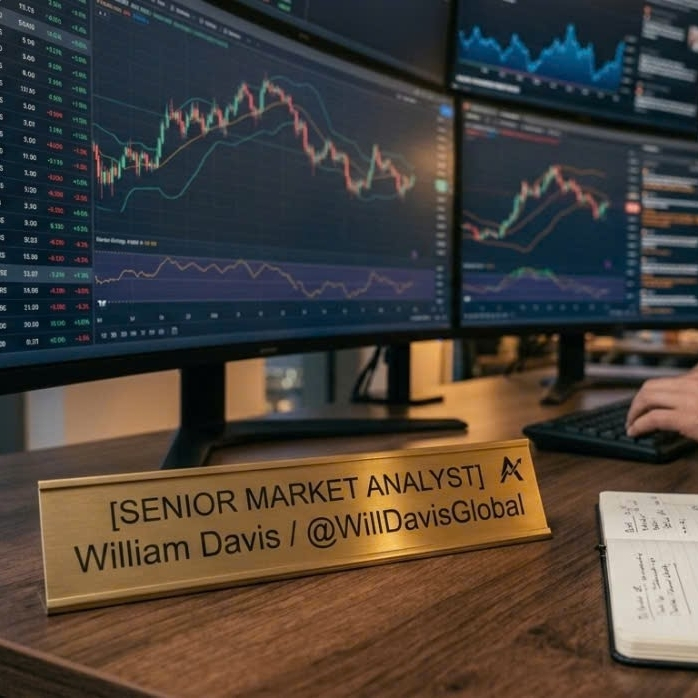
$BTC CONGRATULATIONS TO MY FOLLOWER FOR THE PERFECT EXECUTION 💎
You read the order flow, waited for the sweep, and held through the break of structure. That’s the difference between guessing and reading the tape.
The volume confirmation on the retest was textbook. What’s your next level of interest?
Not financial advice. Always manage your risk.
#BTC #TradingPsychology #Execution #Crypto
💎
$BTC CONGRATULATIONS TO MY FOLLOWER FOR THE PERFECT EXECUTION 💎
You read the order flow, waited for the sweep, and held through the break of structure. That’s the difference between guessing and reading the tape.
The volume confirmation on the retest was textbook. What’s your next level of interest?
Not financial advice. Always manage your risk.
#BTC #TradingPsychology #Execution #Crypto
💎
You read the order flow, waited for the sweep, and held through the break of structure. That’s the difference between guessing and reading the tape.
The volume confirmation on the retest was textbook. What’s your next level of interest?
Not financial advice. Always manage your risk.
#BTC #TradingPsychology #Execution #Crypto
💎
60

See translation
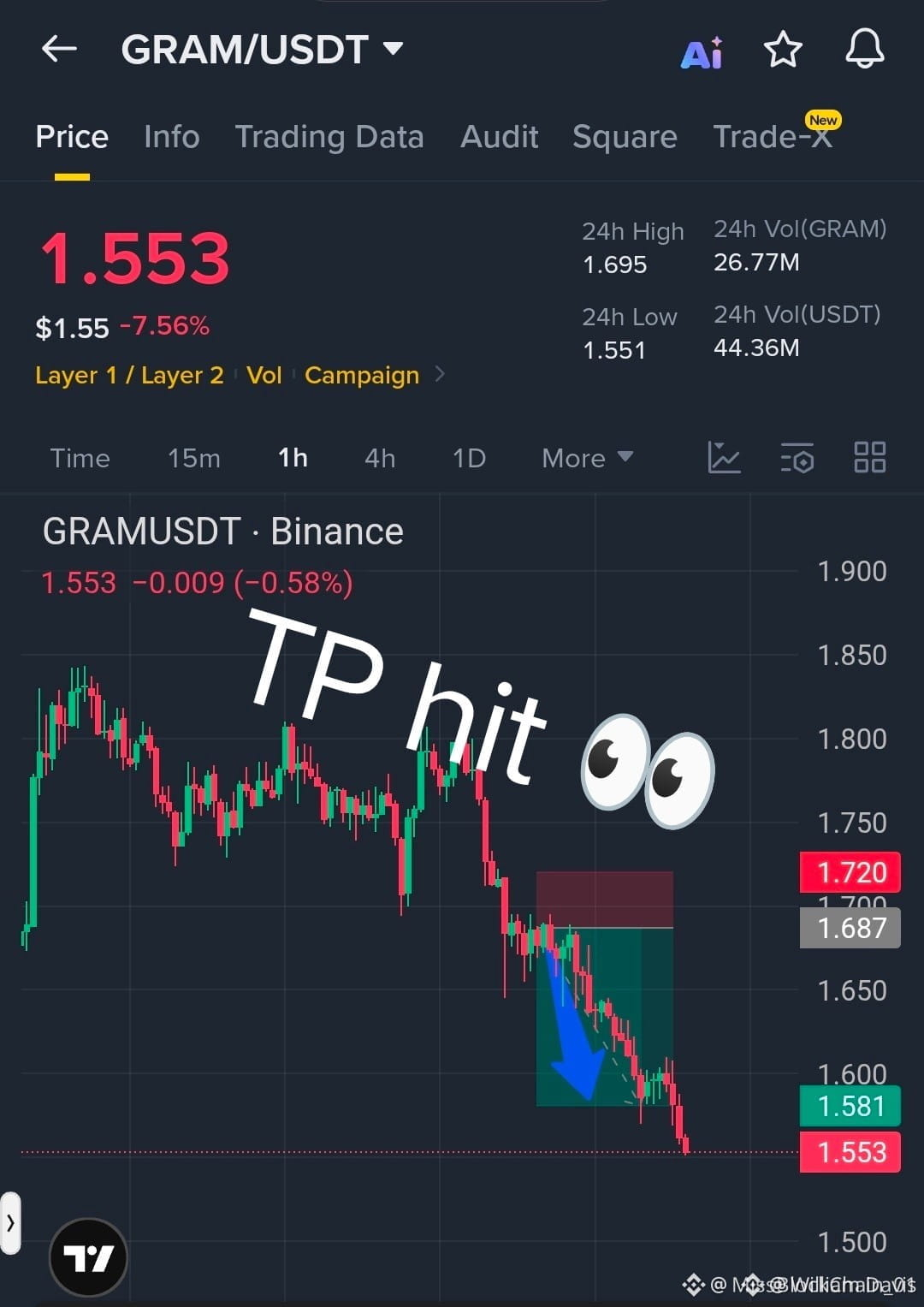
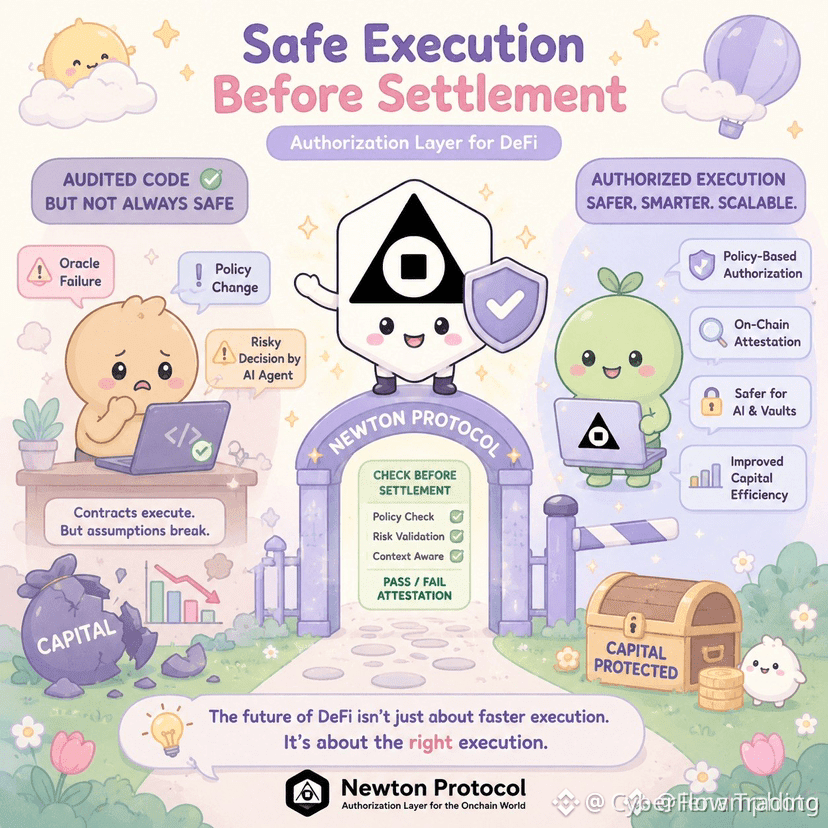
THE BIGGEST DEFI RISK ISN'T BUGS – IT'S EXECUTION – $NEWT 🔥
An audit only tells you the code does what it says. It doesn't tell you if the decisions it makes are still safe as markets shift, oracles update, or policies change.
That gap is where capital gets drained. Vaults rebalance automatically, AI agents execute blindly, and a perfectly written contract can send funds to the wrong place because the assumptions behind it went stale.
Newton treats authorization as part of execution — verifies decisions against live policies before settlement. Is your setup ready for a world where "audited" isn't enough?
Not financial advice. Always manage your risk.
#NEWT #DeFi #Security #Execution
💎
THE BIGGEST DEFI RISK ISN'T BUGS – IT'S EXECUTION – $NEWT 🔥
An audit only tells you the code does what it says. It doesn't tell you if the decisions it makes are still safe as markets shift, oracles update, or policies change.
That gap is where capital gets drained. Vaults rebalance automatically, AI agents execute blindly, and a perfectly written contract can send funds to the wrong place because the assumptions behind it went stale.
Newton treats authorization as part of execution — verifies decisions against live policies before settlement. Is your setup ready for a world where "audited" isn't enough?
Not financial advice. Always manage your risk.
#NEWT #DeFi #Security #Execution
💎
An audit only tells you the code does what it says. It doesn't tell you if the decisions it makes are still safe as markets shift, oracles update, or policies change.
That gap is where capital gets drained. Vaults rebalance automatically, AI agents execute blindly, and a perfectly written contract can send funds to the wrong place because the assumptions behind it went stale.
Newton treats authorization as part of execution — verifies decisions against live policies before settlement. Is your setup ready for a world where "audited" isn't enough?
Not financial advice. Always manage your risk.
#NEWT #DeFi #Security #Execution
💎
21


See translation
My preferred Entry Zone for $DYDX is 0.16380 - 0.16629. Entering within this range, based on my analysis, provides the best risk-reward proposition. It's about patience and execution.
#EntryStrategy #Execution
My preferred Entry Zone for $DYDX is 0.16380 - 0.16629. Entering within this range, based on my analysis, provides the best risk-reward proposition. It's about patience and execution.
#EntryStrategy #Execution
#EntryStrategy #Execution
222
See translation
Scalping isn't about being right all the time; it's about managing risk and emotions. With the setups for $币安人生 and $PROM , I'm focused on executing my plan flawlessly. The market will always present opportunities, but my mental capital is finite.
#Execution #Scalping
Scalping isn't about being right all the time; it's about managing risk and emotions. With the setups for $币安人生 and $PROM , I'm focused on executing my plan flawlessly. The market will always present opportunities, but my mental capital is finite.
#Execution #Scalping
#Execution #Scalping
359
See translation
A clear plan for 币安人生 helps me avoid analysis paralysis. Knowing my targets and invalidation point before I enter removes emotional guesswork.
🎯 $币安人生 QUANT SETUP 📊
👉 Entry Zone: 0.66783 - 0.67800
👉 🎯 Target 1: 0.69870
👉 🎯 Target 2: 0.71940
👉 🎯 Target 3: 0.74424
👉 🛑 Invalidation (SL): 0.64299
#TradingPlan #Execution
A clear plan for 币安人生 helps me avoid analysis paralysis. Knowing my targets and invalidation point before I enter removes emotional guesswork.
🎯 $币安人生 QUANT SETUP 📊
👉 Entry Zone: 0.66783 - 0.67800
👉 🎯 Target 1: 0.69870
👉 🎯 Target 2: 0.71940
👉 🎯 Target 3: 0.74424
👉 🛑 Invalidation (SL): 0.64299
#TradingPlan #Execution
🎯 $币安人生 QUANT SETUP 📊
👉 Entry Zone: 0.66783 - 0.67800
👉 🎯 Target 1: 0.69870
👉 🎯 Target 2: 0.71940
👉 🎯 Target 3: 0.74424
👉 🛑 Invalidation (SL): 0.64299
#TradingPlan #Execution
459
See translation
Emotional detachment is my superpower when scalping $ORDI. Whether $ZBT or $ARKM are flying or crashing, I focus solely on my setup and my risk. No emotions, just execution. That's how I stay consistent.
🔥 Deep Market Intel
👉 Order Book: Heavy Buy Walls (1.28x)
👉 1H Open Interest: Accumulating (+)
👉 Whales L/S: 57.6% Long
👉 Taker Flow: 1.34x
👉
🎯 ORDI UPTREND ALERT 🌪️
👉 Entry Zone: 3.0702 - 3.1170
👉 🎯 Target 1: 3.2000
👉 🎯 Target 2: 3.2830
👉 🎯 Target 3: 3.3826
👉 🛑 Invalidation (SL): 2.9706
🔥 Deep Market Intel
👉 Order Book: Balanced DOM (1.24x)
👉 1H Open Interest: Declining (-)
👉 Whales L/S: 56.6% Long
👉 Taker Flow: 0.58x 📊
#EmotionalControl #Execution
Emotional detachment is my superpower when scalping $ORDI . Whether $ZBT or $ARKM are flying or crashing, I focus solely on my setup and my risk. No emotions, just execution. That's how I stay consistent.
🔥 Deep Market Intel
👉 Order Book: Heavy Buy Walls (1.28x)
👉 1H Open Interest: Accumulating (+)
👉 Whales L/S: 57.6% Long
👉 Taker Flow: 1.34x
👉
🎯 ORDI UPTREND ALERT 🌪️
👉 Entry Zone: 3.0702 - 3.1170
👉 🎯 Target 1: 3.2000
👉 🎯 Target 2: 3.2830
👉 🎯 Target 3: 3.3826
👉 🛑 Invalidation (SL): 2.9706
🔥 Deep Market Intel
👉 Order Book: Balanced DOM (1.24x)
👉 1H Open Interest: Declining (-)
👉 Whales L/S: 56.6% Long
👉 Taker Flow: 0.58x 📊
#EmotionalControl #Execution
🔥 Deep Market Intel
👉 Order Book: Heavy Buy Walls (1.28x)
👉 1H Open Interest: Accumulating (+)
👉 Whales L/S: 57.6% Long
👉 Taker Flow: 1.34x
👉
🎯 ORDI UPTREND ALERT 🌪️
👉 Entry Zone: 3.0702 - 3.1170
👉 🎯 Target 1: 3.2000
👉 🎯 Target 2: 3.2830
👉 🎯 Target 3: 3.3826
👉 🛑 Invalidation (SL): 2.9706
🔥 Deep Market Intel
👉 Order Book: Balanced DOM (1.24x)
👉 1H Open Interest: Declining (-)
👉 Whales L/S: 56.6% Long
👉 Taker Flow: 0.58x 📊
#EmotionalControl #Execution
368

·
--
See translation
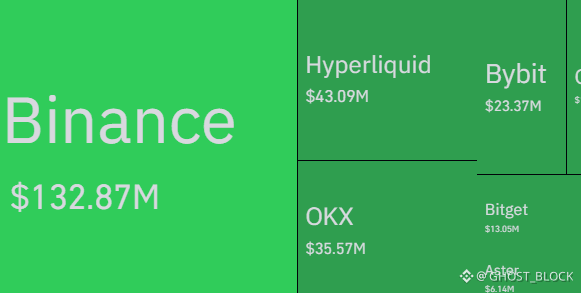
$BTC The market always offers another opportunity
Success comes from execution, not prediction
If you followed your plan today,
that's enough
#Bitcoin #Crypto #Execution #Discipline
$BTC The market always offers another opportunity
Success comes from execution, not prediction
If you followed your plan today,
that's enough
#Bitcoin #Crypto #Execution #Discipline
Success comes from execution, not prediction
If you followed your plan today,
that's enough
#Bitcoin #Crypto #Execution #Discipline
8
See translation
Precision in your entry zone can make or break a trade. For $NXPC, my analysis provides a tight Entry Zone. Discipline in executing within these parameters is crucial.
🔥 Deep Market Intel
👉 Order Book: Heavy Buy Walls (1.74x)
👉 1H Open Interest: Declining (-)
👉 Whales L/S: 54.0% Long
👉 Taker Flow: 2.26x
👉
🎯 $NXPC MOMENTUM PLAY ⚡
👉 Entry Zone: 0.36790 - 0.37350
👉 🎯 Target 1: 0.38690
👉 🎯 Target 2: 0.40030
👉 🎯 Target 3: 0.41638
👉 🛑 Invalidation (SL): 0.35182
🔥 Deep Market Intel
👉 Order Book: Heavy Buy Walls (1.76x)
👉 1H Open Interest: Declining (-)
👉 Whales L/S: 52.2% Long
👉 Taker Flow: 1.08x 📊
Always remember to factor in the transaction costs and potential slippage when aiming for these precise entries.
#EntryStrategy #Execution
Precision in your entry zone can make or break a trade. For $NXPC , my analysis provides a tight Entry Zone. Discipline in executing within these parameters is crucial.
🔥 Deep Market Intel
👉 Order Book: Heavy Buy Walls (1.74x)
👉 1H Open Interest: Declining (-)
👉 Whales L/S: 54.0% Long
👉 Taker Flow: 2.26x
👉
🎯 $NXPC MOMENTUM PLAY ⚡
👉 Entry Zone: 0.36790 - 0.37350
👉 🎯 Target 1: 0.38690
👉 🎯 Target 2: 0.40030
👉 🎯 Target 3: 0.41638
👉 🛑 Invalidation (SL): 0.35182
🔥 Deep Market Intel
👉 Order Book: Heavy Buy Walls (1.76x)
👉 1H Open Interest: Declining (-)
👉 Whales L/S: 52.2% Long
👉 Taker Flow: 1.08x 📊
Always remember to factor in the transaction costs and potential slippage when aiming for these precise entries.
#EntryStrategy #Execution
🔥 Deep Market Intel
👉 Order Book: Heavy Buy Walls (1.74x)
👉 1H Open Interest: Declining (-)
👉 Whales L/S: 54.0% Long
👉 Taker Flow: 2.26x
👉
🎯 $NXPC MOMENTUM PLAY ⚡
👉 Entry Zone: 0.36790 - 0.37350
👉 🎯 Target 1: 0.38690
👉 🎯 Target 2: 0.40030
👉 🎯 Target 3: 0.41638
👉 🛑 Invalidation (SL): 0.35182
🔥 Deep Market Intel
👉 Order Book: Heavy Buy Walls (1.76x)
👉 1H Open Interest: Declining (-)
👉 Whales L/S: 52.2% Long
👉 Taker Flow: 1.08x 📊
Always remember to factor in the transaction costs and potential slippage when aiming for these precise entries.
#EntryStrategy #Execution
569

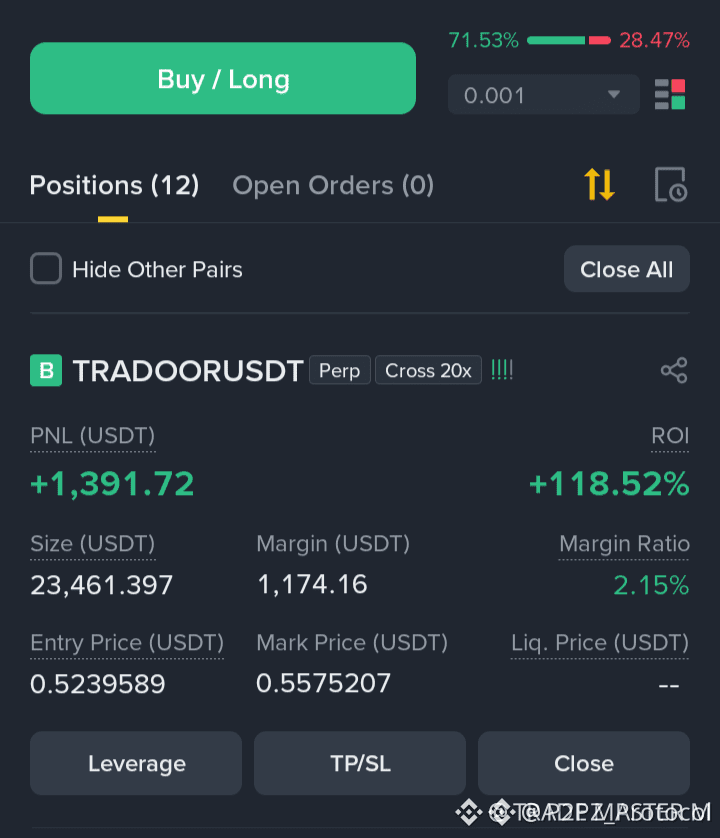
Account liquidation? Not in our playbook. The numbers speak for themselves and validate the protocol's efficiency! 🎯📊
Trade after trade, we snatch profits from the market's jaws thanks to the precision of our liquidity monitoring algorithms. The green returns are talking, and the closed trades hitting their historical targets are our proof. Join the ranks of the pros and leave randomness to the amateurs! 💰⚡
$TRADOOR $ZEC $SIREN
#CryptoProfits #Execution #tradingStrategy
Account liquidation? Not in our playbook. The numbers speak for themselves and validate the protocol's efficiency! 🎯📊
Trade after trade, we snatch profits from the market's jaws thanks to the precision of our liquidity monitoring algorithms. The green returns are talking, and the closed trades hitting their historical targets are our proof. Join the ranks of the pros and leave randomness to the amateurs! 💰⚡
$TRADOOR $ZEC $SIREN
#CryptoProfits #Execution #tradingStrategy
Trade after trade, we snatch profits from the market's jaws thanks to the precision of our liquidity monitoring algorithms. The green returns are talking, and the closed trades hitting their historical targets are our proof. Join the ranks of the pros and leave randomness to the amateurs! 💰⚡
$TRADOOR $ZEC $SIREN
#CryptoProfits #Execution #tradingStrategy
1
274
See translation
My analysis for $TIA indicates potential, but my execution must be flawless. Scalping $TIA demands absolute focus and zero emotional attachment to the outcome.
🎯 $TIA MACRO BREAKOUT 📈
💎 Entry Zone: 0.37469 - 0.38040
💎 🎯 Target 1: 0.38630
💎 🎯 Target 2: 0.39220
💎 🎯 Target 3: 0.39928
💎 🛑 Invalidation (SL): 0.36761
#TIA #Execution
My analysis for $TIA indicates potential, but my execution must be flawless. Scalping $TIA demands absolute focus and zero emotional attachment to the outcome.
🎯 $TIA MACRO BREAKOUT 📈
💎 Entry Zone: 0.37469 - 0.38040
💎 🎯 Target 1: 0.38630
💎 🎯 Target 2: 0.39220
💎 🎯 Target 3: 0.39928
💎 🛑 Invalidation (SL): 0.36761
#TIA #Execution
🎯 $TIA MACRO BREAKOUT 📈
💎 Entry Zone: 0.37469 - 0.38040
💎 🎯 Target 1: 0.38630
💎 🎯 Target 2: 0.39220
💎 🎯 Target 3: 0.39928
💎 🛑 Invalidation (SL): 0.36761
#TIA #Execution
265
See translation
My eyes are on $PARTI today. The market intel shows some strong buy walls, which is encouraging, but I won't let that cloud my judgment. My entry zone is precise, and my targets are mapped. Execution must be emotionless.
🔥 Deep Market Intel
💎 Order Book: Heavy Buy Walls (1.52x)
💎 1H Open Interest: Accumulating (+)
💎 Whales L/S: 47.3% Long
💎 Taker Flow: 0.94x
💎
🎯 $PARTI MOMENTUM PLAY ⚡
💎 Entry Zone: 0.05388 - 0.05470
💎 🎯 Target 1: 0.05585
💎 🎯 Target 2: 0.05700
💎 🎯 Target 3: 0.05838
💎 🛑 Invalidation (SL): 0.05250
🔥 Deep Market Intel
💎 Order Book: Heavy Buy Walls (2.76x)
💎 1H Open Interest: Declining (-)
💎 Whales L/S: 75.0% Long
💎 Taker Flow: 2.03x 📊
Discipline over everything.
#PARTITrading #Execution
My eyes are on $PARTI today. The market intel shows some strong buy walls, which is encouraging, but I won't let that cloud my judgment. My entry zone is precise, and my targets are mapped. Execution must be emotionless.
🔥 Deep Market Intel
💎 Order Book: Heavy Buy Walls (1.52x)
💎 1H Open Interest: Accumulating (+)
💎 Whales L/S: 47.3% Long
💎 Taker Flow: 0.94x
💎
🎯 $PARTI MOMENTUM PLAY ⚡
💎 Entry Zone: 0.05388 - 0.05470
💎 🎯 Target 1: 0.05585
💎 🎯 Target 2: 0.05700
💎 🎯 Target 3: 0.05838
💎 🛑 Invalidation (SL): 0.05250
🔥 Deep Market Intel
💎 Order Book: Heavy Buy Walls (2.76x)
💎 1H Open Interest: Declining (-)
💎 Whales L/S: 75.0% Long
💎 Taker Flow: 2.03x 📊
Discipline over everything.
#PARTITrading #Execution
🔥 Deep Market Intel
💎 Order Book: Heavy Buy Walls (1.52x)
💎 1H Open Interest: Accumulating (+)
💎 Whales L/S: 47.3% Long
💎 Taker Flow: 0.94x
💎
🎯 $PARTI MOMENTUM PLAY ⚡
💎 Entry Zone: 0.05388 - 0.05470
💎 🎯 Target 1: 0.05585
💎 🎯 Target 2: 0.05700
💎 🎯 Target 3: 0.05838
💎 🛑 Invalidation (SL): 0.05250
🔥 Deep Market Intel
💎 Order Book: Heavy Buy Walls (2.76x)
💎 1H Open Interest: Declining (-)
💎 Whales L/S: 75.0% Long
💎 Taker Flow: 2.03x 📊
Discipline over everything.
#PARTITrading #Execution
1
228
See translation
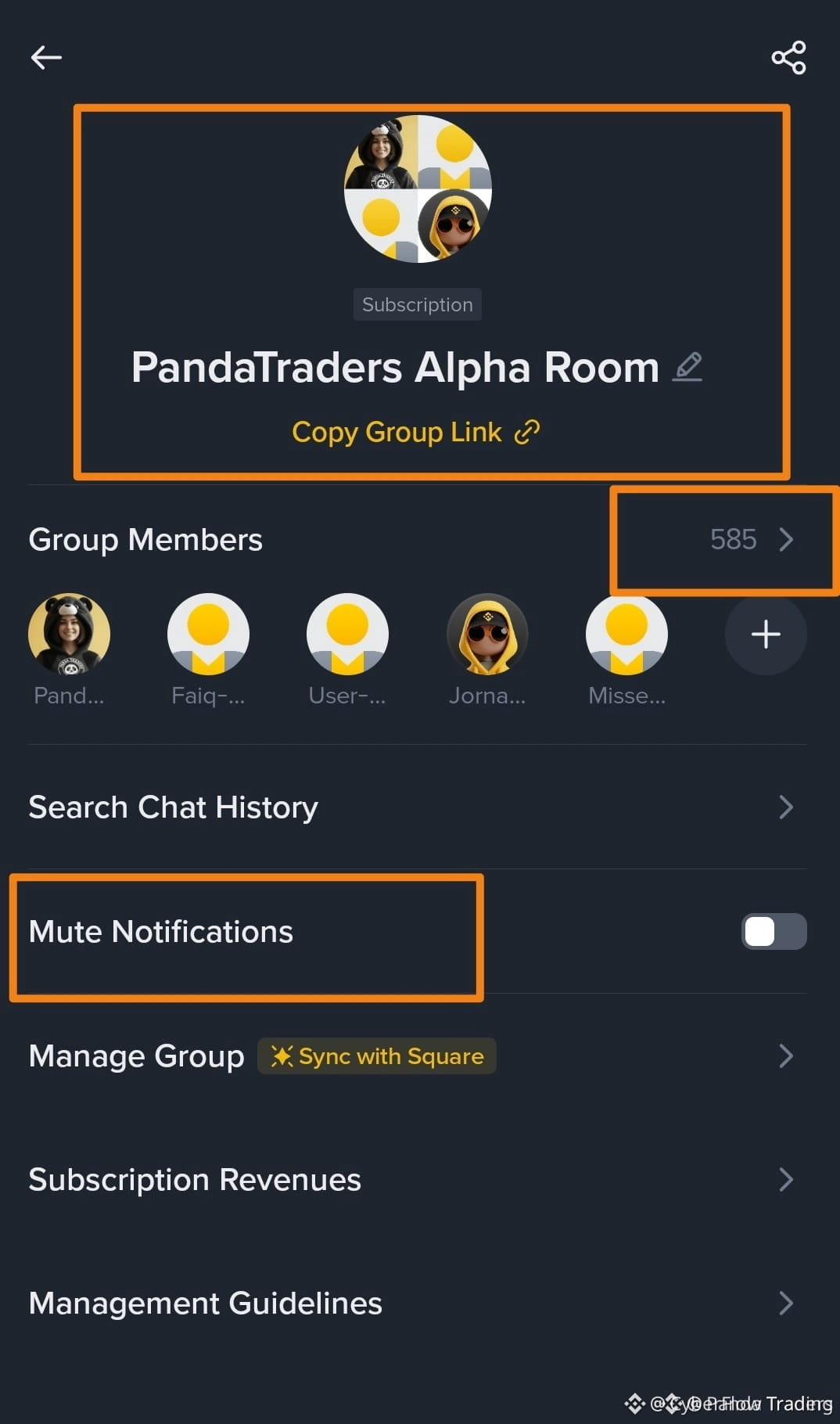
THE SEPTEMBER $BTC 10X ACCUMULATION WINDOW IS OPEN AND SPEED IS EVERYTHING! ⚡ 🚀
Capturing explosive market waves across major assets like $BTC , $SOL , and $XAU isn't about chasing green candles after momentum has already peaked. 📊 True positioning requires real-time precision and reacting the second order flow shifts before retail catches on.
Whether you are compounding capital through tight intraday spot swings or managing leveraged futures, disciplined risk management separates the top 1% from those left holding top-tick positions. 💡 Momentum moves fast, and execution speed dictates your edge in volatile conditions.
💬 Which asset are you positioning in first to compound your portfolio this month? 👇
⚠️ Not financial advice. Always manage your risk. 🛡️
🏷️ #BTC #SOL #XAU #CryptoTrading #Execution
⚡ 💎
THE SEPTEMBER $BTC 10X ACCUMULATION WINDOW IS OPEN AND SPEED IS EVERYTHING! ⚡ 🚀
Capturing explosive market waves across major assets like $BTC , $SOL , and $XAU isn't about chasing green candles after momentum has already peaked. 📊 True positioning requires real-time precision and reacting the second order flow shifts before retail catches on.
Whether you are compounding capital through tight intraday spot swings or managing leveraged futures, disciplined risk management separates the top 1% from those left holding top-tick positions. 💡 Momentum moves fast, and execution speed dictates your edge in volatile conditions.
💬 Which asset are you positioning in first to compound your portfolio this month? 👇
⚠️ Not financial advice. Always manage your risk. 🛡️
🏷️ #BTC #SOL #XAU #CryptoTrading #Execution
⚡ 💎
Capturing explosive market waves across major assets like $BTC , $SOL , and $XAU isn't about chasing green candles after momentum has already peaked. 📊 True positioning requires real-time precision and reacting the second order flow shifts before retail catches on.
Whether you are compounding capital through tight intraday spot swings or managing leveraged futures, disciplined risk management separates the top 1% from those left holding top-tick positions. 💡 Momentum moves fast, and execution speed dictates your edge in volatile conditions.
💬 Which asset are you positioning in first to compound your portfolio this month? 👇
⚠️ Not financial advice. Always manage your risk. 🛡️
🏷️ #BTC #SOL #XAU #CryptoTrading #Execution
⚡ 💎

78

See translation
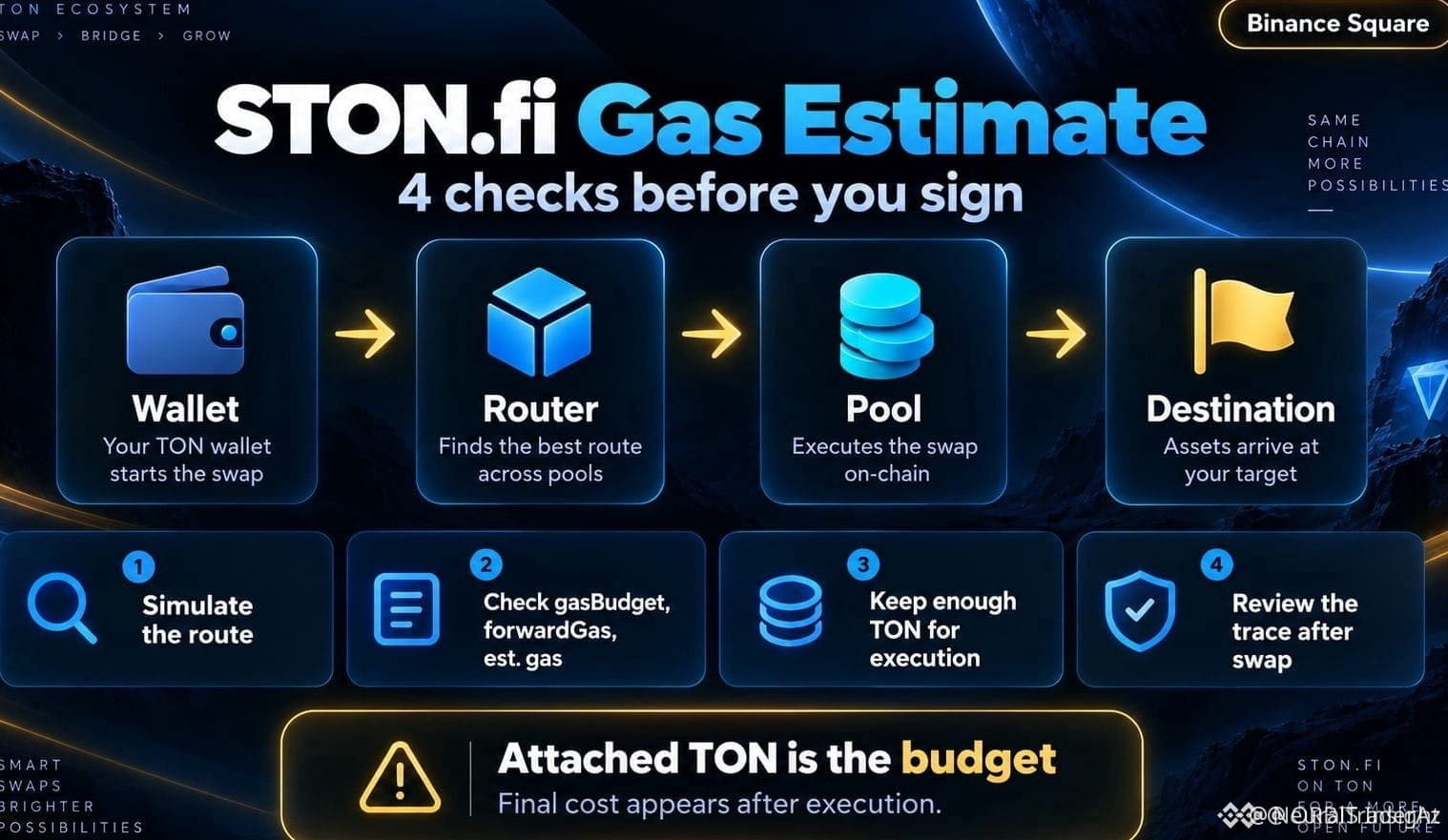
🚨 UNPACKING THE $TON MULTI-CONTRACT GAS MECHANICS ON DEX ROUTERS ⚡
Many traders misinterpret execution costs on $TON DEX routers like STON.fi, mistaking the maximum gas budget for actual transaction burn. Under TON multi-contract architecture, routing passes sequentially through Wallet, Jetton/pTON, Router, and Pool contracts, where compute complexity determines gas allocation, not order volume. 📌
The balance requested at confirmation acts strictly as execution safety coverage; unspent $TON is automatically refunded post-execution. 💡 Hardcoding legacy parameters or underfunding gas budgets risks mid-route bounces and execution failures, whereas trade size has zero impact on contract compute overhead. 🔍
Always simulate swap payloads via API endpoints to ensure precise routing mechanics before signing transactions. 💬 Are you accounting for multi-contract gas buffers in your execution strategies, or letting parameter errors drain your capital? 👇
⚠️ Not financial advice. Always manage your risk. 🛡️
🏷️ #TON #TONEcosystem #DeFi #DEX #Execution
🎯 🦈
🚨 UNPACKING THE $TON MULTI-CONTRACT GAS MECHANICS ON DEX ROUTERS ⚡
Many traders misinterpret execution costs on $TON DEX routers like STON.fi, mistaking the maximum gas budget for actual transaction burn. Under TON multi-contract architecture, routing passes sequentially through Wallet, Jetton/pTON, Router, and Pool contracts, where compute complexity determines gas allocation, not order volume. 📌
The balance requested at confirmation acts strictly as execution safety coverage; unspent $TON is automatically refunded post-execution. 💡 Hardcoding legacy parameters or underfunding gas budgets risks mid-route bounces and execution failures, whereas trade size has zero impact on contract compute overhead. 🔍
Always simulate swap payloads via API endpoints to ensure precise routing mechanics before signing transactions. 💬 Are you accounting for multi-contract gas buffers in your execution strategies, or letting parameter errors drain your capital? 👇
⚠️ Not financial advice. Always manage your risk. 🛡️
🏷️ #TON #TONEcosystem #DeFi #DEX #Execution
🎯 🦈
Many traders misinterpret execution costs on $TON DEX routers like STON.fi, mistaking the maximum gas budget for actual transaction burn. Under TON multi-contract architecture, routing passes sequentially through Wallet, Jetton/pTON, Router, and Pool contracts, where compute complexity determines gas allocation, not order volume. 📌
The balance requested at confirmation acts strictly as execution safety coverage; unspent $TON is automatically refunded post-execution. 💡 Hardcoding legacy parameters or underfunding gas budgets risks mid-route bounces and execution failures, whereas trade size has zero impact on contract compute overhead. 🔍
Always simulate swap payloads via API endpoints to ensure precise routing mechanics before signing transactions. 💬 Are you accounting for multi-contract gas buffers in your execution strategies, or letting parameter errors drain your capital? 👇
⚠️ Not financial advice. Always manage your risk. 🛡️
🏷️ #TON #TONEcosystem #DeFi #DEX #Execution
🎯 🦈
19

See translation
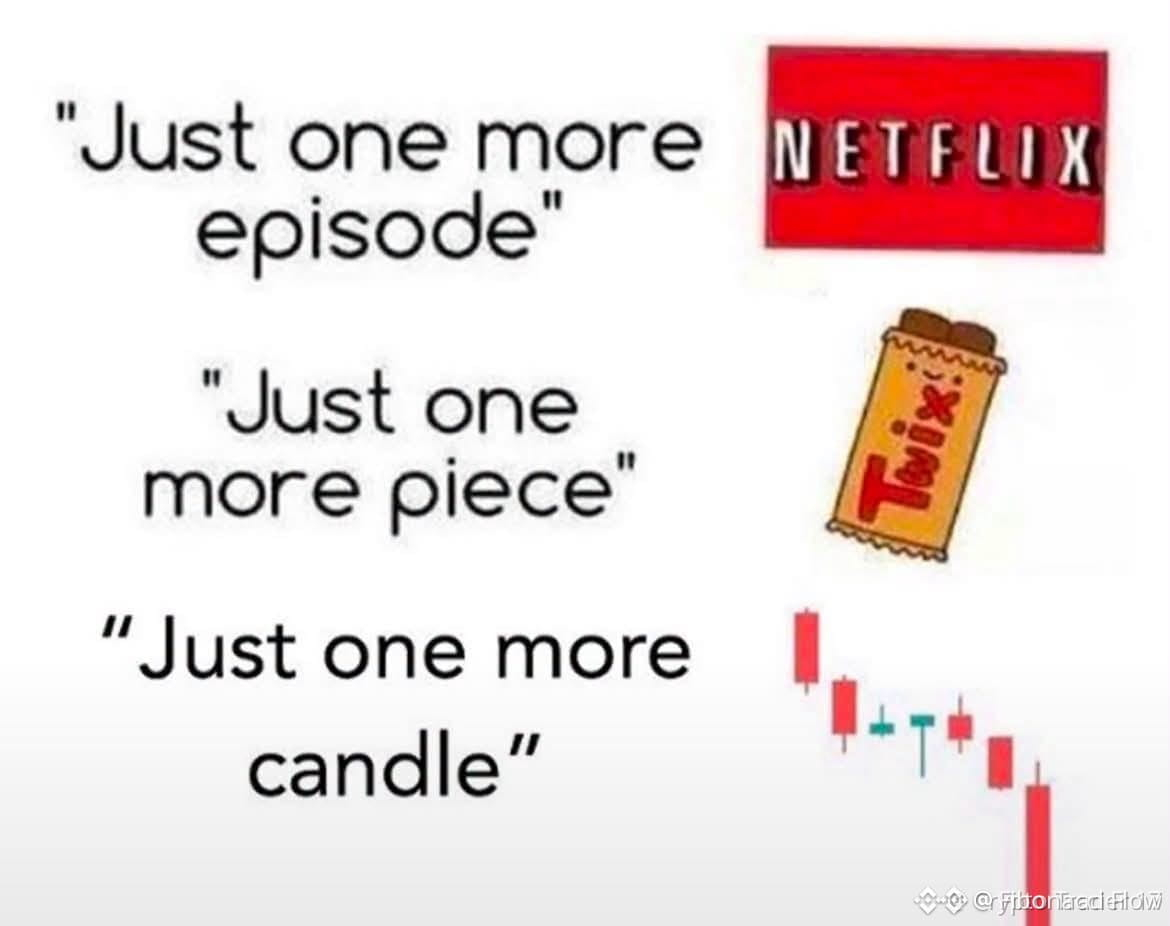
$BTC DOES NOT CARE ABOUT YOUR EXCUSES WHILE SMART MONEY ABSORBS THE DIP 🧠 ⚡
I told myself I would buy the key support retest on $BTC , but when the heavy red candle printed, hesitation locked the trigger. 📊 Every trader keeps a quiet ledger of internal excuses right before watching high-probability structural flips play out without them.
Institutional order flow feeds directly off retail hesitation, sweeping resting liquidity while textbook market structures unfold. 💡 Price action respects key levels and systematic execution, not emotional monologues—discipline is what captures the real moves.
💬 What is the single biggest excuse that stopped you from executing your trading plan this week? 👇
⚠️ Not financial advice. Always manage your risk. 🛡️
🏷️ #BTC #TradingPsychology #MarketMindset #Crypto #Execution
🔥 💎
$BTC DOES NOT CARE ABOUT YOUR EXCUSES WHILE SMART MONEY ABSORBS THE DIP 🧠 ⚡
I told myself I would buy the key support retest on $BTC , but when the heavy red candle printed, hesitation locked the trigger. 📊 Every trader keeps a quiet ledger of internal excuses right before watching high-probability structural flips play out without them.
Institutional order flow feeds directly off retail hesitation, sweeping resting liquidity while textbook market structures unfold. 💡 Price action respects key levels and systematic execution, not emotional monologues—discipline is what captures the real moves.
💬 What is the single biggest excuse that stopped you from executing your trading plan this week? 👇
⚠️ Not financial advice. Always manage your risk. 🛡️
🏷️ #BTC #TradingPsychology #MarketMindset #Crypto #Execution
🔥 💎
I told myself I would buy the key support retest on $BTC , but when the heavy red candle printed, hesitation locked the trigger. 📊 Every trader keeps a quiet ledger of internal excuses right before watching high-probability structural flips play out without them.
Institutional order flow feeds directly off retail hesitation, sweeping resting liquidity while textbook market structures unfold. 💡 Price action respects key levels and systematic execution, not emotional monologues—discipline is what captures the real moves.
💬 What is the single biggest excuse that stopped you from executing your trading plan this week? 👇
⚠️ Not financial advice. Always manage your risk. 🛡️
🏷️ #BTC #TradingPsychology #MarketMindset #Crypto #Execution
🔥 💎
25

·
--
See translation
🚨 INSIDE CZ'S MIND: THE UNFILTERED CULTURE DRIVING THE $BNB EMPIRE! 💡
Speaking at a Hong Kong offline gathering, CZ revealed the core operational philosophy behind scaling world-class global teams. 📌 In decentralized and remote environments, standard oversight falls short—uncompromising proactiveness is the ultimate filter that separates true value creators from market noise.
📊 Real momentum comes from self-directed operators who own their output rather than waiting for direction. 🌊 That aggressive standard of execution is precisely what builds market-dominating liquidity infrastructure.
💬 Does your own market approach reflect this level of relentless proactiveness? 👇
⚠️ Not financial advice. Always manage your risk. 🛡️
🏷️ #BNB #CryptoLeadership #Web3 #Execution #MarketInsights
🔥 💎
🚨 INSIDE CZ'S MIND: THE UNFILTERED CULTURE DRIVING THE $BNB EMPIRE! 💡
Speaking at a Hong Kong offline gathering, CZ revealed the core operational philosophy behind scaling world-class global teams. 📌 In decentralized and remote environments, standard oversight falls short—uncompromising proactiveness is the ultimate filter that separates true value creators from market noise.
📊 Real momentum comes from self-directed operators who own their output rather than waiting for direction. 🌊 That aggressive standard of execution is precisely what builds market-dominating liquidity infrastructure.
💬 Does your own market approach reflect this level of relentless proactiveness? 👇
⚠️ Not financial advice. Always manage your risk. 🛡️
🏷️ #BNB #CryptoLeadership #Web3 #Execution #MarketInsights
🔥 💎
Speaking at a Hong Kong offline gathering, CZ revealed the core operational philosophy behind scaling world-class global teams. 📌 In decentralized and remote environments, standard oversight falls short—uncompromising proactiveness is the ultimate filter that separates true value creators from market noise.
📊 Real momentum comes from self-directed operators who own their output rather than waiting for direction. 🌊 That aggressive standard of execution is precisely what builds market-dominating liquidity infrastructure.
💬 Does your own market approach reflect this level of relentless proactiveness? 👇
⚠️ Not financial advice. Always manage your risk. 🛡️
🏷️ #BNB #CryptoLeadership #Web3 #Execution #MarketInsights
🔥 💎
10

·
--
See translation
🎯 Not luck, it is pattern recognition and reading the chart before the crowd 📊
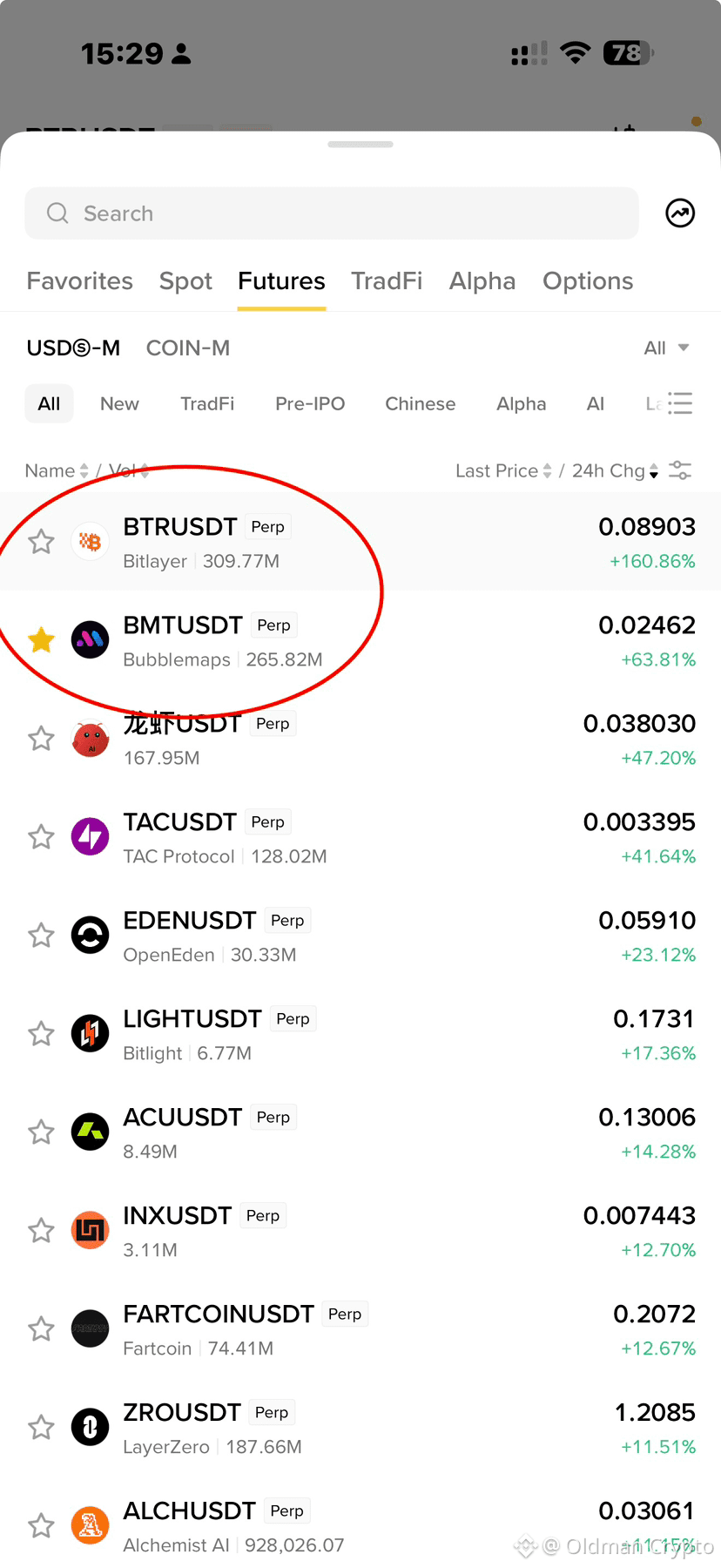
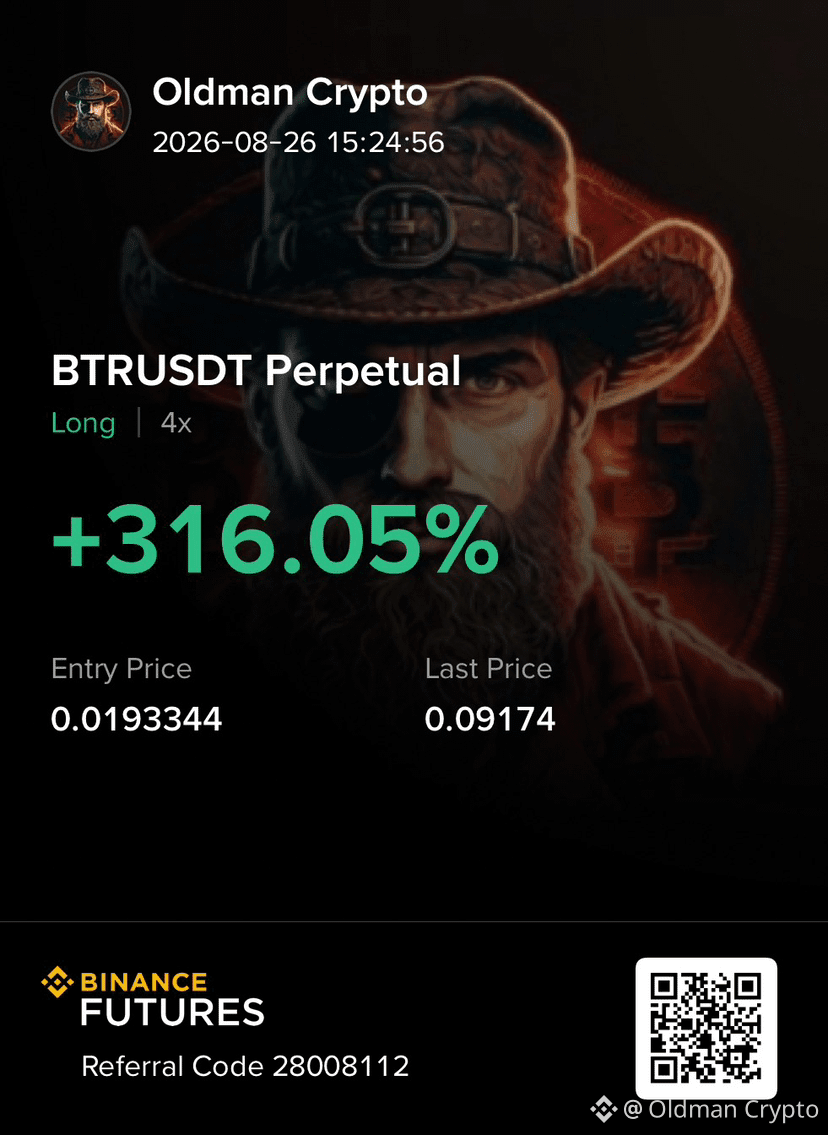
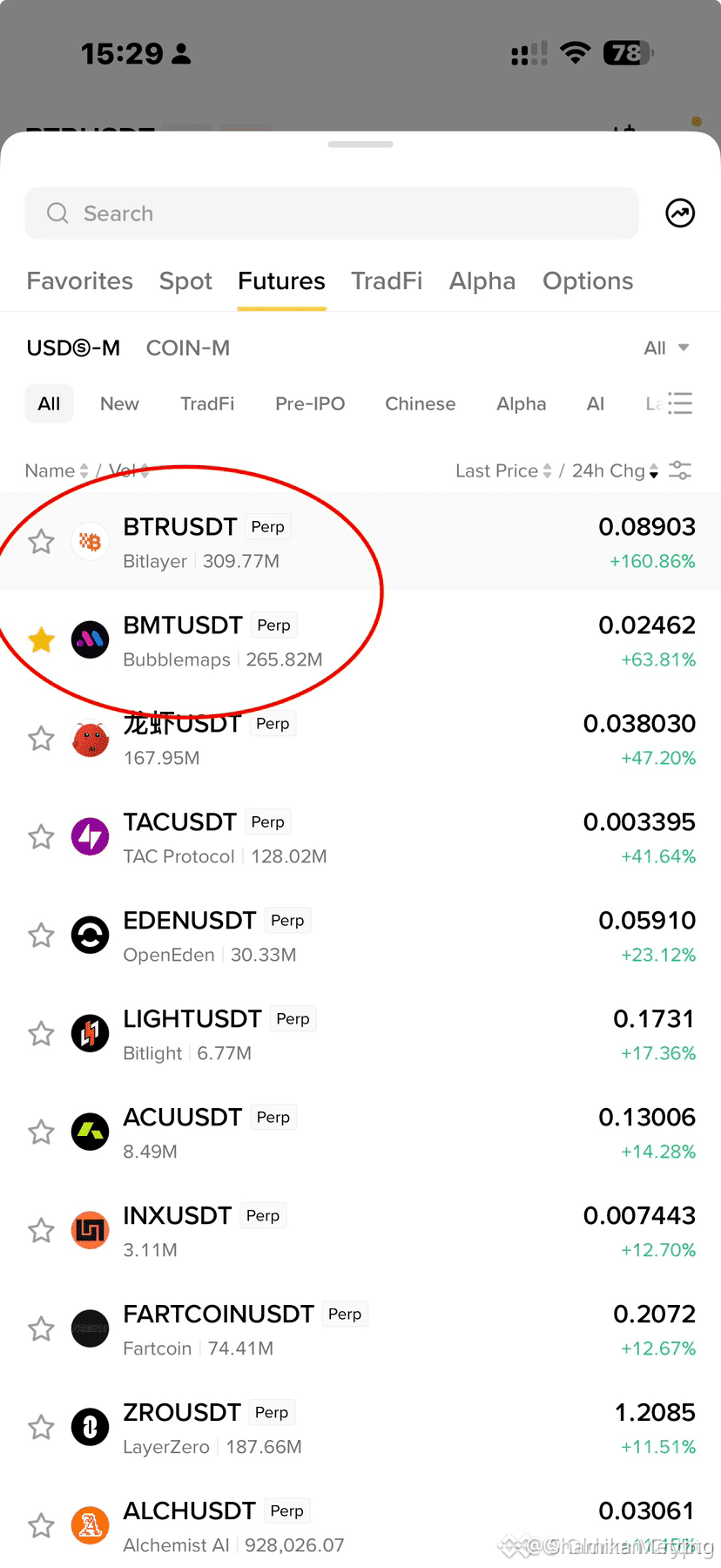
💵 BTR +160.86%, BMT +63.81%, both sitting at the top
📐 Both broke descending trendlines on microcap floats, exact same setup you called
🔥 Entry timing when momentum was first, not when everybody was screaming
🧠 Luck is random, pattern is repeatable
🌊 The difference between luck and skill: you spotted the breakout forming, positioned early, used tight stops to survive the noise, and let the chart work 📈 That is not magic, that is chart mastery. Trend is friend when you enter before the move 🛡️
⚠️ Real skill is knowing invalidation, respecting the stop, and taking profits on schedule. Luck would be holding forever and catching the top 📊
#SkillVsLuck #ChartPattern #Execution
📌 Sharing personal opinions only
not financial advice or a recommendation to buy/sell. Crypto is highly risky; DYOR and you are solely responsible. No coin promotion
🎯 Not luck, it is pattern recognition and reading the chart before the crowd 📊
💵 BTR +160.86%, BMT +63.81%, both sitting at the top
📐 Both broke descending trendlines on microcap floats, exact same setup you called
🔥 Entry timing when momentum was first, not when everybody was screaming
🧠 Luck is random, pattern is repeatable
🌊 The difference between luck and skill: you spotted the breakout forming, positioned early, used tight stops to survive the noise, and let the chart work 📈 That is not magic, that is chart mastery. Trend is friend when you enter before the move 🛡️
⚠️ Real skill is knowing invalidation, respecting the stop, and taking profits on schedule. Luck would be holding forever and catching the top 📊
#SkillVsLuck #ChartPattern #Execution
📌 Sharing personal opinions only
not financial advice or a recommendation to buy/sell. Crypto is highly risky; DYOR and you are solely responsible. No coin promotion
💵 BTR +160.86%, BMT +63.81%, both sitting at the top
📐 Both broke descending trendlines on microcap floats, exact same setup you called
🔥 Entry timing when momentum was first, not when everybody was screaming
🧠 Luck is random, pattern is repeatable
🌊 The difference between luck and skill: you spotted the breakout forming, positioned early, used tight stops to survive the noise, and let the chart work 📈 That is not magic, that is chart mastery. Trend is friend when you enter before the move 🛡️
⚠️ Real skill is knowing invalidation, respecting the stop, and taking profits on schedule. Luck would be holding forever and catching the top 📊
#SkillVsLuck #ChartPattern #Execution
📌 Sharing personal opinions only
not financial advice or a recommendation to buy/sell. Crypto is highly risky; DYOR and you are solely responsible. No coin promotion
9
3.1k
🎯 Not luck—it's recognizing patterns and reading the statement correctly before the crowd 📊
💵 BTR +160.86%, BMT +63.81%, and both are at the top
📐 A break of two downward trendlines on microcap waves, exactly the same setup as I pointed out
🔥 The entry timing was when momentum first appeared—not when everyone started shouting
🧠 Luck is random, but the pattern is repeatable
🌊 The difference between luck and skill: you noticed the breakout forming, positioned yourself early, and used a tight stop to survive the noise—then let the chart work 📈 This isn’t magic; it’s mastery of chart data. Trend becomes your friend when you enter before the move 🛡️
⚠️ True skill is knowing when an idea is invalidated, respecting the stop, and taking profits on time. Luck stays forever in trying to catch the top 📊
#SkillVsLuck #ChartPattern #Execution
📌 Sharing only personal opinions
Not financial advice or a buy/sell recommendation. Cryptoassets are extremely high risk; do your own research (DYOR) and you alone are responsible. No promotion for any coin
Please follow up
$BTC
{future}(BTCUSDT)
🎯 Not luck—it's recognizing patterns and reading the statement correctly before the crowd 📊
💵 BTR +160.86%, BMT +63.81%, and both are at the top
📐 A break of two downward trendlines on microcap waves, exactly the same setup as I pointed out
🔥 The entry timing was when momentum first appeared—not when everyone started shouting
🧠 Luck is random, but the pattern is repeatable
🌊 The difference between luck and skill: you noticed the breakout forming, positioned yourself early, and used a tight stop to survive the noise—then let the chart work 📈 This isn’t magic; it’s mastery of chart data. Trend becomes your friend when you enter before the move 🛡️
⚠️ True skill is knowing when an idea is invalidated, respecting the stop, and taking profits on time. Luck stays forever in trying to catch the top 📊
#SkillVsLuck #ChartPattern #Execution
📌 Sharing only personal opinions
Not financial advice or a buy/sell recommendation. Cryptoassets are extremely high risk; do your own research (DYOR) and you alone are responsible. No promotion for any coin
Please follow up
$BTC
💵 BTR +160.86%, BMT +63.81%, and both are at the top
📐 A break of two downward trendlines on microcap waves, exactly the same setup as I pointed out
🔥 The entry timing was when momentum first appeared—not when everyone started shouting
🧠 Luck is random, but the pattern is repeatable
🌊 The difference between luck and skill: you noticed the breakout forming, positioned yourself early, and used a tight stop to survive the noise—then let the chart work 📈 This isn’t magic; it’s mastery of chart data. Trend becomes your friend when you enter before the move 🛡️
⚠️ True skill is knowing when an idea is invalidated, respecting the stop, and taking profits on time. Luck stays forever in trying to catch the top 📊
#SkillVsLuck #ChartPattern #Execution
📌 Sharing only personal opinions
Not financial advice or a buy/sell recommendation. Cryptoassets are extremely high risk; do your own research (DYOR) and you alone are responsible. No promotion for any coin
Please follow up
$BTC
1
97
See translation
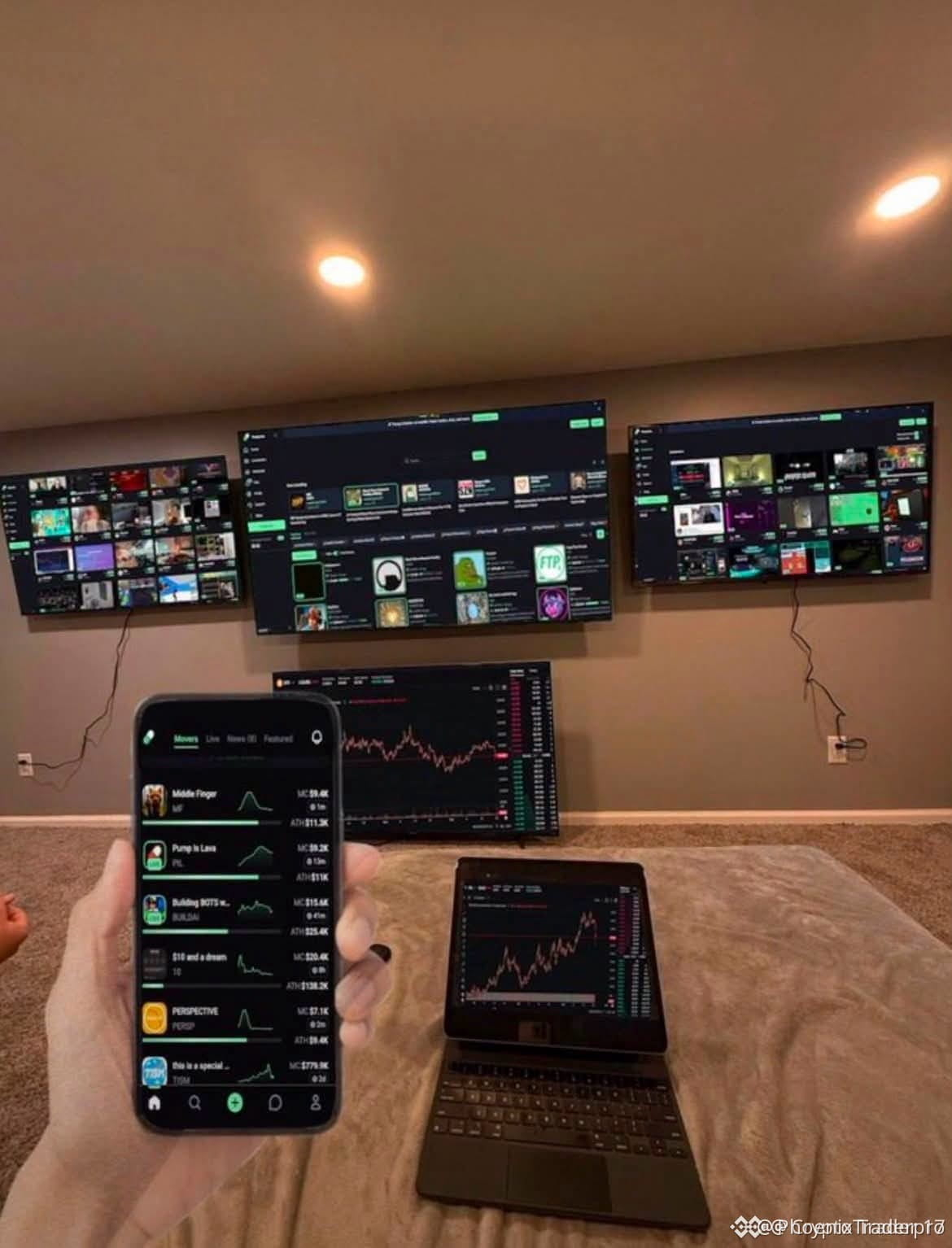
$BTC DEMANDS ZERO NOISE RIGHT NOW — ONLY RAW FOCUS AND PRECISION EXECUTION! ⚡ 🎯
Market volatility is rising, and the order books are separating emotional noise from disciplined execution. 📊 When price compresses near key structural pivots, chasing every minor tick on lower timeframes only bleeds your equity.
The highest win-rate setups belong to traders who map their zones early, wait for confirmation, and execute without hesitation. 💡 Real alpha comes from sticking to your system when the crowd is panicking. 💬 Are you sticking to your trade plan today or letting market noise control your entries? 👇
⚠️ Not financial advice. Always manage your risk. 🛡️
🏷️ #BTC #Crypto #TradingPsychology #MarketMindset #Execution
🎯 💎
$BTC DEMANDS ZERO NOISE RIGHT NOW — ONLY RAW FOCUS AND PRECISION EXECUTION! ⚡ 🎯
Market volatility is rising, and the order books are separating emotional noise from disciplined execution. 📊 When price compresses near key structural pivots, chasing every minor tick on lower timeframes only bleeds your equity.
The highest win-rate setups belong to traders who map their zones early, wait for confirmation, and execute without hesitation. 💡 Real alpha comes from sticking to your system when the crowd is panicking. 💬 Are you sticking to your trade plan today or letting market noise control your entries? 👇
⚠️ Not financial advice. Always manage your risk. 🛡️
🏷️ #BTC #Crypto #TradingPsychology #MarketMindset #Execution
🎯 💎
Market volatility is rising, and the order books are separating emotional noise from disciplined execution. 📊 When price compresses near key structural pivots, chasing every minor tick on lower timeframes only bleeds your equity.
The highest win-rate setups belong to traders who map their zones early, wait for confirmation, and execute without hesitation. 💡 Real alpha comes from sticking to your system when the crowd is panicking. 💬 Are you sticking to your trade plan today or letting market noise control your entries? 👇
⚠️ Not financial advice. Always manage your risk. 🛡️
🏷️ #BTC #Crypto #TradingPsychology #MarketMindset #Execution
🎯 💎
18
Log in to explore more content
Join global crypto users on Binance Square
⚡️ Get latest and useful information about crypto.
💬 Trusted by the world’s largest crypto exchange.
👍 Discover real insights from verified creators.
Email / Phone number
Trending Topics
1
#BTCBreaks80K
160,307 views
2,571 Discussing
2
#比特币突破8万
112,270 views
337 Discussing
3
#BitcoinMarketCapTopsTesla
2,764 views
164 Discussing
4
#SOLJumpsAbout10%
11,011 views
302 Discussing
5
#EthereumReclaims$2600
1,083 views
36 Discussing
6
#LineraShutsDownAfterFundraisingFallsShort
94 views
6 Discussing
7
#SECReceivesAmendedInjectiveETFFiling
8,929 views
281 Discussing
8
#SanDiskToJoinSP100OnSep21
6,907 views
180 Discussing
9
#PolygonToDeployContractBurning100MPOL
4,631 views
158 Discussing
10
#TRMReportsYouTubeScamStole274.6ETH
2,103 views
72 Discussing