

#cryptoinstitutional
cryptoinstitutional
38,258 views
222 Discussing
Hot
Latest

·
--
See translation
Institutional adoption is often measured in ETF AUM headlines — but the real unlock is happening in the options market.
Traditional asset managers don't just want price exposure. They want the full toolkit: covered calls to generate yield on holdings, protective puts to satisfy risk committees, and structured products that embed defined risk parameters. Without liquid options markets, institutional participation is structurally capped.
Here's why this matters now:
→ Listed options on $BTC and $ETH allow treasuries to write covered calls against spot holdings, turning a passive position into a yield-generating one — something every fixed-income manager understands.
→ Protective put availability means CIOs can satisfy drawdown mandates without liquidating core positions. That removes the forced-sell dynamic that amplifies corrections.
→ Deep options liquidity creates a feedback loop: market makers hedge with spot and perpetuals, deepening all three markets simultaneously.
Compare this to smaller ecosystems — growing with significant retail interest, but still lacking the institutional-grade derivatives infrastructure that unlocks pension fund and endowment capital.
The gap between assets is increasingly a derivatives market gap, not just a narrative or TVL gap. $BNB is building that infrastructure layer too.
Derivatives depth is how crypto graduates from speculative asset to institutional asset class.
#CryptoInstitutional #OptionsMarket #BTCOptions #CryptoDerivatives #Binance
Institutional adoption is often measured in ETF AUM headlines — but the real unlock is happening in the options market.
Traditional asset managers don't just want price exposure. They want the full toolkit: covered calls to generate yield on holdings, protective puts to satisfy risk committees, and structured products that embed defined risk parameters. Without liquid options markets, institutional participation is structurally capped.
Here's why this matters now:
→ Listed options on $BTC and $ETH allow treasuries to write covered calls against spot holdings, turning a passive position into a yield-generating one — something every fixed-income manager understands.
→ Protective put availability means CIOs can satisfy drawdown mandates without liquidating core positions. That removes the forced-sell dynamic that amplifies corrections.
→ Deep options liquidity creates a feedback loop: market makers hedge with spot and perpetuals, deepening all three markets simultaneously.
Compare this to smaller ecosystems — growing with significant retail interest, but still lacking the institutional-grade derivatives infrastructure that unlocks pension fund and endowment capital.
The gap between assets is increasingly a derivatives market gap, not just a narrative or TVL gap. $BNB is building that infrastructure layer too.
Derivatives depth is how crypto graduates from speculative asset to institutional asset class.
#CryptoInstitutional #OptionsMarket #BTCOptions #CryptoDerivatives #Binance
Traditional asset managers don't just want price exposure. They want the full toolkit: covered calls to generate yield on holdings, protective puts to satisfy risk committees, and structured products that embed defined risk parameters. Without liquid options markets, institutional participation is structurally capped.
Here's why this matters now:
→ Listed options on $BTC and $ETH allow treasuries to write covered calls against spot holdings, turning a passive position into a yield-generating one — something every fixed-income manager understands.
→ Protective put availability means CIOs can satisfy drawdown mandates without liquidating core positions. That removes the forced-sell dynamic that amplifies corrections.
→ Deep options liquidity creates a feedback loop: market makers hedge with spot and perpetuals, deepening all three markets simultaneously.
Compare this to smaller ecosystems — growing with significant retail interest, but still lacking the institutional-grade derivatives infrastructure that unlocks pension fund and endowment capital.
The gap between assets is increasingly a derivatives market gap, not just a narrative or TVL gap. $BNB is building that infrastructure layer too.
Derivatives depth is how crypto graduates from speculative asset to institutional asset class.
#CryptoInstitutional #OptionsMarket #BTCOptions #CryptoDerivatives #Binance
29
·
--
See translation
Bitcoin ETF inflows are quietly restructuring who owns $BTC — and what that means for price dynamics.
When institutional-grade spot ETFs launched, the narrative was about legitimacy. The deeper story is about structural demand. Pension funds, endowments, and RIAs allocating even 1-2% of a portfolio to Bitcoin don't trade on sentiment. They rebalance on schedule. That creates a class of buyer that doesn't panic-sell during a 20% drawdown — it buys more to maintain allocation targets.
This changes the volatility profile of $BTC over time. Historically, Bitcoin cycles were driven almost entirely by retail speculation — sentiment swings pushed prices to extremes in both directions. Introduce a large cohort of rules-based, low-turnover buyers and the floor of each cycle tends to rise. The base of the demand curve becomes stickier.
The same dynamic is beginning to play out for $ETH as ETF products mature and staking yield gets priced in. For $BNB, the path runs differently — utility-driven demand from ecosystem activity rather than portfolio allocation, but it benefits from the macro legitimization effect that institutional products bring to the broader asset class.
The key insight: ETFs don't just open crypto to new capital. They structurally change the buyer composition — and buyer composition is a long-run price determinant that most on-chain models still underweight.
#Bitcoin #CryptoInstitutional #BTCETFs #CryptoMarkets #BinanceSquare
Bitcoin ETF inflows are quietly restructuring who owns $BTC — and what that means for price dynamics.
When institutional-grade spot ETFs launched, the narrative was about legitimacy. The deeper story is about structural demand. Pension funds, endowments, and RIAs allocating even 1-2% of a portfolio to Bitcoin don't trade on sentiment. They rebalance on schedule. That creates a class of buyer that doesn't panic-sell during a 20% drawdown — it buys more to maintain allocation targets.
This changes the volatility profile of $BTC over time. Historically, Bitcoin cycles were driven almost entirely by retail speculation — sentiment swings pushed prices to extremes in both directions. Introduce a large cohort of rules-based, low-turnover buyers and the floor of each cycle tends to rise. The base of the demand curve becomes stickier.
The same dynamic is beginning to play out for $ETH as ETF products mature and staking yield gets priced in. For $BNB , the path runs differently — utility-driven demand from ecosystem activity rather than portfolio allocation, but it benefits from the macro legitimization effect that institutional products bring to the broader asset class.
The key insight: ETFs don't just open crypto to new capital. They structurally change the buyer composition — and buyer composition is a long-run price determinant that most on-chain models still underweight.
#Bitcoin #CryptoInstitutional #BTCETFs #CryptoMarkets #BinanceSquare
When institutional-grade spot ETFs launched, the narrative was about legitimacy. The deeper story is about structural demand. Pension funds, endowments, and RIAs allocating even 1-2% of a portfolio to Bitcoin don't trade on sentiment. They rebalance on schedule. That creates a class of buyer that doesn't panic-sell during a 20% drawdown — it buys more to maintain allocation targets.
This changes the volatility profile of $BTC over time. Historically, Bitcoin cycles were driven almost entirely by retail speculation — sentiment swings pushed prices to extremes in both directions. Introduce a large cohort of rules-based, low-turnover buyers and the floor of each cycle tends to rise. The base of the demand curve becomes stickier.
The same dynamic is beginning to play out for $ETH as ETF products mature and staking yield gets priced in. For $BNB , the path runs differently — utility-driven demand from ecosystem activity rather than portfolio allocation, but it benefits from the macro legitimization effect that institutional products bring to the broader asset class.
The key insight: ETFs don't just open crypto to new capital. They structurally change the buyer composition — and buyer composition is a long-run price determinant that most on-chain models still underweight.
#Bitcoin #CryptoInstitutional #BTCETFs #CryptoMarkets #BinanceSquare
19
·
--
See translation
Spot ETF options are a bigger deal than they look.
When Bitcoin ETF options launched, most headlines focused on retail access. The more significant shift is on the institutional side: options on spot ETFs allow sophisticated players to build hedged positions, covered calls, and structured products that were previously impossible without touching futures or unregulated derivatives.
Here is what that unlocks:
📌 Yield generation — institutions holding $BTC ETFs can now sell covered calls against their position, generating income while staying long. That is a familiar Treasury-desk move applied to crypto.
📌 Downside hedging — buying puts against spot exposure lets risk desks sleep at night. Clean, regulated, no counterparty risk beyond the clearinghouse.
📌 Structured products — capital-protected notes with $ETH upside are straightforward to engineer once options markets have liquidity. Retail access follows institutional product demand.
📌 Volatility arbitrage — crypto implied vol has historically been mispriced relative to realized vol. Institutional vol desks will exploit that gap, which over time compresses and normalizes volatility — a net positive for the market.
$SOL spot ETF pipelines are still developing, but the derivatives layer will follow the same trajectory once spot approval lands.
The boring infrastructure upgrades — regulated options, custody, prime brokerage — are what actually bring institutional capital at scale. Price follows infrastructure, not hype.
#Bitcoin #Ethereum #CryptoInstitutional #ETFOptions #BinanceSquare
Spot ETF options are a bigger deal than they look.
When Bitcoin ETF options launched, most headlines focused on retail access. The more significant shift is on the institutional side: options on spot ETFs allow sophisticated players to build hedged positions, covered calls, and structured products that were previously impossible without touching futures or unregulated derivatives.
Here is what that unlocks:
📌 Yield generation — institutions holding $BTC ETFs can now sell covered calls against their position, generating income while staying long. That is a familiar Treasury-desk move applied to crypto.
📌 Downside hedging — buying puts against spot exposure lets risk desks sleep at night. Clean, regulated, no counterparty risk beyond the clearinghouse.
📌 Structured products — capital-protected notes with $ETH upside are straightforward to engineer once options markets have liquidity. Retail access follows institutional product demand.
📌 Volatility arbitrage — crypto implied vol has historically been mispriced relative to realized vol. Institutional vol desks will exploit that gap, which over time compresses and normalizes volatility — a net positive for the market.
$SOL spot ETF pipelines are still developing, but the derivatives layer will follow the same trajectory once spot approval lands.
The boring infrastructure upgrades — regulated options, custody, prime brokerage — are what actually bring institutional capital at scale. Price follows infrastructure, not hype.
#Bitcoin #Ethereum #CryptoInstitutional #ETFOptions #BinanceSquare
When Bitcoin ETF options launched, most headlines focused on retail access. The more significant shift is on the institutional side: options on spot ETFs allow sophisticated players to build hedged positions, covered calls, and structured products that were previously impossible without touching futures or unregulated derivatives.
Here is what that unlocks:
📌 Yield generation — institutions holding $BTC ETFs can now sell covered calls against their position, generating income while staying long. That is a familiar Treasury-desk move applied to crypto.
📌 Downside hedging — buying puts against spot exposure lets risk desks sleep at night. Clean, regulated, no counterparty risk beyond the clearinghouse.
📌 Structured products — capital-protected notes with $ETH upside are straightforward to engineer once options markets have liquidity. Retail access follows institutional product demand.
📌 Volatility arbitrage — crypto implied vol has historically been mispriced relative to realized vol. Institutional vol desks will exploit that gap, which over time compresses and normalizes volatility — a net positive for the market.
$SOL spot ETF pipelines are still developing, but the derivatives layer will follow the same trajectory once spot approval lands.
The boring infrastructure upgrades — regulated options, custody, prime brokerage — are what actually bring institutional capital at scale. Price follows infrastructure, not hype.
#Bitcoin #Ethereum #CryptoInstitutional #ETFOptions #BinanceSquare
105

·
--
Partly True
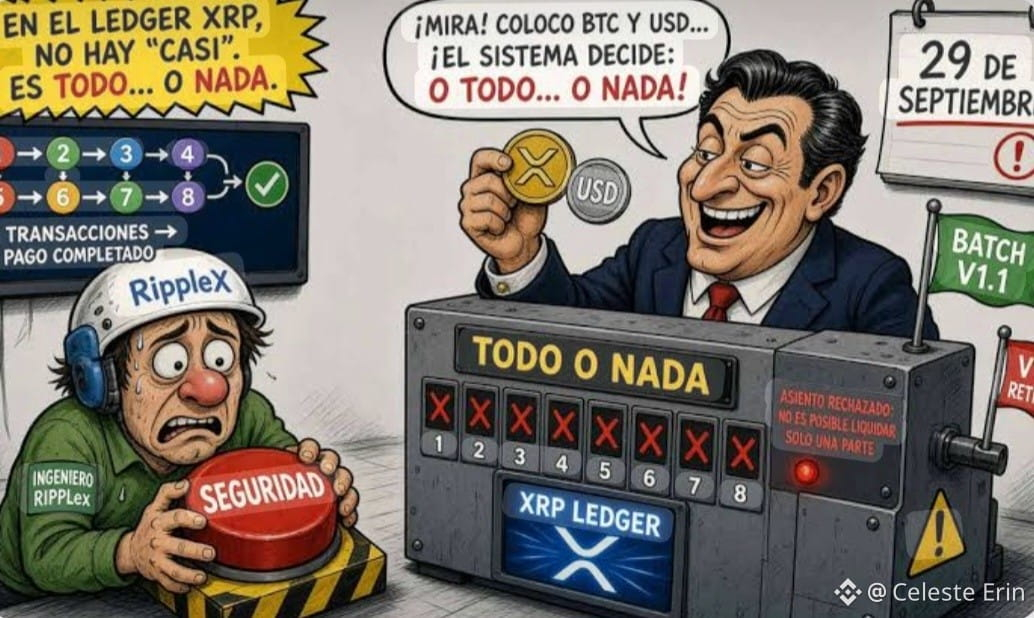
⚡ COMMERCIAL PROJECTS ARE PREPARING FOR BATCH FUNCTION V1.1 ON XRP LEDGER 📈🚀
The infrastructure of the XRP Ledger ($XRP) is about to receive a key update aimed at asset managers and financial institutions to optimize transaction efficiency on the network 📊
Key points of the Batch V1.1 update:
📦 Transaction grouping: Allows processing up to 8 transactions in a single batch under an atomic settlement model ("all or nothing").
🏦 Institutional adoption: Enables the integration of fee collections and combined payments for exchanges, wallets, and capital managers.
🗳️ Validator consensus: It surpassed the necessary majority with 35 votes in favor out of the 28 required.
⏳ Activation date: After starting the countdown on September 15, the final deployment is scheduled for September 29.
Do you think that batch transaction efficiency will drive more real-world assets (RWAs) toward the XRP Ledger?
💬👇 I’m reading your comments!
#XRPLedger #BatchV1 #CryptoInstitutional #DeFi #CryptoCommunity
$XRP
{spot}(XRPUSDT)
$BNB
{spot}(BNBUSDT)
$BTC
{spot}(BTCUSDT)
⚡ COMMERCIAL PROJECTS ARE PREPARING FOR BATCH FUNCTION V1.1 ON XRP LEDGER 📈🚀
The infrastructure of the XRP Ledger ($XRP ) is about to receive a key update aimed at asset managers and financial institutions to optimize transaction efficiency on the network 📊
Key points of the Batch V1.1 update:
📦 Transaction grouping: Allows processing up to 8 transactions in a single batch under an atomic settlement model ("all or nothing").
🏦 Institutional adoption: Enables the integration of fee collections and combined payments for exchanges, wallets, and capital managers.
🗳️ Validator consensus: It surpassed the necessary majority with 35 votes in favor out of the 28 required.
⏳ Activation date: After starting the countdown on September 15, the final deployment is scheduled for September 29.
Do you think that batch transaction efficiency will drive more real-world assets (RWAs) toward the XRP Ledger?
💬👇 I’m reading your comments!
#XRPLedger #BatchV1 #CryptoInstitutional #DeFi #CryptoCommunity
$XRP
$BNB
$BTC
The infrastructure of the XRP Ledger ($XRP ) is about to receive a key update aimed at asset managers and financial institutions to optimize transaction efficiency on the network 📊
Key points of the Batch V1.1 update:
📦 Transaction grouping: Allows processing up to 8 transactions in a single batch under an atomic settlement model ("all or nothing").
🏦 Institutional adoption: Enables the integration of fee collections and combined payments for exchanges, wallets, and capital managers.
🗳️ Validator consensus: It surpassed the necessary majority with 35 votes in favor out of the 28 required.
⏳ Activation date: After starting the countdown on September 15, the final deployment is scheduled for September 29.
Do you think that batch transaction efficiency will drive more real-world assets (RWAs) toward the XRP Ledger?
💬👇 I’m reading your comments!
#XRPLedger #BatchV1 #CryptoInstitutional #DeFi #CryptoCommunity
$XRP
$BNB
$BTC
1
622

·
--
See translation
⚡ Grayscale’s Zcash ETF Announces 3‑for‑1 Forward Share Split
📌 Key Highlights:
• Grayscale’s Zcash ETF (ZEC) files for a 3‑for‑1 forward share split, giving shareholders two additional shares per existing share at the close of Sept. 28.
• The split will increase the total share count by 200 %, potentially boosting liquidity and lowering the per‑share price.
• The move signals growing institutional confidence in Zcash and may pave the way for further crypto‑asset ETF listings.
📊 Market Takeaway:
The split is likely to attract more retail and institutional investors, tightening the bid‑ask spread and supporting a bullish trend in Zcash’s price. Market sentiment remains positive as the ETF’s expanded share base could enhance trading volume.
#ETF #CryptoInstitutional #Zcash $ZEC $CELR $ONE
⚡ Grayscale’s Zcash ETF Announces 3‑for‑1 Forward Share Split
📌 Key Highlights:
• Grayscale’s Zcash ETF (ZEC) files for a 3‑for‑1 forward share split, giving shareholders two additional shares per existing share at the close of Sept. 28.
• The split will increase the total share count by 200 %, potentially boosting liquidity and lowering the per‑share price.
• The move signals growing institutional confidence in Zcash and may pave the way for further crypto‑asset ETF listings.
📊 Market Takeaway:
The split is likely to attract more retail and institutional investors, tightening the bid‑ask spread and supporting a bullish trend in Zcash’s price. Market sentiment remains positive as the ETF’s expanded share base could enhance trading volume.
#ETF #CryptoInstitutional #Zcash $ZEC $CELR $ONE
📌 Key Highlights:
• Grayscale’s Zcash ETF (ZEC) files for a 3‑for‑1 forward share split, giving shareholders two additional shares per existing share at the close of Sept. 28.
• The split will increase the total share count by 200 %, potentially boosting liquidity and lowering the per‑share price.
• The move signals growing institutional confidence in Zcash and may pave the way for further crypto‑asset ETF listings.
📊 Market Takeaway:
The split is likely to attract more retail and institutional investors, tightening the bid‑ask spread and supporting a bullish trend in Zcash’s price. Market sentiment remains positive as the ETF’s expanded share base could enhance trading volume.
#ETF #CryptoInstitutional #Zcash $ZEC $CELR $ONE

1
41
·
--
See translation
Settlement Finality Is the Layer 1 Metric Institutions Actually Care About
Everyone debates TPS, TVL, and developer count. But when a settlement layer handles billions in institutional value, the question shifts from "how fast?" to "when is it truly final?"
Settlement finality — the point after which a transaction cannot be reversed without extraordinary effort — is the institutional gating factor that most L1 comparisons completely ignore.
Here's why it matters:
$BTC offers probabilistic finality. More confirmations = more certainty. Institutions accept this because the economic cost of reorganizing 6+ blocks is astronomically high.
$ETH moved to deterministic finality with the merge. Once a transaction is included in a finalized epoch (~12 minutes), it's mathematically irreversible. This is why ETH staking yield attracts institutional capital — the finality guarantee is quantifiable.
$SOL uses probabilistic finality with very short slot times. Fast, but institutional users need to understand the tradeoff: speed without deterministic confirmation.
The institutions building on-chain don't need a whitepaper. They need to know: at what point can I tell my counterparty the transfer is irreversible?
This is why L1 selection for institutional use isn't about the TPS leaderboard. It's about finality architecture, and how that maps to existing settlement workflows in TradFi.
The chains that solve this clearly will capture the next wave of institutional capital.
#CryptoInstitutional #Layer1 #SettlementFinality #BlockchainInfrastructure #DeFi
Settlement Finality Is the Layer 1 Metric Institutions Actually Care About
Everyone debates TPS, TVL, and developer count. But when a settlement layer handles billions in institutional value, the question shifts from "how fast?" to "when is it truly final?"
Settlement finality — the point after which a transaction cannot be reversed without extraordinary effort — is the institutional gating factor that most L1 comparisons completely ignore.
Here's why it matters:
$BTC offers probabilistic finality. More confirmations = more certainty. Institutions accept this because the economic cost of reorganizing 6+ blocks is astronomically high.
$ETH moved to deterministic finality with the merge. Once a transaction is included in a finalized epoch (~12 minutes), it's mathematically irreversible. This is why ETH staking yield attracts institutional capital — the finality guarantee is quantifiable.
$SOL uses probabilistic finality with very short slot times. Fast, but institutional users need to understand the tradeoff: speed without deterministic confirmation.
The institutions building on-chain don't need a whitepaper. They need to know: at what point can I tell my counterparty the transfer is irreversible?
This is why L1 selection for institutional use isn't about the TPS leaderboard. It's about finality architecture, and how that maps to existing settlement workflows in TradFi.
The chains that solve this clearly will capture the next wave of institutional capital.
#CryptoInstitutional #Layer1 #SettlementFinality #BlockchainInfrastructure #DeFi
Everyone debates TPS, TVL, and developer count. But when a settlement layer handles billions in institutional value, the question shifts from "how fast?" to "when is it truly final?"
Settlement finality — the point after which a transaction cannot be reversed without extraordinary effort — is the institutional gating factor that most L1 comparisons completely ignore.
Here's why it matters:
$BTC offers probabilistic finality. More confirmations = more certainty. Institutions accept this because the economic cost of reorganizing 6+ blocks is astronomically high.
$ETH moved to deterministic finality with the merge. Once a transaction is included in a finalized epoch (~12 minutes), it's mathematically irreversible. This is why ETH staking yield attracts institutional capital — the finality guarantee is quantifiable.
$SOL uses probabilistic finality with very short slot times. Fast, but institutional users need to understand the tradeoff: speed without deterministic confirmation.
The institutions building on-chain don't need a whitepaper. They need to know: at what point can I tell my counterparty the transfer is irreversible?
This is why L1 selection for institutional use isn't about the TPS leaderboard. It's about finality architecture, and how that maps to existing settlement workflows in TradFi.
The chains that solve this clearly will capture the next wave of institutional capital.
#CryptoInstitutional #Layer1 #SettlementFinality #BlockchainInfrastructure #DeFi
1
121
·
--
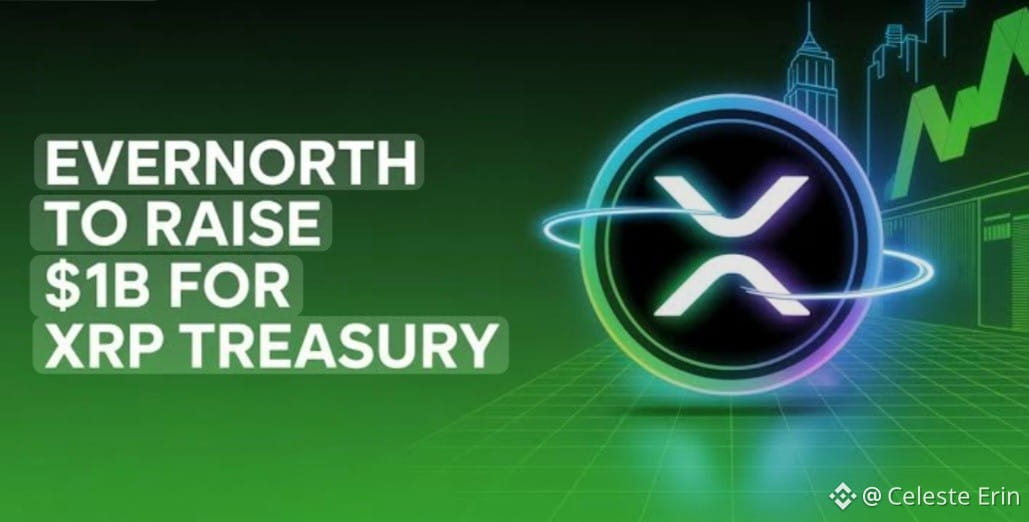
🚀 EVERNORTH RAISING $30M TO BUY XRP AHEAD OF ITS NASDAQ DEBUT 📈🏛️
The treasury management firm Evernorth took a major institutional step toward Wall Street by securing fresh capital backed by South Korean investment to expand its XRP reserves 📊
Key points of the financial deal:
💰 Strategic financing: $30 million in convertible debt provided by NH Investment & Securities.
🛍️ Reserve accumulation: The funds will be used to purchase XRP in the spot market ahead of its launch to the public market.
🏛️ SPAC merger and ticker: The transaction will be completed after finishing its merger with a SPAC, and it will later trade on Nasdaq under the symbol XRPN.
🟢 Market reaction: The XRP token is trading up 3.2%, at $1.3372 USD.
Do you think Evernorth’s strategy of creating a listed XRP treasury vehicle will replicate MicroStrategy’s success with Bitcoin?
💬👇 I’m reading your comments!
#Evernorth #Nasdaq #CryptoInstitutional #CryptoCommunity
$XRP
{spot}(XRPUSDT)
$BTC
{spot}(BTCUSDT)
$BNB
{spot}(BNBUSDT)
🚀 EVERNORTH RAISING $30M TO BUY XRP AHEAD OF ITS NASDAQ DEBUT 📈🏛️
The treasury management firm Evernorth took a major institutional step toward Wall Street by securing fresh capital backed by South Korean investment to expand its XRP reserves 📊
Key points of the financial deal:
💰 Strategic financing: $30 million in convertible debt provided by NH Investment & Securities.
🛍️ Reserve accumulation: The funds will be used to purchase XRP in the spot market ahead of its launch to the public market.
🏛️ SPAC merger and ticker: The transaction will be completed after finishing its merger with a SPAC, and it will later trade on Nasdaq under the symbol XRPN.
🟢 Market reaction: The XRP token is trading up 3.2%, at $1.3372 USD.
Do you think Evernorth’s strategy of creating a listed XRP treasury vehicle will replicate MicroStrategy’s success with Bitcoin?
💬👇 I’m reading your comments!
#Evernorth #Nasdaq #CryptoInstitutional #CryptoCommunity
$XRP
$BTC
$BNB
The treasury management firm Evernorth took a major institutional step toward Wall Street by securing fresh capital backed by South Korean investment to expand its XRP reserves 📊
Key points of the financial deal:
💰 Strategic financing: $30 million in convertible debt provided by NH Investment & Securities.
🛍️ Reserve accumulation: The funds will be used to purchase XRP in the spot market ahead of its launch to the public market.
🏛️ SPAC merger and ticker: The transaction will be completed after finishing its merger with a SPAC, and it will later trade on Nasdaq under the symbol XRPN.
🟢 Market reaction: The XRP token is trading up 3.2%, at $1.3372 USD.
Do you think Evernorth’s strategy of creating a listed XRP treasury vehicle will replicate MicroStrategy’s success with Bitcoin?
💬👇 I’m reading your comments!
#Evernorth #Nasdaq #CryptoInstitutional #CryptoCommunity
$XRP
$BTC
$BNB
254
·
--
See translation
The next generation of crypto institutional products will look nothing like what exists today.
Spot ETFs were the training wheels. They gave traditional allocators a familiar wrapper to gain directional exposure. But the structural opportunity in crypto-native finance goes far beyond wrapping spot price exposure in a ticker symbol.
Consider what is coming next. Staking yield ETFs that pass through consensus rewards as distributions. Auto-rebalancing crypto index baskets that adjust weightings based on on-chain activity rather than market cap. Tokenized fund shares that settle instantly and trade 24/7, eliminating the T+2 friction that institutional allocators accept as normal in traditional markets.
The product innovation curve is about to steepen dramatically. Right now institutions are buying crypto assets. The next phase is institutions using crypto infrastructure to rebuild their own product rails.
Custody banks are already exploring native chain settlement. Asset managers are studying how on-chain composability could replace the patchwork of prime brokers, transfer agents, and clearing houses that make traditional fund operations slow and expensive.
The institutions that win the next decade will not be the ones who simply hold the most $BTC or $ETH. They will be the ones who rebuild their operational stack using the efficiency primitives that crypto has been building all along.
The infrastructure was never the product. It is the rails.
$BTC $ETH $BNB
#CryptoInstitutional #CryptoInfrastructure #Tokenization #DeFi #DigitalAssets
The next generation of crypto institutional products will look nothing like what exists today.
Spot ETFs were the training wheels. They gave traditional allocators a familiar wrapper to gain directional exposure. But the structural opportunity in crypto-native finance goes far beyond wrapping spot price exposure in a ticker symbol.
Consider what is coming next. Staking yield ETFs that pass through consensus rewards as distributions. Auto-rebalancing crypto index baskets that adjust weightings based on on-chain activity rather than market cap. Tokenized fund shares that settle instantly and trade 24/7, eliminating the T+2 friction that institutional allocators accept as normal in traditional markets.
The product innovation curve is about to steepen dramatically. Right now institutions are buying crypto assets. The next phase is institutions using crypto infrastructure to rebuild their own product rails.
Custody banks are already exploring native chain settlement. Asset managers are studying how on-chain composability could replace the patchwork of prime brokers, transfer agents, and clearing houses that make traditional fund operations slow and expensive.
The institutions that win the next decade will not be the ones who simply hold the most $BTC or $ETH . They will be the ones who rebuild their operational stack using the efficiency primitives that crypto has been building all along.
The infrastructure was never the product. It is the rails.
$BTC $ETH $BNB
#CryptoInstitutional #CryptoInfrastructure #Tokenization #DeFi #DigitalAssets
Spot ETFs were the training wheels. They gave traditional allocators a familiar wrapper to gain directional exposure. But the structural opportunity in crypto-native finance goes far beyond wrapping spot price exposure in a ticker symbol.
Consider what is coming next. Staking yield ETFs that pass through consensus rewards as distributions. Auto-rebalancing crypto index baskets that adjust weightings based on on-chain activity rather than market cap. Tokenized fund shares that settle instantly and trade 24/7, eliminating the T+2 friction that institutional allocators accept as normal in traditional markets.
The product innovation curve is about to steepen dramatically. Right now institutions are buying crypto assets. The next phase is institutions using crypto infrastructure to rebuild their own product rails.
Custody banks are already exploring native chain settlement. Asset managers are studying how on-chain composability could replace the patchwork of prime brokers, transfer agents, and clearing houses that make traditional fund operations slow and expensive.
The institutions that win the next decade will not be the ones who simply hold the most $BTC or $ETH . They will be the ones who rebuild their operational stack using the efficiency primitives that crypto has been building all along.
The infrastructure was never the product. It is the rails.
$BTC $ETH $BNB
#CryptoInstitutional #CryptoInfrastructure #Tokenization #DeFi #DigitalAssets
59
·
--
See translation
The Institutional Infrastructure Stack Is Being Rebuilt On-Chain
Traditional prime brokerage took decades to build — credit lines, securities lending, margin financing, clearing, settlement, custody. It was Wall Street's plumbing. Most retail investors never think about it, but institutional desks cannot function without it.
Crypto is rebuilding that entire stack on-chain, and it's happening faster than most realize.
Consider what a modern institutional crypto desk needs: segregated auditable custody, financing for leverage without counterparty risk, T+0 settlement instead of T+2, and risk systems that work across multiple venues. Five years ago, these were manual, off-chain, relationship-based. Today they're increasingly protocol-based.
The shift matters because on-chain infrastructure is programmable. Credit terms become smart contracts. Collateral management becomes automated. Settlement becomes atomic. What took weeks of legal negotiation in TradFi takes minutes of code deployment on-chain.
$BTC remains the entry asset for institutions — the gate asset. $ETH is the settlement layer where much of this infrastructure gets built, because composability matters. $BNB powers the exchange-adjacent ecosystem where many institutions actually operate.
The endgame isn't just crypto going institutional. It's institutional finance getting rebuilt with crypto-native rails. The distinction is everything. We're not porting TradFi to blockchain — we're creating financial infrastructure that's natively programmable, globally accessible, and settled in minutes instead of days.
That's the real institutional adoption thesis. Not more ETFs — better infrastructure.
#CryptoInstitutional #MarketStructure #DeFi #PrimeBrokerage
The Institutional Infrastructure Stack Is Being Rebuilt On-Chain
Traditional prime brokerage took decades to build — credit lines, securities lending, margin financing, clearing, settlement, custody. It was Wall Street's plumbing. Most retail investors never think about it, but institutional desks cannot function without it.
Crypto is rebuilding that entire stack on-chain, and it's happening faster than most realize.
Consider what a modern institutional crypto desk needs: segregated auditable custody, financing for leverage without counterparty risk, T+0 settlement instead of T+2, and risk systems that work across multiple venues. Five years ago, these were manual, off-chain, relationship-based. Today they're increasingly protocol-based.
The shift matters because on-chain infrastructure is programmable. Credit terms become smart contracts. Collateral management becomes automated. Settlement becomes atomic. What took weeks of legal negotiation in TradFi takes minutes of code deployment on-chain.
$BTC remains the entry asset for institutions — the gate asset. $ETH is the settlement layer where much of this infrastructure gets built, because composability matters. $BNB powers the exchange-adjacent ecosystem where many institutions actually operate.
The endgame isn't just crypto going institutional. It's institutional finance getting rebuilt with crypto-native rails. The distinction is everything. We're not porting TradFi to blockchain — we're creating financial infrastructure that's natively programmable, globally accessible, and settled in minutes instead of days.
That's the real institutional adoption thesis. Not more ETFs — better infrastructure.
#CryptoInstitutional #MarketStructure #DeFi #PrimeBrokerage
Traditional prime brokerage took decades to build — credit lines, securities lending, margin financing, clearing, settlement, custody. It was Wall Street's plumbing. Most retail investors never think about it, but institutional desks cannot function without it.
Crypto is rebuilding that entire stack on-chain, and it's happening faster than most realize.
Consider what a modern institutional crypto desk needs: segregated auditable custody, financing for leverage without counterparty risk, T+0 settlement instead of T+2, and risk systems that work across multiple venues. Five years ago, these were manual, off-chain, relationship-based. Today they're increasingly protocol-based.
The shift matters because on-chain infrastructure is programmable. Credit terms become smart contracts. Collateral management becomes automated. Settlement becomes atomic. What took weeks of legal negotiation in TradFi takes minutes of code deployment on-chain.
$BTC remains the entry asset for institutions — the gate asset. $ETH is the settlement layer where much of this infrastructure gets built, because composability matters. $BNB powers the exchange-adjacent ecosystem where many institutions actually operate.
The endgame isn't just crypto going institutional. It's institutional finance getting rebuilt with crypto-native rails. The distinction is everything. We're not porting TradFi to blockchain — we're creating financial infrastructure that's natively programmable, globally accessible, and settled in minutes instead of days.
That's the real institutional adoption thesis. Not more ETFs — better infrastructure.
#CryptoInstitutional #MarketStructure #DeFi #PrimeBrokerage
83

·
--
See translation
Wall Street Is Buying $HYPE
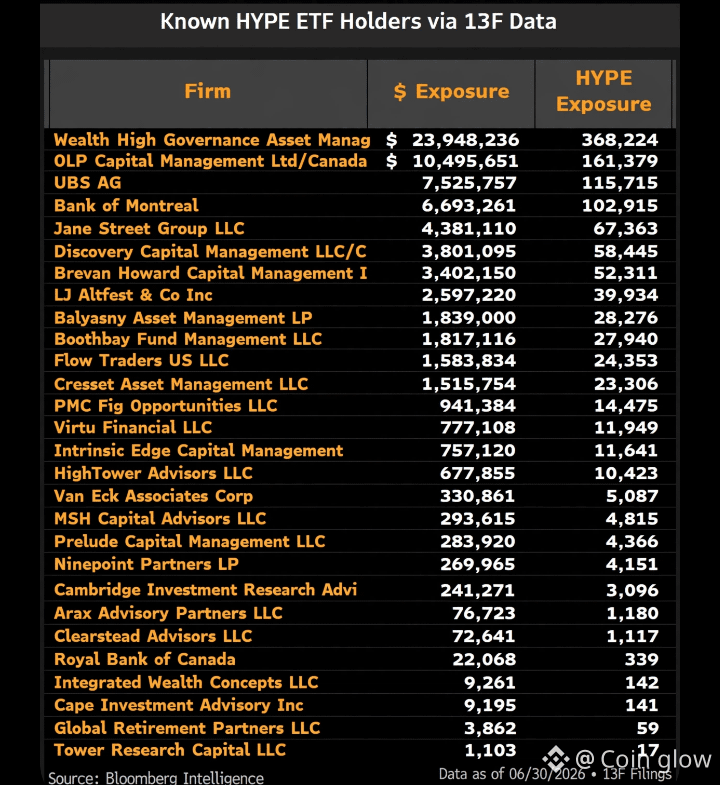
13F filings confirm it: 30 institutions now hold $74.9M in Hyperliquid ETFs as of June 30.
Confirmed holders:
UBS AG - $7.53M
Bank of Montreal - $6.69M
Jane Street LLC - $4.38M
Top holder: Wealth High Governance Asset Mgmt with $23.95M in 21Shares' HYPE fund.
This isn't retail hype. This is TradFi entering through regulated ETFs.
Source: Bloomberg Intelligence ETF Analyst James Seyffart via 13F filings
$HYPE #Hyperliquid #etf #13F #CryptoInstitutional
.
.
$HYPE
{future}(HYPEUSDT)
Wall Street Is Buying $HYPE
13F filings confirm it: 30 institutions now hold $74.9M in Hyperliquid ETFs as of June 30.
Confirmed holders:
UBS AG - $7.53M
Bank of Montreal - $6.69M
Jane Street LLC - $4.38M
Top holder: Wealth High Governance Asset Mgmt with $23.95M in 21Shares' HYPE fund.
This isn't retail hype. This is TradFi entering through regulated ETFs.
Source: Bloomberg Intelligence ETF Analyst James Seyffart via 13F filings
$HYPE #Hyperliquid #etf #13F #CryptoInstitutional
.
.
$HYPE
13F filings confirm it: 30 institutions now hold $74.9M in Hyperliquid ETFs as of June 30.
Confirmed holders:
UBS AG - $7.53M
Bank of Montreal - $6.69M
Jane Street LLC - $4.38M
Top holder: Wealth High Governance Asset Mgmt with $23.95M in 21Shares' HYPE fund.
This isn't retail hype. This is TradFi entering through regulated ETFs.
Source: Bloomberg Intelligence ETF Analyst James Seyffart via 13F filings
$HYPE #Hyperliquid #etf #13F #CryptoInstitutional
.
.
$HYPE
101

·
--
🎯 CEO LMAX: "Crypto needs to learn from centralization." What will the DeFi community say?
📰 TL;DR
The CEO of LMAX claims crypto should leverage the strengths of centralized finance: deep liquidity, transparency, and user protection. He’s calling for a hybrid approach to merge DeFi with TradFi standards to attract larger institutional flows.
💡 MY TAKE
In my view, this argument is bullish for BTC in the long run. Institutional standards can bring significant capital into crypto — that's the real price driver. However, the DeFi community will likely react strongly, so keep an eye on sentiment this week before making any trades.
📊 QUICK TA $BTC
- Support: $64,000 / Resistance: $68,500
- RSI ~52, holding MA200, currently in short-term consolidation
- Trigger: breaking above $68,500 = bullish, dropping below $62,000 = proceed with caution
- Stop-loss: set below $61,500
👇 What do you think crypto should "borrow" from TradFi without losing its decentralized essence?
$BTC #CryptoInstitutional
This is aggregated news, not financial advice.
Source: CoinDesk
---
🎯 LMAX CEO tells crypto to learn from centralization — pragmatic evolution or a slippery slope?
📰 TL;DR
The CEO of LMAX Group argued crypto should adopt the best of centralized finance: deep liquidity, transparency, and user protection. He's calling for a hybrid model that blends TradFi standards with crypto's open rails.
💡 MY TAKE
I think this is quietly bullish for BTC long-term. Institutional-grade structure is what brings real capital flows into the market. But DeFi purists will push back hard — watch community sentiment before trading this narrative.
📊 QUICK TA $BTC
- Support: $64,000 / Resistance: $68,500
- RSI ~52, holding MA200, short-term consolidation
- Trigger: above $68,500 = bullish, below $62,000 = caution
- Stop-loss: below $61,500
👇 What should crypto borrow from TradFi without losing its decentralized soul?
$BTC
This is aggregated news, not financial advice.
Source: CoinDesk
🎯 CEO LMAX: "Crypto needs to learn from centralization." What will the DeFi community say?
📰 TL;DR
The CEO of LMAX claims crypto should leverage the strengths of centralized finance: deep liquidity, transparency, and user protection. He’s calling for a hybrid approach to merge DeFi with TradFi standards to attract larger institutional flows.
💡 MY TAKE
In my view, this argument is bullish for BTC in the long run. Institutional standards can bring significant capital into crypto — that's the real price driver. However, the DeFi community will likely react strongly, so keep an eye on sentiment this week before making any trades.
📊 QUICK TA $BTC
- Support: $64,000 / Resistance: $68,500
- RSI ~52, holding MA200, currently in short-term consolidation
- Trigger: breaking above $68,500 = bullish, dropping below $62,000 = proceed with caution
- Stop-loss: set below $61,500
👇 What do you think crypto should "borrow" from TradFi without losing its decentralized essence?
$BTC #CryptoInstitutional
This is aggregated news, not financial advice.
Source: CoinDesk
---
🎯 LMAX CEO tells crypto to learn from centralization — pragmatic evolution or a slippery slope?
📰 TL;DR
The CEO of LMAX Group argued crypto should adopt the best of centralized finance: deep liquidity, transparency, and user protection. He's calling for a hybrid model that blends TradFi standards with crypto's open rails.
💡 MY TAKE
I think this is quietly bullish for BTC long-term. Institutional-grade structure is what brings real capital flows into the market. But DeFi purists will push back hard — watch community sentiment before trading this narrative.
📊 QUICK TA $BTC
- Support: $64,000 / Resistance: $68,500
- RSI ~52, holding MA200, short-term consolidation
- Trigger: above $68,500 = bullish, below $62,000 = caution
- Stop-loss: below $61,500
👇 What should crypto borrow from TradFi without losing its decentralized soul?
$BTC
This is aggregated news, not financial advice.
Source: CoinDesk
📰 TL;DR
The CEO of LMAX claims crypto should leverage the strengths of centralized finance: deep liquidity, transparency, and user protection. He’s calling for a hybrid approach to merge DeFi with TradFi standards to attract larger institutional flows.
💡 MY TAKE
In my view, this argument is bullish for BTC in the long run. Institutional standards can bring significant capital into crypto — that's the real price driver. However, the DeFi community will likely react strongly, so keep an eye on sentiment this week before making any trades.
📊 QUICK TA $BTC
- Support: $64,000 / Resistance: $68,500
- RSI ~52, holding MA200, currently in short-term consolidation
- Trigger: breaking above $68,500 = bullish, dropping below $62,000 = proceed with caution
- Stop-loss: set below $61,500
👇 What do you think crypto should "borrow" from TradFi without losing its decentralized essence?
$BTC #CryptoInstitutional
This is aggregated news, not financial advice.
Source: CoinDesk
---
🎯 LMAX CEO tells crypto to learn from centralization — pragmatic evolution or a slippery slope?
📰 TL;DR
The CEO of LMAX Group argued crypto should adopt the best of centralized finance: deep liquidity, transparency, and user protection. He's calling for a hybrid model that blends TradFi standards with crypto's open rails.
💡 MY TAKE
I think this is quietly bullish for BTC long-term. Institutional-grade structure is what brings real capital flows into the market. But DeFi purists will push back hard — watch community sentiment before trading this narrative.
📊 QUICK TA $BTC
- Support: $64,000 / Resistance: $68,500
- RSI ~52, holding MA200, short-term consolidation
- Trigger: above $68,500 = bullish, below $62,000 = caution
- Stop-loss: below $61,500
👇 What should crypto borrow from TradFi without losing its decentralized soul?
$BTC
This is aggregated news, not financial advice.
Source: CoinDesk
47
·
--
See translation
The BlackRock BTC income fund isn't just another product launch. It's the fourth layer of an institutional stack that didn't exist two years ago.
Here's what that stack looks like now:
Access layer → Spot ETFs (IBIT, FBTC)
Yield layer → Covered call income funds (just live)
Leverage layer → CME vol futures + regulated perps
Credit layer → BTC on bank balance sheets, collateralized lending
Two years ago, institutions had none of this. Today they have all four.
This is why $BTC behaves differently now. When institutional mandates require yield generation, they used to sell. Now they don't have to. When compliance needs a packaged product, there's one. When a pension wants exposure with downside controls, there's a structure.
$ETH already has this stack through staking. $BNB has had real yield baked in for years. The difference is $BTC's stack is now inside TradFi, not just DeFi.
With FOMC cleared, BOJ done, and Clarity Act July 4 in 18 days — the question isn't whether institutional capital enters crypto. The question is which layers they fill next.
The yield layer just filled.
#Bitcoin #CryptoInstitutional #BTC #Crypto2026 #AltcoinSeason
The BlackRock BTC income fund isn't just another product launch. It's the fourth layer of an institutional stack that didn't exist two years ago.
Here's what that stack looks like now:
Access layer → Spot ETFs (IBIT, FBTC)
Yield layer → Covered call income funds (just live)
Leverage layer → CME vol futures + regulated perps
Credit layer → BTC on bank balance sheets, collateralized lending
Two years ago, institutions had none of this. Today they have all four.
This is why $BTC behaves differently now. When institutional mandates require yield generation, they used to sell. Now they don't have to. When compliance needs a packaged product, there's one. When a pension wants exposure with downside controls, there's a structure.
$ETH already has this stack through staking. $BNB has had real yield baked in for years. The difference is $BTC 's stack is now inside TradFi, not just DeFi.
With FOMC cleared, BOJ done, and Clarity Act July 4 in 18 days — the question isn't whether institutional capital enters crypto. The question is which layers they fill next.
The yield layer just filled.
#Bitcoin #CryptoInstitutional #BTC #Crypto2026 #AltcoinSeason
Here's what that stack looks like now:
Access layer → Spot ETFs (IBIT, FBTC)
Yield layer → Covered call income funds (just live)
Leverage layer → CME vol futures + regulated perps
Credit layer → BTC on bank balance sheets, collateralized lending
Two years ago, institutions had none of this. Today they have all four.
This is why $BTC behaves differently now. When institutional mandates require yield generation, they used to sell. Now they don't have to. When compliance needs a packaged product, there's one. When a pension wants exposure with downside controls, there's a structure.
$ETH already has this stack through staking. $BNB has had real yield baked in for years. The difference is $BTC 's stack is now inside TradFi, not just DeFi.
With FOMC cleared, BOJ done, and Clarity Act July 4 in 18 days — the question isn't whether institutional capital enters crypto. The question is which layers they fill next.
The yield layer just filled.
#Bitcoin #CryptoInstitutional #BTC #Crypto2026 #AltcoinSeason
24

·
--
See translation
While the market's attention is on rate hikes and Fed meetings, a subtle shift in US government stance on a Bitcoin reserve is about to change the game for institutional investors.
The signal is clear: on-chain data indicates a surge in large-scale Bitcoin accumulation by institutions, coinciding with recent comments from the White House crypto adviser, Patrick Witt. This move is reflected in a significant increase in BTC deposits on major exchanges, particularly among larger addresses (#BinanceBTC, #BitcoinInstitutionalInflow, #CryptoInstitutional).
The interpretation? This could be a green light for institutional investors to pour more capital into the market, potentially fueling a new wave of price appreciation as their influence becomes more evident on the market.
The watch list: keep an eye on Binance's BTC deposit count, specifically the number of large addresses (>100 BTC) entering the platform. If the trend continues, institutions may be signaling a significant buying spree.
Will this newfound confidence in institutional involvement be enough to break the current price plateau? Stay ahead of the game and join the conversation.
While the market's attention is on rate hikes and Fed meetings, a subtle shift in US government stance on a Bitcoin reserve is about to change the game for institutional investors.
The signal is clear: on-chain data indicates a surge in large-scale Bitcoin accumulation by institutions, coinciding with recent comments from the White House crypto adviser, Patrick Witt. This move is reflected in a significant increase in BTC deposits on major exchanges, particularly among larger addresses (#BinanceBTC, #BitcoinInstitutionalInflow, #CryptoInstitutional).
The interpretation? This could be a green light for institutional investors to pour more capital into the market, potentially fueling a new wave of price appreciation as their influence becomes more evident on the market.
The watch list: keep an eye on Binance's BTC deposit count, specifically the number of large addresses (>100 BTC) entering the platform. If the trend continues, institutions may be signaling a significant buying spree.
Will this newfound confidence in institutional involvement be enough to break the current price plateau? Stay ahead of the game and join the conversation.
The signal is clear: on-chain data indicates a surge in large-scale Bitcoin accumulation by institutions, coinciding with recent comments from the White House crypto adviser, Patrick Witt. This move is reflected in a significant increase in BTC deposits on major exchanges, particularly among larger addresses (#BinanceBTC, #BitcoinInstitutionalInflow, #CryptoInstitutional).
The interpretation? This could be a green light for institutional investors to pour more capital into the market, potentially fueling a new wave of price appreciation as their influence becomes more evident on the market.
The watch list: keep an eye on Binance's BTC deposit count, specifically the number of large addresses (>100 BTC) entering the platform. If the trend continues, institutions may be signaling a significant buying spree.
Will this newfound confidence in institutional involvement be enough to break the current price plateau? Stay ahead of the game and join the conversation.
58

$76 million USD flows into EDX Markets – a pure institutional trading venue, backed by Citadel and Fidelity. SBI Holdings leads this Series C round, signaling that Japan’s traditional finance industry is betting big on crypto like never before.
What’s noteworthy is not just the figure, but the EDX model itself: separating trading and custody, using a centralized clearinghouse to reduce counterparty risk. This is the structure that Wall Street giants want to apply to digital assets—more of a “legalization” than speculation.
They’re also applying for a trust bank license in the U.S. and launching FlowConnect—crypto-as-a-service for other financial institutions. To put it bluntly: they’re laying tracks for institutional money to flow in.
For traders like us, this is a positive long-term signal, but it’s not a reason to FOMO right away. Institutional infrastructure takes time, and BTC price may not react immediately. Keep an eye on the next legal steps and ETF capital flows—that’s the more direct catalyst. Risk management comes first.
#EDXMarkets #SBCHoldings #CryptoInstitutional #Đầutư
$76 million USD flows into EDX Markets – a pure institutional trading venue, backed by Citadel and Fidelity. SBI Holdings leads this Series C round, signaling that Japan’s traditional finance industry is betting big on crypto like never before.
What’s noteworthy is not just the figure, but the EDX model itself: separating trading and custody, using a centralized clearinghouse to reduce counterparty risk. This is the structure that Wall Street giants want to apply to digital assets—more of a “legalization” than speculation.
They’re also applying for a trust bank license in the U.S. and launching FlowConnect—crypto-as-a-service for other financial institutions. To put it bluntly: they’re laying tracks for institutional money to flow in.
For traders like us, this is a positive long-term signal, but it’s not a reason to FOMO right away. Institutional infrastructure takes time, and BTC price may not react immediately. Keep an eye on the next legal steps and ETF capital flows—that’s the more direct catalyst. Risk management comes first.
#EDXMarkets #SBCHoldings #CryptoInstitutional #Đầutư
What’s noteworthy is not just the figure, but the EDX model itself: separating trading and custody, using a centralized clearinghouse to reduce counterparty risk. This is the structure that Wall Street giants want to apply to digital assets—more of a “legalization” than speculation.
They’re also applying for a trust bank license in the U.S. and launching FlowConnect—crypto-as-a-service for other financial institutions. To put it bluntly: they’re laying tracks for institutional money to flow in.
For traders like us, this is a positive long-term signal, but it’s not a reason to FOMO right away. Institutional infrastructure takes time, and BTC price may not react immediately. Keep an eye on the next legal steps and ETF capital flows—that’s the more direct catalyst. Risk management comes first.
#EDXMarkets #SBCHoldings #CryptoInstitutional #Đầutư

107

See translation
Institutional crypto adoption continues quietly 🏦
While retail investors focus on daily candles, institutions are building infrastructure.
Tokenization, ETFs, custody solutions, and regulatory frameworks are reshaping the market.
The next crypto cycle may not look like previous cycles.
The winners could be projects connected to real-world adoption.
The market is becoming more mature.
#CryptoInstitutional #Blockchain
Institutional crypto adoption continues quietly 🏦
While retail investors focus on daily candles, institutions are building infrastructure.
Tokenization, ETFs, custody solutions, and regulatory frameworks are reshaping the market.
The next crypto cycle may not look like previous cycles.
The winners could be projects connected to real-world adoption.
The market is becoming more mature.
#CryptoInstitutional #Blockchain
While retail investors focus on daily candles, institutions are building infrastructure.
Tokenization, ETFs, custody solutions, and regulatory frameworks are reshaping the market.
The next crypto cycle may not look like previous cycles.
The winners could be projects connected to real-world adoption.
The market is becoming more mature.
#CryptoInstitutional #Blockchain

2

See translation
$BTC AND $ETH ETFs JUST SMASHED OVER $160M IN SINGLE DAY INFLOWS 💰
Bitcoin spot ETFs pulled in $107.7M yesterday, led by BlackRock's $80.8M — the biggest daily number in three weeks. Ethereum ETFs added $53.9M, with $45M from BlackRock alone. That's a combined $161.6M flowing into institutional products in 24 hours.
When the big players ramp up allocation like this, it usually signals accumulation before a major move. The question is whether spot price will follow or if this is just positioning for Q4.
Not financial advice. Always manage your risk.
#BTC #ETFInflows #CryptoInstitutional #ETH
💰
$BTC AND $ETH ETFs JUST SMASHED OVER $160M IN SINGLE DAY INFLOWS 💰
Bitcoin spot ETFs pulled in $107.7M yesterday, led by BlackRock's $80.8M — the biggest daily number in three weeks. Ethereum ETFs added $53.9M, with $45M from BlackRock alone. That's a combined $161.6M flowing into institutional products in 24 hours.
When the big players ramp up allocation like this, it usually signals accumulation before a major move. The question is whether spot price will follow or if this is just positioning for Q4.
Not financial advice. Always manage your risk.
#BTC #ETFInflows #CryptoInstitutional #ETH
💰
Bitcoin spot ETFs pulled in $107.7M yesterday, led by BlackRock's $80.8M — the biggest daily number in three weeks. Ethereum ETFs added $53.9M, with $45M from BlackRock alone. That's a combined $161.6M flowing into institutional products in 24 hours.
When the big players ramp up allocation like this, it usually signals accumulation before a major move. The question is whether spot price will follow or if this is just positioning for Q4.
Not financial advice. Always manage your risk.
#BTC #ETFInflows #CryptoInstitutional #ETH
💰
16
·
--
Verified
See translation
The SpaceX IPO just handed institutional allocators a problem nobody is talking about.
SpaceX priced at $135 — largest IPO in history, $1.8T fully diluted valuation. Every pension fund, endowment, and sovereign wealth vehicle that allocated to that IPO is now indirectly holding $1.29B in Bitcoin exposure.
Most compliance teams haven't modeled that yet.
Here's why this matters: institutional crypto mandates are often capped at 1-2% of portfolio. But passive exposure through equity holdings — SpaceX, Strategy, Metaplanet, and dozens of others — is accumulating silently outside those limits.
The compliance reconciliation wave is coming. When it does, the path of least resistance is NOT to sell. It's to formally expand crypto mandates to match reality.
$BTC already passed that test. $ETH and $BNB are next in the institutional pipeline.
Extreme Fear is loud. Shadow institutional accumulation is quiet. One of them is almost always right about direction.
#Bitcoin #CryptoInstitutional #AltcoinSeason #Ethereum
The SpaceX IPO just handed institutional allocators a problem nobody is talking about.
SpaceX priced at $135 — largest IPO in history, $1.8T fully diluted valuation. Every pension fund, endowment, and sovereign wealth vehicle that allocated to that IPO is now indirectly holding $1.29B in Bitcoin exposure.
Most compliance teams haven't modeled that yet.
Here's why this matters: institutional crypto mandates are often capped at 1-2% of portfolio. But passive exposure through equity holdings — SpaceX, Strategy, Metaplanet, and dozens of others — is accumulating silently outside those limits.
The compliance reconciliation wave is coming. When it does, the path of least resistance is NOT to sell. It's to formally expand crypto mandates to match reality.
$BTC already passed that test. $ETH and $BNB are next in the institutional pipeline.
Extreme Fear is loud. Shadow institutional accumulation is quiet. One of them is almost always right about direction.
#Bitcoin #CryptoInstitutional #AltcoinSeason #Ethereum
SpaceX priced at $135 — largest IPO in history, $1.8T fully diluted valuation. Every pension fund, endowment, and sovereign wealth vehicle that allocated to that IPO is now indirectly holding $1.29B in Bitcoin exposure.
Most compliance teams haven't modeled that yet.
Here's why this matters: institutional crypto mandates are often capped at 1-2% of portfolio. But passive exposure through equity holdings — SpaceX, Strategy, Metaplanet, and dozens of others — is accumulating silently outside those limits.
The compliance reconciliation wave is coming. When it does, the path of least resistance is NOT to sell. It's to formally expand crypto mandates to match reality.
$BTC already passed that test. $ETH and $BNB are next in the institutional pipeline.
Extreme Fear is loud. Shadow institutional accumulation is quiet. One of them is almost always right about direction.
#Bitcoin #CryptoInstitutional #AltcoinSeason #Ethereum
41
·
--
See translation
"I'm not lazy, I'm just on Crypto Island time" - and the clock just struck 'cold card' time.
Analysts at Cantor think the latest Coldcard exploit could actually boost demand for regulated Bitcoin exposure - cue the institutional influx. Meanwhile, FRNT Financial is betting the breach will send some investors running (towards) Bitcoin ETFs #CryptoRegulation #BitcoinETFs #CryptoInstitutional
You know what they say, "when life gives you lemons, make some stablecoins" - but can you spot the potential winners in this post-Coldcard fallout? Share your top 3 regulated Bitcoin bets with the community and let's get speculative. Who'll ride the wave of regulated Bitcoin demand?
"I'm not lazy, I'm just on Crypto Island time" - and the clock just struck 'cold card' time.
Analysts at Cantor think the latest Coldcard exploit could actually boost demand for regulated Bitcoin exposure - cue the institutional influx. Meanwhile, FRNT Financial is betting the breach will send some investors running (towards) Bitcoin ETFs #CryptoRegulation #BitcoinETFs #CryptoInstitutional
You know what they say, "when life gives you lemons, make some stablecoins" - but can you spot the potential winners in this post-Coldcard fallout? Share your top 3 regulated Bitcoin bets with the community and let's get speculative. Who'll ride the wave of regulated Bitcoin demand?
Analysts at Cantor think the latest Coldcard exploit could actually boost demand for regulated Bitcoin exposure - cue the institutional influx. Meanwhile, FRNT Financial is betting the breach will send some investors running (towards) Bitcoin ETFs #CryptoRegulation #BitcoinETFs #CryptoInstitutional
You know what they say, "when life gives you lemons, make some stablecoins" - but can you spot the potential winners in this post-Coldcard fallout? Share your top 3 regulated Bitcoin bets with the community and let's get speculative. Who'll ride the wave of regulated Bitcoin demand?
4
·
--

Article
See translation
Mirae Asset’s $108B Crypto Gamble: Why the South Korean Giant Is Betting Big on Digital XMost traders focus on market cap and price, but the real money is in the institutional pipeline. Mirae Asset Group’s bold $108 billion digital asset push, anchored by its newly acquired exchange Digital X, is a signal that the South Korean market is primed for a crypto boom—one that could ripple across the global ecosystem.
The signal: Mirae Asset’s public filing reveals a target of 150 trillion won ($108 billion) in digital asset assets under management by 2027, with a clear roadmap to profitability. The move comes after a wave of institutional interest in crypto, and the company’s decision to position Digital X as the core of its strategy is a direct response to the growing demand for regulated, fiat‑backed crypto services in Asia. #MiraeAsset #DigitalX #CryptoInstitutional
Interpretation: This isn’t just a vanity project. By targeting $108 billion in AUM, Mirae Asset is effectively betting that the Korean market will become a major liquidity pool for crypto. The company’s focus on profitability by 2027 suggests a shift from the typical “hold until the next bull run” mindset to a more sustainable, fee‑based model. If the strategy succeeds, we could see a surge in on‑chain activity in the Korean ecosystem, increased demand for stablecoins, and a potential uptick in global liquidity as Korean funds start allocating more capital to crypto.
Watch list: Keep an eye on Digital X’s daily trading volume and the number of new institutional accounts opening on the platform. A sudden spike in these metrics could indicate that the $108 billion target is within reach, and that other institutions may follow suit. #DigitalXVolume
Thought closer: With Mirae Asset’s aggressive push, are we looking at a new wave of institutional adoption that could finally bring crypto into the mainstream financial system?
Mirae Asset’s $108B Crypto Gamble: Why the South Korean Giant Is Betting Big on Digital X
Most traders focus on market cap and price, but the real money is in the institutional pipeline. Mirae Asset Group’s bold $108 billion digital asset push, anchored by its newly acquired exchange Digital X, is a signal that the South Korean market is primed for a crypto boom—one that could ripple across the global ecosystem.
The signal: Mirae Asset’s public filing reveals a target of 150 trillion won ($108 billion) in digital asset assets under management by 2027, with a clear roadmap to profitability. The move comes after a wave of institutional interest in crypto, and the company’s decision to position Digital X as the core of its strategy is a direct response to the growing demand for regulated, fiat‑backed crypto services in Asia. #MiraeAsset #DigitalX #CryptoInstitutional
Interpretation: This isn’t just a vanity project. By targeting $108 billion in AUM, Mirae Asset is effectively betting that the Korean market will become a major liquidity pool for crypto. The company’s focus on profitability by 2027 suggests a shift from the typical “hold until the next bull run” mindset to a more sustainable, fee‑based model. If the strategy succeeds, we could see a surge in on‑chain activity in the Korean ecosystem, increased demand for stablecoins, and a potential uptick in global liquidity as Korean funds start allocating more capital to crypto.
Watch list: Keep an eye on Digital X’s daily trading volume and the number of new institutional accounts opening on the platform. A sudden spike in these metrics could indicate that the $108 billion target is within reach, and that other institutions may follow suit. #DigitalXVolume
Thought closer: With Mirae Asset’s aggressive push, are we looking at a new wave of institutional adoption that could finally bring crypto into the mainstream financial system?
The signal: Mirae Asset’s public filing reveals a target of 150 trillion won ($108 billion) in digital asset assets under management by 2027, with a clear roadmap to profitability. The move comes after a wave of institutional interest in crypto, and the company’s decision to position Digital X as the core of its strategy is a direct response to the growing demand for regulated, fiat‑backed crypto services in Asia. #MiraeAsset #DigitalX #CryptoInstitutional
Interpretation: This isn’t just a vanity project. By targeting $108 billion in AUM, Mirae Asset is effectively betting that the Korean market will become a major liquidity pool for crypto. The company’s focus on profitability by 2027 suggests a shift from the typical “hold until the next bull run” mindset to a more sustainable, fee‑based model. If the strategy succeeds, we could see a surge in on‑chain activity in the Korean ecosystem, increased demand for stablecoins, and a potential uptick in global liquidity as Korean funds start allocating more capital to crypto.
Watch list: Keep an eye on Digital X’s daily trading volume and the number of new institutional accounts opening on the platform. A sudden spike in these metrics could indicate that the $108 billion target is within reach, and that other institutions may follow suit. #DigitalXVolume
Thought closer: With Mirae Asset’s aggressive push, are we looking at a new wave of institutional adoption that could finally bring crypto into the mainstream financial system?
14

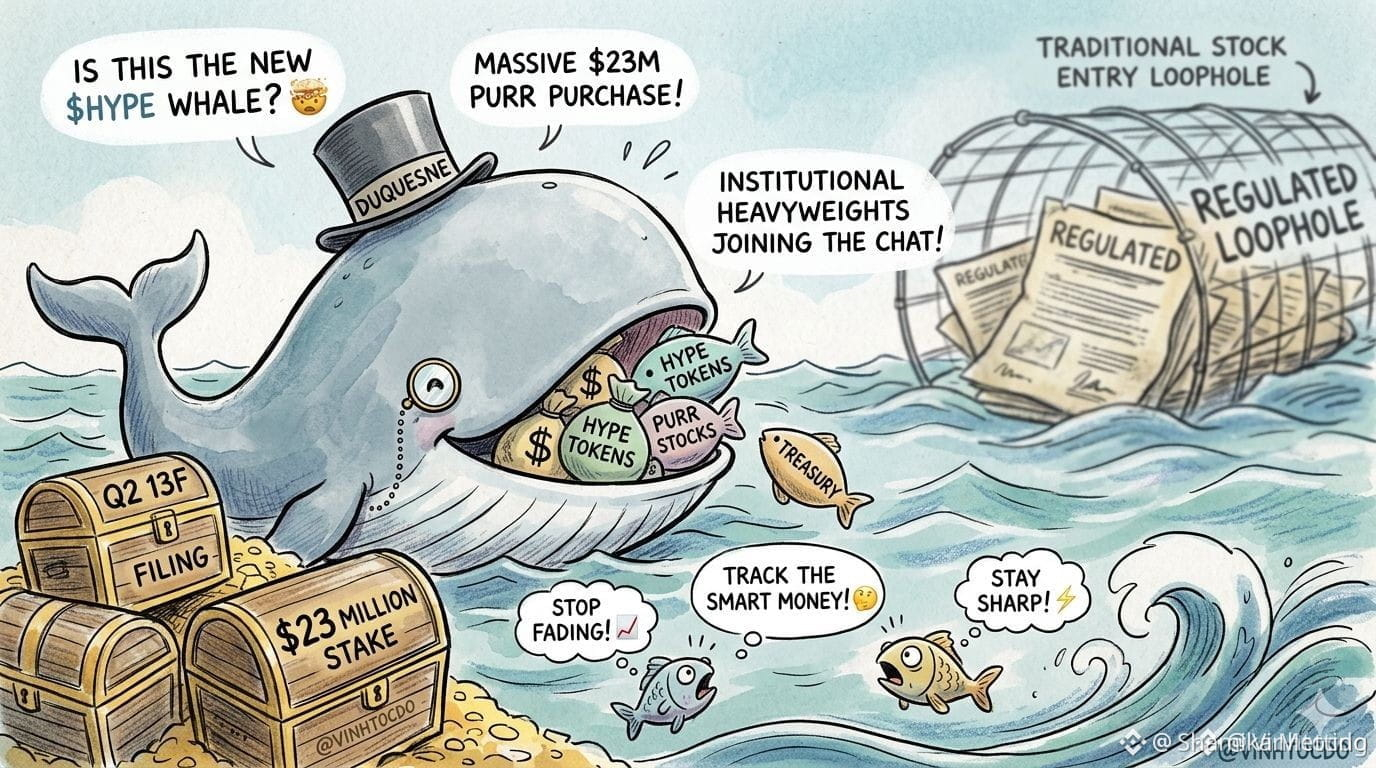
Duquesne Family Office Is it the new $HYPE whale? 🤯
Duquesne, part of Stanley Druckenmiller, has just filed its latest 13F for Q2, revealing a massive $23 million position in Hyperliquid Strategies Inc. (NASDAQ: PURR)! It’s the treasury company behind the HYPE ticker. When Wall Street giants start slipping into the crypto ecosystem through traditional equity filings, you know something big is brewing. Even former Federal Reserve Chairman Kevin Warsh has ties to this office—talk about heavyweight institutional momentum entering the conversation!
♂️ What should traders do?
1️⃣ Stop fighting the trend: big money finds regulatory loopholes to gain exposure.
2️⃣ Follow the smart money: watch how traditional stock-market indicators interact with liquidity on-chain.
3️⃣ Stay alert: institutional accumulation often means long-term volatility!
This is not financial advice. Always do your own research (DYOR)!
🚀 Ready to ride macro waves like a whale?
Please follow up
#Duquesne #Hyperliquid #CryptoInstitutional #NasdaqPURR
$BNB
{future}(BNBUSDT)
$UNI
{future}(UNIUSDT)
Duquesne Family Office Is it the new $HYPE whale? 🤯
Duquesne, part of Stanley Druckenmiller, has just filed its latest 13F for Q2, revealing a massive $23 million position in Hyperliquid Strategies Inc. (NASDAQ: PURR)! It’s the treasury company behind the HYPE ticker. When Wall Street giants start slipping into the crypto ecosystem through traditional equity filings, you know something big is brewing. Even former Federal Reserve Chairman Kevin Warsh has ties to this office—talk about heavyweight institutional momentum entering the conversation!
♂️ What should traders do?
1️⃣ Stop fighting the trend: big money finds regulatory loopholes to gain exposure.
2️⃣ Follow the smart money: watch how traditional stock-market indicators interact with liquidity on-chain.
3️⃣ Stay alert: institutional accumulation often means long-term volatility!
This is not financial advice. Always do your own research (DYOR)!
🚀 Ready to ride macro waves like a whale?
Please follow up
#Duquesne #Hyperliquid #CryptoInstitutional #NasdaqPURR
$BNB
$UNI
Duquesne, part of Stanley Druckenmiller, has just filed its latest 13F for Q2, revealing a massive $23 million position in Hyperliquid Strategies Inc. (NASDAQ: PURR)! It’s the treasury company behind the HYPE ticker. When Wall Street giants start slipping into the crypto ecosystem through traditional equity filings, you know something big is brewing. Even former Federal Reserve Chairman Kevin Warsh has ties to this office—talk about heavyweight institutional momentum entering the conversation!
♂️ What should traders do?
1️⃣ Stop fighting the trend: big money finds regulatory loopholes to gain exposure.
2️⃣ Follow the smart money: watch how traditional stock-market indicators interact with liquidity on-chain.
3️⃣ Stay alert: institutional accumulation often means long-term volatility!
This is not financial advice. Always do your own research (DYOR)!
🚀 Ready to ride macro waves like a whale?
Please follow up
#Duquesne #Hyperliquid #CryptoInstitutional #NasdaqPURR
$BNB
$UNI
1
72
Log in to explore more content
Join global crypto users on Binance Square
⚡️ Get latest and useful information about crypto.
💬 Trusted by the world’s largest crypto exchange.
👍 Discover real insights from verified creators.
Email / Phone number
Trending Topics
1
#BitcoinNears$87KEightMonthHighThenReverses
0 views
0 Discussing
2
#DriftHackVictimsBeginClaims
50,004 views
619 Discussing
3
#SolanaTokenizedStockVolumeTops$4.4BInSeptember
6,541 views
71 Discussing
4
#BitcoinSpotETFsDraw$6.34BInflowsInQ3
21,030 views
183 Discussing
5
#EthereumValidatorExitQueueJumps392%
208,982 views
1,707 Discussing
6
#IMFApprovesElSalvador$138MWithBitcoinWaiver
20,293 views
112 Discussing
7
#SECHaltsCryptoETFReviewsAmidFundingLapse
333,965 views
2,449 Discussing
8
#ZcashETFPostsFirstWeeklyOutflow$93.6M
105,426 views
279 Discussing
9
#GreekPoliceBustCryptoScamRingArrest17
460,612 views
3,005 Discussing
10
#BitcoinRejectedAt$87K
241,820 views
351 Discussing