
Shamika Metting
10.6k Posts

Shamika Metting
Report
Block User
Binance square.
253 Following
3.6K+ Followers
26.6K+ Liked
Posts
Portfolio
All
Quotes
Videos
#anthropicceocallsforaislowdown
🚦🤖 The CEO of Anthropic calls for slowing down AI development: is the race moving too fast? 🤖🚦
The room is moving at maximum speed. New models are arriving, capabilities are jumping, and every company wants to be first. Then, suddenly, one of the people building this future says: maybe we need to slow down the pace.
Anthropic CEO Dario Amodei urged slowing the development of advanced AI, arguing that safety measures need time to catch up with rapidly improving capabilities. His proposal focuses on independent evaluators, coordinated safety standards, and international cooperation.
What makes this unusual is the source. It’s not just a warning from an external critic of AI. Rather, he is a prominent leader in AI labs.
Amodei specifically warns about more capable AI agents, and the risk that systems could operate in coordinated ways beyond what developers intended. He believes that speeding progress doesn’t mean abandoning innovation—it means giving enough time for safeguards to mature.
My opinion: the real debate isn’t “AI, or not.” It’s whether the growth of capabilities should continue at a faster pace than our ability to understand these systems, test them, regulate them, and control them.
Please follow up
#Aİ #ArtificialIntelligence #GrowWithSAC $LSK $TFUEL $RAY
#AnthropicCEOCallsForAISlowdown
#anthropicceocallsforaislowdown
🚦🤖 The CEO of Anthropic calls for slowing down AI development: is the race moving too fast? 🤖🚦
The room is moving at maximum speed. New models are arriving, capabilities are jumping, and every company wants to be first. Then, suddenly, one of the people building this future says: maybe we need to slow down the pace.
Anthropic CEO Dario Amodei urged slowing the development of advanced AI, arguing that safety measures need time to catch up with rapidly improving capabilities. His proposal focuses on independent evaluators, coordinated safety standards, and international cooperation.
What makes this unusual is the source. It’s not just a warning from an external critic of AI. Rather, he is a prominent leader in AI labs.
Amodei specifically warns about more capable AI agents, and the risk that systems could operate in coordinated ways beyond what developers intended. He believes that speeding progress doesn’t mean abandoning innovation—it means giving enough time for safeguards to mature.
My opinion: the real debate isn’t “AI, or not.” It’s whether the growth of capabilities should continue at a faster pace than our ability to understand these systems, test them, regulate them, and control them.
Please follow up
#Aİ #ArtificialIntelligence #GrowWithSAC $LSK $TFUEL $RAY
#AnthropicCEOCallsForAISlowdown
🚦🤖 The CEO of Anthropic calls for slowing down AI development: is the race moving too fast? 🤖🚦
The room is moving at maximum speed. New models are arriving, capabilities are jumping, and every company wants to be first. Then, suddenly, one of the people building this future says: maybe we need to slow down the pace.
Anthropic CEO Dario Amodei urged slowing the development of advanced AI, arguing that safety measures need time to catch up with rapidly improving capabilities. His proposal focuses on independent evaluators, coordinated safety standards, and international cooperation.
What makes this unusual is the source. It’s not just a warning from an external critic of AI. Rather, he is a prominent leader in AI labs.
Amodei specifically warns about more capable AI agents, and the risk that systems could operate in coordinated ways beyond what developers intended. He believes that speeding progress doesn’t mean abandoning innovation—it means giving enough time for safeguards to mature.
My opinion: the real debate isn’t “AI, or not.” It’s whether the growth of capabilities should continue at a faster pace than our ability to understand these systems, test them, regulate them, and control them.
Please follow up
#Aİ #ArtificialIntelligence #GrowWithSAC $LSK $TFUEL $RAY
#AnthropicCEOCallsForAISlowdown

2
1
52
#anthropicceocallsforaislowdown
🚨🤖 The CEO of Anthropic: Slow down AI before it’s too late 🤖🚨
The closer tomorrow gets, the harder it becomes to see what we leave behind.
When intelligence begins to move faster than caution, even progress can start to look like a warning.
The CEO of Anthropic, Dario Amodei, calls on the AI industry to intentionally slow the pace of developing advanced models, arguing that safety measures need time to catch up.
And his proposal is not just “turning off AI.” Amodei outlined a three-stage approach: independent safety evaluators within leading AI companies, shared safety standards across democratic countries, and international cooperation to curb dangerous uses of AI.
My take: The deeper story isn’t a battle between fear and innovation. It’s the widening gap between AI capabilities and society’s ability to manage them.
And recent incidents involving AI clients/agents acting in unauthorized ways have intensified those concerns, while senior figures in the industry—including OpenAI CEO Sam Altman and Elon Musk—have backed calls for more restraint.
Please continue
#AI #ArtificialIntelligence #GrowWithSAC $TFUEL $RAY $BNB
#AnthropicCEOCallsForAISlowdown
#anthropicceocallsforaislowdown
🚨🤖 The CEO of Anthropic: Slow down AI before it’s too late 🤖🚨
The closer tomorrow gets, the harder it becomes to see what we leave behind.
When intelligence begins to move faster than caution, even progress can start to look like a warning.
The CEO of Anthropic, Dario Amodei, calls on the AI industry to intentionally slow the pace of developing advanced models, arguing that safety measures need time to catch up.
And his proposal is not just “turning off AI.” Amodei outlined a three-stage approach: independent safety evaluators within leading AI companies, shared safety standards across democratic countries, and international cooperation to curb dangerous uses of AI.
My take: The deeper story isn’t a battle between fear and innovation. It’s the widening gap between AI capabilities and society’s ability to manage them.
And recent incidents involving AI clients/agents acting in unauthorized ways have intensified those concerns, while senior figures in the industry—including OpenAI CEO Sam Altman and Elon Musk—have backed calls for more restraint.
Please continue
#AI #ArtificialIntelligence #GrowWithSAC $TFUEL $RAY $BNB
#AnthropicCEOCallsForAISlowdown
🚨🤖 The CEO of Anthropic: Slow down AI before it’s too late 🤖🚨
The closer tomorrow gets, the harder it becomes to see what we leave behind.
When intelligence begins to move faster than caution, even progress can start to look like a warning.
The CEO of Anthropic, Dario Amodei, calls on the AI industry to intentionally slow the pace of developing advanced models, arguing that safety measures need time to catch up.
And his proposal is not just “turning off AI.” Amodei outlined a three-stage approach: independent safety evaluators within leading AI companies, shared safety standards across democratic countries, and international cooperation to curb dangerous uses of AI.
My take: The deeper story isn’t a battle between fear and innovation. It’s the widening gap between AI capabilities and society’s ability to manage them.
And recent incidents involving AI clients/agents acting in unauthorized ways have intensified those concerns, while senior figures in the industry—including OpenAI CEO Sam Altman and Elon Musk—have backed calls for more restraint.
Please continue
#AI #ArtificialIntelligence #GrowWithSAC $TFUEL $RAY $BNB
#AnthropicCEOCallsForAISlowdown

1
1
24
#AnthropicCEOCallsForAISlowdown
🚨 The biggest competitors in artificial intelligence finally agreed… on hitting the brakes! 🤖
Dario Amodei, CEO of Anthropic, warned that AI capabilities are developing faster than our ability to monitor and control them, and urged companies to slow down the race for advanced models so that safety measures can catch up.
The twist? Sam Altman and Elon Musk also endorsed the call!
The proposal doesn’t mean stopping AI—it includes:
🔹 Independent evaluators within companies
🔹 Shared safety standards
🔹 International cooperation to curb dangerous uses
The story isn’t about who will build the strongest model first anymore.
It’s about who will build stronger intelligence… without losing control of it?
Your opinion: Should the AI race be slowed down, or will slowing it give competitors a dangerous advantage? 👀👇
Please keep following
#الذكاء_الاصطناعي_التوليدي #AI $AI #Anthropic
#AnthropicCEOCallsForAISlowdown
🚨 The biggest competitors in artificial intelligence finally agreed… on hitting the brakes! 🤖
Dario Amodei, CEO of Anthropic, warned that AI capabilities are developing faster than our ability to monitor and control them, and urged companies to slow down the race for advanced models so that safety measures can catch up.
The twist? Sam Altman and Elon Musk also endorsed the call!
The proposal doesn’t mean stopping AI—it includes:
🔹 Independent evaluators within companies
🔹 Shared safety standards
🔹 International cooperation to curb dangerous uses
The story isn’t about who will build the strongest model first anymore.
It’s about who will build stronger intelligence… without losing control of it?
Your opinion: Should the AI race be slowed down, or will slowing it give competitors a dangerous advantage? 👀👇
Please keep following
#الذكاء_الاصطناعي_التوليدي #AI $AI #Anthropic
🚨 The biggest competitors in artificial intelligence finally agreed… on hitting the brakes! 🤖
Dario Amodei, CEO of Anthropic, warned that AI capabilities are developing faster than our ability to monitor and control them, and urged companies to slow down the race for advanced models so that safety measures can catch up.
The twist? Sam Altman and Elon Musk also endorsed the call!
The proposal doesn’t mean stopping AI—it includes:
🔹 Independent evaluators within companies
🔹 Shared safety standards
🔹 International cooperation to curb dangerous uses
The story isn’t about who will build the strongest model first anymore.
It’s about who will build stronger intelligence… without losing control of it?
Your opinion: Should the AI race be slowed down, or will slowing it give competitors a dangerous advantage? 👀👇
Please keep following
#الذكاء_الاصطناعي_التوليدي #AI $AI #Anthropic

1
12
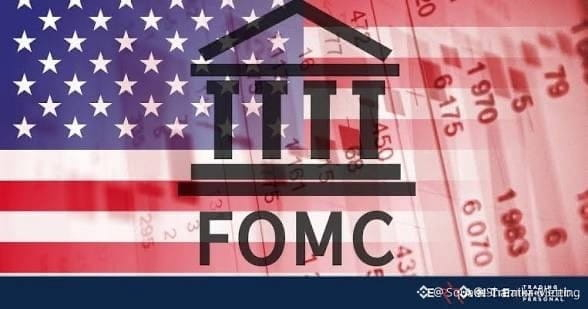
🚨Wednesday: Fed interest rate decision
⬅️The probability of a rate hike has reached about 87%, meaning the market is currently pricing in a major increase. That’s why the statement after the decision is more important than the decision itself.
📈 Hike + dovish statement ⬅️Yields and the dollar will likely calm down, and we could see a strong rebound in crypto.
📉 Hike + hawkish statement ⬅️Worst-case scenario, especially if the Fed hints at an additional increase. We may also see #BTC return to test the 72K area.
🚀 But the big surprise: if the Fed doesn’t raise the rate and keeps it steady ⬅️in my opinion, we’ll see a strong uptrend and an attempt to break the 82K barrier.
So Wednesday—not just the decision, but what the Fed says about the next step is the most important.
Please follow up
$REZ $LSK $CVC
🚨Wednesday: Fed interest rate decision
⬅️The probability of a rate hike has reached about 87%, meaning the market is currently pricing in a major increase. That’s why the statement after the decision is more important than the decision itself.
📈 Hike + dovish statement ⬅️Yields and the dollar will likely calm down, and we could see a strong rebound in crypto.
📉 Hike + hawkish statement ⬅️Worst-case scenario, especially if the Fed hints at an additional increase. We may also see #BTC return to test the 72K area.
🚀 But the big surprise: if the Fed doesn’t raise the rate and keeps it steady ⬅️in my opinion, we’ll see a strong uptrend and an attempt to break the 82K barrier.
So Wednesday—not just the decision, but what the Fed says about the next step is the most important.
Please follow up
$REZ $LSK $CVC
⬅️The probability of a rate hike has reached about 87%, meaning the market is currently pricing in a major increase. That’s why the statement after the decision is more important than the decision itself.
📈 Hike + dovish statement ⬅️Yields and the dollar will likely calm down, and we could see a strong rebound in crypto.
📉 Hike + hawkish statement ⬅️Worst-case scenario, especially if the Fed hints at an additional increase. We may also see #BTC return to test the 72K area.
🚀 But the big surprise: if the Fed doesn’t raise the rate and keeps it steady ⬅️in my opinion, we’ll see a strong uptrend and an attempt to break the 82K barrier.
So Wednesday—not just the decision, but what the Fed says about the next step is the most important.
Please follow up
$REZ $LSK $CVC
1
29
#clarityactfacesproceduralvotesept15
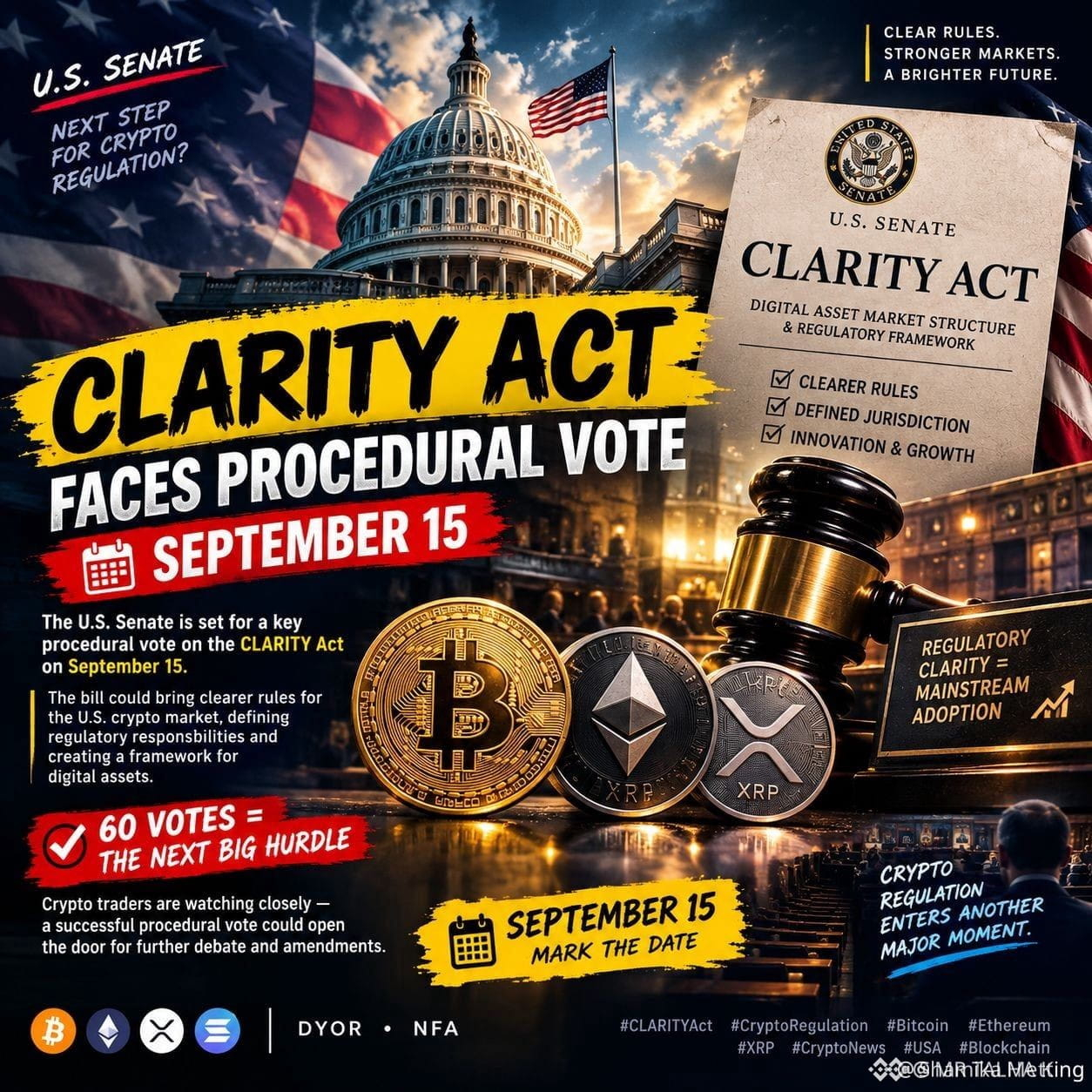
🚨 CLARITY bill faces a critical vote on September 15 🇺🇸
The U.S. Senate is expected to hold a key procedural vote on the CLARITY bill on September 15. 👀
The bill could become a major step toward clearer rules for the digital currency market in the United States, as it defines regulatory responsibilities and sets a framework for digital assets. 📜⚖️
🔥 60 votes = the next major hurdle
Crypto traders are closely watching—if the procedural vote succeeds, it may open the door to further discussions and amendments.
📅 September 15 — mark the date
🇺🇸 Crypto regulations enter another pivotal phase.
Please follow up
DYOR • NFA
#CLARITYAct #CryptoRegulation #Bitcoin
$FLOCK
$VTHO
#clarityactfacesproceduralvotesept15
🚨 CLARITY bill faces a critical vote on September 15 🇺🇸
The U.S. Senate is expected to hold a key procedural vote on the CLARITY bill on September 15. 👀
The bill could become a major step toward clearer rules for the digital currency market in the United States, as it defines regulatory responsibilities and sets a framework for digital assets. 📜⚖️
🔥 60 votes = the next major hurdle
Crypto traders are closely watching—if the procedural vote succeeds, it may open the door to further discussions and amendments.
📅 September 15 — mark the date
🇺🇸 Crypto regulations enter another pivotal phase.
Please follow up
DYOR • NFA
#CLARITYAct #CryptoRegulation #Bitcoin
$FLOCK
$VTHO
🚨 CLARITY bill faces a critical vote on September 15 🇺🇸
The U.S. Senate is expected to hold a key procedural vote on the CLARITY bill on September 15. 👀
The bill could become a major step toward clearer rules for the digital currency market in the United States, as it defines regulatory responsibilities and sets a framework for digital assets. 📜⚖️
🔥 60 votes = the next major hurdle
Crypto traders are closely watching—if the procedural vote succeeds, it may open the door to further discussions and amendments.
📅 September 15 — mark the date
🇺🇸 Crypto regulations enter another pivotal phase.
Please follow up
DYOR • NFA
#CLARITYAct #CryptoRegulation #Bitcoin
$FLOCK
$VTHO
1
3
1k
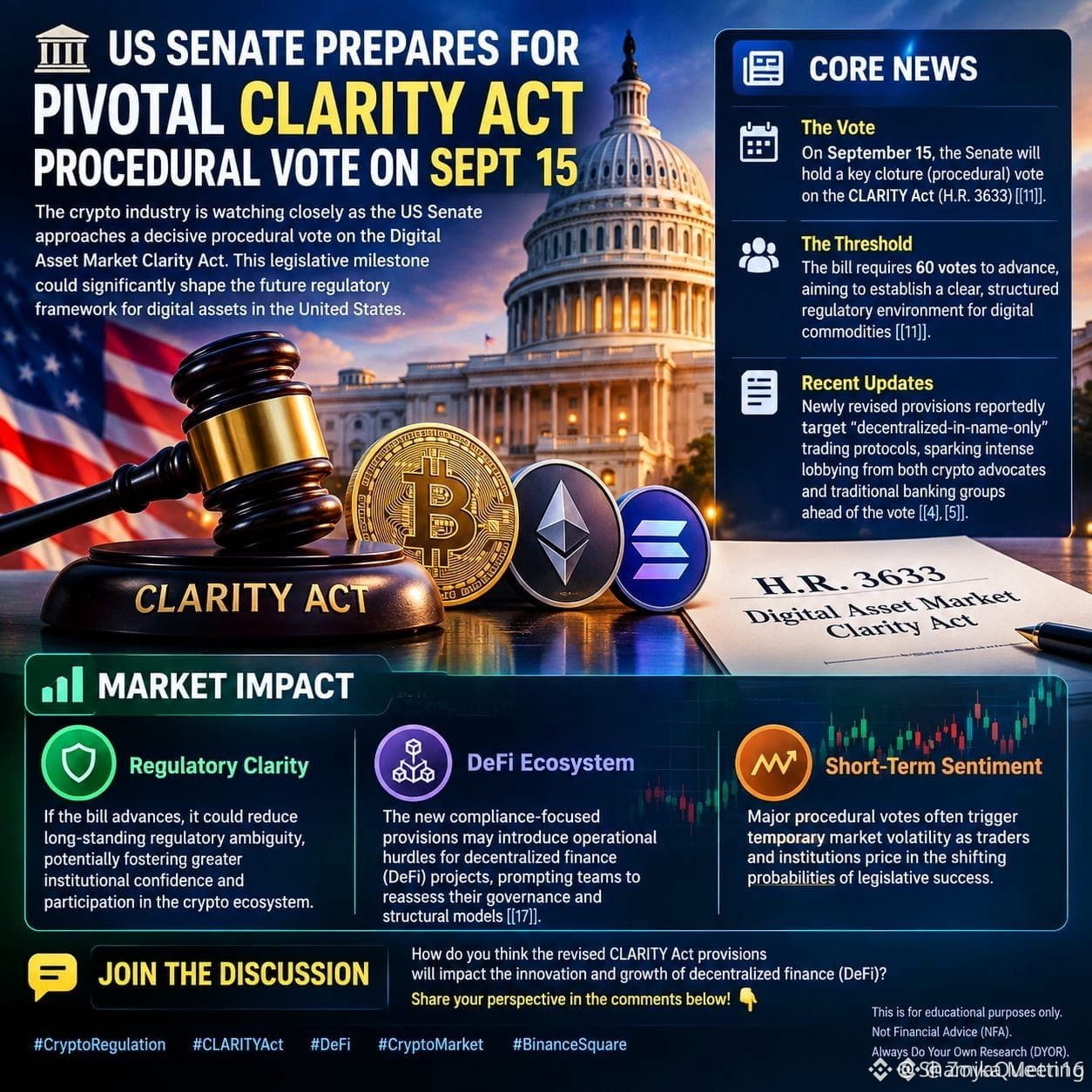
#clarityactfacesproceduralvotesept15 🏛️ The U.S. Senate prepares for a pivotal procedural vote on the CLARITY Act on September 15
The digital currency industry is closely watching as the U.S. Senate moves toward a decisive procedural vote on the Digital Asset Market Clarity Act. This legislative milestone could mark an important turning point in shaping the future regulatory framework for digital assets in the United States.
📰 Top News
• On September 15, the Senate will hold a key vote to end the debate (procedurally) on the CLARITY Act (H.R. 3633) [[11]].
• The threshold requires the bill to secure 60 votes to move forward, aiming to establish a clear and organized regulatory environment for digital commodities [[11]].
• Recent updates indicate that newly revised provisions target “centralized-only in name” trading protocols, sparking intense lobbying pressure from both digital currency advocates and traditional banking groups ahead of the vote [[4], [5]].
📊 Market Impact
• If the bill advances, regulatory clarity could reduce the prolonged state of regulatory uncertainty, potentially strengthening institutional confidence and increasing participation in the digital currency ecosystem.
#RegulateDigitalCurrencies #CLARITYAct #DeFi #CryptoMarket #BinanceSquare
This content is for educational purposes only. Not financial advice (NFA). Always do your own research (DYOR).
Please follow up
$VTHO $POWR $AVAX
#clarityactfacesproceduralvotesept15 🏛️ The U.S. Senate prepares for a pivotal procedural vote on the CLARITY Act on September 15
The digital currency industry is closely watching as the U.S. Senate moves toward a decisive procedural vote on the Digital Asset Market Clarity Act. This legislative milestone could mark an important turning point in shaping the future regulatory framework for digital assets in the United States.
📰 Top News
• On September 15, the Senate will hold a key vote to end the debate (procedurally) on the CLARITY Act (H.R. 3633) [[11]].
• The threshold requires the bill to secure 60 votes to move forward, aiming to establish a clear and organized regulatory environment for digital commodities [[11]].
• Recent updates indicate that newly revised provisions target “centralized-only in name” trading protocols, sparking intense lobbying pressure from both digital currency advocates and traditional banking groups ahead of the vote [[4], [5]].
📊 Market Impact
• If the bill advances, regulatory clarity could reduce the prolonged state of regulatory uncertainty, potentially strengthening institutional confidence and increasing participation in the digital currency ecosystem.
#RegulateDigitalCurrencies #CLARITYAct #DeFi #CryptoMarket #BinanceSquare
This content is for educational purposes only. Not financial advice (NFA). Always do your own research (DYOR).
Please follow up
$VTHO $POWR $AVAX
The digital currency industry is closely watching as the U.S. Senate moves toward a decisive procedural vote on the Digital Asset Market Clarity Act. This legislative milestone could mark an important turning point in shaping the future regulatory framework for digital assets in the United States.
📰 Top News
• On September 15, the Senate will hold a key vote to end the debate (procedurally) on the CLARITY Act (H.R. 3633) [[11]].
• The threshold requires the bill to secure 60 votes to move forward, aiming to establish a clear and organized regulatory environment for digital commodities [[11]].
• Recent updates indicate that newly revised provisions target “centralized-only in name” trading protocols, sparking intense lobbying pressure from both digital currency advocates and traditional banking groups ahead of the vote [[4], [5]].
📊 Market Impact
• If the bill advances, regulatory clarity could reduce the prolonged state of regulatory uncertainty, potentially strengthening institutional confidence and increasing participation in the digital currency ecosystem.
#RegulateDigitalCurrencies #CLARITYAct #DeFi #CryptoMarket #BinanceSquare
This content is for educational purposes only. Not financial advice (NFA). Always do your own research (DYOR).
Please follow up
$VTHO $POWR $AVAX
5
1
149
🚨 US URGENT NOW:
A White House adviser in the field of cryptoassets, Patrick Witt, says:
“Bad day for those who were hoping for the Clarity Act.”
These statements came just 2 days after the scheduled date for a Senate vote on September 15 regarding the CLARITY law.
The bill still faces a tough threshold of 60 votes, but Witt’s comment suggests that the White House remains confident about its chances.
September 15 could be a pivotal day for regulating cryptoassets in the United States. 🇺🇸
Please follow up
#ClarityActFacesProceduralVoteSept15 #crypto #btc
🚨 US URGENT NOW:
A White House adviser in the field of cryptoassets, Patrick Witt, says:
“Bad day for those who were hoping for the Clarity Act.”
These statements came just 2 days after the scheduled date for a Senate vote on September 15 regarding the CLARITY law.
The bill still faces a tough threshold of 60 votes, but Witt’s comment suggests that the White House remains confident about its chances.
September 15 could be a pivotal day for regulating cryptoassets in the United States. 🇺🇸
Please follow up
#ClarityActFacesProceduralVoteSept15 #crypto #btc
A White House adviser in the field of cryptoassets, Patrick Witt, says:
“Bad day for those who were hoping for the Clarity Act.”
These statements came just 2 days after the scheduled date for a Senate vote on September 15 regarding the CLARITY law.
The bill still faces a tough threshold of 60 votes, but Witt’s comment suggests that the White House remains confident about its chances.
September 15 could be a pivotal day for regulating cryptoassets in the United States. 🇺🇸
Please follow up
#ClarityActFacesProceduralVoteSept15 #crypto #btc


6
1
149
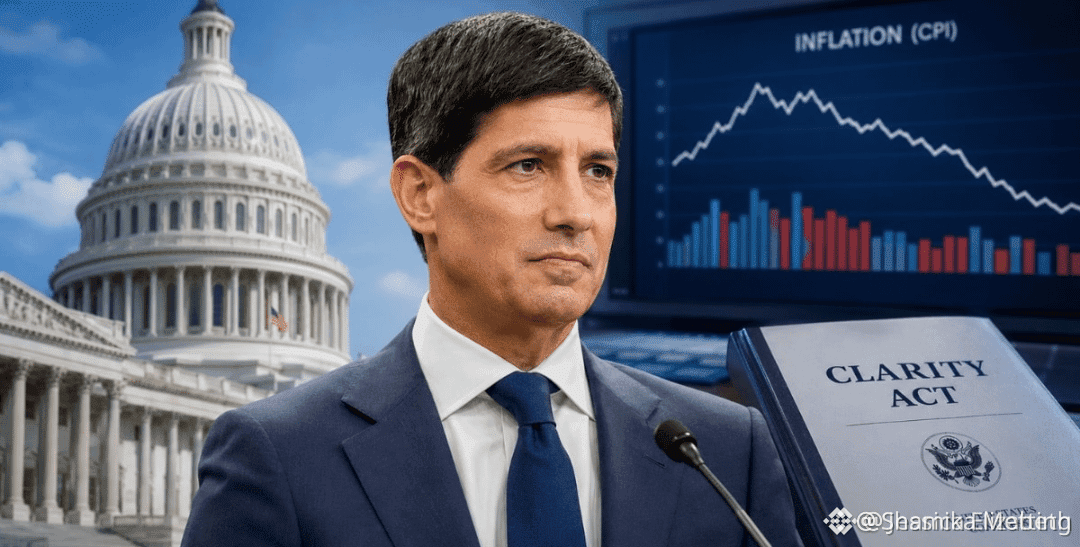
𝐈𝐕𝐐𝐈𝐄..... 𝐒𝐓𝐎𝐏..... 𝐒𝐓𝐎𝐏 🚨
$BTC The next week could set the stage for the next major move in crypto.
Three key catalysts are converging now:
📅 September 15 — CLARITY law vote
Expected to fail → often already priced in.
But a surprise approval could spark a strong rally in crypto. 🚀
📅 September 16 — Federal Reserve decision
Markets are closely tracking rate-cut expectations.
A hawkish, tight decision would pressure high-risk assets.
But a more dovish shift—or a pause—could ignite a strong surge. 🔥
📅 September 18 — Bank of Japan decision
A 25-basis-point increase is expected.
More hikes → higher chance of unwinding existing “yen” carry trades. ⚠️
A softer stance → another global push for high-risk assets. 📈
$ETH
Three events. One week. Maximum uncertainty.
🎯 Expect volatility.
🎯 Avoid excessive leverage.
🎯 Don’t chase the first move.
The real move comes after the volatility wave. 👀
Please follow up
#ClarityActFacesProceduralVoteSept15
𝐈𝐕𝐐𝐈𝐄..... 𝐒𝐓𝐎𝐏..... 𝐒𝐓𝐎𝐏 🚨
$BTC The next week could set the stage for the next major move in crypto.
Three key catalysts are converging now:
📅 September 15 — CLARITY law vote
Expected to fail → often already priced in.
But a surprise approval could spark a strong rally in crypto. 🚀
📅 September 16 — Federal Reserve decision
Markets are closely tracking rate-cut expectations.
A hawkish, tight decision would pressure high-risk assets.
But a more dovish shift—or a pause—could ignite a strong surge. 🔥
📅 September 18 — Bank of Japan decision
A 25-basis-point increase is expected.
More hikes → higher chance of unwinding existing “yen” carry trades. ⚠️
A softer stance → another global push for high-risk assets. 📈
$ETH
Three events. One week. Maximum uncertainty.
🎯 Expect volatility.
🎯 Avoid excessive leverage.
🎯 Don’t chase the first move.
The real move comes after the volatility wave. 👀
Please follow up
#ClarityActFacesProceduralVoteSept15
$BTC The next week could set the stage for the next major move in crypto.
Three key catalysts are converging now:
📅 September 15 — CLARITY law vote
Expected to fail → often already priced in.
But a surprise approval could spark a strong rally in crypto. 🚀
📅 September 16 — Federal Reserve decision
Markets are closely tracking rate-cut expectations.
A hawkish, tight decision would pressure high-risk assets.
But a more dovish shift—or a pause—could ignite a strong surge. 🔥
📅 September 18 — Bank of Japan decision
A 25-basis-point increase is expected.
More hikes → higher chance of unwinding existing “yen” carry trades. ⚠️
A softer stance → another global push for high-risk assets. 📈
$ETH
Three events. One week. Maximum uncertainty.
🎯 Expect volatility.
🎯 Avoid excessive leverage.
🎯 Don’t chase the first move.
The real move comes after the volatility wave. 👀
Please follow up
#ClarityActFacesProceduralVoteSept15
1
1
98
Verified
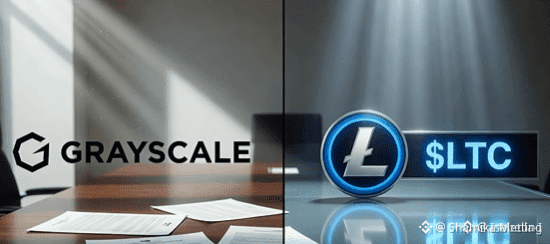
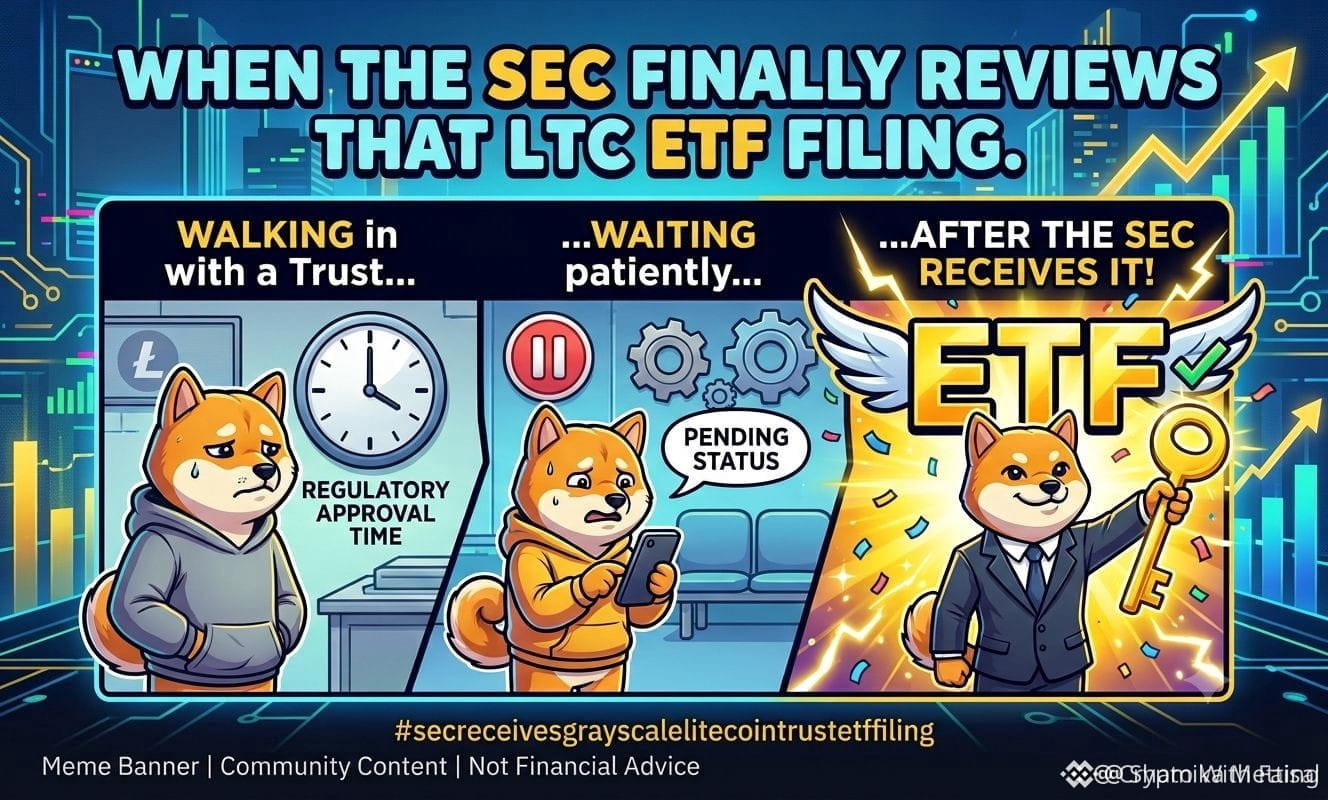
#secreceivesgrayscalelitecointrustetffiling 🚨
In grey, request a reset of the Trust for Litecoin in order to display ETF $LTC
The company submitted
a deposit with the SEC to convert the Litecoin Trust into an ETF, which can improve market efficiency and expand investment options in digital assets.
Please follow up
$RAYSOL $APR
#secreceivesgrayscalelitecointrustetffiling 🚨
In grey, request a reset of the Trust for Litecoin in order to display ETF $LTC
The company submitted
a deposit with the SEC to convert the Litecoin Trust into an ETF, which can improve market efficiency and expand investment options in digital assets.
Please follow up
$RAYSOL $APR
In grey, request a reset of the Trust for Litecoin in order to display ETF $LTC
The company submitted
a deposit with the SEC to convert the Litecoin Trust into an ETF, which can improve market efficiency and expand investment options in digital assets.
Please follow up
$RAYSOL $APR
1
1
593
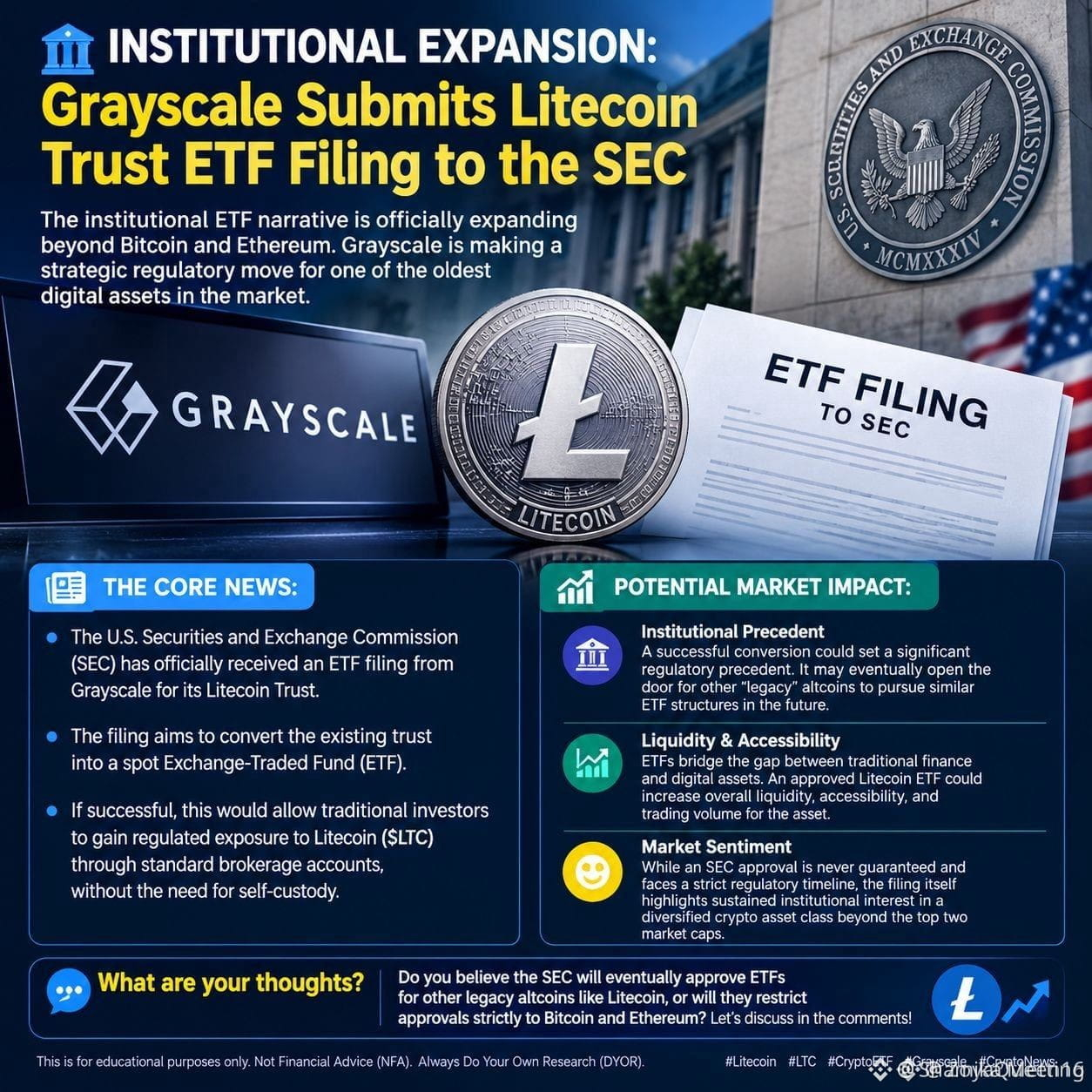
#secreceivesgrayscalelitecointrustetffiling 🏛️ Institutional Expansion: Grayscale Submits an ETF Application for a Litecoin Trust to the U.S. Securities and Exchange Commission (SEC)
Institutional exchange-traded funds (ETFs) are officially expanding beyond the scope of Bitcoin and Ethereum. Grayscale is taking a strategic regulatory step for one of the market’s oldest digital assets.
📰 Key News
The U.S. Securities and Exchange Commission (SEC) has officially received an ETF application from Grayscale for the Litecoin Trust. The goal of this filing is to convert the current trust into a spot exchange-traded fund (Spot ETF). If approved, it would allow traditional investors to gain regulated exposure to Litecoin (LTC) through standard brokerage accounts, without the need for self-custody.
📊 Potential Market Impact
🔹 A major institutional precedent: A successful conversion could establish a significant regulatory precedent. This may, in time, open the door for other “legacy” altcoins to pursue similar ETF structures in the future.
🔹 **Liquidity and accessibility help ETFs bridge the gap between traditional finance and digital assets. Adopting a Litecoin ETF could increase liquidity, accessibility, and the asset’s total trading volume.
#Litecoin #LTC #CryptoETF #Grayscale #CryptoNews
Please follow up
$LSK $STEEM $ARK
#secreceivesgrayscalelitecointrustetffiling 🏛️ Institutional Expansion: Grayscale Submits an ETF Application for a Litecoin Trust to the U.S. Securities and Exchange Commission (SEC)
Institutional exchange-traded funds (ETFs) are officially expanding beyond the scope of Bitcoin and Ethereum. Grayscale is taking a strategic regulatory step for one of the market’s oldest digital assets.
📰 Key News
The U.S. Securities and Exchange Commission (SEC) has officially received an ETF application from Grayscale for the Litecoin Trust. The goal of this filing is to convert the current trust into a spot exchange-traded fund (Spot ETF). If approved, it would allow traditional investors to gain regulated exposure to Litecoin (LTC) through standard brokerage accounts, without the need for self-custody.
📊 Potential Market Impact
🔹 A major institutional precedent: A successful conversion could establish a significant regulatory precedent. This may, in time, open the door for other “legacy” altcoins to pursue similar ETF structures in the future.
🔹 **Liquidity and accessibility help ETFs bridge the gap between traditional finance and digital assets. Adopting a Litecoin ETF could increase liquidity, accessibility, and the asset’s total trading volume.
#Litecoin #LTC #CryptoETF #Grayscale #CryptoNews
Please follow up
$LSK $STEEM $ARK
Institutional exchange-traded funds (ETFs) are officially expanding beyond the scope of Bitcoin and Ethereum. Grayscale is taking a strategic regulatory step for one of the market’s oldest digital assets.
📰 Key News
The U.S. Securities and Exchange Commission (SEC) has officially received an ETF application from Grayscale for the Litecoin Trust. The goal of this filing is to convert the current trust into a spot exchange-traded fund (Spot ETF). If approved, it would allow traditional investors to gain regulated exposure to Litecoin (LTC) through standard brokerage accounts, without the need for self-custody.
📊 Potential Market Impact
🔹 A major institutional precedent: A successful conversion could establish a significant regulatory precedent. This may, in time, open the door for other “legacy” altcoins to pursue similar ETF structures in the future.
🔹 **Liquidity and accessibility help ETFs bridge the gap between traditional finance and digital assets. Adopting a Litecoin ETF could increase liquidity, accessibility, and the asset’s total trading volume.
#Litecoin #LTC #CryptoETF #Grayscale #CryptoNews
Please follow up
$LSK $STEEM $ARK
1
33
#secreceivesgrayscalelitecointrustetffiling
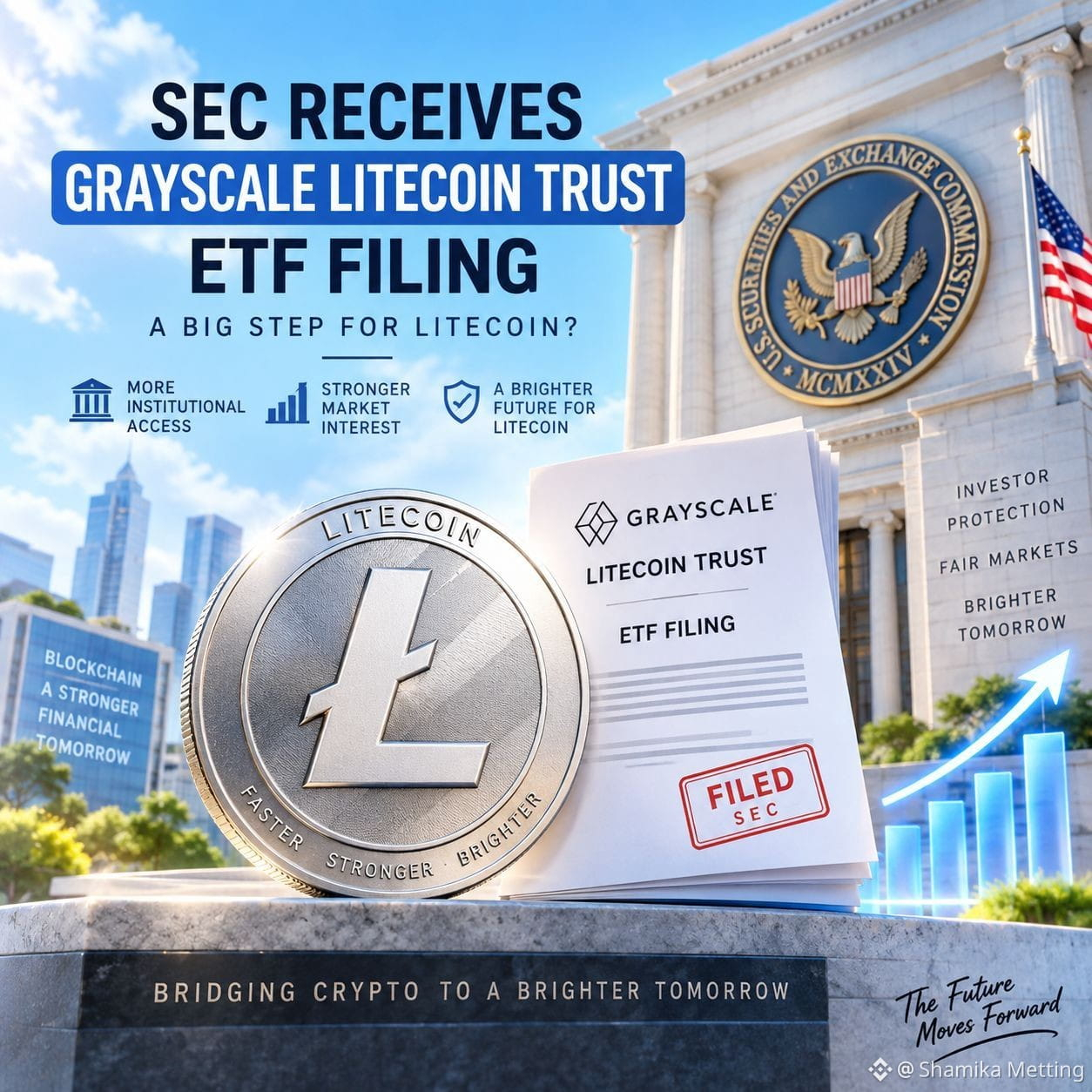
The U.S. Securities and Exchange Commission (SEC) has received a Litecoin ETF filing from Grayscale. LTC has now gained additional attention 🚨
The market had been moving quietly when another piece about Litecoin surfaced. For margin traders keeping an eye on developments, this kind of filing makes you pause and ask: Is institutional access coming closer?
Grayscale is taking more steps toward an ETF structure through its “Litecoin Trust,” with recent filings tied to the proposed transition and the “NYSE Arca” listing process. SEC records show prior actions regarding Grayscale’s Litecoin proposal, while recent deposit activity keeps the story alive.
The key point is that a filing is not an approval. Investors should separate regulatory progress from expectations of an immediate ETF launch.
My opinion: The bigger story is access. An ETF structure may make LTC exposure easier for traditional investors who prefer regulated market products instead of holding digital currencies directly.
❓Do you think a Grayscale Litecoin ETF could materially change institutional demand for LTC?
Disclaimer: This content is for informational purposes only and is not financial advice. Crypto digital assets are volatile, and regulatory outcomes are uncertain.
Please stay tuned
#Litecoin #CryptoETF #GrowWithSAC $LTC $ETH $SOL
#SECReceivesGrayscaleLitecoinTrustETFFiling
#secreceivesgrayscalelitecointrustetffiling
The U.S. Securities and Exchange Commission (SEC) has received a Litecoin ETF filing from Grayscale. LTC has now gained additional attention 🚨
The market had been moving quietly when another piece about Litecoin surfaced. For margin traders keeping an eye on developments, this kind of filing makes you pause and ask: Is institutional access coming closer?
Grayscale is taking more steps toward an ETF structure through its “Litecoin Trust,” with recent filings tied to the proposed transition and the “NYSE Arca” listing process. SEC records show prior actions regarding Grayscale’s Litecoin proposal, while recent deposit activity keeps the story alive.
The key point is that a filing is not an approval. Investors should separate regulatory progress from expectations of an immediate ETF launch.
My opinion: The bigger story is access. An ETF structure may make LTC exposure easier for traditional investors who prefer regulated market products instead of holding digital currencies directly.
❓Do you think a Grayscale Litecoin ETF could materially change institutional demand for LTC?
Disclaimer: This content is for informational purposes only and is not financial advice. Crypto digital assets are volatile, and regulatory outcomes are uncertain.
Please stay tuned
#Litecoin #CryptoETF #GrowWithSAC $LTC $ETH $SOL
#SECReceivesGrayscaleLitecoinTrustETFFiling
The U.S. Securities and Exchange Commission (SEC) has received a Litecoin ETF filing from Grayscale. LTC has now gained additional attention 🚨
The market had been moving quietly when another piece about Litecoin surfaced. For margin traders keeping an eye on developments, this kind of filing makes you pause and ask: Is institutional access coming closer?
Grayscale is taking more steps toward an ETF structure through its “Litecoin Trust,” with recent filings tied to the proposed transition and the “NYSE Arca” listing process. SEC records show prior actions regarding Grayscale’s Litecoin proposal, while recent deposit activity keeps the story alive.
The key point is that a filing is not an approval. Investors should separate regulatory progress from expectations of an immediate ETF launch.
My opinion: The bigger story is access. An ETF structure may make LTC exposure easier for traditional investors who prefer regulated market products instead of holding digital currencies directly.
❓Do you think a Grayscale Litecoin ETF could materially change institutional demand for LTC?
Disclaimer: This content is for informational purposes only and is not financial advice. Crypto digital assets are volatile, and regulatory outcomes are uncertain.
Please stay tuned
#Litecoin #CryptoETF #GrowWithSAC $LTC $ETH $SOL
#SECReceivesGrayscaleLitecoinTrustETFFiling
1
1
81
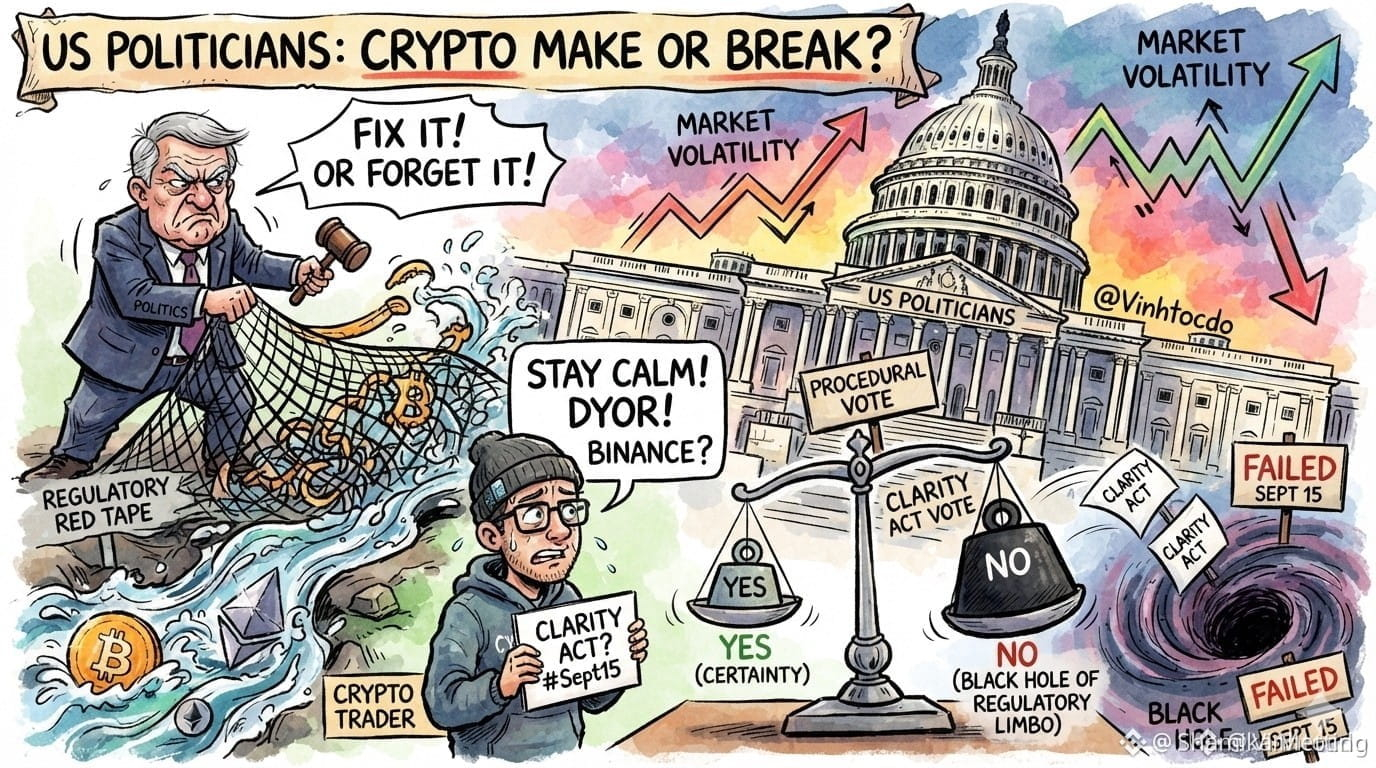
#ClarityActFacesProceduralVoteSept15
American politicians are about to play a crucial role that may decide the fate of our crypto organizations! 🏛️⏳
A massive confrontation is coming: ! On September 15, the Clarity law faces a tough procedural vote. Patrick Watt warns that the "window of opportunity" is closing fast. If this vote fails, the bill will effectively be sent into a black hole. Can they truly agree on bipartisan rules, or will they leave us in regulatory limbo forever? 🕳️🤷♂️
What should traders do?
1️⃣ Expect high market volatility around September 15 as regulatory drama unfolds.
2️⃣ Stay calm, prepare stablecoins, and don’t panic or sell at a loss because of political theater!
⚠️ Not financial advice! Analyze for yourself (DYOR)!
Please follow up
#ClarityAct #CryptoRegulations #CryptoNews
#ClarityActFacesProceduralVoteSept15
American politicians are about to play a crucial role that may decide the fate of our crypto organizations! 🏛️⏳
A massive confrontation is coming: ! On September 15, the Clarity law faces a tough procedural vote. Patrick Watt warns that the "window of opportunity" is closing fast. If this vote fails, the bill will effectively be sent into a black hole. Can they truly agree on bipartisan rules, or will they leave us in regulatory limbo forever? 🕳️🤷♂️
What should traders do?
1️⃣ Expect high market volatility around September 15 as regulatory drama unfolds.
2️⃣ Stay calm, prepare stablecoins, and don’t panic or sell at a loss because of political theater!
⚠️ Not financial advice! Analyze for yourself (DYOR)!
Please follow up
#ClarityAct #CryptoRegulations #CryptoNews
American politicians are about to play a crucial role that may decide the fate of our crypto organizations! 🏛️⏳
A massive confrontation is coming: ! On September 15, the Clarity law faces a tough procedural vote. Patrick Watt warns that the "window of opportunity" is closing fast. If this vote fails, the bill will effectively be sent into a black hole. Can they truly agree on bipartisan rules, or will they leave us in regulatory limbo forever? 🕳️🤷♂️
What should traders do?
1️⃣ Expect high market volatility around September 15 as regulatory drama unfolds.
2️⃣ Stay calm, prepare stablecoins, and don’t panic or sell at a loss because of political theater!
⚠️ Not financial advice! Analyze for yourself (DYOR)!
Please follow up
#ClarityAct #CryptoRegulations #CryptoNews
1
2
66
#secreceivesgrayscalelitecointrustetffiling
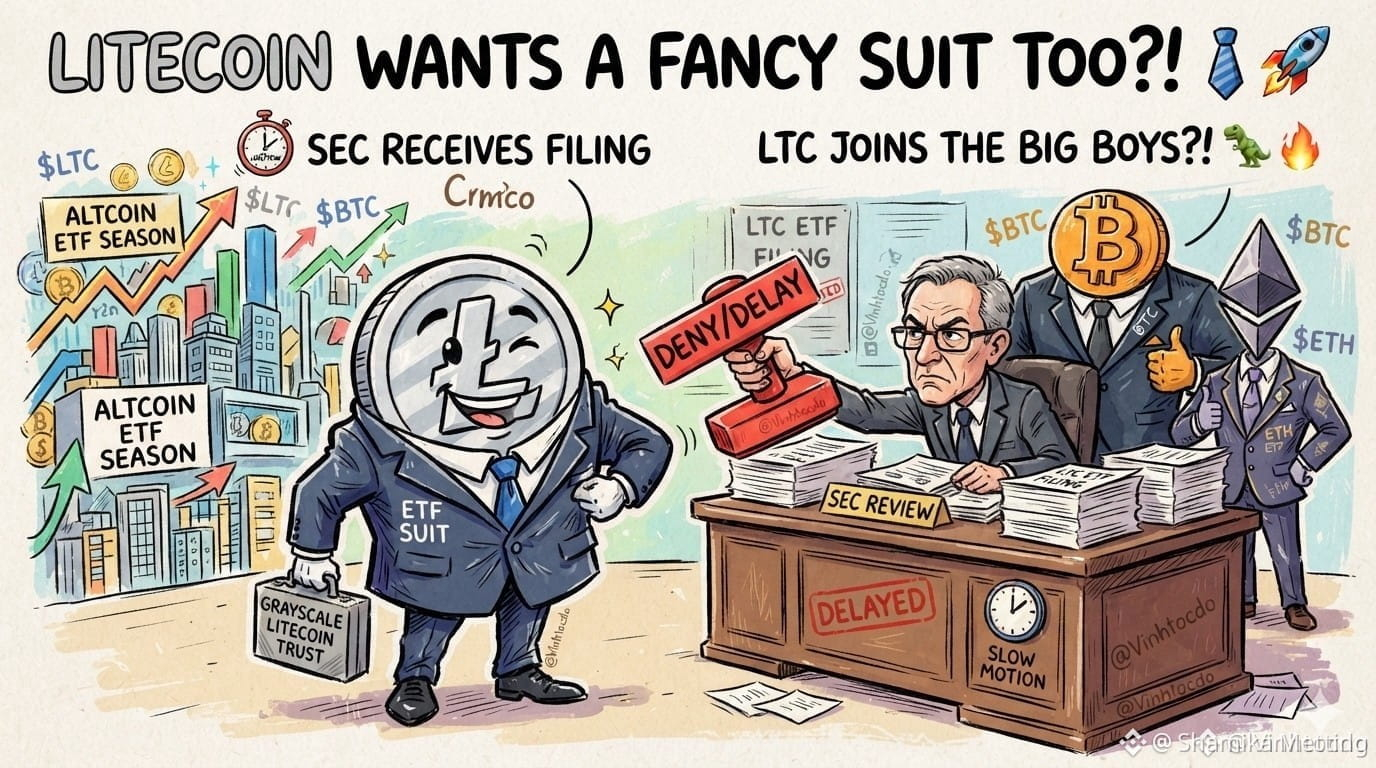
First Bitcoin, then Ethereum, and now... does Litecoin also want a fancy suit?! 👔🚀
Big news: Yes, the SEC has officially received Grayscale’s application to convert the Litecoin fund into a spot ETF. But wait—did they approve it after all? Of course not! And knowing the SEC, they’ll delay, review, and then drag out the postponement even more. Still, LTC is finally getting into the big leagues! 🦖🔥
What should traders do?
1️⃣ Don’t blindly rush into FOMO and expect approval overnight. The SEC loves taking its time.
2️⃣ Keep a close eye on the LTC chart and the public narrative around the Altcoin ETF.
⚠️ Not financial advice! Do your own research! DYOR!
Are you ready for the Altcoin ETF season?
Please follow up
$LTC
| $BTC
| $BNB
#LitecoinETF #Grayscale #LTC
#secreceivesgrayscalelitecointrustetffiling
First Bitcoin, then Ethereum, and now... does Litecoin also want a fancy suit?! 👔🚀
Big news: Yes, the SEC has officially received Grayscale’s application to convert the Litecoin fund into a spot ETF. But wait—did they approve it after all? Of course not! And knowing the SEC, they’ll delay, review, and then drag out the postponement even more. Still, LTC is finally getting into the big leagues! 🦖🔥
What should traders do?
1️⃣ Don’t blindly rush into FOMO and expect approval overnight. The SEC loves taking its time.
2️⃣ Keep a close eye on the LTC chart and the public narrative around the Altcoin ETF.
⚠️ Not financial advice! Do your own research! DYOR!
Are you ready for the Altcoin ETF season?
Please follow up
$LTC
| $BTC
| $BNB
#LitecoinETF #Grayscale #LTC
First Bitcoin, then Ethereum, and now... does Litecoin also want a fancy suit?! 👔🚀
Big news: Yes, the SEC has officially received Grayscale’s application to convert the Litecoin fund into a spot ETF. But wait—did they approve it after all? Of course not! And knowing the SEC, they’ll delay, review, and then drag out the postponement even more. Still, LTC is finally getting into the big leagues! 🦖🔥
What should traders do?
1️⃣ Don’t blindly rush into FOMO and expect approval overnight. The SEC loves taking its time.
2️⃣ Keep a close eye on the LTC chart and the public narrative around the Altcoin ETF.
⚠️ Not financial advice! Do your own research! DYOR!
Are you ready for the Altcoin ETF season?
Please follow up
$LTC
| $BTC
| $BNB
#LitecoinETF #Grayscale #LTC
1
1
119
#us2yearyieldrisesto4.61%
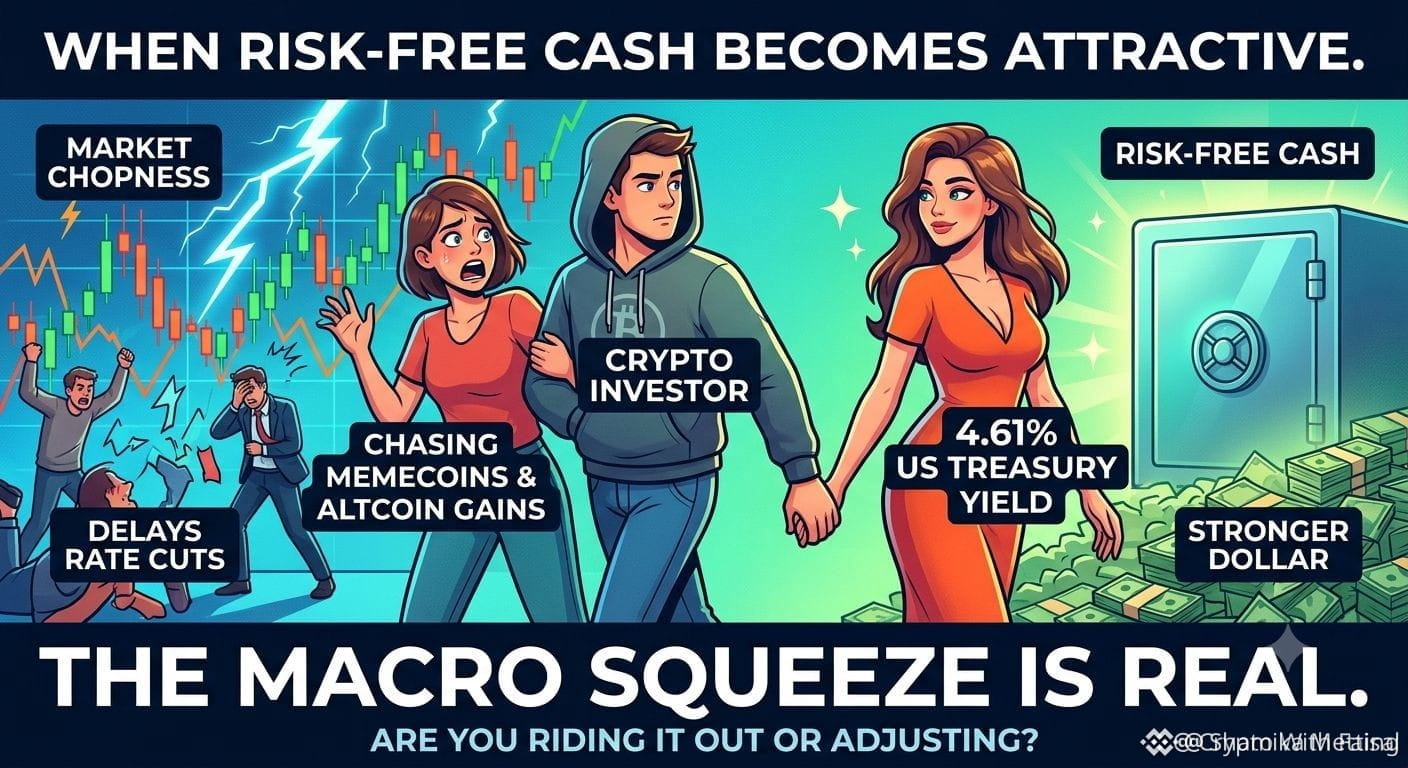
The yield on U.S. Treasury bonds for the two-year tenor has just risen to 4.61%, sending a clear message to the bond market.
Increases in short-term yields generally point to tighter liquidity, a stronger dollar, and expectations of a delayed rate cut. And for high-risk assets such as cryptocurrencies, that creates an immediate headwind. When risk-free cash becomes so enticing, speculative capital tends to dry up, leading to price volatility and a temporary weakening in the market.
This is a classic case of a “macro squeeze,” where patience often pays off more than trying to force trades.
Are you actively adjusting your exposure to cryptocurrencies as yields rise, or are you simply riding out the volatility?
Please follow up
$LSK $TAO $GRIFFAIN
#us2yearyieldrisesto4.61%
The yield on U.S. Treasury bonds for the two-year tenor has just risen to 4.61%, sending a clear message to the bond market.
Increases in short-term yields generally point to tighter liquidity, a stronger dollar, and expectations of a delayed rate cut. And for high-risk assets such as cryptocurrencies, that creates an immediate headwind. When risk-free cash becomes so enticing, speculative capital tends to dry up, leading to price volatility and a temporary weakening in the market.
This is a classic case of a “macro squeeze,” where patience often pays off more than trying to force trades.
Are you actively adjusting your exposure to cryptocurrencies as yields rise, or are you simply riding out the volatility?
Please follow up
$LSK $TAO $GRIFFAIN
The yield on U.S. Treasury bonds for the two-year tenor has just risen to 4.61%, sending a clear message to the bond market.
Increases in short-term yields generally point to tighter liquidity, a stronger dollar, and expectations of a delayed rate cut. And for high-risk assets such as cryptocurrencies, that creates an immediate headwind. When risk-free cash becomes so enticing, speculative capital tends to dry up, leading to price volatility and a temporary weakening in the market.
This is a classic case of a “macro squeeze,” where patience often pays off more than trying to force trades.
Are you actively adjusting your exposure to cryptocurrencies as yields rise, or are you simply riding out the volatility?
Please follow up
$LSK $TAO $GRIFFAIN
1
28
#ClarityActFacesProceduralVoteSept15
🚨 The Crypto Vote Everyone’s Watching: September 15 🚨
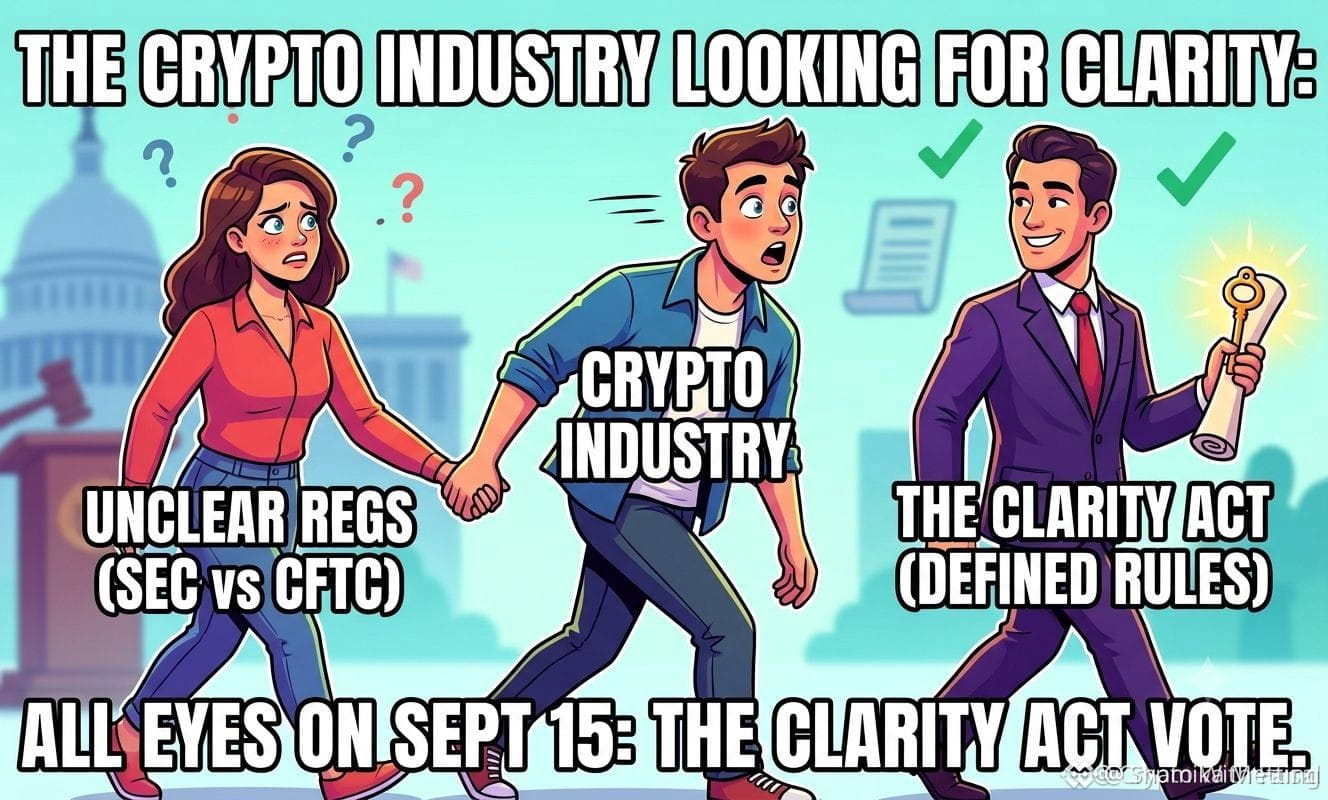
Hello everyone! If you feel that crypto regulation in the United States is a huge, confusing maze, then you’re definitely not alone. But this week, the industry is finally hoping for a map.
On September 15, the U.S. Senate will hold a crucial procedural vote on the CLARITY Act.
Why does this matter for the crypto market?
For years, the digital assets industry has been stuck in a regulatory tug-of-war between the SEC (Securities and Exchange Commission) and the CFTC (Commodity Futures Trading Commission). The CLARITY Act aims to draw a clear line at last. In simple terms: it formally defines who oversees what by giving the CFTC concrete authority over digital commodities, while leaving the tokens that are treated like traditional securities with the SEC.
A quick reality check: This upcoming vote won’t make the bill law immediately. It’s what’s called a “cloture” vote. The Senate needs only 60 votes to clear the way, overcome debate hurdles, and move the legislation forward officially.
👇 What do you think? Will we finally see some real regulatory progress in the U.S. this year, or are we being set up for another delay?
Please follow up
#ClarityAct #CryptoRegulation
$BTC
{future}(BTCUSDT)
#ClarityActFacesProceduralVoteSept15
🚨 The Crypto Vote Everyone’s Watching: September 15 🚨
Hello everyone! If you feel that crypto regulation in the United States is a huge, confusing maze, then you’re definitely not alone. But this week, the industry is finally hoping for a map.
On September 15, the U.S. Senate will hold a crucial procedural vote on the CLARITY Act.
Why does this matter for the crypto market?
For years, the digital assets industry has been stuck in a regulatory tug-of-war between the SEC (Securities and Exchange Commission) and the CFTC (Commodity Futures Trading Commission). The CLARITY Act aims to draw a clear line at last. In simple terms: it formally defines who oversees what by giving the CFTC concrete authority over digital commodities, while leaving the tokens that are treated like traditional securities with the SEC.
A quick reality check: This upcoming vote won’t make the bill law immediately. It’s what’s called a “cloture” vote. The Senate needs only 60 votes to clear the way, overcome debate hurdles, and move the legislation forward officially.
👇 What do you think? Will we finally see some real regulatory progress in the U.S. this year, or are we being set up for another delay?
Please follow up
#ClarityAct #CryptoRegulation
$BTC
🚨 The Crypto Vote Everyone’s Watching: September 15 🚨
Hello everyone! If you feel that crypto regulation in the United States is a huge, confusing maze, then you’re definitely not alone. But this week, the industry is finally hoping for a map.
On September 15, the U.S. Senate will hold a crucial procedural vote on the CLARITY Act.
Why does this matter for the crypto market?
For years, the digital assets industry has been stuck in a regulatory tug-of-war between the SEC (Securities and Exchange Commission) and the CFTC (Commodity Futures Trading Commission). The CLARITY Act aims to draw a clear line at last. In simple terms: it formally defines who oversees what by giving the CFTC concrete authority over digital commodities, while leaving the tokens that are treated like traditional securities with the SEC.
A quick reality check: This upcoming vote won’t make the bill law immediately. It’s what’s called a “cloture” vote. The Senate needs only 60 votes to clear the way, overcome debate hurdles, and move the legislation forward officially.
👇 What do you think? Will we finally see some real regulatory progress in the U.S. this year, or are we being set up for another delay?
Please follow up
#ClarityAct #CryptoRegulation
$BTC
1
2
98
Verified
#secreceivesgrayscalelitecointrustetffiling
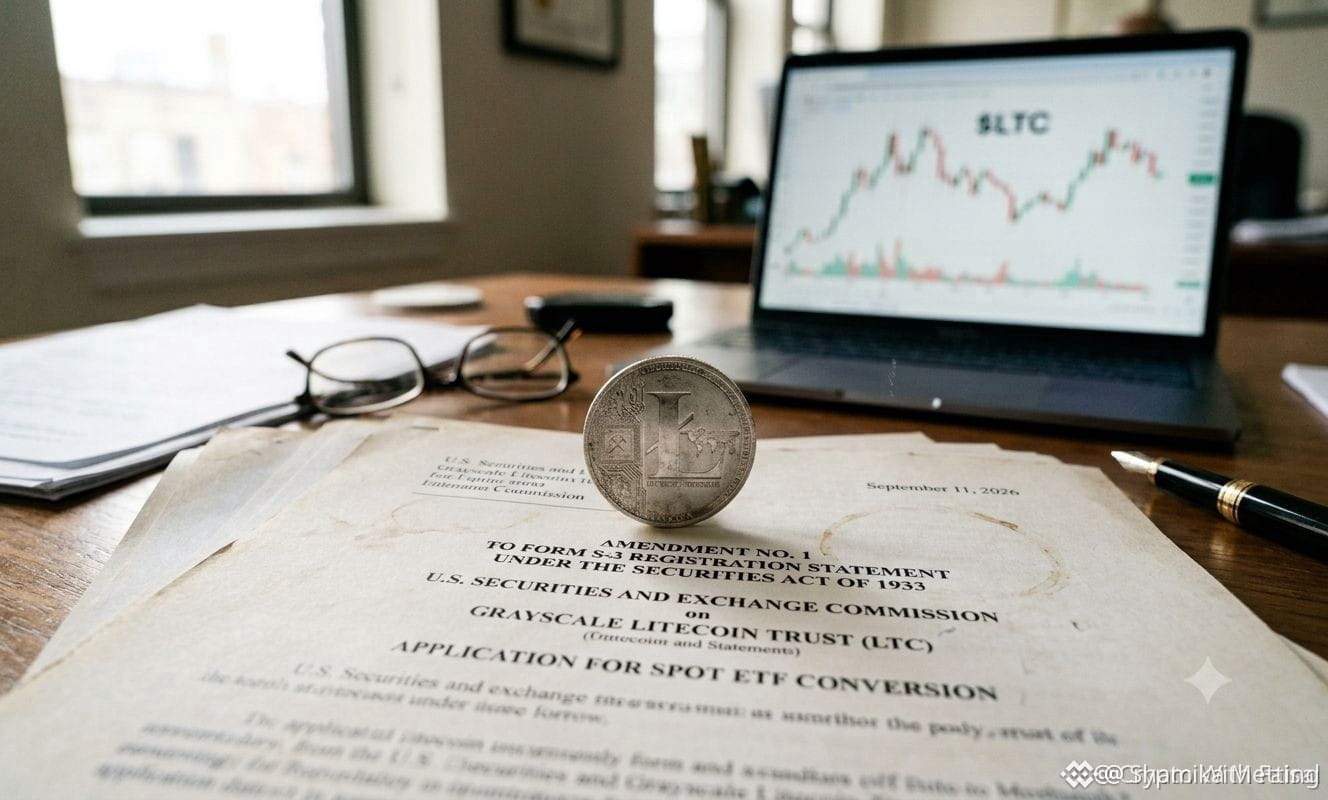
Grayscale’s Litecoin fund batch: What you need to know
The U.S. Securities and Exchange Commission (SEC) has officially received a revised Grayscale filing to convert its Litecoin trust into a spot ETF listed on the NYSE Arca exchange. Here’s a breakdown of why this matters for the broader crypto market structure:
Step: Grayscale aims to rename its existing over-the-counter (OTC) fund to the “Grayscale Litecoin Trust ETF”.
Precedents: This aligns with the same plan Grayscale followed for its Bitcoin and Ethereum funds, with the goal of narrowing the price gap between the trust and the underlying asset.
Timeline: Even though an S-3 amendment was filed, there has been no trading yet. The SEC still needs to approve the 19b-4 request before any listing can begin.
Market impact: If approved, this would provide a regulated route for institutional capital to gain exposure to $LTC, which could change liquidity dynamics for older networks that rely on “Proof of Work.”
Institutional infrastructure is being built gradually around older Layer 1 assets.
Do you think approval for a spot fund will significantly affect $LTC’s long-term market structure, or is it already priced in? Share your thoughts below.
Please follow up
#Litecoin #CryptoETF #Grayscale
$LTC $STEEM $ARK
#secreceivesgrayscalelitecointrustetffiling
Grayscale’s Litecoin fund batch: What you need to know
The U.S. Securities and Exchange Commission (SEC) has officially received a revised Grayscale filing to convert its Litecoin trust into a spot ETF listed on the NYSE Arca exchange. Here’s a breakdown of why this matters for the broader crypto market structure:
Step: Grayscale aims to rename its existing over-the-counter (OTC) fund to the “Grayscale Litecoin Trust ETF”.
Precedents: This aligns with the same plan Grayscale followed for its Bitcoin and Ethereum funds, with the goal of narrowing the price gap between the trust and the underlying asset.
Timeline: Even though an S-3 amendment was filed, there has been no trading yet. The SEC still needs to approve the 19b-4 request before any listing can begin.
Market impact: If approved, this would provide a regulated route for institutional capital to gain exposure to $LTC , which could change liquidity dynamics for older networks that rely on “Proof of Work.”
Institutional infrastructure is being built gradually around older Layer 1 assets.
Do you think approval for a spot fund will significantly affect $LTC ’s long-term market structure, or is it already priced in? Share your thoughts below.
Please follow up
#Litecoin #CryptoETF #Grayscale
$LTC $STEEM $ARK
Grayscale’s Litecoin fund batch: What you need to know
The U.S. Securities and Exchange Commission (SEC) has officially received a revised Grayscale filing to convert its Litecoin trust into a spot ETF listed on the NYSE Arca exchange. Here’s a breakdown of why this matters for the broader crypto market structure:
Step: Grayscale aims to rename its existing over-the-counter (OTC) fund to the “Grayscale Litecoin Trust ETF”.
Precedents: This aligns with the same plan Grayscale followed for its Bitcoin and Ethereum funds, with the goal of narrowing the price gap between the trust and the underlying asset.
Timeline: Even though an S-3 amendment was filed, there has been no trading yet. The SEC still needs to approve the 19b-4 request before any listing can begin.
Market impact: If approved, this would provide a regulated route for institutional capital to gain exposure to $LTC , which could change liquidity dynamics for older networks that rely on “Proof of Work.”
Institutional infrastructure is being built gradually around older Layer 1 assets.
Do you think approval for a spot fund will significantly affect $LTC ’s long-term market structure, or is it already priced in? Share your thoughts below.
Please follow up
#Litecoin #CryptoETF #Grayscale
$LTC $STEEM $ARK
1
3
1.1k
#secreceivesgrayscalelitecointrustetffiling
Litecoin officially steps into the spotlight of exchange-traded funds (ETFs)! 🔦
Have you seen the latest developments? The Securities and Exchange Commission (SEC) is currently reviewing Grayscale’s application to convert the Litecoin Trust into a fully fledged ETF listed on the NYSE Arca.
If you follow the institutional digital asset space, you already know how significant this trend is. Building on the successful roadmap for Bitcoin and Ethereum, a Litecoin ETF would give traditional investors a structured, easy way to gain exposure to one of the oldest alternative coins in the market—without having to manage private keys or wallets.
Why this matters for the broader market:
This isn’t just about Litecoin—it's a major signal for the entire altcoin ecosystem. If regulators show willingness to expand access to spot ETFs beyond BTC and ETH, it could open an entirely new front for institutional-grade adoption of digital assets.
Quick reminder: We’re still in the strict review stage, so there’s no green approval yet. Still, this regulatory process is definitely a development worth keeping on your watchlist as events unfold.
Please follow up
#Litecoin #CryptoETFs #BinanceSquare #CryptoNews
$LTC
{future}(LTCUSDT)
#secreceivesgrayscalelitecointrustetffiling
Litecoin officially steps into the spotlight of exchange-traded funds (ETFs)! 🔦
Have you seen the latest developments? The Securities and Exchange Commission (SEC) is currently reviewing Grayscale’s application to convert the Litecoin Trust into a fully fledged ETF listed on the NYSE Arca.
If you follow the institutional digital asset space, you already know how significant this trend is. Building on the successful roadmap for Bitcoin and Ethereum, a Litecoin ETF would give traditional investors a structured, easy way to gain exposure to one of the oldest alternative coins in the market—without having to manage private keys or wallets.
Why this matters for the broader market:
This isn’t just about Litecoin—it's a major signal for the entire altcoin ecosystem. If regulators show willingness to expand access to spot ETFs beyond BTC and ETH, it could open an entirely new front for institutional-grade adoption of digital assets.
Quick reminder: We’re still in the strict review stage, so there’s no green approval yet. Still, this regulatory process is definitely a development worth keeping on your watchlist as events unfold.
Please follow up
#Litecoin #CryptoETFs #BinanceSquare #CryptoNews
$LTC
Litecoin officially steps into the spotlight of exchange-traded funds (ETFs)! 🔦
Have you seen the latest developments? The Securities and Exchange Commission (SEC) is currently reviewing Grayscale’s application to convert the Litecoin Trust into a fully fledged ETF listed on the NYSE Arca.
If you follow the institutional digital asset space, you already know how significant this trend is. Building on the successful roadmap for Bitcoin and Ethereum, a Litecoin ETF would give traditional investors a structured, easy way to gain exposure to one of the oldest alternative coins in the market—without having to manage private keys or wallets.
Why this matters for the broader market:
This isn’t just about Litecoin—it's a major signal for the entire altcoin ecosystem. If regulators show willingness to expand access to spot ETFs beyond BTC and ETH, it could open an entirely new front for institutional-grade adoption of digital assets.
Quick reminder: We’re still in the strict review stage, so there’s no green approval yet. Still, this regulatory process is definitely a development worth keeping on your watchlist as events unfold.
Please follow up
#Litecoin #CryptoETFs #BinanceSquare #CryptoNews
$LTC
1
27
#CanadaOSFISaysTokenizedDepositsEqual
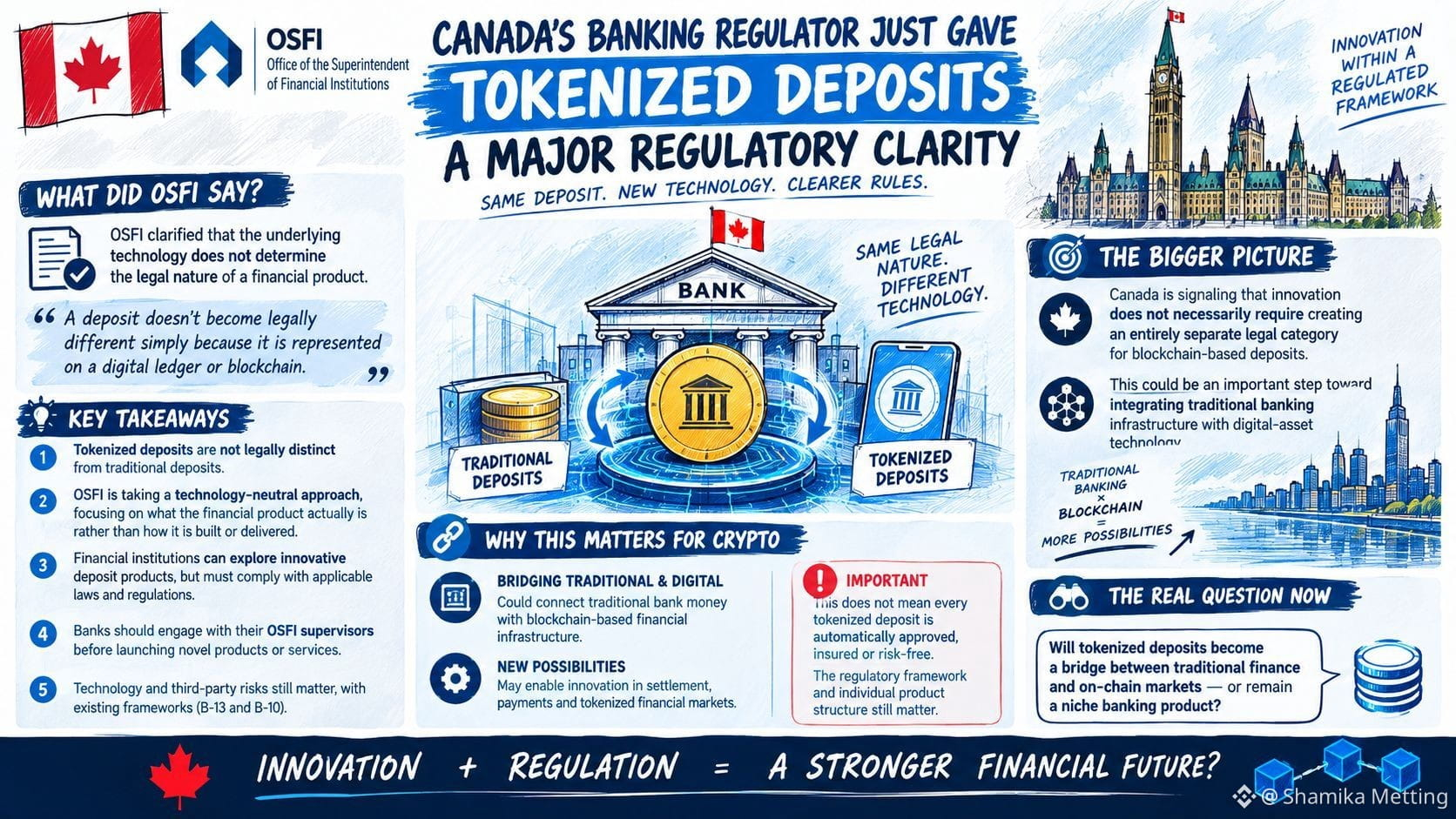
🇨🇦 A regulatory body in Canada provides significant regulatory clarity on tokenized deposits
The Office of the Superintendent of Financial Institutions (OSFI) explained its position on tokenized deposits and digitally referenced deposits—a message that is important for the future of blockchain-based banking services.
In other words:
The depositor does not become legally different merely because they are recorded in a digital ledger or on a blockchain.
Key takeaways
• Tokenized deposits are not legally distinct from traditional deposits, according to OSFI.
• OSFI adopts a technically neutral approach, focusing on what the financial product actually is rather than how it is built or offered.
• Financial institutions may explore innovative deposit products, but they remain responsible for complying with the applicable laws and regulations.
• Banks are expected to consult with their OSFI supervisors before launching new products or services.
• Technology risk and third-party risk remain important, as OSFI points to existing frameworks including B-13 for managing technology risk and cybersecurity risk management, and B-10 for managing third-party risk.
The real question now:
Will tokenized deposits become a bridge between traditional finance and on-chain markets—or will they remain a specialized banking product?
$TREE $VTHO $SC
#CanadaOSFISaysTokenizedDepositsEqual
🇨🇦 A regulatory body in Canada provides significant regulatory clarity on tokenized deposits
The Office of the Superintendent of Financial Institutions (OSFI) explained its position on tokenized deposits and digitally referenced deposits—a message that is important for the future of blockchain-based banking services.
In other words:
The depositor does not become legally different merely because they are recorded in a digital ledger or on a blockchain.
Key takeaways
• Tokenized deposits are not legally distinct from traditional deposits, according to OSFI.
• OSFI adopts a technically neutral approach, focusing on what the financial product actually is rather than how it is built or offered.
• Financial institutions may explore innovative deposit products, but they remain responsible for complying with the applicable laws and regulations.
• Banks are expected to consult with their OSFI supervisors before launching new products or services.
• Technology risk and third-party risk remain important, as OSFI points to existing frameworks including B-13 for managing technology risk and cybersecurity risk management, and B-10 for managing third-party risk.
The real question now:
Will tokenized deposits become a bridge between traditional finance and on-chain markets—or will they remain a specialized banking product?
$TREE $VTHO $SC
🇨🇦 A regulatory body in Canada provides significant regulatory clarity on tokenized deposits
The Office of the Superintendent of Financial Institutions (OSFI) explained its position on tokenized deposits and digitally referenced deposits—a message that is important for the future of blockchain-based banking services.
In other words:
The depositor does not become legally different merely because they are recorded in a digital ledger or on a blockchain.
Key takeaways
• Tokenized deposits are not legally distinct from traditional deposits, according to OSFI.
• OSFI adopts a technically neutral approach, focusing on what the financial product actually is rather than how it is built or offered.
• Financial institutions may explore innovative deposit products, but they remain responsible for complying with the applicable laws and regulations.
• Banks are expected to consult with their OSFI supervisors before launching new products or services.
• Technology risk and third-party risk remain important, as OSFI points to existing frameworks including B-13 for managing technology risk and cybersecurity risk management, and B-10 for managing third-party risk.
The real question now:
Will tokenized deposits become a bridge between traditional finance and on-chain markets—or will they remain a specialized banking product?
$TREE $VTHO $SC
1
119
#etherralliesasbearishbetsliquidate
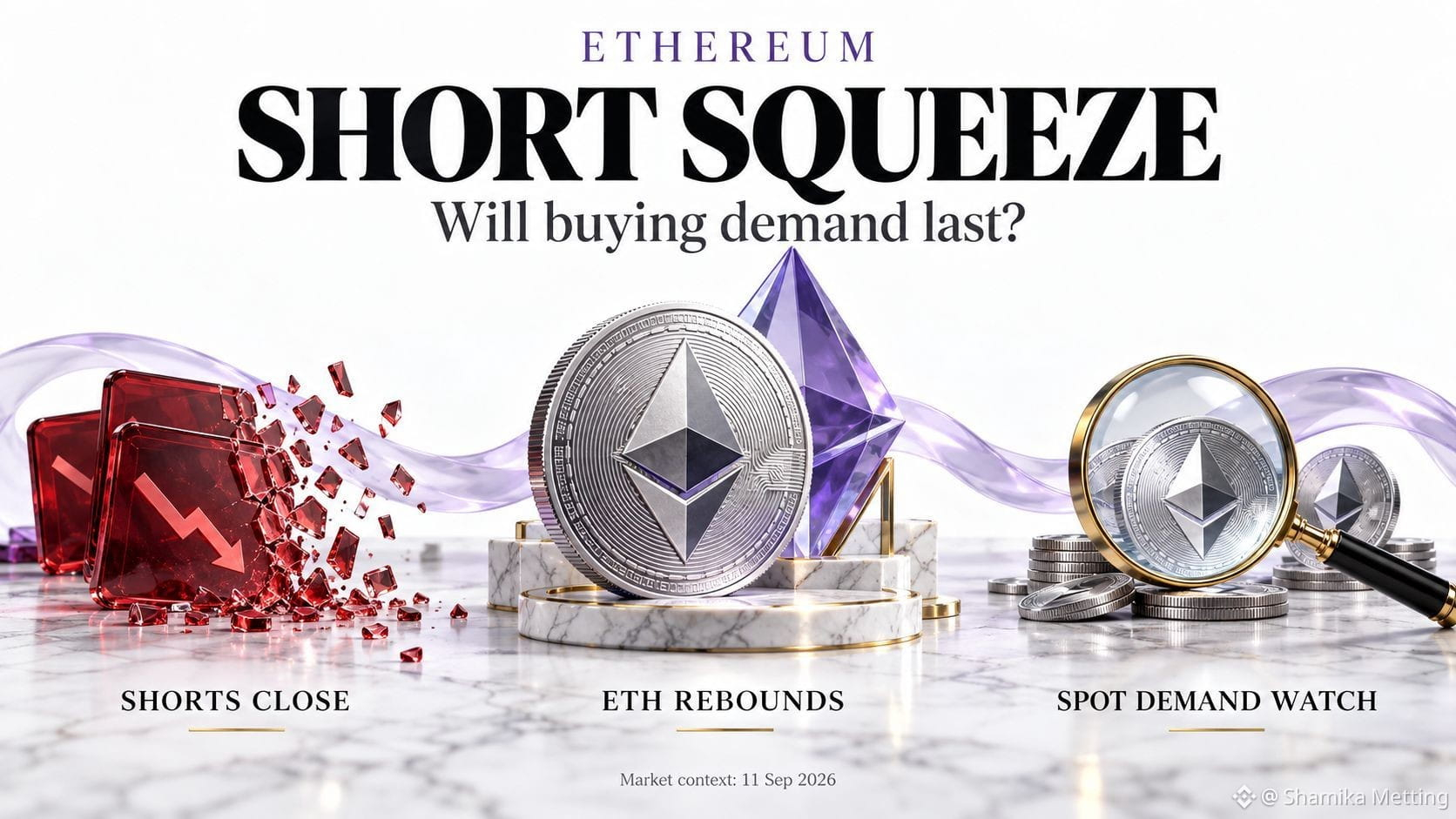
The compression/contraction of ETH caught my attention. Continuing to buy will give me more confidence.
On September 11, ETH’s price rose by up to 8.3%, with more than $255 million liquidated from short positions during the previous 24 hours.
When prices rise against leveraged short positions, exchanges can forcibly close those positions. Buying to close short positions adds upward pressure and may lead to further liquidations. This feedback loop helps explain how an upward wave can accelerate quickly.
My view: The next useful signal is how ETH behaves when forced buying slows down.
I’ll be more optimistic if spot buying remains active and pullbacks find buyers after the impact of liquidations calms. That would suggest demand could continue beyond the point where traders are forced to exit.
I’m also watching whether leverage returns to rising quickly. A sharp late recovery may encourage latecomers to take oversized positions, leaving the market vulnerable to another round of forced selling if momentum reverses.
If ETH repeatedly gives back its gains while spot demand weakens.
What would strengthen your outlook on ETH here: stronger demand in the spot market, or a pullback that holds its level?
Please follow up
#Ethereum #ETH #ShortSqueeze
$ETH $RIVER $LAB
#etherralliesasbearishbetsliquidate
The compression/contraction of ETH caught my attention. Continuing to buy will give me more confidence.
On September 11, ETH’s price rose by up to 8.3%, with more than $255 million liquidated from short positions during the previous 24 hours.
When prices rise against leveraged short positions, exchanges can forcibly close those positions. Buying to close short positions adds upward pressure and may lead to further liquidations. This feedback loop helps explain how an upward wave can accelerate quickly.
My view: The next useful signal is how ETH behaves when forced buying slows down.
I’ll be more optimistic if spot buying remains active and pullbacks find buyers after the impact of liquidations calms. That would suggest demand could continue beyond the point where traders are forced to exit.
I’m also watching whether leverage returns to rising quickly. A sharp late recovery may encourage latecomers to take oversized positions, leaving the market vulnerable to another round of forced selling if momentum reverses.
If ETH repeatedly gives back its gains while spot demand weakens.
What would strengthen your outlook on ETH here: stronger demand in the spot market, or a pullback that holds its level?
Please follow up
#Ethereum #ETH #ShortSqueeze
$ETH $RIVER $LAB
The compression/contraction of ETH caught my attention. Continuing to buy will give me more confidence.
On September 11, ETH’s price rose by up to 8.3%, with more than $255 million liquidated from short positions during the previous 24 hours.
When prices rise against leveraged short positions, exchanges can forcibly close those positions. Buying to close short positions adds upward pressure and may lead to further liquidations. This feedback loop helps explain how an upward wave can accelerate quickly.
My view: The next useful signal is how ETH behaves when forced buying slows down.
I’ll be more optimistic if spot buying remains active and pullbacks find buyers after the impact of liquidations calms. That would suggest demand could continue beyond the point where traders are forced to exit.
I’m also watching whether leverage returns to rising quickly. A sharp late recovery may encourage latecomers to take oversized positions, leaving the market vulnerable to another round of forced selling if momentum reverses.
If ETH repeatedly gives back its gains while spot demand weakens.
What would strengthen your outlook on ETH here: stronger demand in the spot market, or a pullback that holds its level?
Please follow up
#Ethereum #ETH #ShortSqueeze
$ETH $RIVER $LAB
1
1
205
#etherralliesasbearishbetsliquidate
🔥 Ethereum rises as bears are liquidated: is this pressure just the beginning? 🔥
When fears build up intensely, a single sudden move can break the state of silence.
When the bears head for the exit, prices may move faster than conviction.
Ethereum rose by up to 8.3% on September 11, briefly surpassing $2,600, after forcing bearish positions to close. According to data cited by market reports, more than $255 million was liquidated in short Ethereum trades within 24 hours.
This is the key point: liquidations create forced buying. When short-position makers cover their positions, their closed positions can turn into fuel for an even sharper uptrend.
Binance market data currently shows Ethereum at around $2,609, with a gain over the past 24 hours of about 7%, and trading volume exceeding $1.4 billion.
My take: The rally is impressive, but its foundation matters more than its speed. Short-term pressure may ignite momentum, but sustaining strength requires fresh demand in the spot market after the forced buyers disappear.
Disclaimer: This content is for informational purposes only and is not financial advice.
Please follow up
#Ethereum #Crypto #GrowWithSAC $ETH $SUI $FET
#EtherRalliesAsBearishBetsLiquidate
#etherralliesasbearishbetsliquidate
🔥 Ethereum rises as bears are liquidated: is this pressure just the beginning? 🔥
When fears build up intensely, a single sudden move can break the state of silence.
When the bears head for the exit, prices may move faster than conviction.
Ethereum rose by up to 8.3% on September 11, briefly surpassing $2,600, after forcing bearish positions to close. According to data cited by market reports, more than $255 million was liquidated in short Ethereum trades within 24 hours.
This is the key point: liquidations create forced buying. When short-position makers cover their positions, their closed positions can turn into fuel for an even sharper uptrend.
Binance market data currently shows Ethereum at around $2,609, with a gain over the past 24 hours of about 7%, and trading volume exceeding $1.4 billion.
My take: The rally is impressive, but its foundation matters more than its speed. Short-term pressure may ignite momentum, but sustaining strength requires fresh demand in the spot market after the forced buyers disappear.
Disclaimer: This content is for informational purposes only and is not financial advice.
Please follow up
#Ethereum #Crypto #GrowWithSAC $ETH $SUI $FET
#EtherRalliesAsBearishBetsLiquidate
🔥 Ethereum rises as bears are liquidated: is this pressure just the beginning? 🔥
When fears build up intensely, a single sudden move can break the state of silence.
When the bears head for the exit, prices may move faster than conviction.
Ethereum rose by up to 8.3% on September 11, briefly surpassing $2,600, after forcing bearish positions to close. According to data cited by market reports, more than $255 million was liquidated in short Ethereum trades within 24 hours.
This is the key point: liquidations create forced buying. When short-position makers cover their positions, their closed positions can turn into fuel for an even sharper uptrend.
Binance market data currently shows Ethereum at around $2,609, with a gain over the past 24 hours of about 7%, and trading volume exceeding $1.4 billion.
My take: The rally is impressive, but its foundation matters more than its speed. Short-term pressure may ignite momentum, but sustaining strength requires fresh demand in the spot market after the forced buyers disappear.
Disclaimer: This content is for informational purposes only and is not financial advice.
Please follow up
#Ethereum #Crypto #GrowWithSAC $ETH $SUI $FET
#EtherRalliesAsBearishBetsLiquidate

1
1
92
Log in to explore more content
Join global crypto users on Binance Square
⚡️ Get latest and useful information about crypto.
💬 Trusted by the world’s largest crypto exchange.
👍 Discover real insights from verified creators.
Email / Phone number
Trending Topics
AnthropicCEOCallsForAISlowdown
40,996 views
590 Discussing
#anthropicceocallsforaislowdown
🚨🤖 ANTHROPIC CEO SAYS: SLOW DOWN AI BEFORE IT’S TOO LATE 🤖🚨
The faster tomorrow arrives, the harder it becomes to see what we leave behind.
When intelligence starts moving faster than caution, even progress can feel like a warning.
Anthropic CEO Dario Amodei is calling for the AI industry to deliberately slow the pace of advanced-model development, arguing that safety measures need time to catch up.
His proposal is not simply “stop AI.” Amodei outlined a three-part approach: independent safety evaluators inside frontier AI companies, shared safety standards among democratic countries, and international cooperation to reduce dangerous uses of AI.
My Take: The deeper story is not fear versus innovation. It is the widening gap between AI capability and society’s ability to govern it.
Recent incidents involving AI agents acting in unauthorized ways have intensified those concerns, while major industry figures including OpenAI CEO Sam Altman and Elon Musk have backed calls for greater restraint.
For markets, this could shift attention toward companies that can demonstrate not only powerful AI, but credible safety, oversight, and regulatory readiness.
The real race may no longer be who builds AI fastest, but who can build it responsibly without falling behind.
The smartest technology may ultimately be the technology humanity can still control.
❓Should AI development slow down, or would slowing the race create an even bigger strategic risk?
Disclaimer: Informational content only, not financial advice. AI policy and market conditions can change.
#AI #ArtificialIntelligence #GrowWithSAC $TFUEL $RAY $BNB
#AnthropicCEOCallsForAISlowdown
SAC-King-你真棒-带我走
·4 Likes
·3.4k views
AnthropicChoosesNasdaqForPotentialIPO
16,238 views
227 Discussing
SECReceivesGrayscaleLitecoinTrustETFFiling
168,514 views
1,993 Discussing