

JOSEPH DESOZE
16.9k Posts

JOSEPH DESOZE
 Square Verified
Report
Block User
Crypto Enthusiast, Market Analyst; Gem Hunter Blockchain Believer.
Open Trade
Frequent Trader
2.1 Years
200 Following
30.1K+ Followers
18.7K+ Liked
Posts
Portfolio
All
Quotes
Live
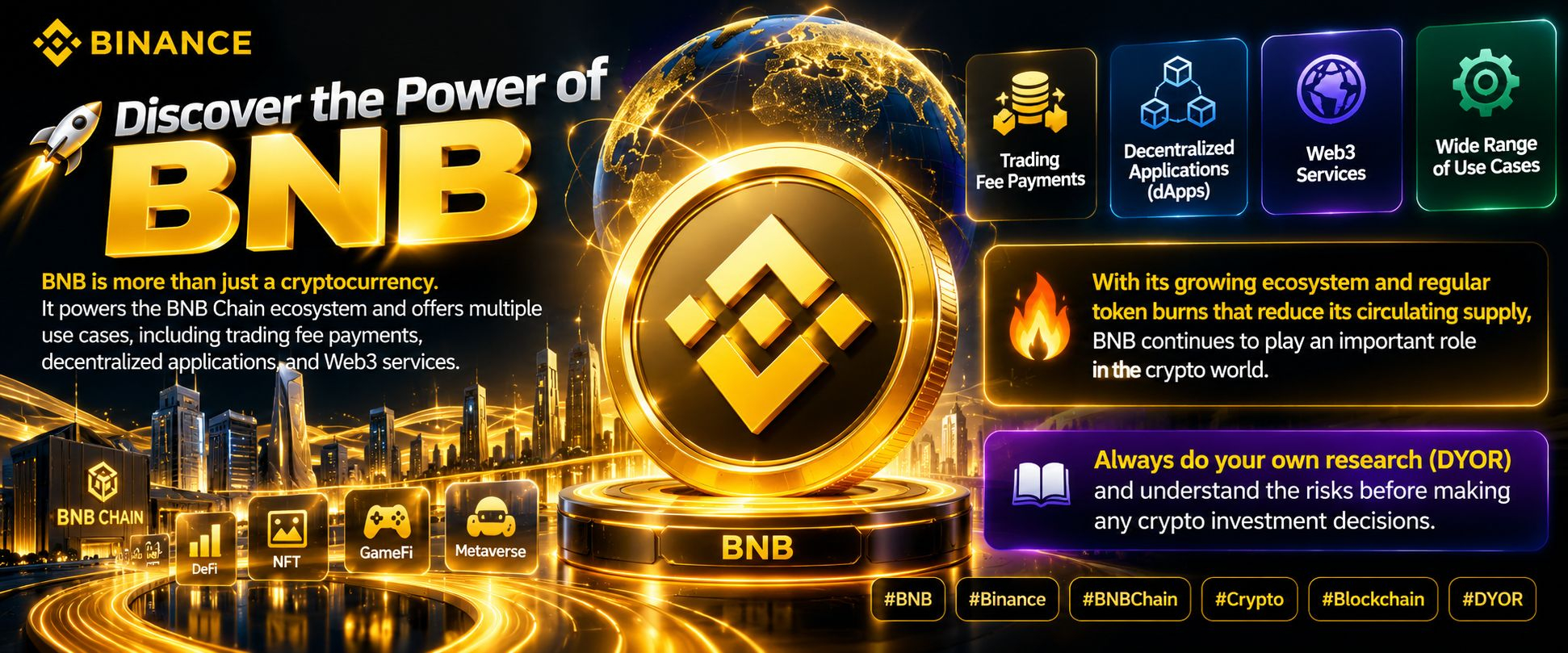
🚀 Discover the Power of BNB!
BNB is more than just a cryptocurrency. It powers the BNB Chain ecosystem and offers multiple use cases, including trading fee payments, decentralized applications, and Web3 services.
🔥 With its growing ecosystem and regular token burns that reduce its circulating supply, BNB continues to play an important role in the crypto world.
📚 Always do your own research (DYOR) and understand the risks before making any crypto investment decisions.
#BNB #Binance #BNBChain #Crypto #Blockchain #DYOR
🚀 Discover the Power of BNB!
BNB is more than just a cryptocurrency. It powers the BNB Chain ecosystem and offers multiple use cases, including trading fee payments, decentralized applications, and Web3 services.
🔥 With its growing ecosystem and regular token burns that reduce its circulating supply, BNB continues to play an important role in the crypto world.
📚 Always do your own research (DYOR) and understand the risks before making any crypto investment decisions.
#BNB #Binance #BNBChain #Crypto #Blockchain #DYOR
BNB is more than just a cryptocurrency. It powers the BNB Chain ecosystem and offers multiple use cases, including trading fee payments, decentralized applications, and Web3 services.
🔥 With its growing ecosystem and regular token burns that reduce its circulating supply, BNB continues to play an important role in the crypto world.
📚 Always do your own research (DYOR) and understand the risks before making any crypto investment decisions.
#BNB #Binance #BNBChain #Crypto #Blockchain #DYOR
168
#CanMicrosoftDeliverOnAI
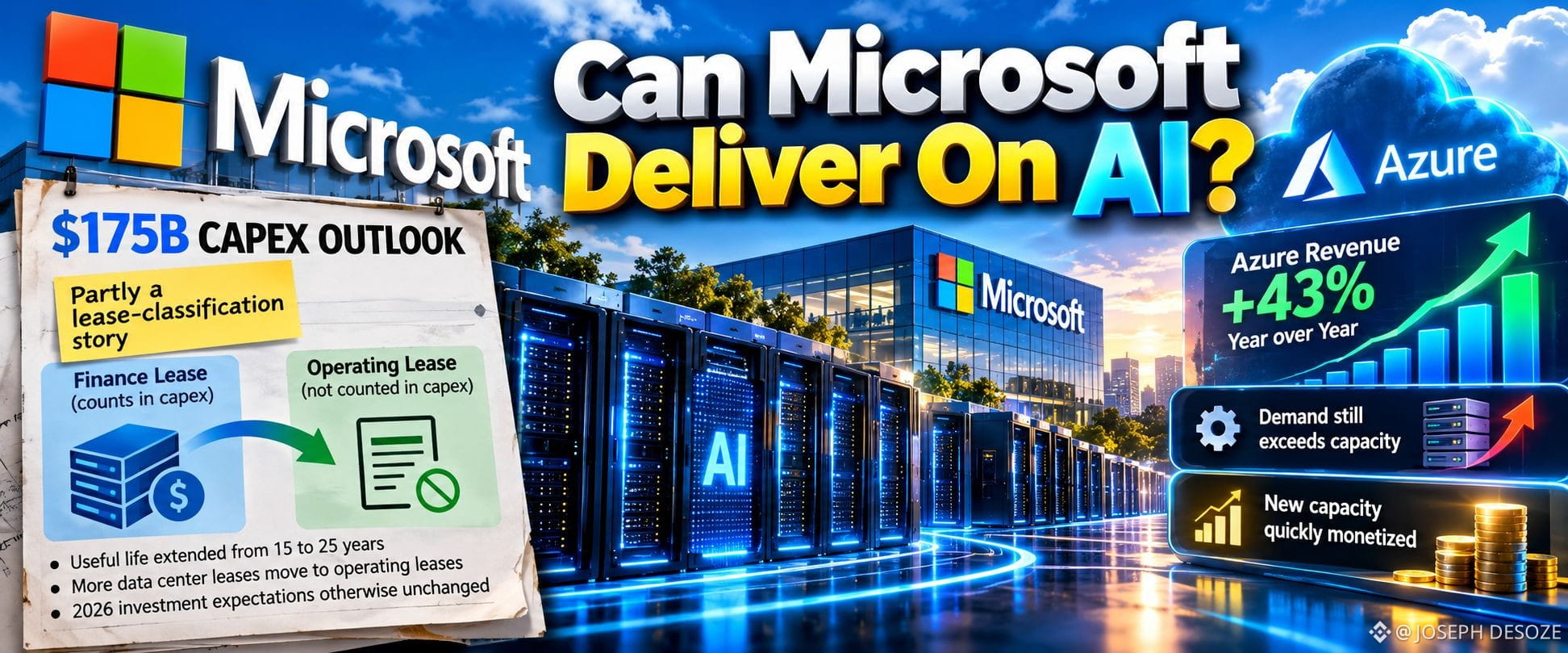
Why does this matter for CanMicrosoftDeliverOnAI? Spending is only an input. In Q4, Azure revenue grew 43% year over year, yet Microsoft said demand still exceeded available capacity. It also said new capacity delivered during the quarter was quickly monetized. That shows execution, but the supply gap remained.
I’d judge delivery by comparing capacity actually brought online with Azure growth and cloud gross-margin direction, not capex alone. Strong growth alongside improving margins would suggest infrastructure is becoming more productive; higher spending without those signals is harder to interpret.
The next report’s key detail is whether Microsoft is closing the capacity gap faster, while separating genuine build-out from lease-classification effects.
#AI
#CanMicrosoftDeliverOnAI
Why does this matter for CanMicrosoftDeliverOnAI? Spending is only an input. In Q4, Azure revenue grew 43% year over year, yet Microsoft said demand still exceeded available capacity. It also said new capacity delivered during the quarter was quickly monetized. That shows execution, but the supply gap remained.
I’d judge delivery by comparing capacity actually brought online with Azure growth and cloud gross-margin direction, not capex alone. Strong growth alongside improving margins would suggest infrastructure is becoming more productive; higher spending without those signals is harder to interpret.
The next report’s key detail is whether Microsoft is closing the capacity gap faster, while separating genuine build-out from lease-classification effects.
#AI
Why does this matter for CanMicrosoftDeliverOnAI? Spending is only an input. In Q4, Azure revenue grew 43% year over year, yet Microsoft said demand still exceeded available capacity. It also said new capacity delivered during the quarter was quickly monetized. That shows execution, but the supply gap remained.
I’d judge delivery by comparing capacity actually brought online with Azure growth and cloud gross-margin direction, not capex alone. Strong growth alongside improving margins would suggest infrastructure is becoming more productive; higher spending without those signals is harder to interpret.
The next report’s key detail is whether Microsoft is closing the capacity gap faster, while separating genuine build-out from lease-classification effects.
#AI
224
📈 $PANW
{future}(PANWUSDT)
Stock Trading Update | October 27*
💎 *Stock: Palo Alto Networks (PANW)*
💵 *Current Price: $402.69 (+3.13%)*
🟢 *Trading Strategy: CONTINUE HOLDING*
🎯 *Next Profit Target: $412*
🚀 *Extended Target: $420*
📈 *Market Outlook:*
PANW, one of the stocks we recommended yesterday, continues to perform well, gaining more than 3% today and reaching an intraday high of $403.49.
The stock maintains strong bullish momentum and is now approaching a key resistance zone around $403.50–$405.
👏 *Congratulations to everyone who has been following this opportunity!*
💰 *Profit Management:* We recommend continuing to hold existing positions. If PANW reaches $410–$412, members may consider taking partial profits on 25%–30% of their holdings while keeping the remaining shares for potential further gains toward $420.
⚠️ *Risk Management:* A sustained break below $396 would weaken the short-term bullish outlook and require a reassessment.
📌 *For now, our strategy remains unchanged: Continue holding and monitor the next profit target.*
📈 $PANW
Stock Trading Update | October 27*
💎 *Stock: Palo Alto Networks (PANW)*
💵 *Current Price: $402.69 (+3.13%)*
🟢 *Trading Strategy: CONTINUE HOLDING*
🎯 *Next Profit Target: $412*
🚀 *Extended Target: $420*
📈 *Market Outlook:*
PANW, one of the stocks we recommended yesterday, continues to perform well, gaining more than 3% today and reaching an intraday high of $403.49.
The stock maintains strong bullish momentum and is now approaching a key resistance zone around $403.50–$405.
👏 *Congratulations to everyone who has been following this opportunity!*
💰 *Profit Management:* We recommend continuing to hold existing positions. If PANW reaches $410–$412, members may consider taking partial profits on 25%–30% of their holdings while keeping the remaining shares for potential further gains toward $420.
⚠️ *Risk Management:* A sustained break below $396 would weaken the short-term bullish outlook and require a reassessment.
📌 *For now, our strategy remains unchanged: Continue holding and monitor the next profit target.*
Stock Trading Update | October 27*
💎 *Stock: Palo Alto Networks (PANW)*
💵 *Current Price: $402.69 (+3.13%)*
🟢 *Trading Strategy: CONTINUE HOLDING*
🎯 *Next Profit Target: $412*
🚀 *Extended Target: $420*
📈 *Market Outlook:*
PANW, one of the stocks we recommended yesterday, continues to perform well, gaining more than 3% today and reaching an intraday high of $403.49.
The stock maintains strong bullish momentum and is now approaching a key resistance zone around $403.50–$405.
👏 *Congratulations to everyone who has been following this opportunity!*
💰 *Profit Management:* We recommend continuing to hold existing positions. If PANW reaches $410–$412, members may consider taking partial profits on 25%–30% of their holdings while keeping the remaining shares for potential further gains toward $420.
⚠️ *Risk Management:* A sustained break below $396 would weaken the short-term bullish outlook and require a reassessment.
📌 *For now, our strategy remains unchanged: Continue holding and monitor the next profit target.*
224


Article
KITE BLOCKCHAIN: BUILDING A NEW FUTURE FOR AI PAYMENTSArtificial intelligence is changing the way we work, communicate, and interact with technology, and we’re entering a stage where AI can do much more than answer questions or generate content. AI agents are becoming capable of completing tasks, using online tools, gathering information, and making decisions with less human involvement. But as these systems become more independent, one important challenge remains: how can an AI agent pay for services safely without having unlimited access to its owner's money? This is the problem Kite is working to solve, bringing blockchain technology and autonomous AI together to create a more practical way for software to participate in the digital economy.
Kite is developing an EVM-compatible Layer 1 blockchain designed for payments and coordination between AI agents. Its broader infrastructure combines transaction settlement, verifiable identity, and programmable spending permissions, allowing agents to interact with supported services while following rules established by their owners. The project's native token, KITE, is intended to support ecosystem participation and incentives initially, with additional utility planned around staking, governance, and service-related economic activity. Rather than simply creating another network for transferring cryptocurrency, Kite is focusing on the financial infrastructure that autonomous software may need as it becomes more widely used.
Think about an AI assistant researching a business opportunity. It might need to purchase information from a paid database, access an API, or pay for additional computing resources before completing its work. Traditional payment systems often require accounts, subscriptions, and manual approvals, making it difficult for software to handle every step independently. Giving an agent unrestricted access to a payment card creates security concerns, while asking the owner to approve every small transaction makes automation less useful. Kite aims to address this problem by allowing payments to take place within predefined limits, helping agents work independently without removing human control.
One of Kite's most important features is its three-layer identity system, which separates the user, the agent, and the session. The user establishes the task and determines what the agent is allowed to do. The agent receives its own identity and appropriate permissions, while the session can limit spending according to a budget and time period. Through Kite Passport, users can authorize supported spending sessions using a passkey, allowing agents to complete permitted transactions without requiring individual approval for every payment. This creates a balance between convenience and control, although security still depends on properly configured permissions, reliable software, and responsible management of credentials.
The payment process is designed to make transactions a natural part of an AI agent's workflow. An agent can identify a service, check its payment requirements, obtain the necessary authorization, and pay for the resource it needs. Protocols such as x402 support this broader idea by allowing services to communicate payment requirements directly through online requests. Once payment is verified, the service can provide the requested resource, allowing the agent to continue its work. Kite's blockchain provides the settlement foundation, while its identity and payment tools help organize the interaction between the agent and the service provider.
Stablecoins also play an important role in Kite's approach. Its mainnet announcement identified USDC as an initial payment asset, allowing supported transactions to use a dollar-denominated token instead of relying entirely on a volatile cryptocurrency. This can make pricing easier to understand when agents purchase data, computing resources, or individual API requests. However, stablecoins still carry risks related to their issuers, reserves, liquidity, and underlying networks, so predictable pricing should not be confused with a complete absence of financial risk.
KITE has a maximum supply of 10 billion tokens, with published allocations of 48% for ecosystem and community initiatives, 12% for investors, 20% for modules, and 20% for the team, advisors, and early contributors. The initial utility model focuses on encouraging builders and service providers to participate in the ecosystem. Later phases are intended to introduce staking, governance, and mechanisms connecting service-related activity with the token. These functions could help align KITE with the network's development, but their economic importance will depend on actual implementation, real service demand, token emissions, and the amount of supply entering circulation.
Kite has progressed beyond the idea stage. PayPal Ventures announced an $18 million Series A investment in September 2025, and the KITE token launched in November 2025. The project subsequently introduced its mainnet and Kite Passport in 2026, providing developers with infrastructure for building and testing agent-payment applications. These milestones show continued development, but a live blockchain does not automatically guarantee widespread adoption. The next challenge is attracting independent developers, reliable service providers, and users who return because the technology solves a genuine problem.
Potential applications include paid research, automated business operations, software services, and online purchases completed within user-approved budgets. An agent could purchase specific information, pay for computing resources, or coordinate with other specialized agents to complete a larger task. These possibilities are promising, but they depend on reliable integrations, competitive costs, strong security, and clear procedures for handling failed payments or unsatisfactory services.
Kite also faces significant challenges. Smart-contract vulnerabilities, compromised integrations, poorly configured permissions, and misleading instructions can create risks for autonomous transactions. Competition from other payment protocols and blockchain networks could make adoption difficult, while regulatory requirements may affect how businesses use digital assets. Token unlocks and incentive distributions may also influence KITE's market performance, meaning that technological progress and token price should be evaluated separately.
For anyone following Kite, the most useful indicators include genuine transaction activity, repeat users, active Passports, settlement volume, payment costs, network reliability, and the number of independent services integrating its tools. KITE's circulating supply, upcoming unlocks, staking participation, and measurable service-related revenue are equally important for understanding its economic development. Real adoption and dependable performance will provide stronger evidence of progress than temporary market excitement.
Kite is working toward a future in which AI agents can do more than process information; they can participate in digital commerce while remaining accountable to the people behind them. There is still much to prove, especially around security, adoption, decentralization, and token utility, but the problem it addresses is becoming increasingly relevant. If Kite can make autonomous payments practical, affordable, and trustworthy, it could become a useful part of the infrastructure supporting the next generation of AI services. Ultimately, the goal is not simply to let machines move money faster, but to help them work independently while keeping human choice, responsibility, and trust at the center of the digital economy.
@GoKiteAI $KITE #kite #KİTE #KITE #AI #Blockchain #CryptoRewards #KITE #AI #Blockchain #Leaderboard #CryptoCampaign #BinanceSquare
KITE BLOCKCHAIN: BUILDING A NEW FUTURE FOR AI PAYMENTS
Artificial intelligence is changing the way we work, communicate, and interact with technology, and we’re entering a stage where AI can do much more than answer questions or generate content. AI agents are becoming capable of completing tasks, using online tools, gathering information, and making decisions with less human involvement. But as these systems become more independent, one important challenge remains: how can an AI agent pay for services safely without having unlimited access to its owner's money? This is the problem Kite is working to solve, bringing blockchain technology and autonomous AI together to create a more practical way for software to participate in the digital economy.
Kite is developing an EVM-compatible Layer 1 blockchain designed for payments and coordination between AI agents. Its broader infrastructure combines transaction settlement, verifiable identity, and programmable spending permissions, allowing agents to interact with supported services while following rules established by their owners. The project's native token, KITE, is intended to support ecosystem participation and incentives initially, with additional utility planned around staking, governance, and service-related economic activity. Rather than simply creating another network for transferring cryptocurrency, Kite is focusing on the financial infrastructure that autonomous software may need as it becomes more widely used.
Think about an AI assistant researching a business opportunity. It might need to purchase information from a paid database, access an API, or pay for additional computing resources before completing its work. Traditional payment systems often require accounts, subscriptions, and manual approvals, making it difficult for software to handle every step independently. Giving an agent unrestricted access to a payment card creates security concerns, while asking the owner to approve every small transaction makes automation less useful. Kite aims to address this problem by allowing payments to take place within predefined limits, helping agents work independently without removing human control.
One of Kite's most important features is its three-layer identity system, which separates the user, the agent, and the session. The user establishes the task and determines what the agent is allowed to do. The agent receives its own identity and appropriate permissions, while the session can limit spending according to a budget and time period. Through Kite Passport, users can authorize supported spending sessions using a passkey, allowing agents to complete permitted transactions without requiring individual approval for every payment. This creates a balance between convenience and control, although security still depends on properly configured permissions, reliable software, and responsible management of credentials.
The payment process is designed to make transactions a natural part of an AI agent's workflow. An agent can identify a service, check its payment requirements, obtain the necessary authorization, and pay for the resource it needs. Protocols such as x402 support this broader idea by allowing services to communicate payment requirements directly through online requests. Once payment is verified, the service can provide the requested resource, allowing the agent to continue its work. Kite's blockchain provides the settlement foundation, while its identity and payment tools help organize the interaction between the agent and the service provider.
Stablecoins also play an important role in Kite's approach. Its mainnet announcement identified USDC as an initial payment asset, allowing supported transactions to use a dollar-denominated token instead of relying entirely on a volatile cryptocurrency. This can make pricing easier to understand when agents purchase data, computing resources, or individual API requests. However, stablecoins still carry risks related to their issuers, reserves, liquidity, and underlying networks, so predictable pricing should not be confused with a complete absence of financial risk.
KITE has a maximum supply of 10 billion tokens, with published allocations of 48% for ecosystem and community initiatives, 12% for investors, 20% for modules, and 20% for the team, advisors, and early contributors. The initial utility model focuses on encouraging builders and service providers to participate in the ecosystem. Later phases are intended to introduce staking, governance, and mechanisms connecting service-related activity with the token. These functions could help align KITE with the network's development, but their economic importance will depend on actual implementation, real service demand, token emissions, and the amount of supply entering circulation.
Kite has progressed beyond the idea stage. PayPal Ventures announced an $18 million Series A investment in September 2025, and the KITE token launched in November 2025. The project subsequently introduced its mainnet and Kite Passport in 2026, providing developers with infrastructure for building and testing agent-payment applications. These milestones show continued development, but a live blockchain does not automatically guarantee widespread adoption. The next challenge is attracting independent developers, reliable service providers, and users who return because the technology solves a genuine problem.
Potential applications include paid research, automated business operations, software services, and online purchases completed within user-approved budgets. An agent could purchase specific information, pay for computing resources, or coordinate with other specialized agents to complete a larger task. These possibilities are promising, but they depend on reliable integrations, competitive costs, strong security, and clear procedures for handling failed payments or unsatisfactory services.
Kite also faces significant challenges. Smart-contract vulnerabilities, compromised integrations, poorly configured permissions, and misleading instructions can create risks for autonomous transactions. Competition from other payment protocols and blockchain networks could make adoption difficult, while regulatory requirements may affect how businesses use digital assets. Token unlocks and incentive distributions may also influence KITE's market performance, meaning that technological progress and token price should be evaluated separately.
For anyone following Kite, the most useful indicators include genuine transaction activity, repeat users, active Passports, settlement volume, payment costs, network reliability, and the number of independent services integrating its tools. KITE's circulating supply, upcoming unlocks, staking participation, and measurable service-related revenue are equally important for understanding its economic development. Real adoption and dependable performance will provide stronger evidence of progress than temporary market excitement.
Kite is working toward a future in which AI agents can do more than process information; they can participate in digital commerce while remaining accountable to the people behind them. There is still much to prove, especially around security, adoption, decentralization, and token utility, but the problem it addresses is becoming increasingly relevant. If Kite can make autonomous payments practical, affordable, and trustworthy, it could become a useful part of the infrastructure supporting the next generation of AI services. Ultimately, the goal is not simply to let machines move money faster, but to help them work independently while keeping human choice, responsibility, and trust at the center of the digital economy.
@KITE AI 中文 $KITE #kite #KİTE #KITE #AI #Blockchain #CryptoRewards #KITE #AI #Blockchain #Leaderboard #CryptoCampaign #BinanceSquare
Kite is developing an EVM-compatible Layer 1 blockchain designed for payments and coordination between AI agents. Its broader infrastructure combines transaction settlement, verifiable identity, and programmable spending permissions, allowing agents to interact with supported services while following rules established by their owners. The project's native token, KITE, is intended to support ecosystem participation and incentives initially, with additional utility planned around staking, governance, and service-related economic activity. Rather than simply creating another network for transferring cryptocurrency, Kite is focusing on the financial infrastructure that autonomous software may need as it becomes more widely used.
Think about an AI assistant researching a business opportunity. It might need to purchase information from a paid database, access an API, or pay for additional computing resources before completing its work. Traditional payment systems often require accounts, subscriptions, and manual approvals, making it difficult for software to handle every step independently. Giving an agent unrestricted access to a payment card creates security concerns, while asking the owner to approve every small transaction makes automation less useful. Kite aims to address this problem by allowing payments to take place within predefined limits, helping agents work independently without removing human control.
One of Kite's most important features is its three-layer identity system, which separates the user, the agent, and the session. The user establishes the task and determines what the agent is allowed to do. The agent receives its own identity and appropriate permissions, while the session can limit spending according to a budget and time period. Through Kite Passport, users can authorize supported spending sessions using a passkey, allowing agents to complete permitted transactions without requiring individual approval for every payment. This creates a balance between convenience and control, although security still depends on properly configured permissions, reliable software, and responsible management of credentials.
The payment process is designed to make transactions a natural part of an AI agent's workflow. An agent can identify a service, check its payment requirements, obtain the necessary authorization, and pay for the resource it needs. Protocols such as x402 support this broader idea by allowing services to communicate payment requirements directly through online requests. Once payment is verified, the service can provide the requested resource, allowing the agent to continue its work. Kite's blockchain provides the settlement foundation, while its identity and payment tools help organize the interaction between the agent and the service provider.
Stablecoins also play an important role in Kite's approach. Its mainnet announcement identified USDC as an initial payment asset, allowing supported transactions to use a dollar-denominated token instead of relying entirely on a volatile cryptocurrency. This can make pricing easier to understand when agents purchase data, computing resources, or individual API requests. However, stablecoins still carry risks related to their issuers, reserves, liquidity, and underlying networks, so predictable pricing should not be confused with a complete absence of financial risk.
KITE has a maximum supply of 10 billion tokens, with published allocations of 48% for ecosystem and community initiatives, 12% for investors, 20% for modules, and 20% for the team, advisors, and early contributors. The initial utility model focuses on encouraging builders and service providers to participate in the ecosystem. Later phases are intended to introduce staking, governance, and mechanisms connecting service-related activity with the token. These functions could help align KITE with the network's development, but their economic importance will depend on actual implementation, real service demand, token emissions, and the amount of supply entering circulation.
Kite has progressed beyond the idea stage. PayPal Ventures announced an $18 million Series A investment in September 2025, and the KITE token launched in November 2025. The project subsequently introduced its mainnet and Kite Passport in 2026, providing developers with infrastructure for building and testing agent-payment applications. These milestones show continued development, but a live blockchain does not automatically guarantee widespread adoption. The next challenge is attracting independent developers, reliable service providers, and users who return because the technology solves a genuine problem.
Potential applications include paid research, automated business operations, software services, and online purchases completed within user-approved budgets. An agent could purchase specific information, pay for computing resources, or coordinate with other specialized agents to complete a larger task. These possibilities are promising, but they depend on reliable integrations, competitive costs, strong security, and clear procedures for handling failed payments or unsatisfactory services.
Kite also faces significant challenges. Smart-contract vulnerabilities, compromised integrations, poorly configured permissions, and misleading instructions can create risks for autonomous transactions. Competition from other payment protocols and blockchain networks could make adoption difficult, while regulatory requirements may affect how businesses use digital assets. Token unlocks and incentive distributions may also influence KITE's market performance, meaning that technological progress and token price should be evaluated separately.
For anyone following Kite, the most useful indicators include genuine transaction activity, repeat users, active Passports, settlement volume, payment costs, network reliability, and the number of independent services integrating its tools. KITE's circulating supply, upcoming unlocks, staking participation, and measurable service-related revenue are equally important for understanding its economic development. Real adoption and dependable performance will provide stronger evidence of progress than temporary market excitement.
Kite is working toward a future in which AI agents can do more than process information; they can participate in digital commerce while remaining accountable to the people behind them. There is still much to prove, especially around security, adoption, decentralization, and token utility, but the problem it addresses is becoming increasingly relevant. If Kite can make autonomous payments practical, affordable, and trustworthy, it could become a useful part of the infrastructure supporting the next generation of AI services. Ultimately, the goal is not simply to let machines move money faster, but to help them work independently while keeping human choice, responsibility, and trust at the center of the digital economy.
@KITE AI 中文 $KITE #kite #KİTE #KITE #AI #Blockchain #CryptoRewards #KITE #AI #Blockchain #Leaderboard #CryptoCampaign #BinanceSquare
209
Article
StriveCEOHintsAtMoreBitcoinBuying #StriveCEOHintsAtMoreBitcoinBuying
Strive CEO Hints at More Bitcoin Buying: What Should Investors Watch Next?
What Just Happened?
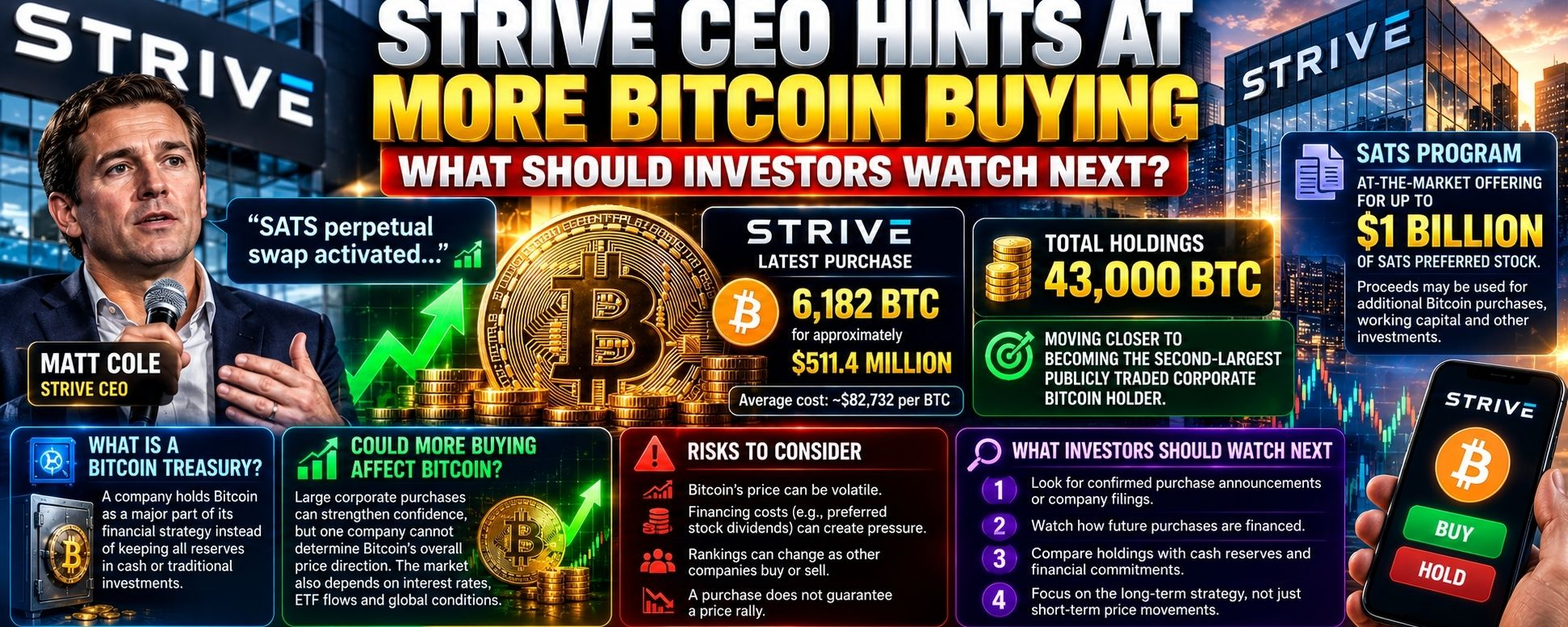
Strive has made another major move into Bitcoin, and its CEO, Matt Cole, has signaled that the company’s accumulation strategy may not be finished. On October 25, Cole shared a chart of Strive’s Bitcoin holdings with the message that the SATS perpetual swap had been activated, prompting speculation about another purchase announcement. On October 26, the company’s latest acquisition was reported: 6,182 BTC for approximately $511.4 million. This brings Strive’s reported Bitcoin holdings to 43,000 BTC.
The development matters because Strive is not simply buying Bitcoin as a short-term trade. It is building a corporate Bitcoin treasury, meaning the company holds Bitcoin as a major part of its financial strategy. For investors, the key question is whether this strategy can continue as the company raises capital, expands its holdings, and manages the risks of a volatile asset.
What Is a Bitcoin Treasury?
A Bitcoin treasury is a company's reserve of Bitcoin held on its balance sheet. Instead of keeping all its reserves in cash or traditional investments, a company chooses to hold some of its financial resources in BTC.
The strategy is based on the belief that Bitcoin's limited supply and potential long-term demand could make it a valuable reserve asset. However, Bitcoin's price can fall sharply, which means a company holding large amounts of it can also face substantial losses in market value.
Strive is following this approach by repeatedly acquiring Bitcoin and using capital-market tools to support its purchases. Its growing holdings make the company an important example of how publicly traded businesses are using Bitcoin as part of their financial plans.
How Big Is the Latest Purchase?
The latest reported acquisition involved 6,182 BTC at an average cost of approximately $82,732 per Bitcoin, bringing the company's total holdings to 43,000 BTC. The purchase was worth roughly $511.4 million.
That is a substantial increase in a short period. It also moves Strive closer to its stated ambition of becoming the second-largest publicly traded corporate Bitcoin holder.
However, rankings can change as other companies buy or sell Bitcoin. Reaching that position is a target, not a guaranteed outcome. The more important question is whether Strive can keep adding Bitcoin without creating excessive financial pressure on its business.
Why Does the SATS Program Matter?
One important detail is Strive's plan to establish an at-the-market offering program for up to $1 billion of its SATS preferred stock. An at-the-market program allows a company to sell securities gradually into the market, subject to the program's terms and market conditions.
Preferred stock is different from ordinary company shares. It can offer specified dividend payments and may have priority over common shares for certain distributions, depending on its terms.
Strive has said that proceeds from the program may be used for general corporate purposes, including additional Bitcoin purchases, working capital, and other investments. This creates a possible route for further accumulation, but it does not mean the full $1 billion has already been raised or will automatically be spent on Bitcoin.
Investors should also pay attention to the cost of this financing. Preferred stock with high dividend obligations can place pressure on a company's finances, especially if market conditions weaken or its ability to raise new capital declines.
Could More Buying Affect Bitcoin?
Large corporate purchases can attract attention because they show that some businesses are willing to commit significant amounts of capital to Bitcoin. Such activity may strengthen confidence among investors who believe long-term institutional demand will continue to grow.
But one company's buying activity cannot determine Bitcoin's overall price direction. The market also responds to interest rates, economic data, investor sentiment, exchange-traded fund flows, leverage, and selling by other holders.
A corporate purchase can be positive for market sentiment without immediately producing a price rally. If investors have already expected the announcement, some of its impact may also be reflected in the price before the news becomes public.
For that reason, traders should avoid assuming that another Strive purchase automatically means Bitcoin will rise.
What Should Beginners Watch Next?
There are four practical details worth monitoring as this story develops.
First, look for a confirmed purchase announcement or company filing. A social media hint can generate expectations, but only verified disclosures can establish the actual number of Bitcoin acquired, the purchase cost, and the timing.
Second, watch how the company finances future purchases. Money raised through preferred stock, common shares, or other instruments comes with different costs and obligations. The financing method matters just as much as the number of Bitcoin purchased.
Third, compare Strive's Bitcoin holdings with its cash reserves and financial commitments. A larger treasury can create more potential upside if Bitcoin appreciates, but it also increases exposure if prices fall.
Finally, separate the company's long-term strategy from short-term market movements. Bitcoin can experience major price swings even when corporate accumulation continues.
Does More Buying Mean More Confidence?
Strive's growing treasury shows a clear commitment to Bitcoin, but it should not be treated as proof that prices must rise. Corporate leaders make decisions based on their own strategies, funding arrangements, risk tolerance, and expectations. Those conditions may be very different from the circumstances facing an individual trader.
For Dragonfly Official readers, the lesson is to focus on the full picture rather than the headline alone. A large purchase is one piece of evidence. Funding costs, balance-sheet strength, market demand, and future disclosures help explain what it could mean over time.
The Practical Takeaway
Watch confirmed purchases, financing costs, and Bitcoin's wider market conditions together, because a company's growing Bitcoin treasury can signal conviction without guaranteeing profits or a rising market.
StriveCEOHintsAtMoreBitcoinBuying
#StriveCEOHintsAtMoreBitcoinBuying
Strive CEO Hints at More Bitcoin Buying: What Should Investors Watch Next?
What Just Happened?
Strive has made another major move into Bitcoin, and its CEO, Matt Cole, has signaled that the company’s accumulation strategy may not be finished. On October 25, Cole shared a chart of Strive’s Bitcoin holdings with the message that the SATS perpetual swap had been activated, prompting speculation about another purchase announcement. On October 26, the company’s latest acquisition was reported: 6,182 BTC for approximately $511.4 million. This brings Strive’s reported Bitcoin holdings to 43,000 BTC.
The development matters because Strive is not simply buying Bitcoin as a short-term trade. It is building a corporate Bitcoin treasury, meaning the company holds Bitcoin as a major part of its financial strategy. For investors, the key question is whether this strategy can continue as the company raises capital, expands its holdings, and manages the risks of a volatile asset.
What Is a Bitcoin Treasury?
A Bitcoin treasury is a company's reserve of Bitcoin held on its balance sheet. Instead of keeping all its reserves in cash or traditional investments, a company chooses to hold some of its financial resources in BTC.
The strategy is based on the belief that Bitcoin's limited supply and potential long-term demand could make it a valuable reserve asset. However, Bitcoin's price can fall sharply, which means a company holding large amounts of it can also face substantial losses in market value.
Strive is following this approach by repeatedly acquiring Bitcoin and using capital-market tools to support its purchases. Its growing holdings make the company an important example of how publicly traded businesses are using Bitcoin as part of their financial plans.
How Big Is the Latest Purchase?
The latest reported acquisition involved 6,182 BTC at an average cost of approximately $82,732 per Bitcoin, bringing the company's total holdings to 43,000 BTC. The purchase was worth roughly $511.4 million.
That is a substantial increase in a short period. It also moves Strive closer to its stated ambition of becoming the second-largest publicly traded corporate Bitcoin holder.
However, rankings can change as other companies buy or sell Bitcoin. Reaching that position is a target, not a guaranteed outcome. The more important question is whether Strive can keep adding Bitcoin without creating excessive financial pressure on its business.
Why Does the SATS Program Matter?
One important detail is Strive's plan to establish an at-the-market offering program for up to $1 billion of its SATS preferred stock. An at-the-market program allows a company to sell securities gradually into the market, subject to the program's terms and market conditions.
Preferred stock is different from ordinary company shares. It can offer specified dividend payments and may have priority over common shares for certain distributions, depending on its terms.
Strive has said that proceeds from the program may be used for general corporate purposes, including additional Bitcoin purchases, working capital, and other investments. This creates a possible route for further accumulation, but it does not mean the full $1 billion has already been raised or will automatically be spent on Bitcoin.
Investors should also pay attention to the cost of this financing. Preferred stock with high dividend obligations can place pressure on a company's finances, especially if market conditions weaken or its ability to raise new capital declines.
Could More Buying Affect Bitcoin?
Large corporate purchases can attract attention because they show that some businesses are willing to commit significant amounts of capital to Bitcoin. Such activity may strengthen confidence among investors who believe long-term institutional demand will continue to grow.
But one company's buying activity cannot determine Bitcoin's overall price direction. The market also responds to interest rates, economic data, investor sentiment, exchange-traded fund flows, leverage, and selling by other holders.
A corporate purchase can be positive for market sentiment without immediately producing a price rally. If investors have already expected the announcement, some of its impact may also be reflected in the price before the news becomes public.
For that reason, traders should avoid assuming that another Strive purchase automatically means Bitcoin will rise.
What Should Beginners Watch Next?
There are four practical details worth monitoring as this story develops.
First, look for a confirmed purchase announcement or company filing. A social media hint can generate expectations, but only verified disclosures can establish the actual number of Bitcoin acquired, the purchase cost, and the timing.
Second, watch how the company finances future purchases. Money raised through preferred stock, common shares, or other instruments comes with different costs and obligations. The financing method matters just as much as the number of Bitcoin purchased.
Third, compare Strive's Bitcoin holdings with its cash reserves and financial commitments. A larger treasury can create more potential upside if Bitcoin appreciates, but it also increases exposure if prices fall.
Finally, separate the company's long-term strategy from short-term market movements. Bitcoin can experience major price swings even when corporate accumulation continues.
Does More Buying Mean More Confidence?
Strive's growing treasury shows a clear commitment to Bitcoin, but it should not be treated as proof that prices must rise. Corporate leaders make decisions based on their own strategies, funding arrangements, risk tolerance, and expectations. Those conditions may be very different from the circumstances facing an individual trader.
For Dragonfly Official readers, the lesson is to focus on the full picture rather than the headline alone. A large purchase is one piece of evidence. Funding costs, balance-sheet strength, market demand, and future disclosures help explain what it could mean over time.
The Practical Takeaway
Watch confirmed purchases, financing costs, and Bitcoin's wider market conditions together, because a company's growing Bitcoin treasury can signal conviction without guaranteeing profits or a rising market.
Strive CEO Hints at More Bitcoin Buying: What Should Investors Watch Next?
What Just Happened?
Strive has made another major move into Bitcoin, and its CEO, Matt Cole, has signaled that the company’s accumulation strategy may not be finished. On October 25, Cole shared a chart of Strive’s Bitcoin holdings with the message that the SATS perpetual swap had been activated, prompting speculation about another purchase announcement. On October 26, the company’s latest acquisition was reported: 6,182 BTC for approximately $511.4 million. This brings Strive’s reported Bitcoin holdings to 43,000 BTC.
The development matters because Strive is not simply buying Bitcoin as a short-term trade. It is building a corporate Bitcoin treasury, meaning the company holds Bitcoin as a major part of its financial strategy. For investors, the key question is whether this strategy can continue as the company raises capital, expands its holdings, and manages the risks of a volatile asset.
What Is a Bitcoin Treasury?
A Bitcoin treasury is a company's reserve of Bitcoin held on its balance sheet. Instead of keeping all its reserves in cash or traditional investments, a company chooses to hold some of its financial resources in BTC.
The strategy is based on the belief that Bitcoin's limited supply and potential long-term demand could make it a valuable reserve asset. However, Bitcoin's price can fall sharply, which means a company holding large amounts of it can also face substantial losses in market value.
Strive is following this approach by repeatedly acquiring Bitcoin and using capital-market tools to support its purchases. Its growing holdings make the company an important example of how publicly traded businesses are using Bitcoin as part of their financial plans.
How Big Is the Latest Purchase?
The latest reported acquisition involved 6,182 BTC at an average cost of approximately $82,732 per Bitcoin, bringing the company's total holdings to 43,000 BTC. The purchase was worth roughly $511.4 million.
That is a substantial increase in a short period. It also moves Strive closer to its stated ambition of becoming the second-largest publicly traded corporate Bitcoin holder.
However, rankings can change as other companies buy or sell Bitcoin. Reaching that position is a target, not a guaranteed outcome. The more important question is whether Strive can keep adding Bitcoin without creating excessive financial pressure on its business.
Why Does the SATS Program Matter?
One important detail is Strive's plan to establish an at-the-market offering program for up to $1 billion of its SATS preferred stock. An at-the-market program allows a company to sell securities gradually into the market, subject to the program's terms and market conditions.
Preferred stock is different from ordinary company shares. It can offer specified dividend payments and may have priority over common shares for certain distributions, depending on its terms.
Strive has said that proceeds from the program may be used for general corporate purposes, including additional Bitcoin purchases, working capital, and other investments. This creates a possible route for further accumulation, but it does not mean the full $1 billion has already been raised or will automatically be spent on Bitcoin.
Investors should also pay attention to the cost of this financing. Preferred stock with high dividend obligations can place pressure on a company's finances, especially if market conditions weaken or its ability to raise new capital declines.
Could More Buying Affect Bitcoin?
Large corporate purchases can attract attention because they show that some businesses are willing to commit significant amounts of capital to Bitcoin. Such activity may strengthen confidence among investors who believe long-term institutional demand will continue to grow.
But one company's buying activity cannot determine Bitcoin's overall price direction. The market also responds to interest rates, economic data, investor sentiment, exchange-traded fund flows, leverage, and selling by other holders.
A corporate purchase can be positive for market sentiment without immediately producing a price rally. If investors have already expected the announcement, some of its impact may also be reflected in the price before the news becomes public.
For that reason, traders should avoid assuming that another Strive purchase automatically means Bitcoin will rise.
What Should Beginners Watch Next?
There are four practical details worth monitoring as this story develops.
First, look for a confirmed purchase announcement or company filing. A social media hint can generate expectations, but only verified disclosures can establish the actual number of Bitcoin acquired, the purchase cost, and the timing.
Second, watch how the company finances future purchases. Money raised through preferred stock, common shares, or other instruments comes with different costs and obligations. The financing method matters just as much as the number of Bitcoin purchased.
Third, compare Strive's Bitcoin holdings with its cash reserves and financial commitments. A larger treasury can create more potential upside if Bitcoin appreciates, but it also increases exposure if prices fall.
Finally, separate the company's long-term strategy from short-term market movements. Bitcoin can experience major price swings even when corporate accumulation continues.
Does More Buying Mean More Confidence?
Strive's growing treasury shows a clear commitment to Bitcoin, but it should not be treated as proof that prices must rise. Corporate leaders make decisions based on their own strategies, funding arrangements, risk tolerance, and expectations. Those conditions may be very different from the circumstances facing an individual trader.
For Dragonfly Official readers, the lesson is to focus on the full picture rather than the headline alone. A large purchase is one piece of evidence. Funding costs, balance-sheet strength, market demand, and future disclosures help explain what it could mean over time.
The Practical Takeaway
Watch confirmed purchases, financing costs, and Bitcoin's wider market conditions together, because a company's growing Bitcoin treasury can signal conviction without guaranteeing profits or a rising market.
125
With this $BTC crash, is this just a bull-market shakeout, or has the bull market ended? Here’s my take.
I’ve looked at recent ETF fund flows, liquidation data, and market trends. For now, it feels short-term bearish, but it’s too early to say the bull market is over.
There are several main reasons:
1. There have been signs of recent outflows.
On October 22 and 23, U.S. spot BTC ETFs saw consecutive net outflows, totaling about $773 million, which shows that buying has indeed weakened recently. However, these two days of data alone aren’t enough to confirm that institutions have started withdrawing on a sustained basis.
2. Part of this decline was caused by liquidations of long positions.
On October 24, in just four hours, around $436 million in positions were liquidated across the crypto market, more than 90% of them long positions.
With this $BTC crash, is this just a bull-market shakeout, or has the bull market ended? Here’s my take.
I’ve looked at recent ETF fund flows, liquidation data, and market trends. For now, it feels short-term bearish, but it’s too early to say the bull market is over.
There are several main reasons:
1. There have been signs of recent outflows.
On October 22 and 23, U.S. spot BTC ETFs saw consecutive net outflows, totaling about $773 million, which shows that buying has indeed weakened recently. However, these two days of data alone aren’t enough to confirm that institutions have started withdrawing on a sustained basis.
2. Part of this decline was caused by liquidations of long positions.
On October 24, in just four hours, around $436 million in positions were liquidated across the crypto market, more than 90% of them long positions.
I’ve looked at recent ETF fund flows, liquidation data, and market trends. For now, it feels short-term bearish, but it’s too early to say the bull market is over.
There are several main reasons:
1. There have been signs of recent outflows.
On October 22 and 23, U.S. spot BTC ETFs saw consecutive net outflows, totaling about $773 million, which shows that buying has indeed weakened recently. However, these two days of data alone aren’t enough to confirm that institutions have started withdrawing on a sustained basis.
2. Part of this decline was caused by liquidations of long positions.
On October 24, in just four hours, around $436 million in positions were liquidated across the crypto market, more than 90% of them long positions.
148
$BULLA | The Rally Is Heating Up
BULLA has climbed from the 0.1100 entry zone to 0.1480, marking an impressive 34.5% gain from the original call.
What's next?
Entry: 0.1100 (previous call)
Resistance: 0.1500
Targets: 0.1600 / 0.1800 / 0.2000+
A confirmed breakout above 0.1500 could strengthen the bullish momentum and open the door toward 0.1800–0.2000.
Key support: 0.1000
My view: Bulls have momentum, but confirmation matters. Avoid chasing a sharp move without a clear setup, and consider protecting profits along the way.
Stay disciplined. Manage risk.
{future}(BULLAUSDT)
$BULLA | The Rally Is Heating Up
BULLA has climbed from the 0.1100 entry zone to 0.1480, marking an impressive 34.5% gain from the original call.
What's next?
Entry: 0.1100 (previous call)
Resistance: 0.1500
Targets: 0.1600 / 0.1800 / 0.2000+
A confirmed breakout above 0.1500 could strengthen the bullish momentum and open the door toward 0.1800–0.2000.
Key support: 0.1000
My view: Bulls have momentum, but confirmation matters. Avoid chasing a sharp move without a clear setup, and consider protecting profits along the way.
Stay disciplined. Manage risk.
BULLA has climbed from the 0.1100 entry zone to 0.1480, marking an impressive 34.5% gain from the original call.
What's next?
Entry: 0.1100 (previous call)
Resistance: 0.1500
Targets: 0.1600 / 0.1800 / 0.2000+
A confirmed breakout above 0.1500 could strengthen the bullish momentum and open the door toward 0.1800–0.2000.
Key support: 0.1000
My view: Bulls have momentum, but confirmation matters. Avoid chasing a sharp move without a clear setup, and consider protecting profits along the way.
Stay disciplined. Manage risk.
130
Article
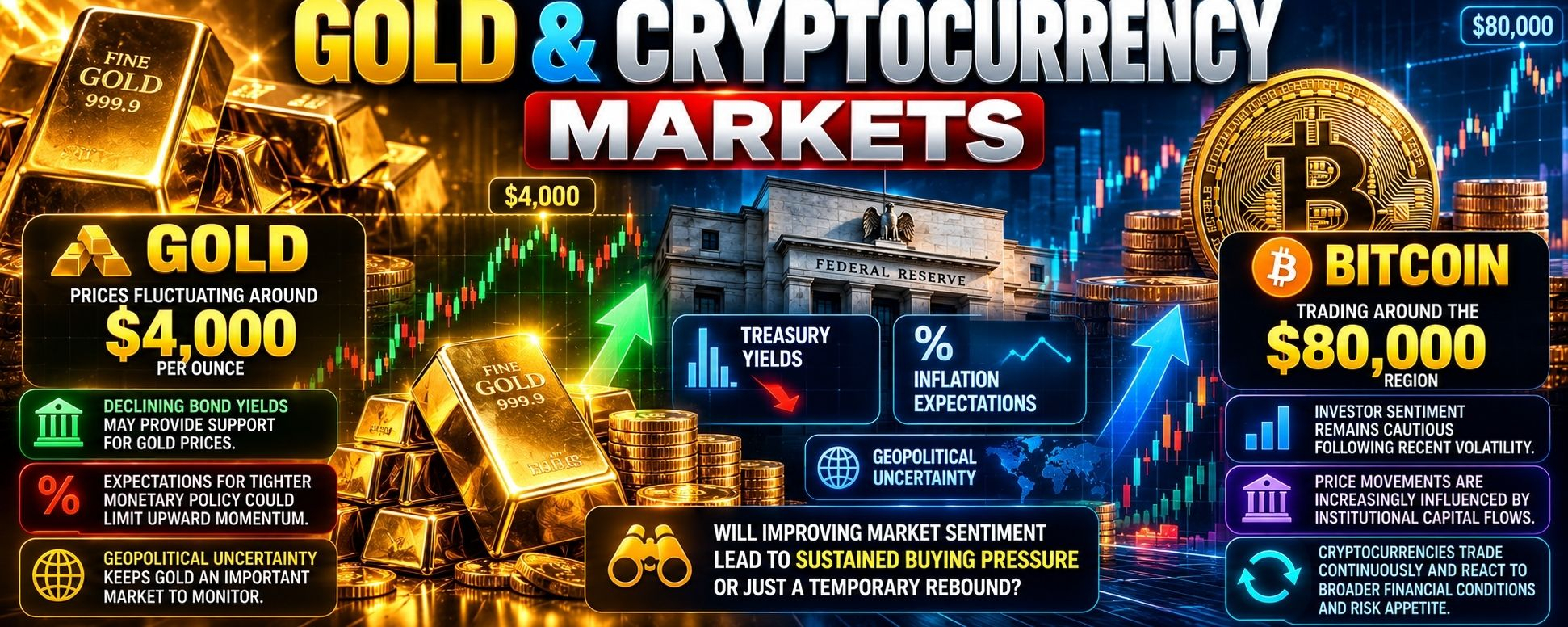
*Gold & Cryptocurrency Markets*Gold remains an important market to monitor as investors assess changes in Treasury yields, inflation expectations, and geopolitical uncertainty.
Prices have recently fluctuated around the psychologically important *$4,000-per-ounce region*.
Declining bond yields may provide support, but expectations for tighter monetary policy could limit upward momentum.
Meanwhile, Bitcoin continues trading around the *$80,000 region*, with investor sentiment remaining cautious following recent volatility.
Although cryptocurrencies trade continuously, their price movements are increasingly influenced by broader financial conditions, institutional capital flows, and changes in risk appetite.
For both gold and Bitcoin, I will be watching whether improving market sentiment translates into sustained buying pressure rather than temporary rebounds.
#GOLO #cryptouniverseofficial #BTC走势分析 $BTC
*Gold & Cryptocurrency Markets*
Gold remains an important market to monitor as investors assess changes in Treasury yields, inflation expectations, and geopolitical uncertainty.
Prices have recently fluctuated around the psychologically important *$4,000-per-ounce region*.
Declining bond yields may provide support, but expectations for tighter monetary policy could limit upward momentum.
Meanwhile, Bitcoin continues trading around the *$80,000 region*, with investor sentiment remaining cautious following recent volatility.
Although cryptocurrencies trade continuously, their price movements are increasingly influenced by broader financial conditions, institutional capital flows, and changes in risk appetite.
For both gold and Bitcoin, I will be watching whether improving market sentiment translates into sustained buying pressure rather than temporary rebounds.
#GOLO #cryptouniverseofficial #BTC走势分析 $BTC
Prices have recently fluctuated around the psychologically important *$4,000-per-ounce region*.
Declining bond yields may provide support, but expectations for tighter monetary policy could limit upward momentum.
Meanwhile, Bitcoin continues trading around the *$80,000 region*, with investor sentiment remaining cautious following recent volatility.
Although cryptocurrencies trade continuously, their price movements are increasingly influenced by broader financial conditions, institutional capital flows, and changes in risk appetite.
For both gold and Bitcoin, I will be watching whether improving market sentiment translates into sustained buying pressure rather than temporary rebounds.
#GOLO #cryptouniverseofficial #BTC走势分析 $BTC
216
🚀 *Tesla ($TSLA ) — Watching the Sustainability of Buying Interest*
Tesla is another stock attracting attention following renewed analyst interest.
However, recent concerns surrounding earnings performance and future growth expectations remain relevant.
Rather than focusing exclusively on an initial price reaction, I will be watching whether buyers can maintain momentum and whether trading volume supports any potential breakout.
A sustained recovery generally requires more than a favorable headline. It needs continued demand and improving market confidence.
🌎 *Brazilian Equities — Political Developments Create Volatility*
Brazilian financial assets are also experiencing significant uncertainty following the country's presidential election.
The election outcome has raised questions about future fiscal policy, government spending, and the outlook for economic reforms.
Brazil-focused investment products, including the *iShares MSCI Brazil ETF (EWZ)*, have attracted attention as investors reassess political and economic risks.
This is a reminder that political developments can influence equity valuations very quickly, particularly when outcomes differ from market expectations.
#BinancePick #EarningsSeason #AI #SouthKoreaReportedlyWeighsFourthCryptoTaxDelay #FranklinTempletonFilesForTwoDividendToBitcoinETFs
🚀 *Tesla ($TSLA ) — Watching the Sustainability of Buying Interest*
Tesla is another stock attracting attention following renewed analyst interest.
However, recent concerns surrounding earnings performance and future growth expectations remain relevant.
Rather than focusing exclusively on an initial price reaction, I will be watching whether buyers can maintain momentum and whether trading volume supports any potential breakout.
A sustained recovery generally requires more than a favorable headline. It needs continued demand and improving market confidence.
🌎 *Brazilian Equities — Political Developments Create Volatility*
Brazilian financial assets are also experiencing significant uncertainty following the country's presidential election.
The election outcome has raised questions about future fiscal policy, government spending, and the outlook for economic reforms.
Brazil-focused investment products, including the *iShares MSCI Brazil ETF (EWZ)*, have attracted attention as investors reassess political and economic risks.
This is a reminder that political developments can influence equity valuations very quickly, particularly when outcomes differ from market expectations.
#BinancePick #EarningsSeason #AI #SouthKoreaReportedlyWeighsFourthCryptoTaxDelay #FranklinTempletonFilesForTwoDividendToBitcoinETFs
Tesla is another stock attracting attention following renewed analyst interest.
However, recent concerns surrounding earnings performance and future growth expectations remain relevant.
Rather than focusing exclusively on an initial price reaction, I will be watching whether buyers can maintain momentum and whether trading volume supports any potential breakout.
A sustained recovery generally requires more than a favorable headline. It needs continued demand and improving market confidence.
🌎 *Brazilian Equities — Political Developments Create Volatility*
Brazilian financial assets are also experiencing significant uncertainty following the country's presidential election.
The election outcome has raised questions about future fiscal policy, government spending, and the outlook for economic reforms.
Brazil-focused investment products, including the *iShares MSCI Brazil ETF (EWZ)*, have attracted attention as investors reassess political and economic risks.
This is a reminder that political developments can influence equity valuations very quickly, particularly when outcomes differ from market expectations.
#BinancePick #EarningsSeason #AI #SouthKoreaReportedlyWeighsFourthCryptoTaxDelay #FranklinTempletonFilesForTwoDividendToBitcoinETFs
954
🔎 *Verizon (VZ) — Stronger Fundamentals Attract Attention*
Verizon has emerged as one of the more interesting companies to watch following its latest quarterly results.
The telecommunications company reported approximately *406,000 net additions in postpaid phone subscribers*, significantly exceeding market expectations.
Verizon also raised its full-year earnings outlook and announced an artificial intelligence infrastructure agreement with Amazon Web Services valued at approximately *$2 billion*.
These developments are particularly noteworthy because telecommunications companies have recently faced concerns about potential competition from satellite-based communication services, including SpaceX.
Verizon's results suggest that its core wireless business continues to demonstrate resilience.
The important question now is whether improved operating performance can support sustained investor demand beyond the initial reaction to earnings.
$SPACE #SpaceX #Verizon
🔎 *Verizon (VZ) — Stronger Fundamentals Attract Attention*
Verizon has emerged as one of the more interesting companies to watch following its latest quarterly results.
The telecommunications company reported approximately *406,000 net additions in postpaid phone subscribers*, significantly exceeding market expectations.
Verizon also raised its full-year earnings outlook and announced an artificial intelligence infrastructure agreement with Amazon Web Services valued at approximately *$2 billion*.
These developments are particularly noteworthy because telecommunications companies have recently faced concerns about potential competition from satellite-based communication services, including SpaceX.
Verizon's results suggest that its core wireless business continues to demonstrate resilience.
The important question now is whether improved operating performance can support sustained investor demand beyond the initial reaction to earnings.
$SPACE #SpaceX #Verizon
Verizon has emerged as one of the more interesting companies to watch following its latest quarterly results.
The telecommunications company reported approximately *406,000 net additions in postpaid phone subscribers*, significantly exceeding market expectations.
Verizon also raised its full-year earnings outlook and announced an artificial intelligence infrastructure agreement with Amazon Web Services valued at approximately *$2 billion*.
These developments are particularly noteworthy because telecommunications companies have recently faced concerns about potential competition from satellite-based communication services, including SpaceX.
Verizon's results suggest that its core wireless business continues to demonstrate resilience.
The important question now is whether improved operating performance can support sustained investor demand beyond the initial reaction to earnings.
$SPACE #SpaceX #Verizon

212
Verified
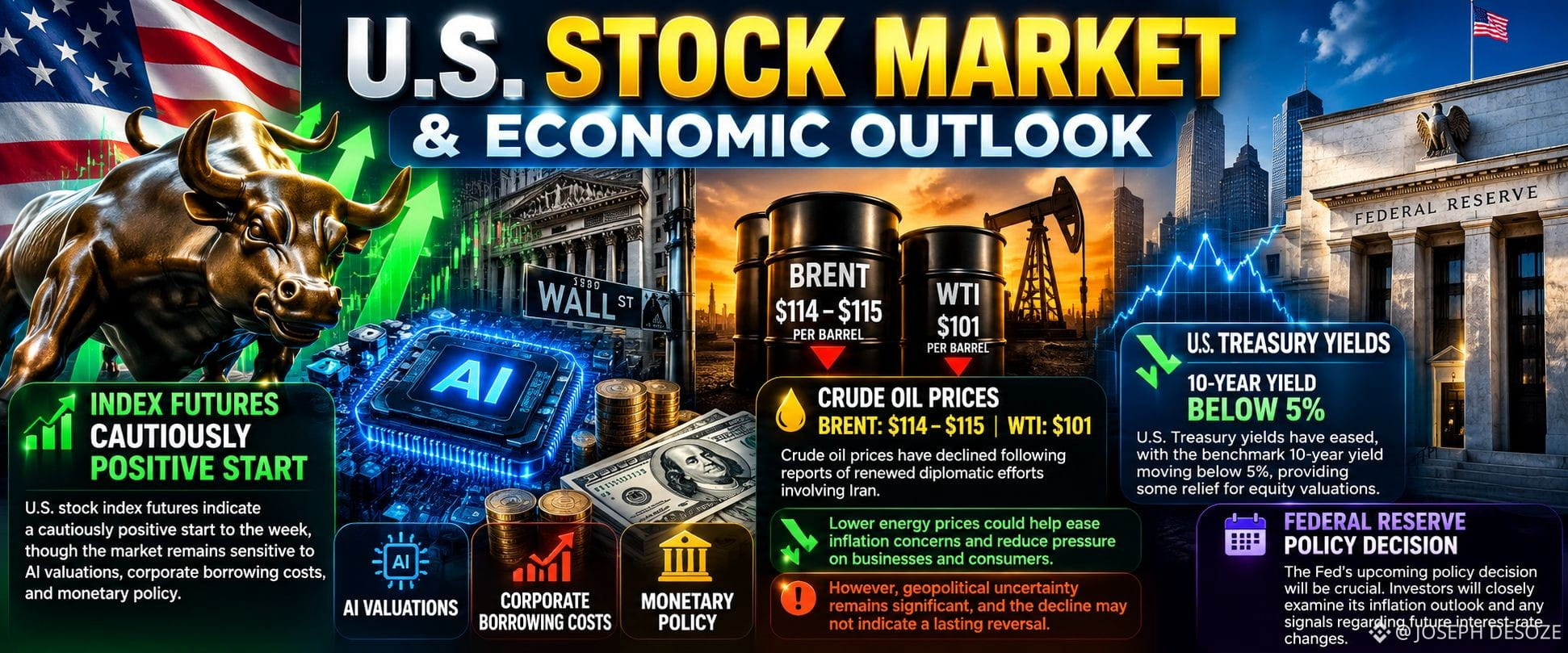
📊 *U.S. Stock Market & Economic Outlook*
U.S. stock index futures have indicated a cautiously positive start to the week, although the broader market remains sensitive to concerns surrounding artificial intelligence valuations, corporate borrowing costs, and monetary policy.
One encouraging development is the recent decline in crude oil prices. Brent crude has retreated toward $114–$115 per barrel, while WTI has traded near $101, following reports of renewed diplomatic efforts involving Iran.
Lower energy prices could help ease inflation concerns and reduce pressure on businesses and consumers. However, geopolitical uncertainty remains significant, and a temporary decline in oil prices does not necessarily indicate a lasting reversal.
U.S. Treasury yields have also eased, with the benchmark 10-year yield moving below 5%, providing some relief for equity valuations.
The Federal Reserve's upcoming policy decision will be particularly important. Investors will closely examine its inflation outlook and any signals regarding future interest-rate changes.
#US #AI
📊 *U.S. Stock Market & Economic Outlook*
U.S. stock index futures have indicated a cautiously positive start to the week, although the broader market remains sensitive to concerns surrounding artificial intelligence valuations, corporate borrowing costs, and monetary policy.
One encouraging development is the recent decline in crude oil prices. Brent crude has retreated toward $114–$115 per barrel, while WTI has traded near $101, following reports of renewed diplomatic efforts involving Iran.
Lower energy prices could help ease inflation concerns and reduce pressure on businesses and consumers. However, geopolitical uncertainty remains significant, and a temporary decline in oil prices does not necessarily indicate a lasting reversal.
U.S. Treasury yields have also eased, with the benchmark 10-year yield moving below 5%, providing some relief for equity valuations.
The Federal Reserve's upcoming policy decision will be particularly important. Investors will closely examine its inflation outlook and any signals regarding future interest-rate changes.
#US #AI
U.S. stock index futures have indicated a cautiously positive start to the week, although the broader market remains sensitive to concerns surrounding artificial intelligence valuations, corporate borrowing costs, and monetary policy.
One encouraging development is the recent decline in crude oil prices. Brent crude has retreated toward $114–$115 per barrel, while WTI has traded near $101, following reports of renewed diplomatic efforts involving Iran.
Lower energy prices could help ease inflation concerns and reduce pressure on businesses and consumers. However, geopolitical uncertainty remains significant, and a temporary decline in oil prices does not necessarily indicate a lasting reversal.
U.S. Treasury yields have also eased, with the benchmark 10-year yield moving below 5%, providing some relief for equity valuations.
The Federal Reserve's upcoming policy decision will be particularly important. Investors will closely examine its inflation outlook and any signals regarding future interest-rate changes.
#US #AI
1
1k
Article
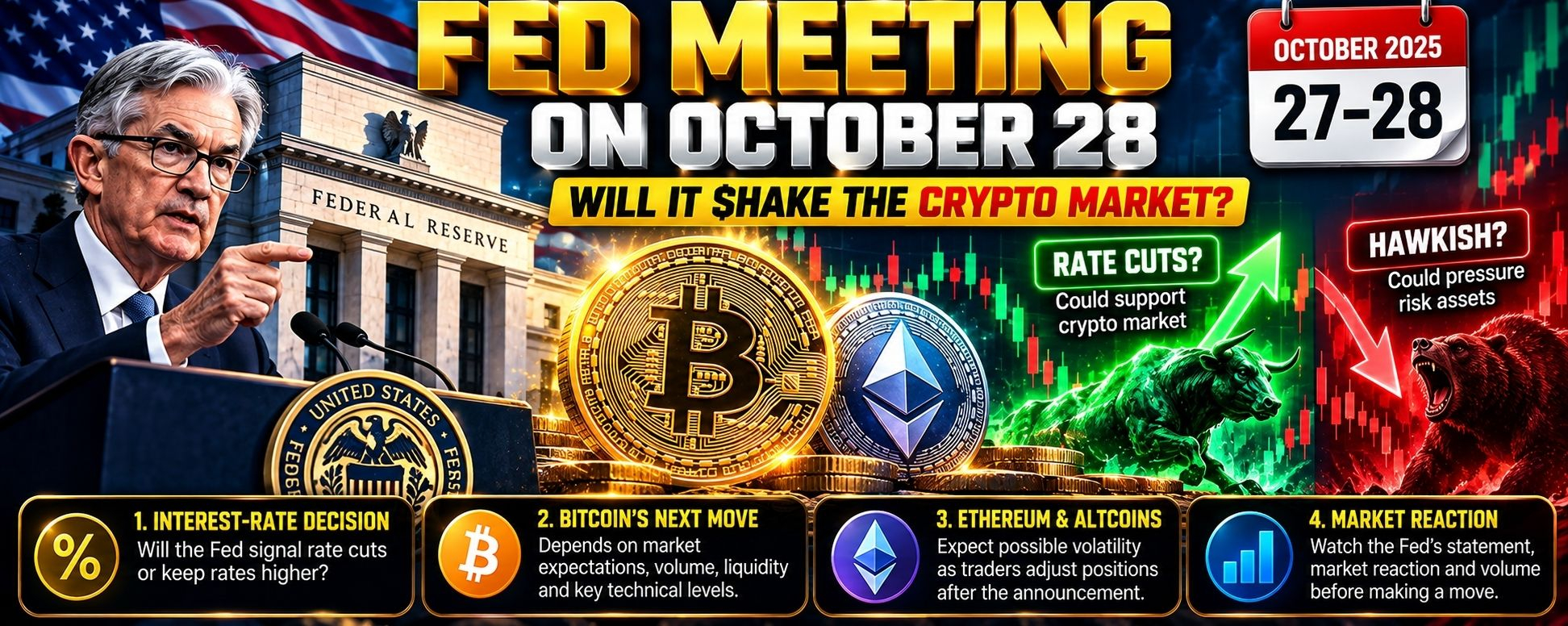
FOMC Decision Ahead: Will the Fed Trigger a Bitcoin Rally or a Crypto Sell-Off?🔥 FED meeting on October 28: Will It Shake the Crypto Market? 🚨 The crypto market is approaching a key macro event. The upcoming US Federal Reserve meeting on October 27–28 could influence Bitcoin, Ethereum, and the wider crypto market. Traders will be watching the interest-rate decision and the Fed's comments carefully. What to watch: 1. If the Fed signals rate cuts: A more accommodative stance could support risk assets, including crypto. 2. If the Fed sounds hawkish: Persistent higher rates could strengthen the US dollar and pressure risk assets. 3. Bitcoin's next move: BTC's reaction will depend on market expectations, trading volume, liquidity, and key technical levels. 4. Ethereum and altcoins: Expect possible volatility as traders adjust positions after the announcement. My approach: Avoid trading on headlines alone. Watch the Fed's statement, the market's reaction, and volume before making a move. Even expected decisions can lead to unexpected price swings. Let's talk: What do you expect from the October 28 Fed decision? Comment below if you think Bitcoin will pump, dump, or move sideways! #BTC #FederalReserve #CryptoMarket #Ethereum #BinanceSquare Disclaimer: This post is for educational purposes only and is not financial advice. Official meeting schedule: Federalreserve.gov.
FOMC Decision Ahead: Will the Fed Trigger a Bitcoin Rally or a Crypto Sell-Off?
🔥 FED meeting on October 28: Will It Shake the Crypto Market? 🚨 The crypto market is approaching a key macro event. The upcoming US Federal Reserve meeting on October 27–28 could influence Bitcoin, Ethereum, and the wider crypto market. Traders will be watching the interest-rate decision and the Fed's comments carefully. What to watch: 1. If the Fed signals rate cuts: A more accommodative stance could support risk assets, including crypto. 2. If the Fed sounds hawkish: Persistent higher rates could strengthen the US dollar and pressure risk assets. 3. Bitcoin's next move: BTC's reaction will depend on market expectations, trading volume, liquidity, and key technical levels. 4. Ethereum and altcoins: Expect possible volatility as traders adjust positions after the announcement. My approach: Avoid trading on headlines alone. Watch the Fed's statement, the market's reaction, and volume before making a move. Even expected decisions can lead to unexpected price swings. Let's talk: What do you expect from the October 28 Fed decision? Comment below if you think Bitcoin will pump, dump, or move sideways! #BTC #FederalReserve #CryptoMarket #Ethereum #BinanceSquare Disclaimer: This post is for educational purposes only and is not financial advice. Official meeting schedule: Federalreserve.gov.
1
342
30D trade $BTC 1K USDT
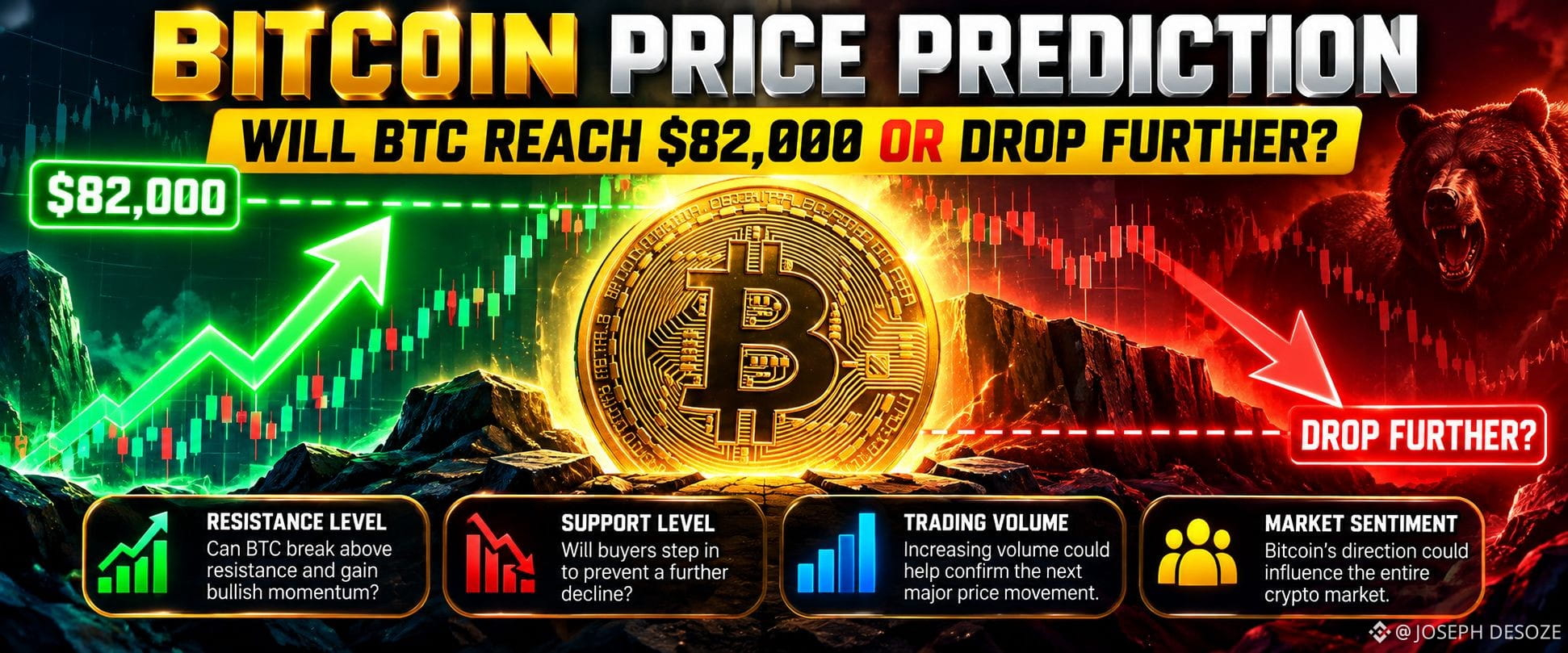
Bitcoin Price Prediction: Will $BTC reach $82,000 or drop further? Bitcoin is approaching a crucial point, and its next move could create new opportunities in the crypto market. Key factors to watch: resistance level, can BTC break above resistance and gain bullish momentum? Support level, will buyers step in to prevent a further decline? Trading volume, increasing volume could help confirm the next major price movement. Market sentiment, Bitcoin’s direction could influence the entire crypto market. My analysis: rather than guessing the next move, traders should watch price action, trading volume, and key support and resistance levels before making decisions. What do you think? Comment below whether BTC will move toward $82,000 or drop further — let's discuss!
#BTC #bnb #BinancePick
Bitcoin Price Prediction: Will $BTC reach $82,000 or drop further? Bitcoin is approaching a crucial point, and its next move could create new opportunities in the crypto market. Key factors to watch: resistance level, can BTC break above resistance and gain bullish momentum? Support level, will buyers step in to prevent a further decline? Trading volume, increasing volume could help confirm the next major price movement. Market sentiment, Bitcoin’s direction could influence the entire crypto market. My analysis: rather than guessing the next move, traders should watch price action, trading volume, and key support and resistance levels before making decisions. What do you think? Comment below whether BTC will move toward $82,000 or drop further — let's discuss!
#BTC #bnb #BinancePick
#BTC #bnb #BinancePick
1
204
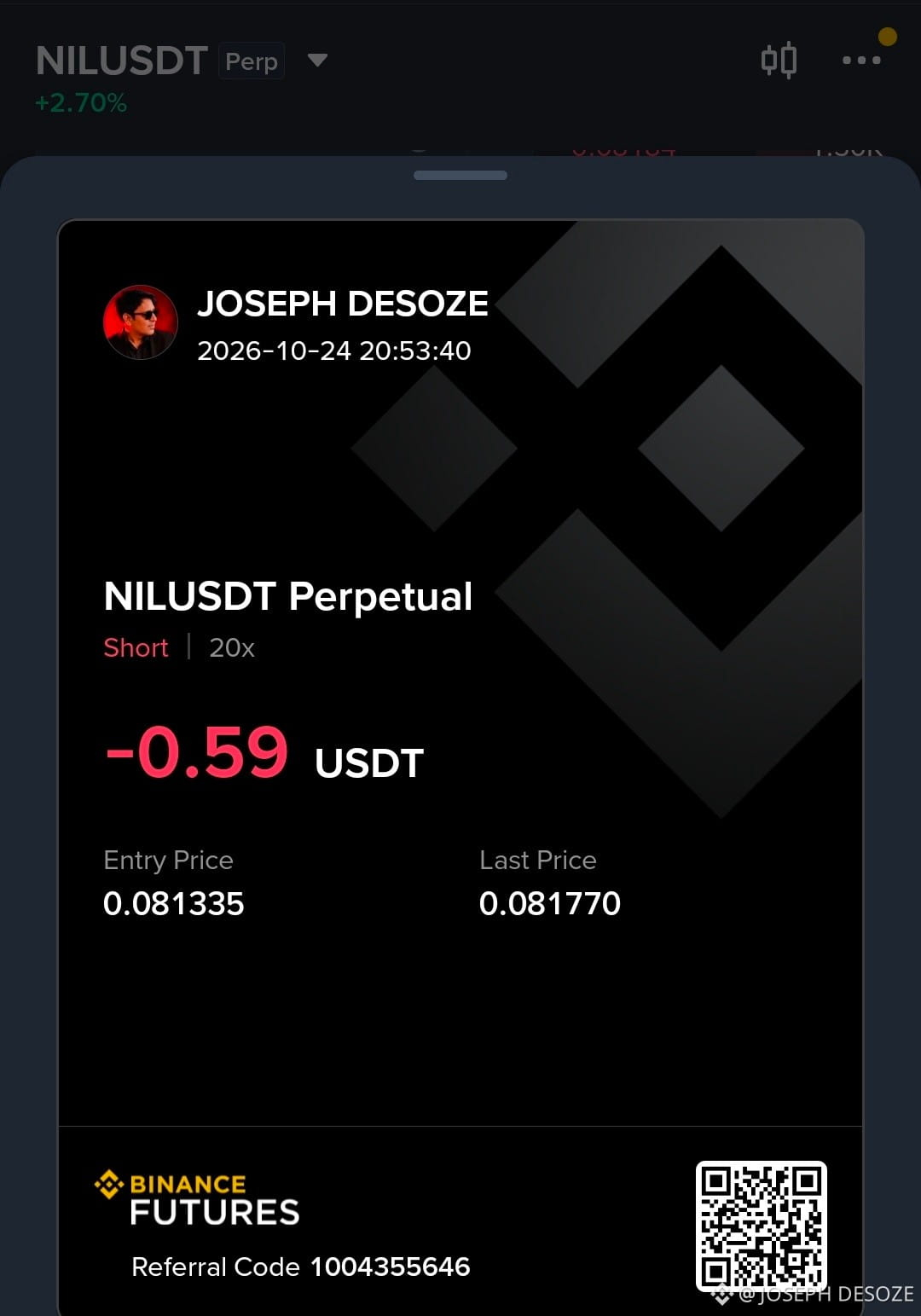
🚨 *Crypto Futures Trading Signal | $BTC /USDT*
💎 *Trading Currency: $BTC /USDT*
🔴 *Trading Direction: SELL 📉*
💵 *Trading Price: Market Price*
⚡ *Leverage: 20x*
💰 *Margin Allocation: 10%*
📉 *BTC remains under selling pressure, with repeated recovery attempts failing to establish sustained bullish momentum. The broader price structure favors a potential continuation lower into the evening, although short-term rebounds remain possible.*
🚨 *Crypto Futures Trading Signal | $BTC /USDT*
💎 *Trading Currency: $BTC /USDT*
🔴 *Trading Direction: SELL 📉*
💵 *Trading Price: Market Price*
⚡ *Leverage: 20x*
💰 *Margin Allocation: 10%*
📉 *BTC remains under selling pressure, with repeated recovery attempts failing to establish sustained bullish momentum. The broader price structure favors a potential continuation lower into the evening, although short-term rebounds remain possible.*
💎 *Trading Currency: $BTC /USDT*
🔴 *Trading Direction: SELL 📉*
💵 *Trading Price: Market Price*
⚡ *Leverage: 20x*
💰 *Margin Allocation: 10%*
📉 *BTC remains under selling pressure, with repeated recovery attempts failing to establish sustained bullish momentum. The broader price structure favors a potential continuation lower into the evening, although short-term rebounds remain possible.*
1
1
197

🚨 *Cryptocurrency Market Watch | Trading Signal Alert*
📊 As we approach the U.S. stock market close, our team is turning its attention to potential opportunities in the cryptocurrency market.
💎 David is currently monitoring $BTC $ETH and $SOL for possible futures trading opportunities. If a suitable setup is confirmed, an official trading signal will be shared with the group.
🔔 *Important Reminder:* To help everyone stay focused and avoid missing any potential trading signals, we kindly ask all members to keep group discussions to a minimum for now.
📲 Please stay alert and keep an eye on upcoming announcements from David.
Thank you for your cooperation! 😊
🚨 *Cryptocurrency Market Watch | Trading Signal Alert*
📊 As we approach the U.S. stock market close, our team is turning its attention to potential opportunities in the cryptocurrency market.
💎 David is currently monitoring $BTC $ETH and $SOL for possible futures trading opportunities. If a suitable setup is confirmed, an official trading signal will be shared with the group.
🔔 *Important Reminder:* To help everyone stay focused and avoid missing any potential trading signals, we kindly ask all members to keep group discussions to a minimum for now.
📲 Please stay alert and keep an eye on upcoming announcements from David.
Thank you for your cooperation! 😊
📊 As we approach the U.S. stock market close, our team is turning its attention to potential opportunities in the cryptocurrency market.
💎 David is currently monitoring $BTC $ETH and $SOL for possible futures trading opportunities. If a suitable setup is confirmed, an official trading signal will be shared with the group.
🔔 *Important Reminder:* To help everyone stay focused and avoid missing any potential trading signals, we kindly ask all members to keep group discussions to a minimum for now.
📲 Please stay alert and keep an eye on upcoming announcements from David.
Thank you for your cooperation! 😊
4
317
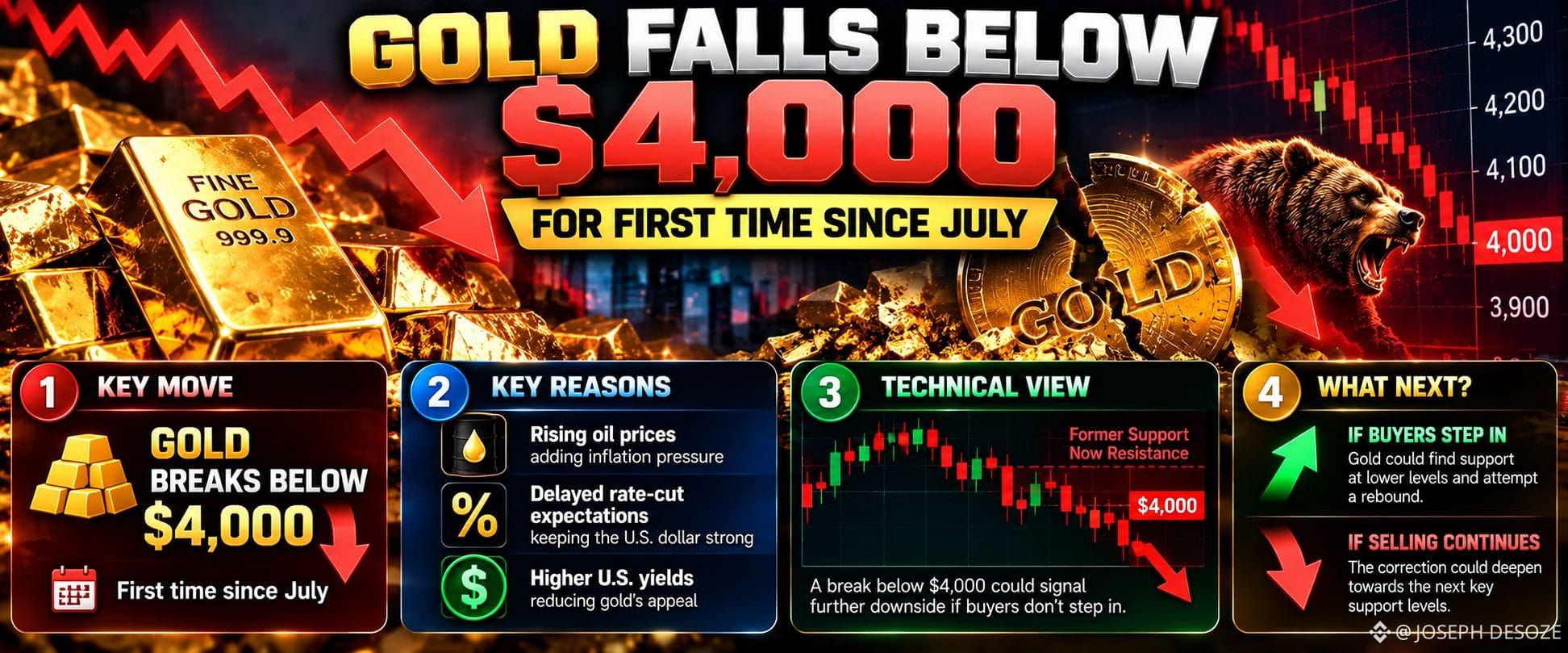
#GoldFallsBelow4000ForFirstTimeSinceJuly $4000ForFirstTimeSinceJuly
Gold breaking below $4,000 is a major technical signal. 📉 Rising oil prices and delayed rate-cut expectations could keep pressure on gold in the near term. The key question is whether buyers step in at lower levels or the correction deepens.
#GoldFallsBelow4000ForFirstTimeSinceJuly $4000ForFirstTimeSinceJuly
Gold breaking below $4,000 is a major technical signal. 📉 Rising oil prices and delayed rate-cut expectations could keep pressure on gold in the near term. The key question is whether buyers step in at lower levels or the correction deepens.
Gold breaking below $4,000 is a major technical signal. 📉 Rising oil prices and delayed rate-cut expectations could keep pressure on gold in the near term. The key question is whether buyers step in at lower levels or the correction deepens.
2
334
Log in to explore more content
Join global crypto users on Binance Square
⚡️ Get latest and useful information about crypto.
💬 Trusted by the world’s largest crypto exchange.
👍 Discover real insights from verified creators.
Email / Phone number