
Beyond Horizon
1.9k Posts

Beyond Horizon
Report
Block User
🌌 Looking beyond the price. 📊 Crypto insights, market trends & Web3. 🧠 Research over hype. Knowledge over noise. 🚀 Exploring what lies beyond the horizon.

BNB Holder
High-Frequency Trader
2.2 Years
2.4K+ Following
1.3K+ Followers
1.2K+ Liked
Posts
All
Quotes
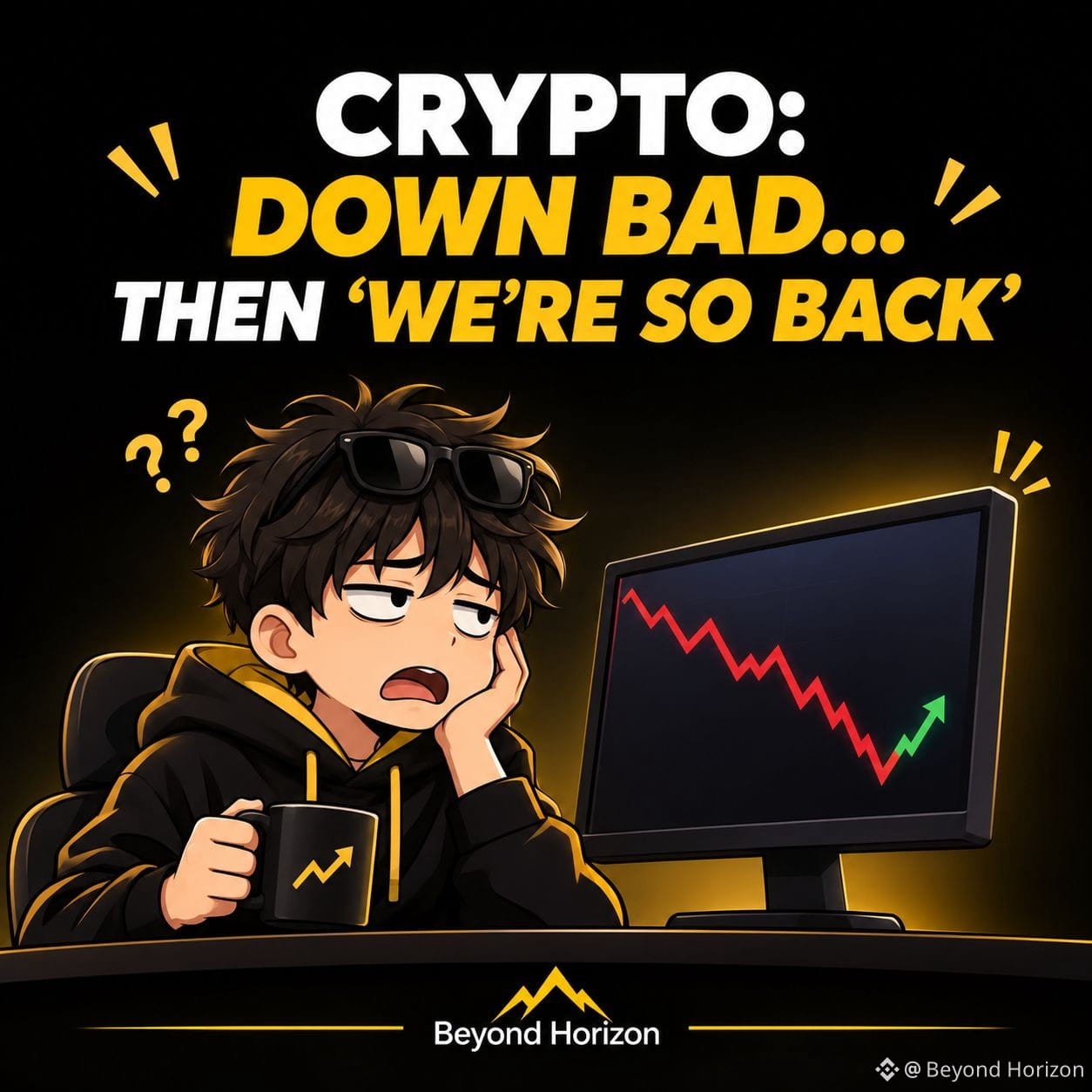
😂 Crypto Investors Have the Shortest Memory!
📉 Bitcoin drops:
“It's over. Crypto is dead. I'm never buying again!”
📈 Bitcoin bounces:
“WE ARE SO BACK! 🚀 New bull run confirmed!”
Meanwhile, the market is just moving a few candles and we're already planning our retirement. 🤣
One green candle and we're geniuses.
One red candle and we're questioning every life decision. 💀
Crypto isn't just a financial market… it's an emotional roller coaster! 🎢
Be honest: Are you checking the charts every 5 minutes or pretending you don't care? 😂👇
$BTC
1
174
🌐 What If You Could Access Financial Services Without a Traditional Bank?
That's one of the ideas behind DeFi (Decentralized Finance).
Built on blockchain technology, DeFi applications aim to provide financial services through smart contracts.
🔹 Lending & Borrowing: Access crypto-based lending services.
🔹 Trading: Swap digital assets through decentralized exchanges.
🔹 Liquidity: Users can provide assets to liquidity pools and may earn fees, while taking on risks.
🔹 Transparency: Many DeFi transactions and smart contracts can be viewed on public blockchains.
⚠️ But DeFi isn't risk-free. Smart contract bugs, scams, volatile assets, and liquidity issues can lead to losses.
🧠 The future of finance isn't just about digital currencies—it's also about how financial services are built.
💬 Would you trust a decentralized platform with your assets? Why or why not?
#DeFi
9
386
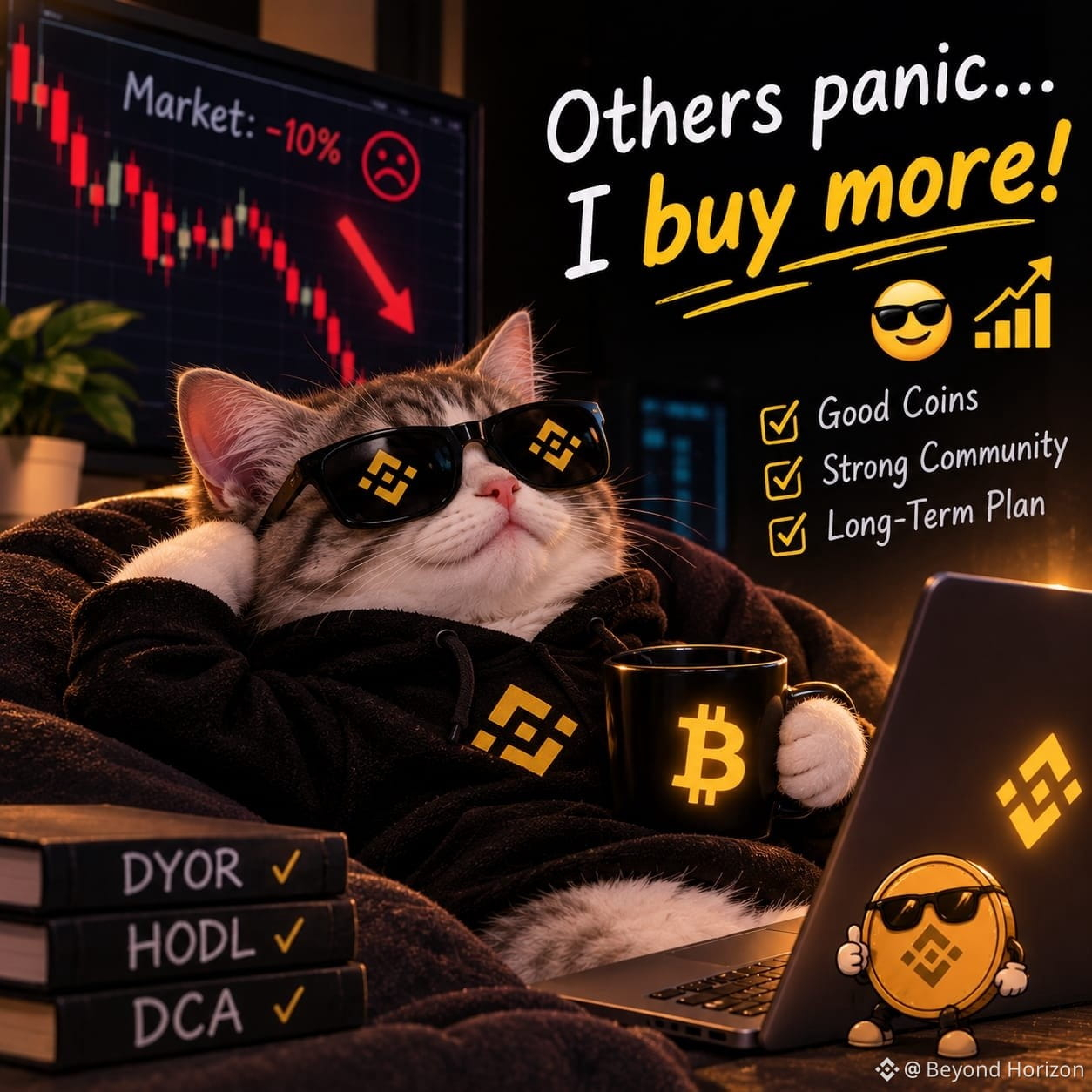
📉 Market: -10%
😱 Everyone: SELL! SELL! SELL!
🐱 Me: Relax bro, I was waiting for this discount! 😂💛
When the market goes red, but your shopping mood turns GREEN. 📈
Buy the dip, not the panic! 😎
DYOR first. Don't let emotions trade for you!
📉 Market: -10%
😱 Everyone: SELL! SELL! SELL!
🐱 Me: Relax bro, I was waiting for this discount! 😂💛
When the market goes red, but your shopping mood turns GREEN. 📈
Buy the dip, not the panic! 😎
DYOR first. Don't let emotions trade for you!
😱 Everyone: SELL! SELL! SELL!
🐱 Me: Relax bro, I was waiting for this discount! 😂💛
When the market goes red, but your shopping mood turns GREEN. 📈
Buy the dip, not the panic! 😎
DYOR first. Don't let emotions trade for you!
1
8
168
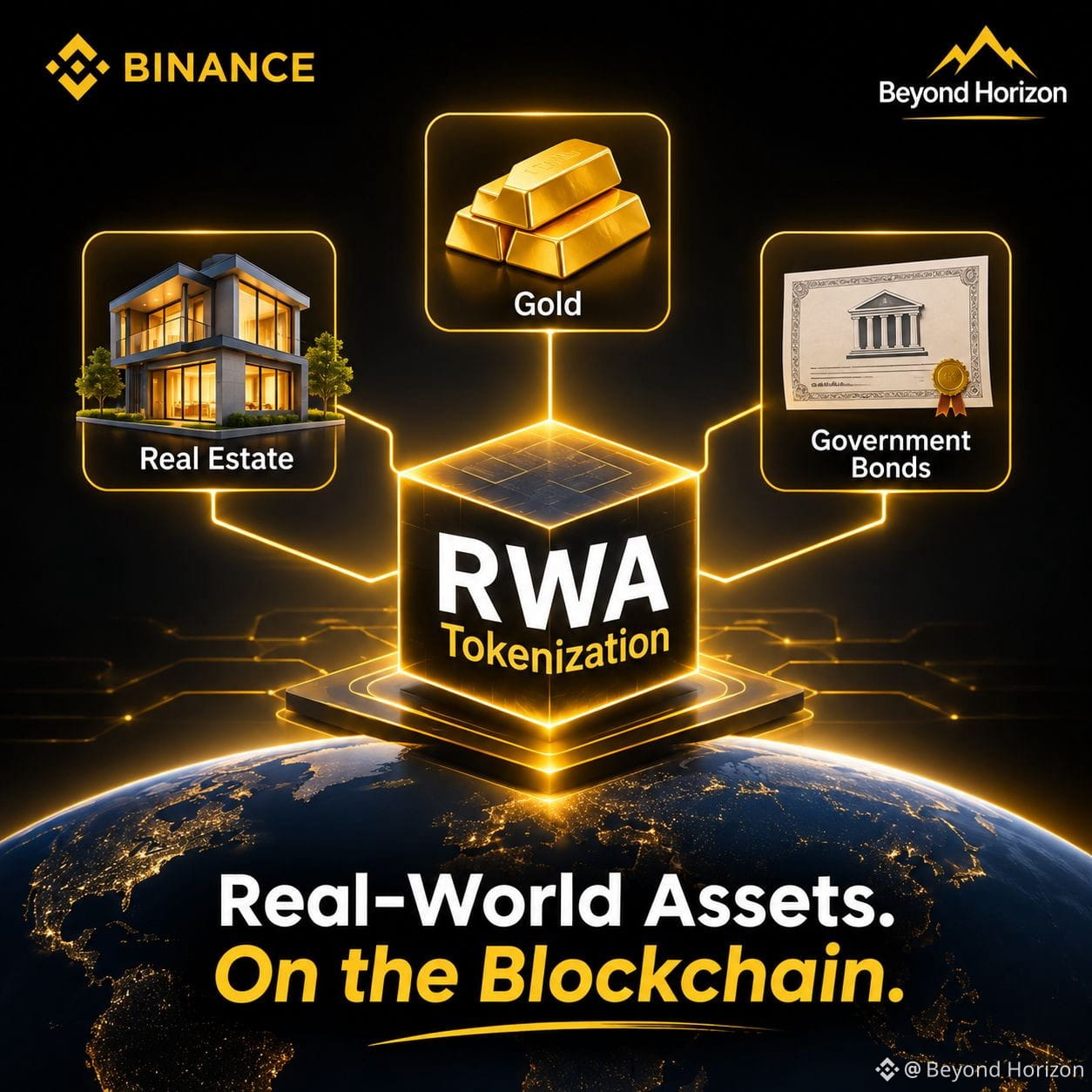
🌍 What If Real-World Assets Could Live on the Blockchain?
Imagine representing ownership of real-world assets digitally through blockchain technology.
This is the idea behind Real-World Asset (RWA) Tokenization.
🏢 1. Real Estate
Property ownership interests can potentially be represented by digital tokens.
💰 2. Government Bonds
Certain financial instruments can be tokenized and made accessible through blockchain-based platforms.
🥇 3. Precious Metals
Digital tokens can represent claims linked to physical assets such as gold.
⚡ 4. Faster Settlement
Blockchain technology may help streamline how certain asset transactions are recorded and settled.
But there's an important detail:
⚠️ A token doesn't automatically guarantee legal ownership of an asset. Investors must understand the issuer, custody arrangements, legal rights, liquidity, and regulations.
💡 The bigger picture: Blockchain isn't only about creating new cryptocurrencies. It may also change how traditional assets are represented and transferred.
🧠 Beyond Horizon — Looking beyond the price.
💬 Which real-world asset do you think has the strongest potential for tokenization: Real Estate, Gold, or Government Bonds?
#RWA #Tokenization #Blockchain #Web3
7
32
₿ Bitcoin ETFs: Why Are Traditional Investors Paying Attention?
Bitcoin is no longer discussed only in crypto communities. Traditional financial markets have also found ways to gain exposure to it.
One important development is the Bitcoin ETF.
But what exactly does it mean?
📌 1. What Is a Bitcoin ETF?
An exchange-traded fund that tracks Bitcoin's price and trades on a traditional stock exchange.
📌 2. Easier Access
Investors can gain Bitcoin price exposure through a regular brokerage account without directly managing private keys.
📌 3. Institutional Participation
Bitcoin ETFs provide another route for institutions and traditional investors to enter the market.
📌 4. Important Risks
ETF investors still face Bitcoin's price volatility, fund fees, and tracking risks. Owning ETF shares is not the same as owning Bitcoin directly.
💡 The bigger picture: Crypto and traditional finance are becoming increasingly connected, but accessibility doesn't remove risk.
🧠 Beyond Horizon — Looking beyond the price.
💬 What do you think: Are Bitcoin ETFs good for long-term crypto adoption?
#Bitcoin #BitcoinETF #BTC #CryptoAdoption #BinanceSquare
7
125
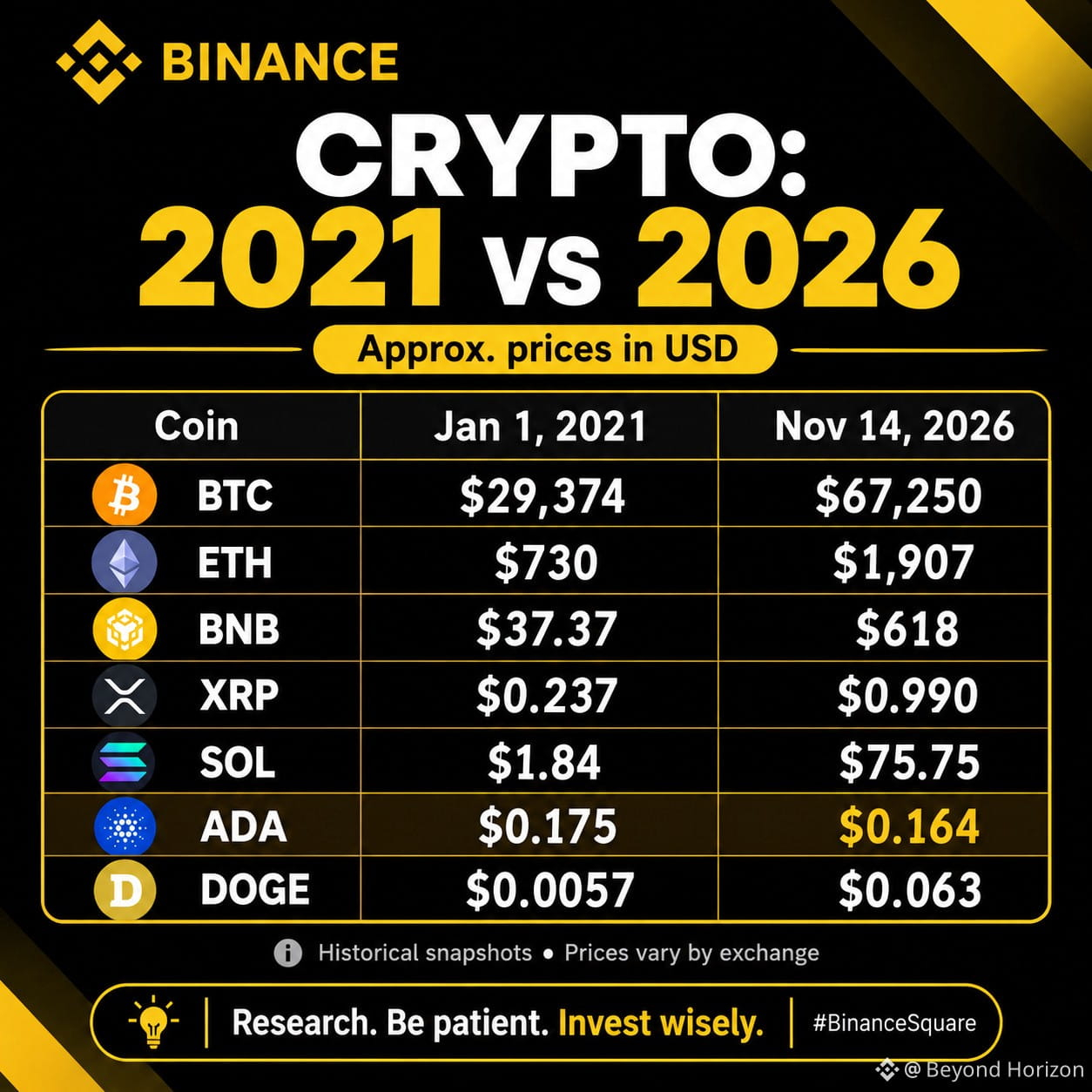
📊 CRYPTO IN 2021 vs 2026: WHAT A 5-YEAR JOURNEY! 🚀
Remember the 2021 bull run? Let's see how some major cryptocurrencies have changed over five years.
💰 2021 vs 2026 (Approx. USD prices)
₿ BTC: $29,374 → $66,748
Ξ ETH: $730 → $1,891
🟡 BNB: Major long-term growth
💧 XRP: $0.237 → $0.995
☀️ SOL: Reached around $260 in 2021
🔵 ADA: $0.18 → $0.16
🐶 DOGE: $0.0057 → $0.063
📌 Key Takeaways:
- Bitcoin and Ethereum have grown significantly.
- BNB has delivered impressive long-term growth.
- Not every popular coin becomes a long-term winner.
- Solana experienced both massive growth and major corrections.
🎯 The biggest lesson: Don't invest based on hype alone. Research, patience, risk management, and long-term thinking matter.
💬 Let's discuss!
If you could go back to January 2021, which ONE cryptocurrency would you buy and hold until 2026
1
10
595
₿ Bitcoin Halving: Why Does It Matter?
Bitcoin has a unique feature built into its code: approximately every four years, the reward miners receive for adding new blocks is cut in half.
But why is this important?
🔹 1. Reduced New Supply
Fewer new bitcoins enter circulation through mining rewards.
🔹 2. Predictable Schedule
Unlike traditional currencies, Bitcoin's issuance follows a programmed monetary policy.
🔹 3. Mining Economics
After a halving, miners earn fewer BTC per block, making mining costs and efficiency even more important.
🔹 4. Market Impact
Halving can influence market expectations, but it does NOT guarantee a price increase.
💡 One important lesson: Scarcity alone doesn't determine value. Demand, adoption, liquidity, and market conditions also matter.
🧠 Understanding Bitcoin's fundamentals is better than blindly following price predictions.
Question: Do you think Bitcoin's fixed supply is its strongest feature, or is its decentralized network more important?
#Bitcoin #BTC #BitcoinHalving #CryptoEducation #BinanceSquare
1
8
96
⛽ Why Do You Have to Pay Gas Fees in Crypto?
Ever wondered why sending crypto sometimes costs more than expected?
It's because blockchain transactions require network resources, and fees help compensate the validators or miners who process them.
Here are 4 important things to understand:
🔹 1. Network Activity: When many people use a blockchain simultaneously, fees can increase.
🔹 2. Transaction Type: A simple transfer may cost less than a complex smart contract interaction.
🔹 3. Different Networks: The same token can exist on multiple networks, each with different fee structures.
🔹 4. Check Before Sending: Always confirm the recipient address and selected network. Sending through an unsupported network can result in lost funds.
💡 Pro Tip: Never choose a network just because its fee is cheaper. Make sure the receiving platform or wallet supports it.
🧠 Understanding the network behind a transaction is just as important as understanding the coin itself.
Question: What matters more when choosing a blockchain network: lower fees, faster transactions, or stronger security?
#Blockchain #GasFees #CryptoEducation #BinanceSquare
1
12
104
🔍 Before Buying Any Crypto, Ask These 5 Questions!
A trending coin doesn't automatically mean a good investment. Before making a decision, take a moment to research.
Here are 5 things I check when exploring a crypto project:
1️⃣ Purpose: What problem does the project actually solve?
2️⃣ Team: Is the team transparent about its experience and background?
3️⃣ Tokenomics: How many tokens exist? What is the supply distribution and unlock schedule?
4️⃣ Utility: Does the token have a real use case within the ecosystem?
5️⃣ Risks: What could go wrong? Consider competition, security, liquidity, and regulations.
⚠️ A strong community and impressive marketing are not proof of a strong project.
Remember: Research doesn't eliminate risk, but it can help you avoid decisions based only on hype.
🧠 Beyond Horizon — Research over hype. Knowledge over noise.
💬 What's the FIRST thing you check before investing in a new crypto project?
#DYOR #CryptoResearch #Blockchain #BinanceSquare
1
1
13
89
🔐 In Crypto, Control of Your Assets Matters!
Have you ever wondered what happens if you lose access to your exchange account?
This is why understanding self-custody is important.
🏦 Exchange Wallet
- Convenient for buying, selling, and trading.
- The platform manages the wallet infrastructure.
- You depend on the exchange's security and account access systems.
🔑 Self-Custody Wallet
- You control your private keys or recovery phrase.
- You take responsibility for protecting your assets.
- Losing your recovery phrase can mean permanently losing access.
⚠️ Remember: Never share your recovery phrase with anyone. No legitimate support agent should ask you for it.
Neither option is perfect. Exchanges offer convenience, while self-custody offers greater control but requires personal responsibility.
🧠 Real crypto knowledge means understanding not just how to earn, but also how to protect your assets.
Question: What matters more to you: the convenience of an exchange or the control of a self-custody wallet?
#CryptoSecurity #SelfCustody #Blockchain #BinanceSquare
11
94
🌍 Stablecoins: The Bridge Between Traditional Finance and Crypto!
When people talk about crypto, they usually think about Bitcoin and altcoins. But stablecoins play an equally important role in the ecosystem.
So, what makes them useful?
💵 1. Price Stability
Stablecoins like USDT and USDC are designed to maintain a value close to the US dollar.
⚡ 2. Faster Transfers
They can make it easier to transfer digital value across supported blockchain networks.
🔄 3. Trading Flexibility
Traders often use stablecoins as a quote asset when buying or selling cryptocurrencies.
🌐 4. DeFi Access
Stablecoins are also used in lending, borrowing, and other decentralized finance applications.
⚠️ But remember: Stablecoins are not risk-free. Depegging, issuer reserves, regulations, and network security all matter. Always understand the risks before using them.
🧠 Crypto isn't just about chasing the next big coin. Sometimes, understanding the infrastructure is even more valuable.
Question: Do you think stablecoins will become a major part of everyday digital payments?
#Stablecoins #USDT #USDC #CryptoEducation #BinanceSquare
10
56
💡 A $0.01 Coin Isn't Automatically Cheaper Than Bitcoin!
One common mistake in crypto is judging a project only by its token price.
Imagine two projects:
🔹 Project A: Token price = $0.01, with 100 billion tokens in circulation.
🔹 Project B: Token price = $100, with 1 million tokens in circulation.
Project A may look cheaper, but its market capitalization is actually much higher.
📊 Remember these 3 things before evaluating a crypto project:
1️⃣ Token Price: The cost of one token.
2️⃣ Market Cap: Token price × circulating supply.
3️⃣ Token Supply: How many tokens exist and how many may enter circulation later.
A low token price doesn't mean a token has more growth potential. Always look deeper than the numbers you see on the screen.
🧠 Research over hype. Knowledge over noise.
Question: When researching a new crypto project, what do you check first: market cap, token utility, or tokenomics?
#CryptoEducation #DYOR #BinanceSquare
8
58
🧠 The Crypto Market Tests Your Patience More Than Your Knowledge.
When Bitcoin goes up, everyone feels like an expert.
When Bitcoin drops, fear suddenly takes over.
But successful market analysis requires a different mindset:
📈 Don't confuse a rising price with a guaranteed opportunity.
📉 Don't assume every correction means the market is finished.
🔍 Look at volume, liquidity, and market structure before forming an opinion.
🛡️ Never let emotions replace your risk management strategy.
The market will always create new opportunities. You don't need to chase every move.
🌌 At Beyond Horizon, we believe in understanding the market rather than reacting to every candle.
Let's discuss: What's harder for you in crypto — staying patient during a bull run or remaining confident during a market correction?
$BTC #Bitcoin #CryptoPsychology #BinanceSquare
6
90
💡 In Crypto, Your First Goal Shouldn't Be to Make Money. It Should Be to Survive the Market.
Many traders spend hours searching for the next 10x coin, but overlook one of the most important skills: Risk Management.
Here are 4 principles every crypto trader should understand:
📌 1. Never Risk Everything: One trade should never destroy your entire portfolio.
📌 2. Avoid Blind Leverage: Higher leverage means higher liquidation risk.
📌 3. Have an Exit Plan: Know when your trading idea is no longer valid.
📌 4. Control Your Emotions: Fear and greed can turn a good strategy into a bad decision.
Remember, successful trading isn't about winning every trade. It's about managing losses and staying disciplined.
🌌 Beyond Horizon — Research Over Hype. Knowledge Over Noise.
💬 What's your biggest challenge in crypto trading: Patience, Risk Management, or Emotional Control?
#CryptoTrading #RiskManagement #BinanceSquare
6
83
🚨 The Biggest Mistake in Crypto? Confusing Hype With Opportunity.
A coin trending everywhere doesn't automatically make it a good investment.
Before considering any crypto project, ask yourself:
🔍 Utility: Does it solve a real problem?
📊 Tokenomics: How is its supply distributed?
💧 Liquidity: Can you enter and exit without excessive slippage?
🛡️ Risk: How much could you afford to lose?
Remember: Missing a pump is not a loss. Protecting your capital matters more than chasing every green candle.
At Beyond Horizon, we choose research over hype. 🌌
💬 Question: What's the first red flag that makes you avoid a crypto project?
Share your thoughts below! 👇
#CryptoEducation #BinanceSquare
3
74
🧠 Why do so many people buy Bitcoin when it is already pumping?
Often, it's not because they have a clear strategy. It's because they see others making money and fear missing out.
But strong market decisions require more than excitement.
📊 Understand the market trend.
💧 Watch volume and liquidity.
🛡️ Decide your risk before entering.
🔍 Know what would prove your idea wrong.
Sometimes, the best decision is to wait until you understand what's happening.
$BTC
Be honest: Have you ever felt FOMO while watching Bitcoin rise? What did you learn from that experience?
#Bitcoin #CryptoPsychology #BinanceSquare
2
106
🚀 The Best Crypto Picks Begin With Knowledge, Not Hype! 💛📊
The crypto market moves fast, but making smart decisions takes time, patience, and research. Every market trend has a story behind it, and understanding that story can help you see opportunities more clearly.
My strategy is to stay curious, follow market developments, study price movements, and learn from both successes and mistakes. No prediction is guaranteed, and managing risk is just as important as spotting a potential opportunity. 🧠📈
What makes the crypto journey exciting is the chance to keep learning, exchange ideas with the community, and improve your understanding of this evolving industry. With Binance, there's always something new to explore and another lesson to discover.
💡 My rule: Research before you act, stay disciplined when the market gets emotional, and never risk more than you can afford to lose.
The goal isn't to predict every move perfectly — it's to make better-informed decisions, one step at a time.
What's your biggest priority when choosing a crypto pick: research, timing, or risk management? 👇
#BinancePick
1
3
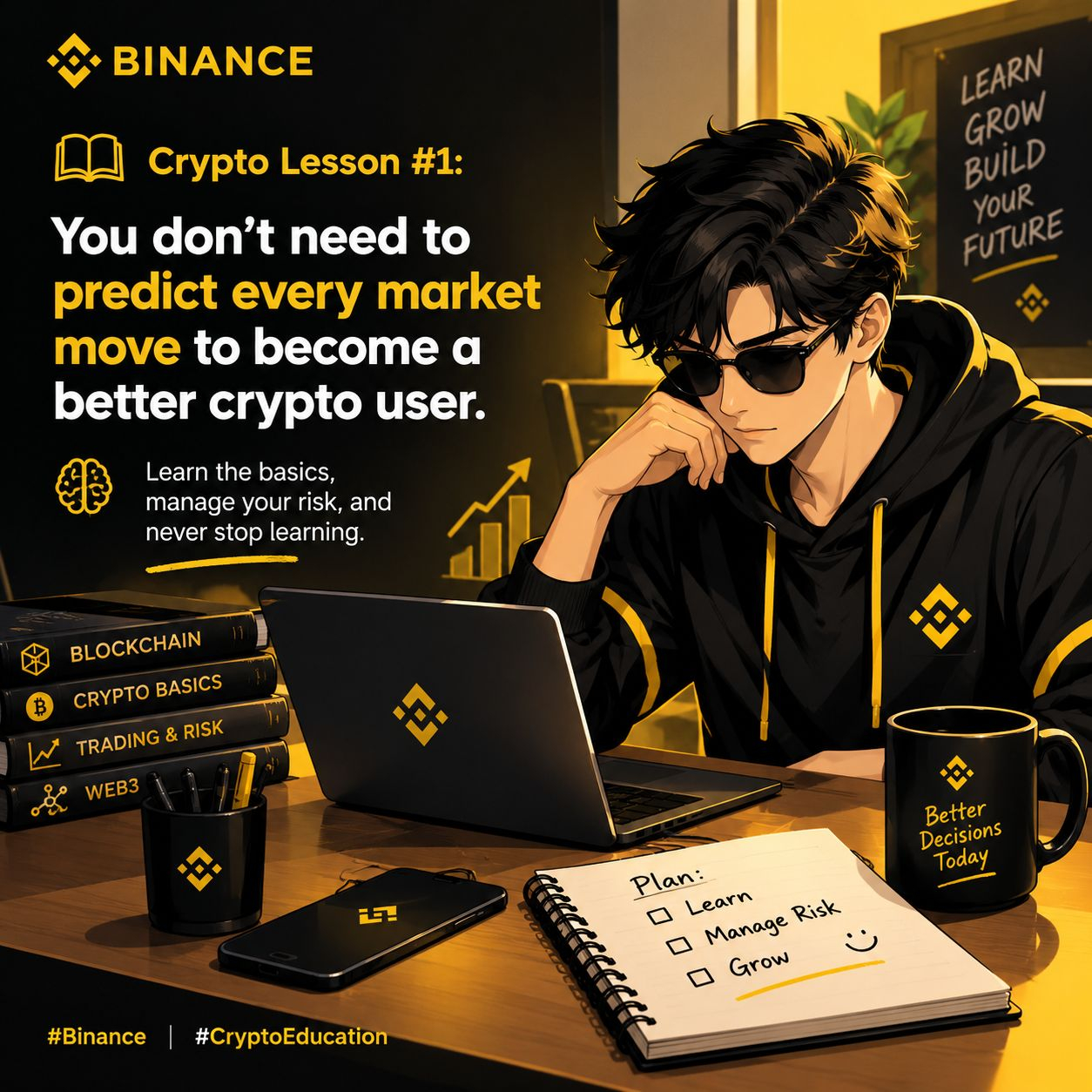
📚 Crypto lesson #1:
You don't need to predict every market move to become a better crypto user.
Learn the basics, manage your risk, and never stop learning. 🧠
#Binance #CryptoEducation
📚 Crypto lesson #1:
You don't need to predict every market move to become a better crypto user.
Learn the basics, manage your risk, and never stop learning. 🧠
#Binance #CryptoEducation
You don't need to predict every market move to become a better crypto user.
Learn the basics, manage your risk, and never stop learning. 🧠
#Binance #CryptoEducation
2
48
🧠 3 Crypto Lessons Every Beginner Should Understand
The crypto market can be exciting, but excitement alone isn't a strategy.
Here are 3 lessons worth remembering:
📊 1. Price isn't everything. Understand a project's utility, tokenomics, and market capitalization.
🛡️ 2. Protect your capital. Risk management matters more than chasing every opportunity.
🔍 3. Do your own research. Trending doesn't automatically mean trustworthy, and hype doesn't guarantee future growth.
The goal isn't to predict every move. It's to make better-informed decisions.
At Beyond Horizon, we're choosing research over hype and knowledge over noise. 🌌
Which lesson do you think new crypto users overlook the most?
#CryptoEducation #Bitcoin #BinanceSquare
1
87
🌌 Welcome to Beyond Horizon!
Crypto is more than price movements. It's about understanding market trends, exploring blockchain innovation, and learning to think beyond the hype.
Here, I'll share:
📊 Crypto market insights
🧠 Useful lessons and research
₿ Bitcoin and altcoin discussions
🚀 Emerging Web3 trends
My philosophy is simple: Research over hype. Knowledge over noise.
I'm here to learn, share ideas, and grow with the crypto community.
Let's look beyond the charts and explore what's next.
What interests you most in crypto: Bitcoin, altcoins, or Web3? 👇
#Crypto #Bitcoin #BinanceSquare
1
104
Log in to explore more content
Join global crypto users on Binance Square
⚡️ Get latest and useful information about crypto.
💬 Trusted by the world’s largest crypto exchange.
👍 Discover real insights from verified creators.
Email / Phone number
Trending Topics
BTCReboundsAbove$60KAmidWhaleDipBuying
81,456 views
368 Discussing
Abraxas Capital, Other Whales Buy the BTC Dip as Bitcoin Briefly Reclaims $60,000
Binance News
·36 Likes
·80.6k views
SolanaSets2027RoadmapToDoubleComputeCapacity
66,241 views
1,075 Discussing
CaliforniaNvidiaProbeExaminesPotentialCriminalViolations
17,858 views
149 Discussing