

Paxton_
8.6k Posts

Paxton_
 Square Verified+
Report
Block User
Binance Creator | KOL X & CMC
75 Following
46.4K+ Followers
95.3K+ Liked
Posts
All
Quotes
Live
PINNED
·
--
Partly True
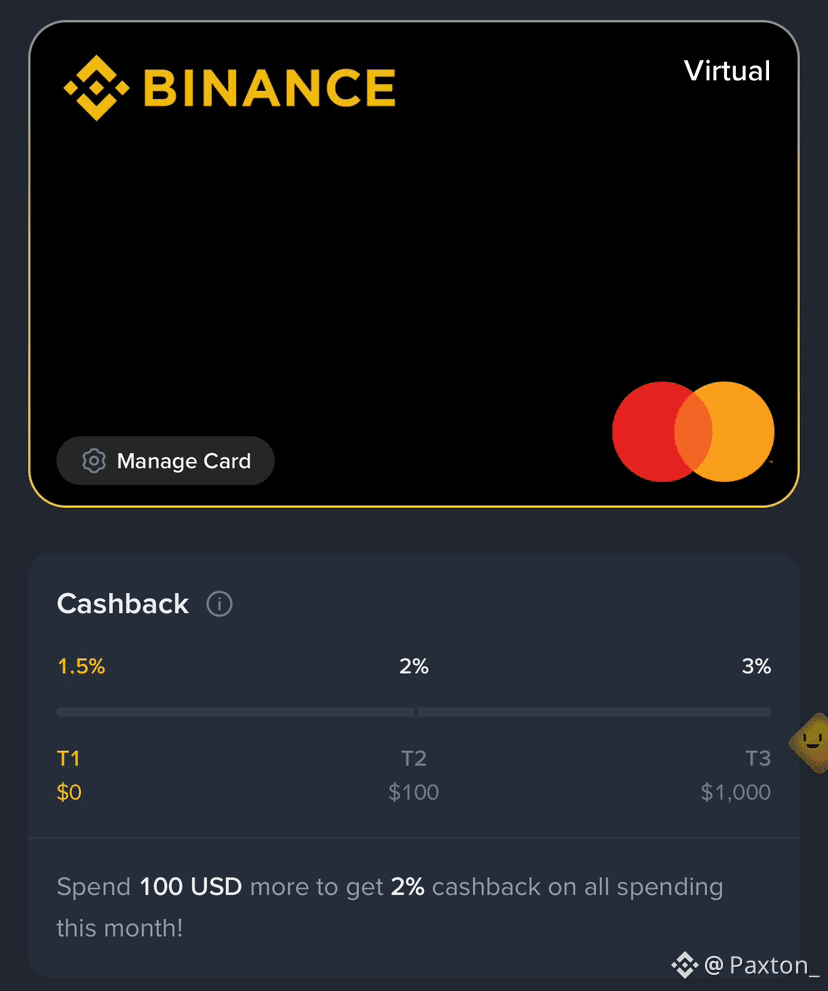
Crypto cards are becoming a big trend.
More people want to spend crypto as easily as they use a normal bank card.
Now Binance has finally introduced its Virtual Card for users in selected Asian regions.
Have you claimed yours yet?
#Binancecard #BinanceSquare
Crypto cards are becoming a big trend.
More people want to spend crypto as easily as they use a normal bank card.
Now Binance has finally introduced its Virtual Card for users in selected Asian regions.
Have you claimed yours yet?
#Binancecard #BinanceSquare
More people want to spend crypto as easily as they use a normal bank card.
Now Binance has finally introduced its Virtual Card for users in selected Asian regions.
Have you claimed yours yet?
#Binancecard #BinanceSquare
190
13
348
411.2k
PINNED
·
--
Verified
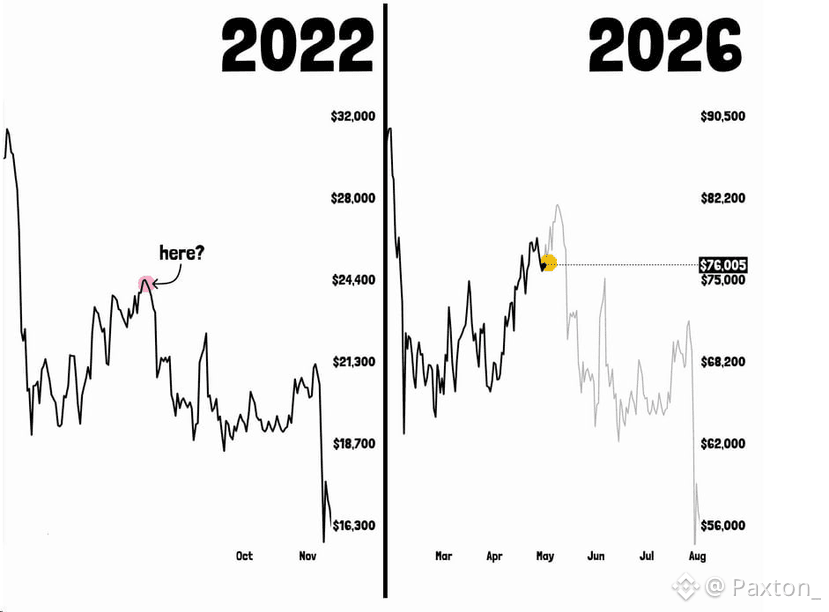
Experts say this $BTC bounce could be a bull trap like 2022.
Futures demand is up, but spot demand is still weak.
No real capitulation yet, so bottom not confirmed.
#FedRatesUnchanged #BTC
Experts say this $BTC bounce could be a bull trap like 2022.
Futures demand is up, but spot demand is still weak.
No real capitulation yet, so bottom not confirmed.
#FedRatesUnchanged #BTC
Futures demand is up, but spot demand is still weak.
No real capitulation yet, so bottom not confirmed.
#FedRatesUnchanged #BTC
96
8
206
91.8k
·
--
Verified
Most market data still arrives second-hand.
@PythNetwork pulls prices directly from the firms that create them.
710+ businesses already use the feeds. More than $3.25T in cumulative volume has run on them.
Roughly 60% of the onchain perpetuals market does too. Pyth Pro crossed $6M ARR within months of launch, and subscription ARR grew 109% quarter-over-quarter.
Three straight months above $1M in gross new ARR.
One integration covers the multi-asset data. Terminal shows the live feeds.
$PYTH
#Pyth #EarningsSeason
Most market data still arrives second-hand.
@Pyth Network pulls prices directly from the firms that create them.
710+ businesses already use the feeds. More than $3.25T in cumulative volume has run on them.
Roughly 60% of the onchain perpetuals market does too. Pyth Pro crossed $6M ARR within months of launch, and subscription ARR grew 109% quarter-over-quarter.
Three straight months above $1M in gross new ARR.
One integration covers the multi-asset data. Terminal shows the live feeds.
$PYTH
#Pyth #EarningsSeason
@Pyth Network pulls prices directly from the firms that create them.
710+ businesses already use the feeds. More than $3.25T in cumulative volume has run on them.
Roughly 60% of the onchain perpetuals market does too. Pyth Pro crossed $6M ARR within months of launch, and subscription ARR grew 109% quarter-over-quarter.
Three straight months above $1M in gross new ARR.
One integration covers the multi-asset data. Terminal shows the live feeds.
$PYTH
#Pyth #EarningsSeason
28
20
897
·
--
Article
$301M in Bitcoin ETF inflows. Enough to flip October green?US spot $BTC ETFs finished the latest week with roughly $301 million in net inflows. That broke a two-week run of outflows totaling about $910 million.
The week was not clean. Early sessions brought strong buying, more than $1 billion across the first three days. Thursday and Friday then saw heavy redemptions, including one day near $635 million out. BlackRock’s IBIT carried most of the week’s net positive.
October itself is still not clearly green. Mid-to-late month numbers showed the month still in the red or only barely improved once the late outflows were included. One tracker had the month down about $174 million through October 22.
Bitcoin’s price did not react much. It stayed around $80,000–$80,500 after the week closed. The $301 million is real, but it is a thin net number after large late-week selling. A single positive week can end a short losing streak. It does not reverse a soft monthly trend when the size stays modest and the outflows were still heavy. More steady daily inflows would be required for that.
#BinancePick #BTC走势分析
$301M in Bitcoin ETF inflows. Enough to flip October green?
US spot $BTC ETFs finished the latest week with roughly $301 million in net inflows. That broke a two-week run of outflows totaling about $910 million.
The week was not clean. Early sessions brought strong buying, more than $1 billion across the first three days. Thursday and Friday then saw heavy redemptions, including one day near $635 million out. BlackRock’s IBIT carried most of the week’s net positive.
October itself is still not clearly green. Mid-to-late month numbers showed the month still in the red or only barely improved once the late outflows were included. One tracker had the month down about $174 million through October 22.
Bitcoin’s price did not react much. It stayed around $80,000–$80,500 after the week closed. The $301 million is real, but it is a thin net number after large late-week selling. A single positive week can end a short losing streak. It does not reverse a soft monthly trend when the size stays modest and the outflows were still heavy. More steady daily inflows would be required for that.
#BinancePick #BTC走势分析
The week was not clean. Early sessions brought strong buying, more than $1 billion across the first three days. Thursday and Friday then saw heavy redemptions, including one day near $635 million out. BlackRock’s IBIT carried most of the week’s net positive.
October itself is still not clearly green. Mid-to-late month numbers showed the month still in the red or only barely improved once the late outflows were included. One tracker had the month down about $174 million through October 22.
Bitcoin’s price did not react much. It stayed around $80,000–$80,500 after the week closed. The $301 million is real, but it is a thin net number after large late-week selling. A single positive week can end a short losing streak. It does not reverse a soft monthly trend when the size stays modest and the outflows were still heavy. More steady daily inflows would be required for that.
#BinancePick #BTC走势分析
BTC-1.08%
IBITETF-0.47%
10
11
765
·
--
Most traders manage risk with a stop loss.
But a stop loss doesn’t guarantee the price you’ll exit at. Fast moves and slippage can change the outcome.
That’s why I find the idea behind PERPS+ interesting.
It lets you add options-based features to $BTC and $ETH perp positions right when you enter.
You can cap your loss, take premium upfront in exchange for a profit cap, or define a range for your outcome.
Same market view. Different ways to structure the trade.
Sometimes, risk management deserves as much thought as the entry itself.
@Aevoxyz
#Aevo #BinancePick
Most traders manage risk with a stop loss.
But a stop loss doesn’t guarantee the price you’ll exit at. Fast moves and slippage can change the outcome.
That’s why I find the idea behind PERPS+ interesting.
It lets you add options-based features to $BTC and $ETH perp positions right when you enter.
You can cap your loss, take premium upfront in exchange for a profit cap, or define a range for your outcome.
Same market view. Different ways to structure the trade.
Sometimes, risk management deserves as much thought as the entry itself.
@Aevo
#Aevo #BinancePick
But a stop loss doesn’t guarantee the price you’ll exit at. Fast moves and slippage can change the outcome.
That’s why I find the idea behind PERPS+ interesting.
It lets you add options-based features to $BTC and $ETH perp positions right when you enter.
You can cap your loss, take premium upfront in exchange for a profit cap, or define a range for your outcome.
Same market view. Different ways to structure the trade.
Sometimes, risk management deserves as much thought as the entry itself.
@Aevo
#Aevo #BinancePick
31
40
5.3k
·
--
I’ve been checking out Binance’s new campaign and the name hits different.
Qafila literally means caravan.
Not just a random campaign name. It’s the idea of people moving forward together — no one has to cross the desert alone. That’s exactly how this one is built.
$1,000,000 in $USDC rewards
5 different milestones
One shared journey
You can start with a simple first trade, try TradFi Perps, put some funds in Simple Earn, compete in the trading challenge, or just bring your friends along.
You don’t need to do everything. Pick what fits you and keep moving.
Running till 30 November.
If you’re in a supported region, go check what’s available on your account. These kinds of campaigns usually reward people who actually participate early.
The caravan’s already moving.
Are you joining or just watching from the side? 🐪
#Qafila
I’ve been checking out Binance’s new campaign and the name hits different.
Qafila literally means caravan.
Not just a random campaign name. It’s the idea of people moving forward together — no one has to cross the desert alone. That’s exactly how this one is built.
$1,000,000 in $USDC rewards
5 different milestones
One shared journey
You can start with a simple first trade, try TradFi Perps, put some funds in Simple Earn, compete in the trading challenge, or just bring your friends along.
You don’t need to do everything. Pick what fits you and keep moving.
Running till 30 November.
If you’re in a supported region, go check what’s available on your account. These kinds of campaigns usually reward people who actually participate early.
The caravan’s already moving.
Are you joining or just watching from the side? 🐪
#Qafila
Qafila literally means caravan.
Not just a random campaign name. It’s the idea of people moving forward together — no one has to cross the desert alone. That’s exactly how this one is built.
$1,000,000 in $USDC rewards
5 different milestones
One shared journey
You can start with a simple first trade, try TradFi Perps, put some funds in Simple Earn, compete in the trading challenge, or just bring your friends along.
You don’t need to do everything. Pick what fits you and keep moving.
Running till 30 November.
If you’re in a supported region, go check what’s available on your account. These kinds of campaigns usually reward people who actually participate early.
The caravan’s already moving.
Are you joining or just watching from the side? 🐪
#Qafila

9
24
2.8k
·
--
Verified
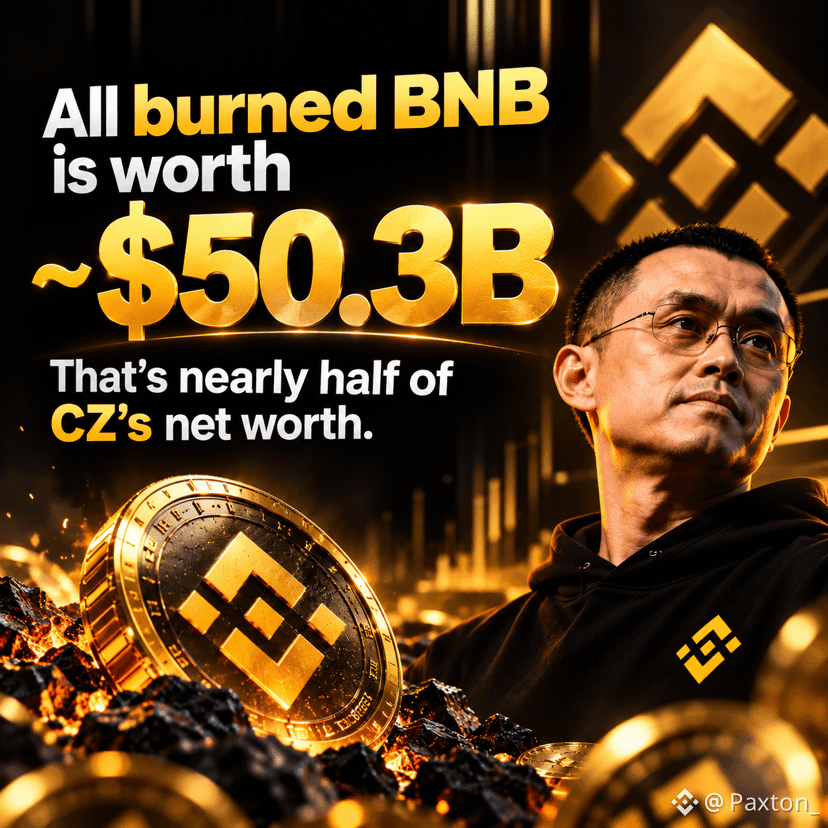
BNB’s 37th quarterly Auto-Burn is done.
• 1,646,196 $BNB burned on Oct 19 (~$1.20B at the time)
• Total burned so far: 68.49M BNB
• Remaining supply: 131.51M
• Still 31.51M left to hit the 100M target
At ~$735, all burned BNB is worth ~$50.3B today.
That’s nearly half of CZ’snet worth.
Next quarterly burn expected around Jan 2027.
Amount depends on price + block production.
#BNB_Market_Update #bnbburn
BNB’s 37th quarterly Auto-Burn is done.
• 1,646,196 $BNB burned on Oct 19 (~$1.20B at the time)
• Total burned so far: 68.49M BNB
• Remaining supply: 131.51M
• Still 31.51M left to hit the 100M target
At ~$735, all burned BNB is worth ~$50.3B today.
That’s nearly half of CZ’snet worth.
Next quarterly burn expected around Jan 2027.
Amount depends on price + block production.
#BNB_Market_Update #bnbburn
• 1,646,196 $BNB burned on Oct 19 (~$1.20B at the time)
• Total burned so far: 68.49M BNB
• Remaining supply: 131.51M
• Still 31.51M left to hit the 100M target
At ~$735, all burned BNB is worth ~$50.3B today.
That’s nearly half of CZ’snet worth.
Next quarterly burn expected around Jan 2027.
Amount depends on price + block production.
#BNB_Market_Update #bnbburn
9
33
6.6k
·
--
Verified
Most onchain orders still show what you are waiting for before they fill. Covenants change that. You seal the instruction on Ethereum and it stays unreadable until the condition is actually met.
$Dusk is the first phase of the 7-era roadmap and is live on mainnet now, so this is no longer just a testnet idea.
That practical difference is what I keep noticing.
#nil $NIL @nillionnetwork 🤝
Most onchain orders still show what you are waiting for before they fill. Covenants change that. You seal the instruction on Ethereum and it stays unreadable until the condition is actually met.
$Dusk is the first phase of the 7-era roadmap and is live on mainnet now, so this is no longer just a testnet idea.
That practical difference is what I keep noticing.
#nil $NIL @Nillion 🤝
$Dusk is the first phase of the 7-era roadmap and is live on mainnet now, so this is no longer just a testnet idea.
That practical difference is what I keep noticing.
#nil $NIL @Nillion 🤝
43
105
57.4k
·
--
Verified
Public chains still make banks choose between visibility and compliance.
Midnight’s selective disclosure lets a bank prove a deposit is real without putting the balance on the open ledger. Monument Bank is testing this with up to £250M of its deposits. Money stays fully backed and redeemable in pounds.
Google Cloud, MoneyGram, eToro and Worldpay run validators. Mainnet has been live since March. Permissionless contracts opened in early October and activity picked up after that.
Native token is NIGHT. Privacy that still produces proof a regulated bank can use.
@Midnight_Network
$DUSK $NIGHT
#Midnight #Privacy #dusk
Public chains still make banks choose between visibility and compliance.
Midnight’s selective disclosure lets a bank prove a deposit is real without putting the balance on the open ledger. Monument Bank is testing this with up to £250M of its deposits. Money stays fully backed and redeemable in pounds.
Google Cloud, MoneyGram, eToro and Worldpay run validators. Mainnet has been live since March. Permissionless contracts opened in early October and activity picked up after that.
Native token is NIGHT. Privacy that still produces proof a regulated bank can use.
@Midnight Network
$DUSK $NIGHT
#Midnight #Privacy #dusk
Midnight’s selective disclosure lets a bank prove a deposit is real without putting the balance on the open ledger. Monument Bank is testing this with up to £250M of its deposits. Money stays fully backed and redeemable in pounds.
Google Cloud, MoneyGram, eToro and Worldpay run validators. Mainnet has been live since March. Permissionless contracts opened in early October and activity picked up after that.
Native token is NIGHT. Privacy that still produces proof a regulated bank can use.
@Midnight Network
$DUSK $NIGHT
#Midnight #Privacy #dusk

38
1
61
6.5k
·
--
Verified
$BTC went under 80k. Buyers stepped in.
CPI came in at 3.7%. PPI hit 6.3%, highest in four years. Both hotter than people expected.
Longs got liquidated. Around 900M. Mostly guys who were betting price keeps going up.
Fed already raised rates once in September. Next meeting is October 27-28. These are the last big inflation numbers before they decide.
Some people think they skip October. Others say the numbers are too hot so they move. Energy is still the main thing. If it cools fast they can wait. If it stays high they have less room.
Higher US rates pull money from risk assets everywhere. Same story here, just shows up a bit later depending on how much leverage people are running.
I think they hold in October. Hot but not big enough for a surprise hike. December looks more likely if the next data stays firm.
Bitcoin found buyers under 80k. That doesn’t cancel the inflation numbers. Rates stay higher until the Fed says something clear. The October meeting will show how patient they actually are.
#BTC走势分析 #BitcoinShortTermHoldersReach4.08MBTC
$BTC went under 80k. Buyers stepped in.
CPI came in at 3.7%. PPI hit 6.3%, highest in four years. Both hotter than people expected.
Longs got liquidated. Around 900M. Mostly guys who were betting price keeps going up.
Fed already raised rates once in September. Next meeting is October 27-28. These are the last big inflation numbers before they decide.
Some people think they skip October. Others say the numbers are too hot so they move. Energy is still the main thing. If it cools fast they can wait. If it stays high they have less room.
Higher US rates pull money from risk assets everywhere. Same story here, just shows up a bit later depending on how much leverage people are running.
I think they hold in October. Hot but not big enough for a surprise hike. December looks more likely if the next data stays firm.
Bitcoin found buyers under 80k. That doesn’t cancel the inflation numbers. Rates stay higher until the Fed says something clear. The October meeting will show how patient they actually are.
#BTC走势分析 #BitcoinShortTermHoldersReach4.08MBTC
CPI came in at 3.7%. PPI hit 6.3%, highest in four years. Both hotter than people expected.
Longs got liquidated. Around 900M. Mostly guys who were betting price keeps going up.
Fed already raised rates once in September. Next meeting is October 27-28. These are the last big inflation numbers before they decide.
Some people think they skip October. Others say the numbers are too hot so they move. Energy is still the main thing. If it cools fast they can wait. If it stays high they have less room.
Higher US rates pull money from risk assets everywhere. Same story here, just shows up a bit later depending on how much leverage people are running.
I think they hold in October. Hot but not big enough for a surprise hike. December looks more likely if the next data stays firm.
Bitcoin found buyers under 80k. That doesn’t cancel the inflation numbers. Rates stay higher until the Fed says something clear. The October meeting will show how patient they actually are.
#BTC走势分析 #BitcoinShortTermHoldersReach4.08MBTC

4
11
2.9k
·
--
Verified
Binance’s bStocks just crossed $1 billion in assets under management. It took them about four months from the June 11 launch.
They started with only five tokens. Now they list close to 100 U.S. stocks and ETFs. Every token is backed one-to-one by the real share, and you can redeem it for the actual stock, not just the cash value.
Trading volume has been heavy. Total volume since launch is over $40 billion. That works out to more than $300 million a day on average. On top of that, users have moved about $6 billion back and forth between regular stock positions and the bStock tokens at the same one-to-one rate.
One number stands out more than the headline. In July, only 38% of bStocks volume happened while U.S. markets were open. For normal U.S. stocks, almost 90% of volume stays inside those hours. The rest of the bStocks activity took place when Wall Street was closed.
People are also using the tokens beyond just buying and selling. Borrowing against them as collateral jumped sharply once the option opened up. A portion has already moved into DeFi protocols as well.
Tokenized stocks as a whole grew fast this year. Their total market size more than quadrupled and crossed $3 billion by late September. On-chain transfers of these tokens were huge in the third quarter, and bStocks made up a very large share of that activity at times.
The $1 billion figure is real. The volume is high because people can trade, convert, and use the tokens around the clock without the usual broker steps. That combination is what most of the early numbers are actually showing.
#Bstock #Binance
Binance’s bStocks just crossed $1 billion in assets under management. It took them about four months from the June 11 launch.
They started with only five tokens. Now they list close to 100 U.S. stocks and ETFs. Every token is backed one-to-one by the real share, and you can redeem it for the actual stock, not just the cash value.
Trading volume has been heavy. Total volume since launch is over $40 billion. That works out to more than $300 million a day on average. On top of that, users have moved about $6 billion back and forth between regular stock positions and the bStock tokens at the same one-to-one rate.
One number stands out more than the headline. In July, only 38% of bStocks volume happened while U.S. markets were open. For normal U.S. stocks, almost 90% of volume stays inside those hours. The rest of the bStocks activity took place when Wall Street was closed.
People are also using the tokens beyond just buying and selling. Borrowing against them as collateral jumped sharply once the option opened up. A portion has already moved into DeFi protocols as well.
Tokenized stocks as a whole grew fast this year. Their total market size more than quadrupled and crossed $3 billion by late September. On-chain transfers of these tokens were huge in the third quarter, and bStocks made up a very large share of that activity at times.
The $1 billion figure is real. The volume is high because people can trade, convert, and use the tokens around the clock without the usual broker steps. That combination is what most of the early numbers are actually showing.
#Bstock #Binance
They started with only five tokens. Now they list close to 100 U.S. stocks and ETFs. Every token is backed one-to-one by the real share, and you can redeem it for the actual stock, not just the cash value.
Trading volume has been heavy. Total volume since launch is over $40 billion. That works out to more than $300 million a day on average. On top of that, users have moved about $6 billion back and forth between regular stock positions and the bStock tokens at the same one-to-one rate.
One number stands out more than the headline. In July, only 38% of bStocks volume happened while U.S. markets were open. For normal U.S. stocks, almost 90% of volume stays inside those hours. The rest of the bStocks activity took place when Wall Street was closed.
People are also using the tokens beyond just buying and selling. Borrowing against them as collateral jumped sharply once the option opened up. A portion has already moved into DeFi protocols as well.
Tokenized stocks as a whole grew fast this year. Their total market size more than quadrupled and crossed $3 billion by late September. On-chain transfers of these tokens were huge in the third quarter, and bStocks made up a very large share of that activity at times.
The $1 billion figure is real. The volume is high because people can trade, convert, and use the tokens around the clock without the usual broker steps. That combination is what most of the early numbers are actually showing.
#Bstock #Binance

6
12
1.3k
·
--
Verified
Most people debate what might happen. @polymarket lets you trade on what you think will happen.
Politics, crypto, sports, economics, and global events. One platform where opinions meet real money and market odds change with new information.
The interesting part is seeing how the crowd prices an outcome before it happens.
The question is simple. Are you better at reading the odds, or just following the crowd?
$PENGU
#Polymarket #CPIWatch
Most people debate what might happen. @Polymarket lets you trade on what you think will happen.
Politics, crypto, sports, economics, and global events. One platform where opinions meet real money and market odds change with new information.
The interesting part is seeing how the crowd prices an outcome before it happens.
The question is simple. Are you better at reading the odds, or just following the crowd?
$PENGU
#Polymarket #CPIWatch
Politics, crypto, sports, economics, and global events. One platform where opinions meet real money and market odds change with new information.
The interesting part is seeing how the crowd prices an outcome before it happens.
The question is simple. Are you better at reading the odds, or just following the crowd?
$PENGU
#Polymarket #CPIWatch

29
5
37
5k
·
--
Verified
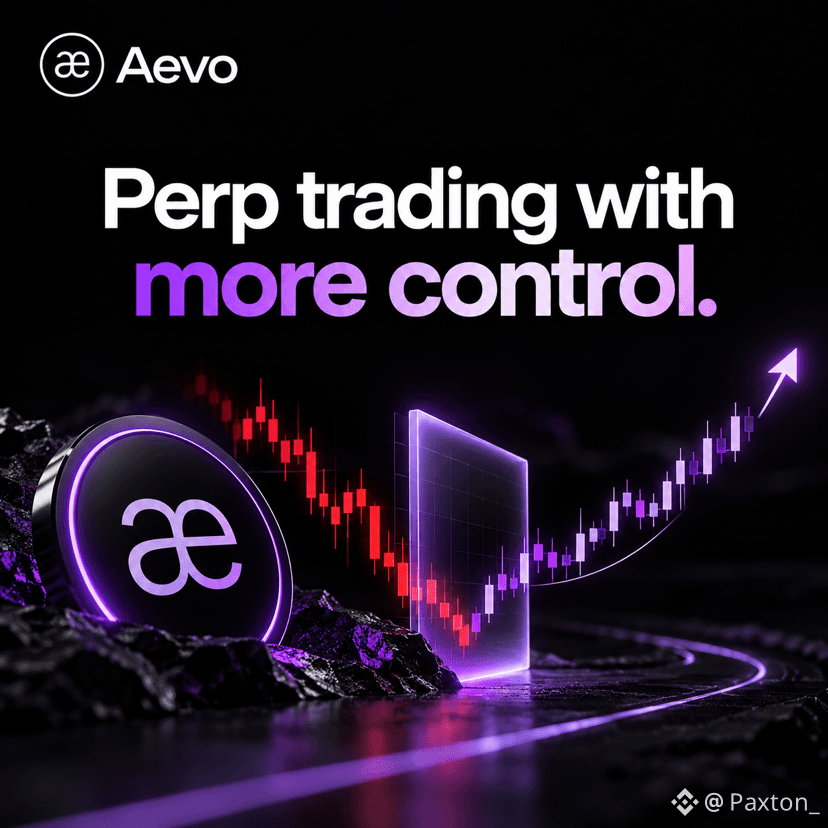
I’ve always thought risk management deserves as much attention as finding an entry.
Anyone can open a perp position. The harder part is deciding what happens when the market doesn’t follow your plan.
@Aevoxyz PERPS+ is built around that idea.
It gives $BTC and $ETH perp traders three ways to structure a position from entry, whether they want to cap losses, receive premium upfront with a profit cap, or define a trading range.
You don’t need options knowledge to use them.
No tool can save every bad trade, but having more control over your risk before entering a position is worth paying attention to.
#Aevo #CPIWatch
I’ve always thought risk management deserves as much attention as finding an entry.
Anyone can open a perp position. The harder part is deciding what happens when the market doesn’t follow your plan.
@Aevo PERPS+ is built around that idea.
It gives $BTC and $ETH perp traders three ways to structure a position from entry, whether they want to cap losses, receive premium upfront with a profit cap, or define a trading range.
You don’t need options knowledge to use them.
No tool can save every bad trade, but having more control over your risk before entering a position is worth paying attention to.
#Aevo #CPIWatch
Anyone can open a perp position. The harder part is deciding what happens when the market doesn’t follow your plan.
@Aevo PERPS+ is built around that idea.
It gives $BTC and $ETH perp traders three ways to structure a position from entry, whether they want to cap losses, receive premium upfront with a profit cap, or define a trading range.
You don’t need options knowledge to use them.
No tool can save every bad trade, but having more control over your risk before entering a position is worth paying attention to.
#Aevo #CPIWatch
22
5
27
3.7k
·
--
Verified
Article
Starknet Just Jumped 50 to 60% While Bitcoin Barely Moved. So Why Is Everyone Paying Attention?Starknet did something weird today.
$STRK is up around 50 to 60% in a single day. Bitcoin barely budged. That difference is why people started looking.
What actually happened
On October 11, 2026, Starknet’s token went from quiet to one of the biggest movers in the market. Volume picked up. People started searching for it. For a Layer 2 that has mostly stayed in Ethereum’s shadow a jump this big in one day is not normal.
Why people think it moved
The talk is that the team is looking at whether Starknet should stop being an Ethereum Layer 2 and become its own Layer 1.
There were also some comments about quantum resistance.
None of this is a final decision.
These are just discussions right now.
Markets still reacted.
The real difference
A Layer 2 leans on Ethereum for security. It does the work somewhere else, then settles back on Ethereum. If it becomes its own Layer 1, it has to protect itself. That means it needs its own validators and incentives, and it takes on more risk if things go wrong.
This is not a small change. It changes how the whole network stays secure.
Two ways people are seeing it
Some people think the price move shows the market is starting to notice that Starknet might be trying to get out of the crowded Layer 2 space. Others think it is just a short squeeze: volume was low, some buying came in and the story spread fast enough that more people joined before checking the details.
Both things can be true at the same time.
What could push it either way
If the team puts out a clear statement saying yes or no to the Layer 1 idea, the price will probably move hard in one direction. If nothing comes and the volume drops, a big part of today’s gain can disappear fast. Token unlocks, what the rest of the market is doing, and whether Ethereum itself is strong or weak will also play a role.
When a token moves mostly on a story, that story can fade just as quickly as it appeared.
What did not change
Starknet still runs on zero-knowledge proofs.
That part is the same as it was yesterday. What changed is that the market is now willing to price in the chance that the network’s relationship with Ethereum might shift. Whether that shift actually happens, and whether it helps or hurts, is still unknown.
The move is real. The full story is not. That gap is what people are watching right now.
$BTC $ETH
#STRKRisesAbout20%In24Hours
Starknet Just Jumped 50 to 60% While Bitcoin Barely Moved. So Why Is Everyone Paying Attention?
Starknet did something weird today.
$STRK is up around 50 to 60% in a single day. Bitcoin barely budged. That difference is why people started looking.
What actually happened
On October 11, 2026, Starknet’s token went from quiet to one of the biggest movers in the market. Volume picked up. People started searching for it. For a Layer 2 that has mostly stayed in Ethereum’s shadow a jump this big in one day is not normal.
Why people think it moved
The talk is that the team is looking at whether Starknet should stop being an Ethereum Layer 2 and become its own Layer 1.
There were also some comments about quantum resistance.
None of this is a final decision.
These are just discussions right now.
Markets still reacted.
The real difference
A Layer 2 leans on Ethereum for security. It does the work somewhere else, then settles back on Ethereum. If it becomes its own Layer 1, it has to protect itself. That means it needs its own validators and incentives, and it takes on more risk if things go wrong.
This is not a small change. It changes how the whole network stays secure.
Two ways people are seeing it
Some people think the price move shows the market is starting to notice that Starknet might be trying to get out of the crowded Layer 2 space. Others think it is just a short squeeze: volume was low, some buying came in and the story spread fast enough that more people joined before checking the details.
Both things can be true at the same time.
What could push it either way
If the team puts out a clear statement saying yes or no to the Layer 1 idea, the price will probably move hard in one direction. If nothing comes and the volume drops, a big part of today’s gain can disappear fast. Token unlocks, what the rest of the market is doing, and whether Ethereum itself is strong or weak will also play a role.
When a token moves mostly on a story, that story can fade just as quickly as it appeared.
What did not change
Starknet still runs on zero-knowledge proofs.
That part is the same as it was yesterday. What changed is that the market is now willing to price in the chance that the network’s relationship with Ethereum might shift. Whether that shift actually happens, and whether it helps or hurts, is still unknown.
The move is real. The full story is not. That gap is what people are watching right now.
$BTC $ETH
#STRKRisesAbout20%In24Hours
$STRK is up around 50 to 60% in a single day. Bitcoin barely budged. That difference is why people started looking.
What actually happened
On October 11, 2026, Starknet’s token went from quiet to one of the biggest movers in the market. Volume picked up. People started searching for it. For a Layer 2 that has mostly stayed in Ethereum’s shadow a jump this big in one day is not normal.
Why people think it moved
The talk is that the team is looking at whether Starknet should stop being an Ethereum Layer 2 and become its own Layer 1.
There were also some comments about quantum resistance.
None of this is a final decision.
These are just discussions right now.
Markets still reacted.
The real difference
A Layer 2 leans on Ethereum for security. It does the work somewhere else, then settles back on Ethereum. If it becomes its own Layer 1, it has to protect itself. That means it needs its own validators and incentives, and it takes on more risk if things go wrong.
This is not a small change. It changes how the whole network stays secure.
Two ways people are seeing it
Some people think the price move shows the market is starting to notice that Starknet might be trying to get out of the crowded Layer 2 space. Others think it is just a short squeeze: volume was low, some buying came in and the story spread fast enough that more people joined before checking the details.
Both things can be true at the same time.
What could push it either way
If the team puts out a clear statement saying yes or no to the Layer 1 idea, the price will probably move hard in one direction. If nothing comes and the volume drops, a big part of today’s gain can disappear fast. Token unlocks, what the rest of the market is doing, and whether Ethereum itself is strong or weak will also play a role.
When a token moves mostly on a story, that story can fade just as quickly as it appeared.
What did not change
Starknet still runs on zero-knowledge proofs.
That part is the same as it was yesterday. What changed is that the market is now willing to price in the chance that the network’s relationship with Ethereum might shift. Whether that shift actually happens, and whether it helps or hurts, is still unknown.
The move is real. The full story is not. That gap is what people are watching right now.
$BTC $ETH
#STRKRisesAbout20%In24Hours
10
14
1.8k
·
--
Verified
Most people react to news after the opportunity has passed. @polymarket let people take positions on real-world events based on what they think will happen.
The market’s reported scale is notable:
• 250K to 500K monthly active traders
• $18B projected trading volume for 2025
• 17M+ monthly website visits
Tokens like $PENGU and $DOOD reflect the link between crypto, digital culture, and brands. Meanwhile, expectations around a potential POLY token remain part of the wider market narrative.
But numbers and hype don’t guarantee success. Research, probability, and risk management still matter.
The real question is not what everyone expects, but whether the market has already priced it in.
#Polymarket
Most people react to news after the opportunity has passed. @Polymarket let people take positions on real-world events based on what they think will happen.
The market’s reported scale is notable:
• 250K to 500K monthly active traders
• $18B projected trading volume for 2025
• 17M+ monthly website visits
Tokens like $PENGU and $DOOD reflect the link between crypto, digital culture, and brands. Meanwhile, expectations around a potential POLY token remain part of the wider market narrative.
But numbers and hype don’t guarantee success. Research, probability, and risk management still matter.
The real question is not what everyone expects, but whether the market has already priced it in.
#Polymarket
The market’s reported scale is notable:
• 250K to 500K monthly active traders
• $18B projected trading volume for 2025
• 17M+ monthly website visits
Tokens like $PENGU and $DOOD reflect the link between crypto, digital culture, and brands. Meanwhile, expectations around a potential POLY token remain part of the wider market narrative.
But numbers and hype don’t guarantee success. Research, probability, and risk management still matter.
The real question is not what everyone expects, but whether the market has already priced it in.
#Polymarket

35
6
41
6.5k
·
--
Verified
Most chains make you pick a side.
Show everything. Or hide everything.
Neither works for banks.
@Midnight_Network sits in the middle. Prove one fact. Keep the rest private. Like showing your age without handing over your full ID.
$NIGHT is the token you hold. It runs governance. It also makes $DUSK on its own. DUSK pays for private txs. You don’t buy fees separately.
Nodes already include Google Cloud, MoneyGram, Worldpay, Pairpoint by Vodafone, eToro, Bullish, and Blockdaemon.
Monument Bank is working on putting up to £250 million in customer deposits on the network.
Builders can deploy contracts on mainnet now. Private contracts still coming.
Real privacy isn’t vanishing. It’s sharing only what matters.
Not a buy call. Just watching.
#Midnight #Privacy #BinanceLaunchesBinanceIntelligence
Most chains make you pick a side.
Show everything. Or hide everything.
Neither works for banks.
@Midnight Network sits in the middle. Prove one fact. Keep the rest private. Like showing your age without handing over your full ID.
$NIGHT is the token you hold. It runs governance. It also makes $DUSK on its own. DUSK pays for private txs. You don’t buy fees separately.
Nodes already include Google Cloud, MoneyGram, Worldpay, Pairpoint by Vodafone, eToro, Bullish, and Blockdaemon.
Monument Bank is working on putting up to £250 million in customer deposits on the network.
Builders can deploy contracts on mainnet now. Private contracts still coming.
Real privacy isn’t vanishing. It’s sharing only what matters.
Not a buy call. Just watching.
#Midnight #Privacy #BinanceLaunchesBinanceIntelligence
Show everything. Or hide everything.
Neither works for banks.
@Midnight Network sits in the middle. Prove one fact. Keep the rest private. Like showing your age without handing over your full ID.
$NIGHT is the token you hold. It runs governance. It also makes $DUSK on its own. DUSK pays for private txs. You don’t buy fees separately.
Nodes already include Google Cloud, MoneyGram, Worldpay, Pairpoint by Vodafone, eToro, Bullish, and Blockdaemon.
Monument Bank is working on putting up to £250 million in customer deposits on the network.
Builders can deploy contracts on mainnet now. Private contracts still coming.
Real privacy isn’t vanishing. It’s sharing only what matters.
Not a buy call. Just watching.
#Midnight #Privacy #BinanceLaunchesBinanceIntelligence

31
37
5.7k
·
--
Verified
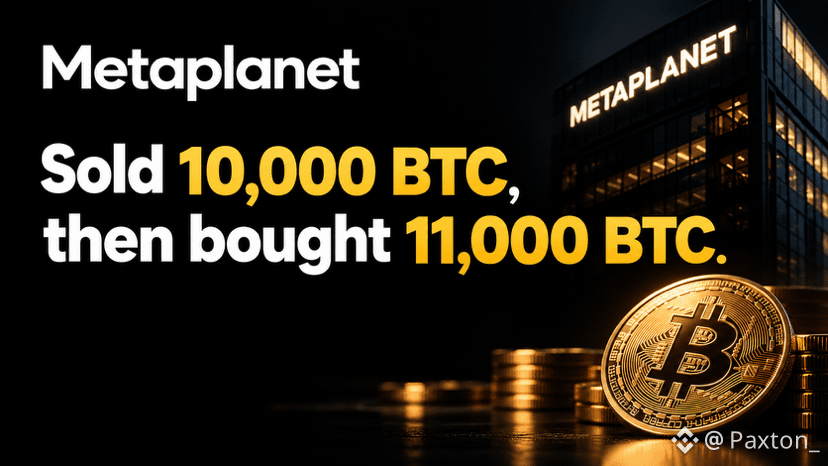
Metaplanet just made a very unusual Bitcoin move.
It sold 10,000 BTC for about ¥124.7B, then bought 11,000 BTC for about ¥149.9B.
Why sell 10,000 BTC if they planned to buy more?
To prove something to creditors and rating agencies:
Their Bitcoin can be turned into cash when needed.
The company said its net interest-bearing liabilities were about ¥122.4B, meaning the BTC sale proceeds were enough to cover that amount.
After the transactions, Metaplanet held 44,000 BTC.
The key lesson:
A huge $BTC treasury looks different to lenders when the company has actually demonstrated that it is willing to sell Bitcoin for liquidity.
This wasn’t a bearish Bitcoin trade.
It was a creditworthiness test.
#bitcoin #BitcoinSpotETFsDraw$6.34BInflowsInQ3
Metaplanet just made a very unusual Bitcoin move.
It sold 10,000 BTC for about ¥124.7B, then bought 11,000 BTC for about ¥149.9B.
Why sell 10,000 BTC if they planned to buy more?
To prove something to creditors and rating agencies:
Their Bitcoin can be turned into cash when needed.
The company said its net interest-bearing liabilities were about ¥122.4B, meaning the BTC sale proceeds were enough to cover that amount.
After the transactions, Metaplanet held 44,000 BTC.
The key lesson:
A huge $BTC treasury looks different to lenders when the company has actually demonstrated that it is willing to sell Bitcoin for liquidity.
This wasn’t a bearish Bitcoin trade.
It was a creditworthiness test.
#bitcoin #BitcoinSpotETFsDraw$6.34BInflowsInQ3
It sold 10,000 BTC for about ¥124.7B, then bought 11,000 BTC for about ¥149.9B.
Why sell 10,000 BTC if they planned to buy more?
To prove something to creditors and rating agencies:
Their Bitcoin can be turned into cash when needed.
The company said its net interest-bearing liabilities were about ¥122.4B, meaning the BTC sale proceeds were enough to cover that amount.
After the transactions, Metaplanet held 44,000 BTC.
The key lesson:
A huge $BTC treasury looks different to lenders when the company has actually demonstrated that it is willing to sell Bitcoin for liquidity.
This wasn’t a bearish Bitcoin trade.
It was a creditworthiness test.
#bitcoin #BitcoinSpotETFsDraw$6.34BInflowsInQ3
7
746
·
--
Prediction markets let people trade on the outcomes of real-world events.
These markets cover topics like politics, sports, economics, cryptocurrency, and global events.
Each market has possible outcomes with prices that reflect what traders think will happen.
As new information comes in, those prices can change.
Understanding how these markets work means looking at probabilities, market sentiment, available information, and the risks involved.
A market price reflects what traders are willing to pay. It does not guarantee that an outcome will happen.
@polymarket
$BTC $PENGU
#Polymarket #NFPWatch
Prediction markets let people trade on the outcomes of real-world events.
These markets cover topics like politics, sports, economics, cryptocurrency, and global events.
Each market has possible outcomes with prices that reflect what traders think will happen.
As new information comes in, those prices can change.
Understanding how these markets work means looking at probabilities, market sentiment, available information, and the risks involved.
A market price reflects what traders are willing to pay. It does not guarantee that an outcome will happen.
@Polymarket
$BTC $PENGU
#Polymarket #NFPWatch
These markets cover topics like politics, sports, economics, cryptocurrency, and global events.
Each market has possible outcomes with prices that reflect what traders think will happen.
As new information comes in, those prices can change.
Understanding how these markets work means looking at probabilities, market sentiment, available information, and the risks involved.
A market price reflects what traders are willing to pay. It does not guarantee that an outcome will happen.
@Polymarket
$BTC $PENGU
#Polymarket #NFPWatch

50
8
67
9.5k
·
--
Verified
Prediction markets are becoming a bigger topic in crypto.
@polymarket is one platform often discussed in this space.
The idea is simple. People price questions about future events in sports, politics, tech, music, and world news.
Reported figures include:
• 250–500k monthly active traders
• $18B projected 2025 volume
• 17M+ monthly visits
I like comparing the news with the market price. Sometimes they match. Sometimes they don’t.
That difference can show how people see an event at that moment.
#polymarket #predictionmarket #EarningsSeason
Prediction markets are becoming a bigger topic in crypto.
@Polymarket is one platform often discussed in this space.
The idea is simple. People price questions about future events in sports, politics, tech, music, and world news.
Reported figures include:
• 250–500k monthly active traders
• $18B projected 2025 volume
• 17M+ monthly visits
I like comparing the news with the market price. Sometimes they match. Sometimes they don’t.
That difference can show how people see an event at that moment.
#polymarket #predictionmarket #EarningsSeason
@Polymarket is one platform often discussed in this space.
The idea is simple. People price questions about future events in sports, politics, tech, music, and world news.
Reported figures include:
• 250–500k monthly active traders
• $18B projected 2025 volume
• 17M+ monthly visits
I like comparing the news with the market price. Sometimes they match. Sometimes they don’t.
That difference can show how people see an event at that moment.
#polymarket #predictionmarket #EarningsSeason
75
8
44
6.9k
·
--
Bitget just put THORChain in a difficult spot.
After the $387.5M Bitget hot-wallet breach, the attacker started moving stolen funds through THORChain.
Gracy Chen is now publicly asking THORChain to refuse service to the identified attacker wallets.
That creates a much bigger question.
If a wallet is publicly tagged as belonging to an attacker, is processing its swap still “neutral”?
Or is it facilitating the movement of stolen funds?
THORChain has faced this exact debate before after the $1.46B Bybit hack, when large amounts of stolen ETH were routed through the protocol.
The core problem is simple.
A permissionless protocol has no normal “freeze account” button.
But once the addresses are known, the question changes from:
“Can you identify the attacker?”
to:
“What do you do after you identify them?”
That is the real debate Bitget has now put on the table.
#Bitget #Gracychen
Bitget just put THORChain in a difficult spot.
After the $387.5M Bitget hot-wallet breach, the attacker started moving stolen funds through THORChain.
Gracy Chen is now publicly asking THORChain to refuse service to the identified attacker wallets.
That creates a much bigger question.
If a wallet is publicly tagged as belonging to an attacker, is processing its swap still “neutral”?
Or is it facilitating the movement of stolen funds?
THORChain has faced this exact debate before after the $1.46B Bybit hack, when large amounts of stolen ETH were routed through the protocol.
The core problem is simple.
A permissionless protocol has no normal “freeze account” button.
But once the addresses are known, the question changes from:
“Can you identify the attacker?”
to:
“What do you do after you identify them?”
That is the real debate Bitget has now put on the table.
#Bitget #Gracychen
After the $387.5M Bitget hot-wallet breach, the attacker started moving stolen funds through THORChain.
Gracy Chen is now publicly asking THORChain to refuse service to the identified attacker wallets.
That creates a much bigger question.
If a wallet is publicly tagged as belonging to an attacker, is processing its swap still “neutral”?
Or is it facilitating the movement of stolen funds?
THORChain has faced this exact debate before after the $1.46B Bybit hack, when large amounts of stolen ETH were routed through the protocol.
The core problem is simple.
A permissionless protocol has no normal “freeze account” button.
But once the addresses are known, the question changes from:
“Can you identify the attacker?”
to:
“What do you do after you identify them?”
That is the real debate Bitget has now put on the table.
#Bitget #Gracychen

7
9
73
48.6k
Log in to explore more content
Join global crypto users on Binance Square
⚡️ Get latest and useful information about crypto.
💬 Trusted by the world’s largest crypto exchange.
👍 Discover real insights from verified creators.
Email / Phone number
Trending Topics
BitcoinSlipsBelow$80KAgain
493 views
23 Discussing
BTC Is Bleeding While the Whale W Move Out — Stacked Against a Corporate Bid
Seven days of downside, and it wasn't retail that drove.
The: BTC closed ~79,796 on Oct27, down ~2.6% over 7 days and ~5.2% over 30 days. Daily RSI(12) sits at 39.8. The week's range: high ~84,377 (Oct 22), low ~79,220 (Oct 24). No capitulation candle. No reclaim of 84K. Just grind.
The supply side is doing the talking. Dormant wallets moved 2,571 BTC (~$206.5M) toward institutional exchanges. That is supply arriving at the venue, not leaving it. Treasury appetite also cooled — Strategy redirected $204.9M into share buybacks instead of BTC.
The bid underneath is corporate, not speculative. Strive acquired 6,182 BTC (~$511.4M); public firms added 6,200+ BTC combined. That is a real floor argument near $79.7K — but it is a floor, not a breakout catalyst.
Momentum is not on the bulls' side. MACD histogram at −23.99, price under the 99 EMA. Upside is capped below ~$80.5K until that structure fl.
Positioning is mildly bullish, not euphoric. Square community poll: 2,116 bullish vs 1,714 bearish of 3,830 votes A limited sample — worth knowing, not worth trading on alone.
My read: this is distribution into a corporate bid. The floor is real; the momentum is not there. Watching whether the 79.2K–79.7K zone absorbs the exchange inflow is the whole story this week.
#BitcoinSlipsBelow$80KAgain
_Mr_Singh_
·0 Likes
·446 views
ThailandLaunchesWORPTStablecoinToQRPaymentApp
304 views
62 Discussing
StrategySkipsBitcoinPurchasesSpends$205MOnSTRCBuybacks
2,900 views
68 Discussing