
#cryptoprivacy
cryptoprivacy
135,875 views
741 Discussing
Hot
Latest

Financial surveillance is crossing a dangerous line. When government agencies weaponize transaction data to profile citizens' political leanings, it threatens core privacy rights. This overreach turns the financial system into a tool for predictive policing. We need stronger cryptographic protections and decentralized alternatives to ensure our spending habits remain our own business, not a state watchlist. Privacy isn't a crime; it's a fundamental right that crypto was built to protect. $BTC $XMR #CryptoPrivacy #Surveillance #DataSecurity
Financial surveillance is crossing a dangerous line. When government agencies weaponize transaction data to profile citizens' political leanings, it threatens core privacy rights. This overreach turns the financial system into a tool for predictive policing. We need stronger cryptographic protections and decentralized alternatives to ensure our spending habits remain our own business, not a state watchlist. Privacy isn't a crime; it's a fundamental right that crypto was built to protect. $BTC $XMR #CryptoPrivacy #Surveillance #DataSecurity
145

·
--
Zcash just surged over 11% in a single day — here is why privacy coins are turning heads again.
Zcash (ZEC) is built different. While Bitcoin shows every wallet address and amount publicly, Zcash uses something called "zero-knowledge proofs." Think of it like proving you know a secret password without ever typing it out. You can send money fully encrypted — hiding sender, receiver, and amount — while the network still verifies everything is legit. No trust required, just math.
With a $25B market cap and $2.3B in daily volume, traders are clearly paying attention. Whether it is growing regulatory noise around transparent chains or just a renewed appetite for financial privacy, ZEC is having a moment.
Privacy isn't about hiding; it is about choosing who sees your business.
Do you think privacy coins will become essential tools or regulatory targets in the next bull run? #Zcash #CryptoPrivacy
Zcash just surged over 11% in a single day — here is why privacy coins are turning heads again.
Zcash (ZEC) is built different. While Bitcoin shows every wallet address and amount publicly, Zcash uses something called "zero-knowledge proofs." Think of it like proving you know a secret password without ever typing it out. You can send money fully encrypted — hiding sender, receiver, and amount — while the network still verifies everything is legit. No trust required, just math.
With a $25B market cap and $2.3B in daily volume, traders are clearly paying attention. Whether it is growing regulatory noise around transparent chains or just a renewed appetite for financial privacy, ZEC is having a moment.
Privacy isn't about hiding; it is about choosing who sees your business.
Do you think privacy coins will become essential tools or regulatory targets in the next bull run? #Zcash #CryptoPrivacy
Zcash (ZEC) is built different. While Bitcoin shows every wallet address and amount publicly, Zcash uses something called "zero-knowledge proofs." Think of it like proving you know a secret password without ever typing it out. You can send money fully encrypted — hiding sender, receiver, and amount — while the network still verifies everything is legit. No trust required, just math.
With a $25B market cap and $2.3B in daily volume, traders are clearly paying attention. Whether it is growing regulatory noise around transparent chains or just a renewed appetite for financial privacy, ZEC is having a moment.
Privacy isn't about hiding; it is about choosing who sees your business.
Do you think privacy coins will become essential tools or regulatory targets in the next bull run? #Zcash #CryptoPrivacy
277

·
--
If you're still betting on privacy tech that quantum computers will crack like a cheap lock, stop now.
High fees have a way of turning winners into losers faster than any red candle. Missing your exit because of network congestion just adds insult to injury.
Liberdus is built with quantum-resistant, end-to-end encrypted messaging, designed with future privacy threats in mind while remaining fully open source. Its integration with $SHARDUS enables linear scaling through blockless dynamic sharding. Transaction capacity grows with the number of nodes while keeping speeds high and fees low.
We've all lived through the $ETH congestion eras that made simple transactions cost more than the trade itself. This setup with $LIBERDUS looks like it learned those lessons without repeating the same mistakes of earlier privacy projects.
What's your take on quantum-resistant chains versus the last generation of privacy tech?
#QuantumResistant #CryptoPrivacy #ScalingSolutions
If you're still betting on privacy tech that quantum computers will crack like a cheap lock, stop now.
High fees have a way of turning winners into losers faster than any red candle. Missing your exit because of network congestion just adds insult to injury.
Liberdus is built with quantum-resistant, end-to-end encrypted messaging, designed with future privacy threats in mind while remaining fully open source. Its integration with $SHARDUS enables linear scaling through blockless dynamic sharding. Transaction capacity grows with the number of nodes while keeping speeds high and fees low.
We've all lived through the $ETH congestion eras that made simple transactions cost more than the trade itself. This setup with $LIBERDUS looks like it learned those lessons without repeating the same mistakes of earlier privacy projects.
What's your take on quantum-resistant chains versus the last generation of privacy tech?
#QuantumResistant #CryptoPrivacy #ScalingSolutions
High fees have a way of turning winners into losers faster than any red candle. Missing your exit because of network congestion just adds insult to injury.
Liberdus is built with quantum-resistant, end-to-end encrypted messaging, designed with future privacy threats in mind while remaining fully open source. Its integration with $SHARDUS enables linear scaling through blockless dynamic sharding. Transaction capacity grows with the number of nodes while keeping speeds high and fees low.
We've all lived through the $ETH congestion eras that made simple transactions cost more than the trade itself. This setup with $LIBERDUS looks like it learned those lessons without repeating the same mistakes of earlier privacy projects.
What's your take on quantum-resistant chains versus the last generation of privacy tech?
#QuantumResistant #CryptoPrivacy #ScalingSolutions
10

Picture this: a trader I follow sent a sizable payment last month on a legacy chain and watched bots scrape the public details within hours, turning a routine transfer into a targeted phishing hit.
Most people miss how often this plays out. Crypto traders lose money from leaked transaction data that invites front-running or scams, plus simple mix-ups when they cannot attach a private note and end up sending to the wrong wallet.
Centralized apps have spent years monetizing your payment history by selling it off, which frequently lands in the hands of attackers hunting high-value wallets. Legacy chains like $ETH still offer no straightforward way to keep notes private, so details stay exposed or you skip context entirely and forget the purpose later. $BTC carries the same gap, leaving users open to both operational errors and future quantum breaks on existing encryption.
The pattern is consistent losses from data exploitation and avoidable mistakes. Liberdus $LIB combines private messaging with payments inside one quantum-secure protocol, something most have overlooked as a direct fix for these risks.
Where do you think protocols like this go from here?
#CryptoPrivacy #QuantumSecure #Payments
Picture this: a trader I follow sent a sizable payment last month on a legacy chain and watched bots scrape the public details within hours, turning a routine transfer into a targeted phishing hit.
Most people miss how often this plays out. Crypto traders lose money from leaked transaction data that invites front-running or scams, plus simple mix-ups when they cannot attach a private note and end up sending to the wrong wallet.
Centralized apps have spent years monetizing your payment history by selling it off, which frequently lands in the hands of attackers hunting high-value wallets. Legacy chains like $ETH still offer no straightforward way to keep notes private, so details stay exposed or you skip context entirely and forget the purpose later. $BTC carries the same gap, leaving users open to both operational errors and future quantum breaks on existing encryption.
The pattern is consistent losses from data exploitation and avoidable mistakes. Liberdus $LIB combines private messaging with payments inside one quantum-secure protocol, something most have overlooked as a direct fix for these risks.
Where do you think protocols like this go from here?
#CryptoPrivacy #QuantumSecure #Payments
Most people miss how often this plays out. Crypto traders lose money from leaked transaction data that invites front-running or scams, plus simple mix-ups when they cannot attach a private note and end up sending to the wrong wallet.
Centralized apps have spent years monetizing your payment history by selling it off, which frequently lands in the hands of attackers hunting high-value wallets. Legacy chains like $ETH still offer no straightforward way to keep notes private, so details stay exposed or you skip context entirely and forget the purpose later. $BTC carries the same gap, leaving users open to both operational errors and future quantum breaks on existing encryption.
The pattern is consistent losses from data exploitation and avoidable mistakes. Liberdus $LIB combines private messaging with payments inside one quantum-secure protocol, something most have overlooked as a direct fix for these risks.
Where do you think protocols like this go from here?
#CryptoPrivacy #QuantumSecure #Payments
25

Most crypto users still do not realize that every time they send a regular payment, their communication trail and transaction metadata are completely exposed on public ledgers for anyone to track.
When you attach memos or context to transfers on legacy chains like $ETH, you are essentially handing over your financial identity to surveillance firms and data brokers. One exposed transaction note is often all it takes for malicious actors to map your wallet cluster and target your assets.
Centralized platforms make fortunes monetizing user data, but the bigger risk lies in how exposed on-chain communication remains. While traders move value through standard $BTC transactions every day, legacy networks still fail to offer native private messaging alongside payments, leaving transaction histories vulnerable to long-term surveillance and emerging quantum decryption threats.
Liberdus is approaching this gap by integrating private messaging directly with payments inside a single quantum-secure protocol. Instead of leaving unencrypted trails across public block explorers, the network isolates both communication payloads and financial transfers under quantum-resistant encryption before legacy vulnerabilities can be exploited.
Do you think quantum-grade privacy will become mandatory for crypto payments sooner than expected?
#CryptoPrivacy #BlockchainSecurity #Web3
Most crypto users still do not realize that every time they send a regular payment, their communication trail and transaction metadata are completely exposed on public ledgers for anyone to track.
When you attach memos or context to transfers on legacy chains like $ETH , you are essentially handing over your financial identity to surveillance firms and data brokers. One exposed transaction note is often all it takes for malicious actors to map your wallet cluster and target your assets.
Centralized platforms make fortunes monetizing user data, but the bigger risk lies in how exposed on-chain communication remains. While traders move value through standard $BTC transactions every day, legacy networks still fail to offer native private messaging alongside payments, leaving transaction histories vulnerable to long-term surveillance and emerging quantum decryption threats.
Liberdus is approaching this gap by integrating private messaging directly with payments inside a single quantum-secure protocol. Instead of leaving unencrypted trails across public block explorers, the network isolates both communication payloads and financial transfers under quantum-resistant encryption before legacy vulnerabilities can be exploited.
Do you think quantum-grade privacy will become mandatory for crypto payments sooner than expected?
#CryptoPrivacy #BlockchainSecurity #Web3
When you attach memos or context to transfers on legacy chains like $ETH , you are essentially handing over your financial identity to surveillance firms and data brokers. One exposed transaction note is often all it takes for malicious actors to map your wallet cluster and target your assets.
Centralized platforms make fortunes monetizing user data, but the bigger risk lies in how exposed on-chain communication remains. While traders move value through standard $BTC transactions every day, legacy networks still fail to offer native private messaging alongside payments, leaving transaction histories vulnerable to long-term surveillance and emerging quantum decryption threats.
Liberdus is approaching this gap by integrating private messaging directly with payments inside a single quantum-secure protocol. Instead of leaving unencrypted trails across public block explorers, the network isolates both communication payloads and financial transfers under quantum-resistant encryption before legacy vulnerabilities can be exploited.
Do you think quantum-grade privacy will become mandatory for crypto payments sooner than expected?
#CryptoPrivacy #BlockchainSecurity #Web3
23

·
--
Have you noticed nobody is talking about how your crypto payments still lack a simple private note feature while apps quietly sell your chats?
Crypto traders keep leaking their positions through public memos or getting rugged because they can't privately message without a third party watching. That FOMO buying happens when you can't coordinate quietly with your circle.
Most people accept that $BTC and $ETH transactions broadcast everything in the open. Centralized apps then monetize whatever you type on the side. Liberdus $LIB combines private messaging directly with payments inside one quantum-secure protocol so your notes travel encrypted with the funds.
You no longer jump between apps or risk data harvests. The protocol treats the message as part of the transaction itself. This setup challenges the old split between money and communication that leaves you exposed.
If you are tired of the status quo, the actionable move is to evaluate chains that already merge these layers instead of waiting for legacy ones to catch up. Quantum security matters now because tomorrow's computers will crack today's encryption.
Where do you think this goes from here once more people realize payments and private notes belong together?
#CryptoPrivacy #QuantumSecure #Web3
Have you noticed nobody is talking about how your crypto payments still lack a simple private note feature while apps quietly sell your chats?
Crypto traders keep leaking their positions through public memos or getting rugged because they can't privately message without a third party watching. That FOMO buying happens when you can't coordinate quietly with your circle.
Most people accept that $BTC and $ETH transactions broadcast everything in the open. Centralized apps then monetize whatever you type on the side. Liberdus $LIB combines private messaging directly with payments inside one quantum-secure protocol so your notes travel encrypted with the funds.
You no longer jump between apps or risk data harvests. The protocol treats the message as part of the transaction itself. This setup challenges the old split between money and communication that leaves you exposed.
If you are tired of the status quo, the actionable move is to evaluate chains that already merge these layers instead of waiting for legacy ones to catch up. Quantum security matters now because tomorrow's computers will crack today's encryption.
Where do you think this goes from here once more people realize payments and private notes belong together?
#CryptoPrivacy #QuantumSecure #Web3
Crypto traders keep leaking their positions through public memos or getting rugged because they can't privately message without a third party watching. That FOMO buying happens when you can't coordinate quietly with your circle.
Most people accept that $BTC and $ETH transactions broadcast everything in the open. Centralized apps then monetize whatever you type on the side. Liberdus $LIB combines private messaging directly with payments inside one quantum-secure protocol so your notes travel encrypted with the funds.
You no longer jump between apps or risk data harvests. The protocol treats the message as part of the transaction itself. This setup challenges the old split between money and communication that leaves you exposed.
If you are tired of the status quo, the actionable move is to evaluate chains that already merge these layers instead of waiting for legacy ones to catch up. Quantum security matters now because tomorrow's computers will crack today's encryption.
Where do you think this goes from here once more people realize payments and private notes belong together?
#CryptoPrivacy #QuantumSecure #Web3

44
·
--
Everyone thinks crypto payments already keep your details private, but actually most blockchains still broadcast every transfer with no simple way to attach a hidden note.
You send the funds and then scramble to explain the purpose in a separate chat. That extra step leads to mix-ups and leaves you open to targeted scams once centralized apps have already sold your data.
Imagine mailing cash inside a clear plastic bag. Anyone can see the amount and there is no private card to say what it is for. That is how many legacy chains behind $BTC and $ETH still operate. Centralized apps make it worse by turning your payment habits into their product.
Liberdus $LIBERDUS takes a different approach by folding private messaging directly into payments inside one quantum-secure protocol. Think of it as a sealed envelope that holds both the money and your personal note, locked so tightly even future computers cannot peek inside.
This setup cuts the usual leaks and keeps you safer as the technology landscape shifts.
What's your take on combining messages and payments this way?
#CryptoPrivacy #QuantumSecure #Liberdus
Everyone thinks crypto payments already keep your details private, but actually most blockchains still broadcast every transfer with no simple way to attach a hidden note.
You send the funds and then scramble to explain the purpose in a separate chat. That extra step leads to mix-ups and leaves you open to targeted scams once centralized apps have already sold your data.
Imagine mailing cash inside a clear plastic bag. Anyone can see the amount and there is no private card to say what it is for. That is how many legacy chains behind $BTC and $ETH still operate. Centralized apps make it worse by turning your payment habits into their product.
Liberdus $LIBERDUS takes a different approach by folding private messaging directly into payments inside one quantum-secure protocol. Think of it as a sealed envelope that holds both the money and your personal note, locked so tightly even future computers cannot peek inside.
This setup cuts the usual leaks and keeps you safer as the technology landscape shifts.
What's your take on combining messages and payments this way?
#CryptoPrivacy #QuantumSecure #Liberdus
You send the funds and then scramble to explain the purpose in a separate chat. That extra step leads to mix-ups and leaves you open to targeted scams once centralized apps have already sold your data.
Imagine mailing cash inside a clear plastic bag. Anyone can see the amount and there is no private card to say what it is for. That is how many legacy chains behind $BTC and $ETH still operate. Centralized apps make it worse by turning your payment habits into their product.
Liberdus $LIBERDUS takes a different approach by folding private messaging directly into payments inside one quantum-secure protocol. Think of it as a sealed envelope that holds both the money and your personal note, locked so tightly even future computers cannot peek inside.
This setup cuts the usual leaks and keeps you safer as the technology landscape shifts.
What's your take on combining messages and payments this way?
#CryptoPrivacy #QuantumSecure #Liberdus
33

·
--
If you are still sending transactions on public ledgers without protecting your communications, stop now.
Most traders worry about getting front-run or having their financial history doxed every time they execute a transfer. We put up with centralized apps selling our private chats, yet we accept that modern Web3 still forces us into clunky workarounds just to attach basic payment notes.
Back when $BTC and $ETH established decentralized settlement, the entire focus was on transparent ledger verification rather than transaction privacy. Even today, legacy networks make attaching a simple encrypted message feel like a developer chore, while Web2 platforms quietly monetize every single metadata trail you leave behind.
Liberdus is taking a noticeably different route by unifying private messaging and payments directly within a quantum-secure protocol. Integrating the communication layer straight into value transfer eliminates the need to stitch third-party chat tools together with on-chain payments.
Do you think built-in private messaging will become the new standard for transfers, or are traders too comfortable using separate apps?
#CryptoPrivacy #Web3 #Blockchain
If you are still sending transactions on public ledgers without protecting your communications, stop now.
Most traders worry about getting front-run or having their financial history doxed every time they execute a transfer. We put up with centralized apps selling our private chats, yet we accept that modern Web3 still forces us into clunky workarounds just to attach basic payment notes.
Back when $BTC and $ETH established decentralized settlement, the entire focus was on transparent ledger verification rather than transaction privacy. Even today, legacy networks make attaching a simple encrypted message feel like a developer chore, while Web2 platforms quietly monetize every single metadata trail you leave behind.
Liberdus is taking a noticeably different route by unifying private messaging and payments directly within a quantum-secure protocol. Integrating the communication layer straight into value transfer eliminates the need to stitch third-party chat tools together with on-chain payments.
Do you think built-in private messaging will become the new standard for transfers, or are traders too comfortable using separate apps?
#CryptoPrivacy #Web3 #Blockchain
Most traders worry about getting front-run or having their financial history doxed every time they execute a transfer. We put up with centralized apps selling our private chats, yet we accept that modern Web3 still forces us into clunky workarounds just to attach basic payment notes.
Back when $BTC and $ETH established decentralized settlement, the entire focus was on transparent ledger verification rather than transaction privacy. Even today, legacy networks make attaching a simple encrypted message feel like a developer chore, while Web2 platforms quietly monetize every single metadata trail you leave behind.
Liberdus is taking a noticeably different route by unifying private messaging and payments directly within a quantum-secure protocol. Integrating the communication layer straight into value transfer eliminates the need to stitch third-party chat tools together with on-chain payments.
Do you think built-in private messaging will become the new standard for transfers, or are traders too comfortable using separate apps?
#CryptoPrivacy #Web3 #Blockchain
17

·
--
In a Web3 world increasingly focused on transparency, privacy remains one of the most debated topics. Among the privacy-preserving protocols, Firo, formerly known as Zcoin, stands out as a project that continues to innovate despite regulatory headwinds.
At the heart of Firo's technology is the Lelantus Spark protocol. Spark represents a massive leap forward in trustless financial privacy. It allows users to hide transaction amounts, sender and receiver addresses, and the transaction graph itself. Unlike older privacy technologies, Spark does not require a trusted setup, making it highly secure and decentralized. Additionally, Firo has been working on Spark Assets, which aims to bring these same robust privacy protections to other tokens created on its chain.
Firo also remains accessible to everyday users through its FiroPOW consensus mechanism. This algorithm is specifically optimized for GPU mining, preventing the centralization often caused by ASIC mining dominance and keeping the network secure through a distributed community.
However, the landscape for privacy coins is challenging. Major global exchanges have placed monitoring tags on privacy assets due to evolving regulatory frameworks. Firo has taken a proactive stance here. Instead of resisting compliance entirely, the team supports features like viewing keys. This tool allows users to voluntarily disclose their transaction history to third parties, such as tax authorities or auditors, while keeping their data completely private from the public blockchain.
Firo continues to advocate for the idea that privacy is not about hiding illicit activity, but about protecting personal freedom, business secrets, and financial data in a digital age. As decentralized identity and data sovereignty become hotter topics in the crypto space, Firo's technological foundation positions it as a resilient player to watch.
What are your thoughts on the future of privacy coins like Firo? Can technology and regulation find a sustainable middle ground?
#Firo #PrivacyCoins #CryptoPrivacy
In a Web3 world increasingly focused on transparency, privacy remains one of the most debated topics. Among the privacy-preserving protocols, Firo, formerly known as Zcoin, stands out as a project that continues to innovate despite regulatory headwinds.
At the heart of Firo's technology is the Lelantus Spark protocol. Spark represents a massive leap forward in trustless financial privacy. It allows users to hide transaction amounts, sender and receiver addresses, and the transaction graph itself. Unlike older privacy technologies, Spark does not require a trusted setup, making it highly secure and decentralized. Additionally, Firo has been working on Spark Assets, which aims to bring these same robust privacy protections to other tokens created on its chain.
Firo also remains accessible to everyday users through its FiroPOW consensus mechanism. This algorithm is specifically optimized for GPU mining, preventing the centralization often caused by ASIC mining dominance and keeping the network secure through a distributed community.
However, the landscape for privacy coins is challenging. Major global exchanges have placed monitoring tags on privacy assets due to evolving regulatory frameworks. Firo has taken a proactive stance here. Instead of resisting compliance entirely, the team supports features like viewing keys. This tool allows users to voluntarily disclose their transaction history to third parties, such as tax authorities or auditors, while keeping their data completely private from the public blockchain.
Firo continues to advocate for the idea that privacy is not about hiding illicit activity, but about protecting personal freedom, business secrets, and financial data in a digital age. As decentralized identity and data sovereignty become hotter topics in the crypto space, Firo's technological foundation positions it as a resilient player to watch.
What are your thoughts on the future of privacy coins like Firo? Can technology and regulation find a sustainable middle ground?
#Firo #PrivacyCoins #CryptoPrivacy
At the heart of Firo's technology is the Lelantus Spark protocol. Spark represents a massive leap forward in trustless financial privacy. It allows users to hide transaction amounts, sender and receiver addresses, and the transaction graph itself. Unlike older privacy technologies, Spark does not require a trusted setup, making it highly secure and decentralized. Additionally, Firo has been working on Spark Assets, which aims to bring these same robust privacy protections to other tokens created on its chain.
Firo also remains accessible to everyday users through its FiroPOW consensus mechanism. This algorithm is specifically optimized for GPU mining, preventing the centralization often caused by ASIC mining dominance and keeping the network secure through a distributed community.
However, the landscape for privacy coins is challenging. Major global exchanges have placed monitoring tags on privacy assets due to evolving regulatory frameworks. Firo has taken a proactive stance here. Instead of resisting compliance entirely, the team supports features like viewing keys. This tool allows users to voluntarily disclose their transaction history to third parties, such as tax authorities or auditors, while keeping their data completely private from the public blockchain.
Firo continues to advocate for the idea that privacy is not about hiding illicit activity, but about protecting personal freedom, business secrets, and financial data in a digital age. As decentralized identity and data sovereignty become hotter topics in the crypto space, Firo's technological foundation positions it as a resilient player to watch.
What are your thoughts on the future of privacy coins like Firo? Can technology and regulation find a sustainable middle ground?
#Firo #PrivacyCoins #CryptoPrivacy
76
·
--
In a Web3 landscape increasingly dominated by public ledgers and transaction tracking, privacy remains one of the most debated topics in crypto. At the heart of this conversation is Zcash (ZEC), a pioneer in financial confidentiality. Launched in 2016, Zcash stands out for its implementation of Zero-Knowledge Proofs, specifically zk-SNARKs, allowing users to shield transaction details like sender, receiver, and amount while still maintaining a secure, decentralized network.
Currently, Zcash is navigating a fascinating transitional phase. From a market perspective, privacy coins face a double-edged sword. On one hand, regulatory pressure from global watchdogs has led to some exchange delistings, creating headwinds for ZEC price action. On the other hand, the global demand for digital privacy has never been higher, especially as AI and data harvesting expand.
Technologically, the Zcash ecosystem is not standing still. The Electric Coin Company and the Zcash Foundation have been actively working on transitioning the network from Proof-of-Work to Proof-of-Stake. This shift aims to reduce the environmental footprint, introduce staking rewards for holders, and increase transaction speeds, making ZEC highly competitive in the modern blockchain era.
Furthermore, Zcash shares the same scarce tokenomics as Bitcoin, with a hard cap of 21 million coins. This built-in scarcity, combined with cutting-edge cryptographic privacy, makes ZEC a unique asset for those who view privacy not as a tool for illicit activity, but as a fundamental human right.
As regulatory frameworks like MiCA take shape in Europe, how Zcash adapts will be crucial. Will the transition to Proof-of-Stake and the integration of user-friendly mobile shielding apps spark a new accumulation phase for ZEC? One thing is certain: in the future of decentralized finance, privacy is not just a feature, it is an essential pillar.
What are your thoughts on the future of privacy coins? Is Zcash currently undervalued?
#Zcash #ZEC #CryptoPrivacy
In a Web3 landscape increasingly dominated by public ledgers and transaction tracking, privacy remains one of the most debated topics in crypto. At the heart of this conversation is Zcash (ZEC), a pioneer in financial confidentiality. Launched in 2016, Zcash stands out for its implementation of Zero-Knowledge Proofs, specifically zk-SNARKs, allowing users to shield transaction details like sender, receiver, and amount while still maintaining a secure, decentralized network.
Currently, Zcash is navigating a fascinating transitional phase. From a market perspective, privacy coins face a double-edged sword. On one hand, regulatory pressure from global watchdogs has led to some exchange delistings, creating headwinds for ZEC price action. On the other hand, the global demand for digital privacy has never been higher, especially as AI and data harvesting expand.
Technologically, the Zcash ecosystem is not standing still. The Electric Coin Company and the Zcash Foundation have been actively working on transitioning the network from Proof-of-Work to Proof-of-Stake. This shift aims to reduce the environmental footprint, introduce staking rewards for holders, and increase transaction speeds, making ZEC highly competitive in the modern blockchain era.
Furthermore, Zcash shares the same scarce tokenomics as Bitcoin, with a hard cap of 21 million coins. This built-in scarcity, combined with cutting-edge cryptographic privacy, makes ZEC a unique asset for those who view privacy not as a tool for illicit activity, but as a fundamental human right.
As regulatory frameworks like MiCA take shape in Europe, how Zcash adapts will be crucial. Will the transition to Proof-of-Stake and the integration of user-friendly mobile shielding apps spark a new accumulation phase for ZEC? One thing is certain: in the future of decentralized finance, privacy is not just a feature, it is an essential pillar.
What are your thoughts on the future of privacy coins? Is Zcash currently undervalued?
#Zcash #ZEC #CryptoPrivacy
Currently, Zcash is navigating a fascinating transitional phase. From a market perspective, privacy coins face a double-edged sword. On one hand, regulatory pressure from global watchdogs has led to some exchange delistings, creating headwinds for ZEC price action. On the other hand, the global demand for digital privacy has never been higher, especially as AI and data harvesting expand.
Technologically, the Zcash ecosystem is not standing still. The Electric Coin Company and the Zcash Foundation have been actively working on transitioning the network from Proof-of-Work to Proof-of-Stake. This shift aims to reduce the environmental footprint, introduce staking rewards for holders, and increase transaction speeds, making ZEC highly competitive in the modern blockchain era.
Furthermore, Zcash shares the same scarce tokenomics as Bitcoin, with a hard cap of 21 million coins. This built-in scarcity, combined with cutting-edge cryptographic privacy, makes ZEC a unique asset for those who view privacy not as a tool for illicit activity, but as a fundamental human right.
As regulatory frameworks like MiCA take shape in Europe, how Zcash adapts will be crucial. Will the transition to Proof-of-Stake and the integration of user-friendly mobile shielding apps spark a new accumulation phase for ZEC? One thing is certain: in the future of decentralized finance, privacy is not just a feature, it is an essential pillar.
What are your thoughts on the future of privacy coins? Is Zcash currently undervalued?
#Zcash #ZEC #CryptoPrivacy
168

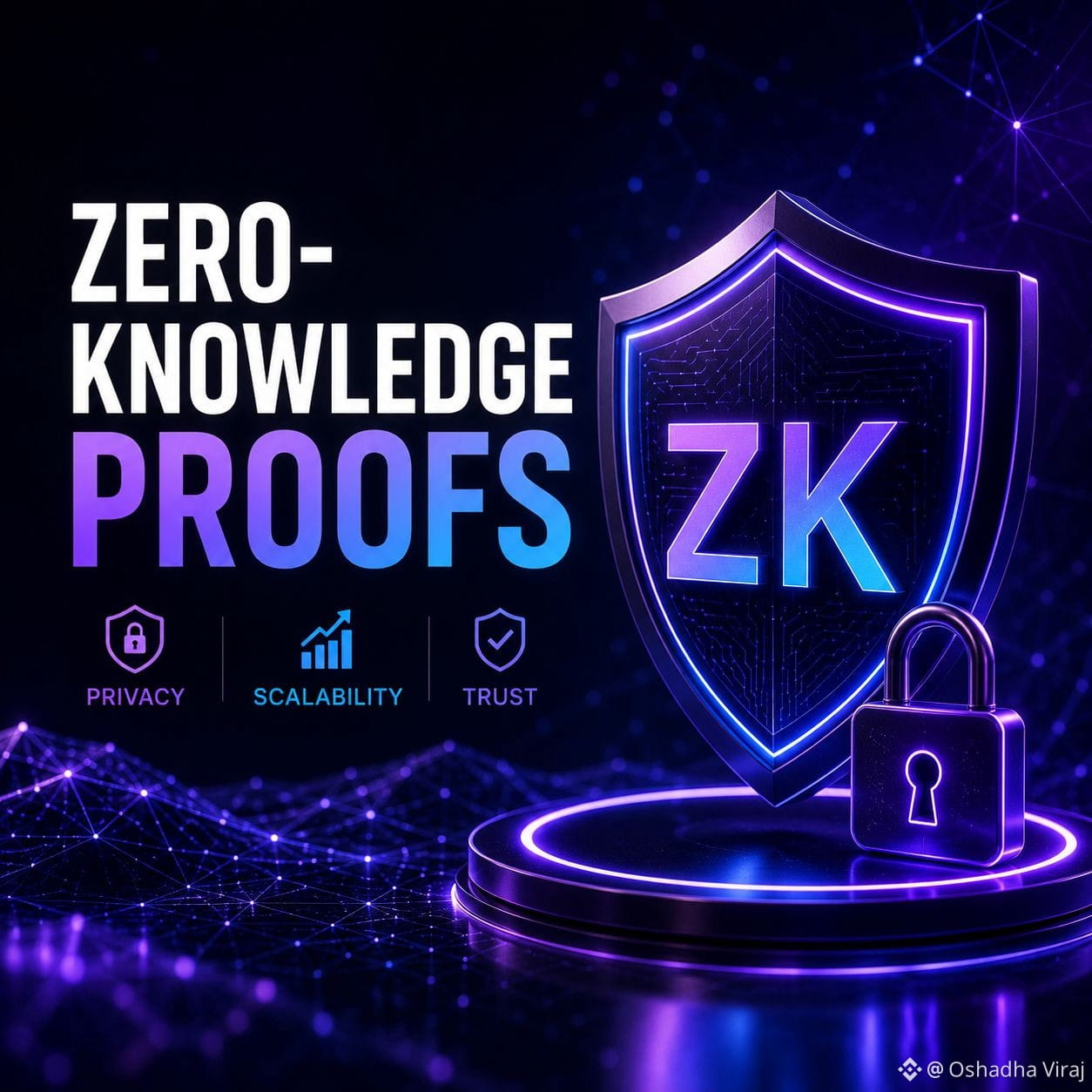
🔐 Zero-Knowledge Proofs: Is Privacy the Next Big Thing in Crypto?
Imagine proving you know something… without revealing what it is.
That’s the power of Zero-Knowledge Proofs (ZKPs) — and it could fundamentally change how crypto handles privacy, scalability, and verification.
🚀 Why ZK matters:
🔹 Privacy → Prove your identity, balance, or eligibility without exposing sensitive information.
🔹 Scalability → ZK-rollups can bundle thousands of transactions into a single proof, helping make L2s faster and cheaper.
🔹 Selective disclosure → Share only what’s necessary while keeping the rest private.
🔹 Trustless verification → Anyone can verify the proof without relying on a third party.
From zkSync and Scroll to Aztec, Polygon zkEVM, and Starknet, the ZK ecosystem is evolving rapidly.
We could be moving from:
“Transparent by default” → “Private by design.”
And the bigger question is…
🔥 Will Zero-Knowledge Proofs become a standard feature of major blockchains by 2027?
Are you bullish on ZK, or do you think transparent blockchains will remain dominant?
👇 Drop your take below.
$ZK $STRK $DUSK
#ZeroKnowledge #CryptoPrivacy #ZKRollups #Web3 #Blockchain
🔐 Zero-Knowledge Proofs: Is Privacy the Next Big Thing in Crypto?
Imagine proving you know something… without revealing what it is.
That’s the power of Zero-Knowledge Proofs (ZKPs) — and it could fundamentally change how crypto handles privacy, scalability, and verification.
🚀 Why ZK matters:
🔹 Privacy → Prove your identity, balance, or eligibility without exposing sensitive information.
🔹 Scalability → ZK-rollups can bundle thousands of transactions into a single proof, helping make L2s faster and cheaper.
🔹 Selective disclosure → Share only what’s necessary while keeping the rest private.
🔹 Trustless verification → Anyone can verify the proof without relying on a third party.
From zkSync and Scroll to Aztec, Polygon zkEVM, and Starknet, the ZK ecosystem is evolving rapidly.
We could be moving from:
“Transparent by default” → “Private by design.”
And the bigger question is…
🔥 Will Zero-Knowledge Proofs become a standard feature of major blockchains by 2027?
Are you bullish on ZK, or do you think transparent blockchains will remain dominant?
👇 Drop your take below.
$ZK $STRK $DUSK
#ZeroKnowledge #CryptoPrivacy #ZKRollups #Web3 #Blockchain
Imagine proving you know something… without revealing what it is.
That’s the power of Zero-Knowledge Proofs (ZKPs) — and it could fundamentally change how crypto handles privacy, scalability, and verification.
🚀 Why ZK matters:
🔹 Privacy → Prove your identity, balance, or eligibility without exposing sensitive information.
🔹 Scalability → ZK-rollups can bundle thousands of transactions into a single proof, helping make L2s faster and cheaper.
🔹 Selective disclosure → Share only what’s necessary while keeping the rest private.
🔹 Trustless verification → Anyone can verify the proof without relying on a third party.
From zkSync and Scroll to Aztec, Polygon zkEVM, and Starknet, the ZK ecosystem is evolving rapidly.
We could be moving from:
“Transparent by default” → “Private by design.”
And the bigger question is…
🔥 Will Zero-Knowledge Proofs become a standard feature of major blockchains by 2027?
Are you bullish on ZK, or do you think transparent blockchains will remain dominant?
👇 Drop your take below.
$ZK $STRK $DUSK
#ZeroKnowledge #CryptoPrivacy #ZKRollups #Web3 #Blockchain
2
332
·
--
Major upgrade for Zcash ($ZEC) privacy! Zakura Common is tackling the network's wallet-side bottleneck, enabling significantly faster private transaction creation.
The best part? No network upgrades or consensus changes are required for integration. This seamless optimization could drastically improve user experience and accelerate the adoption of on-chain privacy. Keep an eye on this development. 🛡️
#Zcash #CryptoPrivacy #Web3
Major upgrade for Zcash ($ZEC ) privacy! Zakura Common is tackling the network's wallet-side bottleneck, enabling significantly faster private transaction creation.
The best part? No network upgrades or consensus changes are required for integration. This seamless optimization could drastically improve user experience and accelerate the adoption of on-chain privacy. Keep an eye on this development. 🛡️
#Zcash #CryptoPrivacy #Web3
The best part? No network upgrades or consensus changes are required for integration. This seamless optimization could drastically improve user experience and accelerate the adoption of on-chain privacy. Keep an eye on this development. 🛡️
#Zcash #CryptoPrivacy #Web3
159

·
--
🛡️ Why Zcash ($ZEC) is Back in the Spotlight! 🚀
If you are looking for a project that combines the absolute scarcity of Bitcoin with advanced financial privacy, Zcash ($ZEC) is the one to watch.
Here is what makes $ZEC highly unique:
🔹 Ultimate Privacy Tech: It utilizes zk-SNARKs (Zero-Knowledge proofs). This allows users to make fully encrypted "shielded" transactions where sender, receiver, and amount remain completely private.
🔹 Built on Bitcoin’s DNA: Just like BTC, Zcash has a strictly fixed maximum supply of 21 Million coins, making it highly deflationary.
🔹 Flexibility & Compliance: It offers both transparent and shielded addresses, allowing users to choose privacy when needed while maintaining optional disclosure for regulatory compliance.
🔹 Massive Institutional Momentum: Grayscale has recently advanced its regulatory push to launch a spot Zcash ETF on NYSE Arca, driving surging institutional interest and significant market volume.
With privacy becoming a major narrative for digital sovereignty, Zcash remains a pioneer in the Web3 financial ecosystem.
Are you holding or trading $ZEC? Let me know your thoughts below! 👇
#zcash #CryptoPrivacy #Binance #CryptoNews $ZEC
{spot}(ZECUSDT)
🛡️ Why Zcash ($ZEC ) is Back in the Spotlight! 🚀
If you are looking for a project that combines the absolute scarcity of Bitcoin with advanced financial privacy, Zcash ($ZEC ) is the one to watch.
Here is what makes $ZEC highly unique:
🔹 Ultimate Privacy Tech: It utilizes zk-SNARKs (Zero-Knowledge proofs). This allows users to make fully encrypted "shielded" transactions where sender, receiver, and amount remain completely private.
🔹 Built on Bitcoin’s DNA: Just like BTC, Zcash has a strictly fixed maximum supply of 21 Million coins, making it highly deflationary.
🔹 Flexibility & Compliance: It offers both transparent and shielded addresses, allowing users to choose privacy when needed while maintaining optional disclosure for regulatory compliance.
🔹 Massive Institutional Momentum: Grayscale has recently advanced its regulatory push to launch a spot Zcash ETF on NYSE Arca, driving surging institutional interest and significant market volume.
With privacy becoming a major narrative for digital sovereignty, Zcash remains a pioneer in the Web3 financial ecosystem.
Are you holding or trading $ZEC ? Let me know your thoughts below! 👇
#zcash #CryptoPrivacy #Binance #CryptoNews $ZEC
If you are looking for a project that combines the absolute scarcity of Bitcoin with advanced financial privacy, Zcash ($ZEC ) is the one to watch.
Here is what makes $ZEC highly unique:
🔹 Ultimate Privacy Tech: It utilizes zk-SNARKs (Zero-Knowledge proofs). This allows users to make fully encrypted "shielded" transactions where sender, receiver, and amount remain completely private.
🔹 Built on Bitcoin’s DNA: Just like BTC, Zcash has a strictly fixed maximum supply of 21 Million coins, making it highly deflationary.
🔹 Flexibility & Compliance: It offers both transparent and shielded addresses, allowing users to choose privacy when needed while maintaining optional disclosure for regulatory compliance.
🔹 Massive Institutional Momentum: Grayscale has recently advanced its regulatory push to launch a spot Zcash ETF on NYSE Arca, driving surging institutional interest and significant market volume.
With privacy becoming a major narrative for digital sovereignty, Zcash remains a pioneer in the Web3 financial ecosystem.
Are you holding or trading $ZEC ? Let me know your thoughts below! 👇
#zcash #CryptoPrivacy #Binance #CryptoNews $ZEC
1
4
265
·
--
Is Zcash poised for a massive comeback? As the broader crypto market focuses on scalability and Layer 2 solutions, the pioneer of Zero-Knowledge technology, Zcash (ZEC), is quietly positioning itself for a major evolution.
Historically known for its gold-standard privacy features powered by zk-SNARKs, Zcash is currently undergoing a significant shift. The Electric Coin Company and the Zcash Foundation are actively pushing toward a transition from Proof of Work to Proof of Stake (PoS). This move is crucial. It aims to eliminate high energy consumption, reduce inflation pressure from miner sell-offs, and introduce native staking rewards for ZEC holders. By shifting to PoS, Zcash could become far more appealing to ESG-conscious institutional investors.
Furthermore, the narrative around Zero-Knowledge (ZK) technology has never been stronger. While new Layer 2 rollups dominate the headlines, Zcash remains the OG of ZK-proofs. The protocol is continuously upgrading its usability. With the recent focus on mobile-first wallets and shielded-by-default transactions, Zcash's user experience is finally catching up to its powerhouse cryptography.
Of course, regulatory headwinds remain the biggest challenge for privacy-centric assets. Several exchanges have restricted privacy coins in specific jurisdictions. However, Zcash has a unique advantage: viewing keys. Unlike purely anonymous coins, Zcash allows users to selectively share transaction details for auditing or tax purposes. This opt-in compliance could be the ultimate key to surviving the evolving regulatory landscape.
From a market perspective, ZEC has consolidated at historically low levels for an extended period. If the PoS transition succeeds and the market begins to value genuine, compliant privacy, Zcash could see a massive resurgence in utility and investor interest.
Are you holding ZEC for the long term, or do you think regulatory pressure will limit its growth? Let us know in the comments.
#Zcash #CryptoPrivacy #ZeroKnowledge
Is Zcash poised for a massive comeback? As the broader crypto market focuses on scalability and Layer 2 solutions, the pioneer of Zero-Knowledge technology, Zcash (ZEC), is quietly positioning itself for a major evolution.
Historically known for its gold-standard privacy features powered by zk-SNARKs, Zcash is currently undergoing a significant shift. The Electric Coin Company and the Zcash Foundation are actively pushing toward a transition from Proof of Work to Proof of Stake (PoS). This move is crucial. It aims to eliminate high energy consumption, reduce inflation pressure from miner sell-offs, and introduce native staking rewards for ZEC holders. By shifting to PoS, Zcash could become far more appealing to ESG-conscious institutional investors.
Furthermore, the narrative around Zero-Knowledge (ZK) technology has never been stronger. While new Layer 2 rollups dominate the headlines, Zcash remains the OG of ZK-proofs. The protocol is continuously upgrading its usability. With the recent focus on mobile-first wallets and shielded-by-default transactions, Zcash's user experience is finally catching up to its powerhouse cryptography.
Of course, regulatory headwinds remain the biggest challenge for privacy-centric assets. Several exchanges have restricted privacy coins in specific jurisdictions. However, Zcash has a unique advantage: viewing keys. Unlike purely anonymous coins, Zcash allows users to selectively share transaction details for auditing or tax purposes. This opt-in compliance could be the ultimate key to surviving the evolving regulatory landscape.
From a market perspective, ZEC has consolidated at historically low levels for an extended period. If the PoS transition succeeds and the market begins to value genuine, compliant privacy, Zcash could see a massive resurgence in utility and investor interest.
Are you holding ZEC for the long term, or do you think regulatory pressure will limit its growth? Let us know in the comments.
#Zcash #CryptoPrivacy #ZeroKnowledge
Historically known for its gold-standard privacy features powered by zk-SNARKs, Zcash is currently undergoing a significant shift. The Electric Coin Company and the Zcash Foundation are actively pushing toward a transition from Proof of Work to Proof of Stake (PoS). This move is crucial. It aims to eliminate high energy consumption, reduce inflation pressure from miner sell-offs, and introduce native staking rewards for ZEC holders. By shifting to PoS, Zcash could become far more appealing to ESG-conscious institutional investors.
Furthermore, the narrative around Zero-Knowledge (ZK) technology has never been stronger. While new Layer 2 rollups dominate the headlines, Zcash remains the OG of ZK-proofs. The protocol is continuously upgrading its usability. With the recent focus on mobile-first wallets and shielded-by-default transactions, Zcash's user experience is finally catching up to its powerhouse cryptography.
Of course, regulatory headwinds remain the biggest challenge for privacy-centric assets. Several exchanges have restricted privacy coins in specific jurisdictions. However, Zcash has a unique advantage: viewing keys. Unlike purely anonymous coins, Zcash allows users to selectively share transaction details for auditing or tax purposes. This opt-in compliance could be the ultimate key to surviving the evolving regulatory landscape.
From a market perspective, ZEC has consolidated at historically low levels for an extended period. If the PoS transition succeeds and the market begins to value genuine, compliant privacy, Zcash could see a massive resurgence in utility and investor interest.
Are you holding ZEC for the long term, or do you think regulatory pressure will limit its growth? Let us know in the comments.
#Zcash #CryptoPrivacy #ZeroKnowledge
308

·
--
🚀 ¡ANÁLISIS DE TENDENCIA: Dusk Network y el futuro de la privacidad financiera! 🚀
El mercado cripto se está moviendo con fuerza hoy miércoles, y más allá de las grandes capitalizaciones, hay proyectos con un desarrollo técnico impresionante que están captando las miradas de los inversionistas. Hablamos de $DUSK.
Dusk Network se consolida en el ecosistema como una blockchain de capa 1 diseñada específicamente para la privacidad en aplicaciones financieras de cumplimiento normativo. Su innovador estándar Confidential Security Contract (XSC) permite la creación de contratos inteligentes totalmente confidenciales.
En un ciclo de mercado donde la seguridad institucional y la privacidad de los datos son cada vez más exigidas por las regulaciones globales, el enfoque de Dusk ofrece una infraestructura sólida y real. Su campaña actual en Binance Square demuestra el fuerte respaldo de la comunidad hacia este protocolo.
¿Qué opinan del potencial técnico de esta blockchain para la tokenización de activos del mundo real? ¡Los leo abajo en la sección de comentarios! 📈👇
#DuskNetwork #CryptoPrivacy
#dusk $DUSK @Dusk_Foundation
{spot}(DUSKUSDT)
🚀 ¡ANÁLISIS DE TENDENCIA: Dusk Network y el futuro de la privacidad financiera! 🚀
El mercado cripto se está moviendo con fuerza hoy miércoles, y más allá de las grandes capitalizaciones, hay proyectos con un desarrollo técnico impresionante que están captando las miradas de los inversionistas. Hablamos de $DUSK .
Dusk Network se consolida en el ecosistema como una blockchain de capa 1 diseñada específicamente para la privacidad en aplicaciones financieras de cumplimiento normativo. Su innovador estándar Confidential Security Contract (XSC) permite la creación de contratos inteligentes totalmente confidenciales.
En un ciclo de mercado donde la seguridad institucional y la privacidad de los datos son cada vez más exigidas por las regulaciones globales, el enfoque de Dusk ofrece una infraestructura sólida y real. Su campaña actual en Binance Square demuestra el fuerte respaldo de la comunidad hacia este protocolo.
¿Qué opinan del potencial técnico de esta blockchain para la tokenización de activos del mundo real? ¡Los leo abajo en la sección de comentarios! 📈👇
#DuskNetwork #CryptoPrivacy
#dusk $DUSK @Dusk
El mercado cripto se está moviendo con fuerza hoy miércoles, y más allá de las grandes capitalizaciones, hay proyectos con un desarrollo técnico impresionante que están captando las miradas de los inversionistas. Hablamos de $DUSK .
Dusk Network se consolida en el ecosistema como una blockchain de capa 1 diseñada específicamente para la privacidad en aplicaciones financieras de cumplimiento normativo. Su innovador estándar Confidential Security Contract (XSC) permite la creación de contratos inteligentes totalmente confidenciales.
En un ciclo de mercado donde la seguridad institucional y la privacidad de los datos son cada vez más exigidas por las regulaciones globales, el enfoque de Dusk ofrece una infraestructura sólida y real. Su campaña actual en Binance Square demuestra el fuerte respaldo de la comunidad hacia este protocolo.
¿Qué opinan del potencial técnico de esta blockchain para la tokenización de activos del mundo real? ¡Los leo abajo en la sección de comentarios! 📈👇
#DuskNetwork #CryptoPrivacy
#dusk $DUSK @Dusk
86

·
--
Bullish
链上有个挺魔幻的行当,叫“盯钱包”。
一群人专门蹲着那些赚钱地址,你这边刚建仓,他那边机器人就开始复制。你买什么,他买什么,仿佛白嫖了别人的研究成果。
但换个角度想想,如果你是那个被盯的人呢?
辛辛苦苦研究出来的仓位,刚进场就被一堆人抄作业,甚至还把价格推高,等于自己花钱给跟单的人抬轿子。
问题在于,链上本来就是公开账本。你的每一步操作,别人都能看到。所以“被看见”从来不只是隐私问题,更是利益问题。
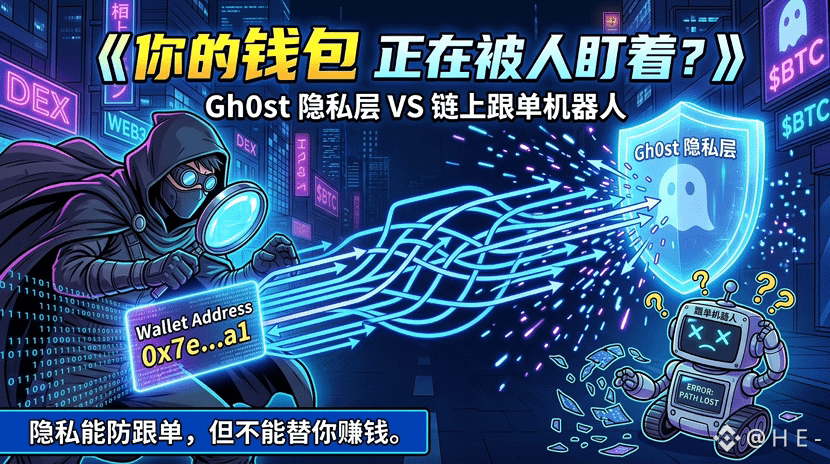
Genius Terminal 的 Gh0st 隐私层,瞄准的正是这一痛点。它利用 MPC 技术,把一笔交易拆分到大量中间地址执行,切断主钱包与真实交易行为之间的追踪路径,让跟单机器人难以还原完整仓位。
不过我觉得这里最大的看点,不是隐私,而是它提出的“合规隐私”。
既希望普通人看不见,又强调监管可验证。问题是,隐私和可审计本来就是一对矛盾体。验证权限有多大、由谁掌握、何时触发,这些关键细节目前公开资料并不充分。
所以在我看来,Gh0st 解决的是“别人看见你”的问题,而不是“帮你赚钱”的问题。
隐私是工具,不是外挂。方向看错了,再隐身也一样会亏钱。
但至少,Genius 押中的需求是真实存在的。
#Genius #GENIUS #DeFi #Web3 #CryptoPrivacy @GeniusOfficial $GENIUS
{future}(GENIUSUSDT)
链上有个挺魔幻的行当,叫“盯钱包”。
一群人专门蹲着那些赚钱地址,你这边刚建仓,他那边机器人就开始复制。你买什么,他买什么,仿佛白嫖了别人的研究成果。
但换个角度想想,如果你是那个被盯的人呢?
辛辛苦苦研究出来的仓位,刚进场就被一堆人抄作业,甚至还把价格推高,等于自己花钱给跟单的人抬轿子。
问题在于,链上本来就是公开账本。你的每一步操作,别人都能看到。所以“被看见”从来不只是隐私问题,更是利益问题。
Genius Terminal 的 Gh0st 隐私层,瞄准的正是这一痛点。它利用 MPC 技术,把一笔交易拆分到大量中间地址执行,切断主钱包与真实交易行为之间的追踪路径,让跟单机器人难以还原完整仓位。
不过我觉得这里最大的看点,不是隐私,而是它提出的“合规隐私”。
既希望普通人看不见,又强调监管可验证。问题是,隐私和可审计本来就是一对矛盾体。验证权限有多大、由谁掌握、何时触发,这些关键细节目前公开资料并不充分。
所以在我看来,Gh0st 解决的是“别人看见你”的问题,而不是“帮你赚钱”的问题。
隐私是工具,不是外挂。方向看错了,再隐身也一样会亏钱。
但至少,Genius 押中的需求是真实存在的。
#Genius #GENIUS #DeFi #Web3 #CryptoPrivacy @GeniusOfficial $GENIUS
一群人专门蹲着那些赚钱地址,你这边刚建仓,他那边机器人就开始复制。你买什么,他买什么,仿佛白嫖了别人的研究成果。
但换个角度想想,如果你是那个被盯的人呢?
辛辛苦苦研究出来的仓位,刚进场就被一堆人抄作业,甚至还把价格推高,等于自己花钱给跟单的人抬轿子。
问题在于,链上本来就是公开账本。你的每一步操作,别人都能看到。所以“被看见”从来不只是隐私问题,更是利益问题。
Genius Terminal 的 Gh0st 隐私层,瞄准的正是这一痛点。它利用 MPC 技术,把一笔交易拆分到大量中间地址执行,切断主钱包与真实交易行为之间的追踪路径,让跟单机器人难以还原完整仓位。
不过我觉得这里最大的看点,不是隐私,而是它提出的“合规隐私”。
既希望普通人看不见,又强调监管可验证。问题是,隐私和可审计本来就是一对矛盾体。验证权限有多大、由谁掌握、何时触发,这些关键细节目前公开资料并不充分。
所以在我看来,Gh0st 解决的是“别人看见你”的问题,而不是“帮你赚钱”的问题。
隐私是工具,不是外挂。方向看错了,再隐身也一样会亏钱。
但至少,Genius 押中的需求是真实存在的。
#Genius #GENIUS #DeFi #Web3 #CryptoPrivacy @GeniusOfficial $GENIUS
71
·
--
Everyone thinks using popular AI chatbots is completely safe, but you are actually handing over your private data on a silver platter.
Most of us do not realize that our search queries, wallet addresses, and personal strategies are stored on centralized servers. One database leak is all it takes to expose your entire Web3 footprint.
Think of traditional AI like sending your private diary to a company that promises they won't read it. Instead of relying on blind trust, we need systems that lock the diary before it leaves your house. There are two ways the $OPG network makes this happen. First, your prompts are encrypted locally on your device. Second, your identity is decoupled from your data, meaning no one can link your queries to your $BNB wallet.
This shift from "trust us" to "verify us" is the standard we should all be demanding.
How much do you value privacy when using AI tools?
#CryptoPrivacy #DecentralizedAI #Web3Security
Everyone thinks using popular AI chatbots is completely safe, but you are actually handing over your private data on a silver platter.
Most of us do not realize that our search queries, wallet addresses, and personal strategies are stored on centralized servers. One database leak is all it takes to expose your entire Web3 footprint.
Think of traditional AI like sending your private diary to a company that promises they won't read it. Instead of relying on blind trust, we need systems that lock the diary before it leaves your house. There are two ways the $OPG network makes this happen. First, your prompts are encrypted locally on your device. Second, your identity is decoupled from your data, meaning no one can link your queries to your $BNB wallet.
This shift from "trust us" to "verify us" is the standard we should all be demanding.
How much do you value privacy when using AI tools?
#CryptoPrivacy #DecentralizedAI #Web3Security
Most of us do not realize that our search queries, wallet addresses, and personal strategies are stored on centralized servers. One database leak is all it takes to expose your entire Web3 footprint.
Think of traditional AI like sending your private diary to a company that promises they won't read it. Instead of relying on blind trust, we need systems that lock the diary before it leaves your house. There are two ways the $OPG network makes this happen. First, your prompts are encrypted locally on your device. Second, your identity is decoupled from your data, meaning no one can link your queries to your $BNB wallet.
This shift from "trust us" to "verify us" is the standard we should all be demanding.
How much do you value privacy when using AI tools?
#CryptoPrivacy #DecentralizedAI #Web3Security
46
·
--
Article
Declining cookies shouldn't break the internetPicture this: you decline cookies on a major Web2 site, and suddenly the entire interface breaks, locking you out of basic features. We have all faced this frustrating ultimatum of trading our personal data just to access basic online services. It feels like a constant battle between preserving our digital privacy and actually being able to use the modern internet.
This forced trade-off is exactly what Web3 projects are trying to dismantle. In the Web2 world, if you turn off personalization trackers, the system breaks. Compare this to the decentralized model of $BAT, which flips the script by rewarding users for their attention rather than secretly harvesting their browsing habits. Instead of holding functionality hostage, Web3 architectures allow users to opt-in to data sharing on their own terms.
We saw a similar shift when privacy networks like $ROSE began enabling confidential smart contracts. In these ecosystems, decentralized applications can still deliver highly personalized financial or gaming experiences without ever seeing the underlying raw user data. It proves that developers do not need to force a choice between broken websites and stolen privacy.
How long do you think it will take for mainstream users to abandon Web2 platforms for these privacy-first alternatives?
#Web3Privacy #DataSovereignty #CryptoPrivacy
Declining cookies shouldn't break the internet
Picture this: you decline cookies on a major Web2 site, and suddenly the entire interface breaks, locking you out of basic features. We have all faced this frustrating ultimatum of trading our personal data just to access basic online services. It feels like a constant battle between preserving our digital privacy and actually being able to use the modern internet.
This forced trade-off is exactly what Web3 projects are trying to dismantle. In the Web2 world, if you turn off personalization trackers, the system breaks. Compare this to the decentralized model of $BAT , which flips the script by rewarding users for their attention rather than secretly harvesting their browsing habits. Instead of holding functionality hostage, Web3 architectures allow users to opt-in to data sharing on their own terms.
We saw a similar shift when privacy networks like $ROSE began enabling confidential smart contracts. In these ecosystems, decentralized applications can still deliver highly personalized financial or gaming experiences without ever seeing the underlying raw user data. It proves that developers do not need to force a choice between broken websites and stolen privacy.
How long do you think it will take for mainstream users to abandon Web2 platforms for these privacy-first alternatives?
#Web3Privacy #DataSovereignty #CryptoPrivacy
This forced trade-off is exactly what Web3 projects are trying to dismantle. In the Web2 world, if you turn off personalization trackers, the system breaks. Compare this to the decentralized model of $BAT , which flips the script by rewarding users for their attention rather than secretly harvesting their browsing habits. Instead of holding functionality hostage, Web3 architectures allow users to opt-in to data sharing on their own terms.
We saw a similar shift when privacy networks like $ROSE began enabling confidential smart contracts. In these ecosystems, decentralized applications can still deliver highly personalized financial or gaming experiences without ever seeing the underlying raw user data. It proves that developers do not need to force a choice between broken websites and stolen privacy.
How long do you think it will take for mainstream users to abandon Web2 platforms for these privacy-first alternatives?
#Web3Privacy #DataSovereignty #CryptoPrivacy
78


·
--
FHE: The Holy Grail of Crypto Privacy 🤫
Fully Homomorphic Encryption (FHE) allows AI models to process encrypted blockchain data without ever decrypting it. Complete privacy meets high-level automation.
#FHE #CryptoPrivacy #AdvancedTech #Blockchain .
FHE: The Holy Grail of Crypto Privacy 🤫
Fully Homomorphic Encryption (FHE) allows AI models to process encrypted blockchain data without ever decrypting it. Complete privacy meets high-level automation.
#FHE #CryptoPrivacy #AdvancedTech #Blockchain .
Fully Homomorphic Encryption (FHE) allows AI models to process encrypted blockchain data without ever decrypting it. Complete privacy meets high-level automation.
#FHE #CryptoPrivacy #AdvancedTech #Blockchain .
1
302
·
--
Article
DeFi Frontends Are Silently Tracking Your WalletHave you noticed how we celebrate decentralization while silently clicking accept all cookies on every major DeFi frontend?
Most traders do not realize their wallet addresses are being linked to their physical IP addresses and browsing habits. This data exposure leaves you vulnerable to targeted phishing attacks and MEV bots front-running your trades.
Let's look at the Uniswap privacy policy shift as a case study. When $UNI users interact with the main interface, third-party trackers and functional cookies collect user data under the guise of enhancing performance. In reality, this means decentralized applications are harvesting data that eventually gets shared with centralized analytics providers. If you block these trackers, the interface often breaks entirely, forcing you to choose between privacy and usability.
This is not just an isolated issue. While indexing protocols like $GRT and identity systems like $ENS work on decentralized alternatives, many frontends still rely on centralized hosting services that track user behavior. Industry reports show that over sixty percent of top dApp frontends run on centralized servers that log user metadata. We are essentially trading our financial privacy for a smoother user interface.
How do we solve the frontend centralization problem without ruining the user experience?
#DeFi #CryptoPrivacy #Web3
DeFi Frontends Are Silently Tracking Your Wallet
Have you noticed how we celebrate decentralization while silently clicking accept all cookies on every major DeFi frontend?
Most traders do not realize their wallet addresses are being linked to their physical IP addresses and browsing habits. This data exposure leaves you vulnerable to targeted phishing attacks and MEV bots front-running your trades.
Let's look at the Uniswap privacy policy shift as a case study. When $UNI users interact with the main interface, third-party trackers and functional cookies collect user data under the guise of enhancing performance. In reality, this means decentralized applications are harvesting data that eventually gets shared with centralized analytics providers. If you block these trackers, the interface often breaks entirely, forcing you to choose between privacy and usability.
This is not just an isolated issue. While indexing protocols like $GRT and identity systems like $ENS work on decentralized alternatives, many frontends still rely on centralized hosting services that track user behavior. Industry reports show that over sixty percent of top dApp frontends run on centralized servers that log user metadata. We are essentially trading our financial privacy for a smoother user interface.
How do we solve the frontend centralization problem without ruining the user experience?
#DeFi #CryptoPrivacy #Web3
Most traders do not realize their wallet addresses are being linked to their physical IP addresses and browsing habits. This data exposure leaves you vulnerable to targeted phishing attacks and MEV bots front-running your trades.
Let's look at the Uniswap privacy policy shift as a case study. When $UNI users interact with the main interface, third-party trackers and functional cookies collect user data under the guise of enhancing performance. In reality, this means decentralized applications are harvesting data that eventually gets shared with centralized analytics providers. If you block these trackers, the interface often breaks entirely, forcing you to choose between privacy and usability.
This is not just an isolated issue. While indexing protocols like $GRT and identity systems like $ENS work on decentralized alternatives, many frontends still rely on centralized hosting services that track user behavior. Industry reports show that over sixty percent of top dApp frontends run on centralized servers that log user metadata. We are essentially trading our financial privacy for a smoother user interface.
How do we solve the frontend centralization problem without ruining the user experience?
#DeFi #CryptoPrivacy #Web3
143
Log in to explore more content
Join global crypto users on Binance Square
⚡️ Get latest and useful information about crypto.
💬 Trusted by the world’s largest crypto exchange.
👍 Discover real insights from verified creators.
Email / Phone number
Trending Topics
1
#BTCBreaks80K
155,041 views
2,487 Discussing
2
#比特币突破8万
110,171 views
313 Discussing
3
#BitcoinMarketCapTopsTesla
975 views
118 Discussing
4
#SOLJumpsAbout10%
8,845 views
279 Discussing
5
#EthereumReclaims$2600
924 views
33 Discussing
6
#SECReceivesAmendedInjectiveETFFiling
7,953 views
267 Discussing
7
#SanDiskToJoinSP100OnSep21
5,739 views
172 Discussing
8
#PolygonToDeployContractBurning100MPOL
3,918 views
133 Discussing
9
#TRMReportsYouTubeScamStole274.6ETH
1,797 views
50 Discussing
10
#YahooFinanceEndsPolymarketPartnership
2,618 views
51 Discussing