
Tragic263
34 Posts

Tragic263
Report
Block User
Open Trade
Frequent Trader
3.6 Years
16 Following
19 Followers
14 Liked
Posts
Portfolio
All
Quotes
·
--
#2025withBinance Start your crypto story with the @Binance Year in Review and share your highlights! #2025withBinance.
👉 Sign up with my link and get 100 USD rewards! https://www.binance.com/year-in-review/2025-with-binance?ref=564173710
#2025withBinance Start your crypto story with the @Binance Year in Review and share your highlights! #2025withBinance.
👉 Sign up with my link and get 100 USD rewards! https://www.binance.com/year-in-review/2025-with-binance?ref=564173710
👉 Sign up with my link and get 100 USD rewards! https://www.binance.com/year-in-review/2025-with-binance?ref=564173710


·
--
Bearish
---
🧠 Trade Setup: Bounce from Oversold Zone
📌 Assumptions Based on Chart
- RSI is near or below 30 → Oversold
- Price is hugging the lower Bollinger Band → Volatility + potential bounce
- MACD is flattening → Momentum may be shifting
- Order book shows 67% sell pressure → Still bearish, but could reverse
---
🟢 Entry Point
- Buy Zone: Around 1,150 USDT
This is close to the 24h low and near support. You wait for a small bullish candle or RSI to tick upward before entering.
---
🛑 Stop-Loss
- Set at: 1,135 USDT
Just below the recent low (1,143.01). This protects you if the price keeps falling.
---
🎯 Take-Profit Targets
| Target Level | Reason | Profit Potential |
|--------------|--------|------------------|
| 1,175 USDT | Minor resistance | Quick scalp |
| 1,200 USDT | Round number + previous support | Safer exit |
| 1,220 USDT | Mid-range between low and high | Stronger bounce |
You can use a trailing stop if price moves up, locking in gains while letting profits run.
---
📊 Risk-Reward Ratio
- Risk: ~15 USDT (from 1,150 to 1,135)
- Reward: ~50–70 USDT (if targeting 1,200–1,220)
- Risk-Reward: ~1:3 to 1:4 — solid setup!
---
🧭 Bonus Tip: Confirmation Checklist
Before entering:
- ✅ RSI starts rising from oversold
- ✅ MACD histogram shrinks or flips green
- ✅ Small bullish candle forms near support
- ✅ Volume increases on green candles
---#MarketPullback #BinanceHODLerENSO #BinanceHODLerYB #bnb #BNB_Market_Update
---
🧠 Trade Setup: Bounce from Oversold Zone
📌 Assumptions Based on Chart
- RSI is near or below 30 → Oversold
- Price is hugging the lower Bollinger Band → Volatility + potential bounce
- MACD is flattening → Momentum may be shifting
- Order book shows 67% sell pressure → Still bearish, but could reverse
---
🟢 Entry Point
- Buy Zone: Around 1,150 USDT
This is close to the 24h low and near support. You wait for a small bullish candle or RSI to tick upward before entering.
---
🛑 Stop-Loss
- Set at: 1,135 USDT
Just below the recent low (1,143.01). This protects you if the price keeps falling.
---
🎯 Take-Profit Targets
| Target Level | Reason | Profit Potential |
|--------------|--------|------------------|
| 1,175 USDT | Minor resistance | Quick scalp |
| 1,200 USDT | Round number + previous support | Safer exit |
| 1,220 USDT | Mid-range between low and high | Stronger bounce |
You can use a trailing stop if price moves up, locking in gains while letting profits run.
---
📊 Risk-Reward Ratio
- Risk: ~15 USDT (from 1,150 to 1,135)
- Reward: ~50–70 USDT (if targeting 1,200–1,220)
- Risk-Reward: ~1:3 to 1:4 — solid setup!
---
🧭 Bonus Tip: Confirmation Checklist
Before entering:
- ✅ RSI starts rising from oversold
- ✅ MACD histogram shrinks or flips green
- ✅ Small bullish candle forms near support
- ✅ Volume increases on green candles
---#MarketPullback #BinanceHODLerENSO #BinanceHODLerYB #bnb #BNB_Market_Update
---
🧠 Trade Setup: Bounce from Oversold Zone
📌 Assumptions Based on Chart
- RSI is near or below 30 → Oversold
- Price is hugging the lower Bollinger Band → Volatility + potential bounce
- MACD is flattening → Momentum may be shifting
- Order book shows 67% sell pressure → Still bearish, but could reverse
---
🟢 Entry Point
- Buy Zone: Around 1,150 USDT
This is close to the 24h low and near support. You wait for a small bullish candle or RSI to tick upward before entering.
---
🛑 Stop-Loss
- Set at: 1,135 USDT
Just below the recent low (1,143.01). This protects you if the price keeps falling.
---
🎯 Take-Profit Targets
| Target Level | Reason | Profit Potential |
|--------------|--------|------------------|
| 1,175 USDT | Minor resistance | Quick scalp |
| 1,200 USDT | Round number + previous support | Safer exit |
| 1,220 USDT | Mid-range between low and high | Stronger bounce |
You can use a trailing stop if price moves up, locking in gains while letting profits run.
---
📊 Risk-Reward Ratio
- Risk: ~15 USDT (from 1,150 to 1,135)
- Reward: ~50–70 USDT (if targeting 1,200–1,220)
- Risk-Reward: ~1:3 to 1:4 — solid setup!
---
🧭 Bonus Tip: Confirmation Checklist
Before entering:
- ✅ RSI starts rising from oversold
- ✅ MACD histogram shrinks or flips green
- ✅ Small bullish candle forms near support
- ✅ Volume increases on green candles
---#MarketPullback #BinanceHODLerENSO #BinanceHODLerYB #bnb #BNB_Market_Update
8
·
--
Bullish
7
·
--
🔹 Current Situation
#open #BNBBreaks1000 #BNBChainEcosystemRally
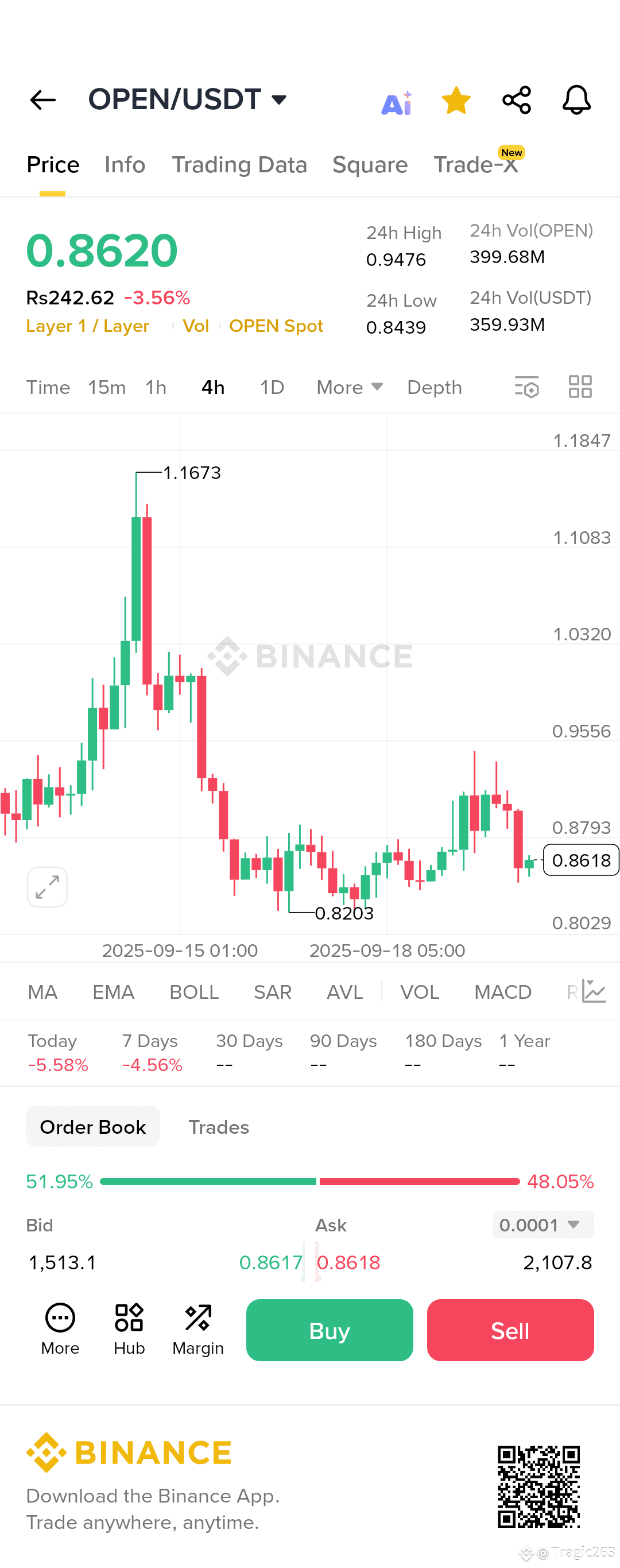
Price: 0.8620 USDT (down -3.56% in 24h)
24h High: 0.9476
24h Low: 0.8439
Volume (OPEN): 399.68M (quite high, shows active trading)
Recent Trend: Price has been in a downtrend after peaking at 1.1673. It found a bottom near 0.8203 and made a small recovery, but resistance around 0.8793 rejected it again.
🔹 Technical Observations
Support & Resistance
Strong support: 0.8200 – 0.8430 zone.
Immediate resistance: 0.8790 – 0.9470 zone.
Major resistance: 1.03 – 1.16.
Candlestick Structure
After the sharp fall from 1.16, the market is consolidating in a sideways range (0.82 – 0.95).
Recent candles show selling pressure near 0.8793.
Volume
Volume is still healthy, meaning traders are active, but sellers currently dominate slightly (48.05% ask vs 51.95% bid).
Momentum
Short-term momentum looks bearish (lower highs forming).
If price breaks 0.8430, it could re-test 0.8200 or even 0.8020.
If bulls defend 0.8430 and push above 0.8790, the next target could be 0.95 – 1.03.
🔹 Prediction (Short-Term, 4h Chart)
📉 Bearish scenario: If 0.8430 breaks, price may test 0.8200 – 0.8020.
📈 Bullish scenario: If price reclaims and holds above 0.8790, next resistance is 0.95 – 1.03.
🔹 Trading Strategy (Not Financial Advice)
Buy Zone: 0.8200 – 0.8430 (strong support area, but wait for confirmation).
Take Profit: 0.8790 → 0.95 → 1.03.
Stop Loss: Below 0.8020 (to avoid deeper downside risk).
👉 In summary: The market is consolidating after a big drop. Currently, bias is slightly bearish, but if it holds support at 0.8430, we may see a bounce toward 0.95+.
Would you like me to also check the daily timeframe (1D) for a bigger picture trend?
https://www.binance.com/download?utm_medium=screenshot
🔹 Current Situation
#open #BNBBreaks1000 #BNBChainEcosystemRally
Price: 0.8620 USDT (down -3.56% in 24h)
24h High: 0.9476
24h Low: 0.8439
Volume (OPEN): 399.68M (quite high, shows active trading)
Recent Trend: Price has been in a downtrend after peaking at 1.1673. It found a bottom near 0.8203 and made a small recovery, but resistance around 0.8793 rejected it again.
🔹 Technical Observations
Support & Resistance
Strong support: 0.8200 – 0.8430 zone.
Immediate resistance: 0.8790 – 0.9470 zone.
Major resistance: 1.03 – 1.16.
Candlestick Structure
After the sharp fall from 1.16, the market is consolidating in a sideways range (0.82 – 0.95).
Recent candles show selling pressure near 0.8793.
Volume
Volume is still healthy, meaning traders are active, but sellers currently dominate slightly (48.05% ask vs 51.95% bid).
Momentum
Short-term momentum looks bearish (lower highs forming).
If price breaks 0.8430, it could re-test 0.8200 or even 0.8020.
If bulls defend 0.8430 and push above 0.8790, the next target could be 0.95 – 1.03.
🔹 Prediction (Short-Term, 4h Chart)
📉 Bearish scenario: If 0.8430 breaks, price may test 0.8200 – 0.8020.
📈 Bullish scenario: If price reclaims and holds above 0.8790, next resistance is 0.95 – 1.03.
🔹 Trading Strategy (Not Financial Advice)
Buy Zone: 0.8200 – 0.8430 (strong support area, but wait for confirmation).
Take Profit: 0.8790 → 0.95 → 1.03.
Stop Loss: Below 0.8020 (to avoid deeper downside risk).
👉 In summary: The market is consolidating after a big drop. Currently, bias is slightly bearish, but if it holds support at 0.8430, we may see a bounce toward 0.95+.
Would you like me to also check the daily timeframe (1D) for a bigger picture trend?
https://www.binance.com/download?utm_medium=screenshot
#open #BNBBreaks1000 #BNBChainEcosystemRally
Price: 0.8620 USDT (down -3.56% in 24h)
24h High: 0.9476
24h Low: 0.8439
Volume (OPEN): 399.68M (quite high, shows active trading)
Recent Trend: Price has been in a downtrend after peaking at 1.1673. It found a bottom near 0.8203 and made a small recovery, but resistance around 0.8793 rejected it again.
🔹 Technical Observations
Support & Resistance
Strong support: 0.8200 – 0.8430 zone.
Immediate resistance: 0.8790 – 0.9470 zone.
Major resistance: 1.03 – 1.16.
Candlestick Structure
After the sharp fall from 1.16, the market is consolidating in a sideways range (0.82 – 0.95).
Recent candles show selling pressure near 0.8793.
Volume
Volume is still healthy, meaning traders are active, but sellers currently dominate slightly (48.05% ask vs 51.95% bid).
Momentum
Short-term momentum looks bearish (lower highs forming).
If price breaks 0.8430, it could re-test 0.8200 or even 0.8020.
If bulls defend 0.8430 and push above 0.8790, the next target could be 0.95 – 1.03.
🔹 Prediction (Short-Term, 4h Chart)
📉 Bearish scenario: If 0.8430 breaks, price may test 0.8200 – 0.8020.
📈 Bullish scenario: If price reclaims and holds above 0.8790, next resistance is 0.95 – 1.03.
🔹 Trading Strategy (Not Financial Advice)
Buy Zone: 0.8200 – 0.8430 (strong support area, but wait for confirmation).
Take Profit: 0.8790 → 0.95 → 1.03.
Stop Loss: Below 0.8020 (to avoid deeper downside risk).
👉 In summary: The market is consolidating after a big drop. Currently, bias is slightly bearish, but if it holds support at 0.8430, we may see a bounce toward 0.95+.
Would you like me to also check the daily timeframe (1D) for a bigger picture trend?
https://www.binance.com/download?utm_medium=screenshot
·
--
Bullish
Binance BNB is great Source of profit
{future}(BNBUSDT)
Binance BNB is great Source of profit
3
·
--
Bullish
Here’s the live price for Ethereum (ETH):
---
So Ethereum “got bullish”? What’s driving the momentum?
Yes, Ethereum is indeed showing bullish signs—let’s break down what’s behind this strength:
1. Institutional Demand & ETF Momentum
Standard Chartered has upgraded its year-end forecast to $7,500 by end-2025, citing the stablecoin boom (which mostly runs on Ethereum), growing industry engagement, and long-term price drivers. The bank even sees a path to $25,000 by 2028.
Record-breaking inflows into spot Ethereum ETFs—including funds from BlackRock and Fidelity—have fueled strong buying pressure.
BitMine Immersion Technologies, one of Ethereum’s biggest corporate holders, is expanding a capital offering to accumulate more ETH—possibly up to 5% of circulating supply.
2. Supply Squeeze & On-Chain Metrics
Ethereum withdrawals from exchanges—especially on Binance—have pushed the Exchange Supply Ratio (ESR) to its lowest in weeks, indicating a supply squeeze that often anticipates price rallies.
3. Technical Patterns Signal Upside Potential
Ana
CoinCheckup projects ETH could reach $6,862 by November and $7,475 by December.
Cointelegraph notes that historical August rallies often presage 60% gains into year-end, potentially pushing ETH near $7,000.
---
Quick Summary Table
Factor Description
Institutional Flows Big ETF inflows and corporate accumulation (e.g., BitMine) are tightening supply.
Supply Withdrawals Decreased ETH on exchanges signals long-term holding and bullish setup.
Technical Patterns Pennant and megaphone breakouts targeted near $5K–$10K; $6K is near-term resistance.
Forecasts Analysts and models range from $6K to $7.5K by year-end; some even foresee $25K by 2028.
---
What’s Next?
A sustained break above $4,500 could open the door for moves toward $5,000, $6,000, or higher.
Institutional activity—like ETF inflows and treasury buys—looks set to continue fueling upward momentum.
Watch on-chain metrics and exchange supply levels closely—they may offer early signals of renewed bullish cycles.
Here’s the live price for Ethereum (ETH):
---
So Ethereum “got bullish”? What’s driving the momentum?
Yes, Ethereum is indeed showing bullish signs—let’s break down what’s behind this strength:
1. Institutional Demand & ETF Momentum
Standard Chartered has upgraded its year-end forecast to $7,500 by end-2025, citing the stablecoin boom (which mostly runs on Ethereum), growing industry engagement, and long-term price drivers. The bank even sees a path to $25,000 by 2028.
Record-breaking inflows into spot Ethereum ETFs—including funds from BlackRock and Fidelity—have fueled strong buying pressure.
BitMine Immersion Technologies, one of Ethereum’s biggest corporate holders, is expanding a capital offering to accumulate more ETH—possibly up to 5% of circulating supply.
2. Supply Squeeze & On-Chain Metrics
Ethereum withdrawals from exchanges—especially on Binance—have pushed the Exchange Supply Ratio (ESR) to its lowest in weeks, indicating a supply squeeze that often anticipates price rallies.
3. Technical Patterns Signal Upside Potential
Ana
CoinCheckup projects ETH could reach $6,862 by November and $7,475 by December.
Cointelegraph notes that historical August rallies often presage 60% gains into year-end, potentially pushing ETH near $7,000.
---
Quick Summary Table
Factor Description
Institutional Flows Big ETF inflows and corporate accumulation (e.g., BitMine) are tightening supply.
Supply Withdrawals Decreased ETH on exchanges signals long-term holding and bullish setup.
Technical Patterns Pennant and megaphone breakouts targeted near $5K–$10K; $6K is near-term resistance.
Forecasts Analysts and models range from $6K to $7.5K by year-end; some even foresee $25K by 2028.
---
What’s Next?
A sustained break above $4,500 could open the door for moves toward $5,000, $6,000, or higher.
Institutional activity—like ETF inflows and treasury buys—looks set to continue fueling upward momentum.
Watch on-chain metrics and exchange supply levels closely—they may offer early signals of renewed bullish cycles.
---
So Ethereum “got bullish”? What’s driving the momentum?
Yes, Ethereum is indeed showing bullish signs—let’s break down what’s behind this strength:
1. Institutional Demand & ETF Momentum
Standard Chartered has upgraded its year-end forecast to $7,500 by end-2025, citing the stablecoin boom (which mostly runs on Ethereum), growing industry engagement, and long-term price drivers. The bank even sees a path to $25,000 by 2028.
Record-breaking inflows into spot Ethereum ETFs—including funds from BlackRock and Fidelity—have fueled strong buying pressure.
BitMine Immersion Technologies, one of Ethereum’s biggest corporate holders, is expanding a capital offering to accumulate more ETH—possibly up to 5% of circulating supply.
2. Supply Squeeze & On-Chain Metrics
Ethereum withdrawals from exchanges—especially on Binance—have pushed the Exchange Supply Ratio (ESR) to its lowest in weeks, indicating a supply squeeze that often anticipates price rallies.
3. Technical Patterns Signal Upside Potential
Ana
CoinCheckup projects ETH could reach $6,862 by November and $7,475 by December.
Cointelegraph notes that historical August rallies often presage 60% gains into year-end, potentially pushing ETH near $7,000.
---
Quick Summary Table
Factor Description
Institutional Flows Big ETF inflows and corporate accumulation (e.g., BitMine) are tightening supply.
Supply Withdrawals Decreased ETH on exchanges signals long-term holding and bullish setup.
Technical Patterns Pennant and megaphone breakouts targeted near $5K–$10K; $6K is near-term resistance.
Forecasts Analysts and models range from $6K to $7.5K by year-end; some even foresee $25K by 2028.
---
What’s Next?
A sustained break above $4,500 could open the door for moves toward $5,000, $6,000, or higher.
Institutional activity—like ETF inflows and treasury buys—looks set to continue fueling upward momentum.
Watch on-chain metrics and exchange supply levels closely—they may offer early signals of renewed bullish cycles.
208
·
--
NVIDIA plays an indirect but very important role in the Bitcoin (BTC) and overall crypto ecosystem, mainly through its AI and GPU technologies. Let me break it down:
🔹 1. NVIDIA GPUs in Crypto Mining
In Bitcoin’s early days, NVIDIA GPUs were widely used for mining BTC because they are powerful in parallel processing.
Later, Bitcoin mining shifted mostly to ASICs (Application-Specific Integrated Circuits), which are more efficient.
However, NVIDIA GPUs are still heavily used in mining other cryptocurrencies (like Ethereum before its merge to Proof-of-Stake, and altcoins today).
🔹 2. AI + Crypto Market Analysis
NVIDIA’s AI chips (A100, H100, etc.) are used to train large AI models that analyze blockchain data.
Hedge funds and traders use NVIDIA-powered AI systems for:
Price prediction models
Market sentiment analysis (scanning social media/news)
High-frequency trading strategies
🔹 3. Blockchain Security & Fraud Detection
NVIDIA AI is applied in analyzing huge transaction datasets from Bitcoin and other blockchains.
AI helps detect fraudulent transactions, hacks, and money laundering patterns in crypto exchanges.
GPUs speed up this real-time detection.
🔹 4. AI-Powered Mining Optimization
AI algorithms running on NVIDIA GPUs optimize energy usage in mining farms.
This reduces electricity costs and improves mining efficiency, especially in Proof-of-Work coins.
🔹 5. Future: AI + Crypto Synergy
NVIDIA’s role in generative AI (like ChatGPT models) shows how AI and crypto may converge.
Possible future roles:
AI-driven decentralized finance (DeFi) bots
Crypto + AI supercomputing platforms
Tokenized access to GPU computing power
#BinanceHODLerDOLO #BTCWhalesMoveToETH
✅ In short:
NVIDIA doesn’t directly control or mine Bitcoin today, but its GPU & AI technologies power the infrastructure around crypto — from mining (in the past), AI trading bots, blockchain analytics, fraud detection, to future AI+crypto applications.
NVIDIA plays an indirect but very important role in the Bitcoin (BTC) and overall crypto ecosystem, mainly through its AI and GPU technologies. Let me break it down:
🔹 1. NVIDIA GPUs in Crypto Mining
In Bitcoin’s early days, NVIDIA GPUs were widely used for mining BTC because they are powerful in parallel processing.
Later, Bitcoin mining shifted mostly to ASICs (Application-Specific Integrated Circuits), which are more efficient.
However, NVIDIA GPUs are still heavily used in mining other cryptocurrencies (like Ethereum before its merge to Proof-of-Stake, and altcoins today).
🔹 2. AI + Crypto Market Analysis
NVIDIA’s AI chips (A100, H100, etc.) are used to train large AI models that analyze blockchain data.
Hedge funds and traders use NVIDIA-powered AI systems for:
Price prediction models
Market sentiment analysis (scanning social media/news)
High-frequency trading strategies
🔹 3. Blockchain Security & Fraud Detection
NVIDIA AI is applied in analyzing huge transaction datasets from Bitcoin and other blockchains.
AI helps detect fraudulent transactions, hacks, and money laundering patterns in crypto exchanges.
GPUs speed up this real-time detection.
🔹 4. AI-Powered Mining Optimization
AI algorithms running on NVIDIA GPUs optimize energy usage in mining farms.
This reduces electricity costs and improves mining efficiency, especially in Proof-of-Work coins.
🔹 5. Future: AI + Crypto Synergy
NVIDIA’s role in generative AI (like ChatGPT models) shows how AI and crypto may converge.
Possible future roles:
AI-driven decentralized finance (DeFi) bots
Crypto + AI supercomputing platforms
Tokenized access to GPU computing power
#BinanceHODLerDOLO #BTCWhalesMoveToETH
✅ In short:
NVIDIA doesn’t directly control or mine Bitcoin today, but its GPU & AI technologies power the infrastructure around crypto — from mining (in the past), AI trading bots, blockchain analytics, fraud detection, to future AI+crypto applications.
🔹 1. NVIDIA GPUs in Crypto Mining
In Bitcoin’s early days, NVIDIA GPUs were widely used for mining BTC because they are powerful in parallel processing.
Later, Bitcoin mining shifted mostly to ASICs (Application-Specific Integrated Circuits), which are more efficient.
However, NVIDIA GPUs are still heavily used in mining other cryptocurrencies (like Ethereum before its merge to Proof-of-Stake, and altcoins today).
🔹 2. AI + Crypto Market Analysis
NVIDIA’s AI chips (A100, H100, etc.) are used to train large AI models that analyze blockchain data.
Hedge funds and traders use NVIDIA-powered AI systems for:
Price prediction models
Market sentiment analysis (scanning social media/news)
High-frequency trading strategies
🔹 3. Blockchain Security & Fraud Detection
NVIDIA AI is applied in analyzing huge transaction datasets from Bitcoin and other blockchains.
AI helps detect fraudulent transactions, hacks, and money laundering patterns in crypto exchanges.
GPUs speed up this real-time detection.
🔹 4. AI-Powered Mining Optimization
AI algorithms running on NVIDIA GPUs optimize energy usage in mining farms.
This reduces electricity costs and improves mining efficiency, especially in Proof-of-Work coins.
🔹 5. Future: AI + Crypto Synergy
NVIDIA’s role in generative AI (like ChatGPT models) shows how AI and crypto may converge.
Possible future roles:
AI-driven decentralized finance (DeFi) bots
Crypto + AI supercomputing platforms
Tokenized access to GPU computing power
#BinanceHODLerDOLO #BTCWhalesMoveToETH
✅ In short:
NVIDIA doesn’t directly control or mine Bitcoin today, but its GPU & AI technologies power the infrastructure around crypto — from mining (in the past), AI trading bots, blockchain analytics, fraud detection, to future AI+crypto applications.
72
·
--
Bullish
·
--
#OrderTypes101
Got it! You're asking about Trading Types 101 – a beginner's guide to the main types of trading.
Here’s a simple breakdown:
📘 Trading Types 101: A Beginner’s Guide
🏦 1. Stock Trading
What it is: Buying and selling shares of companies (like Apple or Tesla).
Goal: Buy low, sell high (or vice versa).
Types:
Day Trading: In-and-out in the same day.
Swing Trading: Holding for a few days/weeks.
Position Trading: Long-term (months or years).
Scalping: Very quick trades, seconds to minutes.
💱 2. Forex Trading (Foreign Exchange)
What it is: Trading one currency for another (e.g., USD/EUR).
World’s largest market.
High leverage, high risk.
Popular among experienced traders.
🪙 3. Crypto Trading
What it is: Buying/selling digital currencies like Bitcoin, Ethereum.
Volatile market = high risk/reward.
Can be done 24/7.
📦 4. Commodity Trading
What it is: Trading raw materials like gold, oil, coffee.
Often done through futures contracts.
Affected by global events and supply chains.
📊 5. Options Trading
What it is: Trading contracts that give you the right (not obligation) to buy/sell stocks at a set price in the future.
Can be used to hedge or speculate.
Complex and riskier than regular stock trading.
📈 6. Futures Trading
What it is: Agreeing to buy/sell something at a future date at a set price.
Used with commodities, indexes, and even Bitcoin now.
Highly leveraged and used by professionals.
🏘 7. Real Estate Trading (Flipping)
Buying property, holding short-term, and selling for profit.
Not part of financial markets directly, but still a trading type.
🔍 Things to Learn as a Beginner:
Risk management
Technical vs fundamental analysis
Broker platforms and tools
Psychology of trading
Want me to build you a custom beginner's plan to start trading? I can walk you through the steps, tools, and resources based on your interests (stocks, crypto, forex, etc.).
#OrderTypes101
Got it! You're asking about Trading Types 101 – a beginner's guide to the main types of trading.
Here’s a simple breakdown:
📘 Trading Types 101: A Beginner’s Guide
🏦 1. Stock Trading
What it is: Buying and selling shares of companies (like Apple or Tesla).
Goal: Buy low, sell high (or vice versa).
Types:
Day Trading: In-and-out in the same day.
Swing Trading: Holding for a few days/weeks.
Position Trading: Long-term (months or years).
Scalping: Very quick trades, seconds to minutes.
💱 2. Forex Trading (Foreign Exchange)
What it is: Trading one currency for another (e.g., USD/EUR).
World’s largest market.
High leverage, high risk.
Popular among experienced traders.
🪙 3. Crypto Trading
What it is: Buying/selling digital currencies like Bitcoin, Ethereum.
Volatile market = high risk/reward.
Can be done 24/7.
📦 4. Commodity Trading
What it is: Trading raw materials like gold, oil, coffee.
Often done through futures contracts.
Affected by global events and supply chains.
📊 5. Options Trading
What it is: Trading contracts that give you the right (not obligation) to buy/sell stocks at a set price in the future.
Can be used to hedge or speculate.
Complex and riskier than regular stock trading.
📈 6. Futures Trading
What it is: Agreeing to buy/sell something at a future date at a set price.
Used with commodities, indexes, and even Bitcoin now.
Highly leveraged and used by professionals.
🏘 7. Real Estate Trading (Flipping)
Buying property, holding short-term, and selling for profit.
Not part of financial markets directly, but still a trading type.
🔍 Things to Learn as a Beginner:
Risk management
Technical vs fundamental analysis
Broker platforms and tools
Psychology of trading
Want me to build you a custom beginner's plan to start trading? I can walk you through the steps, tools, and resources based on your interests (stocks, crypto, forex, etc.).
Got it! You're asking about Trading Types 101 – a beginner's guide to the main types of trading.
Here’s a simple breakdown:
📘 Trading Types 101: A Beginner’s Guide
🏦 1. Stock Trading
What it is: Buying and selling shares of companies (like Apple or Tesla).
Goal: Buy low, sell high (or vice versa).
Types:
Day Trading: In-and-out in the same day.
Swing Trading: Holding for a few days/weeks.
Position Trading: Long-term (months or years).
Scalping: Very quick trades, seconds to minutes.
💱 2. Forex Trading (Foreign Exchange)
What it is: Trading one currency for another (e.g., USD/EUR).
World’s largest market.
High leverage, high risk.
Popular among experienced traders.
🪙 3. Crypto Trading
What it is: Buying/selling digital currencies like Bitcoin, Ethereum.
Volatile market = high risk/reward.
Can be done 24/7.
📦 4. Commodity Trading
What it is: Trading raw materials like gold, oil, coffee.
Often done through futures contracts.
Affected by global events and supply chains.
📊 5. Options Trading
What it is: Trading contracts that give you the right (not obligation) to buy/sell stocks at a set price in the future.
Can be used to hedge or speculate.
Complex and riskier than regular stock trading.
📈 6. Futures Trading
What it is: Agreeing to buy/sell something at a future date at a set price.
Used with commodities, indexes, and even Bitcoin now.
Highly leveraged and used by professionals.
🏘 7. Real Estate Trading (Flipping)
Buying property, holding short-term, and selling for profit.
Not part of financial markets directly, but still a trading type.
🔍 Things to Learn as a Beginner:
Risk management
Technical vs fundamental analysis
Broker platforms and tools
Psychology of trading
Want me to build you a custom beginner's plan to start trading? I can walk you through the steps, tools, and resources based on your interests (stocks, crypto, forex, etc.).
·
--
#PDA Analysis.
### Binance Coin (BNB)
Binance Coin, now officially called **Build'N'Build (BNB)**, is the native cryptocurrency of the Binance ecosystem. Here’s an overview:
- **Origin**: Launched in July 2017 via an Initial Coin Offering (ICO) by Binance, the world’s largest cryptocurrency exchange by trading volume.
- **Purpose**: Initially created as a utility token to offer discounted trading fees on the Binance platform, its uses have since expanded to include payments for transaction fees on the BNB Chain, travel bookings, entertainment, online services, and financial applications.
- **Evolution**: BNB started as an ERC-20 token on Ethereum but migrated to the Binance Smart Chain (now BNB Chain) in September 2020, becoming its native token. In February 2022, Binance rebranded it from "Binance Coin" to "Build'N'Build" to reflect its broader role.
- **Supply and Burning**: BNB has a maximum supply of 200 million tokens. Binance uses 20% of its quarterly profits to "burn" (destroy) BNB, reducing the total supply to increase scarcity and value over time.
- **Market Position**: As of March 20, 2025, BNB remains one of the top cryptocurrencies by market capitalization, consistently ranking among the leaders alongside Bitcoin and Ethereum.
### PlayDapp (PDA)
PlayDapp (PDA) is a different cryptocurrency, unrelated to BNB in terms of origin but tied to Binance as a trading platform. Here’s what you need to know:
- **Background**: PlayDapp was originally launched as **PLA** on the Ethereum and Polygon networks. It’s a blockchain-based gaming and NFT platform aiming to create a decentralized ecosystem for digital assets in games.
- **Token Swap**: In early 2023, PlayDapp migrated to a new Ethereum contract, rebranding from PLA to PDA. This was announced by Binance, which supported the token swap for its users (completed around March 1, 2023).
- **Purpose**: PDA is used within the PlayDapp ecosystem for in-game transactions, purchasing NFTs, and other platform-related activities.
- **Challenges**: The project faced significant setbacks, including two hacks in February 2024, where hackers minted 1.7 billion unauthorized tokens, severely impacting its credibility and price. This led to delistings from some exchanges, though Binance continued to support it with restrictions.
- **Current Status**: As of March 20, 2025, PDA trades at a much lower value than its peak. Its price has been volatile, with some users on Binance Square calling it a "garbage coin" due to its history and perceived lack of recovery potential. For example, posts from 2024 speculated it might not rise significantly until major updates (promised for April 2024) or could face further delisting if trust isn’t restored.
### Connection Between PDA and BNB
- **Trading Pair**: On Binance, PDA can be traded against various currencies, including BNB (e.g., PDA/BNB trading pair). This allows users to exchange PDA for BNB or vice versa on the platform.
- **Ecosystem**: While PDA operates on Ethereum, it’s also compatible with the BNB Chain via wrapped tokens or cross-chain bridges, a common feature for tokens listed on Binance.
- **Binance’s Role**: Binance facilitated the PLA-to-PDA token swap and continues to list PDA, despite its rocky history. However, BNB and PDA serve entirely different purposes—BNB as a broad utility token for the Binance ecosystem, and PDA as a niche token for PlayDapp’s gaming platform.
### Summary
- **BNB**: A robust, widely used cryptocurrency powering the Binance ecosystem, with a strong market presence and ongoing development.
- **PDA**: A smaller, troubled token tied to the PlayDapp gaming platform, facing challenges from hacks and diminished trust, but still tradable on Binance.
#PDA Analysis
.
### Binance Coin (BNB)
Binance Coin, now officially called **Build'N'Build (BNB)**, is the native cryptocurrency of the Binance ecosystem. Here’s an overview:
- **Origin**: Launched in July 2017 via an Initial Coin Offering (ICO) by Binance, the world’s largest cryptocurrency exchange by trading volume.
- **Purpose**: Initially created as a utility token to offer discounted trading fees on the Binance platform, its uses have since expanded to include payments for transaction fees on the BNB Chain, travel bookings, entertainment, online services, and financial applications.
- **Evolution**: BNB started as an ERC-20 token on Ethereum but migrated to the Binance Smart Chain (now BNB Chain) in September 2020, becoming its native token. In February 2022, Binance rebranded it from "Binance Coin" to "Build'N'Build" to reflect its broader role.
- **Supply and Burning**: BNB has a maximum supply of 200 million tokens. Binance uses 20% of its quarterly profits to "burn" (destroy) BNB, reducing the total supply to increase scarcity and value over time.
- **Market Position**: As of March 20, 2025, BNB remains one of the top cryptocurrencies by market capitalization, consistently ranking among the leaders alongside Bitcoin and Ethereum.
### PlayDapp (PDA)
PlayDapp (PDA) is a different cryptocurrency, unrelated to BNB in terms of origin but tied to Binance as a trading platform. Here’s what you need to know:
- **Background**: PlayDapp was originally launched as **PLA** on the Ethereum and Polygon networks. It’s a blockchain-based gaming and NFT platform aiming to create a decentralized ecosystem for digital assets in games.
- **Token Swap**: In early 2023, PlayDapp migrated to a new Ethereum contract, rebranding from PLA to PDA. This was announced by Binance, which supported the token swap for its users (completed around March 1, 2023).
- **Purpose**: PDA is used within the PlayDapp ecosystem for in-game transactions, purchasing NFTs, and other platform-related activities.
- **Challenges**: The project faced significant setbacks, including two hacks in February 2024, where hackers minted 1.7 billion unauthorized tokens, severely impacting its credibility and price. This led to delistings from some exchanges, though Binance continued to support it with restrictions.
- **Current Status**: As of March 20, 2025, PDA trades at a much lower value than its peak. Its price has been volatile, with some users on Binance Square calling it a "garbage coin" due to its history and perceived lack of recovery potential. For example, posts from 2024 speculated it might not rise significantly until major updates (promised for April 2024) or could face further delisting if trust isn’t restored.
### Connection Between PDA and BNB
- **Trading Pair**: On Binance, PDA can be traded against various currencies, including BNB (e.g., PDA/BNB trading pair). This allows users to exchange PDA for BNB or vice versa on the platform.
- **Ecosystem**: While PDA operates on Ethereum, it’s also compatible with the BNB Chain via wrapped tokens or cross-chain bridges, a common feature for tokens listed on Binance.
- **Binance’s Role**: Binance facilitated the PLA-to-PDA token swap and continues to list PDA, despite its rocky history. However, BNB and PDA serve entirely different purposes—BNB as a broad utility token for the Binance ecosystem, and PDA as a niche token for PlayDapp’s gaming platform.
### Summary
- **BNB**: A robust, widely used cryptocurrency powering the Binance ecosystem, with a strong market presence and ongoing development.
- **PDA**: A smaller, troubled token tied to the PlayDapp gaming platform, facing challenges from hacks and diminished trust, but still tradable on Binance.
### Binance Coin (BNB)
Binance Coin, now officially called **Build'N'Build (BNB)**, is the native cryptocurrency of the Binance ecosystem. Here’s an overview:
- **Origin**: Launched in July 2017 via an Initial Coin Offering (ICO) by Binance, the world’s largest cryptocurrency exchange by trading volume.
- **Purpose**: Initially created as a utility token to offer discounted trading fees on the Binance platform, its uses have since expanded to include payments for transaction fees on the BNB Chain, travel bookings, entertainment, online services, and financial applications.
- **Evolution**: BNB started as an ERC-20 token on Ethereum but migrated to the Binance Smart Chain (now BNB Chain) in September 2020, becoming its native token. In February 2022, Binance rebranded it from "Binance Coin" to "Build'N'Build" to reflect its broader role.
- **Supply and Burning**: BNB has a maximum supply of 200 million tokens. Binance uses 20% of its quarterly profits to "burn" (destroy) BNB, reducing the total supply to increase scarcity and value over time.
- **Market Position**: As of March 20, 2025, BNB remains one of the top cryptocurrencies by market capitalization, consistently ranking among the leaders alongside Bitcoin and Ethereum.
### PlayDapp (PDA)
PlayDapp (PDA) is a different cryptocurrency, unrelated to BNB in terms of origin but tied to Binance as a trading platform. Here’s what you need to know:
- **Background**: PlayDapp was originally launched as **PLA** on the Ethereum and Polygon networks. It’s a blockchain-based gaming and NFT platform aiming to create a decentralized ecosystem for digital assets in games.
- **Token Swap**: In early 2023, PlayDapp migrated to a new Ethereum contract, rebranding from PLA to PDA. This was announced by Binance, which supported the token swap for its users (completed around March 1, 2023).
- **Purpose**: PDA is used within the PlayDapp ecosystem for in-game transactions, purchasing NFTs, and other platform-related activities.
- **Challenges**: The project faced significant setbacks, including two hacks in February 2024, where hackers minted 1.7 billion unauthorized tokens, severely impacting its credibility and price. This led to delistings from some exchanges, though Binance continued to support it with restrictions.
- **Current Status**: As of March 20, 2025, PDA trades at a much lower value than its peak. Its price has been volatile, with some users on Binance Square calling it a "garbage coin" due to its history and perceived lack of recovery potential. For example, posts from 2024 speculated it might not rise significantly until major updates (promised for April 2024) or could face further delisting if trust isn’t restored.
### Connection Between PDA and BNB
- **Trading Pair**: On Binance, PDA can be traded against various currencies, including BNB (e.g., PDA/BNB trading pair). This allows users to exchange PDA for BNB or vice versa on the platform.
- **Ecosystem**: While PDA operates on Ethereum, it’s also compatible with the BNB Chain via wrapped tokens or cross-chain bridges, a common feature for tokens listed on Binance.
- **Binance’s Role**: Binance facilitated the PLA-to-PDA token swap and continues to list PDA, despite its rocky history. However, BNB and PDA serve entirely different purposes—BNB as a broad utility token for the Binance ecosystem, and PDA as a niche token for PlayDapp’s gaming platform.
### Summary
- **BNB**: A robust, widely used cryptocurrency powering the Binance ecosystem, with a strong market presence and ongoing development.
- **PDA**: A smaller, troubled token tied to the PlayDapp gaming platform, facing challenges from hacks and diminished trust, but still tradable on Binance.
190
·
--
$BTC
### Bitcoin in the Spotlight: What’s Driving the Buzz in March 2025
As of March 16, 2025, Bitcoin (BTC) remains a hot topic across financial circles, social media platforms, and news outlets. The world’s leading cryptocurrency has been making waves with its volatile price movements, evolving regulatory landscape, and shifting market sentiment. Here’s a deep dive into what’s trending about Bitcoin right now and why it continues to capture global attention.
#### Bitcoin’s Price Rollercoaster: A Market in Flux
Bitcoin’s price has been anything but stable in recent weeks. After reaching an all-time high earlier this year, BTC has faced significant turbulence, dipping to multi-month lows around $78,000 before rebounding slightly. Analysts point to a mix of macroeconomic factors and crypto-specific developments as the culprits. The U.S. stock market selloff, triggered by new tariffs imposed by the Trump administration on Canada, Mexico, and China, has spilled over into crypto markets, wiping out billions in value. This heightened “risk-off” sentiment has seen Bitcoin’s price constrained within a tight range, fluctuating between $BTC .
#### Sentiment on X: A Divided Community
The crypto community on X is abuzz with takes on Bitcoin’s trajectory. Some users highlight declining Google Trends interest in BTC as a sign that public attention has waned since its November
#### What’s Next for Bitcoin?
As March progresses, several factors will likely shape Bitcoin’s narrative. The upcoming U.S. inflation report could either ease or exacerbate market jitters, while the White House Crypto Summit promises to clarify the strategic reserve’s scope. Technical indicators suggest BTC faces downside risks if it fails to break above $84,000.
For now, Bitcoin remains a trending topic not just for its price but for its role in a rapidly changing financial landscape. Whether it’s the promise of a $250,000 future or the threat of a $70,000 crash, one thing is clear: BTC’s story is far from over, and the world is watching closely.
{spot}(BTCUSDT)
$BTC
### Bitcoin in the Spotlight: What’s Driving the Buzz in March 2025
As of March 16, 2025, Bitcoin (BTC) remains a hot topic across financial circles, social media platforms, and news outlets. The world’s leading cryptocurrency has been making waves with its volatile price movements, evolving regulatory landscape, and shifting market sentiment. Here’s a deep dive into what’s trending about Bitcoin right now and why it continues to capture global attention.
#### Bitcoin’s Price Rollercoaster: A Market in Flux
Bitcoin’s price has been anything but stable in recent weeks. After reaching an all-time high earlier this year, BTC has faced significant turbulence, dipping to multi-month lows around $78,000 before rebounding slightly. Analysts point to a mix of macroeconomic factors and crypto-specific developments as the culprits. The U.S. stock market selloff, triggered by new tariffs imposed by the Trump administration on Canada, Mexico, and China, has spilled over into crypto markets, wiping out billions in value. This heightened “risk-off” sentiment has seen Bitcoin’s price constrained within a tight range, fluctuating between $BTC .
#### Sentiment on X: A Divided Community
The crypto community on X is abuzz with takes on Bitcoin’s trajectory. Some users highlight declining Google Trends interest in BTC as a sign that public attention has waned since its November
#### What’s Next for Bitcoin?
As March progresses, several factors will likely shape Bitcoin’s narrative. The upcoming U.S. inflation report could either ease or exacerbate market jitters, while the White House Crypto Summit promises to clarify the strategic reserve’s scope. Technical indicators suggest BTC faces downside risks if it fails to break above $84,000.
For now, Bitcoin remains a trending topic not just for its price but for its role in a rapidly changing financial landscape. Whether it’s the promise of a $250,000 future or the threat of a $70,000 crash, one thing is clear: BTC’s story is far from over, and the world is watching closely.
### Bitcoin in the Spotlight: What’s Driving the Buzz in March 2025
As of March 16, 2025, Bitcoin (BTC) remains a hot topic across financial circles, social media platforms, and news outlets. The world’s leading cryptocurrency has been making waves with its volatile price movements, evolving regulatory landscape, and shifting market sentiment. Here’s a deep dive into what’s trending about Bitcoin right now and why it continues to capture global attention.
#### Bitcoin’s Price Rollercoaster: A Market in Flux
Bitcoin’s price has been anything but stable in recent weeks. After reaching an all-time high earlier this year, BTC has faced significant turbulence, dipping to multi-month lows around $78,000 before rebounding slightly. Analysts point to a mix of macroeconomic factors and crypto-specific developments as the culprits. The U.S. stock market selloff, triggered by new tariffs imposed by the Trump administration on Canada, Mexico, and China, has spilled over into crypto markets, wiping out billions in value. This heightened “risk-off” sentiment has seen Bitcoin’s price constrained within a tight range, fluctuating between $BTC .
#### Sentiment on X: A Divided Community
The crypto community on X is abuzz with takes on Bitcoin’s trajectory. Some users highlight declining Google Trends interest in BTC as a sign that public attention has waned since its November
#### What’s Next for Bitcoin?
As March progresses, several factors will likely shape Bitcoin’s narrative. The upcoming U.S. inflation report could either ease or exacerbate market jitters, while the White House Crypto Summit promises to clarify the strategic reserve’s scope. Technical indicators suggest BTC faces downside risks if it fails to break above $84,000.
For now, Bitcoin remains a trending topic not just for its price but for its role in a rapidly changing financial landscape. Whether it’s the promise of a $250,000 future or the threat of a $70,000 crash, one thing is clear: BTC’s story is far from over, and the world is watching closely.
522
·
--
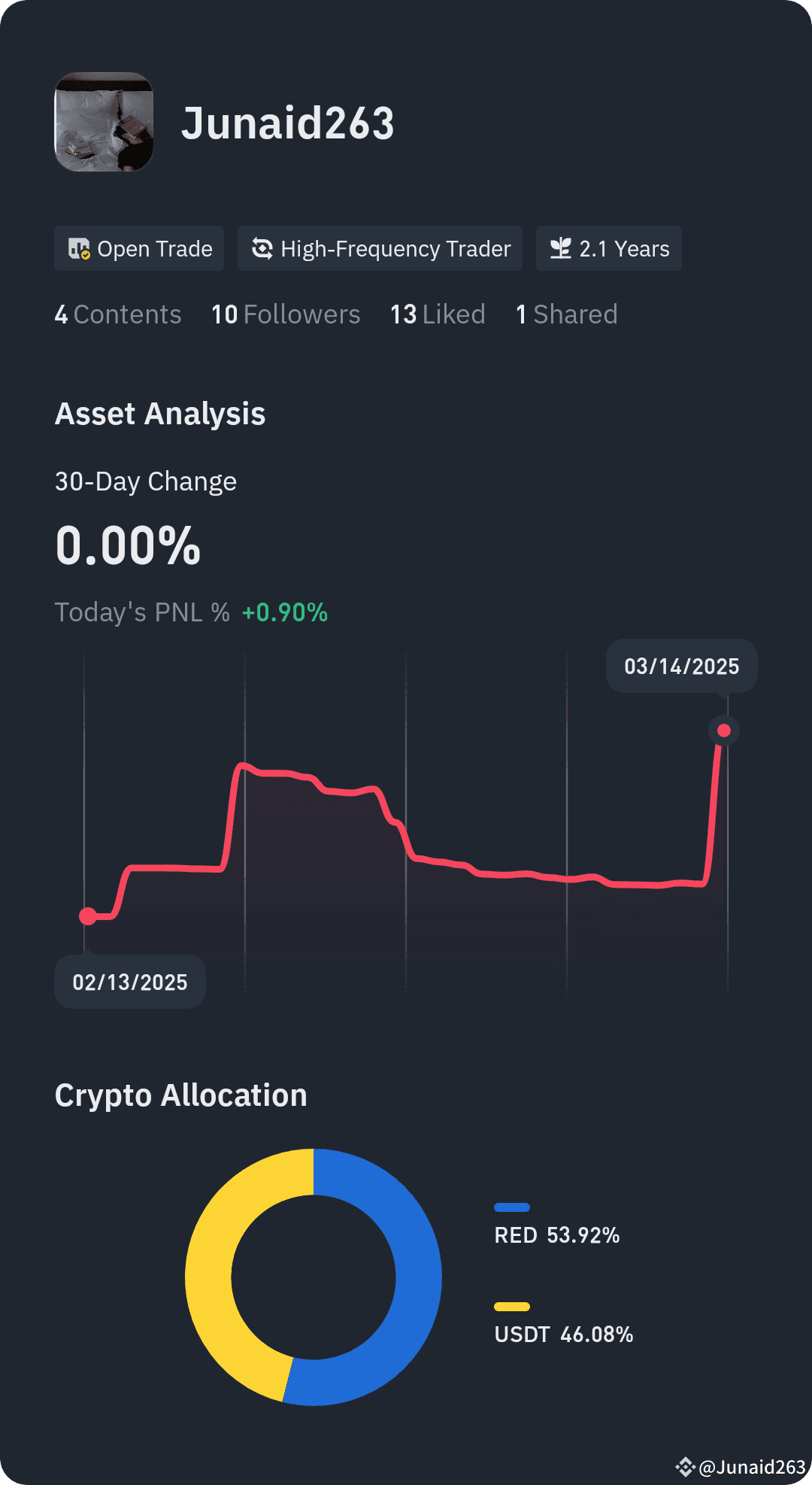
See my returns and portfolio breakdown. Follow for investment tips
See my returns and portfolio breakdown. Follow for investment tips
60
Log in to explore more content
Join global crypto users on Binance Square
⚡️ Get latest and useful information about crypto.
💬 Trusted by the world’s largest crypto exchange.
👍 Discover real insights from verified creators.
Email / Phone number
Trending Topics
BitcoinSurpasses$77000
16,045 views
217 Discussing
$BTC is ripping higher despite it all. 🚀
Today marked the first rate hike in over 3 years, while the CLARITY Act stalled again yesterday.
Setup big long again - thank me later
Entry : $75500 - $76500
Stoploss : $74900
Take profit : $77000 - $78000
Get ready for a crazy growth cycle. 🔥
TF_bnb
·17 Likes
·6.9k views
ParadigmDisclosesZECHolding
62,180 views
984 Discussing
BitcoinETFsShed$450M
25,192 views
216 Discussing