

Mr Pro Trader 01
9.5k Posts

Mr Pro Trader 01
Report
Block User
Building consistency in crypto one disciplined trade at a time smart entries risk control long term growth 📊🚀💹
Open Trade
Frequent Trader
2 Years
48 Following
2.4K+ Followers
13.9K+ Liked
Posts
Portfolio
All
Quotes
PINNED

Article
XEMPIRE PRICE EVALUATION ACCORDING TO ITS XTOKENS SUPPLY AND MARKET CAP👇XTOKENS Total Supply: 690,000,000,000 🔥
Pre Market Price: 0.000234
At the time of the airdrop listing, the initial price for 1 $X is expected to be $0.0002. Based on this price, the fully diluted market capitalization of X Empire would be approximately:
XTOKENS 100,000×0.000234= 23.4 USDT
Potential Price Movement
If X Empire gains traction in the crypto community and garners enough exchange support, the price could rise. For instance, if the price were to increase by due to hype and increased demand.
In this case, If the market cap would rise to:
500,000,000
XTOKENS : 500,000,000÷690,000,000,000=0.0007246377
100,000 × 0.0072463768= 72.46377 USDT🚨
X Empire ($X), with a total supply of 690 billion tokens, is set to have its official airdrop listing on October 24th, 2024. As per the distribution plan, 70% of the total supply, amounting to 483 billion $X tokens, is allocated to miners and vouchers, while the remaining 30%, or 207 billion tokens, is reserved for new users and future phases.
Given the significant allocation to miners and early adopters, there could be substantial selling pressure immediately after the listing. However, with 207 billion tokens reserved for new users and future development, the project could attract a broader audience and sustain long-term growth.
On the other hand, in a bearish scenario, the price may dip to $0.00015 due to early sell-offs, leading to a market cap of approximately $103.5 million.
Conclusion
X Empire's price will largely depend on the community's response, exchange listings, and future developments. While the initial price is set at $0.0002, further growth or decline will depend on market conditions, adoption, and promotional efforts.
#MemeCoinTrending #TeslaTransferBTC #SCRSpotTradingOnBinance #BNBRisesTo600 #CryptoMarketMoves
XEMPIRE PRICE EVALUATION ACCORDING TO ITS XTOKENS SUPPLY AND MARKET CAP👇
XTOKENS Total Supply: 690,000,000,000 🔥
Pre Market Price: 0.000234
At the time of the airdrop listing, the initial price for 1 $X is expected to be $0.0002. Based on this price, the fully diluted market capitalization of X Empire would be approximately:
XTOKENS 100,000×0.000234= 23.4 USDT
Potential Price Movement
If X Empire gains traction in the crypto community and garners enough exchange support, the price could rise. For instance, if the price were to increase by due to hype and increased demand.
In this case, If the market cap would rise to:
500,000,000
XTOKENS : 500,000,000÷690,000,000,000=0.0007246377
100,000 × 0.0072463768= 72.46377 USDT🚨
X Empire ($X), with a total supply of 690 billion tokens, is set to have its official airdrop listing on October 24th, 2024. As per the distribution plan, 70% of the total supply, amounting to 483 billion $X tokens, is allocated to miners and vouchers, while the remaining 30%, or 207 billion tokens, is reserved for new users and future phases.
Given the significant allocation to miners and early adopters, there could be substantial selling pressure immediately after the listing. However, with 207 billion tokens reserved for new users and future development, the project could attract a broader audience and sustain long-term growth.
On the other hand, in a bearish scenario, the price may dip to $0.00015 due to early sell-offs, leading to a market cap of approximately $103.5 million.
Conclusion
X Empire's price will largely depend on the community's response, exchange listings, and future developments. While the initial price is set at $0.0002, further growth or decline will depend on market conditions, adoption, and promotional efforts.
#MemeCoinTrending #TeslaTransferBTC #SCRSpotTradingOnBinance #BNBRisesTo600 #CryptoMarketMoves
Pre Market Price: 0.000234
At the time of the airdrop listing, the initial price for 1 $X is expected to be $0.0002. Based on this price, the fully diluted market capitalization of X Empire would be approximately:
XTOKENS 100,000×0.000234= 23.4 USDT
Potential Price Movement
If X Empire gains traction in the crypto community and garners enough exchange support, the price could rise. For instance, if the price were to increase by due to hype and increased demand.
In this case, If the market cap would rise to:
500,000,000
XTOKENS : 500,000,000÷690,000,000,000=0.0007246377
100,000 × 0.0072463768= 72.46377 USDT🚨
X Empire ($X), with a total supply of 690 billion tokens, is set to have its official airdrop listing on October 24th, 2024. As per the distribution plan, 70% of the total supply, amounting to 483 billion $X tokens, is allocated to miners and vouchers, while the remaining 30%, or 207 billion tokens, is reserved for new users and future phases.
Given the significant allocation to miners and early adopters, there could be substantial selling pressure immediately after the listing. However, with 207 billion tokens reserved for new users and future development, the project could attract a broader audience and sustain long-term growth.
On the other hand, in a bearish scenario, the price may dip to $0.00015 due to early sell-offs, leading to a market cap of approximately $103.5 million.
Conclusion
X Empire's price will largely depend on the community's response, exchange listings, and future developments. While the initial price is set at $0.0002, further growth or decline will depend on market conditions, adoption, and promotional efforts.
#MemeCoinTrending #TeslaTransferBTC #SCRSpotTradingOnBinance #BNBRisesTo600 #CryptoMarketMoves
54
5
147
90k
·
--
Bullish
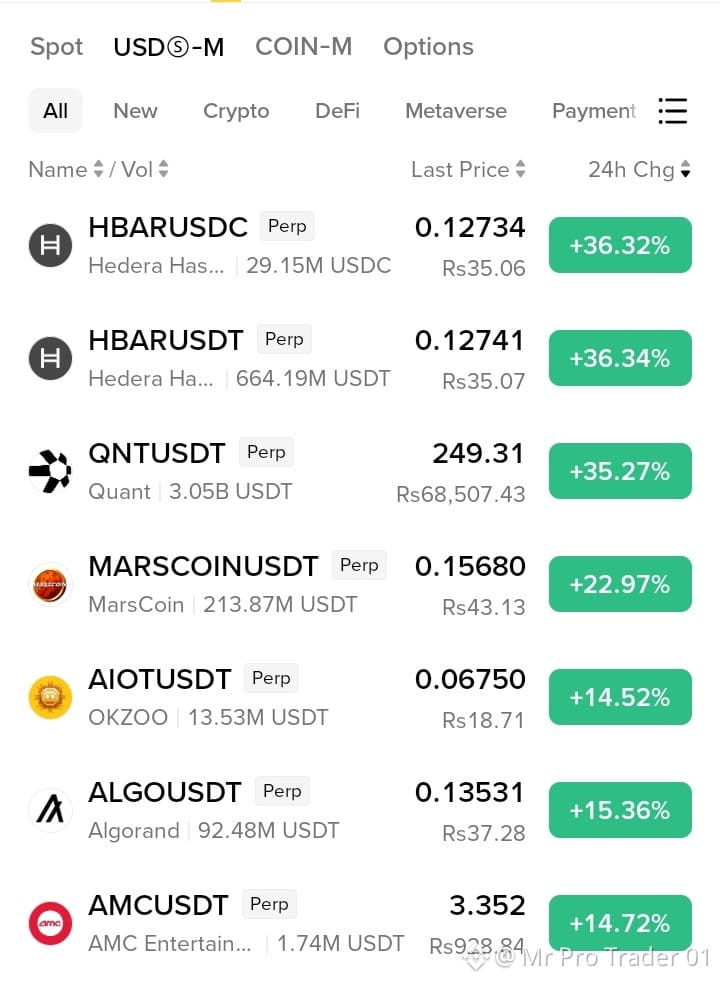
Future Top gainers showing strong bullish momentum pay attention to next TPs
$HBAR 0.16
{future}(HBARUSDT)
$QNT 300
{future}(QNTUSDT)
$MARSCOIN 0.19
{future}(MARSCOINUSDT)
AIOT 0.075
ALGO 0.18
AMC 5
guys go long on your favorite coins forget for sometime sell at tp and makes healthy profits
NFA DYOR
Future Top gainers showing strong bullish momentum pay attention to next TPs
$HBAR 0.16
$QNT 300
$MARSCOIN 0.19
AIOT 0.075
ALGO 0.18
AMC 5
guys go long on your favorite coins forget for sometime sell at tp and makes healthy profits
NFA DYOR
$HBAR 0.16
$QNT 300
$MARSCOIN 0.19
AIOT 0.075
ALGO 0.18
AMC 5
guys go long on your favorite coins forget for sometime sell at tp and makes healthy profits
NFA DYOR
1
2
769
·
--
Bullish
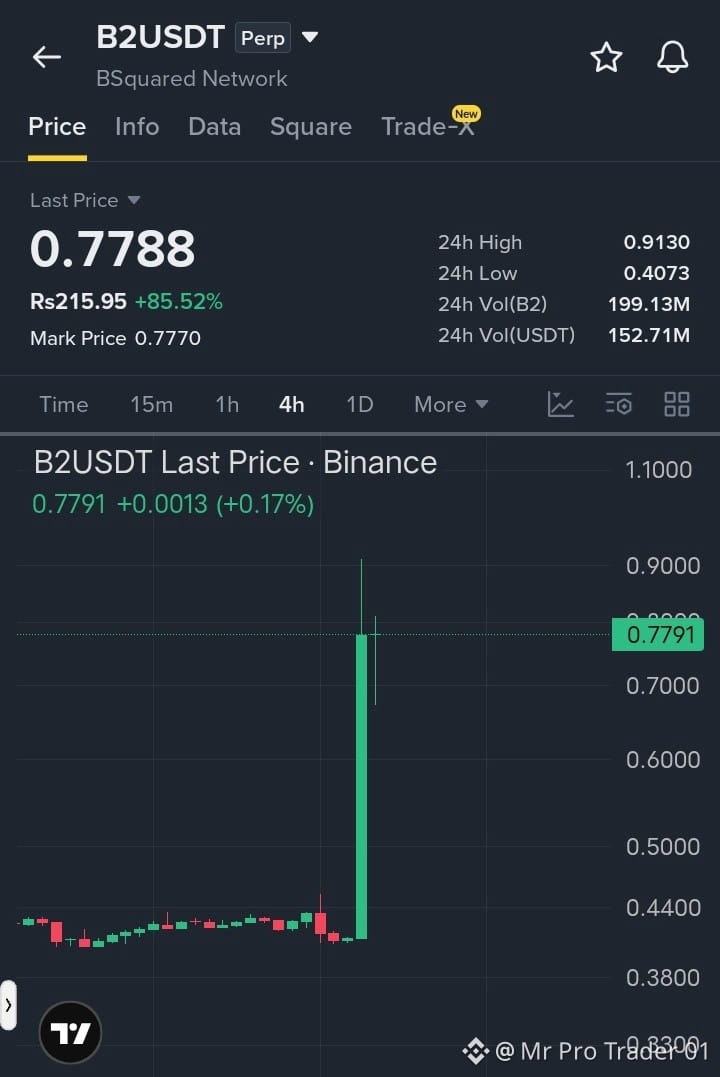
$B2 USDT BULLISH SETUP
Entry: 0.7000 – 0.7780
SL: 0.6200
TP1: 0.8800
TP2: 0.9800
TP3: 1.1500
Break above 0.9200 = stronger bullish confirmation.
Risk management is more important than any setup.
$B2
{future}(B2USDT)
$B2 USDT BULLISH SETUP
Entry: 0.7000 – 0.7780
SL: 0.6200
TP1: 0.8800
TP2: 0.9800
TP3: 1.1500
Break above 0.9200 = stronger bullish confirmation.
Risk management is more important than any setup.
$B2
Entry: 0.7000 – 0.7780
SL: 0.6200
TP1: 0.8800
TP2: 0.9800
TP3: 1.1500
Break above 0.9200 = stronger bullish confirmation.
Risk management is more important than any setup.
$B2
1
178
·
--
Bullish
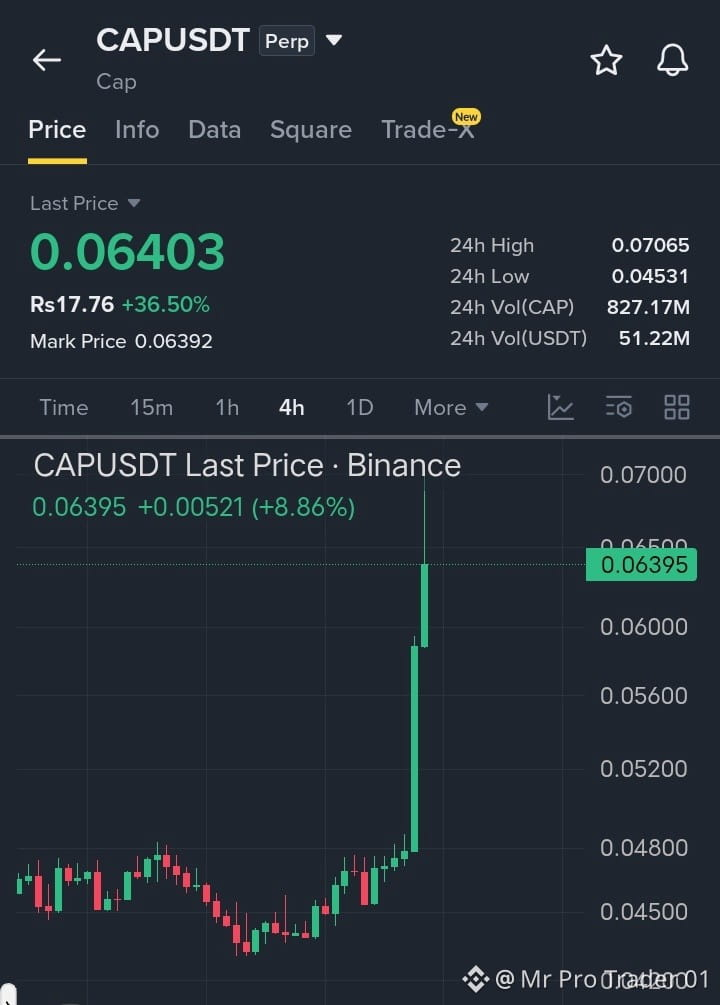
$CAP BULLISH SETUP
Entry: 0.05800 – 0.06400
SL: 0.05200
TP1: 0.07000
TP2: 0.07800
TP3: 0.09000
Break above 0.07100 = stronger bullish confirmation.
Risk management is more important than any setup.
{future}(CAPUSDT)
$CAP BULLISH SETUP
Entry: 0.05800 – 0.06400
SL: 0.05200
TP1: 0.07000
TP2: 0.07800
TP3: 0.09000
Break above 0.07100 = stronger bullish confirmation.
Risk management is more important than any setup.
Entry: 0.05800 – 0.06400
SL: 0.05200
TP1: 0.07000
TP2: 0.07800
TP3: 0.09000
Break above 0.07100 = stronger bullish confirmation.
Risk management is more important than any setup.
1
185

Article
⚽ Binance Wallet Soccer Fever Season: Where Football Passion Meets Web3 MarketsFootball has always been more than a sport it is a global conversation powered by passion, data, expectations, and constantly changing momentum. Binance Wallet’s Soccer Fever Season brings that same energy into Web3 through a PnL Trading Competition centered on eligible soccer-themed Prediction Markets.
With a total reward pool of up to 100,000 USDT, the campaign creates an engaging way for users to explore market participation while following one of the world’s biggest sports narratives.
How It Works
Participants can register through Binance or Binance Wallet and trade eligible markets in the Soccer category. Rankings are determined by a Trading Score based on realized profit and loss across qualifying markets—not simply by trading volume.
This structure places the focus on performance and risk awareness. The leaderboard updates hourly, so rankings may shift as market conditions and event outcomes develop throughout the competition.
The campaign can reward up to 1,000 eligible participants, with top leaderboard positions receiving the largest share of the reward pool.
Why Sports-Themed Prediction Markets Are Gaining Attention
Sports naturally generate strong opinions, rapid information flow, and highly engaged communities. Combining this environment with prediction markets gives users a new way to observe how market sentiment evolves around real-world events.
For Web3 users, this can also be an opportunity to learn how prices react to news, probability changes, and crowd expectations. It is not only about following a match—it is about understanding how market participants respond when new information appears.
A Responsible Approach Matters
Rewards can make a campaign exciting, but they do not remove market risk. Prediction-market outcomes can change rapidly, and participation may result in losses.
Users should carefully review campaign terms, eligibility rules, supported markets, and regional availability before joining. A clear budget, disciplined approach, and realistic expectations are essential—especially in a competitive environment.
The Bigger Picture
Binance Wallet Soccer Fever Season reflects a broader shift toward more interactive, community-led Web3 experiences. It connects a universal sports narrative with on-chain market participation, competition, and product discovery.
For participants, the key is to stay informed, understand the rules, and manage risk independently. In fast-moving markets, knowledge and discipline matter more than hype.
#Web3 #Crypto #Football #TradingCompetition #BinanceSquare #Blockchain #CryptoCommunity #RiskManagement #OnChain
⚽ Binance Wallet Soccer Fever Season: Where Football Passion Meets Web3 Markets
Football has always been more than a sport it is a global conversation powered by passion, data, expectations, and constantly changing momentum. Binance Wallet’s Soccer Fever Season brings that same energy into Web3 through a PnL Trading Competition centered on eligible soccer-themed Prediction Markets.
With a total reward pool of up to 100,000 USDT, the campaign creates an engaging way for users to explore market participation while following one of the world’s biggest sports narratives.
How It Works
Participants can register through Binance or Binance Wallet and trade eligible markets in the Soccer category. Rankings are determined by a Trading Score based on realized profit and loss across qualifying markets—not simply by trading volume.
This structure places the focus on performance and risk awareness. The leaderboard updates hourly, so rankings may shift as market conditions and event outcomes develop throughout the competition.
The campaign can reward up to 1,000 eligible participants, with top leaderboard positions receiving the largest share of the reward pool.
Why Sports-Themed Prediction Markets Are Gaining Attention
Sports naturally generate strong opinions, rapid information flow, and highly engaged communities. Combining this environment with prediction markets gives users a new way to observe how market sentiment evolves around real-world events.
For Web3 users, this can also be an opportunity to learn how prices react to news, probability changes, and crowd expectations. It is not only about following a match—it is about understanding how market participants respond when new information appears.
A Responsible Approach Matters
Rewards can make a campaign exciting, but they do not remove market risk. Prediction-market outcomes can change rapidly, and participation may result in losses.
Users should carefully review campaign terms, eligibility rules, supported markets, and regional availability before joining. A clear budget, disciplined approach, and realistic expectations are essential—especially in a competitive environment.
The Bigger Picture
Binance Wallet Soccer Fever Season reflects a broader shift toward more interactive, community-led Web3 experiences. It connects a universal sports narrative with on-chain market participation, competition, and product discovery.
For participants, the key is to stay informed, understand the rules, and manage risk independently. In fast-moving markets, knowledge and discipline matter more than hype.
#Web3 #Crypto #Football #TradingCompetition #BinanceSquare #Blockchain #CryptoCommunity #RiskManagement #OnChain
With a total reward pool of up to 100,000 USDT, the campaign creates an engaging way for users to explore market participation while following one of the world’s biggest sports narratives.
How It Works
Participants can register through Binance or Binance Wallet and trade eligible markets in the Soccer category. Rankings are determined by a Trading Score based on realized profit and loss across qualifying markets—not simply by trading volume.
This structure places the focus on performance and risk awareness. The leaderboard updates hourly, so rankings may shift as market conditions and event outcomes develop throughout the competition.
The campaign can reward up to 1,000 eligible participants, with top leaderboard positions receiving the largest share of the reward pool.
Why Sports-Themed Prediction Markets Are Gaining Attention
Sports naturally generate strong opinions, rapid information flow, and highly engaged communities. Combining this environment with prediction markets gives users a new way to observe how market sentiment evolves around real-world events.
For Web3 users, this can also be an opportunity to learn how prices react to news, probability changes, and crowd expectations. It is not only about following a match—it is about understanding how market participants respond when new information appears.
A Responsible Approach Matters
Rewards can make a campaign exciting, but they do not remove market risk. Prediction-market outcomes can change rapidly, and participation may result in losses.
Users should carefully review campaign terms, eligibility rules, supported markets, and regional availability before joining. A clear budget, disciplined approach, and realistic expectations are essential—especially in a competitive environment.
The Bigger Picture
Binance Wallet Soccer Fever Season reflects a broader shift toward more interactive, community-led Web3 experiences. It connects a universal sports narrative with on-chain market participation, competition, and product discovery.
For participants, the key is to stay informed, understand the rules, and manage risk independently. In fast-moving markets, knowledge and discipline matter more than hype.
#Web3 #Crypto #Football #TradingCompetition #BinanceSquare #Blockchain #CryptoCommunity #RiskManagement #OnChain
1
24
·
--
Bullish
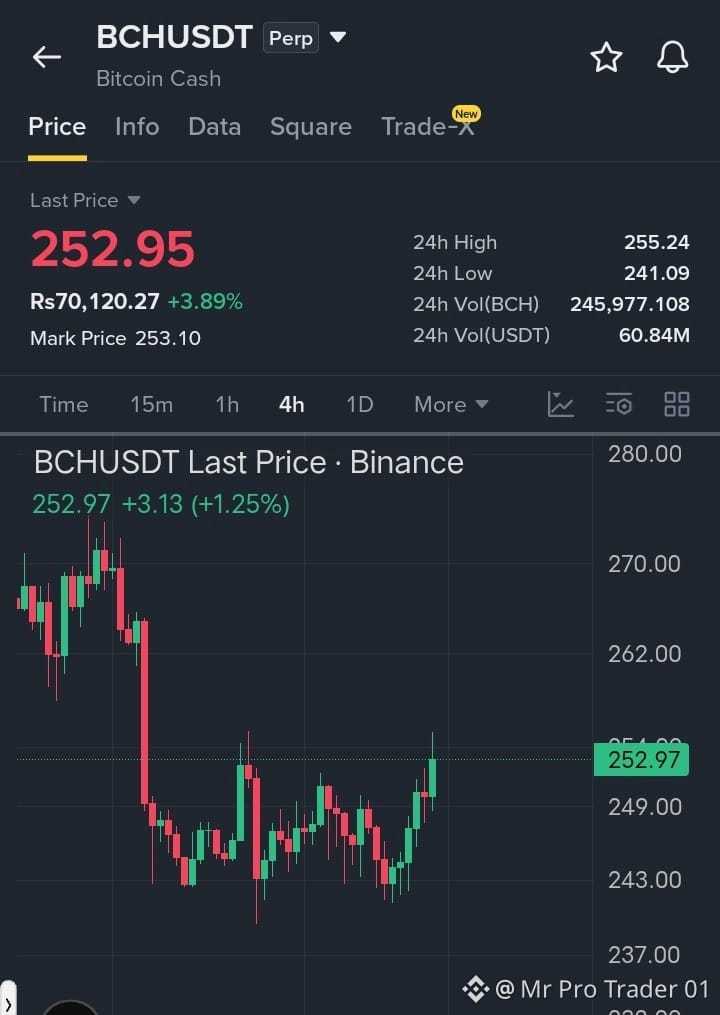
🚀 $BCH Bullish Continuation 🔥
Price: $252.95 (+3.89% today)
Volume: 245,977 BCH / 60.84M USDT
Support: $241.09
Resistance: $255.24
Setup
• Bounce from $253 → quick move toward $255
• Break & hold above $255 → extension toward $260–$265
Key Watch
Fresh +3.9% rally signals bullish continuation with strong liquidity.
Long setup favors extension toward $255–$265 if buyers defend $252–$250.
Follow & Trade Here👇$BCH
{future}(BCHUSDT)
🚀 $BCH Bullish Continuation 🔥
Price: $252.95 (+3.89% today)
Volume: 245,977 BCH / 60.84M USDT
Support: $241.09
Resistance: $255.24
Setup
• Bounce from $253 → quick move toward $255
• Break & hold above $255 → extension toward $260–$265
Key Watch
Fresh +3.9% rally signals bullish continuation with strong liquidity.
Long setup favors extension toward $255–$265 if buyers defend $252–$250.
Follow & Trade Here👇$BCH
Price: $252.95 (+3.89% today)
Volume: 245,977 BCH / 60.84M USDT
Support: $241.09
Resistance: $255.24
Setup
• Bounce from $253 → quick move toward $255
• Break & hold above $255 → extension toward $260–$265
Key Watch
Fresh +3.9% rally signals bullish continuation with strong liquidity.
Long setup favors extension toward $255–$265 if buyers defend $252–$250.
Follow & Trade Here👇$BCH
1
96
·
--
Bullish
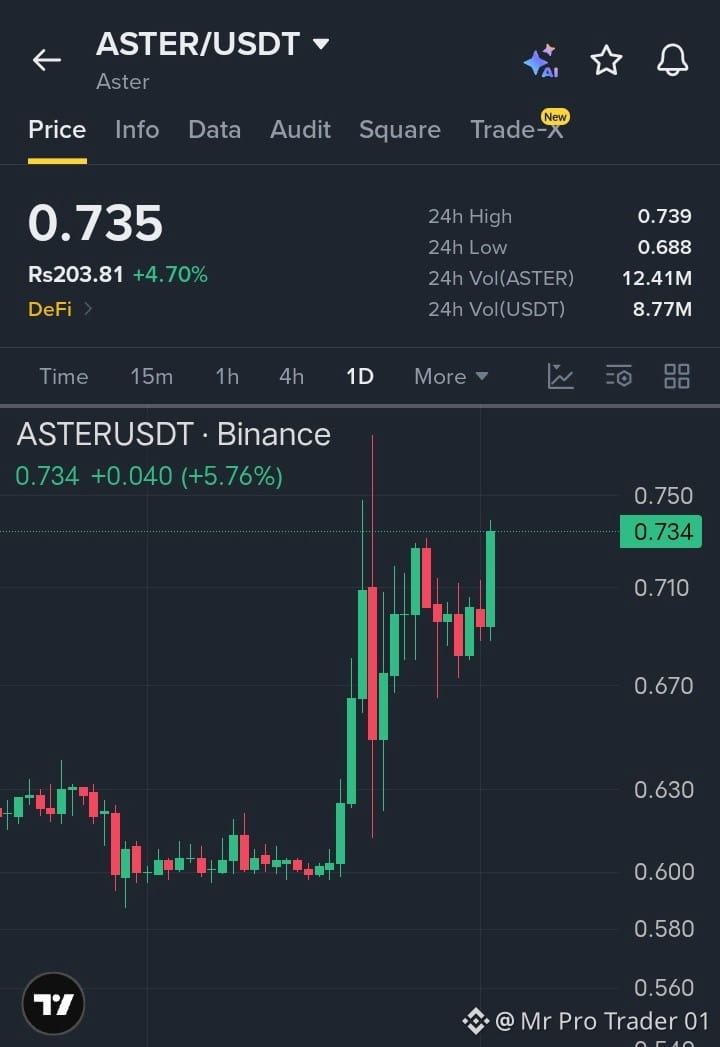
🚀 ASTER momentum bulls sustaining upside drive with steady demand!
$ASTER /USDT — LONG SETUP
Entry: 0.735 – 0.739
SL: 0.710
TP1: 0.755
TP2: 0.780
TP3: 0.810
Click here to Trade 👇️
$ASTER
{future}(ASTERUSDT)
🚀 ASTER momentum bulls sustaining upside drive with steady demand!
$ASTER /USDT — LONG SETUP
Entry: 0.735 – 0.739
SL: 0.710
TP1: 0.755
TP2: 0.780
TP3: 0.810
Click here to Trade 👇️
$ASTER
$ASTER /USDT — LONG SETUP
Entry: 0.735 – 0.739
SL: 0.710
TP1: 0.755
TP2: 0.780
TP3: 0.810
Click here to Trade 👇️
$ASTER
1
220
Article
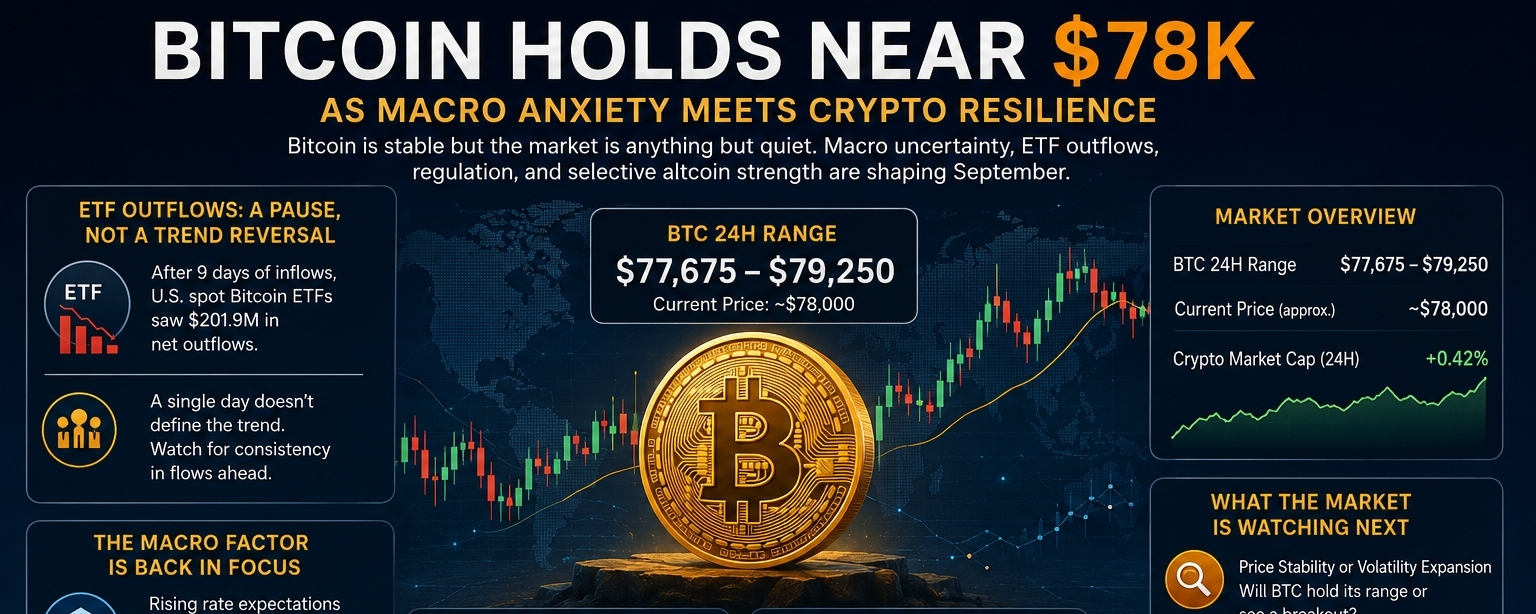
Bitcoin Holds Near $78K as Macro Anxiety Meets Crypto ResilienceBitcoin is opening September in a familiar but highly watched position: broadly stable on the surface, yet surrounded by macroeconomic uncertainty, shifting institutional flows, and renewed attention on regulation.
According to today’s Binance Square market update, BTC traded in a roughly **$77,675–$79,250** range over the past 24 hours, while the overall crypto market capitalization edged modestly higher. The market’s message is not one of clear risk-on enthusiasm or panic—it is one of caution, selective rotation, and close attention to catalysts.
ETF Outflows: A Pause, Not a Complete Narrative Shift
One of the most discussed developments is the reversal in U.S. spot Bitcoin ETF flows. After nine consecutive days of inflows, ETFs recorded approximately **$201.9 million in net outflows** late last week.
That matters because ETF flows have become a visible gauge of institutional demand. Still, a single outflow day does not, by itself, define a new market trend. It may reflect profit-taking, portfolio rebalancing, or a short-term response to changing interest-rate expectations. The more important question is whether outflows persist and whether they begin to affect broader market liquidity and sentiment.
The Macro Factor Is Back in Focus
September has begun with markets reassessing the path of U.S. monetary policy. Higher perceived odds of tighter policy can pressure risk assets by raising the opportunity cost of holding non-yielding assets and by reducing appetite for speculative exposure.
For crypto, the effect is rarely linear. Bitcoin has increasingly been viewed by different participants through different lenses: as a risk asset, as a macro hedge, as a liquidity-sensitive trade, or as a long-term digital scarcity asset. Those competing narratives are exactly why BTC can remain resilient even while traditional markets react sharply to macro headlines.
Altcoins Are Moving Selectively
While major assets remain mixed, attention on Binance Square is also moving toward high-volatility altcoins. **SC, IQ, and ARB** appeared among the day’s stronger movers, showing that speculative capital has not disappeared—it is simply being more selective.
This kind of rotation often creates an important distinction between the overall market and individual tokens. A relatively calm Bitcoin market can coexist with dramatic movements in smaller-cap assets, especially where liquidity is thinner and news-driven momentum is stronger.
That environment can create opportunity, but it also raises execution and volatility risks. Rapid percentage moves can reverse just as quickly when attention shifts.
Regulation Is Becoming a Core Market Theme
Beyond price, global crypto regulation is gaining renewed relevance. New and proposed frameworks across several jurisdictions are increasing focus on compliance, stablecoins, custody, lending, and market structure.
For the industry, clearer rules can potentially support broader institutional participation over time. In the near term, however, each policy headline can produce uncertainty as markets assess how rules may affect access, liquidity, token classifications, and product availability.
What the Market Is Watching Next
The coming days will likely be shaped by three interconnected signals:
- Whether Bitcoin remains stable within its recent range or experiences a broader volatility expansion.
- Whether ETF flow data resumes inflows or shows a sustained change in institutional positioning.
- Whether macro and regulatory headlines reinforce caution or improve confidence across risk assets.
The key takeaway is that today’s market is not driven by one headline alone. Bitcoin is navigating the intersection of institutional flows, monetary-policy expectations, regulation, and selective altcoin momentum. That makes this a market where context matters more than noise and where short-term moves should be interpreted with care.
*This article is for informational purposes only and does not constitute investment advice. Crypto assets are volatile, and past perfo
rmance does not guarantee future results.*
#crypto #BTC #BinanceSquare
Bitcoin Holds Near $78K as Macro Anxiety Meets Crypto Resilience
Bitcoin is opening September in a familiar but highly watched position: broadly stable on the surface, yet surrounded by macroeconomic uncertainty, shifting institutional flows, and renewed attention on regulation.
According to today’s Binance Square market update, BTC traded in a roughly **$77,675–$79,250** range over the past 24 hours, while the overall crypto market capitalization edged modestly higher. The market’s message is not one of clear risk-on enthusiasm or panic—it is one of caution, selective rotation, and close attention to catalysts.
ETF Outflows: A Pause, Not a Complete Narrative Shift
One of the most discussed developments is the reversal in U.S. spot Bitcoin ETF flows. After nine consecutive days of inflows, ETFs recorded approximately **$201.9 million in net outflows** late last week.
That matters because ETF flows have become a visible gauge of institutional demand. Still, a single outflow day does not, by itself, define a new market trend. It may reflect profit-taking, portfolio rebalancing, or a short-term response to changing interest-rate expectations. The more important question is whether outflows persist and whether they begin to affect broader market liquidity and sentiment.
The Macro Factor Is Back in Focus
September has begun with markets reassessing the path of U.S. monetary policy. Higher perceived odds of tighter policy can pressure risk assets by raising the opportunity cost of holding non-yielding assets and by reducing appetite for speculative exposure.
For crypto, the effect is rarely linear. Bitcoin has increasingly been viewed by different participants through different lenses: as a risk asset, as a macro hedge, as a liquidity-sensitive trade, or as a long-term digital scarcity asset. Those competing narratives are exactly why BTC can remain resilient even while traditional markets react sharply to macro headlines.
Altcoins Are Moving Selectively
While major assets remain mixed, attention on Binance Square is also moving toward high-volatility altcoins. **SC, IQ, and ARB** appeared among the day’s stronger movers, showing that speculative capital has not disappeared—it is simply being more selective.
This kind of rotation often creates an important distinction between the overall market and individual tokens. A relatively calm Bitcoin market can coexist with dramatic movements in smaller-cap assets, especially where liquidity is thinner and news-driven momentum is stronger.
That environment can create opportunity, but it also raises execution and volatility risks. Rapid percentage moves can reverse just as quickly when attention shifts.
Regulation Is Becoming a Core Market Theme
Beyond price, global crypto regulation is gaining renewed relevance. New and proposed frameworks across several jurisdictions are increasing focus on compliance, stablecoins, custody, lending, and market structure.
For the industry, clearer rules can potentially support broader institutional participation over time. In the near term, however, each policy headline can produce uncertainty as markets assess how rules may affect access, liquidity, token classifications, and product availability.
What the Market Is Watching Next
The coming days will likely be shaped by three interconnected signals:
- Whether Bitcoin remains stable within its recent range or experiences a broader volatility expansion.
- Whether ETF flow data resumes inflows or shows a sustained change in institutional positioning.
- Whether macro and regulatory headlines reinforce caution or improve confidence across risk assets.
The key takeaway is that today’s market is not driven by one headline alone. Bitcoin is navigating the intersection of institutional flows, monetary-policy expectations, regulation, and selective altcoin momentum. That makes this a market where context matters more than noise and where short-term moves should be interpreted with care.
*This article is for informational purposes only and does not constitute investment advice. Crypto assets are volatile, and past perfo
rmance does not guarantee future results.*
#crypto #BTC #BinanceSquare
According to today’s Binance Square market update, BTC traded in a roughly **$77,675–$79,250** range over the past 24 hours, while the overall crypto market capitalization edged modestly higher. The market’s message is not one of clear risk-on enthusiasm or panic—it is one of caution, selective rotation, and close attention to catalysts.
ETF Outflows: A Pause, Not a Complete Narrative Shift
One of the most discussed developments is the reversal in U.S. spot Bitcoin ETF flows. After nine consecutive days of inflows, ETFs recorded approximately **$201.9 million in net outflows** late last week.
That matters because ETF flows have become a visible gauge of institutional demand. Still, a single outflow day does not, by itself, define a new market trend. It may reflect profit-taking, portfolio rebalancing, or a short-term response to changing interest-rate expectations. The more important question is whether outflows persist and whether they begin to affect broader market liquidity and sentiment.
The Macro Factor Is Back in Focus
September has begun with markets reassessing the path of U.S. monetary policy. Higher perceived odds of tighter policy can pressure risk assets by raising the opportunity cost of holding non-yielding assets and by reducing appetite for speculative exposure.
For crypto, the effect is rarely linear. Bitcoin has increasingly been viewed by different participants through different lenses: as a risk asset, as a macro hedge, as a liquidity-sensitive trade, or as a long-term digital scarcity asset. Those competing narratives are exactly why BTC can remain resilient even while traditional markets react sharply to macro headlines.
Altcoins Are Moving Selectively
While major assets remain mixed, attention on Binance Square is also moving toward high-volatility altcoins. **SC, IQ, and ARB** appeared among the day’s stronger movers, showing that speculative capital has not disappeared—it is simply being more selective.
This kind of rotation often creates an important distinction between the overall market and individual tokens. A relatively calm Bitcoin market can coexist with dramatic movements in smaller-cap assets, especially where liquidity is thinner and news-driven momentum is stronger.
That environment can create opportunity, but it also raises execution and volatility risks. Rapid percentage moves can reverse just as quickly when attention shifts.
Regulation Is Becoming a Core Market Theme
Beyond price, global crypto regulation is gaining renewed relevance. New and proposed frameworks across several jurisdictions are increasing focus on compliance, stablecoins, custody, lending, and market structure.
For the industry, clearer rules can potentially support broader institutional participation over time. In the near term, however, each policy headline can produce uncertainty as markets assess how rules may affect access, liquidity, token classifications, and product availability.
What the Market Is Watching Next
The coming days will likely be shaped by three interconnected signals:
- Whether Bitcoin remains stable within its recent range or experiences a broader volatility expansion.
- Whether ETF flow data resumes inflows or shows a sustained change in institutional positioning.
- Whether macro and regulatory headlines reinforce caution or improve confidence across risk assets.
The key takeaway is that today’s market is not driven by one headline alone. Bitcoin is navigating the intersection of institutional flows, monetary-policy expectations, regulation, and selective altcoin momentum. That makes this a market where context matters more than noise and where short-term moves should be interpreted with care.
*This article is for informational purposes only and does not constitute investment advice. Crypto assets are volatile, and past perfo
rmance does not guarantee future results.*
#crypto #BTC #BinanceSquare
1
104
·
--
Bullish
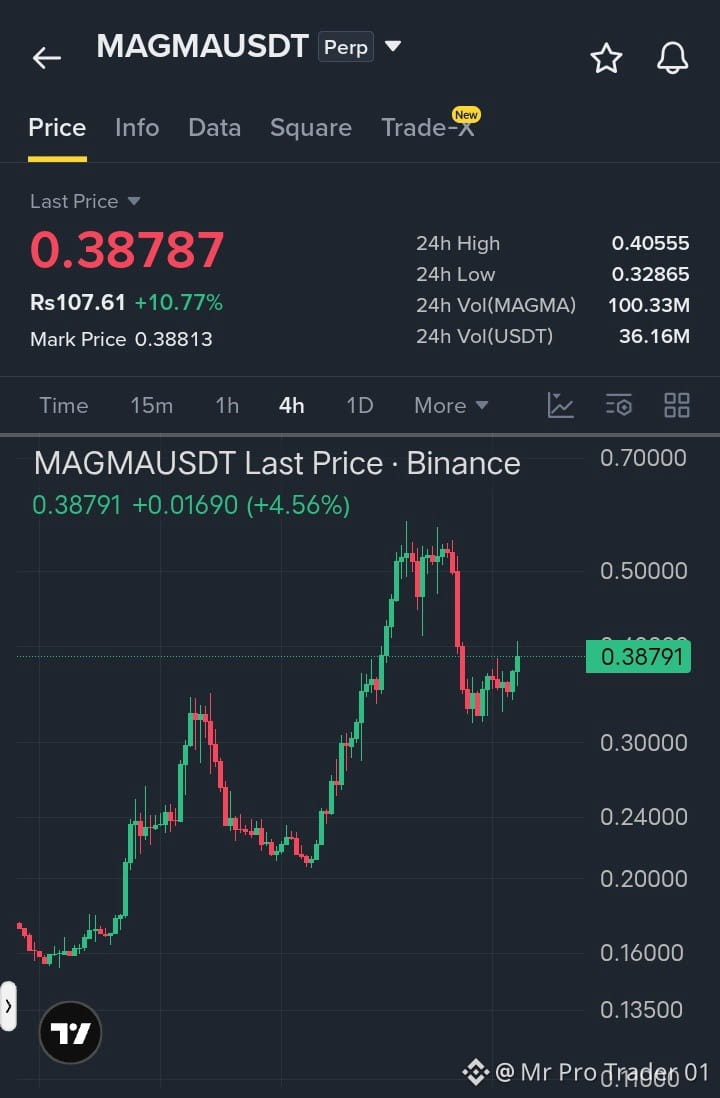
$MAGMA 10% breakout and holding strong above 0.38! Break 0.40 and we're sending it to 0.45! Stop below 0.36. The magma is heating up—don't miss the eruption! 🚀🌋
$MAGMA
{future}(MAGMAUSDT)
$MAGMA 10% breakout and holding strong above 0.38! Break 0.40 and we're sending it to 0.45! Stop below 0.36. The magma is heating up—don't miss the eruption! 🚀🌋
$MAGMA
$MAGMA
1
216
·
--
Bearish
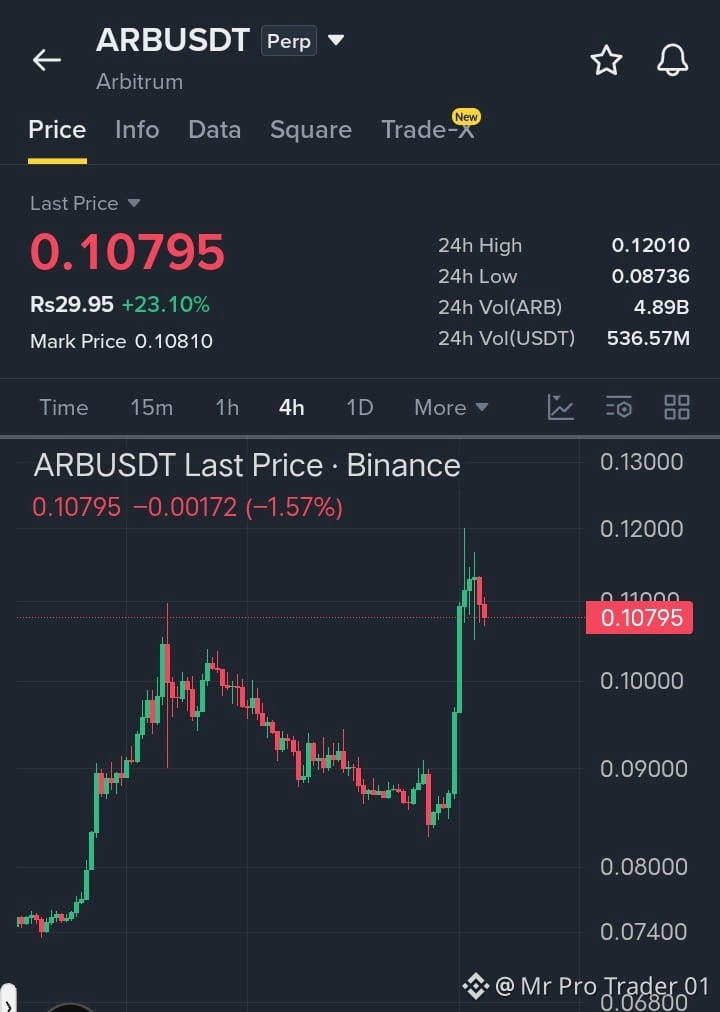
$ARB Rejection from 0.12 and losing steam fast! Bears are stepping in hard. Break below 0.10 and we're heading to 0.09! Stop above 0.11. The Arbitrum correction is loading! 🩸📉
$ARB
{future}(ARBUSDT)
$ARB Rejection from 0.12 and losing steam fast! Bears are stepping in hard. Break below 0.10 and we're heading to 0.09! Stop above 0.11. The Arbitrum correction is loading! 🩸📉
$ARB
$ARB
1
147
Article
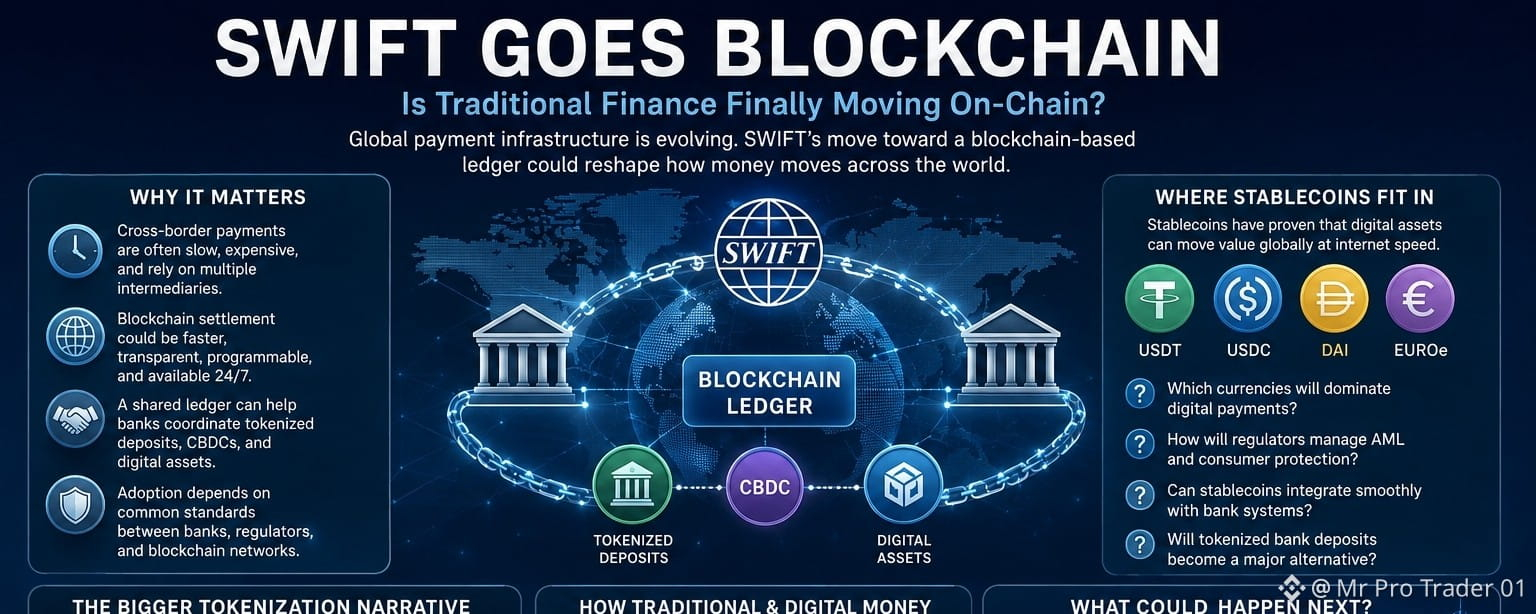
SWIFT Goes Blockchain: Is Traditional Finance Finally Moving On-Chain?SWIFT’s move toward a blockchain-based ledger could be one of the strongest signals yet that global payment infrastructure is getting closer to on-chain settlement.
For decades, SWIFT has been a core part of cross-border banking communication. Now, as blockchain technology, tokenized assets, and stablecoins gain attention, the question is no longer whether traditional finance will explore blockchain it is how quickly real-world payment systems can adopt it at scale.
Why This Matters
Cross-border payments are often slow, expensive, and dependent on multiple intermediaries. Blockchain-based settlement could potentially make transactions more transparent, programmable, and available around the clock.
A shared ledger may help financial institutions coordinate tokenized deposits, central bank digital currencies, and other digital assets across different networks. In theory, this could reduce settlement friction while improving visibility between participating institutions.
However, adoption will depend on whether banks, regulators, and blockchain networks can agree on common standards.
Where Stablecoins Fit In
Stablecoins have already shown that digital assets can move value globally at internet speed. They are widely used in crypto markets, trading, remittances, and decentralized finance.
But stablecoins also raise important questions:
- Which currencies will dominate global digital payments?
- How will regulators manage anti-money-laundering and consumer-protection rules?
- Can stablecoins work smoothly with bank-led payment systems?
- Will tokenized bank deposits become a major alternative?
The answer may not be one system replacing another. Instead, the future could involve stablecoins, tokenized deposits, CBDCs, and traditional bank infrastructure operating together.
The Bigger Tokenization Narrative
SWIFT’s blockchain direction also supports the broader tokenization theme.
Tokenization refers to representing real-world assets—such as bonds, funds, real estate, commodities, or cash equivalents on a blockchain. Supporters believe it could improve settlement speed, automate processes, and create more efficient financial markets.
Yet the path is not risk-free. Interoperability, cybersecurity, liquidity fragmentation, privacy, regulation, and governance remain major challenges.
What Could Happen Next?
If blockchain-based payment rails become more widely integrated, we may see:
- Faster cross-border settlement
- More experiments with tokenized deposits and tokenized funds
- Greater institutional demand for interoperable blockchain infrastructure
- New competition between bank-led networks, public blockchains, and stablecoin issuers
- More regulatory focus on digital money and cross-border capital flows
Still, this is an evolving story not a guaranteed outcome. Technology adoption in global finance usually takes time, especially when regulation, banking infrastructure, and national currencies are involved.
Final Thought
SWIFT exploring blockchain is not simply a crypto headline. It is part of a larger shift: traditional financial institutions are testing how digital ledgers could reshape the movement of money and assets.
The key question is not whether finance will become more digital. It is whether the next generation of financial infrastructure will be open, interoperable, and accessible or mainly controlled by existing institutions.
What do you think: will stablecoins, tokenized bank deposits, or CBDCs lead the next era of global payments?
#SWIFT #Stablecoins #Tokenization #BinanceSquare #crypto
SWIFT Goes Blockchain: Is Traditional Finance Finally Moving On-Chain?
SWIFT’s move toward a blockchain-based ledger could be one of the strongest signals yet that global payment infrastructure is getting closer to on-chain settlement.
For decades, SWIFT has been a core part of cross-border banking communication. Now, as blockchain technology, tokenized assets, and stablecoins gain attention, the question is no longer whether traditional finance will explore blockchain it is how quickly real-world payment systems can adopt it at scale.
Why This Matters
Cross-border payments are often slow, expensive, and dependent on multiple intermediaries. Blockchain-based settlement could potentially make transactions more transparent, programmable, and available around the clock.
A shared ledger may help financial institutions coordinate tokenized deposits, central bank digital currencies, and other digital assets across different networks. In theory, this could reduce settlement friction while improving visibility between participating institutions.
However, adoption will depend on whether banks, regulators, and blockchain networks can agree on common standards.
Where Stablecoins Fit In
Stablecoins have already shown that digital assets can move value globally at internet speed. They are widely used in crypto markets, trading, remittances, and decentralized finance.
But stablecoins also raise important questions:
- Which currencies will dominate global digital payments?
- How will regulators manage anti-money-laundering and consumer-protection rules?
- Can stablecoins work smoothly with bank-led payment systems?
- Will tokenized bank deposits become a major alternative?
The answer may not be one system replacing another. Instead, the future could involve stablecoins, tokenized deposits, CBDCs, and traditional bank infrastructure operating together.
The Bigger Tokenization Narrative
SWIFT’s blockchain direction also supports the broader tokenization theme.
Tokenization refers to representing real-world assets—such as bonds, funds, real estate, commodities, or cash equivalents on a blockchain. Supporters believe it could improve settlement speed, automate processes, and create more efficient financial markets.
Yet the path is not risk-free. Interoperability, cybersecurity, liquidity fragmentation, privacy, regulation, and governance remain major challenges.
What Could Happen Next?
If blockchain-based payment rails become more widely integrated, we may see:
- Faster cross-border settlement
- More experiments with tokenized deposits and tokenized funds
- Greater institutional demand for interoperable blockchain infrastructure
- New competition between bank-led networks, public blockchains, and stablecoin issuers
- More regulatory focus on digital money and cross-border capital flows
Still, this is an evolving story not a guaranteed outcome. Technology adoption in global finance usually takes time, especially when regulation, banking infrastructure, and national currencies are involved.
Final Thought
SWIFT exploring blockchain is not simply a crypto headline. It is part of a larger shift: traditional financial institutions are testing how digital ledgers could reshape the movement of money and assets.
The key question is not whether finance will become more digital. It is whether the next generation of financial infrastructure will be open, interoperable, and accessible or mainly controlled by existing institutions.
What do you think: will stablecoins, tokenized bank deposits, or CBDCs lead the next era of global payments?
#SWIFT #Stablecoins #Tokenization #BinanceSquare #crypto
For decades, SWIFT has been a core part of cross-border banking communication. Now, as blockchain technology, tokenized assets, and stablecoins gain attention, the question is no longer whether traditional finance will explore blockchain it is how quickly real-world payment systems can adopt it at scale.
Why This Matters
Cross-border payments are often slow, expensive, and dependent on multiple intermediaries. Blockchain-based settlement could potentially make transactions more transparent, programmable, and available around the clock.
A shared ledger may help financial institutions coordinate tokenized deposits, central bank digital currencies, and other digital assets across different networks. In theory, this could reduce settlement friction while improving visibility between participating institutions.
However, adoption will depend on whether banks, regulators, and blockchain networks can agree on common standards.
Where Stablecoins Fit In
Stablecoins have already shown that digital assets can move value globally at internet speed. They are widely used in crypto markets, trading, remittances, and decentralized finance.
But stablecoins also raise important questions:
- Which currencies will dominate global digital payments?
- How will regulators manage anti-money-laundering and consumer-protection rules?
- Can stablecoins work smoothly with bank-led payment systems?
- Will tokenized bank deposits become a major alternative?
The answer may not be one system replacing another. Instead, the future could involve stablecoins, tokenized deposits, CBDCs, and traditional bank infrastructure operating together.
The Bigger Tokenization Narrative
SWIFT’s blockchain direction also supports the broader tokenization theme.
Tokenization refers to representing real-world assets—such as bonds, funds, real estate, commodities, or cash equivalents on a blockchain. Supporters believe it could improve settlement speed, automate processes, and create more efficient financial markets.
Yet the path is not risk-free. Interoperability, cybersecurity, liquidity fragmentation, privacy, regulation, and governance remain major challenges.
What Could Happen Next?
If blockchain-based payment rails become more widely integrated, we may see:
- Faster cross-border settlement
- More experiments with tokenized deposits and tokenized funds
- Greater institutional demand for interoperable blockchain infrastructure
- New competition between bank-led networks, public blockchains, and stablecoin issuers
- More regulatory focus on digital money and cross-border capital flows
Still, this is an evolving story not a guaranteed outcome. Technology adoption in global finance usually takes time, especially when regulation, banking infrastructure, and national currencies are involved.
Final Thought
SWIFT exploring blockchain is not simply a crypto headline. It is part of a larger shift: traditional financial institutions are testing how digital ledgers could reshape the movement of money and assets.
The key question is not whether finance will become more digital. It is whether the next generation of financial infrastructure will be open, interoperable, and accessible or mainly controlled by existing institutions.
What do you think: will stablecoins, tokenized bank deposits, or CBDCs lead the next era of global payments?
#SWIFT #Stablecoins #Tokenization #BinanceSquare #crypto
5
2
296
Log in to explore more content
Join global crypto users on Binance Square
⚡️ Get latest and useful information about crypto.
💬 Trusted by the world’s largest crypto exchange.
👍 Discover real insights from verified creators.
Email / Phone number
Trending Topics
UKFCAWinsCourtOrderToRecover851400Pounds
20,908 views
676 Discussing
🚨 CRYPTO REGULATION JUST ENTERED A NEW PHASE: THEY’RE NOT ONLY WRITING RULES — THEY’RE TAKING MONEY BACK.
The UK’s FCA has secured another court-backed asset recovery, reinforcing a broader enforcement push against unauthorized financial and crypto-related activity.
And look at what’s happening simultaneously:
🇬🇧 FCA → enforcement + asset recovery
🇺🇸 SEC → clearer rules for functional crypto assets
🇺🇸 Fed → formal stablecoin supervision under the GENIUS Act
That combination matters.
Regulators are no longer debating whether crypto belongs inside the financial system.
They’re increasingly deciding who gets access, what rules they follow, and what happens when those rules are broken.
The next crypto cycle may not be “regulation vs innovation.”
It may be regulated crypto vs everyone who can’t meet the standard. 👀
$COIN $CRCL $BTC
#ukfcawinscourtordertorecover851400pounds #ChainlinkLaunchesCCIP2WithEnterpriseVerification #GoldFallsTo$4144 #QNTFallsOver40%FromMorningHigh #USDTAdds845900HoldersInPast7Days
KimHotbae
·3 Likes
·4.2k views
ChainlinkLaunchesCCIP2WithEnterpriseVerification
35,517 views
872 Discussing
GoldFallsTo$4144
12,930 views
148 Discussing