

Margo04
153 Posts

Margo04
Report
Block User
торгую для себя, помогаю людям, делюсь знаниями
62 Following
28 Followers
15 Liked
Posts
All
Quotes
·
--
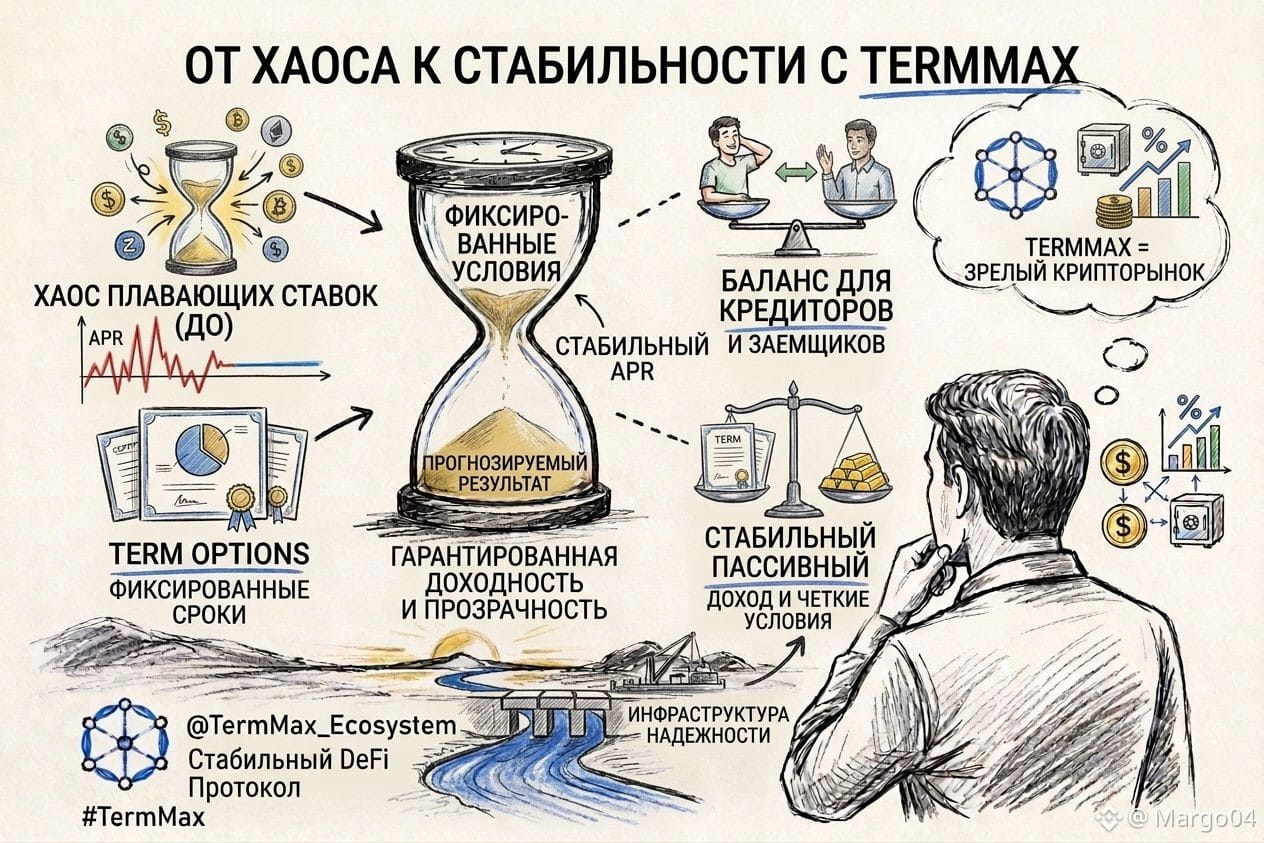
From Chaos to Stability: How @termmax Changes the Game in DeFi
Most DeFi protocols suffer from one problem—floating APR. Returns change every hour, turning capital management into guesswork. The @termmax project closes this vulnerability by offering a fixed-rate market and predictable liquidity.
What is the main value of @termmax :
Predictable outcome: By locking in the rate, you guarantee accurate returns regardless of market turbulence.
Balance for both sides: Borrowers get clear terms without the risk of sudden interest spikes, while lenders receive stable passive income.
A foundation for institutions: It’s exactly these understandable mechanisms that large capital lacked for mainstream entry into Web3.
A mature crypto market cannot be built without predictable financial instruments. @termmax is building the infrastructure that makes DeFi reliable.
#TermMax
From Chaos to Stability: How @TermMax Changes the Game in DeFi
Most DeFi protocols suffer from one problem—floating APR. Returns change every hour, turning capital management into guesswork. The @TermMax project closes this vulnerability by offering a fixed-rate market and predictable liquidity.
What is the main value of @TermMax :
Predictable outcome: By locking in the rate, you guarantee accurate returns regardless of market turbulence.
Balance for both sides: Borrowers get clear terms without the risk of sudden interest spikes, while lenders receive stable passive income.
A foundation for institutions: It’s exactly these understandable mechanisms that large capital lacked for mainstream entry into Web3.
A mature crypto market cannot be built without predictable financial instruments. @TermMax is building the infrastructure that makes DeFi reliable.
#TermMax
Most DeFi protocols suffer from one problem—floating APR. Returns change every hour, turning capital management into guesswork. The @TermMax project closes this vulnerability by offering a fixed-rate market and predictable liquidity.
What is the main value of @TermMax :
Predictable outcome: By locking in the rate, you guarantee accurate returns regardless of market turbulence.
Balance for both sides: Borrowers get clear terms without the risk of sudden interest spikes, while lenders receive stable passive income.
A foundation for institutions: It’s exactly these understandable mechanisms that large capital lacked for mainstream entry into Web3.
A mature crypto market cannot be built without predictable financial instruments. @TermMax is building the infrastructure that makes DeFi reliable.
#TermMax
180
·
--
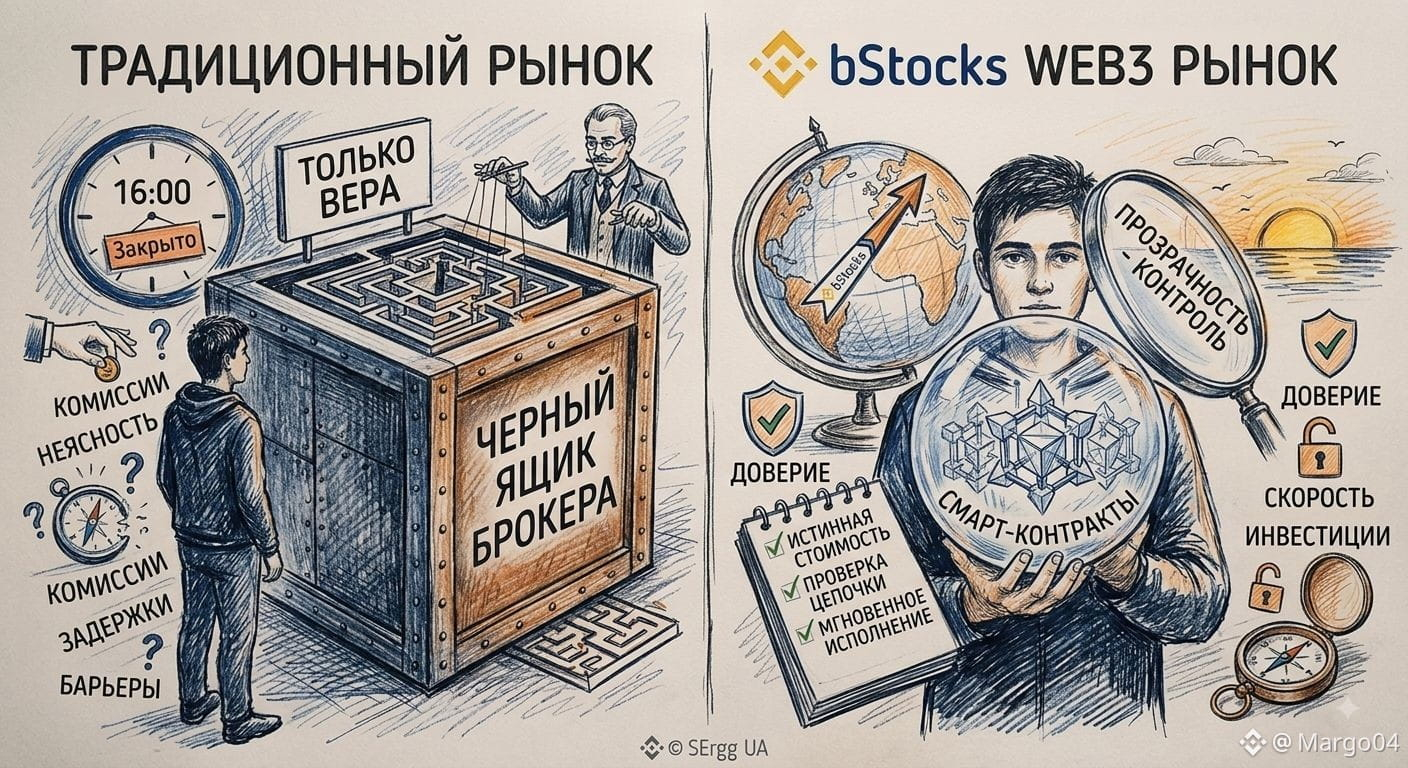
#bstockscis @BinanceCIS Previously, the classic market was a “black box”: you submit an order to a broker and simply trust that the execution was fair.
In bStocks, this barrier disappears. Every trade involving tokenized assets such as $AMZN or $GOOGL is recorded on the blockchain via smart contracts. There’s no need to trust intermediaries blindly— the entire chain can be verified by you personally.
When financial processes become transparent, extra anxiety fades, replaced by a real sense of control over your assets.
Will brokers with closed algorithms still be needed when the market becomes fully open?
$SPCXB #bStocksCis #Web3
#bstockscis @BinanceCIS Previously, the classic market was a “black box”: you submit an order to a broker and simply trust that the execution was fair.
In bStocks, this barrier disappears. Every trade involving tokenized assets such as $AMZN or $GOOGL is recorded on the blockchain via smart contracts. There’s no need to trust intermediaries blindly— the entire chain can be verified by you personally.
When financial processes become transparent, extra anxiety fades, replaced by a real sense of control over your assets.
Will brokers with closed algorithms still be needed when the market becomes fully open?
$SPCXB #bStocksCis #Web3
In bStocks, this barrier disappears. Every trade involving tokenized assets such as $AMZN or $GOOGL is recorded on the blockchain via smart contracts. There’s no need to trust intermediaries blindly— the entire chain can be verified by you personally.
When financial processes become transparent, extra anxiety fades, replaced by a real sense of control over your assets.
Will brokers with closed algorithms still be needed when the market becomes fully open?
$SPCXB #bStocksCis #Web3
127
·
--
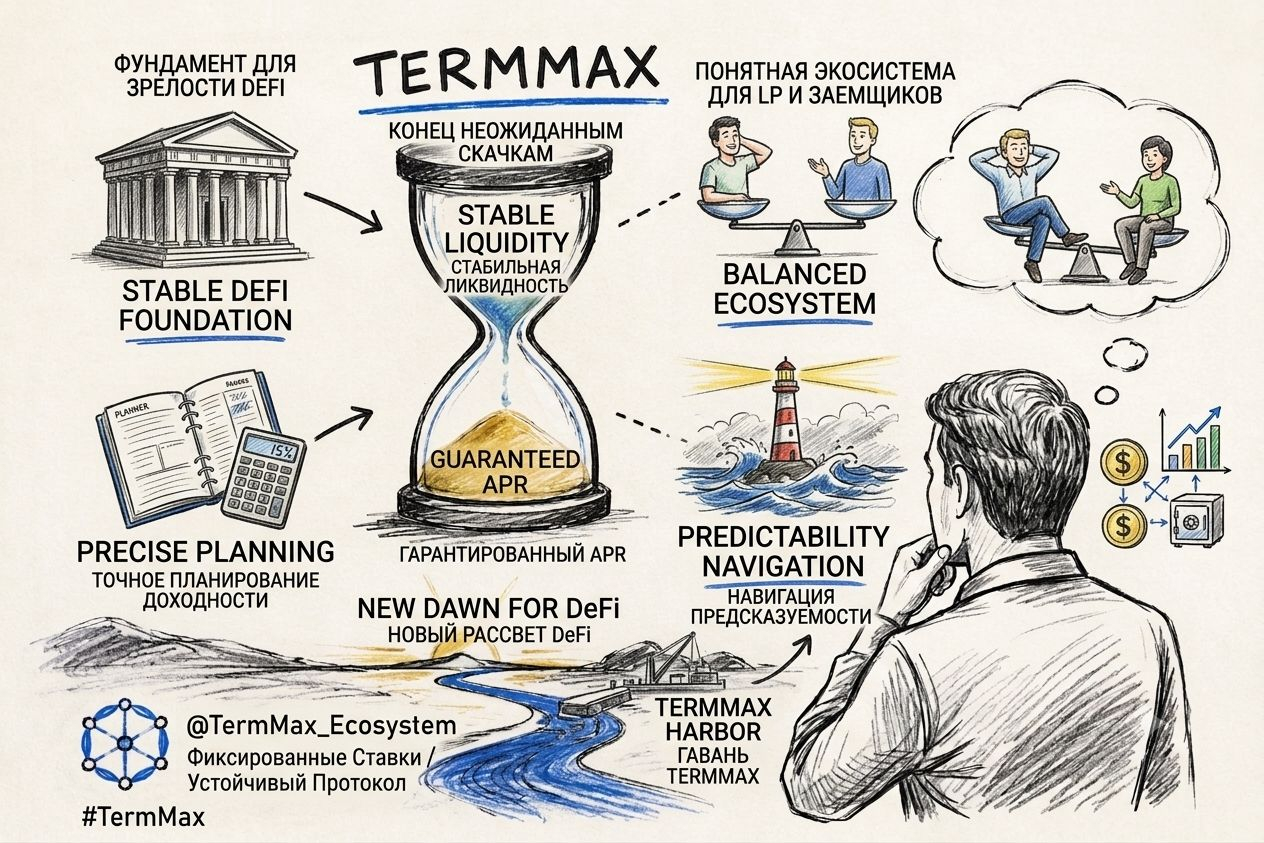
#termmax @termmax Fixed percentage rates — what the DeFi segment has long lacked for full maturity. Project @termmax changes the rules of the game by offering convenient mechanisms for precise yield planning and liquidity management. No more unexpected APR jumps: the platform creates a clear ecosystem for both liquidity providers and borrowers. A great example of how innovation makes decentralized finance more resilient and predictable! #TermMax
#termmax @TermMax Fixed percentage rates — what the DeFi segment has long lacked for full maturity. Project @TermMax changes the rules of the game by offering convenient mechanisms for precise yield planning and liquidity management. No more unexpected APR jumps: the platform creates a clear ecosystem for both liquidity providers and borrowers. A great example of how innovation makes decentralized finance more resilient and predictable! #TermMax
2
103
·
--
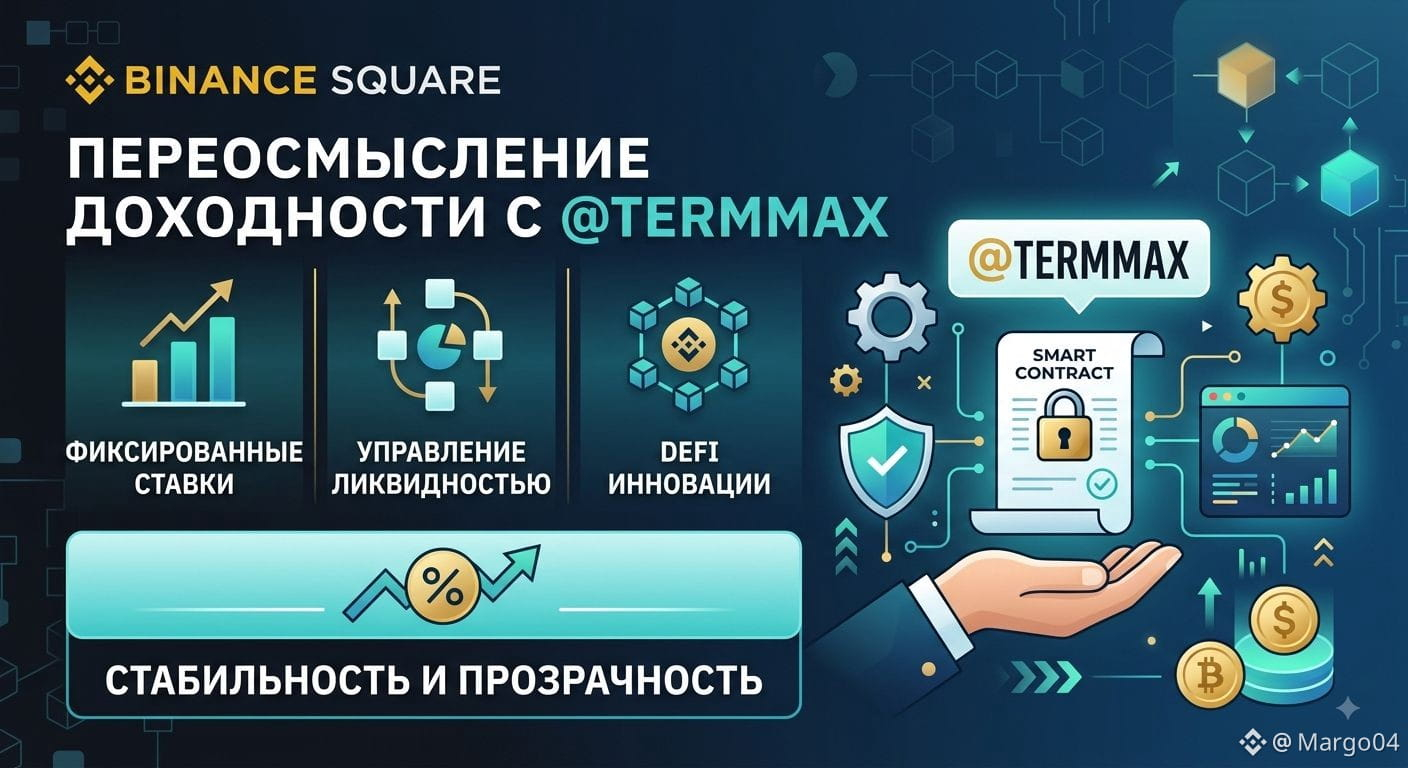
#termmax @termmax Protocol @termmax offers an extremely interesting solution for the DeFi segment, rethinking how fixed-percentage rates work. Unlike classic models, the platform enables users to manage their assets more predictably and efficiently, eliminating volatility in returns. For those who value precision in liquidity management and want to lock in income on clear, transparent terms, this tool becomes an important part of a DeFi strategy. I’m eagerly looking forward to the development of the ecosystem! #TermMax
#termmax @TermMax Protocol @TermMax offers an extremely interesting solution for the DeFi segment, rethinking how fixed-percentage rates work. Unlike classic models, the platform enables users to manage their assets more predictably and efficiently, eliminating volatility in returns. For those who value precision in liquidity management and want to lock in income on clear, transparent terms, this tool becomes an important part of a DeFi strategy. I’m eagerly looking forward to the development of the ecosystem! #TermMax
98
·
--
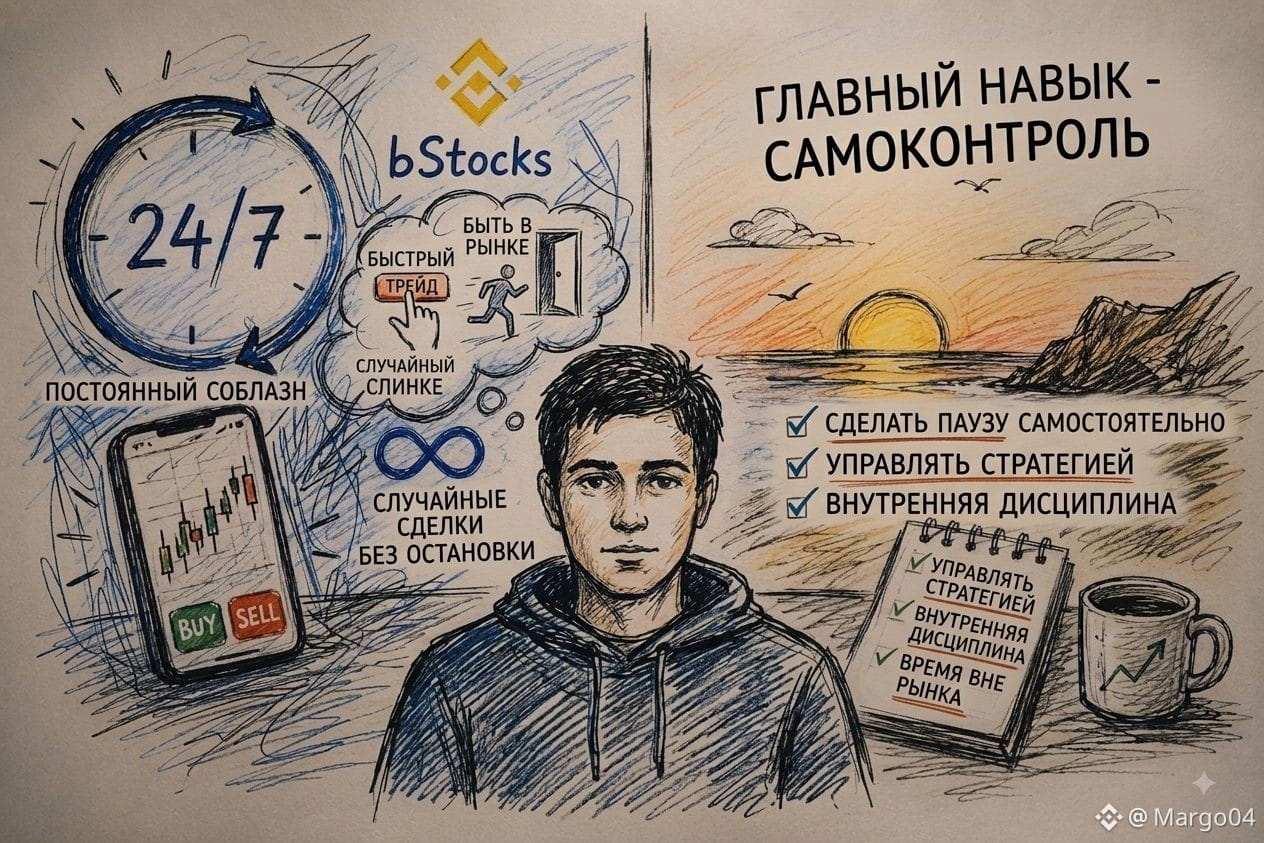
#bstockscis @BinanceCIS Previously, closing the exchange was a natural pause that helped you escape your emotions. In bStocks, the market works 24/7, and this boundary disappears.
When access is always open, the main skill is no longer the ability to enter a trade, but the ability to stop in time. Constant access removes external barriers, so you have to build internal discipline yourself.
In the end, the 24/7 format is not just convenience—it’s a test of self-control: either you manage the strategy, or the market manages your time.
Can you take a pause when you can trade at any moment?
#bStockCis $SPCXB @BinanceCIS #bStocks #Web3
#bstockscis @BinanceCIS Previously, closing the exchange was a natural pause that helped you escape your emotions. In bStocks, the market works 24/7, and this boundary disappears.
When access is always open, the main skill is no longer the ability to enter a trade, but the ability to stop in time. Constant access removes external barriers, so you have to build internal discipline yourself.
In the end, the 24/7 format is not just convenience—it’s a test of self-control: either you manage the strategy, or the market manages your time.
Can you take a pause when you can trade at any moment?
#bStockCis $SPCXB @BinanceCIS #bStocks #Web3
When access is always open, the main skill is no longer the ability to enter a trade, but the ability to stop in time. Constant access removes external barriers, so you have to build internal discipline yourself.
In the end, the 24/7 format is not just convenience—it’s a test of self-control: either you manage the strategy, or the market manages your time.
Can you take a pause when you can trade at any moment?
#bStockCis $SPCXB @BinanceCIS #bStocks #Web3
1
123
·
--
Tokenization of real-world assets (RWA) is a key trend, and @Dusk_Foundation offers one of the strongest technology solutions on the market! 💎
By combining complete data confidentiality with built-in compliance with regulatory requirements, blockchain creates an ideal infrastructure for institutions. ZK-proof technology on the network $DUSK opens a whole new level of security and scalability for the finances of the future.
#dusk
Tokenization of real-world assets (RWA) is a key trend, and @Dusk offers one of the strongest technology solutions on the market! 💎
By combining complete data confidentiality with built-in compliance with regulatory requirements, blockchain creates an ideal infrastructure for institutions. ZK-proof technology on the network $DUSK opens a whole new level of security and scalability for the finances of the future.
#dusk
By combining complete data confidentiality with built-in compliance with regulatory requirements, blockchain creates an ideal infrastructure for institutions. ZK-proof technology on the network $DUSK opens a whole new level of security and scalability for the finances of the future.
#dusk

92
·
--
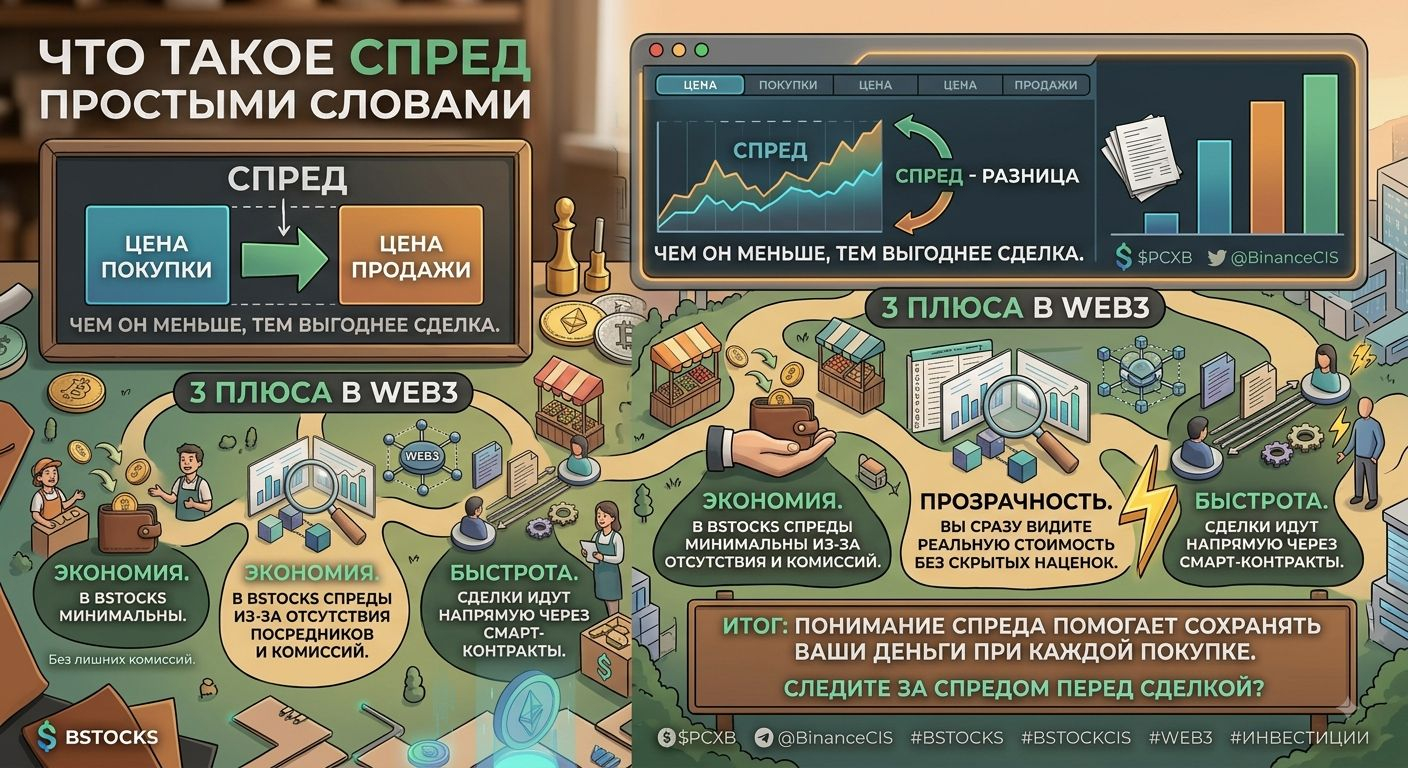
What is spread in simple words
It is the difference between the purchase and sale price of an asset. The smaller it is, the more profitable the deal.
3 advantages in Web3:
Savings. On bStocks, spreads are minimal due to the absence of intermediaries.
Transparency. You can immediately see the real cost without hidden markups.
Speed. Trades go directly through smart contracts.
Conclusion. Understanding spread helps you keep your money with every purchase.
Do you monitor the spread before a trade?
$SPCXB @BinanceCIS #bStocksCIS
What is spread in simple words
It is the difference between the purchase and sale price of an asset. The smaller it is, the more profitable the deal.
3 advantages in Web3:
Savings. On bStocks, spreads are minimal due to the absence of intermediaries.
Transparency. You can immediately see the real cost without hidden markups.
Speed. Trades go directly through smart contracts.
Conclusion. Understanding spread helps you keep your money with every purchase.
Do you monitor the spread before a trade?
$SPCXB @BinanceCIS #bStocksCIS
It is the difference between the purchase and sale price of an asset. The smaller it is, the more profitable the deal.
3 advantages in Web3:
Savings. On bStocks, spreads are minimal due to the absence of intermediaries.
Transparency. You can immediately see the real cost without hidden markups.
Speed. Trades go directly through smart contracts.
Conclusion. Understanding spread helps you keep your money with every purchase.
Do you monitor the spread before a trade?
$SPCXB @BinanceCIS #bStocksCIS
152
·
--
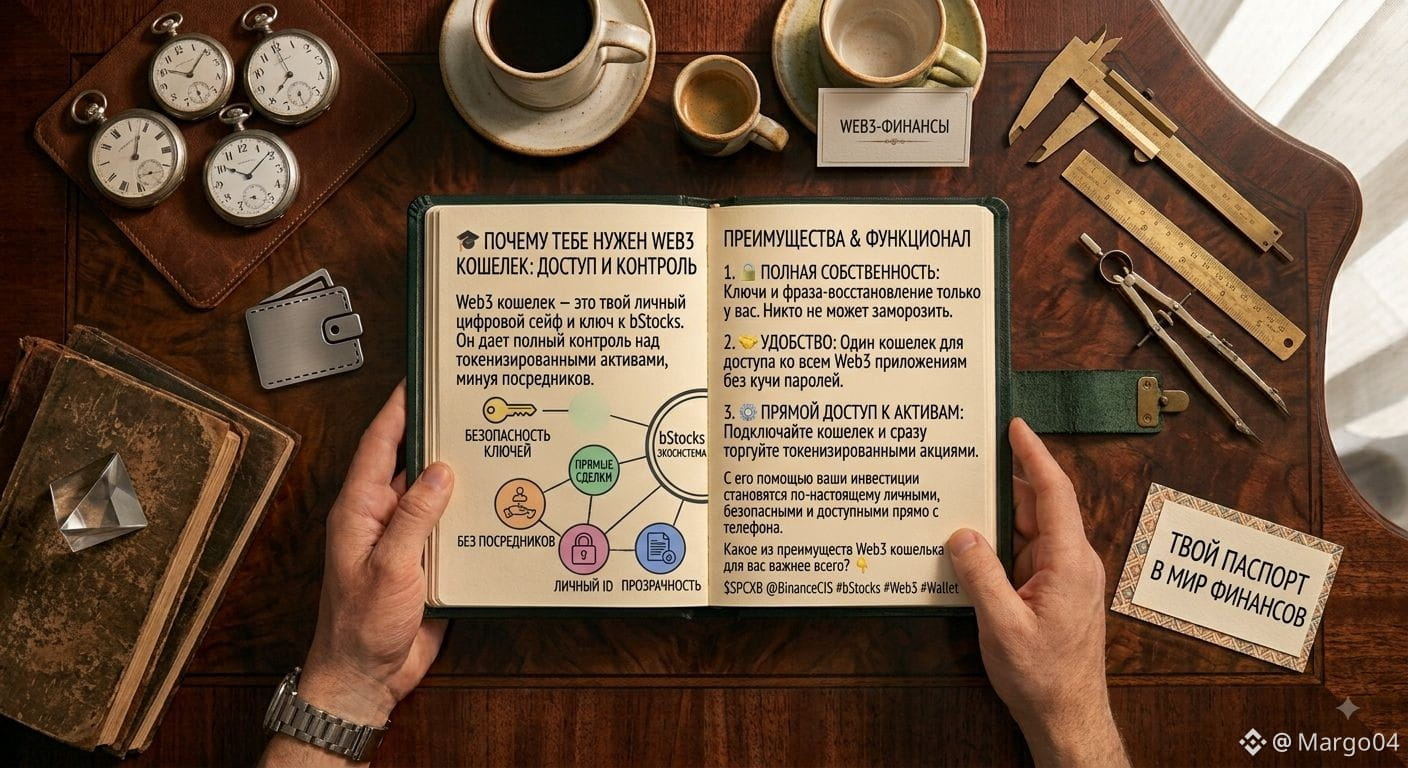
Why do you need a Web3 wallet and how does it work
A regular bank account belongs to the bank, which can block transactions. A Web3 wallet gives you full control over your money and tokenized assets.
Three main advantages:
Full ownership. Access to assets is available only to you thanks to a special secret key. No one else can freeze your funds.
One login for everything. With a single wallet, you can sign in to different platforms without creating a bunch of passwords and confirmations.
Direct access to assets. In bStocks, you connect your wallet and immediately trade tokenized stocks without complicated formalities.
A Web3 wallet is your personal digital safe and passport in the world of new finance.
Have you already been using a Web3 wallet, or are you still keeping your assets on regular exchanges?
$SPCXB @BinanceCIS #bStocksCIS
Why do you need a Web3 wallet and how does it work
A regular bank account belongs to the bank, which can block transactions. A Web3 wallet gives you full control over your money and tokenized assets.
Three main advantages:
Full ownership. Access to assets is available only to you thanks to a special secret key. No one else can freeze your funds.
One login for everything. With a single wallet, you can sign in to different platforms without creating a bunch of passwords and confirmations.
Direct access to assets. In bStocks, you connect your wallet and immediately trade tokenized stocks without complicated formalities.
A Web3 wallet is your personal digital safe and passport in the world of new finance.
Have you already been using a Web3 wallet, or are you still keeping your assets on regular exchanges?
$SPCXB @BinanceCIS #bStocksCIS
A regular bank account belongs to the bank, which can block transactions. A Web3 wallet gives you full control over your money and tokenized assets.
Three main advantages:
Full ownership. Access to assets is available only to you thanks to a special secret key. No one else can freeze your funds.
One login for everything. With a single wallet, you can sign in to different platforms without creating a bunch of passwords and confirmations.
Direct access to assets. In bStocks, you connect your wallet and immediately trade tokenized stocks without complicated formalities.
A Web3 wallet is your personal digital safe and passport in the world of new finance.
Have you already been using a Web3 wallet, or are you still keeping your assets on regular exchanges?
$SPCXB @BinanceCIS #bStocksCIS
157
·
--
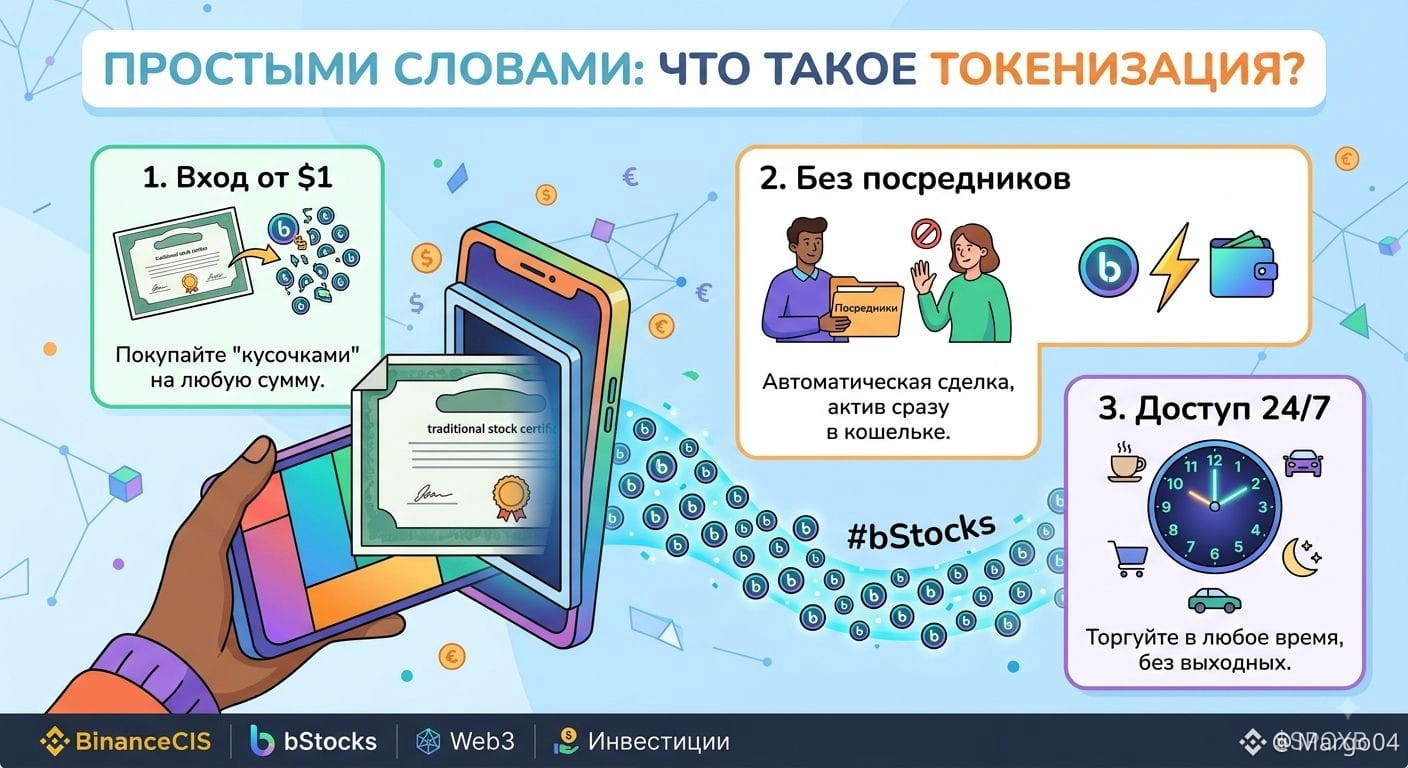
#bstockscis The essence of tokenization in simple words
This is the transfer of familiar stocks to the internet under new bStocks rules. No complicated bureaucracy and strict schedules!
There are 3 main advantages:
Entry from $1. Stocks are split into smaller parts, so you can buy them “in pieces” for any amount.
No intermediaries. The deal happens automatically, and the asset immediately lands in your wallet.
Access 24/7. No weekends and no closed exchanges—trade any time.
Bottom line: Investing becomes simple, accessible, and right on your phone.
What feature do you like the most? 👇
@BinanceCIS #bStocks
#bstockscis The essence of tokenization in simple words
This is the transfer of familiar stocks to the internet under new bStocks rules. No complicated bureaucracy and strict schedules!
There are 3 main advantages:
Entry from $1. Stocks are split into smaller parts, so you can buy them “in pieces” for any amount.
No intermediaries. The deal happens automatically, and the asset immediately lands in your wallet.
Access 24/7. No weekends and no closed exchanges—trade any time.
Bottom line: Investing becomes simple, accessible, and right on your phone.
What feature do you like the most? 👇
@BinanceCIS #bStocks
This is the transfer of familiar stocks to the internet under new bStocks rules. No complicated bureaucracy and strict schedules!
There are 3 main advantages:
Entry from $1. Stocks are split into smaller parts, so you can buy them “in pieces” for any amount.
No intermediaries. The deal happens automatically, and the asset immediately lands in your wallet.
Access 24/7. No weekends and no closed exchanges—trade any time.
Bottom line: Investing becomes simple, accessible, and right on your phone.
What feature do you like the most? 👇
@BinanceCIS #bStocks
99
·
--
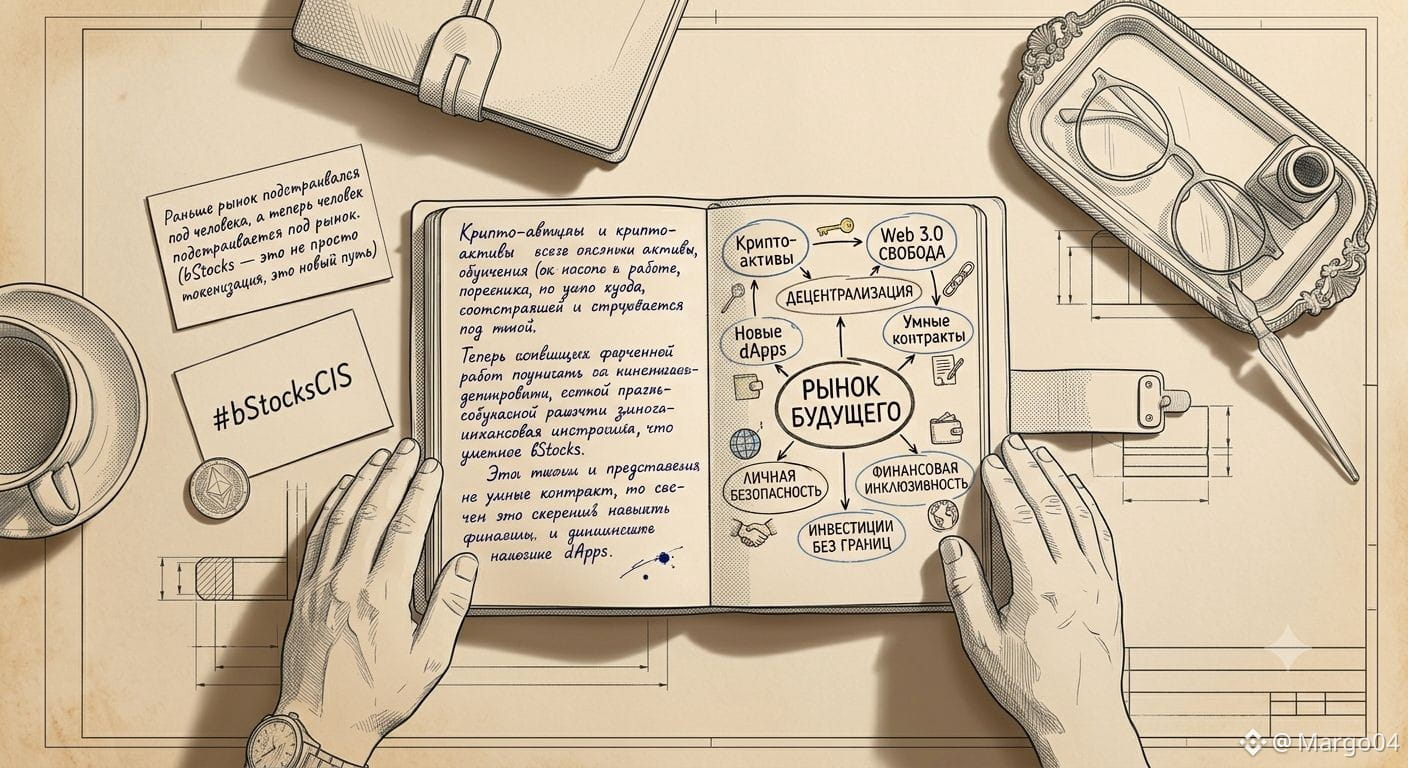
I didn’t understand for a long time why shares should be moved onto the blockchain. A share is still a share.
But after testing, #bstocksсis I understood: it’s not about the tokenization itself, but about how it changes a person’s path to an asset.
Earlier, you adjusted to the market—its opening hours, intermediaries, and the entry threshold. Now the tool adjusts to you. The doors that used to open on a schedule are open all the time.
Fractional ownership removes the main excuse—lack of capital to get started. But does the technology remove the main barrier?
Maybe the problem was never about access. Maybe the hardest part is simply deciding to take the first step.
And what stops you more: barriers to entry, or lack of experience? 👇
$SPCXB @BinanceCIS #bstockscis
I didn’t understand for a long time why shares should be moved onto the blockchain. A share is still a share.
But after testing, #bstocksсis I understood: it’s not about the tokenization itself, but about how it changes a person’s path to an asset.
Earlier, you adjusted to the market—its opening hours, intermediaries, and the entry threshold. Now the tool adjusts to you. The doors that used to open on a schedule are open all the time.
Fractional ownership removes the main excuse—lack of capital to get started. But does the technology remove the main barrier?
Maybe the problem was never about access. Maybe the hardest part is simply deciding to take the first step.
And what stops you more: barriers to entry, or lack of experience? 👇
$SPCXB @BinanceCIS #bstockscis
But after testing, #bstocksсis I understood: it’s not about the tokenization itself, but about how it changes a person’s path to an asset.
Earlier, you adjusted to the market—its opening hours, intermediaries, and the entry threshold. Now the tool adjusts to you. The doors that used to open on a schedule are open all the time.
Fractional ownership removes the main excuse—lack of capital to get started. But does the technology remove the main barrier?
Maybe the problem was never about access. Maybe the hardest part is simply deciding to take the first step.
And what stops you more: barriers to entry, or lack of experience? 👇
$SPCXB @BinanceCIS #bstockscis
2
3
285
·
--
#BinancePickAndWin guess the results of football matches and get boxes; the first box is completely free: [ссылка](https://www.binance.com/activity/pick-and-win/2026-football-challenge?ref=954966298)
#BinancePickAndWin guess the results of football matches and get boxes; the first box is completely free: ссылка
2
·
--
#BinancePickAndWin guess football match results and get boxes, the first box completely free at [ссылка](https://www.binance.com/activity/pick-and-win/2026-football-challenge?ref=954966298)
#BinancePickAndWin guess football match results and get boxes, the first box completely free at ссылка
74
·
--
#BinancePickAndWin guess football match results and get boxes, the first box is completely free, here is [ссылка](https://www.binance.com/activity/pick-and-win/2026-football-challenge?ref=954966298)
#BinancePickAndWin guess football match results and get boxes, the first box is completely free, here is ссылка
71
·
--
#BinancePickAndWin guess the results of football matches and get boxes, the first box is completely free, here is [ссылка](https://www.binance.com/activity/pick-and-win/2026-football-challenge?ref=954966298)
#BinancePickAndWin guess the results of football matches and get boxes, the first box is completely free, here is ссылка
·
--
#BinancePickAndWin Guess the results of football matches and get boxes. The first box is completely free, here [ссылка](https://www.binance.com/activity/pick-and-win/2026-football-challenge?ref=954966298)
#BinancePickAndWin Guess the results of football matches and get boxes. The first box is completely free, here ссылка
1
·
--
#BinancePickAndWin guess the results of football matches and get boxes, the first box is completely free - [ссылка](https://www.binance.com/activity/pick-and-win/2026-football-challenge?ref=954966298)
#BinancePickAndWin guess the results of football matches and get boxes, the first box is completely free - ссылка
1
·
--
#BinancePickAndWin guess football match results and get boxes; the first box is completely free at [ссылка](https://www.binance.com/activity/pick-and-win/2026-football-challenge?ref=954966298)
#BinancePickAndWin guess football match results and get boxes; the first box is completely free at ссылка
3
·
--
#BinanceTurns9 Binance is celebrating 9 years—thanks to you
#BinanceTurns9 Binance is celebrating 9 years—thanks to you
70
·
--
#BinancePickAndWin guess football match results and get boxes, the first box is completely free for [ссылка](https://www.binance.com/activity/pick-and-win/2026-football-challenge?ref=954966298)
#BinancePickAndWin guess football match results and get boxes, the first box is completely free for ссылка
3
Log in to explore more content
Join global crypto users on Binance Square
⚡️ Get latest and useful information about crypto.
💬 Trusted by the world’s largest crypto exchange.
👍 Discover real insights from verified creators.
Email / Phone number
Trending Topics
CircleMints500MUSDCOnSolana
120,399 views
2,435 Discussing
#circlemints500musdconsolana 🚨 $500M USDC PUT SOLANA DEFI UNDER THE MICROSCOPE
Circle has added 500 million Dollar in USDC to Solana. That’s a number.. Here’s what traders really need to pay attention to. 👀
A 500 million Dollar jump in USDC supply doesn’t automatically mean 500 million dollar of buying pressure. That’s not how it works. The real story is what happens next.
🔹 Does the USDC move into lending protocols?
🔹 Does borrowing demand pick up more liquidity comes in?
🔹 Do USDC lending yields drop as supply grows?
🔹 Does all this stablecoin liquidity eventually shift into SOL and other Solana assets?
Circle says the USDC can be minted in advance and held before it hits the circulating supply. That means the headline number is the start. The actual flow after minting matters more than the announcement.
Jupiter is already a player on Solana for USDC lending and borrowing. So the utilization rate and borrowing activity there are metrics to watch.
📊 Here’s my main focus:
inflows → DeFi utilization → rising borrowing demand → SOL liquidity.
Is this 500 million Dollar going to sit idle?. Will it flow into DeFi first?. Then will it eventually move into riskier assets like SOL, JUP, KMNO?
The next few days could tell us a lot, about how Solana DeFi's reacting to this injection.
#solana #crypto #Khan62 #USDC
$KMNO $JUP $ORCA
Khan 62
·6 Likes
·4.8k views
PolymarketBankFailureBetsDrawFDICConcern
110,702 views
2,040 Discussing
BlackRockBuildsTokenizedPortfoliosForOndo
106,409 views
1,457 Discussing