
Torrie4444
1.2k Posts

Torrie4444
Report
Block User
News and Insight
0 Following
28 Followers
53 Liked
Posts
All
Videos
·
--
Verified
Gold plunged more than $30 in one fell swoop, with spot prices falling to $4,042 an ounce. The reason: U.S. October nonfarm payroll data came in much stronger than expected. 📉
First, the data:
• The unemployment rate in October was 4.1%, versus market expectations of 4.2%; the previous reading was also 4.2%
• August nonfarm payroll gains were revised up from 133,000 to 186,000, an increase of 53,000
• September was revised up from 29,000 to 60,000, an increase of 31,000
• Together, the two months saw 84,000 more jobs added than previously reported
This report wasn’t just strong for the month itself—it also bolstered the figures for the previous two months. The labor market is more resilient than people had thought, and that matters more than any single month’s numbers.
The market reaction was immediate. U.S. short-term interest rate futures fell, and traders increased their bets on another Fed rate hike in December. Remember, the Fed just raised rates on September 16, its first hike since 2023, and the current chair is Kevin Warsh. If employment is this strong, the case for another hike in December becomes more convincing. A stronger dollar and higher interest rates are usually bad news for gold, and this drop in prices is a case in point.
Meanwhile, Canada’s unemployment rate edged up in October to a nearly six-month high, clearly diverging from the U.S. trend.
For risk assets like $BTC, rising rate-hike expectations generally weigh on liquidity, which could make short-term sentiment more cautious. But what I’m more focused on is the inflation data due before December—it will determine whether a rate hike actually happens.
Do you think there’ll be another rate hike in December?
#NFP #Fed #Gold
Gold plunged more than $30 in one fell swoop, with spot prices falling to $4,042 an ounce. The reason: U.S. October nonfarm payroll data came in much stronger than expected. 📉
First, the data:
• The unemployment rate in October was 4.1%, versus market expectations of 4.2%; the previous reading was also 4.2%
• August nonfarm payroll gains were revised up from 133,000 to 186,000, an increase of 53,000
• September was revised up from 29,000 to 60,000, an increase of 31,000
• Together, the two months saw 84,000 more jobs added than previously reported
This report wasn’t just strong for the month itself—it also bolstered the figures for the previous two months. The labor market is more resilient than people had thought, and that matters more than any single month’s numbers.
The market reaction was immediate. U.S. short-term interest rate futures fell, and traders increased their bets on another Fed rate hike in December. Remember, the Fed just raised rates on September 16, its first hike since 2023, and the current chair is Kevin Warsh. If employment is this strong, the case for another hike in December becomes more convincing. A stronger dollar and higher interest rates are usually bad news for gold, and this drop in prices is a case in point.
Meanwhile, Canada’s unemployment rate edged up in October to a nearly six-month high, clearly diverging from the U.S. trend.
For risk assets like $BTC , rising rate-hike expectations generally weigh on liquidity, which could make short-term sentiment more cautious. But what I’m more focused on is the inflation data due before December—it will determine whether a rate hike actually happens.
Do you think there’ll be another rate hike in December?
#NFP #Fed #Gold
616
·
--
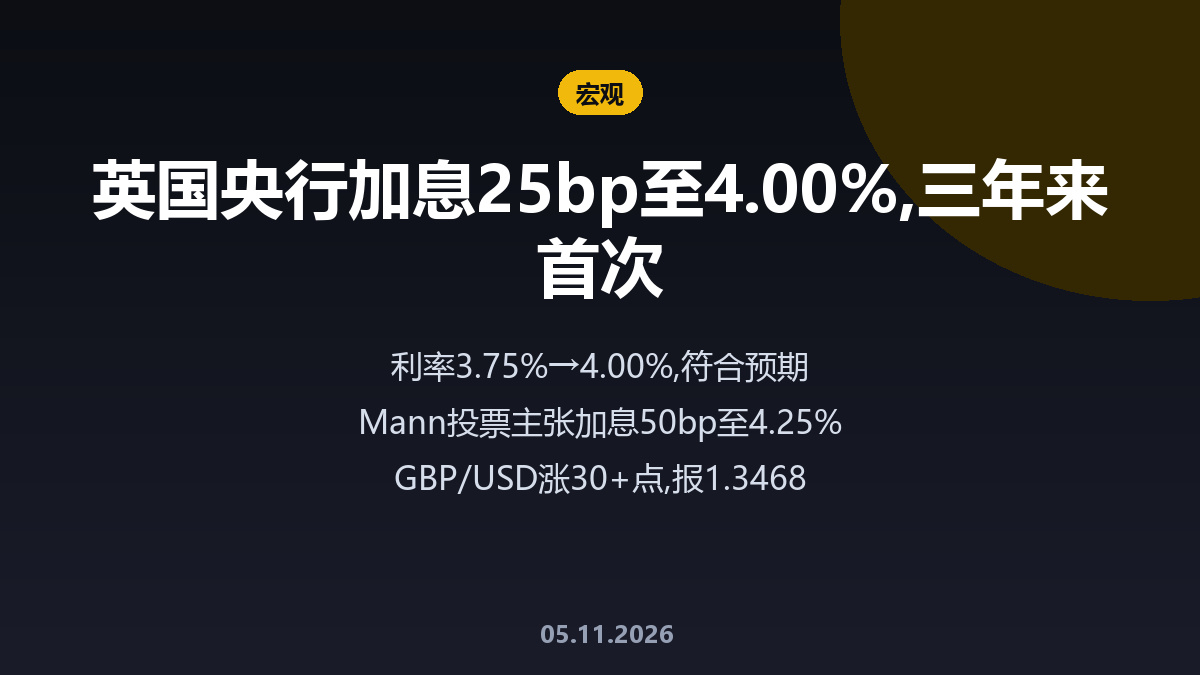
The Bank of England raised interest rates by 25 basis points on November 5, taking the rate from 3.75% to 4.00%. This was its first rate hike since August 2023.
The decision was in line with market expectations, so the real focus is on the details:
🔹 Monetary Policy Committee member Mann voted for a 50-basis-point hike, arguing for an immediate increase to 4.25%
🔹 GDP forecasts were revised up: 1.6% for 2026, 1.3% for 2027, and 1.2% for 2028
🔹 The previous forecasts in July were 1.1%, 1.1%, and 1.7%
The rate hike itself came as no surprise. But the fact that one member wanted a much bigger increase shows that committee members do not all see inflationary pressures the same way. Growth forecasts for this year and next were raised, while the 2028 forecast was cut from 1.7% to 1.2%—stronger in the short term, weaker in the long term.
The market reaction was immediate: sterling rose by more than 30 pips against the dollar, reaching 1.3468. The Fed also just raised rates on September 16, and the world’s major central banks are starting to move in the same direction. The interest rate differential between the dollar and the pound remains something to watch.
For crypto markets, a rate-hiking cycle means higher funding costs, and risk assets are usually more sensitive. Whether $BTC follows the macro trend in the short term will depend on how the dollar and Treasury yields react.
I’m personally more interested in Mann’s vote: if more members call for a hike to 4.25% at the next meeting, the pace could be faster than currently expected. Do you think the central bank will keep raising rates, or stop at 4%?
#InterestRates #GBP #BoE

184
·
--
The U.S. ADP employment figure for October came in at 8.6, well above market expectations of 6.9 📊
Data at a glance:
• Actual: 8.6
• Expected: 6.9
• Previous: 9
This is the U.S. ADP employment data for October. It was marked as a four-star event on the calendar, making it one of the most closely watched indicators ahead of the nonfarm payrolls report. The result was better than expected, but slightly below the previous reading of 9, so it’s not quite right to say things are “heating up”; it’s more accurate to say the data was steadier than people expected.
Why does this number matter? The Fed just raised interest rates on September 16, its first hike since 2023. After a rate hike, the market’s biggest question is whether employment has been dampened. If the labor market remains resilient, the Fed has little reason to ease up in the short term, and Treasury yields and the dollar tend to react accordingly.
For the broader market, a stronger-than-expected reading generally cools rate-cut expectations, which can support the dollar and yields. Gold and risk assets, meanwhile, depend on where investors put their money. However, ADP often diverges from the official nonfarm payrolls report, so don’t rush to conclusions based on this one figure alone.
In the crypto market, $BTC has recently seemed to be tracking interest-rate expectations. Strong employment data would weaken the case for easier liquidity, but the reading of 8.6, below the previous 9, gives both bulls and bears something to argue about. Personally, I think the upcoming official nonfarm payrolls report and the Fed’s comments will matter more than this ADP figure.
Do you think this data is helping the Fed keep tightening, or is it just normal fluctuation?
#ADP #NFP #Fed


74
·
--
Eurozone inflation at 4.0% year over year in October—what do you make of this figure?
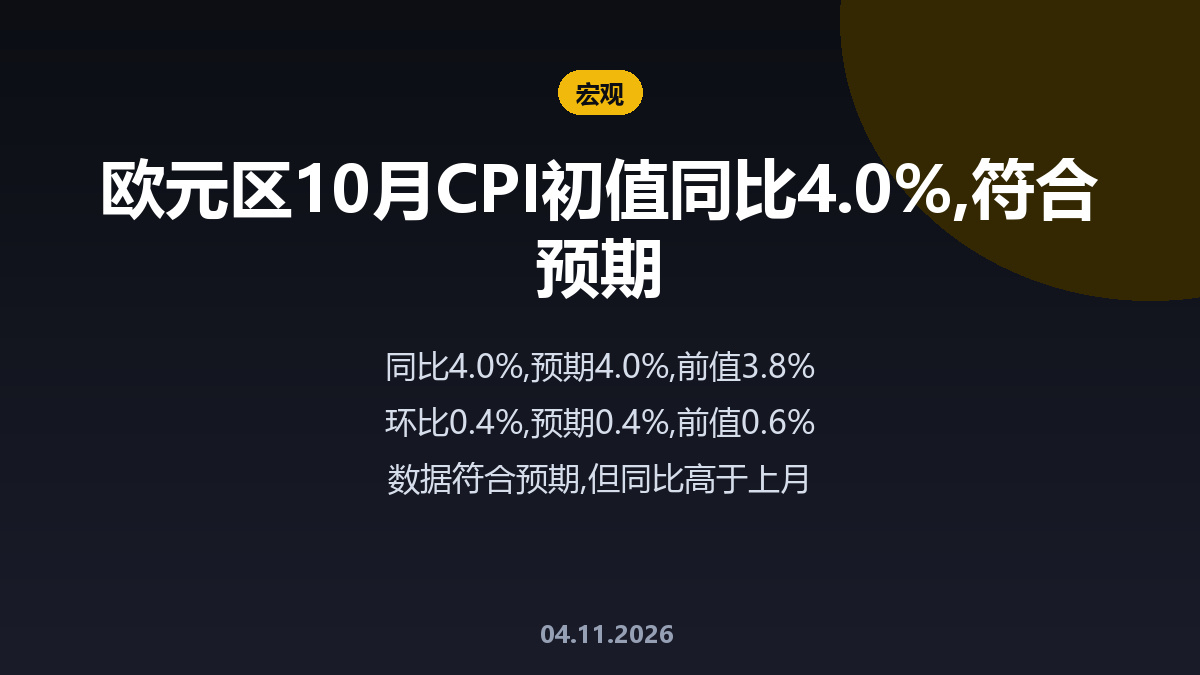
Eurostat's preliminary October CPI data showed annual inflation in the eurozone at 4.0%, in line with market expectations and up from 3.8% the previous month.
📊 At a glance:
- Year over year: 4.0% (expected 4.0%, previous 3.8%)
- Month over month: 0.4% (expected 0.4%, previous 0.6%)
Why does this matter? The annual figure wasn't higher than expected, but it rose 0.2 percentage points from the previous month, so inflation is still climbing. The monthly rate fell from 0.6% to 0.4%, meaning the increase slowed somewhat. The two figures point in different directions, and the market may need a few days to digest them.
For traditional markets, the data came entirely in line with expectations, so the short-term impact may be limited. What really matters is what the European Central Bank says next time. The Fed raised rates on September 16, its first hike since 2023. If eurozone inflation stays around 4%, the euro, European bond yields, and the US Dollar Index could all fluctuate.
For crypto markets, expectations that major central banks around the world will maintain tight policies affect liquidity for risk assets. Assets like $BTC are quite sensitive to liquidity and could fluctuate in the short term alongside the dollar and interest rate expectations. Personally, I'm more focused on the data after November: Will monthly inflation continue to ease, and will annual inflation actually peak?
Do you think 4% is a near-term peak, or will inflation keep rising?
#Inflation #ECB #Eurozone

189
·
--
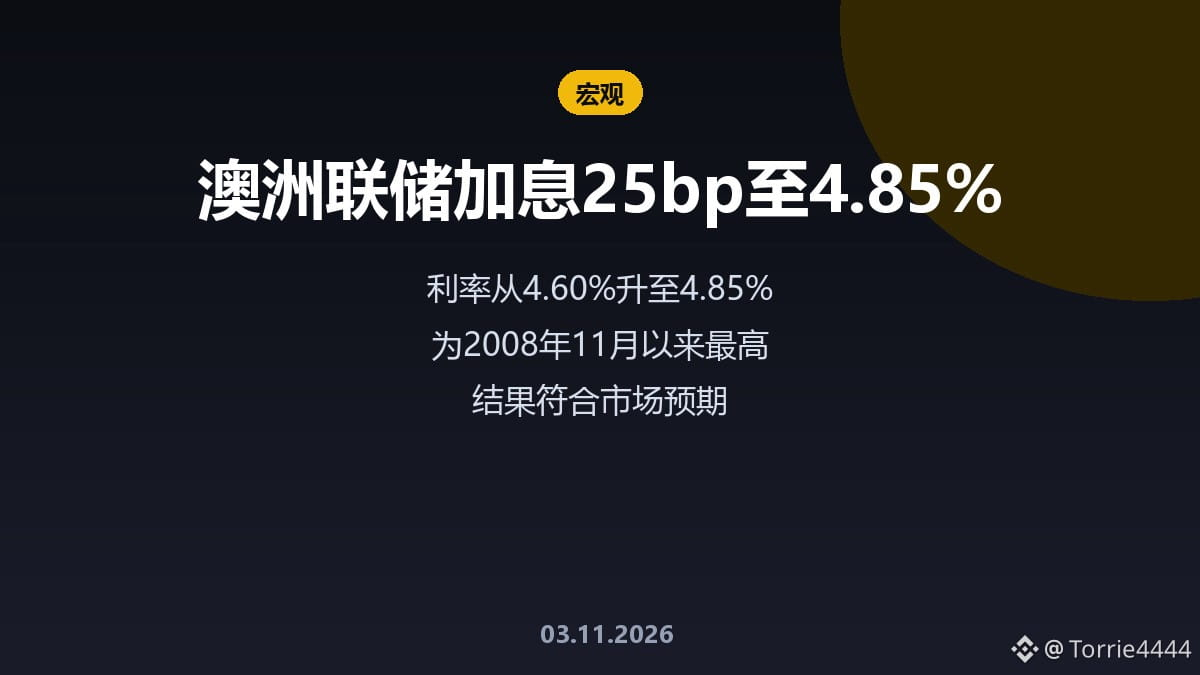
At 4.85%, Australia’s interest rate is back at its highest level since November 2008. 🇦🇺
On November 3, the Reserve Bank of Australia (RBA) announced a 25-basis-point rate hike, taking the rate from 4.60% to 4.85%. The result was exactly in line with market expectations—no surprises, no shocks.
Here’s what makes this worth watching:
- The rate is at 4.85%, its highest level in 18 years
- A 25-basis-point hike
- In line with expectations, and already priced in by the market
The Fed only just raised rates on September 16, its first hike since 2023. Now Australia is following suit, showing that more than one central bank is still tightening. At least for now, there are no clear signs that global interest rates are turning lower.
For traditional markets, an expected rate hike usually doesn’t cause much volatility. What’s more worth watching is the language going forward: will there be more hikes? The reactions of the Australian dollar, global bond yields, and the US dollar can show how investors are interpreting this signal.
For risk assets like $BTC , higher interest rates mean higher funding costs and less abundant liquidity. But this hike was already fully priced in, so its direct impact is limited. The real variable is whether other central banks follow suit.
Personally, I don’t think this one move by Australia is a big deal on its own. What matters is the pattern of “multiple central banks hiking at the same time.” Who do you think will be next to follow?
#RBA #InterestRates #Macro
69
·
--
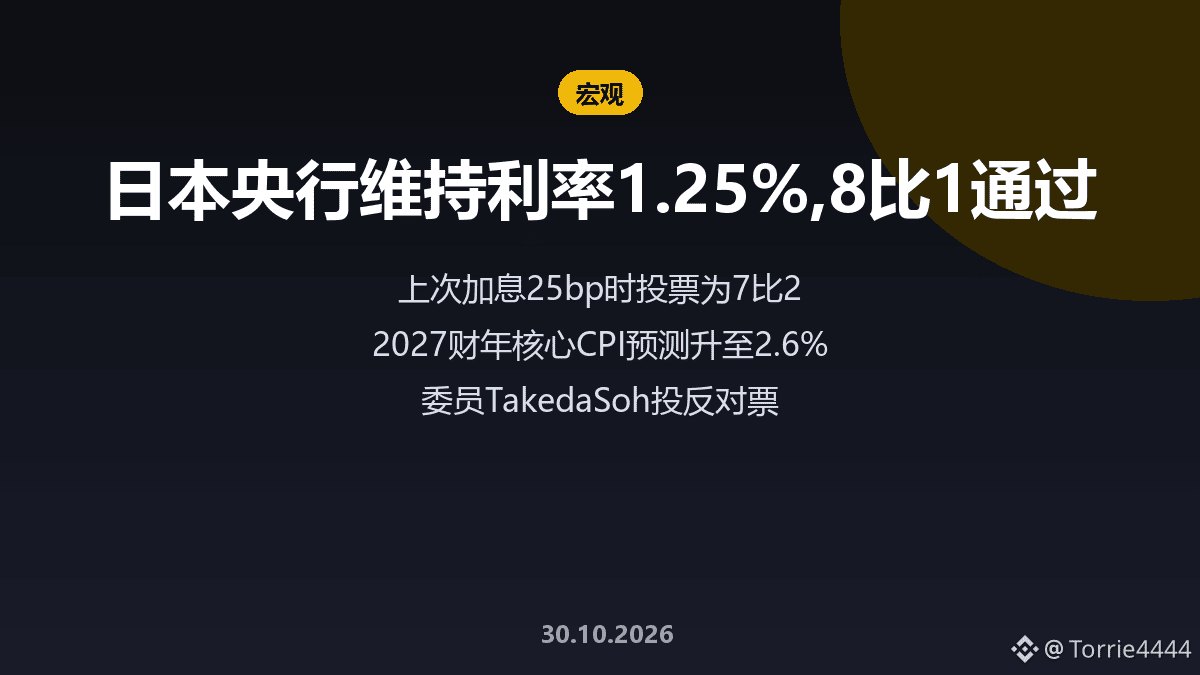
The Bank of Japan held steady today (October 30), keeping its policy rate at 1.25%, in line with market expectations.🏦
But the voting result was a little interesting: the decision passed 8–1 this time, compared with 7–2 when rates were last raised by 25 basis points. Committee member Takeda Soh voted against it.
The real focus is inflation. The BOJ said core inflation has reached a level consistent with its price target, and raised its core CPI forecasts (figures in parentheses are the July forecasts):
- FY2026: 2.5% (2.5%)
- FY2027: 2.6% (2.4%)
- FY2028: 2.0% (2.0%)
The central bank also specifically warned that it would closely monitor the risk of inflation exceeding its target and adversely affecting the economy.
For traditional markets, unchanged rates were expected. But the combination of “inflation on target + higher forecasts + a risk warning” suggests that the discussion around future rate hikes isn’t over. The yen, Japanese bond yields, and the US dollar are worth keeping an eye on.
For crypto markets, yen interest rates have long been a familiar liquidity-related topic, and $BTC is often discussed alongside yen carry-trade unwinds. There were no surprises this time, but if rate-hike expectations rise, funding-market volatility could intensify. Do you think the BOJ will raise rates again at its next meeting?
#BOJ #InterestRates #Inflation
91
·
--
Binance Futures will soon list the $EWZSUSDT perpetual contract. Stay tuned and manage your risk. 🚀 #Binance #EWZS
Binance Futures will soon list the $EWZSUSDT perpetual contract. Stay tuned and manage your risk. 🚀 #Binance #EWZS
57
·
--
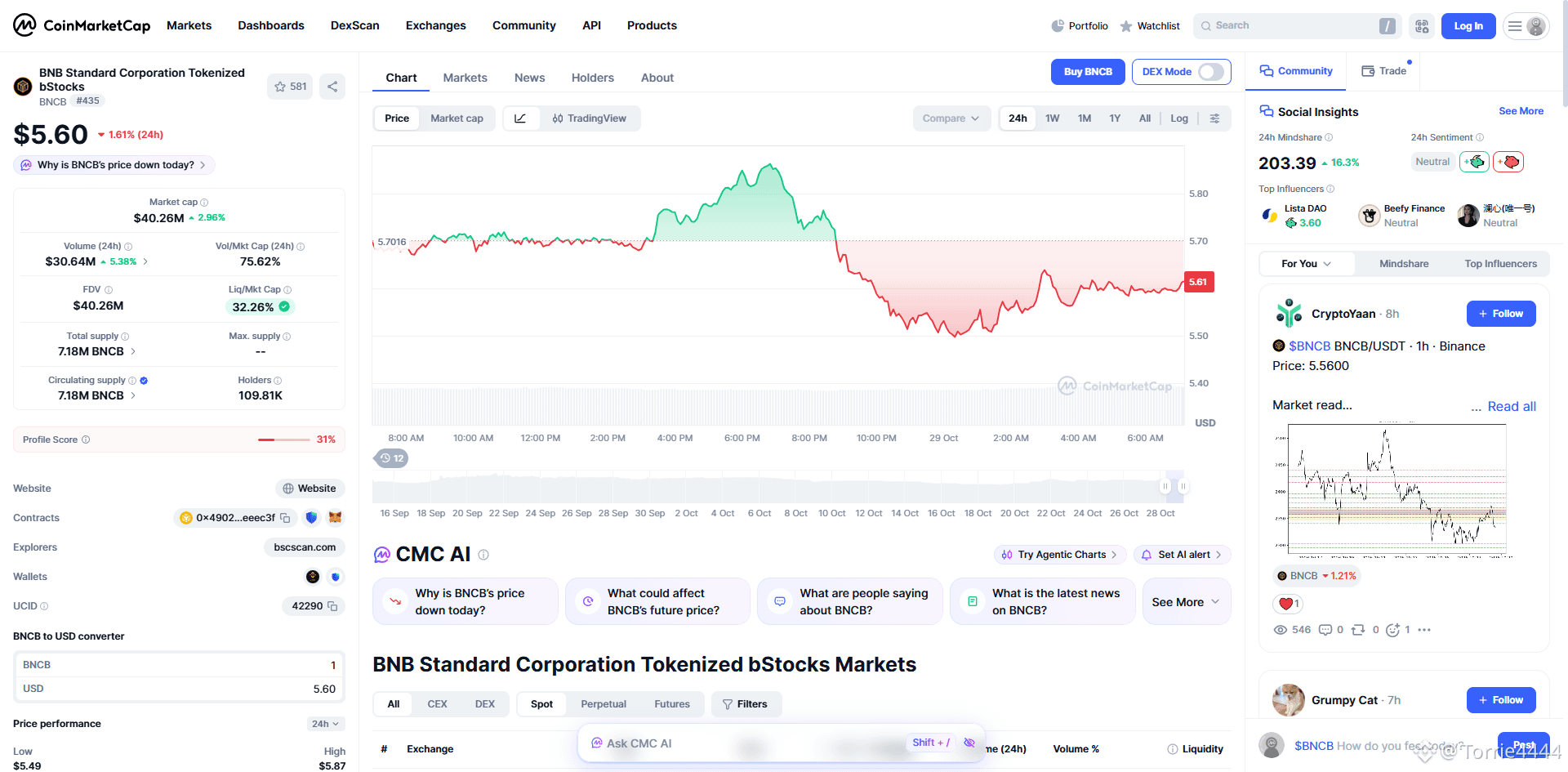
While checking the market just now, I noticed $BNCB had quietly climbed to No. #9 on CoinMarketCap’s trending rankings. This token is also available on Binance Spot. The tokenized stocks sector has certainly been getting a lot of attention lately, but with a trend like this, it’s best to watch more and trade less—let the market choose its own direction. #TokenizedAssets #TrendingTokens
While checking the market just now, I noticed $BNCB had quietly climbed to No. #9 on CoinMarketCap’s trending rankings. This token is also available on Binance Spot. The tokenized stocks sector has certainly been getting a lot of attention lately, but with a trend like this, it’s best to watch more and trade less—let the market choose its own direction. #TokenizedAssets #TrendingTokens
583
·
--
At the Fed’s FOMC rate decision meeting, which concluded on October 28, the Fed officially announced that it would leave the target range for the federal funds rate unchanged at 3.75%–4.00%, keep the rate ceiling at 4.00%, and maintain the interest rate on excess reserves at 3.90%. The decision was entirely in line with the market’s baseline expectations. However, the vote shifted from unanimous approval last time to a 10–2 split, with Cleveland Fed President Hammack and Governor Cook both voting against the decision. The two officials argued that rates should be raised by another 25 basis points.
Although the Fed’s decision to pause rate hikes was in line with the prevailing expectations, the hawkish dissenting votes indicate that policymakers remain concerned about potential inflationary risks stemming from energy costs and the AI investment boom. In its policy statement, the Fed again emphasized its commitment to ensuring that inflation returns to its 2% target in a timely manner, and said that more time and data are needed to assess the path of future policy. This means the option of another rate hike at the December meeting remains on the table, with no signal of a shift toward easing.
After the decision was announced, major global macro assets traded with modest fluctuations. The U.S. Dollar Index (DXY) slipped nearly 10 points in the short term to around 102.29, while spot gold rose by about $7 to $4,043 per ounce. Treasury yields and commodities saw relatively muted moves overall, and market participants remained calm and cautious after the uncertainty was resolved.
For the cryptocurrency market, unchanged rates avoided a further tightening of liquidity conditions in the short term, but divisions within the Fed suggest that high interest rates may persist for longer. BTC and the broader market remain caught in a tug-of-war, with bullish and bearish sentiment relatively balanced. The market’s next moves may continue to depend on upcoming macroeconomic data and the actual direction of year-end capital flows.
#Fed #InterestRates #FOMC
59
·
--
According to the latest data from the CME FedWatch tool, ahead of the Federal Reserve’s rate decision meeting this week, markets see a 92.8% chance that rates will remain unchanged and just a 7.2% chance of a 25-basis-point hike. For December, markets see the probability of a 25-basis-point hike rising to 79.7%, with a 14.2% chance of rates remaining unchanged and a 6.1% chance of a 50-basis-point hike.
These figures reflect the broad market expectation that the Fed will hold steady at this week’s meeting, while not entirely ruling out further policy tightening before year-end. Compared with earlier expectations of easing, the rise in year-end rate-hike expectations suggests that resilient inflation and employment data are keeping traders on alert.
For traditional financial markets, holding rates steady in the near term could help stabilize Treasury yields and the U.S. dollar index, easing liquidity pressures. However, the higher rate-hike probability priced in for December could limit the rebound potential of risk assets such as U.S. stocks, with markets overall likely to remain range-bound.
In crypto markets, sentiment is cautious ahead of this week’s policy announcement. $BTC and major altcoins may see narrower short-term price swings, but if year-end rate-hike expectations continue to rise, concerns about tighter macro liquidity could fuel further tug-of-war between bulls and bears in crypto assets. 👀
#FOMC #FedWatch #InterestRates
75
·
--
Binance has listed the AppLovin equity token $APPB (bStocks). Keep an eye on it! 🚀 #Binance #APPB
Binance has listed the AppLovin equity token $APPB (bStocks). Keep an eye on it! 🚀 #Binance #APPB
8
·
--
Binance has added support for GE Vernova Inc (bStocks) $GEVB. If you're interested in tokenized U.S. stock products, check it out.#Binance #bStocks
Binance has added support for GE Vernova Inc (bStocks) $GEVB. If you're interested in tokenized U.S. stock products, check it out.#Binance #bStocks
11
·
--
Binance bStocks lists GraniteShares 2x Long SK Hynix Daily ETF $SKUUB. Feel free to check it out.#Binance #Listing
Binance bStocks lists GraniteShares 2x Long SK Hynix Daily ETF $SKUUB. Feel free to check it out.#Binance #Listing
2
·
--
Binance has listed a new asset, Bending Spoons (bStocks) $BSPB. You can keep an eye on related trading activity. 📢 #Binance #BSPB
Binance has listed a new asset, Bending Spoons (bStocks) $BSPB. You can keep an eye on related trading activity. 📢 #Binance #BSPB
32
·
--
According to The Wall Street Journal, the U.S. government has warned some Arab Gulf states through diplomatic and military channels to prepare for a possible “short and intense” military operation against Iran after the midterm elections. The U.S. is currently redeploying Patriot air defense systems from Texas to strengthen regional defenses, replenish ammunition stockpiles, and prepare bombers and fighter jets. Another carrier strike group and a Marine battalion will join the Middle East fleet next month, signaling a substantial military buildup.
These moves mean that geopolitical tensions in the Middle East are escalating once again. Although reports say the U.S. president has not made a final decision, he is reportedly inclined to launch large-scale strikes after the election, with potential targets extending to Iran’s infrastructure and nuclear facilities. This clear signal of military preparedness has rapidly heightened market concerns about a sudden disruption to supply, taking the situation well beyond routine diplomatic maneuvering.
The prospect of conflict is stirring safe-haven sentiment in traditional financial markets. Uncertainty over crude oil supplies typically drives up energy prices, adding a new variable to the global fight against inflation. Meanwhile, U.S. Treasury yields and the dollar index could see sharp fluctuations as safe-haven flows shift, while hard assets such as gold are also likely to attract attention.
For crypto markets, short-term geopolitical crises are often a double-edged sword. Liquidity may come under pressure during initial safe-haven selling, intensifying market volatility. Over the longer term, however, the impact of geopolitical conflict on confidence in fiat currencies often leads some investors to view digital assets as an alternative safe haven. As the situation develops, it will be especially important to closely monitor fund flows at key levels. $BTC
#Geopolitics #MiddleEast #CrudeOil
50
·
--
The Australian Bureau of Statistics has just released the latest inflation data. The unadjusted annual CPI rate for September came in at 4.3%, well above market expectations of 4.1% and the previous reading of 4.0%. Meanwhile, quarterly CPI inflation also climbed to 1.3% in the third quarter, far exceeding the previous quarter’s 0.6%, with all inflation indicators coming in above expectations.
This inflation report is significant because it directly upends market expectations that inflation in Australia would continue to cool steadily. Rising prices point to considerable resilience in domestic inflation and put greater pressure on the Reserve Bank of Australia to raise rates or delay rate cuts when making future monetary policy decisions.
In macro-financial markets, stronger-than-expected inflation data typically pushes up domestic government bond yields and provides short-term support for the local currency. At the same time, it shows that the fight against inflation remains uneven in some parts of the world. High interest rates may need to stay in place for longer, weighing on risk assets overall.
For crypto markets, renewed inflationary pressures in major economies could dampen expectations for overall liquidity. Investors are waiting for greater clarity on the macroeconomic outlook and are largely staying on the sidelines in the short term. The availability of liquidity remains a key factor shaping market movements. #Inflation #MacroEconomics #Australia
63
·
--
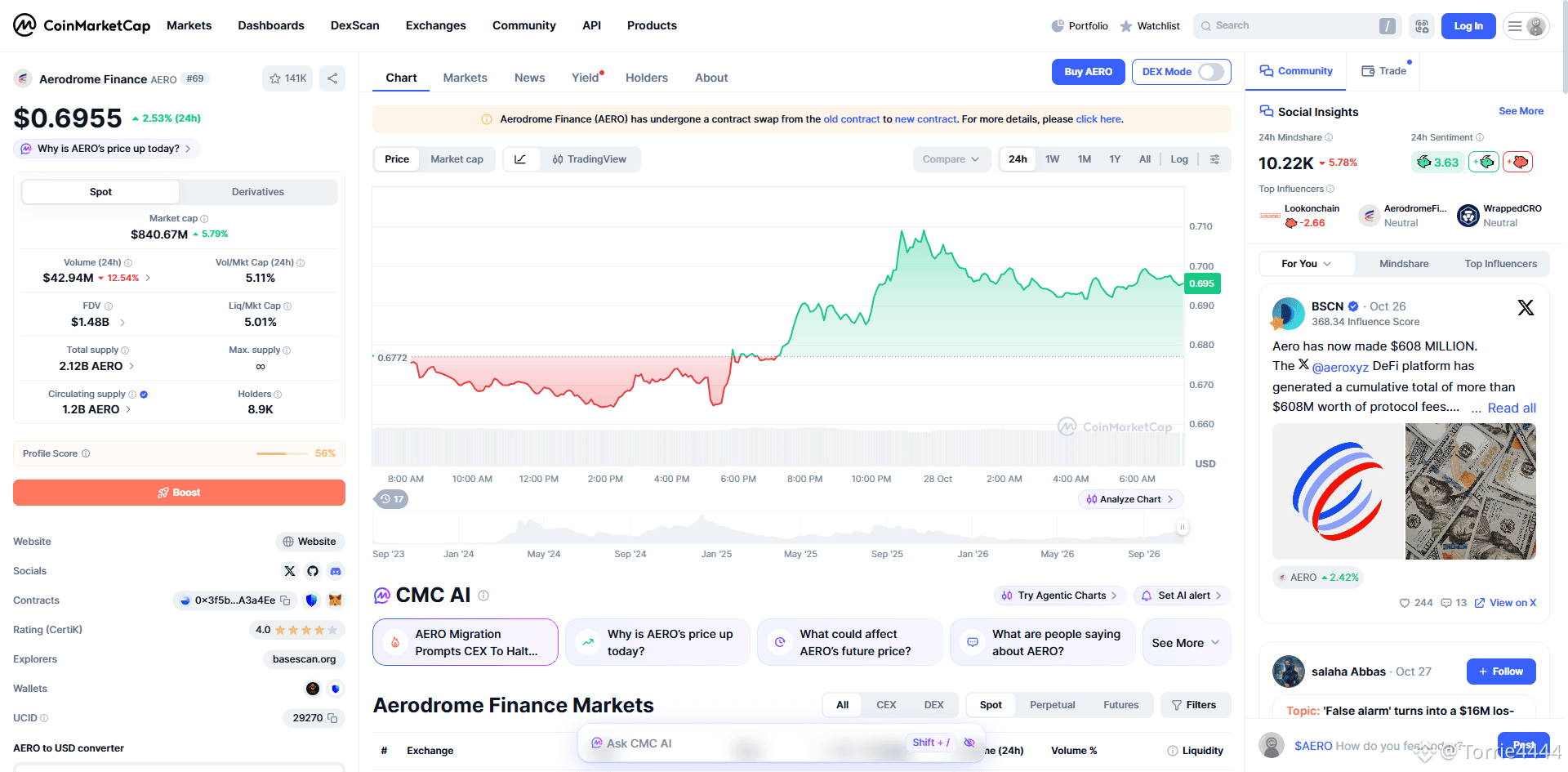
While checking the rankings today, I noticed $AERO quietly climbed to No. #15 on CoinMarketCap’s trending list. As a leading project in the Base ecosystem, it has recently seen both on-chain interest and spot trading activity rebound. Let’s see whether this wave of attention can keep translating into trading volume. 👀 #Aerodrome #DeFi
While checking the rankings today, I noticed $AERO quietly climbed to No. #15 on CoinMarketCap’s trending list. As a leading project in the Base ecosystem, it has recently seen both on-chain interest and spot trading activity rebound. Let’s see whether this wave of attention can keep translating into trading volume. 👀 #Aerodrome #DeFi
75
·
--
U.S. President Trump is set to announce at a rally in Corpus Christi, Texas, that the United States has received its first 1 million barrels of crude oil from Venezuela. He said this was the result of previous actions, that billions more barrels would arrive in the future, and that this was a historic energy deal that would cost American taxpayers nothing.
The key point of these remarks is the U.S. effort to reshape the global energy supply landscape by integrating resources across the Western Hemisphere. If Venezuelan crude supplies can flow steadily over the long term, expectations that energy supply chains will remain tight may be upended, directly cooling inflation expectations.
In traditional financial markets, expectations of increased crude oil supply typically put downward pressure on oil prices and weigh on the energy sector. Meanwhile, if energy costs fall substantially, this could ease the anti-inflationary pressure on the Federal Reserve and other central banks, in turn affecting the short-term direction of U.S. Treasury yields and the dollar index.
For crypto markets, cooling inflation expectations are closely tied to the macro liquidity environment. Short-term sentiment around core assets such as $BTC is mainly driven by macro risk appetite, and investors are closely watching the deal’s implementation and its potential impact on future macro policy.⛽
#CrudeOil #Geopolitics #EnergyPolicy
433
Log in to explore more content
Join global crypto users on Binance Square
⚡️ Get latest and useful information about crypto.
💬 Trusted by the world’s largest crypto exchange.
👍 Discover real insights from verified creators.
Email / Phone number
Trending Topics
EvolveAtBinanceBlockchainWeek
1.9M views
18,183 Discussing
Binance Blockchain Week is officially underway! 🌍
On November 28–29, whether you’re in Bangkok or joining from afar, tune in to the livestreams and join the conversation on Binance Square!
Here’s what’s in store 👇
📺 Watch the main stage live
Tune in throughout both days as industry speakers share their perspectives on this year’s theme, “Evolve” From technological innovation to real-world applications, explore what’s next for crypto.
⚔️ Watch two trading competitions
The Aster Open Qualifier and the Binance Trading Master Tournament will both be streamed live. Tune in to follow the traders in action.
🏆 Watch The Blockchain 100 Awards Ceremony
The Blockchain 100 list was selected by the community. Join us in celebrating the creators and the ideas they share!
💬 Join the community conversation
Use #EvolveAtBinanceBlockchainWeek in a post with a photo to share what you’re looking forward to, your views on the industry, or your favorite moments from the event.
The event page is now live! Subscribe to all livestreams with one click so you don’t miss a moment 👏
Binance Blockchain Week
·484 Likes
·636.8k views
BitcoinETFsExtendOutflowStreakToEightDays
10,302 views
211 Discussing
ColdcardFlawLeadsToTheftOfAtLeast1789BTC
58,789 views
623 Discussing