
#privacy
privacy
1.9M views
10,575 Discussing
Hot
Latest


·
--
Bullish
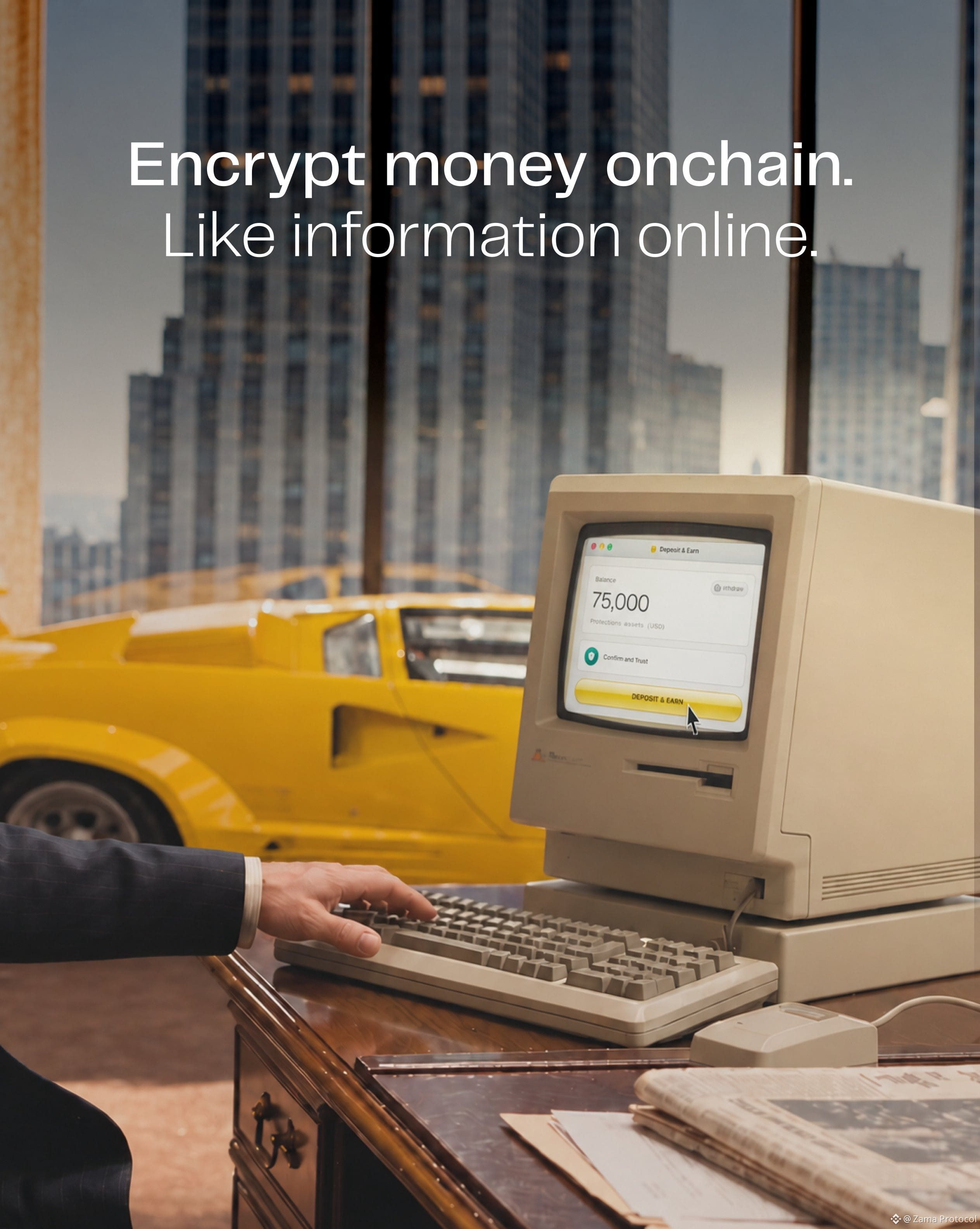
Why encrypt money onchain?
For the same reasons information is encrypted online.
To enable more.
More capital, more businesses, more possibilities.
To protect what matters.
Sensitive information shouldn’t be public.
To control who sees what.
Confidential by default. Selectively disclosed to trusted parties.
HTTPS unlocked the digital economy.
$ZAMA is doing the same for onchain finance.
Try it at app.zama.org
#Privacy
16
A Bitcoin payment screenshot can reveal more than the amount you sent.
Bitcoin transactions are public and permanently recorded. If you post a transaction ID alongside your name, you can connect your identity to activity that anyone can inspect on a block explorer.
That is the difference between a public ledger and a private bank statement: hiding your name inside a wallet app does not hide the blockchain record.
Before sharing a payment screenshot, remove transaction IDs, addresses and identifying details. For a self-custody Bitcoin wallet, use a fresh receiving address for each payment.
The limitation: a new address does not guarantee anonymity. Transaction history and information shared elsewhere can still create links. Treat payment evidence as personal financial information.
Source: Bitcoin.org — https://bitcoin.org/en/protect-your-privacy
#Bitcoin #Privacy #WalletSecurity #CryptoEducation #Blockchain
83

$ZEC
Zcash focuses on private digital payments, and its NU7 upgrade is a meaningful step forward. Block times are moving from 75 to 25 seconds, while the daily issuance rate remains unchanged. The upgrade also introduces fee recycling and stronger shielded-wallet protections. Faster privacy payments matter, but long-term adoption remains the real test.
#ZEC #Zcash #Privacy
7
·
--
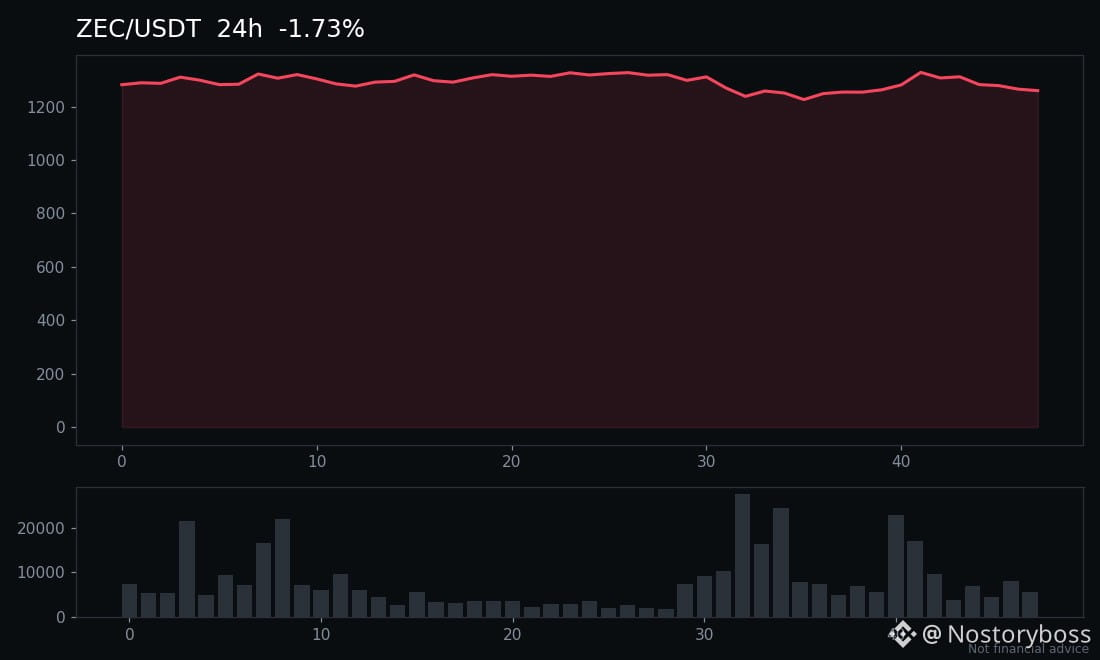
Seven years building in Web3 taught me one thing: privacy is not a feature, it is the foundation. $ZEC is down 5.14% today at $1,259.61, yet volume near $278.7 million shows traders are still very much engaged. Quiet infrastructure keeps getting built while the noise chases the next shiny token. Watch the builders, not the panic. #Zcash #Privacy #Web3 #BinanceSquare
Not financial advice.
Not financial advice.
30

The NU7 update on $ZEC is now live, lowering the target block time to 25 seconds.
That could mean faster shielded payments for those who use them, and less work for wallets to find those payments. The update also allocates a portion of fees to future miners.
Saveable takeaway: 25 seconds is the target block time after NU7, and it could change how wallets handle shielded payments.
Do you care more about the speed of shielded payments or their privacy?
#Zcash #Privacy
Tap $ZEC to trade
$ZEC
Tap $ZEC to trade
$ZEC
Others are already ahead of you and following. Visit my profile and join those who read up before the news spreads.

62
$ZEC On the verge of freezing nearly $16 million inside the network’s oldest privacy pool.
The pool is Sprout, launched in 2016, and it still holds around 12,200 ZEC.
Around 10,000 coins left the pool in the past week alone, but on Wednesday only about 40 coins came out. That means most of what remains could be trapped.
What does this mean for you? If you hold coins in an old wallet you created years ago, you may need to move them before any changes to the pool’s rules—and time could be critical if you’re planning to sell or transfer them.
The takeaway worth remembering: old wallets aren’t just a historical detail; overnight, they could become an asset you can’t move.
Have you opened your old wallet in the past year?
#ZEC #Privacy
Tap $ZEC to trade
$ZEC
Others got there before you and followed. Visit my profile and stick with those who read before the news spreads.
440

Article
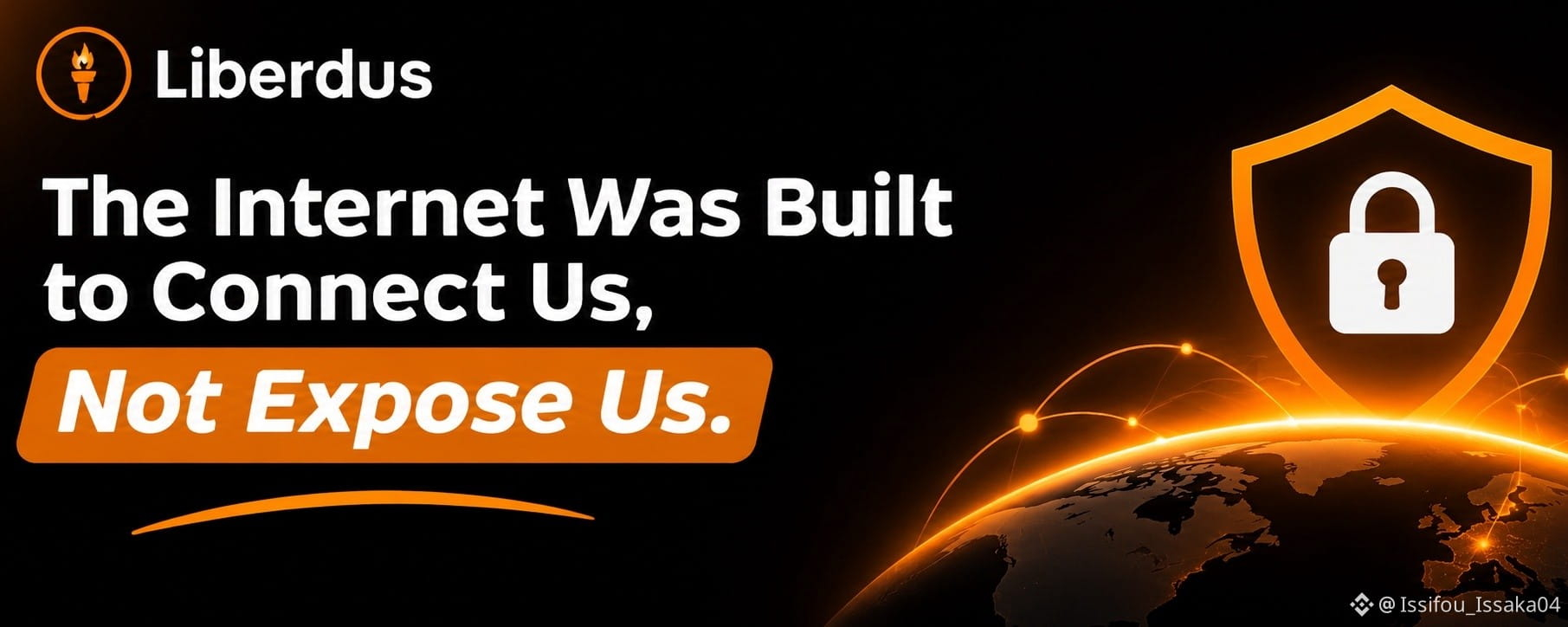
The Internet Was Built to Connect Us, Not Expose Us.Remember when the internet felt like a place to explore, share ideas and connect with people?
You could communicate, discover new communities and exchange information without feeling like every action was being recorded.
The original promise of the internet was simple: bring people closer together.
But somewhere along the way, things started to change.
Today, connecting to a platform often means giving something in return. Your email address, phone number, personal information, location and sometimes even access to your contacts.
And that's just the beginning.
When connection became data collection
Modern digital platforms have built powerful ecosystems around our daily activities.
Every message, search, click and interaction can generate valuable information.
This data helps companies understand user behavior, personalize experiences and generate revenue through advertising and other business models.
But there's an important question we rarely ask:
How much personal information should we have to give away just to use the internet?
Think about messaging apps.
You want to talk to a friend, share an idea or join a community. Yet, many platforms require personal identification before you can even get started.
Your conversations may feel private, but the digital infrastructure behind them can involve data collection, centralized storage and access policies that users don't always understand.
Convenience has become the priority. Privacy often comes second.
Privacy is not about hiding something
One common misconception is that people only need privacy when they have something to hide.
That's simply not true.
Privacy is about having control over your personal information.
It's about deciding what you share, who gets access to it and how your digital identity is used.
You don't leave your house and hand your personal documents to everyone you meet. So why should communicating online require giving away more information than necessary?
Privacy should be a basic part of the digital experience, not a premium feature or an afterthought.
A different direction for digital communication
This is where projects like Liberdus become interesting.
Liberdus is building a decentralized communication ecosystem designed to put privacy and user control back at the center of the experience.
Its vision includes:
• No mandatory phone number: Users can create accounts without linking their communication identity to a phone number.
• End-to-end encryption: Protecting conversations from unwanted access.
• Decentralized infrastructure: Reducing dependence on centralized platforms.
• Open-source development: Allowing independent scrutiny of the code.
• Integrated crypto payments: Bringing communication and digital transactions closer together.
The bigger idea is not simply to create another messaging application.
It's to rethink how people should communicate and interact in a digital world where personal information has become increasingly valuable.
The internet deserves a better balance
Technology should make communication easier, not make people feel exposed.
We shouldn't have to choose between convenience and privacy. We shouldn't need to surrender our personal information every time we want to connect with someone.
The internet was built to bring people together.
Perhaps it's time we started building it around that original purpose again.
Connect freely. Communicate privately. Stay in control.
That's the future Liberdus wants to help build.
#Liberdus #web #Privacy
The Internet Was Built to Connect Us, Not Expose Us.
Remember when the internet felt like a place to explore, share ideas and connect with people?
You could communicate, discover new communities and exchange information without feeling like every action was being recorded.
The original promise of the internet was simple: bring people closer together.
But somewhere along the way, things started to change.
Today, connecting to a platform often means giving something in return. Your email address, phone number, personal information, location and sometimes even access to your contacts.
And that's just the beginning.
When connection became data collection
Modern digital platforms have built powerful ecosystems around our daily activities.
Every message, search, click and interaction can generate valuable information.
This data helps companies understand user behavior, personalize experiences and generate revenue through advertising and other business models.
But there's an important question we rarely ask:
How much personal information should we have to give away just to use the internet?
Think about messaging apps.
You want to talk to a friend, share an idea or join a community. Yet, many platforms require personal identification before you can even get started.
Your conversations may feel private, but the digital infrastructure behind them can involve data collection, centralized storage and access policies that users don't always understand.
Convenience has become the priority. Privacy often comes second.
Privacy is not about hiding something
One common misconception is that people only need privacy when they have something to hide.
That's simply not true.
Privacy is about having control over your personal information.
It's about deciding what you share, who gets access to it and how your digital identity is used.
You don't leave your house and hand your personal documents to everyone you meet. So why should communicating online require giving away more information than necessary?
Privacy should be a basic part of the digital experience, not a premium feature or an afterthought.
A different direction for digital communication
This is where projects like Liberdus become interesting.
Liberdus is building a decentralized communication ecosystem designed to put privacy and user control back at the center of the experience.
Its vision includes:
• No mandatory phone number: Users can create accounts without linking their communication identity to a phone number.
• End-to-end encryption: Protecting conversations from unwanted access.
• Decentralized infrastructure: Reducing dependence on centralized platforms.
• Open-source development: Allowing independent scrutiny of the code.
• Integrated crypto payments: Bringing communication and digital transactions closer together.
The bigger idea is not simply to create another messaging application.
It's to rethink how people should communicate and interact in a digital world where personal information has become increasingly valuable.
The internet deserves a better balance
Technology should make communication easier, not make people feel exposed.
We shouldn't have to choose between convenience and privacy. We shouldn't need to surrender our personal information every time we want to connect with someone.
The internet was built to bring people together.
Perhaps it's time we started building it around that original purpose again.
Connect freely. Communicate privately. Stay in control.
That's the future Liberdus wants to help build.
#Liberdus #web #Privacy
1
48

FIRST-EVER ZCASH SPOT ETF GOES LIVE AS $ZEC ENTERS TRADITIONAL FINANCIAL MARKETS 🦈 ⚡
Wall Street legacy capital just unlocked direct spot access to $ZEC through the world's first Zcash exchange-traded product. 🦈 With a hard 21 million supply cap and Proof-of-Work architecture, smart money is taking notice of privacy as a satellite portfolio play.
Despite past privacy pool concerns, the recent Ironwood upgrade fortified network accounting and plugged structural vulnerabilities. 📊 As institutional rails open up, order flow could shift fast as traders re-evaluate privacy narrative valuations. 💬 Will institutional capital ignite a massive privacy sector rally or will regulatory headwinds cap the upside? 👇
⚠️ Not financial advice. Always manage your risk. 🛡️
🏷️ #ZEC #Grayscale #Privacy #Crypto
🔥 💎
24

·
--
Bullish
Verified
Privacy Becomes More Interesting When People Actually Build With It 🛠️
$ADA showed how an ecosystem grows when developers have infrastructure they can build applications around.
$LINK showed how specialized blockchain infrastructure can become useful far beyond a single crypto-native use case.
That’s the stage Midnight is moving toward.
The network combines programmable privacy with Compact smart contracts, zero-knowledge proofs and infrastructure supported by recognizable operators.
Builders are already putting that infrastructure to work. A recent developer sprint with VIA Labs brought together 37 developers and produced five payment applications built using Midnight's technology.
And institutional projects such as Monument Bank give those ideas a path into real-world deployment.
Privacy is no longer just about hiding a transaction.
It’s becoming an application primitive developers can build around.
#Privacy
Red Zone 07:
Follow me 🙏
1
2.3k
Article
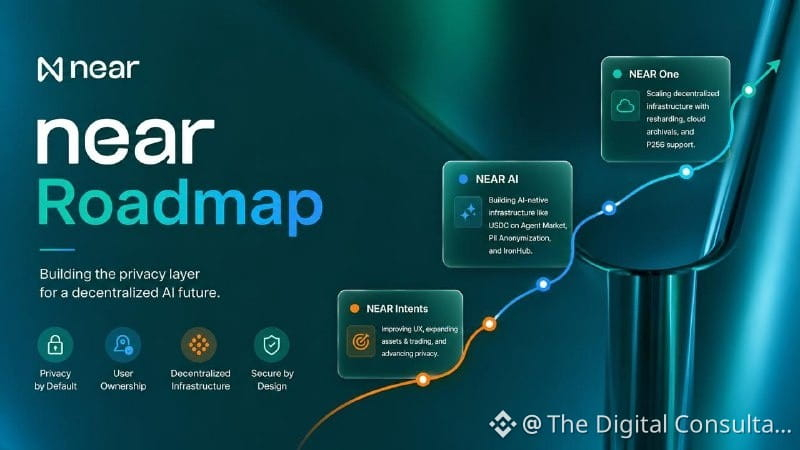
NEAR Adds Private Swaps and AI: Could Privacy Become a Core Feature?The highlight of the $NEAR roadmap isn’t a new price, but a clear move toward private swaps and payments.
The project brings three tracks together in one place: NEAR Intents for transactions, NEAR AI for artificial intelligence, and NEAR One (Protocol) for network development. The idea is to let users see what’s actually being built, not just a collection of scattered promises.
The roadmap includes privacy features for swaps and payments, as well as IronClaw Reborn with automatic personal data redaction, dynamic resharding, and other protocol updates. These items are listed as work in progress, and their inclusion doesn’t mean they’re available to users today.
NEAR Adds Private Swaps and AI: Could Privacy Become a Core Feature?
The highlight of the $NEAR roadmap isn’t a new price, but a clear move toward private swaps and payments.
The project brings three tracks together in one place: NEAR Intents for transactions, NEAR AI for artificial intelligence, and NEAR One (Protocol) for network development. The idea is to let users see what’s actually being built, not just a collection of scattered promises.
The roadmap includes privacy features for swaps and payments, as well as IronClaw Reborn with automatic personal data redaction, dynamic resharding, and other protocol updates. These items are listed as work in progress, and their inclusion doesn’t mean they’re available to users today.
34

·
--
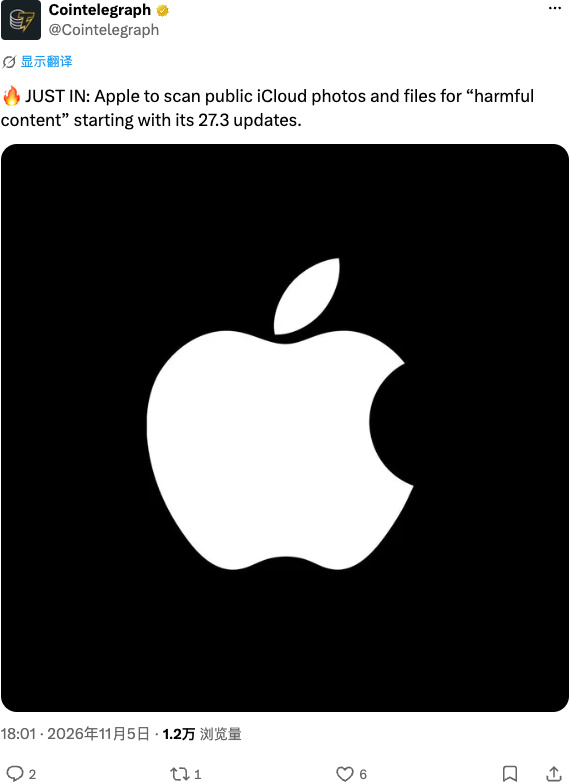
Apple has turned iCloud into a 24/7 surveillance camera, scanning private photos for “harmful content.” This is the classic “you store your photos, I censor them” routine. Privacy is completely exposed—who would trust centralized cloud storage after this? On-chain self-custody is the only way forward 🥶.
$AR $BTC #Privacy
$AR $BTC #Privacy
30

·
--
{spot}(BTCUSDT)
{spot}(ZECUSDT)
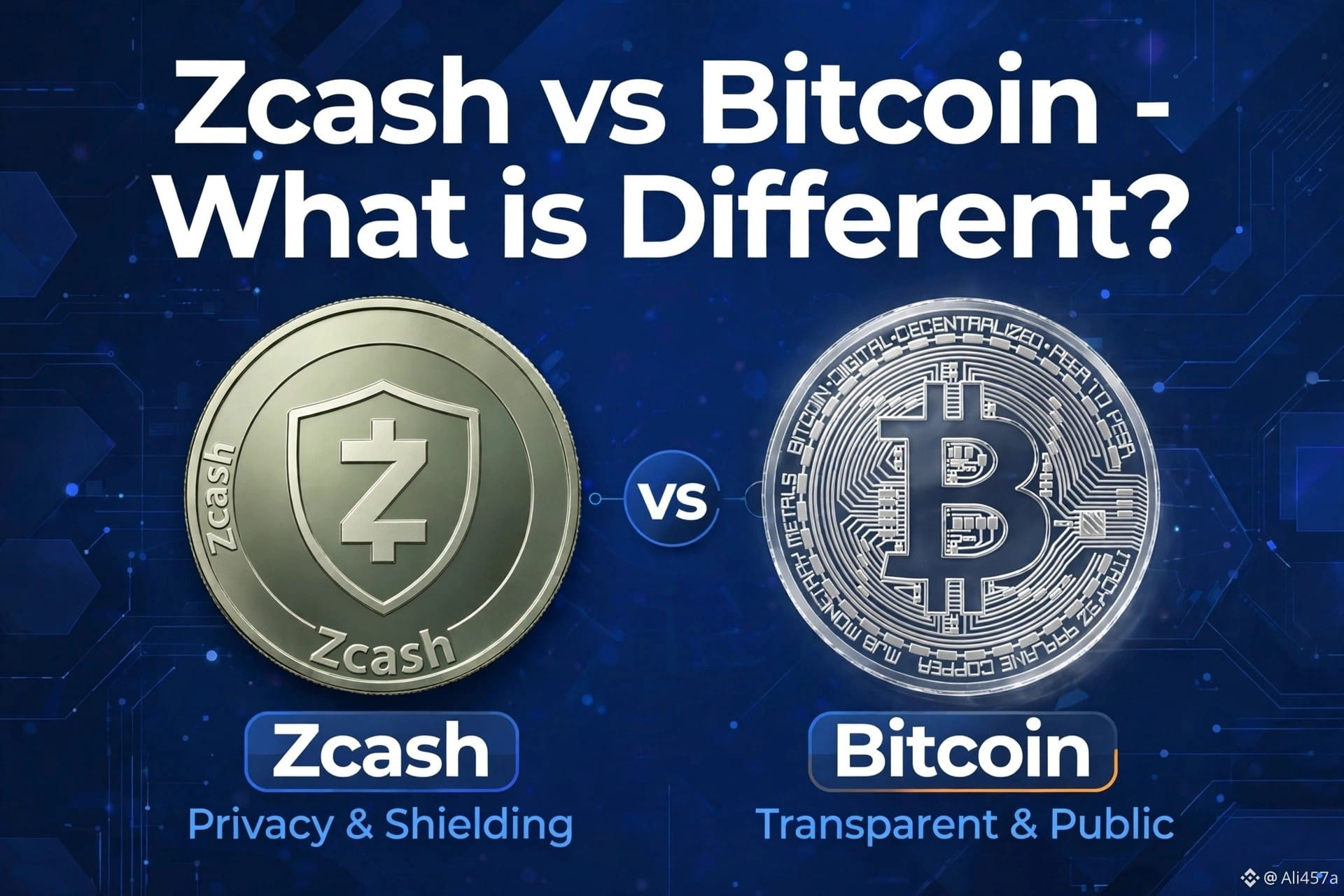
$ZEC is #1 Most Searched on Binance Square Again 👀
Why is everyone searching Zcash?
Zcash is a privacy-focused coin. It gives users option of transparent OR shielded transactions using zero-knowledge proofs.
Current buzz:
- Privacy narrative is back
- Strong volume - $1.3B+ in 24h
- Rank #10 by Market Cap
Zcash total supply is limited like Bitcoin - 21M only.
Do you think privacy coins will lead next?
Comment: PRIVACY or TRANSPARENT? 👇
$ZEC #BTC☀ #Privacy #Write2Earn
151

·
--
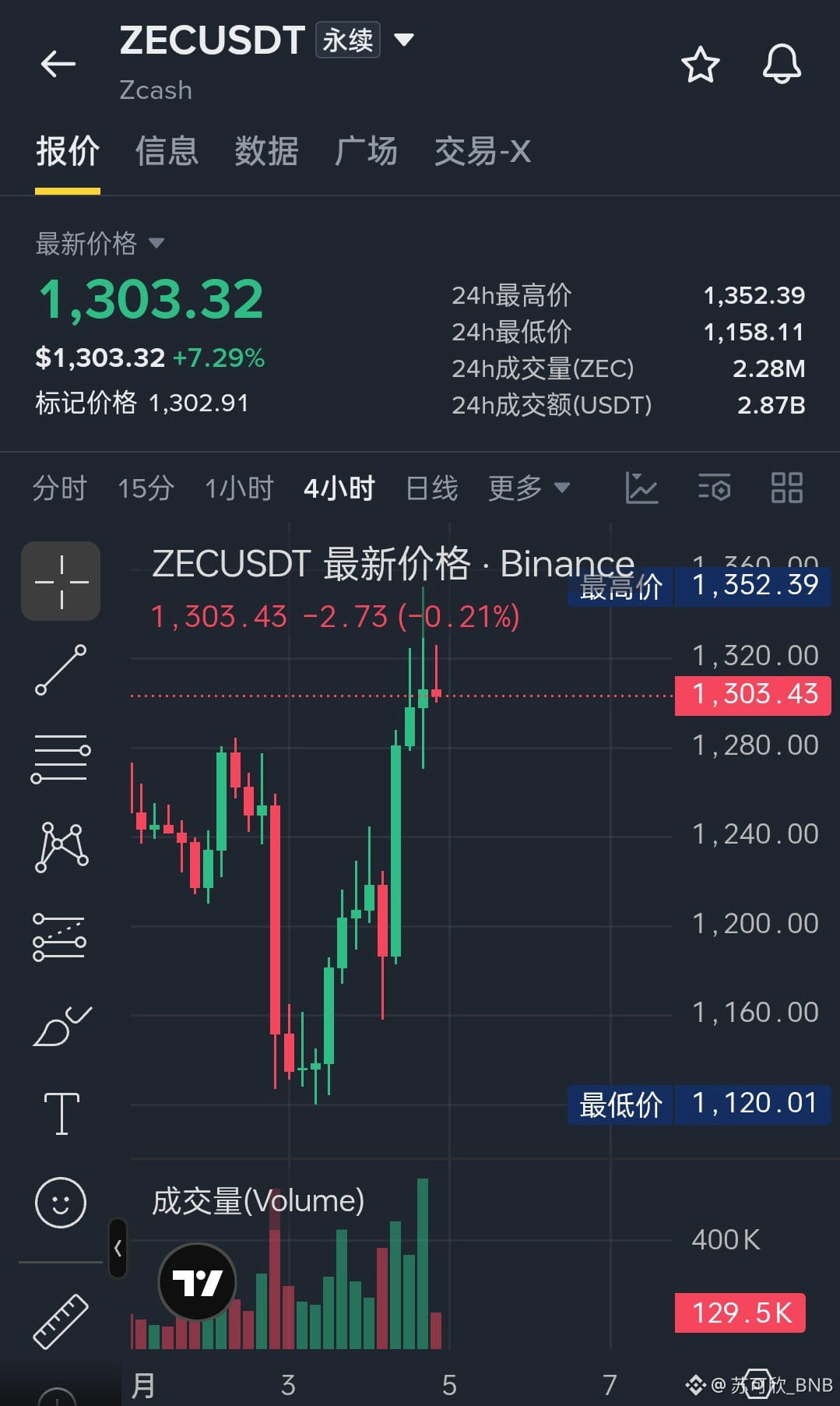
Privacy coins are suddenly surging! $ZEC is up nearly 10% today 🔥
{future}(ZECUSDT)
$ZEC has rebounded strongly from its lows, gaining nearly double digits in 24 hours, with trading volume rising in tandem. The privacy narrative is being repriced by the market once again.
Capital is clearly rotating from major coins into sectors with compelling stories, and interest in privacy coins has risen noticeably in recent days. Technically, buying has continued since the price moved above a key moving average, and short-term momentum remains strong.
This rally is not just sentiment-driven speculation; privacy needs are once again receiving attention amid macroeconomic uncertainty. If volume remains strong, ZEC could have more room to rise, but the risk of chasing prices higher is also increasing.
#ZECUSDT #Privacy #crypto
Privacy coins are suddenly surging! $ZEC is up nearly 10% today 🔥
$ZEC has rebounded strongly from its lows, gaining nearly double digits in 24 hours, with trading volume rising in tandem. The privacy narrative is being repriced by the market once again.
Capital is clearly rotating from major coins into sectors with compelling stories, and interest in privacy coins has risen noticeably in recent days. Technically, buying has continued since the price moved above a key moving average, and short-term momentum remains strong.
This rally is not just sentiment-driven speculation; privacy needs are once again receiving attention amid macroeconomic uncertainty. If volume remains strong, ZEC could have more room to rise, but the risk of chasing prices higher is also increasing.
#ZECUSDT #Privacy #crypto
201
🦈 $ZEC SURFACES AS PRIVACY WHALE IN 2027 BREAKOUT 🚀
📊 Privacy is morphing from niche to necessity, and $ZEC ’s zk‑SNARK shield is drawing institutional eyes. 🌊 Smart money is already staking liquidity in ZEC’s shielded pools, nudging volume spikes on a major exchange. 💡 Meanwhile, the upcoming protocol upgrades promise tighter confidential transactions, setting a fresh order block for the next bull run.
💬 Which privacy champion will dominate the next cycle? 👇
⚠️ Not financial advice. Always manage your risk. 🛡️
🏷️ #ZEC #Privacy #Crypto
🔥 💎

5
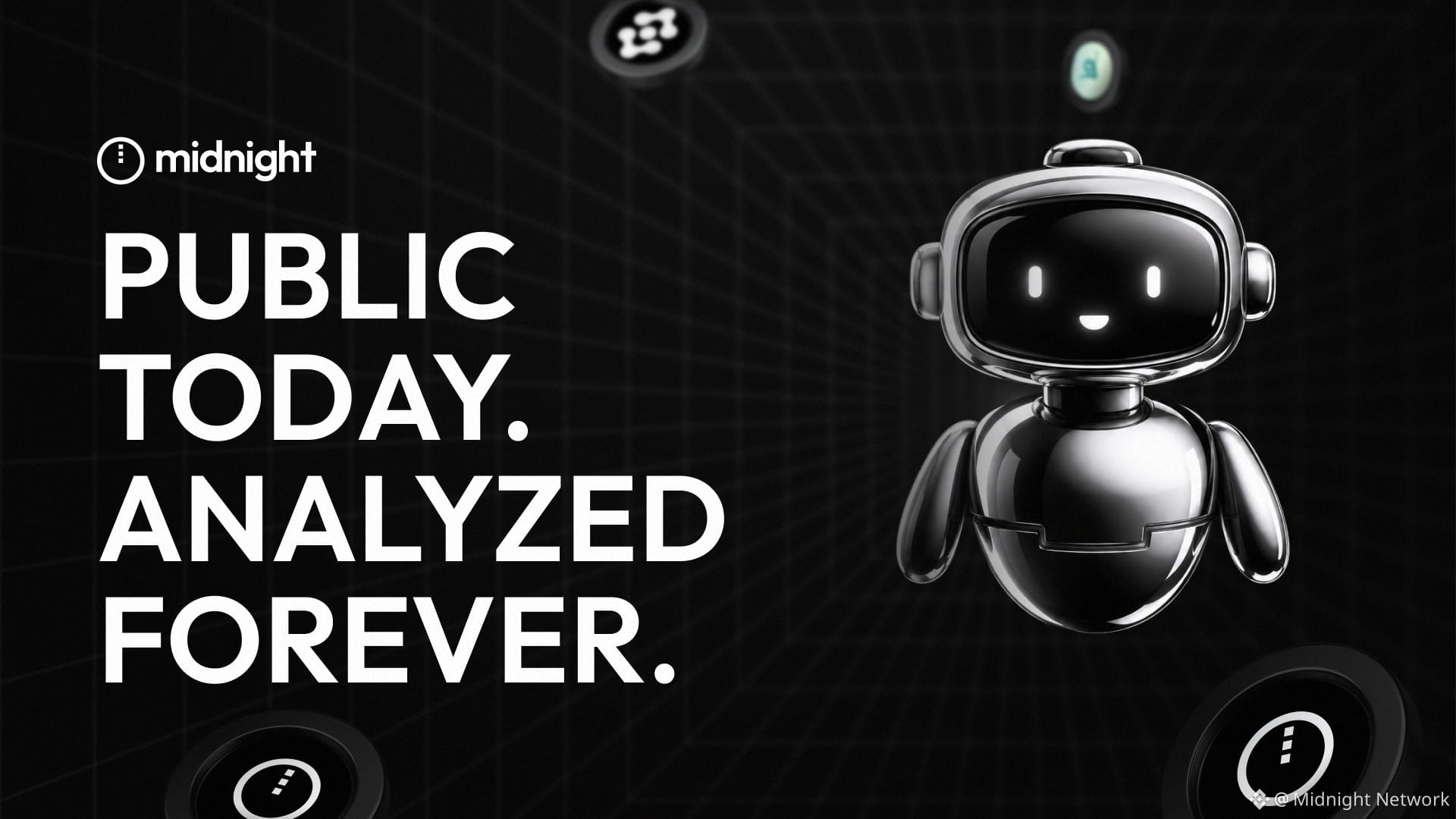
Today’s Public Data Can Be Analyzed By Tomorrow’s AI 🤖
$LINK has helped blockchain applications consume increasingly diverse sources of data. $NEAR is part of an industry increasingly exploring the intersection between blockchains, applications and AI.
That intersection creates a privacy question.
Blockchain history is permanent.
AI capability isn’t.
Information that seems difficult to interpret today can remain available for much more capable systems to analyze years later.
Wallet behavior, counterparties and transaction patterns can all become useful signals.
Midnight approaches that problem through data minimization.
If an application only needs proof that a condition was satisfied, it doesn’t necessarily need the private information behind that proof.
The best way to protect some data may be never making it public in the first place.
#Privacy
5
1.6k

·
--
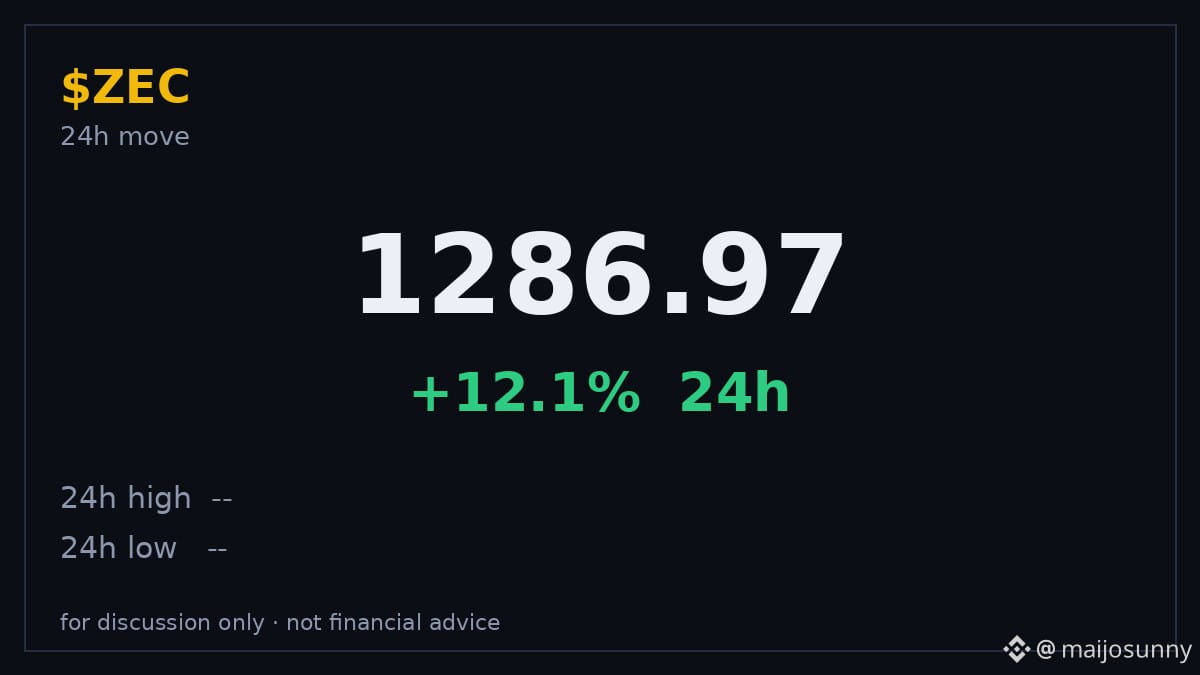
🚨 $ZEC UP 12% IN 24H TO $1,287 WHILE BTC CRAWLS BACK OVER $78K
Zcash is the outlier on a day when most majors are just recovering. $ZEC printed $1,286.97, up 12.1% in 24 hours on $204M spot volume (Binance data), with $2.14M in shorts liquidated in a single hour overnight (TokenPost, across Binance, Bybit and OKX). Open interest climbed to 2.17M ZEC, up from 1.96M on Sunday (CoinGlass via FXStreet).
📊 Why is it moving now?
The trigger has a date on it. Zcash's NU7 upgrade is expected to activate around Nov 5 at block 3,543,405, cutting block times from 75 seconds to 25 seconds plus node security fixes. Nearly 2.4M ZEC voted in a privacy-preserving poll backing faster blocks. Add the Grayscale spot Zcash ETF launched in August, and you get a privacy coin with an actual institutional on-ramp, not just a narrative.
⚠️ But one day does not change the whole trend. ZEC fell nearly 10% the session before this bounce, and it is still consolidating between the Oct 8 low of $1,112 and high of $1,340 for almost a month. One trader's counterpoint is worth hearing: after its last two monthly highs, ZEC needed two to three months of cooling off, and the Sept 26 peak of $1,698 is still 32% away.
My take: this is not just an upgrade pump, it is a test of whether privacy tech plus ETF access can hold a bid when the rest of the market is still in Fear (index 34). An upgrade date is not the same as sustained demand, and the real test is whether NU7 usage, not just NU7 headlines, shows up after activation.
🟢 Bull case: a daily close above $1,340 confirms the range breakout, opening the path toward $1,698.
🔴 Bear case: lose $1,112 and the bounce was just a short squeeze inside a cooling-off phase.
What to watch: the NU7 activation block itself, whether open interest keeps building or unwinds into the event, and whether $1,340 finally breaks on a daily close.
Is ZEC leading a privacy revival, or is this just the sharpest bounce in a fearful market? 👇
Not financial advice. DYOR.
#crypto #Zcash #privacy
248

·
--
🔐 HOW DOES CRYPTO PROVE SOMETHING WITHOUT REVEALING ALL THE DATA?
One of the fascinating technologies in blockchain is Zero-Knowledge Proof (ZKP).
Simply put, this technology allows someone to prove that a statement is true without having to reveal all the underlying information.
A simple example:
Imagine you want to prove that your asset balance is included in an exchange’s reserves.
With certain cryptographic verification systems, you can check the validity of the proof without having to see all users’ personal data.
Why is this important?
1️⃣ Privacy: sensitive information can remain protected.
2️⃣ Verification: users can independently check the proof.
3️⃣ Transparency: claims don’t rely solely on company statements.
In a recent development, Binance said it had completed generating a ZK Proof for the October 31, 2026 Proof of Reserves snapshot.
But keep in mind: ZKPs prove specific claims according to how the system is designed. This technology is not automatically proof that an entire company is free of debt, risk, or security issues.
This is one of the exciting directions in blockchain’s development: transparency without having to sacrifice privacy.
#ZeroKnowledgeProof #ZKP #Blockchain #CryptoEducation #Web3 #Privacy
247

$ZEC 🔐 : Privacy Is Power!
Zcash ($ZEC) uses advanced zk-SNARK technology to protect transaction details and Equihash Proof of Work to secure its network.
💎 Your transactions, your privacy.
Are you bullish on ZEC? 🚀
#Zcash #ZEC #Crypto #Privacy #BinanceSquare
$ZEC 🔐 : Privacy Is Power!
Zcash ($ZEC ) uses advanced zk-SNARK technology to protect transaction details and Equihash Proof of Work to secure its network.
💎 Your transactions, your privacy.
Are you bullish on ZEC? 🚀
#Zcash #ZEC #Crypto #Privacy #BinanceSquare
Zcash ($ZEC ) uses advanced zk-SNARK technology to protect transaction details and Equihash Proof of Work to secure its network.
💎 Your transactions, your privacy.
Are you bullish on ZEC? 🚀
#Zcash #ZEC #Crypto #Privacy #BinanceSquare
228

·
--
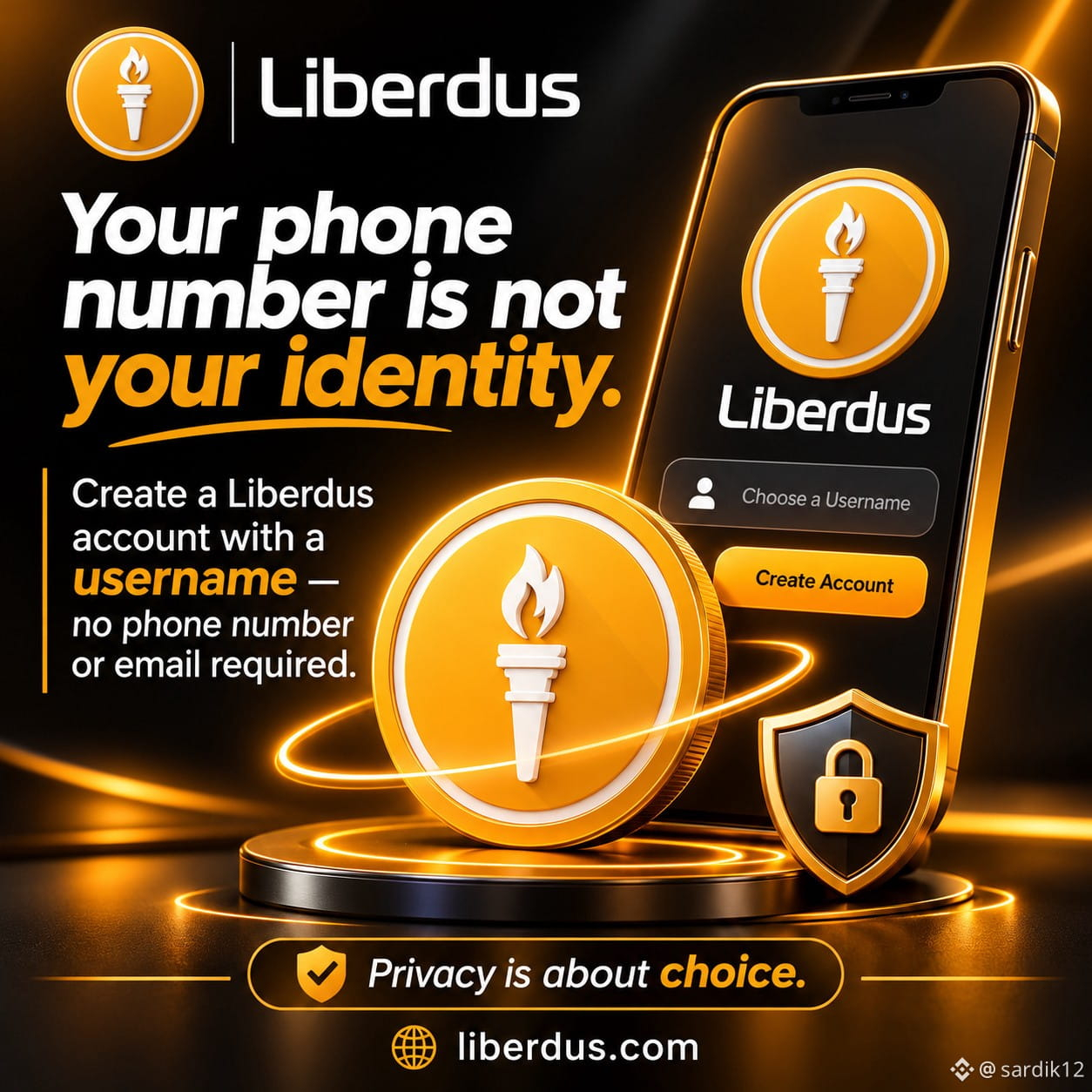
Your phone number is not your identity. 🔐
Think about how many apps ask for your phone number or email before you can even start using them.
We've accepted this as normal, but is it always necessary?
@Liberdus offers another approach: create an account with a username, without providing a phone number or email during registration.
It's a simple feature, but it highlights something important about digital privacy: users should have choices about the personal information they share.
Privacy isn't about hiding. It's about control.
Would you use a messenger that lets you register without your phone number or email? Why?
#Liberdus #Privacy #Web3
$XRP $SOL
249
Log in to explore more content
Join global crypto users on Binance Square
⚡️ Get latest and useful information about crypto.
💬 Trusted by the world’s largest crypto exchange.
👍 Discover real insights from verified creators.
Email / Phone number
Trending Topics
1
#JobsReportRaisesHikeOdds
6,321 views
224 Discussing
2
#US Data Center Rules May Constrain AI Expansion
1,220 views
37 Discussing
3
#CanUSStocksReboundAfterNonfarmPayrolls?
16,997 views
472 Discussing
4
#BinanceReopensWithdrawalsForMoreAssets
1.2M views
6,554 Discussing
5
#$2TWipedOutHedgeFundsFaceLiquidation
6,664 views
61 Discussing
6
#USNovemberMichiganExpectationsIndexPrelimAt50.9
0 views
23 Discussing
7
#AnthropicIPOValuationDoubts
46,345 views
806 Discussing
8
#OilPlungesBelow$100
2,066 views
23 Discussing
9
#USMidtermsCouldShakeUpUS-IranTies
12,999 views
249 Discussing
10
#RussianCentralBankNamesBTCETHUSDTForNonQualifiedInvestors
120 views
3 Discussing